Nan Madol
Nan Madol, Federated States of Micronesia
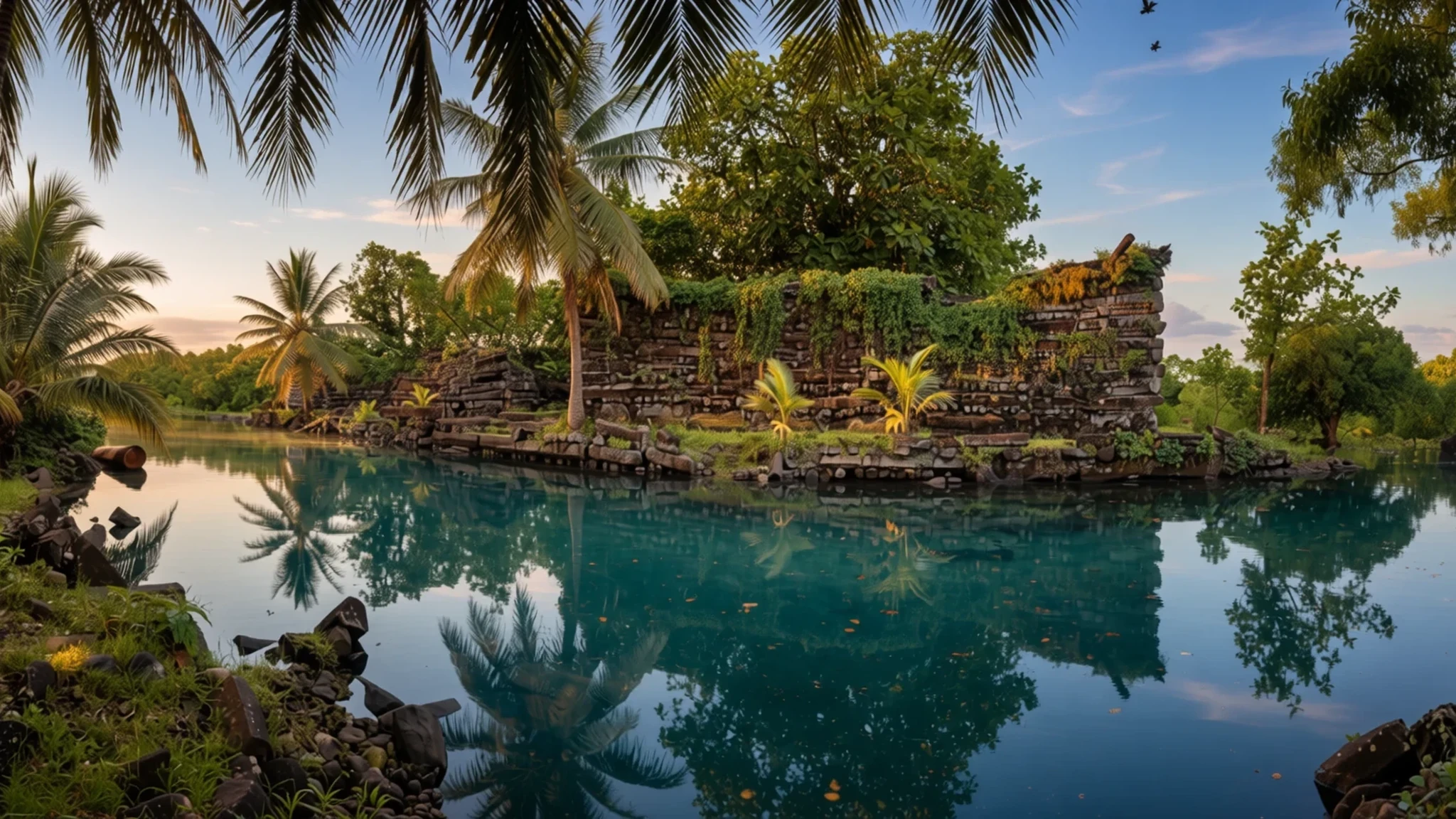
Nan Madol is a ruined city of stone-walled islets in a Micronesian lagoon, and few places feel quite so strange to walk.
The place
Nan Madol sits on the eastern edge of Pohnpei, the high green island in the Federated States of Micronesia, and stands in the shallow water of a lagoon rather than on dry land. Its core is a cluster of small artificial islands, built up from stone and coral fill and edged by tidal canals that run between them like streets. Walls of stacked stone enclose much of the complex, and seen from a boat the whole site reads as a low grey city laid across the reef flat. The name is usually translated as within the intervals, a nod to the canals that cut through the ruins. Older accounts give the original name as Soun Nan-leng, or Reef of Heaven, and the place has picked up nicknames such as the Venice of the Pacific. That comparison works mainly in the sense of water and stone threaded together. Walking the site, you notice how far the vegetation has taken over. Mangroves, roots and creepers push between the blocks, and some walls lean where tides and time have worked on them. The ruin is on the UNESCO World Heritage List, so access and conservation matter as much as the views. What survives is largely the framework of the place rather than the buildings that once stood on it, which makes the site feel more like an outline than a finished monument.
Its story
Nan Madol was the ceremonial and political heart of Pohnpei under the Saudeleur dynasty, which ruled the island from here for generations. People were using the lagoon long before the stone work began, and traces of activity reach back to the start of the common era. Islet building seems to have gathered pace around the eighth or ninth centuries, and the distinctive large-block masonry came later, from around the twelfth century onward. No written records explain how the heavy stones were moved, and the sheer size of the columns and slabs has fuelled a good deal of speculation. Pohnpeian tradition offers a different account. In its telling, twin sorcerers arrived by canoe from a mythical western homeland, searching for a spot to build an altar to the god of agriculture. After several failed attempts they set one up off Temwen Island, and the stones were said to have been lifted with the help of a flying dragon. When one brother died of old age, the surviving twin became the first Saudeleur, marrying a local woman and founding a line that lasted many generations. Later rulers made ever harsher demands on their people, and the dynasty's rule ended around 1628 when an outsider named Isokelekel took control of the site. His successors eventually abandoned it, and the city fell quiet. Some researchers compare the masonry with a similar complex on Kosrae, though radiocarbon dates suggest Nan Madol came first. The first detailed European description was written by the ethnographer John Stanislaw Kubary in 1874.
What to see
- The main ruin on Nan Douwas — Nan Douwas islet, eastern lagoon
The main cluster of walls and platforms sits on Nan Douwas, and this is where most visitors spend their time. Stone enclosures rise straight from the water, and the layout of canals and causeways gives a clear sense of how the city was organised. Walk slowly, read any signage, and let a local guide point out which structures were homes and which had ritual uses. Expect uneven footing, slick coral and tangled roots.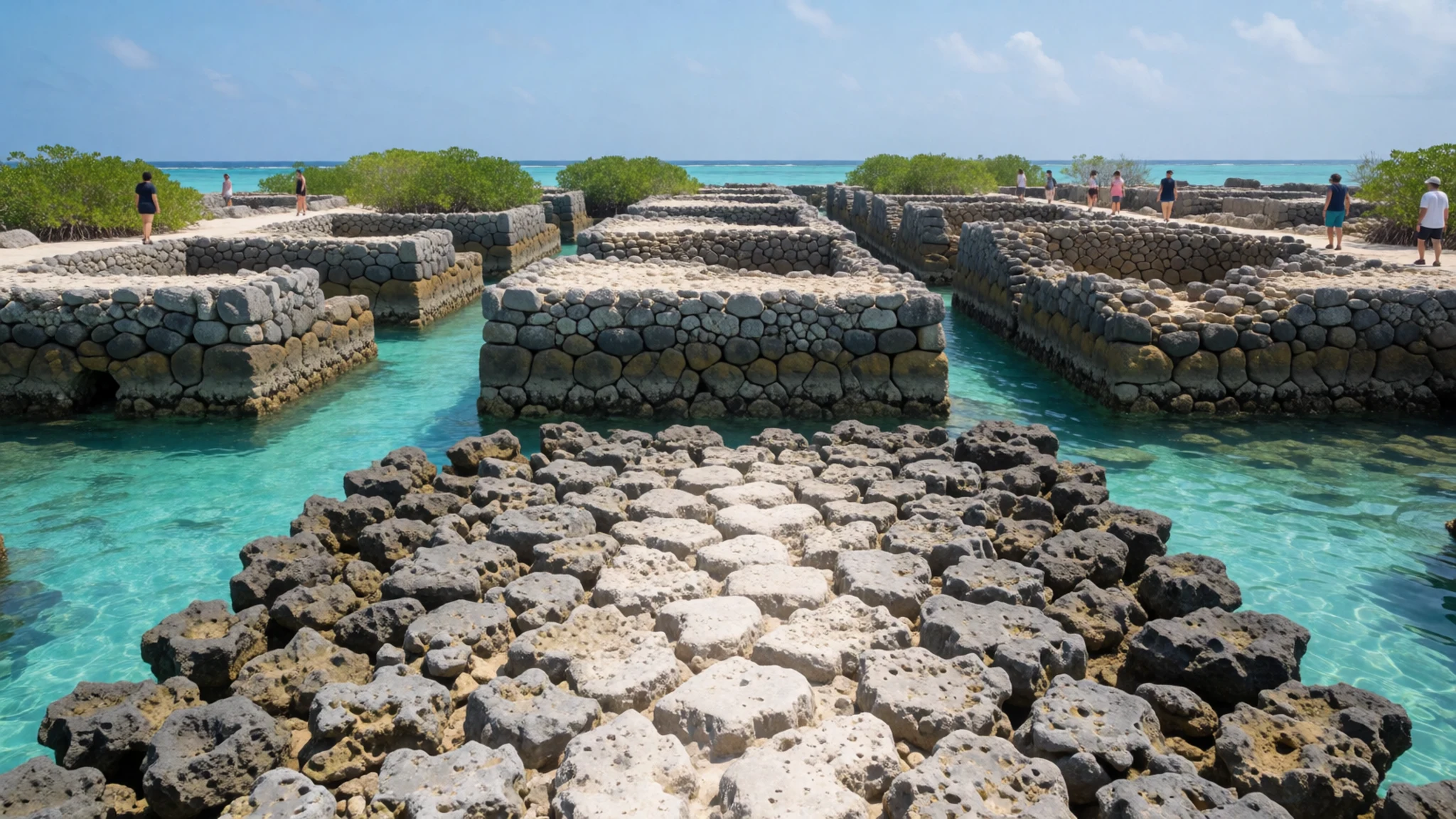
- The sea wall and outer islets — outer eastern edge of the ruins
Along the outer edge, a long sea wall of stacked stone and coral fill takes the force of the swell and shelters the inner canals. Some of the islets beyond it are low and can be awash at high tide, so the wall is best seen from a boat or from the seaward side when the tide is low. The sea is rough on the outside and calm within, and you can feel the difference as you cross.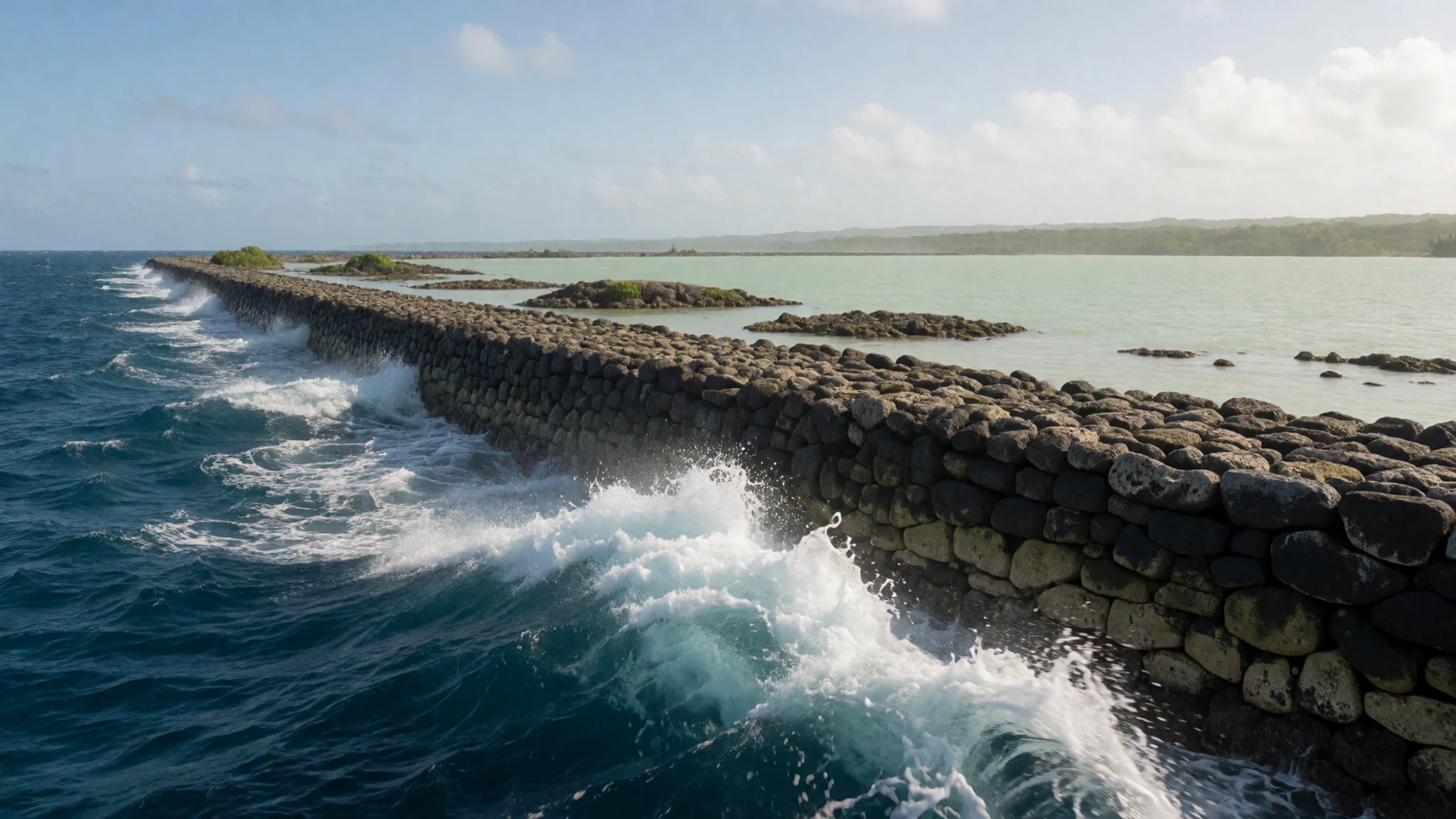
- The footpath through the ruins — walkway linking the islets
A footpath winds in and out of the ruins, crossing narrow passages between islets and following the canals. It is the simplest way to see how the city fits together, and it lets you pause at each opening to look down the water. Wear closed shoes with grip, keep to the marked route, and do not climb the walls, which are fragile and held together largely by their own weight.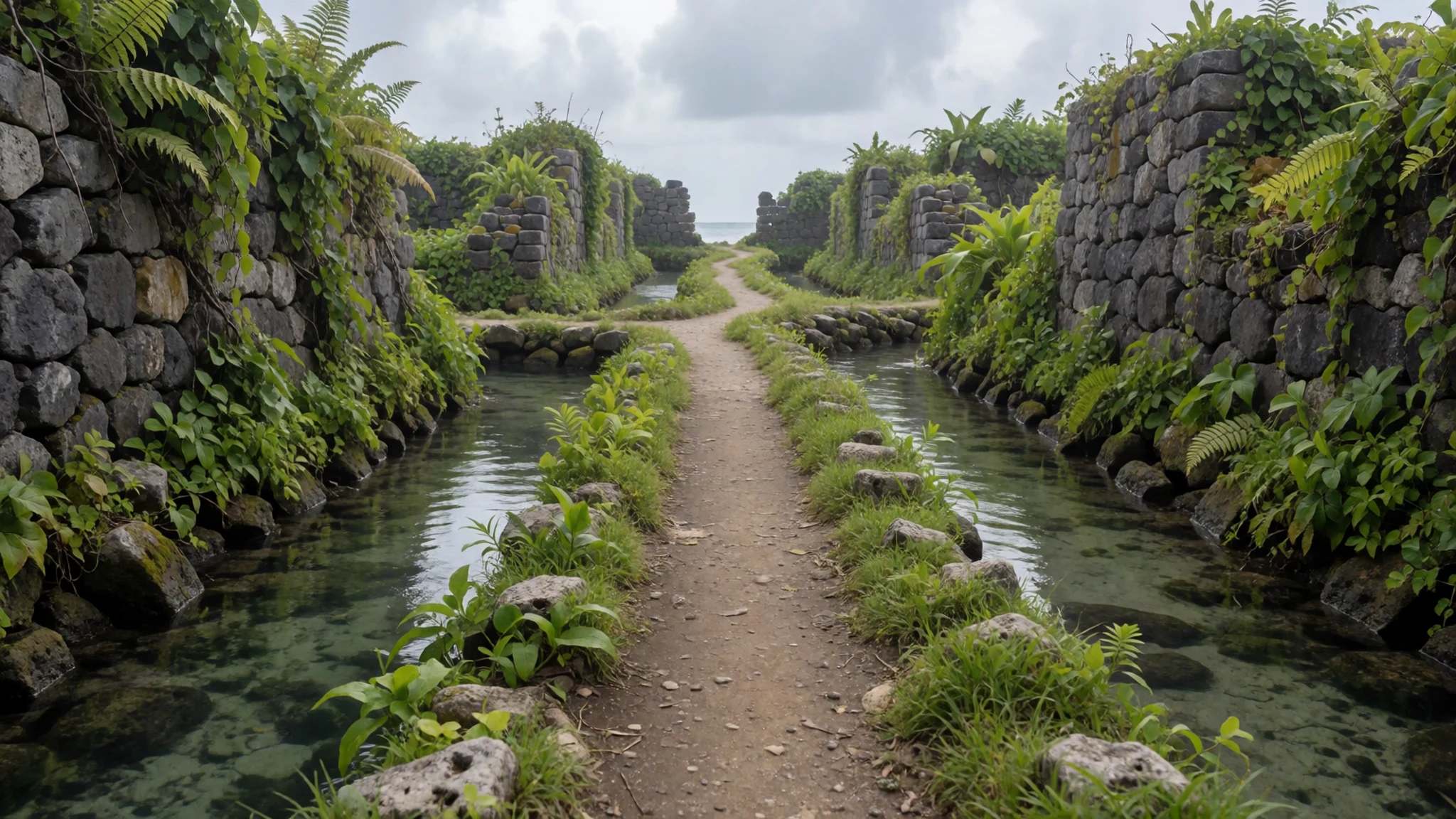
- The altar site off Temwen Island — off Temwen Island, west of the main ruins
The islet tied to the legend of the twin sorcerers lies off Temwen Island, where the brothers are said to have finally set up their altar after several failed attempts. Its stones are less dramatic than the main ruin, but the story gives the place much of its meaning for Pohnpeians. Ask your guide to tell it properly, and to explain which parts of the site are sacred or restricted.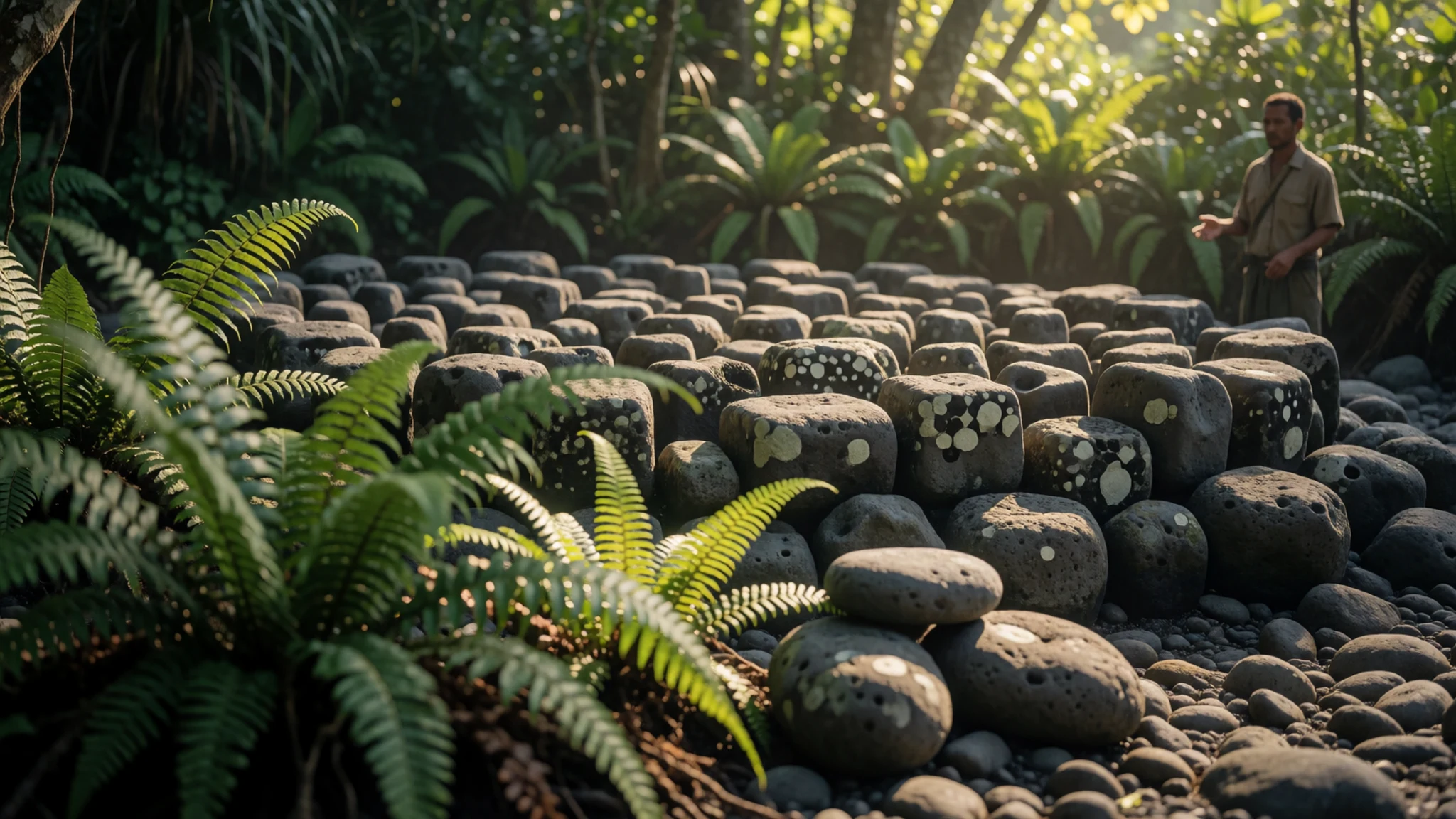
- The kayak crossing from Dau — Dau, Pohnpei's eastern shore
Dau is the usual starting point for reaching the ruins by water. Local paddlers sometimes offer rides in kayaks across the lagoon to Nan Douwas, which is far more rewarding than a dry approach. Agree the fare and the return time before you set off, and bring a hat and water. Conditions shift with wind and tide, so ask a local about the sea that day before you choose.
Culture
Nan Madol is a ruin, but it is also a place of ancestry and ceremony for Pohnpeians, and many local families hold claims to particular islets. Access and conduct are shaped by that. Visits usually happen with a guide or boat operator who knows the customs of the site, and the guide's word on where you may step carries weight. Pohnpei is a society where chiefly titles, land and respect for elders matter, and visitors are expected to show the same courtesy they would in a village. Sakau, a mildly numbing drink made from pounded kava root, is a traditional ceremonial and social drink. If you are offered it in a home or a sakau house, accept politely, follow the cues of those around you, and do not treat it as a novelty. Ask before photographing people or ceremonies, since many families are wary of cameras. Dress modestly when you walk through villages or visit churches, which remain central to daily life. Ask your guide before you step onto any stone platform, and never climb or sit on the walls.
What to wear
Nan Madol is a site, not a village, so what you wear there is about the terrain and the people you meet on the way rather than the ruins themselves. Traditional dress in Pohnpei centred on the lavalava, a wraparound cloth worn by men and women, along with woven plant-fibre skirts and mats made by hand. Older generations still use woven pieces for ceremonial occasions, though everyday wear is now mostly printed cotton. Traditional textiles and mats are exchanged at feasts and gifted in ceremonies, and their patterns can carry family and status meaning. Today most people wear Western clothing on ordinary days, including T-shirts, shorts, jeans and dresses, reserving the lavalava for church and ceremonies. Visitors should pack light cotton or quick-dry clothing that covers shoulders and knees, especially when walking through villages or meeting families. A hat and sunglasses are essential for the hot, bright lagoon, and a light rain layer is worth carrying. For the ruins, wear closed shoes with grip, since coral rock, stone and roots turn slippery when wet. Sandals suit the boat but are unwise on the blocks. Swimwear belongs on the beach or the boat, not in the village.
What to eat
- Sakau — a sakau house in the villages near Kolonia, or a ceremony if you are invited
Pounded kava root mixed with water and served in a cup, usually a coconut shell. It is a social drink, often shared around a circle, and it leaves a mild numbing feeling on the lips and tongue. Ask before joining in, and follow local customs about who drinks first.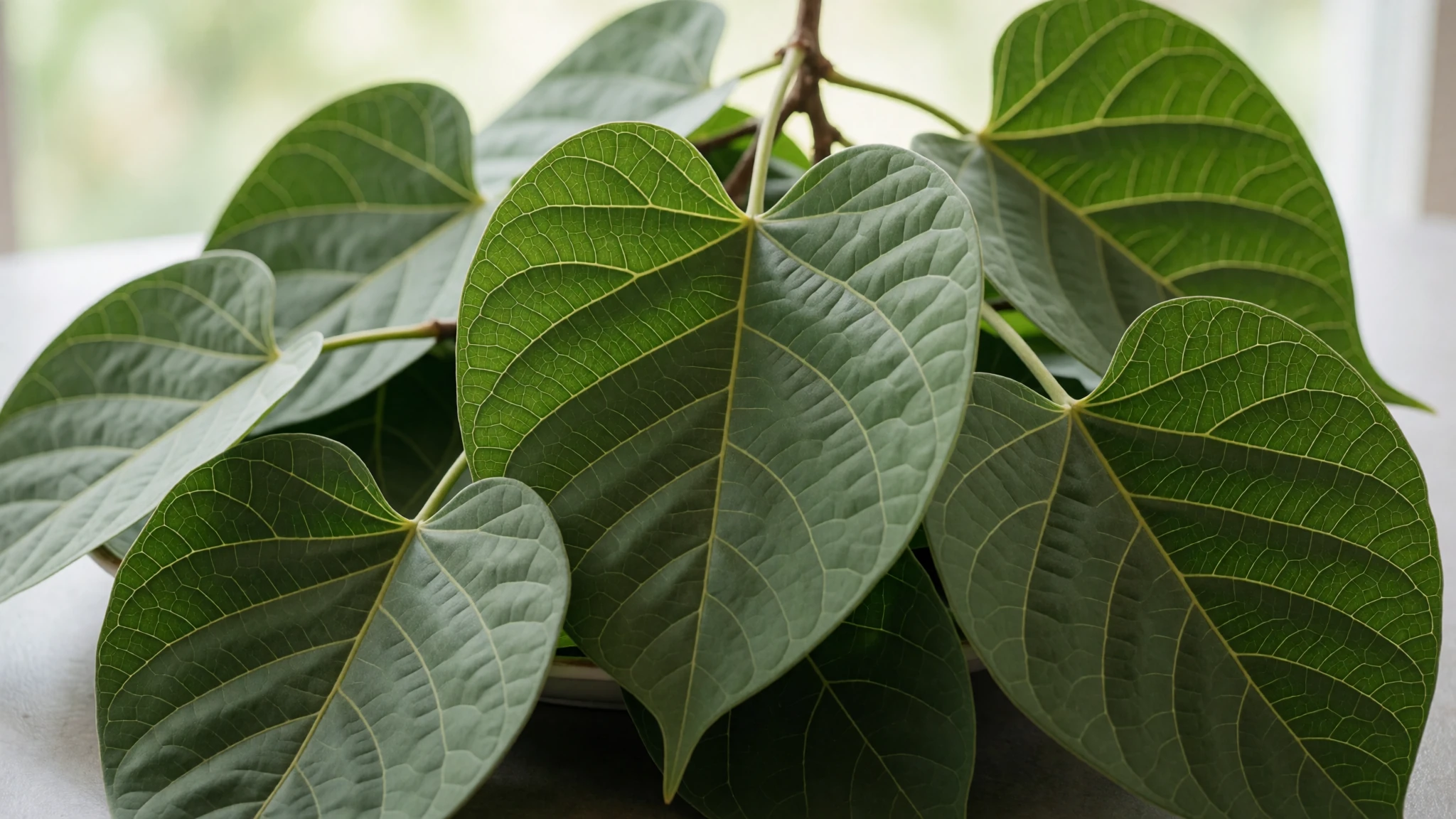
- Breadfruit — the morning market in Kolonia and roadside stalls on the coast road
Mature breadfruit is baked, boiled or roasted over coals, then peeled and eaten warm, often with a little grated coconut. It is a staple across Pohnpei and appears at most meals. Ask for it grilled from a roadside stall, where it is often sold by the piece.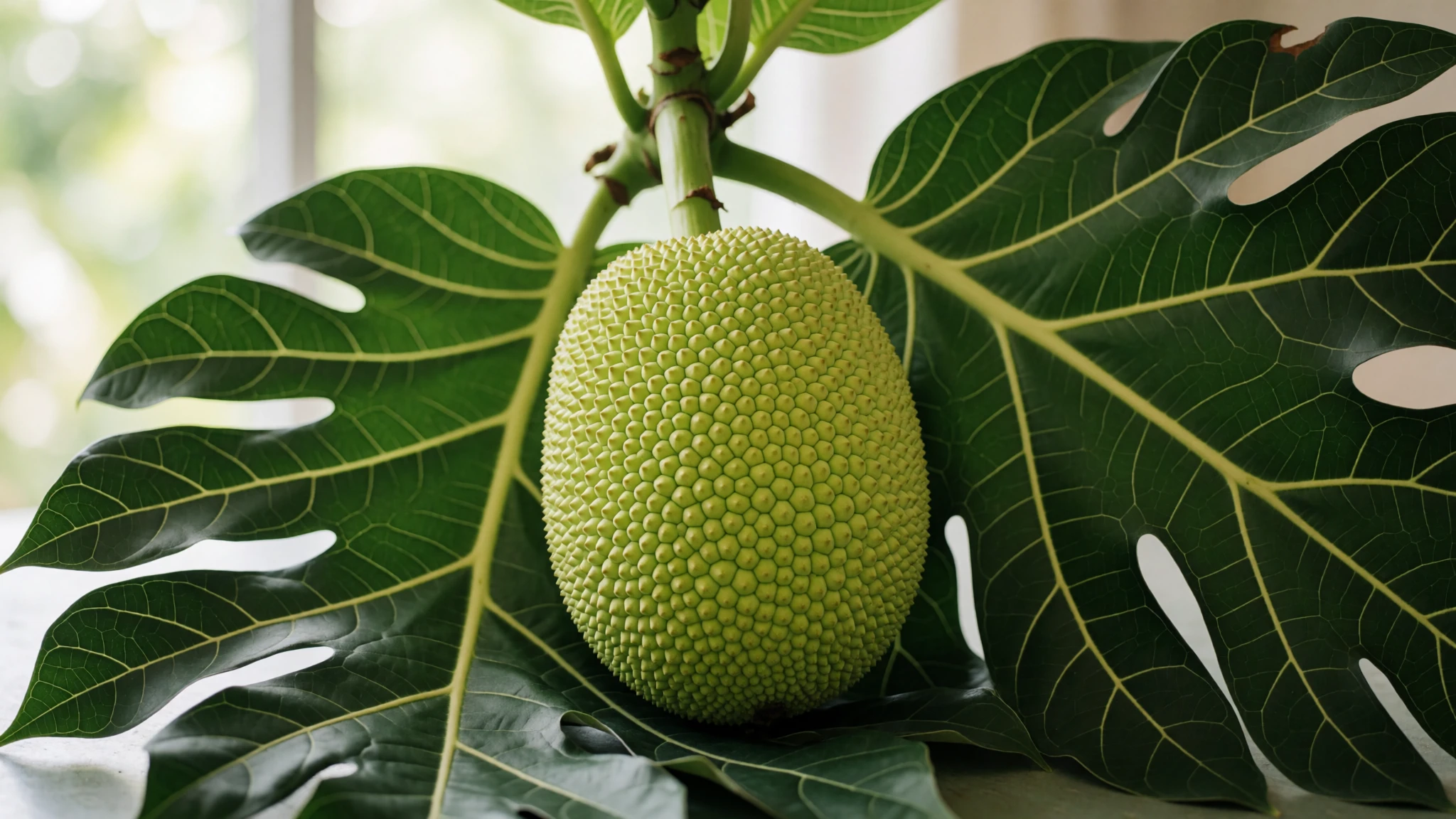
- Taro and yam — family-style eateries in Kolonia and village kitchens
Starchy root vegetables grown in village gardens are boiled or baked and served with fish or coconut sauce. They form the backbone of many home meals. Family-style eateries in town will often serve them as a plain side, and they are a filling choice after a long day among the ruins.
- Reef fish — small eateries along the Kolonia waterfront
Fish caught on the lagoon and outer reef is grilled or steamed with lime and chilli, or cooked in coconut milk. It is often the freshest thing on the menu. Ask what came in that morning, since the catch changes with the weather and the boats. - Fresh coconut — roadside stalls on the drive out to the eastern shore
A young green coconut is opened with a machete, and the water is drunk straight from the shell before the soft flesh is scooped out. It is cool and sweet, and welcome after a hot walk through the ruins. Vendors often offer it for a small amount of cash.
Plan it
Best time. Pohnpei is wet for much of the year, so aim for the drier stretch from roughly January to March, when showers are a little less frequent and boat trips are easier to plan. April turns wetter, and May and November are the rainiest months. Heat and humidity persist all year, and rain can arrive with little warning in any month.
How long. 1–2
Getting there. Fly into Pohnpei International Airport, then drive to the eastern shore. The last leg is by kayak or boat across the lagoon, arranged through a local guide or operator.
Budget. mid
Tips
- Check the official site, nan-madol.com, for current arrangements before you travel
- Go early in the morning, when it is cooler and quieter
- Carry water and sun protection, since there is little shade among the ruins
- Bring cash for small fees and vendors, as cards are rarely accepted at the water's edge
- Ask your guide to check the tide and weather, because boat crossings depend on both
Etiquette
- Follow your guide's instructions about where you may walk and stand
- Ask before photographing people or ceremonies
- Dress modestly when you visit villages or churches
Nearby
Sources
- Wikidata Q846967 (CC0)
- Wikipedia: Nan Madol (rev 1378475574) (CC BY-SA 4.0)
- Wikivoyage: Nan Madol (rev 4622953) (CC BY-SA 4.0)
- Photo: Nan madol (NOAA) (Public domain)
- Photo: Nan Madol, Pohnpei (Uhooep) (CC BY-SA 4.0)
- Photo: Nan Madol and surroundings (Uhooep) (CC BY-SA 4.0)
- Photo: The ruins of Nan Madol in Pohnpei (CT Snow) (CC BY 2.5)
- Photo: Nan Madol ruins in Pohnpei (CT Snow) (CC BY 2.5)
- Photo: Nan Madol ruins in Pohnpei (CT Snow) (CC BY 2.5)
- Photo: Nan Madol ruins on Pohnpei island (CT Snow) (CC BY 2.5)
- Photo: HH1883 pg076 Nanmatal, Ponape (Public domain)


