Ant Atoll
Ant Atoll, Federated States of Micronesia
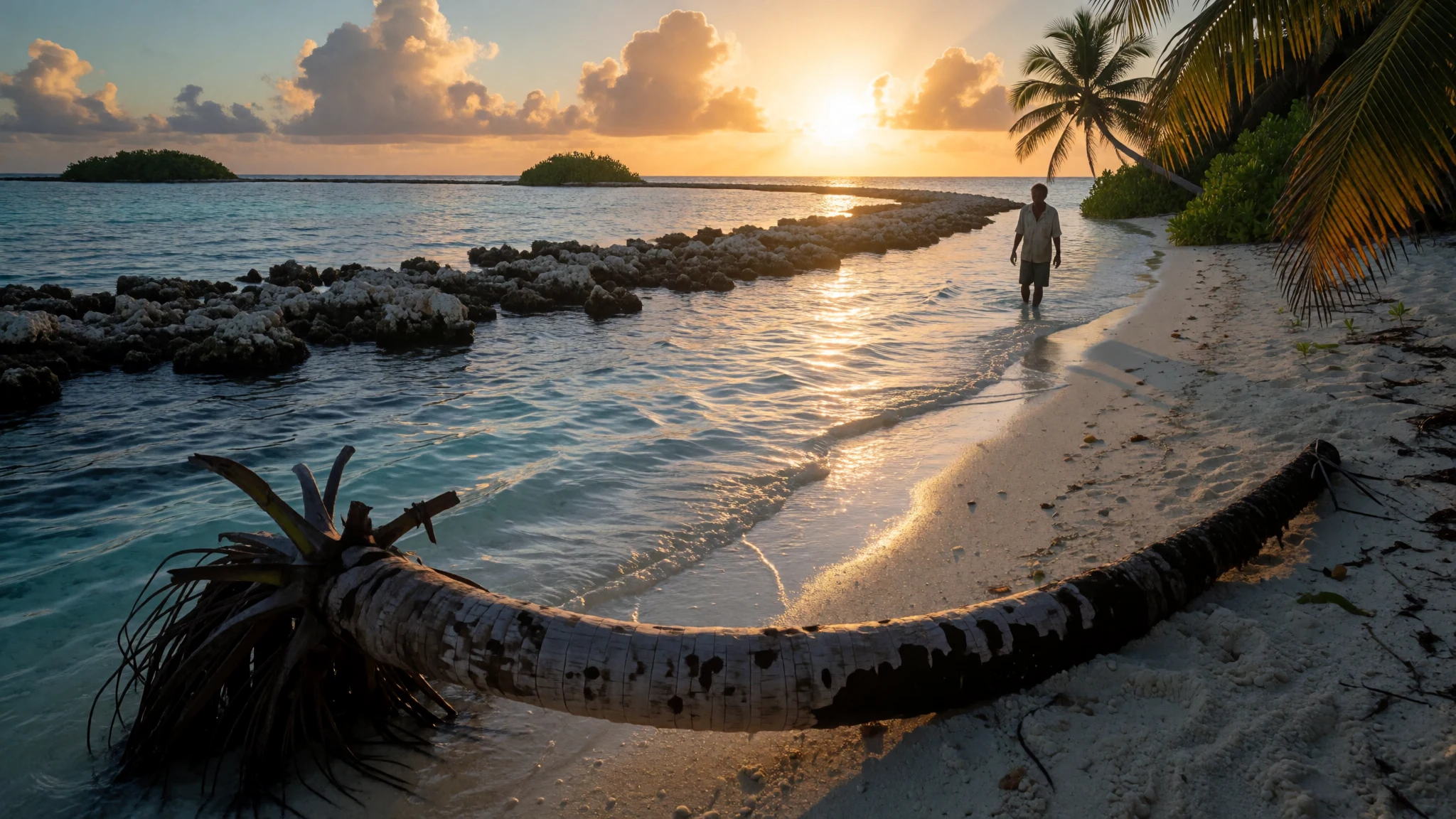
Ant Atoll is a quiet coral ring southwest of Pohnpei, a lagoon reached by boat and shared with a single small settlement.
The place
Ant Atoll is a low coral atoll in the Senyavin Islands, in the eastern Caroline Islands of the western Pacific, and part of Pohnpei State in the Federated States of Micronesia. It lies southwest of the high island of Pohnpei, far enough out that the passage is a real boat trip and near enough that the atoll still belongs to the life of that island. From above, the shape is a closed ring: a pale reef rim, a few green islets, and a lagoon of shifting blue held inside the coral. There is no town, no harbour wall and no airstrip. The only settlement stands on the main islet, Pasa, a thin strip of sand and trees where a handful of households face the lagoon. Everything else is water, reef and the open ocean outside the ring. The lagoon is the reason the atoll matters. It is sheltered enough for swimming and for small boats, and rich enough that fishing still feeds the people who live here. The outer reef takes the ocean swell, so the water inside can lie calm while the wind is up on the passage from Pohnpei. Rain is part of the place, not an interruption: clouds build, a squall crosses the lagoon, and the sun returns on wet sand and dripping breadfruit trees. Visitors come for that enclosed water and for the reef edge, then leave; the settlement stays. It is a peopled lagoon, and the visit only works if the boat, the weather and the households on Pasa are all part of the plan.
Its story
Ant Atoll has long sat in the shadow of Pohnpei, close enough to be used and far enough to feel apart. Pohnpeian families have treated the lagoon as a fishing ground and the islets as places to camp, to cut copra and to wait out weather, rather than as a second town. The reef itself was the resource: fish in the lagoon, birds and coconuts on the sand, and a passage that a skilled boatman could read. European charts later grouped this ring with Pohnpei and the neighbouring atoll of Pakin under the name Senyavin Islands, after a Russian naval visit that put the eastern Carolines onto imperial maps. The name Ahn lived on in speech even when the chart said Ant. Through the years that followed, the high island passed under Spanish, German, Japanese and then American administration, and the outer atoll went with it. Copra, mission ties and the movement of labour pulled Pasa toward Kolonia; none of that raised a port or a school campus on the sand. What endured was tenure. The lagoon was not empty water. Households knew who fished where, and a visitor who treated the reef as unowned made a mistake that people still remember. When the islands became the Federated States of Micronesia, Ant Atoll remained part of Pohnpei State, still reached by boat and still lived on by a few families. The story a visitor can see is a settlement facing its lagoon, and a crossing negotiated with wind and the people who keep the place.
What to see
- The lagoon — Inside the reef ring
The lagoon is the heart of Ant Atoll, a sheltered sheet of water held in by the reef. On a still morning it is clear enough to show sand, coral heads and the shadow of the boat. This is where swimming, snorkelling and a picnic actually happen.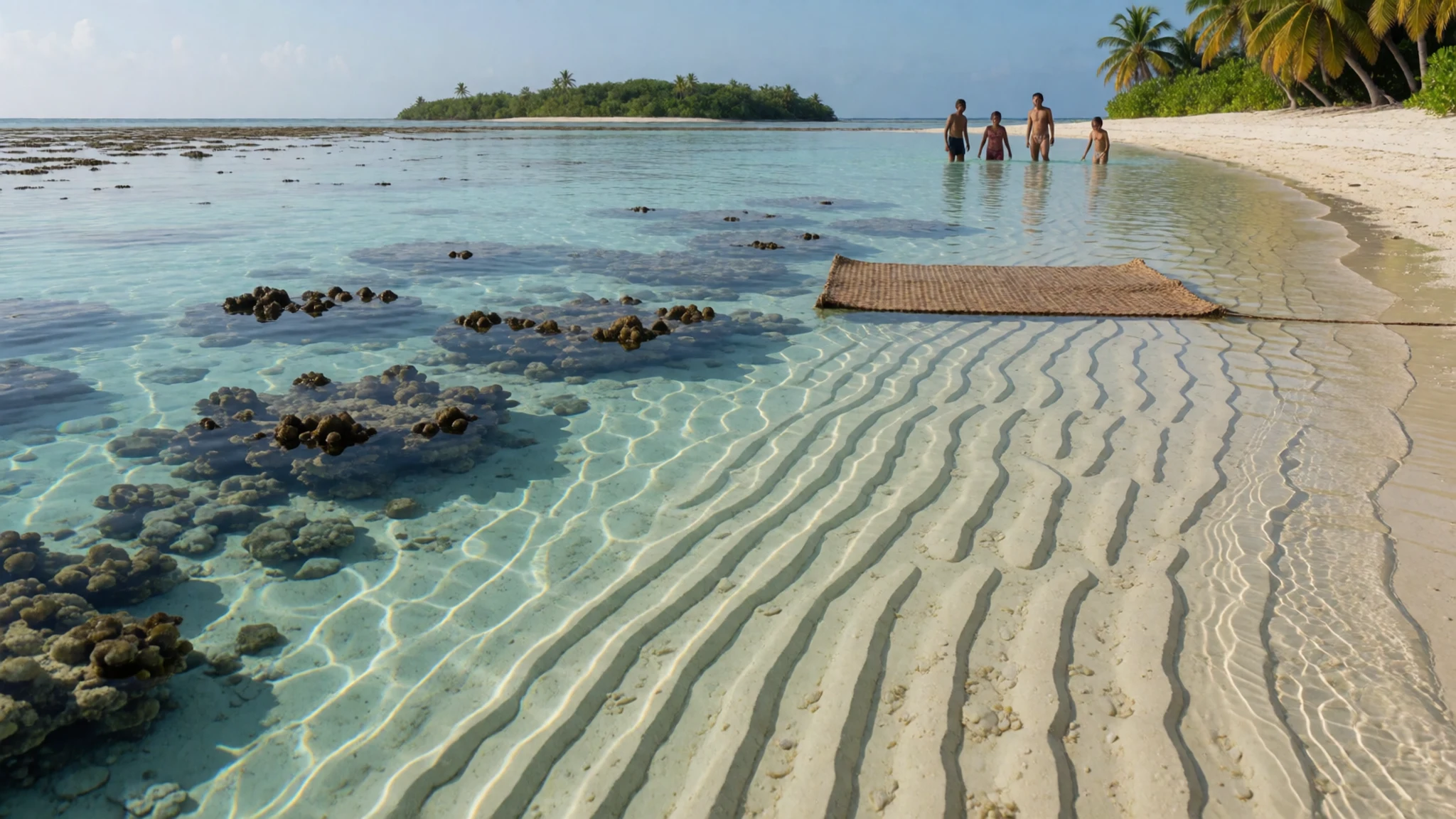
- The reef rim — The ring around the lagoon
The reef rim is the ring that makes Ant Atoll an atoll, a pale line of coral and rubble between the lagoon and the open Pacific. From the air it reads as a closed circle broken by a few green islets. Up close it is shallow, sharp underfoot and full of life, and it is no place to walk for a better photo.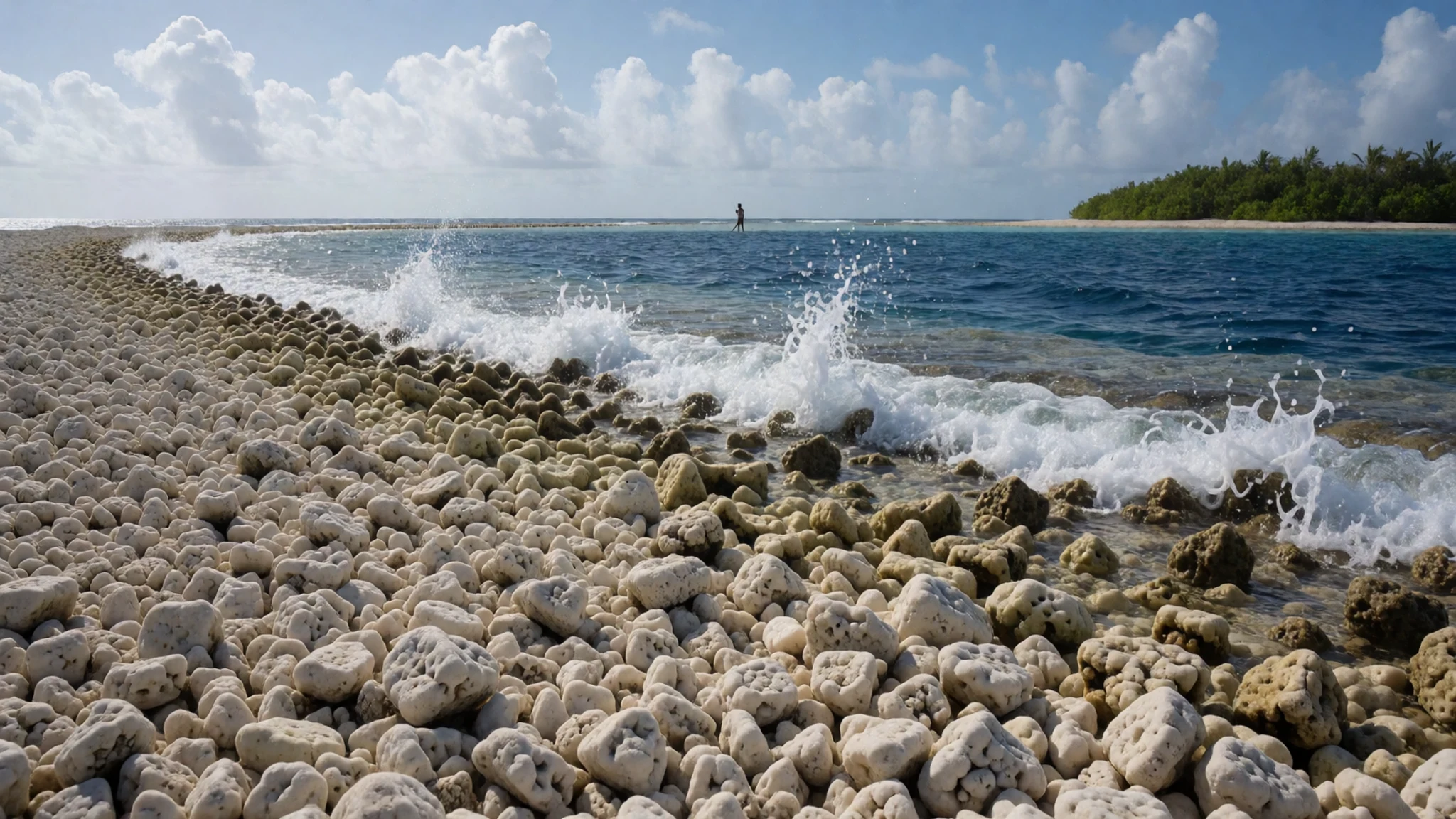
- Pasa — The main islet
Pasa is the main islet of Ant Atoll and the only settlement, a low shore of sand, coconut palms and a few houses facing the lagoon. There is no shop street and no lodge. What a visitor sees is domestic life at the edge of the water: a boat pulled up, washing, shade, and someone who knows the pass.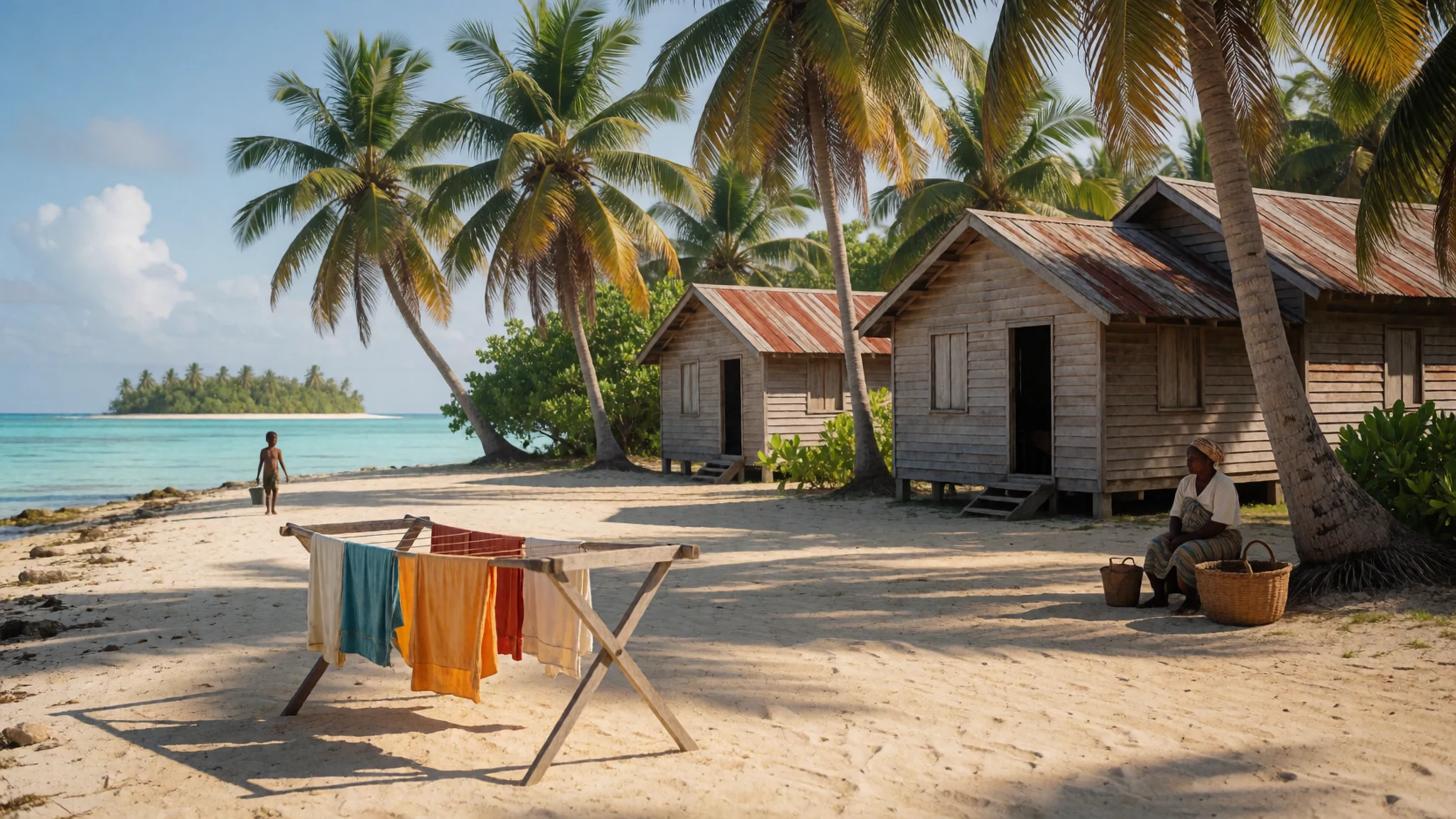
- The approach — Open water southwest of Pohnpei
The approach is half of Ant Atoll. For a long stretch after leaving Pohnpei there is only open water, then the ring appears as a low green and white line and the colour of the sea changes over the reef. The pass through the rim is not obvious to a first-time eye, which is why the crossing belongs with a local boat.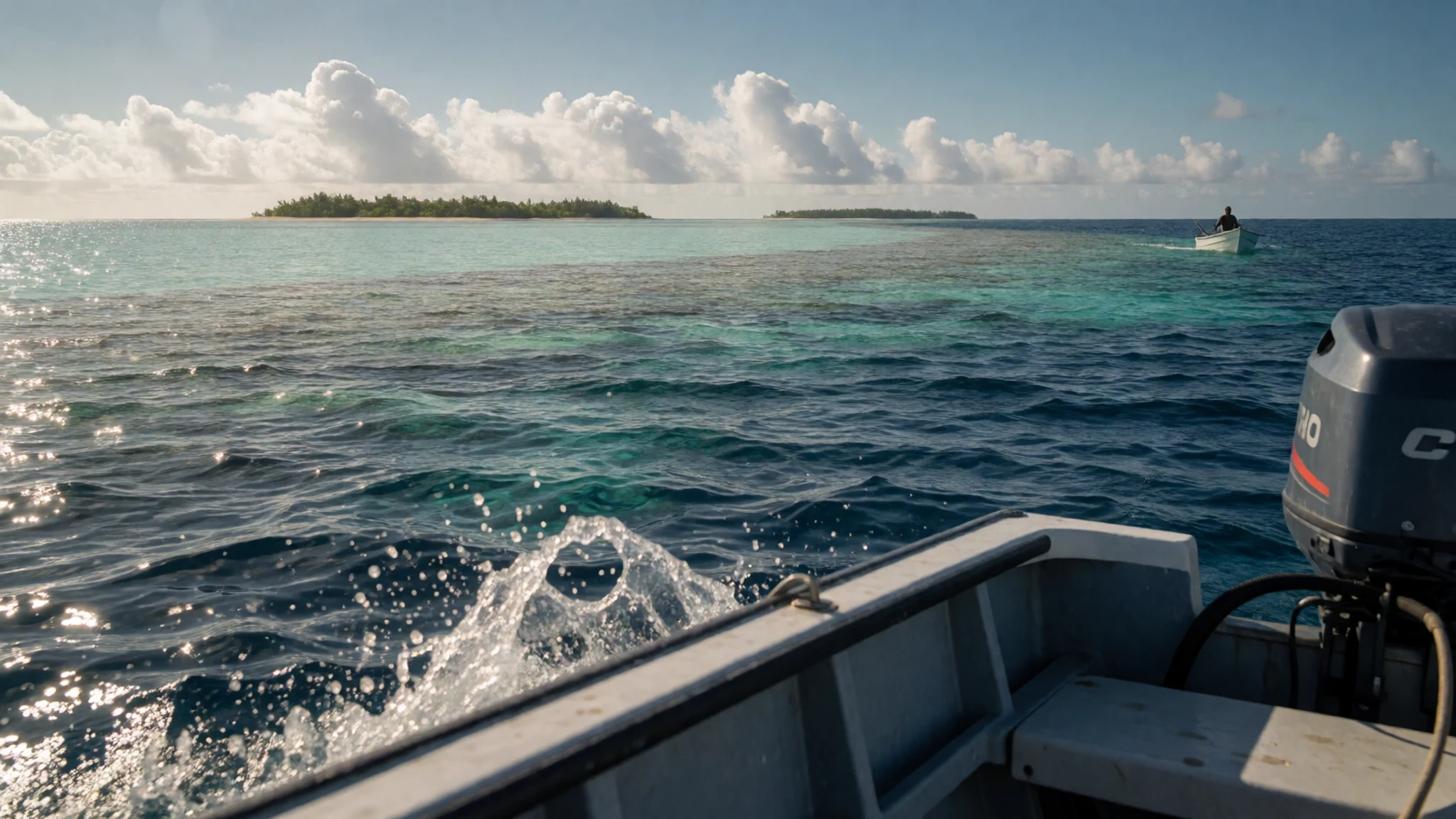
- The view from the air — The air approach to Pohnpei
From a plane window Ant Atoll is suddenly easy to understand: a full ring, dark blue outside, pale shallows on the rim, and the lagoon a lighter blue in the middle. Pasa is a small green comma on that ring. The sight is brief and explains why the boat trip exists. If the approach into Pohnpei passes over the atoll, it is worth leaving the aisle for.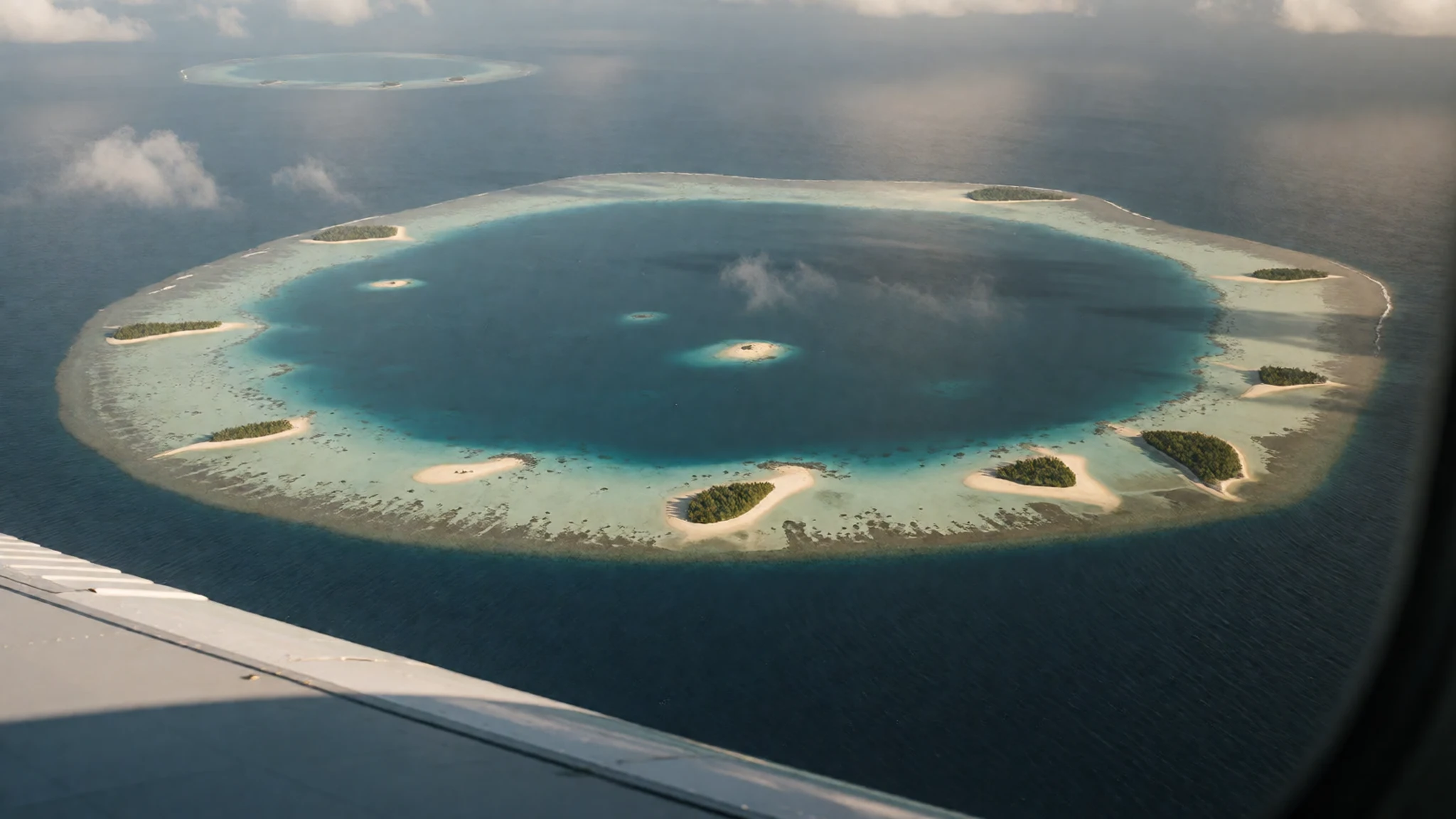
Culture
Culture on Ant Atoll is Pohnpeian culture practised on a very small stage. Respect runs through titles, age and the quiet order of a household, even when the setting is a cookhouse under coconut palms rather than a feast house on the main island. Sakau, the pounded root drink of Pohnpei, is a ceremony as much as a refreshment: it is offered, received with both hands, and drunk in turn, and a guest who waves it away without a reason can cause embarrassment. Food shared on the beach follows the same logic. Fish, breadfruit and a ripe coconut are not samples; they are someone's catch and someone's trees. Sunday carries a church quiet across Pohnpei State, and if the settlement is at worship the lagoon can wait. The reef has its own manners. It is a garden and a larder, and broken coral does not grow back for a visitor. People on Pasa notice who picks up shells, who walks on the reef flat, and who asks first. On Ant Atoll, ask before you photograph anyone, before you step ashore beyond the boat landing, and before you take anything from the water or the sand.
What to wear
Ant Atoll shares the dress of Pohnpei, scaled to a lagoon settlement where church, fishing and a hot sun share the same morning. For feasts and formal moments, women wear the urohs, a long wrap skirt of cloth worked in horizontal bands of embroidery, often with a modest blouse; the textile is cotton now, though older fibre work used hibiscus bast for skirts and mats. Men once wore a loincloth of the same plant-fibre tradition, and on ceremonial days still add a mwarmwar, a circlet of flowers and leaves, with coconut oil on the skin. Those clothes appear for church, a title feast or a family gathering, not for hauling a net. Day to day on Pasa, people wear what the boat and the heat allow: T-shirts, shorts or a simple wrap, and flip-flops that come off at the door of a house. Cloth is chosen in Kolonia and brought across. Sunday is the exception, when skirts lengthen and shirts are tucked. A visitor should copy that split. Swimwear belongs on the boat and in the lagoon; a shirt and a longer wrap or shorts belong on shore, especially near houses and if a church service is under way. The climate is hot and wet, so a light long-sleeved shirt, a hat and sandals or reef shoes that can get soaked will do more than a set of clothes. The sand is damp, the coral is sharp, and embroidered hems are for the feast, not the reef flat.
What to eat
- Roasted breadfruit — A family kitchen in Kolonia, or the cookhouse on Pasa
On Ant Atoll, breadfruit is the staple that grows within sight of the lagoon. A ripe fruit is roasted in the coals until the flesh is soft and slightly sweet, then eaten with fish. On a day trip it often arrives already cooked, from a family kitchen in Kolonia.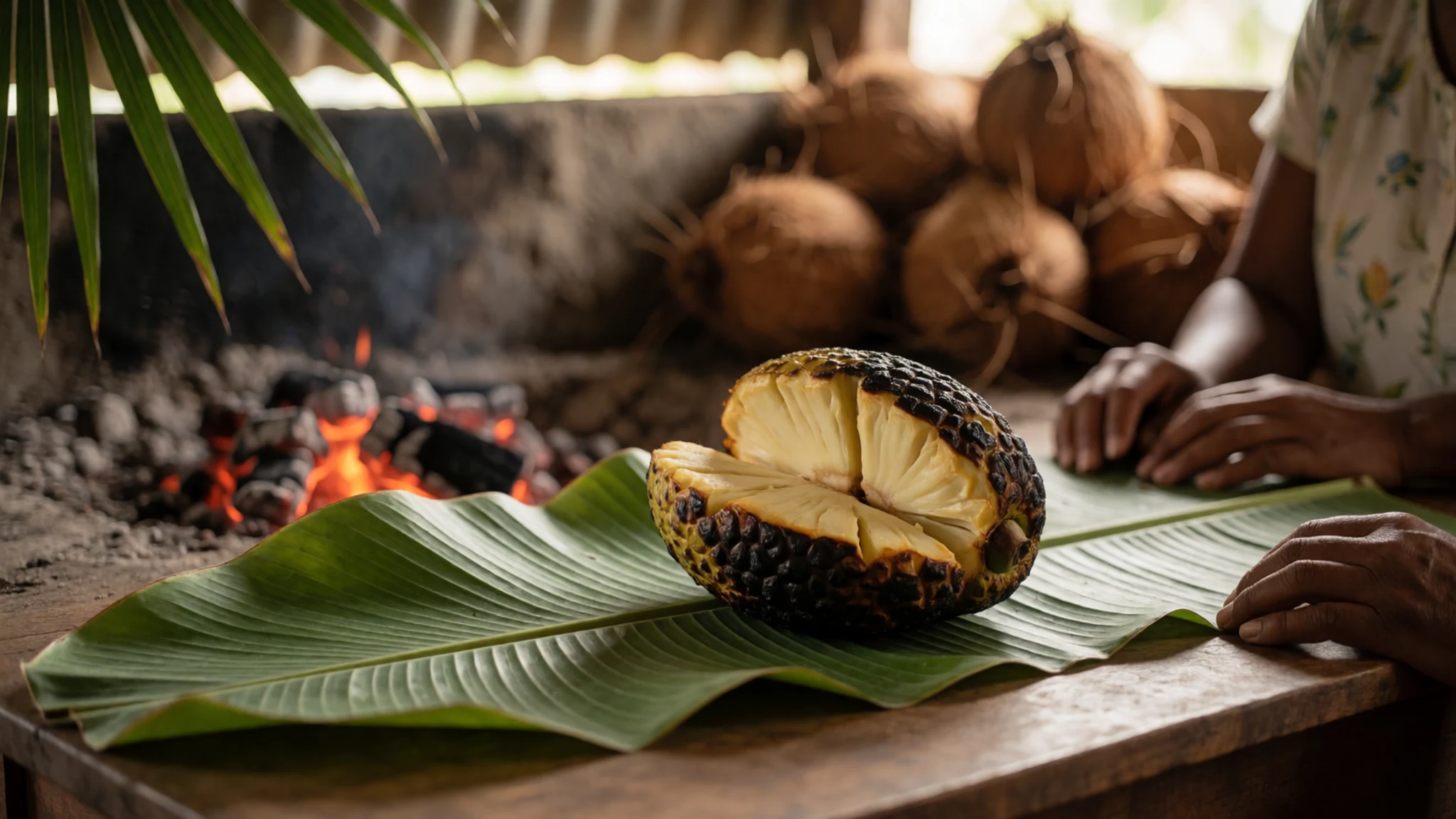
- Fish in coconut milk — A picnic on the sand at Pasa, or a pot from Pohnpei
Ant Atoll's everyday feast is reef fish simmered in coconut milk, sometimes with onion and a little local pepper. The fish is whatever the lagoon gave that morning. Visitors meet it at a picnic on the sand or in a pot carried out from Pohnpei.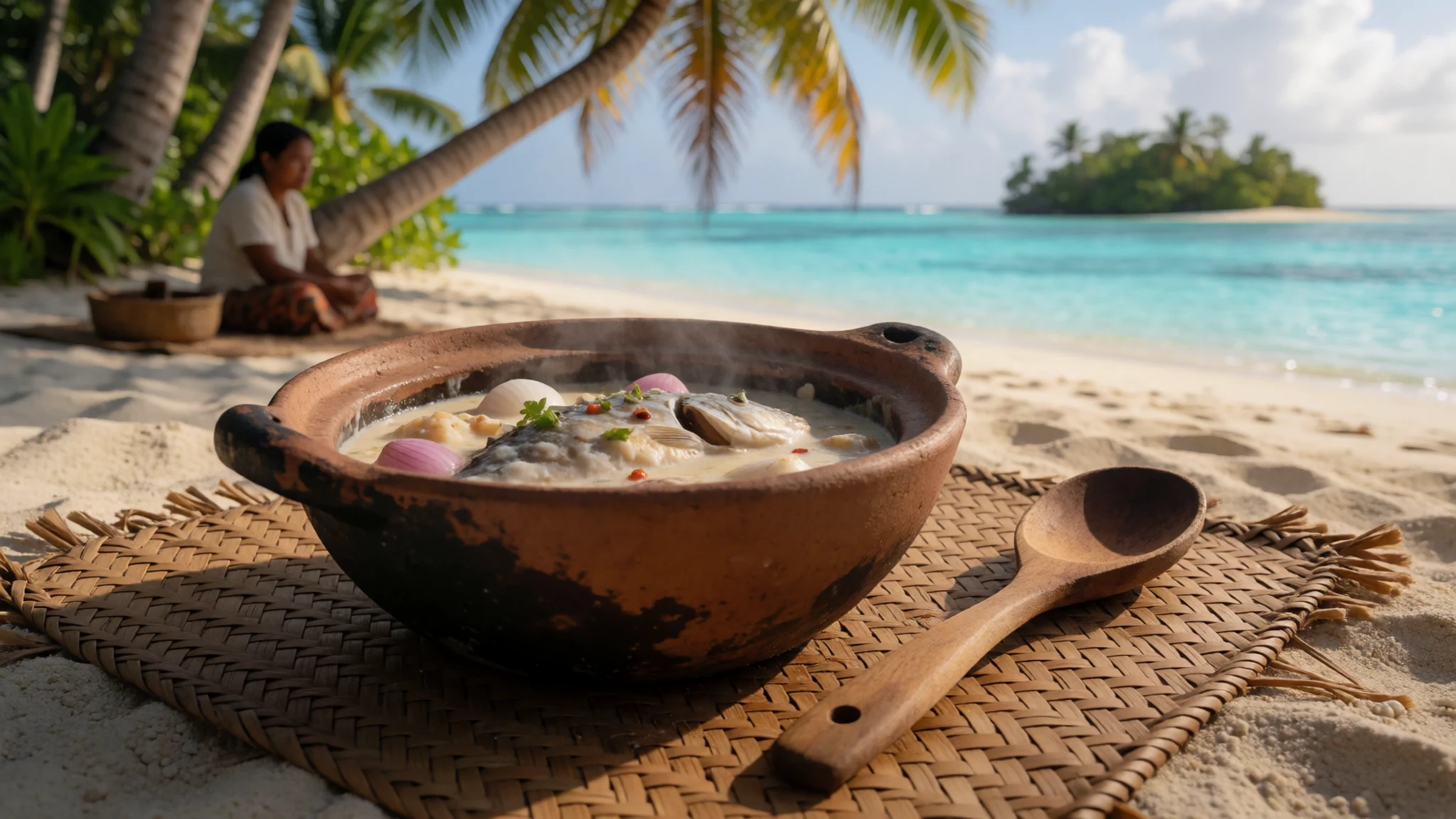
- Kehp — A household meal on Pasa
The yam, kehp in Pohnpeian, is prestige food on Ant Atoll, brought out for guests rather than cooked every day. It is boiled or roasted until dense and dry, and served in generous pieces beside fish. Guests are offered it at a household meal on Pasa. - Raw fish with lime and coconut — A packed lunch from Kolonia, or a family table on Pasa
Ant Atoll boats bring tuna and other ocean fish as well as reef catch, and a common plate is raw fish cut thin and dressed with lime, coconut milk and onion. It is the islands' own answer to a picnic salad, sharp and cool in the heat. - Cooked green banana — A home kitchen in Kolonia, packed for the boat
Green banana, cooked rather than eaten ripe, turns up on Ant Atoll beside fish and coconut. Boiled or roasted, the slices are starchy and filling, a stand-in when breadfruit is out of season. It is ordinary food from a home kitchen, carried to the lagoon. - Grilled reef fish — The beach by the settlement on Pasa
Whole reef fish, grilled over coconut-husk coals, is the plain plate on Ant Atoll. Salt, lime and a brushing of coconut oil are enough. People eat it on the beach with their fingers, within sight of the water it came from.
Plan it
Best time. Rain falls on Ant Atoll in every month, so there is no dry season to wait for. The crossing from Pohnpei is generally kinder in the northern winter and early spring, and harder when wind piles up against a small boat. Ask the operator the day before and be ready to postpone.
How long. one or two
Getting there. Fly into Pohnpei International Airport, beside Kolonia, then take a small boat southwest to Ant Atoll. There is no airstrip and no ferry timetable on the atoll; the last leg is a private or shared boat arranged on Pohnpei. Check the operator, and the weather, rather than a published schedule.
Budget. mid
Tips
- Book the boat before you fly; same-day dock luck will not get you to Ant Atoll.
- Start early. Afternoon wind and a squall make the return crossing the hard part of the day.
- Bring drinking water, sun cover and a dry bag. Pasa has no shop to restock you.
- Carry cash. If a guide asks for a community contribution, a card will not pay it.
- Do not stand, kneel or walk on living coral, including in ankle-deep water inside the lagoon.
Etiquette
- Ask before you photograph people or walk past their houses on Pasa.
- Take nothing from the reef or the beach, including coral, shells, sand and fish, unless a resident has clearly agreed.
- Cover swimwear with a shirt and shorts when you leave the boat for the settlement.
- If you are offered sakau, accept the cup with both hands and wait your turn.
Nearby
Sources
- Wikidata: Ant Atoll (CC0)
- Wikipedia: Ant Atoll (CC BY-SA 4.0)
- Wikivoyage: Pohnpei (CC BY-SA 4.0)