Nukuoro
Nukuoro, Federated States of Micronesia
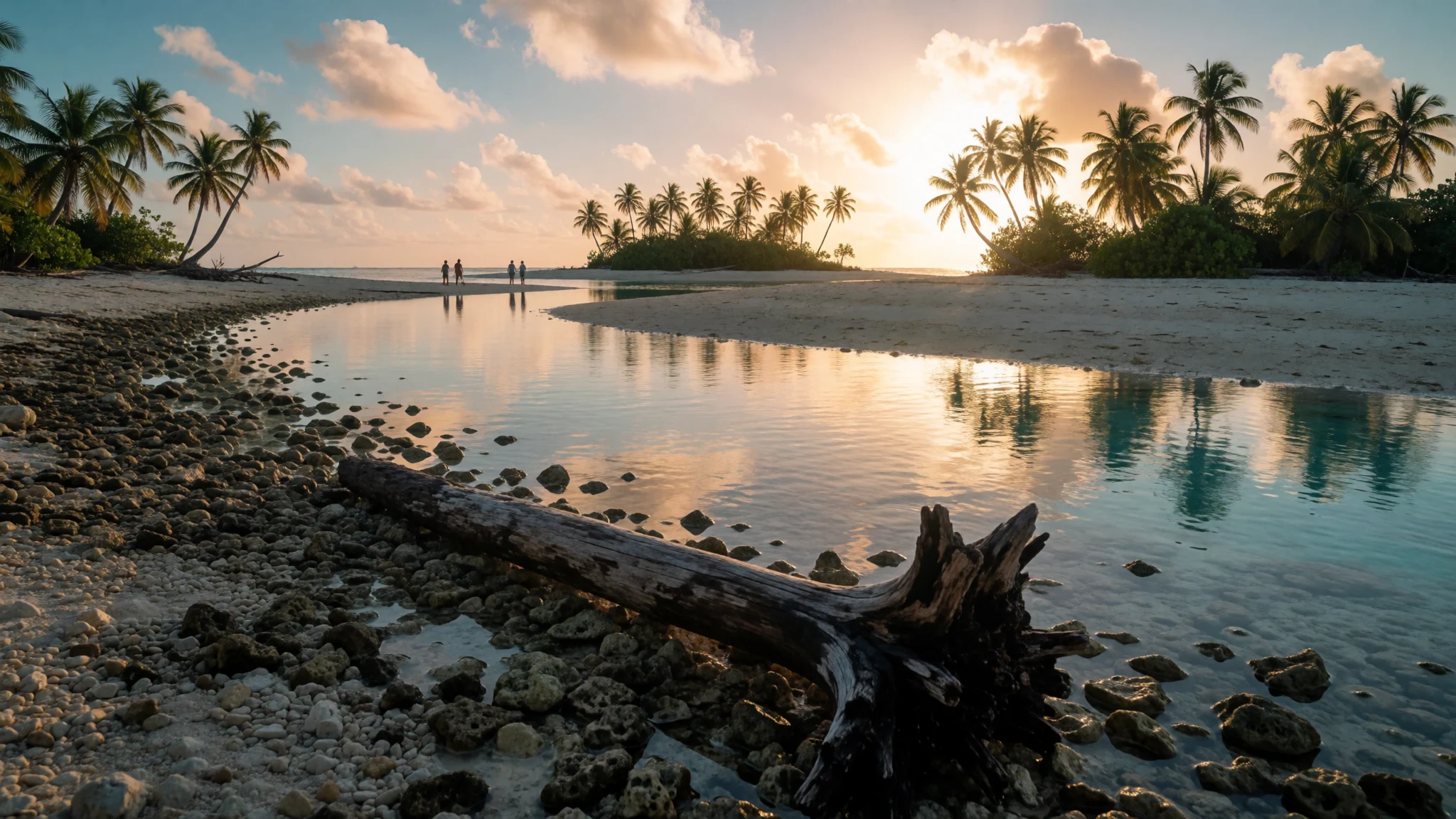
Nukuoro is a ring of Polynesian islets in Micronesia, with no airstrip, no tourism and a boat that calls only every few months.
The place
Nukuoro is a ring of low coral islets in the western Pacific, a municipality of Pohnpei state in the Federated States of Micronesia. Its people are Polynesian, which sets the atoll apart from most of its neighbours; Kapingamarangi, further south, shares that background. The land is tiny, about 1.7 sq km, scattered over dozens of islets along the northern, eastern and southern sides of a lagoon roughly 6 km across. The islets are called modu. At low tide they can be crossed on foot, while at high tide narrow channels open between them. By far the biggest is Nukuoro Islet, where most people live and where the municipal centre sits.
The population was 372 at the 2007 count, and several hundred more Nukuorans live on Pohnpei, so the community is spread across two places. Daily life runs on fishing, livestock and gardens of taro, with copra bringing in some cash. A black pearl oyster project has added income and has worked well so far.
Nukuoro is not a destination in the usual sense. There is no airstrip, the passenger boat calls only once every few months and on no fixed schedule, and tourism is limited to the odd visiting yacht. A four-room schoolhouse serves the children, who must go to Pohnpei for high school after the age of 14. Anyone drawn here is a guest in a small community's home, not a customer at a resort.
Its story
Nukuoro's past is told in two voices that do not quite agree. Oral tradition says the atoll was settled from Samoa, by a party whose leader, Vave, was a king's son from the Manu'a islands. The language supports a Samoan link, since Nukuoro speech is closely related to Samoan. Scholars of the Polynesian outliers generally think such communities formed after the main settlement of Polynesia, through drifting canoes and voyages heading back west.
Archaeology tells a more tangled story. Digs suggest people have lived on the atoll without a break since at least the ninth century AD, with no clear sign of one culture replacing another and no objects that are plainly Polynesian in style. The picture is of a long-settled community whose Polynesian identity may have grown in place or arrived gradually, and nobody can say for certain which.
Before Europeans arrived, history survives mainly as spoken narrative, some of it written down and published by outside visitors. Those accounts describe callers from other islands after the first settlement: Yap, Chuuk, the Mortlocks, the Marshalls, the Gilberts, Fiji and Palau. Nukuoro was clearly part of a wider web of ocean voyaging rather than an isolated dot.
The first European sighting on record was made by the Spanish naval officer Juan Bautista Monteverde, commanding the frigate San Rafael, in 1806. Remoteness still shapes how the atoll is reached today.
What to see
- The lagoon and the ring of modu — Nukuoro Atoll
From the air or a yacht's deck, Nukuoro reads as a broken green ring around a lagoon about 6 km wide. The land is only a thin strip of islets, so the view is mostly water, sky and palms. Low tide lets people walk between modu; at high tide the channels fill.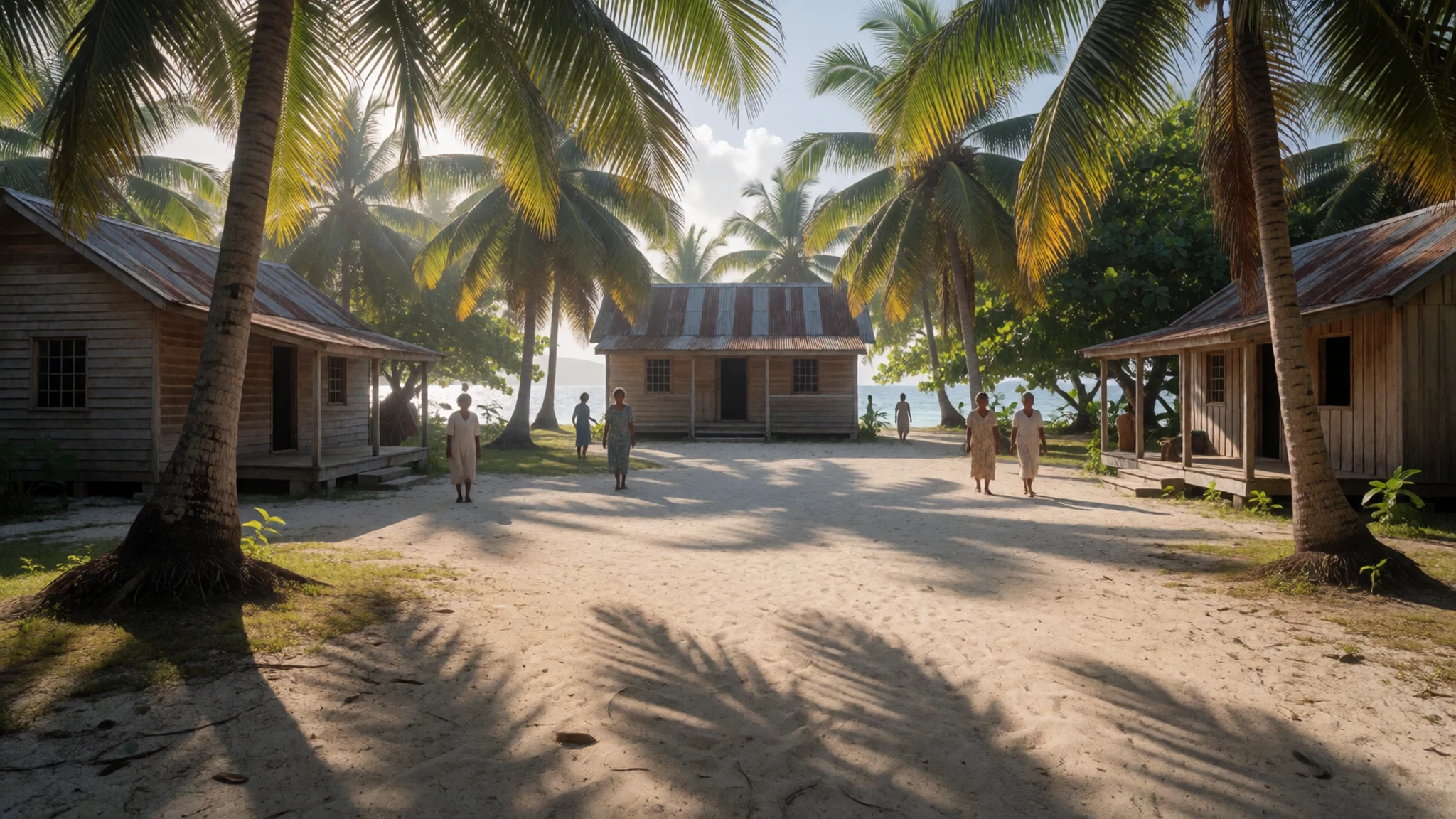
- Nukuoro Islet — Nukuoro Atoll
Nukuoro Islet is the largest islet by a wide margin, and it holds most of the population and the municipal capital. A visitor, if invited, would find a working village rather than sights: houses, gardens, the four-room school, boats on the shore. A map of islet names in the Nukuoro language helps make sense of the ring.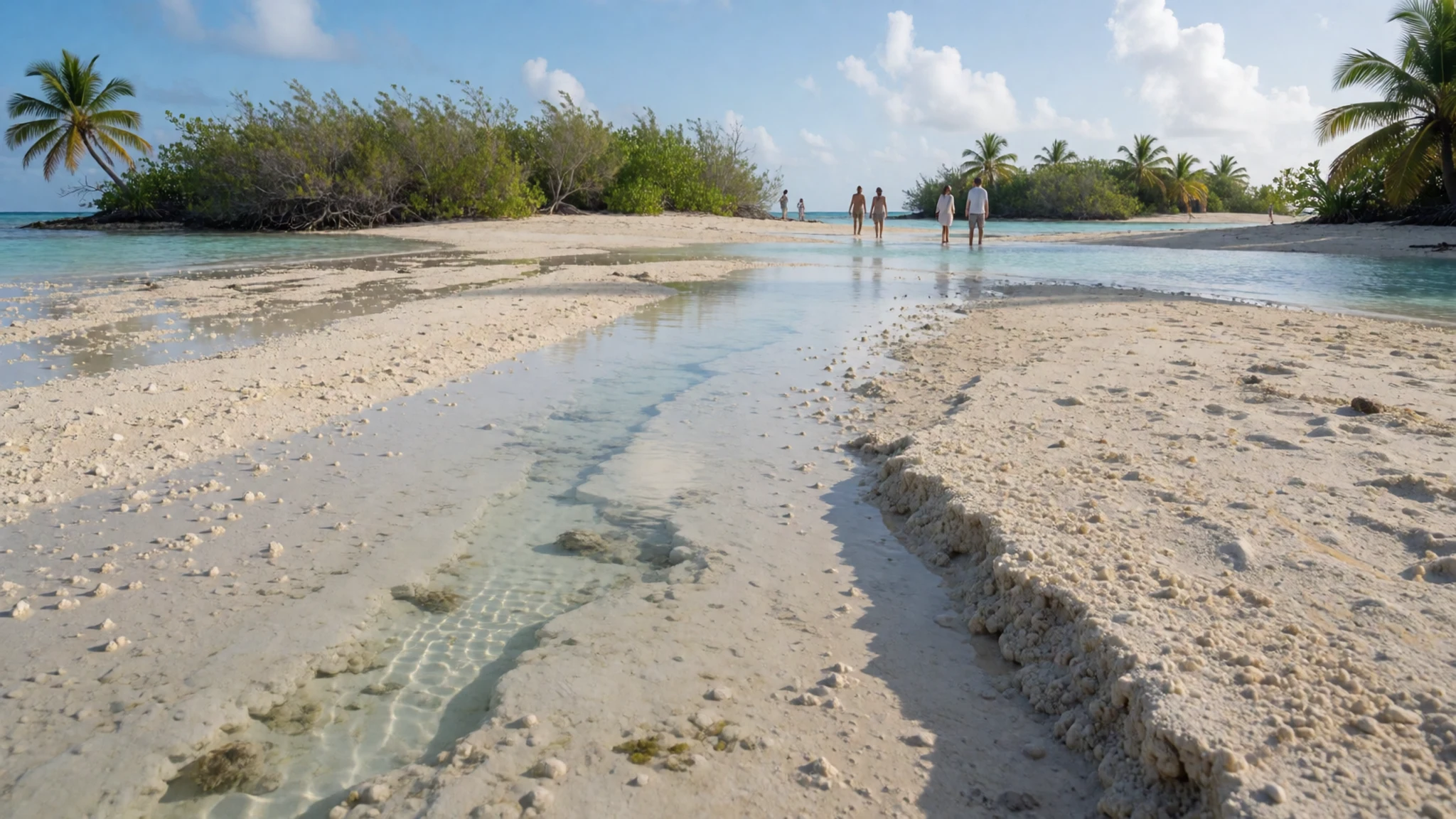
- Tino aitu ancestor figures — Museum collections and Nukuoro festivals
Nukuoro is known for tino aitu, carved wooden ancestor figures, with 19th-century examples now in museums such as the Honolulu Museum of Art. Seeing one there is the easiest way to meet Nukuoro art. A life-sized figure, garlanded with flowers, has also appeared at a cultural festival.
- The black pearl oyster project — Nukuoro Atoll
Black pearl oysters are now farmed on the atoll, a recent project that brings the community extra income alongside fishing and taro. It is a working enterprise, not an attraction, so any look depends on an invitation from the islanders and their local government.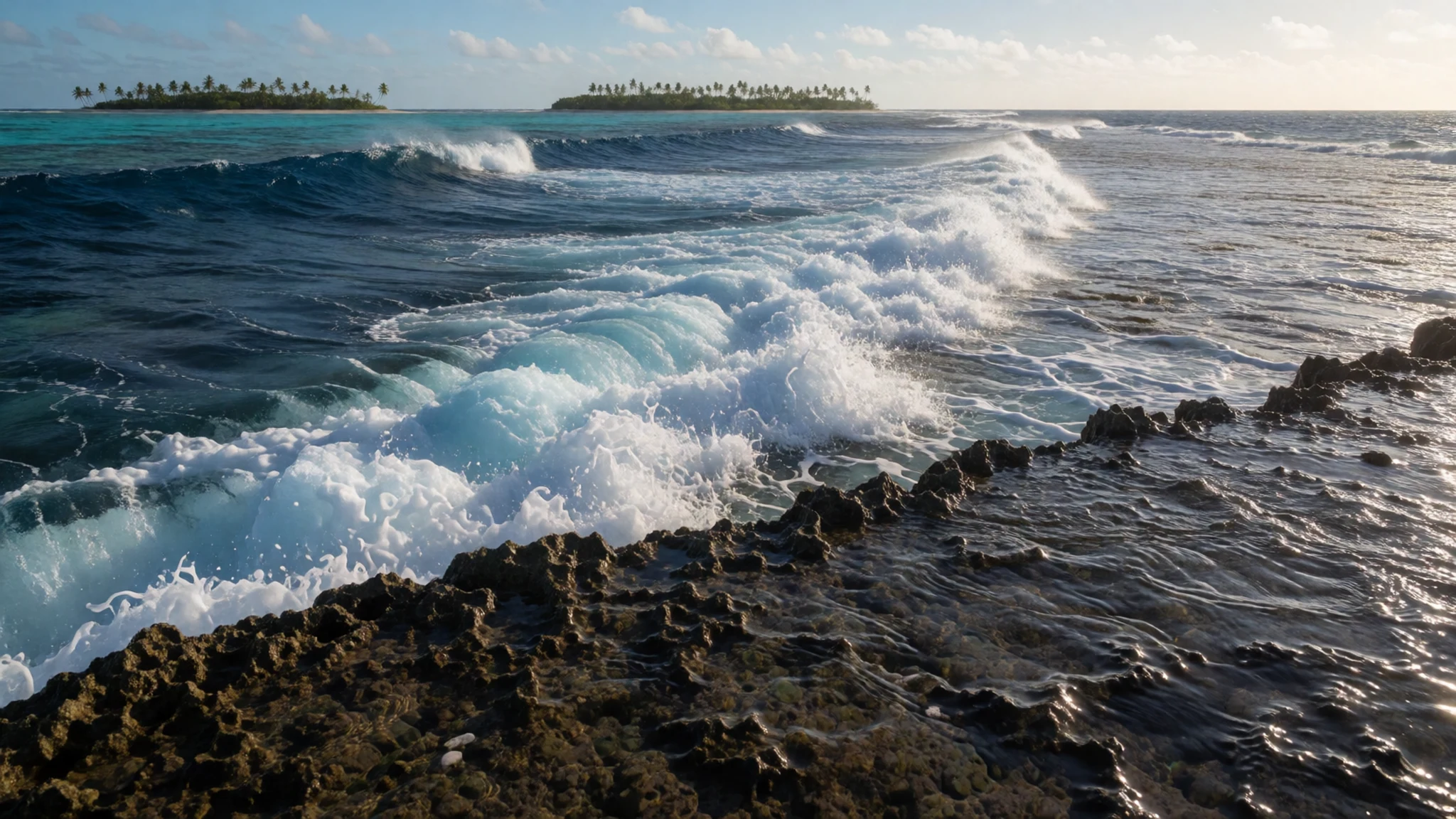
- Nan Madol — Pohnpei
Most travellers meet Nukuoro's state through Pohnpei, and Nan Madol is a major ruin there: a city of about ninety artificial islets linked by tidal canals, once the seat of the Saudeleur dynasty. Basalt columns and stone walls mark old temples, bathing places and vaults, and nature has reclaimed part of the site.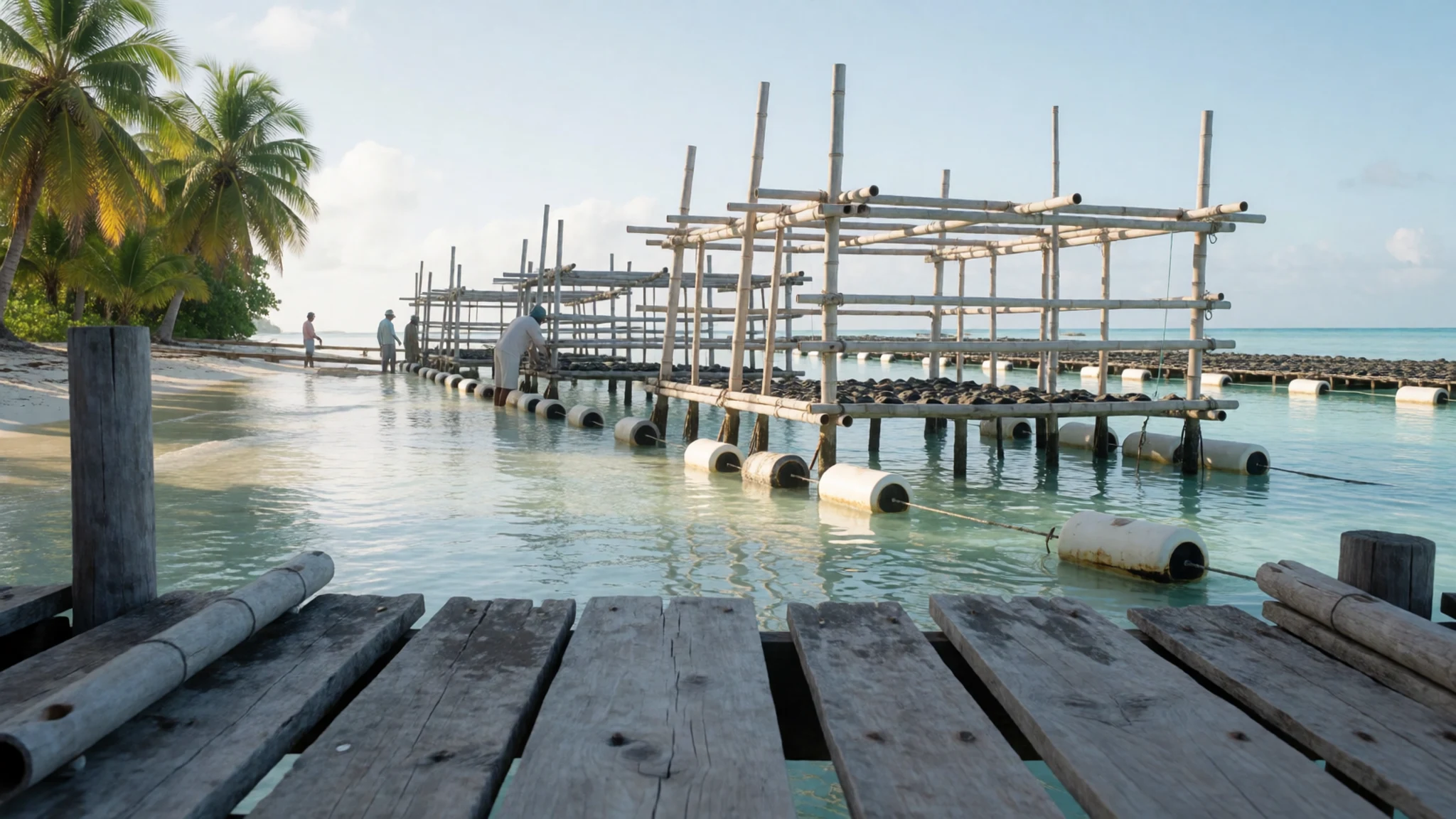
Culture
Nukuoro is a Polynesian community in a mostly Micronesian country, and its culture reflects that. The Nukuoro language is related to Samoan, and the islanders trace their origins in oral tradition to Samoa, so identity is carried as much by spoken narrative as by written history. Many Nukuorans now live on Pohnpei, which means the culture is kept alive in two places: on the atoll itself, and among relatives in Pohnpei, where gatherings and festivals bring people together.
Wood carving is the best-documented art. The tino aitu, figures of ancestors, now sit in museum collections abroad, and life-sized figures turn up at festivals, sometimes dressed with flower garlands. Daily rhythm follows the tides, the fishing and the gardens, and decisions about the atoll are made locally through the municipal government rather than by outsiders.
Because visitors are so rare, a new arrival is likely to be a matter of interest for the whole community rather than a private transaction. Hospitality is best repaid with patience, modesty and willingness to follow local arrangements, including the unhurried timing that a remote island imposes. Elsewhere in the Federated States of Micronesia, travellers are urged to respect traditional ways, and the same applies here.
Before landing, walking between the islets or photographing people, homes or carvings, ask permission from the local leaders or the municipal office, and accept a refusal gracefully.
What to wear
Nukuoro has little written about its dress in the sources behind this reading, so what follows is general to the Polynesian outliers and the wider region; ask islanders or the municipal office for specifics. Traditional clothing in this part of the Pacific is built from wraparound cloth, woven mats and plant fibres such as pandanus and coconut, and flower garlands are still used to mark celebrations, as the lei on a carved figure at one festival shows. Finer traditional dress is usually kept for festivals and church or community occasions rather than daily life.
Everyday wear today is simple and practical: cotton T-shirts, shorts, wraparound lengths of cloth, and sandals or bare feet on sand. Goods arrive by boat only occasionally, so clothes are worn until they are thoroughly worn out.
A visitor should dress modestly, with shoulders and knees covered in the village, in line with island norms. Light cotton or quick-dry fabrics suit a hot, humid, equatorial climate, and a wide-brimmed hat and sun-protective shirt matter more than style. Bring reef shoes or sturdy sandals for crossing coral rubble between the islets, and a light waterproof for squalls. Swimwear is for the water and the shore away from houses, not for walking through the village.
What to eat
- Taro — Village gardens and family kitchens on Nukuoro Islet
Taro is the staple crop of Nukuoro and sits at the centre of most meals. The corm is usually boiled or baked until soft and eaten with fish or coconut. Meals are normally taken at family or community gatherings, so it is best sampled as a guest.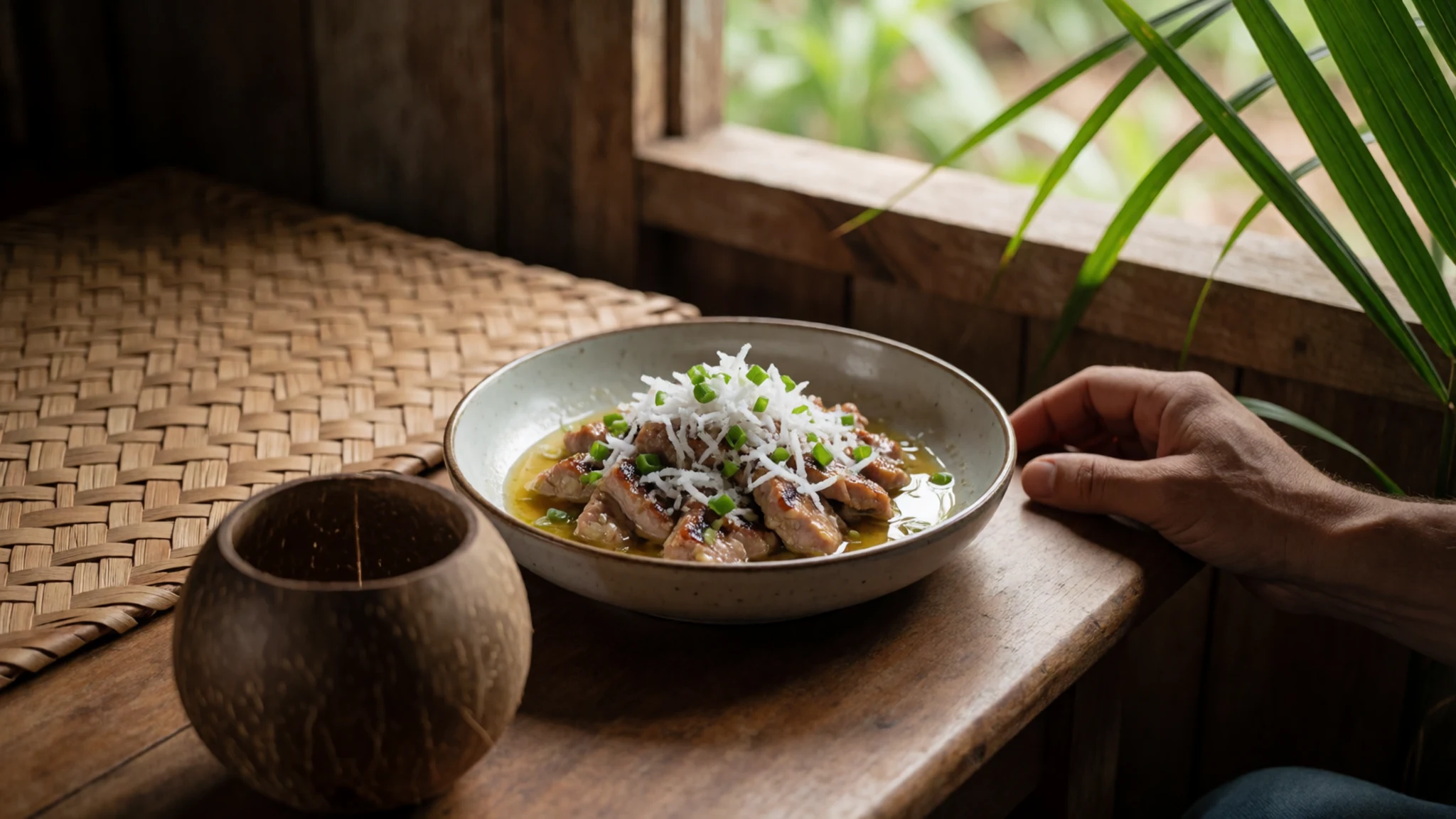
- Reef and lagoon fish — The shore and landing beaches when boats come in
Fishing is a main occupation, so fresh fish comes first. It is usually grilled over a fire, boiled in a simple broth or sometimes eaten raw with citrus where available. Ask which catch is offered that day; the lagoon and the open ocean give different fish.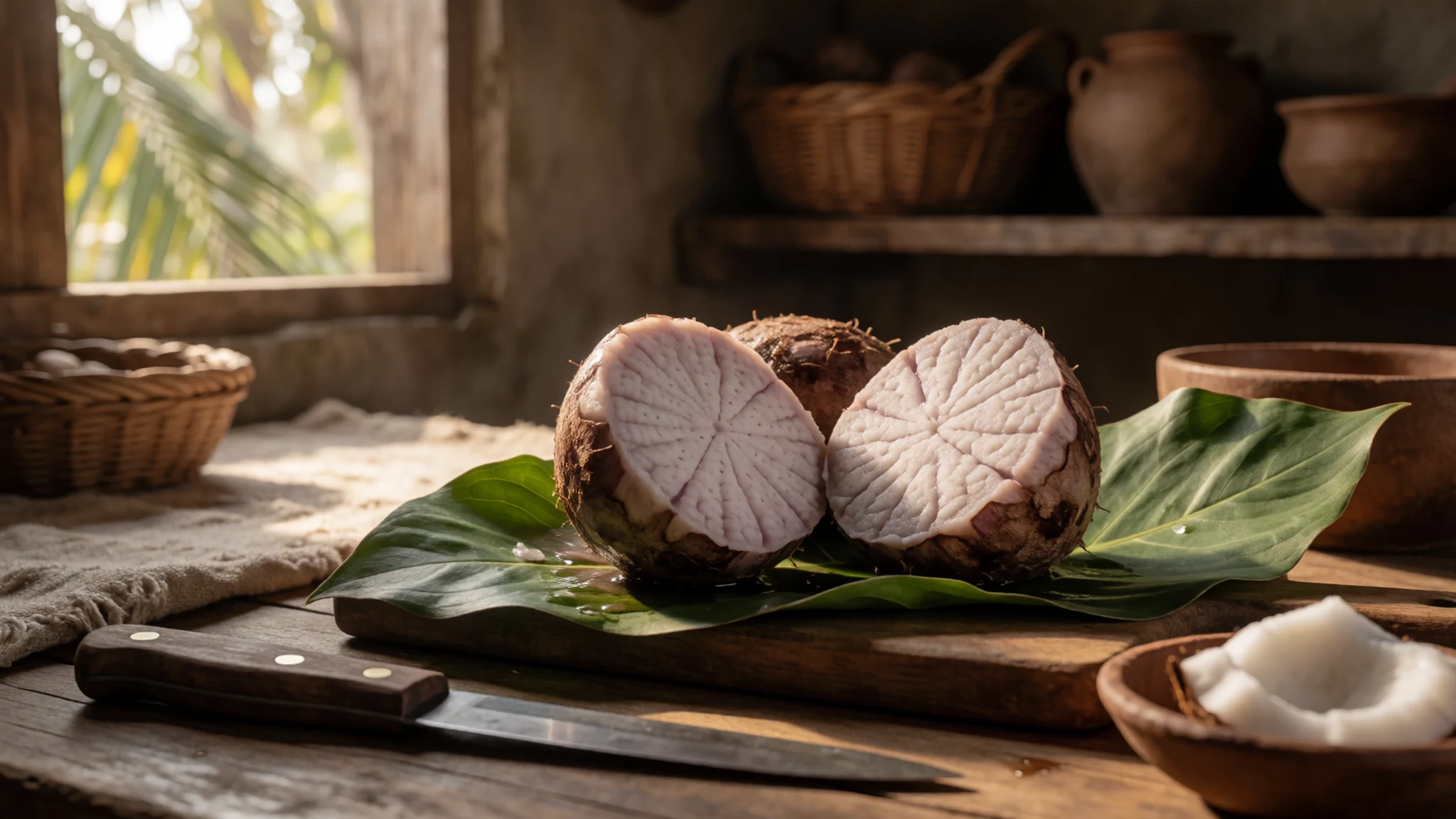
- Coconut — Everywhere on the islets, from drinking nuts to grated flesh
Coconut is both food and cash crop, since copra is one of the atoll's trades. Green nuts give a safe, sweet drink in the heat, and grated flesh or cream finishes taro and fish dishes. Offering to pay a small contribution for nuts is courteous. - Home-raised meat — Community feasts and family meals
Livestock is raised on the islets, so meat appears mostly at feasts and celebrations rather than every day. It is typically cooked in an earth oven or boiled. Feast food is shared widely, and a visitor who is invited should accept small portions of everything offered. - Breadfruit and other garden foods — Household plots, when in season
Where breadfruit and other starchy garden foods are in season, they are baked, boiled or roasted as an alternative to taro. Supplies on a small atoll depend on weather and harvests, so visiting sailors are better off carrying their own staples.
Plan it
Best time. Nukuoro sits close to the equator, so it is warm and humid all year; February to April is generally the drier, calmer stretch for the region, but check forecasts. The real timing constraint is the passenger boat, which calls only once every few months, so plan around that.
How long. 3–5
Getting there. There is no airstrip. Fly to Pohnpei, for example on the United Airlines island-hopper route from Honolulu via Majuro, Kwajalein and Kosrae (check the airline's site for current schedules), then ask the Pohnpei state and Nukuoro municipal offices about the passenger boat or a yacht passage for the last leg.
Budget. high
Tips
- Contact Nukuoro's municipal government on Pohnpei well ahead; there is no tourism infrastructure and no hotel or restaurant to rely on.
- Boat sailings are irregular, so keep flexible dates and a buffer on the return, since a missed boat can mean waiting months.
- For a stay under 30 days in the Federated States of Micronesia no entry permit is needed, but carry a passport with at least 120 days of validity.
- Bring cash, water purification, sun protection, medicines and spare food, as supplies on the atoll are limited.
- Sailing yachts should ask permission before anchoring or landing.
Etiquette
- Ask permission before landing, walking between islets or photographing people and homes.
- Dress modestly in the village and keep swimwear to the water.
- Bring gifts of useful supplies and share meals graciously rather than offering money, unless asked.
Nearby
Sources
- Wikidata Q187864 (CC0)
- Wikipedia: Nukuoro (rev 1364055284) (CC BY-SA 4.0)
- Wikivoyage: Federated States of Micronesia (rev 5400968) (CC BY-SA 4.0)
- Photo: Nukuoro ISS013-E-28610 (NASA/Johnson Space Center) (Public domain)
- Photo: Nukuoro map (Peter Minton, derivative work Regi51) (CC BY 3.0)
- Photo: Islet names of Nukuoro Atoll (Emdrum95) (CC BY-SA 4.0)
- Photo: Ancestor figure (tino aitu), Nukuoro Atoll (Hiart) (CC0 1.0)
- Photo: Nkr-20160623-samouli-0005 (Emdrum95) (CC BY-SA 4.0)
- Photo: ISS002-E-9227 View of the Caroline Islands (NASA) (Public domain)
- Photo: Nukuoro North map (Peter Minton) (CC BY 2.5)
- Photo: Nukuoro South map (Peter Minton) (CC BY 2.5)


