Wind Cave National Park
Wind Cave National Park, United States
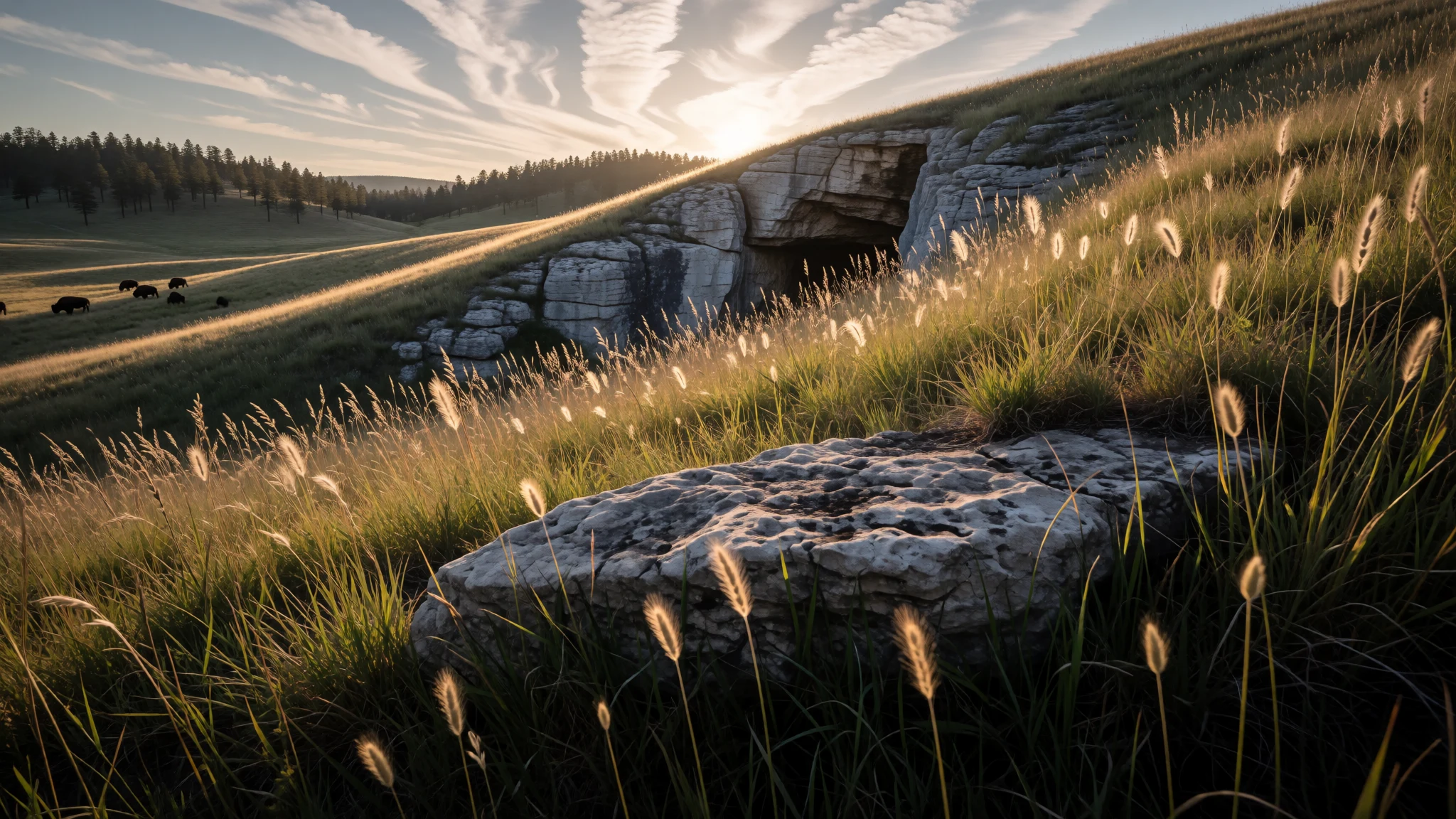
Wind Cave National Park pairs a breathing, honeycombed cave with open Black Hills prairie, and holds a place sacred to the Lakota.
The place
Wind Cave National Park lies in the southern Black Hills of western South Dakota, a short drive north of the town of Hot Springs. It protects two landscapes that feel unrelated: rolling mixed-grass prairie and pine-dotted hills at the surface, and a tightly folded maze of passages underneath. The park was founded in 1903, and the cave was the reason for it. The name describes what the cave does. Air moves through a small natural opening, flowing in when the pressure outside is higher than the pressure inside and blowing out when the balance tips the other way. Near the opening the draught can be strong enough to ruffle the grass. Underground, the cave is not the classic hall of dripping stalactites. Its signature is boxwork, thin blades of calcite that cross one another in honeycomb patterns on walls and ceilings, and the park holds the great majority of the boxwork known anywhere. Frostwork, which is a coat of tiny spiky crystals, and little knobs called popcorn add detail. The passages are packed densely into a modest footprint, which is why surveyors keep mapping more of them. Nothing has been found to link the cave to Jewel Cave nearby. At the surface, the grassland is a rare surviving piece of the prairie that once stretched across the Great Plains. Bison, pronghorn and prairie dogs are the animals most visitors notice, usually from the road. The visitor centre is the base for cave tours, and the cave itself stays cool and damp whatever the weather above.
Its story
Wind Cave National Park rests on ground that was known and valued long before it became a park. The Lakota, the Cheyenne and other peoples travelled and camped around the cave, and so did early settlers, though no record survives of anyone going inside. For the Lakota the opening is Washun Niya, the breathing place, and it is sacred. In their oral history it is where the first people emerged from the world below, led by Tokahe, the first human to step out. That account sits at the centre of Lakota origin traditions. The surrounding hills mattered in practical ways too. Game sheltered here in winter, so camps and hunting grounds gathered around the area, and it was sometimes described as a kind of larder. The legal story is bleaker. Two treaties signed at Fort Laramie bound the Lakota to the United States government and then cut back the borders of Lakota land in the Black Hills, part of a wider pattern of dispossession across the country. The cave was later made a national park in 1903, under President Theodore Roosevelt, and it was the first cave protected in this way anywhere. Geology explains the rest. The cave formed in limestone, and boxwork grew where mineral-filled cracks hardened and then stood out as the surrounding rock slowly wore away. Today the place is understood in two registers, the scientific and the sacred, and visitors are asked to respect both.
What to see
- Boxwork — Inside the cave
Boxwork is the reason Wind Cave stands apart. Thin calcite fins project from walls and ceilings and cross at angles, forming cells like a honeycomb or a cardboard divider. The Natural Entrance and Fairgrounds routes pass through the richest stretches. Look closely, because the fins are delicate and the best displays are often overhead rather than at eye level.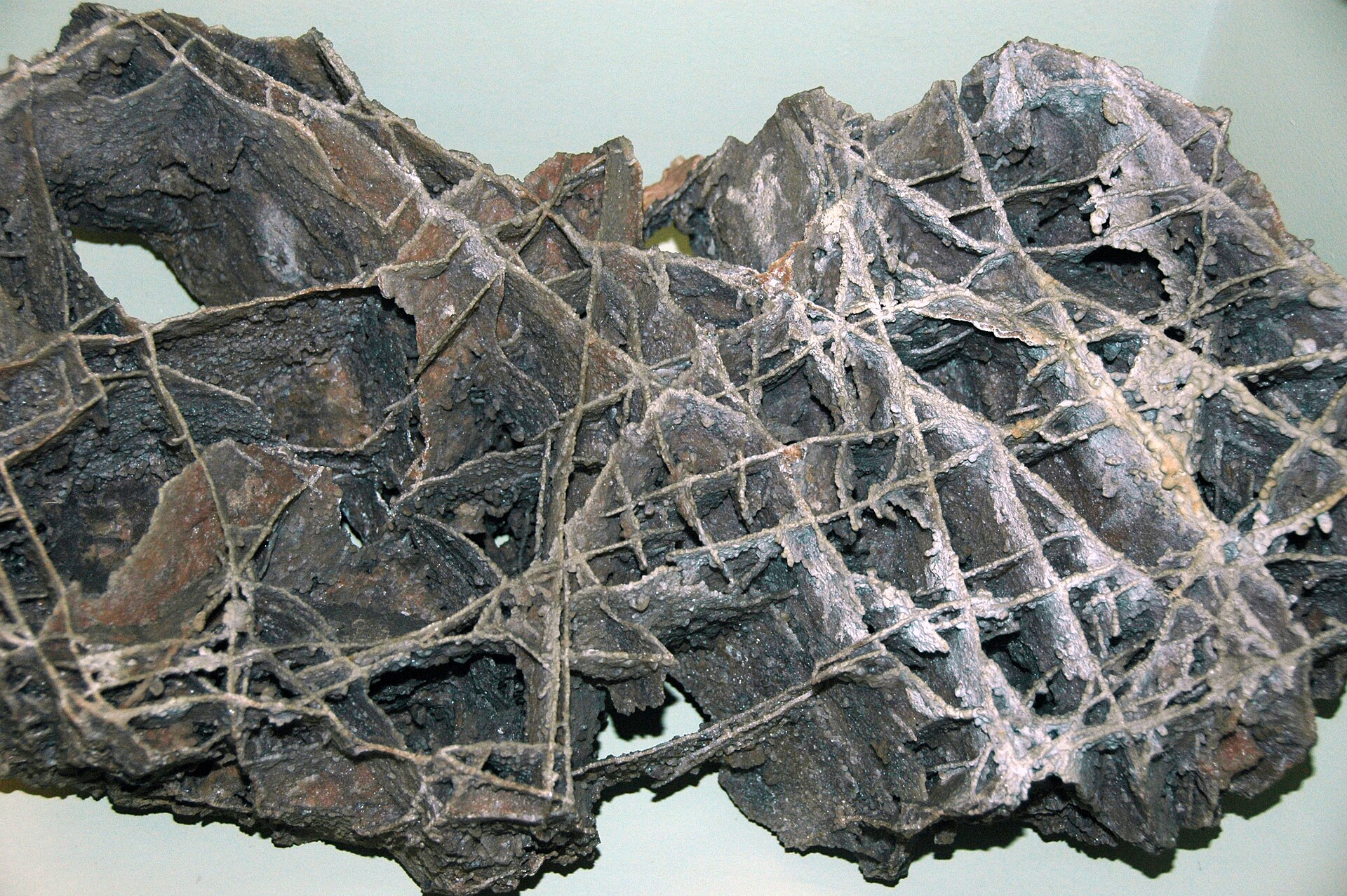
- Natural Entrance Cave Tour — Natural entrance, near the visitor centre
This is the walk-in route, starting at the small opening where the cave's breath is easiest to feel. It runs through passages where boxwork is common, mostly downhill on stairs, and finishes with a lift to the surface. Allow a little over an hour, and expect it to be moderately strenuous for anyone unused to steps.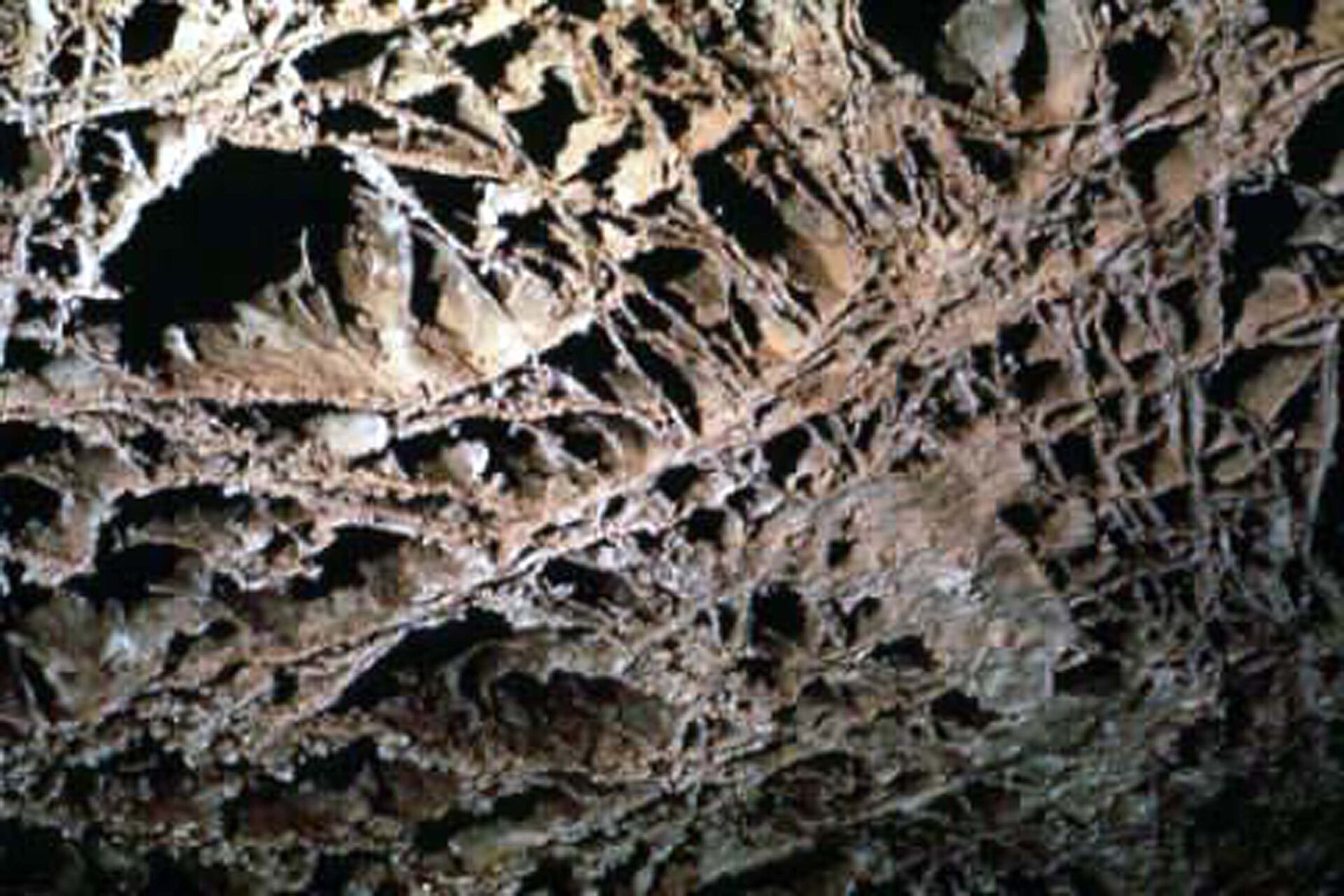
- Garden of Eden Cave Tour — Inside the cave, from the visitor centre
The gentlest of the main tours, this is a short introduction to the cave's range of formations. Entry and exit are both by lift, with a modest number of steps between, so it suits families and anyone short on time or stamina. Fees and booking details change, so check the official site before travelling. - Fairgrounds Cave Tour — Upper and middle levels of the cave
A longer and steeper tour through the upper and middle levels, taking about an hour and a half. It passes boxwork, popcorn and other formations along paved walkways, and involves a lot of stairs. Choose this one if boxwork is the draw and the knees are willing; it gives a better sense of how the cave is layered.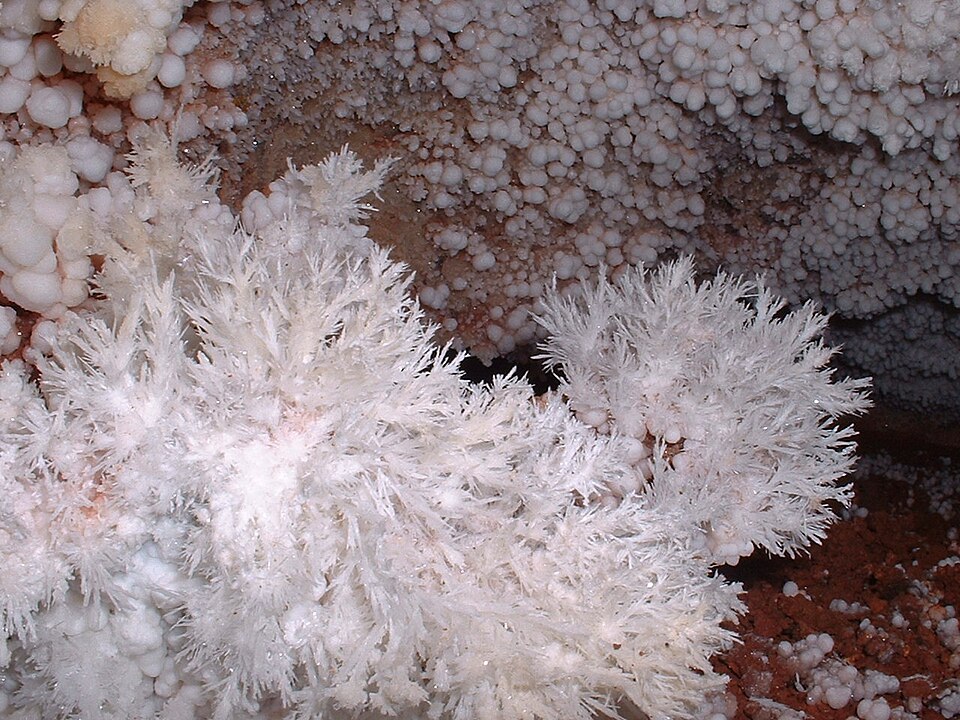
- Candlelight and Wild Cave tours — Undeveloped parts of the cave
For visitors who want something rawer, two tours leave the lit walkways. On the Candlelight tour each person carries a candle bucket through an undeveloped section, while the Wild Cave tour is a long introduction to basic caving with plenty of crawling. Wear old clothes and gloves, and check the official site for age limits and booking. - The prairie above — Park grasslands and hills
The surface deserves a morning of its own. Gently rolling mixed-grass prairie, patches of pine and open Black Hills views make a good setting for a slow drive or an easy walk, and wildlife is often close to the road. The southern end of the South Dakota Centennial Trail is here for longer hikes.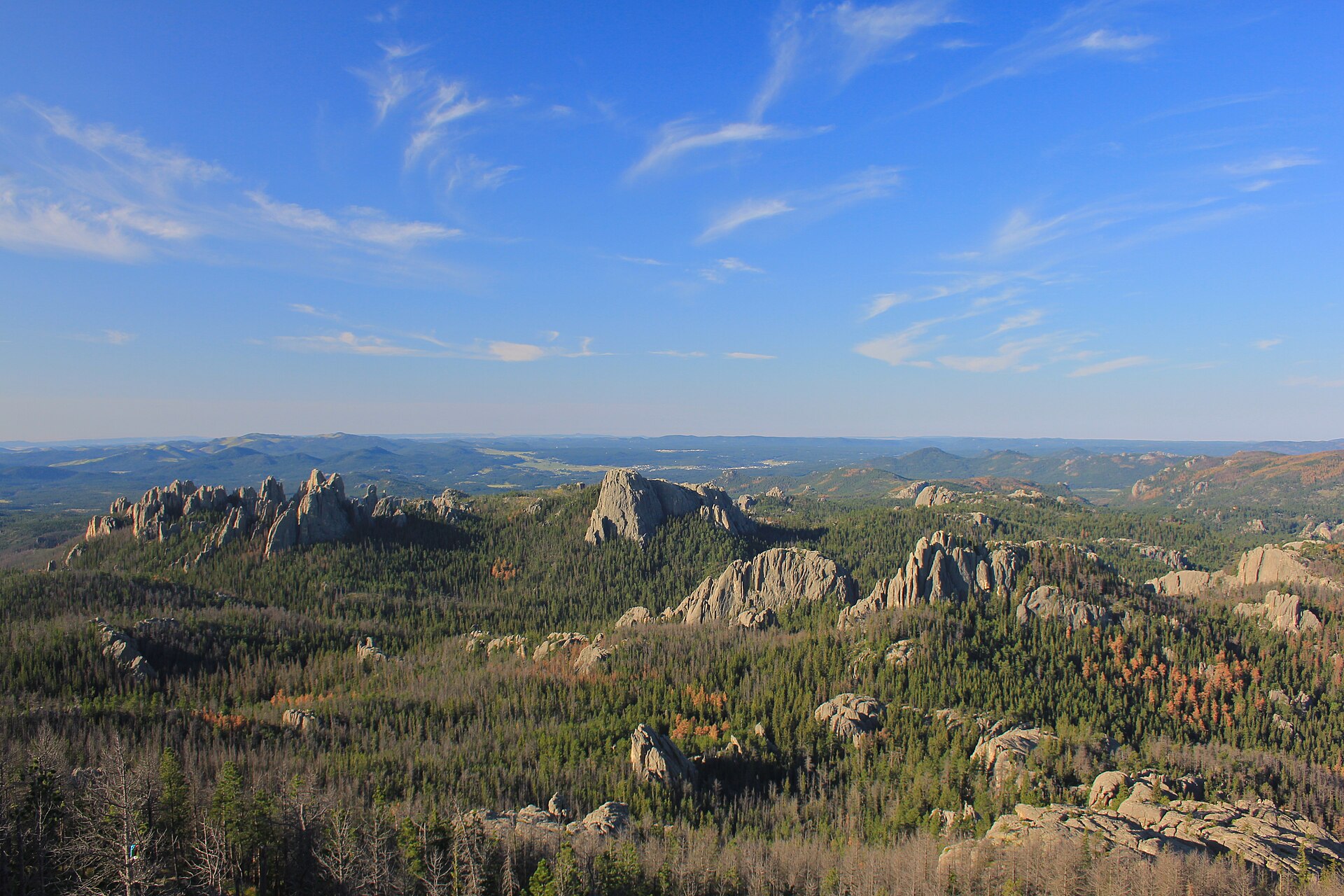
Culture
Wind Cave National Park is a place where two ways of understanding the same hole in the ground meet. To the Lakota, Washun Niya is where the first people came up into this world, and the story of Tokahe is part of living tradition, not a museum label. To the National Park Service, it is a cave to be mapped, protected and shown to the public. Visitors who listen to the rangers will notice that the park's own interpretation recognises the cave's sacred role. The Black Hills as a whole remain a source of deep grievance for the Lakota after the treaty losses, so the land is often spoken of as taken rather than simply scenic, and that is worth hearing without argument. Ranch culture is also strong in the surrounding towns, with a practical, friendly, unhurried manner. Rodeos, small-town diners and Western shops are part of everyday life there rather than staged for tourists. In the cave itself the culture is one of care. Formations grow extremely slowly, and skin oils and lint can stain them, so guides set firm rules about touching and staying on the walkway. Treat the natural entrance as a sacred place: keep to the paths, speak quietly, and never touch or take a formation or leave offerings of your own.
What to wear
Wind Cave National Park sits in Lakota homeland, and traditional Lakota dress is worth knowing about even though it is not worn day to day. Historically it was made from tanned deer, elk and buffalo hide, decorated with porcupine quillwork and, later, glass trade beads, with eagle feathers given for honours. Today those materials appear in regalia worn at powwows, ceremonies and family occasions, and ribbon shirts, trimmed with bands of bright cloth, are worn at gatherings. Regalia is meaningful clothing, never costume. Everyday dress around the Black Hills is simple and practical: jeans, work boots or hiking shoes, checked shirts, caps and the occasional cowboy hat, with fleeces and padded jackets once the sun drops. Visitors should dress for two climates at once. The prairie is exposed and bright in summer, with sudden thunderstorms, so bring a hat, sunscreen and a rain layer; winters are cold and windy. Underground the air stays cool and damp whatever the season, so a light jacket or fleece is welcome even in July. Footwear matters most: closed shoes with a good grip, since walkways can be wet and the stairs are many. Rangers may ask about shoes and clothing worn in other caves, so follow their instructions. For the Wild Cave tour wear old long clothes, gloves and sturdy boots. There is no modesty dress code at the park.
What to eat
- Bison burger — Diners and grills in Hot Springs, Custer and Rapid City
Bison is leaner than beef and slightly sweeter, and it is easy to find in the Black Hills as burgers or steaks. It echoes the animal that still grazes the prairie. Ordinary grills in Hot Springs, Custer and Rapid City often carry it. - Fry bread and Indian taco — Powwow food stalls and Native-run stands in the region
Fry bread is a Native staple of puffed, golden dough. As an Indian taco it is topped with beans, meat, lettuce and cheese. It is a standard at powwows and at Native-run food stands across the region, and it is filling after a day outdoors. - Chislic — Small-town taverns and roadside grills across South Dakota
Cubes of grilled or fried meat, usually mutton or beef, served on skewers or in a basket with toothpicks and salty seasoning. It is a South Dakota bar snack, eaten with a cold drink after a long drive. - Wojapi — Powwow stalls, Native-run cafés and local gift shops
A warm berry pudding made by Lakota cooks from wild fruit such as chokecherries, thickened and eaten with fry bread or on its own. Chokecherry preserve in jars also turns up as a local souvenir. - Kuchen — Town bakeries, diners and church fundraisers
A custard-filled cake or tart brought by German-speaking settlers and still baked across South Dakota. Peach and apple are common. A slice goes well with coffee after a cave tour.
Plan it
Best time. Late May–June and September–early October, when prairie days are warm rather than hot and the weather is steadier. July and August bring heat, thunderstorms and the heaviest crowds, while winter is cold with snow, so check the official site for which tours are running.
How long. 1–2
Getting there. Fly to Rapid City, the nearest commercial airport, and hire a car, because there is no public transport to the park. Drive south through the Black Hills towards Hot Springs; the visitor centre, where cave tours begin, is a short distance north of that town on the main road, and signs for the park are clear. Check the official site (https://www.nps.gov/wica/index.htm) for current road and tour information.
Budget. mid
Tips
- Book cave tours through the official site well before summer weekends, as places on longer tours are limited
- Drive the prairie early or near dusk, when wildlife is most active and the light is softer
- Carry water and a snack, since services in the park are limited and the nearest choice is in Hot Springs or Custer
- Bring a fleece for the cave, which stays cool whatever the weather above
- Download maps before leaving Rapid City, as mobile signal can be patchy
Etiquette
- Stay on the marked walkways and never touch formations
- Keep a safe distance from bison and other wildlife; they are wild animals and can be dangerous
- Keep your voice low at the natural entrance, which is sacred to the Lakota
Nearby
Sources
- Wikidata Q1334313 (CC0)
- Wikipedia: Wind Cave National Park (CC BY-SA 4.0)
- Wikivoyage: Wind Cave National Park (CC BY-SA 4.0)
- Boxwork in Elks Room (USGS) (Public domain)
- Skyway Lake, stalactites, Wind Cave (National Park Service) (Public domain)
- Relief location map of the USA (Uwe Dedering) (CC BY 3.0)
- View from Harney Peak (Navin75) (CC BY-SA 2.0)
- Badlands NP 2006-09-03 (KimonBerlin) (CC BY-SA 2.0)
- The Whooping Crane, Grus americana (Sasata) (CC BY 3.0)
- Calcite boxwork from Wind Cave (James St. John) (CC BY 2.5)
- Cave Frostwork and Popcorn-Wind Cave (National Park Service) (Public domain)


Wildlife
- American bison (animal)
The American bison, which many people simply call the buffalo, is a great shaggy grazer found only in North America, where wide grasslands were once its home. At Wind Cave National Park, most visitors notice bison from the road, so you can often watch from your car. Keep a generous distance, stay quiet and calm, and let the animals go about their day. Ask a ranger or guide where to look, and never feed them.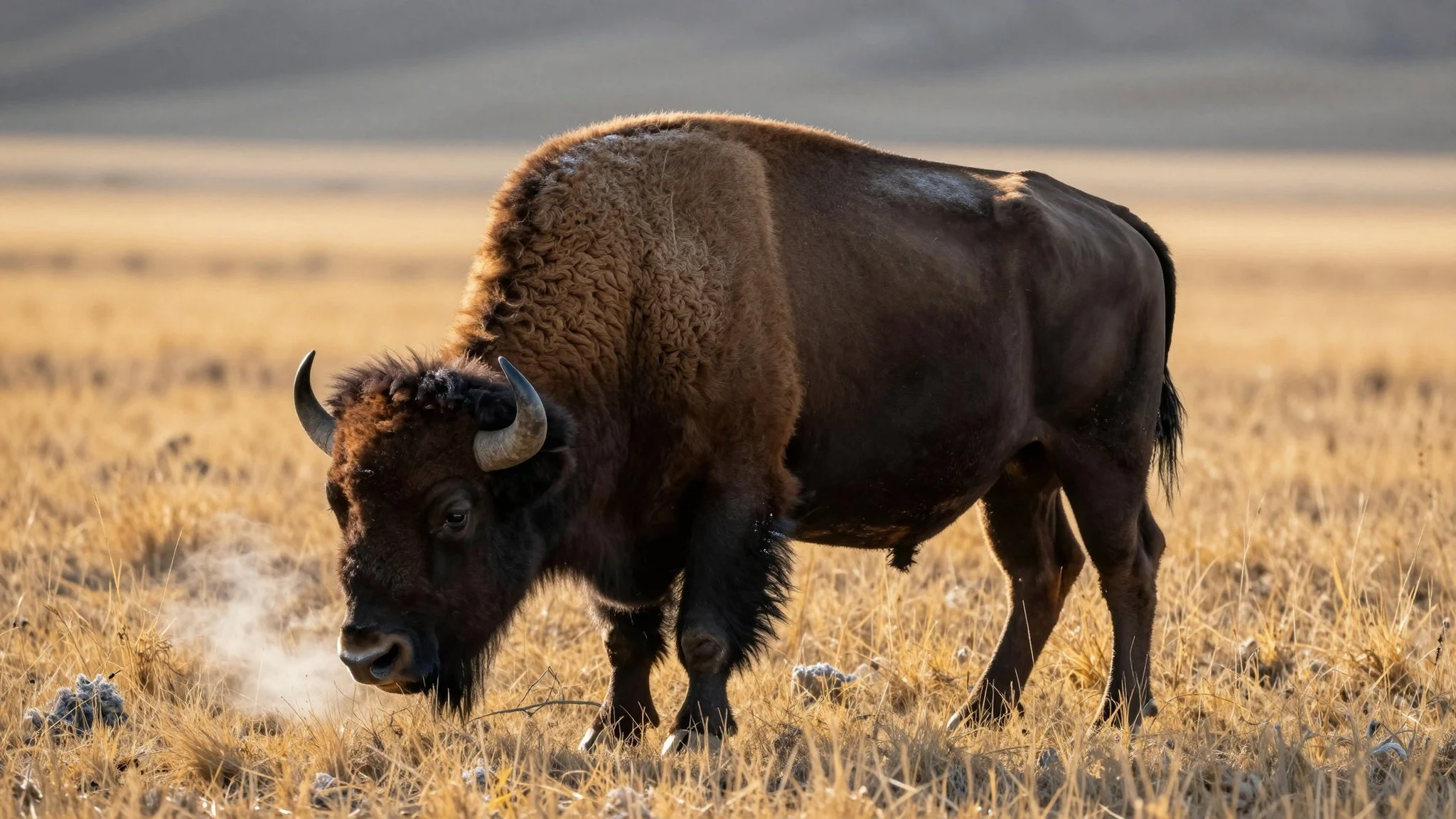
- Pronghorn (animal)
The pronghorn looks very like an antelope, but it is not one: it is the last living member of its own family, and it lives in the open country of western and central North America. At Wind Cave National Park, visitors usually notice pronghorn from the road, so scan the landscape as you drive. Watch from a good distance, speak softly, and use binoculars rather than creeping closer. A guide can help you find them, and you should never feed them.