White Temple
White Temple, Thailand
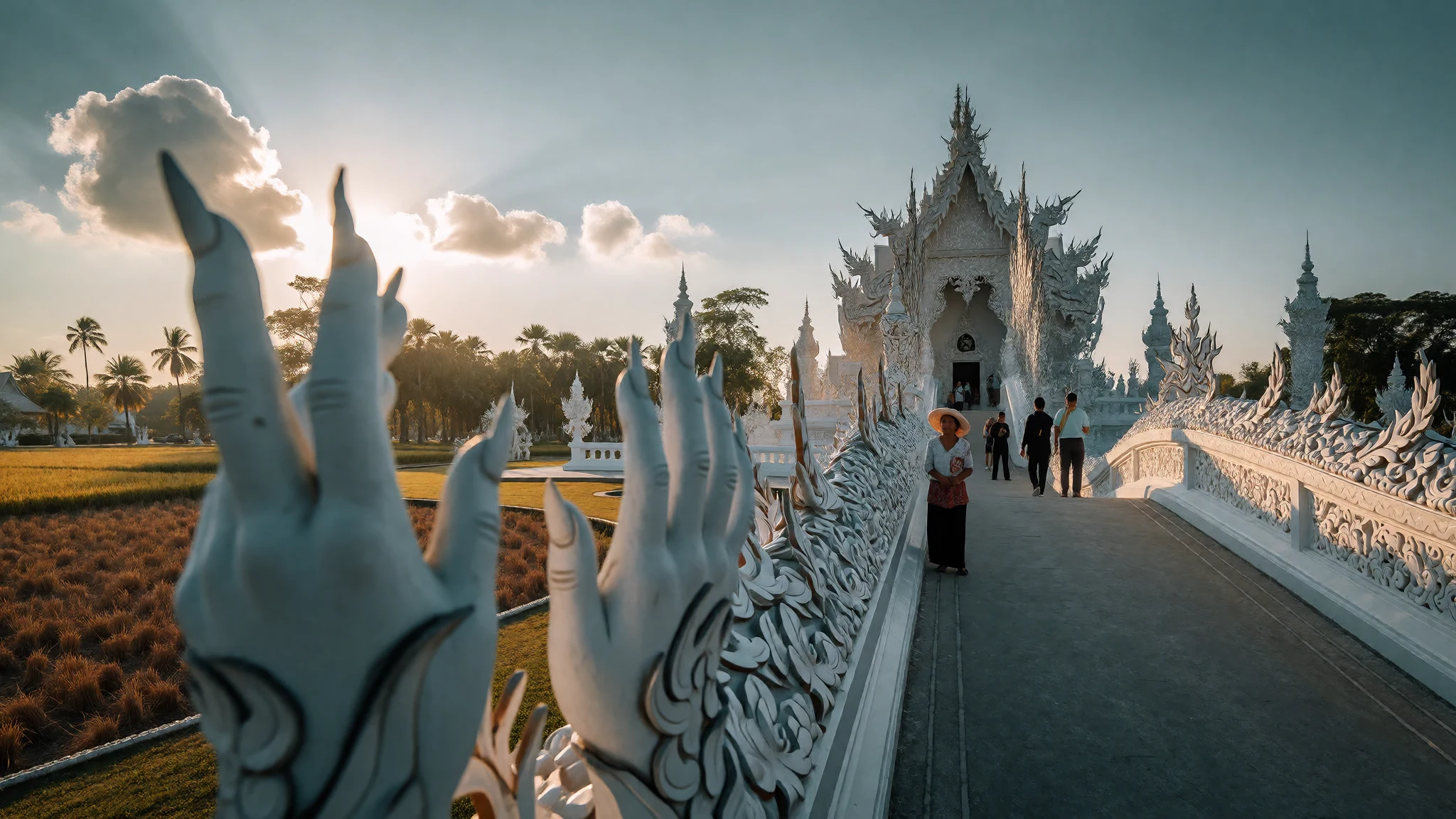
The White Temple in Chiang Rai is a living work of white plaster and mirror, built as contemporary Buddhist art rather than an ancient shrine.
The place
The White Temple, Wat Rong Khun (วัดร่องขุ่น), stands in open country outside Chiang Rai in northern Thailand. It is a contemporary temple conceived as one artwork: white plaster, inlaid mirror, and roofs that take the flame-like gables and naga lines of the north and push them into dense ornament. From the road the spires look almost weightless over the rice plain. Close to, the skin breaks into glass fragments that flash when cloud crosses the sun.
The way in is a bridge over a small lake, with hundreds of reaching hands standing in front of it, some of them clutching skulls. The sculpture puts desire, fear and unrest in front of the bridge, before the small white hall on the far side. Murals inside keep a Buddhist frame and then fill it with the present: ordinary faces, machines, scenes of harm and of appetite, so the old teaching shares the wall with the world outside. Beyond the hall, ponds repeat the white mass, and lesser shrines carry the same pale language across the lawns. One building refuses that whiteness. Finished in gold and set apart, it is the public lavatory, a blunt note on the body beside so much concern with purity.
The complex is still growing. New forms are added, and the white skin is repaired because dust, rain and hands mark it quickly. Around the artwork sit a car park, a ticket gate and the ordinary edge of a provincial town. Coaches arrive and the bridge becomes a crowd as much as a picture. Early light treats the glass well. At midday the plaster throws a hard glare, and in the wet months the paths turn slick under a low sky. Cooler weeks make the courtyards easier to walk. The White Temple rewards a slow circuit, then a prompt departure once the tour groups take the bridge.
Its story
The White Temple is the life's work of Chalermchai Kositpipat, a painter from Chiang Rai who designed the complex and treats its construction as the work itself. An older wat gathers halls across generations of donors. This one proceeds from a single imagination: a white heaven in a field, with the difficult human part shown first. His signature on the plaster belongs to that claim. The temple is a painting large enough to walk through.
The bridge and the hands are a direct page. Before anyone reaches the Buddha images, they pass bodies grasping upward in front of the bridge, some holding skulls. It is a sermon without a speaker. Want and fear are not stored in a side chapel; they stand in front of the approach. The gold lavatory pushes the same thought sideways. The white buildings hold an aspiration; the gold shed admits that people remain people after they have looked at the glass.
Inside the hall the murals continue the argument in paint. Buddhist cosmology shares the wall with figures drawn from living memory and from popular pictures. A visitor who wanted a hushed antique chapel will not find one. The walls insist that the teaching has to survive contact with war, celebrity and cartoon brightness, or it is only costume. That is why the White Temple can feel both devotional and theatrical on the same afternoon.
The White Temple reads as a project meant to outlast its maker, with room left for students and for further building. The grounds already look like a workshop: surfaces waiting, repairs chasing the weather. There is no consecration day after which the story closes. The decision is to keep adding white and mirror in a province known for border trade, tea hills and old Lanna towns. What is unfinished is part of the meaning.
What to see
- The bridge and the hands — Outskirts of Chiang Rai
At the White Temple the approach is a white bridge over a small lake, with sculpted hands reaching upward in front of it, some holding skulls. Unrest stands in front of the path; the bright gate waits at the end of it. The crossing is narrow once coaches arrive, so the useful look is downward, at the hands, rather than only along the spires. Plaster and mirror scuff under curious fingers. The bridge is for walking.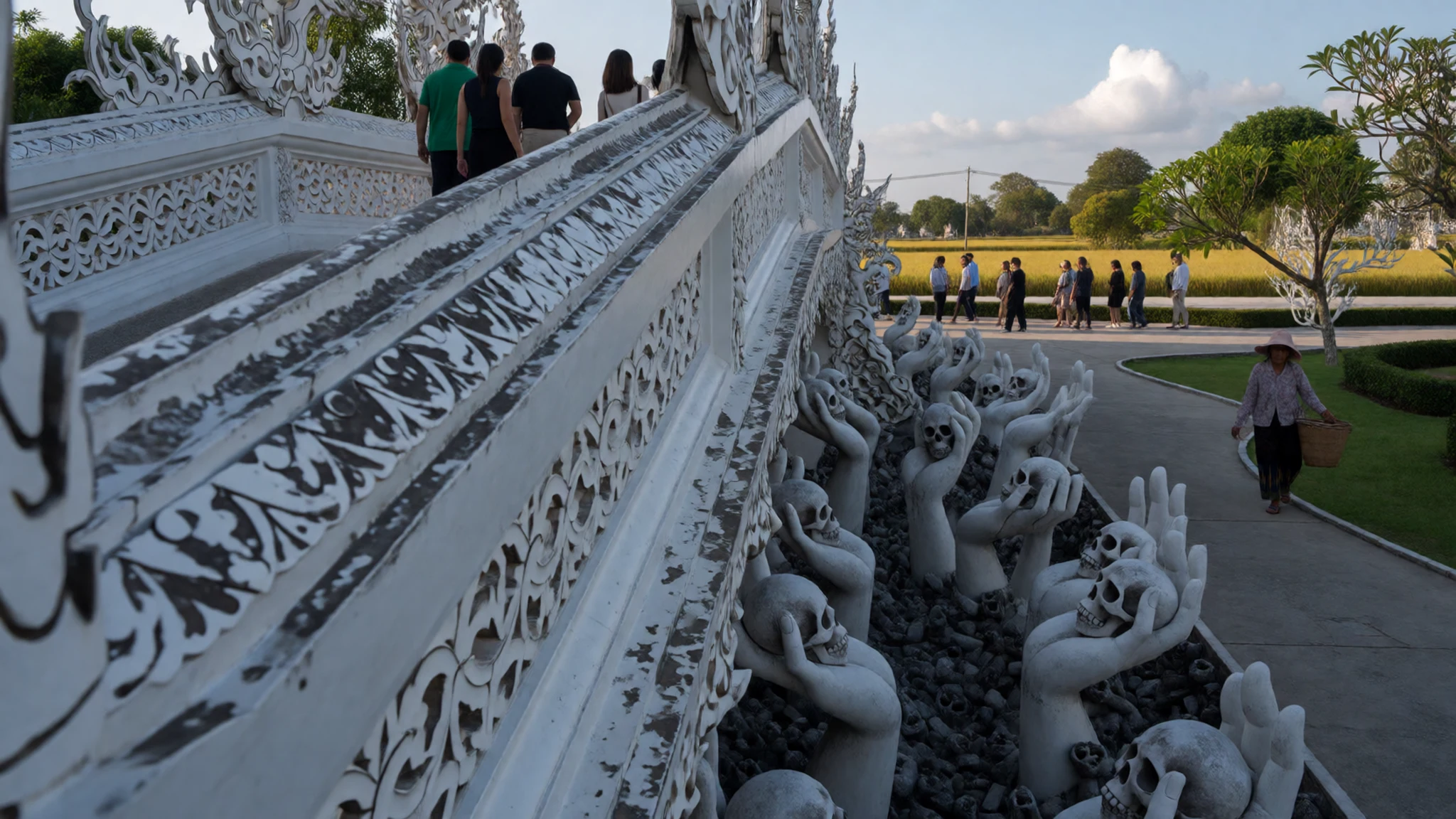
- The main hall — Outskirts of Chiang Rai
The main hall of the White Temple is smaller than the approach suggests. It is the devotional centre, a white ubosot reached after the bridge, with shoes left at the threshold. Murals cover the walls in a bright mix of Buddhist imagery and pictures drawn from the present day. The point is that collision, not a portrait. Voices stay low, and the painted plaster is not a surface to touch.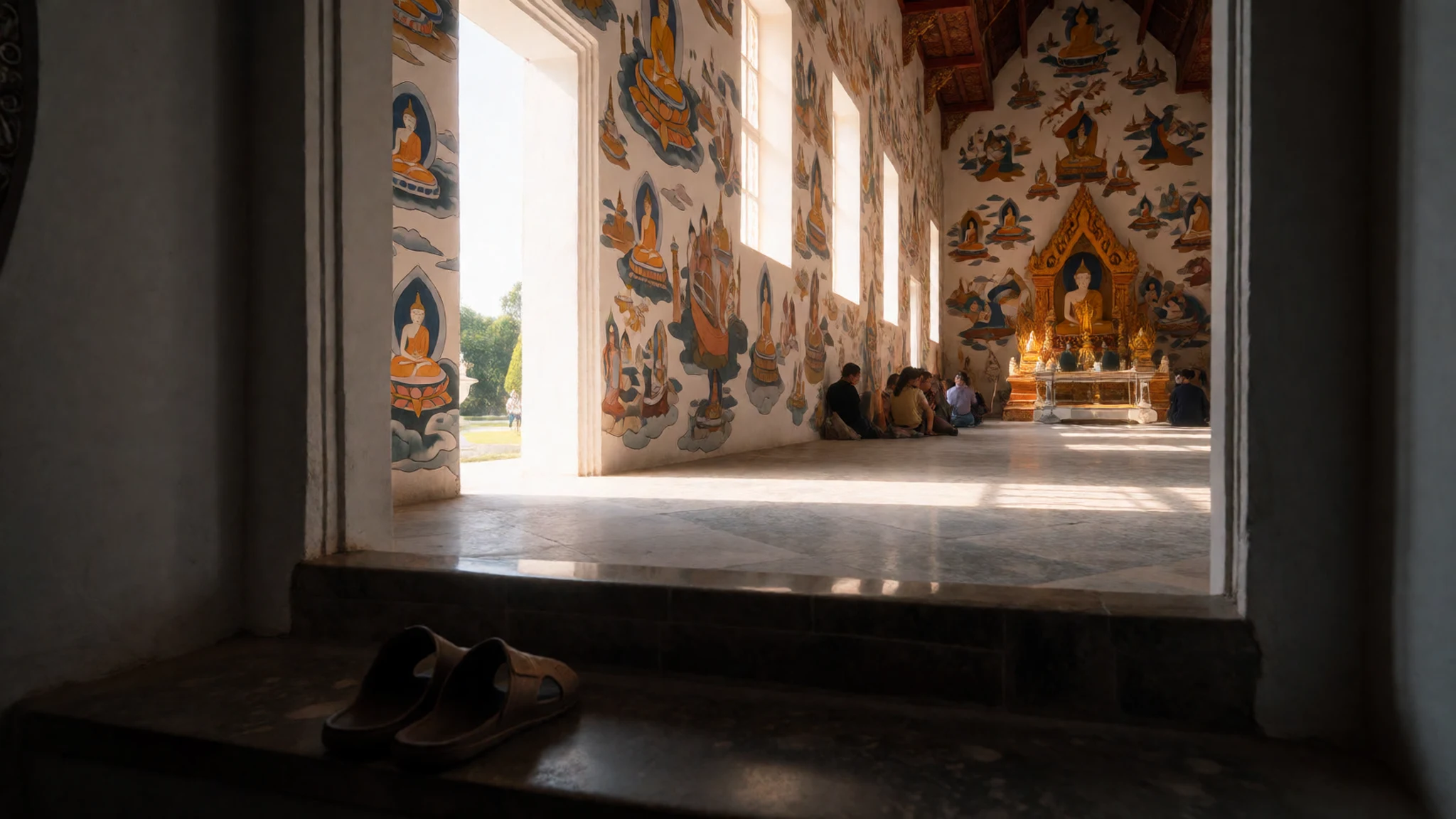
- The golden building — Outskirts of Chiang Rai
Set apart from the white halls, the golden building at the White Temple is the public lavatory, and the contrast is deliberate. In a Thai temple gold usually signals a sacred object; here it marks an ordinary human need. The exterior carries the joke in plain sight. The gilding is not a sculpture to climb. By refusing the surrounding white, this small building makes the rest easier to read.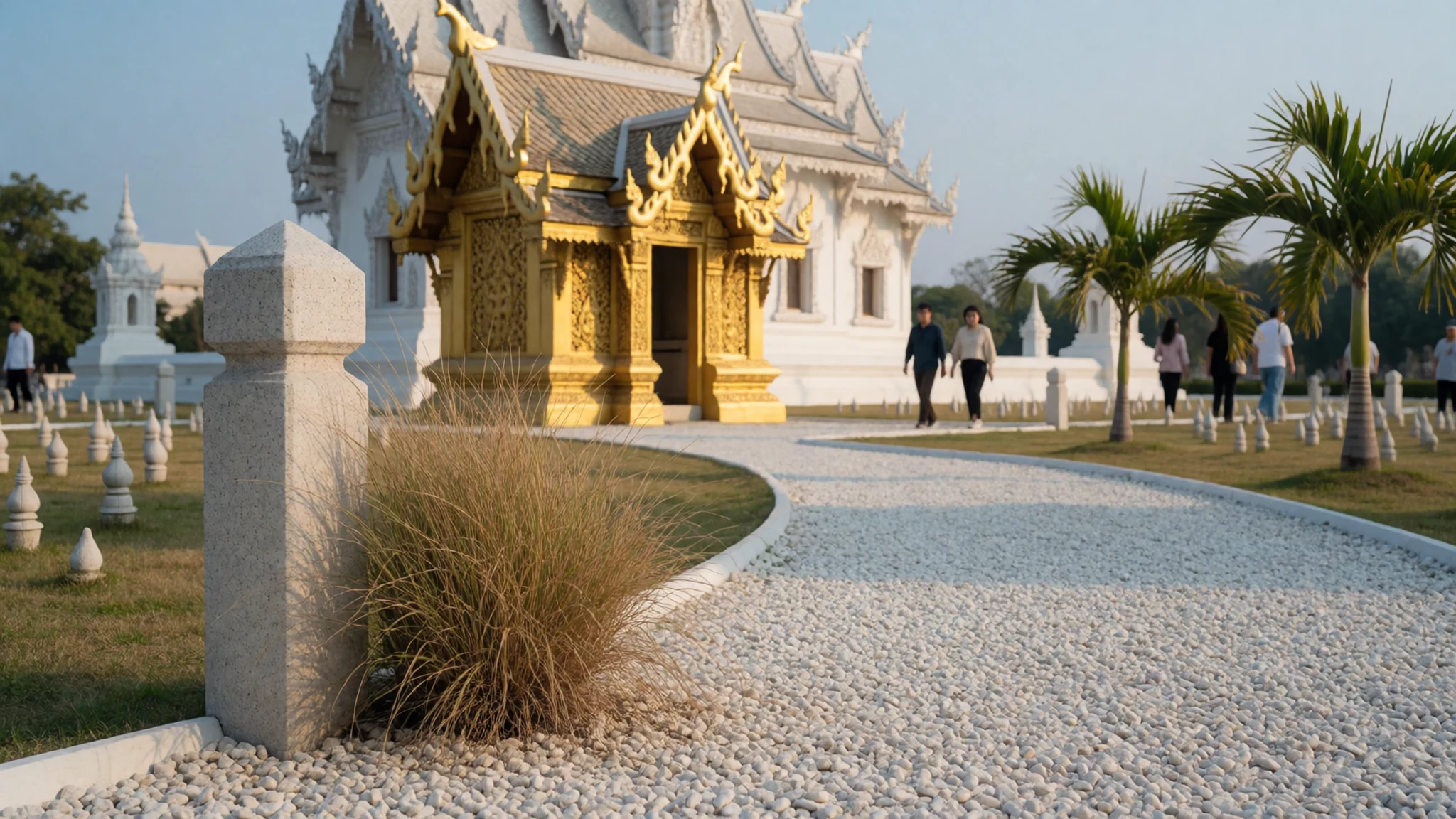
- Ponds and lesser shrines — Outskirts of Chiang Rai
Pools around the White Temple hold a second copy of the spires whenever the air is still. They belong to the design: white architecture, mirrored skin, then water repeating both. Minor shrines and pale ornaments continue around the lawns, some finished, some still in a studio state. The long circuit past the main hall is where those lesser forms make sense. Still mornings, before the coaches, keep the reflections readable.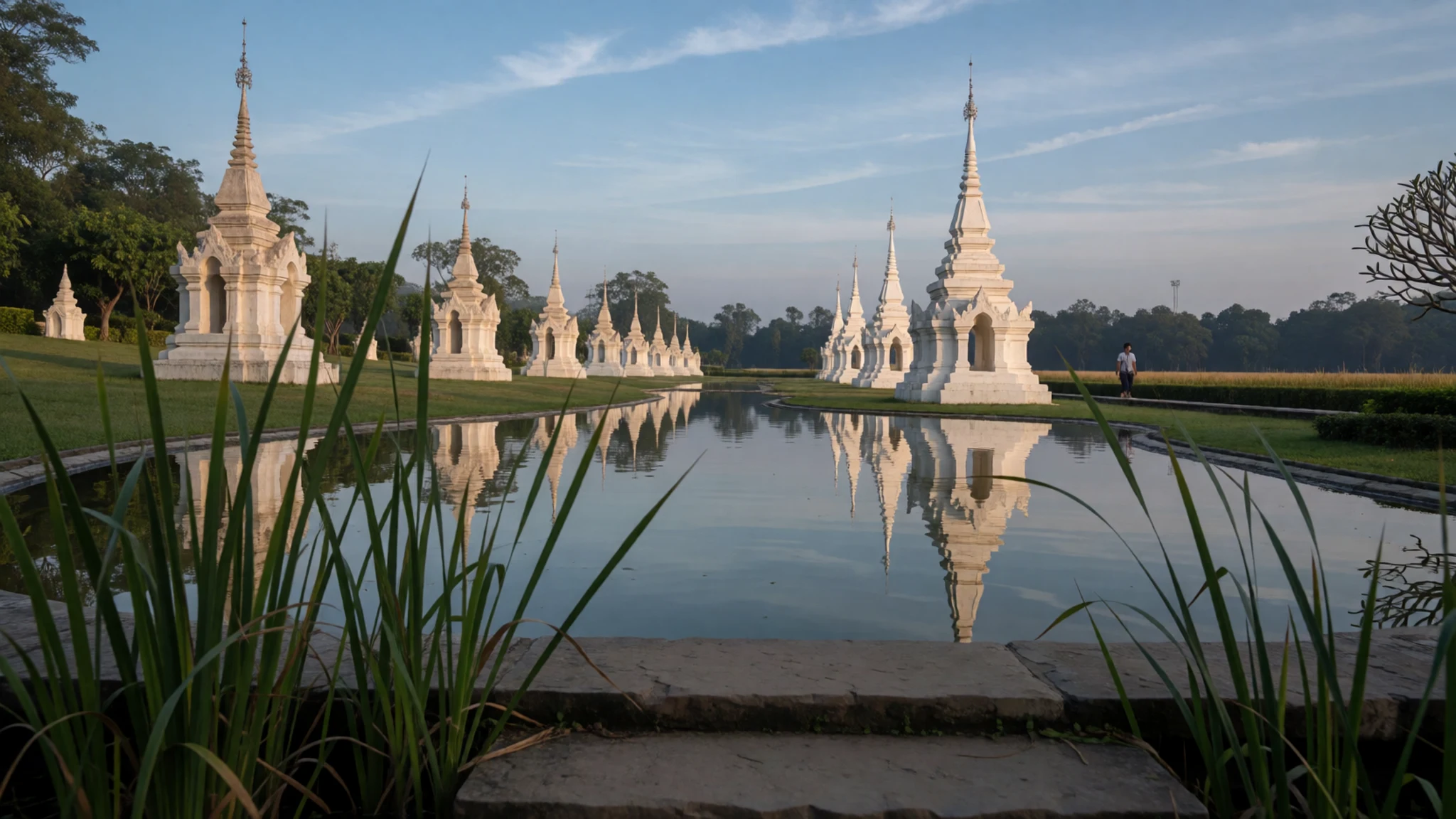
- The artist's signature — Outskirts of Chiang Rai
On the White Temple, Chalermchai Kositpipat's signature is painted large enough to count as architecture, not as a hidden credit. It states the site's claim: one hand, extended into buildings. Covered spaces nearby show more of his painting, so the bridge and the hall read as pictures with doors. Beyond them the grounds are still a workshop, forms waiting on their mirror.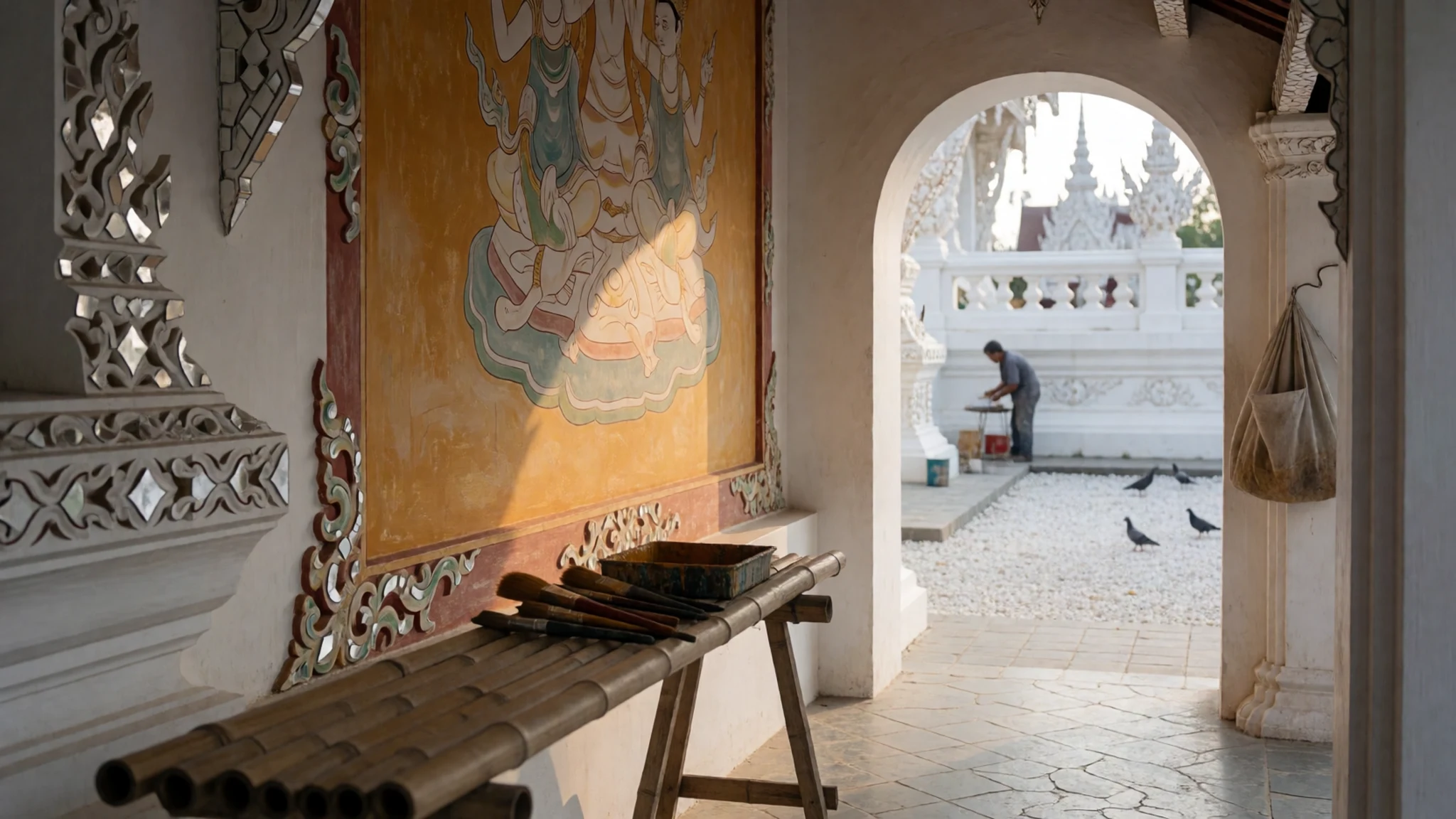
Culture
The White Temple is a working piece of Buddhist art that also behaves like a temple, and the two roles do not always want the same conduct. People come to photograph the bridge, and people come to wai in front of the images. Both are present on a busy morning. Northern Thai temple habit still applies inside the hall even when the murals look like a gallery: the Buddha image is owed the same restraint as in any wat, whatever is painted around it. Shoulders and knees stay covered. Shoes come off at the step into the hall. Feet are not pointed at the image, and heads are not set above it. The white skin of the buildings is part of the offering the artist keeps repairing, so touching walls, hands and mirror-work to feel the surface leaves a mark that someone else must clean. Outside, the golden lavatory and the reaching hands are allowed to be funny and harsh; inside, the tone drops. Vendors and the car park are ordinary Thailand, and a little patience with ticket lines and coach parties is part of visiting a place so widely photographed. At the White Temple, dress so that shoulders and knees are covered, remove your shoes before the hall, and do not touch the white plaster or the sculptures.
What to wear
Clothing at the White Temple has to answer two things: Lanna custom, and an open courtyard with almost no shade. In the north, the older woman's dress is the pha sin, a wrap skirt in silk or in cotton sometimes shot with metal thread, worn with a blouse and, on formal days, a sabai across the shoulder. Mor hom, the indigo-dyed work cloth, still turns up at festivals. Men's ceremonial dress runs to a silk pha nung and a sash over a plain shirt; everyday tradition was closer to a simple trouser and a collarless top. Chiang Rai's markets also sell silver and the woven cloth of neighbouring upland communities. Those pieces are living textiles and souvenirs at the same time.
On an ordinary weekday the city wears t-shirts, jeans, trainers and school uniforms, with a hat against the glare. Coach parties arrive in travel clothes that often fail the hall.
A visitor does better in cloth that breathes and already meets the door: sleeves, trousers or a long skirt, and shoes that come off in one movement at the step. A hat and sunglasses belong in the white courtyards and come off, with the shoes, inside the hall. In the wet months a light rain layer is enough.
What to eat
- Khao soi — Chiang Rai noodle shops and the night market
After the White Temple, look for khao soi in Chiang Rai's noodle shops and at the night market: egg noodles in a coconut-curry broth, with pickled mustard greens, lime, and a handful of crisp noodle on top. The northern bowl is richer than a central Thai curry soup.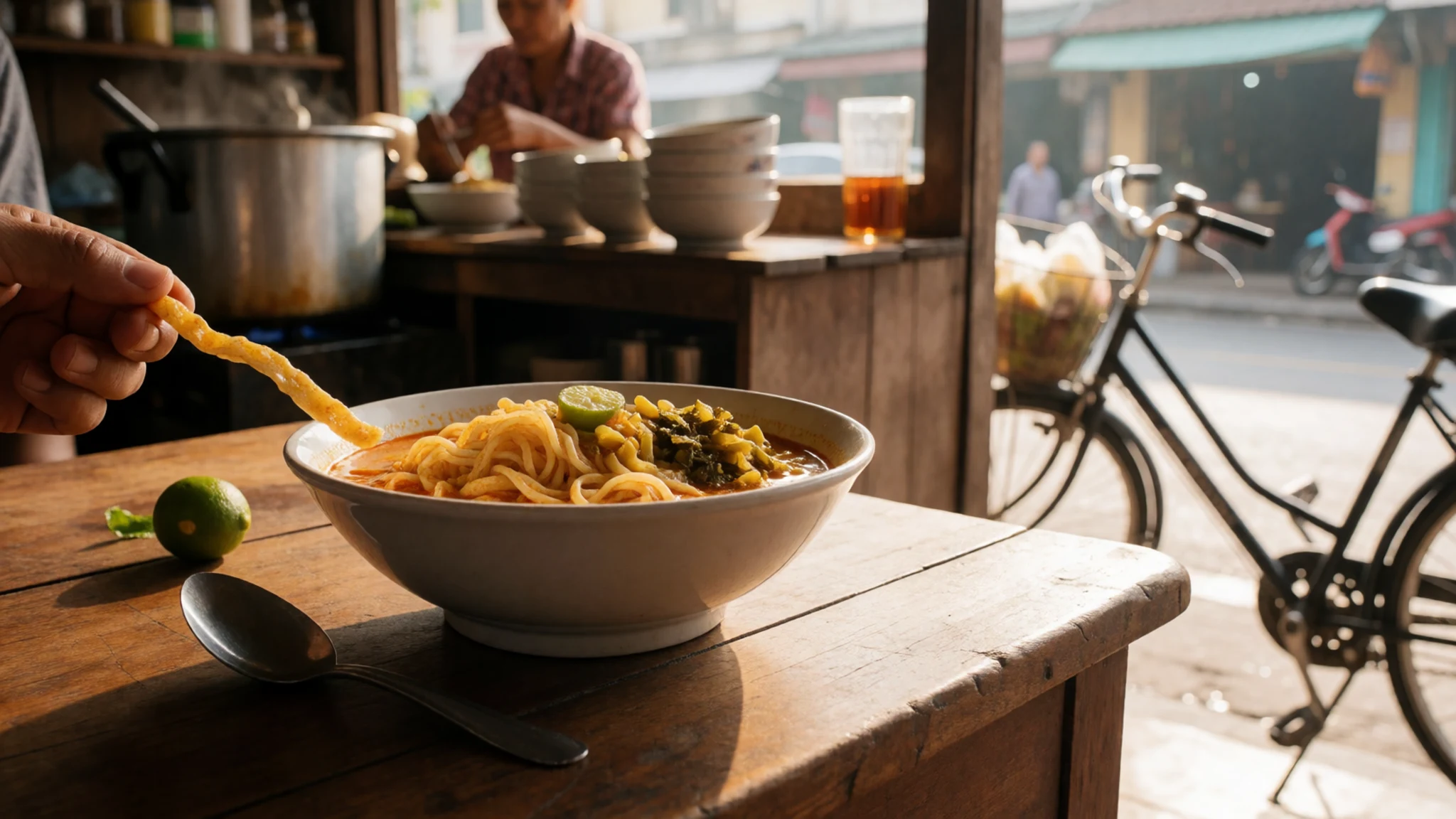
- Sai ua — Chiang Rai markets
Sai ua, the northern herb sausage, is the easy eat on the way back from the White Temple. Pork is mixed with lemongrass, kaffir lime leaf, chilli and turmeric, then grilled. Market stalls in Chiang Rai sell it by the link with sticky rice.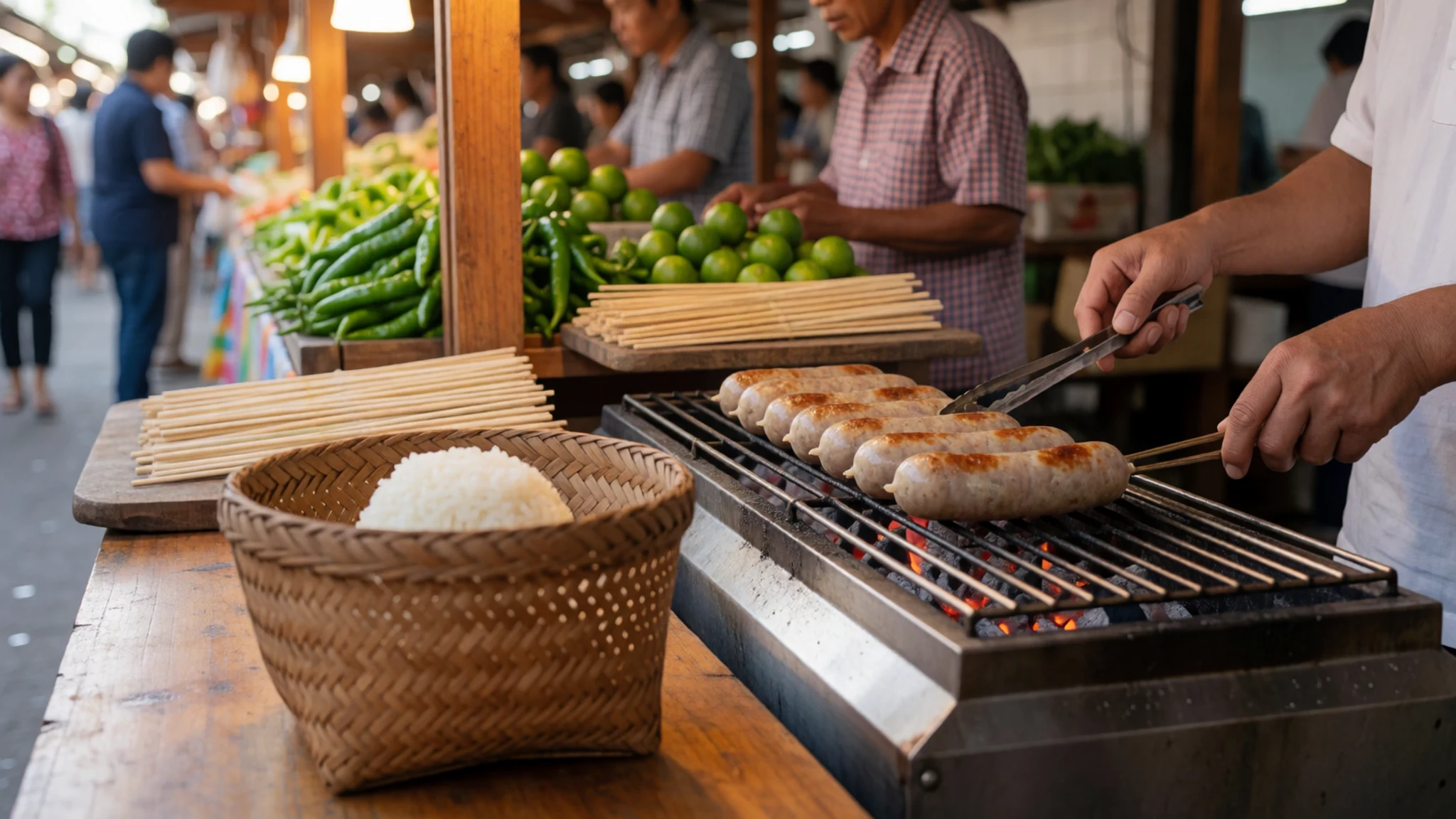
- Nam prik noom — Morning markets and rice-and-dip eateries in Chiang Rai
Nam prik noom belongs with any White Temple day that continues into Chiang Rai. Roasted green chilli is pounded with shallot and garlic, then shared with sticky rice, pork crackling and vegetables. Morning markets and small rice-and-dip eateries lay it out as a plate for the table. - Khanom jin nam ngiao — Noodle shops in Chiang Rai city centre
Khanom jin nam ngiao is a lunch to seek in Chiang Rai after the White Temple, not at the temple gate. Fermented rice noodles come with a pork-and-tomato broth, often with blood cake, plus pickled greens and crisp garlic. Noodle shops in the city centre serve it from late morning. - Sticky rice with grilled chicken — Roadside stalls between the temple and Chiang Rai
Sticky rice with grilled chicken suits a White Temple morning. The rice arrives in a basket and the chicken is charcoal-grilled, both sold from roadside stalls on the run back into Chiang Rai. A papaya salad beside it is common.
Plan it
Best time. November to February brings cooler, drier air, which makes the open courtyards of the White Temple easier to walk and the mirror work clearer. March to May turns hot and often hazy. From about June through October, heavy showers are common.
How long. 1–2
Getting there. Mae Fah Luang Airport serves Chiang Rai, and buses or minivans link the city with Chiang Mai and with Bangkok. A taxi, songthaew or hired car from town covers the last stretch to the White Temple, south of the centre. Check current entry rules locally before setting out.
Budget. low
Tips
- Arrive as early as the gate allows; coaches fill the bridge later in the morning.
- Do not lean on the white walls or the sculpted hands; the plaster marks easily.
- Carry water, a hat and sunglasses for the exposed courtyards.
- Keep some cash for stalls and short fares; do not rely on cards alone.
- In the hot months, haze can flatten the mirror work, so favour the cooler season when you can.
Etiquette
- Cover shoulders and knees, and take shoes off before the hall.
- Do not climb the sculptures or point your feet at a Buddha image.
- Ask before photographing people at prayer, and keep voices low inside.
Nearby
Sources
- Wikidata Q1641634 (CC0)
- Wikipedia — Wat Rong Khun (CC BY-SA 4.0)
- Wikivoyage — Chiang Rai (CC BY-SA 4.0)