Bagan
Bagan, Myanmar
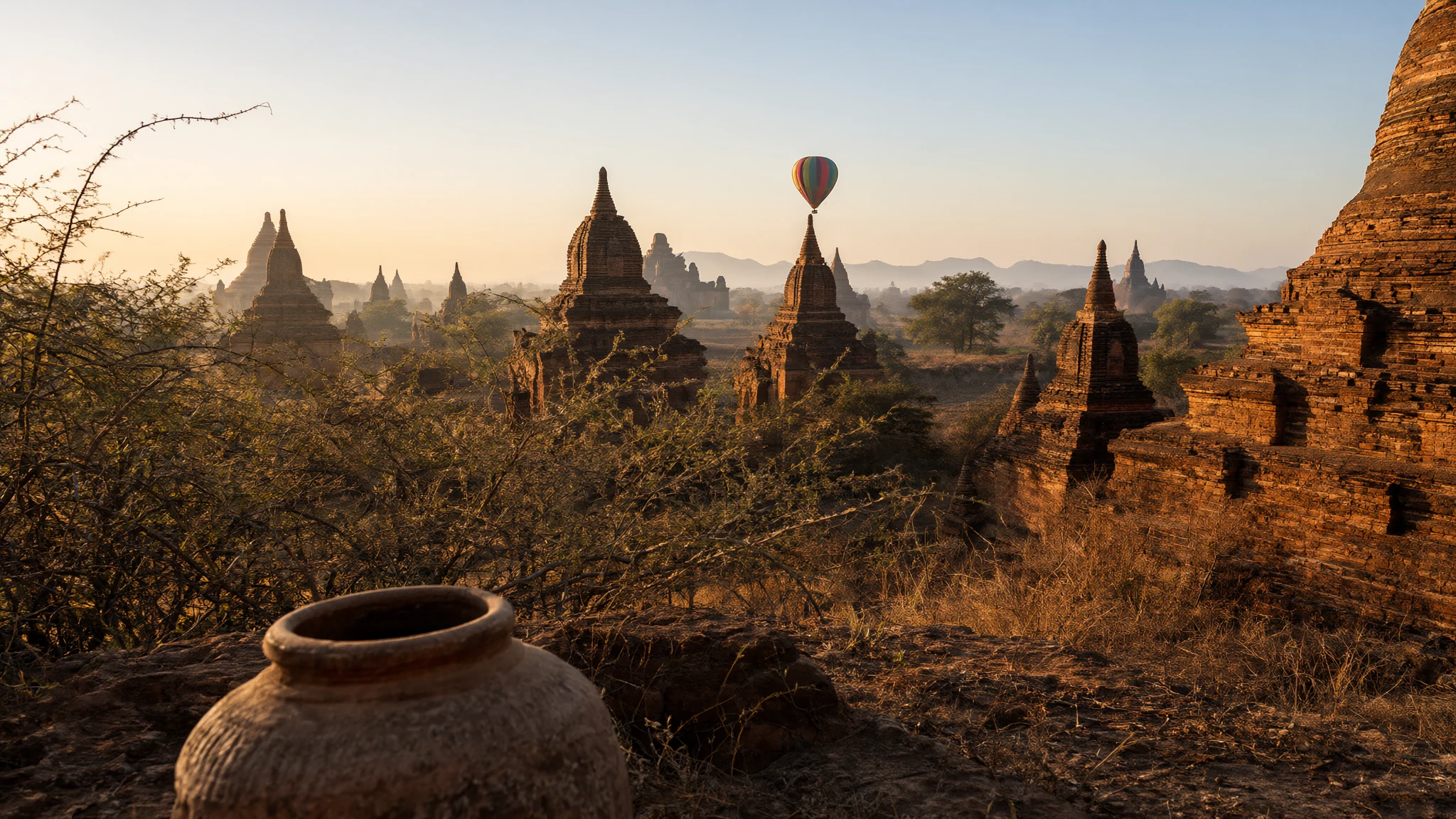
Bagan shelters the world's densest concentration of medieval Buddhist temples and pagodas, scattered across an ancient river plain.
The place
Bagan sits within the flat expanse of Upper Burma, positioned in a wide bend of the Irrawaddy River. The archaeological zone itself spans the central plains, stretching from Nyaung U in the north down through Old Bagan to New Bagan in the south. Unlike the coastal fringes of Myanmar that receive heavy tropical downpours, this territory occupies a pronounced dry zone. Sheltered from coastal moisture by mountain ridges to the west, the arid basin experiences minimal rainfall and baking daytime temperatures that dry out the surrounding scrub and earth. This stark climate has preserved thousands of weathered red-brick monuments built centuries ago.
Visitors arrive to find an immense, dusty plain dotted with bell-shaped stupas, crumbling shrines, and spired temples peeping through acacia trees and Palmyra palms. The landscape feels remarkably silent, broken only by the bells of grazing cattle or the footsteps of monks walking dusty pathways. While modern settlements hum with local trade and guesthouses, the archaeological heartland remains remarkably close to the rural rhythms of the past. As the sun arcs across the sky, the red clay and sandstone structures shift from dusty ochre to glowing amber, creating a timeless panorama across the river valley.
Its story
Bagan served as the beating heart of the Pagan Empire between the ninth and thirteenth centuries, operating as the political, economic, and religious nerve centre of the realm. Indigenous chronicles trace the settlement back much earlier, but historians generally point to the ninth century as the true genesis, when Burman populations grew in strength along the Irrawaddy valley. Under ambitious monarchs and wealthy subjects, the city expanded into a cosmopolitan metropolis of faith and scholarship. Scholars and monks journeyed from distant lands to study Pali grammar, psychology, astronomy, and medicine within its monastic walls.
During this golden age, rulers amassed spiritual merit by constructing religious edifices across the dusty plains. Over the course of two and a half centuries, thousands of stupas, brick temples, and monasteries rose from the earth. The religious culture of early Bagan was remarkably fluid and syncretic, blending local traditions, esoteric practices, and Theravada Buddhism. This extraordinary era of construction halted abruptly in the late thirteenth century as political instability and outside pressures fractured the empire, leaving the magnificent capital to slowly return to the surrounding dry landscape.
What to see
- Ananda Temple — Old Bagan
Built by King Kyan-Zit-Tha in the eleventh century, Ananda stands as Bagan's holiest and best-preserved shrine. Its name derives from a Pali word meaning boundless wisdom, honouring one of the Buddha's principal disciples. Four colossal standing Buddha statues face outward from the central core.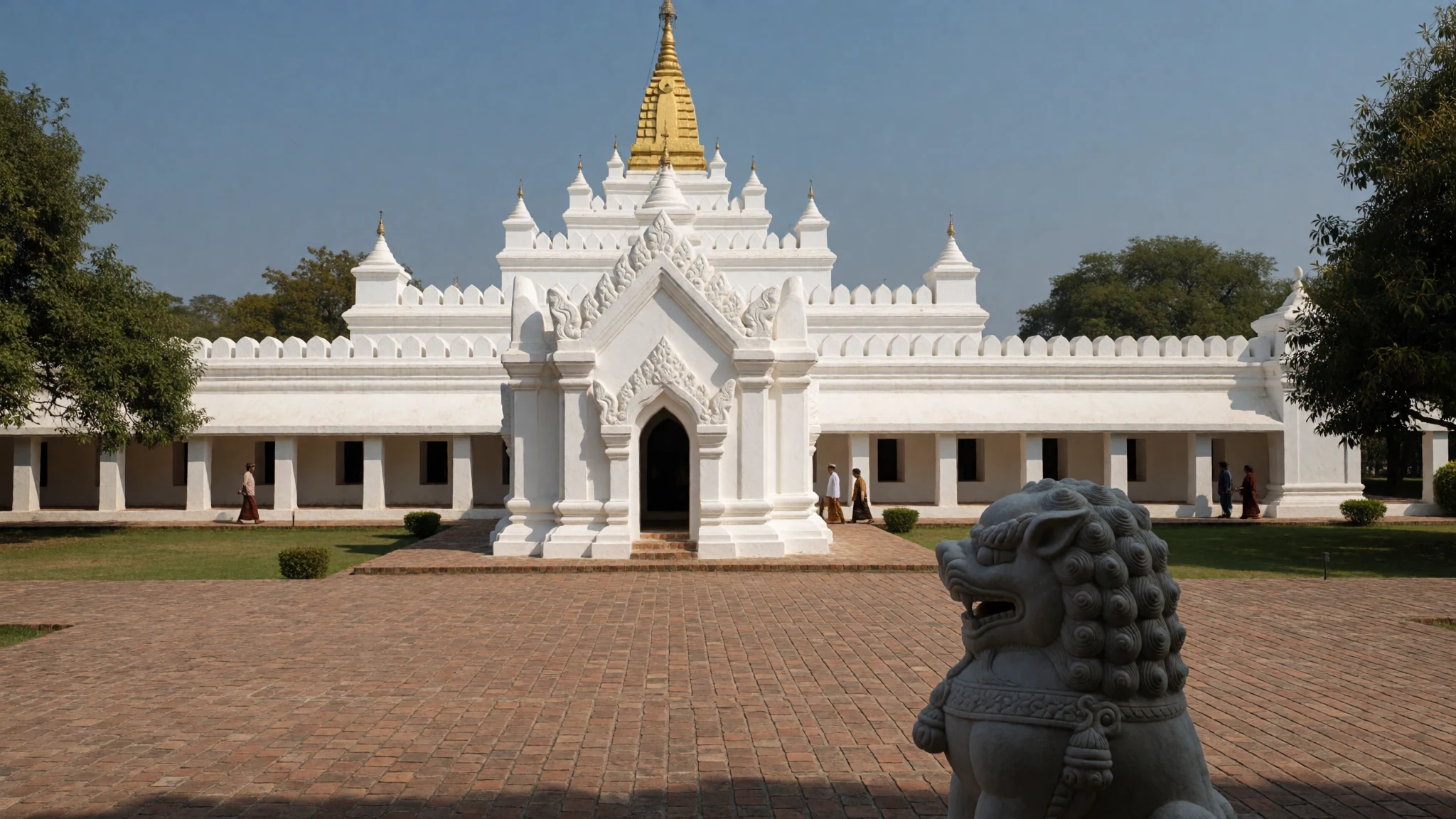
- Dhamma Yangyi Temple — Bagan archaeological zone
Commissioned by King Narathu, this massive structure is the widest of all temples on the plain. Built with remarkably precise brickwork, its gloomy interior corridors were sealed up centuries ago for reasons lost to time, giving the monument an imposing, fortress-like atmosphere.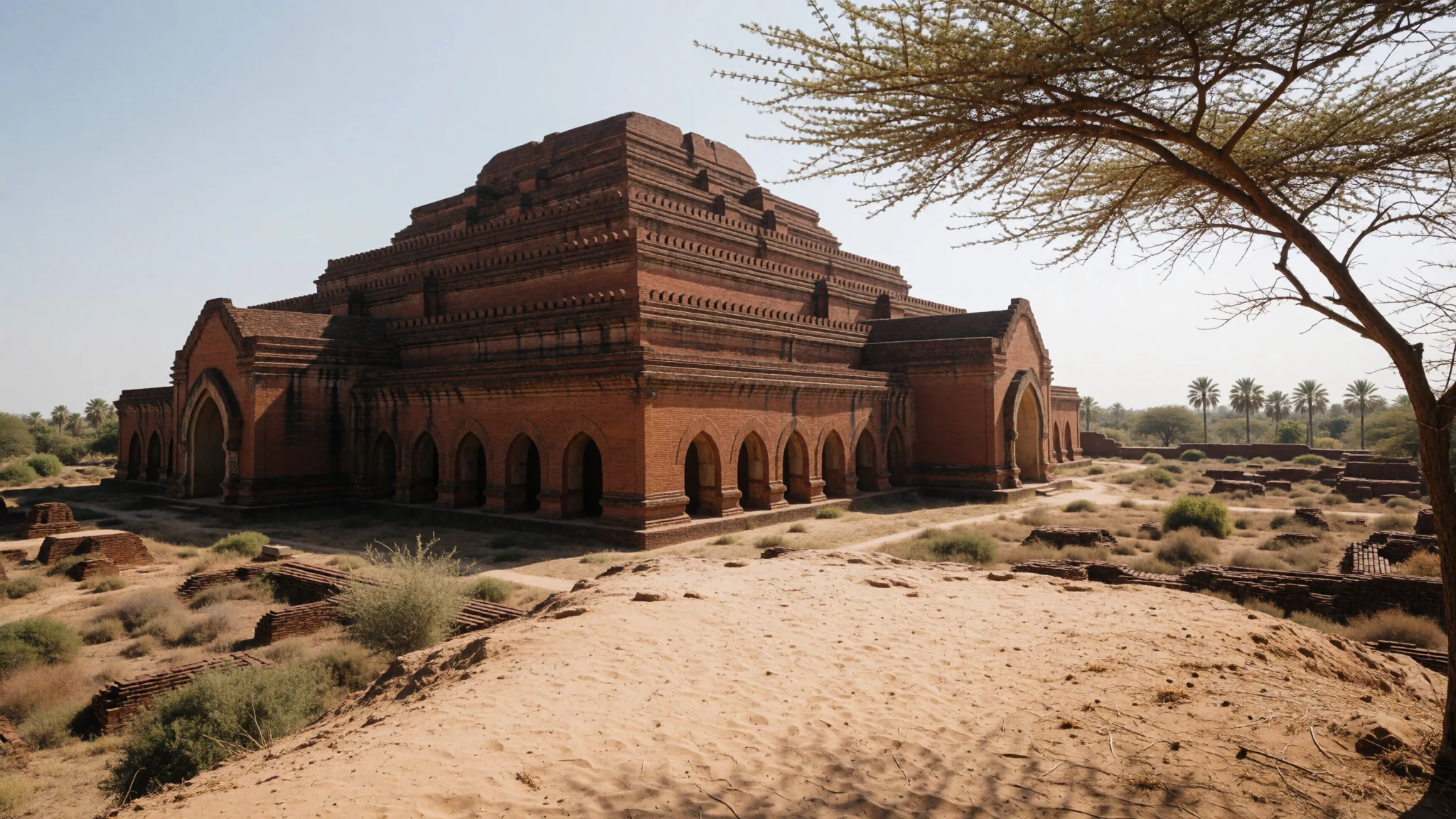
- Shwe Zigon Temple — Nyaung U
Finished during the reign of King Anawrahta, this gleaming gilt stupa serves as an important prototype for Burmese religious architecture. Tradition holds that the sacred enclosure guards precious relics of Gautama Buddha, drawing devoted pilgrims from across the country throughout the year.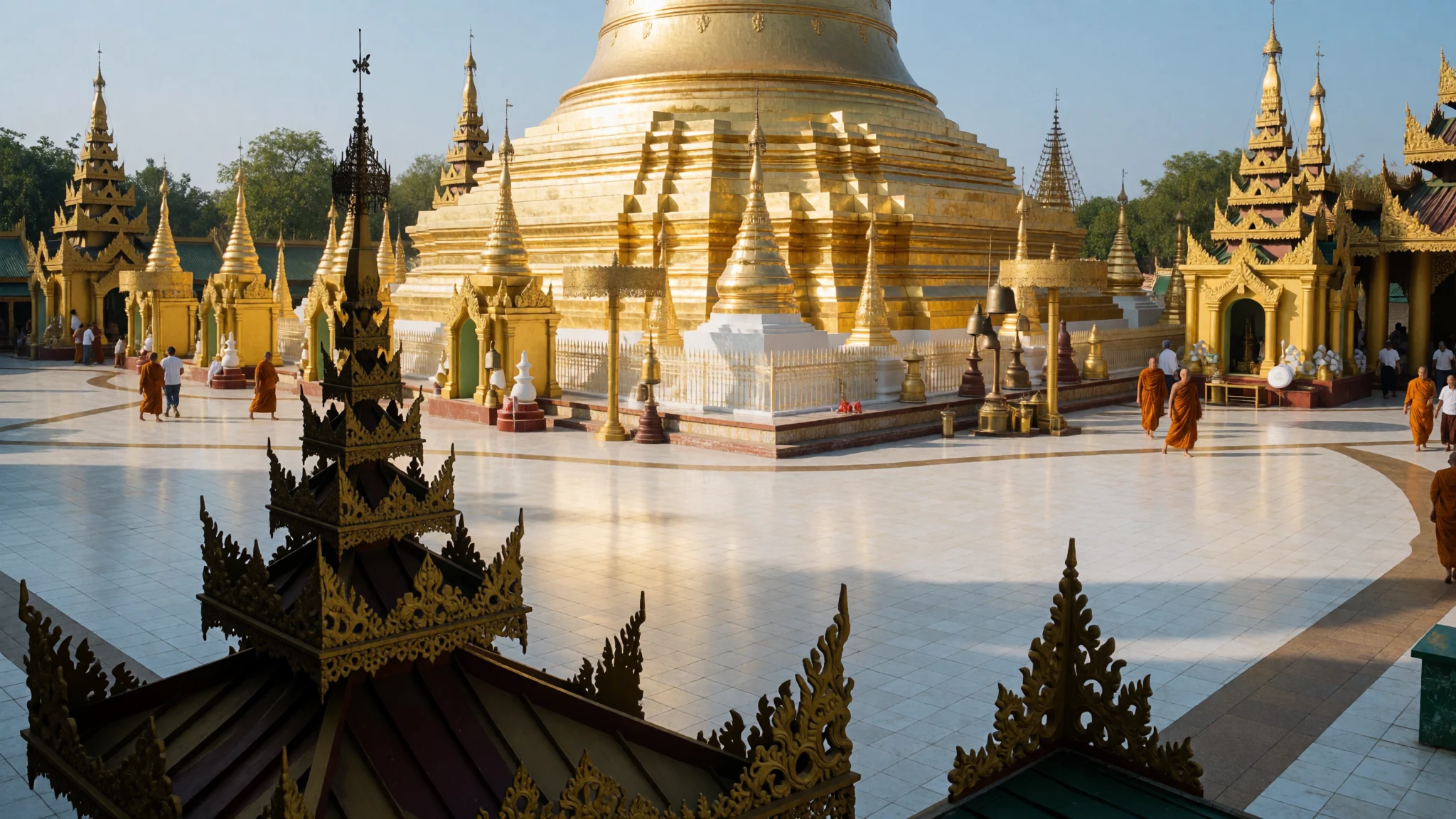
- Htilominlo Temple — North of Old Bagan
Constructed in the early thirteenth century using traditional Myanmar styles, Htilominlo features fine plaster carvings and glazed terracotta plaques along its multi-storey red brick exterior. It remains exceptionally popular with travellers exploring the northern sector of the archaeological plains.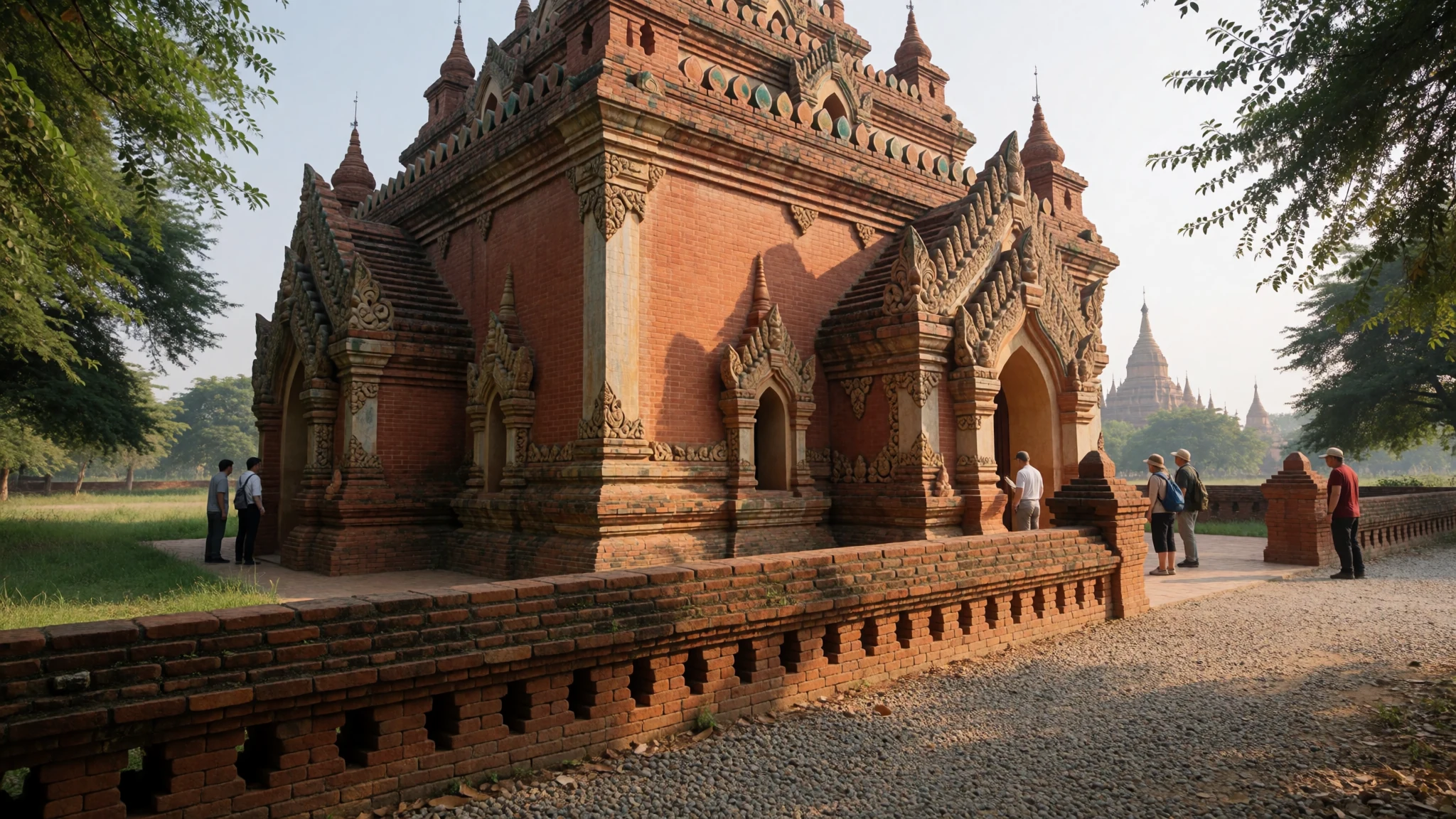
- That Byin Nyu Temple — Old Bagan
Rising as the tallest building on the plain, this mid-twelfth-century monument towers above the surrounding trees. Its soaring white-stuccoed terraces mark a distinct shift in architectural ambition, offering travellers an imposing landmark that can be spotted from almost anywhere across the dry basin.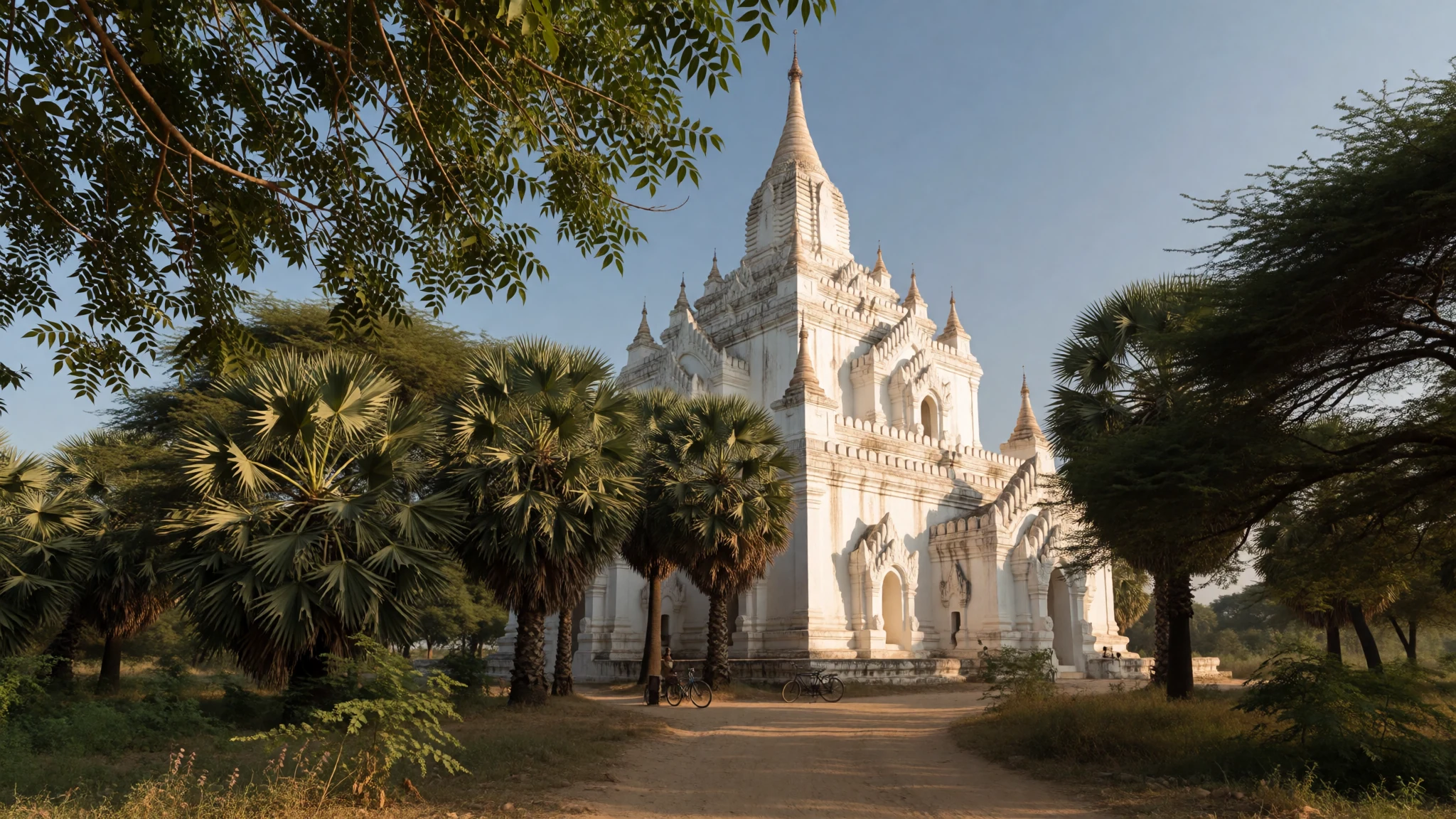
Culture
Bagan's social fabric remains deeply intertwined with Theravada Buddhism, which shapes daily routines, community festivals, and family life across the region. Local residents maintain a strong tradition of hospitality, offering visitors a warm welcome despite the challenges of a developing tourism economy. Monks and novices collecting morning alms are a familiar sight in every neighbourhood, reminding travellers of the enduring spiritual focus of the community. Traditional arts such as lacquerware, wood carving, and hand-woven textiles continue to be practised in nearby villages using hereditary techniques passed down through generations. Visitors should always remove shoes and socks completely before stepping onto the grounds of any pagoda, monastery, or sacred platform.
What to wear
Traditional attire in Bagan reflects both practicality and enduring local customs suited to the arid climate of the central dry zone. Both men and women wear the longyi, a wrap-around tube of fabric knotted securely at the waist, fashioned from breathable cotton or silk for formal occasions. Women and children frequently apply thanakha, a pale yellowish-white paste ground from tree bark, to their cheeks and noses to cool the skin and protect against the intense sun. Everyday modern dress for locals usually consists of comfortable shirts paired with practical longyis or trousers for manual labour. Visitors exploring Bagan should dress modestly out of respect for local religious sites, ensuring that shoulders and knees remain covered at all times. Because exploring dusty temple interiors and wandering between monuments requires constant footwear removal, sturdy sandals that slip on and off easily are far more practical than laced shoes.
What to eat
- Traditional Burmese noodle soup — Old Bagan street stalls
A comforting bowl of rice noodles served in a rich fish or pork broth, often seasoned with garlic, lemongrass, and chilli, found at small local eateries throughout Old Bagan.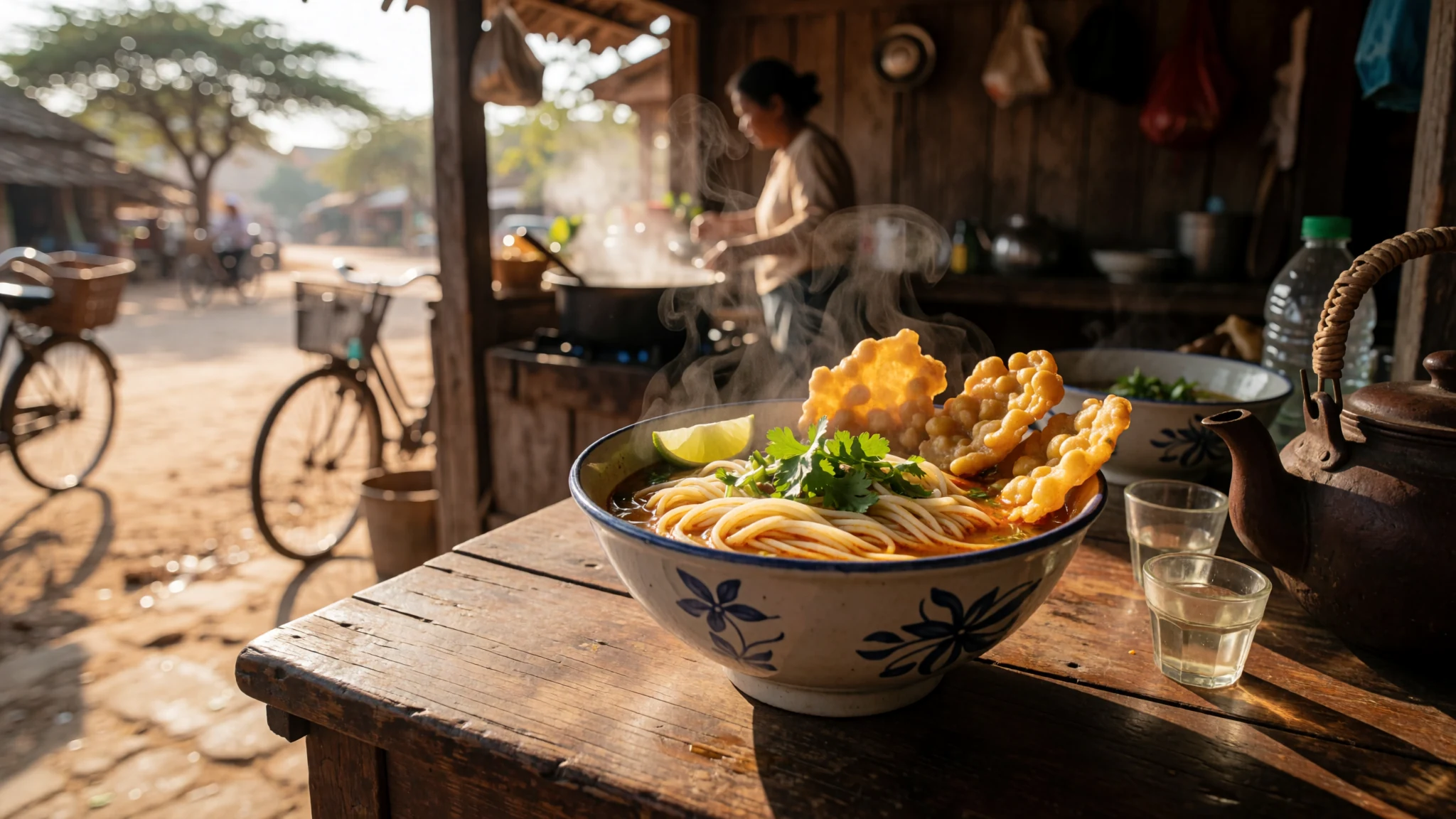
- Shan style noodles — Kyah Restaurant in Nyaung U
Sticky rice noodles tossed with minced chicken or pork, garlic oil, crushed peanuts, and pickled mustard greens, served at local cafes around Nyaung U.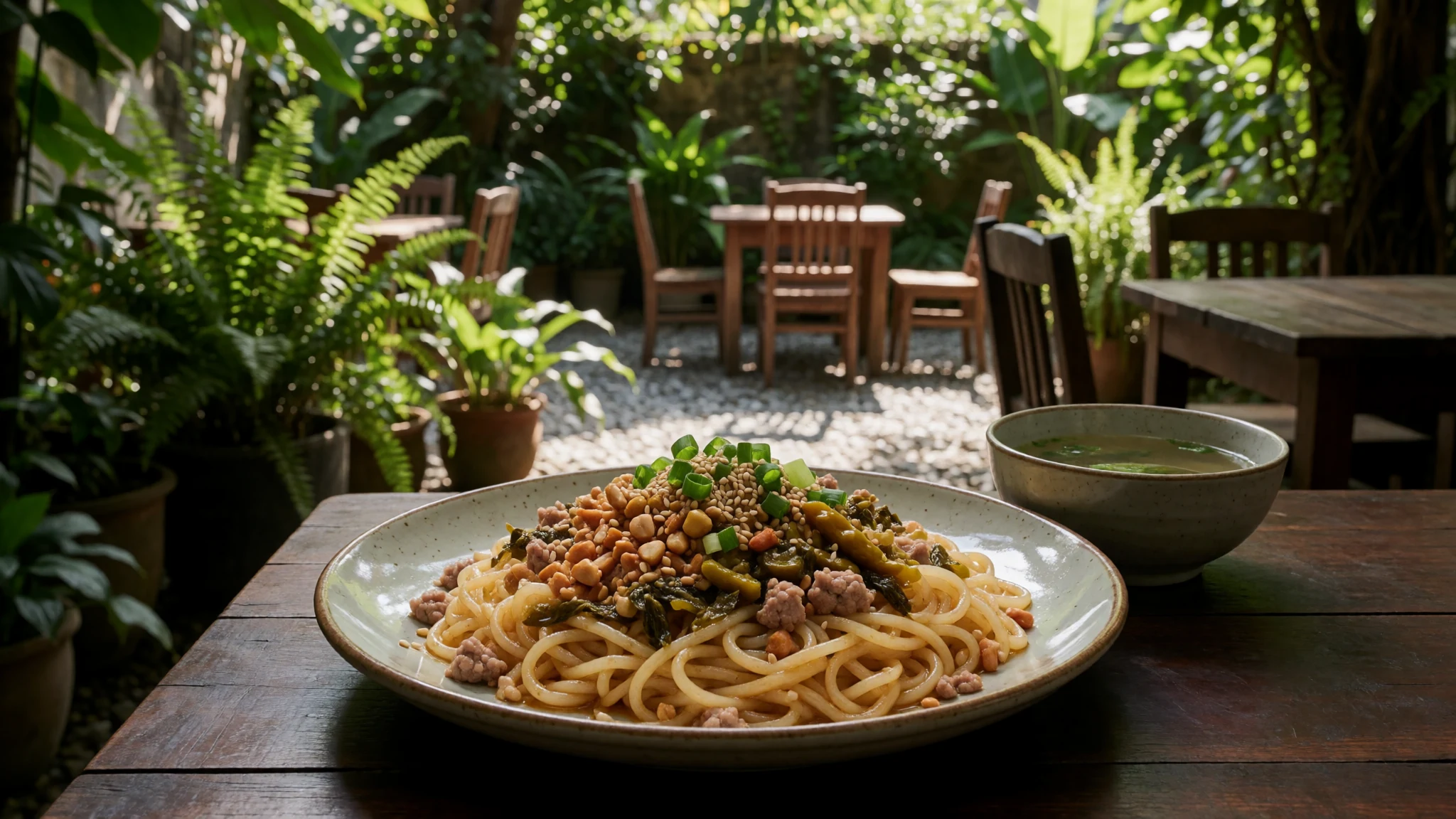
- Local vegetarian curries — The Moon Vegetarian Restaurant
Freshly prepared vegetable dishes cooked with traditional spices and served alongside rice, lentils, and an array of tangy herbal dips. - Burmese milk tea — Local roadside tea shops along Lanmadaw 3 Road
A sweet, strong brew made with condensed milk and black tea, traditionally sipped at roadside tea shops during the cool morning hours.
Plan it
Best time. November to February offers the most comfortable weather, with cooler mornings and pleasant daytime temperatures before the intense heat sets in.
How long. 3
Getting there. Most travellers arrive by long-distance bus from Mandalay or Yangon into Nyaung U, or via domestic flights into Nyaung U Airport.
Budget. mid
Tips
- Start temple visits at dawn to catch the morning mist and beat the midday heat
- Hire an e-bike to navigate the dusty tracks between monuments independently
- Carry sufficient local cash, as card acceptance is limited outside major hotels
- Drink plenty of bottled water throughout the day to combat the arid dry zone climate
Etiquette
- Always remove shoes and socks before stepping onto any pagoda or temple grounds
- Dress modestly by keeping shoulders and knees covered when visiting sacred areas
- Ask permission before taking close-up photographs of local monks or residents
Nearby
Sources
- Wikidata Q29317 (CC0)
- Wikipedia (CC-BY-SA 4.0)
- Wikivoyage (CC-BY-SA 4.0)