Wat Phra That Lampang Luang
Wat Phra That Lampang Luang, Thailand
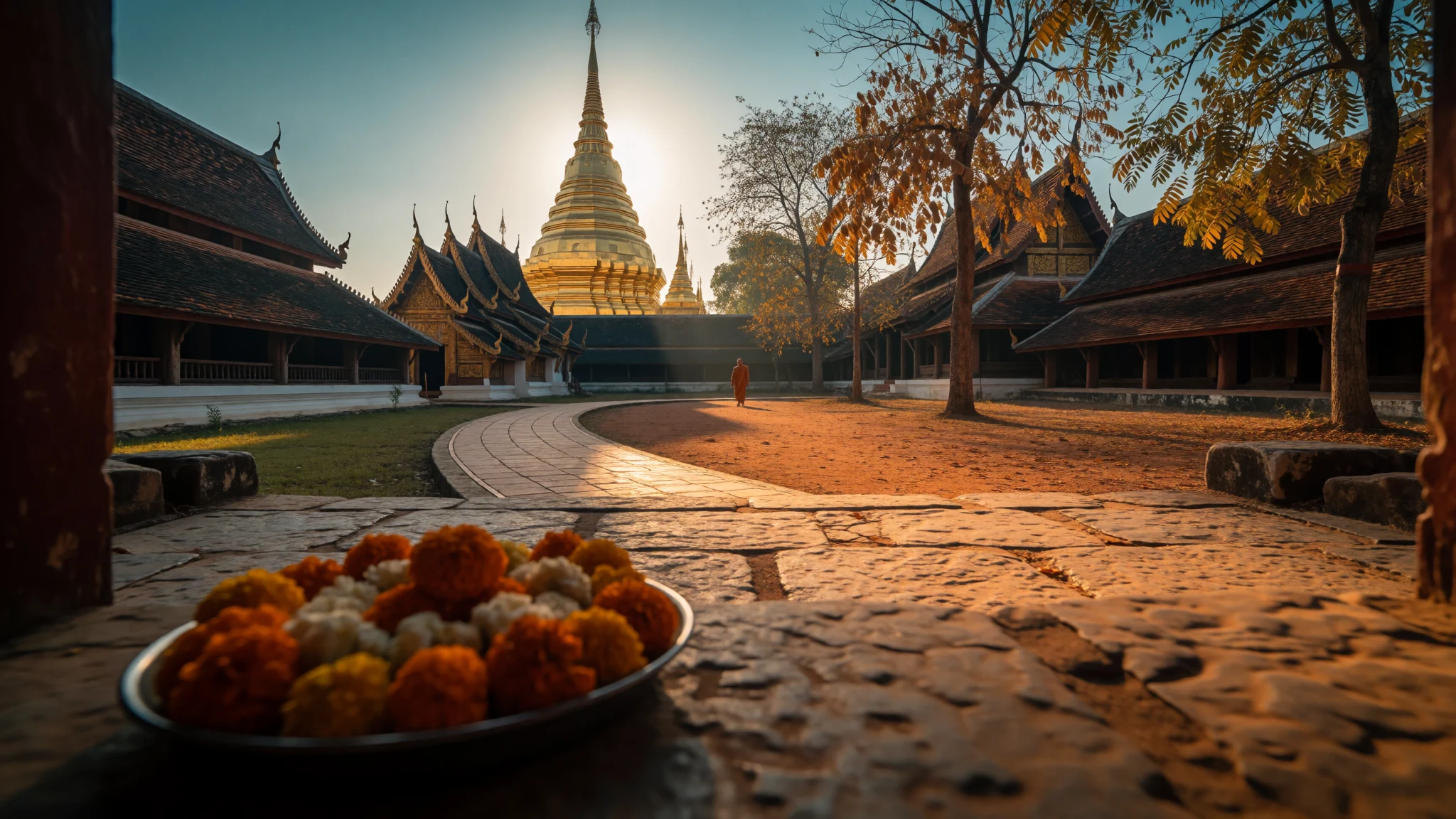
Wat Phra That Lampang Luang is a living Lanna temple of dark timber halls and a golden chedi, with a Burmese-war story attached.
The place
Wat Phra That Lampang Luang stands in a walled compound on slightly raised ground in the countryside of Lampang Province, about 15 kilometres from the northern city of Lampang. It is a Lanna-style Buddhist temple, built in the 15th century. The Lanna label matters: it points to the old northern Thai kingdom, whose carpentry, painting and temple layout differ from the central Thai style that most visitors know from Bangkok. Deep, layered timber roofs gather around a tall central chedi, and the whole compound feels closer to a small fortified village than to a single monument. The temple is said to hold a relic of the Buddha. Relics of this kind are usually described as bone or ash gathered after the cremation, and this one is kept inside the main chedi. That relic is why the place matters to worshippers, and Thai visitors come to pray, leave offerings and walk clockwise around the chedi. It still works as a temple rather than a museum, and the mood shifts through the day: quiet and a little austere early on, busier with tour groups and school parties around midday. The village outside is small, with a few stalls and eating places, so a visit fits comfortably into half a day from Lampang. Architects and historians value the site as a well-kept example of early Lanna design, and it repays slow looking at roof joints, carved gables and painted columns.
Its story
Wat Phra That Lampang Luang has a documented history that begins in the 15th century and a legendary one that reaches back further, to the days when much of northern Thailand belonged to the Hariphunchai kingdom. Temple tradition ties the site to that earlier age, though such legends are better read as devotion than as record. The best-known episode is military. In 1732 Burmese forces took Chiang Mai and Lamphun, then turned towards Lampang, which at that moment had no ruler and little defence. They occupied the city and made the walled temple their camp, confident that nobody would attack a sacred place. A local man named Thipchang, whose name means Divine Elephant, saw it differently. He gathered a band of followers, slipped inside the compound and struck the camp by surprise. By tradition he shot the king leading the Burmese army, and the forces fell into disarray. Thipchang took the title Phraya Chaisongkhram, became ruler of Lampang and founded the Chet Ton line, formally known as Thippachak. The enclosure that made the temple useful to the invaders also made it a place where a small force could hide and wait. Today a statue honours Thipchang as a local hero, and marks left by bullets on some walls are pointed out as traces of the fight. Whether every mark dates from that night is hard to prove, but they give the story a physical anchor that few legends enjoy.
What to see
- The main chedi — Centre of the temple compound
The central chedi of Wat Phra That Lampang Luang is the heart of the compound and the home of the Buddha relic the temple is known for. Its gold-toned upper section catches the light above the wooden roofs, and worshippers circle it clockwise. Late afternoon, with the sun lower, gives the warmest colour for photographs.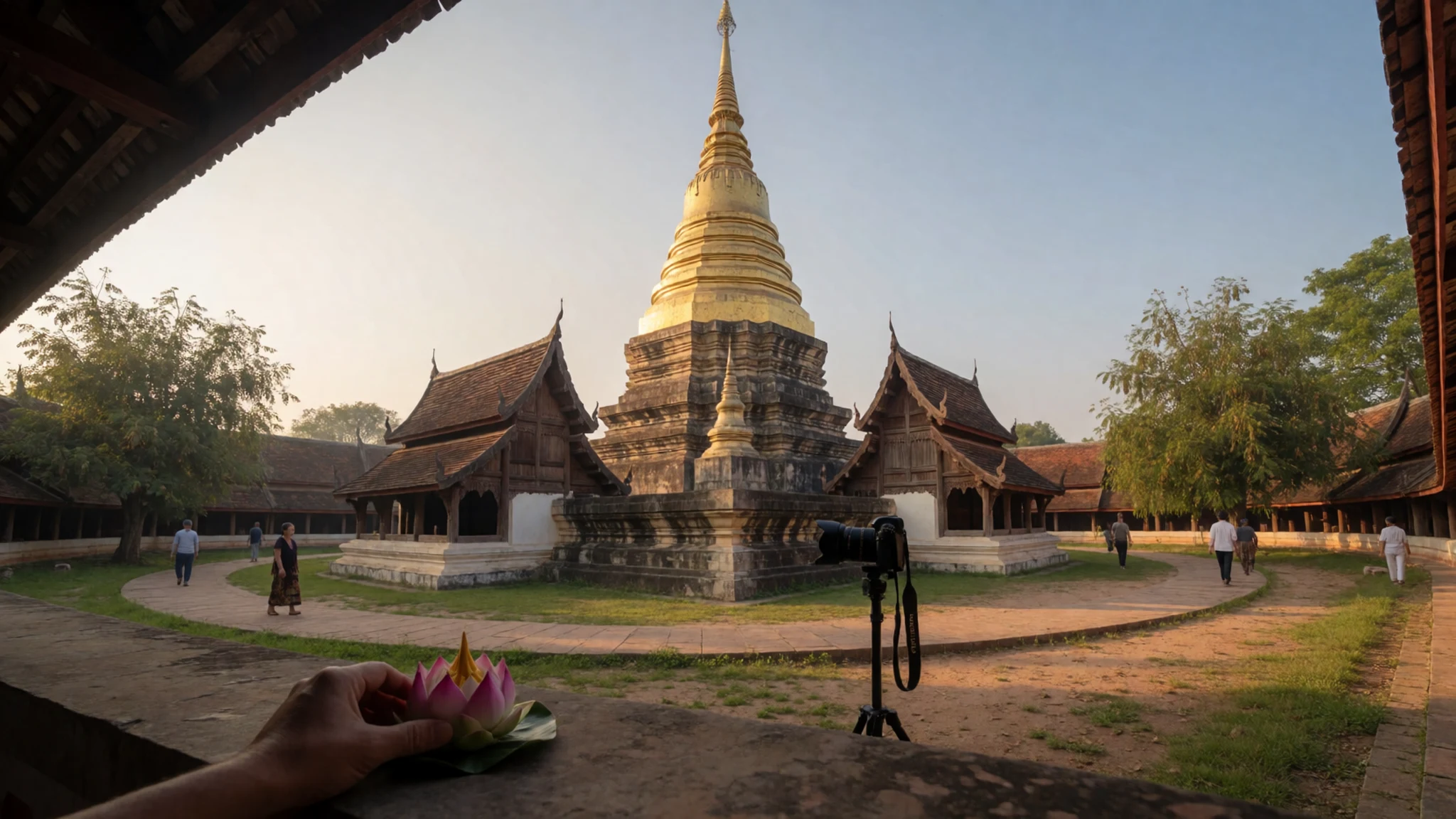
- The main viharn — Inside the walled compound
The principal viharn, or assembly hall, is a large timber building with an open, many-tiered roof that sweeps low over the walls. Thick pillars carry the weight, and a gilded Buddha image sits in the dim light at the far end. The carpentry is a clear introduction to early Lanna building methods.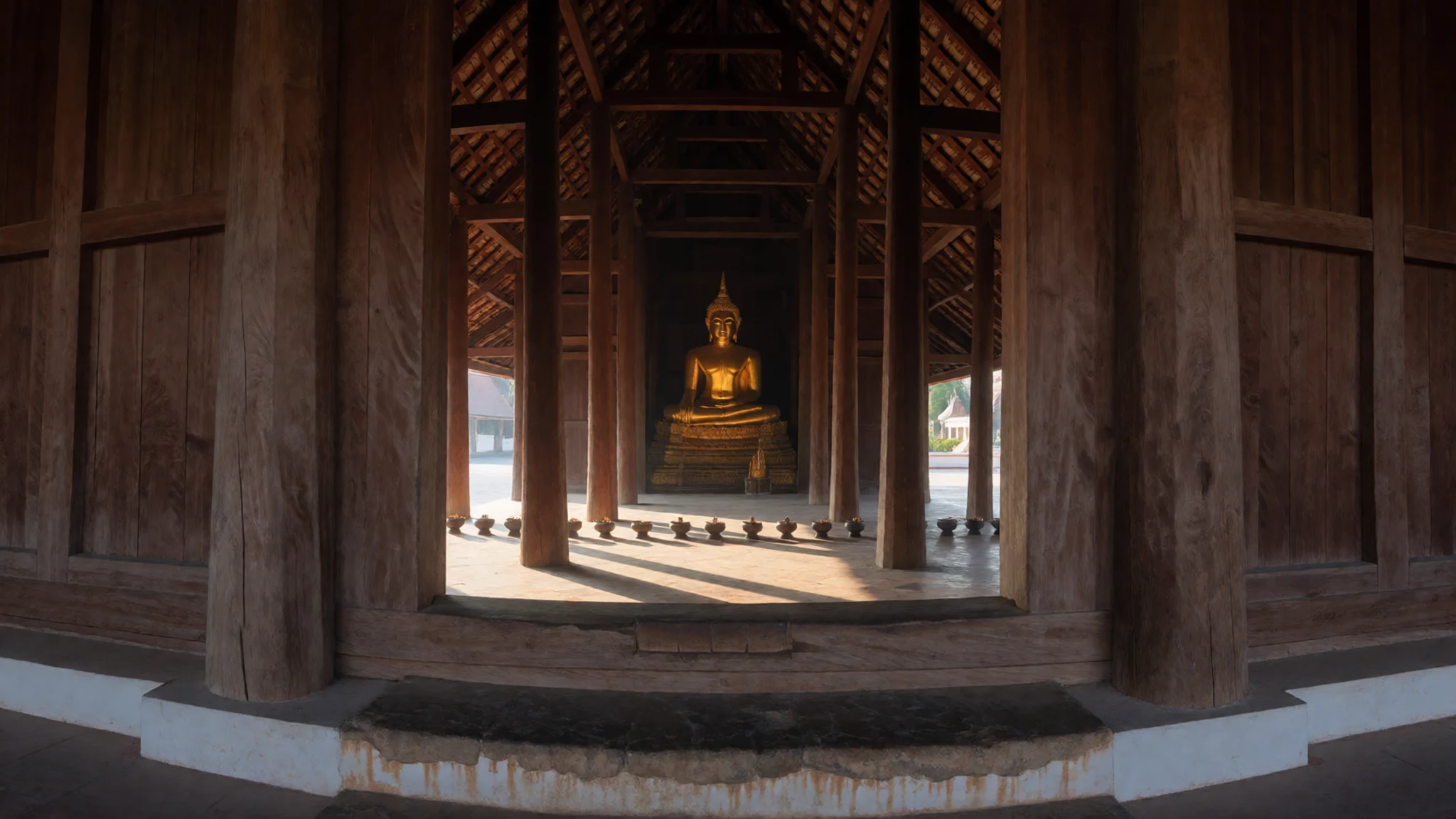
- The pinhole image hall — Within the compound, beside the main hall
One of the smaller halls is often shown to visitors for its pinhole effect: a tiny opening lets in daylight and throws an upside-down picture of the chedi onto a surface inside the darkened room. Caretakers can point out the right spot. It works best on a bright day, so heavy cloud may disappoint.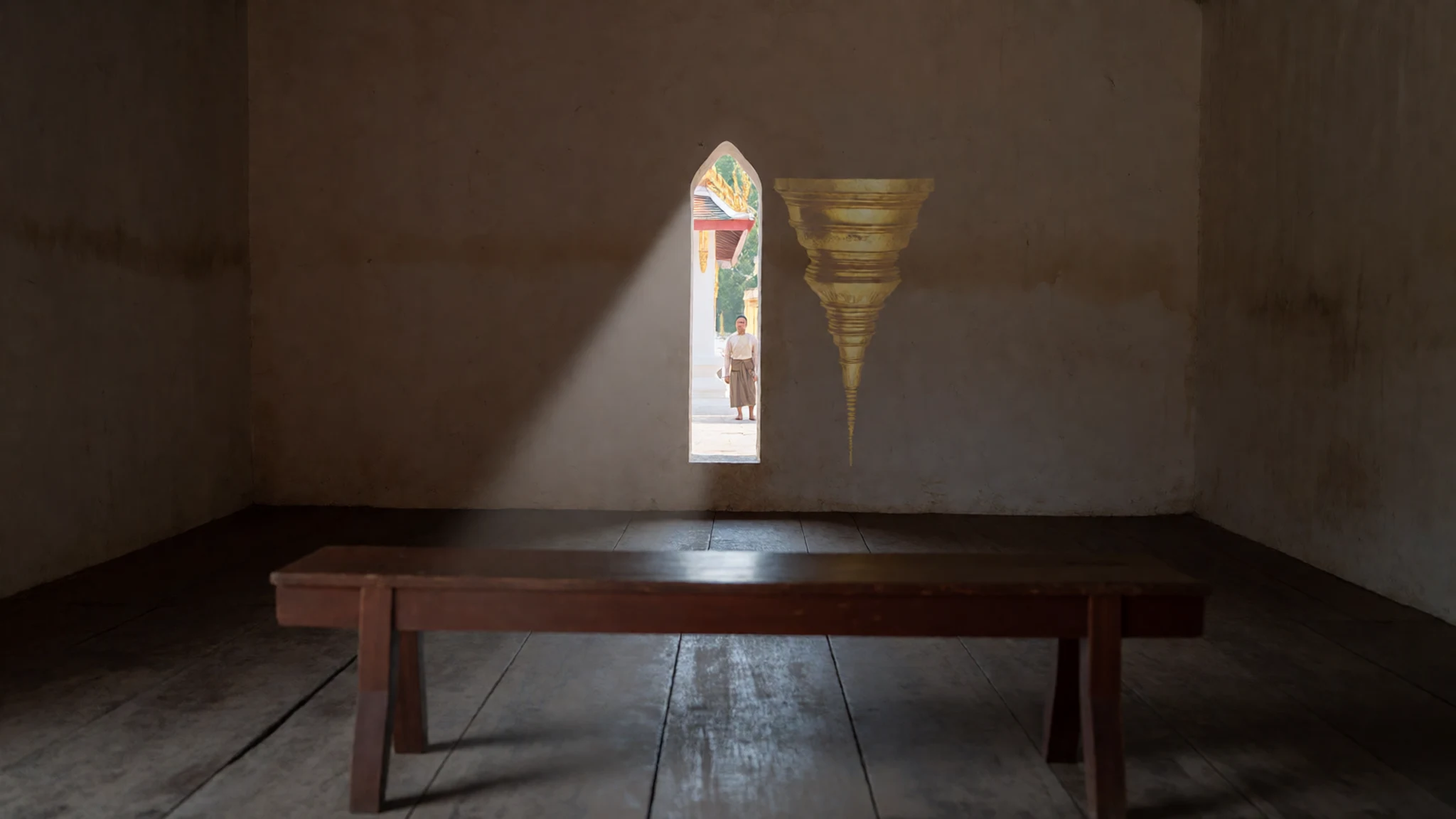
- Thipchang's statue and the bullet marks — Temple grounds
A statue of Thipchang stands within the temple grounds, honouring the local man who led the surprise attack on the Burmese camp. Bullet marks on some walls are shown as evidence of that night. Visitors who know the story find this quiet corner more affecting than its modest size suggests.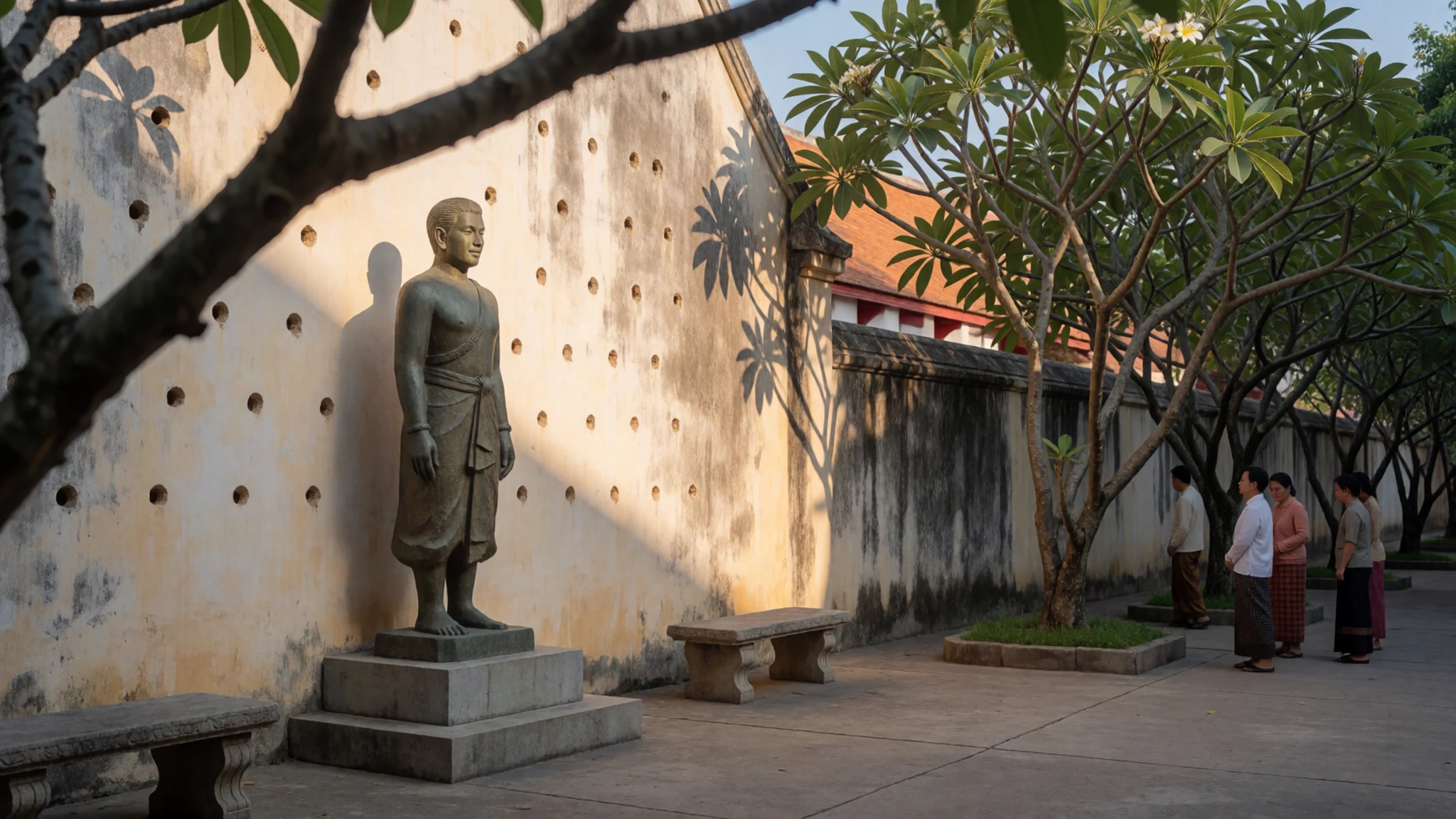
- The gateway and enclosing wall — Outer approach and walls
The entrance to Wat Phra That Lampang Luang climbs onto the raised ground of the compound through a gateway, and the surrounding wall explains the fortress-like feel of the place. Walking the edge first, then going in, makes the layout much easier to read than heading straight for the chedi.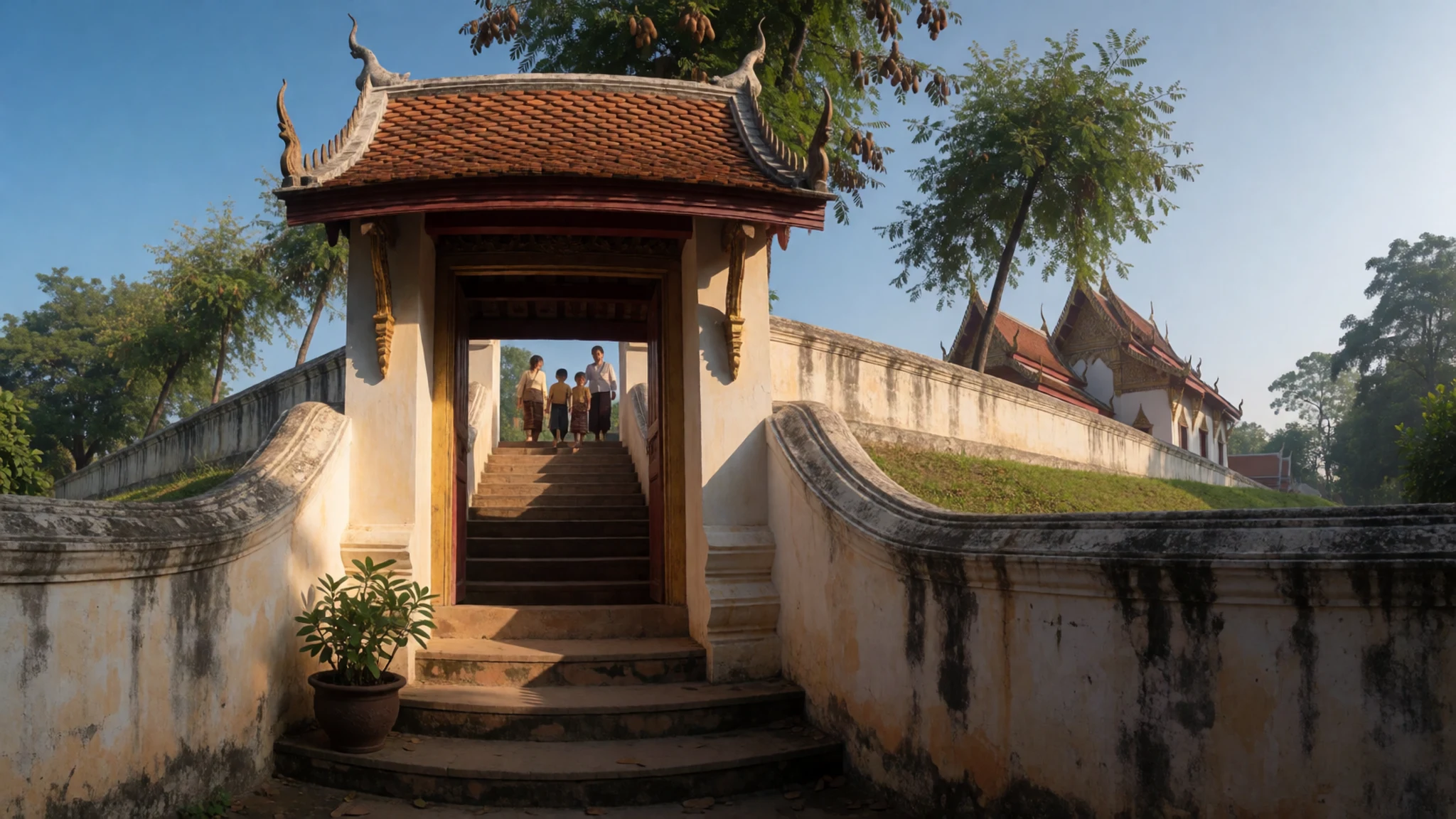
Culture
Wat Phra That Lampang Luang is a Theravada Buddhist temple, and for local families it is a place for making merit: offering flowers, candles and incense, giving food to monks, and walking round the chedi in prayer. The Lanna identity of the north is visible everywhere, in the timber architecture, the painted decoration and the northern Thai dialect that many worshippers speak among themselves. Monks and novices live and study in the grounds, so the temple has a daily rhythm of chanting and almsgiving that carries on whether or not visitors are present. Festival days bring larger crowds, lamps and processions, and the compound can feel quite different from an ordinary weekday. The Buddha relic in the main chedi is the focus of devotion, which is why the area around it is treated with extra care. Thai visitors often bow briefly to the principal image before looking around, and tourists are welcome to watch quietly from the side. The story of Thipchang adds a second layer of local pride: families from Lampang often describe him with real affection as a protector of the town. Photography is generally tolerated outdoors, but worshippers kneeling in prayer deserve space and privacy. Take your shoes off before stepping into any hall, cover your shoulders and knees, and never point your feet at a Buddha image or sit with your back to it.
What to wear
Wat Phra That Lampang Luang sits in a part of Thailand where Lanna dress is still worn for festivals and temple events. Traditionally, women wear the sin, a tube skirt of hand-woven cotton or silk, often finished with a decorative woven hem, with a fitted blouse and sometimes a shawl. Men wear the mo hom, a loose collarless shirt of cotton dyed deep indigo, with wide trousers. These garments appear mostly at ceremonies, dance performances and cultural fairs. In daily life, people around Lampang wear what they would in any Thai town: cotton shirts, trousers or long skirts, jeans, and light jackets or fleeces on cool mornings in the cooler months. For temple visits, locals dress neatly, often in subdued colours. Visitors should follow the same lines. Shoulders and knees should be covered, so a light shirt with sleeves and long trousers or a long skirt suit best, and loose cotton or linen copes well with the heat. Sleeveless tops, short shorts and see-through fabrics are best left at the hotel. Sandals or slip-on shoes make life easier, since footwear comes off at every hall, and the ground is a mix of brick, stone and sand. A hat and sunscreen help in the open courtyard, and a thin layer is useful early in the cool season.
What to eat
- Khao soi — Roadside eateries and small noodle shops near the temple and in Lampang town
Egg noodles in a mild, coconut-rich curry broth, topped with crisp fried noodles and served with pickled greens and lime. Chicken or pork versions are common. It is a northern Thai staple and easy to find at roadside eateries near the temple and across Lampang.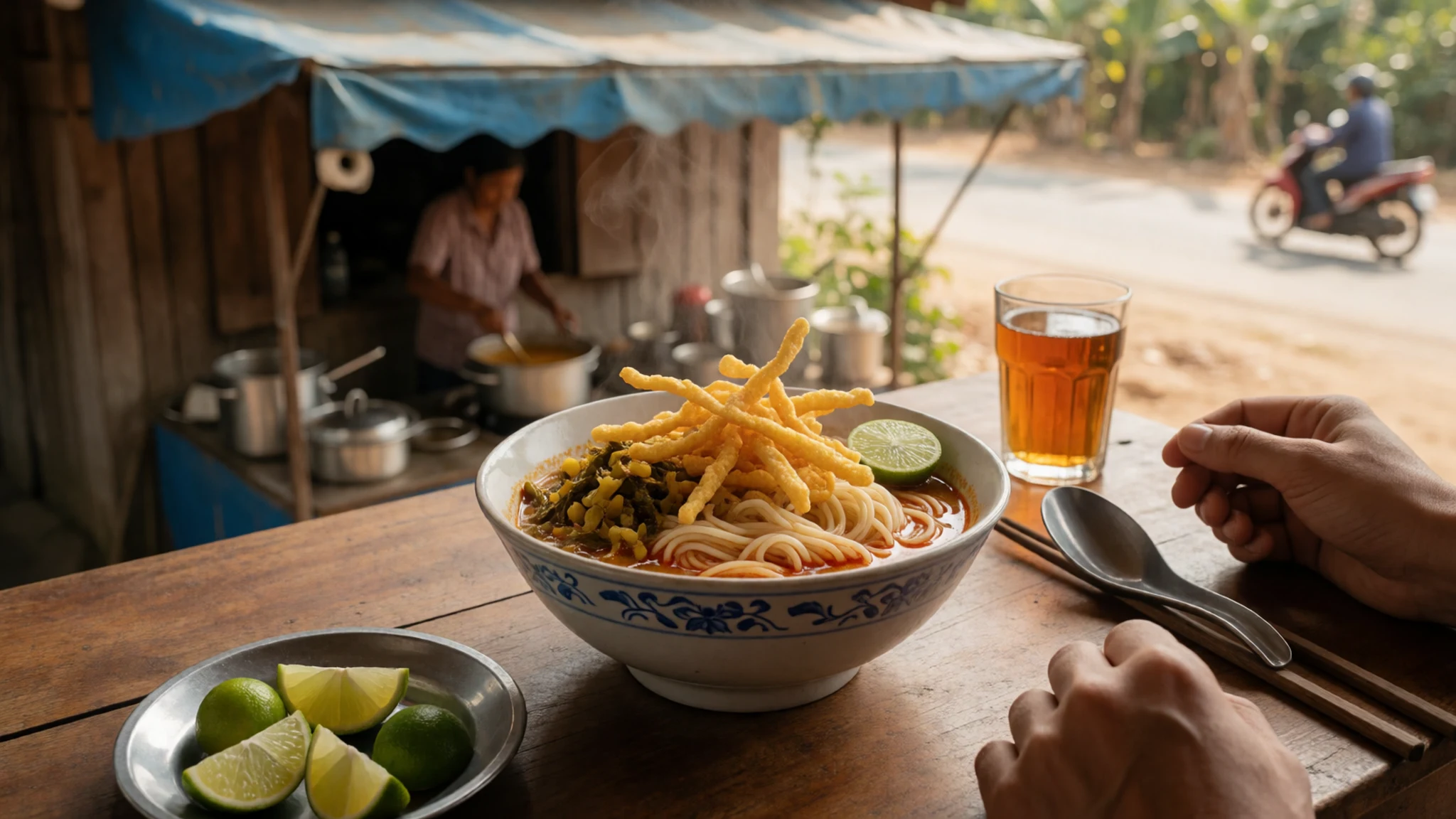
- Sai oua — Fresh markets and street grills around Lampang
A coarse northern pork sausage packed with lemongrass, galangal, kaffir lime leaf and red chillies. It is grilled until the skin crackles and usually eaten with sticky rice. Good versions are fragrant rather than fiery, and vendors often sell them by weight.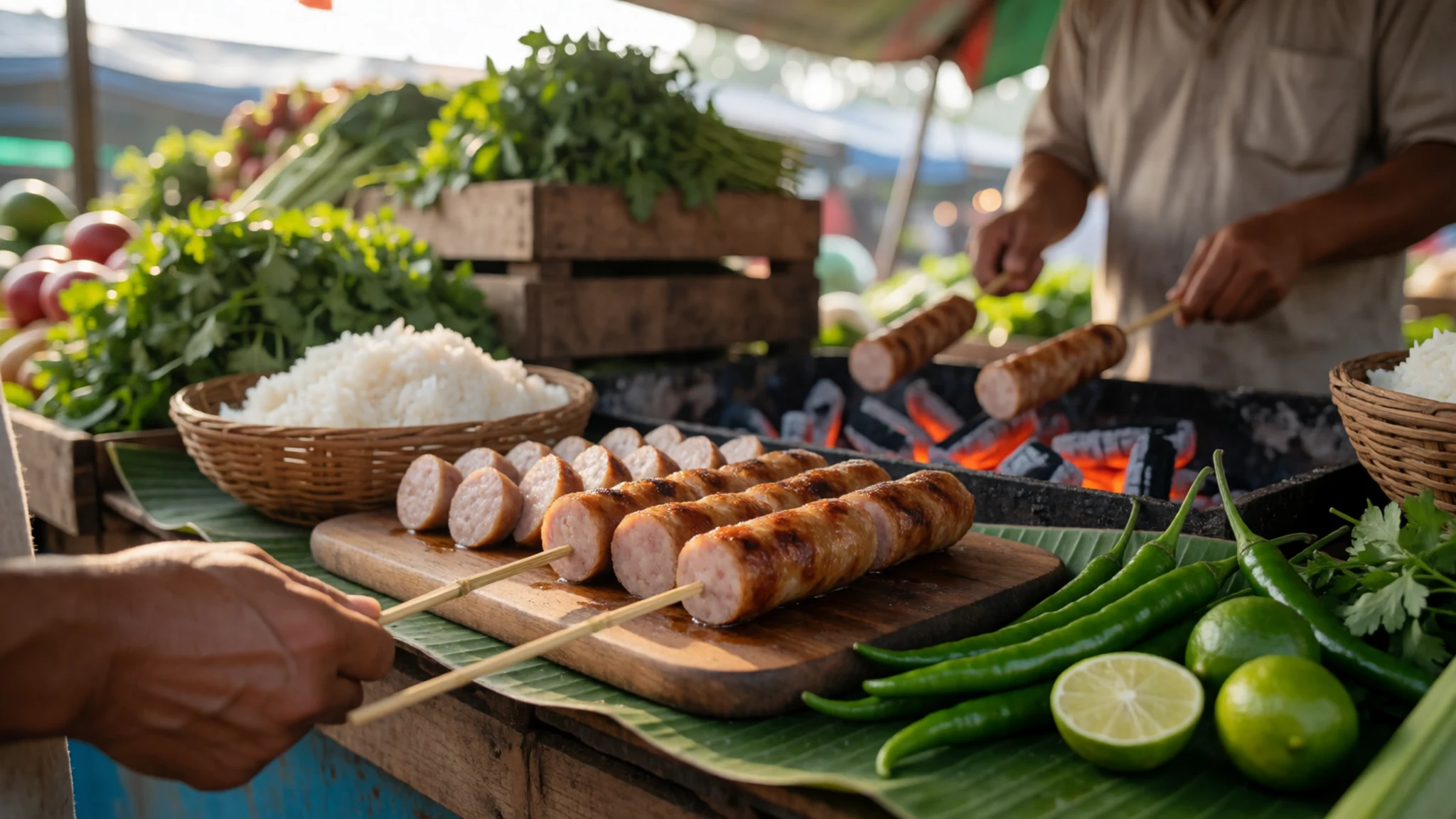
- Nam prik num — Market stalls selling ready-made northern dishes and local family eateries
A thick dip of roasted green chillies, shallots and garlic, eaten with sticky rice, fried pork rinds and raw or blanched vegetables. It is smoky, gently hot and typical of northern home cooking, often served as part of a shared meal. - Khanom jeen nam ngiao — Morning markets and small breakfast stalls in the old town
Fresh rice noodles in a tomato-based pork broth with dried flowers and spices, often topped with blood cake and sliced herbs. The flavour is sour, savoury and a little tangy, and it is a regular breakfast around Lampang. - Kaeng hang le — Local rice-and-curry eateries and market food courts in Lampang
A northern curry of pork belly cooked slowly with ginger, tamarind and a spice paste. It is rich, sweet-sour and not very hot, and goes well with sticky rice. The dish shows the Burmese influence on northern Thai cooking.
Plan it
Best time. November to February is the most comfortable stretch, with cooler mornings and mostly dry weather. March to May is hot, and smoky haze from seasonal burning can affect views across northern Thailand. June to October is the wettest period, which keeps the countryside green but can interrupt plans.
How long. 1
Getting there. Lampang has its own small airport, and trains and buses run to Lampang from Bangkok and Chiang Mai. From Lampang town the temple is about 15 kilometres away; take a taxi, a ride-hailing car or a shared songthaew pick-up, or hire a driver for the day.
Budget. low
Tips
- Arrive early in the morning for cooler air, softer light and fewer tour groups
- Carry some cash for small donations, stalls and local transport, since small places may not take cards
- Bring a water bottle and a hat, as the open courtyard has little shade at midday
- Combine the visit with Lampang's old town and its markets rather than treating it as a stand-alone trip
- Check the temple's official channels or ask locally for current opening arrangements and any entry charge
Etiquette
- Remove your shoes before entering any hall, and keep your feet pointed away from Buddha images
- Cover your shoulders and knees throughout the compound
- Speak quietly and stay clear of worshippers who are praying or monks who are chanting
Nearby
Sources
- Wikidata Q571319 (CC0)
- Wikipedia: Wat Phra That Lampang Luang (rev 1359234688) (CC BY-SA 4.0)
- Wikivoyage (CC BY-SA 4.0)
- Photo 01-lampangluang1.jpg — Kesaputta (CC BY 3.0)
- Photo 02-2.jpg — Hong2101 (CC BY-SA 4.0)
- Photo 03-.jpg — Mastertongapollo (CC BY-SA 4.0)
- Photo 04-wat-phra-that-lamphang-luang-chedi.jpg — ParipatEksu (CC0 1.0)
- Photo 05-watphrathatlampangluangdecorativedetail.jpg — ParipatEksu (CC BY-SA 4.0)
- Photo 06-wat-phra-that-lampang-luang-29671184960.jpg — Thanate Tan (CC BY 2.5)
- Photo 07-2763.jpg — Cat2you (CC BY-SA 4.0)
- Photo 08-2760.jpg — Cat2you (CC BY-SA 4.0)


