Wae Rebo
Wae Rebo, Indonesia
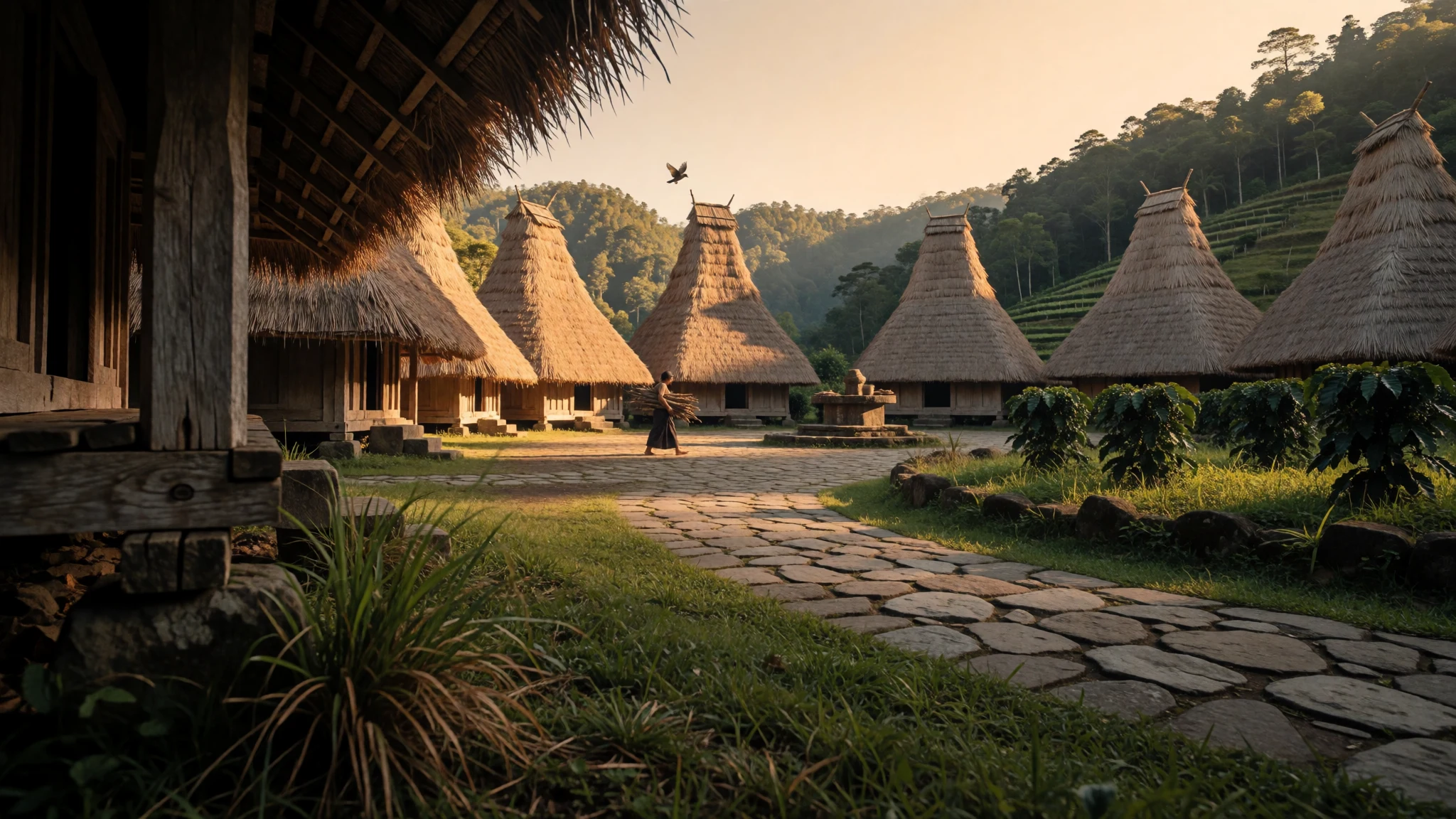
Wae Rebo is a Manggarai clan village of conical thatched houses on a Flores ridge, still reached only on foot.
The place
Wae Rebo stands in the highlands of Flores, in the Manggarai country of eastern Indonesia, a small clan village set in a bowl of forested ridges. The houses are circular in plan and rise to a steep cone of thatch, a form the Manggarai call Mbaru Niang. They face inward onto a stone court with a low altar at its centre, so daily life looks across the open ground rather than out to a street. The last approach is a footpath from the trailhead hamlet below, climbing through garden plots, secondary forest and open grass until the cones appear above the ridge line.
Inside, a Mbaru Niang is a timber frame under a continuous thatch skin. The first level, the lutur, is the living quarters, where people talk and sleep; cooking is done in a separate kitchen hut, and visitors are served dinner in the guest-house sleeping quarters. Stores of grain and tools sit higher in the cone, and the space under the peak is kept for heirlooms and ritual, not for casual use. One house in the circle holds the community drum and stands as the ceremonial house; the others belong to the clans. Cooking stays in the kitchen hut, and the living quarters are kept clear of the fire. Coffee cherries are laid out to dry in the open, and the same families who maintain the houses tend gardens on the slopes beneath the village.
Evenings come quickly and turn cool once the ridge clouds drop. There is little night light beyond lamps in the houses, and the forest around the bowl is loud with insects. Wae Rebo is a working village: children, cooking, drying coffee and the work of the gardens are the ordinary day, and visitors sleep there as guests of that day rather than as spectators of it.
Its story
Wae Rebo is a village of the Manggarai, the people of western Flores, and its story is the story of a clan settlement that refused to abandon a house form. For generations the cones were the ordinary dwelling: a circle of families, a drum house at the head of the compound, and a stone altar where offerings mark the agricultural year. The thatch has to be renewed, the posts checked, the ropes that bind the frame replaced. When that work lapses, a cone slumps. The village was abandoned after nineteen generations, and the present buildings date from 1920. In 2008 four remaining houses were repaired and three rebuilt by fifteen Jakarta architects with Rumah Asuh funding, because coffee, cinnamon and corn income could not cover the cost. The thatch was drawn into the old profile, tall enough that the peak reads against the sky from the opposite ridge. The drum house kept its place. What returned was not a replica for show. The same rooms had to work for sleeping, storing food and receiving kin. Younger Manggarai move for school and wages to Ruteng and further, to Labuan Bajo and beyond Flores, yet the village remains the place ceremonies pull people back to: a wedding, a funeral, and Penti, once a year in November, thanks for the harvest and prayers for the year ahead. Wae Rebo's survival is practical as much as symbolic. Goods come up on shoulders, water and firewood are daily labour, and since 2006 an institute assigns a daily manager, reads a visitor code and rotates five women's groups, with tourists sleeping in two dormitory guest houses of about fifty beds each. Visitors became part of that economy — a reason to keep a house ready for guests — without becoming the reason the village exists. The cones stand because people decided the labour was worth it.
What to see
- Mbaru Niang — Central compound
Wae Rebo's Mbaru Niang are the circular, cone-roofed clan houses that ring the village court. Each is a timber frame under a thick thatch, with daily living on the ground and stores and ritual space above. One of them is the drum house, the ceremonial centre of the compound. Walk the ring and look at how the thatch is tied, but step inside only when a host invites you.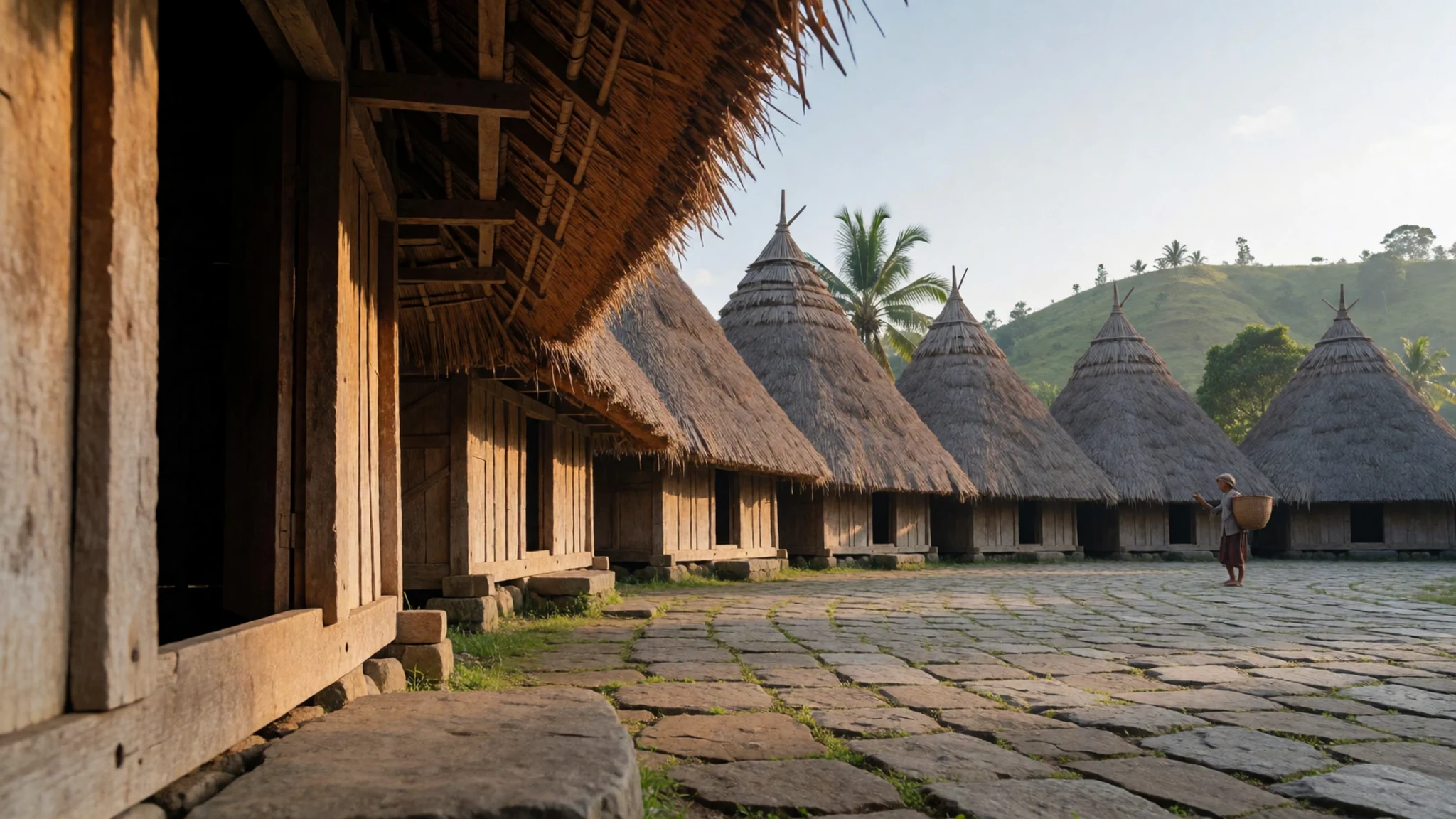
- The stone court — Centre of the village
Wae Rebo gathers around an open stone court, with a low altar near the middle and the house doors looking in. Morning is a good time to sit at the edge and watch the cones come out of the mist. The court is a working space, not a stage: people cross it with firewood, coffee and children. Keep off the altar itself, and leave offerings undisturbed.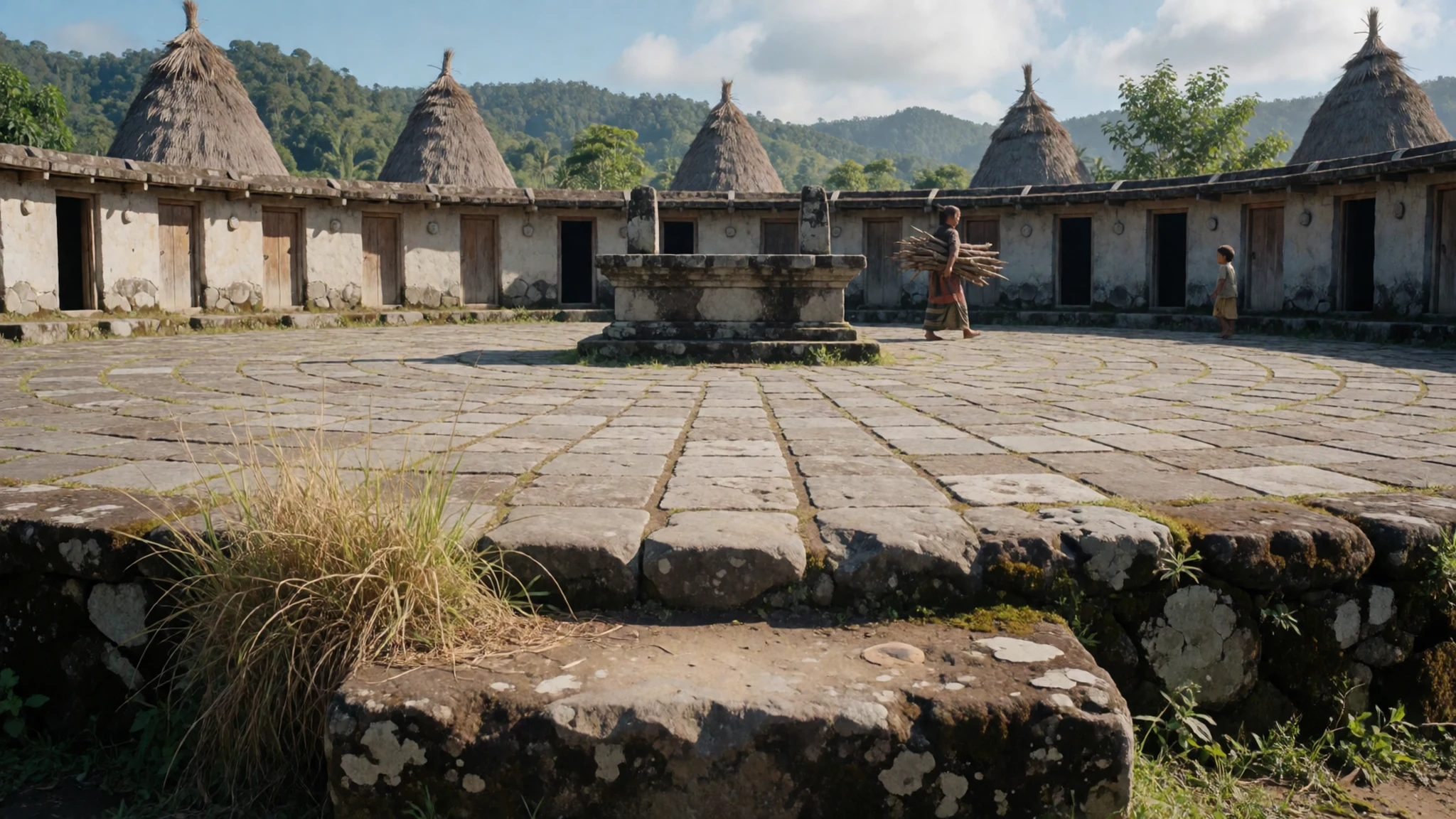
- Coffee drying — Open ground between the houses
Wae Rebo dries coffee in the open, cherries spread on sheets where the sun reaches the compound. Flores coffee is a highland crop, and here the last stage of the harvest sits in plain view between the houses. The sheets are someone's livelihood, so walk around them rather than across them, and ask before you pick up a cherry for a photograph.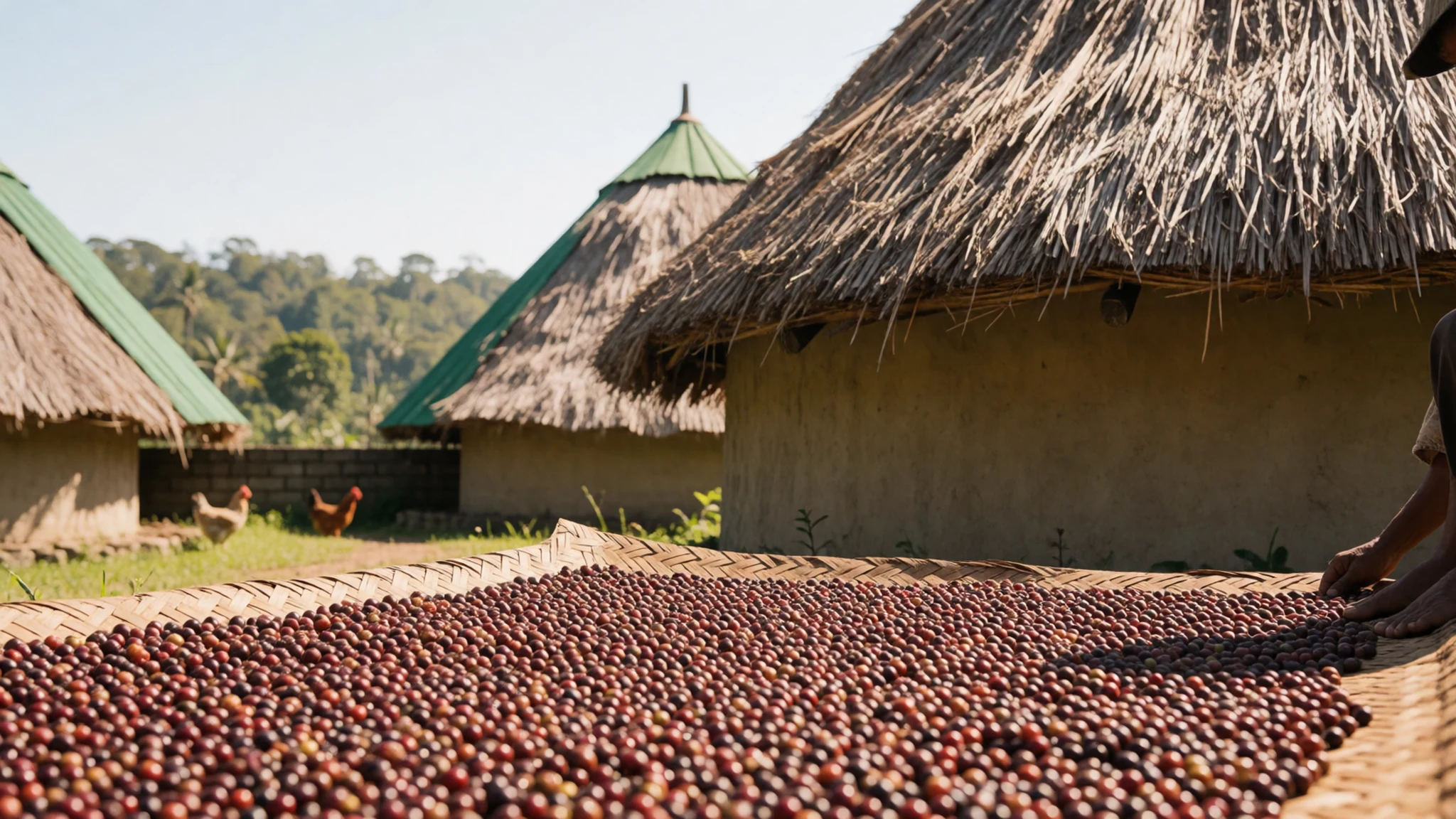
- The ridge path — Footpath up from the trailhead
Wae Rebo is first seen from the ridge path, a scatter of dark cones in a green bowl with forest falling away on every side. The walk up from the trailhead is steep in sections, with roots and mud after rain, and no transport at the end of it. Carry water and shoes that grip, and start in the morning so you arrive before the cloud thickens.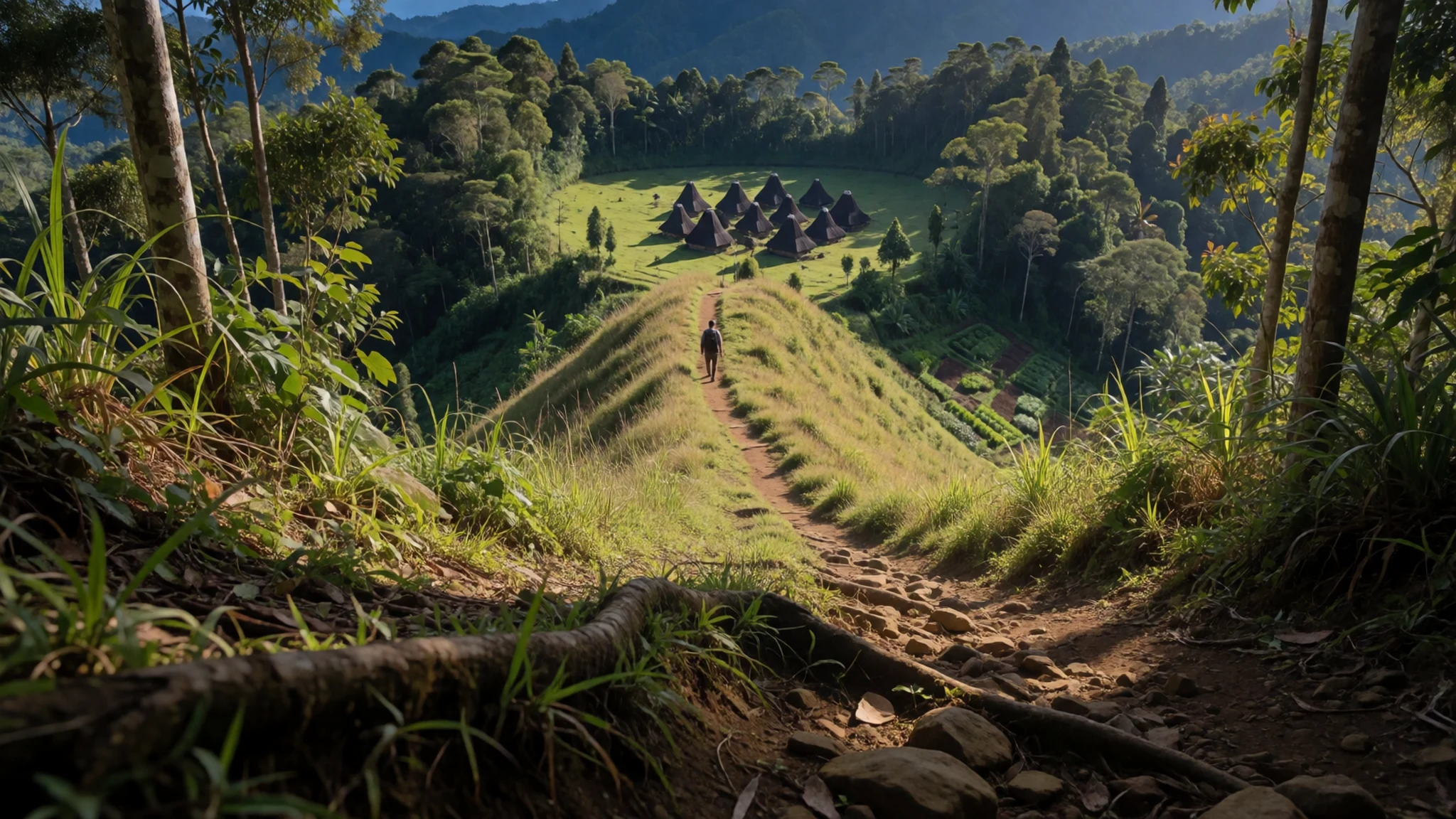
- The hearth — Inside a clan house
A single kitchen hut cooks for the village, and guest dinners are served in the dormitory guest houses with that day's women's group. The evening is shared in the guest house: guests sit where they are shown, that day's women's group serves the meal, and conversation happens while food is passed. Accept a place you are shown and keep your feet from pointing at people.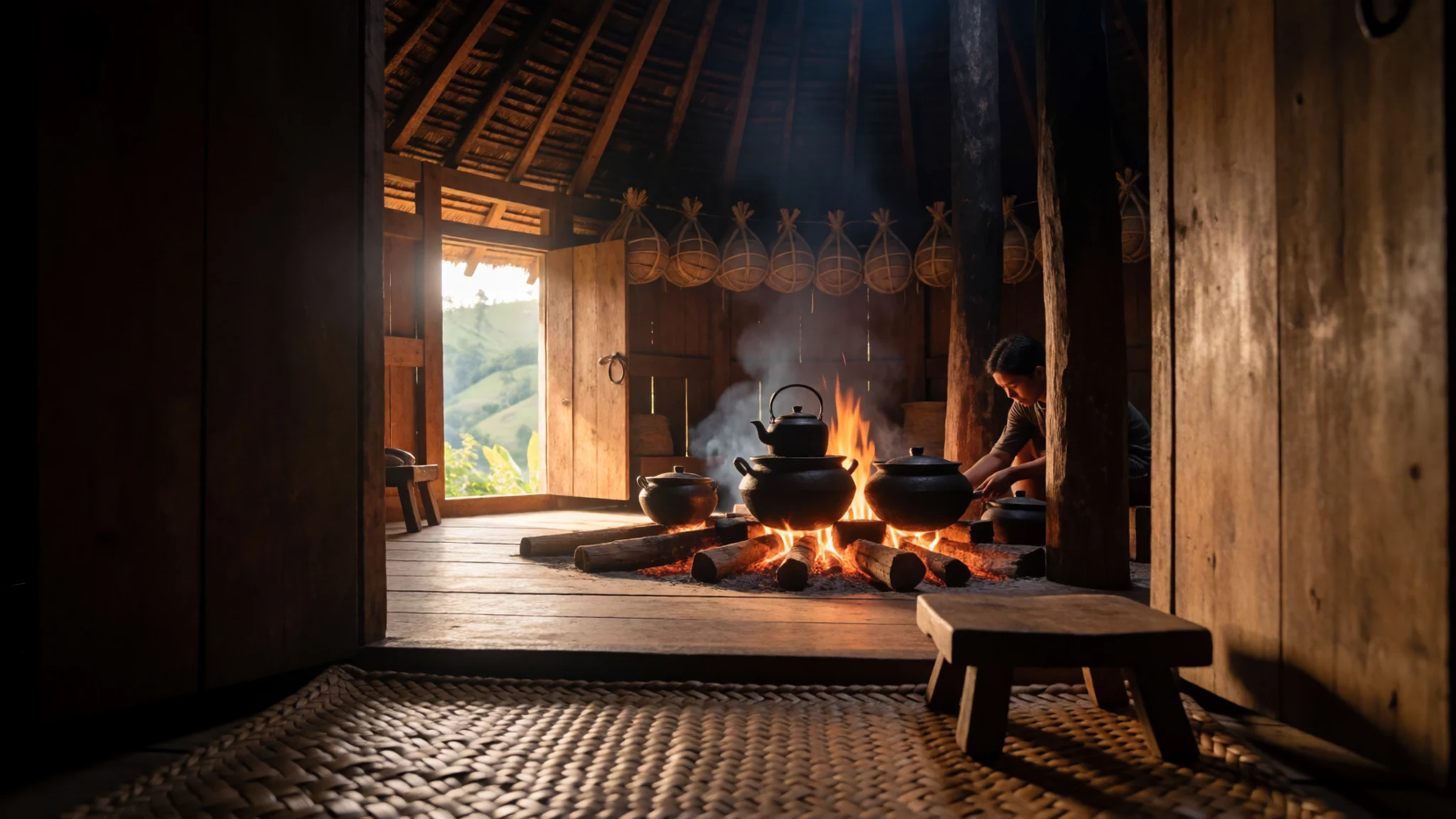
Culture
Wae Rebo lives by Manggarai custom as much as by the church calendar that shapes the rest of Flores. The compound has a head, an elder whose word covers guests, disputes and the ritual calendar, and a proper arrival begins with him rather than with a wander around the houses. Betel and areca, offered and accepted, still mark a polite meeting. The stone altar in the court is the compang, the place of offerings at planting, harvest and the rites that bind the clans to the land; it is not a prop. The drum in the ceremonial house, the Mbaru Gendang, is the community's voice for those occasions. Caci, the whip-and-shield dance, appears when a festival or a formal welcome calls for it, the men in woven songke, the rhythm carried by drum and gong. Catholicism and ancestral obligation are not treated as opposites here; both are simply part of how a year is kept. Ask before you photograph people, take your shoes off before you enter a Mbaru Niang, and greet the village elder before you walk the compound.
What to wear
Wae Rebo dresses for ceremony in Manggarai cloth and for the working day in whatever survives the garden and the walk. The textile that matters is songke, a dense ceremonial weave on a dark ground, with geometric motifs in white, red and sometimes a gold-coloured thread. Men wrap it as a sarong over a shirt, and add a headcloth for caci and for ritual; the dance kit also includes bells at the ankles, a whip and a round shield. Women wear the same family of weaves as a sarong, paired with a fitted blouse, and the ceremonial pieces come out for weddings, funerals and the rites at the compang. Everyday dress in the village is simpler: T-shirts, long trousers or a worn sarong, a jacket against the morning chill, flip-flops or bare feet on the packed earth, and school clothes on children heading down toward the road. A visitor should dress for a steep muddy path and for a house with no furniture. Sturdy shoes with grip for the trail, a light layer you can peel off once the sun is on the ridge, and trousers or a long skirt rather than short shorts. Shoulders covered are the polite choice inside a Mbaru Niang, and shoes come off at the door. Bring a wrap or a shawl if you feel the evening cold, and leave the white-trainer look for town; the path will ruin it.
What to eat
- Flores coffee — Inside the clan house, once you have arrived
Wae Rebo grows and dries its own coffee, and a cup of it is the ordinary welcome once you are inside. It is brewed simply, often strong and without milk, and served while you sit on the floor. Drink what the house is making.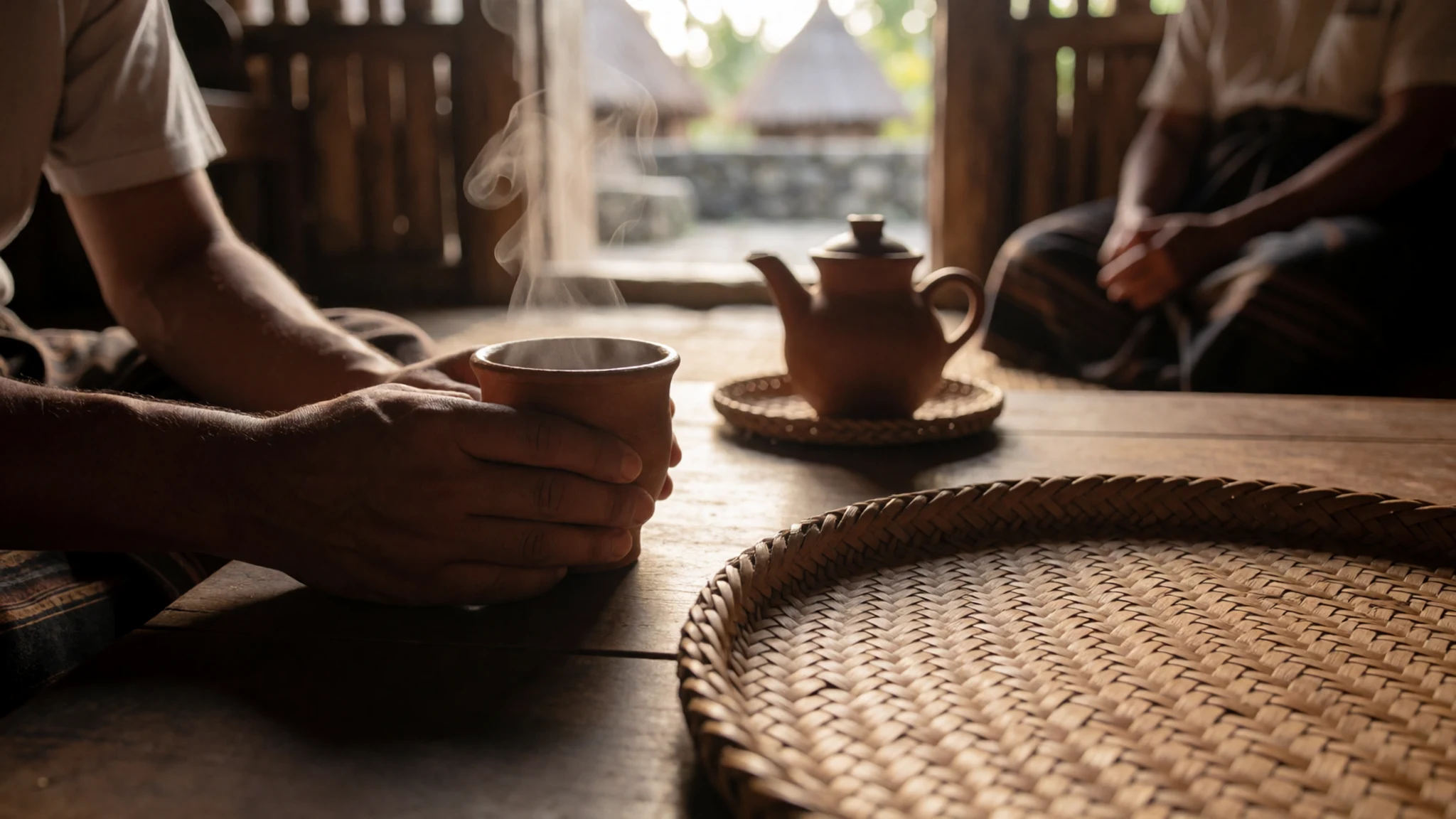
- Jagung titi — Family meals in the village houses
Wae Rebo's highland staple is jagung titi, maize that has been steamed and then pounded flat, eaten with vegetables or a little chilli. It keeps and it is what people rely on between rice meals. Look for it at a family table in the village.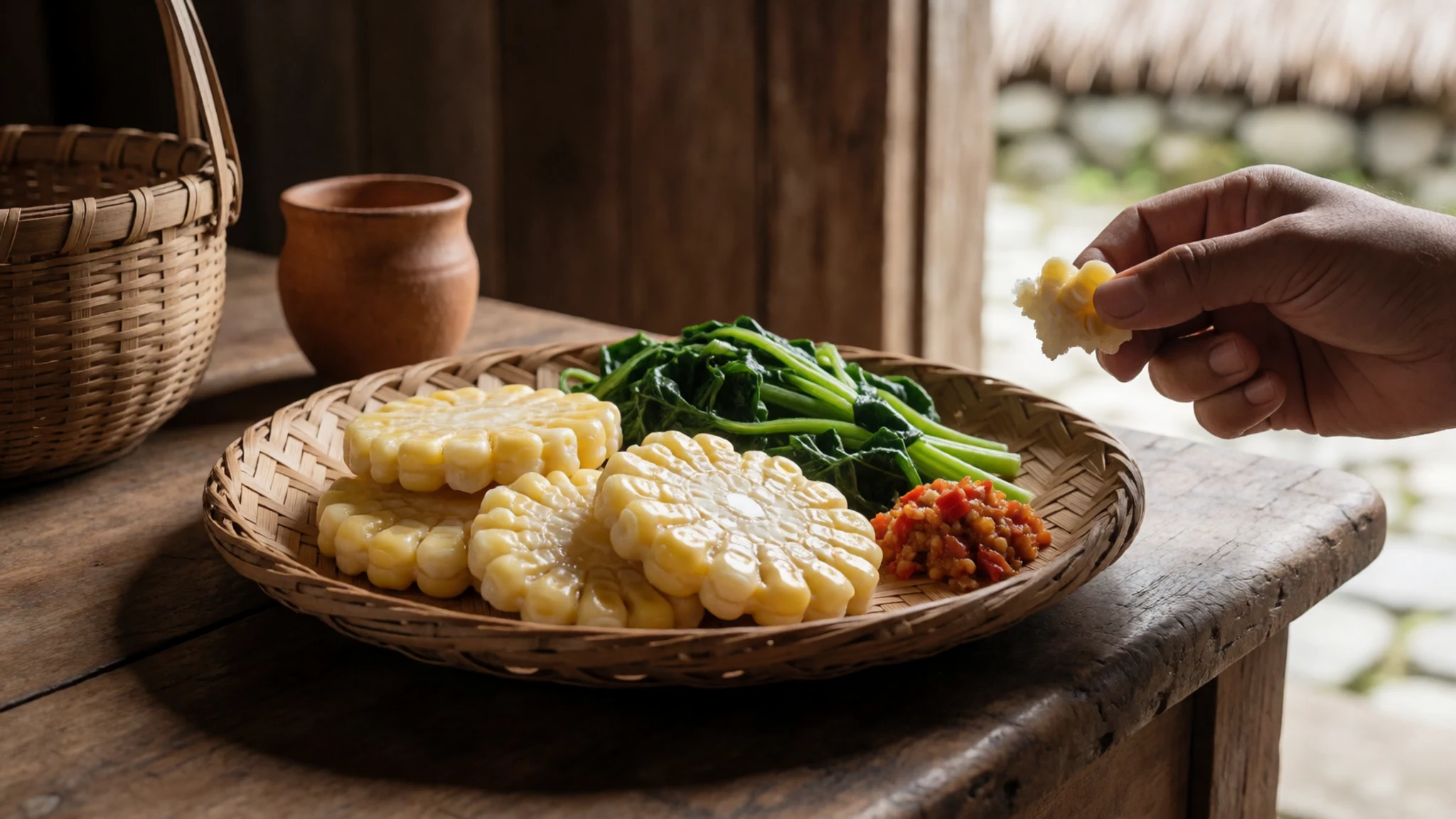
- Sweet potato and cassava — The family hearth
Wae Rebo's gardens put sweet potato and cassava on the table as often as rice, boiled or roasted and eaten with sambal. These are garden foods, not dishes with a formal name on a board. You meet them from the kitchen hut, sometimes with greens from the same slope. - Chicken for guests — The shared meal in a Mbaru Niang
An overnight stay includes three meals a day, all of them vegetarian, while chickens are raised for eggs for visitors. The meals come with the stay, and they are not a dish you can order. Eat what is passed to you. - Garden greens and sambal — Home cooking in the village
Wae Rebo eats a lot of leaf: cassava leaf, papaya flower and garden greens, boiled and finished with a coarse sambal of chilli and lime. Rice, when it is served, is the backdrop rather than the point. This is everyday food from the kitchen hut, not a market stall dish.
Plan it
Best time. Wae Rebo is kinder in July and August, the most comfortable months, when the ridge path is firmer and mornings open onto the cones. December is the wettest month and October to December the hottest, and from November to April the same path is mud and the village sits in cloud. Check a current forecast before you leave Ruteng.
How long. 2–3
Getting there. Fly into Labuan Bajo or Ruteng, then take the road to the trailhead below Wae Rebo and walk the last leg through the forest. The compound itself is reached on foot. Confirm the current drop-off locally; do not trust a timetable fixed far ahead.
Budget. mid
Tips
- Arrange the stay in Wae Rebo before you hike, so a house is expecting you.
- Start the walk early. Cloud and rain are more likely later, and wet ground is slower.
- Carry cash in small notes. Cards are of no use in the village.
- Bring drinking water for the climb, a torch for the night, and a warm layer. Washing is basic.
Etiquette
- Greet the village elder at Wae Rebo on arrival, and follow your host on where to sit and sleep.
- Take your shoes off before you enter a house, and do not climb into the upper levels.
- Ask before you photograph people, and keep off the stone altar in the court.
Nearby
Sources
- Wikidata (CC0)
- Wikipedia: Wae Rebo (CC BY-SA 4.0)
- Wikivoyage (CC BY-SA 4.0)