Vail
Vail, United States
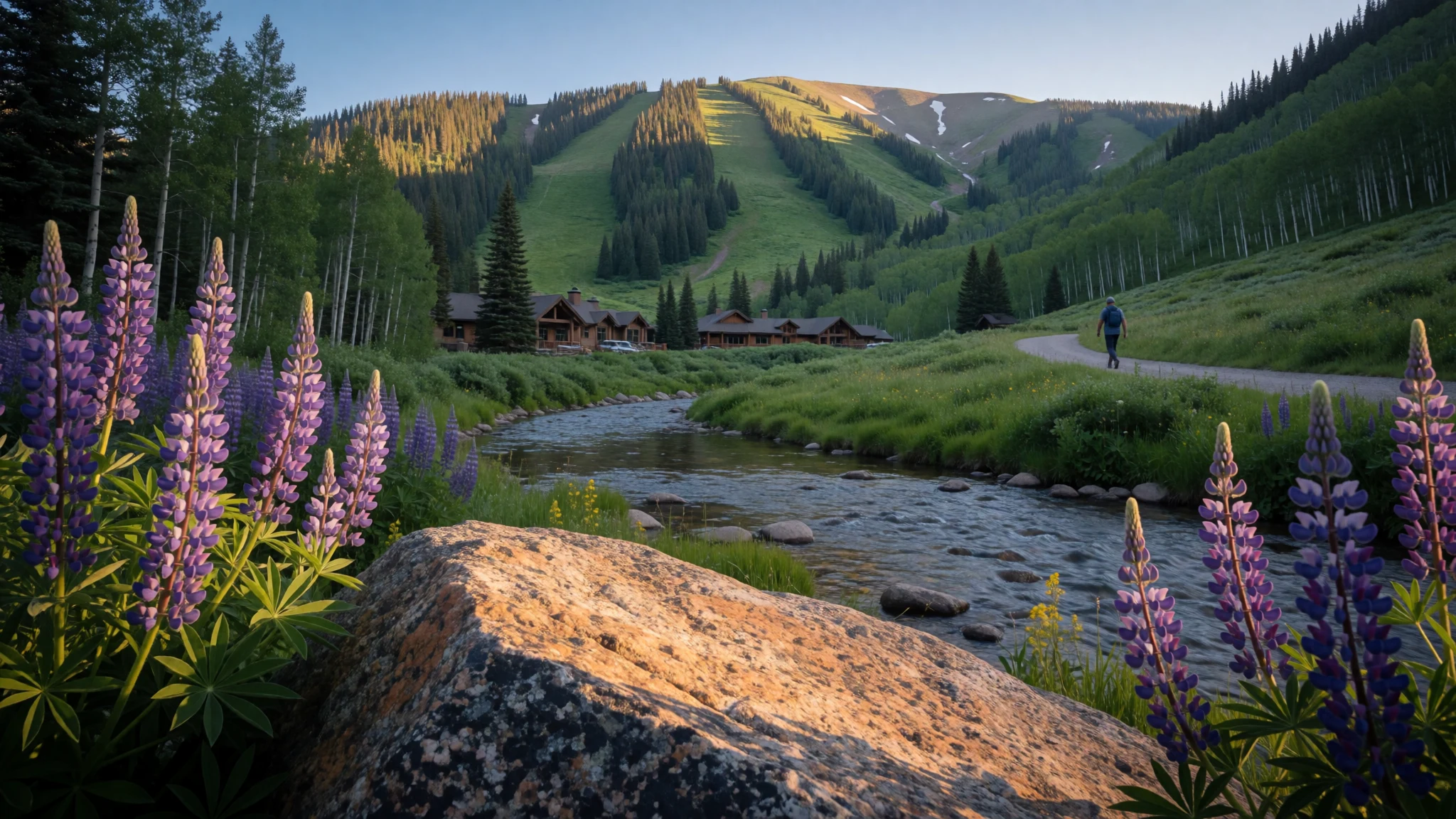
Vail is a purpose-built Colorado mountain town where powder skiing in winter gives way to concerts, gardens and high trails in summer.
The place
Vail sits at 2,445 m above sea level in Eagle County, Colorado, in a narrow valley where Gore Creek runs through the middle of town from east to west. About 4,835 people live here, so it is small in scale. Its population swells whenever the snow is good or a festival is on. The town has no lake of its own, only the creek and the odd pond, and it is ringed by national forest. The ski area operates on land leased from the Forest Service, which is why the mountain feels woven into the landscape rather than fenced off from it. Vail Mountain is the reason most people come. It has three distinct faces: the front side above the town, the back bowls on the far side of the ridge, and the more remote Blue Sky Basin. Seven named bowls make up the back side, with names such as China, Siberia and Inner Mongolia. On a clear day the ridgeline gives a view of Mount of the Holy Cross. The town itself is laid out as a series of compact villages, with Vail Village and Lionshead the two main bases. Both are largely pedestrian, with timber balconies, steep roofs and shopfronts styled after the Alps. Out of season the streets are quieter and rooms are easier to find. Even at peak times the place stays walkable, and the free town buses cover most of what is not.
Its story
Vail is young by any measure. The ski area opened in 1962 and the town was incorporated in 1966, so the resort came first and the municipality followed. The founders were Pete Seibert, a skier from New England, and Earl Eaton, a local rancher who knew the terrain. Seibert had served in the army's mountain division during the Second World War, training at Camp Hale, not far to the south. He was wounded in Italy, recovered, and went on to ski professionally. While training at Camp Hale he had camped on the mountain above the future town and noted how well it would suit skiing. After the war he and other veterans of the same division returned to Colorado with the plan of building a resort. Funds came from a group of Colorado investors, and Seibert and Eaton bought a ranch at the foot of the mountain and formed a company, Vail Associates. Morrie Shepard was hired as the first ski school director. The road mattered as much as the snow. Vail Pass is named for Charles Vail, the engineer who mapped the route for U.S. Highway 6 through the Eagle Valley in 1940. That road later became the interstate that now brings most visitors. A peaceful ranch valley became a resort in less than a decade, which explains the planned look of the streets today.
What to see
- Vail Village and Gore Creek Drive — Vail Village
Vail Village is the original pedestrian core, with timber-framed buildings, small squares and Gore Creek running alongside the main street. It is the easiest place to get a feel for the town's Alpine styling. Come in the early morning for quiet streets, or late afternoon when skiers wander back down.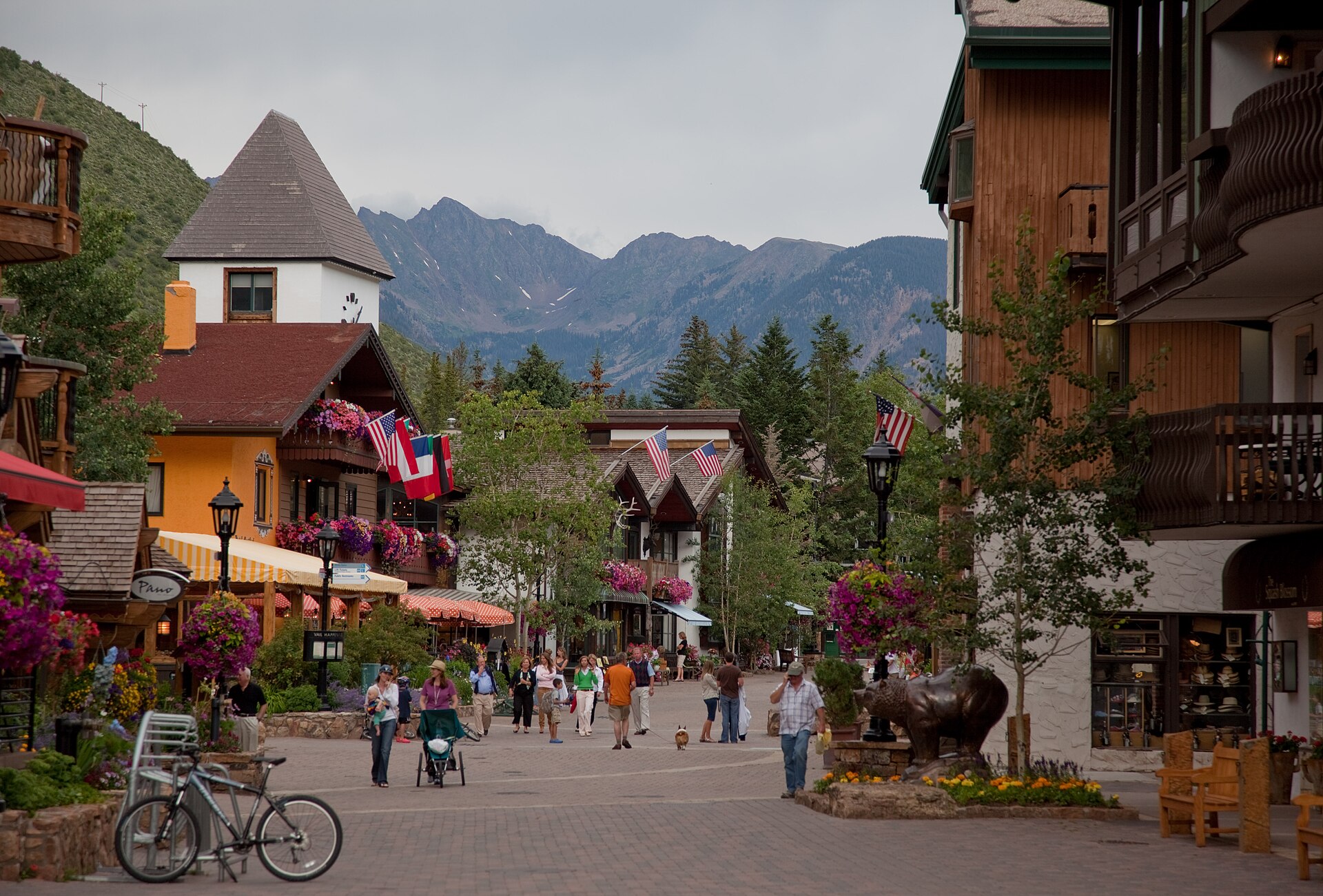
- Lionshead Village — Lionshead
Lionshead is the second main base, a short walk or bus ride west of the village. Its condos and shops copy a European look, and the gondola from here takes skiers and summer walkers up the mountain. It is usually a little less crowded than the older village.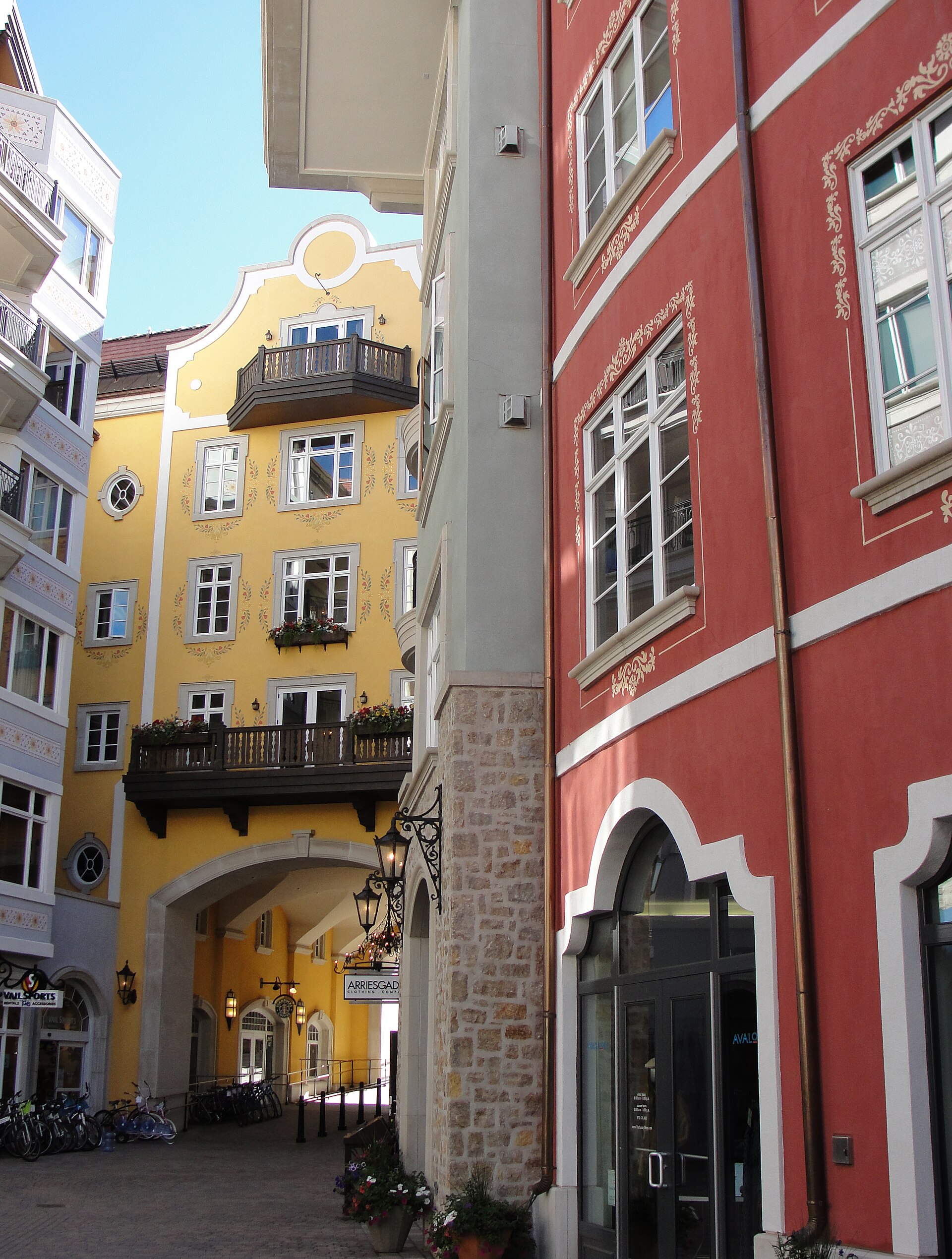
- Vail Mountain: front side and back bowls — Above Vail Village
The front side is the slope you see from town, with runs fanning down towards the buildings. Behind the ridge lie the seven back bowls, and beyond them Blue Sky Basin. In summer the lifts carry walkers and bikers up to the same terrain. Check the resort's official site for operating dates.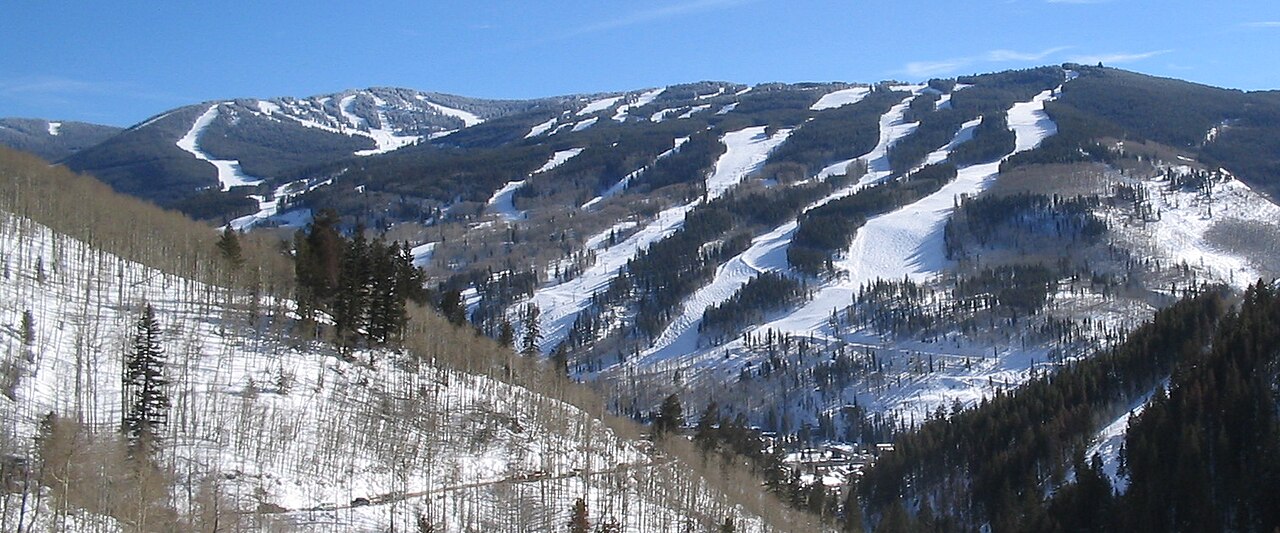
- Betty Ford Alpine Gardens — Ford Park, east Vail
These gardens lie beside Gore Creek in the park at the eastern end of town. They are planted with flowers that cope with thin air and short summers, so they show what actually grows at this height. Late June and July usually give the best colour. Check the official site for opening times.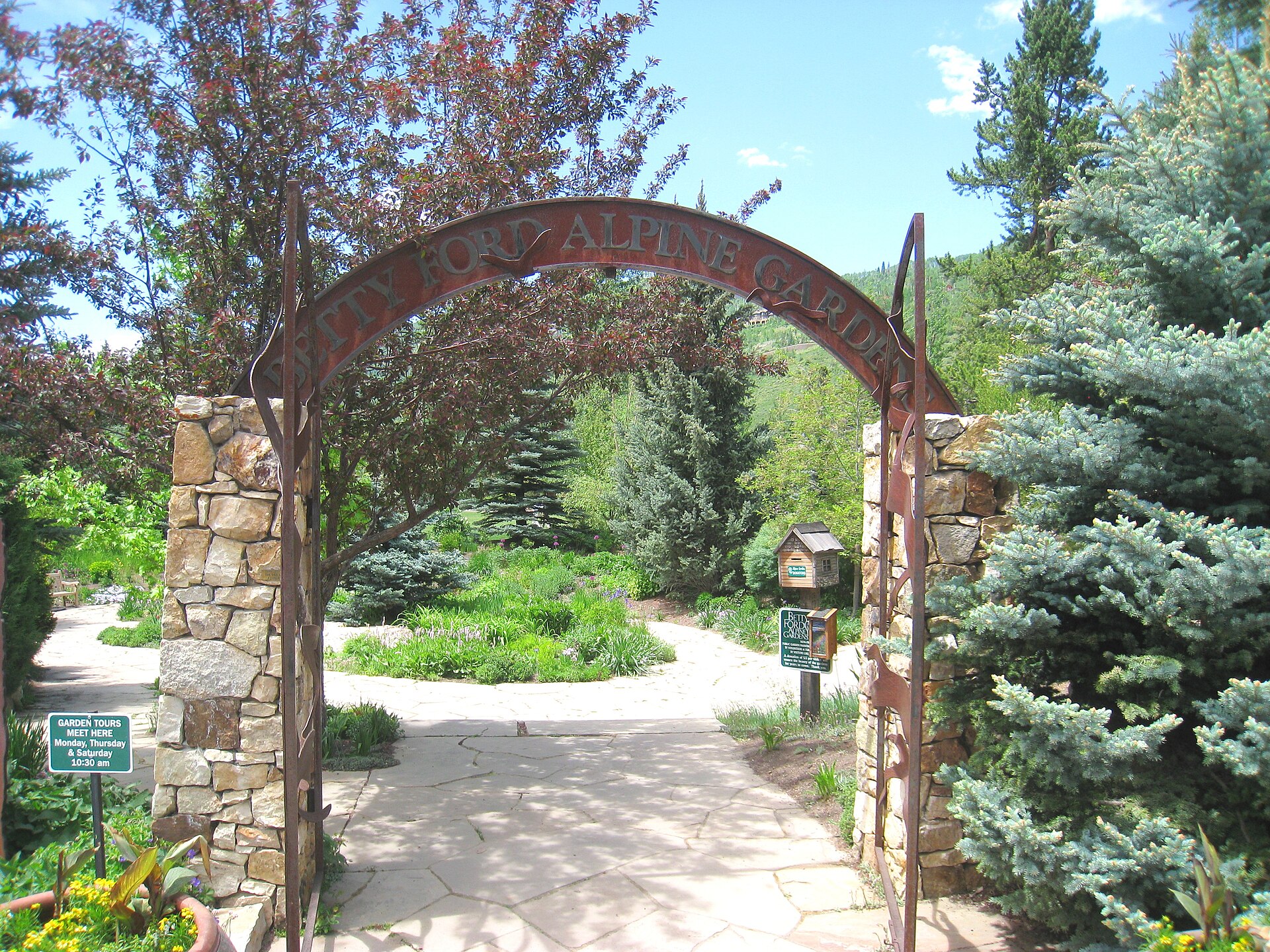
- Shrine Pass — South-east of Vail
Shrine Pass is a high route south-east of town used for walking, cycling and, in winter, cross-country skiing. It gives a taste of the forest and ridges beyond the resort's groomed runs. Take water, layers and a map, and check road and trail conditions locally before setting out.
Culture
Vail's culture is built around the resort calendar, and the town stages events through the year. The winter season brings snowboarding and skiing competitions, including the Burton US Open Snowboarding Championships, and Vail Resorts' Snow Days. Taste of Vail, a food and wine event, takes place in the first week of April, and the Vail Film Festival is held around March or early April. Summer is the cultural high season. Bravo! Vail brings visiting orchestras, including the New York Philharmonic and the Philadelphia Orchestra, and the Vail International Dance Festival hosts major ballet and contemporary companies. A free bluegrass series runs in Lionshead from the end of June into July. Ford Park hosts the Vail Lacrosse Shootout in late June and early July. Institutions give the town some substance beyond tourism, among them the Colorado Ski Museum, the Betty Ford Alpine Gardens and a well-known sports medicine clinic with its own research institute. The skiing heritage is a point of local pride, and people here will happily tell you about the founders and the mountain troops. The mood is polished and outdoorsy, and many people who work in town came for a single season and stayed. Wait your turn at lift lines and bus stops, and let downhill skiers and riders go first when sharing a narrow trail or slope.
What to wear
Vail has no regional costume of its own, since the town only dates from the 1960s. The nearest thing to a local look comes from its ranching and mountain-troop past, which survives in wool, denim and sturdy boots rather than named textiles. Dress on the slopes is entirely technical: insulated shell jackets, waterproof trousers, thermal base layers, helmets and goggles, often in bright colours. In the village in the evening the look is smarter, with down jackets over knitwear, good boots and, at the nicer restaurants, a tidy jumper or shirt rather than anything formal. Summer is more relaxed, with walking shorts, trail shoes and cycling kit. A visitor should plan around altitude and changeable weather. In winter, bring several thin layers rather than one thick one, with waterproof gloves, a hat, warm socks and sunglasses or goggles, since the sun is strong at 2,445 m and reflects off snow. Footwear needs good grip, because pavements in the village can be icy. In summer, pack a light waterproof, a sun hat, sunscreen and sturdy shoes, because afternoon storms are common in the mountains and evenings turn cold quickly. There are no religious dress rules to worry about, and nobody will mind if you wear the same fleece twice.
What to eat
- Barbecue beef or pork sandwich — Wildwood shelter, on the ski mountain
A pulled barbecue sandwich served with soup and a side is the standard hearty mountain lunch. The Wildwood shelter on the mountain is known for a combo of this kind, and it is good value by resort standards. - Mountain-lodge soup — On-mountain restaurants and lodges
Thick soups, chilis and stews are the practical fuel for a cold day on the slopes. Most on-mountain restaurants serve one or two daily, and they are warming and filling without needing a long sit-down meal. - Locals' breakfast — Westside Cafe, west side of town
Westside Cafe is a long-standing local favourite for a cooked breakfast before the lifts open. Expect eggs, potatoes and strong coffee in large portions, and a friendlier crowd than the village centre. - Pub food and a pint — Bart & Yeti's, Lionshead
Bart & Yeti's is a favourite with locals, including families who have lived here for three generations. It suits a casual evening of burgers, wings and beer after a day outside, and is a good place to chat with residents. - Taste of Vail tastings — Vail Village, early April
In the first week of April the town hosts a food and wine event, with chefs and wineries offering tastings and dinners. It is the best time to sample the town's higher-end cooking in one go. Check the official programme before booking.
Plan it
Best time. December to March for snow, with January and February usually the coldest and busiest. July and August suit walking, gardens and festivals, with warm days and cool nights. Late spring and late autumn are quiet and many lifts and some restaurants close, so check before booking.
How long. 3–5
Getting there. Fly to Denver International Airport, then drive west along the interstate into the mountains, or take a shuttle or coach to Vail; the drive can take much longer than usual on weekend afternoons or in snow. Eagle County Regional Airport is closer and worth checking for flights in season. Once in town, free buses link Vail Village and Lionshead.
Budget. high
Tips
- Avoid driving to or from Denver on weekend afternoons, and check the Colorado Department of Transportation's COtrip site for road conditions and closures
- Buy lift tickets in advance on the official resort website, because walk-up prices are usually higher
- Allow a day to adjust to the altitude, drink plenty of water and go easy on alcohol at first
- Winter driving can be difficult, so if you lack snow experience, consider a shuttle rather than a rental car
- Book accommodation early for winter holidays, and check the town's official site for event dates
Etiquette
- Follow the posted ski safety code and slow down in crowded areas
- Give way to people ahead of you on the slope and keep to marked trails to protect the forest
- Tip service staff, as is customary across the United States
Nearby
Sources
- Wikidata Q747987 (CC0)
- Wikipedia: Vail, Colorado (rev 1381617426) (CC BY-SA 4.0)
- Wikivoyage: Vail (rev 5436143) (CC BY-SA 4.0)
- Photo: Gore Creek Drive, Vail, CO (Nick Csakany) (CC BY-SA 2.5)
- Photo: Vail front side (Dbenbenn assumed) (CC BY-SA 2.0)
- Photo: Buildings in Vail, Colorado 1 (G0phy) (CC0 1.0)
- Photo: Gore Creek Drive, Vail, CO, cropped (Nick Csakany) (CC BY-SA 2.5)
- Photo: Lionshead, Vail Colorado (Greg Tally) (CC BY 3.0)
- Photo: Lost Lake Panoramic facing north (Kevin R Foote) (CC BY 3.0)
- Photo: The view from Vail Pass (Rob Pongsajapan) (CC BY 2.5)
- Photo: Betty Ford Alpine Gardens gate (Daderot) (Public domain)


