Uummannaq
Uummannaq, Greenland
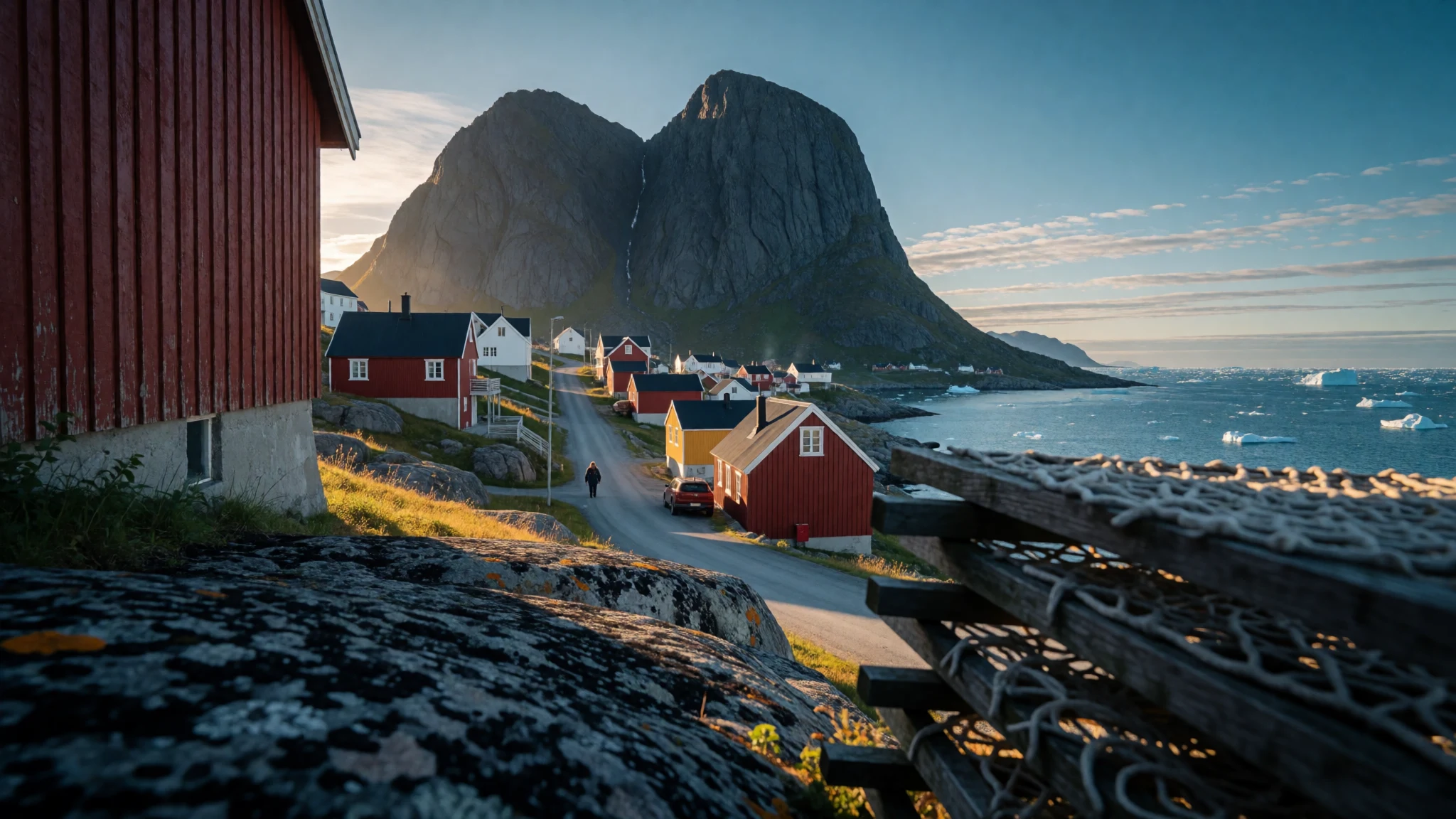
Uummannaq is a working Arctic fishing town on an island beneath a great granite mountain, reached by helicopter or boat across sea ice and fjord.
The place
Uummannaq sits on a small rocky island in a fjord on the west coast of Greenland, well north of the Arctic Circle. The town is a scatter of brightly painted wooden houses, laid over bare rock in whatever shape the ground allows. Behind it rises a steep, dark mountain that gave the place its name, usually explained as meaning heart-shaped. The mountain dominates every view, and on clear days it seems much closer than it is. Around the island, the fjord is crowded with icebergs that have drifted from the glaciers inland, and in winter the water freezes into a surface used for travel.
There is no road network to speak of. People walk the hilly lanes, and the harbour is the town's true centre: fishing boats, small ferries, dog teams waiting for the ice and the occasional cruise ship all pass through it. Life is organised around fishing, hunting and the services that keep a remote community running, such as a school, a health centre, a shop and a church.
Visiting means accepting the logistics. Weather can delay helicopters and boats, supplies are limited, and nothing is cheap. In return the town offers something unusual: a real Greenlandic community, not a resort, where a visitor can spend several days walking, boating and watching the light change over the ice. Summer brings long daylight and open water, while late winter and spring offer snow, sledges and bright cold air. The darkest months are quiet and harsh, and best suited to those who already know the Arctic.
Its story
The story of Uummannaq begins long before the town. Inuit hunting cultures lived around this fjord for many centuries, following seals, whales and fish through the seasons, and the surrounding coast is dotted with old settlement sites. The Qilakitsoq burials, on the mainland near here, are the best-known example. Hunters came upon a group of bodies preserved by cold and dry conditions, and the finds gave researchers a rare look at clothing, tools and daily life from several centuries ago. The mummies are now cared for in the national museum in Nuuk, not in Uummannaq itself.
The present town grew out of the Danish colonial period, when trading posts were set up along the Greenland coast to buy skins, oil and fish. Uummannaq became the local base for that trade, and later for the church, school and administration that followed. Some of the old buildings from that era survive, including turf-roofed houses and a church built from local stone, and they still sit among newer painted wooden homes.
The modern economy rests on fishing, especially halibut caught through the ice or from small boats, and on hunting, which remains part of food and identity here. Fish processing provides jobs. Tourism is a small addition, arriving mostly in summer, and it has brought quirks such as a house presented as Father Christmas's Greenland home. Today the town is part of the Avannaata municipality, and its people balance old skills with modern services, in a place where ice, weather and distance still decide a lot.
What to see
- The heart-shaped mountain — Rising directly behind the town
The great dark mountain that gives Uummannaq its name is best appreciated from several angles: from the harbour at the start of the day, from the lanes above the church, and from a boat out in the fjord. Climbing it is serious mountaineering, so most visitors simply watch the light move across the rock.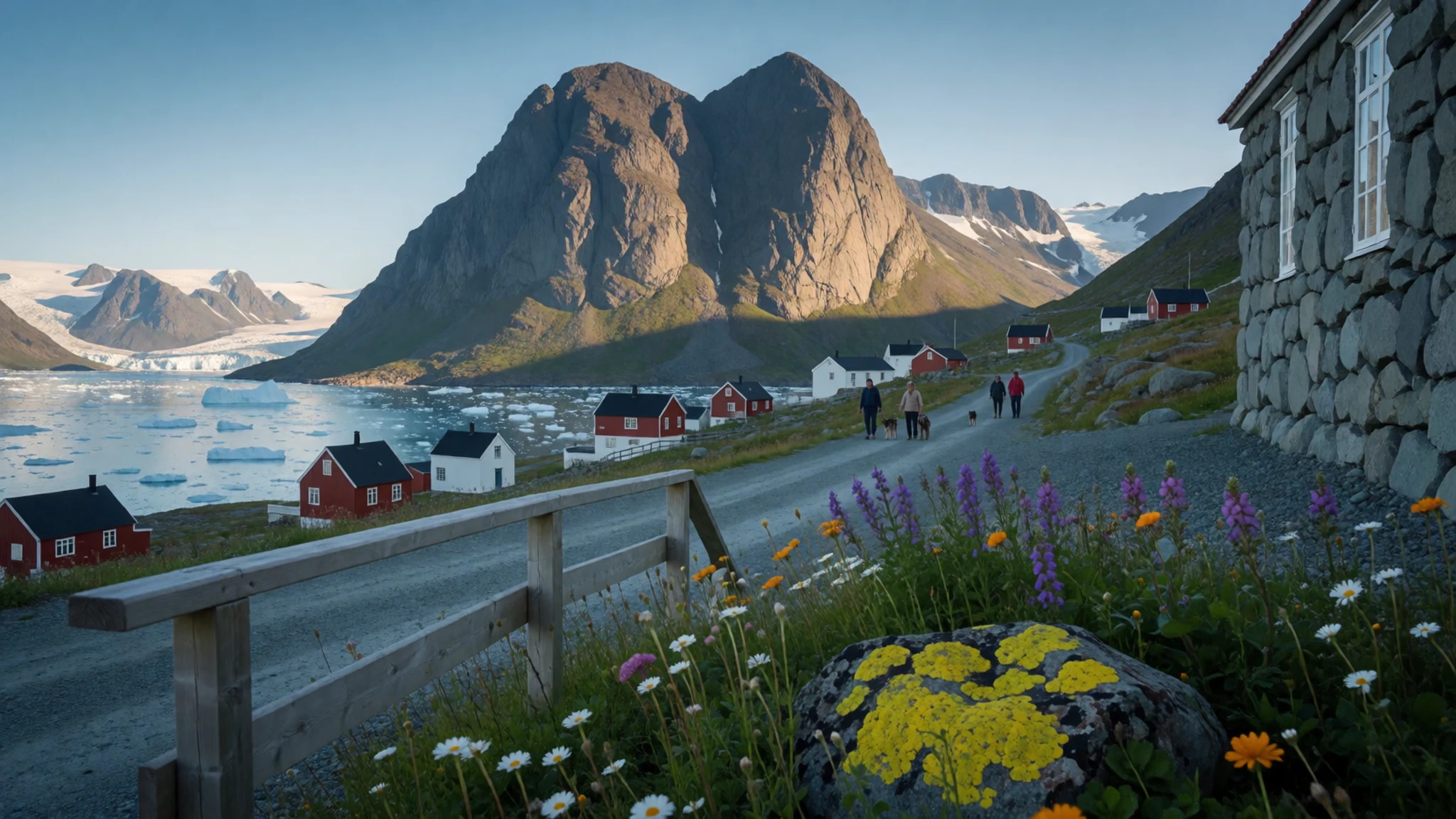
- The old quarter and stone church — Central hillside above the harbour
The oldest part of Uummannaq is a cluster of small wooden houses, a few turf-roofed buildings and a church built from local stone. Walking the lanes shows how homes were fitted around rock and slope. The cemetery with its white crosses lies close by and gives a quiet viewpoint over the town.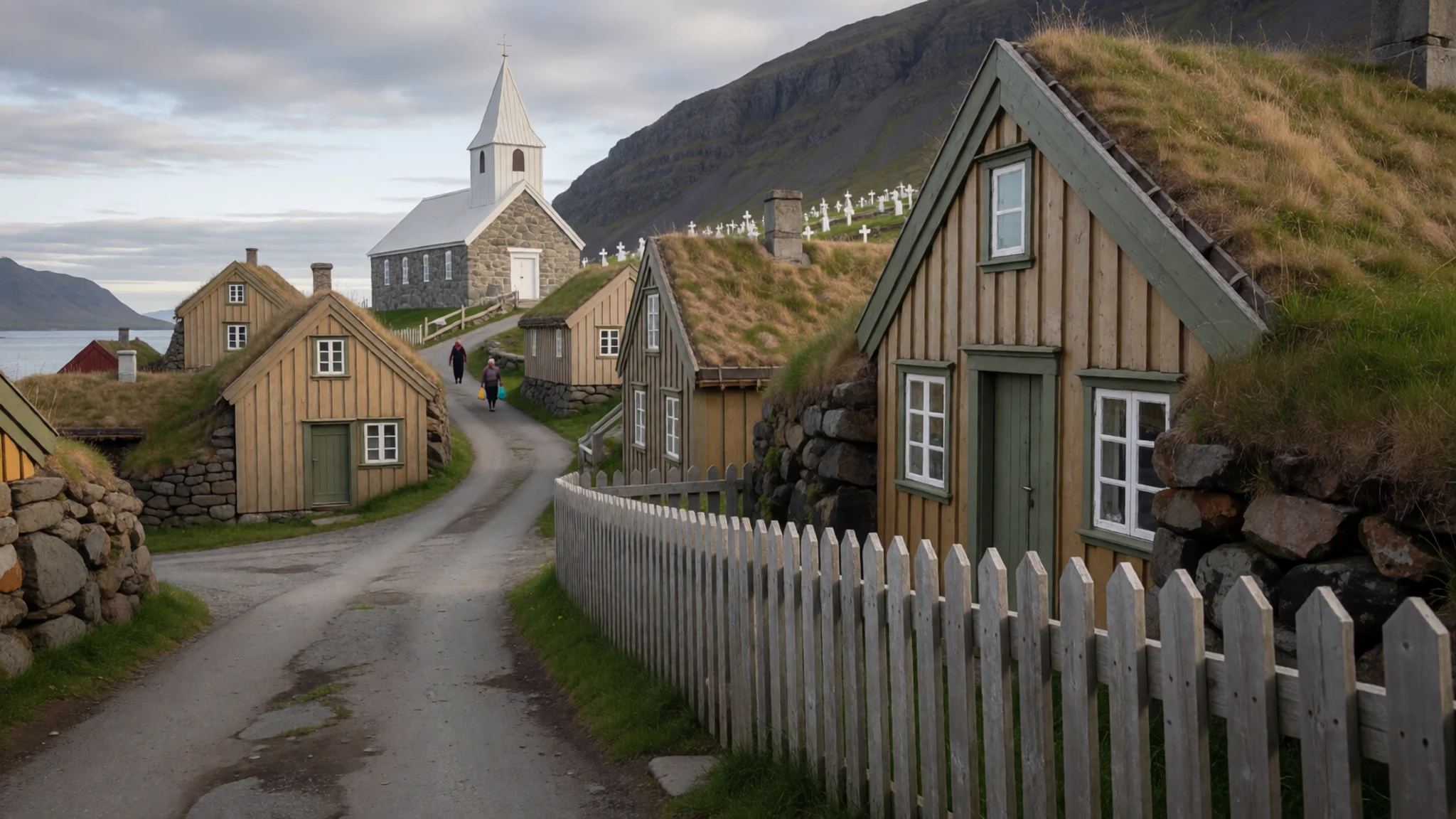
- Uummannaq Museum — Near the harbour, in the old town
The local museum sits in a former trading building and explains hunting, kayaks, clothing and the colonial period. It is small and quickly seen, but it gives useful context for what you then notice around town. Opening times vary by season, so ask locally or check the municipality's tourism information.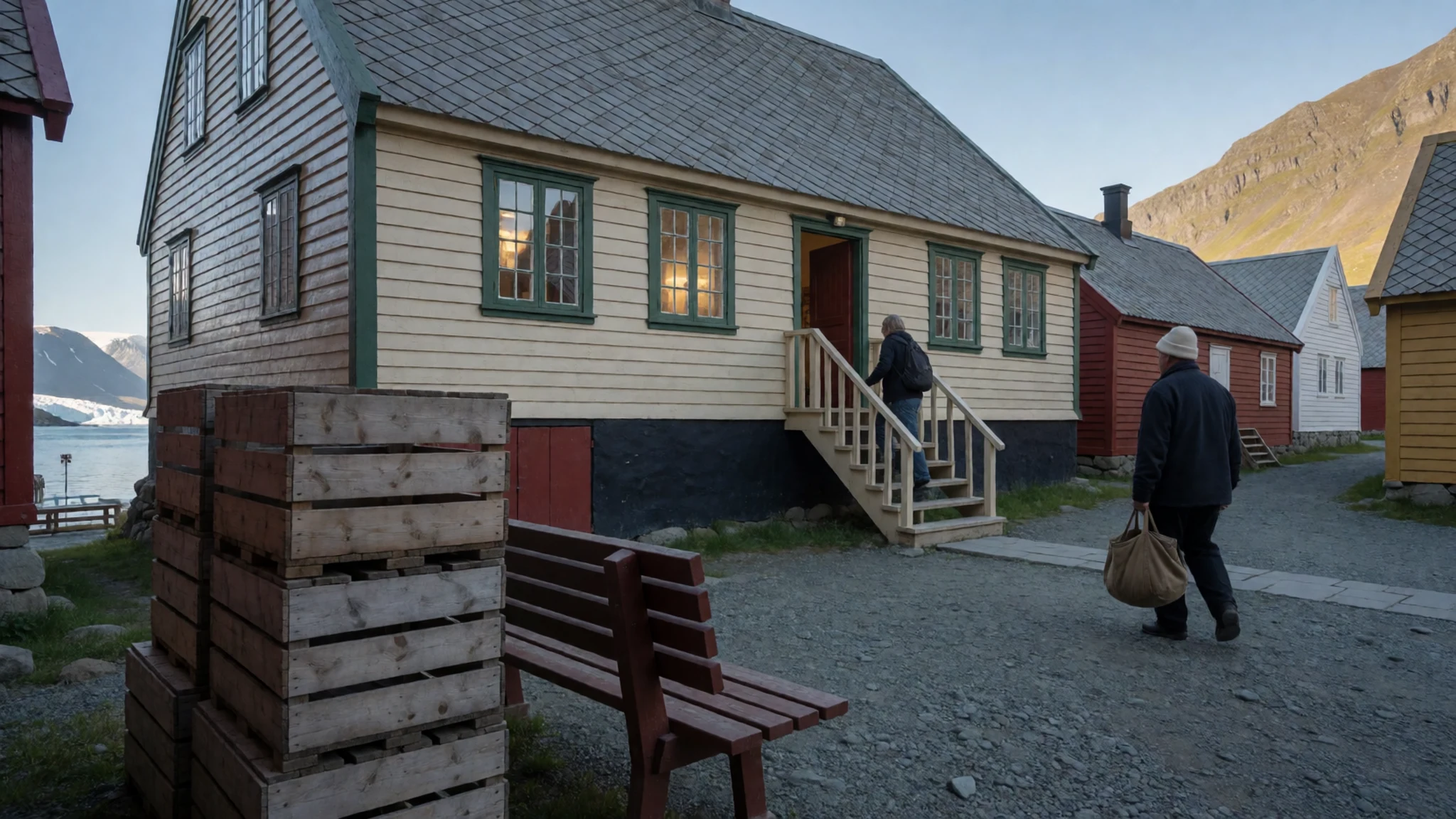
- The harbour and boat trips — Harbour on the island's sheltered side
Uummannaq's harbour shows the town at work: fishing boats unloading, small ferries leaving for outlying settlements and dogs waiting nearby in winter. Local operators run boat trips among the icebergs and to abandoned settlement sites. Bookings depend on weather and ice, so confirm plans a day ahead and stay flexible.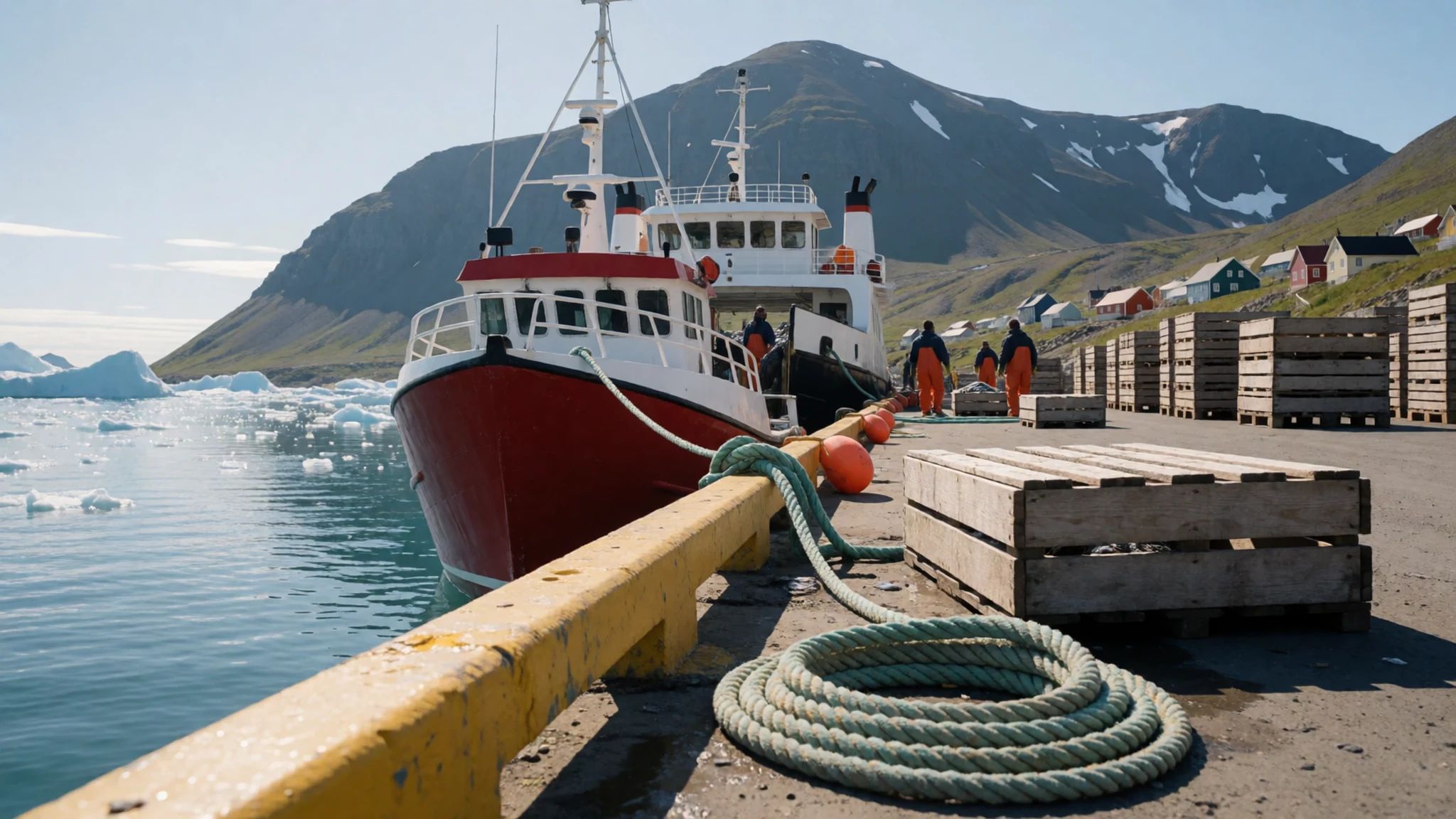
- Santa's house and mailbox — Upper part of the town, near the traditional turf house
Uummannaq presents one of its houses as Father Christmas's Greenland home, with a red mailbox beside a traditional turf building. It is a light-hearted stop and gets letters from children abroad. Treat it as a short photo detour, then continue to the lanes and shoreline for the real town.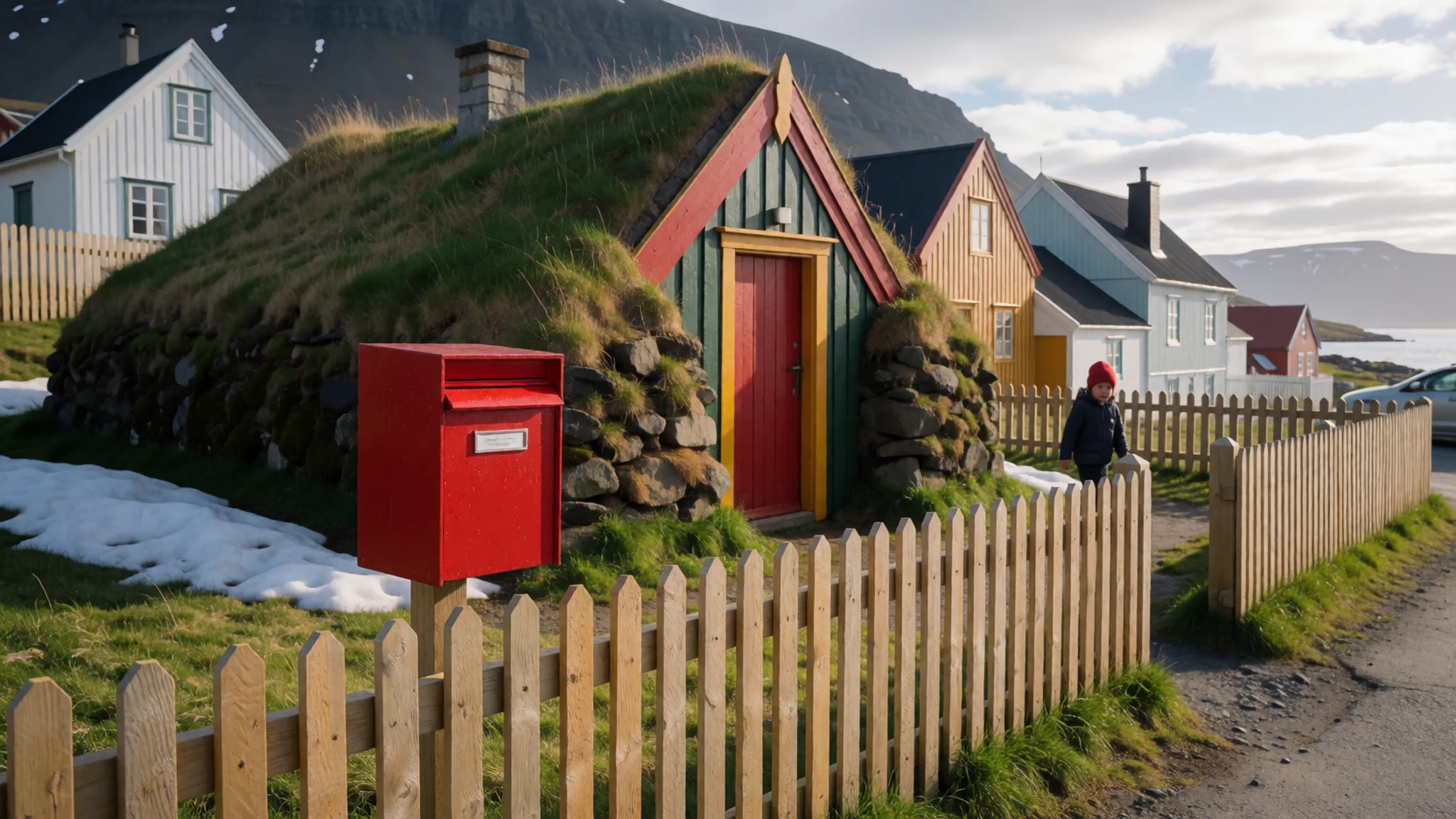
Culture
Uummannaq is a Greenlandic-speaking town, and Kalaallisut is the everyday language at home, in the shop and at the harbour. Danish is widely understood, and English is used with visitors but should not be assumed in every conversation. A few greetings in Kalaallisut are noticed and appreciated.
Hunting and fishing are central to both the economy and the culture. Seal skins hang to dry, fish are cleaned on the quayside and dog teams are working animals, not attractions. Visitors will see dried fish, meat and skins as ordinary parts of life, and some people take offence at outsiders treating them as spectacle or as something to criticise.
Community events matter here. Football on the gravel pitch, school concerts, church services and national holidays bring much of the town together, and the summer football matches are a social fixture. Kaffemik, an open-house gathering with coffee and cake, is the traditional way to mark birthdays, confirmations and other milestones. Visitors are occasionally invited, and accepting graciously is a good way to meet people.
The church remains an important gathering place, and the cemetery on the hillside is part of the living town. Alcohol is a sensitive subject in many Greenlandic communities, so it is best not to comment on it. Ask before photographing people, dogs, drying meat or private homes, and never enter a house or step onto a family's drying racks without being invited.
What to wear
Traditional Greenlandic dress in Uummannaq is rooted in the skills of Inuit hunters. Sealskin was historically the main material for boots called kamik, trousers and outer clothing, because it is warm, flexible and water-resistant. Anoraks were made of skin or later of cloth, and polar bear fur was used for trousers in some regions. The national costume, called nuilarmiut for women, has a beaded collar, brightly coloured tops, sealskin trousers and tall boots, with colours and patterns varying by region. Men's versions are plainer, with an anorak and sealskin boots. These outfits are worn at confirmations, weddings, national day and other festive events.
Day to day, people in Uummannaq dress for the weather in modern outdoor gear: padded jackets, wool hats, insulated boots and waterproof trousers. Fleece and wool layers are standard, and fishermen wear heavy waterproofs on the boats. Sealskin items remain in use and are sold locally, but they are made for need and craft, not fashion.
Visitors should dress for cold, wind and wet at any time of year. Summer can bring mild afternoons but also chilly boat trips, so pack layers, a windproof shell, a warm hat and gloves. In winter and spring, add insulated boots, thermal layers and sunglasses for glare off the snow. Sturdy waterproof footwear is essential, because the town is built on bare rock with steep, uneven paths. Dress is casual, though covered shoulders and knees are sensible for church services and funerals.
What to eat
- Greenland halibut — Harbour fish stalls and local restaurants
Halibut is the fish of the Uummannaq fjord, caught through the ice in winter and by small boat in summer. It is served fresh, smoked or dried, and appears on most restaurant menus. Ask at the harbour what has been landed that day.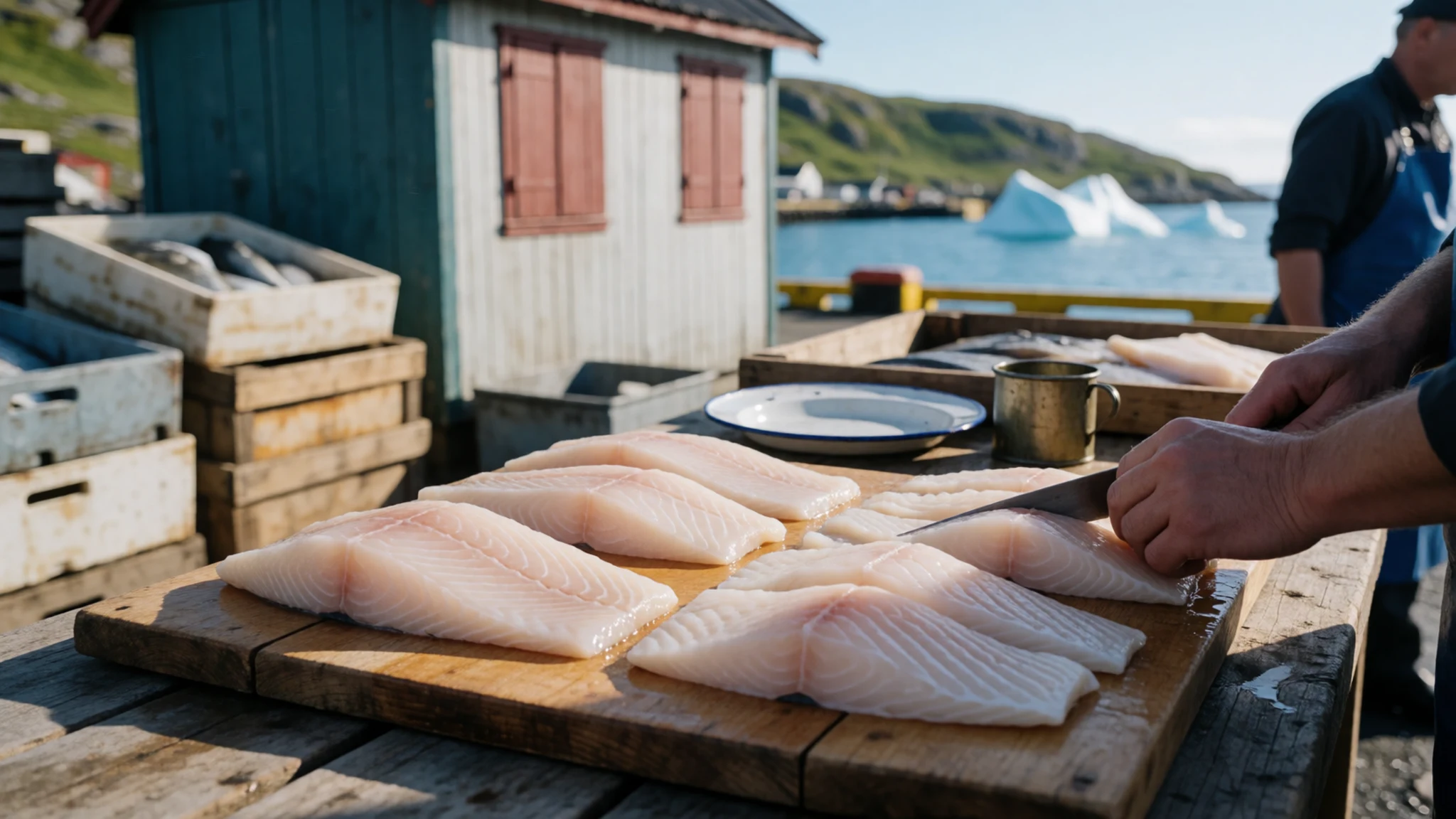
- Suaasat — Family homes, community events and local eateries
Suaasat is a traditional Greenlandic soup, usually made with seal, whale, reindeer or sometimes fish, thickened with rice or oats and flavoured simply with onion and salt. It is warming and filling. Visitors are most likely to taste it at a community event or a local eatery.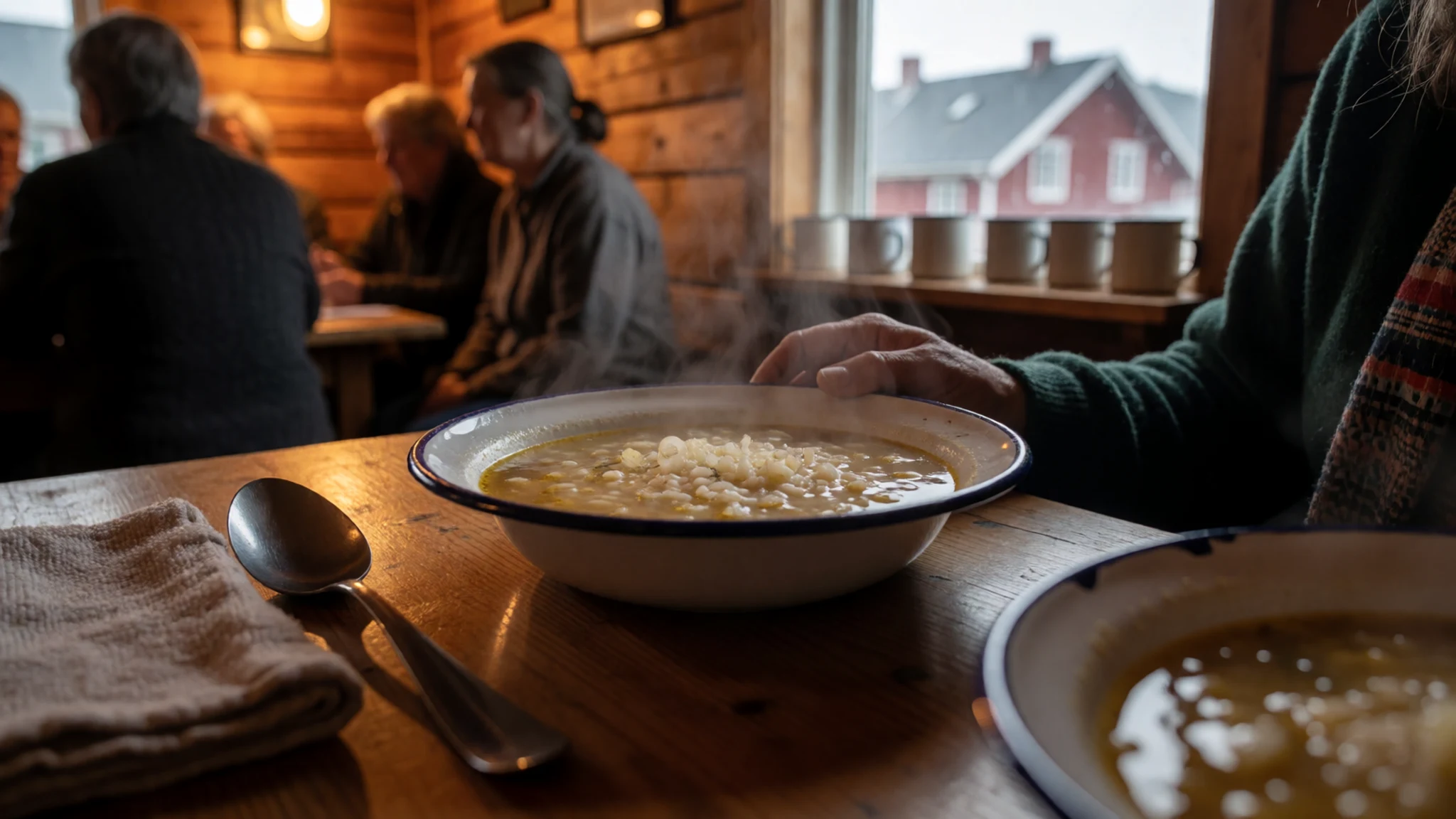
- Dried fish and dried meat — Drying racks by houses and the local shop
Dried fish, especially cod and halibut, is a staple snack and is often eaten with butter or a dipping sauce. Dried meat is also common. Both are salty and chewy, and are best bought from local sellers or shared by a host. - Musk ox and reindeer — Restaurants and guesthouse dining rooms
Musk ox and reindeer are the main land meats on Greenlandic menus and are usually grilled or stewed with root vegetables. They appear in smaller towns like Uummannaq when kitchens have stock. Availability varies, so ask in advance. - Kaffemik cakes and coffee — Private homes by invitation, bakeries and the town's cafés
Kaffemik is a social gathering where guests are served strong coffee, tea and a spread of cakes and bread. Visitors may be invited during celebrations. Bakeries and cafés in town also sell cakes and sandwiches that make an easy light meal.
Plan it
Best time. March–April for snow, bright light and sledging on the sea ice; June–August for long daylight, open water and boat trips among icebergs. Winter is dark, cold and quiet, and ice conditions can limit travel in the shoulder months.
How long. 3–4
Getting there. Fly to a Greenlandic hub such as Ilulissat or Nuuk, then on to Qaarsut airport on the mainland. From Qaarsut, a helicopter or a boat completes the last leg to Uummannaq. Schedules depend on weather and season, so check Air Greenland and the local ferry operator for current times.
Budget. high
Tips
- Book flights, helicopter seats and accommodation well ahead, as capacity is small and fills in summer
- Build spare days into the itinerary, because fog, wind and ice often delay transport
- Bring cash as well as cards, since card machines and cash points can be limited
- Pack layers, waterproofs and sturdy boots even in summer
- Buy food and any special supplies in town on arrival, as shop stock can be limited
Etiquette
- Ask before photographing people, dogs, drying meat or private homes
- Do not feed or approach working dogs
- Accept a kaffemik invitation with thanks and leave a small token such as sweets for the household
Nearby
Sources
- Wikidata: Uummannaq (CC0)
- Wikipedia: Uummannaq (CC BY-SA 4.0)
- Wikivoyage: Uummannaq (CC BY-SA 4.0)
- Wikimedia Commons: Uummannaq photographs (Public domain, CC BY 3.0 and CC BY-SA 4.0)
Wildlife
- Ringed seal (animal)
The ringed seal is a small seal with no ear flaps, and its coat is dotted with dark spots, each circled by a pale ring, as if someone had doodled on it. It belongs to the Arctic, and people beside this fjord have hunted seals across the year for centuries, so the animal is woven into the place's story. Watch from a respectful distance, keep quiet and still, and go with a local guide who knows the water. Never feed it.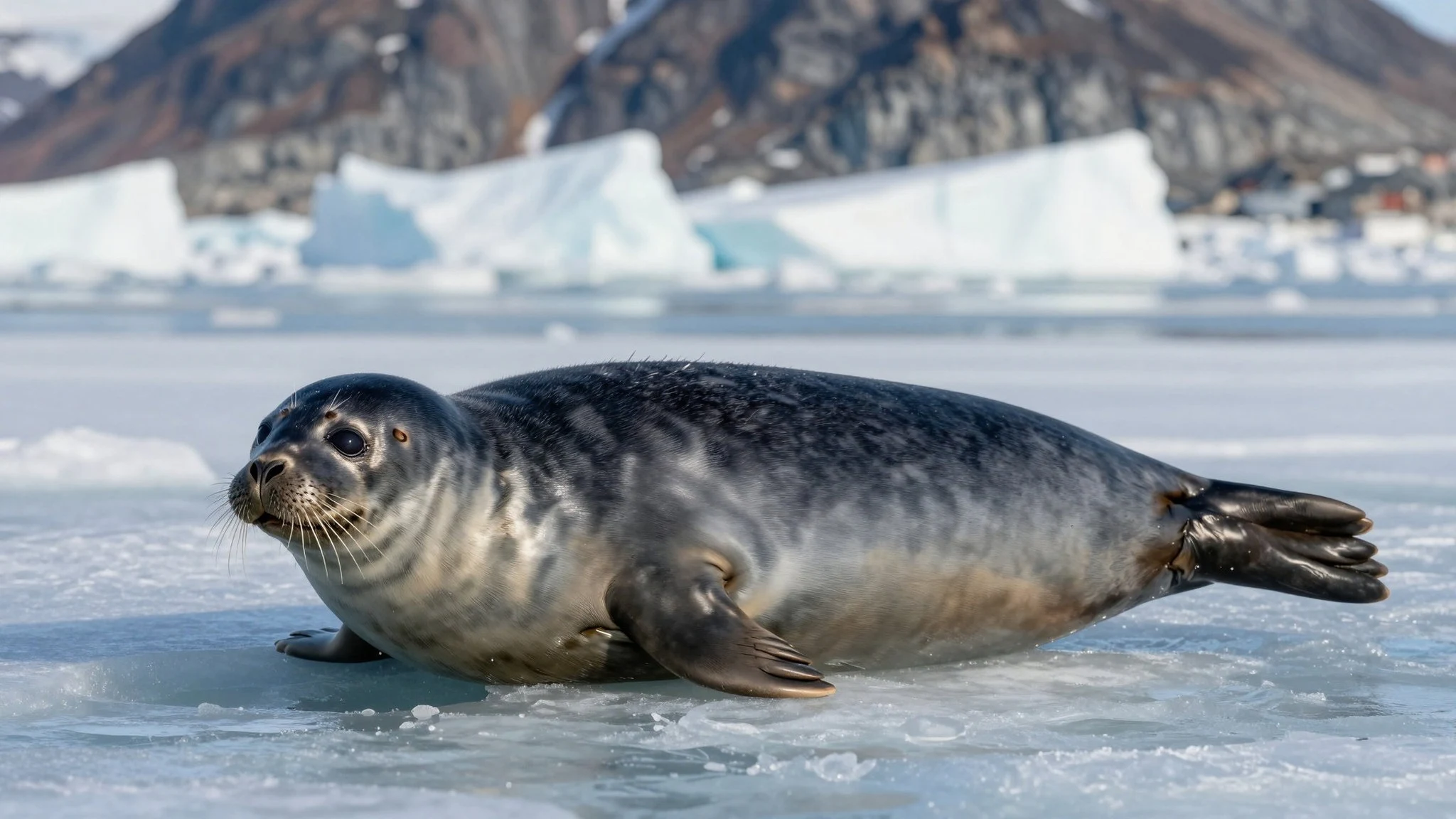
- Bowhead whale (animal)
The bowhead is a great whale of the cold north with a huge triangular skull, which it uses rather like a battering ram to break through ice. It is a baleen whale, and the only one native to Arctic and subarctic waters. People around this fjord have lived alongside whales for centuries, though no sighting can be promised. If you do see one, keep a respectful distance, stay quiet, go with a local guide, and never try to feed it.