Utrecht
Utrecht, Netherlands
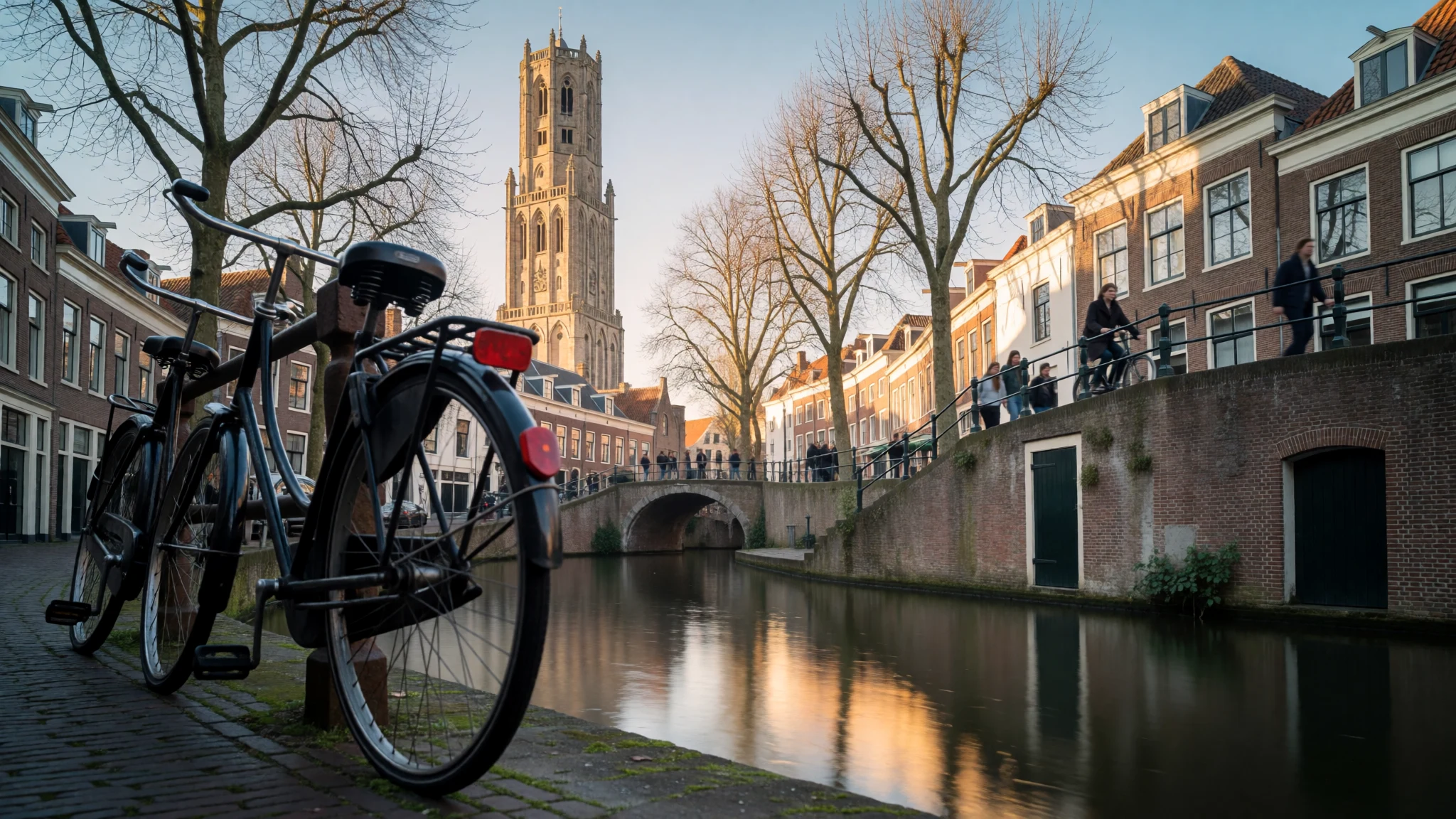
Utrecht is a canal city where sunken wharves, a tall medieval tower and student energy all sit within a short walk of the station.
The place
Utrecht sits almost in the middle of mainland Netherlands, on flat land about 5 metres above sea level, with roughly 360,000 residents. It is the capital of its province and forms part of the eastern Randstad, the ring of cities that also includes Amsterdam. The old centre is compact and easy to cover on foot, though bicycles outnumber everything else on the move, which suits a place classed as a cycling city. The feature that defines it is the Oudegracht, a canal with wharves and cellars set below street level, so that cafés and shops open onto a quay beneath the pavement. Above it rises the Dom Tower, a fixed point for finding one's way when the lanes turn confusing. Utrecht is also a working city: a major rail hub, a university town, and a centre for healthcare and research, which keeps the centre busy and young outside holiday seasons. The station sits at the western edge of the old town, and a large shopping complex fills the stretch between them, so first impressions are of modern concrete rather than gables. The older city begins a few minutes further on. The wider municipality holds three UNESCO World Heritage properties: the Rietveld Schröder House, parts of the Lower German Limes and parts of the Dutch Water Defence Lines. Crowds are lighter than in Amsterdam, although Saturdays around the canals get busy, and rain can arrive in any month. Utrecht works as a destination in itself and as a calm base for the surrounding region.
Its story
Utrecht began as a Roman frontier post. Around 50 CE, once Emperor Claudius had decided the empire would push no further north, a chain of forts went up along the Rhine, which then followed a more northerly course than today; its old bed survives as the Kromme Rijn. The fort at Utrecht housed a garrison, and a settlement of craftspeople, traders and families grew beside it. Its Roman name, Traiectum, simply meant a crossing, and Dutch speakers shortened it to Trecht. The prefix U comes from an Old Dutch word for downstream, added so that nobody confused the town with Maastricht on the Meuse. Church power came next. Utrecht has served as the spiritual heart of the Netherlands since the 700s, gaining official city rights in 1122. A great Gothic cathedral was begun but was badly damaged by a storm while still under construction, which is why the Dom church and its tower now stand separated by a gap that was once the nave. In 1579 delegates signed the Union of Utrecht here, a pact that became one of the foundations of the Dutch Republic. Centuries later the railways turned a quiet church city into a junction, a role it still plays. The Roman line, the medieval church and the modern station are strands of one story, and each leaves visible traces within a short walk of the others.
What to see
- Domtoren — Domplein, old centre
The Dom Tower rises 112 m over the old centre and is the landmark that orients the whole city. It belongs to the medieval church complex, and the climb is done on a guided basis, so check the official site for how to book. On clear days the view stretches far across flat country.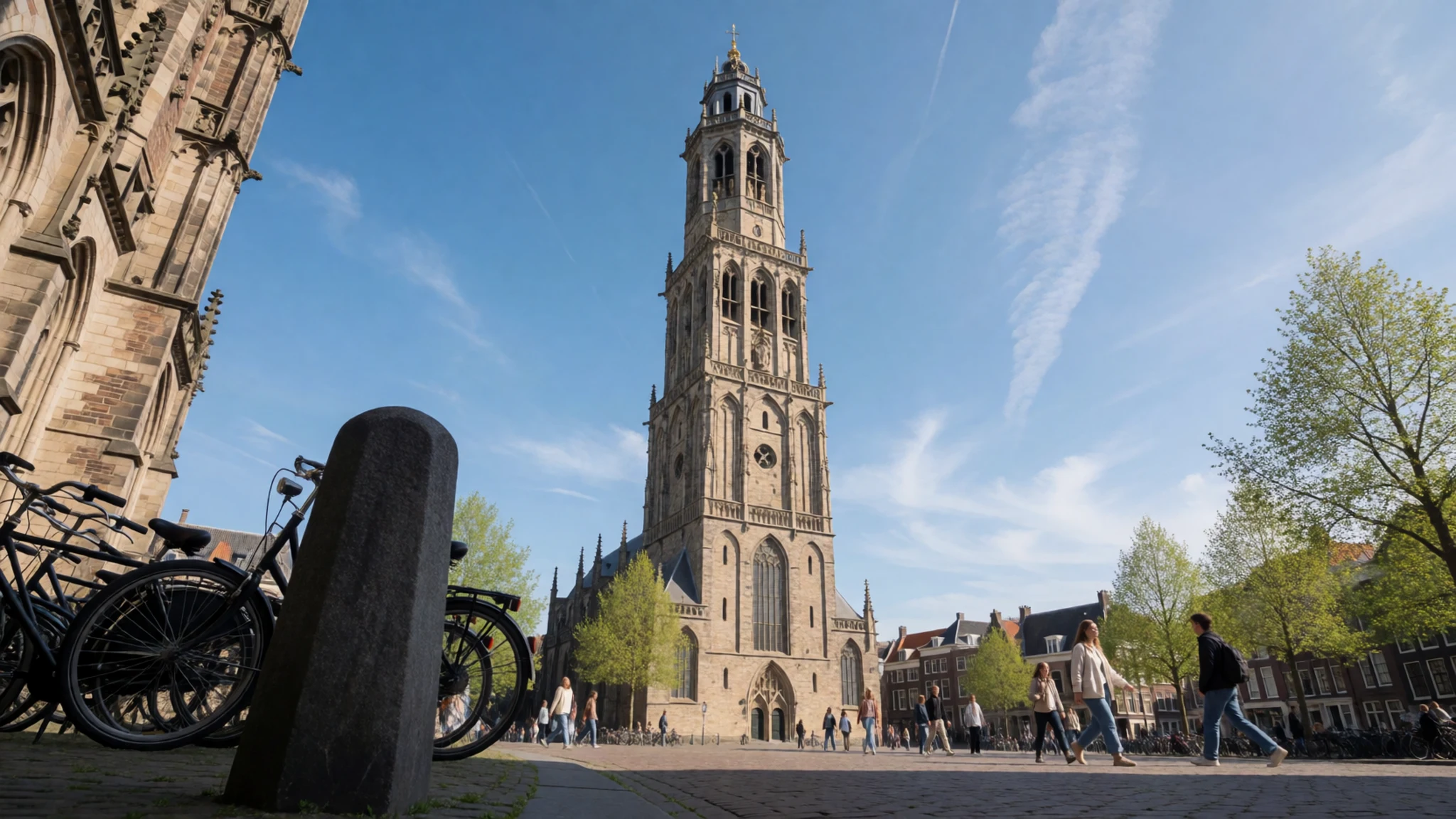
- Dom van Utrecht — Domplein, old centre
The Gothic Dom church was built between 1284 and 1520 and was once part of a larger cathedral. A storm damaged it during construction, leaving the open space between church and tower. Inside it is calm and tall. The adjoining cloister garden, the Pandhof, is a quiet place to sit; carillon concerts are held there, so check the official site.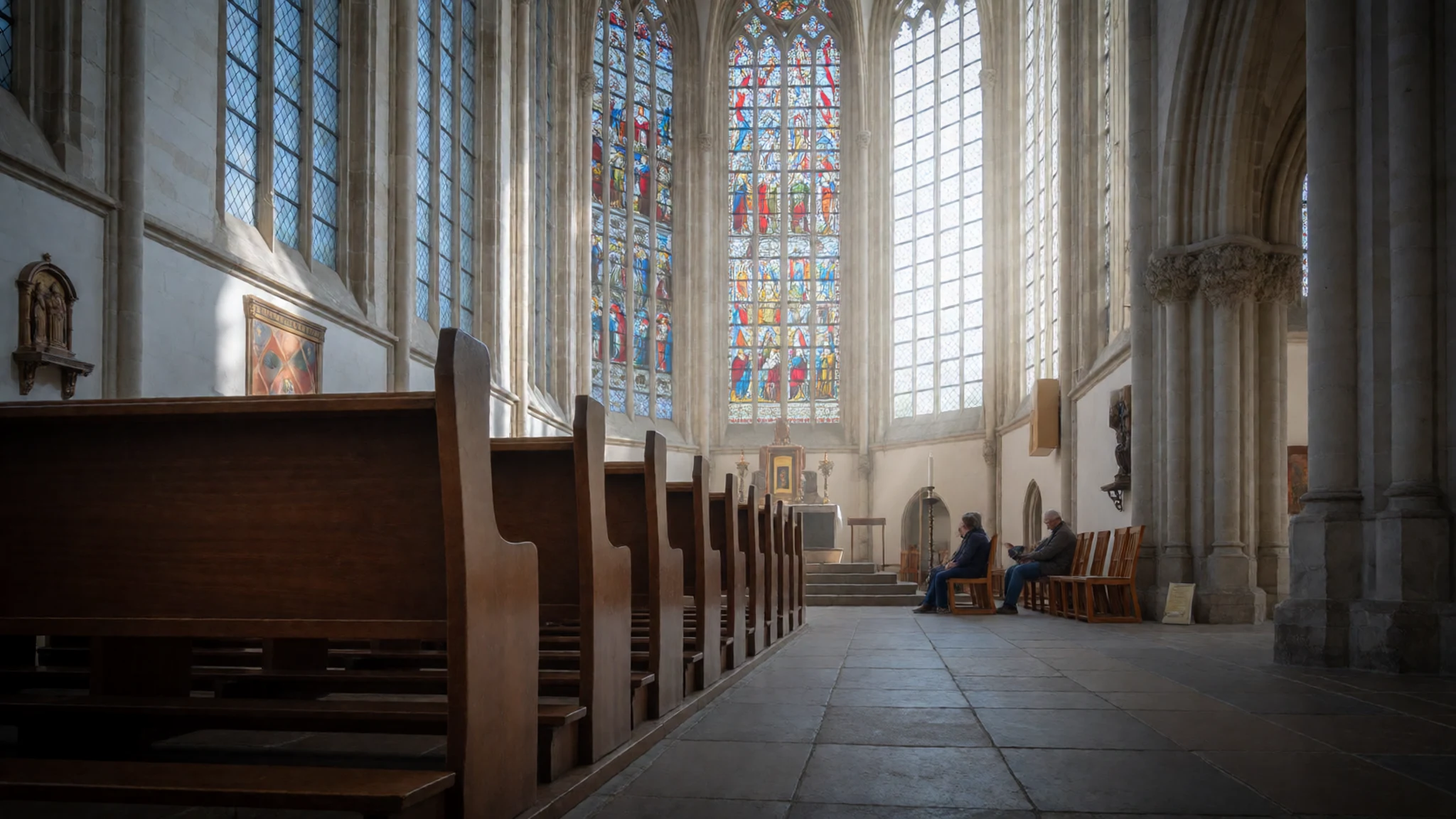
- DOMunder — Domplein, old centre
DOMunder is a guided museum visit beneath the square between the church and the tower. It explains the Roman presence in Utrecht and the layers of building above it. It suits wet days and anyone who wants the city's Roman beginnings explained rather than guessed at. Booking details are on the official site.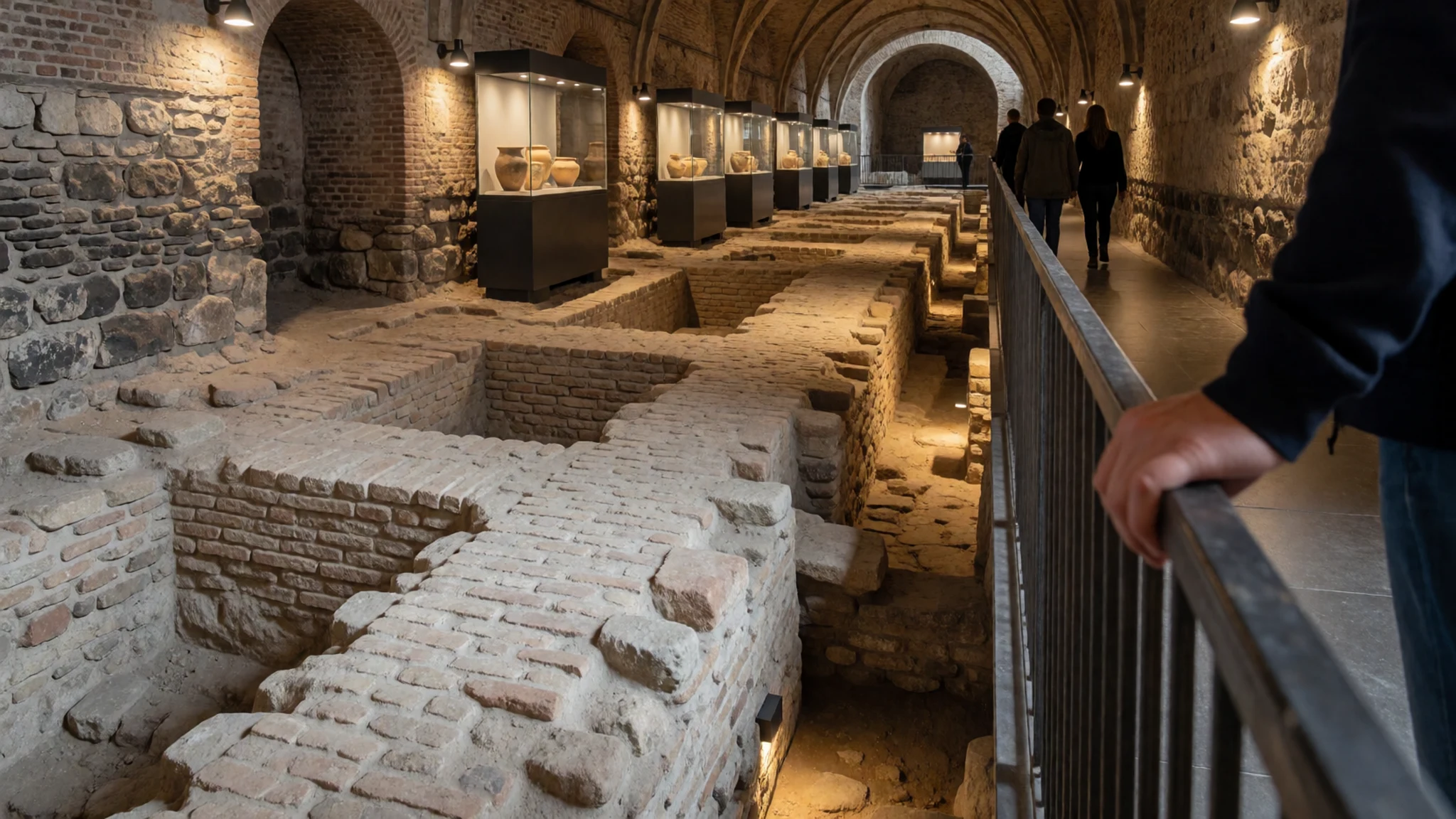
- Oudegracht and Stadhuisbrug — Oudegracht, old centre
The Oudegracht is the old canal running through the centre, lined with wharves and cellars below street level. Stadhuisbrug, vaulted over the water in 1547 between two older bridges, forms a small square above it and is among the best-known crossings. Walk the lower quays for a different view of the city.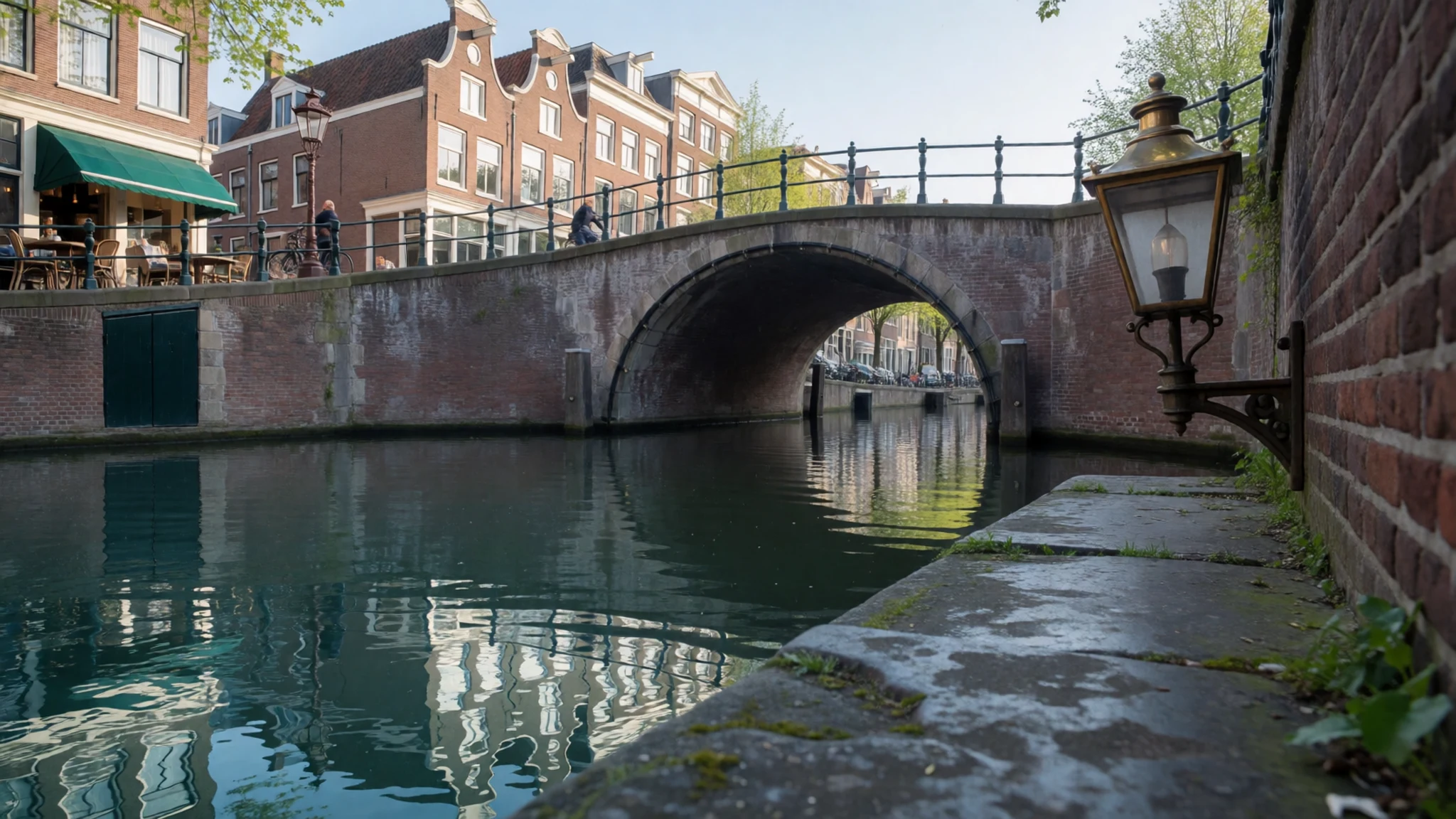
- Pieterskerk — Pieterskerkhof, eastern old centre
Pieterskerk was consecrated in 1048 and is among the oldest churches in the centre, a plain, solid Romanesque building away from the busiest streets. It rewards a short detour for its quiet and the contrast with the Gothic Dom nearby. Opening depends on events, so check before going.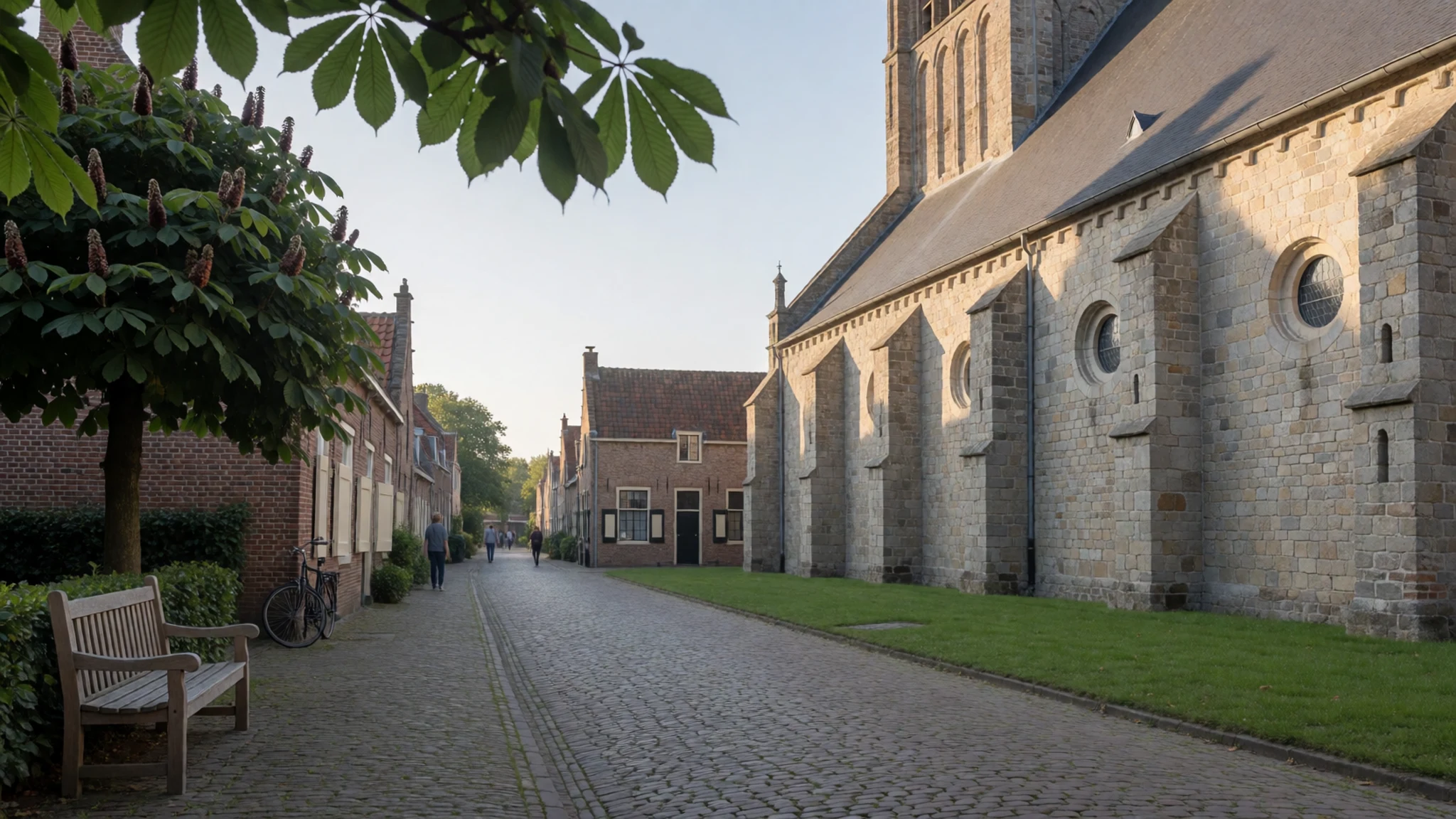
- Neude — North of the Oudegracht
Neude is an open square north of the canal, with the Dom Tower visible over its rooftops. It is a good place to watch local life: cyclists crossing, terraces filling on dry afternoons, and the square lit up in the evening. It is also an easy base for coffee between sights.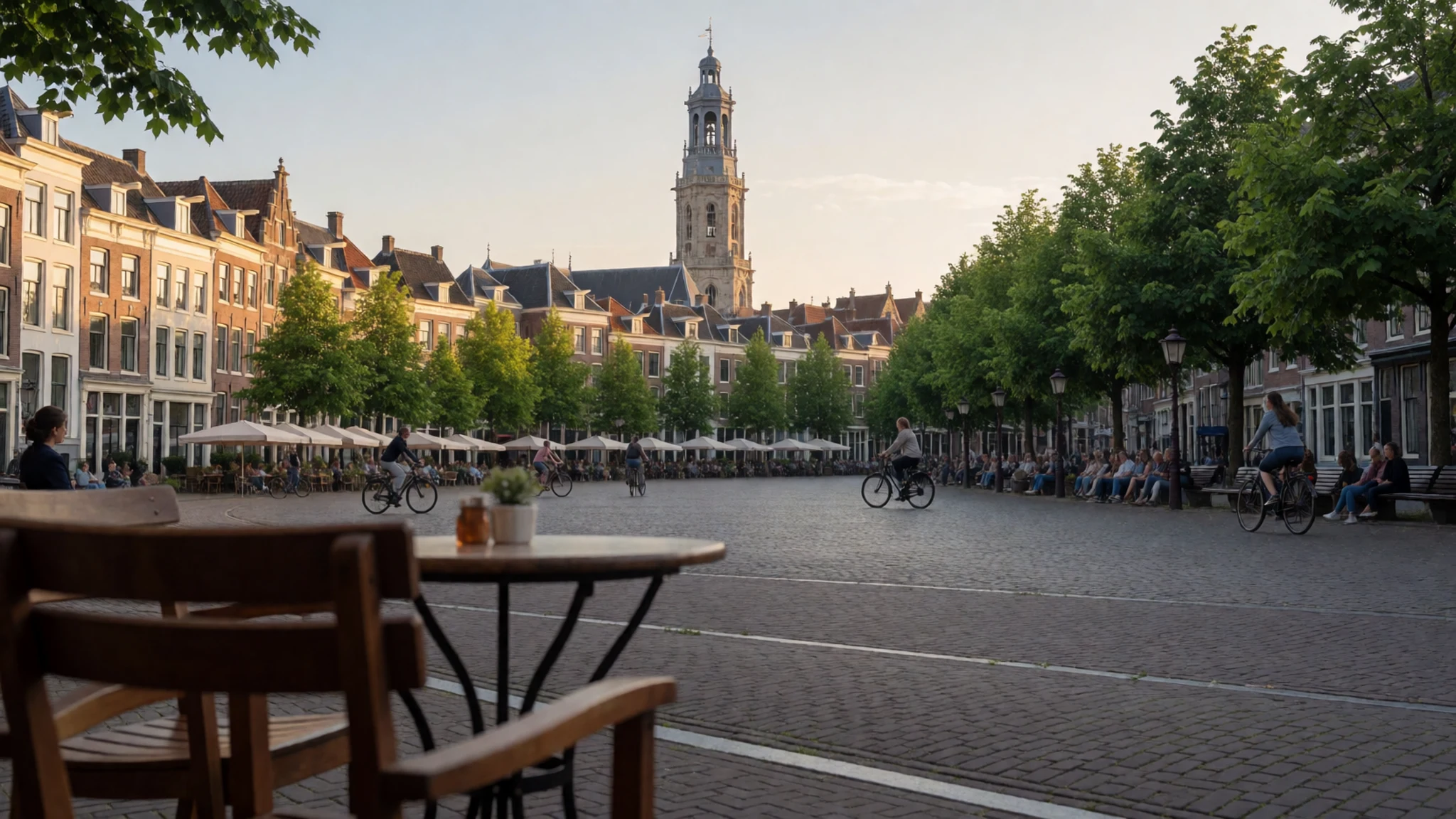
Culture
Utrecht has an active cultural life, much of it tied to its university and arts school. Theatres and cinemas, including several arthouse screens, are spread across the centre, and the city hosts the international Early Music Festival, devoted to music from before 1800, and the Netherlands Film Festival. The main concert complex, Vredenburg, opened in 1979 to a design by Herman Hertzberger and is admired for its acoustics. In 2014 the redeveloped building merged with the rock club Tivoli and a jazz venue, so one address now covers classical, rock and jazz programmes. The conservatory trains young musicians within the Utrecht School of the Arts, which is why small concerts are easy to find. Daily life runs on two wheels. Cycling is the normal way of getting around, from students to grandparents to parents carrying children, and the street layout is built around it. Canal-side terraces fill quickly on dry days, and the pace is relaxed but practical; people are direct without meaning to be curt. Utrecht's religious past still shapes the skyline, though the city today is secular and mixed, and churches are mostly open as heritage sites and concert halls. Conversation in English is easy almost everywhere, though a few Dutch words are always appreciated. Visitors should stay out of the red cycle lanes when walking, because cyclists move fast and will not expect pedestrians there.
What to wear
Utrecht has no single costume that locals would call its own, and traditional Dutch regional dress, known as klederdracht, now appears mainly at festivals, folk events and in heritage museums. Historically it combined wool and cotton garments, white lace caps and wooden shoes called klompen, with details that varied from village to village. Today people dress practically and casually. Jeans, trainers, simple jackets and a waterproof layer are standard, and smart clothes are kept for the theatre or a concert. Students lead the look in term time, with practical, slightly worn clothing that works on a bicycle. Visitors should plan for changeable weather in any month: a light waterproof, layers and a scarf in cooler seasons, and sun protection in summer. Shoes matter more than outfits. Cobbles, canal quays and uneven paving suit comfortable, closed footwear with decent grip, especially after rain. Anyone planning to cycle should avoid loose trouser legs or long scarves that can catch in a chain. Churches such as the Dom are visited as heritage sites, so no strict dress code applies, but covered shoulders and removing hats are courteous during services or concerts. Nothing about dress here is formal; comfort and dryness count for more than style.
What to eat
- Bitterballen — Canal-side cafés and wharf terraces along the Oudegracht
Crisp, deep-fried balls with a soft, savoury meat filling, served with mustard. They are the standard accompaniment to a drink and a classic Dutch bar snack.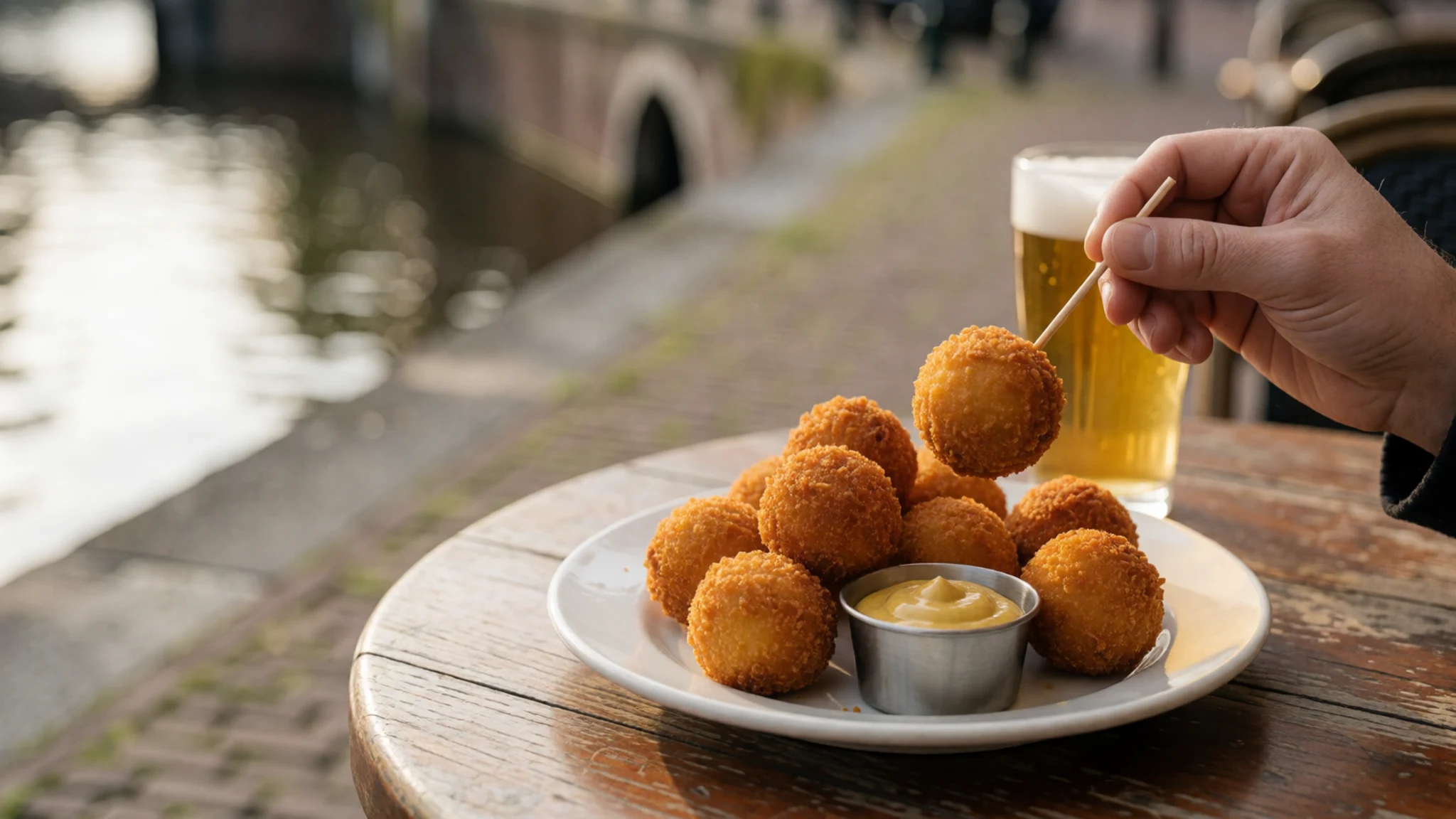
- Pannenkoeken — Pancake restaurants near the old centre and on the canals
Large, thin Dutch pancakes, eaten sweet or savoury and topped with anything from syrup to bacon and cheese. They are a filling lunch more than a dessert, and popular with families.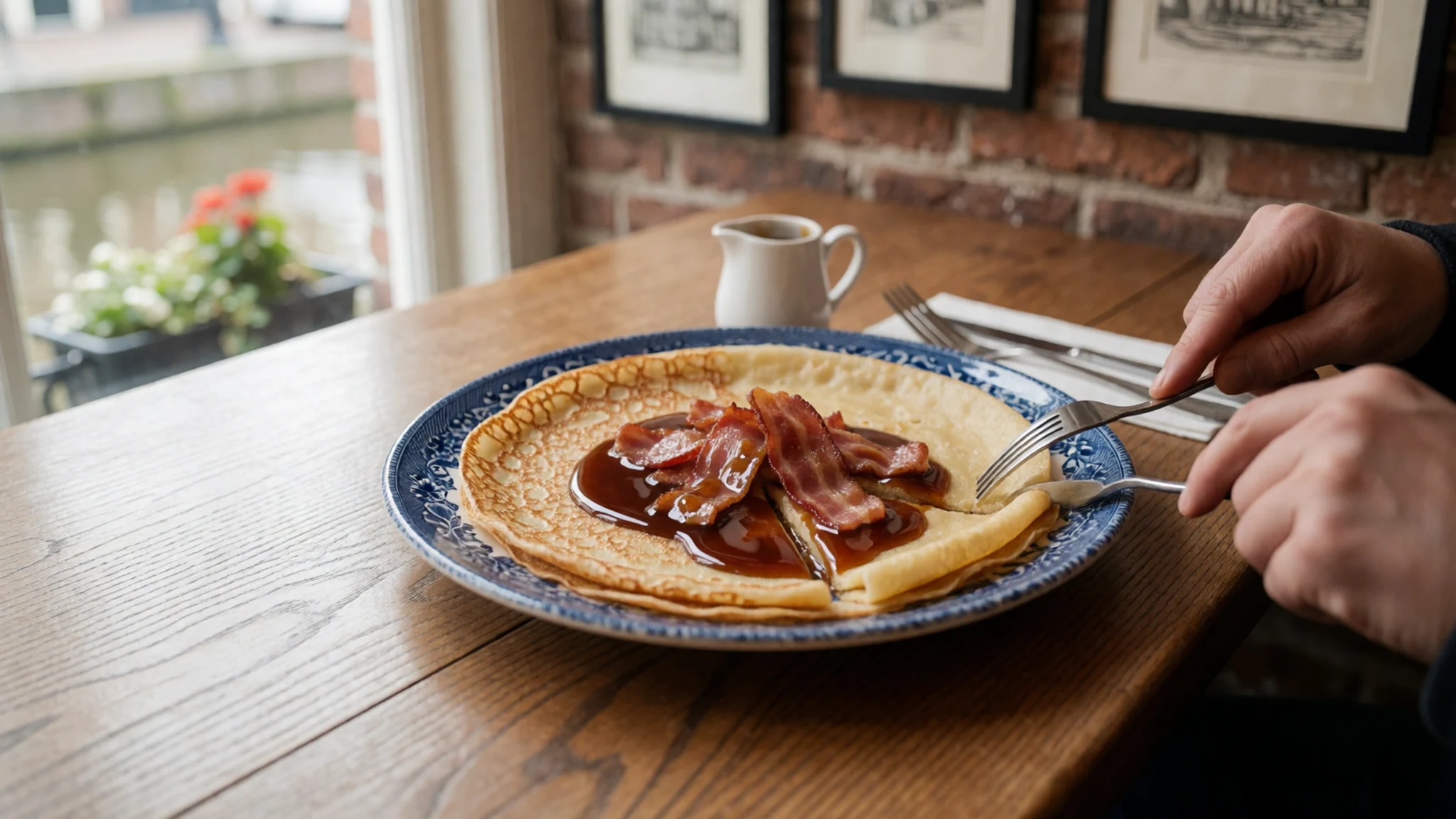
- Stroopwafel — Market stalls and bakery counters in the old centre
Two thin waffle layers sandwiched with caramel syrup. Eaten fresh and still warm, they are softer and stickier than the packaged version, and easy to carry while walking. - Italian rolls — Sandwich shops near the Oudegracht
Filled Italian-style bread rolls are an Utrecht favourite, and one well-known shop in the centre has a local following. Expect a queue at lunchtime and an easy, inexpensive meal to eat on a bench. - Pita gyros — Greek snack bars and take-aways around the old centre
Greek snack bars in the centre serve pita gyros with grilled meat, salad and sauce, a quick and filling choice late in the day. Vegetarian options are usually available as well.
Plan it
Best time. May–June and September are usually mild, with long daylight and terraces open; summer can be warm and winters are damp with short days. Rain can arrive in any month, so pack a waterproof whenever you come.
How long. 1–2
Getting there. Fly to Amsterdam Schiphol, then take a train to Utrecht Centraal. You'll find the station just outside the western boundary of the historic centre. To get into town, walk through the Hoog Catharijne mall for five minutes following the Centrum signs. Long-distance buses use either the main station's Jaarbeurs side or a bus station on the western outskirts, so check which before travelling.
Budget. mid
Tips
- Book the Dom Tower climb and DOMunder ahead through the official sites, as slots can fill on weekends
- Go to the canals early in the morning or on a weekday evening for the quietest quays
- Carry a waterproof and wear shoes with grip for wet cobbles and quays
- Check the official site, https://www.utrecht.nl/, for events, closures and current visitor information
- Walk the old centre rather than hiring a bicycle on a first visit, as cycle traffic is fast and busy
Etiquette
- Keep out of the red cycle lanes and listen for bells
- Keep voices low inside churches, especially during services or concerts
- Ask before photographing people at close range
Nearby
Sources
- Wikidata Q803 (CC0)
- Wikipedia: Utrecht (rev 1385864818) (CC BY-SA 4.0)
- Wikivoyage: Utrecht (rev 5420958) (CC BY-SA 4.0)
- Photo: Neude Utrecht met Domtoren, Pepijntje (CC BY 3.0)
- Photo: Uitzicht over Utrecht vanuit het stadskantoor, Sebastiaan ter Burg (CC BY 2.5)
- Photo: Sol Lumen, Wil Leeuwis (CC0 1.0)
- Photo: Jaarbeursplein Utrecht 2019, Steven Lek (CC BY-SA 4.0)
- Photo: Uithof, 3584 Utrecht, Ben Bender (CC BY 3.0)
- Photo: Spoorwegmuseum Utrecht, Marion Golsteijn (CC BY 3.0)
- Photo: Neude at night, josef.stuefer (CC BY 2.5)
- Photo: Utrecht Centraal gezien vanaf de voetgangersbrug, Smiley.toerist (CC BY-SA 4.0)


