Rotterdam
Rotterdam, Netherlands
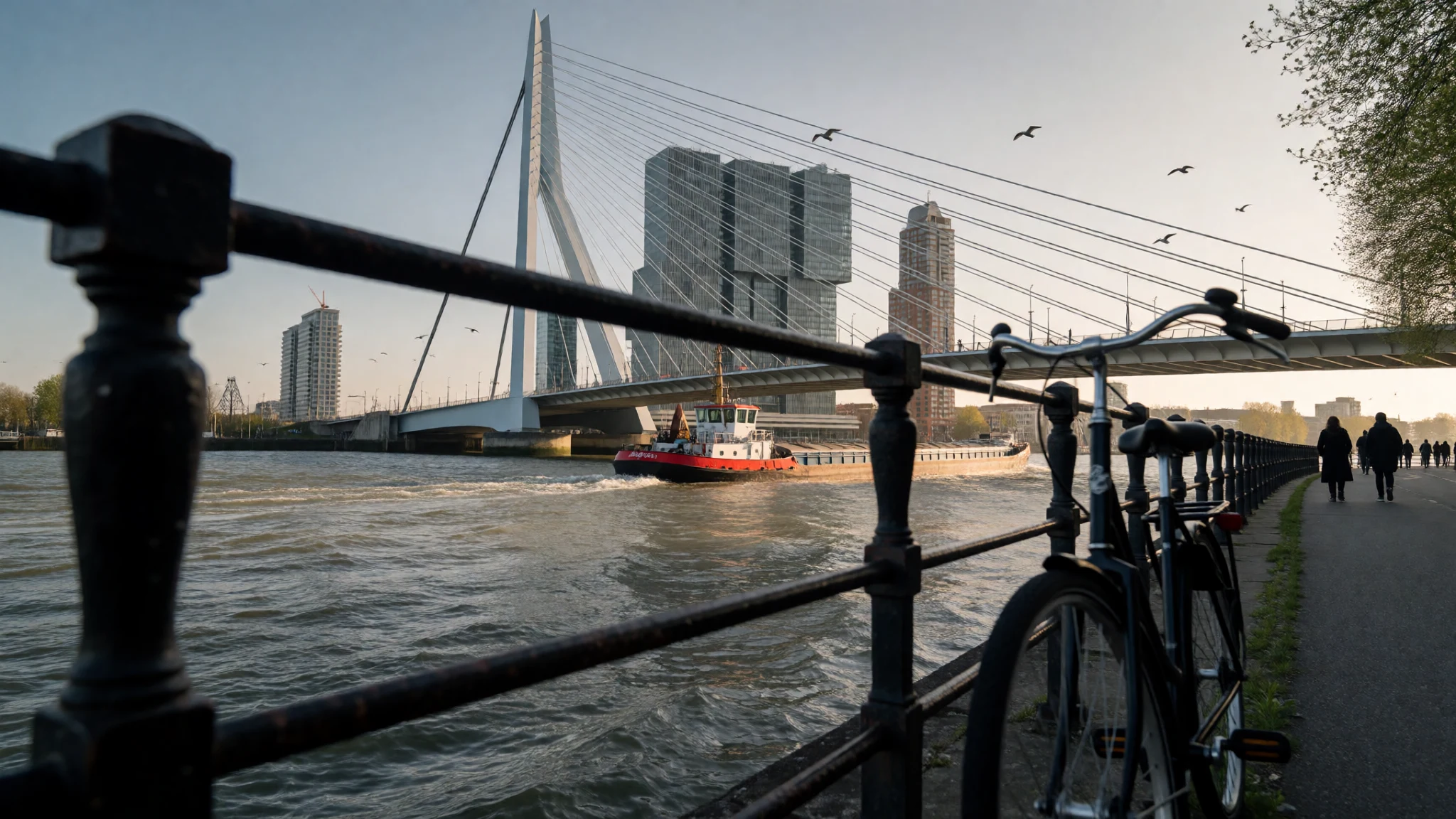
Rotterdam is the Dutch city that rebuilt itself from a bombed port into a testing ground for bold architecture, working harbours and a very mixed crowd.
The place
Rotterdam is a port city first and a pretty one a long way second, and it is happier for admitting it. It lies in South Holland on the Nieuwe Maas, a navigable channel that connects the North Sea with the river systems of the Rhine, Meuse and Scheldt delta. The ground is flat and low, with large parts of the city below sea level, so the skyline is made entirely by what people have put on it: container cranes, bridges, towers and some very odd housing. About 664,000 people live here, and the city counts more than 180 nationalities among them, which shows in the shops, cafés and languages heard on the tram. The centre was almost completely destroyed in the Second World War, so there is no medieval core like the one Amsterdam keeps. Instead the rebuilt city became a proving ground for architects, and the results include glass towers, a vast arched market hall and blocks of tilted cubes. Some of it is handsome, some of it is blunt, and nearly all of it invites an opinion. The river is the organising idea. Ferries, water taxis and bridges tie the north bank, with its shopping streets and museums, to Kop van Zuid on the south, where old docks have become apartments and offices. Beyond the centre are older pockets such as Delfshaven, which came through the bombing, and working harbours that run on towards the sea. The wider Rotterdam–The Hague area holds about 2.7 million people, so the city sits inside a very busy urban belt, yet it feels roomier and rougher at the edges than its neighbours. Travellers who enjoy cities still working out what they are tend to like it; those hoping for gabled canal houses should head to Amsterdam instead.
Its story
Rotterdam began as a muddy settlement on the Rotte, a small fen stream whose name is usually read as 'muddy water'. People were living near its lower end by about 950, and after serious floods around 1150 they began raising dikes and dams to keep the water out. A dam across the Rotte, built in the 1260s near today's Hoogstraat, gave the place its identity and eventually its name. Count Willem IV of Holland gave the town its city rights in 1340, when only a few thousand people lived there. A shipping canal, the Rotterdamse Schie, was finished around 1350 and linked the town to settlements in the north, turning it into a handover point for goods moving between the Netherlands, England and Germany. For a long time herring fishing paid the bills. The Eighty Years' War changed that, because Rotterdam turned out to have easier access to the open sea than many Dutch towns, and William the Silent had new fortifications built around it. From the 1600s the city's merchants also took part in the Atlantic slave trade; the historian Gerhard de Kok has shown that men from Rotterdam were among the first Dutch to take it up, a part of the port's wealth that visitors should know about. Later came the New Meuse channel, first dug to meet the Meuse and now fed by the Rhine, which let ships reach deep into Western Europe. Then, in the Second World War, German bombing flattened nearly all of the city centre, and the long rebuilding that followed set the experimental, forward-looking character the city has today.
What to see
- Erasmusbrug — Between the centre and Kop van Zuid
The Erasmusbrug carries trams, traffic, cyclists and walkers across the Nieuwe Maas between the city centre and Kop van Zuid. Its single leaning pylon has become a local emblem. Walk over at an easy pace, then look back at the skyline from the south bank. The wind off the river can be sharp.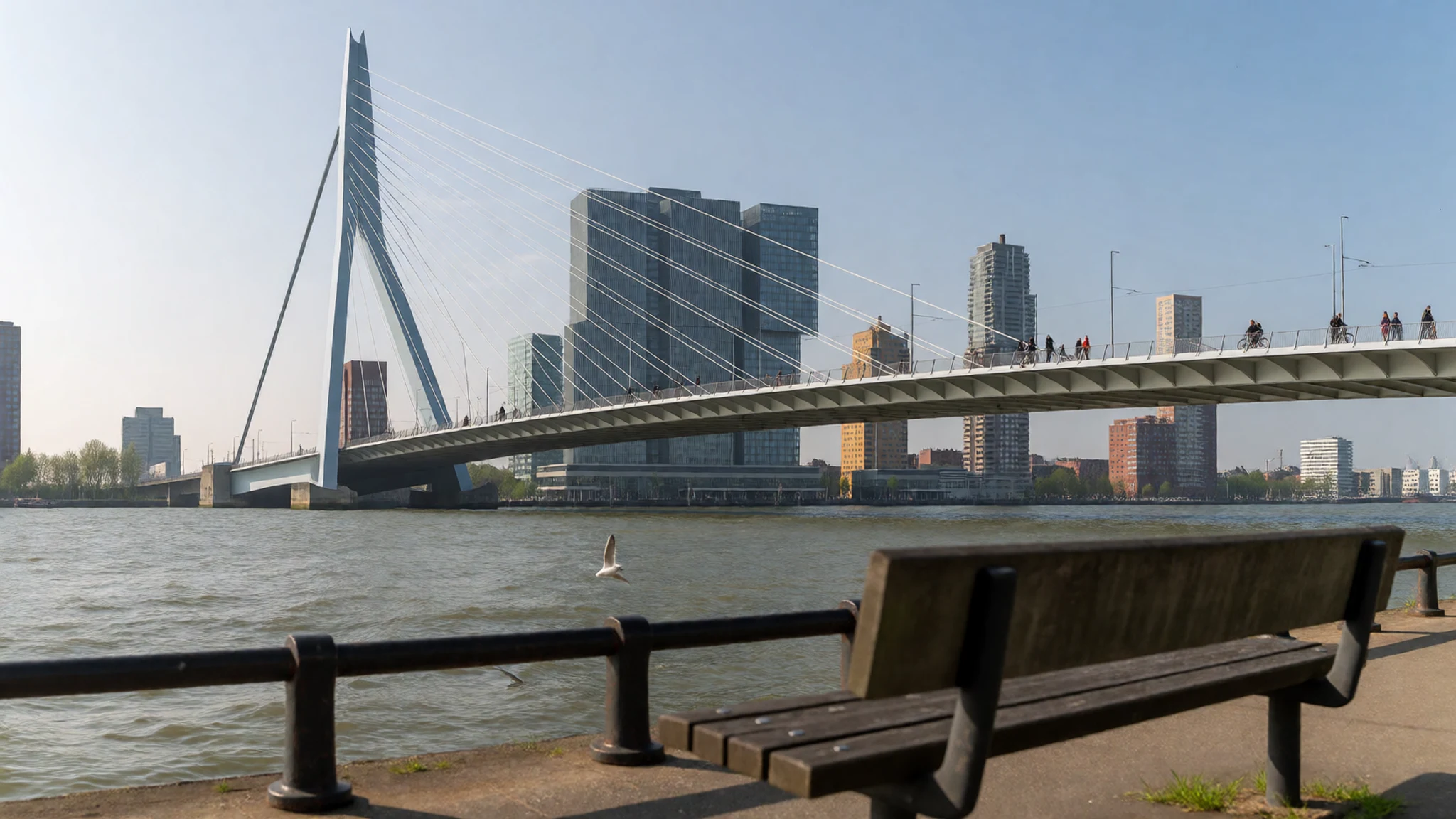
- Cube houses — Near Blaak station
Piet Blom designed these apartments as tilted cubes balanced on pillars, grouped above a pedestrian street near Blaak station. Most are real homes, so the space underneath feels like a small covered square. They take little time to see from outside; check whether any show home is open before planning around it.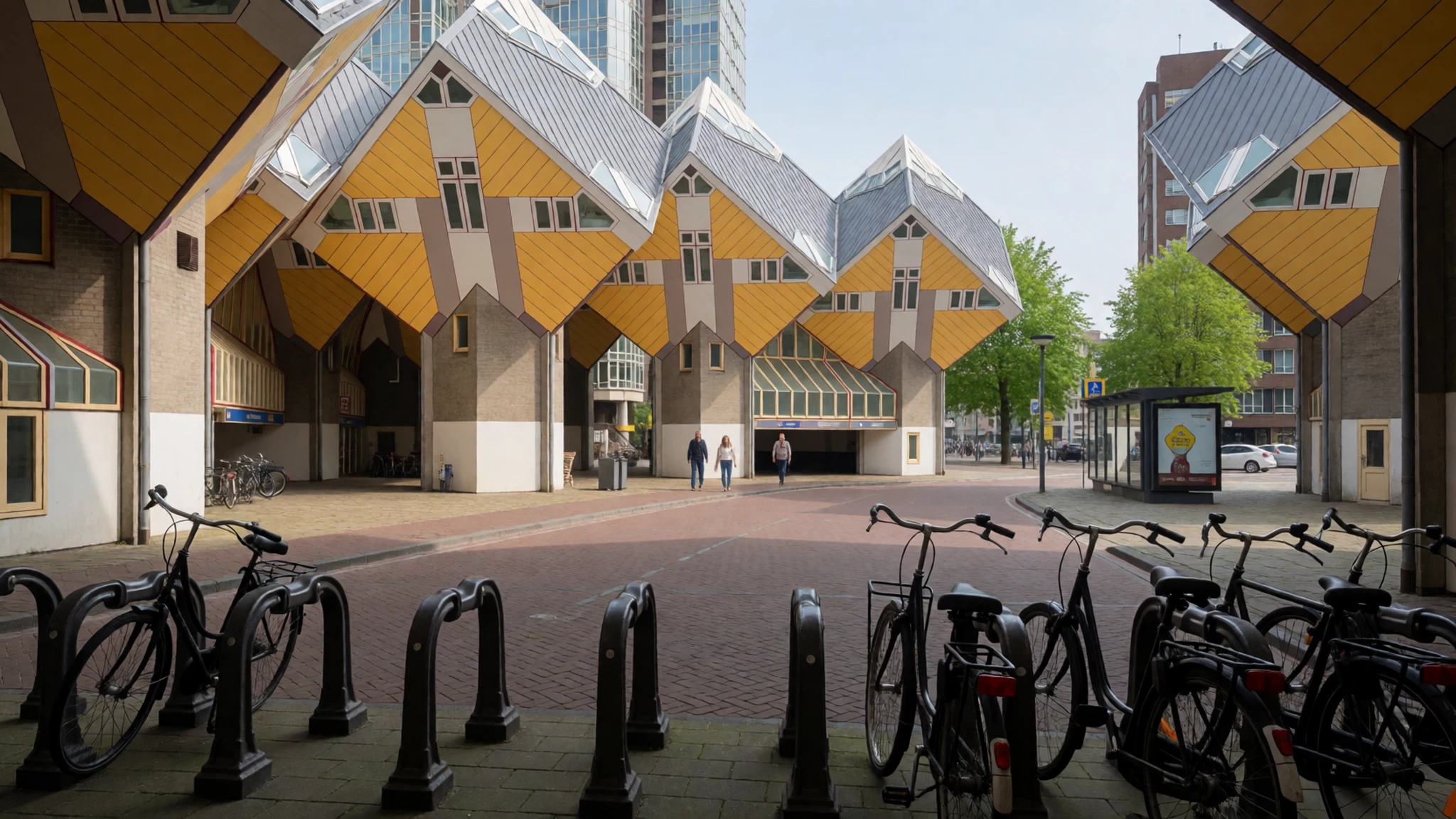
- Euromast — Parkhaven, west of the centre
The Euromast is a tall observation tower beside the river park, giving a long view over the harbour, the Erasmusbrug and the flat country beyond. It is best on a clear day, since river haze can flatten the outlook. Check the official Euromast site for tickets and opening times before going.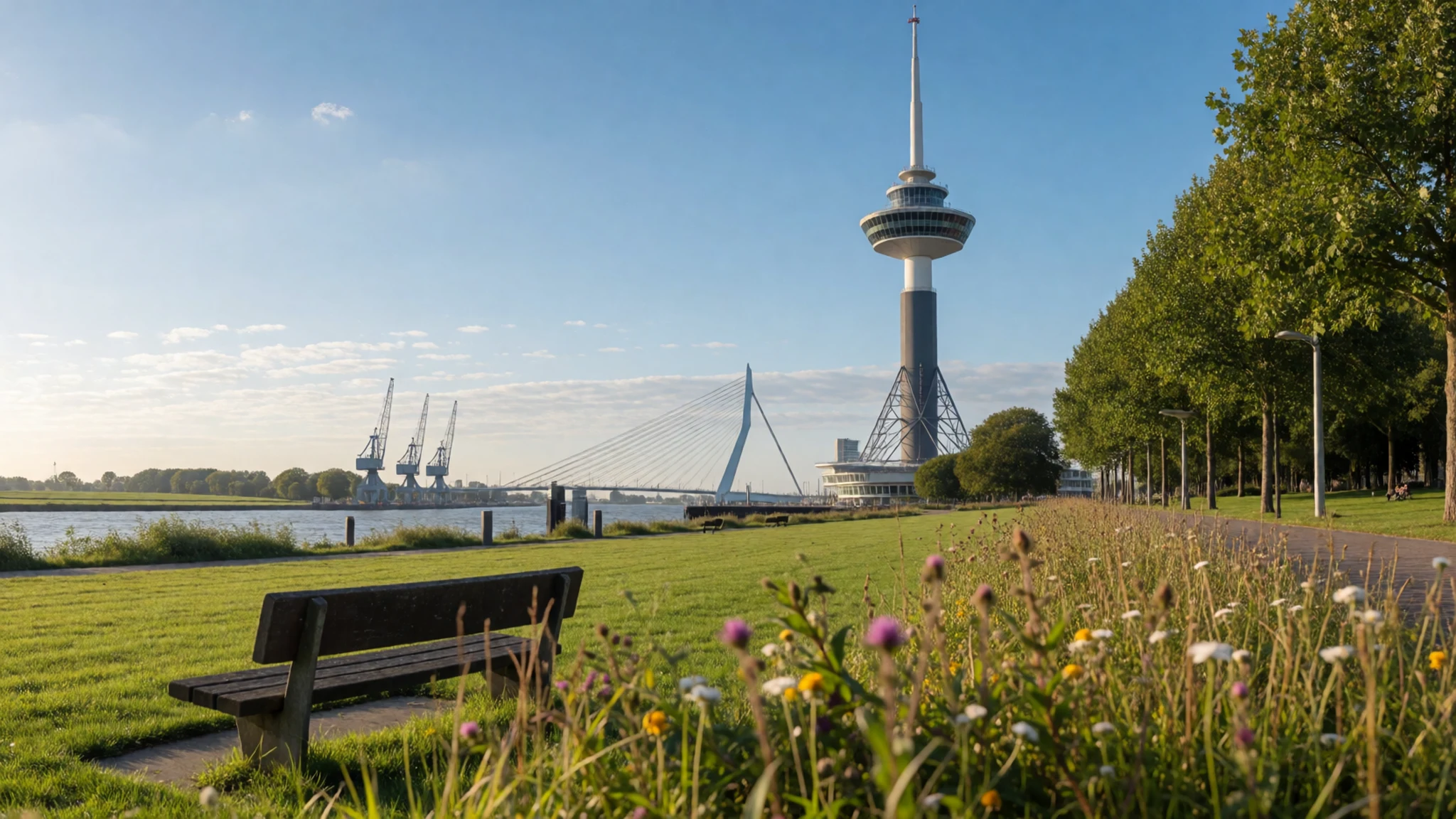
- Laurenskerk — City centre
Laurenskerk is a late Gothic church, restored after wartime damage, now standing among postwar blocks. The contrast tells the story of the city better than a plaque: a medieval silhouette surrounded by modern shopfronts. Check the church's own site for visiting arrangements, as concerts and services affect access.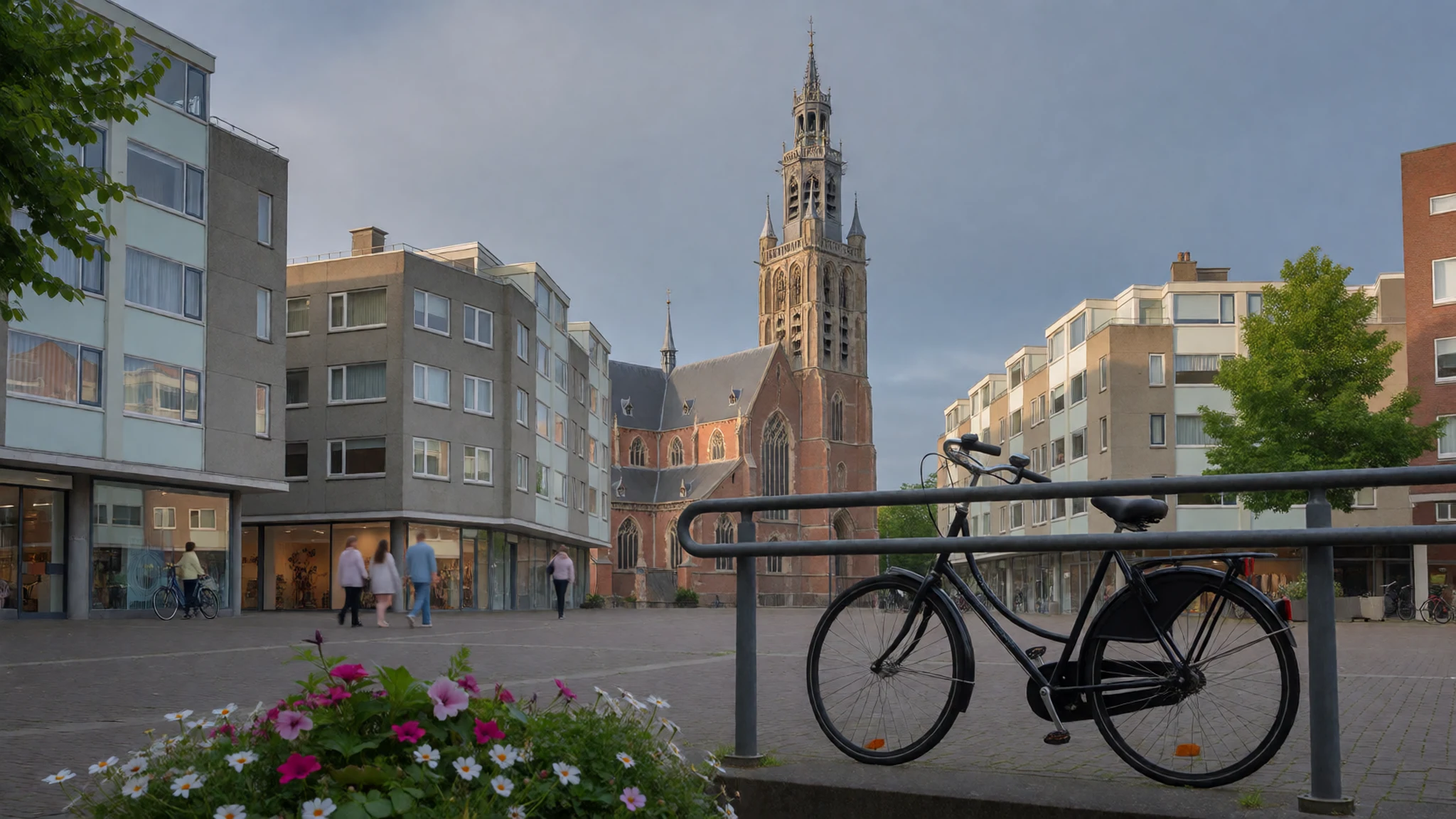
- Delfshaven — West of the centre, on the harbour
Delfshaven is one of the older districts to come through the bombing, with a canal harbour, brick gabled houses, small bars and quiet lanes. It is a calm counterweight to the glass towers of the centre. Go on a weekday morning for peace; weekends bring more strollers and café crowds.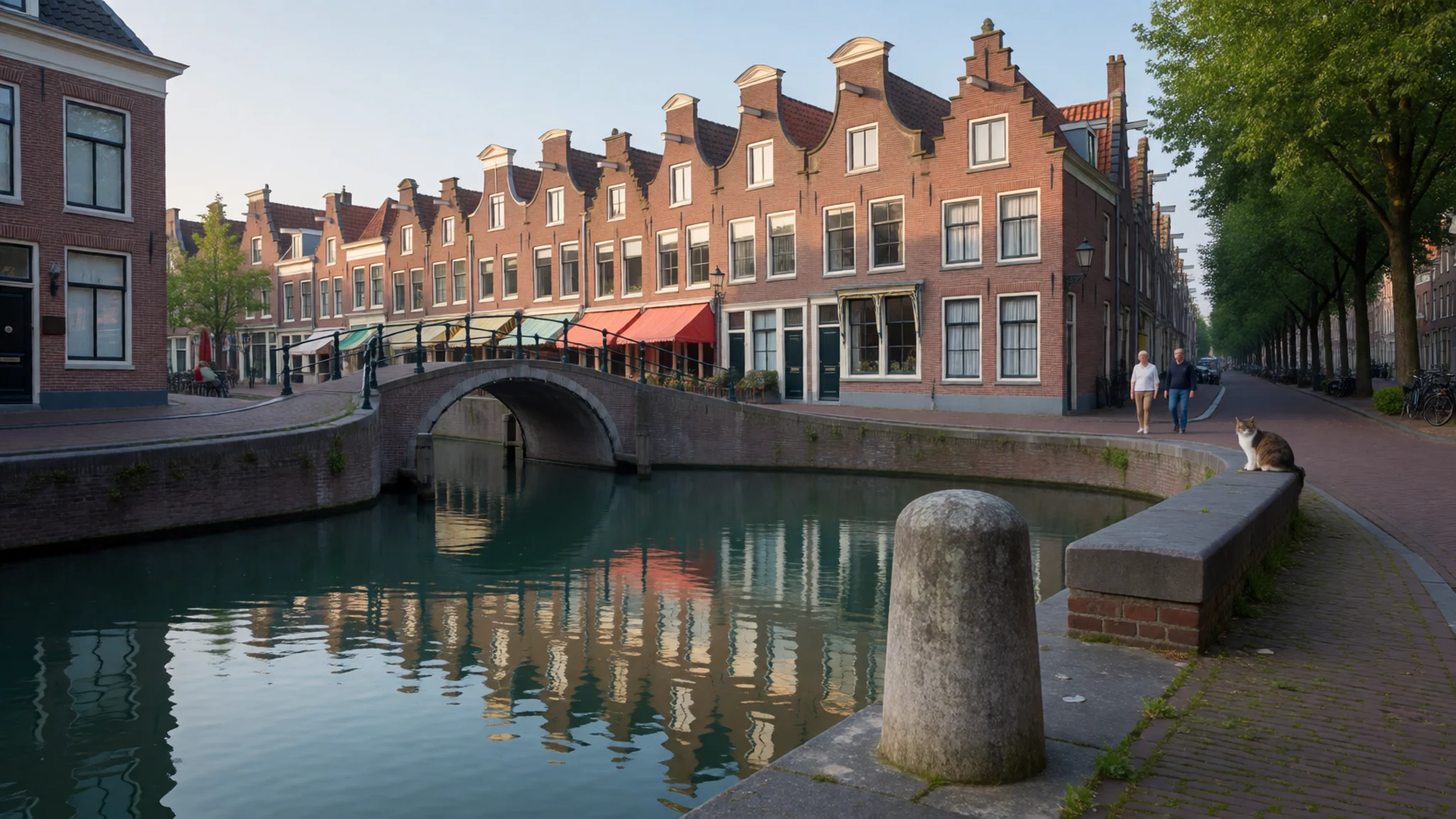
Culture
Rotterdam was long a city of dockers and shipping clerks, and that practical, no-fuss temperament still shapes its manners. Over recent decades it has added a strong cultural life: museums, theatres, cinemas and a lively nightlife, with the Rotterdam Philharmonic Orchestra, conducted by Lahav Shani, playing at the De Doelen concert hall. The city shared the title of European Capital of Culture with Porto in 2001, and its calendar is full of festivals, among them the International Film Festival Rotterdam in February, Poetry International in June and a big Caribbean-style summer carnival in the centre. Pop concerts, tennis and exhibitions fill the Ahoy complex in the south. Rotterdammers are known for blunt, friendly directness, so a short answer is rarely rudeness. The mix of backgrounds is part of daily life, and the city's food, music and street scenes reflect it. Football is a serious local passion, tied to the club Feyenoord and its stadium De Kuip, and match days can crowd the trams and the south bank. Dutch is the local language, but English is widely spoken and a few words of Dutch are welcomed. Evenings out tend to start early, and kitchens often close sooner than visitors expect. Cycling is the default way to travel, and the paths are busy and fast. Stay out of the red-surfaced bike lanes when walking, and look both ways before stepping across them, because cyclists seldom slow down.
What to wear
Rotterdam has little distinctive city costume of its own, and the Dutch dress most people picture belongs mostly to the villages and to heritage events. That traditional look centres on wooden clogs (klompen), wool and cotton skirts and jackets, striped aprons, and white lace caps whose shape varied from region to region. In Rotterdam these appear mainly at museums, folk festivals and tourist occasions rather than on the street. What people actually wear is practical and understated: dark jeans, plain jackets, trainers, good raincoats and scarves, with a creative edge among students, artists and architects. Because most people cycle, comfortable clothes that cope with wind and rain matter more than dressing up. Colour tends to be muted, though football scarves in Feyenoord red and white are common on match days. Visitors should plan for changeable maritime weather: a waterproof layer, a warm layer even in summer, and a hat or scarf for the wind on the bridges and along the river. Comfortable, closed, grippy shoes are best for cobbles, tram tracks and wet pavements. Cycling in a long coat or loose trouser hems is awkward, so choose snug cuffs. Churches such as Laurenskerk do not impose strict dress rules, but covered shoulders and quiet clothes are courteous during services or concerts. For an evening out in the centre, smart-casual is plenty.
What to eat
- Haring (raw herring) — Fish stalls at street markets and by the harbour
Herring, cleaned and eaten raw with chopped onions and pickles, is a Dutch classic and fits Rotterdam's fishing past. It is salty, soft and fresh-tasting. Look for a market fish stall with a queue of locals, and eat it standing up.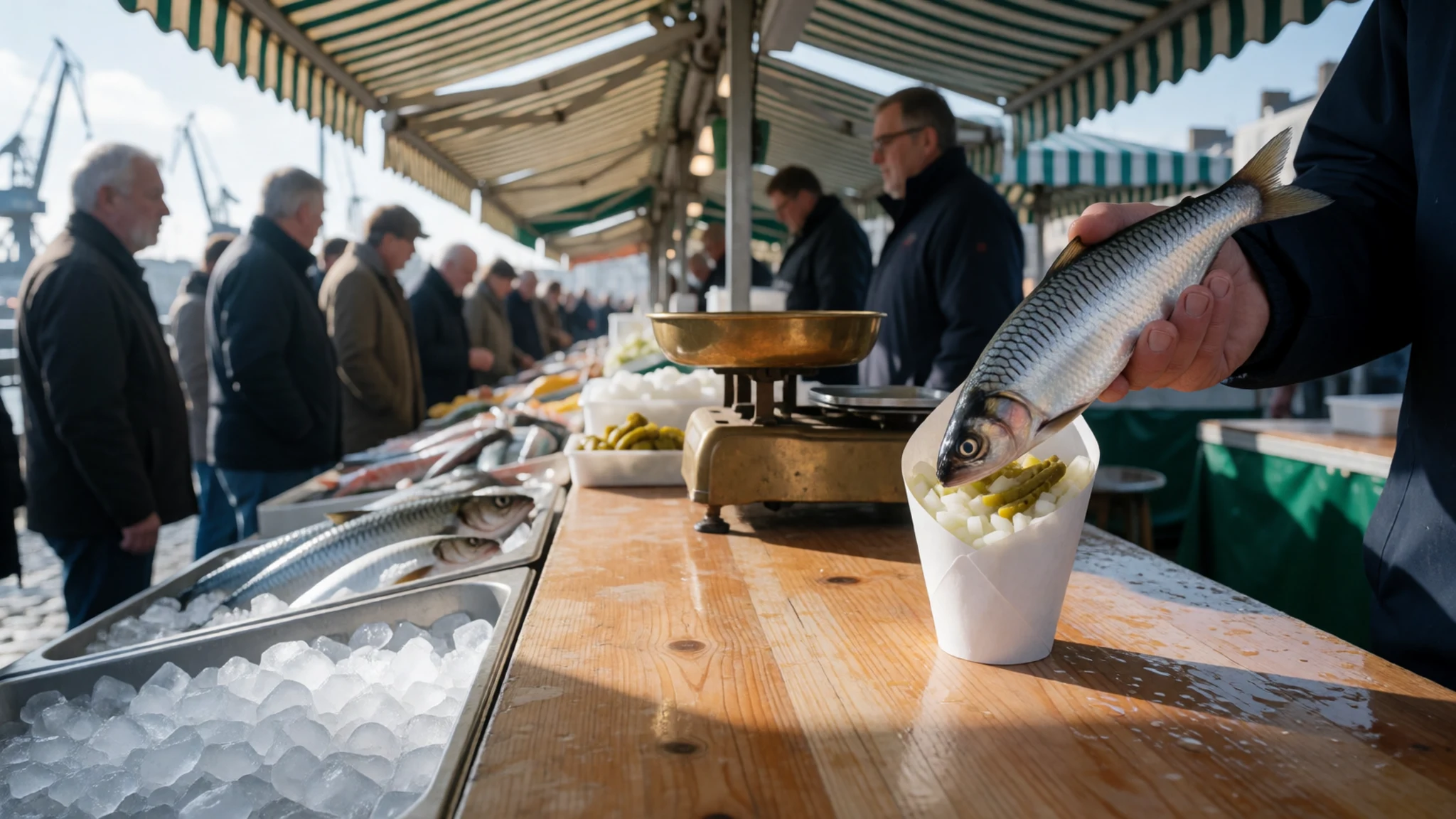
- Kibbeling — Market fish stalls and harbour-side snack stands
Kibbeling is battered, fried chunks of white fish served hot with a garlicky or herb sauce. It makes an easy first taste of local seafood and suits a cold, windy day by the river. Buy it from a busy stand.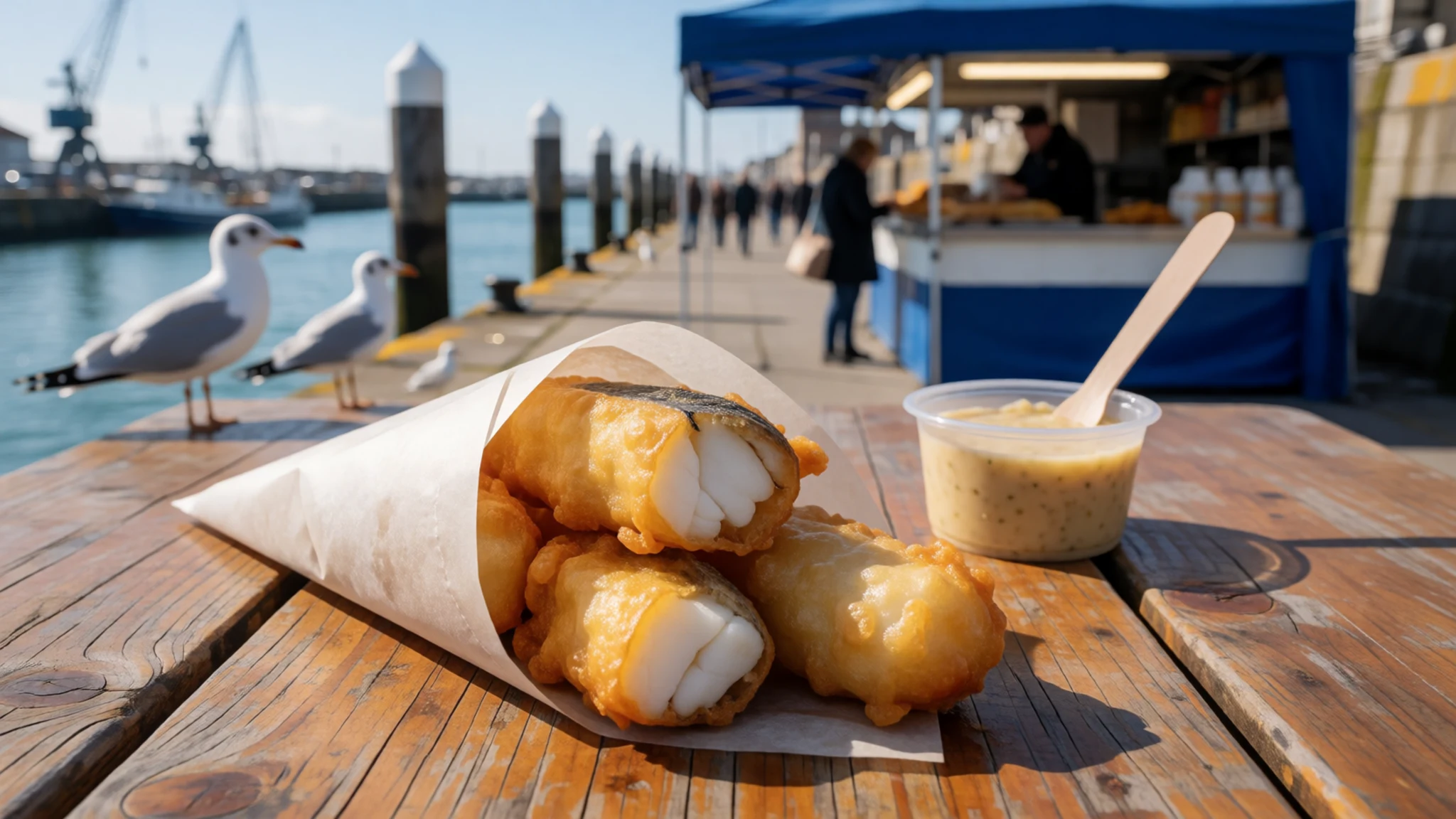
- Bitterballen — Brown cafés and pubs around Oude Haven and the centre
These are crisp-crumbed, deep-fried balls with a soft, savoury meat filling, usually served with mustard and a beer. They are the standard bar snack, ideal for sharing after a day of walking. Order a portion at any traditional café. - Stroopwafel — Markets, bakeries and stalls across the centre
A stroopwafel is two thin waffle layers glued with caramel-like syrup. Eaten fresh and warm from a market stall, the syrup is soft and fragrant. Packaged ones travel well, so they make an easy gift to carry home. - Surinamese roti and Indonesian dishes — Neighbourhood eateries beyond the centre
Rotterdam's mixed communities mean good Surinamese and Indonesian food is easy to find, from roti with curry and potatoes to rice with several small dishes and sambal. Neighbourhood eateries are usually the best, and fairly priced, places to try them.
Plan it
Best time. May, June and September are the most comfortable months for walking the waterfront and cycling, with long daylight. July and August are the hottest and busiest months. Winter is cold, damp and windy, though February suits film and art lovers because of the film festival and art fair. August is the wettest month, though rain can arrive at any time, so carry a waterproof.
How long. 2–3
Getting there. The nearest big hub is Amsterdam Schiphol Airport, with frequent trains to Rotterdam Centraal, the faster Intercity Direct taking under half an hour for an added fare, and ordinary intercities slower but cheaper. Rotterdam's own airport is smaller. Eindhoven and Brussels airports are alternatives, each with a train link. The last leg is a short walk, tram or metro from Centraal.
Budget. mid
Tips
- Use the national public transport journey planner, and pay with an OV-chipkaart or a contactless card, touching in and out on every trip
- Book popular viewpoints and museums ahead in summer and on weekends, and check each official site for opening times and tickets
- Eat before the evening is late, because kitchens close earlier than many visitors expect, even on Fridays and Saturdays
- Hire a bike or use water taxis and ferries for the river, and carry a rain jacket whatever the forecast says
- Go to Delfshaven and the Erasmusbrug early in the day for quiet photographs; the official city site is rotterdam.nl
Etiquette
- Keep to pavements and out of the red cycle lanes, and give way to riders
- Greet staff in shops and cafés briefly before ordering, as a short hello is expected
- Queue properly at market stalls and wait your turn
Nearby
Sources
- Wikidata Q34370 (CC0)
- Wikipedia: Rotterdam (rev 1385652015) (CC BY-SA 4.0)
- Wikivoyage: Rotterdam (rev 5416124) (CC BY-SA 4.0)
- Photo: Erasmusbrug seen from Euromast, Mlefter (CC BY 3.0)
- Photo: A view of Rotterdam from the roof of the Maassilo, Rob Oo (CC BY 2.5)
- Photo: Laurenskerk, Rotterdam, Paul van de Velde (CC BY 2.5)
- Photo: Rotterdam, Zadkine monument, F.Eveleens (CC BY 3.0)
- Photo: Euromast in Rotterdam, F.Eveleens (CC BY-SA 2.5)
- Photo: Cube houses, Rotterdam, P. Hughes (CC BY-SA 4.0)
- Photo: Stadion Feijenoord De Kuip, F.Eveleens (CC BY 3.0)
- Photo: Rotterdam-Delfshaven, view to the harbour, Michielverbeek (CC BY 3.0)


