Delft
Delft, Netherlands
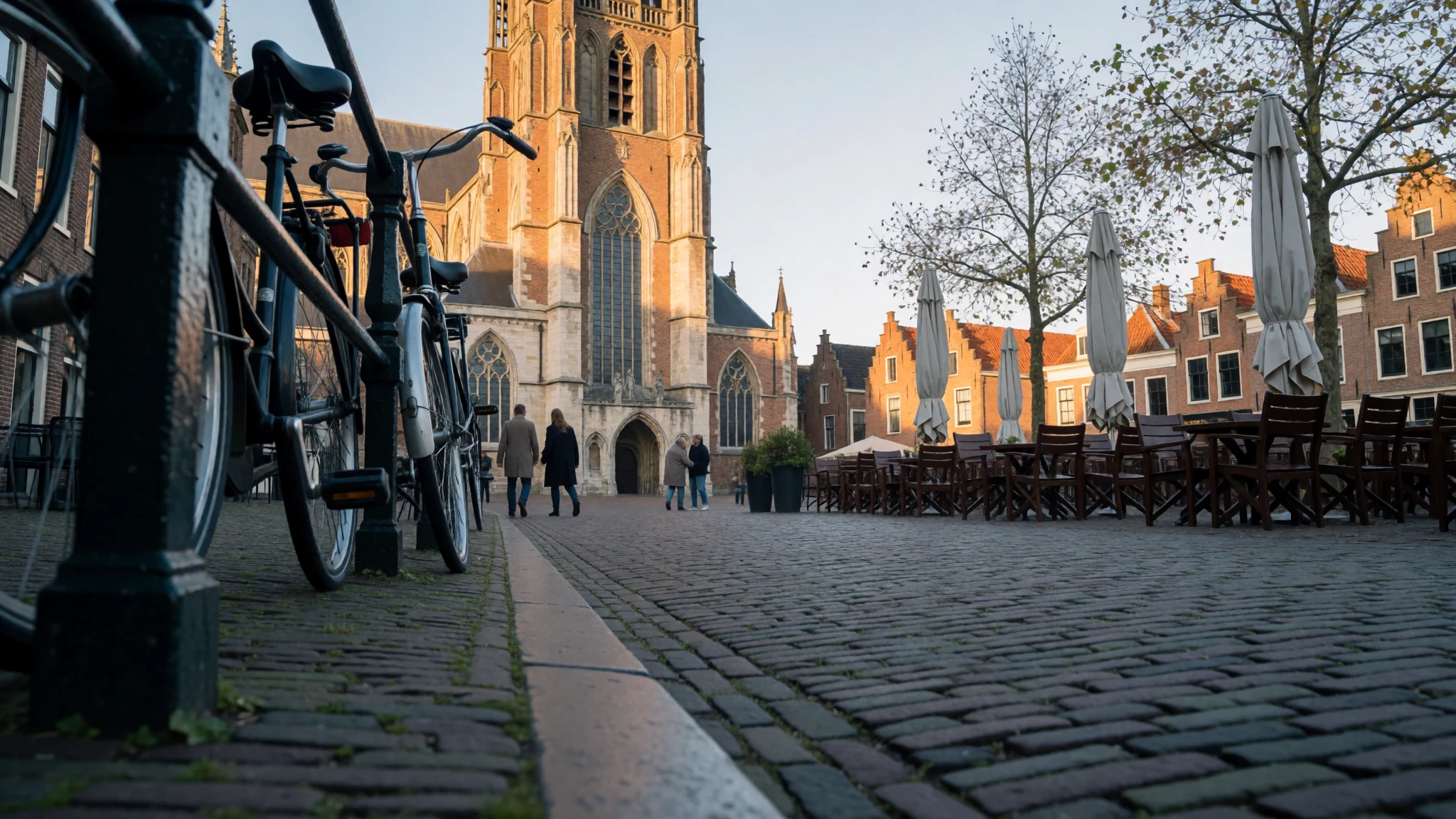
Delft is a compact canal town of blue pottery, Vermeer's painted light and a busy university, easy to pair with The Hague or Rotterdam.
The place
Delft sits in South Holland between Rotterdam to the south-east and The Hague to the north-west, and it belongs to the Randstad, the chain of linked cities that fills the western Netherlands. About 110,000 people live in the municipality, many of them students and staff of Delft University of Technology. The old centre is small enough to cross on foot in a few minutes, and its character comes from the waterways that thread through it. The name comes from the Dutch verb for digging, and the oldest canal, the Oude Delft, was the spine along which the town grew. Later canals were cut as working routes and are now lined with brick gables, small bridges and moored boats. The market square is large for a town of this size, a reminder that trade came first. The Nieuwe Kerk closes one end and the town hall the other, with café terraces filling the space between. Away from the postcard core, the university area feels modern and busy, with cyclists everywhere. Delft is calmer than Amsterdam, though day-trippers crowd the square around midday, especially at weekends and in summer. Early mornings and evenings are quieter, and the canals look their best then. Cobbles are uneven, bicycles move fast and rain can arrive in any month, so a light waterproof earns its place in the bag. As a base, Delft works well for short tram or train trips to The Hague and Rotterdam.
Its story
Delft began as a settlement beside a dug waterway, the Delf, and the town took its name from the act of digging. A local count placed his manor where that channel met the embankment of an old, silted-up river, and the crossing drew traders. The scale of the central market square still shows how important that trade became. In 1246 Count William II of Holland gave Delft its charter, and merchants and craftsmen prospered under it. A later canal linked the town to the river Maas and, through the port of Delfshaven, to the sea. For a long stretch Delft ranked among the leading towns of Holland. It also became bound up with the House of Orange-Nassau: Prince William of Orange, shot dead in the town, was the first member of the family laid in the Nieuwe Kerk, and the royal burial vault is there still. Fire, and later a gunpowder explosion, scarred the centre, and the town hall was rebuilt after flames left only its tower standing. In the Dutch Golden Age the town was a centre for painters, potters and thinkers. Vermeer lived here, and the lens-maker Antonie van Leeuwenhoek and the microbiologist Martinus Beijerinck worked here, which is why Delft is often called a birthplace of microbiology. The university keeps that scientific tradition going.
What to see
- Nieuwe Kerk — Markt, town centre
The Nieuwe Kerk stands on the Markt and anchors the town's skyline. It holds the burial vault of the House of Orange-Nassau, which is closed to visitors, with William of Orange the first interred. Check the official site for tower and church opening arrangements, and look down from the tower for a clear sense of the canal layout.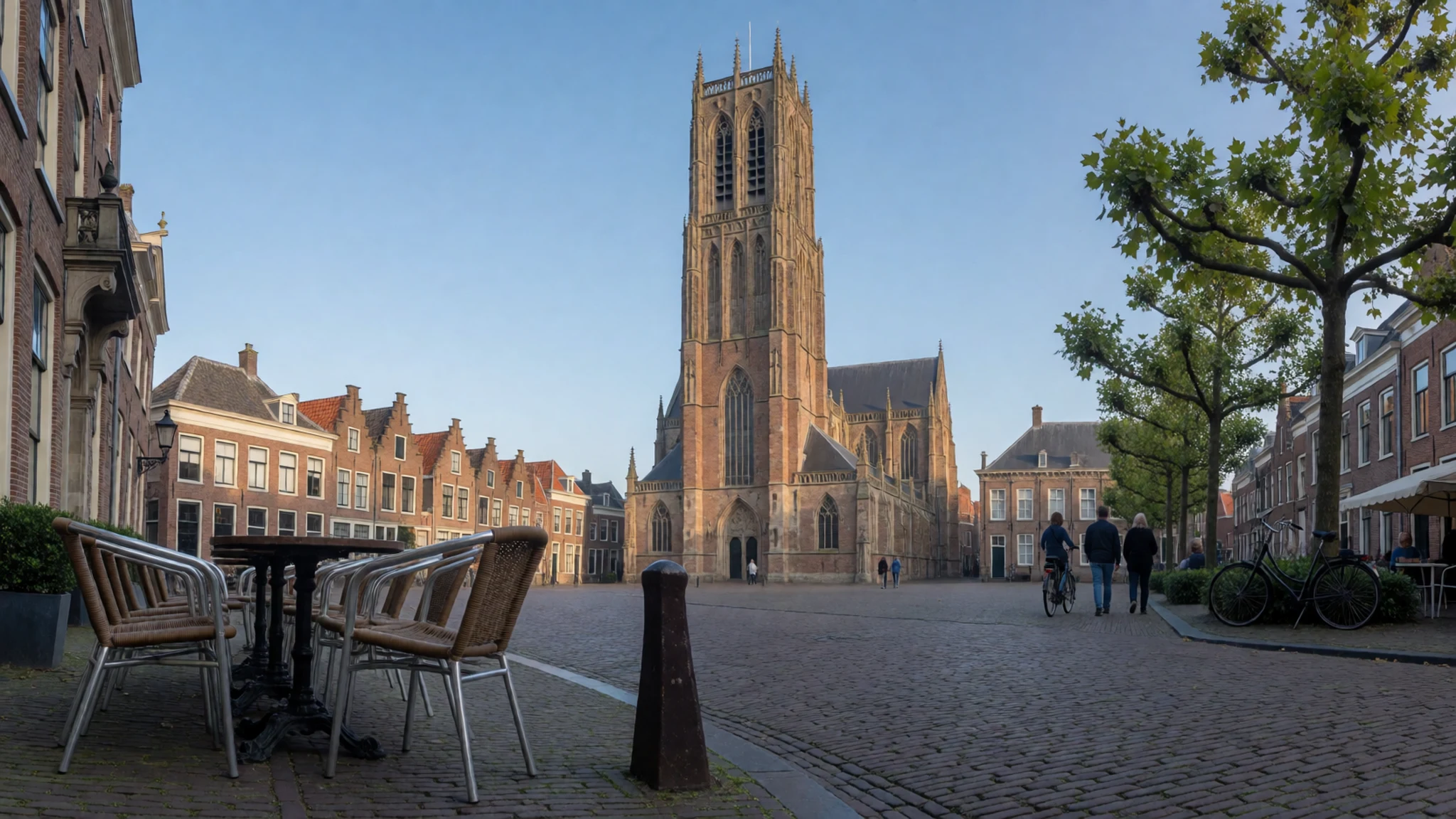
- Stadhuis — Markt, town centre
Delft's town hall faces the Nieuwe Kerk across the market square. After a fire left only the tower standing, the architect Hendrick de Keyser rebuilt it, keeping the tower and some older walls. It is best enjoyed from the square, where the Renaissance façade can be seen alongside the church.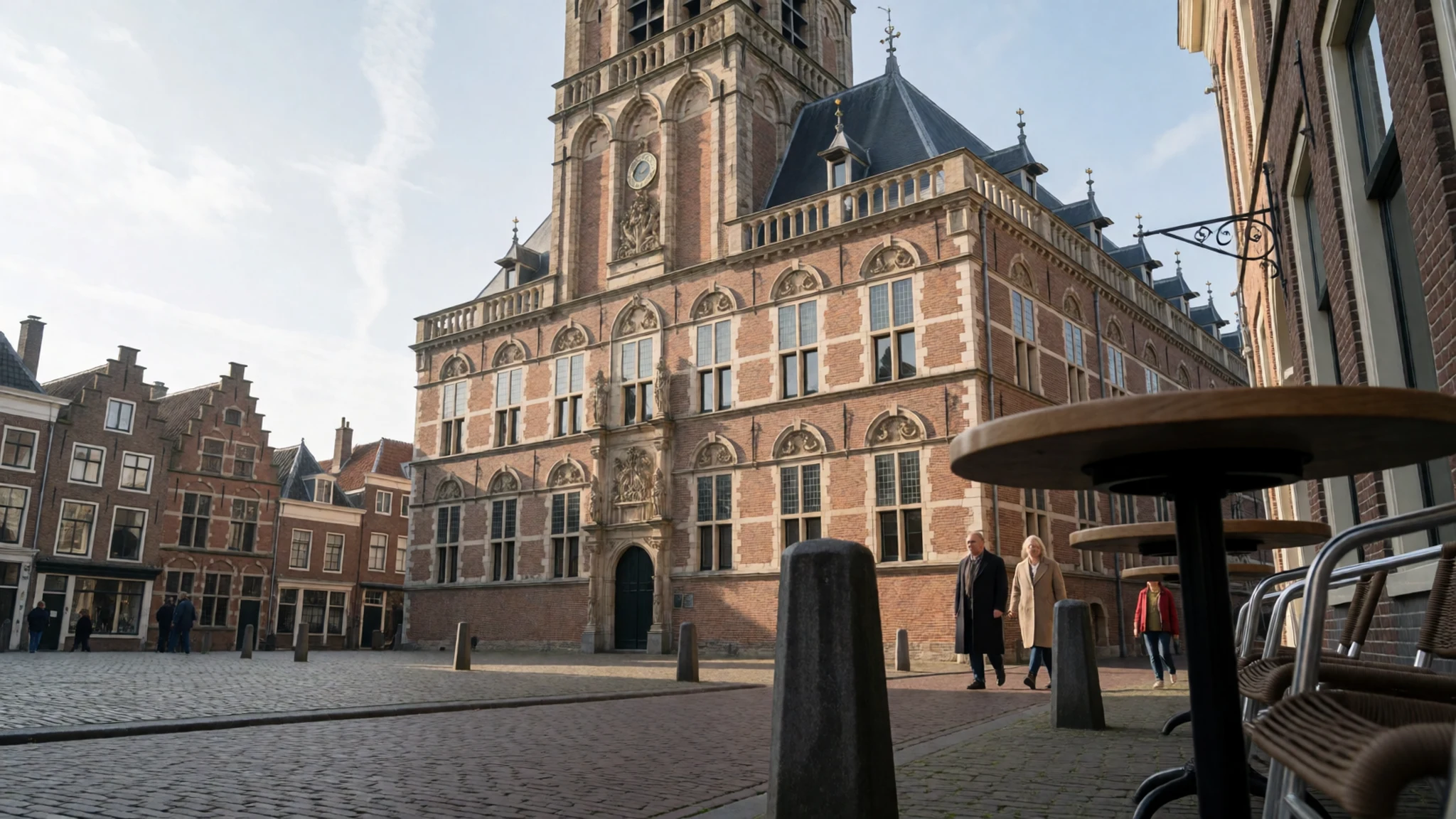
- Drogisterij De Salamander — Markt, town centre
This old-fashioned pharmacy near the square has a traditional gaper, a painted head, on its gable, a sign once used by pharmacists. Inside, the counter and the staff in white coats give a sense of how such shops worked. It is small, so a short visit is enough, and a pleasant stop for browsing.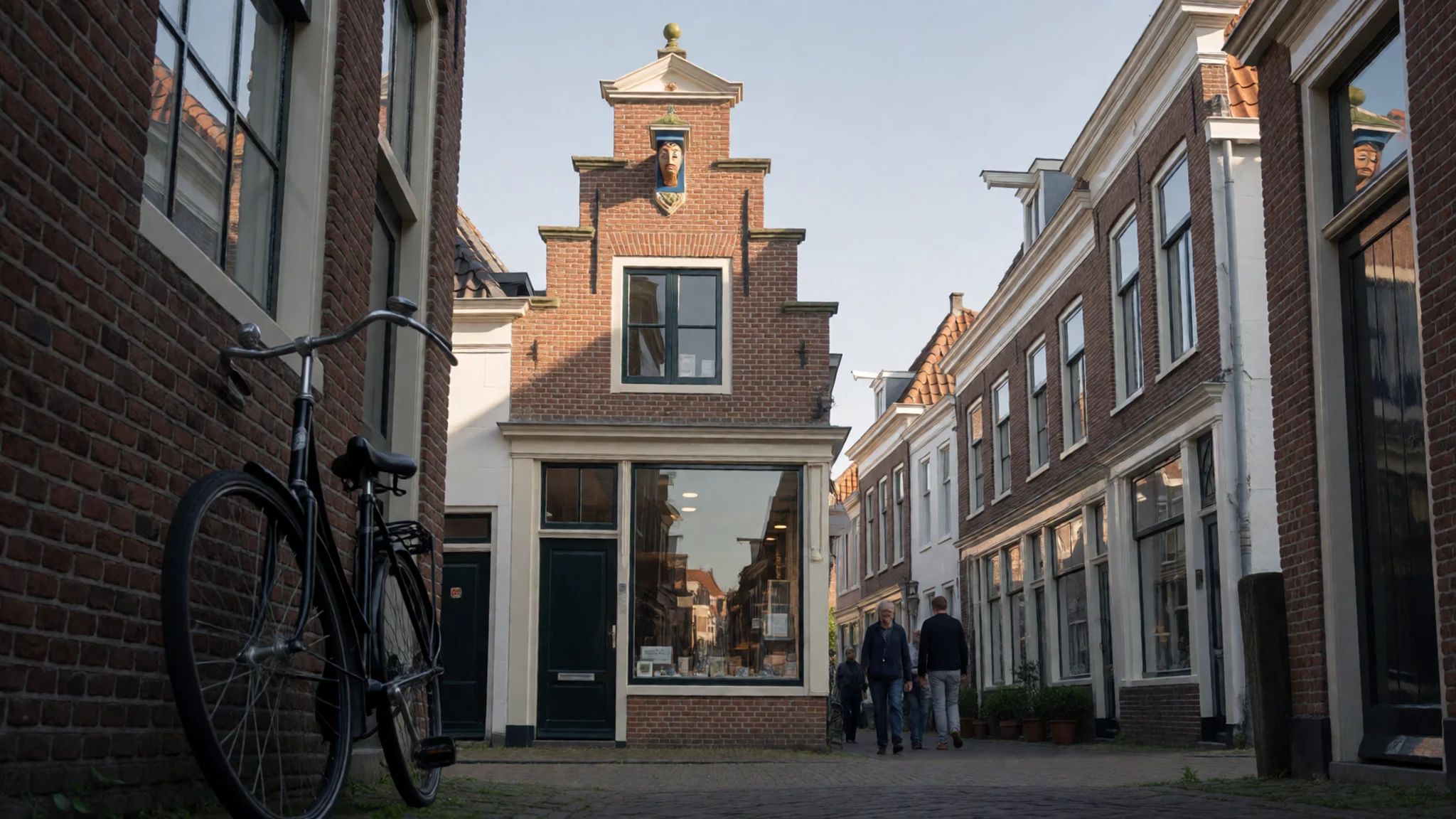
- De Waag — Market area, near the canals
De Waag was once the weighing house, where goods bought and sold in the market were checked. Today it houses a café and restaurant, so it works as a lunch stop as well as a look at civic trade architecture. Its position beside the canal bridges makes it a handy meeting point.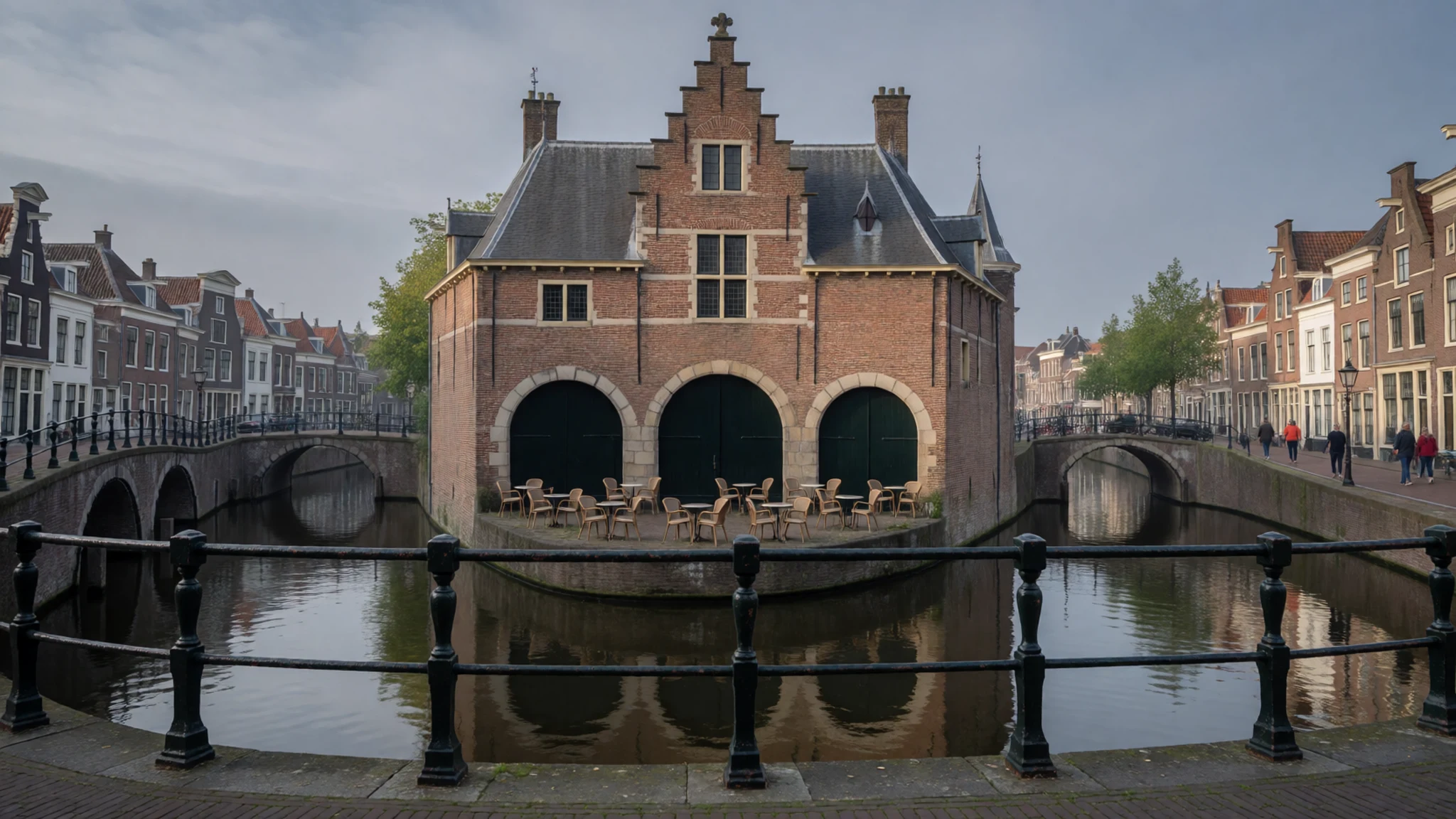
- Vleeshal and Visbanken — Canal side by the market square
The Vleeshal was built as a meat market in the Hollands Classical style, a rarity in Delft, and was later used for grain. Next to it, the Visbanken was the town's fish market. Both stand beside the canal near the square, and their use has changed to social and eating venues. Worth a slow look at the façades.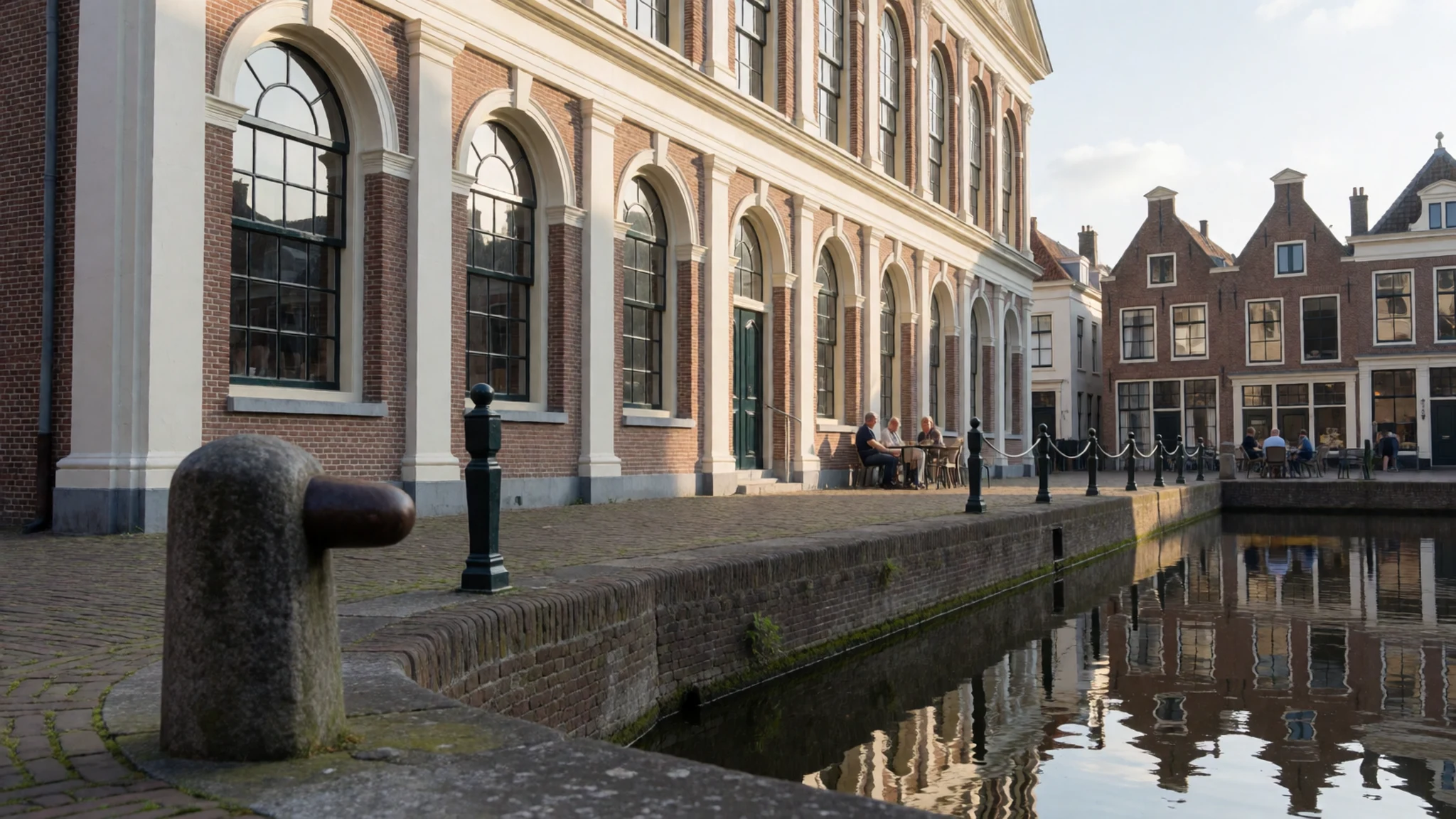
Culture
Delft's best-known cultural export is Delftware, the blue-and-white pottery that began as a local answer to imported Chinese porcelain. The town was a home port of the Dutch East India Company, which brought the originals in, and potters here learned to copy and then reinvent them. Royal Delft and De Delftse Pauw still make pieces in town, while Gallery Terra Delft shows newer ceramics. The town is just as closely tied to painting. Johannes Vermeer was born here and used local streets and domestic interiors as settings for his work. Pieter de Hoogh, Carel Fabritius, Nicolaes Maes, Gerard Houckgeest and Hendrick Cornelisz. van Vliet worked here as well, and together they form the Delft School, known for quiet household scenes, church interiors, courtyards and street views. Most of Vermeer's paintings hang in museums elsewhere, so visitors come for the atmosphere more than the originals. Daily life today is shaped by the university and the cycling habit, which gives the old centre a youthful, practical feel. People are direct but friendly, English is widely spoken, and conversation tends to be unfussy. Royal history adds a thread of ceremony around the Nieuwe Kerk. In churches and small shops, a quiet voice and a polite greeting go a long way. On the canal-side streets, keep off the red cycle lanes and look both ways before stepping off the pavement, because bicycles are fast and rarely slow down for pedestrians.
What to wear
Delft has no single local costume of its own. The traditional dress of South Holland belongs to the wider Dutch tradition of regional klederdracht: wool and cotton skirts and jackets, white lace caps for women and wooden clogs, known as klompen, for work in wet fields. Today that clothing appears mainly at folk festivals, in museums and in a few villages, not in daily life. What people wear now is plain and practical. Students and residents dress for cycling in all weather, with raincoats, dark jeans, trainers and scarves, and smart-casual clothing is enough for most restaurants and theatres. The town's textile link is mostly decorative: blue-and-white motifs from the pottery turn up on tea towels, scarves and aprons in souvenir shops. A visitor should dress in layers, since the maritime climate can switch between sun, wind and showers within a day, and carry a light waterproof at any time of year. Comfortable shoes with a good grip matter more than style, because the cobbles are uneven and can be slippery after rain. Churches have no strict dress rule, but covered shoulders and a removed hat are courteous. If cycling, trousers that will not catch in the chain and a bell-equipped hire bike make the day easier.
What to eat
- Appeltaart with whipped cream — Cafés around the market square
Dutch apple pie is a deep, spiced tart, and in Delft it is served with a spoonful of whipped cream. Look for it at the home-baking cafés around the market square, where it is a standard afternoon order with coffee.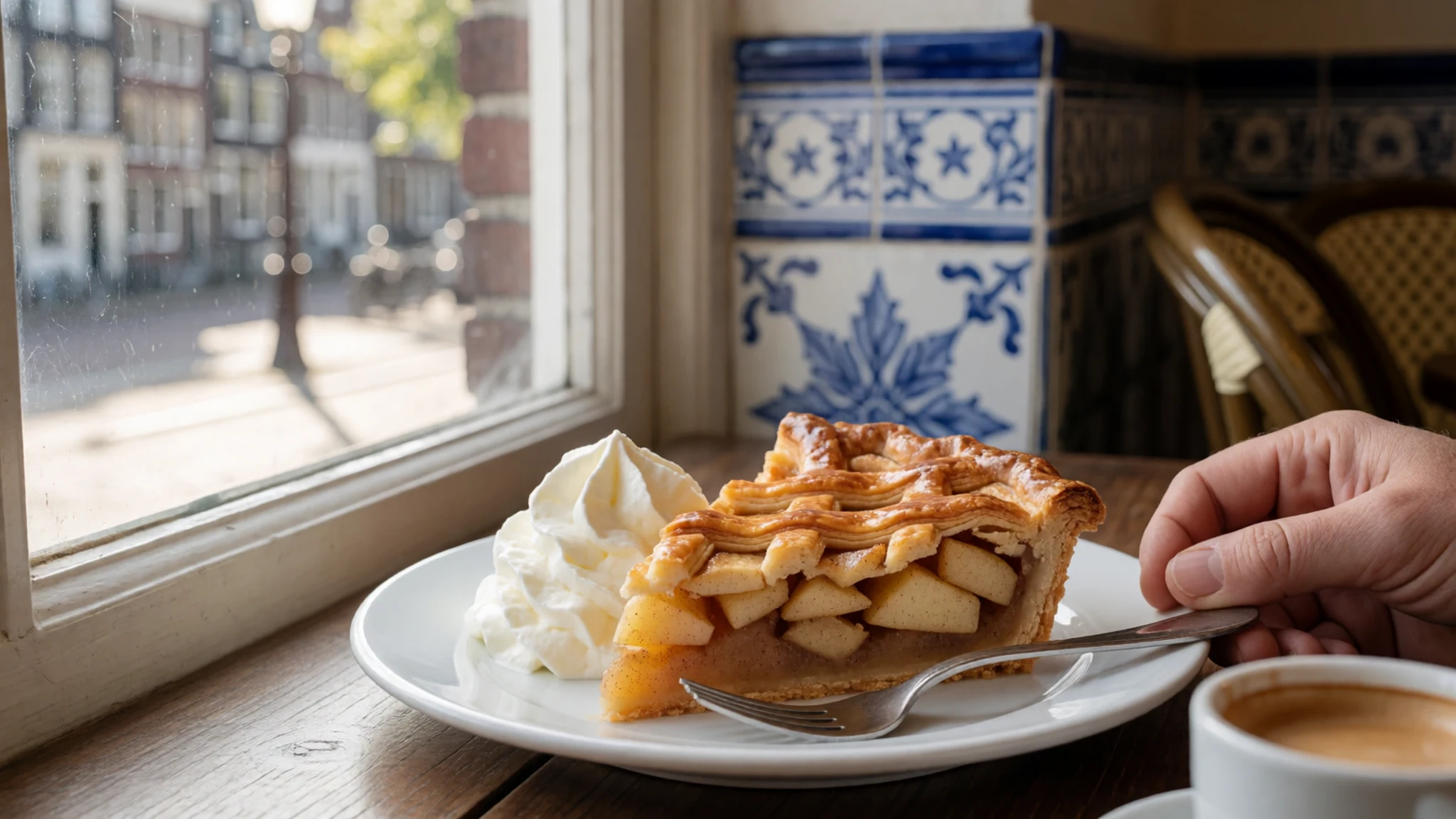
- Broodje lunch sandwiches — Lunchrooms and bakeries in the old centre
Lunch in Delft often means a filled roll or sandwich on good bread, eaten at a table with a pot of tea or coffee. Locals favour the town-centre lunchrooms for these, and bakeries sell takeaway versions for a canal-side picnic.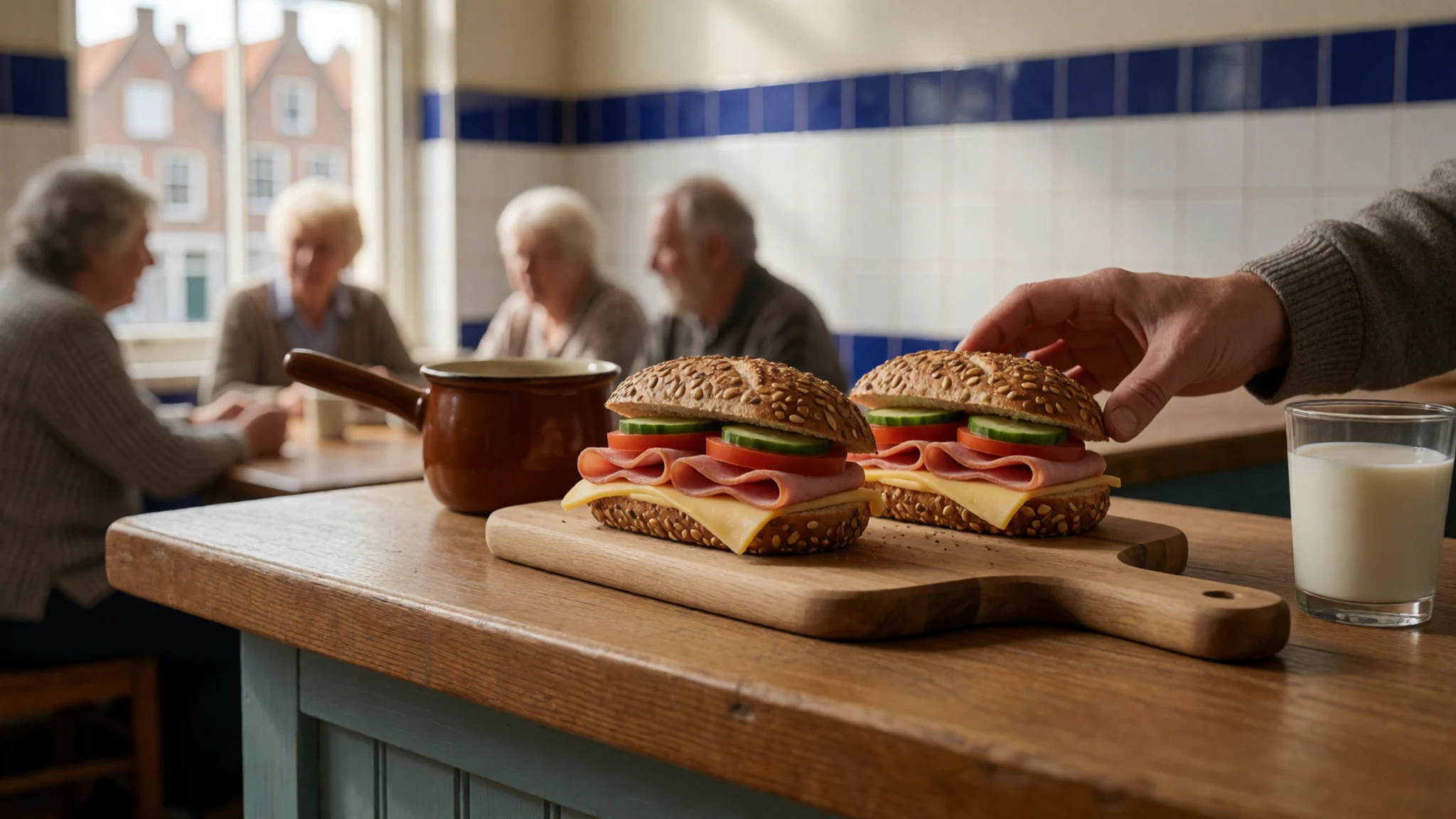
- Chocolate and ice cream — A chocolatier near the market square
A local chocolatier in the centre makes its own chocolates and serves ice cream, with dark chocolate a favourite flavour. It makes a good afternoon walk-and-eat stop between the canals, and sweet gifts to take home. - Tea with Belgian chocolates — Tea-focused lunchrooms in the centre
Some lunchrooms in town offer a long list of teas alongside Belgian-style chocolates and fresh bread. It is a slow, comfortable option on a wet afternoon, when the weather turns and the canals are best seen through a window. - Patisserie cakes and pastries — Patisseries and bakeries in the old town
Small patisseries and bakeries in the centre sell cakes, bread and pastries, with some offering lunch as well. They are good for a quick breakfast before the day-trippers arrive, and the pastries travel well if packed for a train ride.
Plan it
Best time. April to June and September are the pleasant months, with mild weather and long light for canal walks. July and August are busier with day-trippers, and winter is cold, damp and grey, though the town is quiet. Rain is possible in any month, so pack a waterproof.
How long. 1–2
Getting there. Amsterdam Airport Schiphol is the main gateway, with a direct train to Delft taking about 45 minutes. Rotterdam The Hague Airport is close but has no direct public link, so allow about 45 minutes via Rotterdam Centraal. From The Hague, tram 1 takes about 30 minutes, and trams need an OV-chipkaart or a day pass.
Budget. mid
Tips
- Visit the market square early in the morning or in the evening, when day-trippers are fewer
- Check the official site, https://www.delft.nl/, and individual venues for opening arrangements before planning church or museum visits
- Hire a bicycle or walk, and stay out of the cycle lanes if on foot
- Carry a light waterproof and shoes with good grip for wet cobbles
Etiquette
- Greet shop and café staff before ordering
- Keep to the pavement and watch for bicycles on canal-side streets
- Speak quietly inside the churches and ask before photographing people
Nearby
Sources
- Wikidata Q690 (CC0)
- Wikipedia: Delft (rev 1381582647) (CC BY-SA 4.0)
- Wikivoyage: Delft (rev 5400964) (CC BY-SA 4.0)
- Photo: Canal in Delft (W. Bulach) (CC BY-SA 4.0)
- Photo: View from the Nieuwe Kerk to the Oude Kerk (Zairon) (CC BY-SA 4.0)
- Photo: Physical location map Europe (Alexrk2) (CC BY 3.0)
- Photo: Site of the Delft explosion map (Georgelazenby) (CC BY-SA 4.0)
- Photo: Cornelis Springer, The Gemeenlandshuis and the Old Church, Delft (Public domain)
- Photo: Antique map of Delft by Blaeu (Public domain)
- Photo: Delftsedonderslag (Egbert van der Poel) (Public domain)
- Photo: Kruithuis (User O E P) (CC BY 3.0)


