Kinderdijk
Kinderdijk, Netherlands
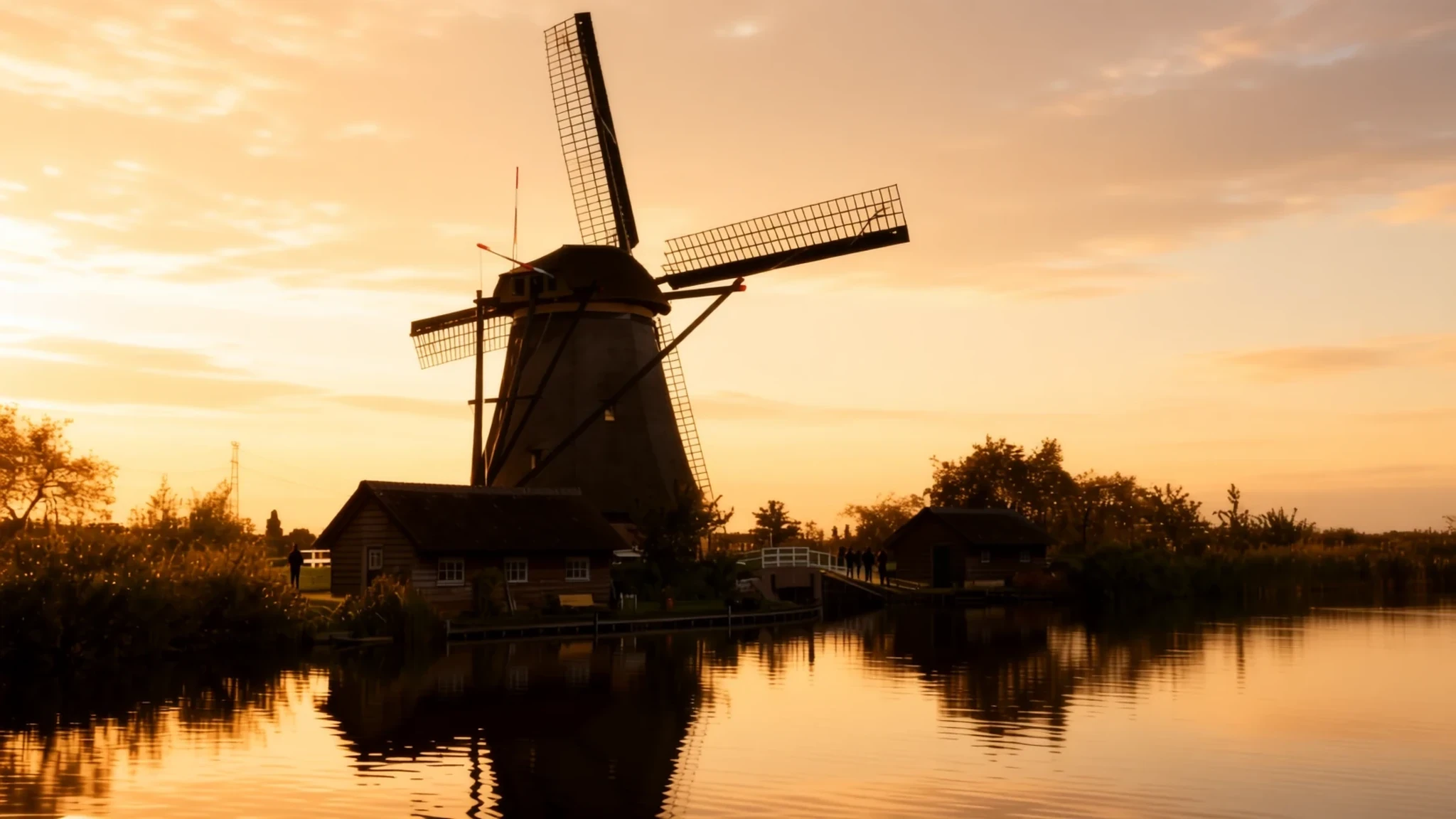
Kinderdijk is a flat Dutch village where working windmills still stand in a line over the water they were built to drain.
The place
Kinderdijk sits in the west of the Netherlands, on flat polder land between the Lek and the Noord, within easy reach of Rotterdam. A polder is ground held dry against higher water outside it. Ditches feed canals, canals lead to mills, and the mills once lifted that water up and out. At Kinderdijk the machine is still standing in the open: lines of windmills along a canal, pasture behind them, and a sky that takes up most of the picture.
The settlement is small. Houses tuck in behind the dike, and a number of the mills are lived in, with gardens, laundry and a private path to the door. The public route is a towpath and a narrow road. Along it the mills come in succession, brick or timber and thatch, sails set or still. In calm weather the water mirrors every tower. In the wind that this coast is known for, the sails turn and the whole row feels occupied.
Crowds are part of the honest account. On a bright weekend the path fills with coaches, bicycles and tour groups, and a clear reflection is hard to frame. Weekday mornings and the cooler months give the place back its scale. Rain is common, shelter is scarce, and the canal bank can be muddy. The view is still the point: a drained landscape, mill after mill, under weather that changes by the hour.
Kinderdijk is not a city and not a ruin. It is working countryside that happens to be famous, still edged by farms, still concerned with water, and it rewards a walking pace.
Its story
Kinderdijk takes its name from a story the polder still tells. The Dutch name means children's dike. After a great flood, the tale goes, a wooden cradle drifted out of the drowned country and struck the dike. A cat was in it, shifting its weight so the cradle would not tip, and a baby lay inside, dry. People on the dike lifted the child clear. The landing gave the place its name. Record or legend, it is a story about water arriving fast and a dike that holds.
The mills are that bargain made mechanical. Water boards on either side of the canal each built a rank of windmills to lift rain and seepage out of the fields and into the river. Smaller mills had worked here before; the tall ones that remain are those that kept farms on this low ground. A miller lived inside, turned the cap to meet the wind, and ran the scoop wheel. Water rose in stages, from ditch to canal and at last over the dike.
Steam, then diesel and electric pumps, took the daily load. The mills stayed: some as houses, some still able to turn, all of them readable as a drainage landscape rather than a row of souvenirs. Kinderdijk is where the older method can be walked from end to end, dike, canal, mill and field. The cradle in the flood and the wheel in the mill are the same plot. This ground is borrowed, and the loan is paid in attention, whether the wind is blowing or not.
What to see
- Nederwaard mills — Nederwaard
The Nederwaard mills at Kinderdijk are the thatched ones, octagonal timber bodies on brick bases along their canal. Each cap rotates to bring the sails into the wind. Many are private homes, seen from the public path. On a calm day the row repeats in the water. Spread sails make the line look like working machinery; still sails make it a terrace of houses under unusual roofs.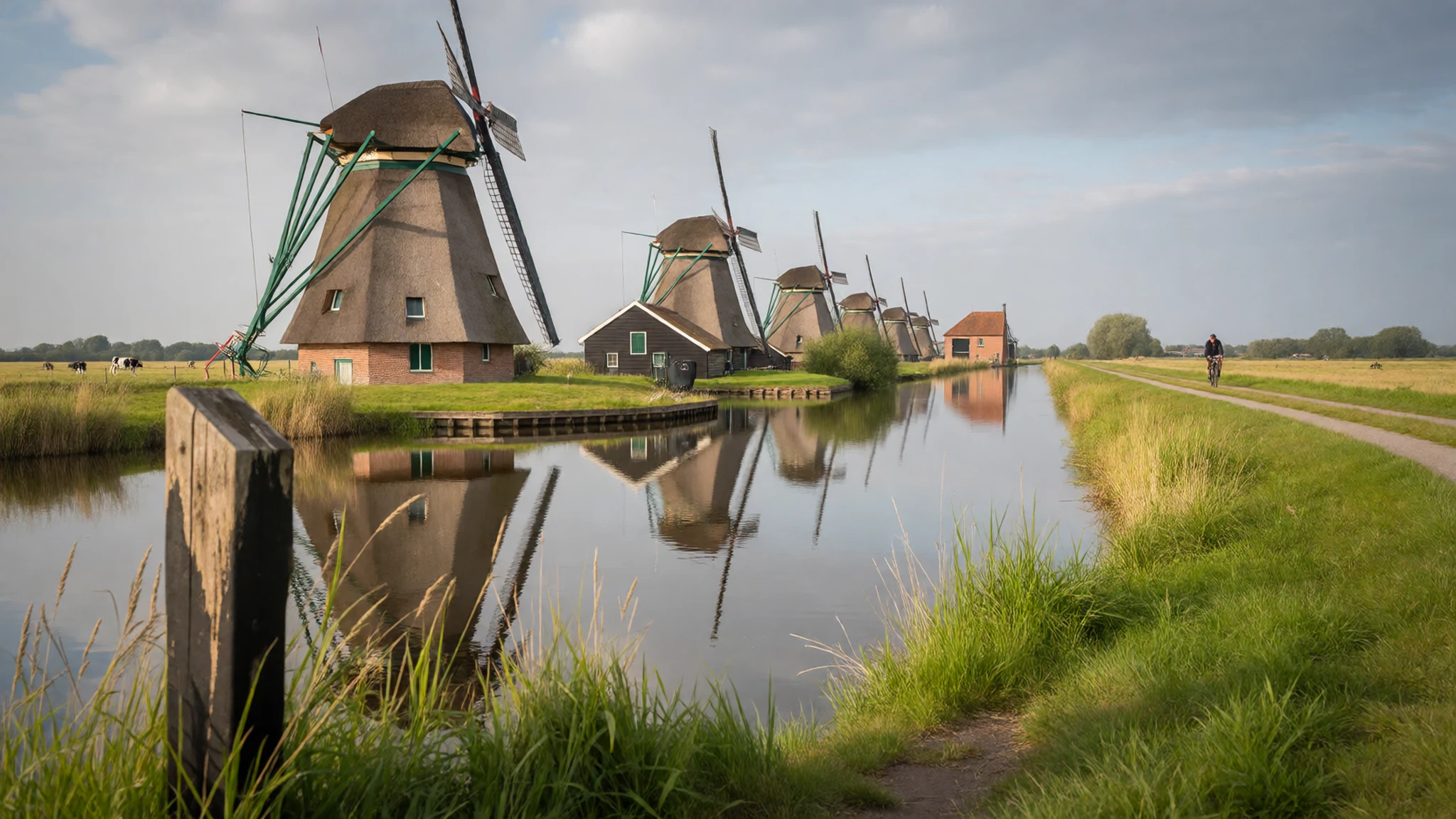
- Overwaard mills — Overwaard
The Overwaard mills at Kinderdijk are brick tower mills, round in plan, on the far side of the canal from the thatched rank. The cap turns to the wind while the brick body stays put. A narrow path and a strip of grass run at their feet, and rain darkens the brick. Against a bright sky they are the sharper silhouette; under grey cloud, tower and sky almost merge.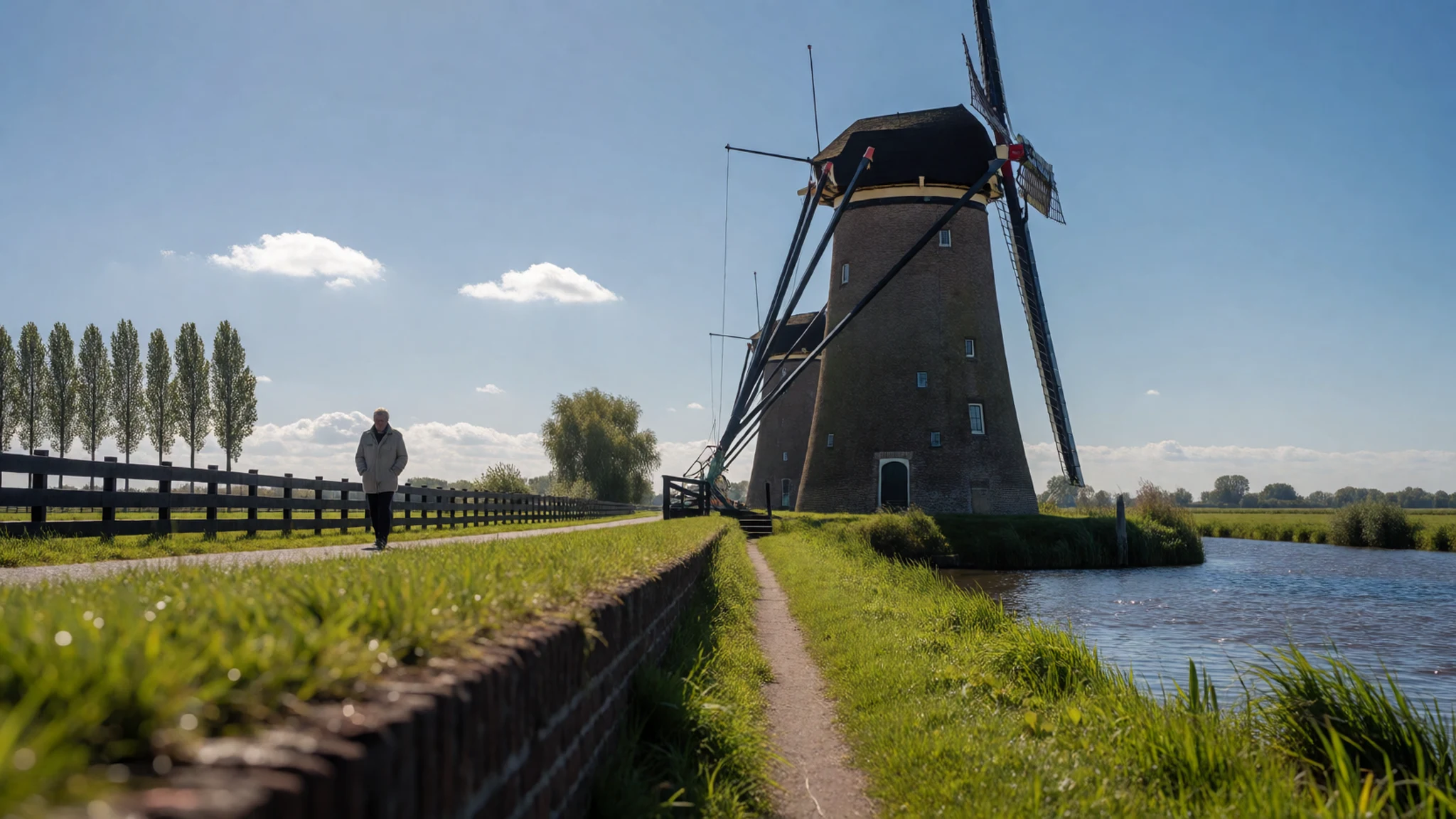
- The canal — the central canal
The main canal at Kinderdijk is the viewing room: the ranks face it, and the towpath is where most visitors walk. When the wind drops, the water holds an inverted row of mills. Cyclists and walkers share the path. On busy days a passing boat breaks the reflection. Early, before coaches arrive, this is the quiet stretch, and the reason pictures of Kinderdijk look full of sky.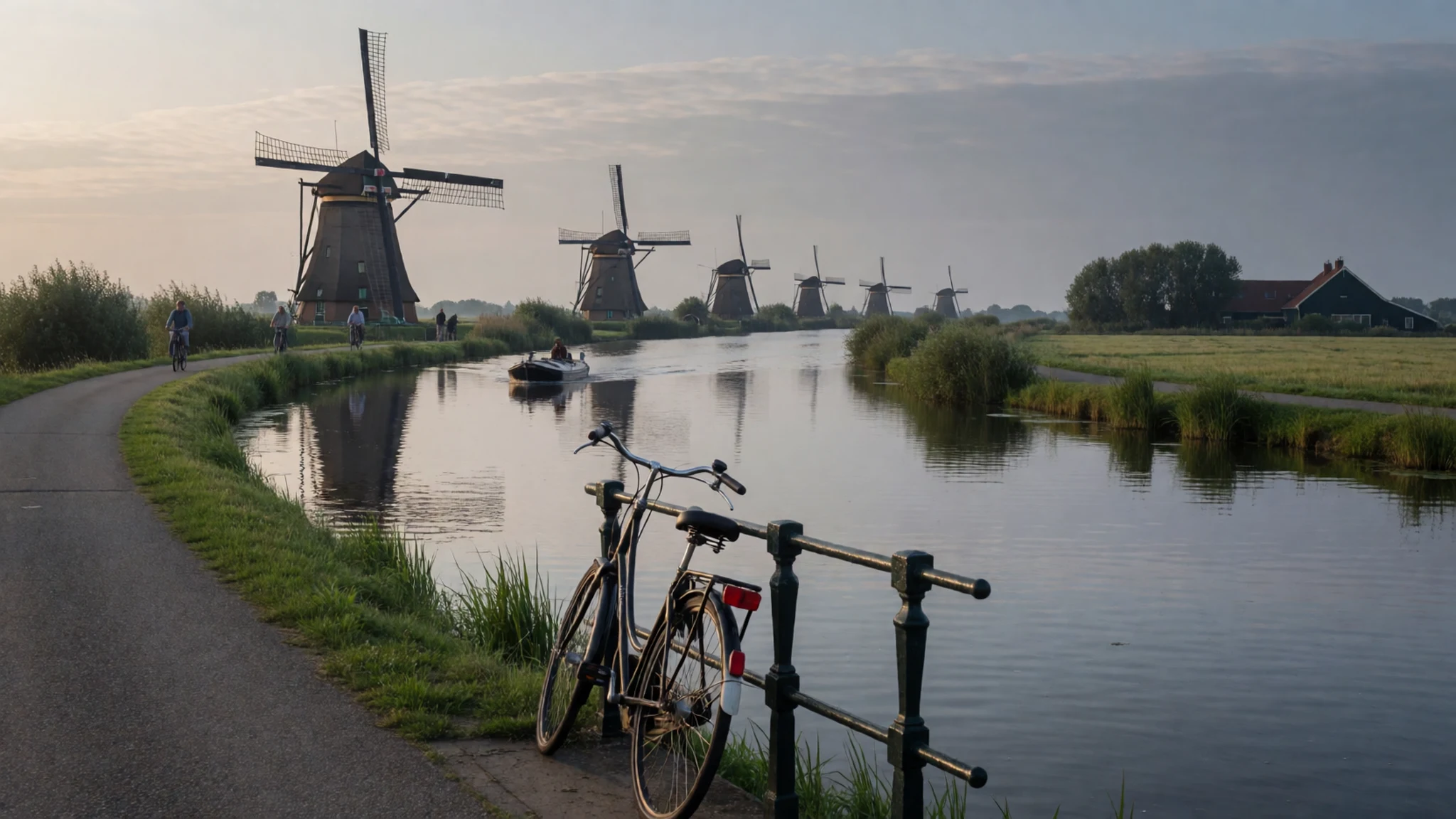
- A mill interior — a mill open to visitors
Inside a Kinderdijk mill open to the public, the visit becomes a house rather than a view. Stairs are steep and rooms are small. A miller's living quarters wrap around the machinery: gears, a brake wheel, and the shaft out to the sails. Domestic and industrial sit in the same space. Which mill is open changes, so the official site is the way to confirm an interior.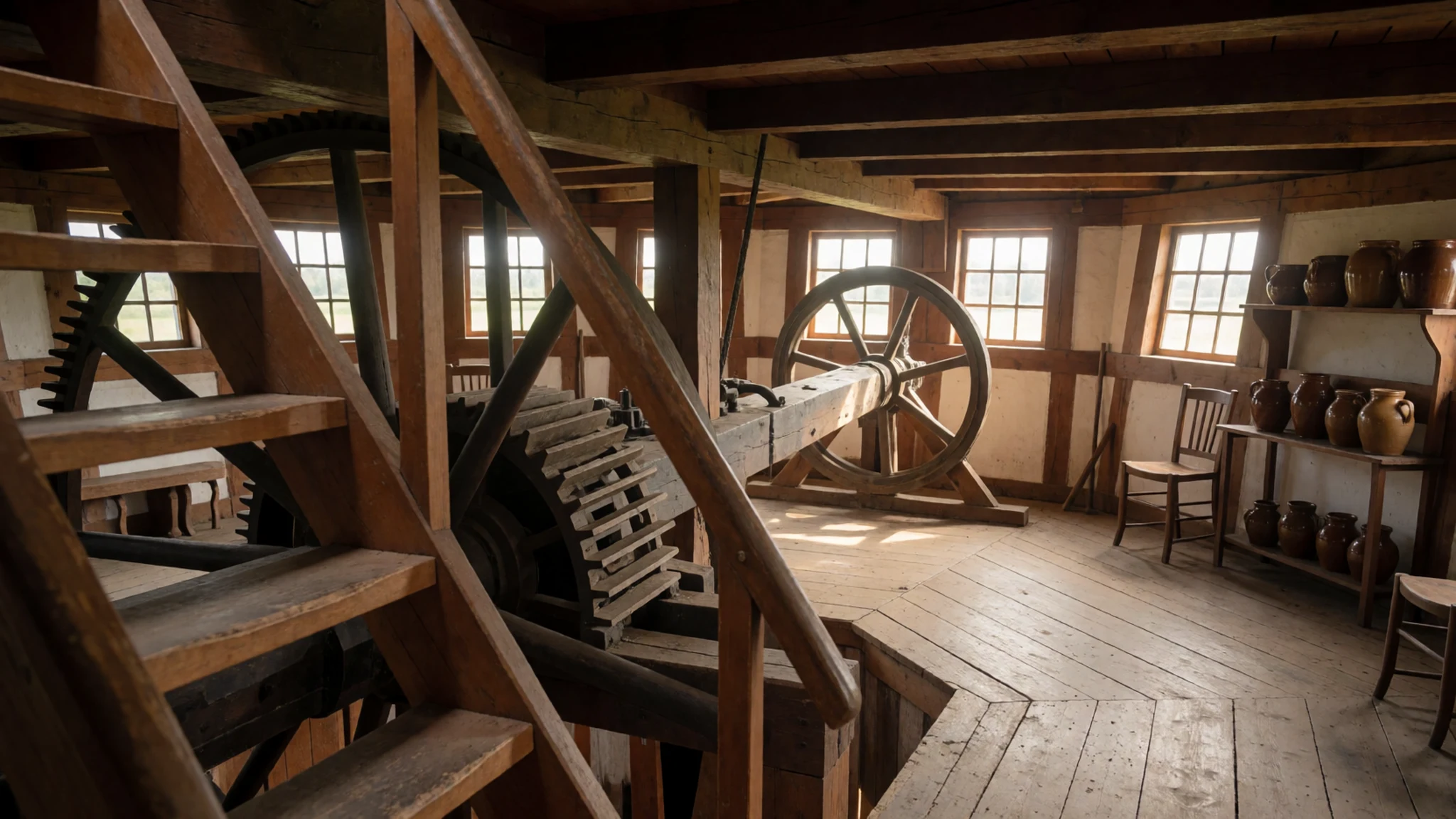
- The Lek dike — the Lek dike
The river dike at Kinderdijk is the raised bank that keeps the Lek out of the polder. From it, the fields sit lower than the river, which is why the mills had to lift water. Two diesel pumping stations near one entrance now do the main drainage. The path along the dike is windy and exposed, and it shows the arrangement plainly: high water, low land, machines between them.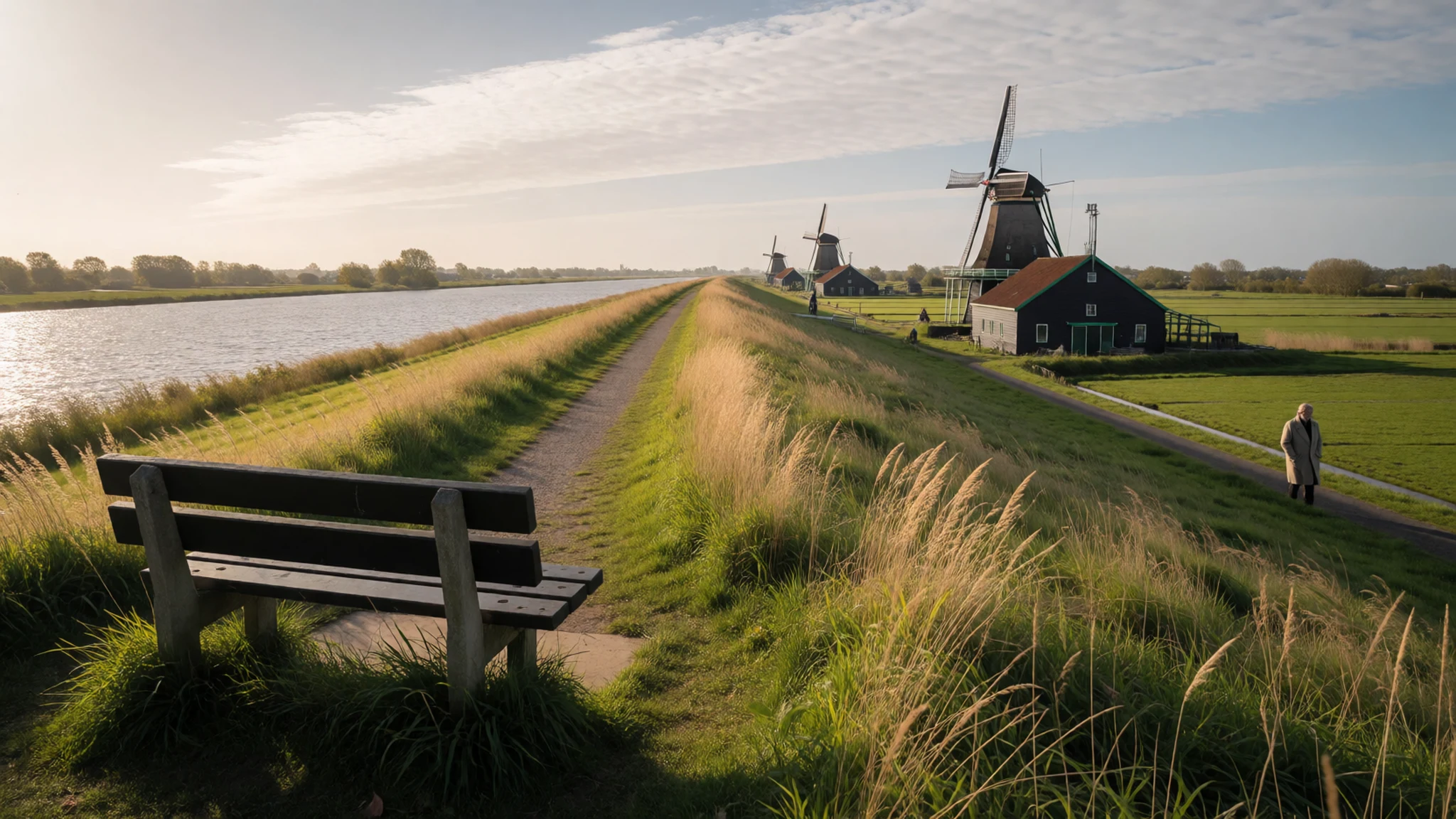
Culture
Kinderdijk's culture is water culture, and it is practical rather than ceremonial. The people who kept this polder dry were millers and the members of a water board, a local body that still exists across the Netherlands and still decides how drainage is paid for and done. Living in a mill was a job with a house attached: watching the weather, climbing to the cap, minding children above a scoop wheel. A few mills at Kinderdijk are still homes, which gives the site a reserved feeling. The famous view is also someone's front garden.
Visitors meet a Dutch habit of plain speech and of sharing narrow paths with bicycles. Boats have their own right to the canal. There is no dress code and no shrine ritual; the respect asked for is the respect due to a village that did not stop being a village when the coaches started coming. Photography of the mills from the path is expected. Photography of people in their gardens is not.
Queues form at the mill that is open and at the boat landing on busy days, and pushing ahead is noticed. The landscape looks robust. The paths, the reed beds and the private yards are not.
At Kinderdijk, stay on the public path, treat every mill garden as private, and let bicycles pass without blocking the towpath.
What to wear
Dress at Kinderdijk belongs to work and weather, not to a costume kept for show. Older clothes in this part of South Holland were what people wore to farm and to mill in the wet: wooden clogs, klompen, shaped from poplar or willow; wool jackets and trousers; linen shirts; and for women a cap, a dark skirt and an apron. Clogs lifted the foot out of cold mud and could be left at the door. They are still made in the Netherlands and still used by some farmers, though a miller climbing a ladder today is more likely to be in ordinary sturdy shoes.
On the path now, dress is everyday Dutch clothing: trousers, a sweater, a coat that can take rain. Cyclists add a waterproof layer and shoes that work for walking as well as pedalling. A bright morning is not a promise. Summer lightens the layers without making them optional.
A visitor should plan for wind on flat ground and grass that stays damp. A hooded waterproof, a layer under it, and closed shoes with a grip are enough. Smooth soles slip on wet brick and on the timber steps inside a mill. Kinderdijk asks for no covered shoulders and no formal dress; it asks for clothes that can meet a shower without a fuss.
What to eat
- Poffertjes — the café by the mills and seasonal stalls
Poffertjes at Kinderdijk are small yeast pancakes baked in a dimpled pan and eaten warm with butter and sugar. The café by the mills and seasonal stalls serve them. They suit a cold, windy path better than a sit-down meal.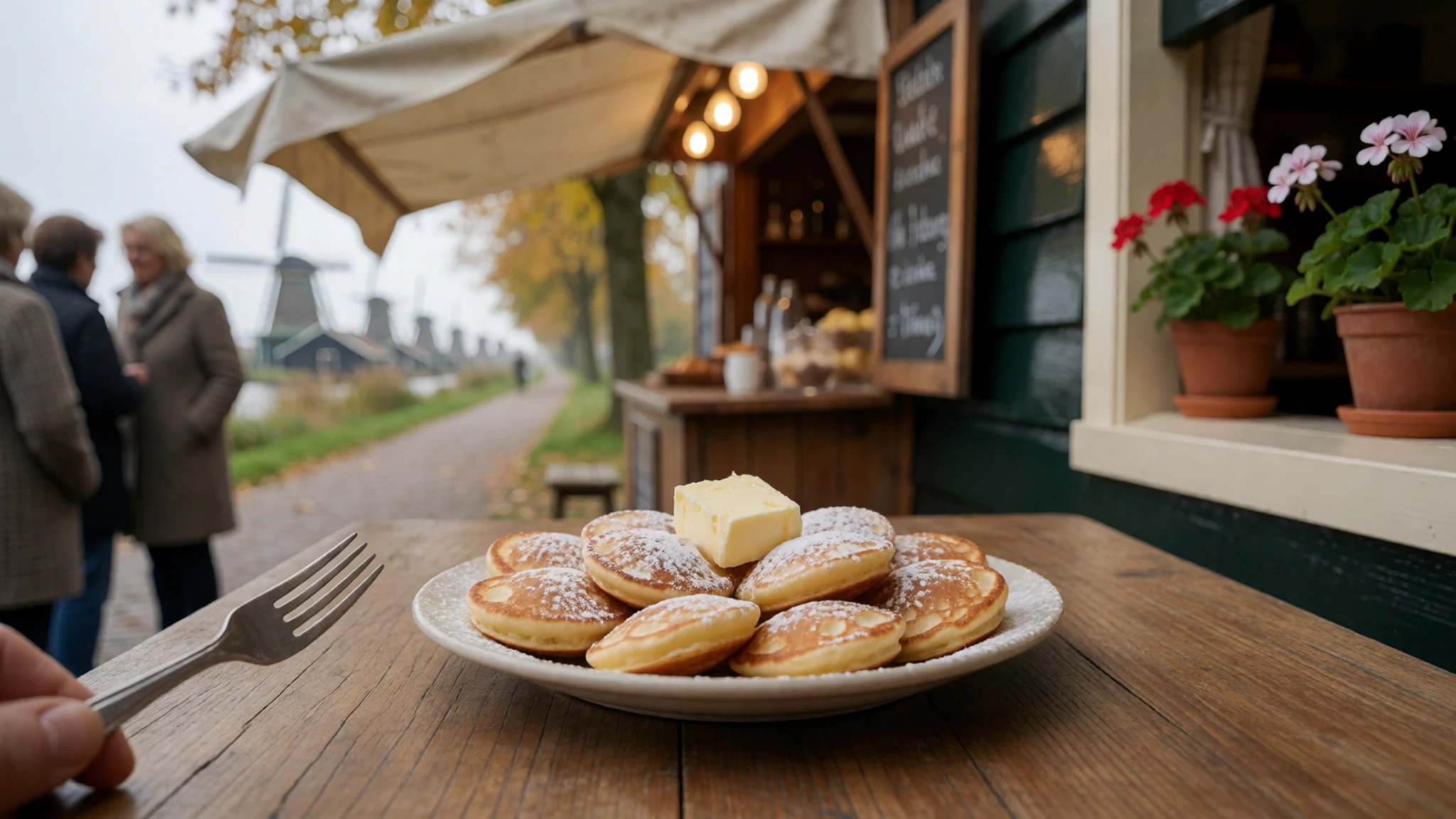
- Stroopwafel — bakeries, market stalls, and the café by the mills
A stroopwafel at Kinderdijk is a thin waffle sandwich with syrup in the middle, best eaten warm so the filling softens. Bakeries and market stalls in South Holland sell them, and the café by the mills is the convenient stop.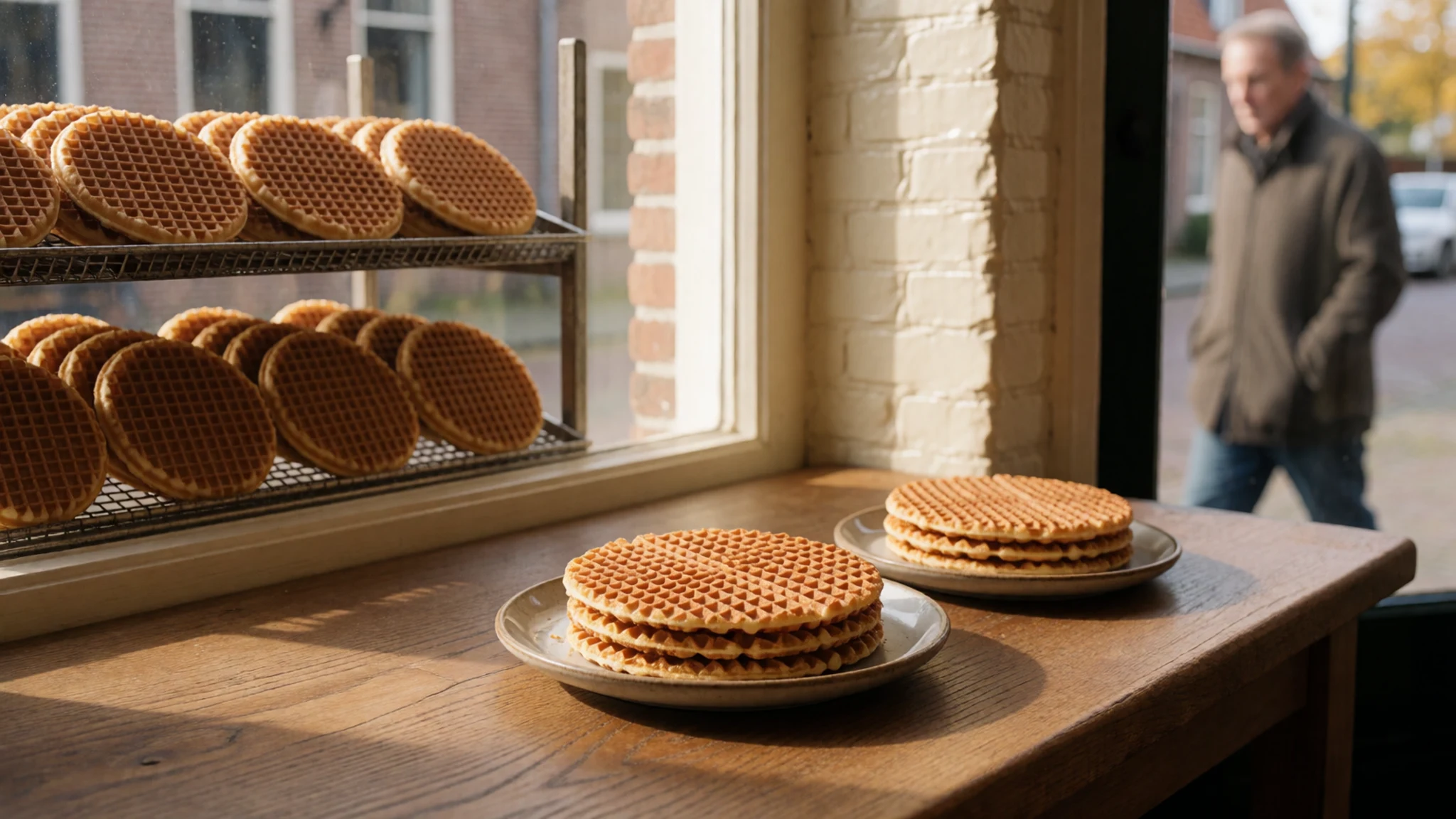
- Bitterballen — cafés in the villages around Kinderdijk
Bitterballen near Kinderdijk are small fried croquettes, meat in a thick roux under a breaded crust, served with mustard. They are the usual savoury snack in a Dutch café in the surrounding villages, and they suit a wet afternoon better than a sweet. - Erwtensoep — cafés in the village and nearby towns
Erwtensoep at Kinderdijk, also called snert, is a thick split-pea soup with celery, leek and smoked sausage, hearty enough to be a meal. Cafés in the village and in nearby towns serve it through the cold months, when a walk on the dike most needs it. - Appeltaart — cafés in South Holland, including the café beside the mills
Appeltaart at Kinderdijk is Dutch apple pie: a deep pie with spiced apple, a pastry lid and whipped cream. Cafés in this part of South Holland, including the café beside the mills, serve it with coffee after a cold walk.
Plan it
Best time. April and May at Kinderdijk bring milder days and longer light; September and October bring fewer coaches and a fair chance of wind in the sails. High summer is the busy season. From November through February the site is quiet, cold and often wet, with short days.
How long. 1
Getting there. Airports at Rotterdam The Hague and at Amsterdam Schiphol serve the trip. Train to Rotterdam, then a bus or waterbus for the last leg to Kinderdijk. The village has no railway station. Check the operator before relying on a particular bus or waterbus.
Budget. mid
Tips
- Start early on sunny weekends, before coach groups fill the towpath.
- Prefer a weekday if the walk itself matters more than the bustle.
- Take waterproofs; shelter on the path is scarce.
- Bring a bank card and a little cash for small stalls.
- Confirm on the official site which mill, if any, is open inside.
Etiquette
- Keep to the public paths and stay out of mill gardens.
- Do not climb on sails, fences or the stone slope of the dike.
- Let bicycles pass, and do not stop in the middle of the towpath.
- Ask before photographing people at home.
Nearby
Sources
- Wikidata (CC0)
- Wikipedia, Kinderdijk (CC BY-SA 4.0)
- Wikivoyage, Kinderdijk (CC BY-SA 4.0)