Giethoorn
Giethoorn, Netherlands
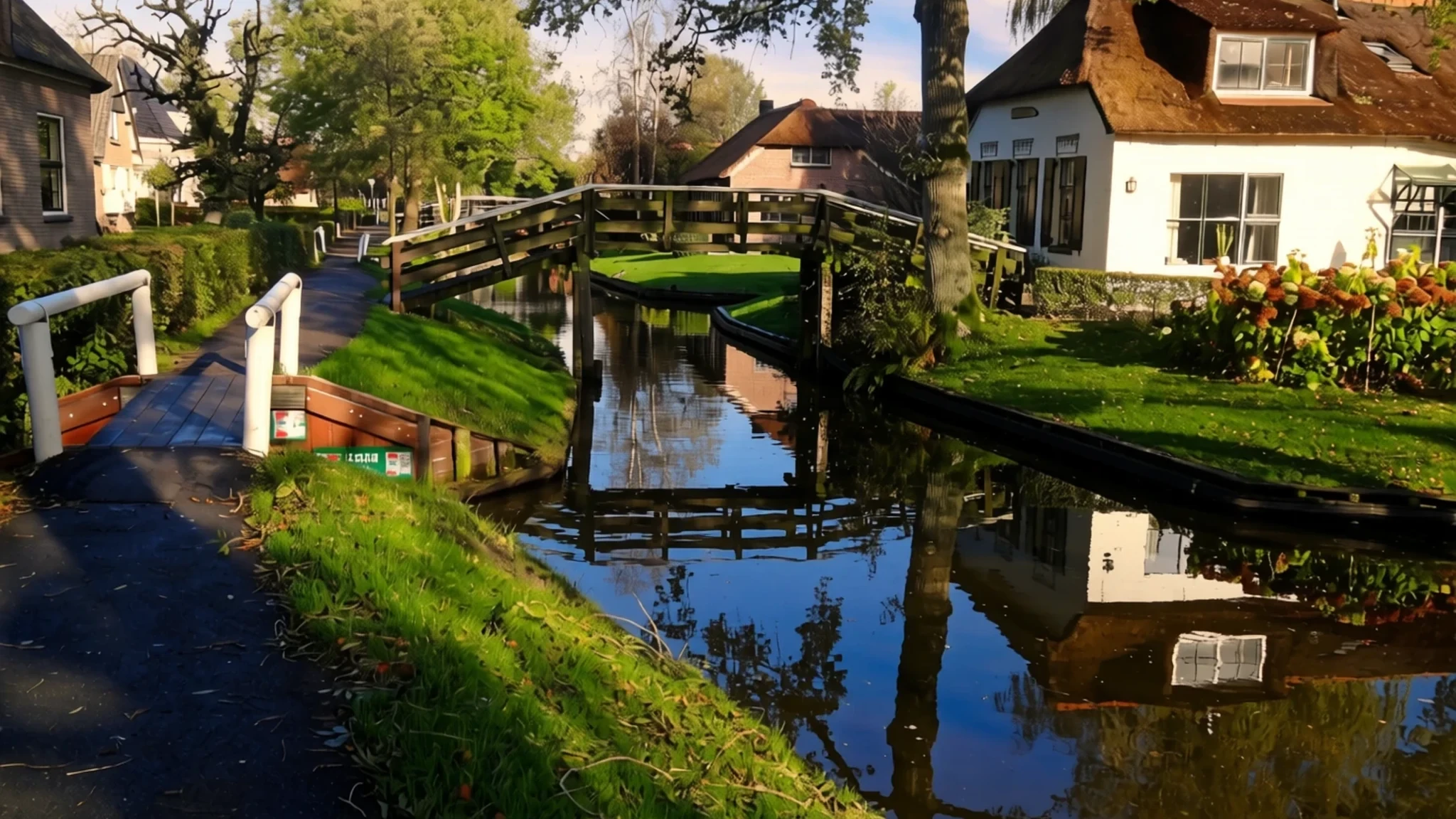
Giethoorn is a thatched canal village in Overijssel, reached by boat, bicycle and footpath rather than by car.
The place
Giethoorn sits in the peat country of Overijssel, in the north-east of the Netherlands, strung along narrow canals rather than along a main road. The old core is a line of farmhouses with steep thatched roofs, gardens running to the water, linked by wooden bridges and by footpaths on the banks. Cars stay out of that ribbon. People move by punt, by quiet electric boat, by bicycle or on foot, so the village keeps a slower pace than the towns around it even when the water is busy. The canals were cut through bog so peat could be dug and floated away. What remains is a shallow, reed-edged network, houses facing the water as other Dutch villages face a street. Pollarded trees and small landings mark the banks. Beyond the roofs, De Weerribben-Wieden continues the same country: peat lakes, reed beds and narrow channels. Giethoorn can be walked from end to end, yet water makes the distances feel less direct, because a bridge in view may still mean a long path around. Summer bunches the punts at the narrow bends and fills the footpaths with day visitors. In quieter months the canals show a working village more clearly — residents between house and mooring, thatch patched, water as the ordinary way home. Captions call it the Venice of the Netherlands, which catches the canals and the bridges; the materials are local reed, brick, timber and dark peat water.
Its story
Giethoorn begins as a peat story. The ground was bog, and people cut turf for fuel, drying the sods and floating them out along ditches that widened, over generations, into the canals still in use. Each cut lowered the land and let in water, so farms ended on the strips that remained, with water as both road and boundary. That is why the houses stand in a long loose line, and why a neighbour may be a short punt away and a long walk around. The name is explained locally as a goat's horn. Diggers, the account goes, turned up horns in the peat, and the settlement took that find as its title. Whether or not the horns are the true origin, the tale fits a village whose outline was decided by what came out of the ground. There is no castle and no planned square; the lasting mark is ditch, reed and thatch. When peat ceased to be ordinary fuel, the wet country still held work: dairy farming on the higher strips, fishing in the meres, reed cut for thatch. The farmhouses stayed. People still live in them, keep gardens and moor a boat at the foot of the lawn. Summer now fills the canals with hired whisper-boats, and the older quiet returns early or outside the holiday months. Under the visitors, the diggers' pattern remains — a bog opened into canals, a settlement that learned the boat before the road.
What to see
- The village canals — Old village canals
Giethoorn's old village runs as a chain of narrow canals, farmhouses turned towards the water and gardens ending in small landings. Flat punts and low electric boats pass under wooden bridges, and from the bank the view is reed roof, timber and dark water. Summer crowds the channels with hired boats; early and late, the water is simply how the village does its errands.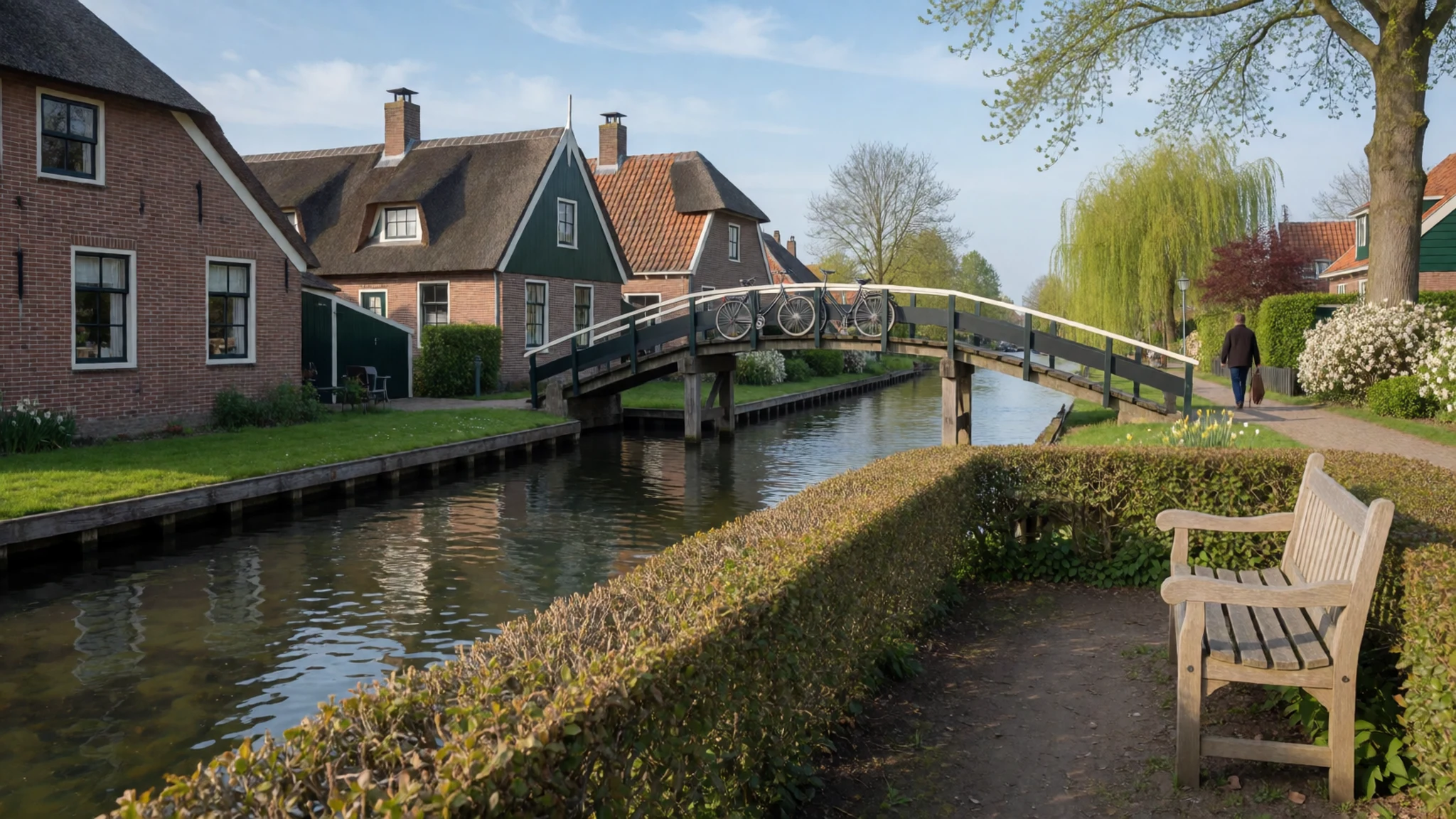
- Bridges and footpaths — Canal banks through the old village
Giethoorn is stitched together by high-arched wooden bridges and by footpaths along the canal banks, where cars do not go. Each bridge frames a short view of thatch and water, and the paths are how to read the village slowly, house by house. The arches rise sharply enough that a boatman ducks, and they are narrow enough that punts take turns.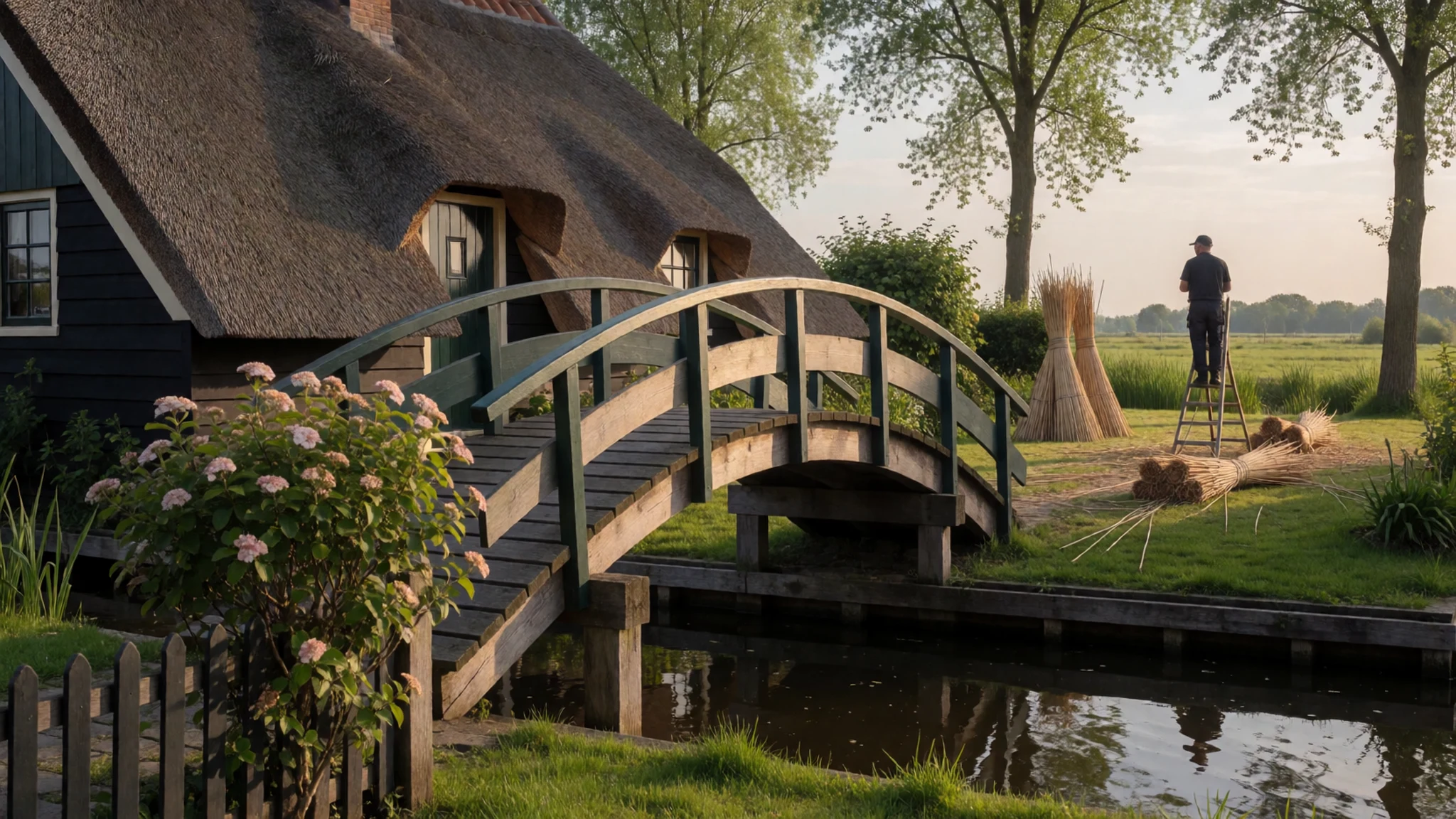
- Thatched farmhouses — Along the old-village canals
Giethoorn's farmhouses carry the deep reed thatch of this wetland belt, the roofs steep so rain runs off, the ridges often finished with irises or a decorative straw peak. Brick sits under that heavy hat, and many plots still run from footpath to a private mooring. These are lived-in houses: gardens are tended, and the thatch is a craft renewed as the reed wears.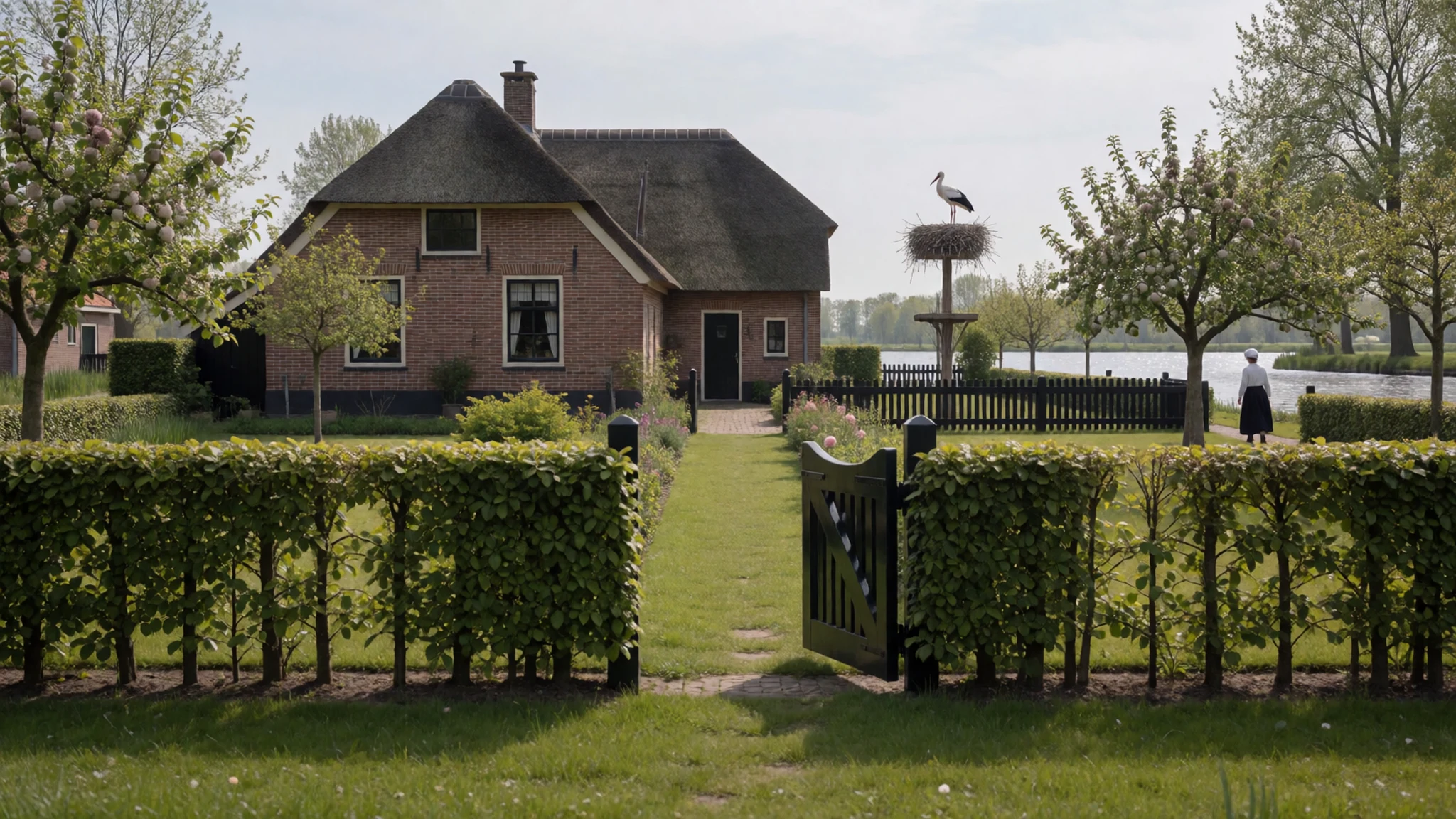
- Museum Giethoorn — Museum Giethoorn, in the village
Museum Giethoorn keeps a traditional farmstead in the village, rooms and outbuildings set out as a wetland household once worked: living quarters, hay and tools, and the round of a peat-and-dairy farm. A stork's nest stands in the museum garden, a familiar sight on poles and roofs in this part of Overijssel. The rooms set Giethoorn's houses back into that working life.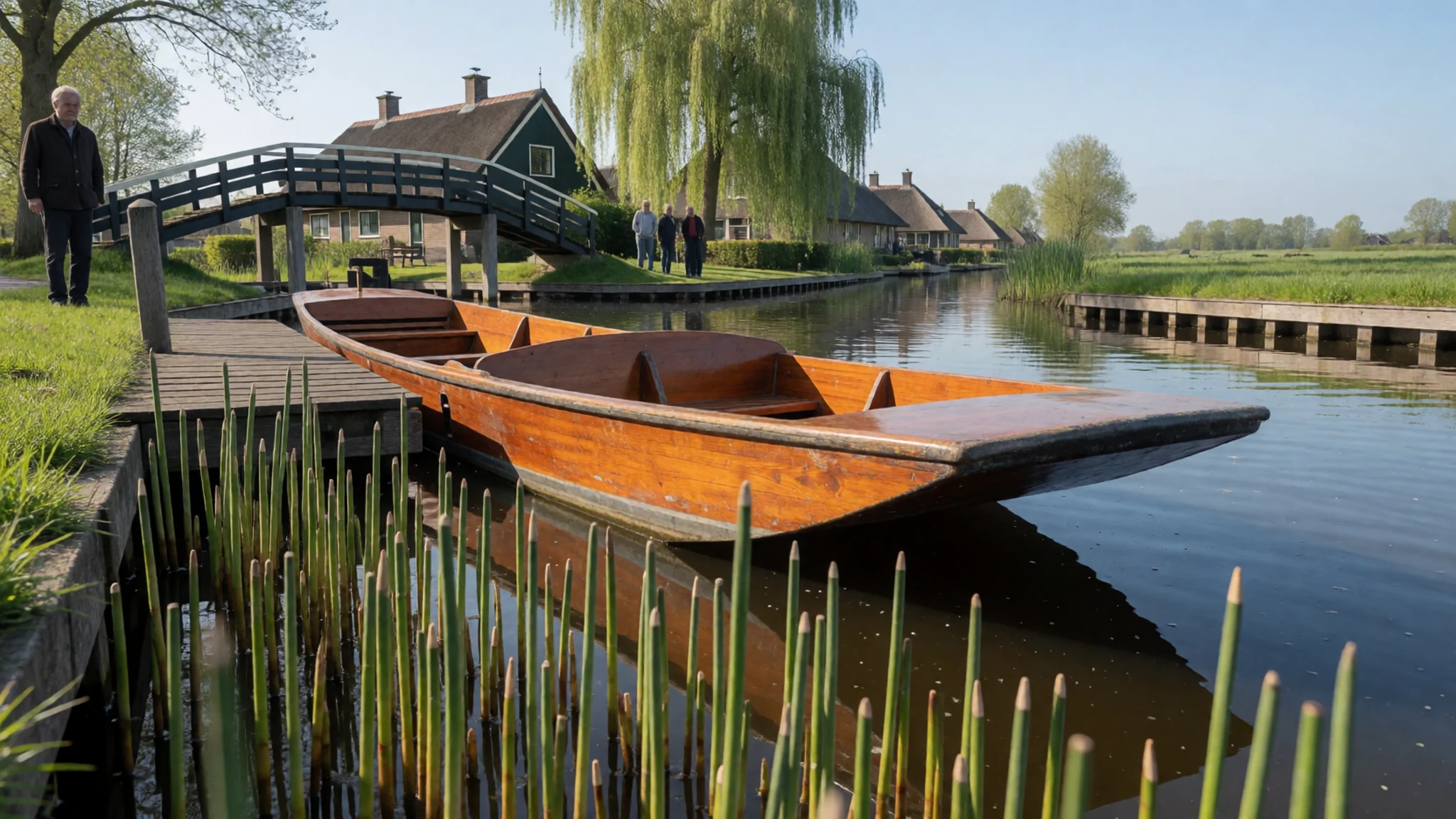
- Punts and whisper-boats — Hire yards on the village canals
The boat is Giethoorn's ordinary vehicle. Traditional punters pole a flat punt through the shallows, and hire yards along the canals rent low electric whisper-boats steered from the stern. From the water the bridges pass overhead and the reed fringe opens beyond the last houses, a view the footpath never quite gives. Peak season packs the yards and the narrow bends; quieter channels lie further into the wetlands.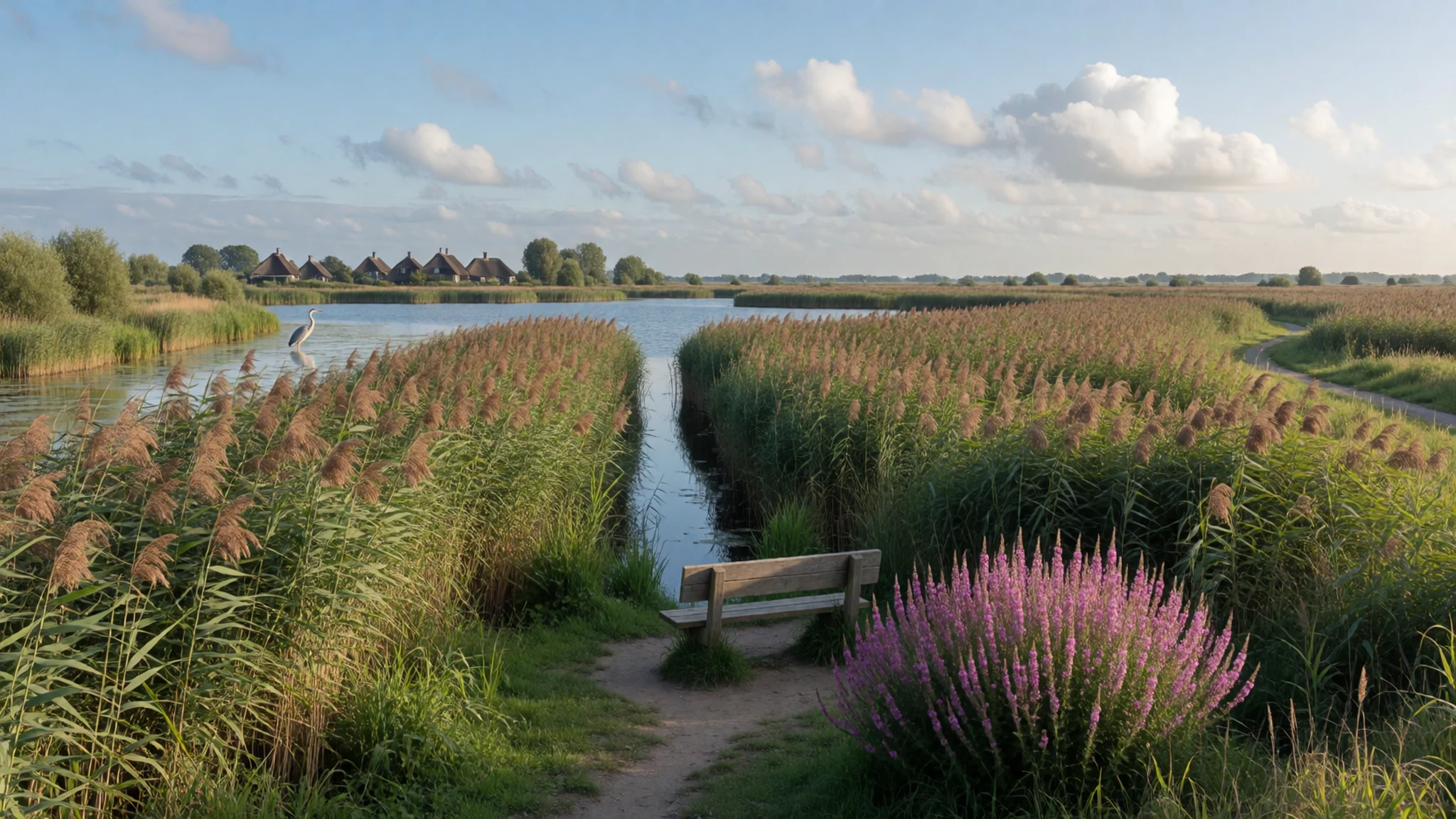
- Weerribben-Wieden — Wetland surrounding the village
Giethoorn opens into Nationaal Park Weerribben-Wieden, the wide peat wetland of Overijssel, where lakes, reed beds and narrow turf channels continue the village ditches at a wilder scale. Reed is still cut here. The horizon stays low: willow, thatch-coloured reed and sky. This is the landscape that explains the village.
Culture
Giethoorn's culture is that of a Dutch water village: a boat at the foot of the garden, a reed roof overhead, and the habit of moving without a car. Residents live in the houses that fill the photographs, so the canals are a street before they are a view. A greeting on the footpath is ordinary, and so is a plain request to step aside. Thatching, punt-poling and reed cutting remain working skills, the means by which roofs, boats and the wetland are kept up. Summer adds family groups in hire boats, a stop for ice cream and souvenir shops in the rural buildings on the public side, while village life continues for the people who stay through winter. The shared pastime is messing about on the water, with engines kept quiet because sound carries over a still canal. On Giethoorn's footpaths, stay on the public side, let bicycles pass, and do not enter private gardens or private moorings for a photograph.
What to wear
Giethoorn never built a ceremonial costume of the kind shown in the old fishing towns further west. What the village wore for work was the practical dress of a wet farm: woollen layers, linen shirts, a cap or a headscarf, and wooden clogs that could stand a muddy yard and a damp landing stage. The textile that still defines the skyline is reed, cut nearby and laid as thatch, rather than a woven festival cloth. Dark, hard-wearing clothes were the point — peat, manure, rain and boat work are hard on anything fine. People in Giethoorn today dress as people do elsewhere in the Netherlands: jumpers, waterproof jackets, jeans or trousers, trainers or ankle boots, with a heavier coat and a scarf from autumn onward. A resident poling a punt may wear waterproof trousers and a soft shoe that will not slip on a wet board. Clogs survive as a rural object and a souvenir more often than as daily footwear, though a gardener may still pull on a pair. A visitor should dress for water, wind and walking. Flat shoes with a grip matter, because the wooden bridges are steep and sometimes slick, and the footpaths can be narrow and damp. A light waterproof and an extra layer cover the changeable Dutch weather; in summer a hat and sun cream matter on the open water. Modest everyday clothes are enough, and a bag that leaves the hands free helps on the bridges.
What to eat
- Pannenkoek — Pancake houses along the village canals
The Dutch pancake is Giethoorn's everyday visitor meal: a broad pancake, eaten with syrup or apple for a sweet plate, or with cheese, bacon or mushroom for a savoury one. Pancake houses line the public canals and expect boats as well as walkers.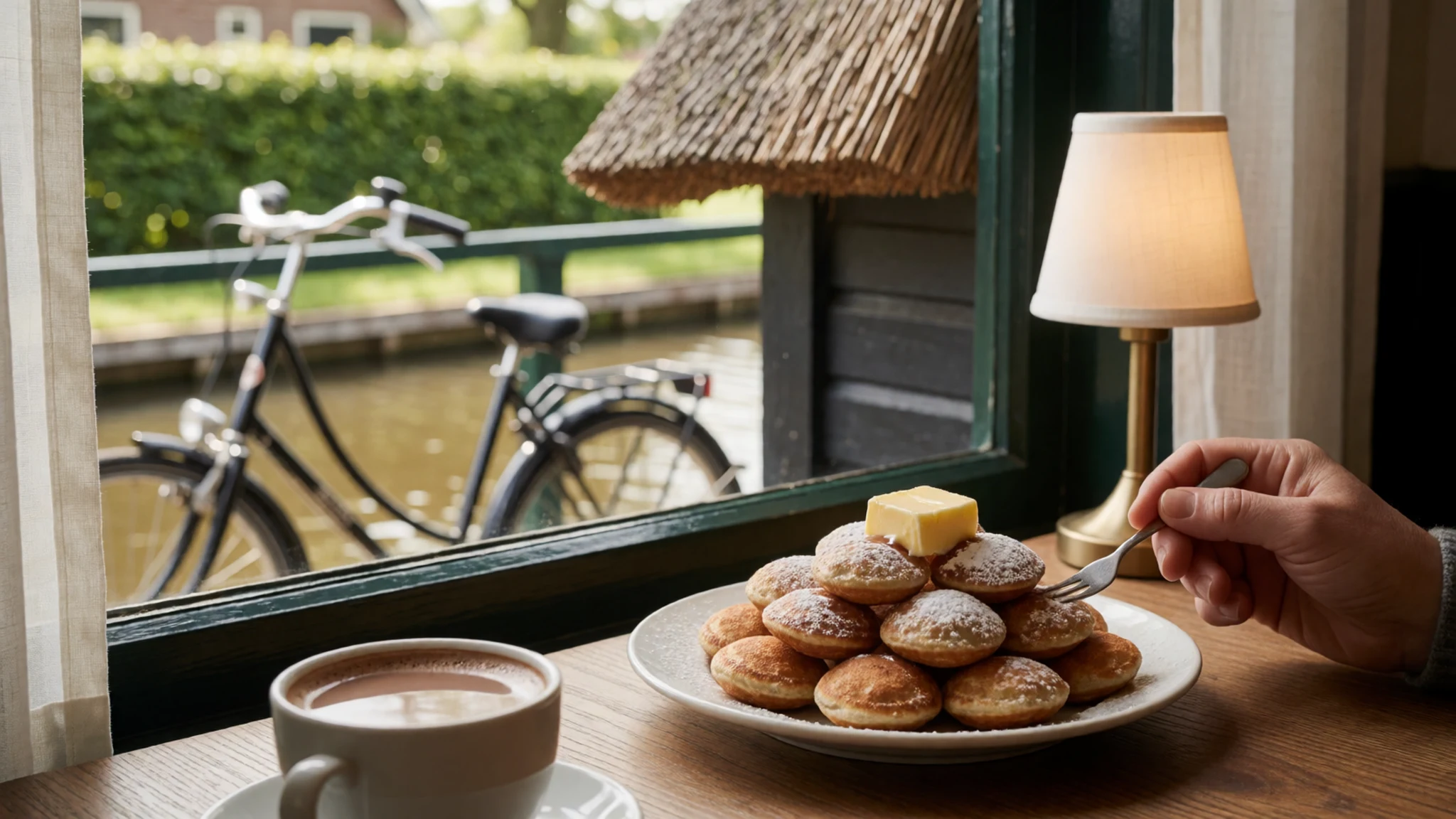
- Gerookte paling — Village cafés and smoked-fish counters
Smoked eel is the old fish of Giethoorn's peat waters, rich and soft, usually served with bread or rye toast and a pickle. The wetlands around Giethoorn fed local tables with eel, perch and pike, and smoked eel is the form still found in village cafés.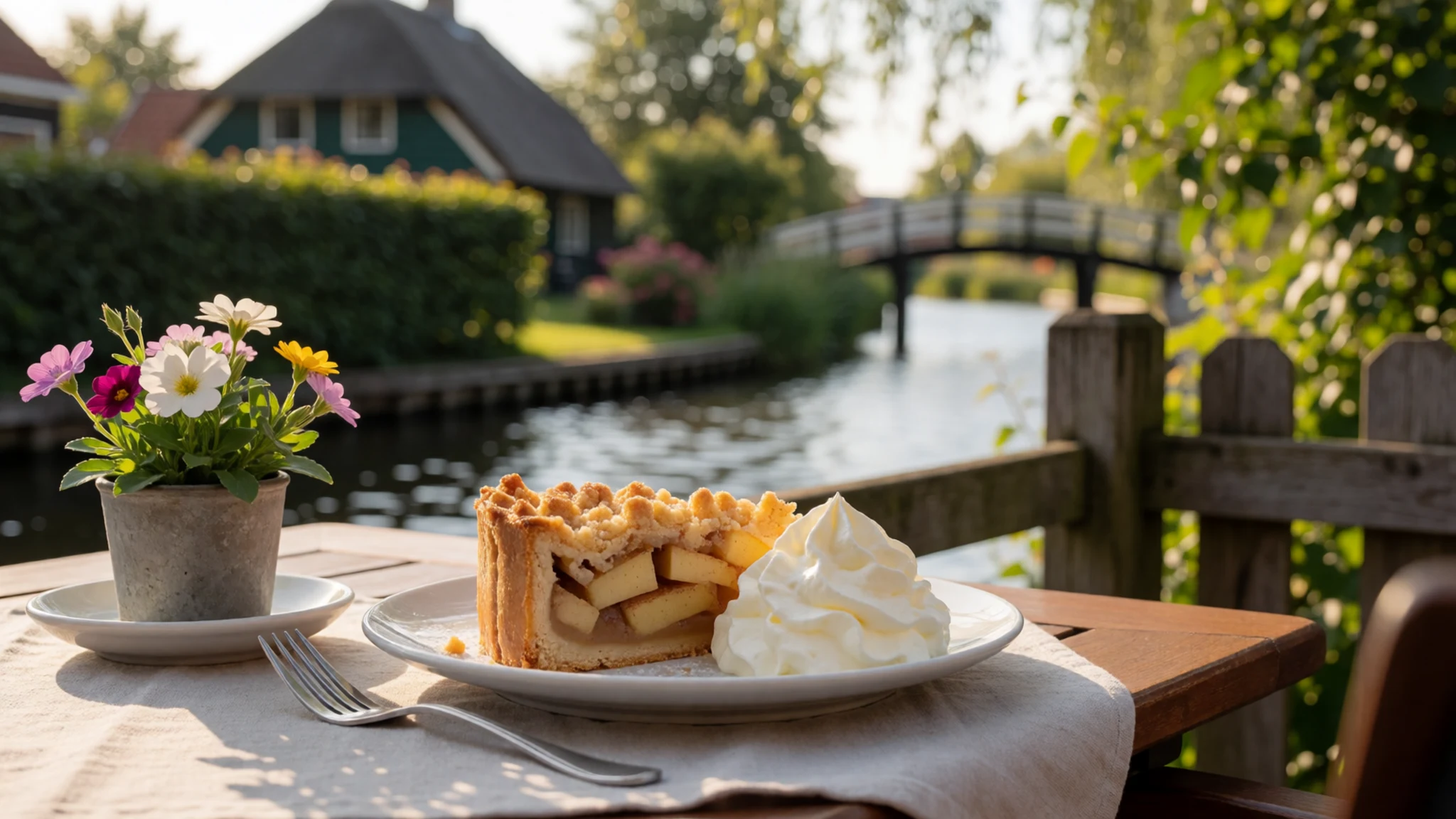
- Erwtensoep — Cafés along the village paths in cold weather
Erwtensoep, the thick Dutch pea soup, belongs to Giethoorn's cold months, when the canals are grey and a boat ride wants something that stays warm. It is made with split peas, winter vegetables and smoked sausage, and it is eaten with bread and sometimes rye. - Bitterballen — Waterside terraces on the public canal
Bitterballen are the café snack of the Netherlands, and Giethoorn's waterside terraces serve them between boat trips: small, crisp, deep-fried balls of beef ragout, eaten hot with mustard. They come as a small dish with a drink, and they suit a damp stop better than a long sitting. - Appeltaart — Tea rooms and pancake houses along the canals
Dutch apple cake in Giethoorn is a deep, spiced apple tart under a crumb or pastry lid, served with a tall spill of whipped cream. It is the usual companion to coffee after a walk on the footpaths or a cold turn in an open punt.
Plan it
Best time. Giethoorn rewards a visit in April and May, when days are mild and the water is less crowded, and again in September and October, for clear walking weather before the dark afternoons. July and August bring school holidays, warm days and busy canals. Winter is quiet, cold and often wet.
How long. 1–2
Getting there. Most visitors reach Giethoorn through Amsterdam Schiphol and a train towards Steenwijk. A bus runs from Steenwijk to Giethoorn. Inside the old village the last leg is on foot, by bicycle or by boat, and cars are left at the edge.
Budget. mid
Tips
- In summer, set out early; hired boats fill the narrow canals from mid-morning.
- Be ready to wait for a whisper-boat on sunny holidays, or walk the footpaths instead.
- Wear shoes fit for steep, sometimes slick wooden bridges.
- Cards are widely accepted; bring a little cash for small stalls.
- Check the museum's own site for opening days before you count on going inside.
Etiquette
- Stay out of private gardens and off private moorings.
- Do not block a narrow bridge; boats and walkers both need to pass.
- Keep voices low on the water, where sound carries.
Nearby
Sources
- Wikidata (CC0)
- Wikipedia (CC BY-SA 4.0)
- Wikivoyage (CC BY-SA 4.0)
Wildlife
- White stork (animal)
Picture a large white bird with black wing edges and stilt-like red legs and a sharp red beak: that is the white stork. In Giethoorn, you can find a nest in the museum garden, and it pays to scan the poles and roofs nearby, since storks are often seen there across Overijssel. They journey a long way to Africa for the winter, so each sighting at home feels like a small welcome.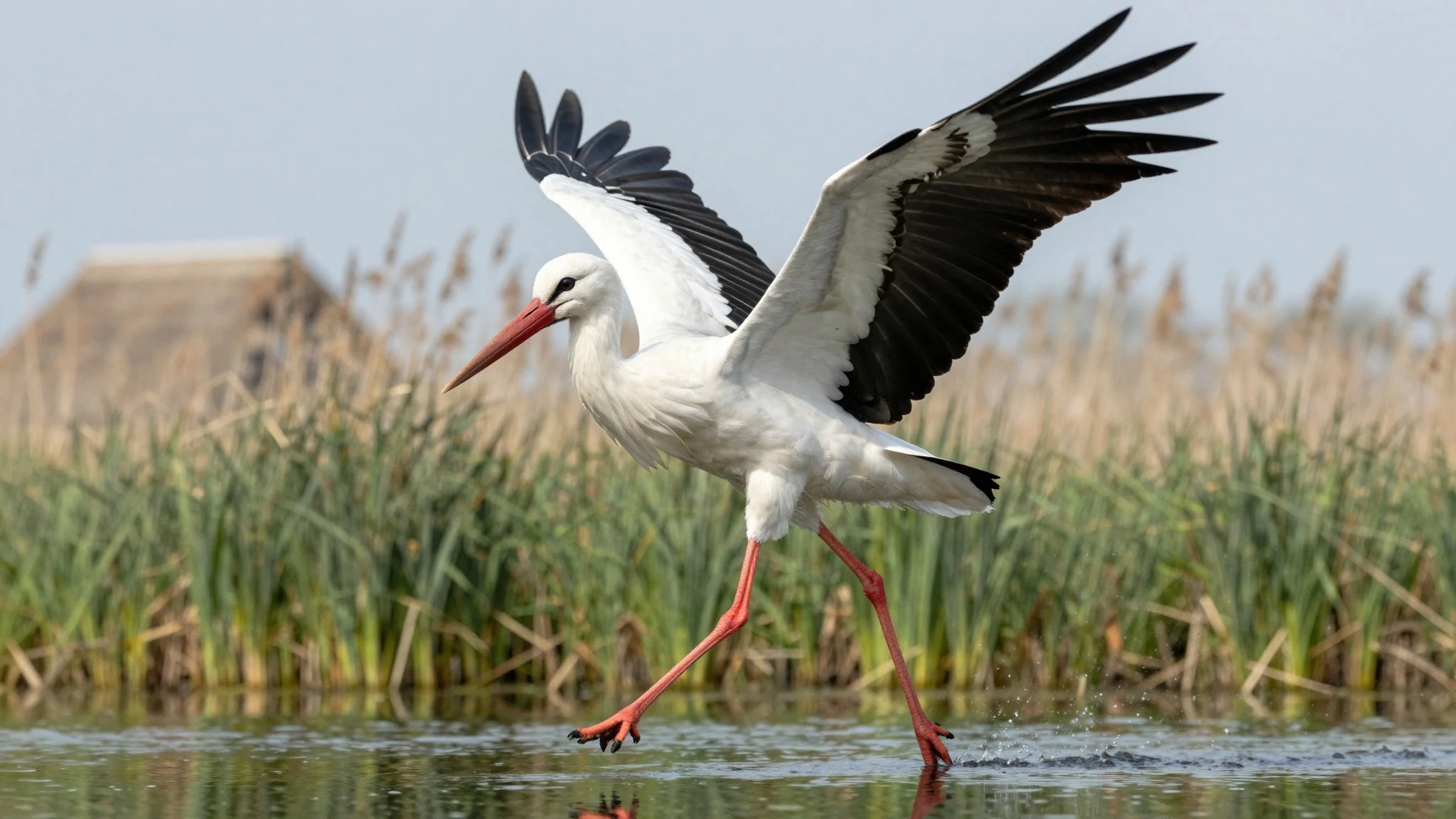
- White stork (bird)
Picture a large white bird with black wing edges and stilt-like red legs and a sharp red beak: that is the white stork. In Giethoorn, you can find a nest in the museum garden, and it pays to scan the poles and roofs nearby, since storks are often seen there across Overijssel. They journey a long way to Africa for the winter, so each sighting at home feels like a small welcome.