Hoge Veluwe National Park
Hoge Veluwe National Park, Netherlands
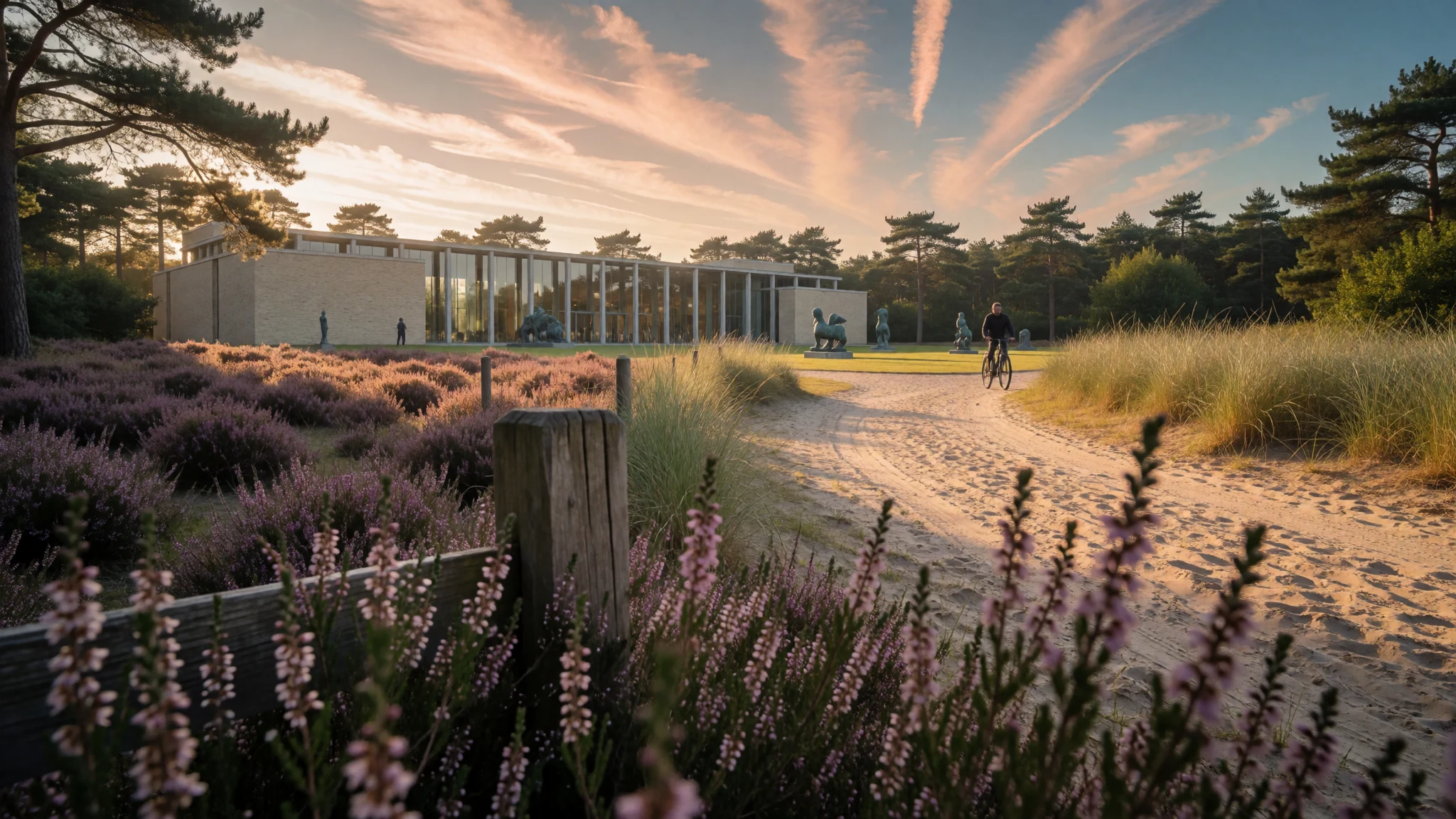
Hoge Veluwe National Park puts heath, drifting sand, woodland and a Van Gogh-rich art museum into one easy day out in the Dutch countryside.
The place
Hoge Veluwe National Park sits in the province of Gelderland, a short journey from Arnhem, Apeldoorn, Ede and Wageningen. Its name means the High Veluwe, and it is one piece of the wider Veluwe, a ridge of sandy ground pushed up by ice. Three kinds of country alternate inside the park: purple-brown heath, patches of bare drifting sand, and woods of pine and broadleaf trees. Geologists tie much of the shape of the land to the last ice age, while the pattern of heath and dune may partly reflect how people used the surrounding land over the centuries. A non-profit foundation runs the park, and it is the only part of the Veluwe that needs a ticket at the gate, so a visit begins at a barrier and a booth rather than at a trailhead. Once inside, the feeling is of space: long straight tracks, big skies, and routes fanning out from a few focal points, namely the museum, the visitors' centre and the hunting lodge. Marked walking routes start from about 3.5 km, each tuned to something specific such as wildlife, views or migrating toads. Honest warning: the park gets busy on summer weekends and school holidays when the weather is good, and quieter mornings or weekdays feel very different. Eating options are limited, and wild boar live here and deserve distance.
Its story
Hoge Veluwe National Park began as a private project of a married couple: Anton Kröller, a businessman, and Helene Kröller-Müller, a serious collector of art. From 1909 they assembled the estate, and over the next years it was shaped to their taste. Animals were brought in, fences went up, and the architect Hendrik Petrus Berlage was asked to design a hunting lodge named after Saint Hubertus, the patron saint of hunters. That phase of construction ran until about 1923. Helene had a larger ambition than sport, though. She wanted her paintings and sculpture shown in a museum set among the heath and woods, and building work started. Then money ran short. Economic conditions turned against the family, the museum stopped half-built, and holding on to the whole estate became impossible. The way out came in 1935. Her collection was given to the Dutch state, which took on finishing the museum that carries her name, while the land passed to a foundation supported by a state loan. That arrangement turned the estate into a national park in the same year. It is still privately owned, and it charges at the gate, which sets it apart from most Dutch parks. Behind the human story sits an older one. Glaciers shoved river sands aside roughly 150,000 years ago and raised the hills, and the bare dunes and heath may owe as much to centuries of human use as to nature.
What to see
- Kröller-Müller Museum — Central park, near the visitors' centre
The museum Helene Kröller-Müller's collection grew into stands in the middle of the park. It holds a substantial group of Van Gogh paintings, with works by Picasso, Seurat and Mondrian alongside. Plan on at least half a day, and note that museum entry is separate from the park gate.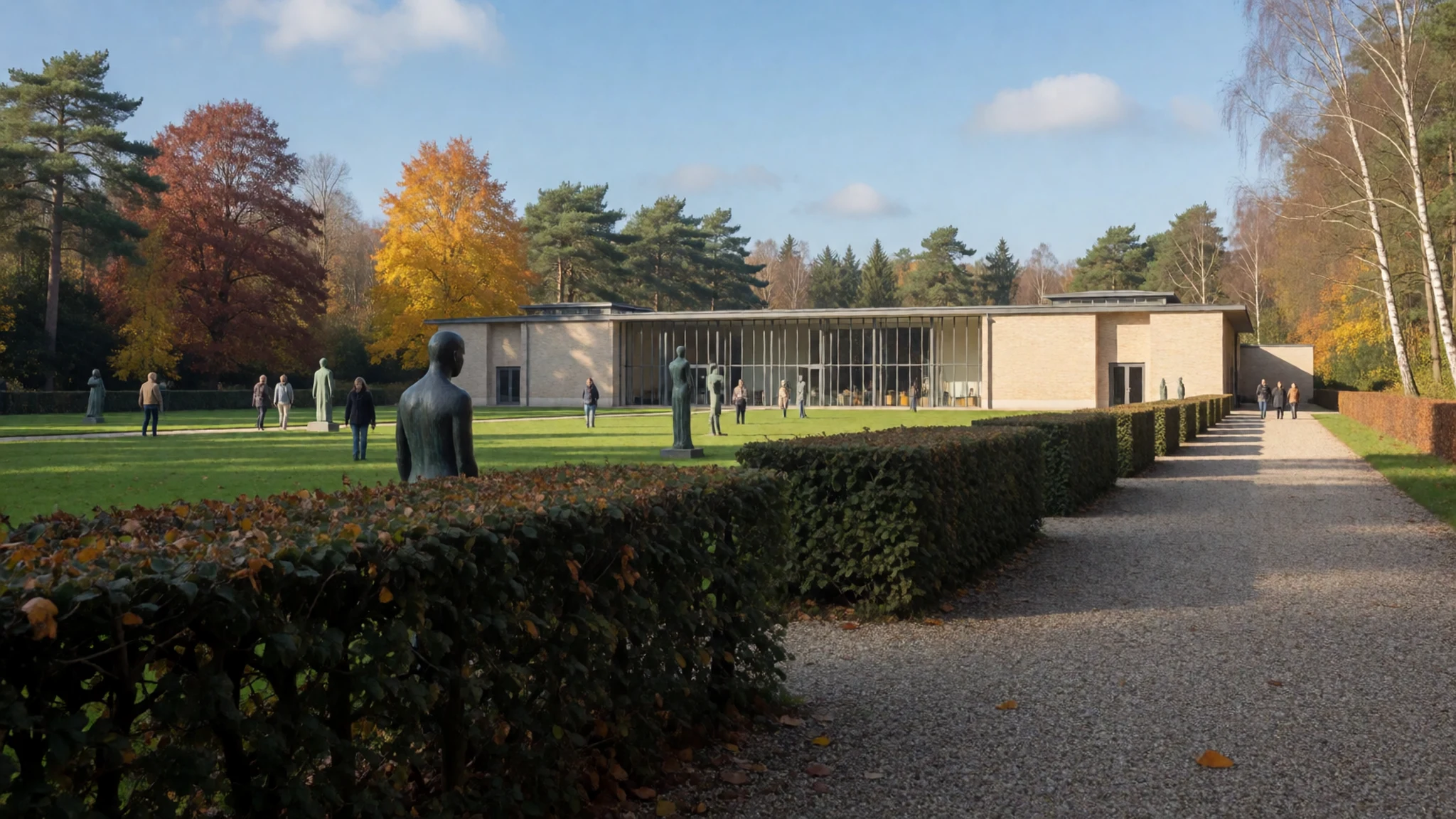
- St. Hubertus Hunting Lodge — Northern part of the park
Designed by Hendrik Petrus Berlage and finished in the 1910s for the Kröllers, the lodge was where they received guests. Its long brick form and tower rise from the northern part of the park, and it is best seen from outside, with a wander round the grounds.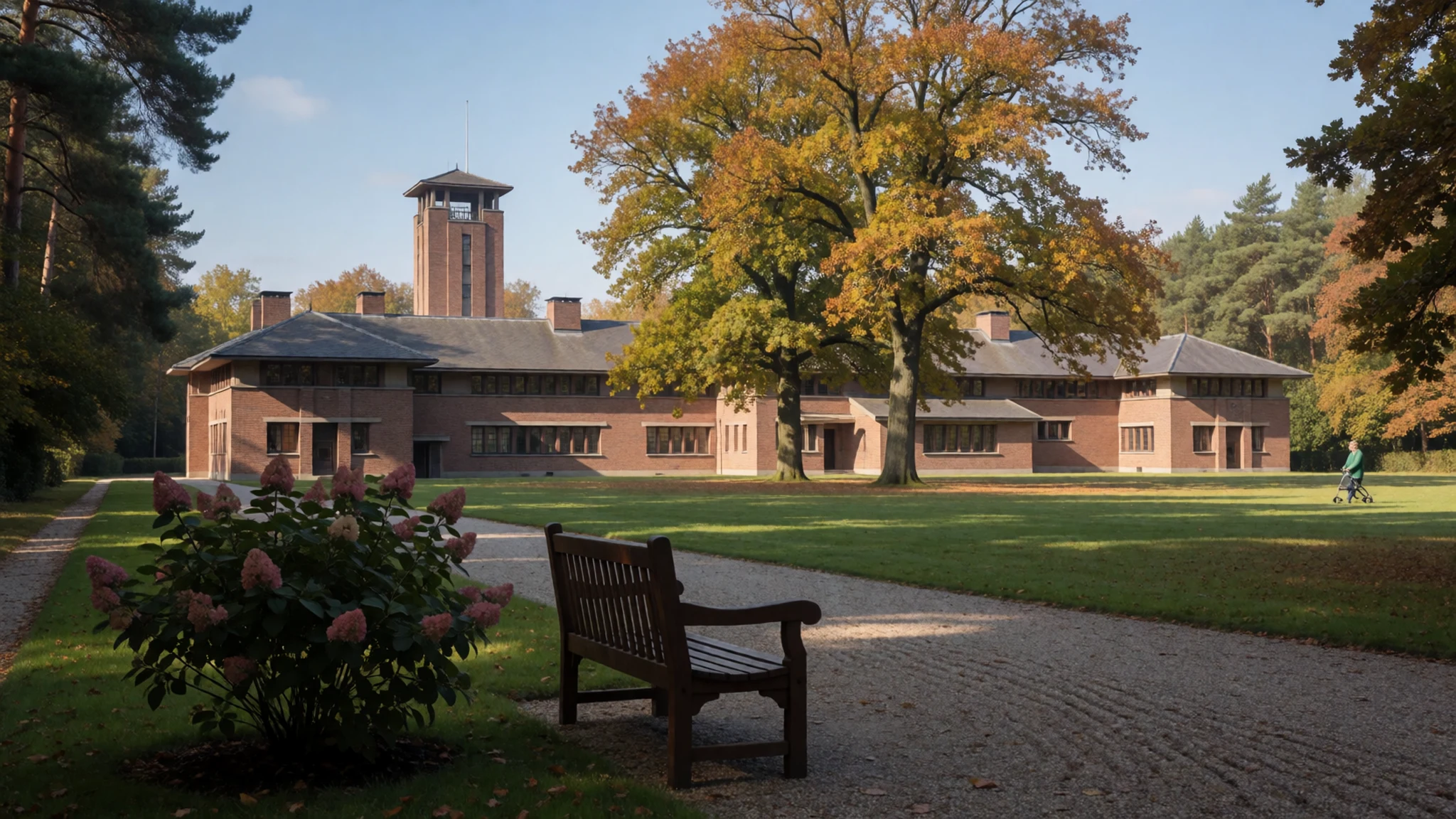
- Museonder — Visitors' centre, central park
This underground museum near the visitors' centre explains what lies below the heath: tangled tree roots, flowing groundwater and traces of animals that no longer live here. It suits wet weather and families, and entry is covered by the park ticket.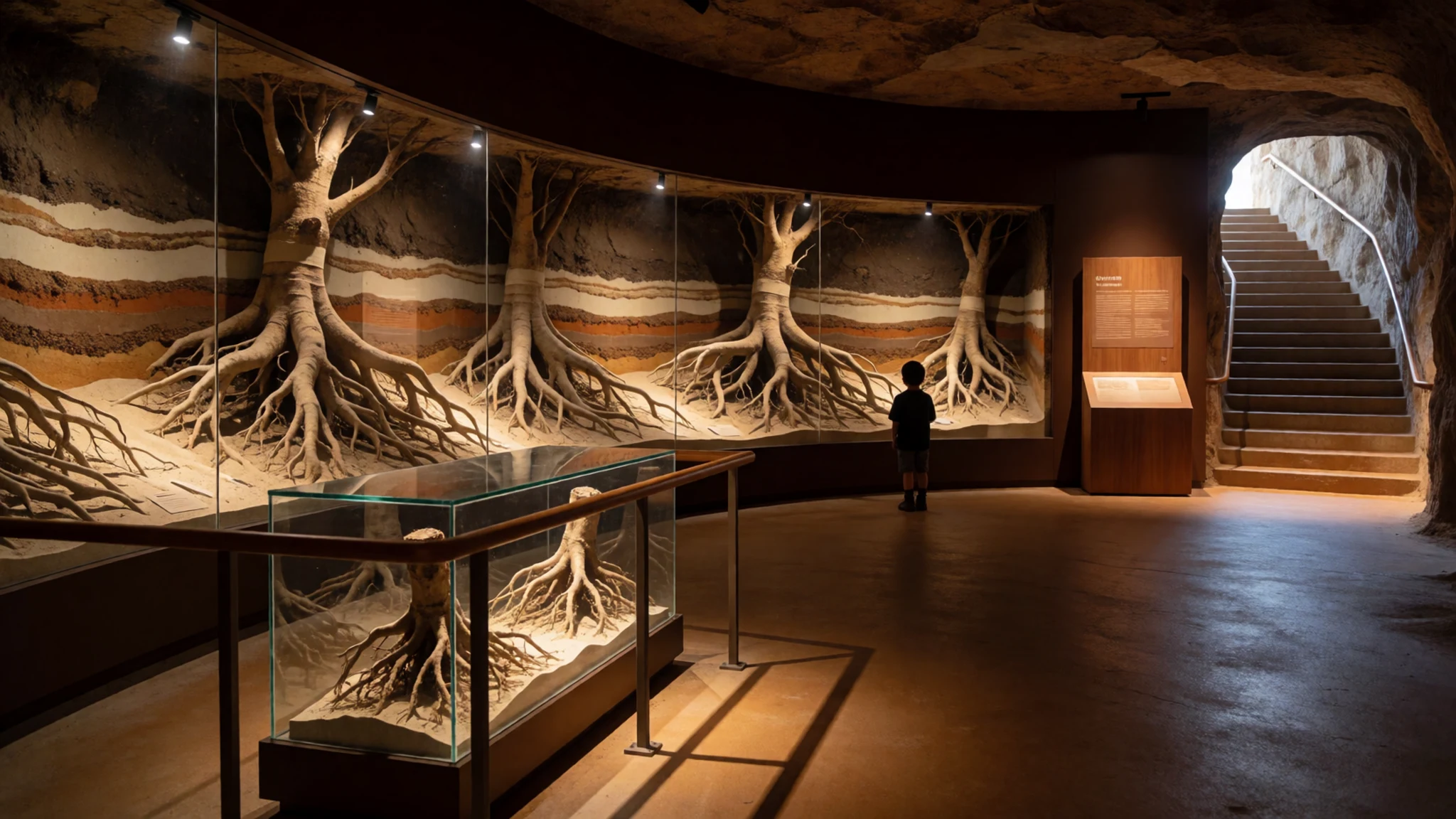
- The open sand and heath — Throughout the park
The drifting sand and heather are the reason for coming. Marked routes of different lengths lead through open ground and woodland, and some are planned for spotting deer and other game or for wide views. Early or late light is best, and the quietest stretches are away from the main hubs.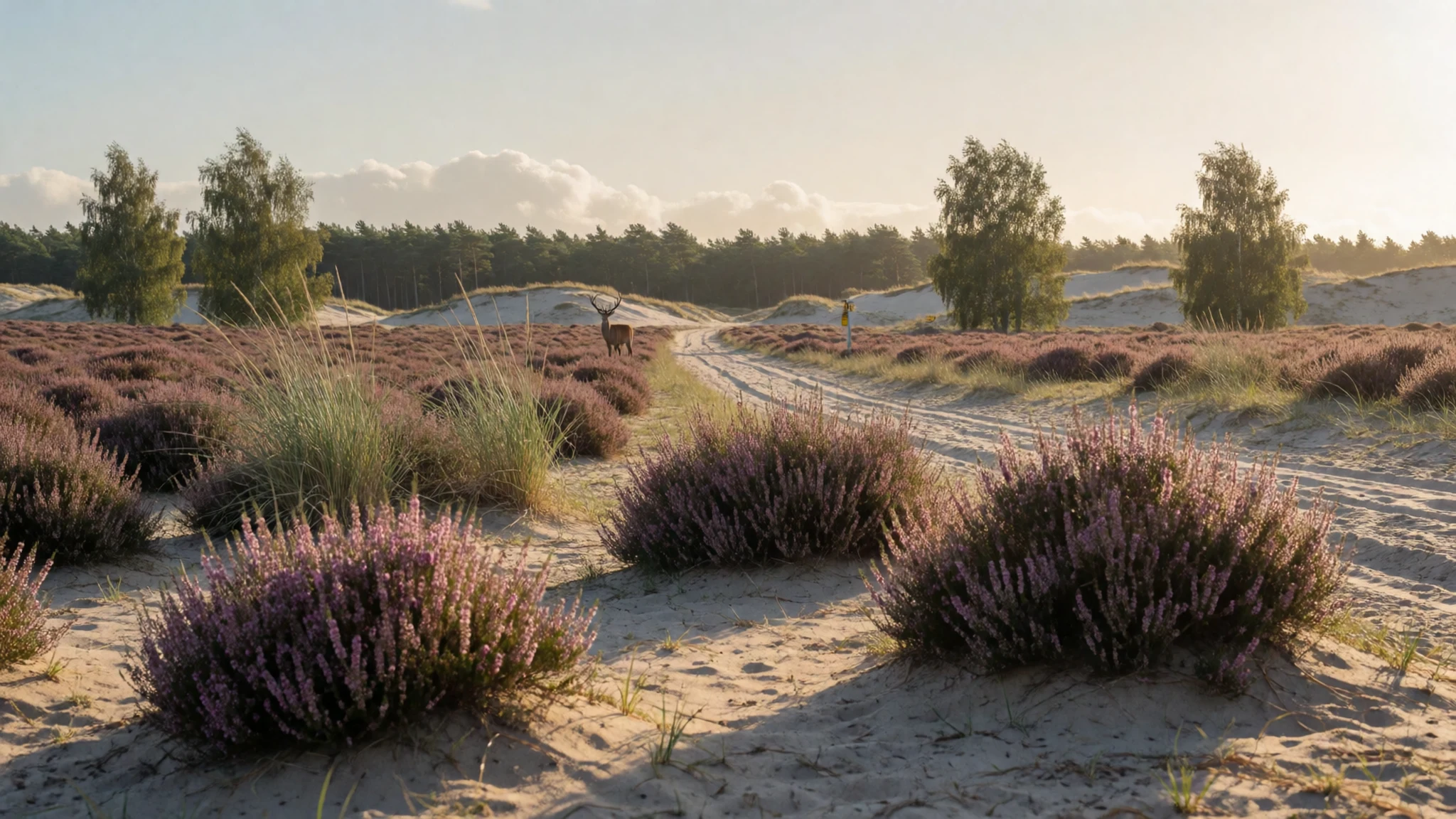
- Christiaan de Wet Monument — Open sand area
A sculpture by Mendes da Costa honouring Christiaan de Wet stands out in the sand, a reminder that this was once a private estate with its own monuments. It makes an odd but memorable stop on a ride or walk across the open ground.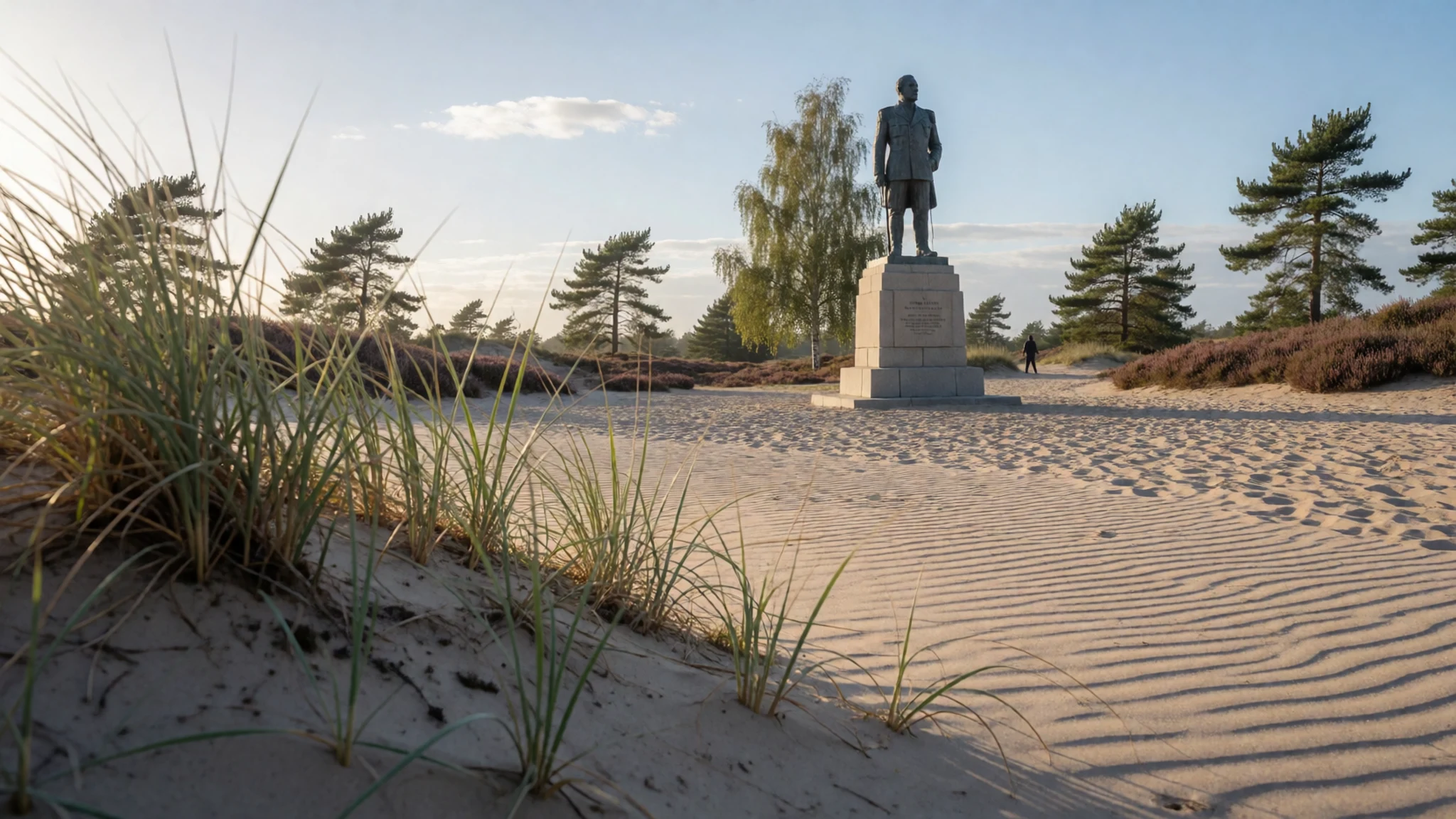
Culture
Hoge Veluwe National Park shows plainly how Dutch habits around nature, art and shared paths fit together. The park exists because of private patronage: a couple who collected art and bought land, and later a foundation that keeps the gates open to the public and covers costs through tickets. That mix of culture and countryside is the point of the day, with a museum of modern art sitting inside heathland. Many locals treat a visit as a weekend habit, walking or cycling in all but the worst weather, and bringing a picnic is perfectly normal. Outdoor life here is practical rather than showy, and people expect paths to be shared calmly, with cyclists keeping to the tracks and passing walkers politely. The hunting-estate roots remain visible in the lodge and in the managed wildlife, and the sandy areas and heath are deliberately kept open through careful management. Mealtimes follow a daytime rhythm, with lunch as the main stop and the park's eateries closing in the late afternoon, so evening meals are taken in nearby villages. Quiet matters in the woods and at wildlife viewing spots, where voices carry. Keep to the marked tracks, give wild boar, especially any with piglets, a wide berth, and carry your litter out with you.
What to wear
Hoge Veluwe National Park lies in a country with many regional costumes, known as klederdracht, made from wool, cotton and linen, with lace or starched caps for women and wooden clogs (klompen) on the feet. Each area had its own details, but these outfits are now seen mainly at festivals, folk events and in museums rather than in daily life. What people actually wear in the park is practical: jeans or cycling trousers, waterproof jackets, fleeces and trainers or walking shoes, usually in muted colours that suit the weather. Dutch visitors dress for wind and sudden showers, not for show. A visitor should do the same. Bring layers, because the open heath is exposed and a bright morning can turn cool and damp quickly, and pack a light rain shell even in summer. Shoes with a grip and some ankle support help on loose sand, and long trousers are sensible among tall heather and grass. A sun hat and sunglasses matter on the open ground in warm months, while gloves and a warm hat earn their place in winter. The museum has no special dress code, so ordinary outdoor clothes are fine, though a dry layer to change into is welcome after a wet walk. There are no modesty rules to worry about here.
What to eat
- Pannenkoeken — Self-service lunch restaurants in the park and pancake houses in Otterlo and Hoenderloo
Dutch pancakes are larger and thinner than the American kind, served savoury with bacon or cheese or sweet with syrup. They are a popular lunch with families, and the park's self-service restaurant lists pancakes among its hot dishes.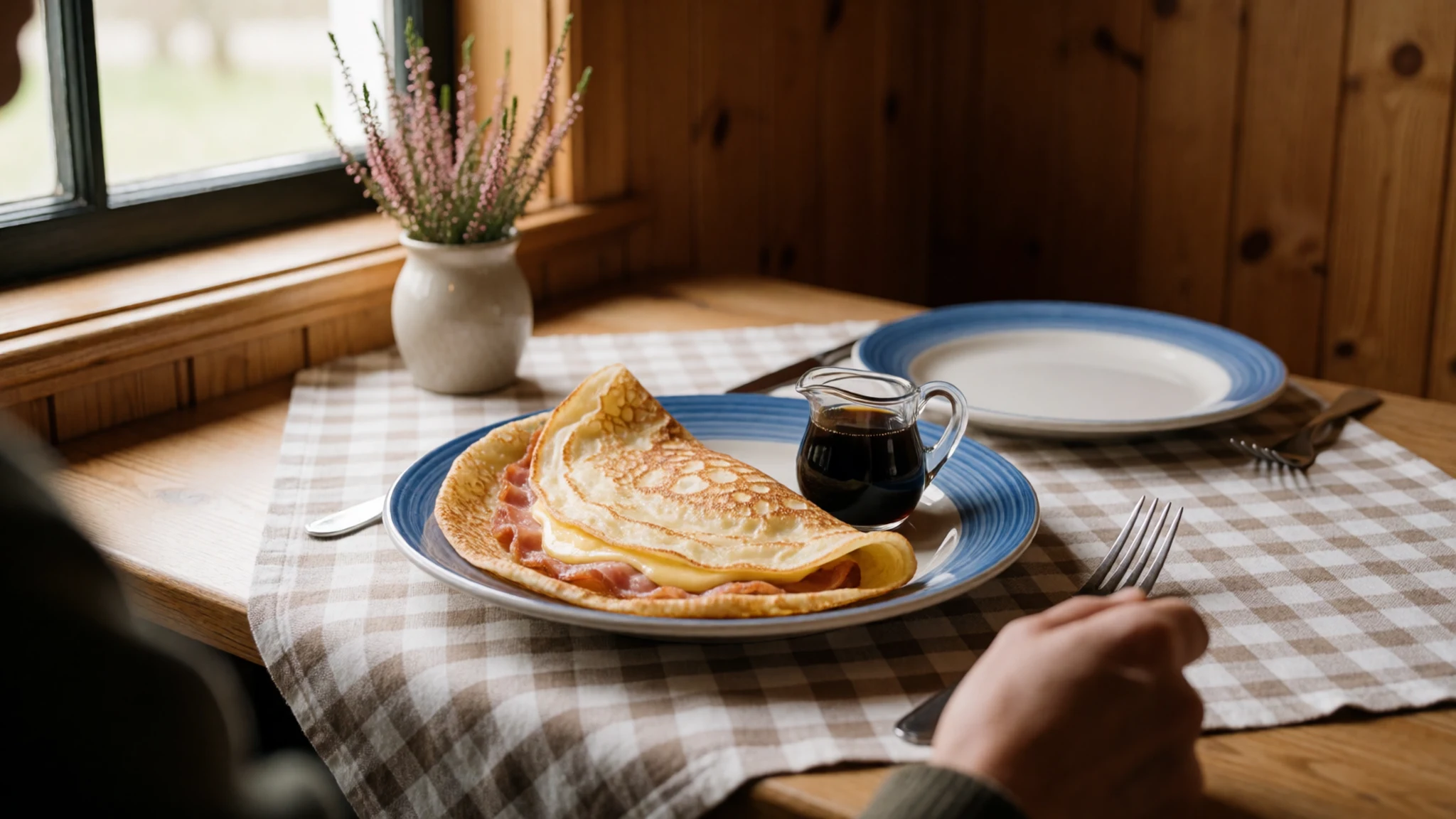
- Erwtensoep — Village cafés and eateries around the park in the cooler months
A thick split-pea soup with pieces of sausage and smoked pork, eaten with rye bread. It is a cold-weather staple and fits a walk across open heath in autumn or winter.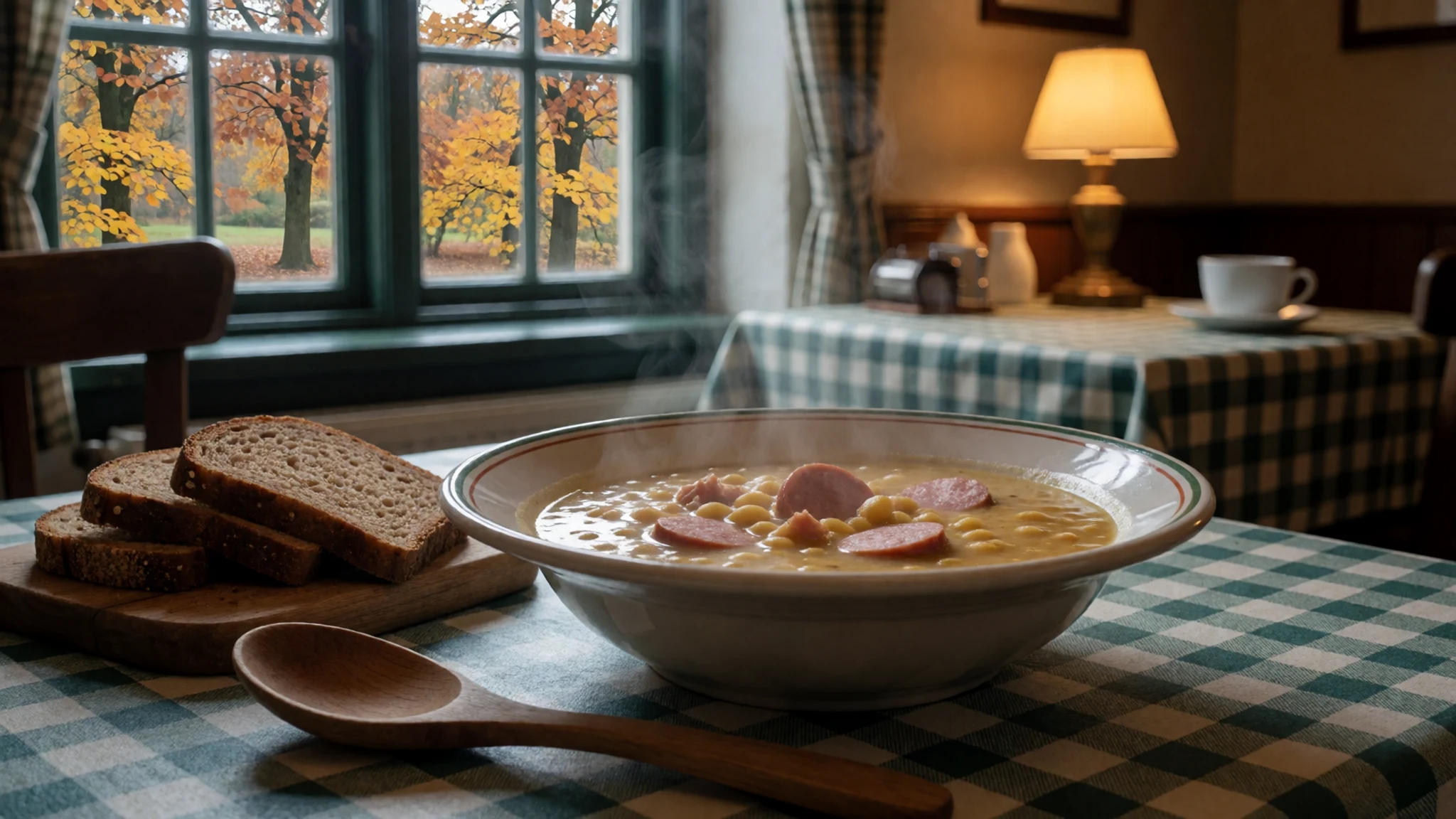
- Stamppot — Traditional Dutch restaurants in nearby villages and in Arnhem
Mashed potato mixed with kale, endive or carrot, served with a smoked sausage and gravy. It is plain, filling home cooking and a sensible choice after a long day on foot. - Broodje kroket — Snack counters and cafés in Otterlo, Hoenderloo and Ede
A crisp, breadcrumbed roll of meat ragout, served in a soft bun with mustard. It is a quick, cheap snack that suits a picnic stop or a short break between routes. - Appelgebak — Park cafés, village bakeries and tea rooms
Dutch apple pie is deep, with a crumbly crust and a spiced apple filling, usually served with a spoonful of whipped cream. It goes well with a coffee at the end of a museum visit.
Plan it
Best time. May and June for fresh green woods and long light, and August to September when the heather colours the heath. Weekends and school holidays in fine weather are the busiest, while winter is quiet but cold, wet and short on daylight.
How long. 1–2
Getting there. Fly to Amsterdam Schiphol and continue by train to Ede-Wageningen station. From there bus line 108 runs to the Hoenderloo Centrum stop, and an hourly bus continues to the Otterlo entrance. By car, the three entrances are at Schaarsbergen (from Arnhem), Otterlo or Hoenderloo, and Delen.
Budget. mid
Tips
- Check the official website, hogeveluwe.nl, for current tickets, opening times and any booking rules before you go.
- Arrive early on summer weekends and school holidays, when the park gets crowded in good weather.
- Eat lunch in the park, because its eateries close in the late afternoon and dinner has to be found in nearby villages.
- Book guided walks or GPS routes well ahead through the park's reservation email, as slots fill.
- Camping inside the park cannot be reserved or enquired about in advance, and it can be full on busy weekends such as Easter or Pentecost.
Etiquette
- Stay on marked tracks and share them politely with cyclists and walkers.
- Do not approach wild boar, which can be aggressive when they have piglets.
- Take litter with you and keep voices low near wildlife.
Nearby
Sources
- Wikidata Q1623374 (CC0)
- Wikipedia: De Hoge Veluwe National Park (rev 1362720139) (CC BY-SA 4.0)
- Wikivoyage: Hoge Veluwe National Park (rev 5404134) (CC BY-SA 4.0)
- Photo: de Hoge Veluwe landscape, Deb Collins (CC BY 2.5)
- Photo: Sand Area Hoge Veluwe, Stefan Kruithof (Public domain)
- Photo: Jachthuis Sint-Hubertus, User:China_Crisis (CC BY-SA 2.5)
- Photo: Christiaan de Wet Monument, Purple Duke (CC BY-SA 4.0)
- Photo: Hoge Veluwe fox, Stefan Kruithof (Public domain)
- Photo: 2014 31 januari 020 Landschapsfoto, Kumpusch (CC BY-SA 3.0 nl)
- Photo: 5 minutes sunshine at 7 November 2014, Henk Monster (CC BY 3.0)
- Photo: 6731 Otterlo, Netherlands, qwesy qwesy (CC BY 3.0)


Wildlife
- Wild boar (animal)
Imagine a pig that lives completely wild: that is the wild boar, one of the most widely spread mammals on Earth, at home in many kinds of landscape. Boar share Hoge Veluwe National Park with its human visitors, and they deserve plenty of space. Keep a good distance, treat them as the wild creatures they are, and enjoy knowing they are somewhere nearby rather than trying to get close.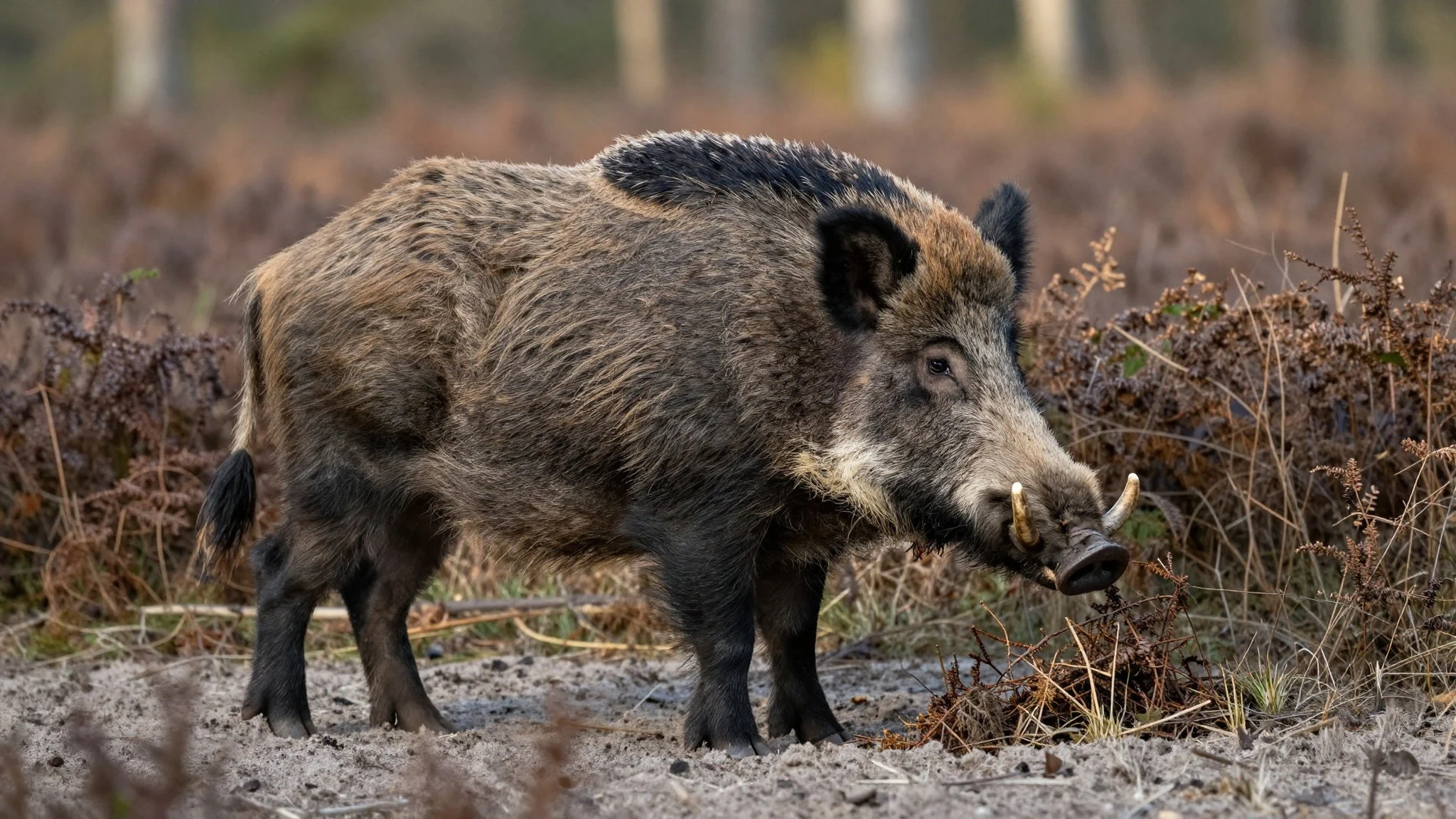
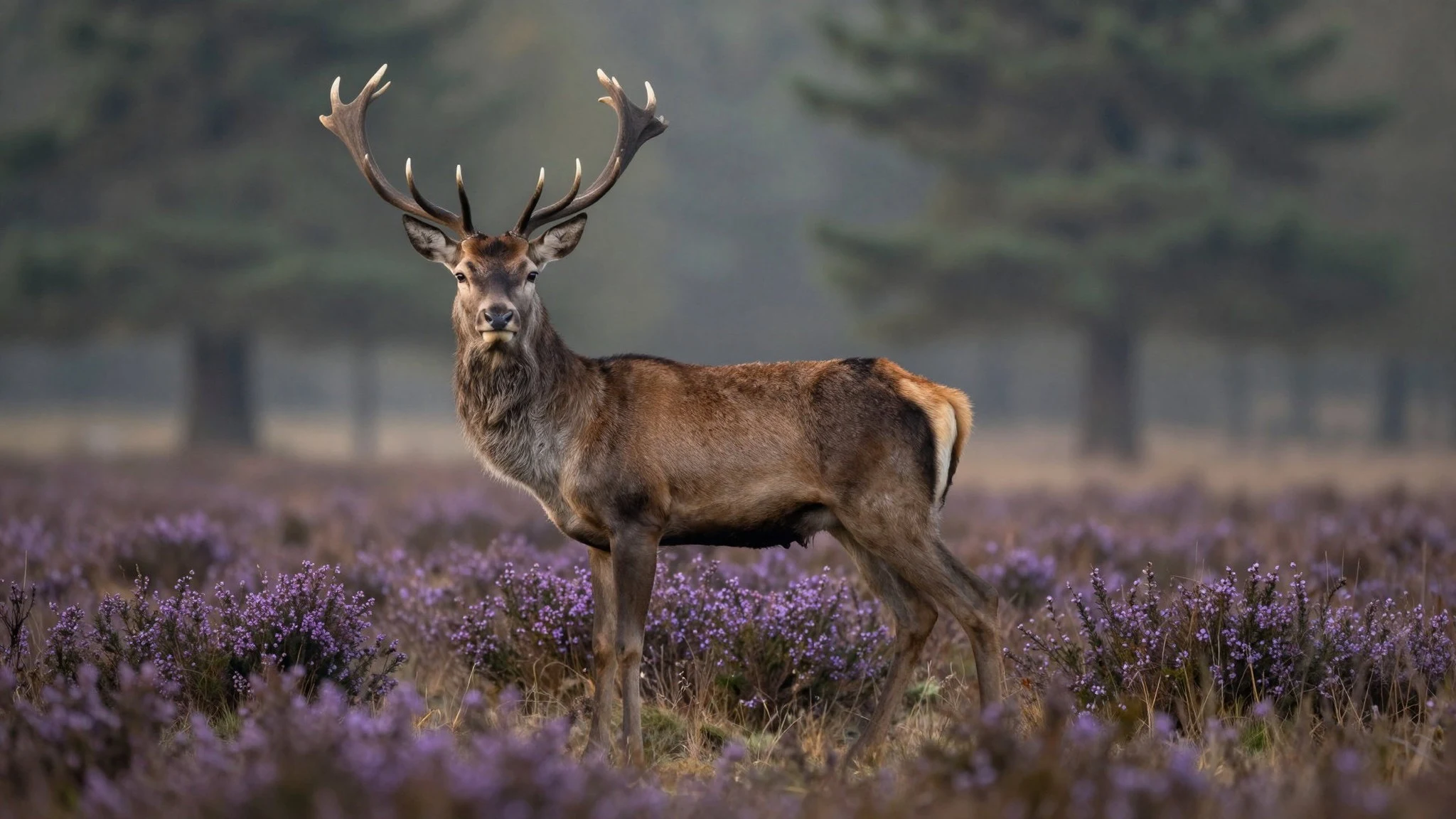
- Deer (animal)
The red deer is one of the biggest kinds of deer: the male is called a stag, the female a hind, and together they make a picture to remember. In Hoge Veluwe National Park, look for them along the waymarked trails that cross open ground and woodland. Some of these trails are planned with deer-spotting in mind, so choose one of those and let the wide landscape do the rest.