Maastricht
Maastricht, Netherlands
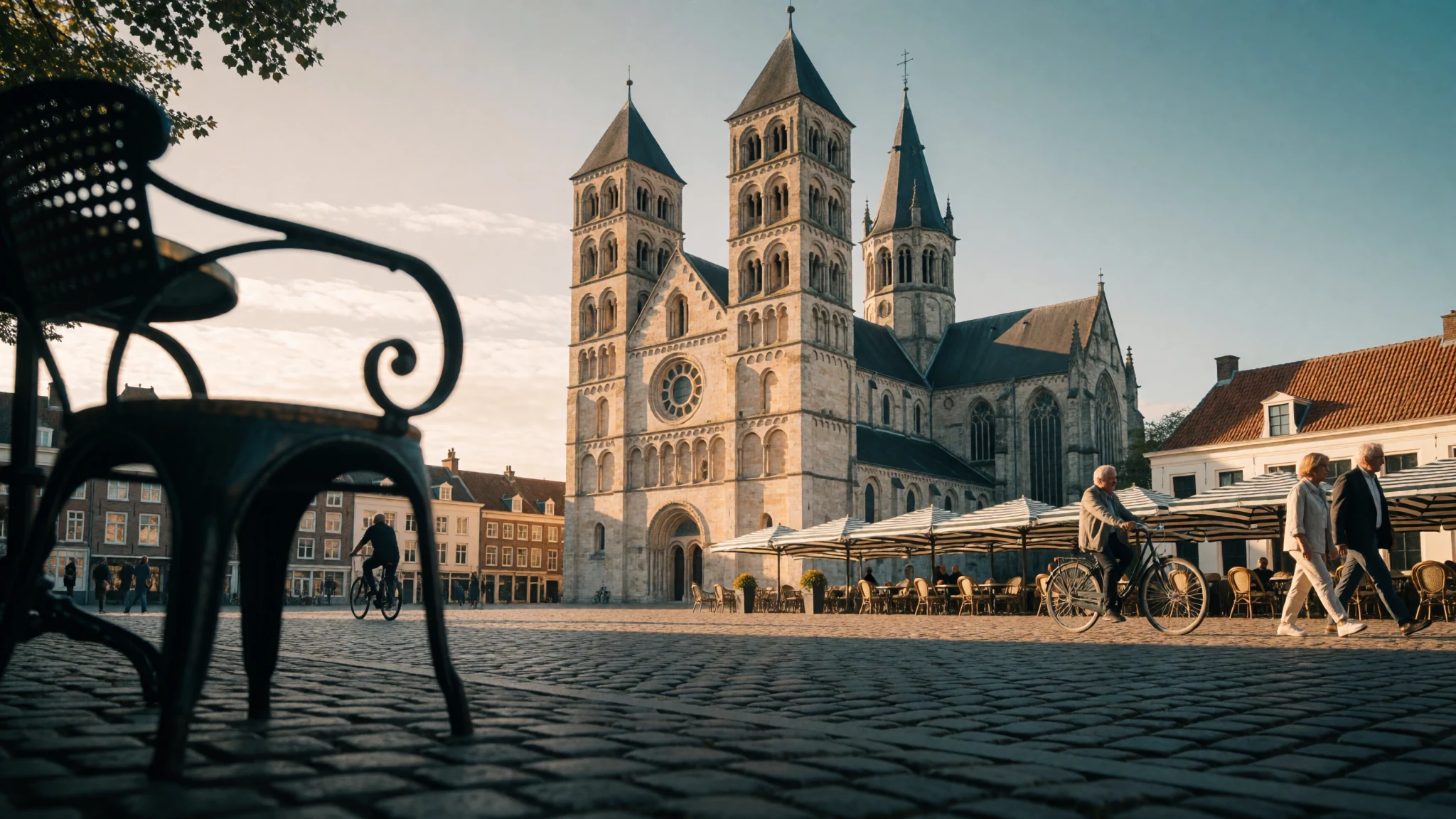
Maastricht is a car-free riverside city of Romanesque churches, café squares and long lunches, with Belgium and Germany just down the road.
The place
Maastricht sits in the far south-east of the Netherlands, in the province of Limburg, so close to Belgium that the border shapes ordinary life. The Meuse (Maas in Dutch) runs through the middle, and the small river Jeker joins it here, so the city spreads over both banks and is stitched together by bridges. Mount Saint Peter (Sint-Pietersberg), a wooded hill of soft rock, lies largely within the municipal borders and gives a flat-looking country a rare change of level, while the city itself stands at 49 metres. The municipality has 120,227 residents, and a large international student population adds to that in term time, which is why English is easy to find in cafés and shops. The centre is a conservation area and largely free of cars, so it is explored on foot or by bike: lanes open into squares, squares into churchyards. Listed buildings are everywhere, with more national monuments than any Dutch city except Amsterdam. Maastricht also belongs to a wider region. Aachen in Germany and Liège and Hasselt in Belgium are all near, and the Meuse-Rhine Euroregion treats them as neighbours rather than foreign cities. Dutch, the local Limburgish (in which the city is Mestreech), German and French can all be overheard in a single afternoon. The mood is relaxed and a little southern, with terraces, bakeries and unhurried meals, quite unlike the brisk north. As for crowds, summer weekends and the Christmas weeks fill the main squares, while a weekday in spring is far calmer. Many people arrive for a weekend and wish they had planned longer, because the place rewards slow wandering more than sight-ticking.
Its story
Maastricht begins with a river crossing. Its name comes from the Latin trajectus, meaning a ford or passage, with the river's name added so that it would not be confused with Utrecht, which carries the same root. Nobody knows whether the Romans used that exact name, but a Roman settlement stood by the Meuse, and the crossing made it a natural place to trade. Older traces lie west of the city, where Neanderthal remains have been found at the Belvédère excavations, along with later Palaeolithic finds that are thousands of years old. Through the medieval centuries the town grew into a river-trade and religious centre. Saint Servatius, remembered as the first known bishop of the Netherlands, is said to be buried here, and his shrine shaped the town's churches and its pilgrim traffic. Later Maastricht became a garrison town, ringed with walls and defences, and stretches of that wall still stand south of the centre. Industry arrived in the nineteenth century, making the city an early industrial centre in a mostly agricultural region. In recent decades the Maastricht Treaty, which carries the city's name, made the place known far beyond the Netherlands, and Maastricht is also called the birthplace of the euro. The old and the political sit close together here: a visitor can walk from a Roman-founded river crossing to a treaty city in a single afternoon, with a coffee stop in between.
What to see
- Vrijthof — Old centre
The Vrijthof is the broad square at the old city's heart, with café terraces on one side and two large churches, St Servaas and St Jan, on the other. It hosts big festivals through the year, so check the calendar: some weekends are lively, others serene.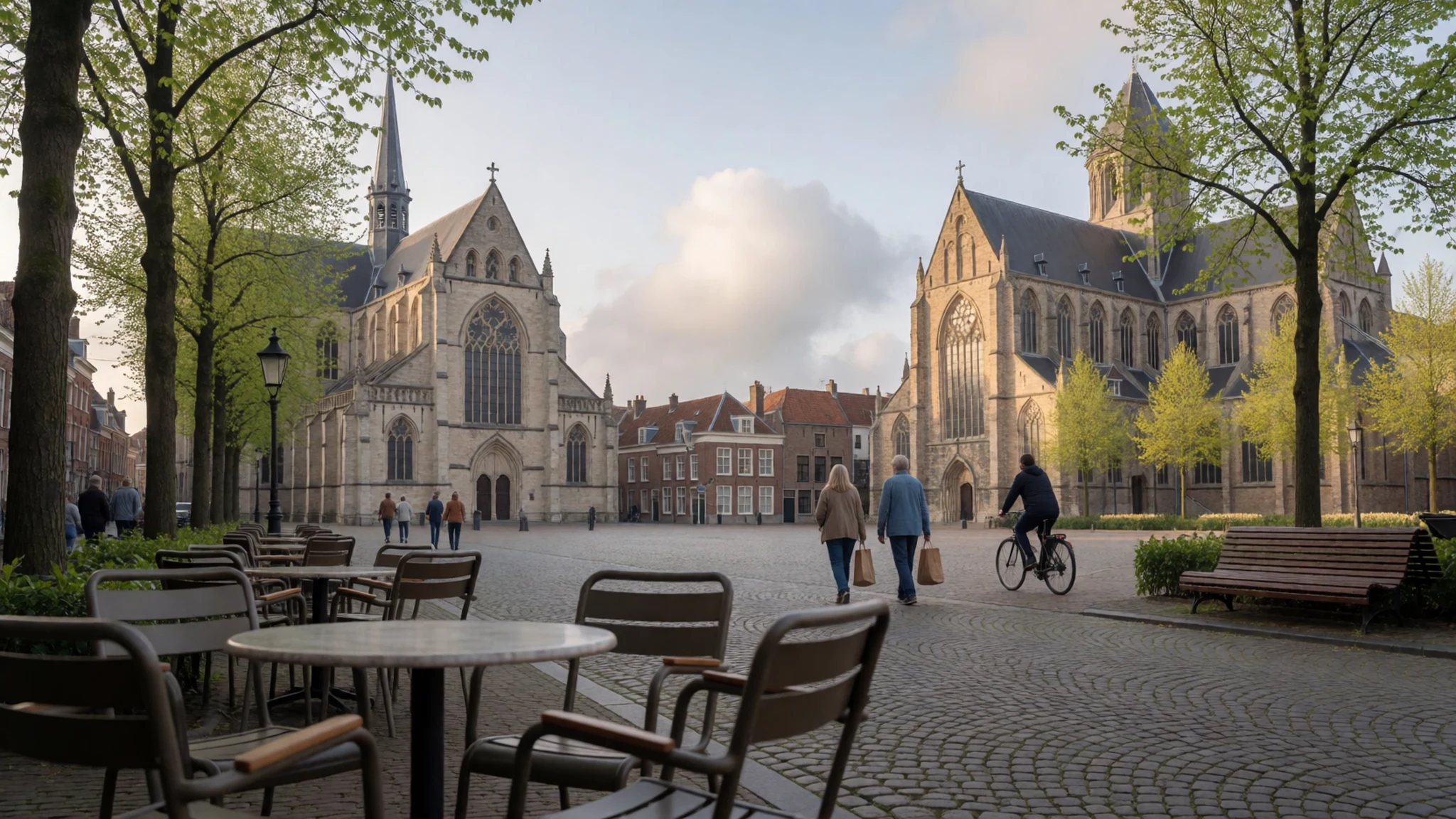
- St Servaas Basilica — Beside the Vrijthof
This basilica is believed to stand over the grave of Saint Servatius, the bishop linked to the city's earliest Christian history. Inside, the Romanesque bulk gives way to a quiet, dim interior. Check the official site for opening times, which change with services and the season.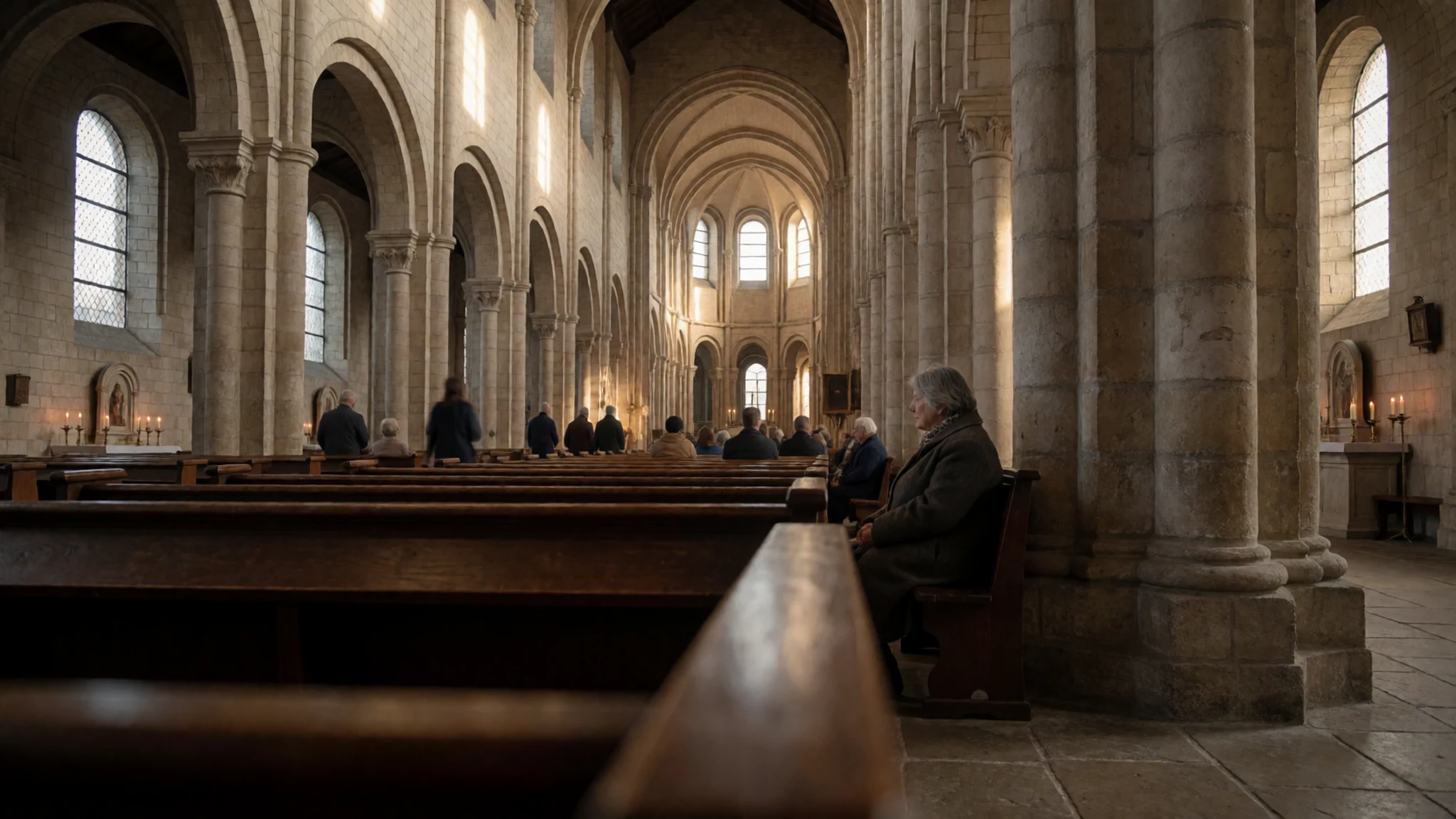
- Basilica of Our Lady (Star of the Sea) — Onze Lieve Vrouweplein
Known locally as Sterre der Zee, this Romanesque church was largely built in the eleventh and twelfth centuries. Its heavy stone front faces a small, café-lined square. A candle-lit chapel inside draws local worshippers, so visit quietly and treat it as a living place of prayer.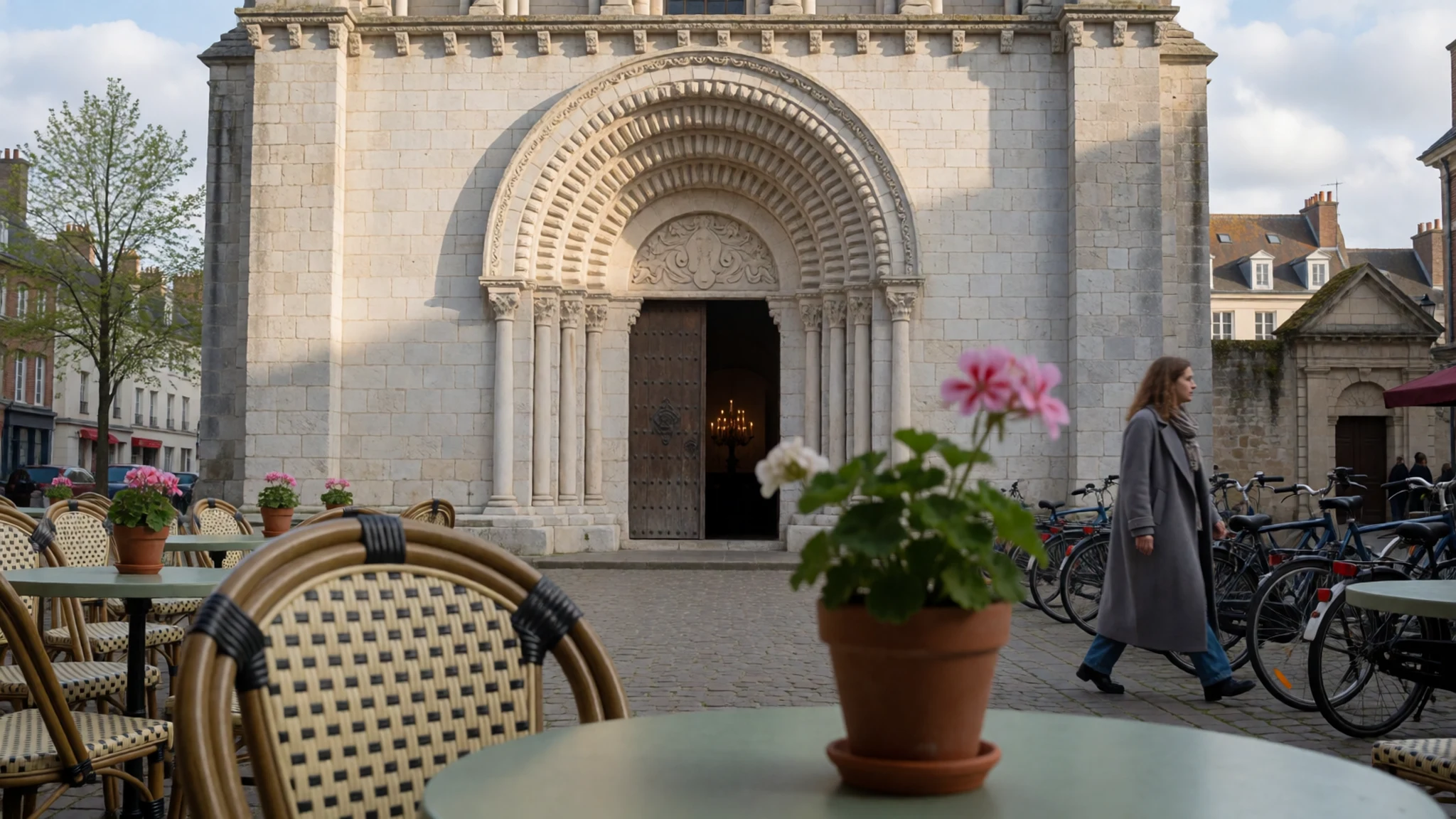
- Markt and Town Hall — Market square
The Markt is the stage for the town hall and has hosted trading for centuries. Goods markets still set up here on Wednesdays and Fridays, so those mornings suit browsing for cheese, bread and flowers. In December the square is hung with lights and becomes busy.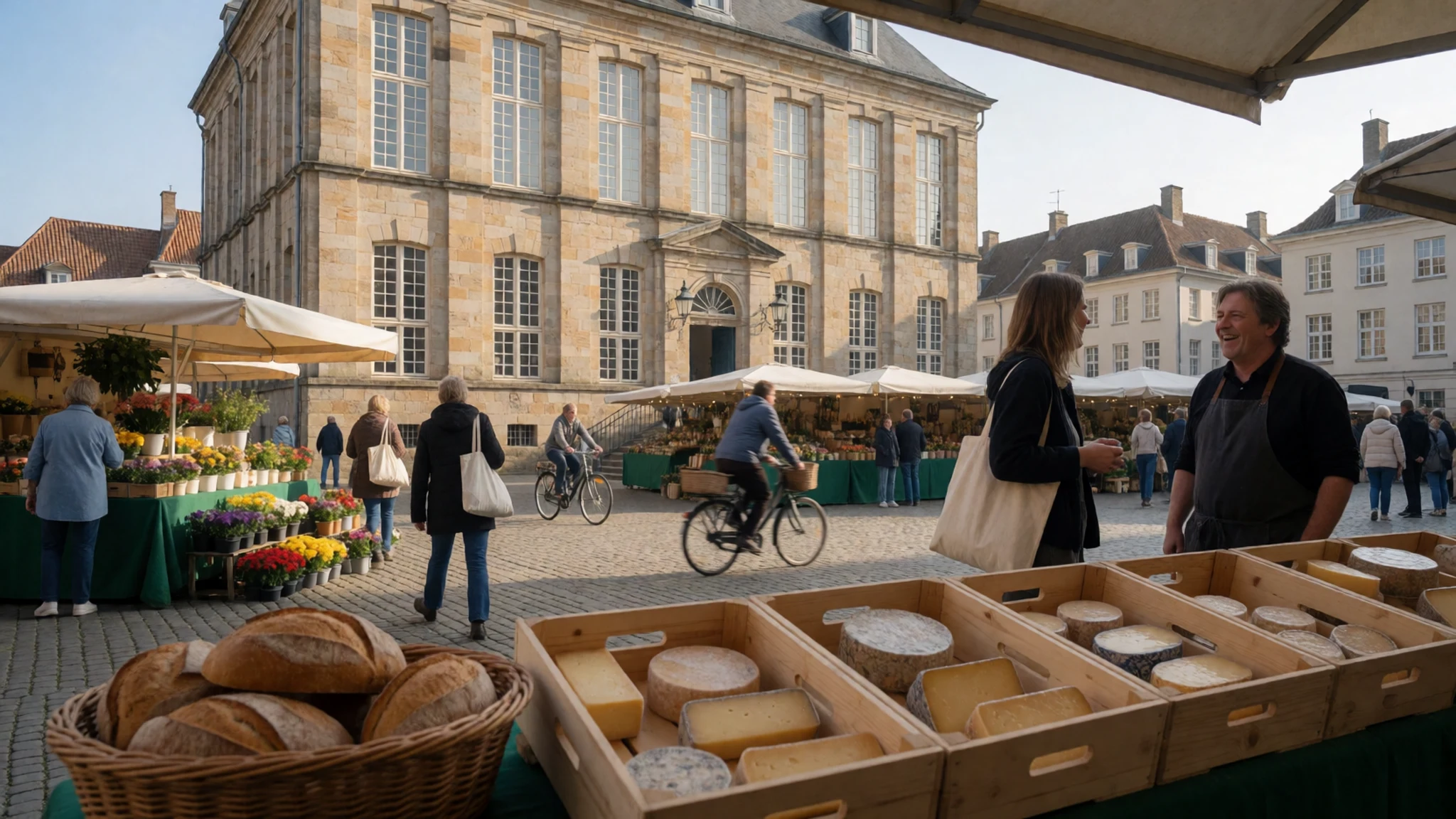
- Town wall and Helpoort — South of the centre
South of the centre, a stretch of the medieval town wall survives, with the Helpoort, or Hell's Gate, among its towers and gates. It is a short, quiet walk compared with the squares, and gives a clear sense of how closely the old town was fortified.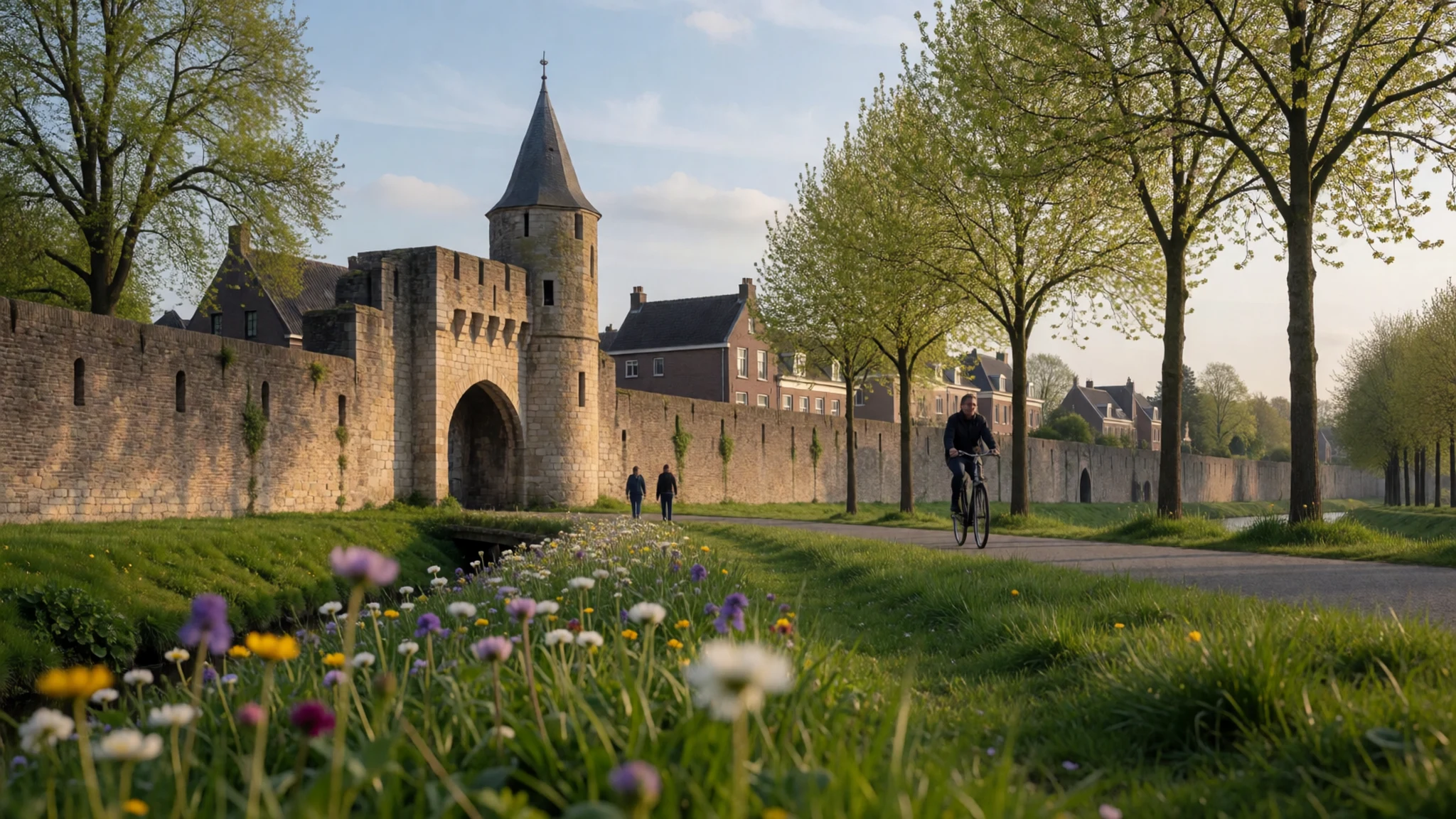
- The Meuse bridges and Mount Saint Peter — River and southern hills
Riverside promenades link the old town with the newer districts across the Meuse, and bridges here range from medieval stonework to modern pedestrian spans. For a change of scene, Mount Saint Peter offers woods, old quarry ground and a ruined keep with views north.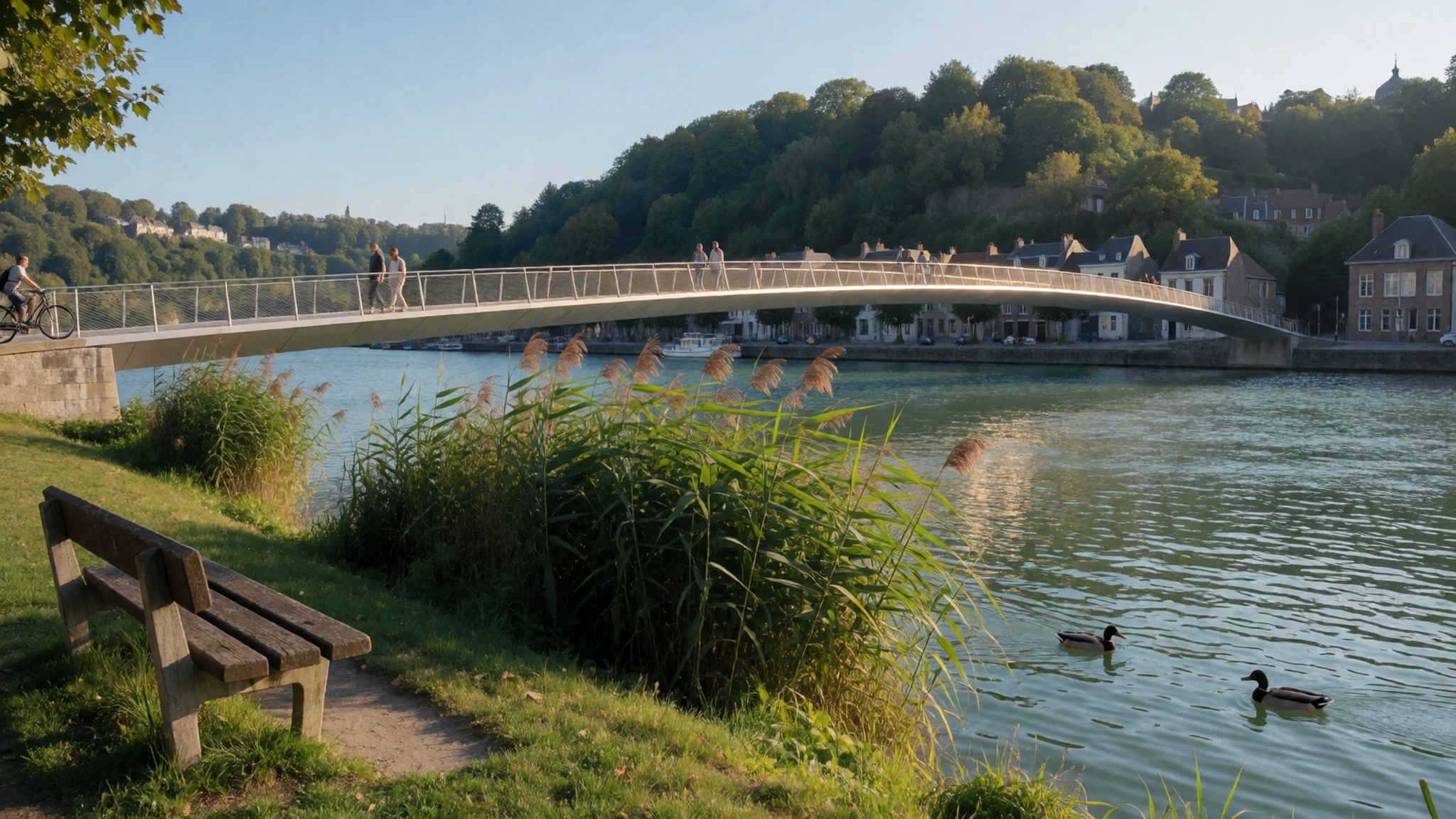
Culture
Maastricht has a Catholic, southern-European feel that sets it apart from much of the Netherlands. Church towers dominate the skyline, processions and saints' days still mark the calendar, and the local Limburgish dialect is spoken with pride alongside Dutch. The biggest cultural event is Vastelaovend, the carnival season before Lent, when costumes, brass bands and street parties take over the squares and many shops and offices go quiet. Food and sociability matter: people meet on café terraces, linger over coffee and a slice of fruit pie, and treat lunch as a proper break. The student population gives the centre a youthful pulse, and the border position means evenings out may include friends from Belgium or Germany. The city also takes heritage seriously. The whole centre is protected, old courthouses and gates have been kept in use, and locals are used to visitors with cameras. Dutch directness can feel blunt but is rarely meant that way; a friendly greeting when entering a small shop is expected, and English is widely understood. Cyclists have strong priority in the centre, so look both ways before stepping onto what seems a pedestrian lane. In the basilicas, keep your voice low, remove your hat, and do not photograph worshippers or walk around during a service.
What to wear
Maastricht has no single everyday costume today, and the old regional dress of Limburg, with its wool and linen, lace caps and dark Sunday clothes, now appears mainly at folklore events and museums. The one season when dressing up is general is carnival, Vastelaovend, when residents wear elaborate costumes, brightly coloured outfits and fancy hats for several days before Lent. Day to day, people dress in a smart-casual, practical way: dark jeans or trousers, a good coat, leather or canvas trainers, and often a scarf. Bicycles are the main transport, so layers and waterproofs matter more than labels. Evenings in the better restaurants are relaxed, but locals tend to look tidy. The city is also known for shopping, so people do dress up a little for a Saturday in the centre. A visitor should pack for changeable, temperate weather: a light rain jacket in any season, a warm layer for spring and autumn evenings, and a proper coat for winter. Footwear is the main practical point, because the old streets and squares are paved with cobbles and uneven stone, so comfortable, closed shoes with good grip beat sandals or heels. For visits to the basilicas, carry a scarf or light shirt so that shoulders and knees can be covered, as a courtesy during services.
What to eat
- Friet (fries with sauces) — A friterie or take-away counter near the Markt
Fries in the Low Countries style are thick, twice fried and served in a paper cone, with a choice of sauces. Maastricht's friteries sit close to Belgium in spirit, so expect mayonnaise-based toppings and a short queue at lunchtime.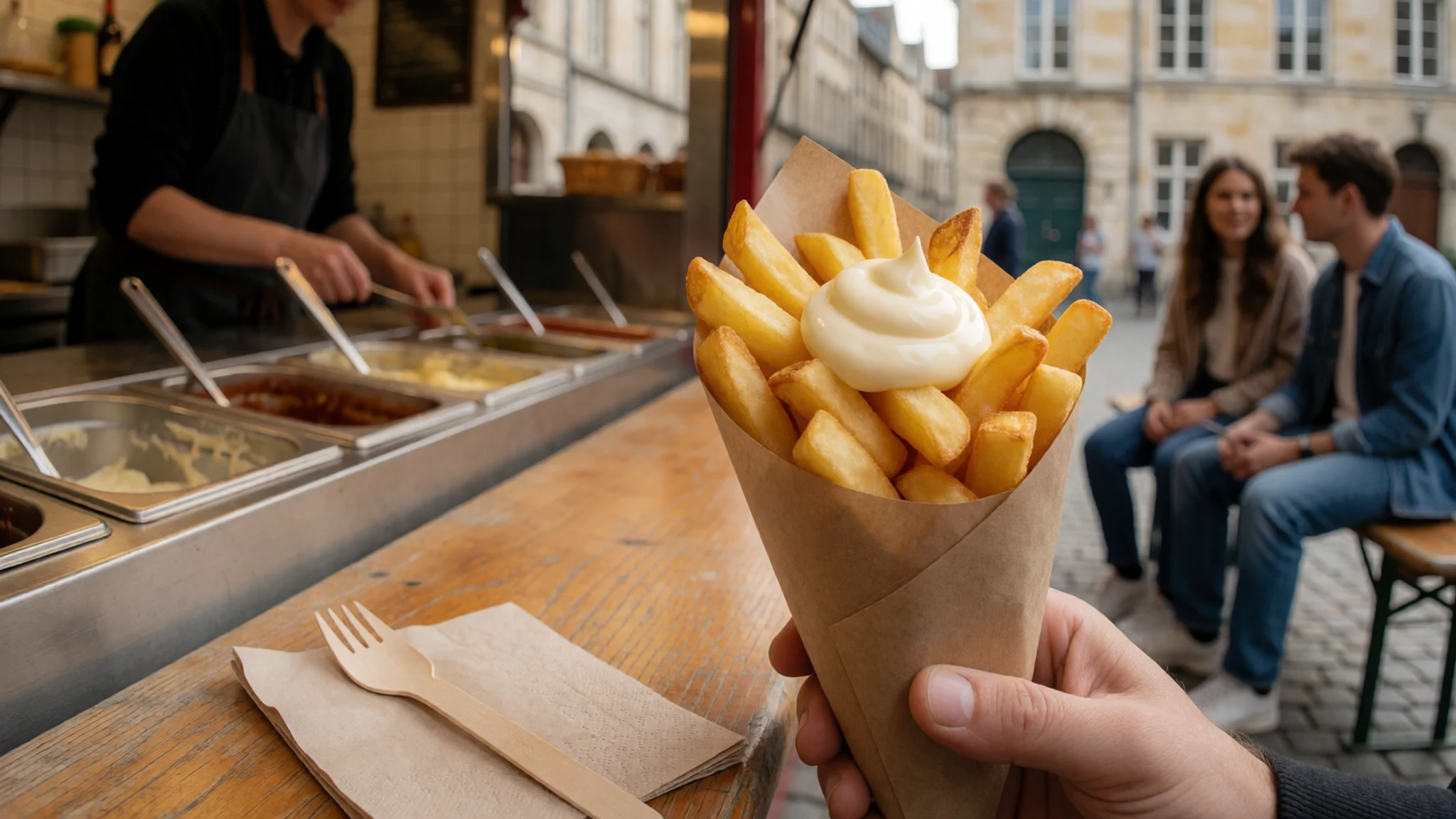
- Vlaai — Any local bakery in the old centre
Vlaai is the fruit pie of Limburg: a shallow, wide tart with a yeasty base and a thick fruit or custard filling. It is sold by the slice, often eaten with coffee on a terrace. Cherry and apricot are common choices.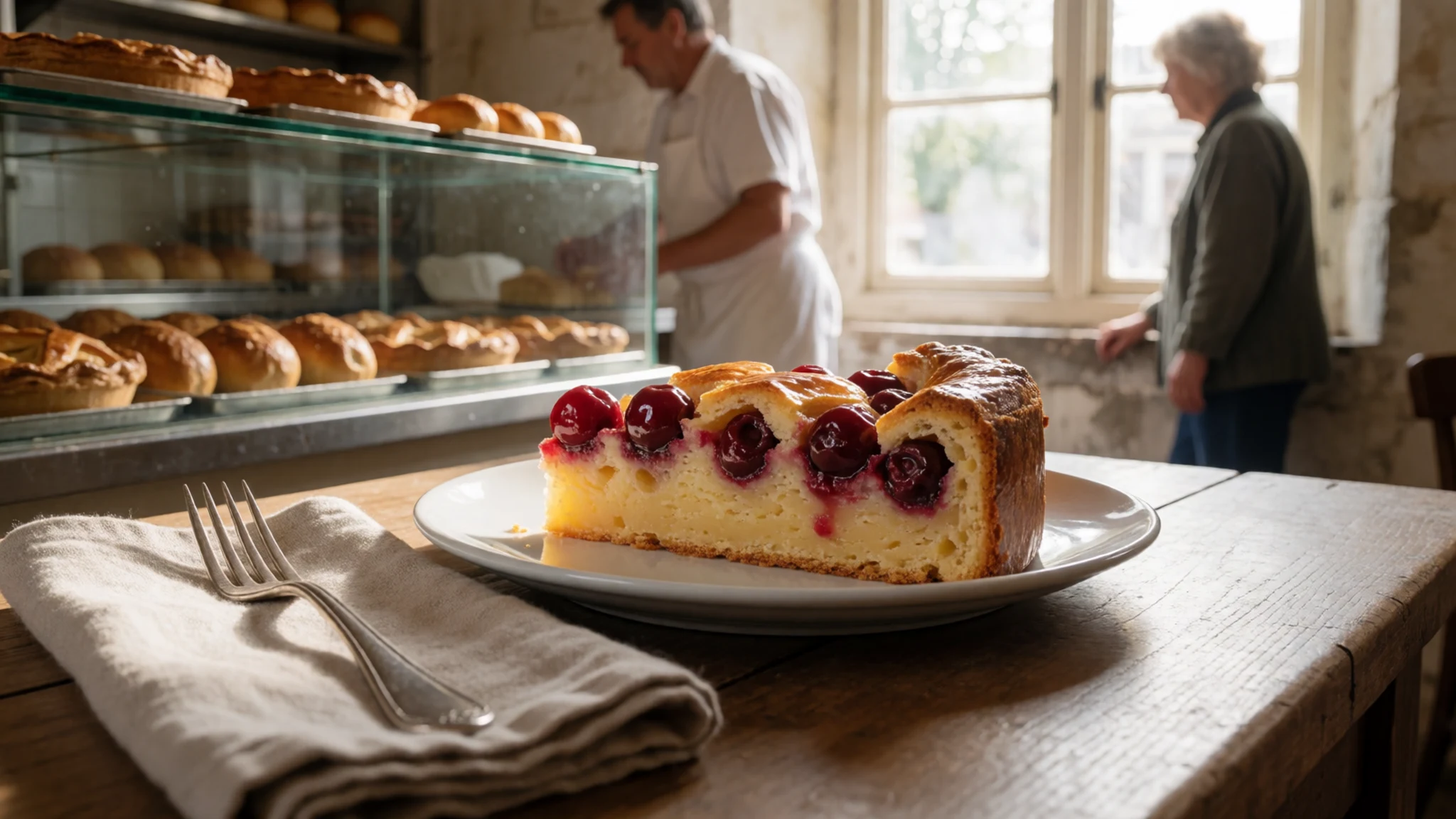
- Zuurvlees — A traditional eetcafé or brasserie
Zuurvlees is a Limburg dish of beef slowly cooked in a sweet-sour sauce, often with a touch of gingerbread, and served with fries or bread. It is hearty cold-weather food, and local menus often list it as a regional speciality. - Filled baguette or sandwich — Bakeries and deli counters around the squares
For a quick and inexpensive lunch, bakeries and delis around the centre sell baguettes and rolls with cheese, ham or salad. Some eetcafés also offer a local sandwich with a funny name, so ask the staff what is popular. - Grilled and braised meat — A grand café on one of the main squares
The grand cafés around the Vrijthof and Markt serve meat-led plates such as steaks, stews and grills, with a Belgian-influenced menu of beers. They suit an unhurried evening, and a terrace seat in summer is part of the appeal.
Plan it
Best time. April to June and September are the best months: the weather is mild, terraces are open and the parks and riverside are green. July and August are warmer and busier, and winter is cold and often grey, though the Christmas lights make December atmospheric. Rain can fall in any month, so pack a waterproof.
How long. 2–3
Getting there. Maastricht-Aachen Airport has a bus link to Maastricht railway station. Many visitors fly to Amsterdam Schiphol, Brussels or Düsseldorf instead and take the train or a coach, which usually involves a change and a journey of a few hours. The old centre is compact and walkable from the station.
Budget. mid
Tips
- Book rooms well ahead for Christmas, carnival and summer festival weekends
- Visit the main squares and churches early in the morning, before day-trip crowds arrive
- Goods markets run on Wednesdays and Fridays, so plan a morning around them
- Carry a card but keep a little cash for market stalls and small cafés
- Check opening times of churches and museums on their official sites, and on the city's website at https://www.gemeentemaastricht.nl/
Etiquette
- Keep to the cycle lanes' rules: cyclists have priority, so do not stand or walk in them
- Speak quietly in churches and ask before photographing people at prayer
- Greet staff when you enter a small shop or café
Nearby
Sources
- Wikidata Q1309 (CC0)
- Wikipedia: Maastricht (rev 1384880857) (CC BY-SA 4.0)
- Wikivoyage: Maastricht (rev 5410034) (CC BY-SA 4.0)
- Photo: die limburgische Hauptstadt Maastricht, de:Benutzer:Mussklprozz (CC BY 3.0)
- Photo: Sunset, Bert Kaufmann (CC BY 2.5)
- Photo: Markt and town hall with Christmas lights, Kleon3 (CC BY-SA 4.0)
- Photo: Platz vor der Liebfrauenkirche, Hans Peter Schaefer (CC BY 3.0)
- Photo: Maasbrug Maastricht, Geert Budenaerts (CC BY 3.0)
- Photo: Interior of the chapel of Our Lady, Star of the Sea, Kleon3 (CC BY-SA 4.0)
- Photo: Sint-Janskerk and Sint-Servaasbasilica at dusk, Mark Ahsmann (CC BY-SA 4.0)
- Photo: View from the ruined keep of Lichtenberg Castle, Mount Saint Peter, Kleon3 (CC BY-SA 4.0)


