The Hague
The Hague, Netherlands
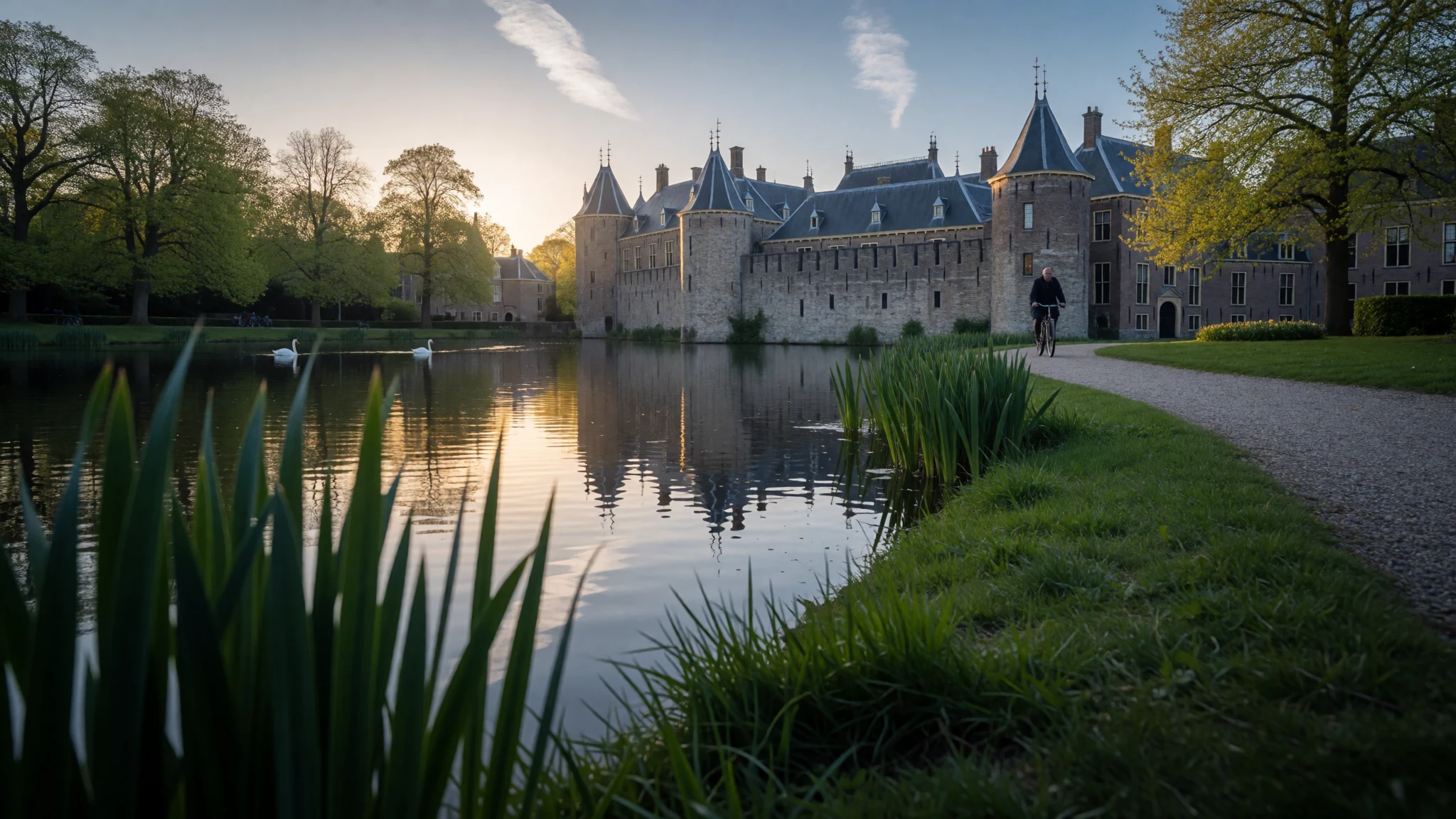
The Hague is where the Netherlands governs itself, with a North Sea beach, medieval courtyards and a calmer pace than Amsterdam.
The place
The Hague (Dutch: Den Haag, formally 's-Gravenhage) is a coastal city in the province of South Holland, facing the North Sea across a belt of low dunes. It is home to just over half a million people and sits about 1 m above sea level, so wind and wide skies shape daily life as much as the buildings do. Amsterdam is the capital on paper, but the government, the parliament and a crowd of foreign embassies work from here. That gives the centre a calm, civil-service feel on weekdays and a quieter one at weekends. The old core grew around the Binnenhof and its pond, with the Plein and the narrow shopping lanes a few minutes' walk away. Glass towers cluster near the main station, a reminder that ministries and international bodies need desk space too. West of the centre lies Scheveningen, a seaside district with a long beach, a pier, a working harbour and a promenade of cafés. The mix is unusual: officials in suits in the morning, surfers and families on the sand by afternoon. Further out, streets of Indonesian shops and eateries reflect the colonial past and still shape what locals eat. Expectations are worth setting honestly. The Hague is less photogenic than canal-lined Amsterdam, rain can arrive from any direction, and the beach fills up on the first warm weekend of the year. What the city offers instead is space, good museums, easy cycling and a working town rather than a stage set.
Its story
The Hague has older roots than its reputation as a city of courts suggests. In Roman times this coast belonged to the province of Germania Inferior, close to the frontier along the Rhine. In 1997 four Roman milestones were found at Wateringse Veld, on the edge of today's city. They measured distances to Forum Hadriani, the Roman town now called Voorburg, and carry the names of emperors from the second and third centuries. The stones are kept in the Museon. The city itself dates its beginnings to around 1201, when the counts of Holland took an interest in this stretch of dune and woodland. They built a residence that grew into the Binnenhof, and the Dutch name, 's-Gravenhage, is usually read as the count's enclosure. Over the centuries the territory changed hands and names: the County of Holland, the Habsburg Netherlands, the Spanish crown, the Dutch Republic, the Batavian Republic, the Kingdom of Holland and the First French Empire all ruled it before the modern Netherlands took shape. Through most of that time the Hague stayed the place where rulers and delegates met, which is why it has been called the real seat of power even while Amsterdam held the official title. A Dutch painting from around 1625 shows a joust on the Hofvijver, the pond beside the Binnenhof, a useful picture of how courtly this corner of the city once was. Today that courtyard still houses the politics of the country.
What to see
- Binnenhof and the Hofvijver — City centre
The Binnenhof is the courtyard complex where the Dutch parliament meets, begun in the 13th century as the count of Holland's residence. Walk round the Hofvijver pond for the classic view of its towers in the water. Interiors open on guided visits only, so check the official site.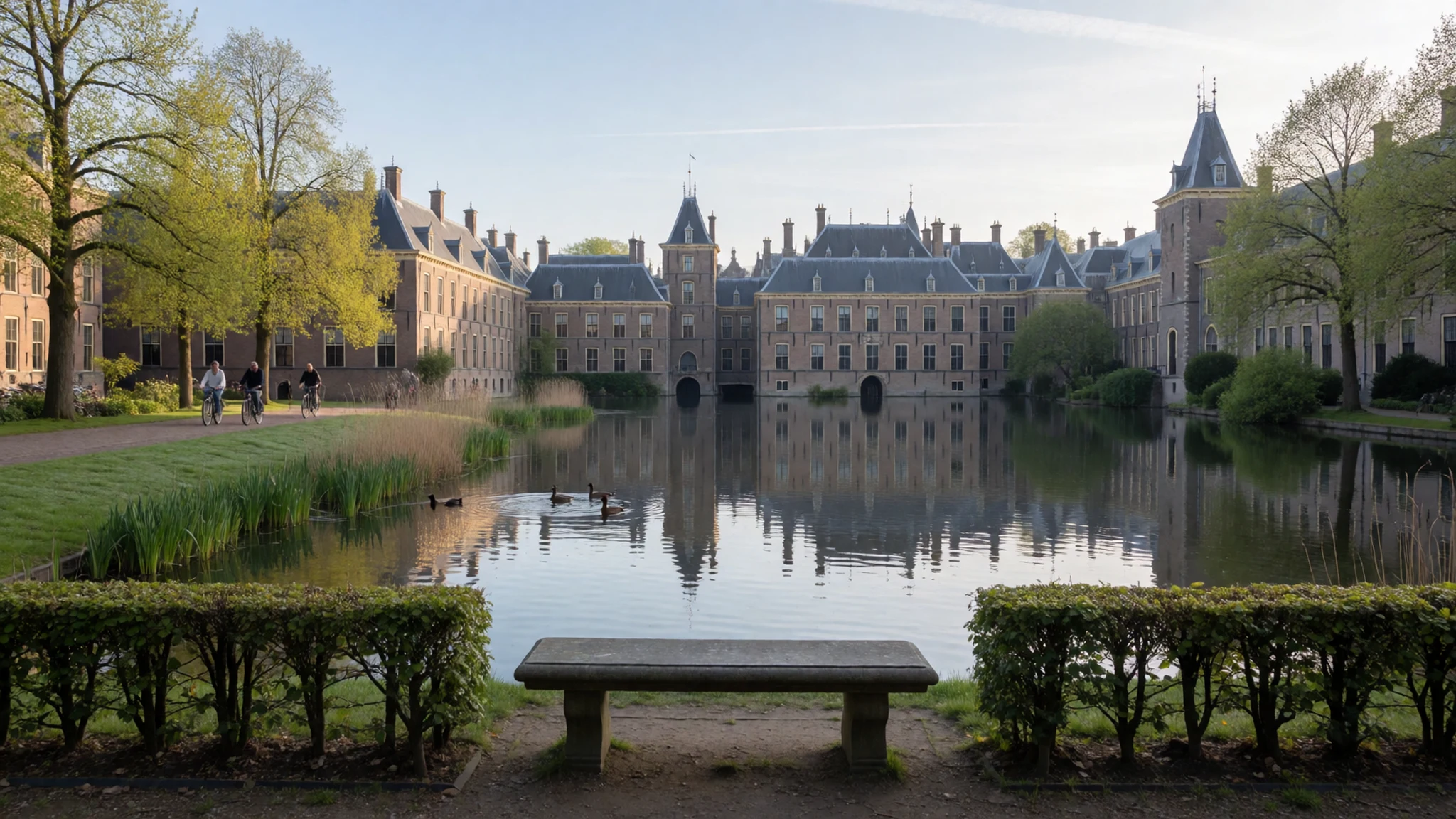
- Plein — City centre
The Plein is a square beside the Binnenhof, bordered on three sides by historic government buildings. Pavement cafés fill the open space in fine weather, and ministers and civil servants often appear at lunchtime. It is a good place to sit with a coffee and watch the city's working rhythm.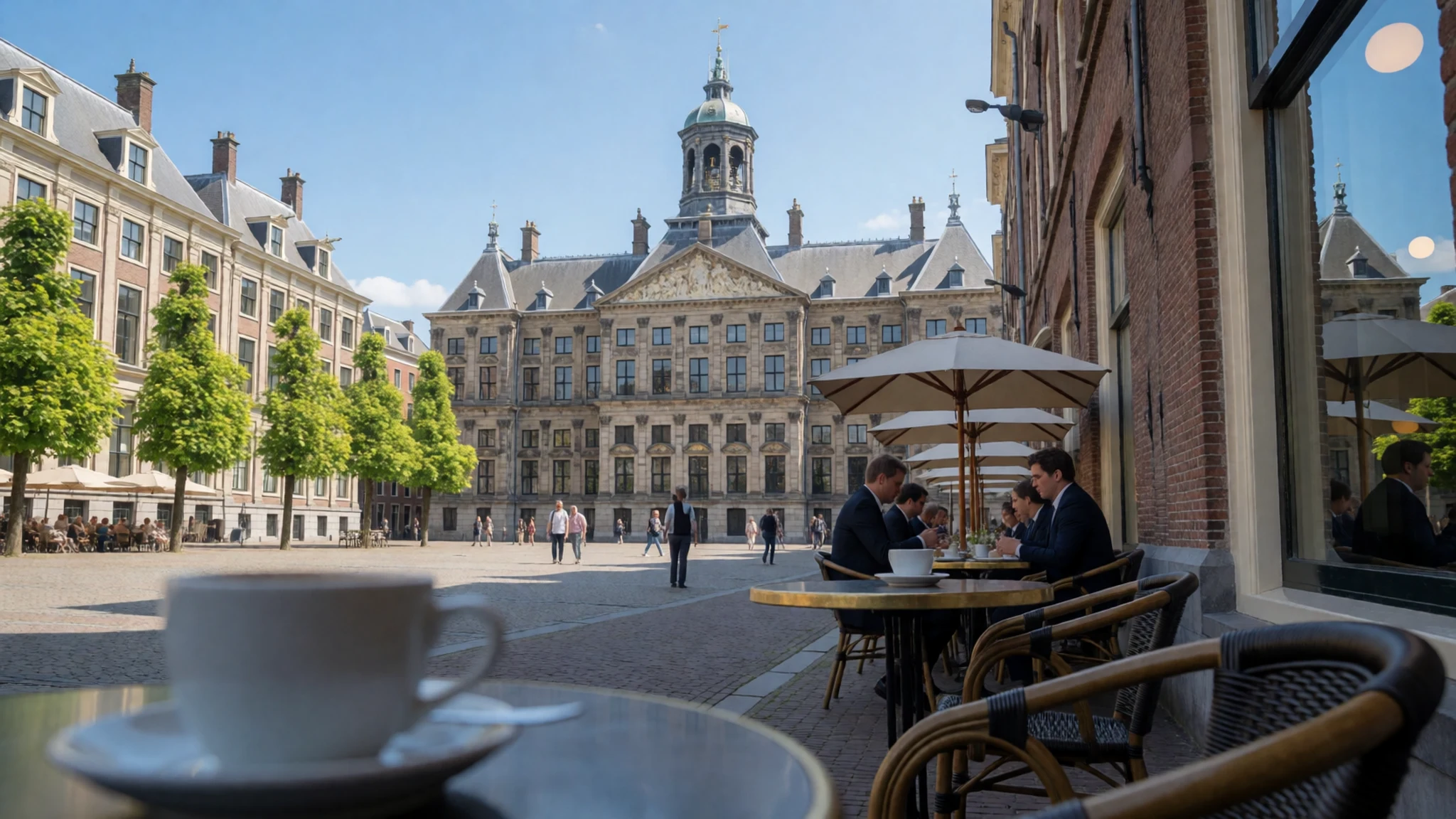
- Peace Palace — Zorgvliet district
The Peace Palace is a large brick and stone building with a tall clock tower, set behind iron gates in a landscaped park. It houses international legal bodies, including the International Court of Justice. Visitors usually admire it from the gates, and a visitor centre handles organised tours, so check ahead.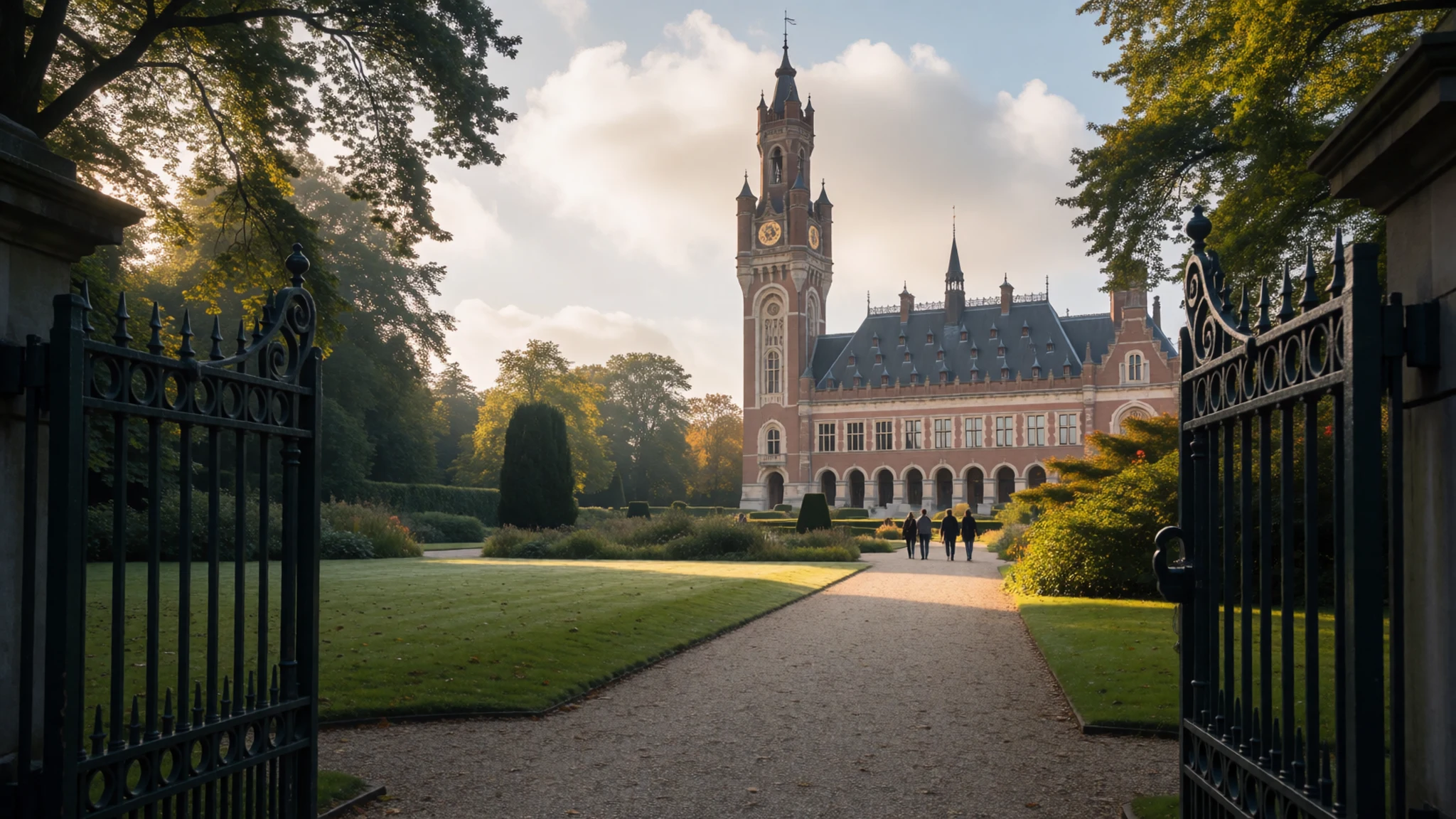
- Scheveningen and the Kurhaus — Scheveningen
Scheveningen is the Hague's seaside district, with a broad sandy beach, a pier and a harbour where fishing boats still tie up. The grand Kurhaus, a nineteenth-century spa building facing the sea, anchors the promenade. Go on a weekday in early summer to avoid the heaviest crowds.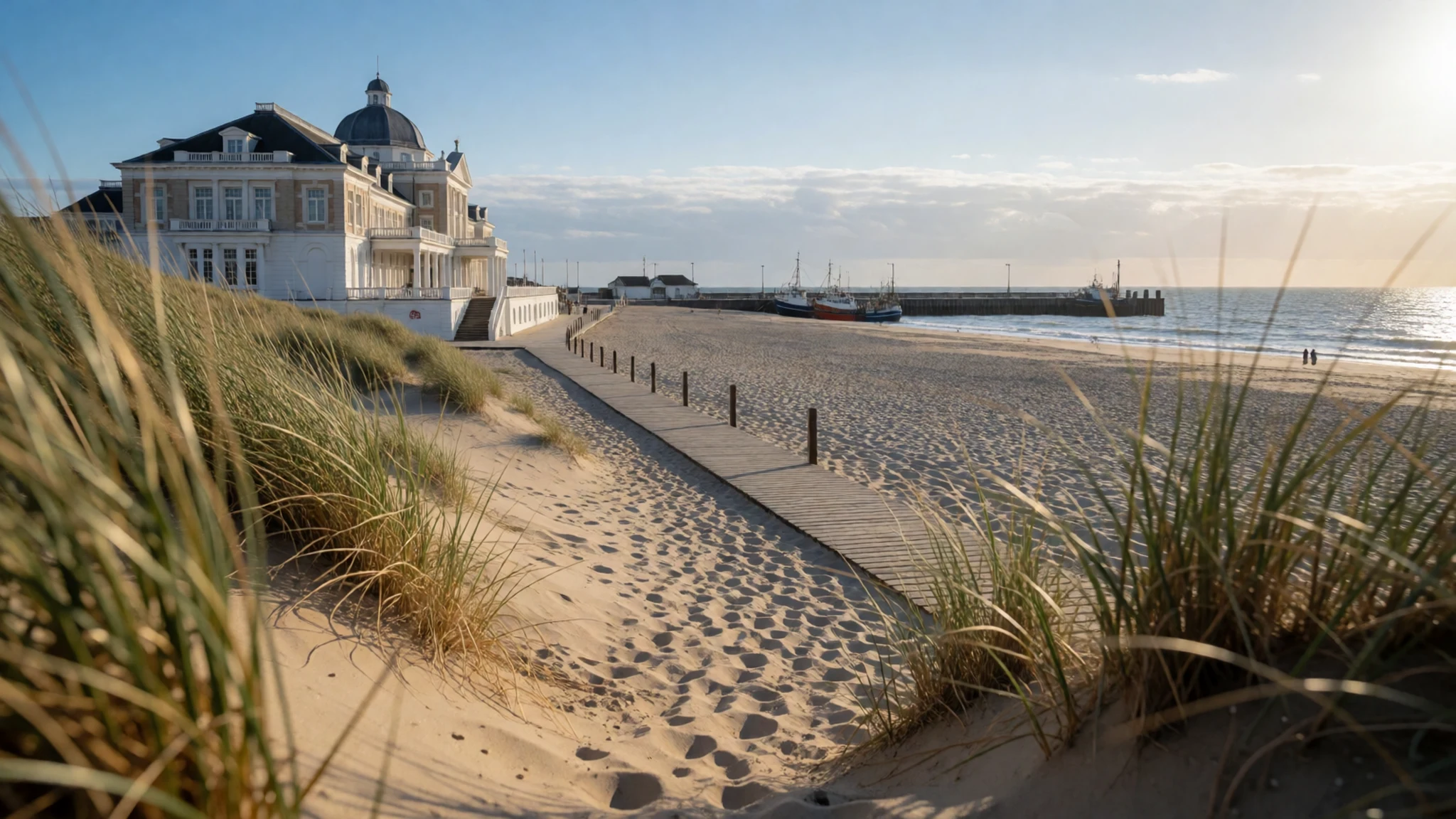
- City Hall — City centre
The Hague's City Hall is a bright modern building of white geometric blocks around a tall atrium, a contrast to the old courtyards a short walk away. The public hall is open in office hours, and its design is worth a look even without any business inside.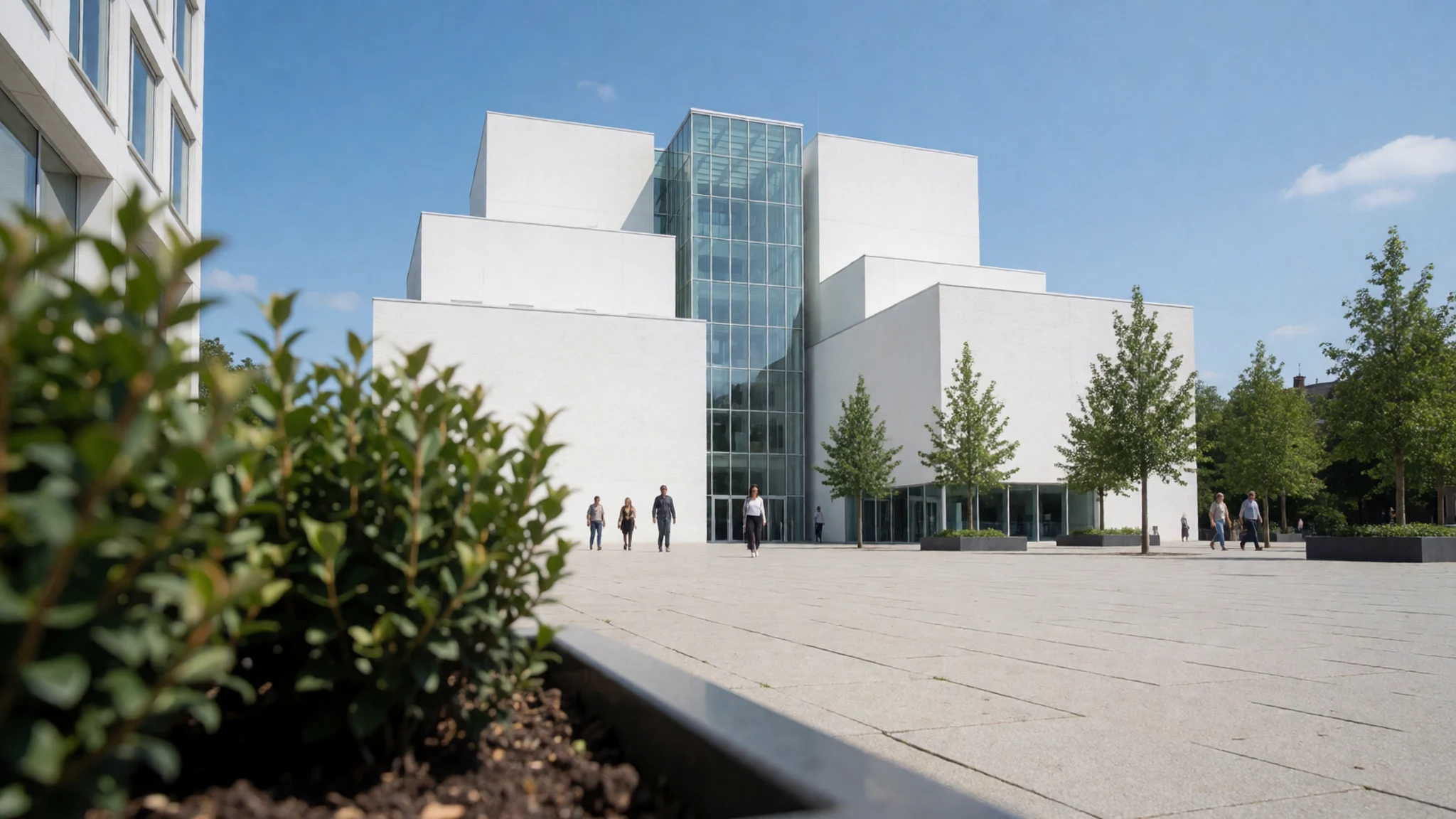
Culture
The Hague takes its cultural cue from its political role. The Binnenhof is still treated as the symbolic heart of the city, and the surrounding streets are full of ministries, embassies, law firms and think tanks. This gives the place a polite, measured, bilingual character. Most people speak excellent English, and conversation tends to be direct and unfussy, which can read as brusque but is meant as honesty. Social life centres on the three main squares of the old centre. The Plein has large terraces where officials mingle with shoppers, and the other squares host bars, theatres and music venues late into the evening. The Hague is also a multicultural city. Communities with roots in Indonesia, Suriname, Turkey and Morocco shape its shops, festivals and eating habits, and the long relationship with Indonesia is visible in street names and menus. Sundays can be quiet, with fewer shops open than in larger Dutch cities. Cycling is part of everyday life rather than a pastime: bikes outnumber cars in the centre at rush hour and cyclists expect pedestrians to know the rules. Dutch people value punctuality, so arriving on time for tours and bookings is appreciated. Dinner often starts early by Indian or southern European standards, and splitting the bill is normal and not considered rude. Visitors should stay off the red-surfaced cycle lanes, look both ways for bikes before stepping off any kerb, and keep voices low around the Binnenhof, where officials are working.
What to wear
The Hague's traditional dress is best known through Scheveningen, the old fishing community on the coast. Women's costume there used wool skirts, shawls, dark bodices, lace caps and gold or silver hair ornaments, while men wore woollen jackets and the wooden shoes known as klompen. These outfits are now mostly seen at museums, folklore events and heritage days rather than in the street. Everyday clothing is practical and understated. The wind, rain and cycling culture mean waterproof jackets, scarves, jeans and comfortable trainers are normal, and people dress in dark, neutral colours. Around the Binnenhof and the Plein, suits, blazers and smart coats are more common because of the government and legal workforce, while Scheveningen beach brings out shorts, wetsuits and sandals in summer. Visitors should dress for changeable weather: a light waterproof, a windproof layer and a fleece or jumper even in summer, since the sea breeze can be cool. Comfortable closed shoes with grip suit the cobbles and wet pavements, and sandals work on the beach. There is no strict modesty code, but covering shoulders and knees is a courteous choice if you visit a church. Evenings in restaurants and theatres are smart-casual, and nobody will mind if you are neat and tidy. In winter add a warm coat, gloves and a hat, because wind off the North Sea feels colder than the thermometer suggests.
What to eat
- Broodje kroket — Traditional cafés and snack counters in the city centre
A crisp breaded roll of rich meat ragout, served in a soft bread bun with mustard. It is a standard Dutch snack and a cheap lunch. Look for it at a traditional café or snack counter near the Binnenhof and the main squares.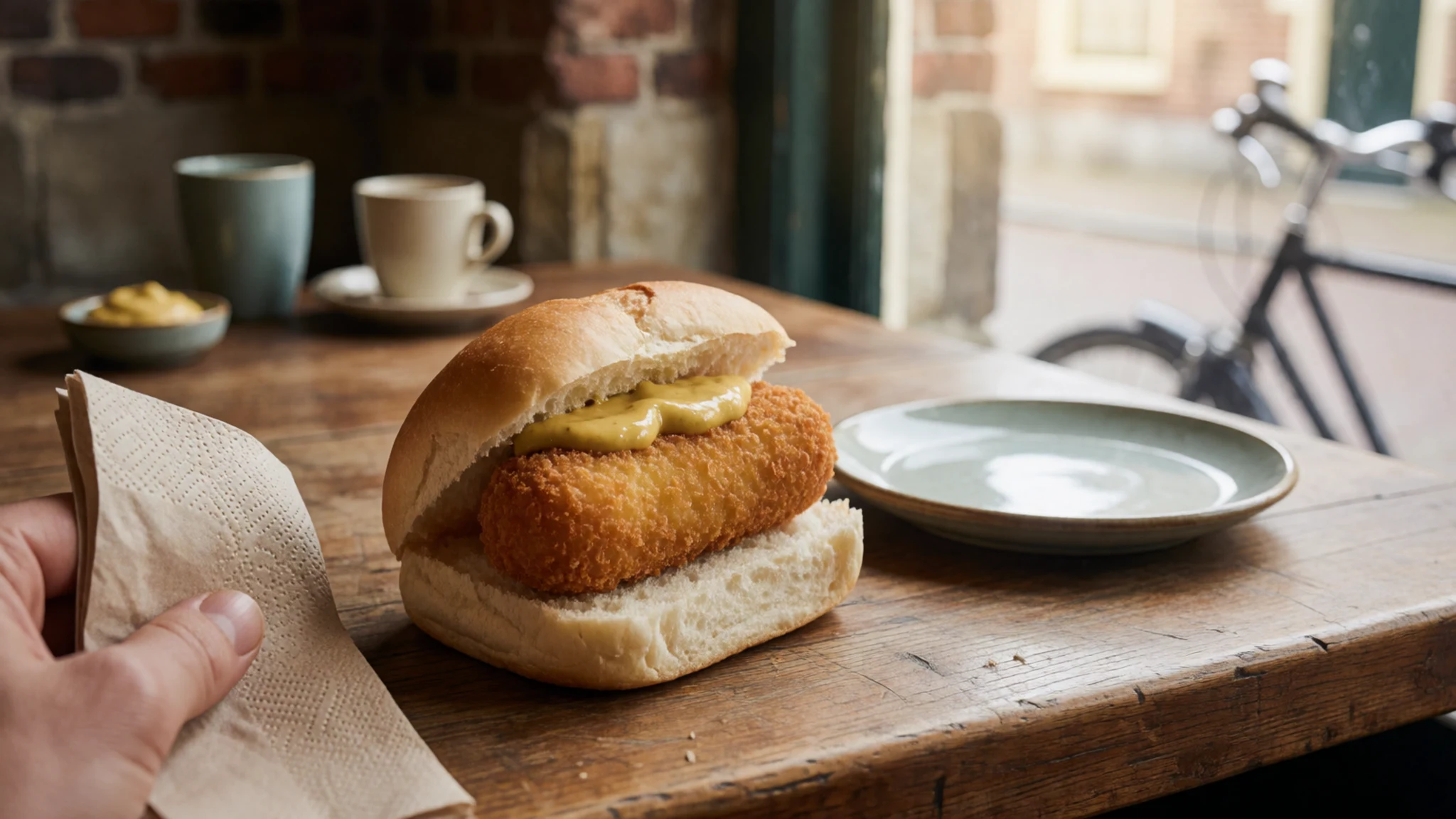
- Rijsttafel and Indonesian rice dishes — Indonesian eateries in the centre and neighbouring districts
Indonesian cooking is part of Hague life. Expect rice with several small plates, such as satay, spiced vegetables, egg dishes and sambal. Many Indonesian eateries also offer take-away boxes, handy for a picnic by the sea.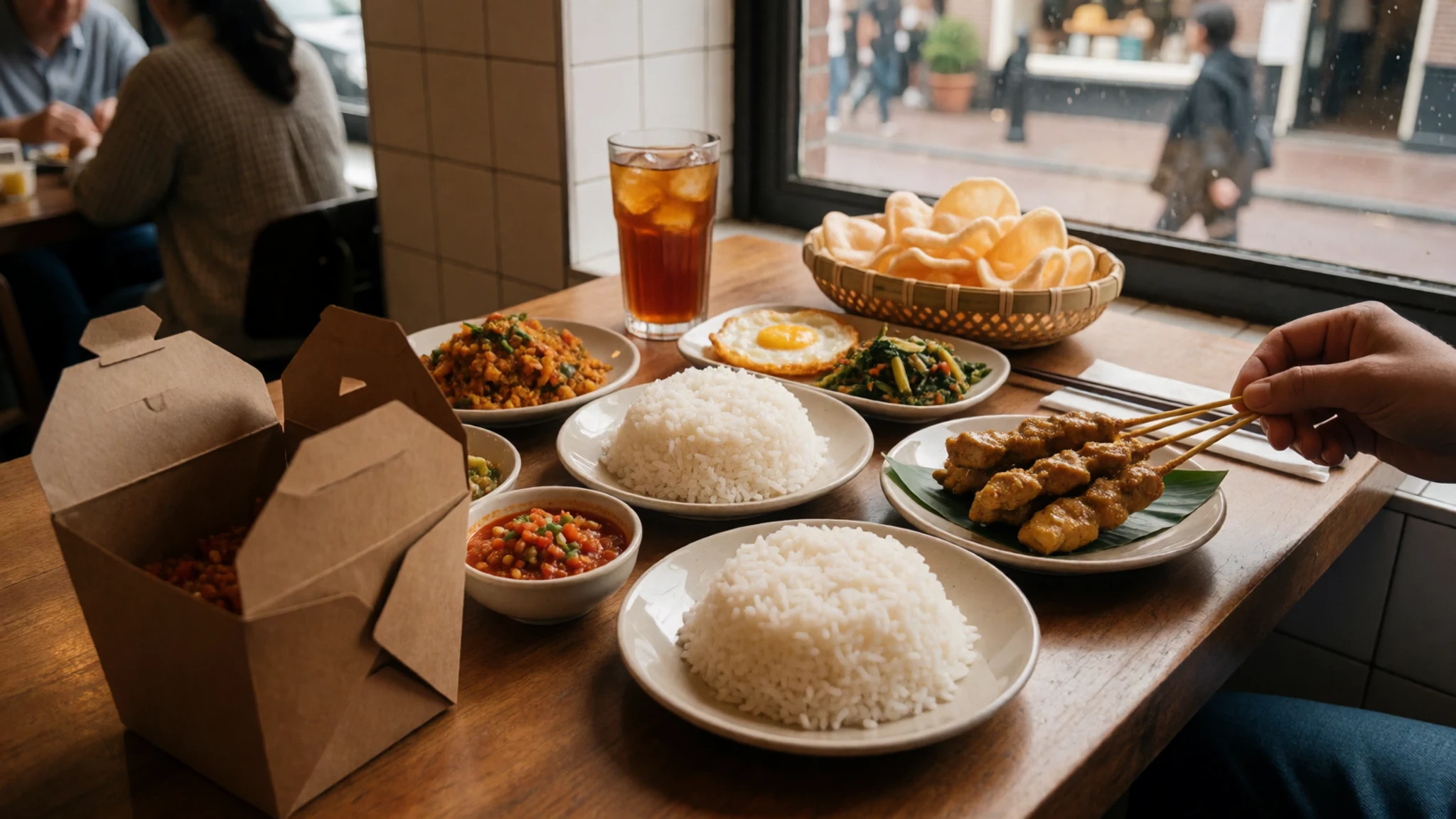
- Haring (raw herring) — Fish kiosks around Scheveningen harbour
Fresh herring, served lightly salted with chopped onion and pickles, is eaten from a paper tray or in a bun. It is an acquired taste but a very Dutch one. Fish stalls and kiosks near the harbour are the usual places to try it. - Bitterballen — Brown cafés and bars around the main squares
Small, deep-fried balls of crisp breadcrumbs around a savoury beef ragout, served hot with mustard. They are the classic accompaniment to a beer or a glass of jenever. Order a portion to share in a brown café. - Stroopwafel — Market stalls and bakeries in the centre
Two thin, crisp waffle discs sandwiched with caramel syrup, best eaten warm so the filling softens. Bakers and market stalls make them fresh, and they travel well as gifts if you buy them packed. - Appeltaart — Cafés and tearooms around the Plein and the old centre
Dutch apple pie is deep and tall, packed with apple chunks, cinnamon and raisins in a crumbly crust, usually served with whipped cream. It goes well with a mid-afternoon coffee.
Plan it
Best time. Late spring to early autumn, roughly May to September, brings the mildest weather and the best beach days, though July and August are the busiest. Winters are cool, damp and windy, with short days, but museums and cafés are cosy then. Spring flower fields inland add another reason to come in April.
How long. 2–3
Getting there. The closest airport is Rotterdam The Hague Airport, linked by bus to the metro line that runs to Den Haag Centraal station. Amsterdam Schiphol is farther but has many more flights, with direct trains to the Hague. From the main station, the Binnenhof and Plein are a short walk or tram ride away.
Budget. mid
Tips
- Book guided tours of the Binnenhof and the Peace Palace in advance and check the official site, denhaag.nl, for current schedules.
- Use trams and hire a bike for Scheveningen and the wider city, but learn the rules for cycle lanes first.
- Cards, often contactless, are accepted nearly everywhere, so you rarely need much cash.
- Carry a waterproof layer in every season, since showers can come from the North Sea at any time.
- Visit Scheveningen beach on a weekday in early summer to avoid the weekend crowds.
Etiquette
- Keep to the pavement and stay out of the red cycle lanes.
- Keep your voice low and do not film officials or security staff around the Binnenhof.
- Arrive on time for tours and restaurant bookings.
Nearby
Sources
- Wikidata Q36600 (CC0)
- Wikipedia: The Hague (rev 1385706546) (CC BY-SA 4.0)
- Wikivoyage: The Hague (rev 5432546) (CC BY-SA 4.0)
- The Hague Montage 2021, Ætoms (CC BY-SA 4.0)
- Den Haag Skyline 1, Zairon (CC BY-SA 4.0)
- Vredespaleis voor, Kasteelbeer (CC BY-SA 3.0 nl)
- Scheveningen Kurhaus, Uwe Aranas (CC BY-SA 4.0)
- City Hall, The Hague, GraphyArchy (CC BY-SA 4.0)
- NL locator map GM0518 (2016), Michiel1972 with CBS data (CC BY 3.0)
- Europe relief LAEA location map, Alexrk2 (CC BY 3.0)
- Joust on the Hofvijver, Dutch School of 1625 (Public domain)


