Udzungwa Mountains
Udzungwa Mountains, Tanzania
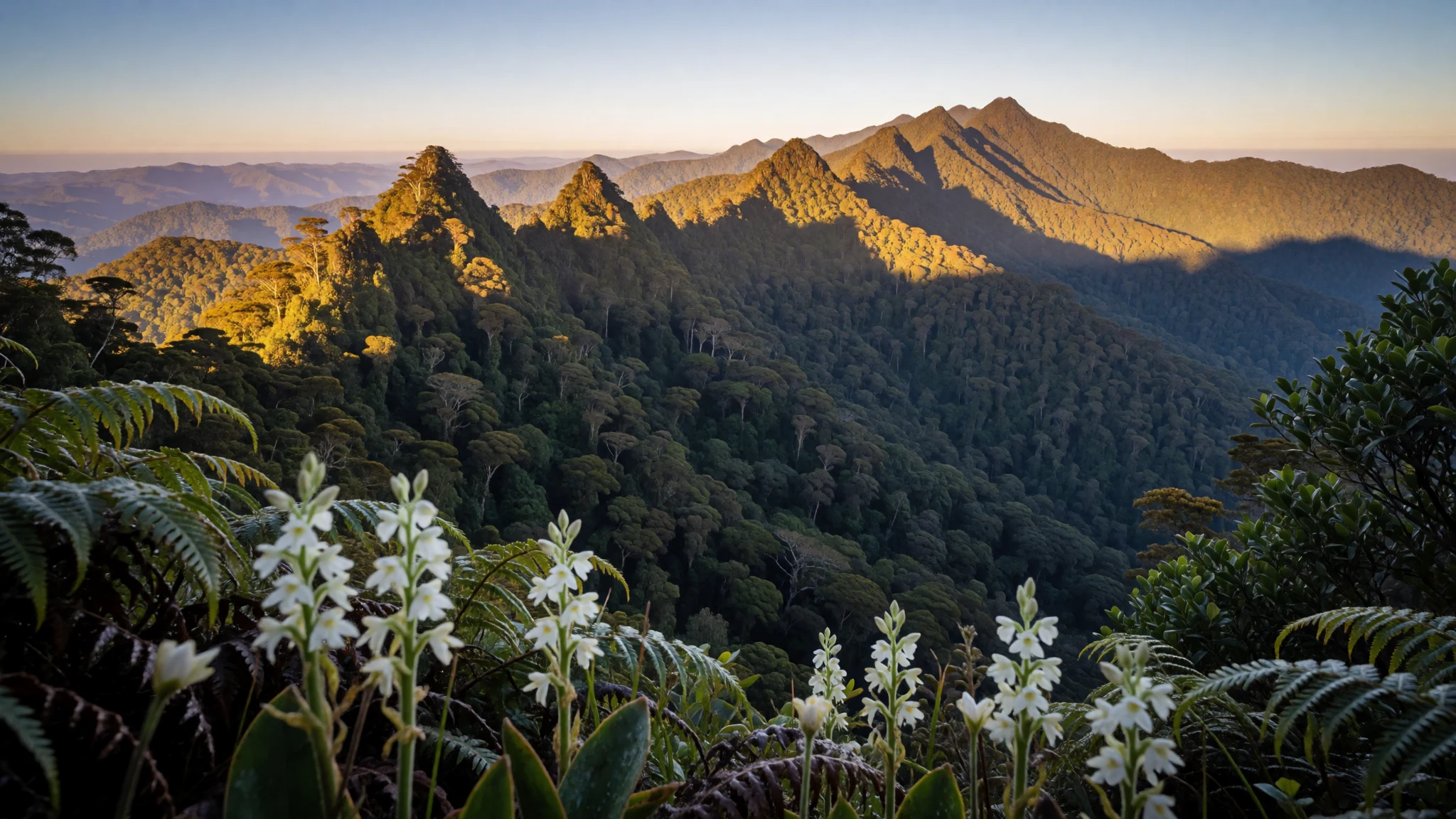
Explore an ancient rainforest sanctuary known for rare primates and spectacular waterfalls in the heart of Tanzania.
The place
Udzungwa Mountains National Park is a sprawling wilderness in Tanzania, stretching across the Kilolo and Kilombero districts. The landscape is a diverse mix of tropical rainforests, mountain forests, and open grasslands, creating a sanctuary for an incredible array of life. Because so many of its species are found nowhere else on earth, the range is frequently compared to the Galapagos Islands of Africa. It is a primate-heavy destination, home to unique monkeys like the Sanje Mangabey and the Kipunji, alongside hundreds of bird species. The terrain is dramatic, with steep scarp forests and rolling hills that lead to plunging waterfalls. The air is often humid and heavy with the scent of damp earth and greenery, and the sound of the forest is a constant, rhythmic chorus of birds and primates. Visitors typically explore the area through guided hikes, though the heat and humidity can be taxing. The park is far less crowded than the famous northern circuits, offering a genuine sense of isolation and raw nature. Whether trekking to the highest waterfalls in the national park system or drifting down the Kilombero River, the experience is defined by the sheer density of the vegetation and the feeling of stepping back into a prehistoric world.
Its story
The story of the Udzungwa Mountains is one of incredible endurance. These forests are ancient, having survived for millions of years while the landscapes around them shifted. Long ago, these mountains were part of a much larger forest system that connected the Congo Basin in the west to the forests of West Africa. As the climate changed and the land drifted, these mountains became an island of greenery, trapping species within their borders and forcing them to evolve in isolation. This biological isolation is why the park is such a treasure for scientists and nature lovers today. The name Udzungwa itself comes from the Kihehe word 'Wadzungwa', referring to the people who live on the mountain slopes. For generations, the local communities have lived in harmony with these slopes, relying on the forests and the rivers. The park was formally established in the nineties, bringing together several forest reserves to protect this irreplaceable genetic library. It stands as a living record of the continent's natural history, where the survival of a single rare monkey species represents a victory for global conservation efforts. Walking through the canopy feels like traversing a bridge to a distant evolutionary past.
What to see
- Sanje Waterfalls — Sanje Village area
These are the highest waterfalls in the Tanzanian national park system. The trek to reach them takes you through dense forest, and the reward is a series of dramatic drops and refreshing plunge pools that are perfect for a swim after a humid hike. - Kilombero River Canoeing — Kilombero River
Floating down the river in a locally carved dugout canoe is the best way to spot the endemic Kilombero Weaver. Keep an eye out for hippos, crocodiles, and Nile monitor lizards lounging along the riverbanks during a peaceful afternoon picnic. - Women's Weavers — Ifakara
This local enterprise in Ifakara empowers women through traditional craft. You can watch the weavers create beautiful blankets, napkins, and table mats from local materials and buy these handmade items directly from the artisans as sustainable souvenirs. - Village Bicycle Tours — Surrounding villages
Hiring a bike and a guide allows for an honest look at rural Tanzanian life. You will pass through local markets, schools, and rubber plantations, where you can see the entire process of rubber extraction and drying first-hand. - Ngoma Dance Performance — Local village center
An evening spent around a campfire with a traditional Ngoma group is an electric experience. The rhythmic drumming, wild singing, and impromptu dancing provide a vivid window into the local cultural energy of the mountain communities.
Culture
Culture in the Udzungwa region is deeply tied to the land and the rhythms of agriculture. The people here have a long history of living on the mountain slopes, and their traditions are reflected in the local crafts and the music of the Ngoma dancers. There is a strong sense of community and a lingering respect for traditional medicine; visiting a local witch doctor offers a fascinating insight into the potions and lotions used for healing. The economy is a blend of small-scale farming, sugar cane production, and more recently, community-led eco-tourism. You will find that the pace of life is slow and welcoming, with village markets serving as the primary social hubs. Many locals are keen to share their knowledge of the forest's secrets with visitors. When visiting local homes or spiritual practitioners, it is important to be humble and patient. Always ask for permission before taking photographs of people or their private dwellings.
What to wear
Traditional dress in the Udzungwa region is influenced by the broader Tanzanian culture, with colourful Kitenge fabrics being common. These are heavy cotton cloths with bold, wax-printed patterns, often worn as wraps or tailored into dresses and shirts for special occasions. In daily village life, people typically wear simple, practical clothing like cotton t-shirts and trousers or long skirts. For visitors, the fashion is entirely dictated by the terrain and climate. The rainforest is damp and humid, so moisture-wicking, quick-dry clothing is essential. Long trousers and long-sleeved shirts are highly recommended to protect against insects and scratches from the thick undergrowth. Sturdy, waterproof hiking boots with good grip are non-negotiable for the slippery forest trails. Since the area is rural and modest, avoid overly revealing clothing when walking through villages. A lightweight rain jacket is a must-have, as tropical downpours can arrive without warning.
What to eat
- Mishkaki — Village bars and street stalls
These are savoury barbecued meat skewers, marinated in local spices and grilled over open coals. They are a popular street food found at local bars and evening eateries in the villages. - Chips Mayai — Local village eateries
A hearty Tanzanian staple consisting of a French-fry omelette. This comforting dish is widely available and serves as a filling meal or snack throughout the region. - Ugali — Local homes and village restaurants
A thick porridge made from maize flour cooked with water. It is the primary starch of the region, traditionally eaten with the hands and paired with greens or stews. - Packed Trail Lunches — National Park hiking trails
Since the forest trails are remote, these packed meals usually consist of sandwiches, fruit, and plenty of water, typically arranged through your camp or guide.
Plan it
Best time. June to January is generally preferred to avoid the heaviest rains; the dry season makes forest trekking and river canoeing much easier.
How long. 2–3
Getting there. Fly into Dar es Salaam, then drive west via Morogoro and Mikumi. Alternatively, take the TAZARA railway from Dar es Salaam to Mang'ula.
Budget. mid
Tips
- Hire a certified local guide for all forest treks
- Carry a high-quality insect repellent for the rainforest
- Bring plenty of cash for village markets and guides
- Start your hikes early to avoid the midday heat
- Pack a waterproof bag for your electronics
Etiquette
- Ask permission before photographing village residents
- Dress modestly when visiting rural communities
- Keep noise levels low to avoid disturbing wildlife
Nearby
Sources
- Wikidata Q1294175 (CC0)
- Wikipedia (CC BY-SA 4.0)
- Wikivoyage (CC BY-SA 4.0)
Wildlife
- Sanje mangabey (animal)
The Sanje mangabey is a grey monkey with pale eyelids that wanders the forest floor looking for fruit, its favourite food. In Udzungwa it lives in the valley forests and on the mountain slopes. It is endangered, and because it spends so much time on the ground, hunters can threaten it. Watch with a local guide, keep a respectful distance, speak softly and move slowly, and never feed it, so it stays wild and safe. - Kipunji (animal)
The kipunji, also called the highland mangabey, is a monkey so new to science that it was only described this century. Udzungwa counts it among its special monkeys, and it belongs to Tanzania's highland forests. Because it is so recently found, give it space: go with a knowledgeable guide, stay well back, keep your voice low, and never feed it, so it can carry on living naturally. - Kilombero weaver (bird)
The Kilombero weaver is a bird found nowhere else in the world except on the river plain of the Ulanga in Tanzania. The best way to find it is to float quietly downstream in a dugout canoe shaped by local hands. Go with a local guide, keep your voice low, let the bird come no closer than it wishes, and never feed it, so this special bird stays undisturbed.