Dar es Salaam
Dar es Salaam, Tanzania
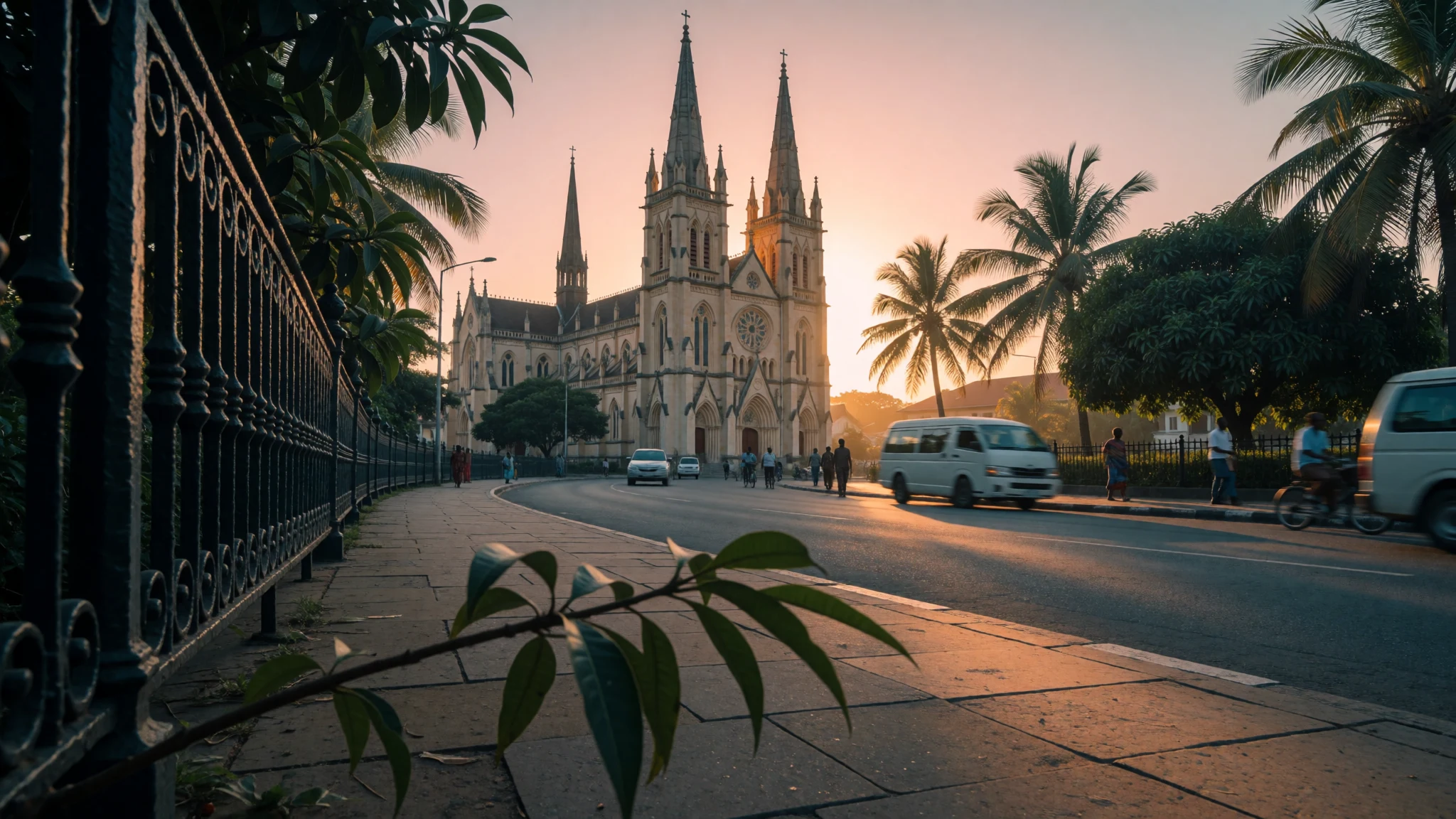
A hot, busy Indian Ocean port where Swahili, Arab, Indian and colonial pasts meet, and the usual gateway to Zanzibar and safari.
The place
Dar es Salaam is the largest city in Tanzania and the capital of its own region, a port on the Swahili coast with more than 7 million people. Its name is Arabic and means roughly 'abode of peace'. The city sits only about 12 m above the Indian Ocean, so the air is heavy and warm for most of the year and a sea breeze is the main relief. Dodoma is now the official capital, yet most government offices and ministries still sit in Ilala, and money, media, film, fashion and music gather here too. Banks and shipping offices crowd the centre beside the harbour and the ferry terminal, and the Posta district takes its name from the main post office. North of the centre, Kinondoni and Msasani spread along the coast, while Kariakoo and Ilala hold older, denser neighbourhoods of trading streets. Across the water, Kigamboni has beaches reached by a short ferry crossing. This is not an easy city to cover on foot. Traffic is thick, pavements come and go, and a short distance on the map can take an hour in a car or minibus. What it offers in return is a working African port at close range: dhows and container ships, mosques and churches within sight of each other, Swahili as the everyday language, and traces of Arab, Indian, German and British rule in the buildings. Most visitors pass through on the way to Zanzibar or the northern safari parks. Those who stay two or three days find a city with a rhythm of its own.
Its story
Dar es Salaam grew from Mzizima, a Swahili fishing village whose name means 'healthy town', on the margins of the Indian Ocean trade routes. Sultan Majid of Zanzibar began building a new town beside the village in 1865 or 1866 and gave it the Arabic name it still carries. The project faltered after the sultan died and the place slipped into decline. It recovered when a German trading company set up a station on the harbour, and Germany then made the town the seat of its East African colony. A railway running inland, built in the early twentieth century, tied the port to the interior and brought in industry and workers. The First World War ended German rule. British and imperial forces took the colony, and Royal Navy ships shelled the city before the German authorities surrendered in the autumn of that war. The territory became British Tanganyika, and Dar es Salaam stayed its capital. Colonial planning kept communities apart: Oyster Bay was laid out for Europeans, while Kariakoo and Ilala developed as African quarters separate from the central district. Those divisions still shape the street pattern and the character of each neighbourhood. The capital role passed to Dodoma in later decades, but the port, the markets and the commercial districts kept the city at the centre of Tanzanian economic life.
What to see
- National Museum — City centre
The National Museum is the place to start for the deep human past of East Africa, with fossil skulls and casts that show how early humans developed in the region. Galleries on history and culture add context for the rest of the city. Check opening times and entry details with the museum before going. - Askari Monument — City centre
The Askari Monument honours the African soldiers who fought and carried supplies in the First World War, a part of the conflict often left out of European accounts. It stands at a busy junction in the centre, so it is a quick stop between the museum, the cathedral and the waterfront.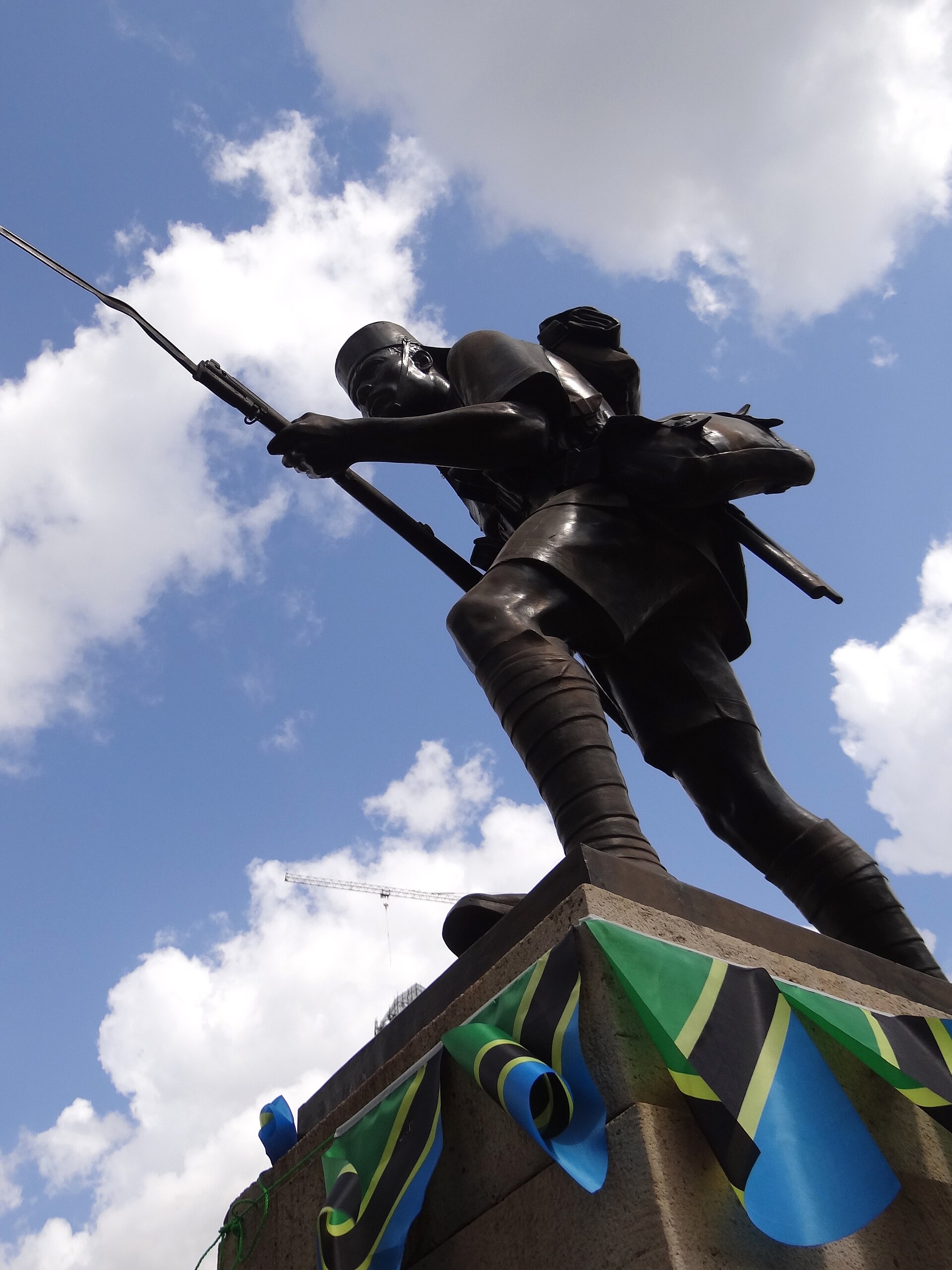
- St Joseph's Cathedral — Near the harbour
St Joseph's is a Roman Catholic cathedral in neo-Gothic style, close to the harbour front. Its stained glass is the main reward inside, and its spires are a handy landmark when you are lost among the streets. Services are held regularly, so visit quietly and avoid walking in while worship is under way.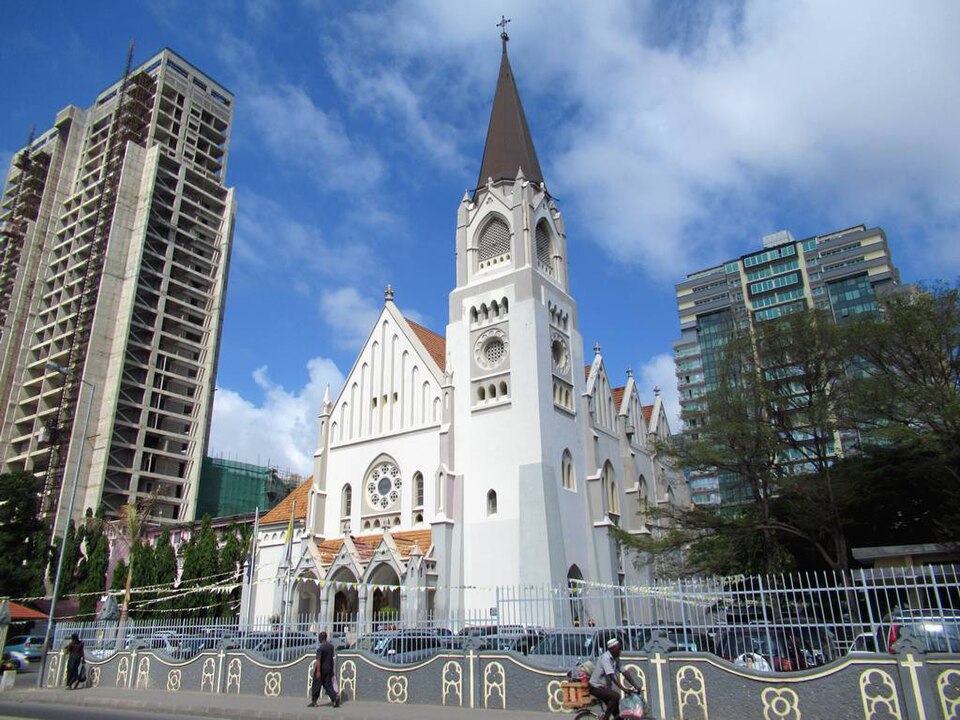
- Azania Front Lutheran Church — Waterfront, city centre
Azania Front Lutheran Church was built by German missionaries and is among the best-known buildings on the waterfront. Its pitched roof and tower look more like northern Europe than the coast of Africa. Seen together with the nearby cathedral, it shows how missions shaped the early town. - Makumbusho Village Museum — Northern suburbs
The Makumbusho Village Museum is an open-air site where houses have been built in the styles of different ethnic groups across Tanzania, laid out like a small village. It is a useful way to see the country's variety in one place. Dance performances are held on some days, so confirm the schedule before travelling out.
Culture
Dar es Salaam is Tanzania's cultural workshop, and its arts are as varied as its population. The Tingatinga painting style began here: bright enamel pictures of animals and village scenes, now sold in studios and roadside stalls across the city. The Nyumba ya sanaa, or 'House of Art', is a craft centre that promotes Tanzanian makers, and the sculptor George Lilanga left some of his work in its entrance. Music is just as layered. Live dance bands, playing the old muziki wa dansi, remain loved by an older audience. Taarab, with roots in Zanzibar, has found a smaller following. The most popular homegrown sound is Bongo Flava, the local take on hip hop and rhythm and blues, and it pours out of minibuses, shops and bars. Religion is visible in daily life. Mosques, churches and Hindu temples stand in the same districts, and the Muslim call to prayer is part of the soundscape of the coast. Swahili is the shared language, and greetings matter: people expect a few friendly words before business starts, and even a halting 'hujambo' goes down well. Family and community ties are strong, and respect for elders is shown in small gestures. Ask permission before photographing people, especially at markets, religious buildings and ports, and do not take pictures of officials, soldiers or government buildings.
What to wear
Dar es Salaam dresses in cloth with a story. The kanga is a rectangle of printed cotton, usually sold as a pair, with a Swahili proverb printed along one edge; women wrap it as a skirt, shawl or head covering, and give it as a gift at weddings and births. The kitenge is a heavier printed cotton, often taken to a tailor and made into dresses, shirts and suits. On the coast, men wear the kanzu, a long white robe, with an embroidered kofia cap, especially for Friday prayers and festivals. Maasai red checked shukas are common in the souvenir trade, though they belong to a different region. Day to day, most people wear Western-style clothes: office shirts and trousers, jeans, dresses and school uniforms. Tailoring is a point of pride, and younger designers mix kitenge into modern cuts, which feeds the city's fashion and media scene. Visitors should dress for heat and humidity but also for modesty. Light cotton or linen, with shoulders and knees covered, is comfortable and respectful in the streets and the markets. Carry a scarf or shawl for mosques and for religious districts such as old Zanzibari-style quarters. Swimwear belongs on the beach or by a pool, not in town. Sandals suit the pavements, but closed shoes are better for uneven ground, and a hat and sunglasses help in the midday glare.
What to eat
- Mishkaki — Evening street grills and neighbourhood barbecue stalls
Mishkaki are skewers of marinated meat, usually beef, grilled over charcoal until smoky. They are sold hot from roadside grills in the evening, often with a spicy sauce and a wedge of lime. A cheap, quick meal while walking through the city. - Grilled or fried fresh fish — Local eateries near the harbour and fish market
Dar es Salaam is a port, and fresh fish is a staple. Eateries near the harbour serve it grilled or fried with rice, chapati or ugali, plus a tomato and onion salad. Choose a busy place where the catch has clearly just come in. - Ugali with stew — Everyday local eateries across the city
Ugali is a stiff maize porridge, shaped by hand and used to scoop up beans, greens, fish or meat stew. It is the everyday filling meal for many Tanzanians and is served at simple local eateries throughout the city. - Indian dishes and samosas — Indian restaurants and snack counters in the city centre
A long Indian presence on the coast shows in the food. Grilled chicken, curries, biryani and crisp samosas are widely available, and many restaurants in the centre serve Indian dishes alongside Tanzanian and Chinese ones. Vegetarian choices are easy to find. - Ethiopian injera platters — Small Ethiopian restaurants in the city
A few Ethiopian restaurants in Dar es Salaam serve injera, a soft sour flatbread, with spicy stews and vegetable dishes. They are small, family-run places that work well for a change of flavour and for groups who want to share.
Plan it
Best time. June to September is the drier, cooler part of the year and the most comfortable for walking around. The long rains fall roughly from March to May and bring heavy downpours and high humidity, while December to February is hot and sticky.
How long. 2–3
Getting there. Fly to Julius Nyerere International Airport, then take a taxi, a bajaji or a daladala minibus into the centre; ask your accommodation about pick-up. Ferries and fast boats link the harbour with Zanzibar, and the Kigamboni ferry crosses the creek to the south.
Budget. mid
Tips
- Check visa rules with the nearest Tanzanian consular section before travelling, and carry cash in US dollars if you plan to pay for a visa on arrival.
- Allow extra time for traffic; mornings and evenings are the worst, so plan sights near the centre together.
- Carry some cash in Tanzanian shillings for markets, street food and minibuses, and drink only bottled or filtered water.
- Agree a taxi or bajaji fare before setting off, or use a ride-hailing app.
- Use sun protection and insect repellent, and keep valuables out of sight in crowded areas.
Etiquette
- Greet people before asking a question or starting a purchase.
- Ask before photographing people, and avoid photographing government buildings, soldiers or the port.
- Cover shoulders and knees away from the beach, and dress more modestly near mosques.
Nearby
Sources
- Wikidata Q1960 (CC0)
- Wikipedia: Dar es Salaam (rev 1382805589) (CC BY-SA 4.0)
- Wikivoyage: Dar es Salaam (rev 5423307) (CC BY-SA 4.0)
- Photo: Aerial view of Dar es Salaam, Ali Damji (CC BY 2.5)
- Photo: St Joseph's Catholic Cathedral, David Stanley (CC BY 2.5)
- Photo: Askari Monument, Adam Jones, Ph.D. (CC BY 3.0)
- Photo: Masjid in Kinondoni, Mangapwani (CC BY-SA 4.0)
- Photo: Tanzanite Bridge, Mangapwani (CC BY-SA 4.0)
- Photo: Dar es Salaam Port, Prof. Chen Hualin (CC BY-SA 4.0)
- Photo: Posta, Dicksonpicha (CC BY-SA 4.0)
- Photo: Flag of Dar Es-Salaam City Council, Aml-401 (CC0 1.0)


