Mikumi National Park
Mikumi National Park, Tanzania
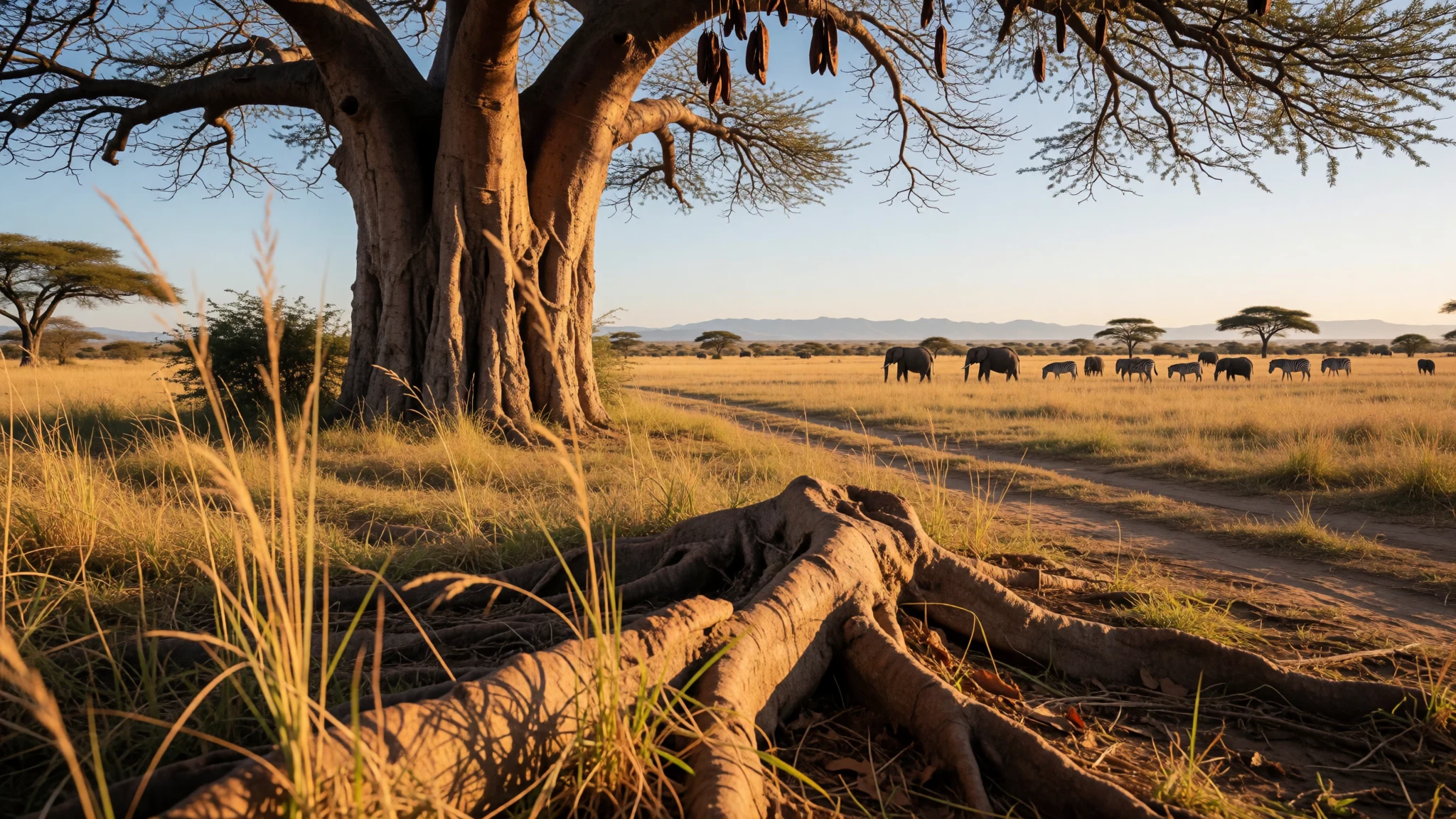
Mikumi National Park offers open-plain safari close to Dar es Salaam, with elephants, giraffes, hippos and baobabs beside a busy highway.
The place
Mikumi National Park sits in central-southern Tanzania, near the town of Morogoro, on the road that runs from Dar es Salaam towards Iringa and Mbeya. That highway cuts through the park for about 50 km, so the first animals many visitors see are zebras or giraffes grazing within sight of passing lorries and buses. It is a quirk that makes the park unusually easy to reach and a little noisy at the edges.
The heart of the park is the Mkata floodplain, a broad, flat sweep of grass dotted with acacias and shallow seasonal pans. Writers often compare it with the Serengeti, and the resemblance holds in miniature: long sightlines, herds scattered across the grass, and a sky that fills most of the view. The Mkata River and a handful of hippo pools keep water when the grass has turned to straw, which pulls animals in during the dry months.
Hills frame the plain. The Vuma Hills lie to the north, and further off the Uluguru and Vidunda ranges show as blue outlines. The wooded slopes hold sable antelope and greater kudu, though they are harder to find than the floodplain herds. Baobabs, with their swollen grey trunks, stand in groups along parts of the park and make an easy subject for photographs.
Mikumi also belongs to a wider landscape. Nyerere National Park, the Kilombero Valley and the Eastern Arc Mountains lie close by, and animals move across the gaps between them. On a map the park looks less like an island than one room in a large house. Founded in 1964, it is a natural first stop on Tanzania's southern circuit, and a sensible one for anyone with only a weekend.
Its story
Mikumi National Park was gazetted in 1964, and its story is mostly one of boundaries and roads. The first protected area was far smaller than today's. In 1975 the limits were pushed outwards, taking in more habitat and the routes animals use to travel between Mikumi and the wider Selous country to the south, now part of Nyerere National Park. The thinking was to protect movement, not just a fixed block of land.
The name comes from the town beside the park. Park authorities link it with the Borassus palm, a tall fan palm that once grew thickly in the district. Few visitors notice the palms now, but the word keeps the memory of a landscape that looked different.
The highway is the other thread. It was built to join the coast with the highlands and the southern interior, and it was already there before the park reached its present shape. It still runs through the middle. Traffic carries supplies and visitors, but it also brings collisions, noise and a barrier that animals must cross on their own terms. Slow, careful driving matters here more than in most parks.
Today Mikumi sits alongside Nyerere, Ruaha and Udzungwa Mountains national parks on a southern route that has grown as a calmer alternative to the northern circuit. Calmer does not mean empty: weekend traffic from Dar es Salaam can fill the main tracks. The same easy access that built the park's reputation is also what shapes its crowds.
What to see
- Mkata Floodplain — Central plains
The Mkata Floodplain is where most game drives spend their time. Flat grassland, scattered acacias and shallow pans keep sightlines long, so herds of zebra, wildebeest and impala are easy to pick out, with giraffes, buffaloes and elephants among them. Lions sometimes rest in the grass near the herds. The dry months give the clearest viewing.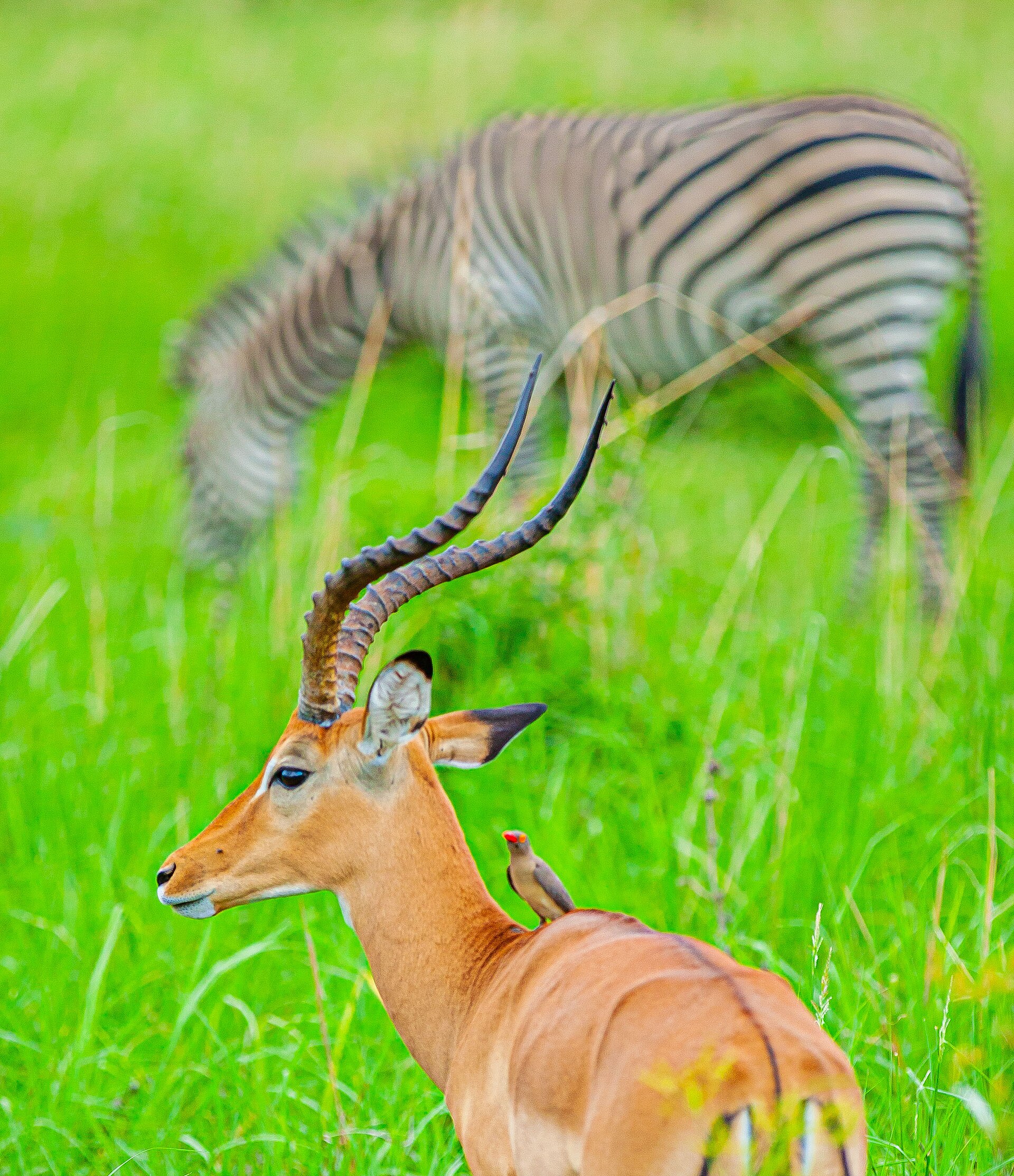
- Hippo Pools — Along the Mkata River
The hippo pools are a dependable stop in any season. Hippos wallow in the water, often with only eyes and nostrils showing, while crocodiles lie along the banks and waterbirds work the shallows. Elephants and giraffes sometimes pass on the nearby tracks. Stay in the vehicle, since the banks are slippery and hippos defend their space. - Birdlife of the pans and woodland — Pans and acacia woodland
Mikumi's seasonal pans and acacia woodland suit birds, with more than 400 species recorded. Rollers and bee-eaters flash colour from low perches, hornbills work the trees, and eagles and vultures circle overhead. Waterbirds arrive with the seasons. A bird list makes a slow morning worthwhile when the big mammals are resting out of sight in the shade. - Vuma Hills — Northern park
The Vuma Hills close off the northern plains, with the Uluguru and Vidunda ranges fading behind them. Scenery is the main draw here. The wooded slopes hold sable antelope and greater kudu, but animals are scarcer and shyer than on the open floodplain, so patience and a guide who knows the tracks make a real difference. - Baobab groves — Along the main tracks
Baobabs stand in clusters through parts of Mikumi, their thick trunks and bare, root-like branches visible from far off. Large pods hang from the boughs in some seasons. They make a good place to stop, stretch and photograph the park with a landmark in the frame rather than an animal.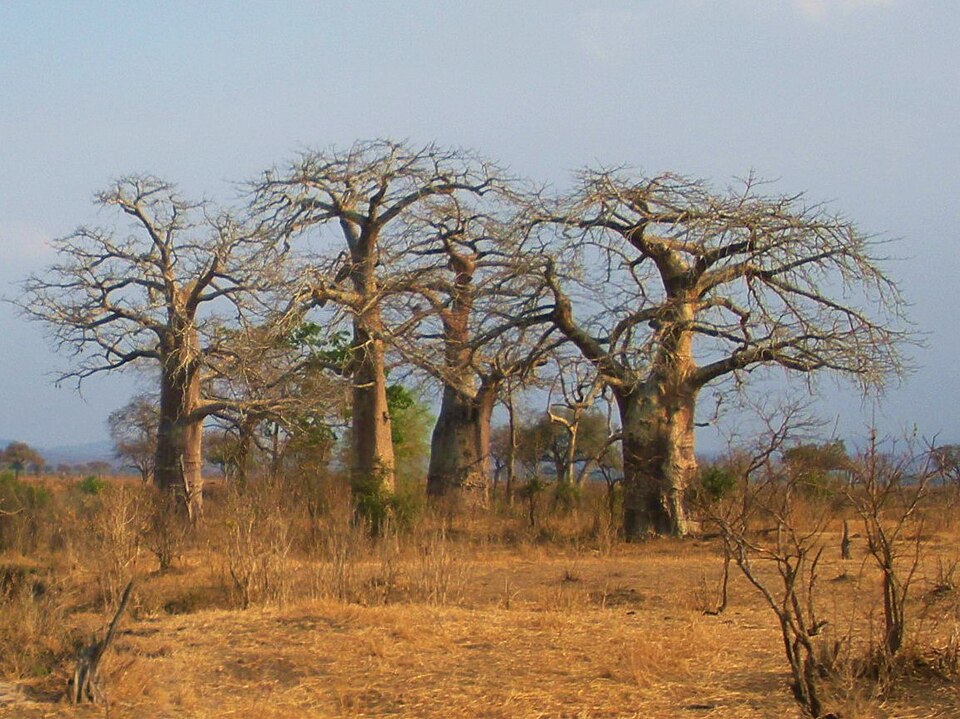
Culture
Mikumi National Park sits in a part of Tanzania where daily life runs along the highway. Mikumi town, just beside the park, is a stop for lorry drivers, bus passengers and farmers, with roadside stalls selling fruit, charcoal and cooked snacks. Behind them are village homes of brick and iron roofing, and small farms stretching towards the hills.
Swahili is the language of the road, the market and the ranger post, and English is common among guides and lodge staff. Greetings carry real weight: a short "Hujambo" or "Habari" before any question, and "Asante" afterwards, opens doors more reliably than a direct request. "Karibu", meaning welcome, is heard everywhere.
The park is run by TANAPA, Tanzania's national parks authority, and the rangers at the gate are the people to ask about conditions and recent sightings. Many guides grew up within reach of the park and carry local knowledge of animals, plants and the Borassus palms that gave the district its name. Tipping guides and drivers at the end of a safari is customary, though the amount is a personal decision. Conservation and livelihoods are tied together here: park work, lodge jobs and produce sold at the gate all depend on wildlife staying healthy.
Ask permission before photographing anyone in Mikumi town or at roadside stalls, and accept a refusal with a smile.
What to wear
Mikumi National Park lies in a country where cloth carries meaning. The kanga, a printed cotton rectangle often sold in pairs and edged with a Swahili proverb, is wrapped as a skirt, tied as a headscarf or used to carry a baby. The kitenge, a heavier printed cotton, is sewn into dresses, shirts and head wraps. On the coast and for Friday prayers or Eid, men may wear the kanzu, a long white robe, with an embroidered kofia cap.
Around Mikumi town, everyday clothing is practical: trousers, shirts and T-shirts for men, and skirts or dresses, often in kitenge or kanga, for women. Football shirts are everywhere. Dress is generally modest, with shoulders and knees covered in villages and on buses, especially for women.
For a visit, choose neutral colours such as khaki, olive and tan. Dark blue and black can attract biting flies, and camouflage prints are best left at home because they are associated with the military. Lightweight long sleeves and trousers protect against sun, dust and insects. Bring a wide-brimmed hat, sunglasses and sunscreen, plus a warm layer for early mornings in an open vehicle. Closed, comfortable shoes are better than sandals on stops at the pools. Carry a scarf or wrap for dusty stretches and for visits to villages.
What to eat
- Ugali with beans or greens — Roadside eateries in Mikumi town and lodge dining rooms
Ugali is a stiff maize porridge, shaped by hand and used to scoop up stewed beans or sautéed greens. It is the everyday filling meal across Tanzania and turns up at almost every simple eatery in Mikumi town and in lodge kitchens. - Nyama choma — Grill stalls and bars along the highway through Mikumi town
Nyama choma means grilled meat, usually goat, beef or chicken, cooked over charcoal and served in chunks with salt, pepper and sometimes a tomato-and-onion relish. It is a social dish, shared at a table, and best eaten fresh from the grill. - Pilau and rice dishes — Lodge restaurants and small local eateries
Pilau is rice cooked with meat in a mix of warming spices, while plain rice with beans or vegetables is the cheaper, lighter option. Both are common lodge dishes and easy to find when other choices run out. - Chapati and mandazi — Morning stalls and tea shops by the road
Chapati are soft, layered flatbreads, and mandazi are lightly sweet fried dough triangles. Both go well with sweet milky tea and make a sensible breakfast or packed snack before an early game drive. - Fresh fruit — Roadside stalls along the main highway
Mangoes, bananas, oranges and pineapple appear in season from roadside sellers, often peeled and cut on request. Fruit is a safe, filling snack for a long day in the vehicle, and a good way to support local sellers.
Plan it
Best time. June to October is the dry season: grass thins, animals gather around the river and the hippo pools, and sightings are easiest. In the rains many secondary tracks close, grass grows tall and wildlife is harder to see, though the park is greener and quieter.
How long. 2–3
Getting there. There are no scheduled flights to Mikumi, Morogoro or Iringa, so travel is by road. From Dar es Salaam, take the Iringa highway to the park gate; allow most of a morning, as the road is slow in places. Options are a hired four-wheel-drive with a driver, or a bus to Mikumi town with a vehicle arranged from there.
Budget. mid
Tips
- Confirm the vehicle is a reliable four-wheel-drive with air conditioning and good tyres before paying any deposit.
- Fill the fuel tank before entering the park, and carry plenty of safe drinking water for every game drive.
- At the gate, find out from staff which zones are best that day and whether lions have been seen.
- Store food securely, since baboons and monkeys will raid open bags and vehicles.
- If travelling by bus, buy the ticket the day before at the Magufuli Bus Terminal in Dar es Salaam.
Etiquette
- Stay inside the vehicle except at marked stops, and never feed or approach animals.
- Drive slowly on the highway section and give way to animals crossing.
- Ask before photographing people in Mikumi town or at roadside stalls.
Nearby
Sources
- Wikidata Q1124728 (CC0)
- Wikipedia: Mikumi National Park (rev 1381493345) (CC BY-SA 4.0)
- Wikivoyage: Mikumi National Park (rev 5337070) (CC BY-SA 4.0)
- Photo: A group of baobab trees in the Mikumi National Park, Tanzania (Prof. Chen Hualin) (CC BY-SA 4.0)
- Photo: A man's home is his wife's castle (Rasheedhrasheed) (CC BY-SA 4.0)
- Photo: A man's home is his wife's happiness (Rasheedhrasheed) (CC BY-SA 4.0)
- Photo: A man's home, Mikumi, Morogoro (Rasheedhrasheed) (CC BY-SA 4.0)
- Photo: Aepyceros melampus & Buphagus erythrorynchus (Rasheedhrasheed) (CC BY-SA 4.0)
- Photo: Baobab tree with fruits at Mikumi National Park (Muhammad Mahdi Karim) (CC BY-SA 4.0)
- Photo: Big baobab in Mikumi (mwanasimba) (CC BY-SA 2.0)
- Photo: Bungalow at Mikumi National Park (mwanasimba) (CC BY-SA 2.0)


