Mafia Island
Mafia Island, Tanzania
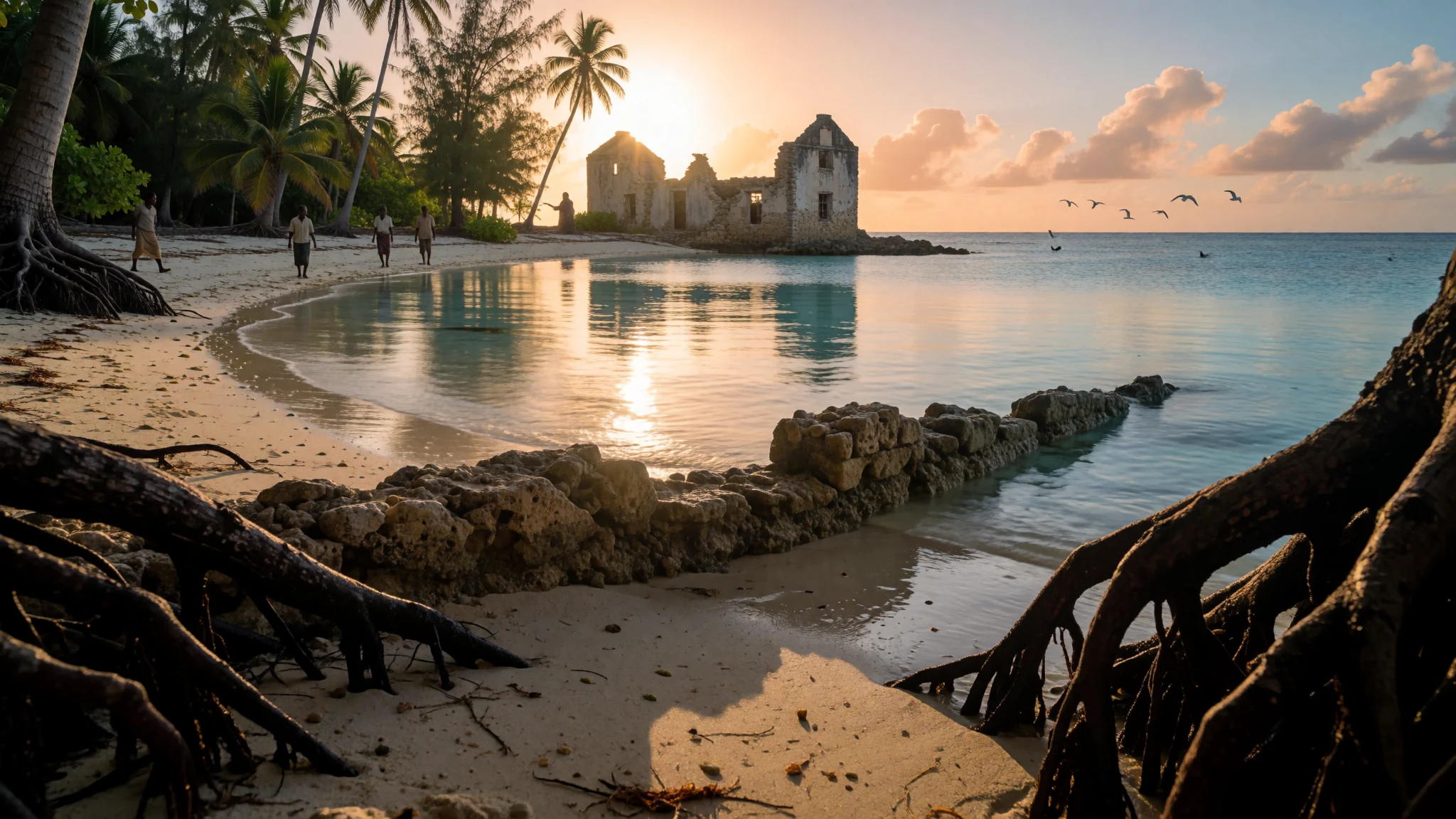
Mafia Island offers reef diving, quiet beaches and old Swahili trading ruins, with far fewer visitors than Zanzibar, its better-known neighbour to the north.
The place
Mafia Island sits off the coast of Tanzania, facing the delta of the Rufiji River across a stretch of water called the Mafia Channel. In Swahili it is Kisiwa cha Mafia, and it is also known as Chole Shamba, a name that points to the farmland behind the old settlement on nearby Chole Island. It belongs to the mainland's Pwani Region and is not part of the Zanzibar archipelago, so the feel is closer to a Tanzanian coastal district than to a resort island. The facts record gives 40,801 residents, spread across fishing villages, coconut groves and small farms.
Kilindoni, on the western side, is the working town: the airstrip, the market, the harbour traffic and the shops all gather here. The eastern side is different. Chole Bay is a sheltered, deep anchorage, historically the island's real harbour, and today it is where most dive operators and lodges are based. Between the two coasts the land is low, green and sparsely settled, with sandy tracks rather than proper roads in many places.
The economy rests on fishing, small-scale farming and trade through Kilindoni. Tourism is real but modest. Divers, birdwatchers, sport anglers and people who simply want a slow week by the sea make up most of the visitors. Expect heat, humidity, patchy mobile signal and a pace that does not hurry for anyone. That is the appeal, and also the reason to arrive with realistic expectations about comforts and choice.
Its story
Mafia Island has been known to travellers since at least the eighth century, when it appears in records of Indian Ocean trade. Dhows linking East Africa with Arabia and farther east used it as a stopping place, and the small island of Chole Mjini in Chole Bay grew into a trading town with links to the southern coast and the gold and silver routes of the interior.
The past was not always peaceful. Kua, on Juani Island, was sacked by raiders who crossed from Madagascar by sea in a large fleet of canoes, and many of its people were killed or enslaved. The ruins at Kua were documented in three dimensions by the Zamani Project in 2018, which makes them easier to study than to visit.
In 1890 a treaty passed the island into German hands, and the colonial buildings that still stand on Chole date from that period. Germany paid the Sultan of Zanzibar for the island and a strip of mainland coast. In January 1915, British forces seized Mafia and used it as a base for the operation against the German cruiser Königsberg, which was hiding in the Rufiji Delta.
The name itself is debated. One view traces it to an Arabic word meaning a group or archipelago; another reads it as Swahili for a healthy place to live.
In 1995, with help from the World Wide Fund for Nature, a marine park was set up around the island's reefs. It was the first of its kind in Tanzania and still shapes how fishing and diving are managed here.
What to see
- Chole Bay and Chole Mjini — Chole Bay, east coast
Mafia Island's eastern bay is the best base for reef trips, and the little island of Chole Mjini sits inside it. Ruined stone houses, German-era buildings and old trees are slowly being reclaimed by roots. Wander on foot with a local guide, then spend the afternoon snorkelling or on a dhow.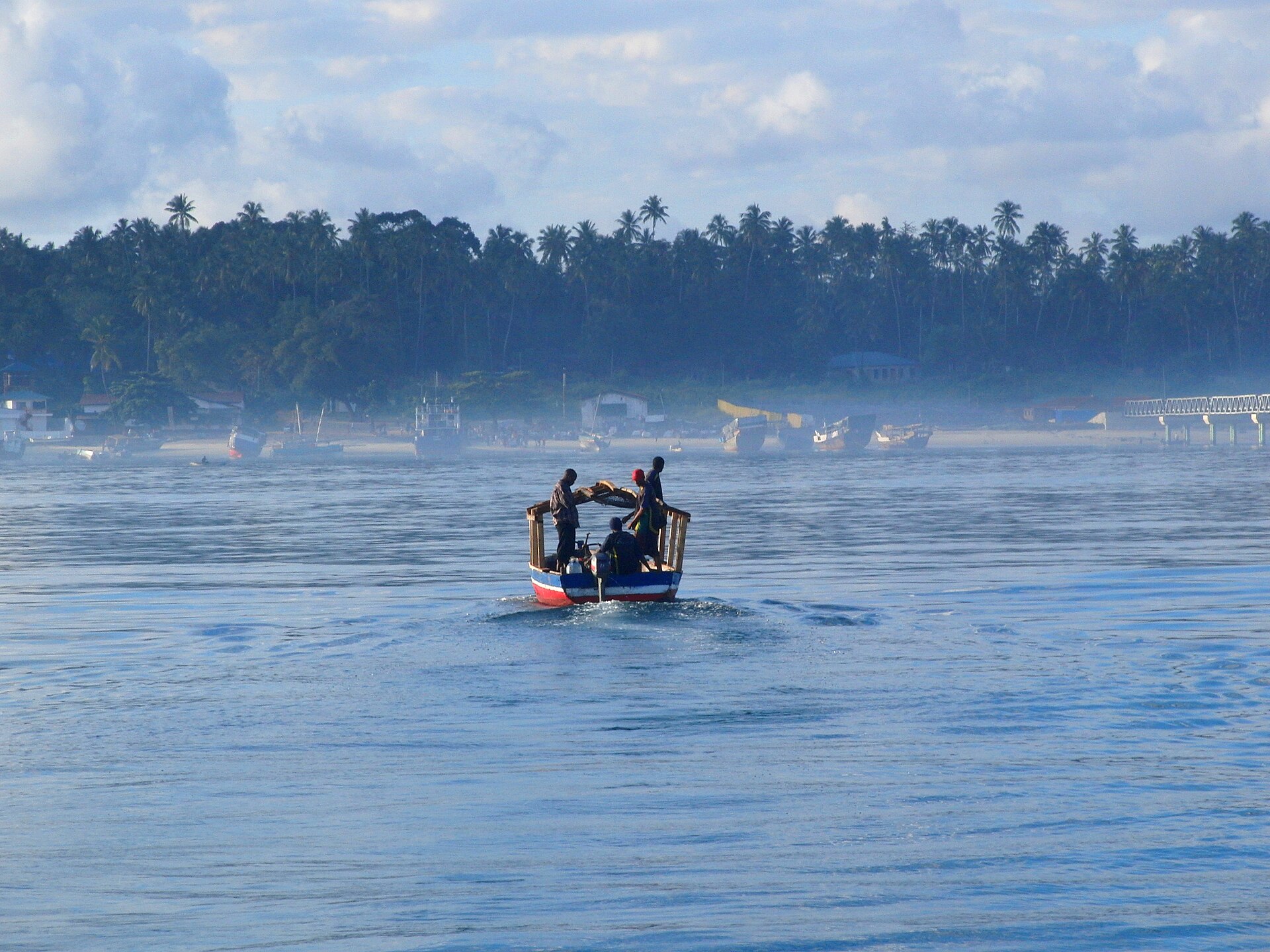
- Ras Mkumbi lighthouse — North Mafia
At the northern tip of Mafia Island, the lighthouse gives long views over the water and the forest behind it. The Mlola Forest is protected for its plants and animals, and Sykes monkeys are sometimes seen. Go early, before the heat builds, and ask locally about the track. - Jibondo — Southern waters off Mafia Island
Jibondo is a fishing village reached by boat from the main island. It is known for octopus, which families still catch in quantity, while shark numbers have fallen after overfishing. A visit is best arranged through a lodge or local guide so that the village benefits and the welcome is mutual. - Bwejuu Island — Western archipelago, near Ras Kisimani
Bwejuu is a small, palm-covered island ringed by sandbars, near the Rufiji Delta side of the archipelago. Snorkelling over the surrounding reefs is the main reason to go. Boats depend on tides and weather, so plan with a local operator rather than turning up and hoping. - Mange reef — Far western edge of the archipelago
Mange is a small coral atoll in the Mafia Channel where a sandbar appears at low tide. Shallow reef suits snorkellers, while the channel side drops away for divers. Day trips by sailing dhow often include a beach picnic with grilled fish, and sun protection matters here as there is no shade.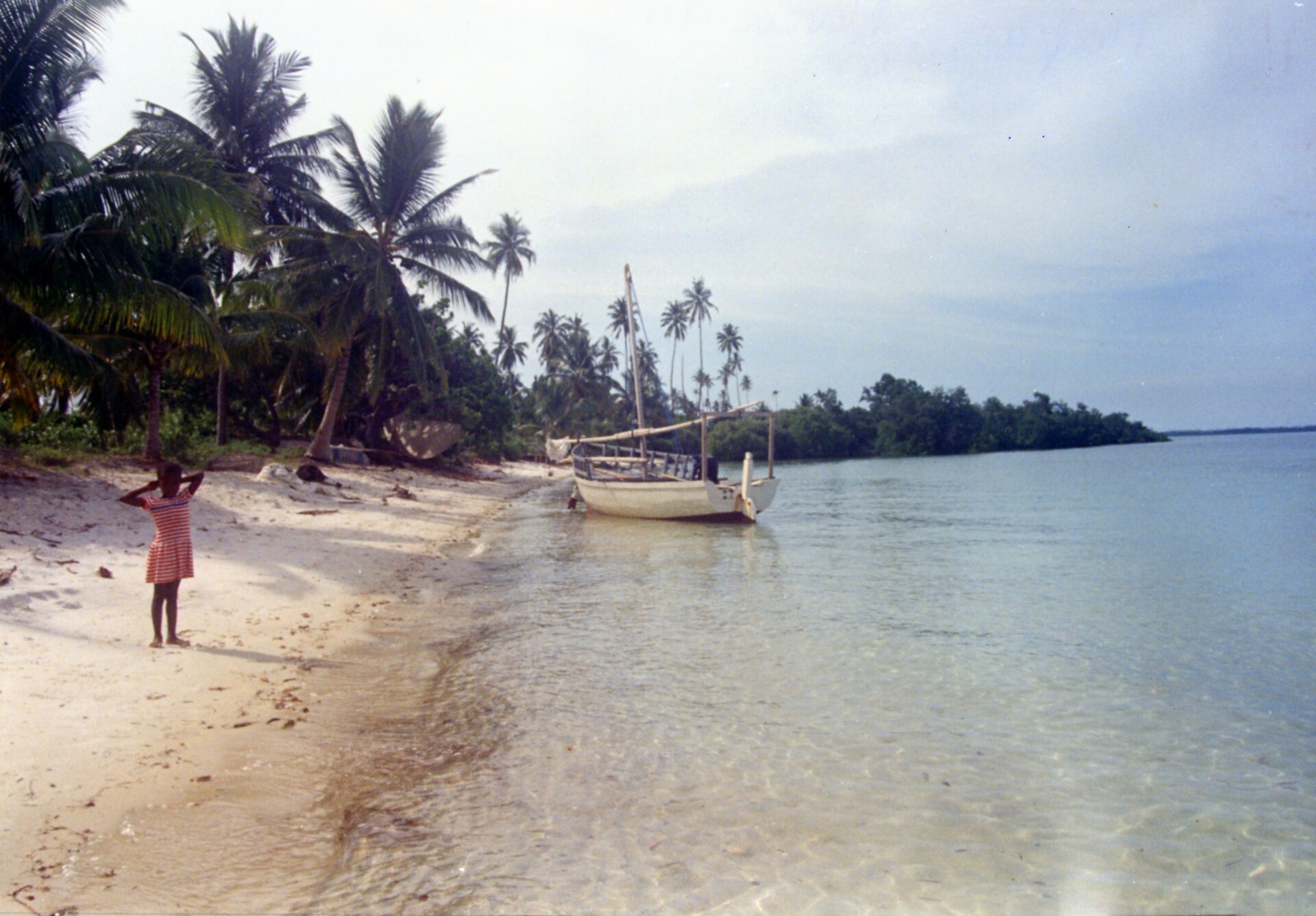
Culture
Mafia Island belongs to the Swahili coast, a culture shaped over centuries by African, Arab, Indian and later European contact. Most people on the island are Muslim, and the rhythm of the day follows the call to prayer, Friday gatherings and the fishing tides. Kiswahili is the everyday language, and a few greetings go a long way: people greet each other properly before any business, and rushing past the formalities is read as rude.
Fishing defines much of island life. Boats leave before dawn, catches are sorted on the beach, and the women of many villages handle drying, selling or farming. Boat building and sailmaking continue in the old way in some villages. Music on the island includes taarab, a sung poetry style with Arab and Indian roots that suits the Swahili coast, and bars and gatherings in Kilindoni often feature it.
The island's past as a trading stop is still visible in its architecture: coral-stone ruins, carved doors and the plain mosques of the older settlements. Life here is quiet, family-centred and unhurried, and visitors who stay a while tend to find that conversation matters more than sightseeing.
Outside the dive lodges, tourism is new enough that people notice how visitors behave. Ask before photographing anyone, and in villages and around mosques wear clothes that cover your shoulders and knees.
What to wear
Mafia Island dresses in the style of the wider Swahili coast. The kanga is the garment most people know: a printed cotton cloth, usually sold in pairs, with a Swahili proverb or message along the border. Women wrap it as a skirt, a head cover or a shawl, and it is also used to carry children and goods. Men wear the kikoi, a woven cotton wrap, at home or on the beach. For Friday prayers and festivals many men wear a kanzu, a long white robe, often with an embroidered kofia cap. Some women also wear the buibui, a dark overgarment, when out in public.
Day to day, what people actually wear is simpler: T-shirts, trousers or shorts for men, and long skirts, dresses or kanga with a top for women. Fishermen wear whatever dries quickly and tolerates salt. In Kilindoni the clothing is a little smarter, and market traders often wear bright prints.
For visitors, the climate calls for light, loose cotton or linen in pale colours, plus a wide-brimmed hat and strong sun protection. In villages and anywhere near a mosque, cover shoulders and knees, and keep swimwear for the beach and boats. Women may feel more comfortable with a kanga or light scarf to hand. Bring reef shoes or sturdy sandals for rocky shallows and coral rubble, and a thin long-sleeved shirt for boat trips, where the sun reflects off the water.
What to eat
- Octopus in coconut — Fishing-village eateries and local restaurants in Kilindoni
Octopus (pweza) is a staple on Mafia Island, especially in fishing villages such as Jibondo. It is usually stewed or grilled and served in a coconut sauce with rice or cassava. Ask at village eateries or local restaurants in Kilindoni. - Grilled fish — Harbour-side stalls and dhow picnics
Whole fish is grilled over charcoal and served with lime, chilli and salad or rice. The catch changes daily, so ask what came in that morning. Dhow day trips often finish with a beach barbecue of the same kind. - Wali wa nazi — Local eateries in Kilindoni
Coconut rice is cooked with coconut milk until soft and slightly sweet. It accompanies fish curries, beans and vegetables, and is a standard meal in homes and simple eateries across the island. - Mandazi — Morning stalls and the market in Kilindoni
These lightly spiced, fried dough triangles are eaten at breakfast or with tea. They are sometimes flavoured with cardamom or coconut. Buy them warm from a morning stall and eat them the same day. - Seafood with local wine or cocktails — Lodge restaurants on Chole Bay
Some lodges around Chole Bay serve fresh seafood with cocktails or wine and a view over the water. It is a more formal way to eat than village eateries, and often needs advance booking. Check with the lodge directly.
Plan it
Best time. June to October is the usual choice: the weather is drier and the sea is calmer for boat trips and diving. The long rains arrive in the cooler months of April and May, and some lodges close then. Humidity and heat are constant, so schedule activity for early morning.
How long. 4–6
Getting there. Fly to Dar es Salaam, then take a small plane to Kilindoni airstrip on Mafia Island, a short flight. Two airlines serve the route; check schedules and baggage limits directly, as small aircraft are strict. From Kilindoni, lodges usually arrange road or boat transfers to the east coast and Chole Bay.
Budget. mid
Tips
- Book flights and lodges well ahead, as capacity is small and lodges may close in the rains.
- Carry enough cash for the island, as card machines and cash points are scarce outside the main town.
- Bring reef-safe sun cream, a hat and refillable water bottles; drink only treated or bottled water.
- Arrange boat trips and village visits through your lodge or a local operator, and check tides before committing.
- Download maps and messages before you travel, as mobile signal is patchy.
Etiquette
- Ask permission before photographing people, boats or catches.
- Cover shoulders and knees in villages and near mosques.
- Do not touch or stand on coral, and take all rubbish back with you.
Nearby
Sources
- Wikidata Q713391 (CC0)
- Wikipedia: Mafia Island (CC BY-SA 4.0)
- Wikivoyage: Mafia Island (CC BY-SA 4.0)
- Photo: Mafia Island or Chole Shamba (Nina R) (CC BY 2.5)
- Photo: Mafia Airport aerial view (Krukrus) (CC BY-SA 4.0)
- Photo: Mafia Island marine chart (W J L Wharton) (Public domain)
- Photo: Mafia Island harbour (Jens Klinzing) (CC BY 3.0)
- Photo: Beach on Mafia Island (Gill Penney) (CC BY 2.5)
- Photo: Shop in Mafia Island (Kevin Andrew / Frontier Gap) (CC BY 2.5)
- Photo: A single woman 01 (Calvin Kulaya) (CC BY-SA 4.0)
- Photo: A single woman 02 (Calvin Kulaya) (CC BY-SA 4.0)


