Trowulan Temples
Trowulan Temples, Indonesia
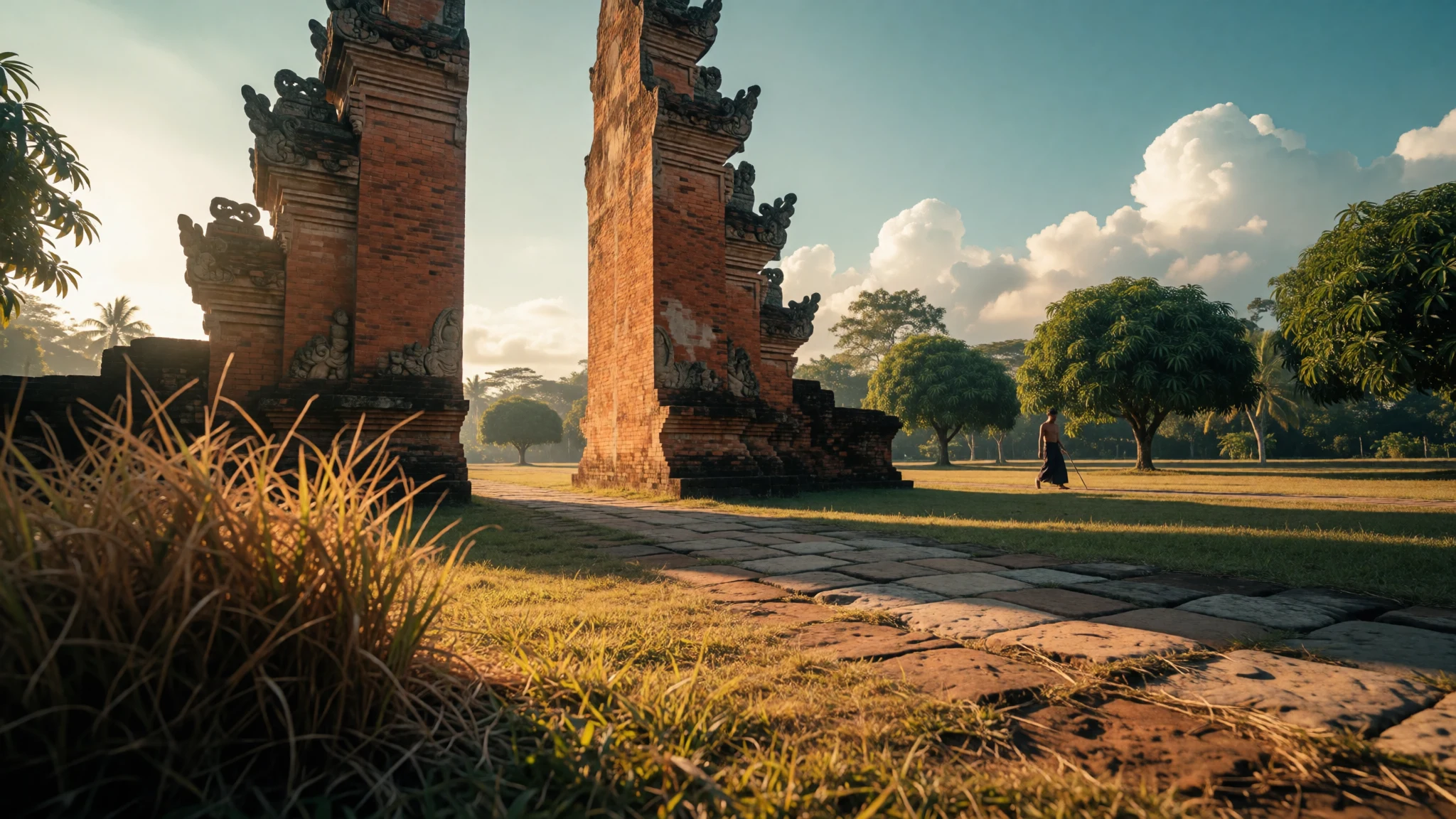
Trowulan Temples offers red-brick gates, a sunken bathing pool and a vast reservoir, the scattered remains of the Majapahit capital in East Java.
The place
Trowulan Temples sit in Trowulan Subdistrict, Mojokerto Regency, East Java, on flat farmland about 60 km from Surabaya. This is not a single compound with a fence round it. The archaeological area covers roughly 100 square kilometres, and the monuments are spread among villages, rice fields, brick-making yards and ordinary roads, so a visit means moving from one site to the next rather than walking through one grand complex.
Scholars have long suggested that this was the capital of the Majapahit Empire, the city known in its day as Majapahit or Wilwatikta. The case rests on a 14th-century poem, the Nagarakretagama, and on a Chinese source from the 15th century, backed up by what the ground has yielded.
The character of the place is quiet and local. Red brick is the signature material: gates, temple towers and bathing places are all built of it, and the colour glows at the end of the day. Between the big monuments there are smaller finds, a museum of recovered objects beside a large pool, and village workshops where stone is carved into Buddhas and Ganesha figures.
The heat is steady, the crowds thin, and the pace is set by motorbike taxis and cycle rickshaws. It suits people who enjoy piecing a vanished city together from fragments, and it rewards a slow day more than a rushed hour.
Its story
Trowulan Temples belong to the story of Majapahit, an empire whose capital is described in the Nagarakretagama, a poem by Mpu Prapanca written in the 14th century. The poem lingers on the palace and its surroundings, but only on the royal and religious parts of the city. Its details are vague enough that scholars who try to draw a plan from it reach different results.
The city's end came in 1478, when it was razed during the invasion of Girindrawardhana, who set out to defeat Kertabhumi. Afterwards the capital moved to Daha, now Kediri, and the old site slowly passed into fields and villages.
For a long time research here focused on the obvious monuments: temples, tombs and a bathing place. More recent surveys and excavations have widened the picture. They have turned up traces of industry, trade and religious life, along with housing areas, water supply systems and canals. Together these point to a dense population in the 14th and 15th centuries, a working city rather than a ceremonial centre alone.
In October 2009 the Indonesian Ministry of Culture and Tourism put Trowulan forward for the UNESCO World Heritage list. Much of what has been dug up is kept in the Trowulan Museum, on the west side of the Segaran pool, which makes it a sensible place to begin before heading out to the brick monuments.
What to see
- Bajang Ratu gate — Temon village, Trowulan
Bajang Ratu is a slender red-brick gate of the paduraksa type, dating from the mid-14th century and rising 16.5 metres. Carving crowds its roof section. The name means roughly 'dwarf' or 'little monarch', and folk tradition ties it to King Jayanegara, said to have been hurt in a fall here as a child.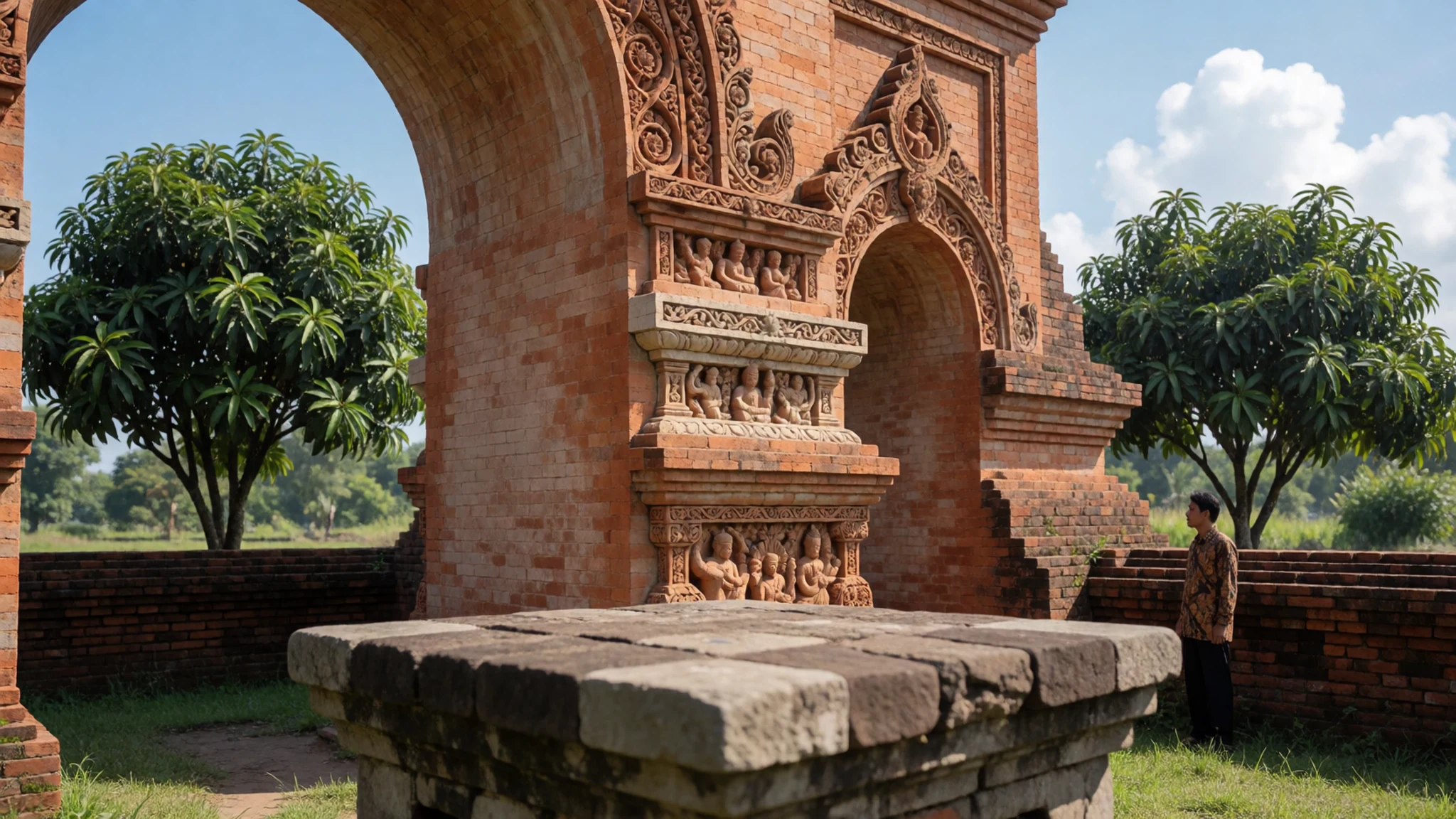
- Candi Tikus — Trowulan archaeological area
Candi Tikus is a ritual bathing pool, a sunken rectangular basin of red brick with steps going down on the north side. Its name means 'rat temple', after rats found nesting on the site when it was uncovered in 1914. A central structure was apparently modelled on the mythical Mount Mahameru, with turrets once ringing its summit.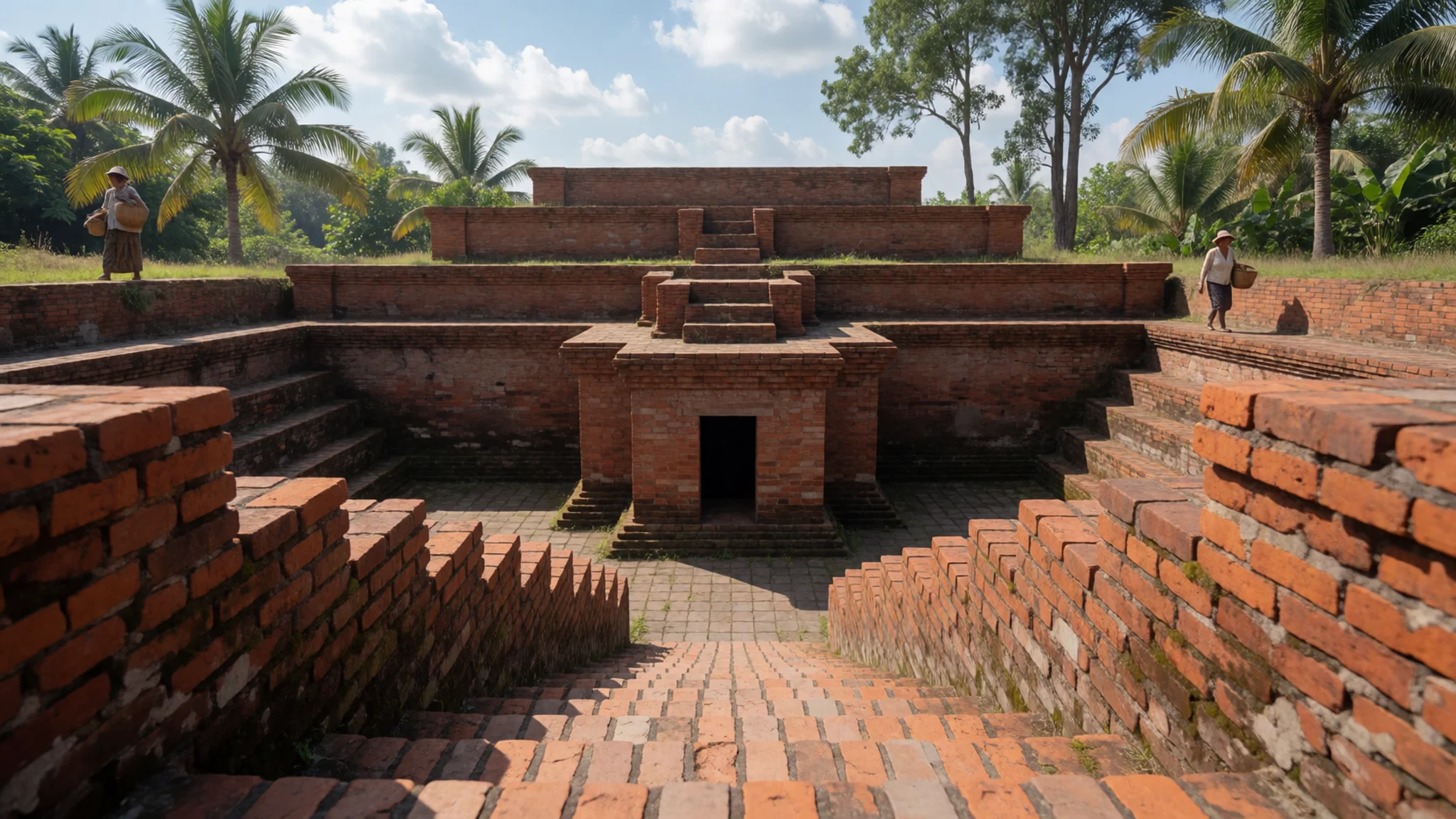
- Brahu temple — Bejijong village, Trowulan
Brahu is a tall red-brick temple from the Majapahit period, standing in a tidy compound amid fields. Its bare, weathered brickwork shows how the builders worked without much stone, and the scale gives a sense of how impressive these structures were when the city was alive. It photographs best in low afternoon light.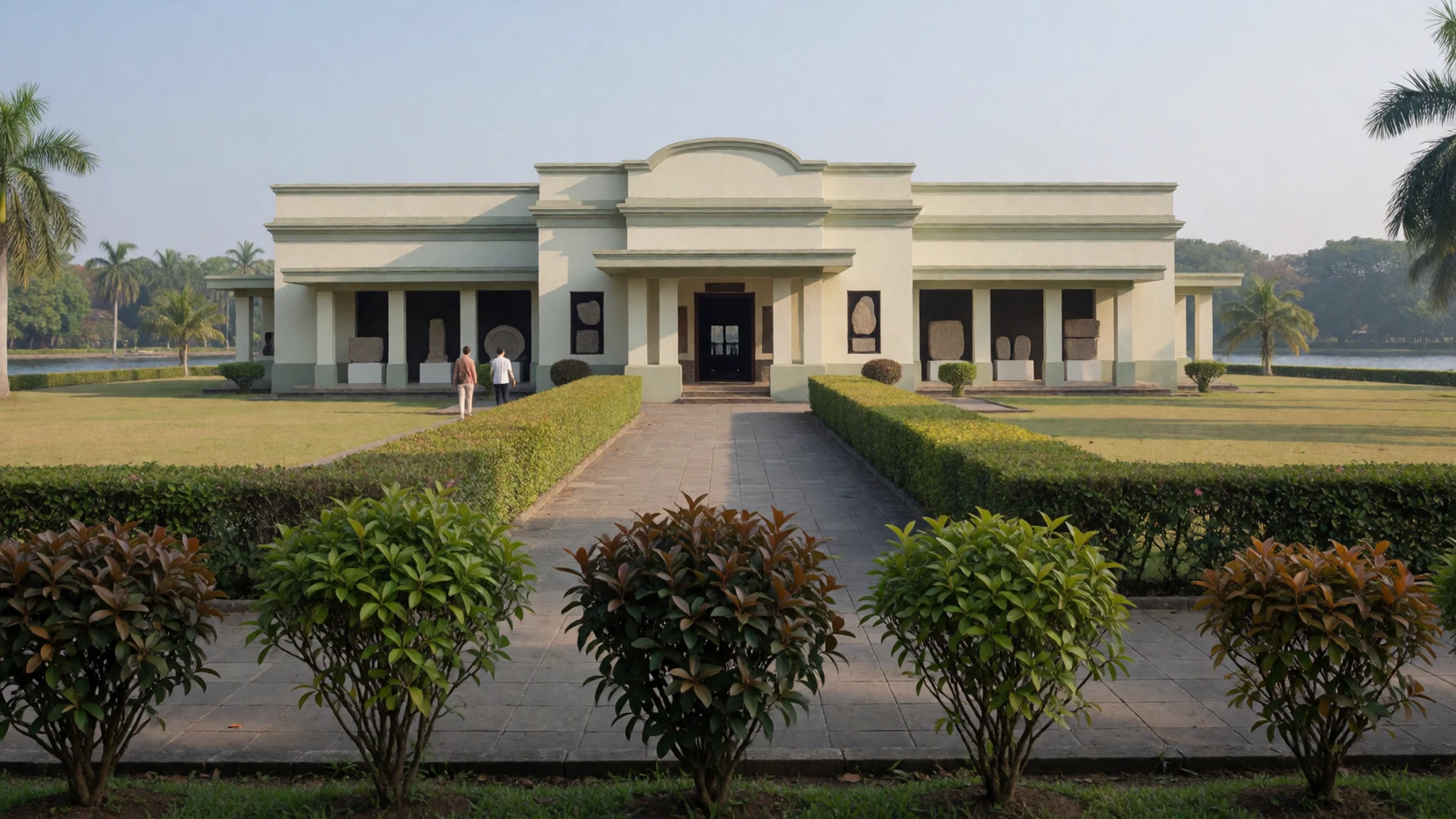
- Segaran pool — Trowulan village
Segaran is a rectangular water reservoir dating from the Majapahit era, measuring 375 m by 175 m. It is a calm, open space on the edge of the monuments, with a path along its banks. The Trowulan Museum stands on its west side, so the two make a natural pairing for visitors.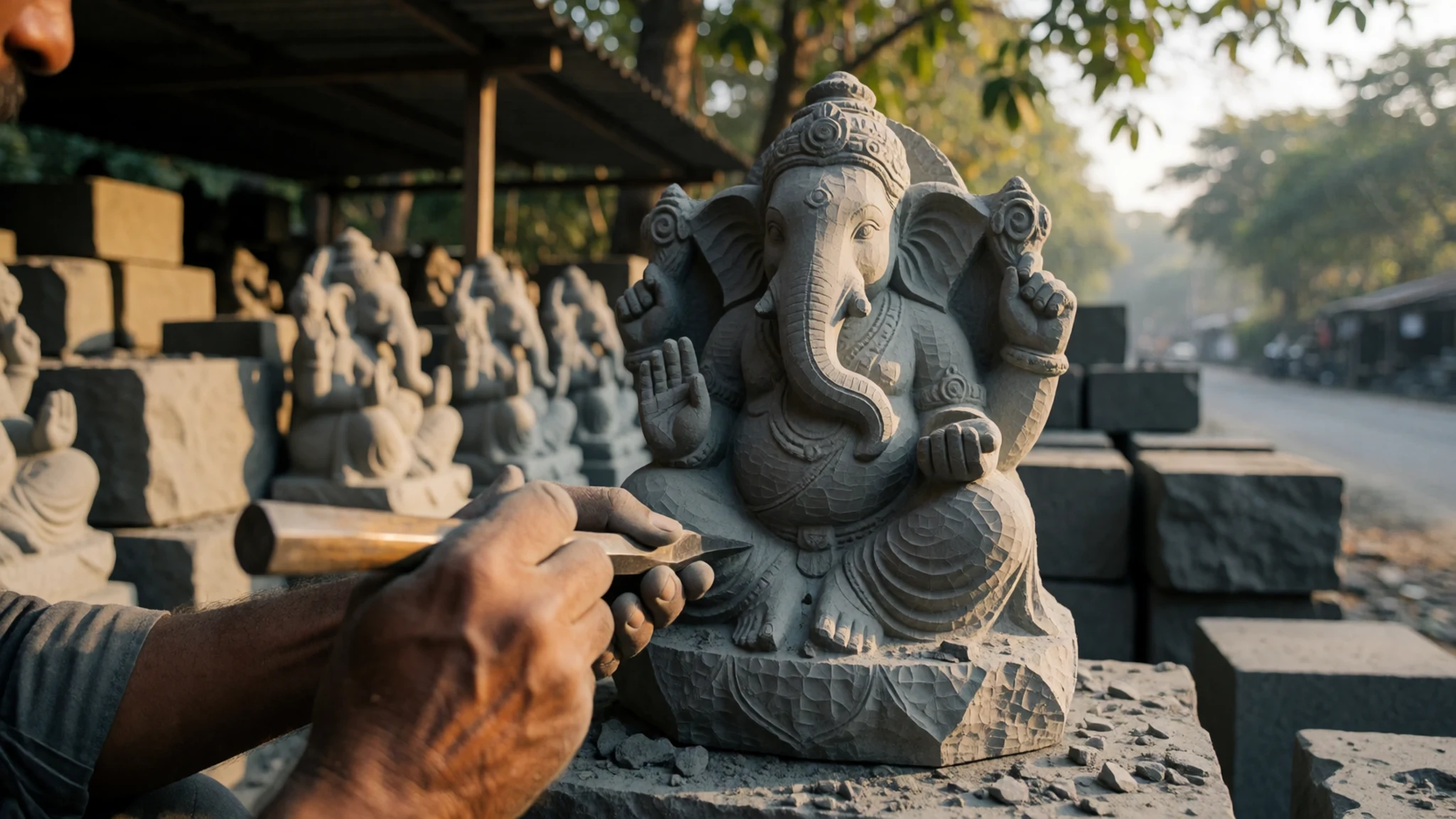
- Trowulan Museum — West side of Segaran pool
The Trowulan Museum holds most of the relics found in Trowulan and the area around it, and it makes the scattered sites easier to read. Reliefs, such as a carved scene of a couple at home, show daily life in the old capital. It is best visited early in a trip, before the monuments.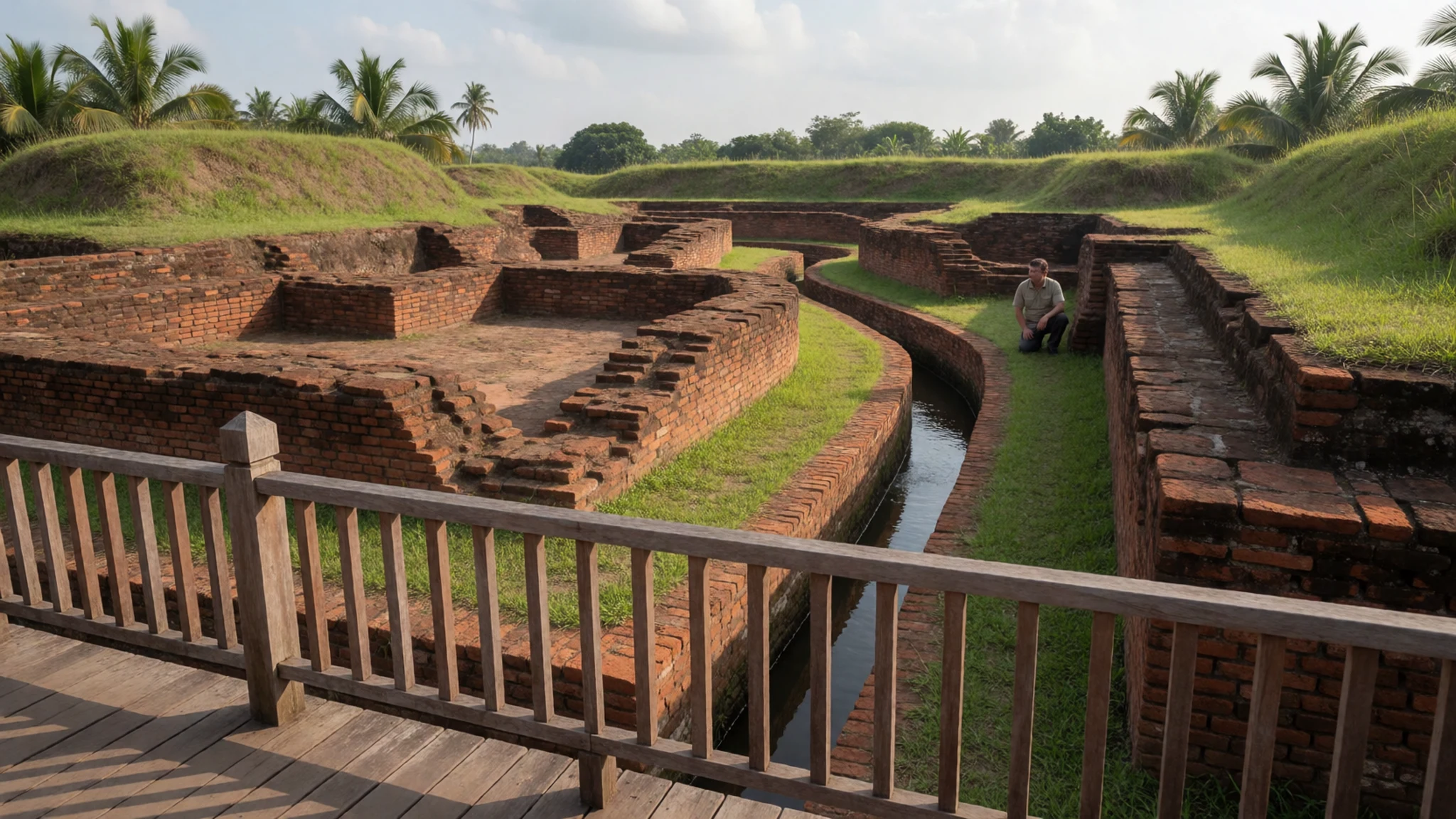
Culture
Trowulan Temples sit in a Javanese Muslim countryside, but the monuments belong to a Hindu-Buddhist past, and the two layers coexist without fuss. The Majapahit court drew on Shaiva and Buddhist traditions, which is why carvers in the village workshops still turn out Buddhas and Ganesha figures, and why the architecture feels familiar to anyone who has seen Hindu or Buddhist sites elsewhere in Java.
People here are friendly and curious, and a visitor on foot is often greeted. Many monuments stand in ordinary villages, so the line between heritage site and daily life is thin: children play near the ruins, farmers work beside them, and some places keep a quiet, almost ceremonial atmosphere. Offerings are sometimes left at certain sites, and local people may come to pray or meditate.
The museum and the temples work best with a little background, since much of the meaning lies in what is missing. A local guide or a short read before you set out helps the brickwork make sense. Javanese politeness values a soft voice, a smile and a slight bow of the head when passing elders.
Please do not climb on the brickwork, and keep your voice low and your clothes modest wherever offerings or prayers are in evidence.
What to wear
Trowulan Temples lie in Javanese country, where traditional dress means batik and kebaya. Batik is cloth patterned by wax-resist dyeing, usually on cotton, and is worn as a wrapped skirt (kain) or as shirts for formal occasions, weddings and ceremonies. Women pair it with the kebaya, a fitted blouse, and men may add a head cloth called blangkon. Batik shirts are also common office wear on certain days.
Everyday clothing in the villages is simple: T-shirts, long cotton trousers or skirts, and sandals or flip-flops. Many women wear a headscarf, and during Friday prayers men often put on a sarong and a cap. Farmers wear wide hats against the sun, and motorbike riders wear helmets and light jackets.
For a visitor, the main considerations are heat, sun and modesty. Light, breathable cotton or linen works best, with sleeves covering the shoulders and trousers or skirts reaching the knees, which suits the rural setting and any religious spaces. Bring a hat, sunglasses and sunscreen, since the monuments are in the open with little shade. Comfortable closed shoes or sturdy sandals suit uneven ground and dusty paths, and a light rain jacket helps in the wet season. A scarf is useful for sun and dust, and for covering up where needed.
What to eat
- Bakso — Warung along the route between the sites
Bakso is a meatball soup served with noodles in a clear, savoury broth, and it is one of the most popular dishes along the route. It makes a filling, inexpensive lunch between monuments and is easy to find at roadside stalls.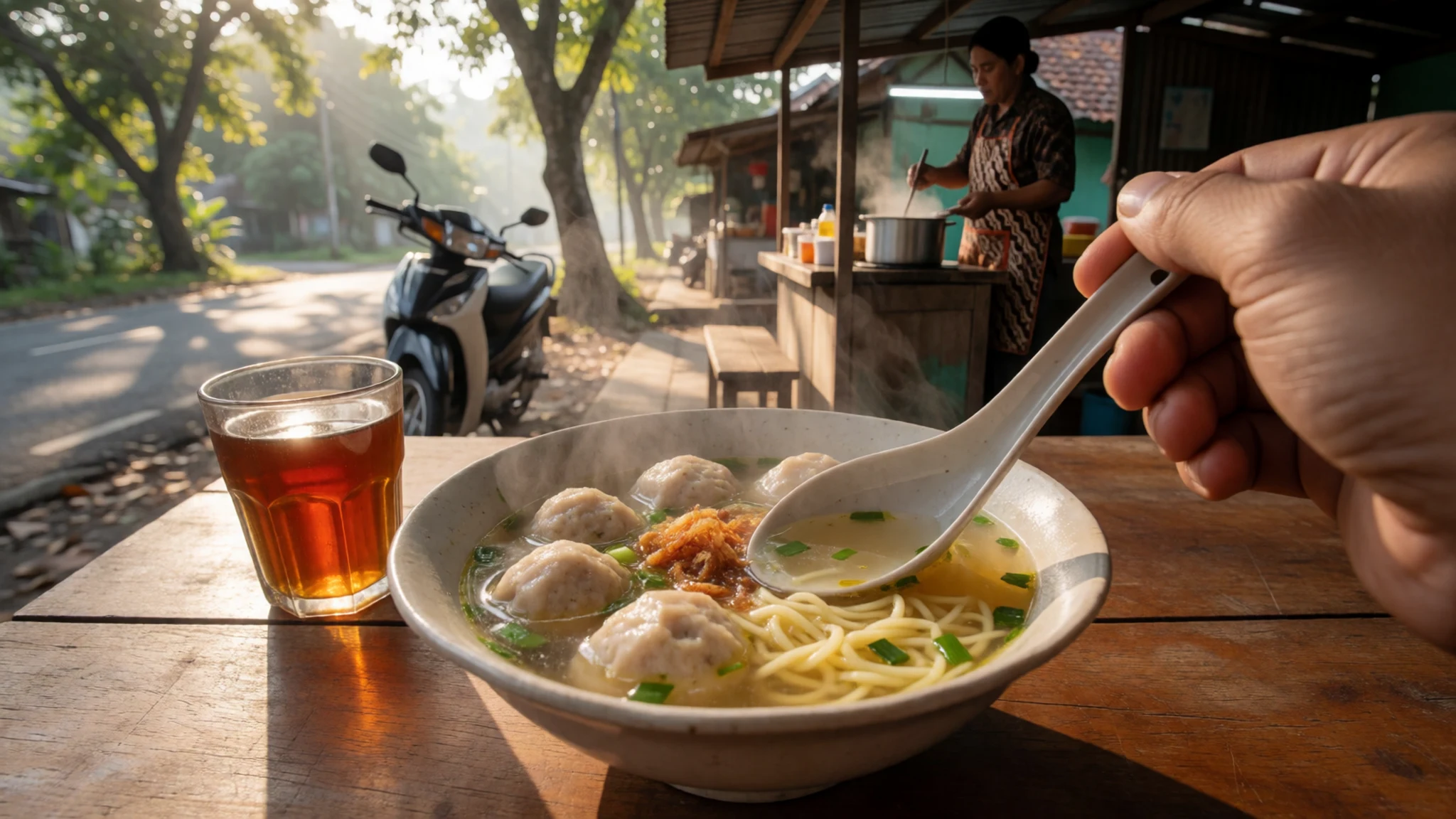
- Es degan — Roadside stalls near the main monuments
Es degan is sweetened young coconut juice served over ice, with soft scraped flesh from the shell. It is the obvious answer to the humid heat and a good way to rest between temples in the middle of the day.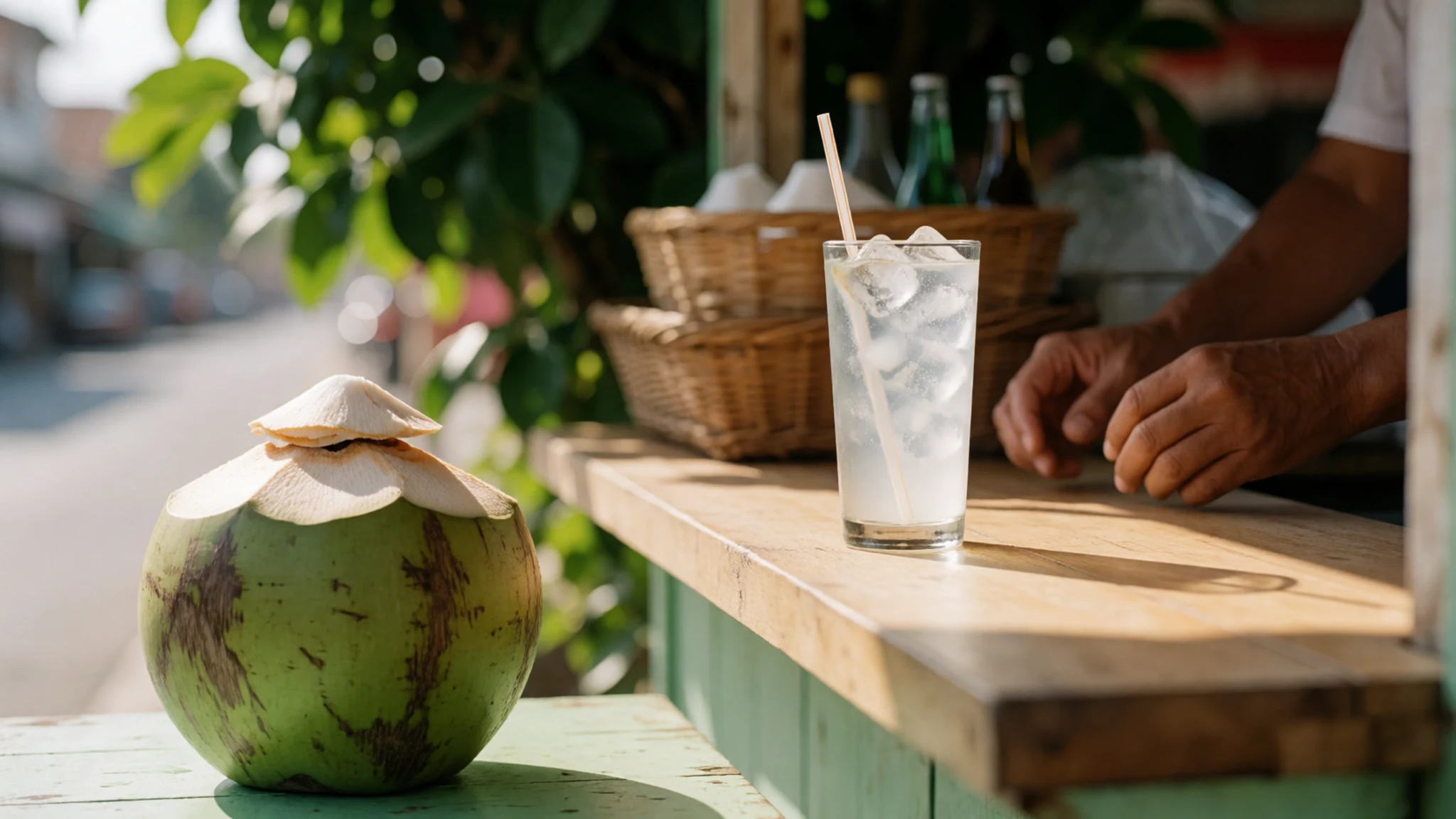
- Pentol — Street sellers near Troloyo Grave and Pendopo Agung
Pentol are small meatballs, usually skewered or served in a bag with chilli sauce and sweet soy. They are a snack rather than a meal and are sold by street vendors, particularly near the Troloyo grave and Pendopo Agung. - Ice cream from a street cart — Carts and kiosks near the sites
Cheap ice cream is sold from small carts and stalls around the sites, a simple treat in the afternoon. It is often cheaper than anything you would buy in a city, and the sellers are used to passing visitors.
Plan it
Best time. May to September, in the drier months, when roads are easier and fields and monuments are less muddy. The wet season brings heavy rain; at any time the heat is considerable, so start early.
How long. 1–2
Getting there. Fly to Surabaya, then take a bus from Bungurasih terminal towards Jombang and get off at the Trowulan junction with traffic lights, about 1.5 hours; the museum is a 1 km walk, or take an ojek or becak. Driving from Surabaya, Trowulan sits 60 kilometres away on the route heading toward Solo, and heavy traffic can stretch the journey considerably.
Budget. low
Tips
- Start with the Trowulan Museum, so the scattered sites make more sense
- Go early in the morning or late in the afternoon to avoid the midday heat
- Stay in Surabaya, where accommodation is more used to English speakers, or in Mojokerto
- Hire an ojek or becak to link the sites, and carry small cash for stalls
- Carry plenty of water and sun protection, as shade is limited
Etiquette
- Do not climb on the brick structures or remove anything from the sites
- Dress modestly and keep your voice low near places where people are praying or leaving offerings
Nearby
Sources
- Wikidata Q962410 (CC0)
- Wikipedia: Trowulan (rev 1373226145) (CC BY-SA 4.0)
- Wikivoyage: Trowulan (rev 5307110) (CC BY-SA 4.0)
- Bajang Ratu Gate Trowulan, Gunawan Kartapranata (CC BY 3.0)
- Eksotika Candi Bajang Ratu, Ivuvisual (CC BY-SA 4.0)
- Excavations, Situs Sumur Upas, Anandajoti Bhikkhu (CC BY 2.5)
- Candi Tikus, Gunawan Kartapranata (CC BY 3.0)
- Brahu Temple Trowulan, Gunawan Kartapranata (CC BY 3.0)
- Segaran, Gunawan Kartapranata (CC BY 3.0)
- Relief, Couple at Home, Museum Mojopahit, Anandajoti Bhikkhu (CC BY 2.5)
- General View, Siti Inggil, Anandajoti Bhikkhu (CC BY 2.5)


