Tolbo Lake
Tolbo Lake, Mongolia
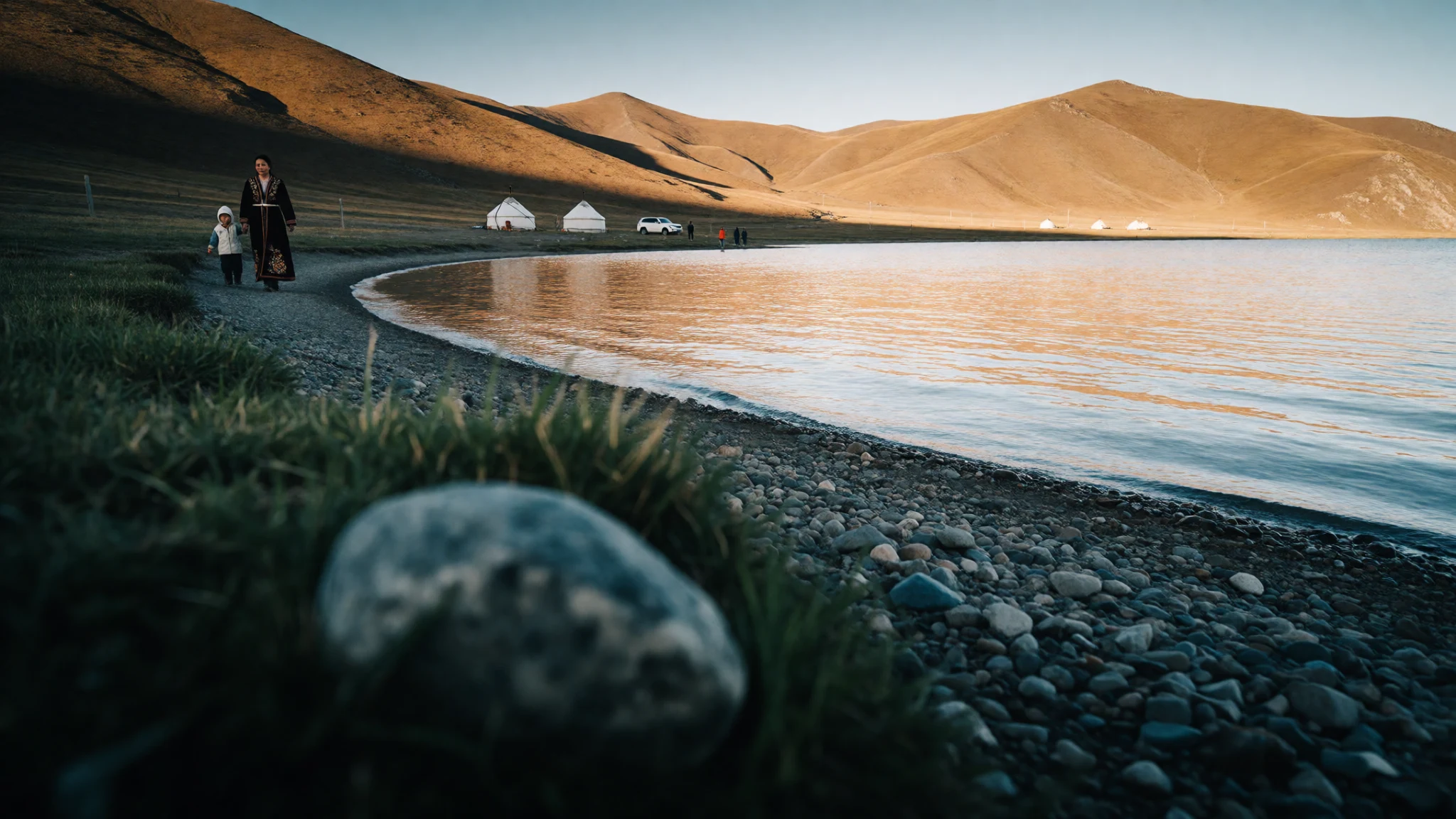
Tolbo Lake is a treeless, high-altitude freshwater lake in Mongolia's far west where families camp and swim every summer.
The place
Tolbo Lake (Толбо нуур) lies in Bayan-Ölgii Province, in the far west of Mongolia, about 50 kilometres south of the provincial town of Ölgii. The main road between Ölgii and Khovd passes close by, so reaching the lake means one long drive rather than an expedition. The water is fresh, the surface sits at 2,080 metres above sea level, and the lake covers roughly 185 square kilometres.
The scene is simple: open water, bare slopes and no trees along the shore. Wind has nothing to stop it, and shade is whatever a family brings in the form of a tent or a vehicle. Mosquitoes are few, which is a real advantage for camping. Summer is the lake's social season. Families from the surrounding province pitch camp on the shore, swim and picnic, and most arrive in mid-July because the water is warmest then. Outside that window the lake is quieter and much colder, and at this altitude the evenings turn cool even in midsummer.
The lake has a second name, 100 Kazan, meaning a hundred cauldrons, after the deep hollows in the lakebed that are said to look like cooking pots. The Kazakh spelling, Толбо көлі, is a reminder that this is a Kazakh-speaking corner of Mongolia. Tolbo counts as busy only by Mongolian standards: expect other camps along the shore and a few vehicles on the track, not queues or ticket booths.
Its story
Tolbo Lake enters Mongolian history through one episode of the Russian Civil War, when Bolsheviks and their Mongolian allies defeated an army of White Russians at the lake. The clash is remembered as the Battle of Tolbo Lake. Nothing on the shore demands a pilgrimage today. The water and the camping habit are the draw, and the battle is a footnote that a local driver may or may not mention.
That quietness is typical of Mongolia. The country left few grand buildings behind. Its past is carried by mobile herding life, by stone monuments and carved drawings scattered across the landscape, and by artefacts held in the capital's museums. The Tibetan Buddhist monasteries that spread after the Mongol Empire broke apart were mostly lost in the Stalinist religious purges, so history here is learned from people and land more than from architecture.
Tolbo's own folklore is gentler. The name 100 Kazan comes from the deep hollows in the lakebed that resemble pots, a very Mongolian image in a country where meals are boiled over the fire. The Kazakh communities of Bayan-Ölgii keep their own traditions in this district, among them winter hunting with trained eagles, and families from the province camp at the lake every summer. Because the water is cold for much of the year, that short warm window became the habit that defines the place: a few weeks of swimming, picnics and long evenings beside a lake with no trees.
What to see
- The shoreline camps — Shore of Tolbo Lake
Tolbo Lake's bare shore is where the summer season plays out. Families set up tents and vehicles along the water, children swim, and smoke rises from cooking fires. Walking the shoreline gives the clearest sense of scale, with open slopes behind and no trees to interrupt the view.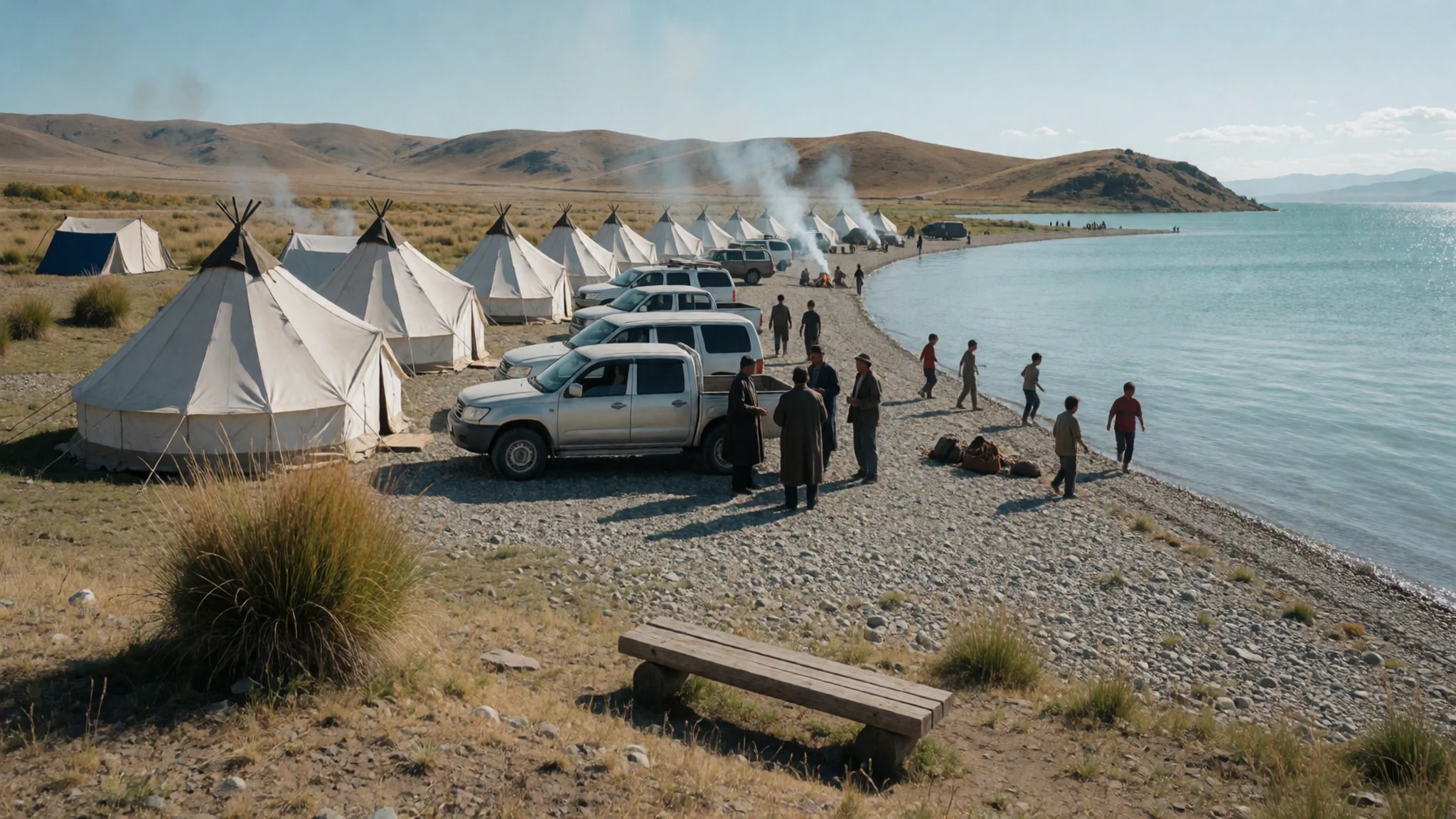
- Swimming in mid-July — Tolbo Lake, near the camps
Mid-July is when the water at Tolbo Lake is warmest, and it is also when most local families arrive. Swimming is the main activity. The water remains cool by most standards, so short dips suit most people, and the wind off the lake can chill wet skin quickly.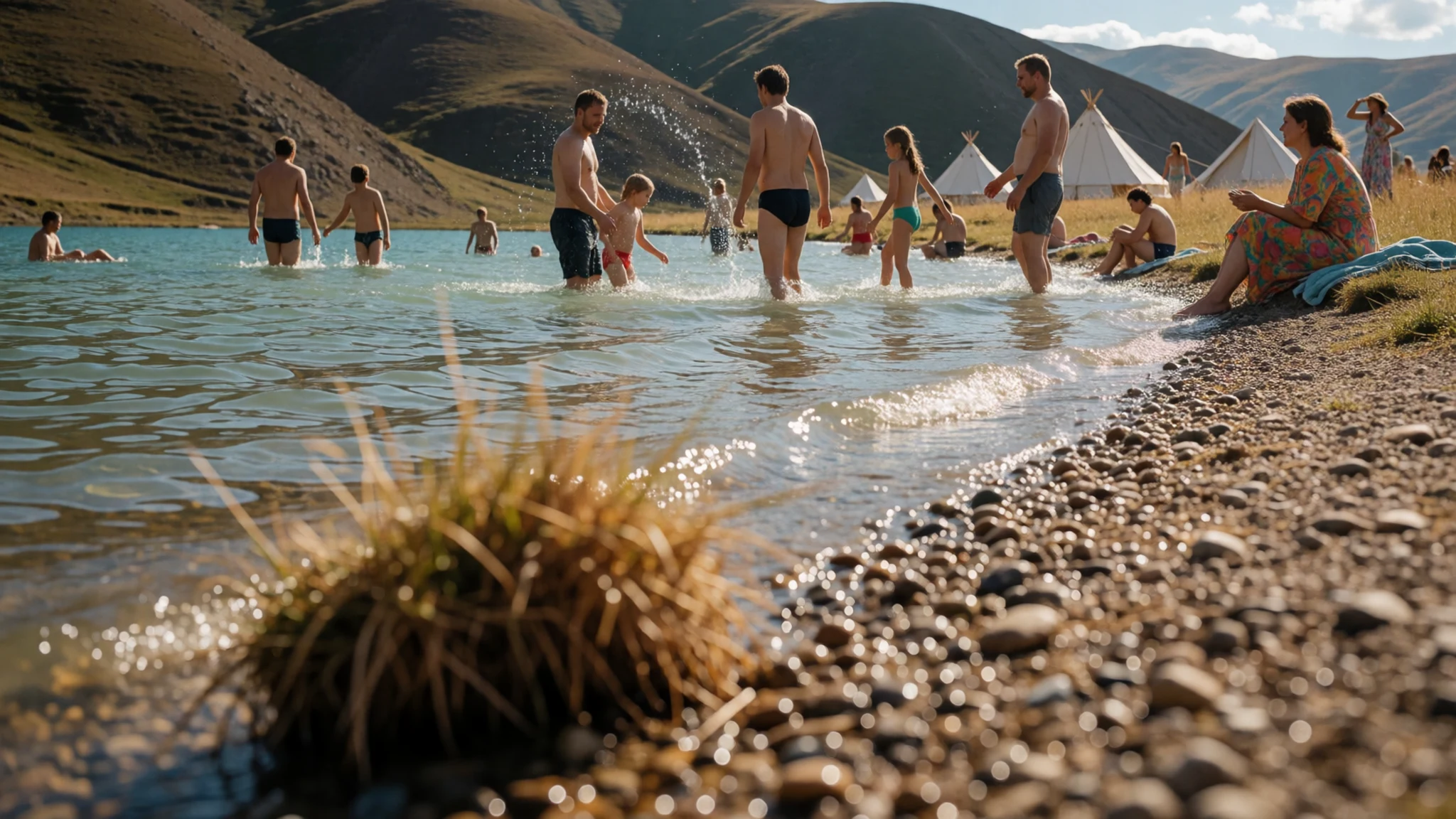
- Evening light on the water — Shore of Tolbo Lake
With no trees and few buildings, Tolbo Lake gives wide-open views at dawn and dusk, when the slopes and water change colour. Photographers should bring a windproof layer, since temperatures at this altitude drop after sunset even in summer, and the shore offers little shelter.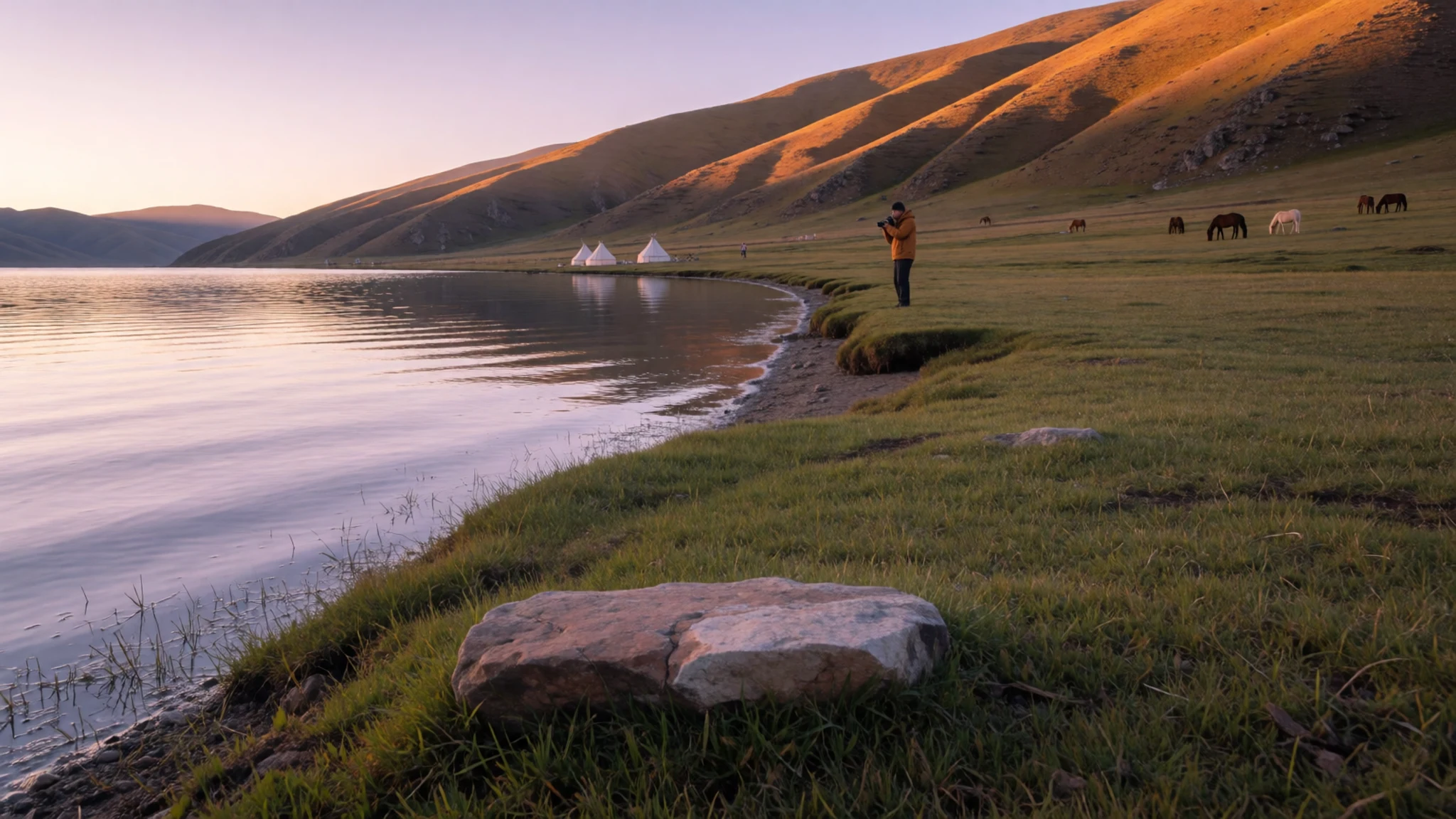
- Ölgii town — Ölgii, Bayan-Ölgii Province
Ölgii, the provincial town about 50 kilometres north, is the practical base for Tolbo Lake. Supplies, fuel and drivers are easiest to arrange here, and the town is the centre of Kazakh life in Mongolia. In winter, local operators can arrange visits with Kazakh eagle hunters.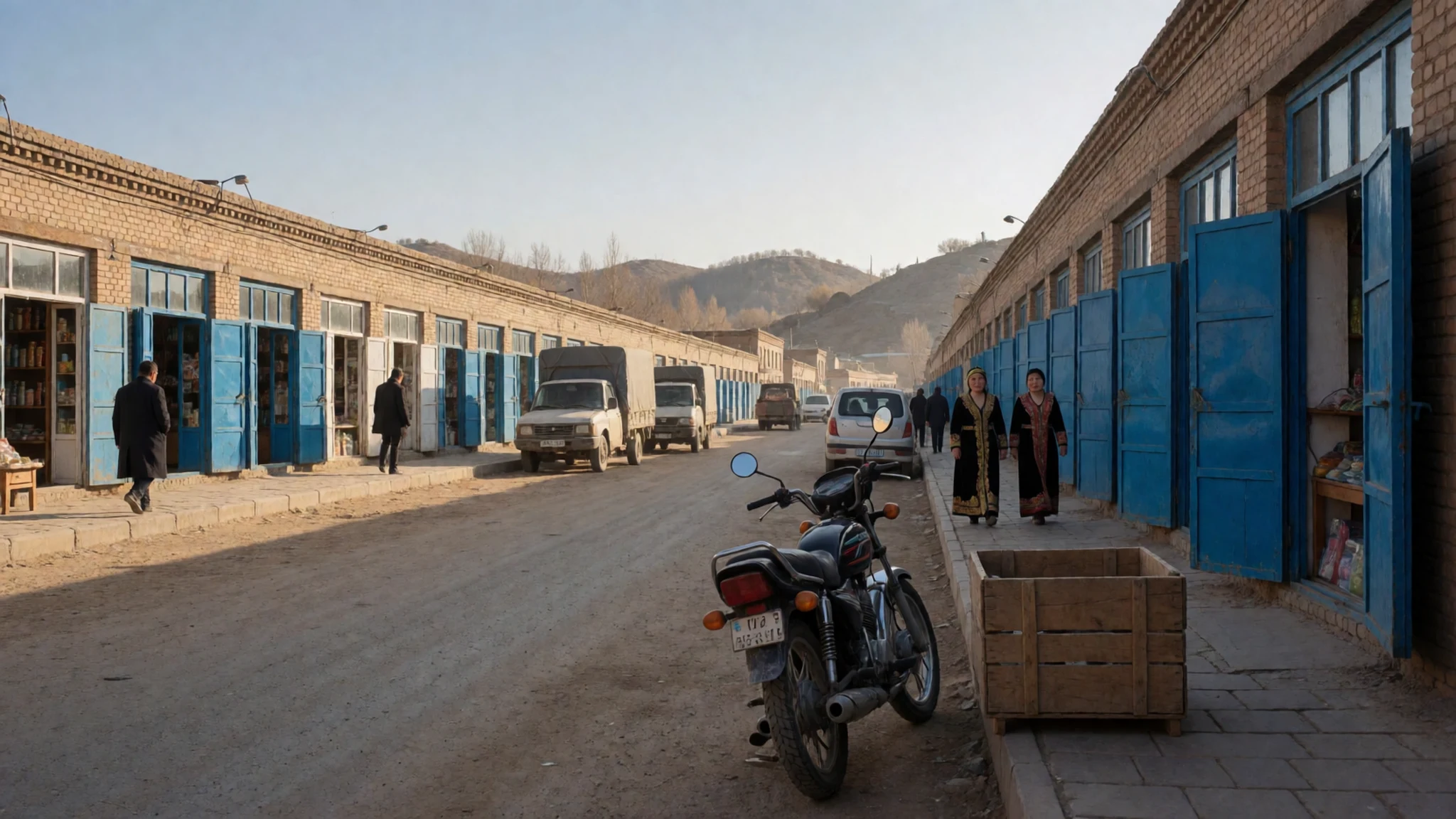
- Altai Tavan Bogd National Park — Altai Mountains, western Mongolia
Altai Tavan Bogd National Park lies in the Altai Mountains of the far west and holds several high peaks, making it the region's obvious target for mountain climbing. It is a separate and longer trip from Tolbo Lake, best planned with a local guide and proper equipment.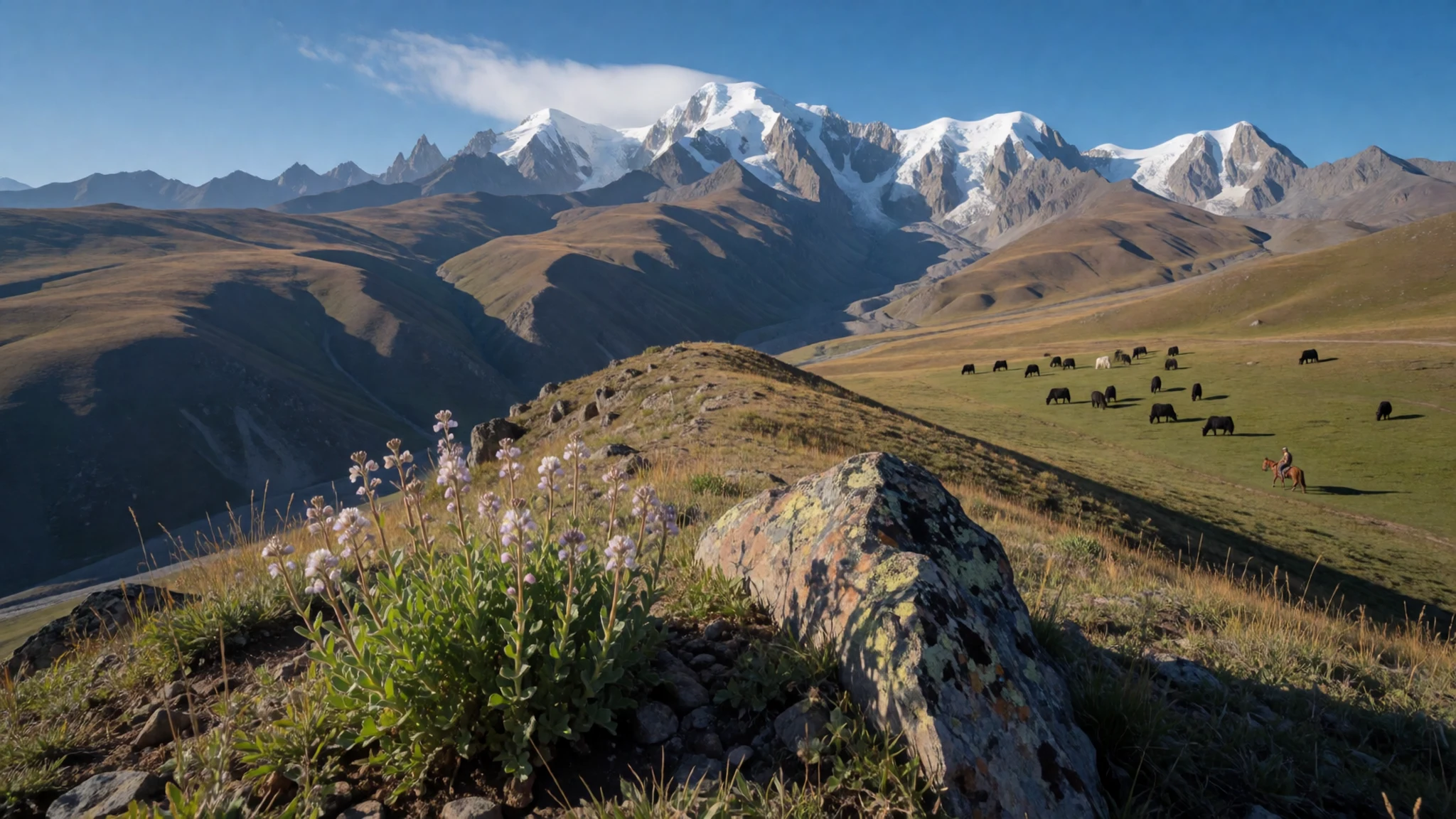
Culture
Tolbo Lake sits in Bayan-Ölgii, a province where Kazakh traditions are strong and sit alongside Mongolian customs. Hospitality matters in both. A host will offer tea, dairy or a plate of snacks, and refusing outright is read as rude, while taking even a small taste is polite. Items are passed and received with the right hand, palm up, and the same applies to a cup.
Mongolians tend to be direct. Someone will say plainly what they think, which can surprise visitors used to softer phrasing, and it is best taken as honesty rather than hostility. Standard Western pleasantries do not always land as intended, so copying local manners works better than relying on one's own.
Politics needs some care. Feeling against China runs high in Mongolia, rooted in disputes over history and a sense of past domination. Visitors do well to avoid China-branded clothing and to steer clear of the subject. The Chinese province of Inner Mongolia is commonly called southern Mongolia.
Life at the lake is communal and seasonal. Families camp close together, livestock and dogs wander through, and the pace follows the weather. Dogs outside towns may run in packs and are not pets, so give them room.
If you are offered tea or food at a family's camp, accept it with your right hand, palm up, and take at least a small taste rather than refuse.
What to wear
Around Tolbo Lake, traditional dress follows two traditions. Mongolians wear the deel, a long wrap-over robe fastened at the side and tied with a sash, made in wool or heavier cloth for cold weather and in lighter fabric for festivals. Kazakh families in Bayan-Ölgii favour felt and embroidered velvet, with fur-trimmed caps in the cold. These clothes appear at weddings, festivals and holidays, and during the winter eagle-hunting season.
Everyday clothing is practical and modern. Around the lake, people wear fleeces, windproof jackets, jeans, tracksuit trousers and sturdy boots or trainers, with a deel pulled on for a holiday or a formal visit to a relative. Swimwear comes out for the warm weeks of July, and kids head straight for the water.
Visitors should dress for wind, sun and sudden cold. Bring layers: a thermal top, a fleece and a waterproof windproof shell, even in midsummer, because evenings at this altitude turn cool. With no trees on the shore, a sun hat, sunglasses and sun cream matter. Wear sturdy walking shoes or boots for stony ground, and carry sandals for the water's edge. Swimwear is fine at the lake, but cover shoulders and knees in towns and when entering a family's home. Avoid anything with Chinese branding or slogans.
What to eat
- Boiled mutton — Family camps at the lake and herders' homes
Boiled mutton is the principal dish of Mongolia and is seasoned with little more than salt. At Tolbo Lake it is the natural camp meal, cooked in a big pot over a fire, often with vegetables and spices kept to a minimum.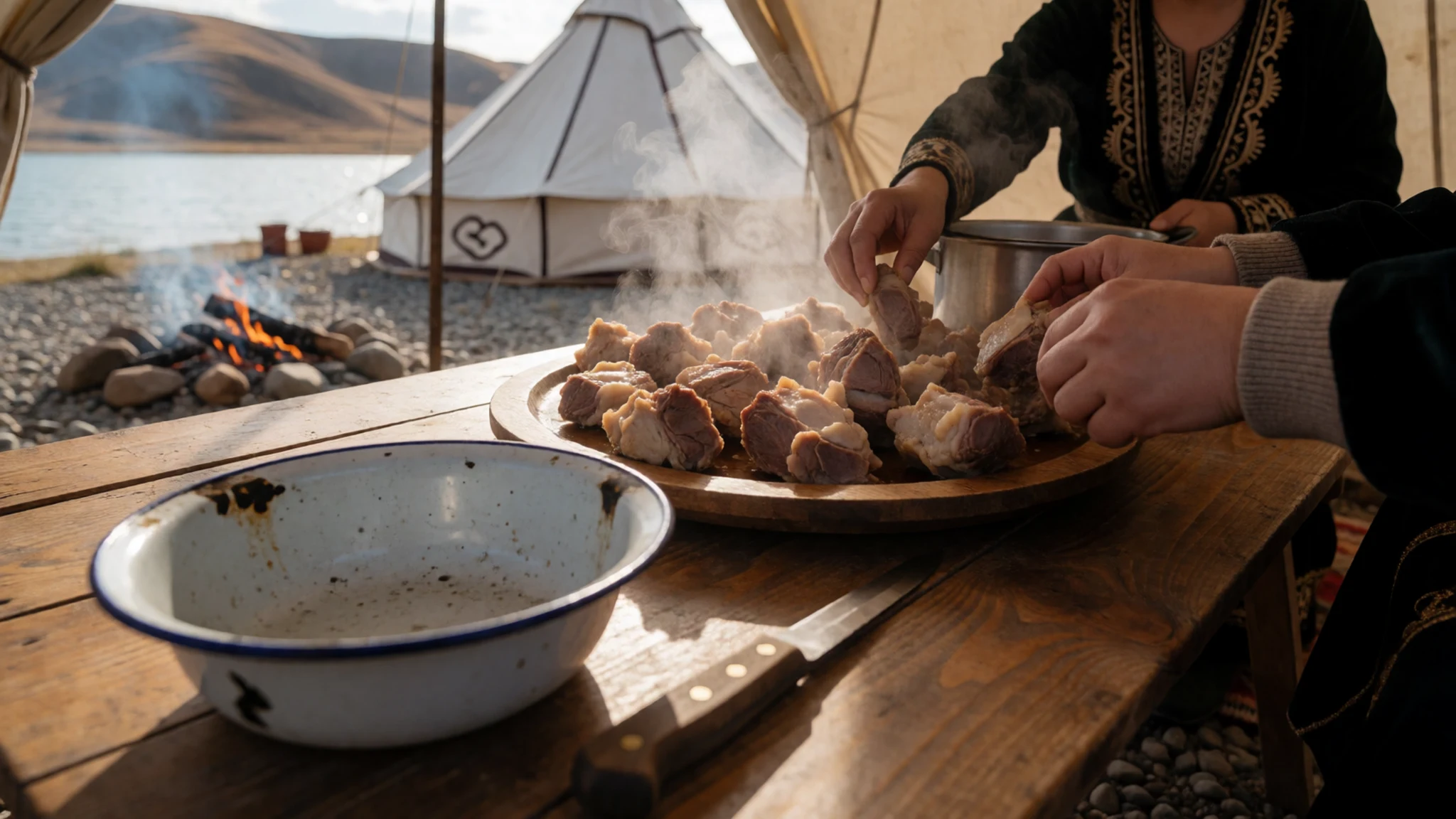
- Buuz — Canteens and tea shops in Ölgii
Buuz are steamed dumplings filled with minced meat, often described as Mongolia's national dish. They arrive hot and juicy in small groups, and are eaten by hand with a little care to avoid spilling the broth inside.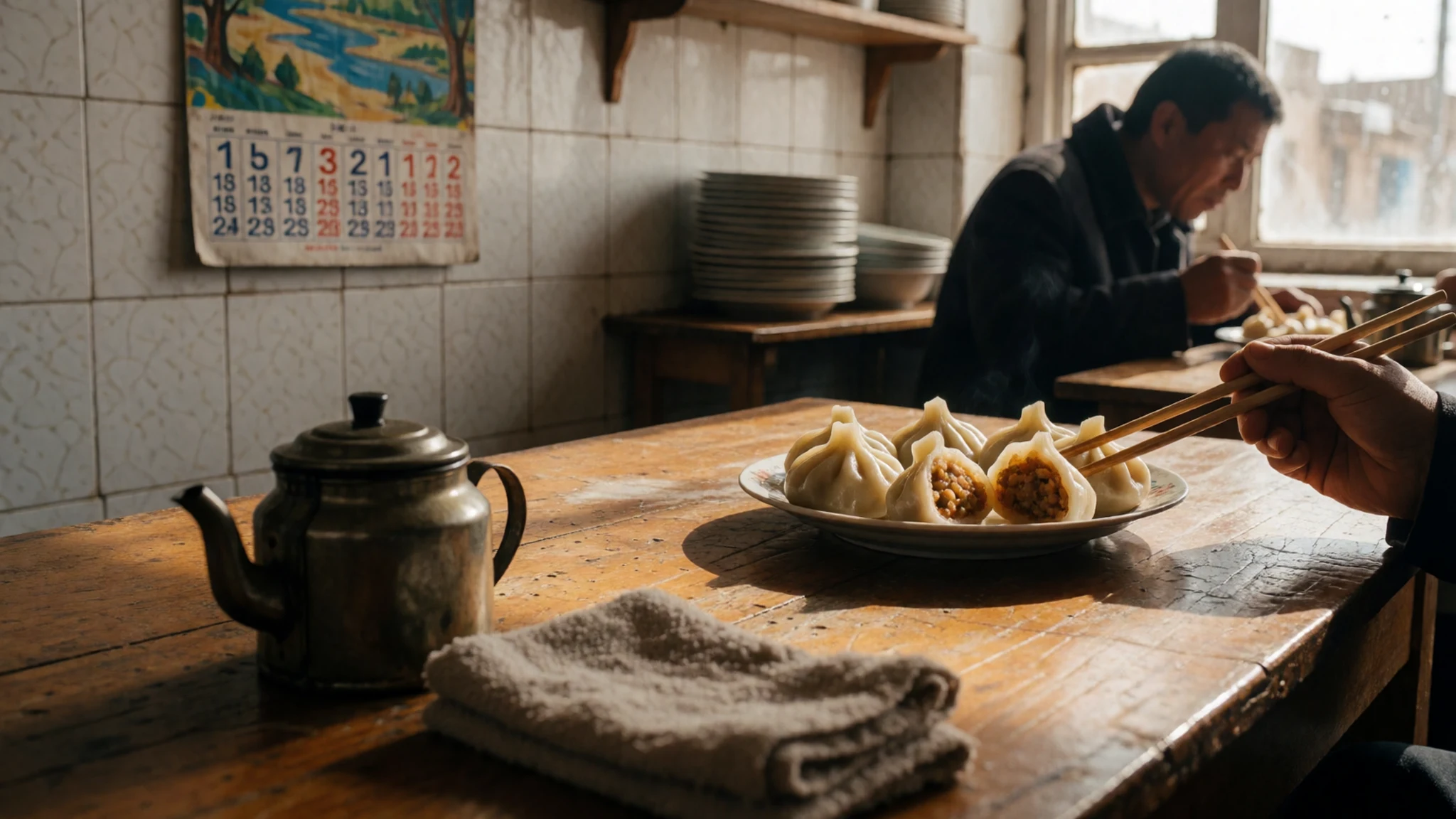
- Khuushuur — Roadside canteens and stalls on the way to the lake
Khuushuur is a flat pastry parcel of meat and onion, deep-fried until crisp. It began as festive food but is now an everyday staple, and a few pieces make a filling meal, especially after a cold, windy day by the water. - Tsuivan — Canteens and eating houses in Ölgii
Tsuivan is a plate of fried noodles with meat and a few vegetables, hearty and uncomplicated. Ketchup sometimes comes alongside. It suits travellers who have been outdoors all day and want something filling that is easy to share. - Byaslag and öröm — Family camps and markets in Ölgii
Byaslag is a mild fresh cheese similar to paneer, and öröm is clotted cream. Both are common dairy staples, and often appear alongside tea or bread when a family offers hospitality. They taste simple, rich and slightly sweet.
Plan it
Best time. June to August, with mid-July the warmest time for swimming and the busiest for local families. Winters in western Mongolia are bitterly cold, so a visit then needs serious preparation and local help.
How long. 1–2 for the lake itself; add more days for Ölgii and the wider Altai region
Getting there. Reach Ölgii first, the provincial town in Bayan-Ölgii, by air or overland (check current flights and routes). The lake is about 50 kilometres south of Ölgii on the main road towards Khovd, so the last leg is a drive that a local driver can arrange in town.
Budget. mid
Tips
- Check current visa rules for your passport before booking, as entry terms have changed in recent years and may change again
- Buy fuel, food, water and cash in Ölgii before leaving, since the shore has no shops
- Bring a tent or arrange a ger stay in advance and carry warm layers, because evenings are cool at altitude
- Pack sun protection and a windproof shell: the shore has no trees for shade or shelter
- Give loose dogs a wide berth and keep food stored away at camp
Etiquette
- Receive tea, food and gifts with your right hand, palm up, and take at least a small taste
- Avoid China-related clothing and conversation
- Ask before photographing people or their animals and camp
Sources
- Wikidata Q2000554 (CC0)
- Wikipedia: Tolbo Lake (rev 1366775872) (CC BY-SA 4.0)
- Wikivoyage: Mongolia (rev 5427090) (CC BY-SA 4.0)
- Photo: Tolbo-Nuur Lake (Vladimir Yu. Arkhipov) (CC BY 3.0)
- Photo: Relief map of Mongolia (NordNordWest, Виктор_В) (CC BY 3.0)
- Photo: Tolbonuur 03 (Alexandr frolov) (CC BY-SA 4.0)
- Photo: Tolbonuur 06 (Alexandr frolov) (CC BY-SA 4.0)
- Photo: Tolbonuur 02 (Alexandr frolov) (CC BY-SA 4.0)
- Photo: Tolbonuur 05 (Alexandr frolov) (CC BY-SA 4.0)
- Photo: Tolbonuur 04 (Alexandr frolov) (CC BY-SA 4.0)
- Photo: Tolbonuur 01 (Alexandr frolov) (CC BY-SA 4.0)


