Toktogul Reservoir
Toktogul Reservoir, Kyrgyzstan
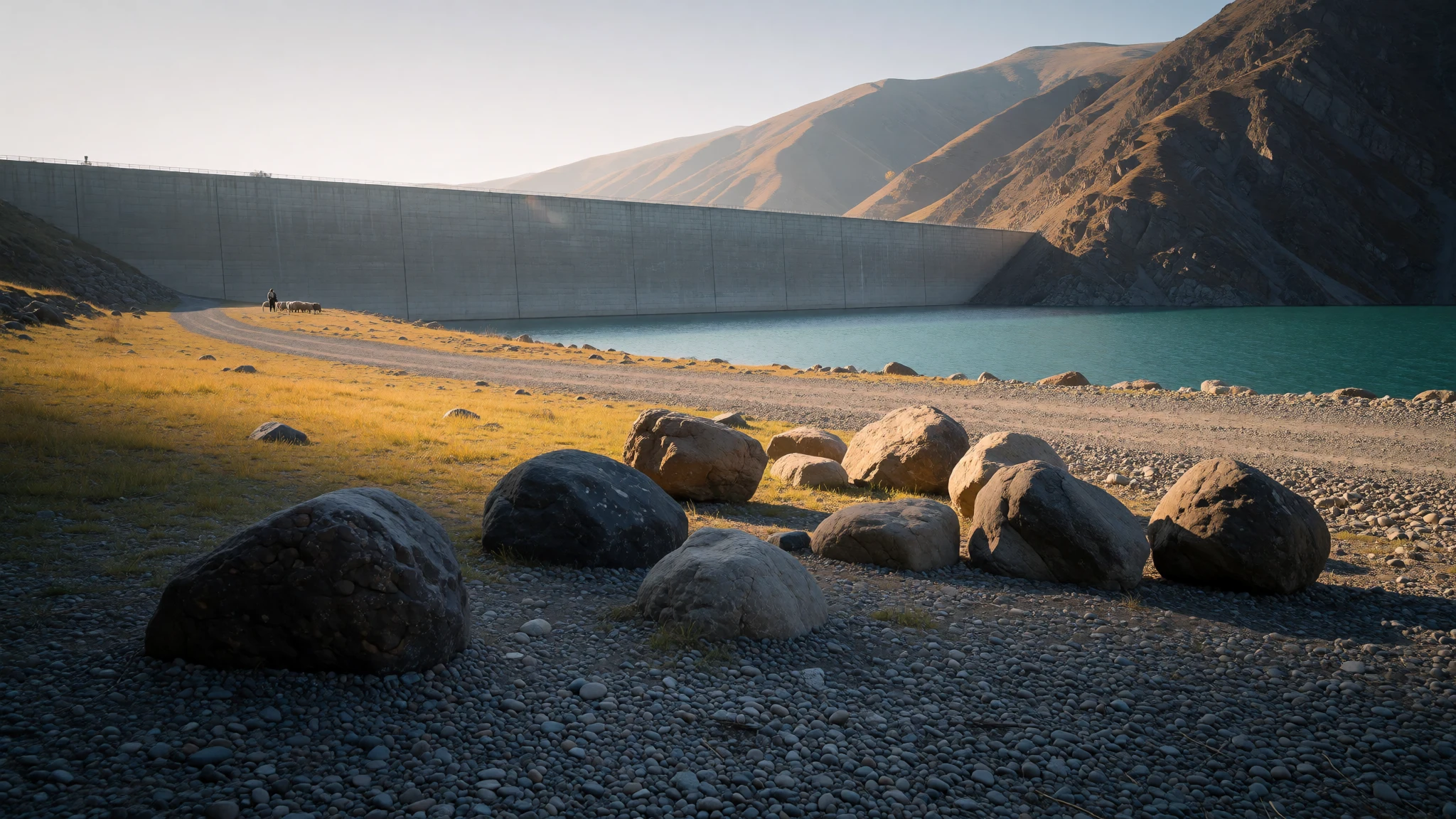
Toktogul Reservoir is a long mountain lake in western Kyrgyzstan, good for quiet shoreline days and a stop between Bishkek and Osh.
The place
Toktogul Reservoir lies in Jalal-Abad Province in western Kyrgyzstan, filling a mountain valley on the Naryn River. The Naryn is a northern feeder of the Syr Darya, and this is the main storage lake along its course. A concrete gravity dam closes the southern end, and the water behind it does two jobs: it drives a hydroelectric station, and it holds snowmelt back for irrigation on the dry plains far downstream. The town of Toktogul sits near the northern shore, while Kara-Köl, below the dam, was founded to house the construction workforce and is now home to the power station's staff. In Kyrgyz the lake is Токтогул суу сактагычы; Russian maps call it Токтогульское водохранилище. Photographs show steep, bare-looking hillsides dropping to water that shifts between turquoise and slate, with the Fergana Range standing behind. Because the level is managed for power and irrigation, the shoreline changes from year to year, and a beach one summer can be a stretch of mud or pebbles the next. Facilities are basic: the beaches near Toktogul town are local swimming spots, not organised resorts, and roads in the region are slow. The lake suits a traveller who likes a quiet stop with a picnic and a long view, rather than a place with a list of attractions. Its position on the routes between the north and the south of the country also makes it a natural break in a longer journey.
Its story
Toktogul Reservoir is a Soviet-era creation, and its story is as much about water and power as about scenery. The dam was named after Toktogul Satilganov, a Kyrgyz folk poet and singer, a nod to the country's strong oral tradition. It forms part of the Naryn–Syr Darya cascade, a chain of dams and reservoirs planned so that one river system could feed electricity and farming across several republics. Kara-Köl grew up beside the works as a town for the builders. Long before any of that, much of what is now Kyrgyzstan was home to the Scythians, and later the Kyrgyz people moved into the region from Siberia, bringing a herding life that still shapes the summer pastures in the hills. Russia annexed the area in the nineteenth century, and Kyrgyzstan became independent after the Soviet Union ended. Since then the cascade has been a source of tension: the dam stands in Kyrgyzstan, but much of the farmland that needs its water lies downstream in neighbouring countries, so releases for irrigation in summer and for power in winter are argued over. For a visitor the dispute is invisible, yet it explains why the lake level rises and falls, and why Toktogul feels more like a working reservoir than a leisure resort.
What to see
- Toktogul town shoreline — Northern shore, near Toktogul town
The beaches near Toktogul town are the easiest way onto the water. Pebbly and plain, they draw local families in summer for paddling, picnics and a swim. Bring your own shade, drinking water and snacks, as services are limited. Check the shore before swimming, since the managed level shifts and the water can be cold.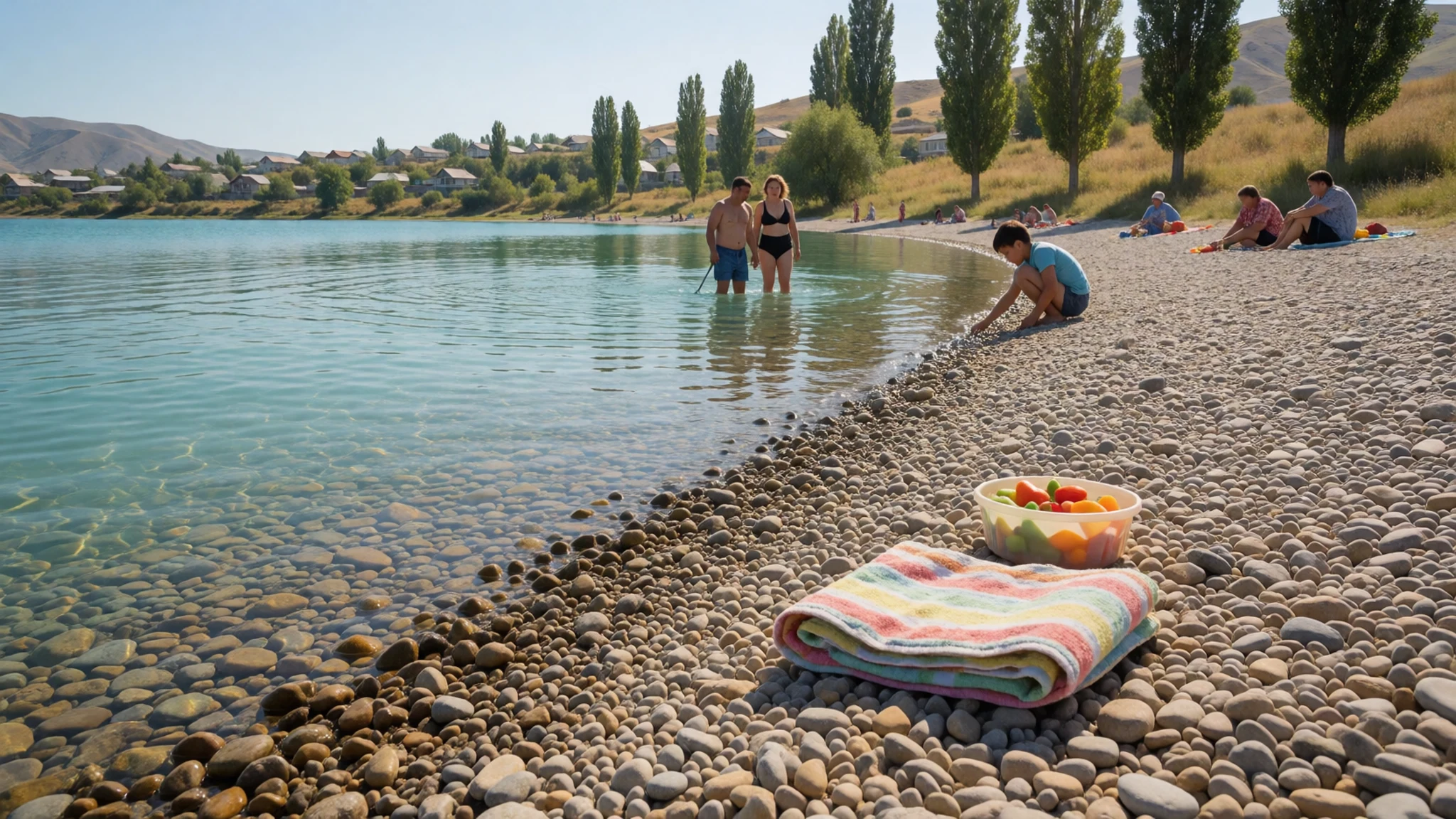
- North-east shore and Fergana Range views — North-eastern shore
On the north-eastern side of the lake, roads and tracks open wide views across the water to the Fergana Range. This is the place for photographs in early or late light, when the hills turn brown and gold and the surface goes still. Use proper pull-offs rather than bends, and bring a picnic.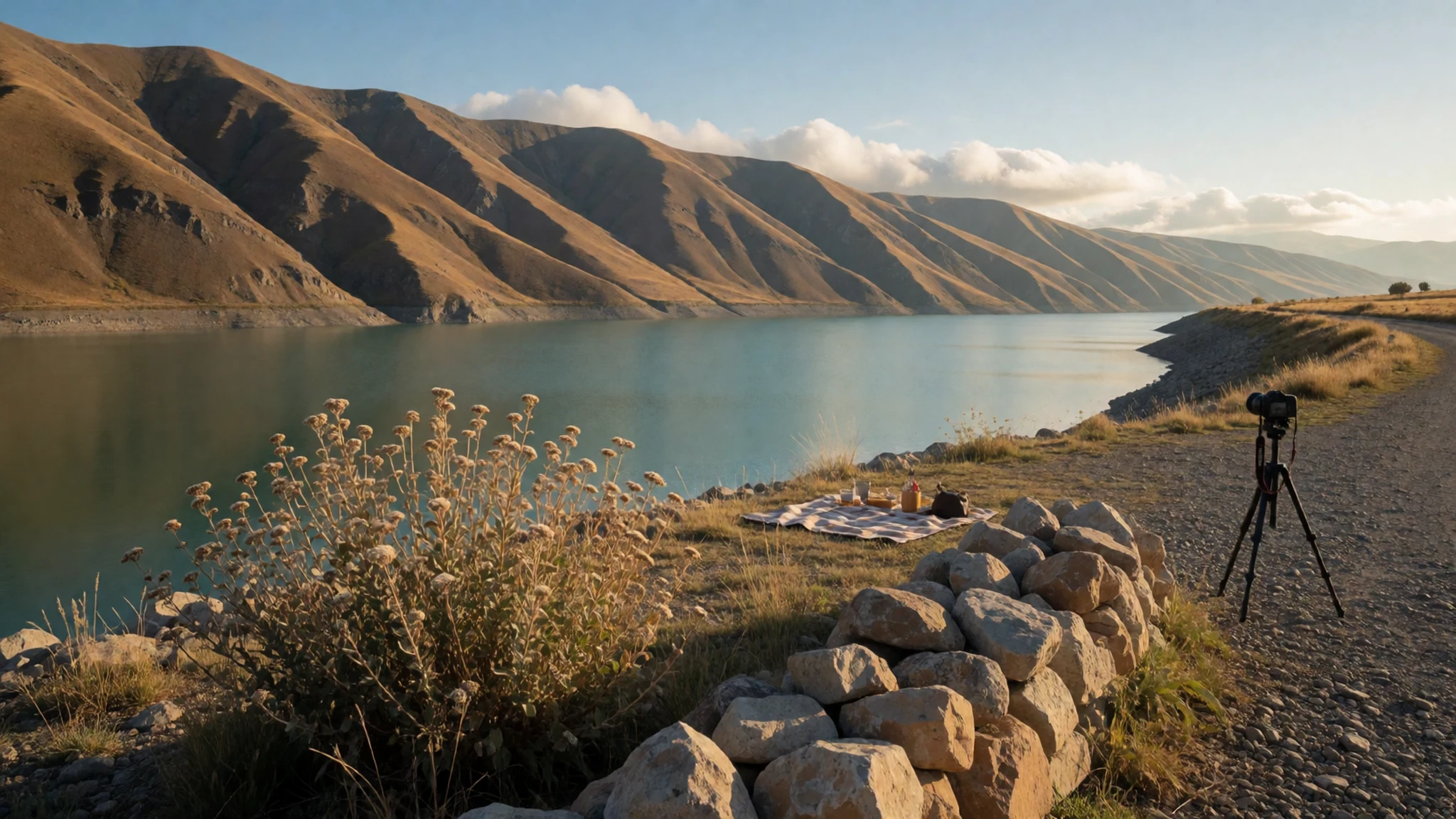
- Kara-Köl and the dam — South of the dam, downstream
Kara-Köl, below the dam, is a planned Soviet town of apartment blocks built for the power-station workforce. It gives a feel for the engineering behind the lake, and the concrete wall can be seen from the approach roads. Treat it as an industrial site: photography near the works may be restricted, so ask locally first.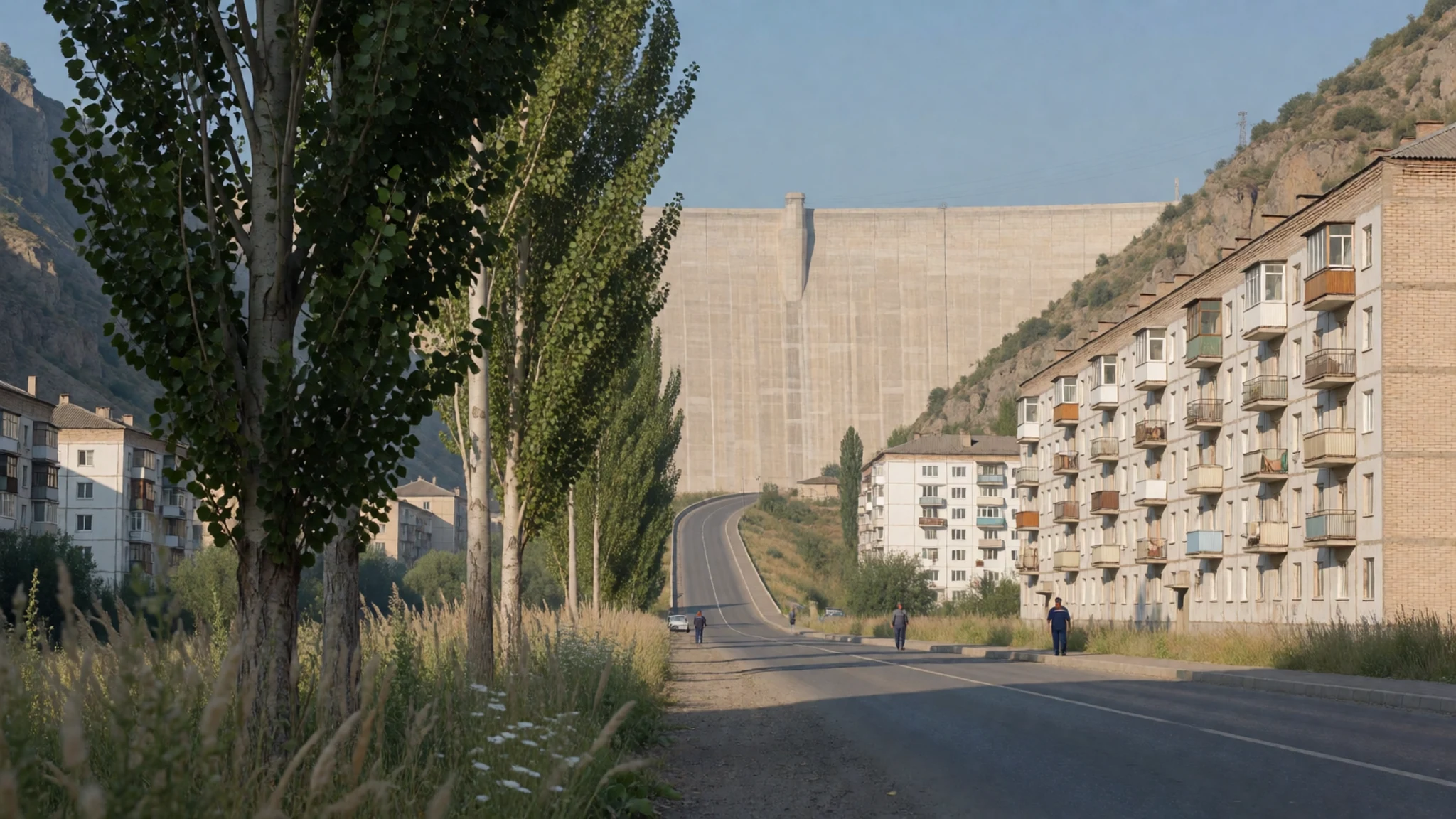
- Arslanbob walnut forest — Arslanbob valley, Jalal-Abad Region
Arslanbob sits in a green valley to the south-east and is known for its walnut forest. It works as a day trip or an overnight stop, though the drive uses mountain roads and takes time. Families from Kyrgyzstan and Uzbekistan come for walks under the trees, and village homestays are common.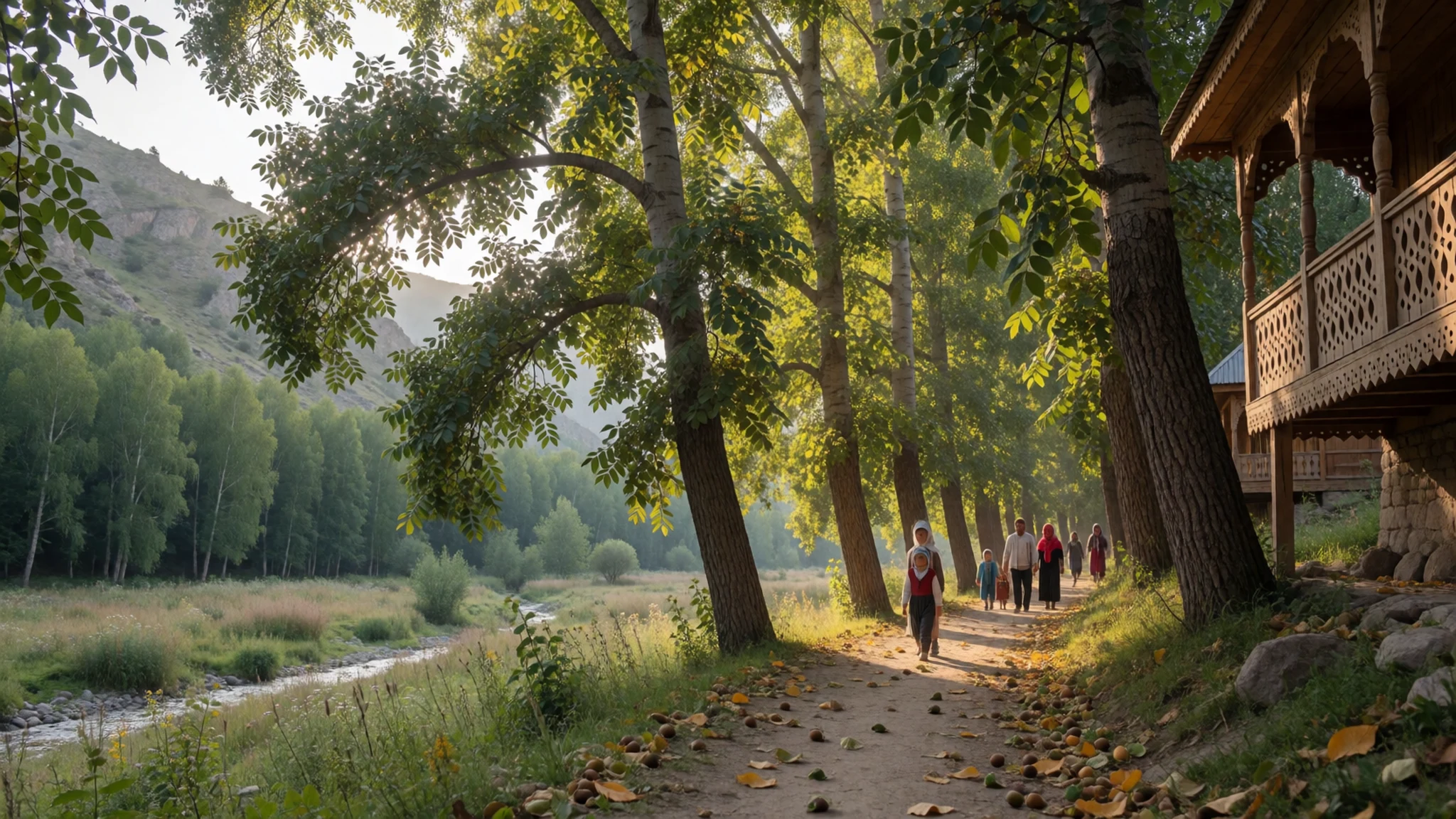
- Osh bazaar and Sulaiman-Too — Osh, southern Kyrgyzstan
Osh, the southern city, has a famous bazaar and a rocky hill, Sulaiman-Too, rising from the town. Both make a rewarding break once the lake days are done, with spice stalls, bread and fruit at the market and a climb on the hill. Allow a long travel day from the reservoir.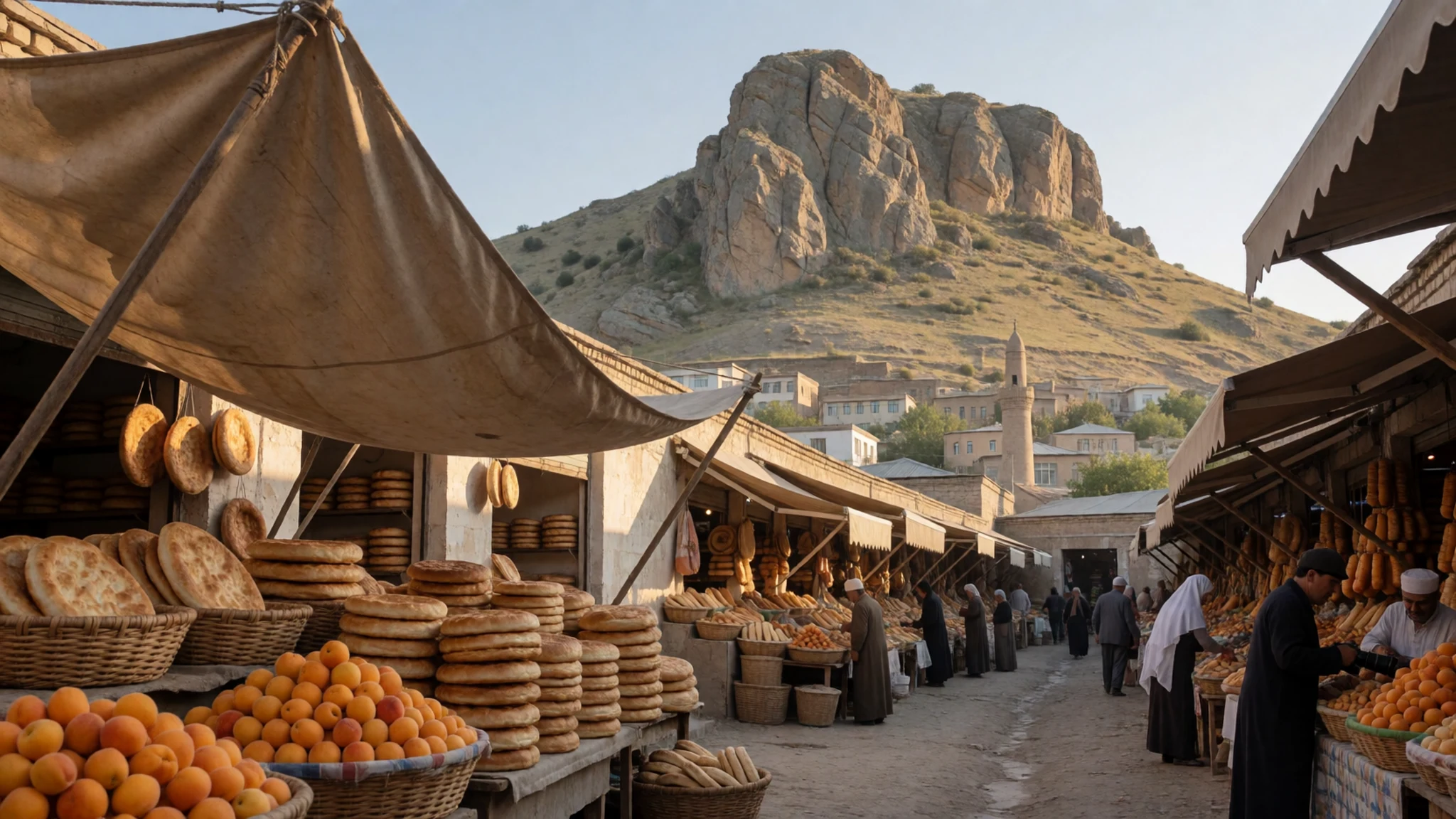
Culture
Toktogul and the lakeside villages sit in a part of Kyrgyzstan where hospitality is the main custom a visitor will meet. Most people are nominally Muslim, but daily life is relaxed, with no formal dress code, and the Soviet period left Russian widely spoken alongside Kyrgyz. A herding past still shapes manners: guests are fed generously, tea is poured again and again, and an invitation to sit at a table means something real. Meals can run long, with toasts and conversation, and hosts take pride in giving visitors the best of what they have. Kymys, fermented mare's milk, is a summer drink with strong local pride, and refusing every offer can seem cold, so a small sip is polite. The south of the country is more conservative than Bishkek, particularly for women, and evenings can bring heavy drinking in some places, so care and good judgement matter after dark. Petty crime such as pickpocketing has risen in recent years, mostly in towns at night. Life around the lake is quiet and unhurried, and the best conversations tend to happen over a pot of tea at a roadside eatery or a family table. When a host offers tea or a place at the table, accept it, and ask before photographing anyone.
What to wear
Around Toktogul Reservoir, traditional dress is now mostly for celebrations. Men's best-known piece is the kalpak, a tall white felt hat with black trim, worn at weddings, festivals, horse games and national days. The chapan, a long quilted coat, is the traditional cold-weather layer, and felt, pressed from sheep's wool, also makes boots, rugs and saddle cloths. Women's festive dress uses velvet and silk in strong colours, and the elechek, a large white wrapped headdress once worn by married women, now appears mainly at ceremonies and in museums. Everyday clothing is plain and practical: jeans, jackets, trainers and sports tops, with older women often wearing headscarves. Standards are more conservative in the south than in Bishkek. A visitor should pack layers, because mountain mornings and evenings are cool even when midday is hot, plus a sun hat, sunglasses and sunscreen for the open shoreline. Sturdy shoes suit the rocky, uneven beaches and village tracks. Away from the water, covering shoulders and knees is sensible in towns and villages, especially for women, and swimwear is best kept for the beach itself. A light waterproof is worth carrying, as mountain weather can turn quickly.
What to eat
- Besh barmak — Family tables and local eateries in Toktogul town
Boiled meat, traditionally mutton or horse, laid over noodles with onions and served with broth. The name means five fingers, from eating it by hand. Look for it at family tables, weddings and local eateries in Toktogul town; ordering ahead helps when a group wants it.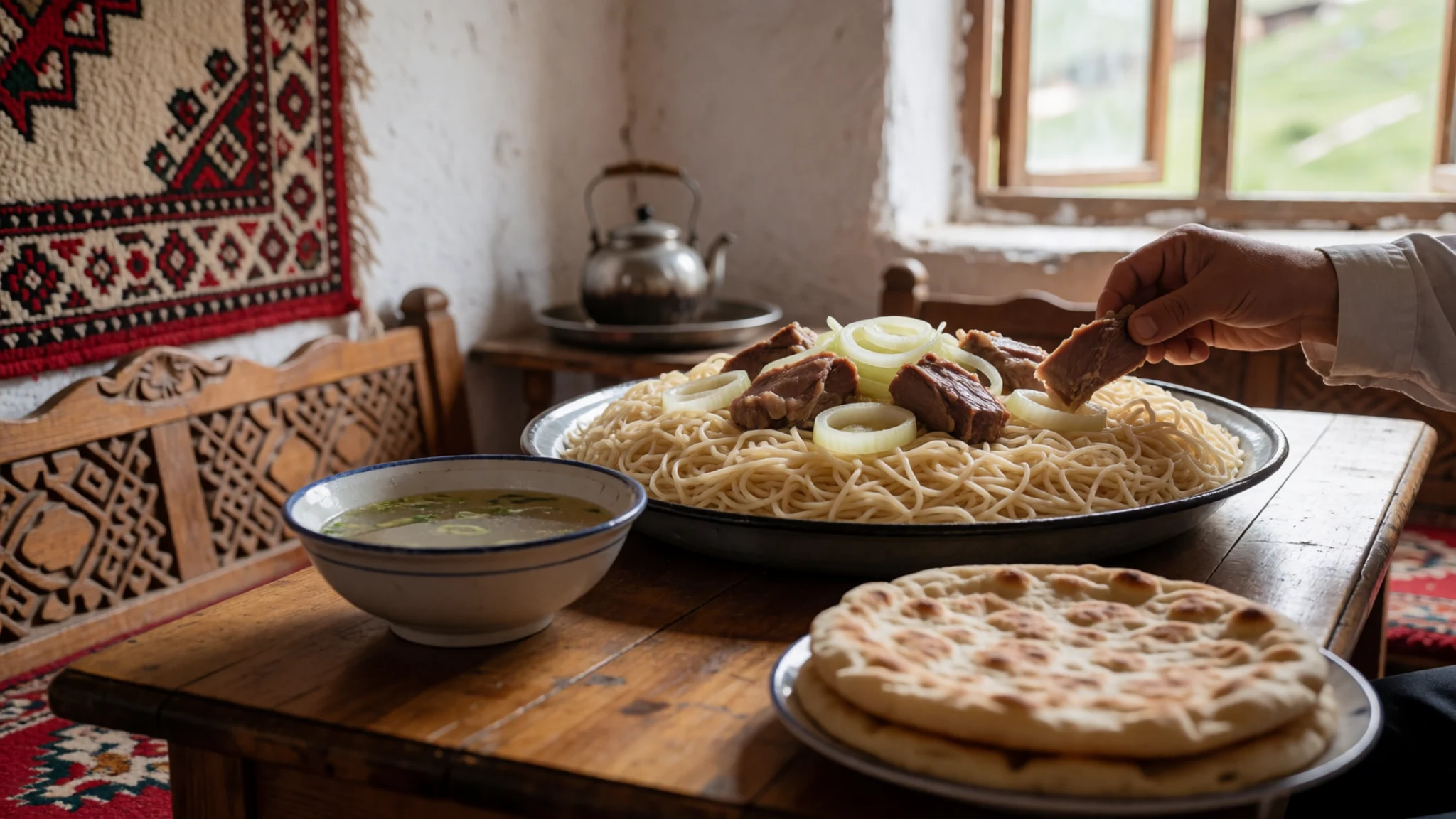
- Lagman — Roadside eateries and bazaar stalls
Hand-pulled noodles in a rich sauce of meat and vegetables, sometimes served as a soup. It is filling, cheap and easy to find, which makes it a reliable lunch after a day by the water. Roadside eateries and bazaar food stalls serve it throughout the region.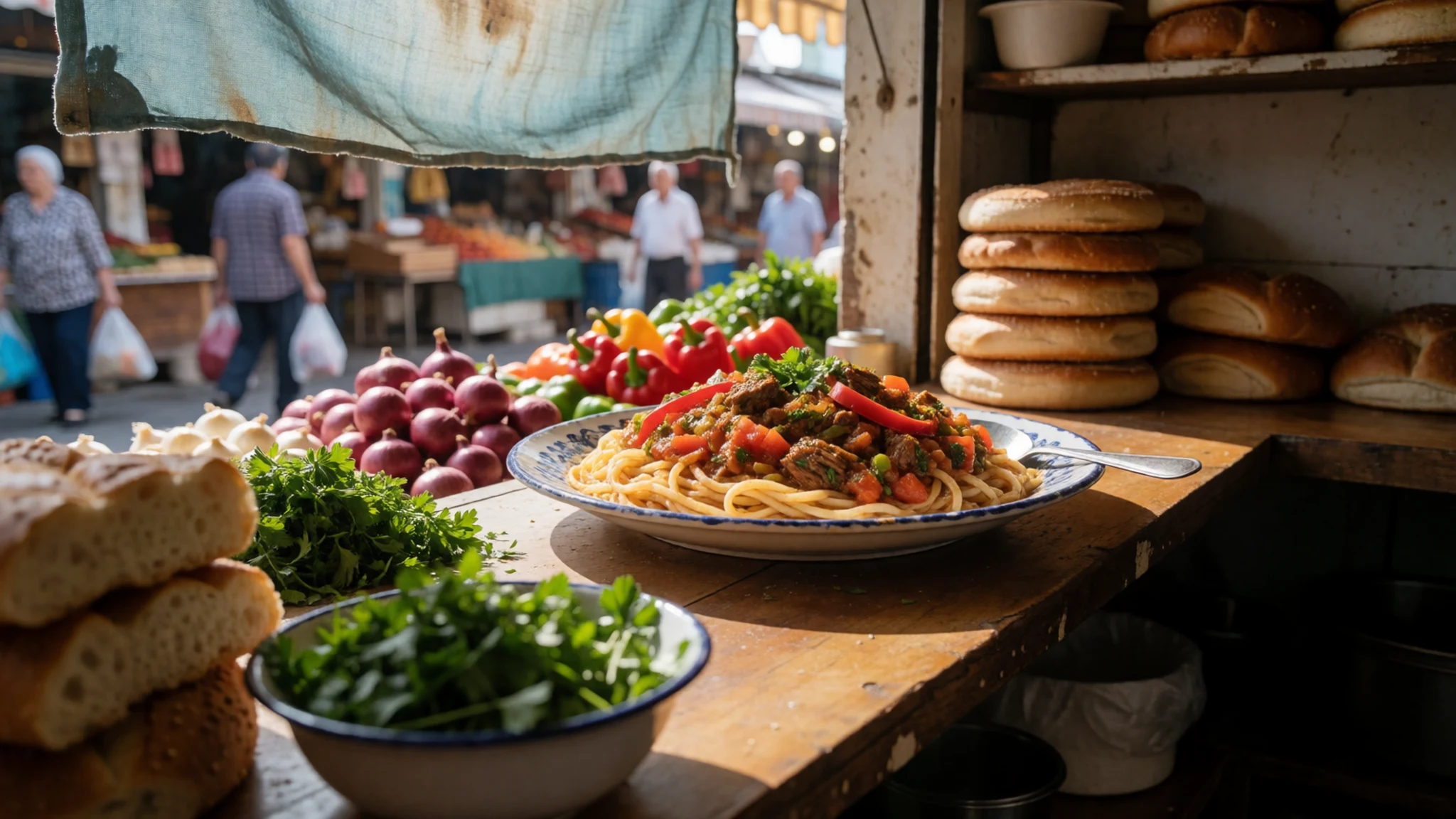
- Samsa — Town bakeries and market stalls
A baked pastry parcel filled with spiced meat and onion, with a flaky crust that comes hot from the oven. It travels well, so it makes a good picnic for the lakeshore. Bakeries and market stalls sell them fresh, usually in the morning and at midday. - Kymys — Roadside stands and village homes in summer
Fermented mare's milk, lightly sour and fizzy, drunk in summer and offered to guests as a gesture of welcome. It is an acquired taste, and a small cup is enough to be polite. Roadside stands and village homes often serve it in the warm months. - Fresh bread, fruit and nuts — Town bazaar and food stands
Round flatbread, seasonal fruit, and walnuts or almonds from small stands make easy picnic supplies by the reservoir. Produce tends to be small and flavourful rather than large. Wash fruit and vegetables before eating them, and carry bottled or treated water. - Chai with a local order — Teahouses, eateries and family tables
Tea is the constant companion of every meal. Asking for jengil chai gets a weak cup, while kyzyl chai comes dark and strong. Hosts refill cups often, so leave a little in the cup if you have had enough. Teahouses and family tables both serve it.
Plan it
Best time. June to September for warm days and swimming; late May and late September are quieter and cooler. Winters are cold and snow can make mountain roads difficult, so check conditions locally before travelling.
How long. 1–2
Getting there. Fly into Manas International Airport in Bishkek (BSZ) or Osh Airport (OSS), then continue by road; the lake lies on the route between the two. The last leg is by car or shared taxi to Toktogul town. Many nationalities can apply for an eVisa online through the official Kyrgyz Republic eVisa system, so check the current rules before booking.
Budget. low
Tips
- Carry cash, as cards may not work in lakeside villages
- Bring water, food and sun protection, because shoreline services are limited
- Drive mountain roads in daylight and ask locally about road conditions
- Keep valuables out of sight in towns, especially after dark
- Check the water level and shore before swimming
Etiquette
- Accept tea or a seat at the table when a host offers it
- Ask before photographing people, and be careful photographing the dam or power station
- Dress modestly in villages and towns, especially in the south
Nearby
Sources
- Wikidata Q16508570 (CC0)
- Wikipedia: Toktogul Reservoir (rev 1362101857) (CC BY-SA 4.0)
- Wikivoyage: Kyrgyzstan (rev 5420229) (CC BY-SA 4.0)
- Photo: Toktogul Lake (revolution cycle) (CC BY 2.5)
- Photo: Lac de Toktogul (JohnNewton8) (CC BY-SA 4.0)
- Photo: Plage de Toktogul sur le lac du même nom (JohnNewton8) (CC BY-SA 4.0)
- Photo: Plage du lac de Toktogul (JohnNewton8) (CC BY-SA 4.0)
- Photo: Lake Toktogul 1 (Peter in s) (CC BY-SA 2.0)
- Photo: Lake Toktogul 2 (Peter in s) (CC BY-SA 1.0)
- Photo: Toktogul reservoir, August 2022 (Arthur Dolchenko) (CC BY-SA 4.0)
- Photo: Toktogul Reservoir 2023 (Arthur Dolchenko) (CC BY-SA 4.0)


