Țipova Monastery
Țipova Monastery, Moldova
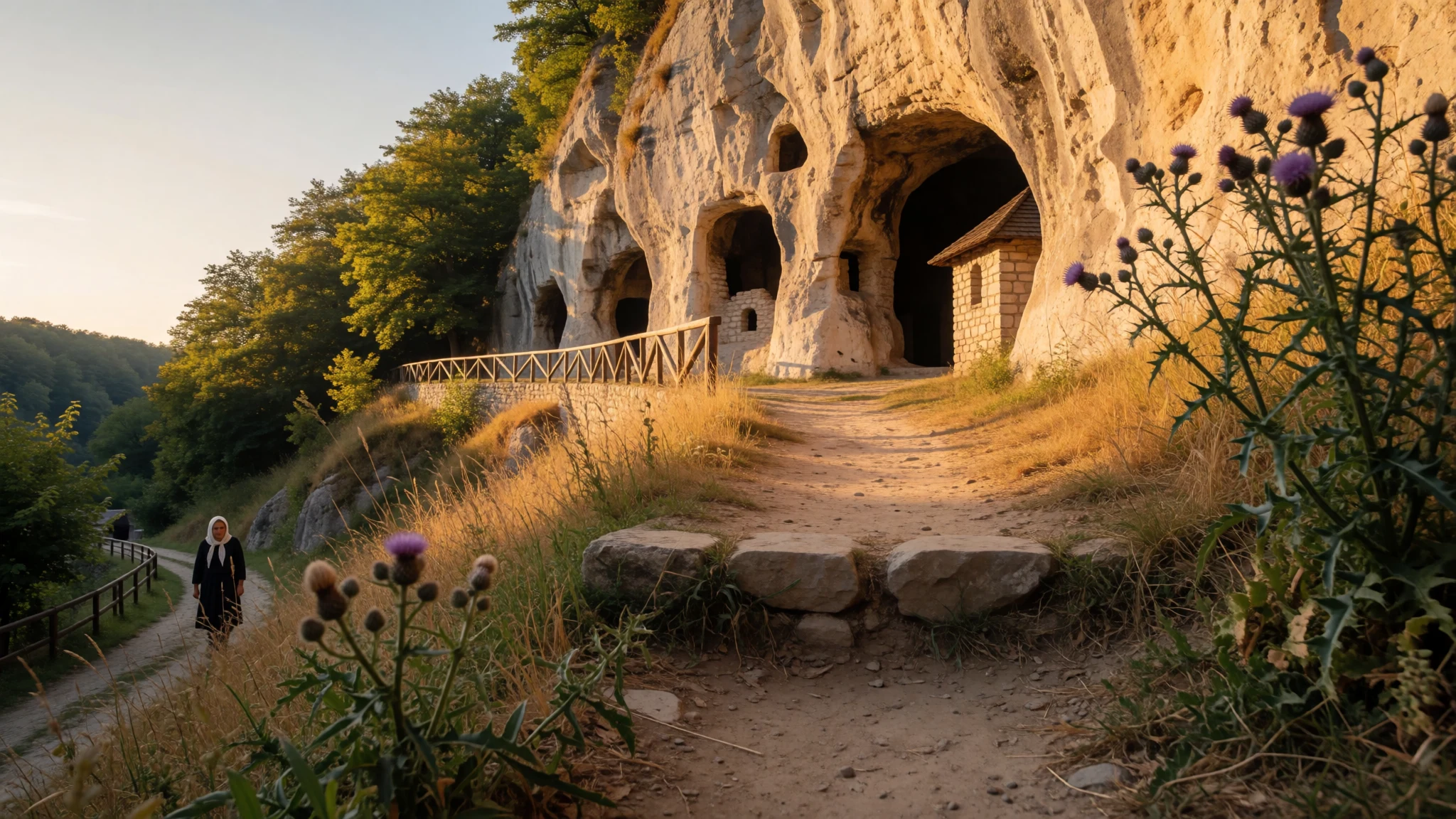
Țipova Monastery is a cliff-carved Orthodox sanctuary above the Dniester, where cool rock chambers and a quiet valley reward a day trip from Chișinău.
The place
Țipova Monastery (Mănăstirea Țipova) stands on the right bank of the Dniester in eastern Moldova, a country tucked between Romania and Ukraine. Wikidata classes it as an architectural monument of national importance, and the reason is clear on arrival: much of the complex is cut into a limestone cliff, so the sacred rooms are part of the hillside itself.
The setting does most of the work. The river valley is wooded and quiet, the village of Țipova is small, and the monastery reads as a blend of rock and masonry rather than one grand building. Inside the cave rooms the air stays cool and still even in summer, the walls are dark with age and candle smoke, and the ceilings are low enough that tall visitors learn to stoop. Around the cliff, the working part of the monastery adds a church, a courtyard and gardens where monastic routine carries on.
This is not a crowded sight in the way a cathedral city is. Weekdays are calm, while weekends, church feast days and organised tours from Chișinău bring more people. Early morning is the kindest hour, when mist can still hang in the valley and the courtyards are peaceful. Facilities are modest: this is rural Moldova, and that is a large part of the appeal. Roads in the district can be rough, and mobile signal in the valley is patchy.
The monastery suits a half-day or full-day trip, ideally paired with other sites in the same district and a meal in a village home or small eatery before the drive back.
Its story
Țipova Monastery belongs to an old pattern in the Dniester valley: hermits and small communities choosing natural caves in soft limestone for prayer, shelter and seclusion. The rock stayed warm in winter and cool in summer, and it offered some protection in a borderland that saw many armies pass. Over time, chambers were widened, linked by passages and given altars, and a refuge became a recognisable monastery.
Exact founding dates are argued over in popular accounts, and the facts used for this reading do not settle one, so the safest summary is that local tradition places the cave life in the medieval centuries and that the complex grew in stages rather than in a single building campaign.
Moldova's monasteries as a group had a turbulent history. They were centres of learning and devotion, they were exposed in wars, and in the Soviet decades the state closed or repurposed many of them. How Țipova fared in each period is thinly documented in the sources behind this reading, so the regional picture is the reliable one. The community seen there today is part of the wider revival of monastic life that followed Moldova's independence.
Conservation has followed. The national monuments inspectorate records the site, and several of the photographs on Wikimedia Commons come from that agency's survey of heritage buildings. The work has to balance the care of fragile rock and painted surfaces against the needs of a living community and its guests. Anyone expecting a museum will find a place still used for prayer, where looking after the stone is a daily concern.
What to see
- The cave church and rock chambers — Țipova village, Rezina district
The heart of Țipova Monastery is a set of rooms carved into the cliff above the Dniester valley. What rewards attention is the atmosphere rather than scale: low ceilings, soot-darkened stone, small altars and the steady coolness. Move slowly, mind your head, and let any service in progress take priority.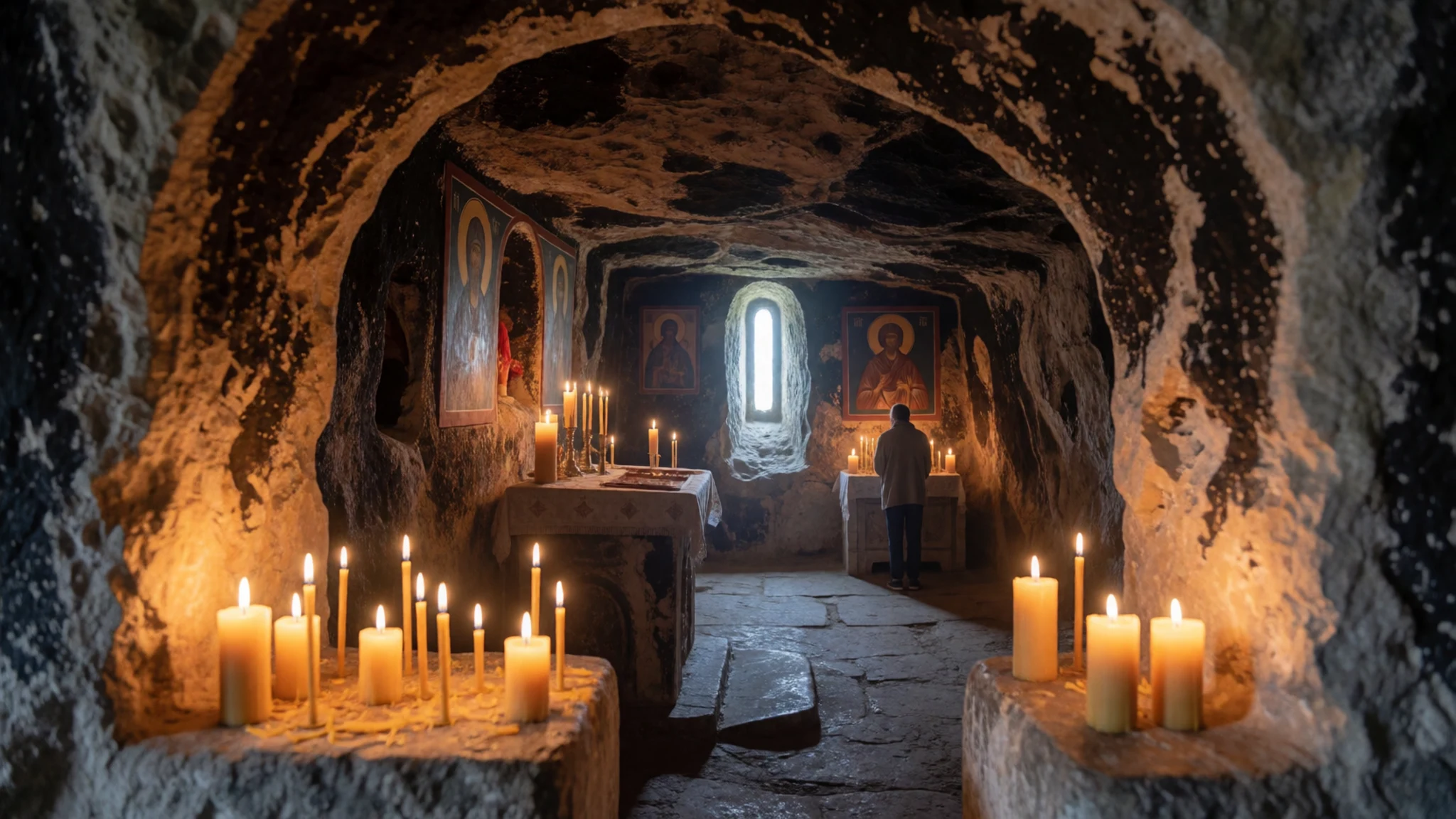
- Passages and monks' cells — Țipova Monastery cliff face
Narrow passages join small hewn chambers where monks once lived and prayed. They show how a natural cliff became a place of daily routine, with sleeping niches, storage spaces and tiny worship rooms. Some stretches are tight and uneven, so wear shoes with grip and carry a small torch if you have one.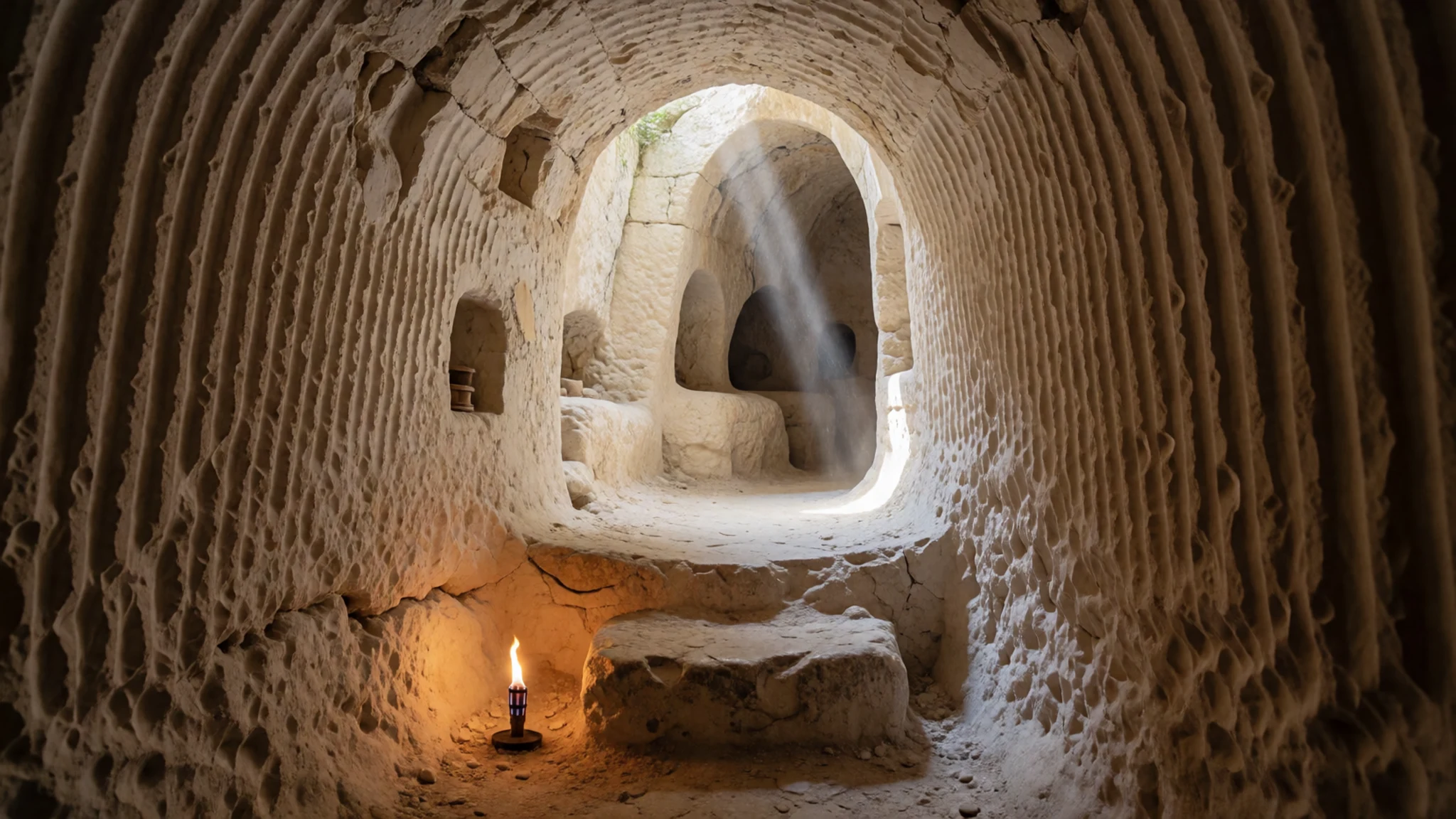
- The monastery courtyard and church buildings — Țipova Monastery grounds
Beside the cliff, the working monastery has a courtyard, a church and tended gardens. This is where pilgrims gather, candles are bought and visitors can sit quietly. Morning is calm, while feast days are busy and lively. The masonry here contrasts well with the raw rock behind it.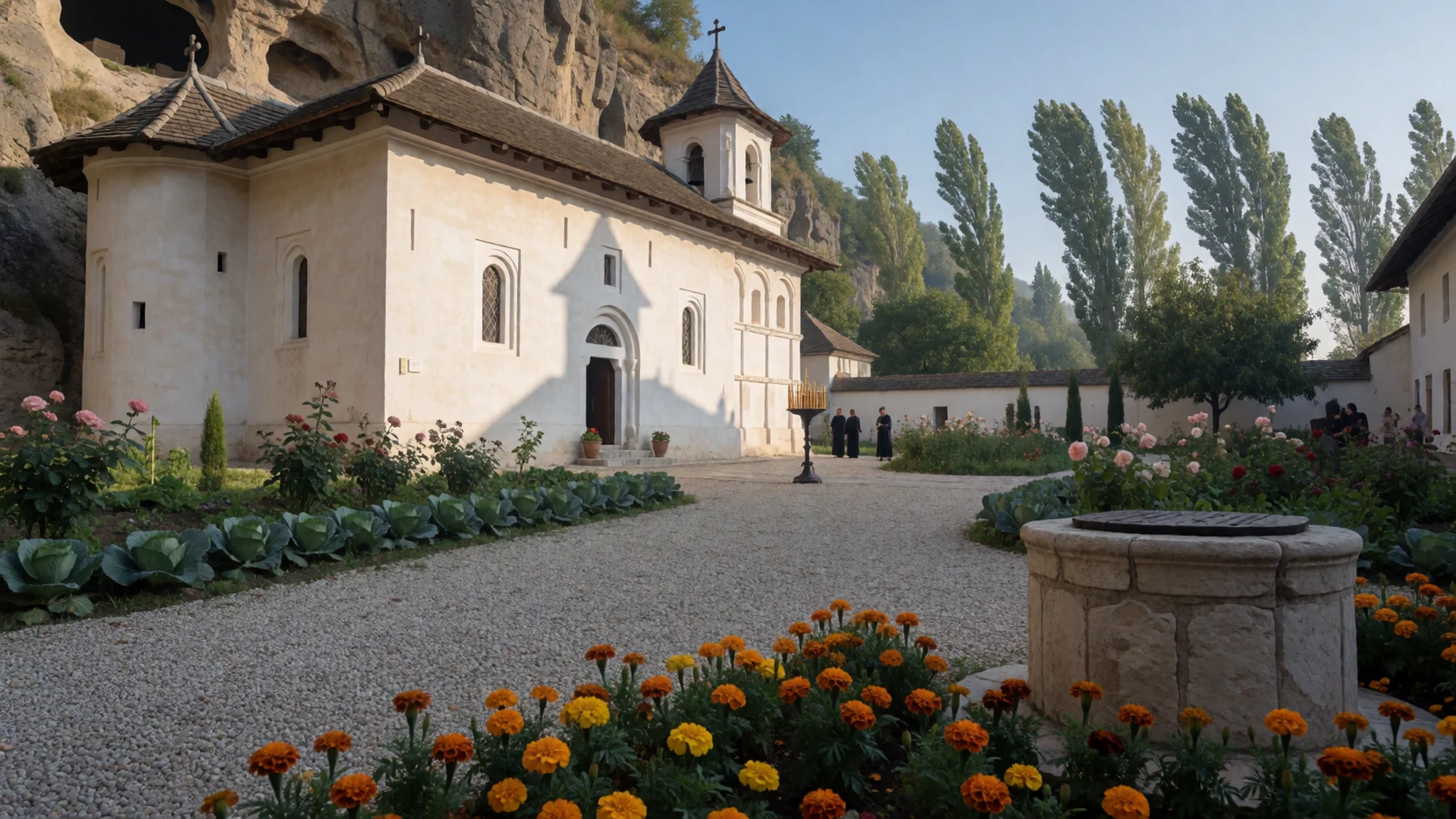
- The Dniester valley viewpoints — Cliff paths around Țipova
From the monastery terraces and the paths near the cliff, the wooded Dniester valley opens out below. Early light is the best for photographs, and spring and autumn colour both suit it. Stay behind any edges and fences, particularly after rain, when the ground near the rock can be slick.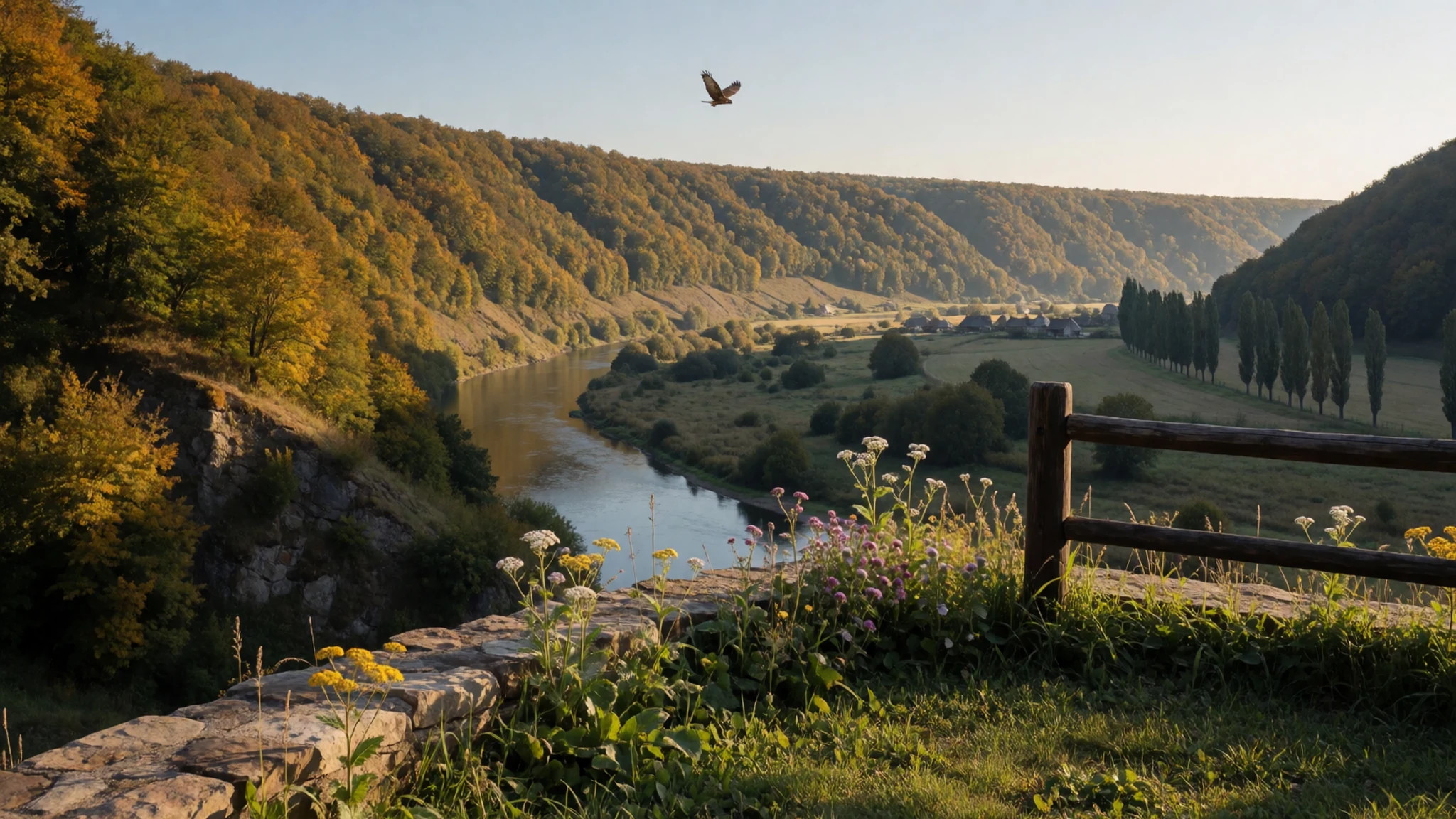
- Țipova village and the lanes around it — Țipova, Rezina district
The village itself is part of the visit: modest houses, gardens, orchards and the occasional stall selling honey, preserves or homemade wine. A short walk along the lanes gives a sense of rural Moldovan life that a quick stop at the monastery would miss, and a chance to buy something small from a local household.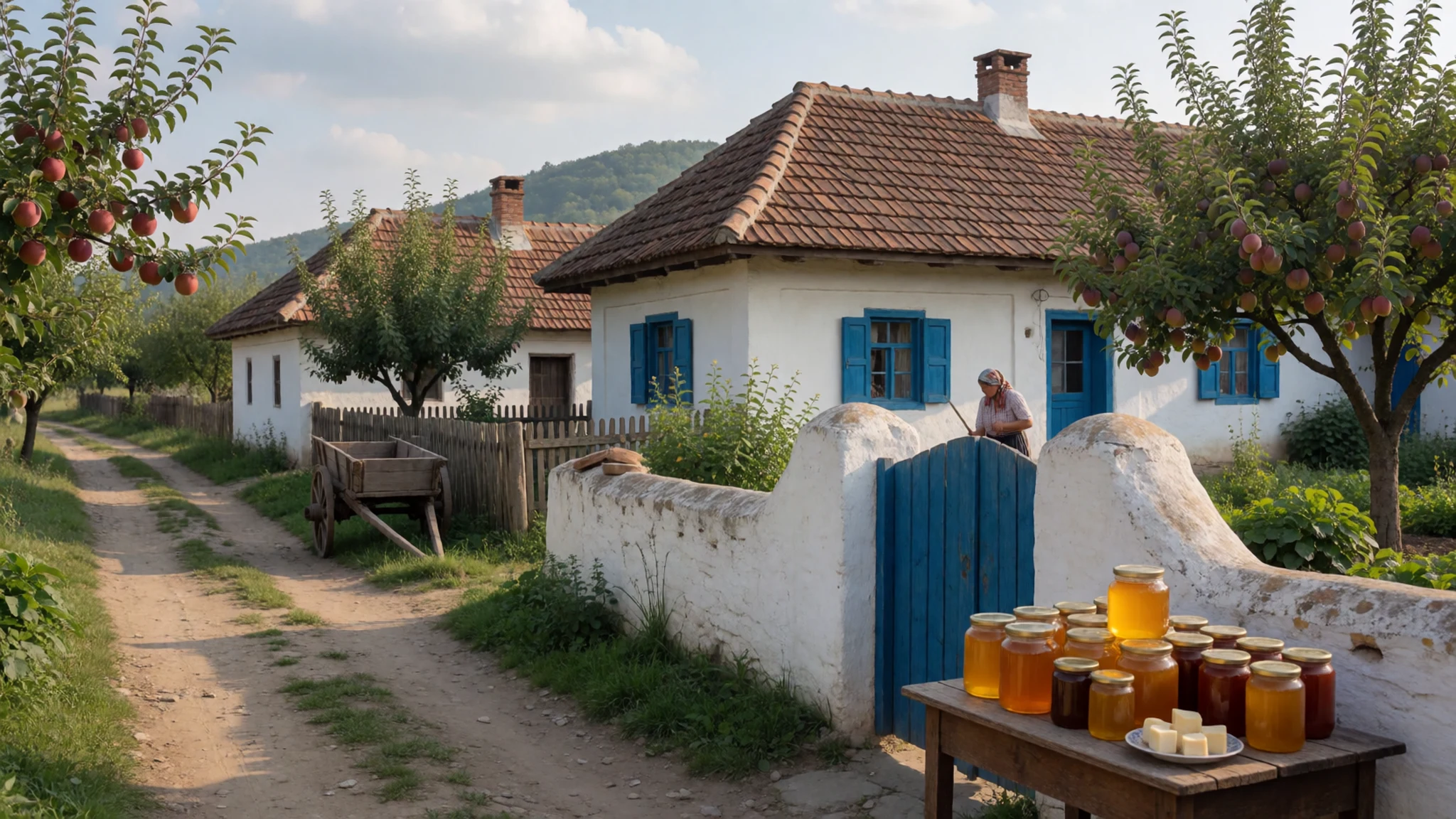
Culture
Țipova Monastery is a place of Orthodox Christian worship first and a sight second. Orthodoxy is the main faith in Moldova, and the monastery's rhythm follows the church calendar: services, fasting seasons and feast days shape who turns up and what is on offer. Pilgrims come to light candles, kiss icons and ask the monks for prayers, and many bring bread, flowers or small offerings.
Language is a quiet part of the picture. Romanian is the national language, called Moldovan in some official contexts, and Russian is widely understood, especially by older people. A few words go a long way: bună ziua for good day and mulțumesc for thank you are received warmly.
The cave setting matters too. The darkness, the cold stone and the smell of wax and old smoke are not stage dressing; they are the real conditions of prayer here. Visitors who move slowly, speak softly and let worshippers go first fit in without effort. Many Moldovans make the sign of the cross on entering and leaving a church. Visitors are not expected to copy it, but it is not something to photograph or comment on.
Fasting days, especially in the long pre-Easter season, change what monastery households eat, and shops or stalls nearby may adjust accordingly. Cover your shoulders and knees, take hats off indoors, and ask before photographing monks, worshippers or icons.
What to wear
Țipova Monastery sits in a region where folk dress is still within living memory. The traditional woman's outfit centres on the ie, a blouse of linen, hemp or cotton embroidered at the neck, sleeves and chest in geometric and floral patterns, worn with a wrapped skirt such as the fotă or catrință and a woven belt. Men wore white shirts, wool trousers, a sheepskin vest and a lambskin hat, and woven rugs and wool blankets complete the household textile tradition. These outfits now appear mainly at weddings, folk festivals, school performances and national celebrations, although embroidered blouses are increasingly worn with jeans as everyday style.
Everyday clothing in the villages is practical and plain: jeans, jackets and sturdy shoes, with headscarves common among older women, particularly at church. In Chișinău the look is ordinary urban European.
For a visit, dress for the cliff and the church together. Long trousers or a long skirt and a top that covers the shoulders work well, and a light scarf is useful if a head covering is expected. Shoes need grip, because paths and steps can be uneven and damp and cave floors can be slippery. Bring a warm layer even in summer, since the rock rooms are cool, plus a hat and sunscreen for the walk outside and a rain jacket in spring and autumn. Avoid high heels, shorts and sleeveless tops.
What to eat
- Mămăligă with brynza — village guesthouses and roadside eateries around Rezina
Cornmeal porridge, cooked thick and served with brynza (a salty cheese), sour cream or a fried egg. Plain, filling and inexpensive, it is the everyday staple of the Moldovan table. Expect it at village guesthouses and simple roadside eateries around Rezina.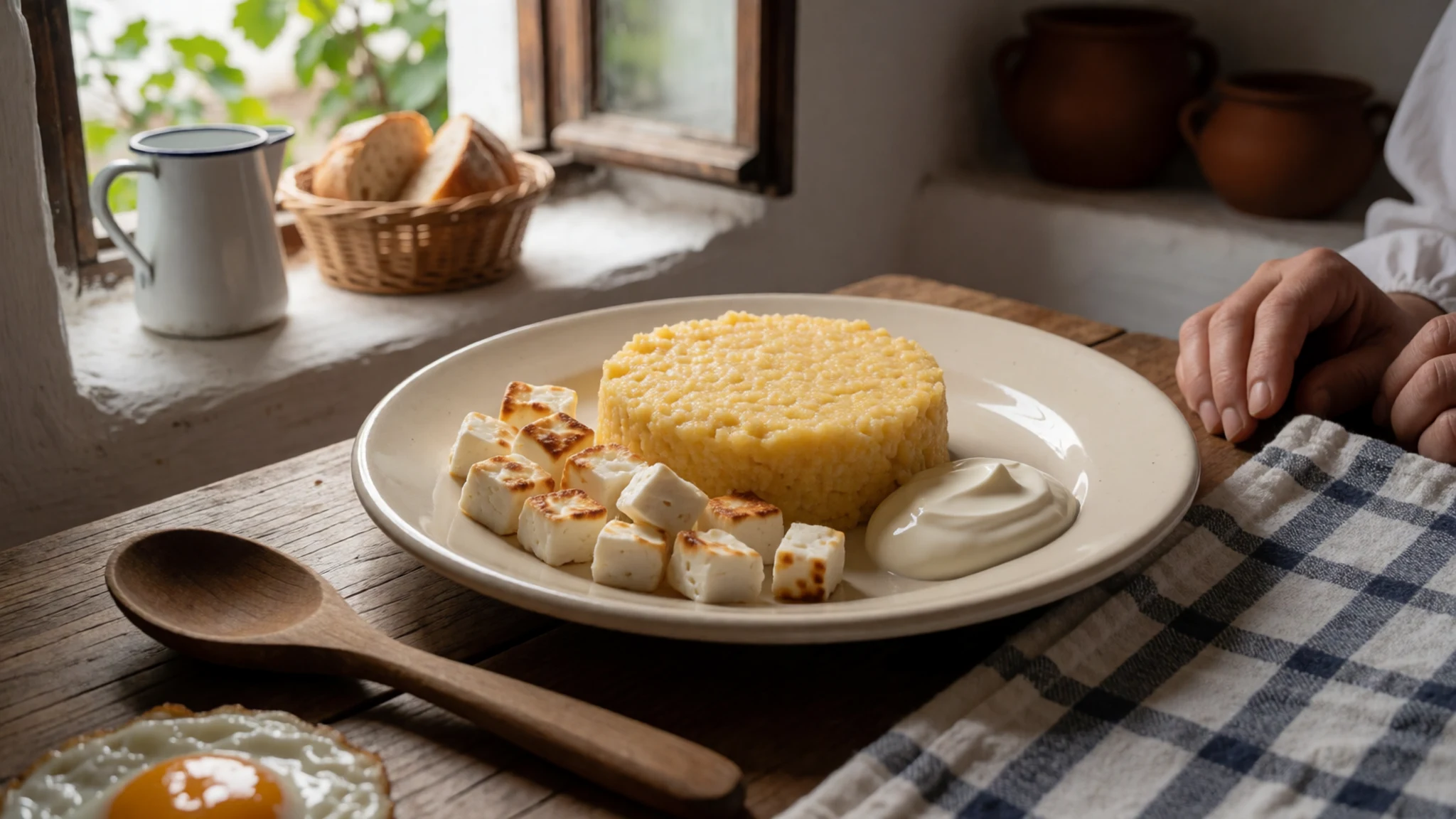
- Plăcinte — bakery counters and market stalls in Rezina and along the road from Chișinău
Folded or rolled pastries, baked or fried, with fillings such as cheese, potato, pumpkin, cabbage or cherry. They make a cheap snack or light lunch. Look for them at bakery counters and market stalls in Rezina and at stops on the road from Chișinău.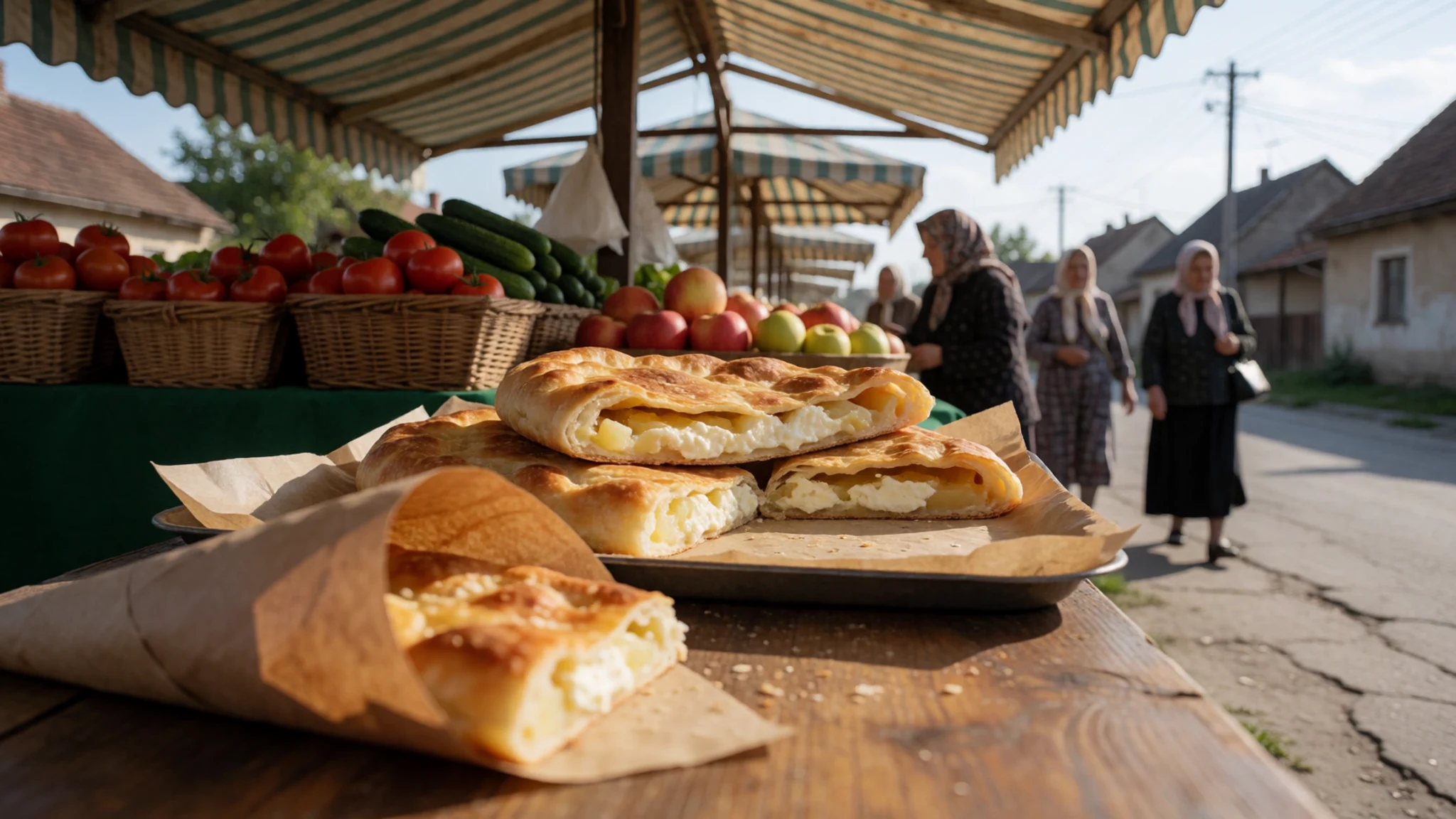
- Sarmale — homestay tables and village eateries
Cabbage or vine leaves rolled around minced meat and rice, simmered slowly and served with sour cream, often alongside mămăligă. A family and holiday dish, it appears in meat-free form on fasting days. Village eateries and homestay meals are the likeliest places to try it. - Zeamă — guesthouses and small eateries in the villages
A home-style chicken noodle soup soured with borș (fermented wheat bran) or lemon and finished with herbs. It is warming after a cool morning in the cave rooms. Small eateries and guesthouses in the villages serve it, usually with fresh bread. - Village wine, honey and preserves — roadside stalls and village guesthouses near Țipova
Moldova is a wine-producing country, and rural households often pour homemade wine and sell honey, jam and pickles. Taste a little, buy from a stall or guesthouse, and keep the driving for after. Offerings vary by season and by household.
Plan it
Best time. May–June and September–October, when the valley is green or golden and walking outside the cave rooms is comfortable. Summer can be hot, though the rock chambers stay cool; winter is cold, and steps and paths may be icy.
How long. 1
Getting there. Fly to Chișinău International Airport, then travel north-east by road towards Rezina. Minibuses (marshrutky) generally run from Chișinău to Rezina; for the last leg to Țipova village a taxi or hired car is easiest. Check current routes locally before you set out.
Budget. low
Tips
- No opening hours or fees are given here: ask a local guesthouse or the monastery directly before you go
- Arrive early on a weekday for the quietest visit; weekends and feast days are busier
- Carry cash in Moldovan lei, since cards are rarely accepted in villages
- Bring water, a warm layer and shoes with grip; paths and cave floors can be uneven and damp
- Pair the visit with other monasteries and viewpoints in the same district, and leave time for a village meal
Etiquette
- Cover shoulders and knees, and take hats off when entering a church or cave chapel
- Ask before photographing monks, worshippers or icons, and keep your voice low
- Do not walk in front of people praying or cut across a service in progress
Nearby
Sources
- Wikidata Q3815738 (CC0)
- Wikipedia — Țipova Monastery (CC BY-SA 4.0)
- Wikivoyage — Moldova (CC BY-SA 4.0)
- Photo: Țipova Monastery, Țipova, Moldova — Poco a poco (CC BY-SA 4.0)
- Photo: AIRM — Mănăstirea Țipova (390278787663547) (CC BY-SA 4.0)
- Photo: AIRM — Mănăstirea Țipova (390278890996870) (CC BY-SA 4.0)
- Photo: AIRM — Mănăstirea Țipova (390278937663532) (CC BY-SA 4.0)
- Photo: AIRM — Mănăstirea Țipova (390279000996859) (CC BY-SA 4.0)
- Photo: AIRM — Mănăstirea Țipova (390279030996856) (CC BY-SA 4.0)
- Photo: AIRM — Mănăstirea Țipova (512010272157064) (CC BY-SA 4.0)
- Photo: AIRM — Mănăstirea Țipova (512010848823673) (CC BY-SA 4.0)


