Tiraspol
Tiraspol, Moldova
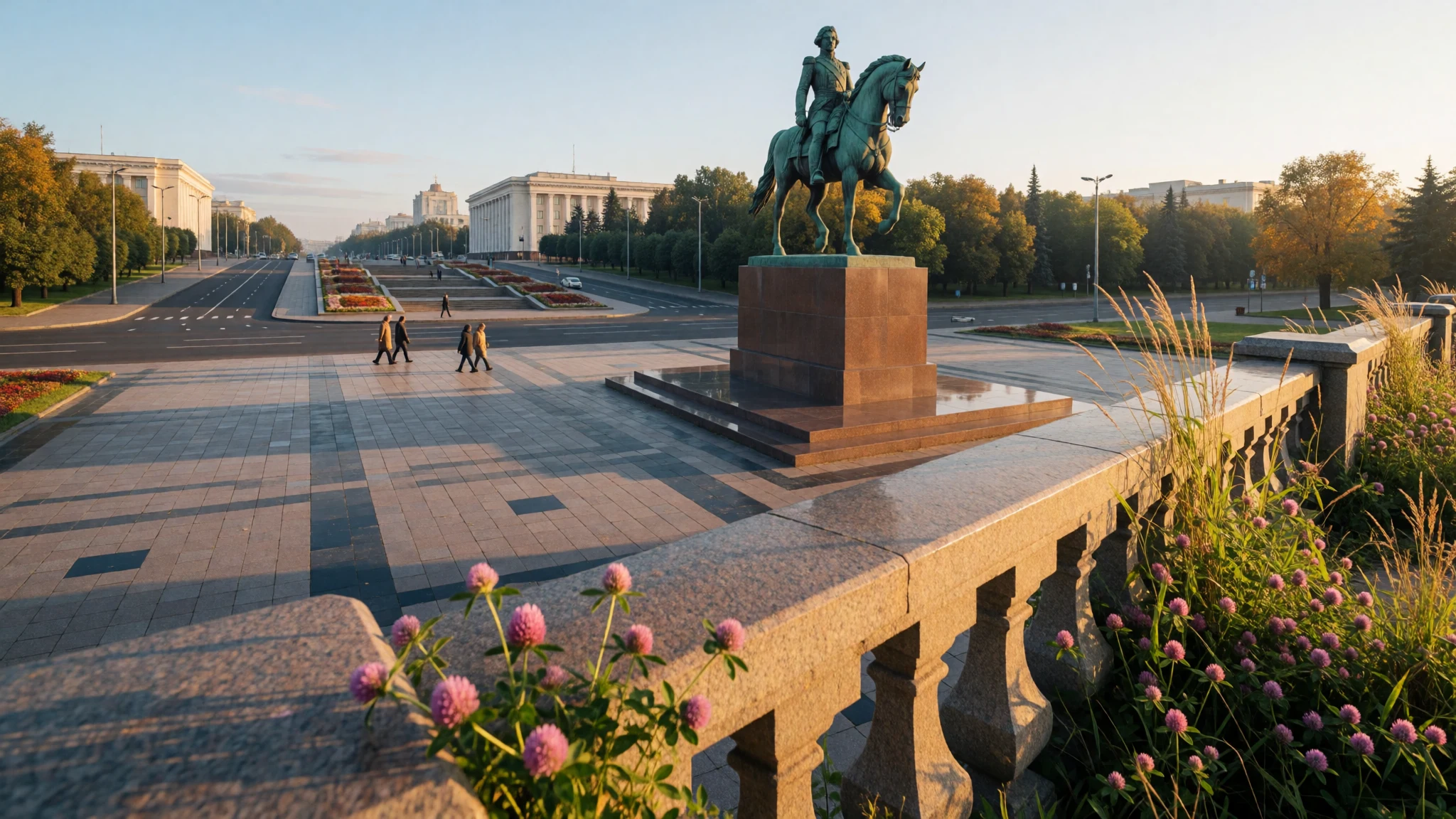
Tiraspol offers travellers a rare glimpse into a living Soviet-era time capsule situated along the eastern bank of the Dniester River.
The place
Tiraspol functions as the capital and largest urban centre of Transnistria, operating as a self-declared republic within the internationally recognised borders of Moldova. Situated gracefully on the eastern bank of the Dniester River, the settlement serves as a notable regional hub for culture, commerce, tourism, and light manufacturing, particularly recognised for its furniture works and electrical goods production. The municipality experiences a humid continental climate that frequently brushes against oceanic characteristics, softened by transitional subtropical influences that encourage pleasantly mild summers alongside noticeably brisk winter conditions.
The urban footprint preserves much of its mid-century layout, defined by sweeping public plazas, wide avenues, and monumental administrative architecture that recall a different political era. Despite its complex geopolitical standing, daily life moves at a steady, unhurried pace among tree-lined residential quarters, quiet riverbanks, and bustling local markets. Visitors wandering the central districts will notice bilingual signage in Cyrillic script alongside monuments dedicated to past military campaigns and political figures. The destination rewards curious travellers willing to look past conventional tourist itineraries to examine a fascinating living museum of twentieth-century history, where public squares, grand assembly halls, and orthodox spires stand side by side under expansive Eastern European skies.
Its story
Tiraspol possesses a layered heritage that stretches far beyond its twentieth-century appearance, rooted deeply in classical antiquity and successive empires. Long before the modern settlement took shape, the surrounding territory had sustained diverse human communities for millennia. Ancient Greek merchants established a trading colony named Tyras roughly six miles from the mouth of the Dniester River, which eventually fell under the sway of indigenous monarchs before meeting destruction by local tribes. Centuries later, Roman authorities restored the settlement as part of their provincial network, minting local currency bearing the profiles of visiting emperors before the site suffered further devastation during the Gothic migrations.
The modern chapter of Tiraspol began when the Russian generalissimo Alexander Suvorov established a fortress here to secure the frontier along the Dniester River. Over the ensuing generations, the location transformed from a strategic military outpost into a thriving provincial center within the Russian Empire, later experiencing the turbulent shifts of the early twentieth century, including revolutionary upheavals, world wars, and integration into the Soviet Union. The dissolution of the Soviet state triggered dramatic political realignments that led to the establishment of the breakaway republic, leaving the municipality with its current distinct administrative identity. Today, historical layers from Greek antiquity to Soviet industrialisation remain embedded in the local landscape, offering an extraordinary chronicle of persistence at the crossroads of European empires.
What to see
- Suvorov Square — Central Tiraspol
Suvorov Square serves as the grand civic heart of Tiraspol, featuring an imposing monument dedicated to the city's founder mounted on a pedestal. The expansive paved plaza regularly hosts public celebrations and national parades, flanked by major administrative buildings, terraced gardens, and sweeping vistas stretching toward the riverbank. - Supreme Soviet — Central Tiraspol
The Supreme Soviet building displays an exceptionally well-preserved piece of monumental modernist architecture complete with grand concrete columns and stone reliefs. A prominent bronze statue of Vladimir Lenin stands directly in front of the legislature, providing one of the most striking political photo opportunities in Eastern Europe. - House of Soviets — Municipal District
The House of Soviets functions as the municipal city hall, housed within a substantial Soviet-era administrative structure designed with symmetrical proportions and classical proportions. Another bust of Lenin guards the front entrance, while the surrounding paved precinct reflects the monumental urban planning principles favoured across the mid-twentieth century. - The Christmas Cathedral — Central Tiraspol
The Christmas Cathedral stands as a magnificent Russian-Orthodox sanctuary featuring gleaming traditional domes and intricate religious iconography across its facade. The interior provides a serene space filled with flickering candles, polished woodwork, and hushed congregants observing ancient liturgical traditions away from the bustling secular plazas nearby. - Armoured Vehicle Monument — Memorial District
The Armoured Vehicle Monument presents a classic tracked combat vehicle mounted on a stone plinth as a permanent symbol of wartime victory and regional defence. Surrounded by manicured lawns and memorial plaques, the military exhibit commemorates the soldiers who fought across the Dniester valley during historic twentieth-century conflicts.
Culture
Tiraspol sustains a cultural identity shaped by a unique blend of Slavic, Moldovan, and Soviet traditions. Public life often revolves around commemorative anniversaries, such as the city's annual celebration held every October, when residents gather in the central plazas for parades, musical performances, and outdoor fairs. Monuments across the urban landscape honour historical milestones, from the generalissimo who founded the garrison to veterans of twentieth-century conflicts commemorated by eternal flames and military hardware. Residents value traditional hospitality, neighbourly courtesy, and community gatherings in parks and cultural halls. When visiting religious sanctuaries such as the Christmas Cathedral, women should cover their heads with a scarf and both travellers and locals alike must dress modestly with shoulders and knees covered at all times.
What to wear
Tiraspol showcases a pragmatic approach to attire that blends contemporary European styles with enduring Eastern European sensibilities. Traditional folk textiles featuring intricate geometric embroidery and woven wool elements are occasionally preserved for regional festivals, folk dance performances, and national holidays, reflecting ancestral craft techniques passed down through generations. For everyday wear, local residents favour practical, neat garments, with smart-casual jackets, trousers, and comfortable footwear dominating the pavements during warmer months, while heavy wool coats, insulated jackets, and sturdy boots become essential during the freezing winter season. Visitors exploring Tiraspol will blend in comfortably by dressing neatly and modestly, avoiding overly flashy garments while ensuring shoulders and knees are covered when entering places of worship or attending official venues.
What to eat
- Plăcinte pastries — La Placinte
Traditional flaky flat pastries filled with seasoned cottage cheese, apples, or cabbage, baked or fried to a golden crisp. These comforting pastries are widely available at local bakery counters and casual eateries throughout the central districts. - Soviet canteen meals — Столовка СССР Тирасполь
Hearty retro cafeteria fare featuring traditional soups, cutlets, kasha, and beet salads served in authentic mid-century dining halls. These unpretentious canteens offer an affordable taste of nostalgic comfort food in nostalgic surroundings. - Quick shawarma wraps — Классная Шаурма
Popular street-food wraps stuffed with seasoned carved meats, crisp salad vegetables, and garlic sauces, prepared fresh for travellers on the go. These casual stalls are frequented by locals seeking a fast, satisfying meal in town. - Regional wines and brandies — Bottle Museum
Appellation spirits and aged wines produced across local vineyards and distilleries, offering rich notes characteristic of the Dniester valley terroir. Tasting flights can be sampled at specialized exhibition complexes alongside classic regional dishes. - Western-style grilled dishes — 7 Пятницъ
Contemporary bistro fare featuring charcoal-grilled meats, wood-fired pizzas, and international café plates served in a relaxed urban dining room. This venue provides a modern alternative for travellers seeking familiar comfort dishes on the main avenue.
Plan it
Best time. May through September offers the most pleasant weather for exploring on foot, with mild summer temperatures averaging around 21 °C in July and August; winters bring freezing conditions with temperatures dropping below zero.
How long. 2–3
Getting there. Take a frequent bus or maxi-taxi from the northeast corner of Chișinău Autogara on Tighins Street, which completes the journey in about 2 hours and 20 minutes.
Budget. mid
Tips
- Carry sufficient cash since international credit cards are not universally accepted across all local shops and transport counters
- Arrive at the main bus station with cash for your return tickets, as station exchange offices may be closed on Sundays
- Wear sturdy walking shoes to comfortably navigate the wide concrete plazas and historical monuments
- Keep your passport accessible during border transit checks between Moldova and Transnistria
- Check hotel facilities in advance regarding hot water availability, as standard provisions can occasionally vary
Etiquette
- Dress modestly with covered shoulders and knees when visiting churches and official public buildings
- Ask permission before photographing local military personnel or sensitive government installations
- Remove hats upon entering indoor sacred spaces and places of worship
Nearby
Sources
- Wikidata Q132572 (CC0)
- Wikipedia (rev 1382971593) (CC BY-SA 4.0)
- Wikivoyage (rev 5420207) (CC BY-SA 4.0)