Mileștii Mici
Mileștii Mici, Moldova
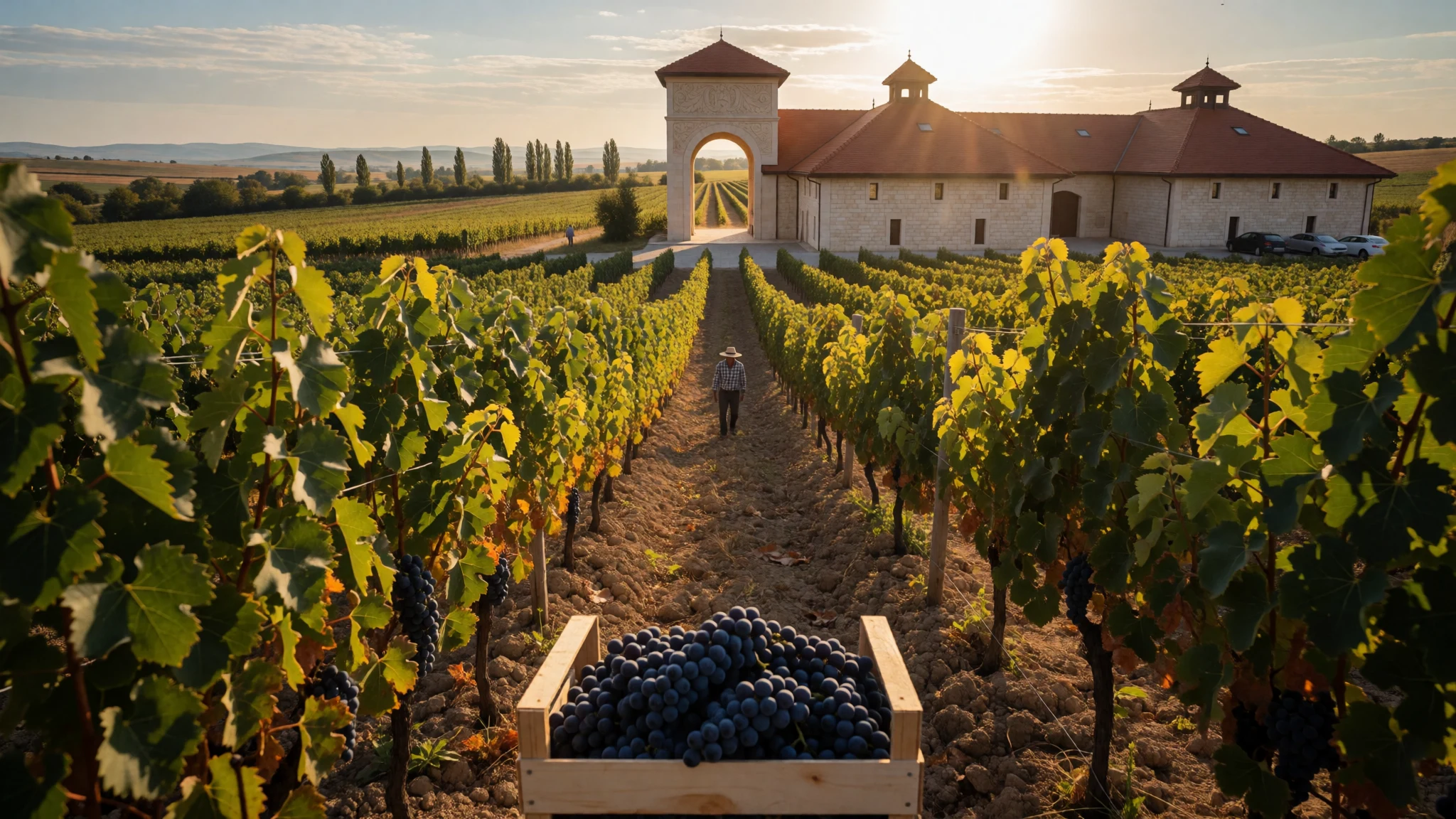
Mileștii Mici is a Moldovan winery whose vast underground galleries turn a wine tasting into a slow, cool walk through a bottled city.
The place
Mileștii Mici is a winery in the Moldovan commune of the same name, set among farmland a short drive south of Chișinău. Above ground it looks modest: vineyards, working buildings, a car park and a few cheerfully over-the-top decorations. The reason to come lies underneath. Underground, you'll find over 200 kilometres of tunnels holding the world's largest wine collection. Whatever the exact tally, the scale is obvious once inside: stone-walled galleries run on and on, lined with arched alcoves of bottles, with street-style signage and a cool, steady temperature that has nothing to do with the weather overhead. Wikidata gives 1997 as the founding date of the winery as a business. Visits are organised as tours, and because the site sits outside the city, a car or driver is needed to reach it; booking through a travel agency is often the easier route. Tours end with a tasting. Moldova is a small country that receives few foreign visitors, and wine is its easiest introduction: good bottles at modest prices are the main reason travellers make the trip. Mileștii Mici suits a half day from the capital and pairs well with a second cellar or the cave monastery at Orheiul Vechi. Weekends bring tour groups, so a weekday visit is quieter.
Its story
Mileștii Mici belongs to a country whose history has mostly been written by larger neighbours. For several centuries Moldova lay within the Ottoman sphere of influence. In the 1800s the Russians took control, and the land passed into the Russian Empire and later the Soviet Union. Independence arrived in the 1990s. Through all of it the soil did the quiet work: the fertile ground earned Moldova a reputation as the garden of the Soviet Union, and vines were a big part of that picture. A winery on this scale makes sense against that background, because wine is a product that rewards large, cool, stable storage, and underground galleries provide exactly that. How the tunnels were dug, filled and extended is best heard from the guides on site, who tell it with obvious pride. What the record shows is that the business carries 1997 as its founding date in Wikidata, and that it has since turned its cellars into the country's best-known wine attraction. The decades after the Soviet collapse were not smooth for Moldova. Ethnic tensions led to the breakaway territory of Transnistria in the east, which runs its own government and currency and is not recognised by any UN member state. Against that uncertain backdrop, wine has become one of the few things the country is widely known for, and the galleries at Mileștii Mici are its showpiece.
What to see
- The underground galleries — Beneath the winery, Mileștii Mici commune
The main draw is the network of stone-walled roadways, with arched alcoves of bottles on both sides and junctions that feel like street corners. The air is cool and slightly damp year round. Go with a guide and allow time to simply look, because the repetition of the shelves is the point.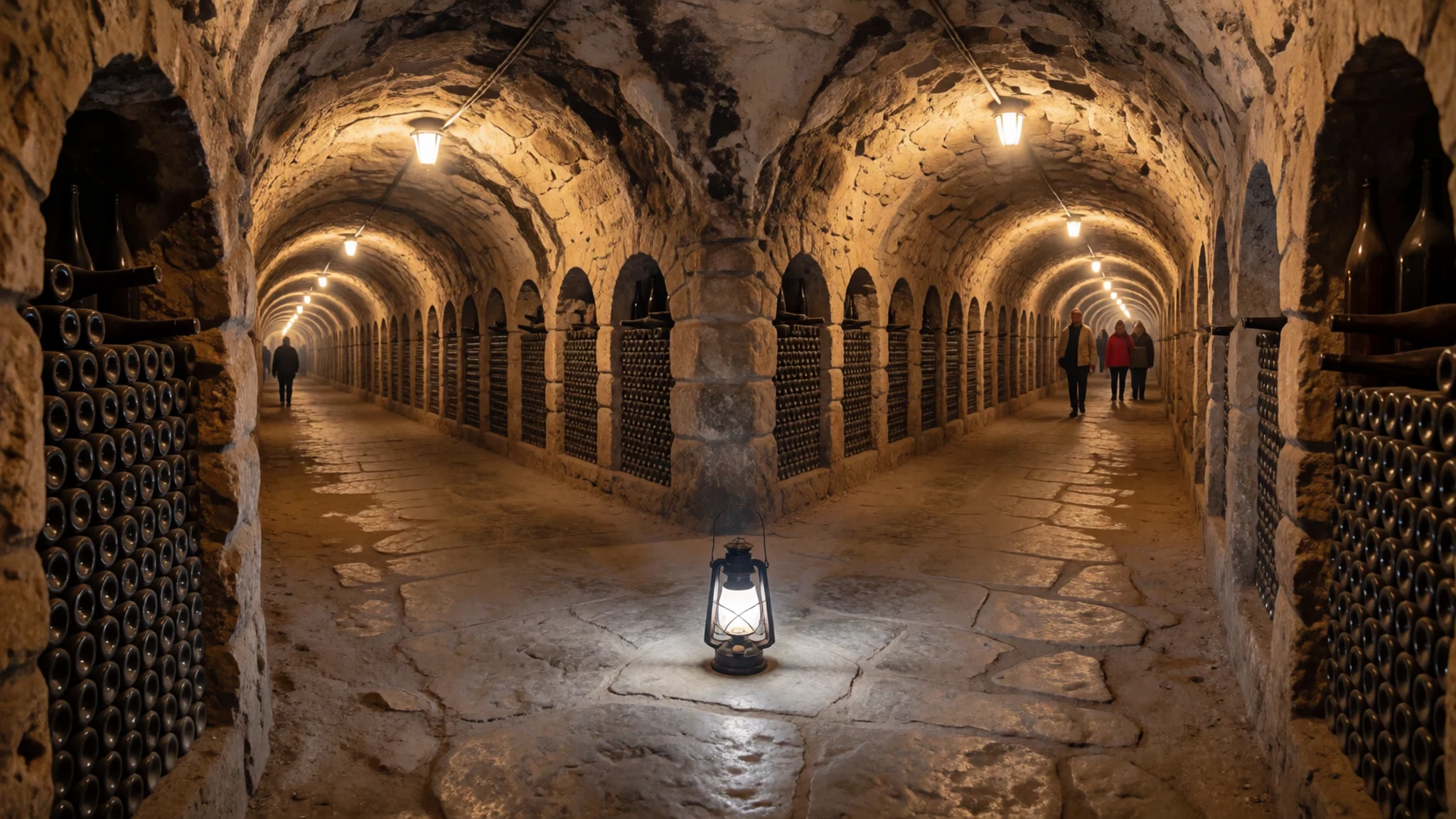
- The long table in the cellars — A tasting cellar within the galleries
Part of the cellars is set up for groups, with a very long table, a guestbook and room for a crowd to taste together. It is a sociable end to the tour, and the closest thing here to a Moldovan feast. Expect glasses to be refilled generously and a lively, slightly noisy atmosphere.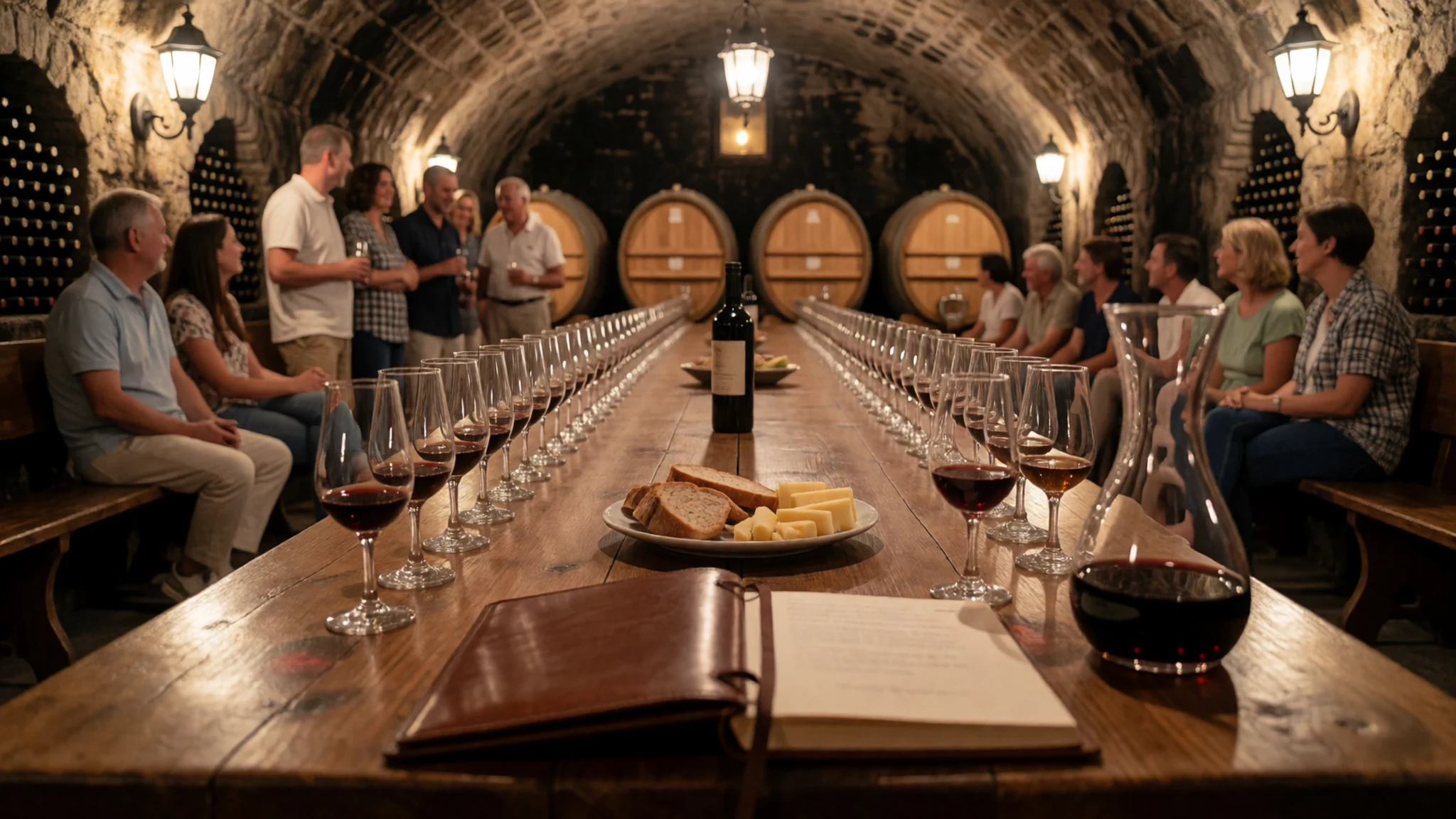
- The wine fountains — The winery grounds above ground
Above ground, the grounds hold a few fountains styled to look like wine, which one visitor's photo caption calls frankly kitschy. They are worth a minute and a photograph, a reminder that Mileștii Mici is a working commercial winery with a sense of humour as well as serious cellars.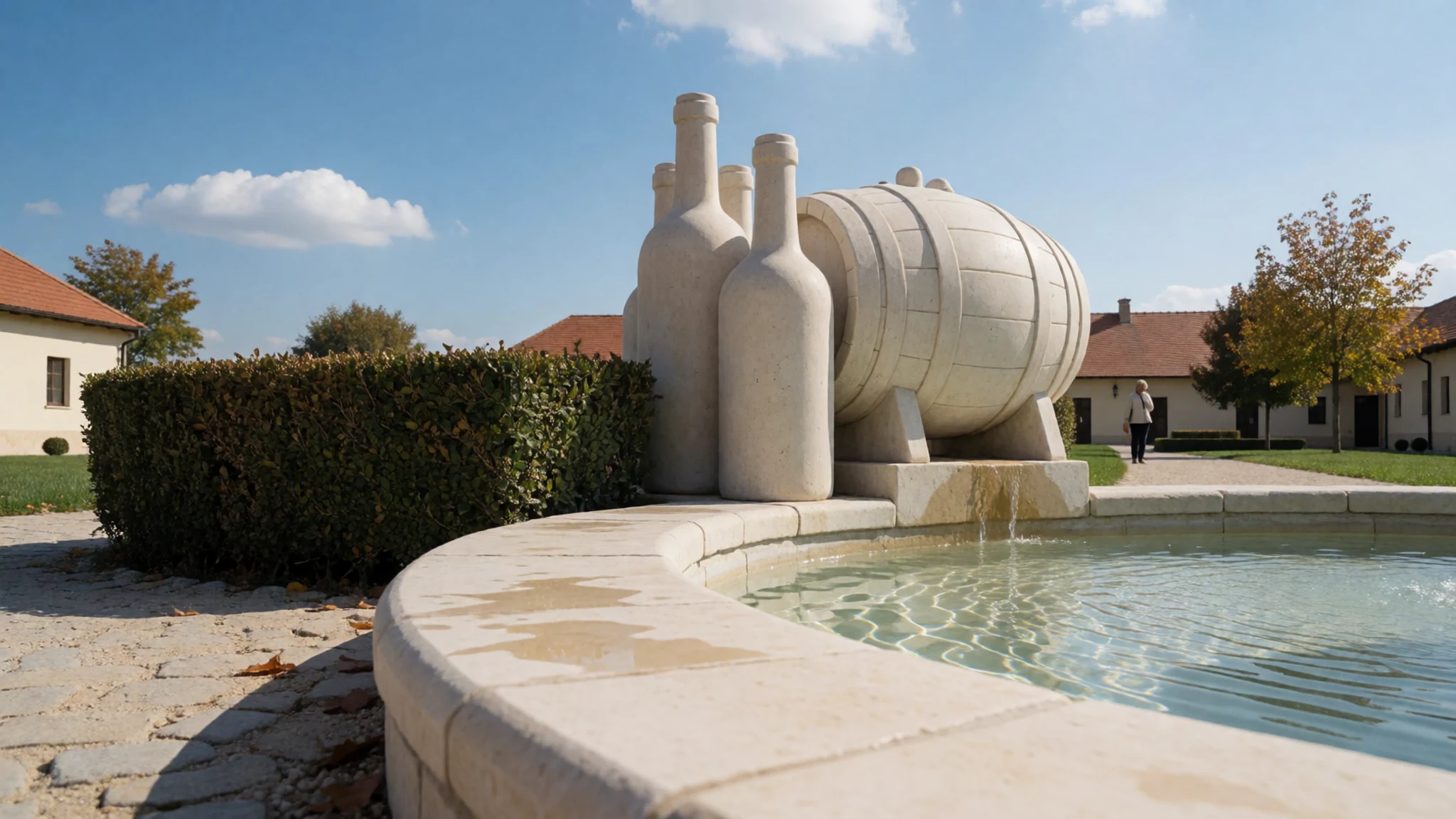
- Cricova — Near Chișinău
Wikivoyage describes Cricova as Moldova's second largest wine cellar, with its own long underground roads, and a favourite with tourists. It sits close to the capital, so it is the natural second stop for anyone keen to compare two underground wine cities in a single trip.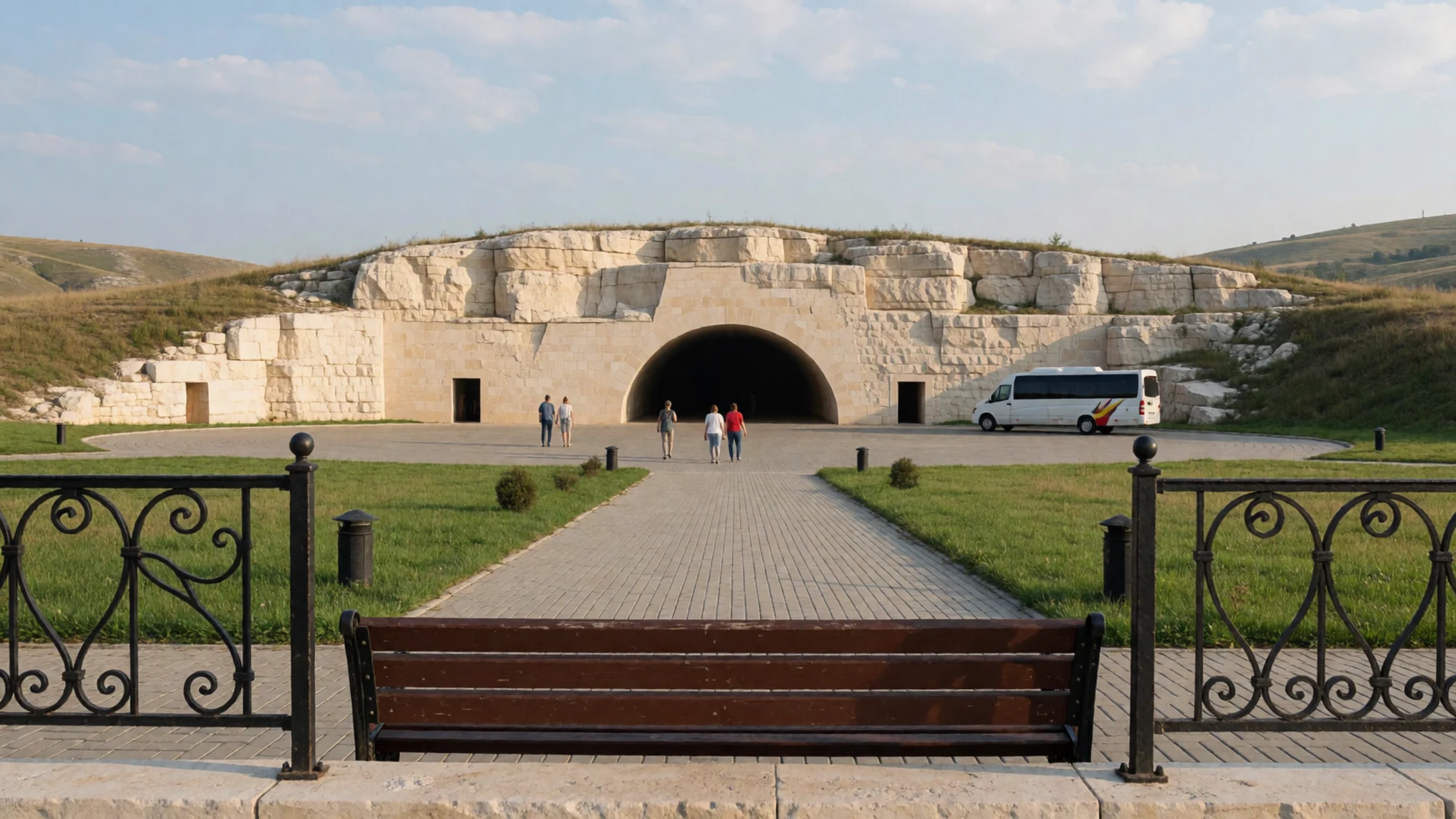
- Orhei National Park and Orheiul Vechi — North of Chișinău, about half an hour by road
Orhei National Park, protected since 2012, holds Orheiul Vechi, a 13th-century cave monastery that Wikivoyage calls Moldova's best-known sight. It is a fine contrast with the cellars: open cliffs and countryside instead of tunnels. Brănești, a smaller cellar nearby, makes it easy to combine monastery and tasting.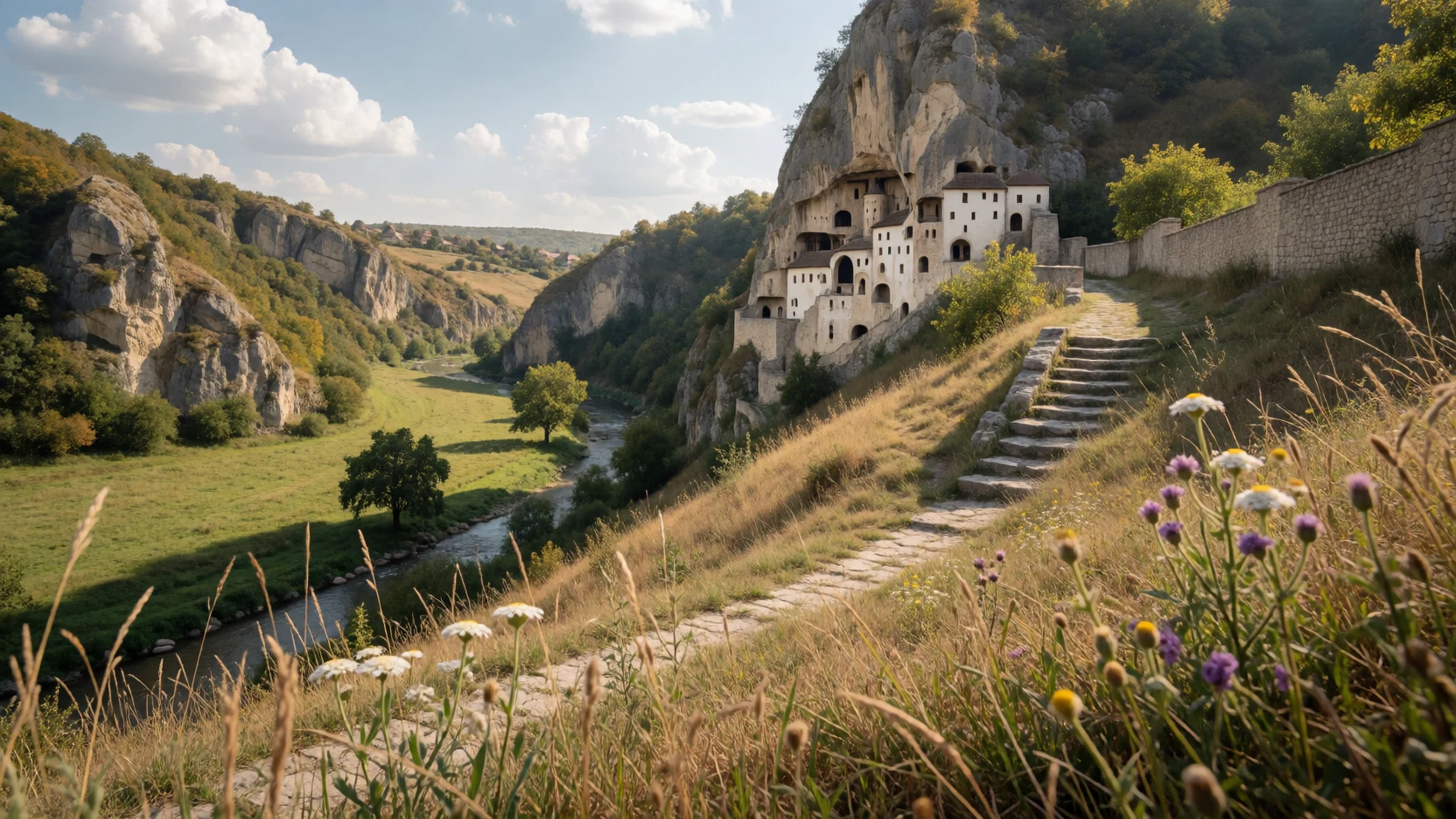
Culture
Mileștii Mici sits in a country where visitors are still a novelty, and that shapes daily encounters. Moldovans may stare at foreigners, but this is curiosity rather than hostility, and a smile usually turns it into conversation. Wine is woven into hospitality: guests are expected to taste, toasts are common, and refusing everything outright can feel cold, so a small sip with thanks goes a long way. Courtesy follows older, formal habits shared across much of the former Soviet Union. Women are widely respected in Moldovan society, with many women in public office, and chivalry is normal: male hosts may open doors, carry bags or insist on paying the restaurant bill, and it is best taken as politeness rather than pressure. Moldova's history of Ottoman, Russian and Soviet rule has left a mixed society where Romanian and Russian are both heard, and where politics, especially the status of Transnistria, can be a sensitive subject for strangers to raise. As in many places with few tourists, a minority of people see foreigners as wealthy, so ignore anyone who seems to be trying to scam you and walk away without feeling obliged to be polite. Tours of the galleries are guided and usually relaxed, with plenty of storytelling. At Mileștii Mici, stay with your guide on the marked routes and never take bottles off the shelves for photographs.
What to wear
Mileștii Mici lies in a part of Europe where traditional dress is still tied to the village year. The best-known garment is the ie, an embroidered blouse in linen, hemp or cotton, worked with geometric and floral patterns that vary by region. Women wear it with a catrință, a wrap-around skirt or apron of woven wool, tied with a long woven belt called a brâu. Men's costume includes a linen shirt, a wide belt and, in colder weather, a sheepskin waistcoat. These clothes appear at weddings, folk festivals, national celebrations and in dance and choir performances rather than daily life, though embroidered blouses are worn proudly on special days. Day to day, people in Chișinău and the surrounding villages dress much as in the rest of Europe: jeans, shirts, trainers, neat jackets, and heavier coats and boots in winter. People tend to dress tidily for restaurants and for church. Visitors to the winery need warm layers above all, because the galleries stay cool whatever the heat outside, and the floors can be damp. Closed, flat shoes with a good grip are far more useful than sandals. In summer, add sun protection for the walk to the entrance and a light jumper for the cellars. For nearby monasteries such as Orheiul Vechi, cover shoulders and knees, and carry a scarf if you are a woman who wants to enter a chapel.
What to eat
- Mămăligă — Home-style Moldovan restaurants in Chișinău and winery tasting menus
A soft cornmeal porridge that works as Moldova's everyday bread. It usually arrives with salty brânză cheese and sour cream, or alongside stews and fried meat. Simple, filling and easy to share, it is the staple that most meals here are built around.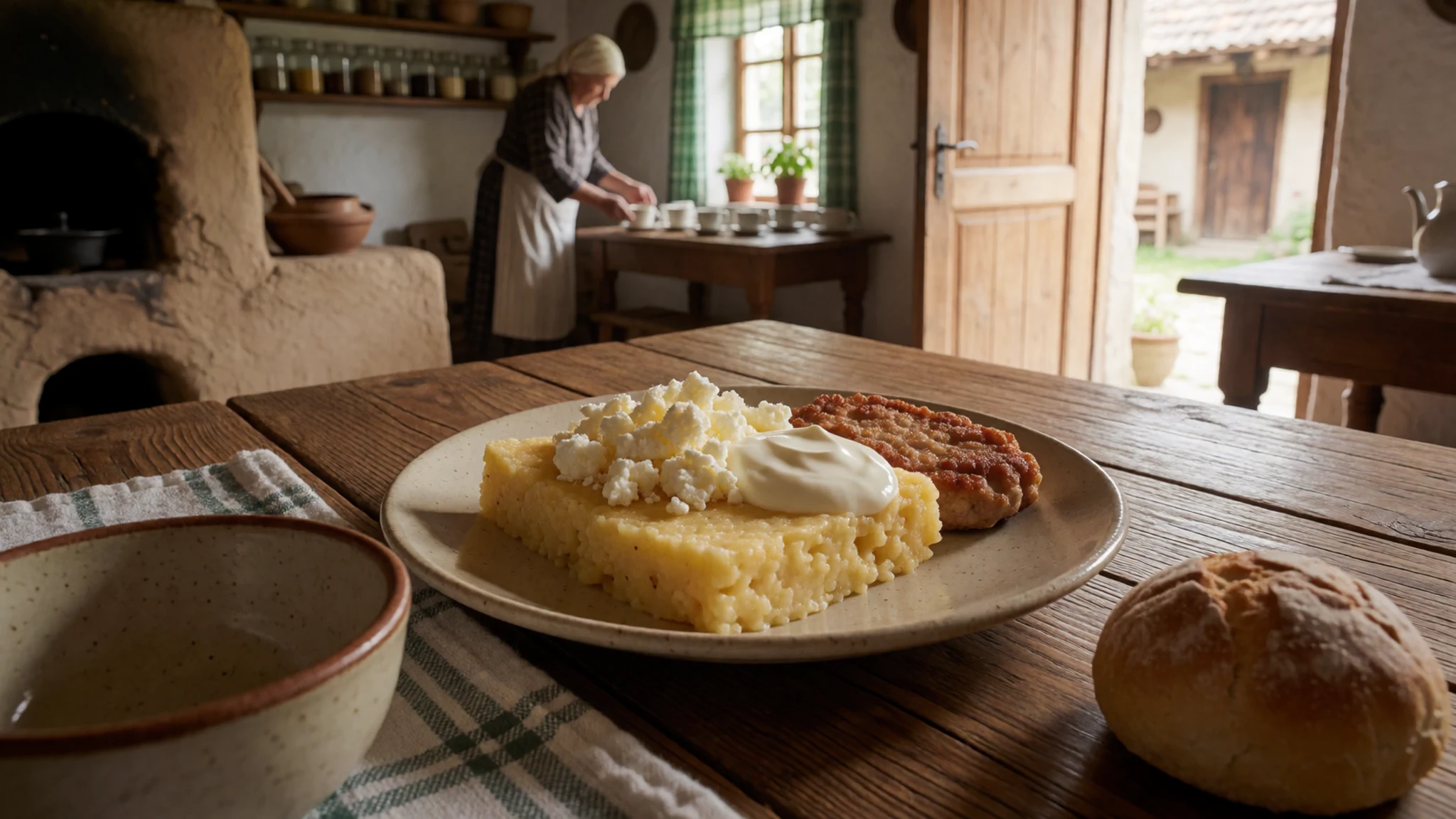
- Plăcinte — Bakeries and market stalls across Chișinău
Thin baked or fried pastries filled with cheese, potato, cabbage or sweet fruit. They are cheap, quick and eaten on the move, which makes them a good lunch between sights. Look for the stalls that have a queue of locals.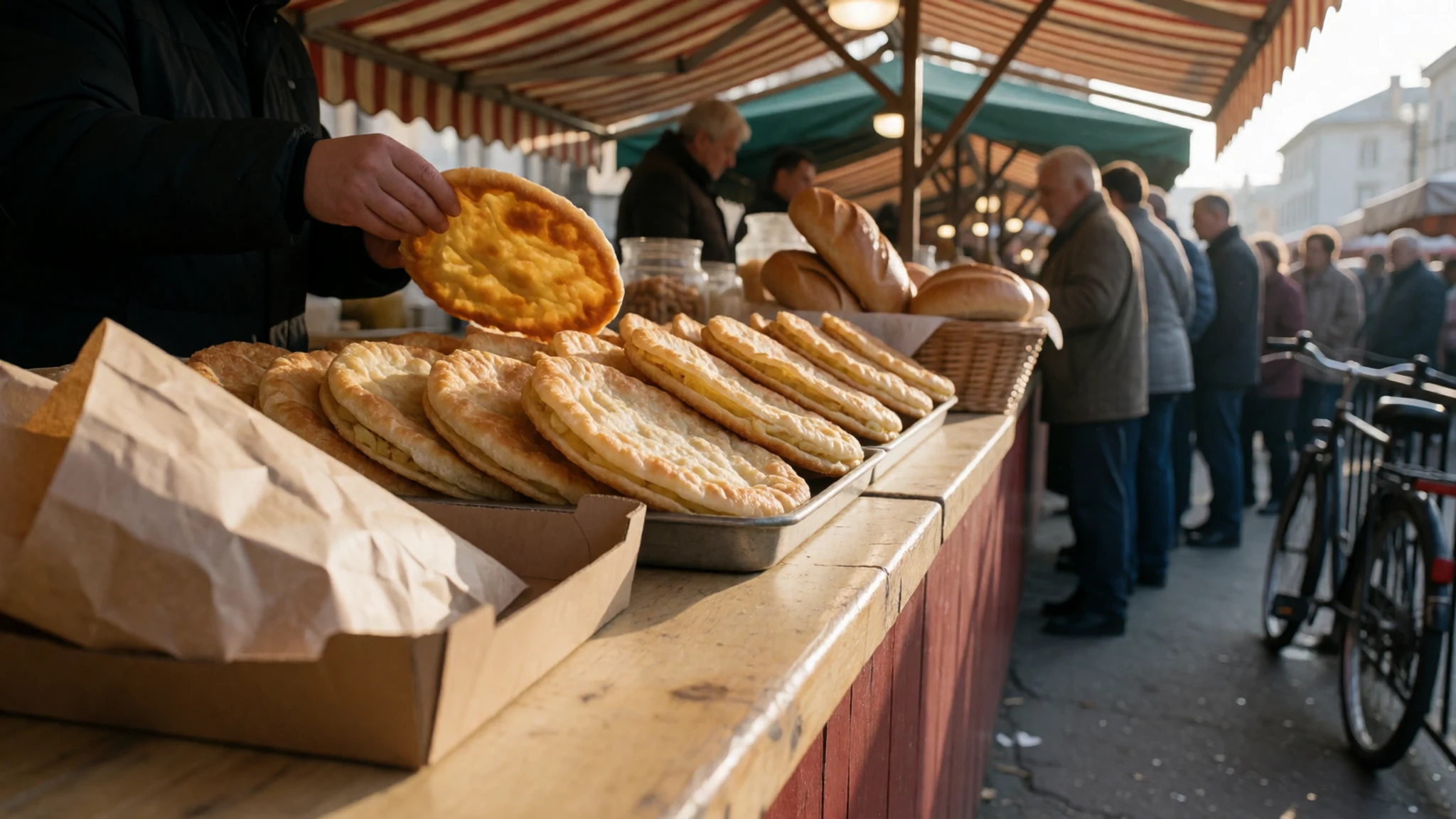
- Sarmale — Family-run restaurants and festive tables
Minced meat and rice rolled in cabbage or vine leaves and simmered slowly, often served with mămăligă and sour cream. It is a dish for holidays and celebrations, so it appears most often at traditional restaurants and long, convivial group meals. - Zeamă — Traditional eateries and village kitchens
A sour chicken noodle soup, usually sharpened with a fermented bran liquid and finished with fresh herbs. It is a restorative first course that suits cooler days and long wine lunches. Ask for it if you prefer something light before the heavier dishes arrive. - Cheese, cured meats and fresh produce with local wine — Winery tasting rooms and Chișinău's markets
Tastings typically come with platters of local cheese, cured meats, bread and seasonal fruit and vegetables, much of it grown nearby. Markets in Chișinău sell the same produce loose and are the best place to see what is in season.
Plan it
Best time. May–June and September–October are the most comfortable months for the countryside around the winery, with milder weather for the drive and for Orheiul Vechi. The galleries stay cool all year, so the cellars work in any season, but check the forecast for the overland leg and avoid midsummer heat and winter ice if you are driving yourself.
How long. 1–2
Getting there. Fly to Chișinău International Airport, then travel by car, taxi or arranged tour to Mileștii Mici in the countryside just south of the city. Wikivoyage notes that you must provide a car for the tour, so many visitors book through a travel agency. Citizens of the UK and the EU do not need a visa for up to 90 days.
Budget. low
Tips
- Book the tour in advance through the official site, http://www.milestii-mici.md, or a travel agency, and check what the visit includes
- Arrange a car or driver before you go, and agree who will not be drinking
- Take a jumper or light jacket, since the galleries stay cool whatever the season
- Visit on a weekday if you can, as weekends bring larger groups
- Carry some cash for markets and small shops, and keep cards for larger bills
Etiquette
- Stay with your guide and on the marked routes in the galleries
- Accept a toast with a small sip rather than refusing outright
- Cover shoulders and knees when visiting monasteries nearby
Nearby
Sources
- Wikidata Q15625039 (CC0)
- Wikipedia: Mileștii Mici (winery) (CC BY-SA 4.0)
- Wikivoyage: Moldova (CC BY-SA 4.0)
- Photo: Combinatul de vinuri Mileștii Mici, Galeriile subterane 06 (Vladikh) (CC BY-SA 4.0)
- Photo: Mileştii Mici (Dave Proffer) (CC BY 2.5)
- Photo: Wine fountain at Milestii Mici (Guttorm Flatabø) (CC BY 2.5)
- Photo: Combinatul de vinuri Mileștii Mici, Galeriile subterane 02 (Vladikh) (CC BY-SA 4.0)
- Photo: Long table in the cellars of Milestii Mici (Guttorm Flatabø) (CC BY 2.5)
- Photo: Milestii Mici wine cellar corridor bottle storage 2024 (Furkan Akkurt) (CC BY-SA 4.0)
- Photo: Milestii Mici wine cellar tree sculpture bottle storage 2024 (Furkan Akkurt) (CC BY-SA 4.0)
- Photo: Milestii Mici wine cellar underground tunnel 2024 (Furkan Akkurt) (CC BY-SA 4.0)


