Saharna Monastery
Saharna Monastery, Moldova
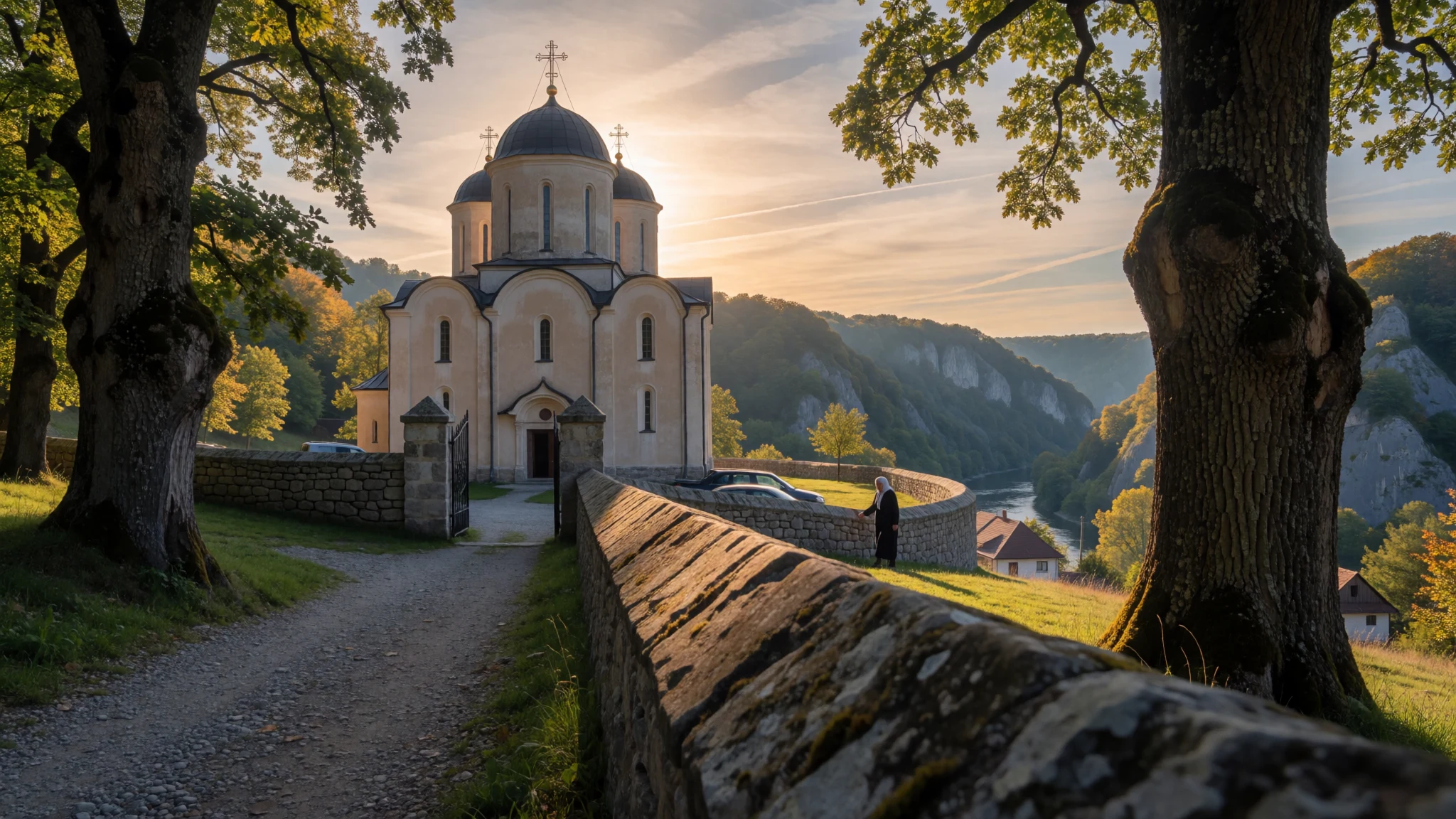
Saharna Monastery sits above the Nistru river valley, where a pilgrimage church, a cliff-top legend and a rock monastery share one green hillside.
The place
Saharna Monastery stands in the village of Saharna, on the west bank of the Nistru river in eastern Moldova, roughly 110 km north of Chișinău. Its formal name is the Holy Trinity Monastery (Mănăstirea Saharna), and Moldovans treat it first as a place of pilgrimage and only second as a sight. People come to pray, light candles and stand before the relics of Macarie, a monk venerated as blessed.
The setting does much of the work. The complex lies in a wooded valley whose rocky sides fall toward the river, and the church domes show above the trees before the gate comes into view. Paths climb from the grounds to a cliff face and on to a small chapel on the nearest hilltop, so a visit mixes quiet interiors with steady uphill walking on uneven steps and earth tracks.
The monastery dates from 1776. That is young by European standards, yet it belongs to a country that passed through Ottoman influence, Russian imperial rule and the Soviet era before independence.
Moldova sees few foreign tourists, so the crowd here is mostly local: families, church groups and older pilgrims, busiest at weekends and on feast days. Weekday mornings are calm. Simple village guesthouses and eateries stand nearby, and the monastery works best as a half-day stop on a loop that also takes in the cave monastery at Orheiul Vechi.
Its story
Saharna Monastery has a founding date of 1776, but the story told in its valley starts with a legend. A brother of the community, so the tale runs, glimpsed a luminous Virgin Mary on a rock high above the valley, and the place he hurried to held the print of a foot. Pilgrims now climb to that spot, and for many the cliff top matters as much as the church below.
The second thread is Macarie, a monk later venerated as blessed, whose relics rest in the monastery. They give Saharna Monastery its pull for people who travel specifically to pray, and the pairing of a holy man's relics with a miracle site explains why Moldovans make the journey.
Around the monastery, the country's history kept changing. Moldova lived for centuries under Ottoman influence, then came under Russian control, and later became part of the Soviet Union before declaring independence. Across the Soviet republics religious life was restricted, which gives the steady flow of pilgrims to Saharna today some of its weight.
Like many holy sites, Saharna Monastery blends documented history with oral tradition. The monks and pilgrims tell the footprint story as an act of faith, not as archaeology, and it is best heard in that spirit. Nearby rock-cut cells add an older-feeling layer to the landscape, a reminder that monks have long sought out cliffs and quiet valleys in this part of the world.
What to see
- The Holy Trinity church — Saharna village, monastery grounds
The main church of Saharna Monastery anchors the grounds, its domes rising above the trees of the valley. Inside, the mood is that of a working church: candles, icons, murmured prayer and the occasional service. Weekday mornings are the easiest time to step in quietly and look around without crowds or queues.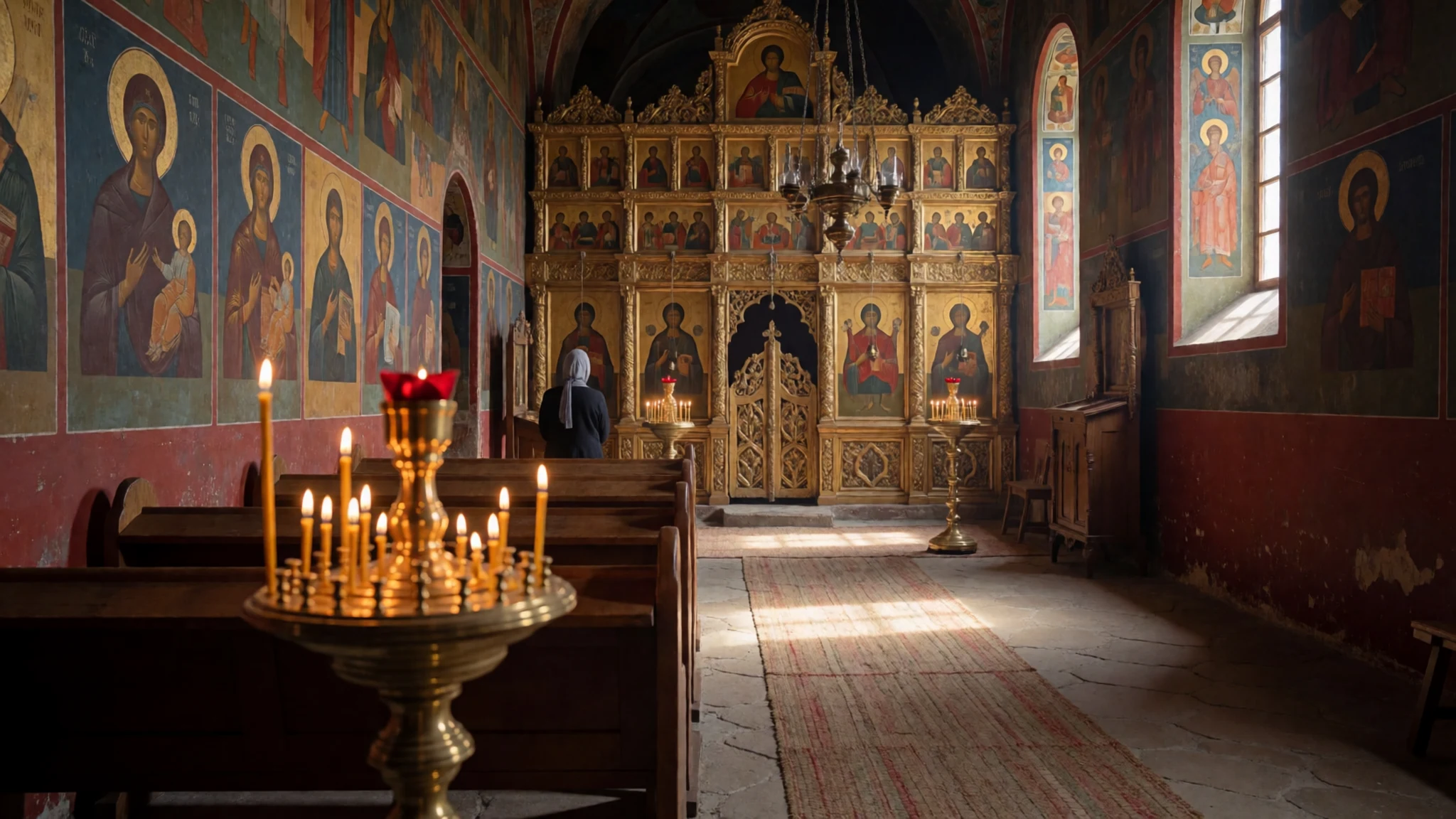
- Relics of the Blessed Macarie — Inside the monastery
The relics of the Blessed Macarie are the reason many pilgrims make the journey, and they are kept inside the monastery for veneration. Visitors usually queue quietly, cross themselves and bow, following local habit. Non-worshippers can stand back and watch; it is polite to ask an attendant before taking any photograph nearby.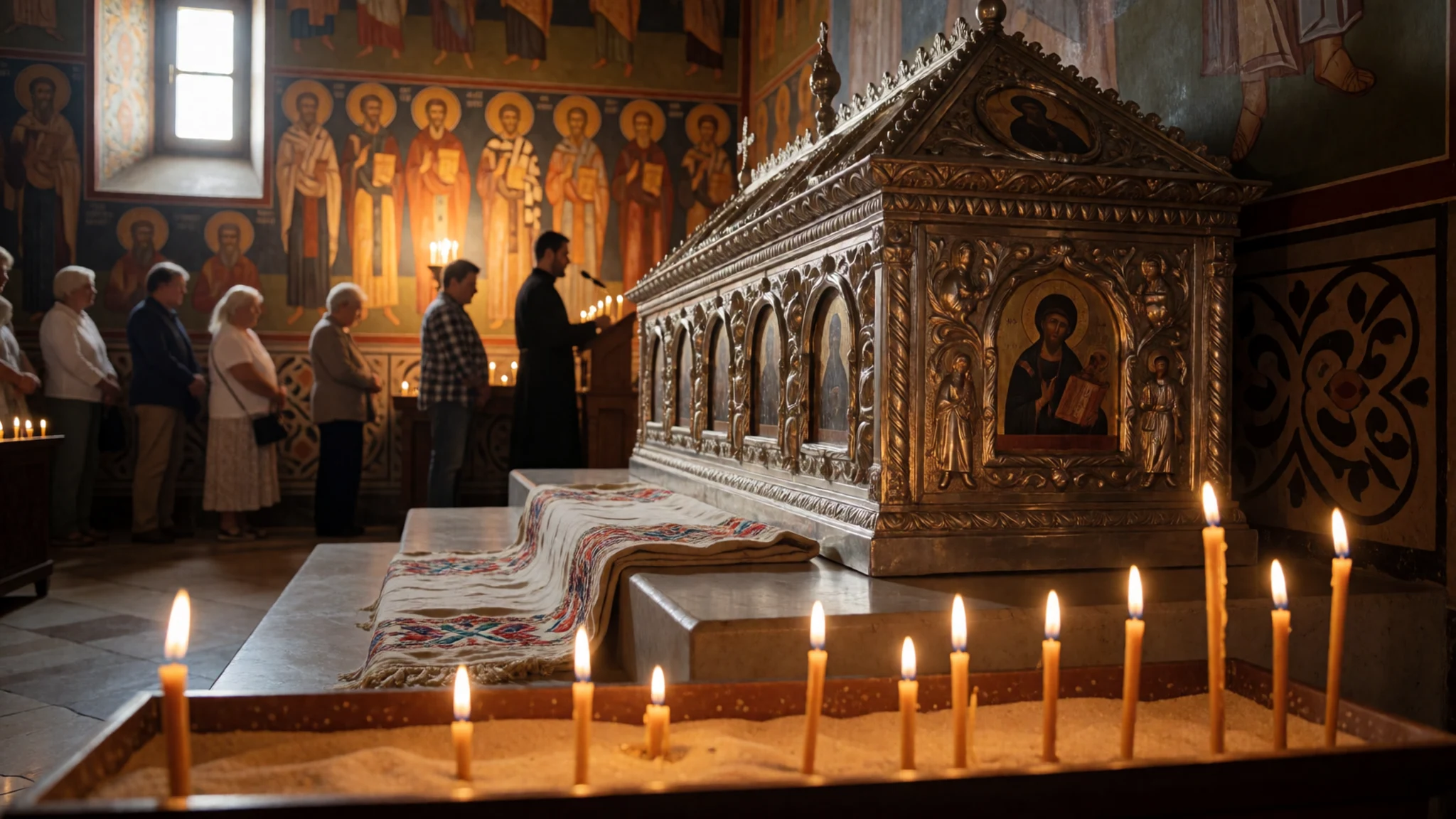
- The cliff-top footprint — Cliff above the monastery
High above the monastery, a mark in the rock is said to be the Virgin Mary's footprint, tied to a monk's vision of a shining figure. The route is a climb on steps and earth paths, slippery after rain, so treat it as a short hike with a valley view.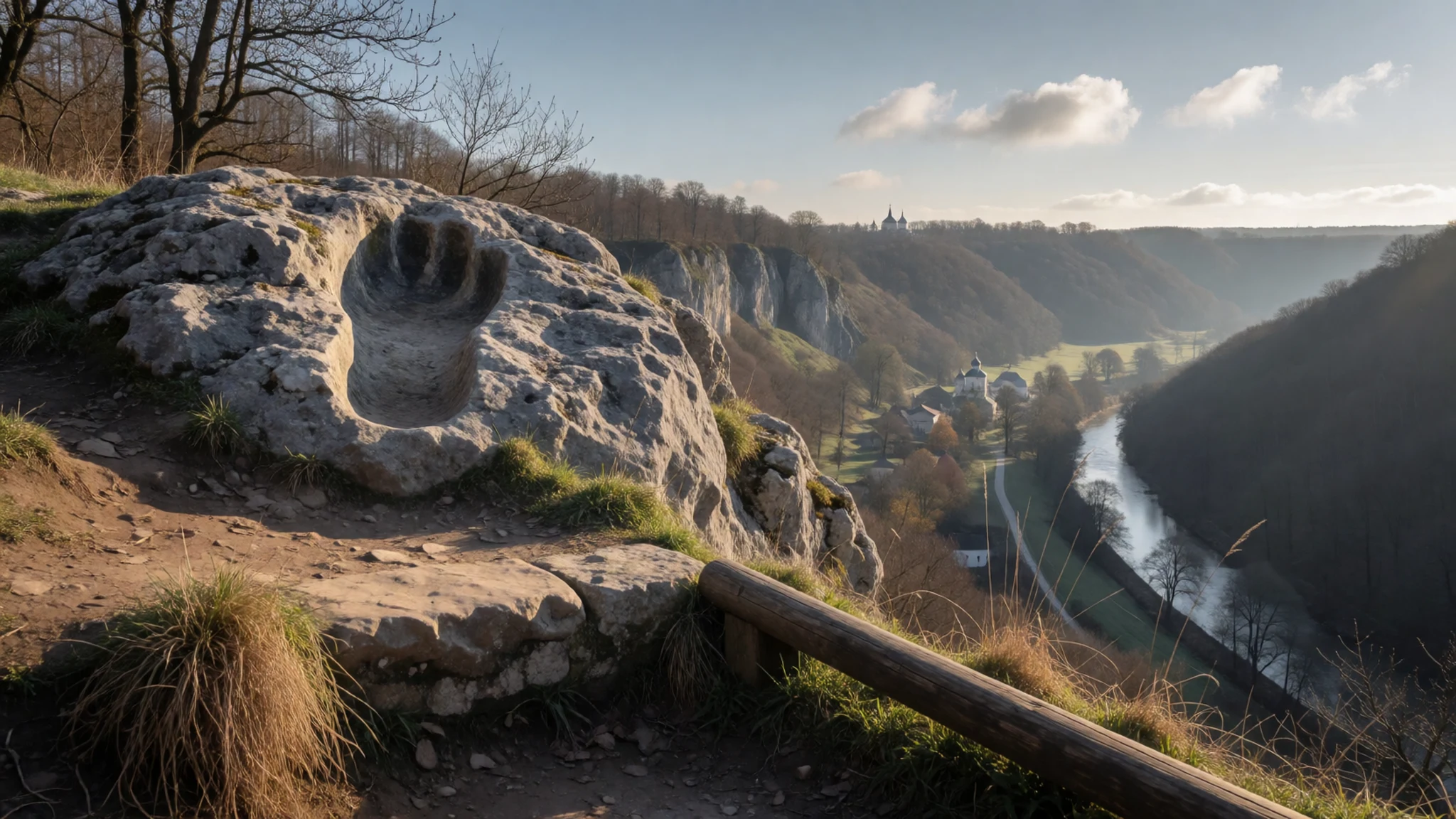
- The hilltop chapel — Hill beside the monastery
A small chapel crowns the hill closest to Saharna Monastery, and reaching it takes a steady walk uphill through trees. The reward is a quiet spot and a wider look over the valley than the monastery grounds allow. Go in dry weather, wear sturdy shoes and expect to meet mostly villagers on the path.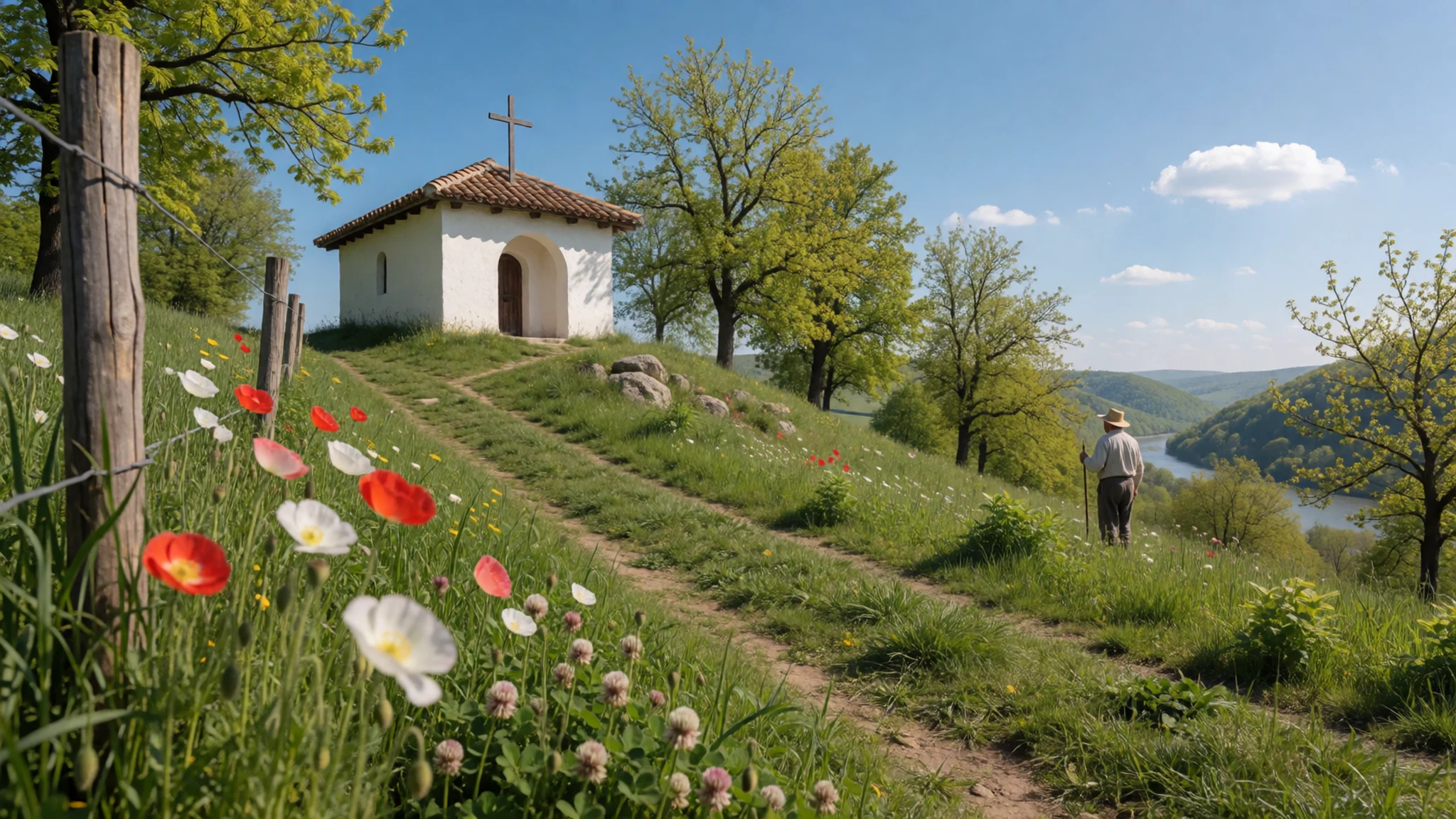
- The rock monastery — Cliffs near the monastery
A rock monastery lies in the cliffs close to Saharna Monastery and is easy to miss. It is small, and its interest is atmosphere: bare stone, a cliff setting and a sense of why monks once chose seclusion. Allow time for the walk, and ask locally which parts are open to visitors.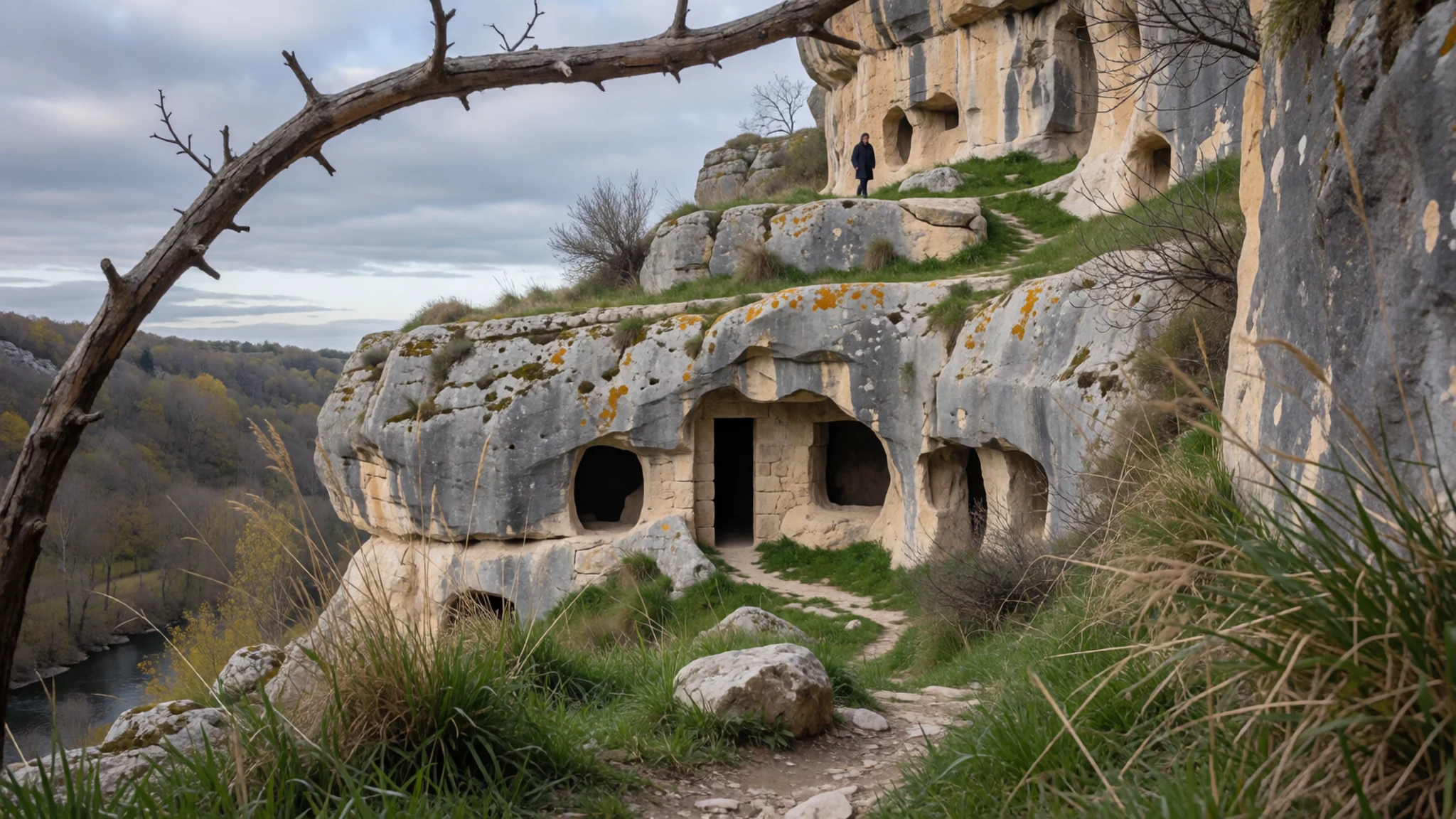
- Orheiul Vechi and Orhei National Park — Orhei National Park, south of Saharna
Orheiul Vechi is a cave monastery from the 13th century inside Orhei National Park, protected since 2012, and a well-known sight in Moldova. It lies about a half-hour drive from Chișinău, south of Saharna. The small winery at Brănești nearby makes it easy to add a tasting to the same trip.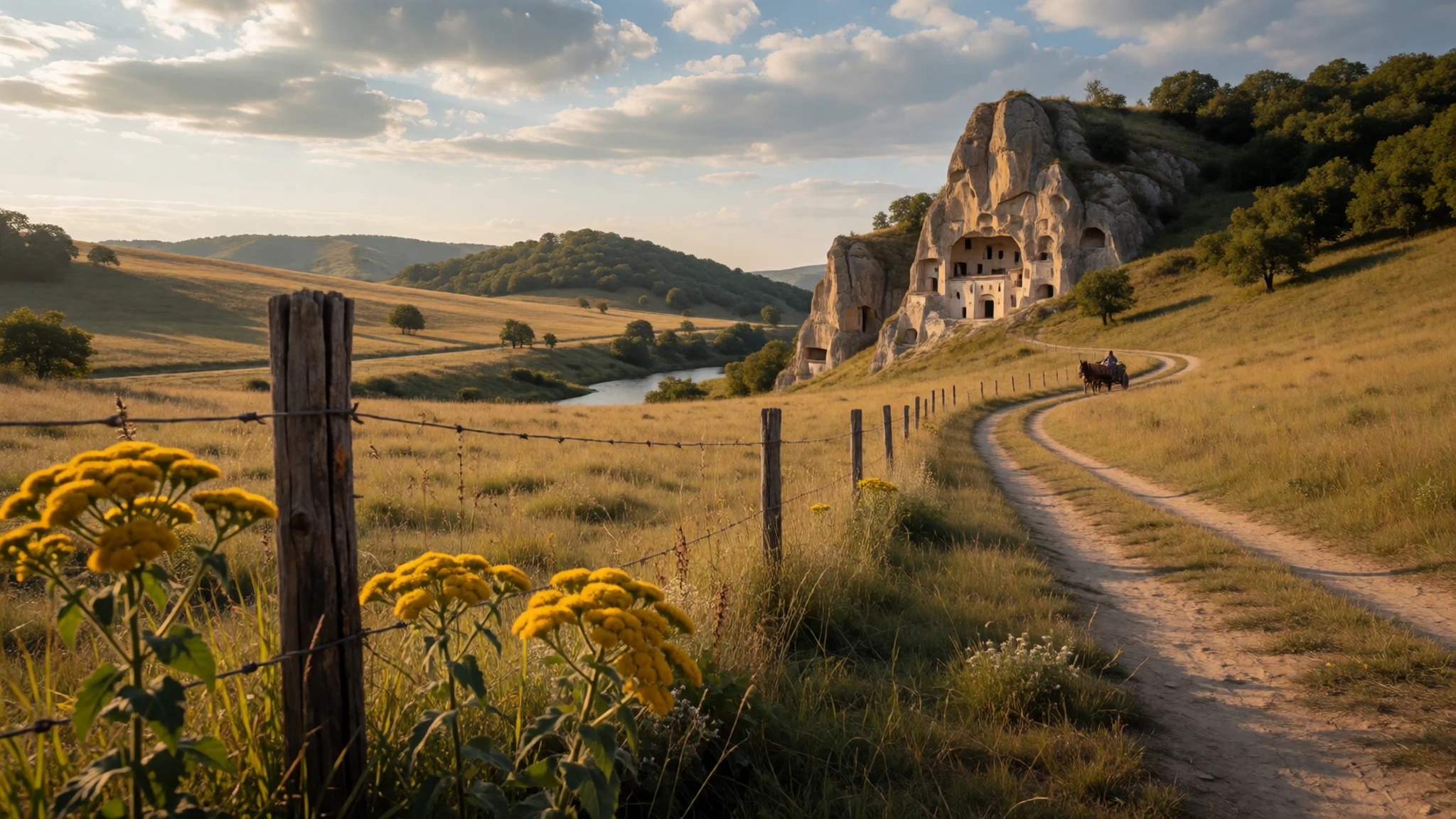
Culture
Saharna Monastery is a working Orthodox community, so its culture is that of Moldovan devotion rather than of tourism. Monks live and pray here, while pilgrims arrive to light candles, kiss icons, cross themselves and sometimes stay long in silent prayer. The rhythm follows the church calendar, the place is busiest around major feasts, and the mood shifts noticeably whenever a service begins.
Beyond the gate, Moldovan social life is warm and slightly formal. Romanian is the national language and Russian is widely understood, and a few words in either earn real goodwill. Foreign visitors draw curious looks in a country that sees few tourists, and the looks are usually friendly interest. Hospitality matters: a host will press food and wine on a guest, and refusing everything can seem cold, so accept at least a taste. Old-fashioned courtesy is common, so a Moldovan friend may hold a door, pick up the bill or take a heavy bag without being asked; accepting with thanks is easier than protesting. Now and then a stranger treats a foreigner as wealthy, and the sensible answer to any pushy approach is a firm no and a walk away.
In the monastery, women should cover their heads and shoulders, everyone should dress modestly, and nobody should photograph worshippers or the relics without asking first.
What to wear
Saharna Monastery sits in rural Moldova, where traditional dress is still a living reference even if it is no longer everyday wear. The classic women's outfit is an embroidered blouse called an ie, cut from linen, hemp or cotton and stitched at the collar, sleeves and chest in geometric or floral patterns, worn with a wrapped wool skirt (fotă or catrință) and a woven sash (brâu). Men wore a similar embroidered shirt (cămașă), white trousers, a sash, a sheepskin waistcoat (cojoc) and, in cold months, a lambskin hat (cușmă). These pieces now appear at weddings, folk festivals, national celebrations and church feast days.
Everyday clothes today are ordinary and practical: jeans, jackets, trainers or boots, with a smarter look for church and family events. Older village women often keep to headscarves, long skirts and darker colours, and monks wear black robes.
Visitors should dress for a church first and for the weather second. Women need a skirt or dress below the knee, covered shoulders and a scarf for the head; men need long trousers and a shirt with sleeves, and hats come off indoors. Shoes matter more than fashion because the paths to the cliff and hilltop chapel are uneven and slippery after rain, so sturdy soles are the right choice. Summer is warm, so light, loose layers work; winter is cold and a proper coat is needed.
What to eat
- Mămăligă — Village family eateries around Saharna and the nearby town of Rezina
Mămăligă is a soft cornmeal porridge, a daily staple in Moldova, served with salty brânză cheese and a spoon of sour cream (smântână), often beside fried pork or a stew. It is filling, simple and best eaten hot.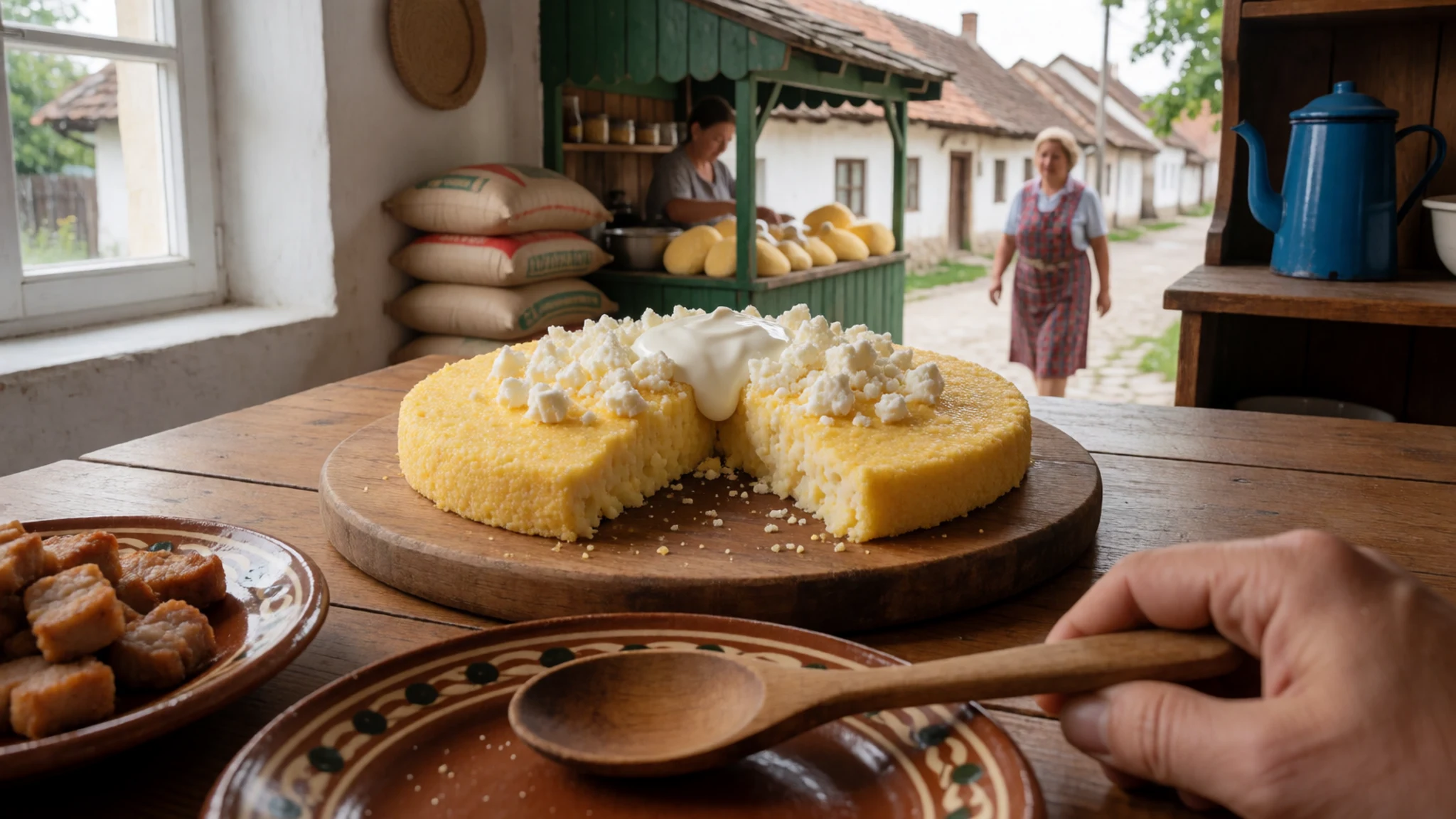
- Sarmale — Home-style restaurants and ready-food counters in town markets
Sarmale are small rolls of cabbage or vine leaf stuffed with minced meat and rice, simmered slowly and served with sour cream and often a side of mămăligă. They are a staple of festive tables and a good test of home cooking.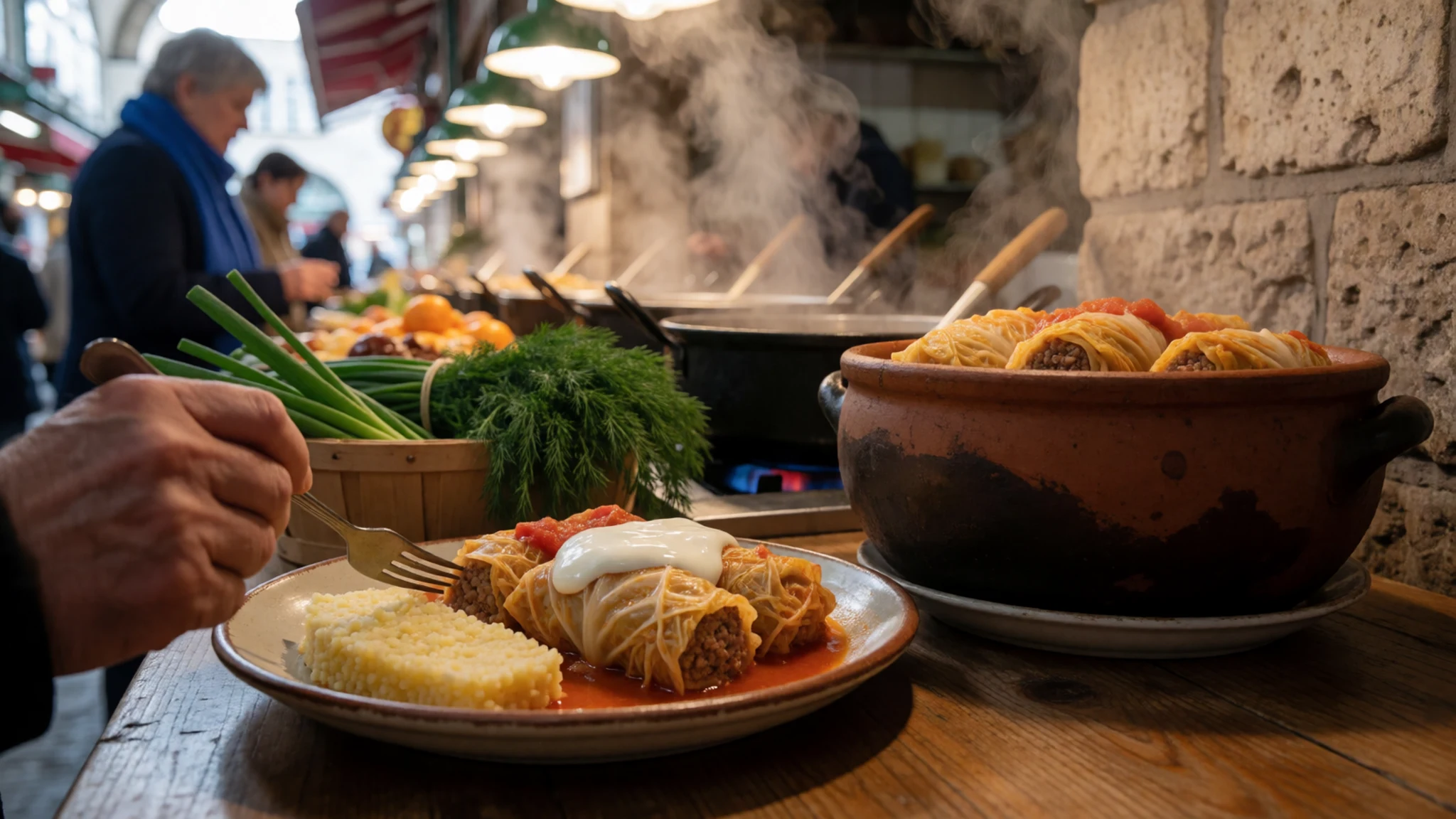
- Plăcinte — Bakeries and roadside stalls in any town on the way
Plăcinte are thin folded pies, baked or pan-fried, filled with cheese, potato, cabbage or pumpkin. Eaten warm from a paper wrapper, they are an easy snack for a road trip, and the fillings change with the season and the baker. - Zeamă — Family restaurants and village guesthouses at lunchtime
Zeamă is a chicken noodle soup soured with borș, a tangy liquid made from fermented wheat bran, and finished with fresh herbs. It is a lunchtime staple and welcome after a walk up the hill paths, quite unlike plain chicken soup in Britain or India. - Moldovan wine — Village guesthouses and small cellars such as Brănești, near Orheiul Vechi
Moldova is known for wine, and good local bottles are a draw for visitors. Reds and whites from local grapes appear with meals, and village households often pour their own. A tasting at a cellar near Orheiul Vechi pairs easily with a monastery visit.
Plan it
Best time. Late spring (May–June) and early autumn (September–October) bring warm, green, comfortable weather for the hill paths. July and August can be hot, and winter is cold, with muddy or icy tracks.
How long. 1–2
Getting there. Fly to Chișinău International Airport, the main gateway. Saharna is north of the capital: hire a car or join a day tour, or take a minibus towards Rezina and finish with a short taxi ride. Check current timetables locally before travelling.
Budget. low
Tips
- Go on a weekday morning to avoid weekend and feast-day crowds
- Wear sturdy shoes with grip for the cliff and hilltop paths, which turn slippery after rain
- Carry some cash for candles, donations and village eateries, and bring water for the walks
- Check visa rules before booking: UK and EU citizens can visit visa-free for short stays, while Indian passport holders should ask the Moldovan embassy
- Keep a scarf or light wrap in your bag so you are ready to enter the church
Etiquette
- Women should cover their heads and shoulders, and everyone should dress modestly inside the monastery
- Speak softly, silence your phone and ask before photographing worshippers or the relics
- Do not walk in front of people at prayer, and wait your turn quietly at the relics
Nearby
Sources
- Wikidata Q675184 (CC0)
- Wikipedia: Saharna Monastery (rev 1363815600) (CC BY-SA 4.0)
- Wikivoyage: Moldova (rev 5422241) (CC BY-SA 4.0)
- Photo: Biserica mănăstirii Saharna — Andrei Szocs (CC BY-SA 4.0)
- Photo: Monasterio de Saharna, DD 62 — Poco a poco (CC BY-SA 4.0)
- Photo: Chapel at the hill next to Saharna Monastery — Bagriton (CC BY 3.0)
- Photo: Rock monastery near Saharna monastery — Bagriton (CC BY 3.0)
- Photo: Monasterio de Saharna, DD 42 — Poco a poco (CC BY-SA 4.0)
- Photo: Monasterio de Saharna, DD 44 — Poco a poco (CC BY-SA 4.0)
- Photo: Monasterio de Saharna, DD 45 — Poco a poco (CC BY-SA 4.0)
- Photo: Saharna Monastery, Saharna, Moldova (DD 55-57 HDR) — Poco a poco (CC BY-SA 4.0)


