Tikopia
Tikopia, Solomon Islands
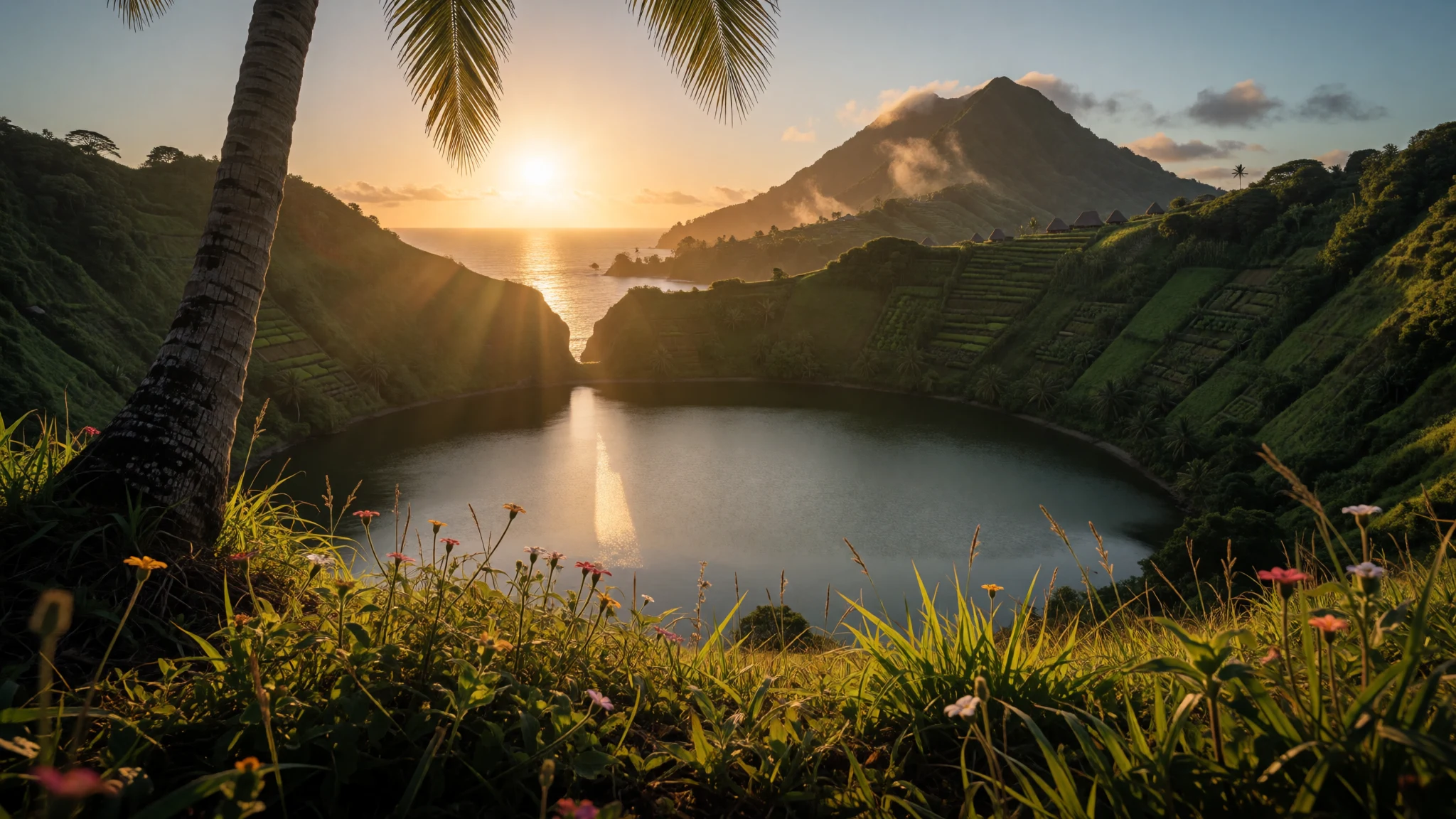
A tiny Polynesian island at the far edge of the Solomons, where a crater lake and long-kept custom reward the effort of reaching it.
The place
Tikopia is a small volcanic island in Temotu Province, the southernmost part of Solomon Islands, with a population of just over a thousand. It is what remains of an extinct volcano and covers about 5 square kilometres, small enough that its width is a short walk rather than a journey. The highest point, Mount Reani, rises to 380 metres. Below it, Lake Te Roto fills an old crater about 80 metres deep. The lake held fresh water until a storm in 2002 broke the narrow bank that separated it from the sea.
Most of the country around it is Melanesian, but Tikopia is culturally Polynesian, and that difference is the heart of its interest. Distance from the main islands has helped its customs, language and ways of organising village life to last far longer than on many Pacific islands. Anthropologists have written about Tikopia at length, so its name is known well beyond the Pacific for a place with so few people.
Tikopia is often grouped with the Santa Cruz Islands, and its closest neighbour is Anuta, smaller still, which is usually discussed alongside it. Barwell Island is the name that appeared for it on early British sea charts.
This is not an ordinary holiday island. There is no tourist infrastructure that this reading can point to, getting there takes planning, and every step ashore depends on the agreement of the community. Anyone going should treat it as a visit to someone's home, with patience, flexibility and plenty of time in hand.
Its story
Tikopia counts as a Polynesian outlier: its people and their language belong to the Polynesian world, yet the island lies well outside the great triangle marked by Hawaii, Rapa Nui and Aotearoa New Zealand. The Tikopian language is part of the Samoic branch of Polynesian tongues. Settlers are thought to have spread west and north from Tonga and neighbouring island groups in double-hulled sailing canoes. The dates are uncertain, falling somewhere between the 10th and the mid-13th centuries, and Anuta may have been settled afterwards. Before Europeans arrived, voyaging between small islands like these was routine, and navigators crossed open ocean on purpose rather than by drift.
European history reaches Tikopia through a famous mystery. The French expedition under Lapérouse vanished in 1788, and the trail that finally led searchers to its wrecks began with survivors of an attack in Fiji, who were put ashore at the nearest island, which happened to be Tikopia. A very small island thus entered the records of the wider world.
The Anglican Melanesian Mission made its first contact in 1858. A resident teacher was not allowed to settle until 1907, and the whole population had not converted until the 1950s. With Christianity came an end to traditional birth control, and numbers rose by about half between 1920 and 1950. Some families left for other parts of the Solomons, including Makira, where they helped settle Nukukaisi.
What to see
- Lake Te Roto — Interior of Tikopia
Lake Te Roto fills an old volcanic crater and reaches about 80 metres deep. Until a storm in 2002 broke through its seaward bank it was a freshwater lagoon, and it has been open to the sea since. Reaching the shore means crossing family land, so a local guide and permission come first.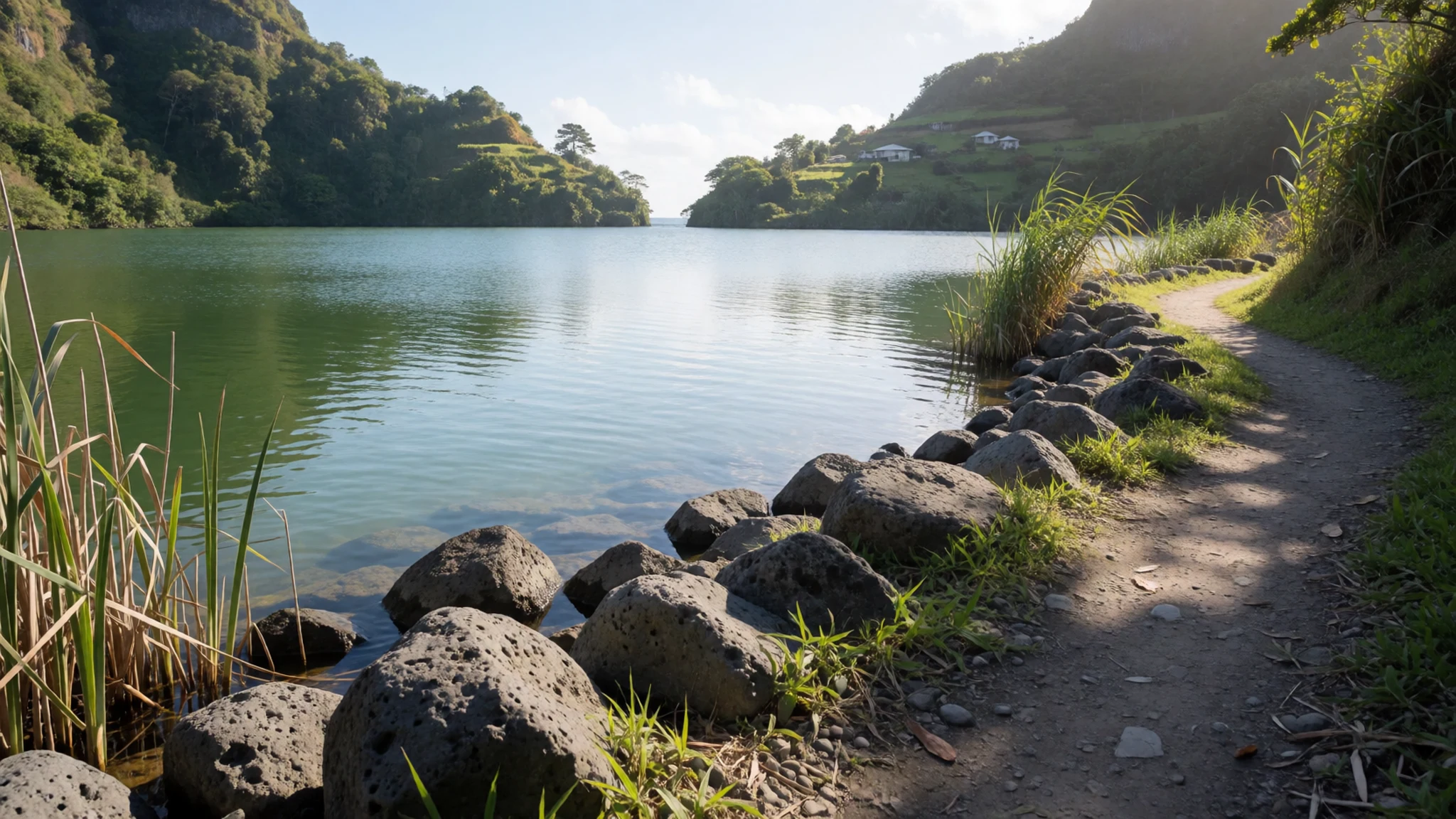
- Mount Reani — Tikopia's high ground
Mount Reani, at 380 metres, is the island's highest point and the clearest reminder that Tikopia is the leftover of a volcano. The climb is short by mountain standards, but trails cross gardens and family land, so a guide from the village is essential. Views over the surrounding sea are the reward.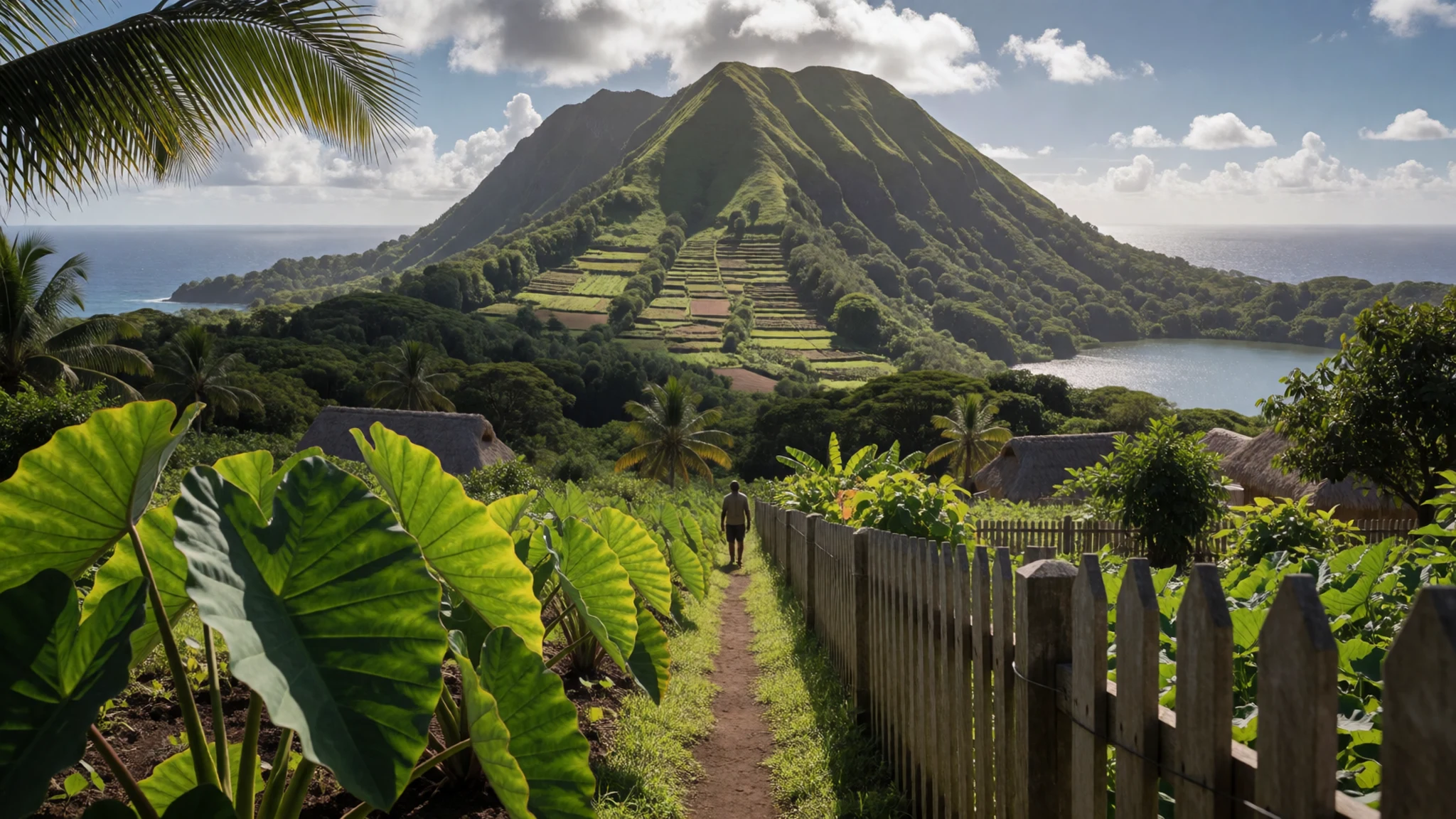
- Tikopia from orbit — Photograph, Public domain
An astronaut photograph taken from the International Space Station shows Tikopia as a small green island in open ocean. It makes the isolation plainer than any map and explains why a visit means a long sea passage, flexible plans and a lot of waiting on weather.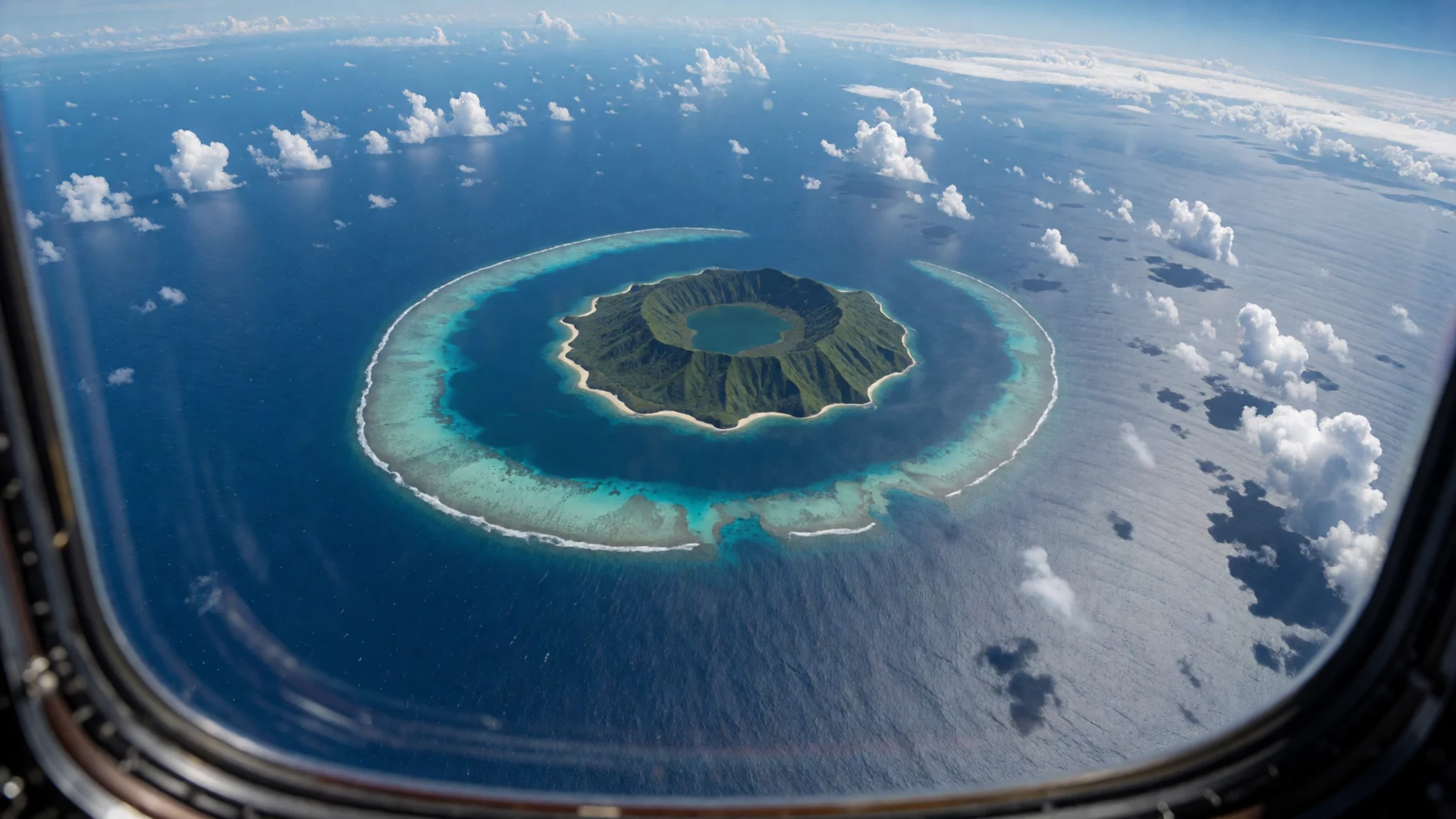
- Old engravings and charts — Public-domain images online
Vue de l'île Tikopia, an early engraving, and a historical map record how European sailors first saw and charted the island. Both are free to view online, which makes them an easy place to start before a trip. The old name Barwell Island on charts shows how outsiders first labelled it.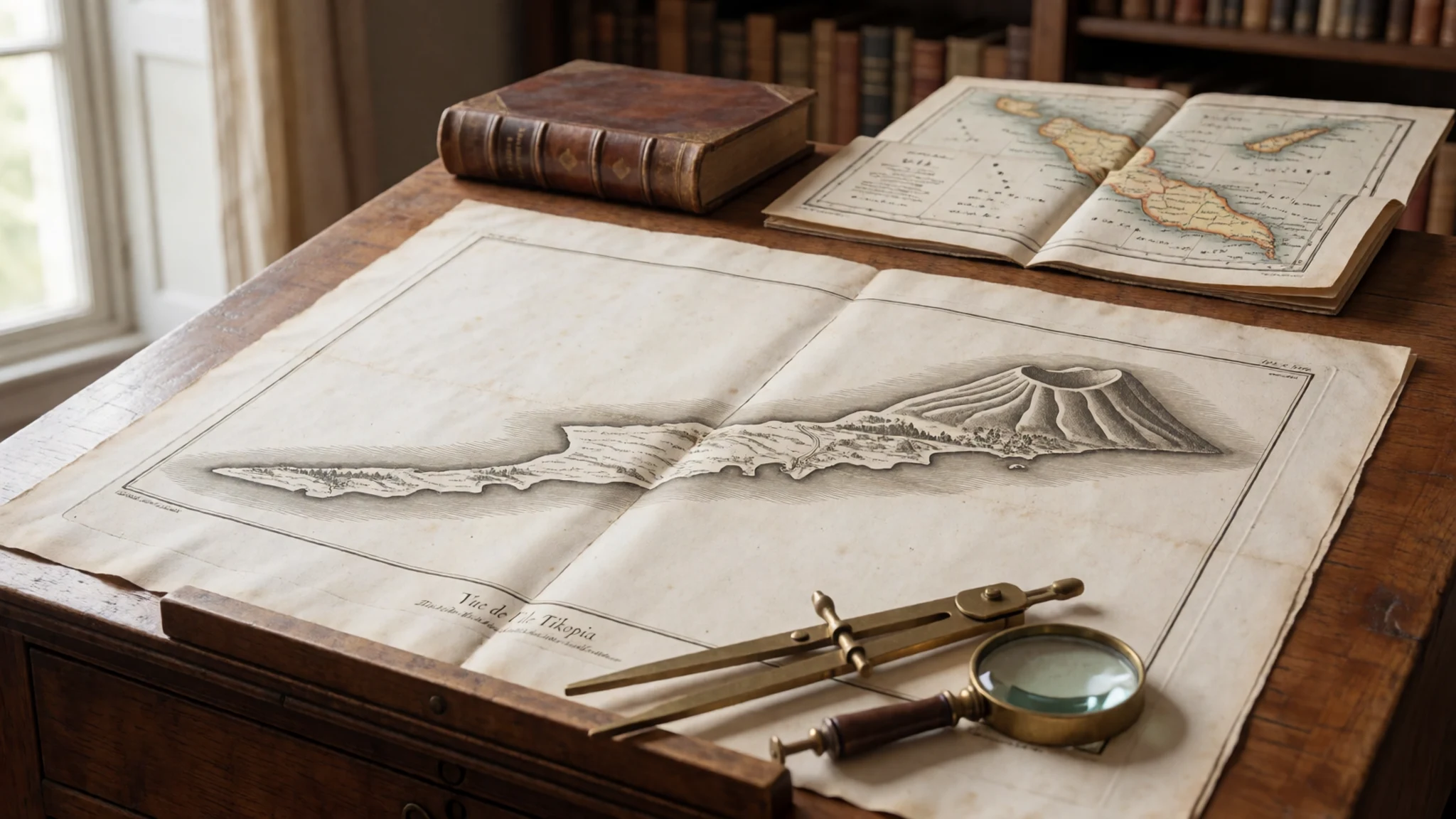
- National Museum and Culture Centre — Honiara
Most journeys to Tikopia pass through Honiara, the capital, where the National Museum and Culture Centre shows how the country presents its many island traditions. It is a useful stop for context before heading to a Polynesian community in a mostly Melanesian nation. Check opening times and any fee directly, as none are confirmed here.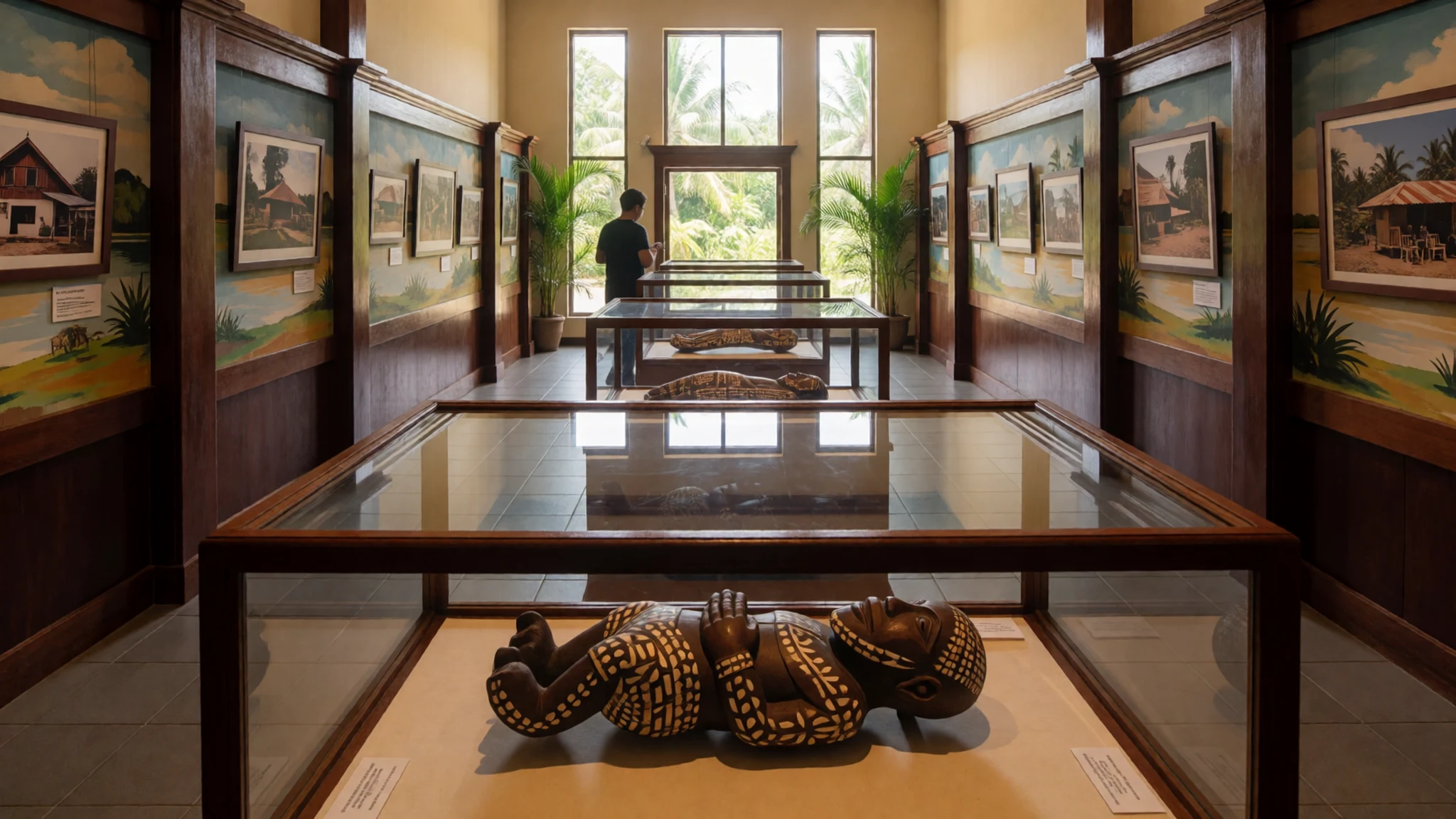
Culture
Tikopia keeps a layered belief world, with older Polynesian ideas and Christianity sitting side by side. In traditional mythology, Atua Fafine and Atua I Raropuka are creator deities, while the supreme sky god is Atua I Kafika. The Anglican Church of Melanesia, through the Diocese of Temotu, is now the main religious institution, and church life shapes the week, especially Sundays.
Across Solomon Islands, two Pijin words explain a great deal. Kastom covers inherited custom and the proper way of doing things, and wantok describes the bonds of obligation that tie a person to relatives, clan and neighbours who speak the same tongue. On a small island these are not abstractions: land, reef and gardens belong to families, and who may enter, fish or build is settled by long-standing agreement.
For a visitor, that means almost nothing is simply open. A village, a trail, a beach, the lake shore and any shrine or burial ground each have people responsible for them. A host or guide can name the right elder and say whether a payment is customary. An empty-looking beach is rarely unclaimed, and walking onto it without asking can cause real offence even when no harm is meant.
Before photographing people, houses, graves or sacred places, ask first and accept a refusal without argument.
What to wear
Traditional dress on Tikopia belongs to the wider Polynesian world of bark cloth and plaited fibre. Cloth was made by beating the inner bark of trees into sheets and wrapping it round the waist or shoulders, with woven leaf mats and ornaments of shell, flowers and scented coconut oil added for feasts and dances. Detail on exact patterns and colours is thin in our sources, and practice differs between families, so this reading does not describe a single formal costume. Such garments are now mostly worn for ceremonies and celebrations rather than daily life.
Day to day, people on the island wear what suits heat, work and church: cotton wraps and shorts, T-shirts, loose island dresses, and often bare feet or flip-flops. Sunday brings out the best clothes for church, usually clean, modest and neat, in keeping with the strong Anglican presence.
Visitors should pack light, quick-drying cotton clothes that cover shoulders and knees in villages, and a sarong that serves as wrap, towel or cover-up. Swimwear belongs on a beach away from homes, with a shirt over it near people. Landings can be wet and the shore rocky, so reef shoes or sturdy sandals are better than bare feet, with closed shoes for forest trails. A wide hat, strong sun protection, insect repellent and a light rain jacket complete a sensible kit, along with one tidy outfit for church.
What to eat
- Taro and cassava — Family meals in a village, if invited; the main market in Honiara
Root crops anchor everyday meals in the Solomons, and taro and cassava are the usual starch on Tikopia. They are boiled or baked and eaten with fish or greens, plain and filling, often from a dish shared among the family.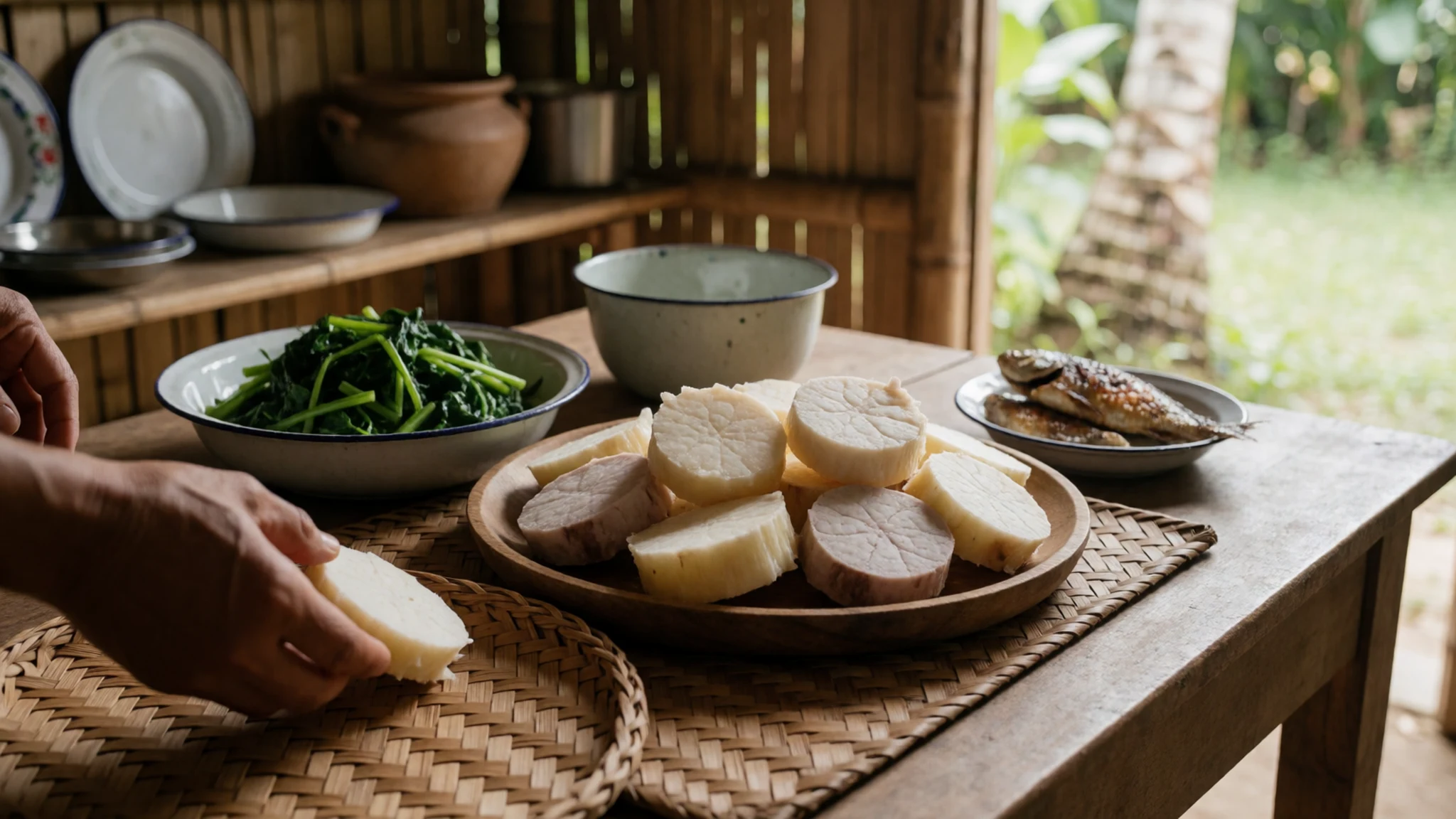
- Fermented taro (poi) — Home kitchens; ask a host
Poi, a paste of fermented taro, belongs to the wider South Pacific table. It is dense and sour, an acquired taste for many visitors, and is made in home kitchens rather than sold, so trying it depends on a host offering.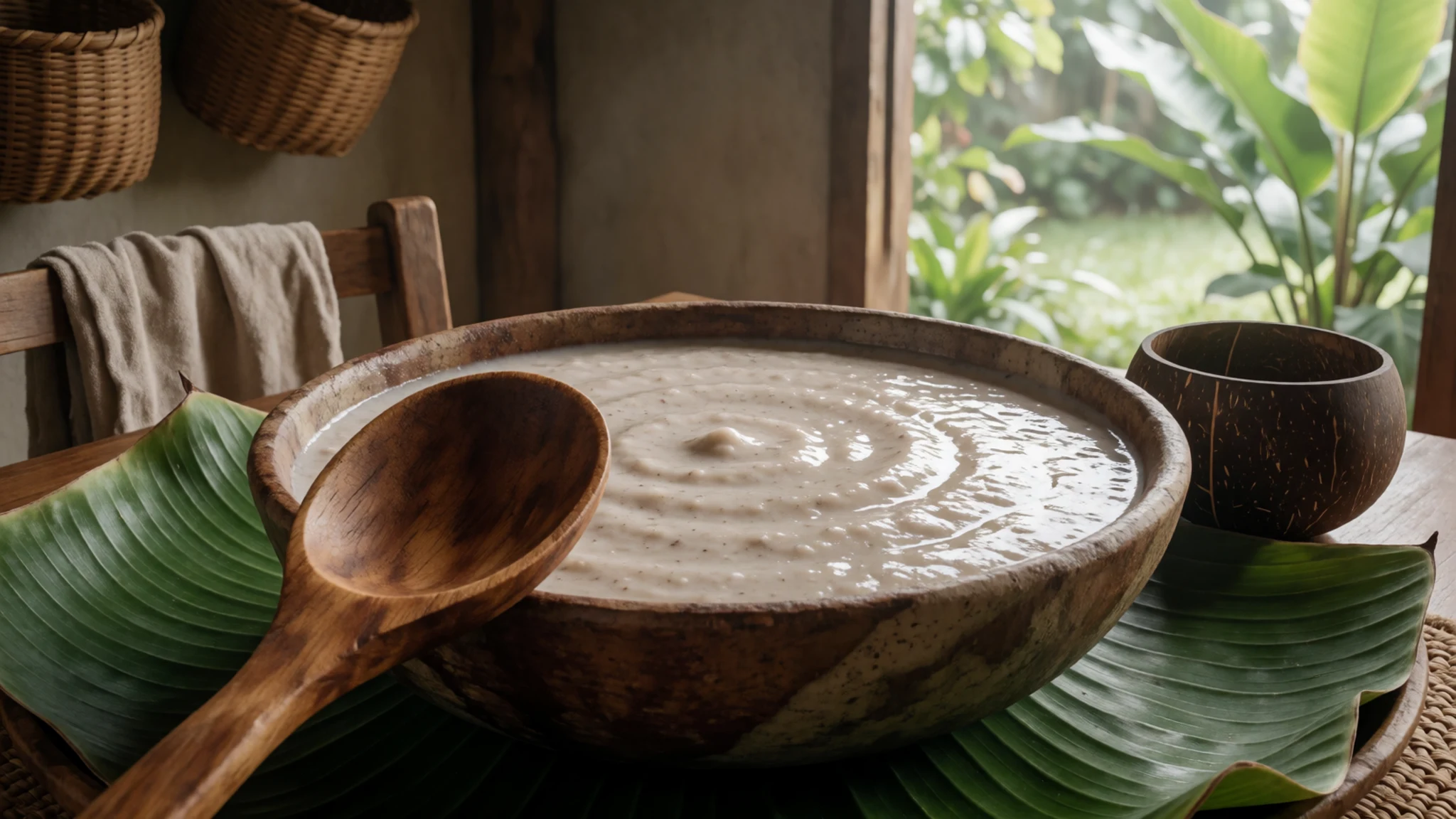
- Tuna with rice — Village cooking fires; a basic eatery in Honiara
Tuna is caught in Solomon waters and commonly served with chilli over rice or pasta. Away from Honiara, a fresh fish simply cooked over a fire is usually a good meal, and it is worth asking a host what the day's catch was. - Coconut and tropical fruit — Village gardens; stalls and markets on larger islands
Coconuts for drinking and the usual tropical fruit mix make easy snacks, picked from village gardens or sold at stalls and markets on larger islands. Fruit varies with the season, so what is ripe depends on the month of the visit. - Tinned tuna and meat — Village trade stores; Honiara shops
Shops across the Solomons stock plenty of tinned tuna and tinned meat, and these keep well, so they travel to remote islands. Visitors to Tikopia should expect some meals from tins and carry extra food of their own for the trip.
Plan it
Best time. The drier months, roughly May to October, are generally easier for sea passages in this part of the Pacific, while November to April is wetter with a cyclone risk. It is hot and humid all year, so check seasonal advice with the provincial authorities before committing.
How long. 7–10
Getting there. Fly to Honiara, the capital. Tikopia lies in Temotu Province, far to the south-east, and the last leg is a sea voyage or charter arranged through provincial or church contacts. No regular visitor service is confirmed here, so ask the provincial government and check official sites for any schedules.
Budget. high
Tips
- Arrange permission and a host before travelling, as community agreement matters more than any booking
- Carry a passport, onward ticket and proof of funds, and check visa rules for your nationality early; the visa-on-arrival list does not include every country, and India is not on it
- Bring cash in small notes, medicines, water purification and extra food, and do not expect cards, shops or cash machines
- The islands lie on the Pacific Rim of Fire, so if an earthquake strikes, move to higher ground at once
- Leave slack in the schedule, as sea passages depend on weather
Etiquette
- Ask the elder or your host before entering a village, walking a trail or visiting the lake or a beach
- Ask before photographing people, houses, graves or sacred places
- Dress modestly in villages and for church on Sundays
Nearby
Sources
- Wikidata Q889519 (CC0)
- Wikipedia: Tikopia (rev 1382060749) (CC BY-SA 4.0)
- Wikivoyage: Solomon Islands (rev 5392304) (CC BY-SA 4.0)
- NASA astronaut image of Tikopia Island (Earth Sciences and Image Analysis Laboratory, NASA Johnson Space Center) (Public domain)
- Historical map of Tikopia Island (U.S. Navy?) (Public domain)
- Boy of Tikopia, October 20, 1972 (uncredited photograph) (Public domain)
- Vue de L'ile Tikopia (J. Tastu) (Public domain)


