Guadalcanal
Guadalcanal, Solomon Islands
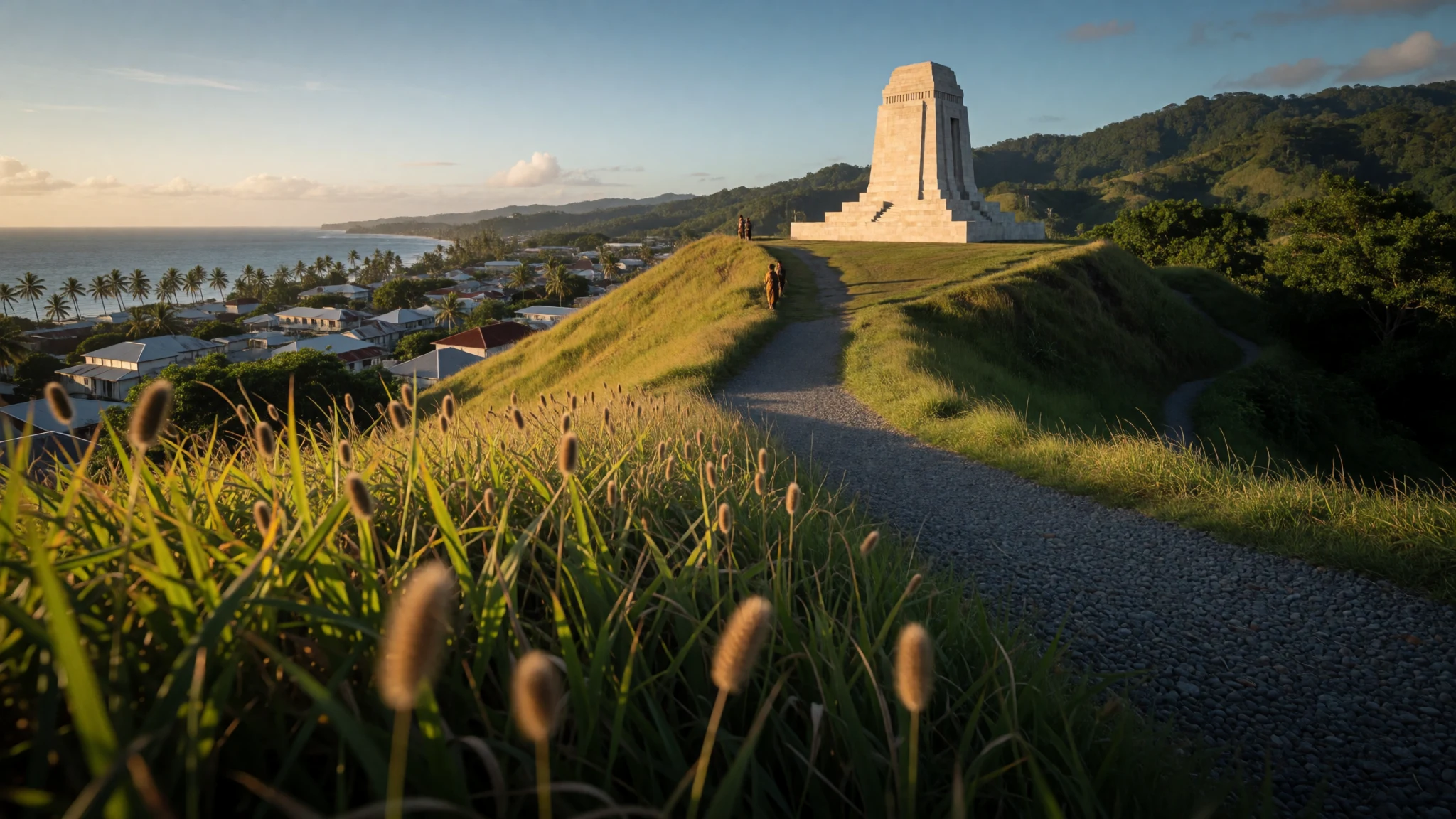
Guadalcanal pairs wartime relics and memorials with rainforest waterfalls, village life and palm-fringed beaches, on a rugged, unpolished island in the Solomon Islands.
The place
Guadalcanal is the largest island in Solomon Islands, a long mass of rainforest and steep ridges in the south-western Pacific, north-east of Australia. Its older name, Isatabu, is still used by people whose families have lived here for generations. About 109,000 people live on the island, many of them in and around Honiara, the capital, which sits between the sea and the hills on the north coast.
Inland, the picture changes quickly. A mountainous spine runs behind the coast and rises to Mount Popomanaseu at 2,335 metres, the highest point in the whole country. Rivers drop from it through dense forest to short coastal plains, and in places they tumble over waterfalls that can be reached on guided walks.
Honiara is the practical base. It holds the national museum, the central market, the memorial on the ridge, and most of the places to eat and stay. Beyond town, travel is slower and often depends on local guides, village permission and the state of the road. Beaches such as Visale, whose long sweep of sand looks west over the water, reward the effort.
This is not a polished resort island. It suits travellers who want war history, village life, forest walks and sea, and who can accept heat, humidity, rain and the odd cancelled plan. Facilities are modest, and many of the places to stay in Honiara cater mainly to expatriates and aid workers, so rooms can be plain and fill up. Most visitors give it a few days and then move on to other islands.
Its story
Guadalcanal has been lived in for thousands of years. Finds at Poha Cave and Vatuluma Posovi show early settlement, and later Austronesian-speaking Lapita seafarers arrived by canoe, bringing pottery and the skills of ocean voyaging.
Europeans came late. A Spanish expedition sailing from Peru in the sixteenth century, led by Álvaro de Mendaña, was the first to sight the island. One of his officers, Pedro de Ortega Valencia, chose the name Guadalcanal after his own home town in Andalusia, so an island in the Pacific carries the name of a small place in southern Spain. Early spellings wandered a good deal, reflecting how Andalusian speakers pronounced it.
Whalers, traders and missionaries followed in the nineteenth century, and with them came forced labour: tens of thousands of Solomon Islanders were shipped to plantations in Australia and Fiji under British-run schemes. Britain and Germany then competed for influence in the region, and Guadalcanal ended up inside the British Solomon Islands Protectorate, with coconut plantations run largely by Australians.
The island's name reached the wider world during the Second World War, when Japanese and Allied forces fought bitterly over it and the Allies prevailed. Afterwards Honiara, on the north coast, became the new capital of the protectorate and later of independent Solomon Islands. Today the battlefields, rusting relics and memorials sit alongside villages whose own story is far longer.
What to see
- Guadalcanal American Memorial — Honiara, ridge above the town
A memorial on a ridge above Honiara, honouring the American forces who fought in the island campaign. It gives a clear view over the town and the waters off the coast, so it works well as a first stop for understanding the war geography. Go early, before heat and haze build.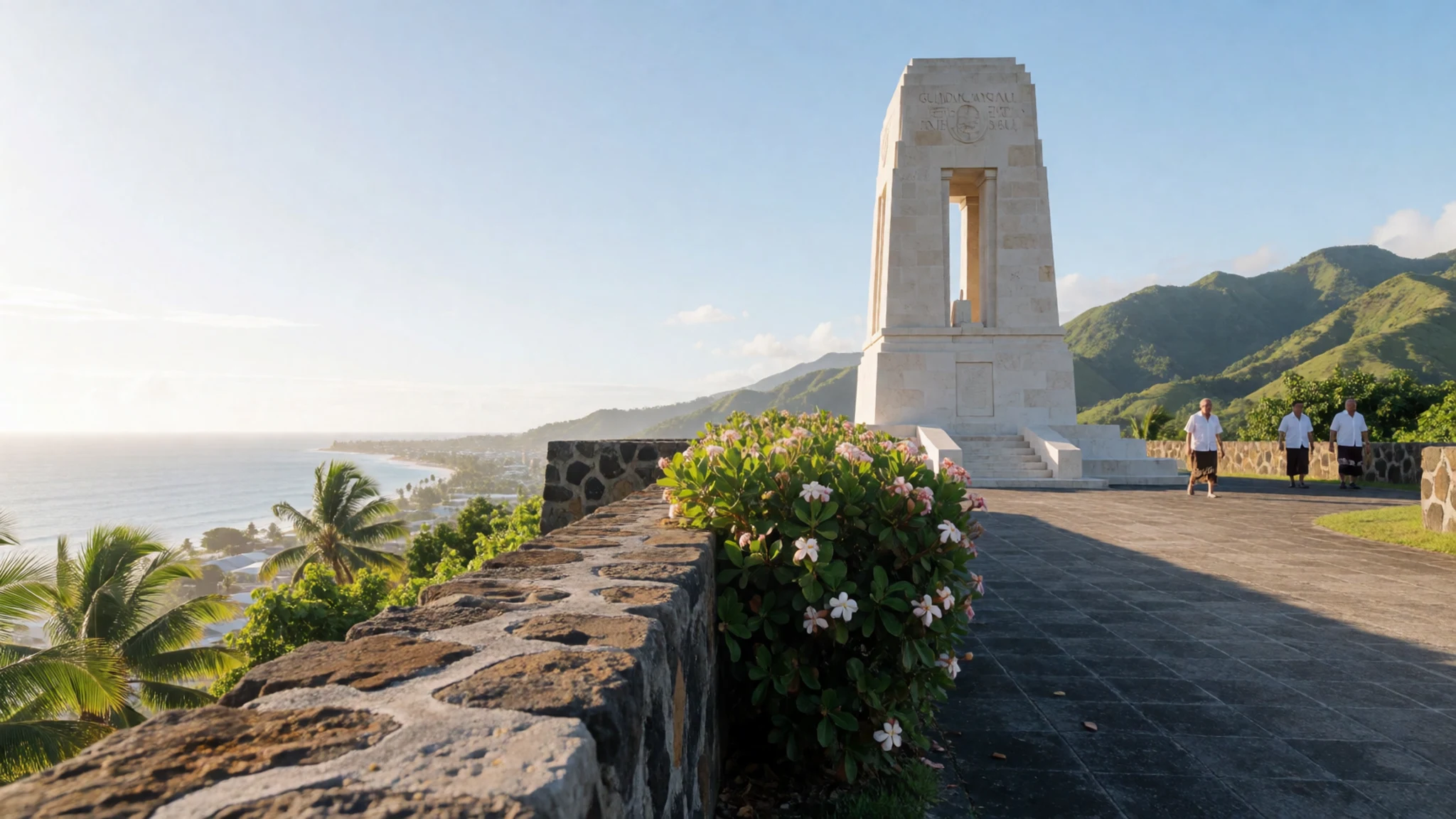
- National Museum — Honiara, central area
The National Museum in Honiara is the place to see Solomon Islands culture beyond the war, with carvings, shell valuables and displays about island life. Simple eateries stand close by, so it combines well with a midday break. Opening times change, so check locally before walking over in the heat.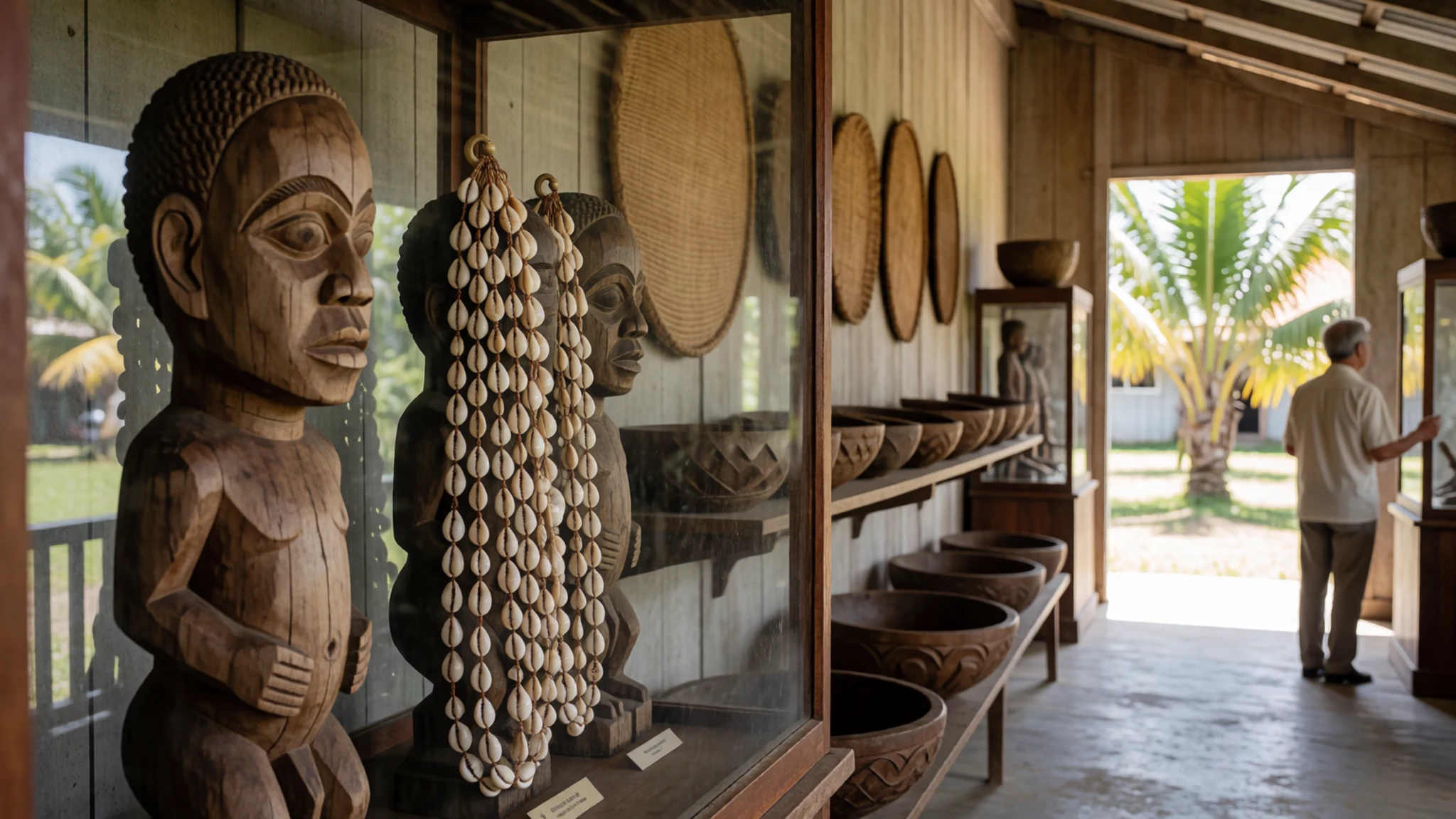
- Central Market — Honiara, main road by the waterfront
The Central Market in Honiara is the liveliest place in town to watch daily life, with heaps of fruit and vegetables, fresh fish, flowers and hand-made jewellery and crafts. Saturday morning is the busiest and most colourful time. Keep bags closed and phones out of sight, as pickpockets work the crowds.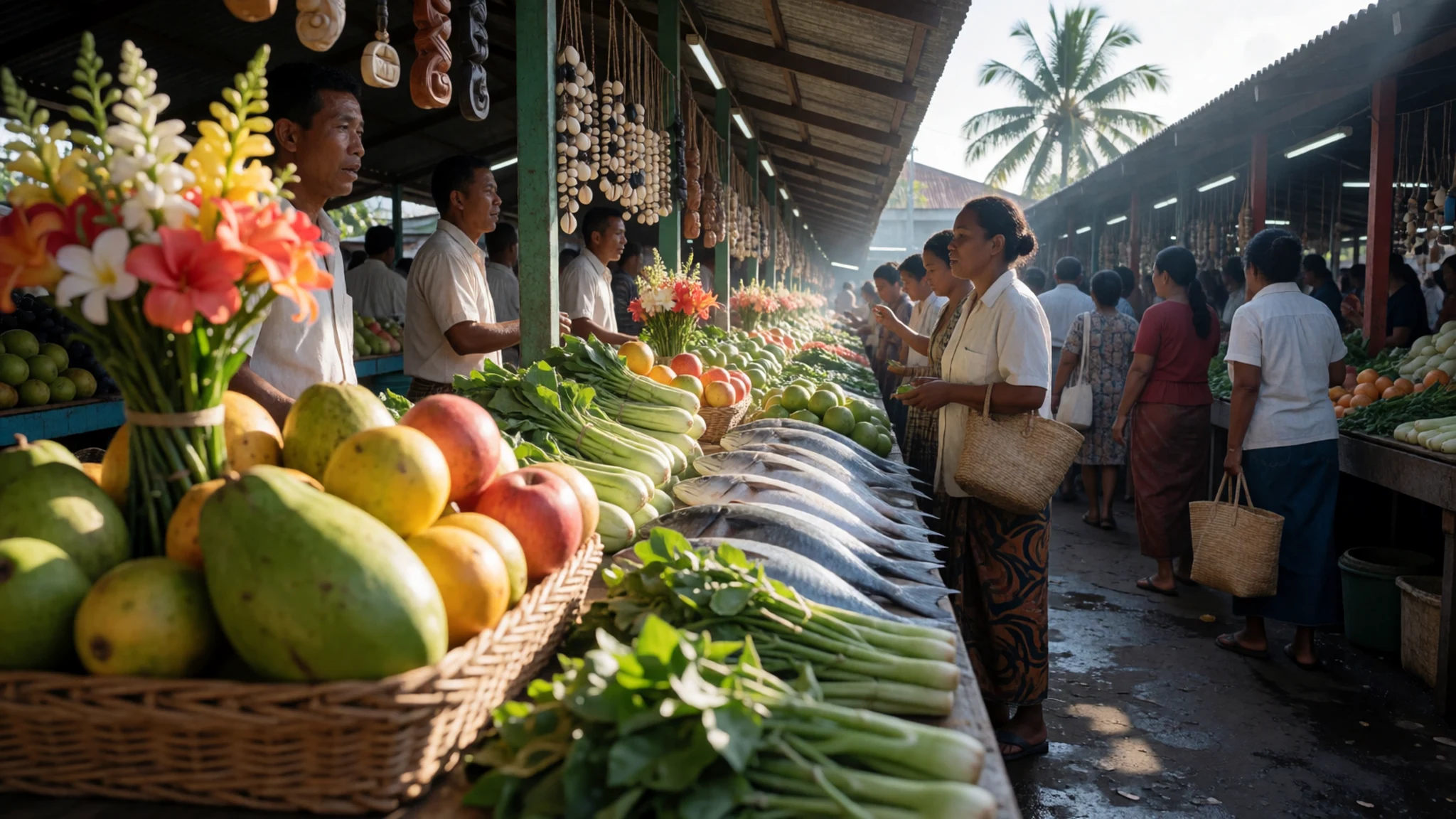
- Matanikau Falls — Inland from Honiara, Matanikau valley
Matanikau Falls is a rainforest waterfall reached on a guided trek of about two hours on foot, starting a short bus ride from the city centre. The path is hot and can be slippery after rain. A local guide helps with route, river crossings and permission to cross land.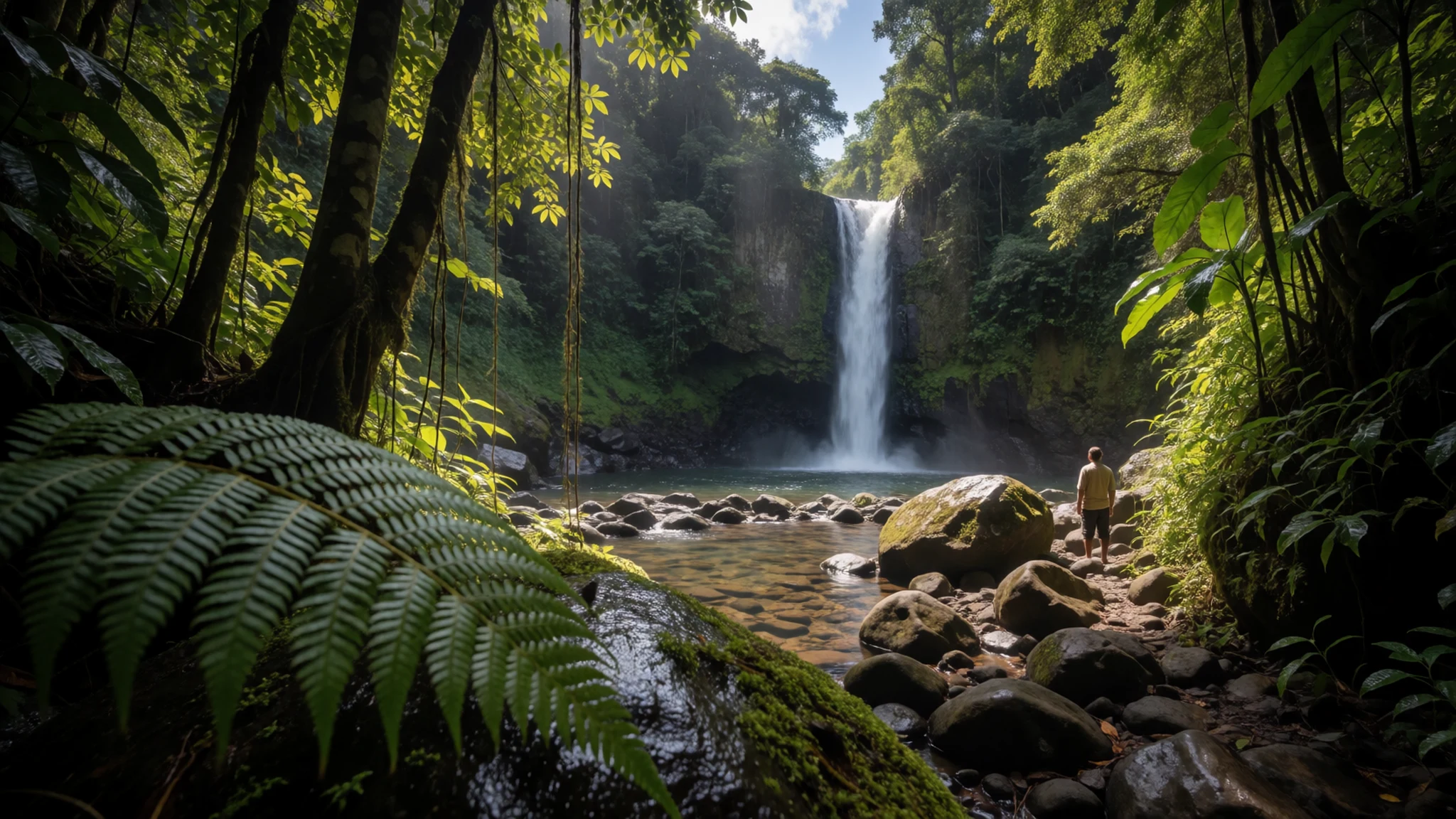
- Vilu War Museum — Coast outside Honiara
Vilu War Museum is an open-air collection of wartime relics on Guadalcanal's coast, gathered from the island's Pacific war battlefields. Rusting hardware and weathered displays sit among trees, and the setting feels more like a field than a gallery. Arrange transport from Honiara beforehand, and expect a sober, quiet visit.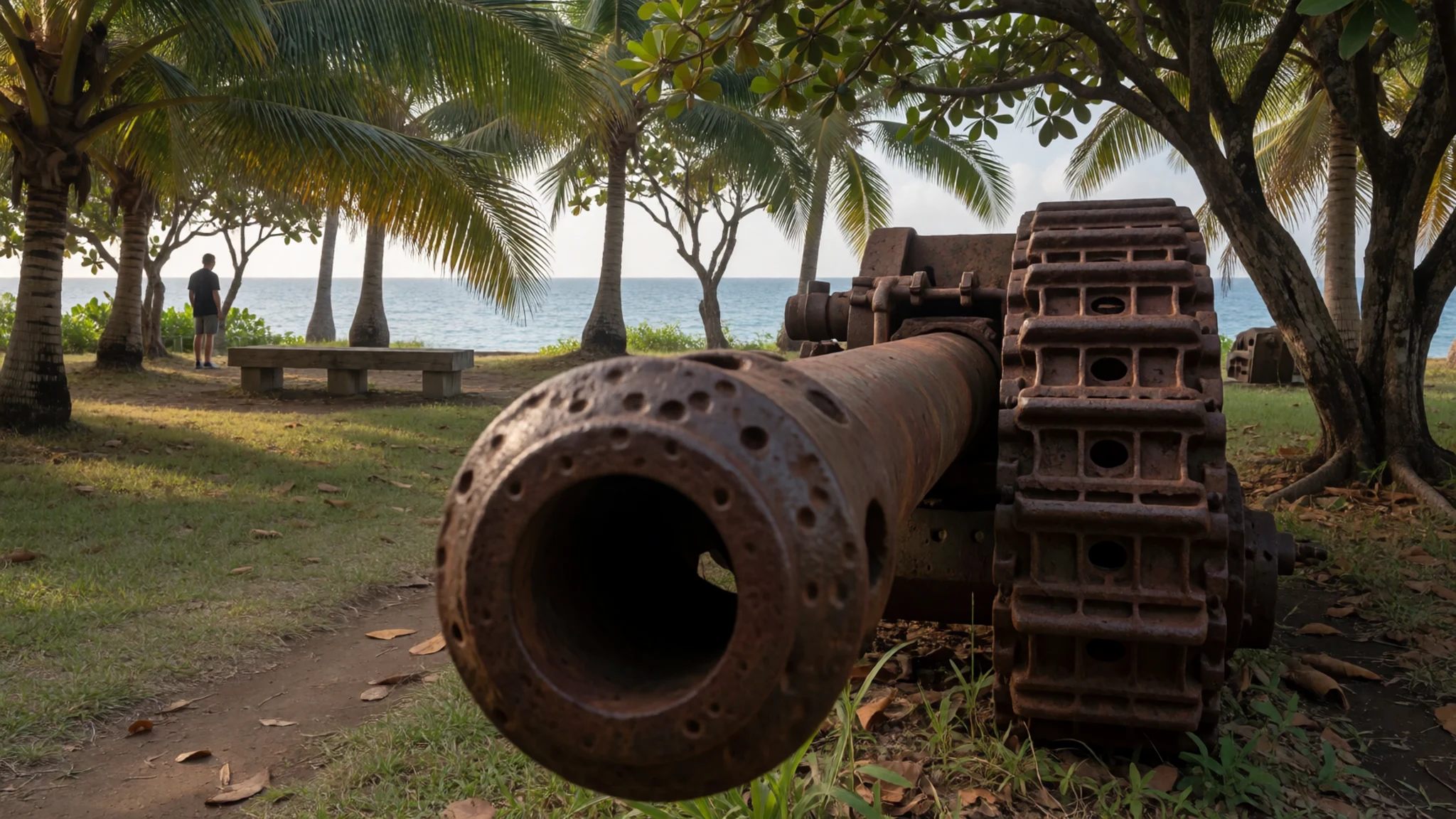
Culture
Guadalcanal's culture rests on island custom, usually called kastom, which governs land, family obligations and who may speak for a place. Much of the land outside Honiara belongs to clans, not to the state, so a beach, a river or a forest path that looks empty may well have owners who expect to be asked and sometimes thanked. A local guide is the usual way to handle this gracefully.
Christianity is central to daily life. Churches fill on Sundays, and the singing, often in rich harmony, is a highlight for visitors who are invited to attend. The South Seas Evangelical Church near the central markets is one well-known example. Sunday is generally a quiet day, with fewer shops open and less happening on the roads.
The war is a living memory in a different way. For some families it is a story of foreign armies fighting across their gardens and villages, and the memorials, relics and museums are tied to loss as well as history. Visitors will meet both pride and sadness when the subject comes up, and conversation tends to be warm, unhurried and curious about where you come from.
Markets, church halls and roadside stalls are where social life is most visible, and bargaining is not a strong tradition. Ask before photographing people, their houses or their gardens, and always seek permission from a village or landowner before crossing private land to reach a waterfall or beach.
What to wear
Traditional dress on Guadalcanal draws on plant fibres, bark, woven pandanus and shell. Ornaments such as shell necklaces, armbands and decorated combs are worn at ceremonies, dances and important gatherings, and designs and materials differ between communities. These pieces are special-occasion wear, and visitors are most likely to see them at festivals or in the museum.
Everyday clothing is much simpler. In Honiara and the villages, women commonly wear loose, knee- or ankle-length cotton dresses, often in bright floral prints, or wraparound cloths. Men wear shirts with shorts, trousers or a wrapped cloth. On Sundays people dress up for church, with clean pressed shirts and their best dresses. Rubber flip-flops are standard footwear around town.
Visitors should dress for heat and humidity but also for modesty. Light, quick-drying cotton or linen works best, with shoulders and knees covered in villages and churches, and in town generally. Swimwear belongs on the beach and boat, not in markets or settlements. Bring a sun hat, high-factor sunscreen and a light rain jacket, since showers arrive fast.
For walks to waterfalls or war sites, wear closed shoes with good grip, or sturdy sandals that can get wet, because paths are muddy and rivers need crossing. Long, lightweight trousers help against insects and scratchy undergrowth. A small dry bag protects a phone or camera from rain and spray.
What to eat
- Fish and cassava chips — Small eateries near the National Museum
Simple plates of fried fish with chunky cassava chips are a standard lunch in Honiara. The fish is usually fresh, and the cassava is filling, plain and good with a squeeze of lime or hot sauce.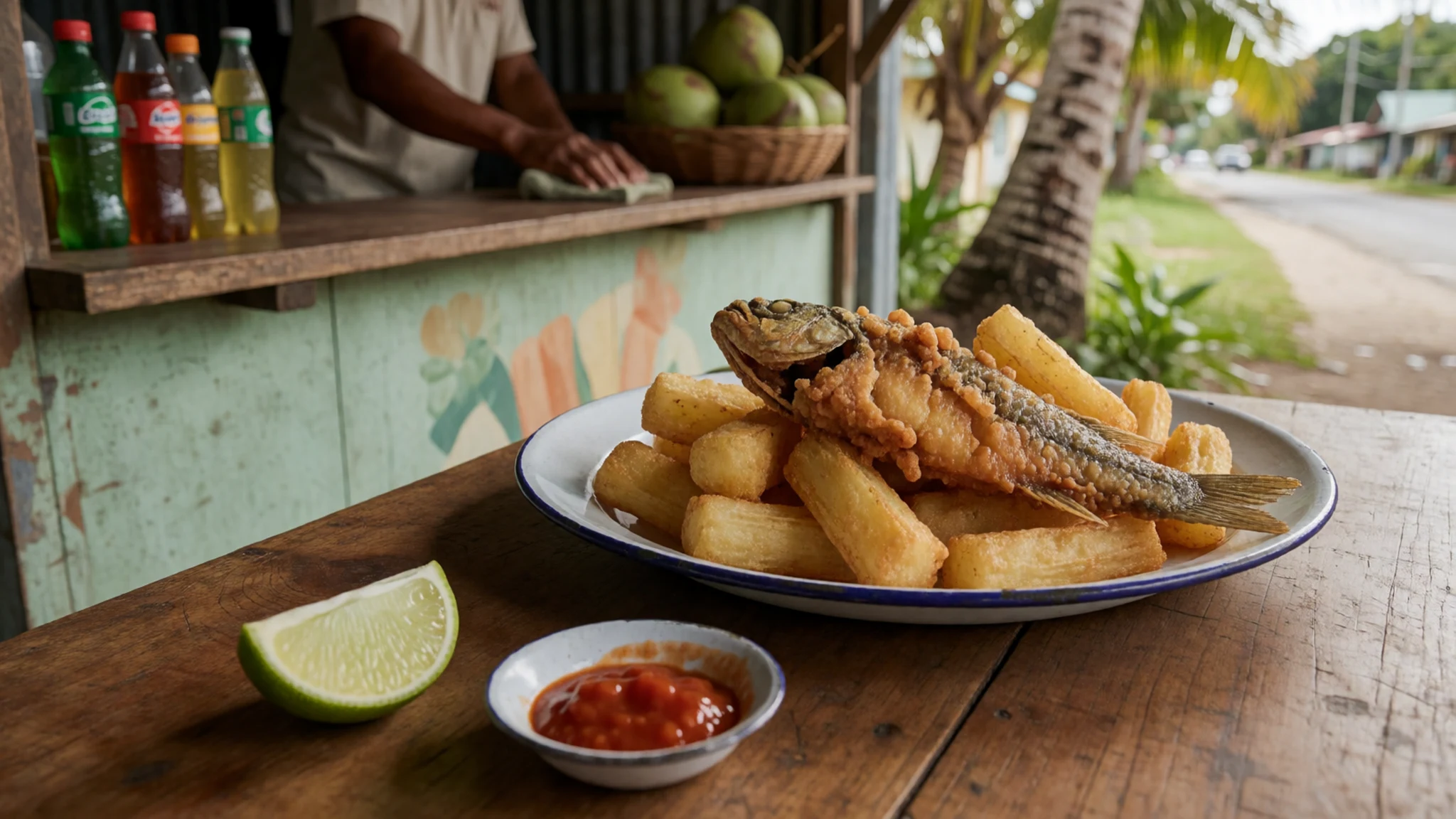
- Fresh fish and chips — Central Market, Honiara
Fish is sold both cooked and uncooked at the market, so locals can grill or fry their own catch at home. For visitors, hot fish and chips from a stall make a cheap, quick meal with a sea view nearby.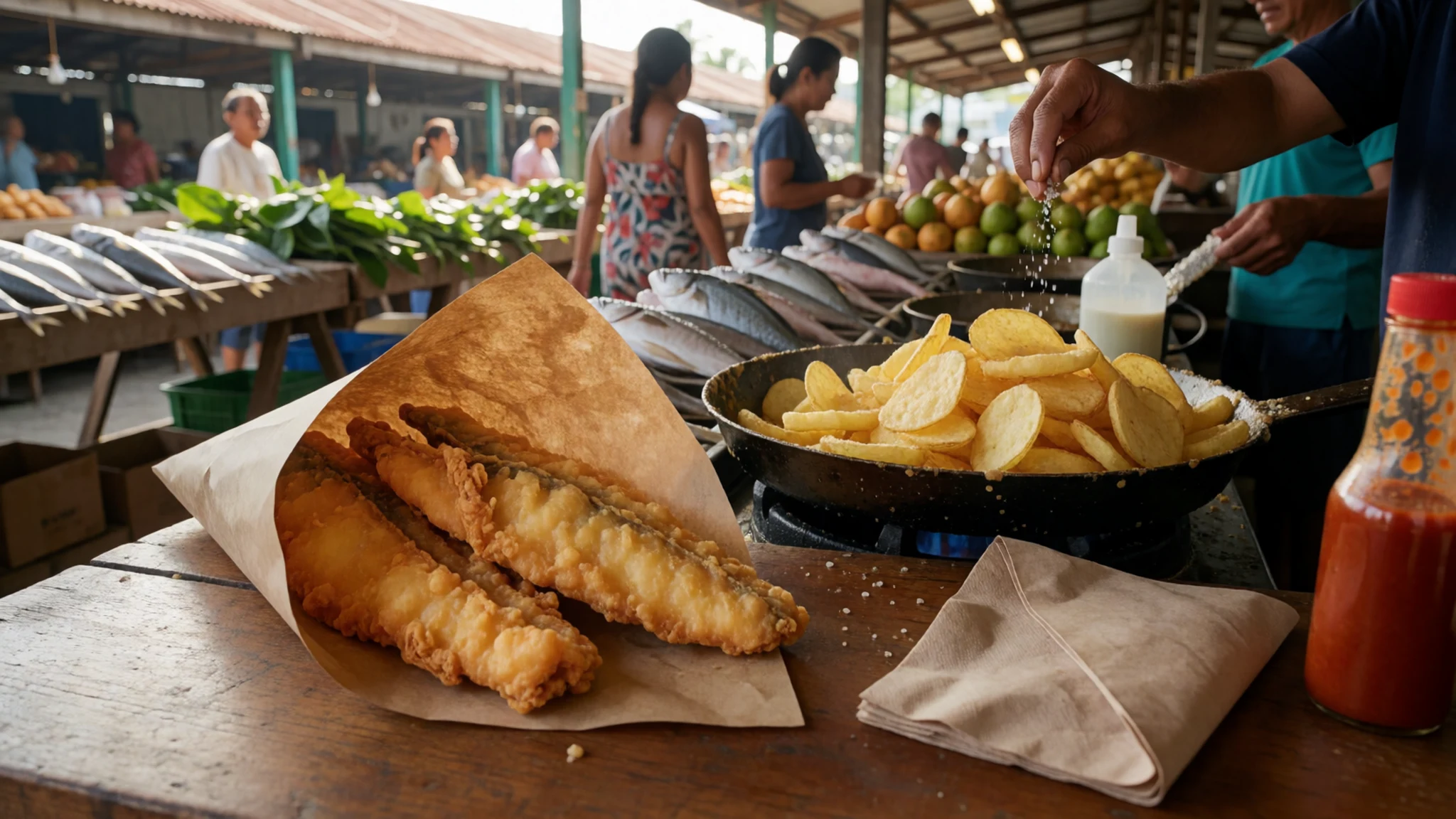
- Green drinking coconut — Market stalls and eateries near the museum
A freshly cut green coconut is the easiest way to cool down on a hot day. The water is light and slightly sweet, and the soft flesh can be scooped out afterwards with a piece of the husk. - Market fruit and vegetables — Central Market, Honiara
Tropical fruit and island vegetables are piled high at the main market, with whatever is in season on offer. Buy fruit to eat that day, wash or peel it carefully, and ask what each vegetable is, since vendors enjoy explaining. - Indian and Sri Lankan curries — Restaurants catering to expatriates in central Honiara
Honiara has a handful of restaurants serving South Asian dishes, which suits visitors from India who miss home flavours. Expect rice with curries and breads, sometimes at somewhat higher prices than market food, and check when they open.
Plan it
Best time. May to October is usually the drier, slightly less humid stretch, which is kinder for waterfall treks, beach days and war sites. November to April is hotter, wetter and more humid, with heavier rain and the possibility of cyclones, so expect delays on roads and boats.
How long. 3–5
Getting there. Fly into Honiara's international airport, usually connecting through a regional hub such as Brisbane, then take a taxi or minibus into town. Local buses run along the coast road, and trips beyond Honiara are best arranged through a guide or your accommodation.
Budget. mid
Tips
- Check government travel advice, such as from the Australian or New Zealand governments, before booking, as there has been civil unrest and rioting in Honiara.
- Keep bags closed and valuables out of sight at the Central Market, where pickpockets operate.
- Start walks and sightseeing early, before the midday heat and afternoon showers.
- Carry cash in small notes for markets, buses and snacks, and confirm opening times locally before travelling to museums.
- Book places to stay ahead, as options in Honiara are limited and often cater to expatriate and aid-worker demand.
Etiquette
- Ask permission before entering village land or photographing people, and use a local guide for waterfalls and remote beaches.
- Dress modestly away from the beach, with shoulders and knees covered in villages and churches.
- Treat memorials and war sites quietly, as many families still feel the war's losses.
Nearby
Sources
- Wikidata Q192767 (CC0)
- Wikipedia: Guadalcanal (rev 1381464939) (CC BY-SA 4.0)
- Wikivoyage: Guadalcanal (rev 5403308) (CC BY-SA 4.0)
- Photo: Visale beach, StewyOz (CC BY-SA 4.0)
- Photo: Solomon Islands – Guadalcanal, edited by M.Minderhoud (Public domain)
- Photo: Honiara view, Kahunapule Michael Johnson (CC BY-SA 2.0)
- Photo: Guadalcanal map, Kelisi (CC BY-SA 4.0)
- Photo: Deceased Japanese soldiers after the Battle of the Tenaru, USMC (Public domain)
- Photo: Guadalcanal American Memorial (Public domain)
- Photo: Vilu War Museum 2, Torbenbrinker (CC BY-SA 4.0)
- Photo: Vilu War Museum 4, Torbenbrinker (CC BY-SA 4.0)


