Kennedy Island
Kennedy Island, Solomon Islands
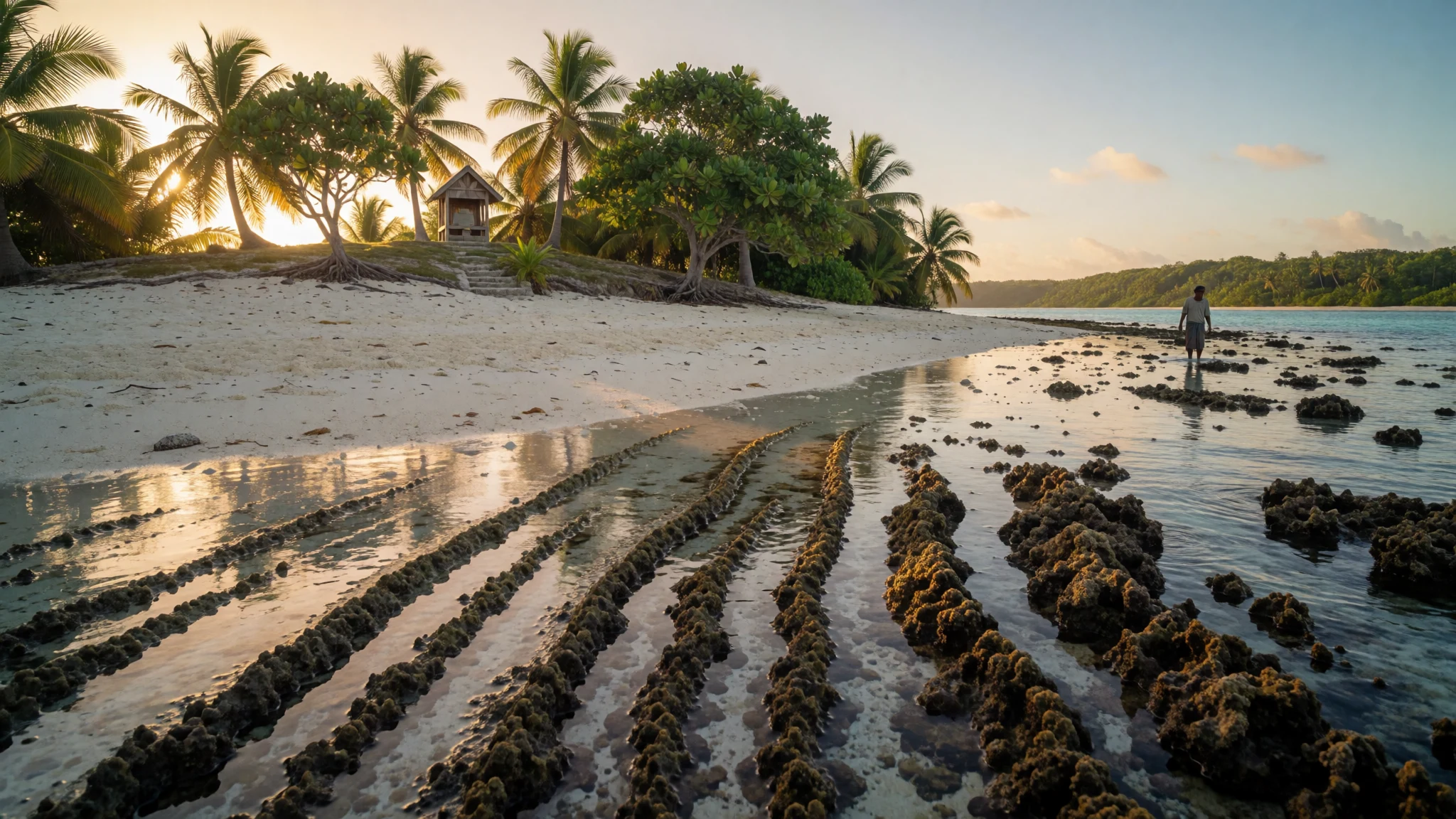
Kennedy Island is a tiny uninhabited island near Gizo where a future US president washed ashore in 1943, now a quiet boat-trip stop.
The place
Kennedy Island lies in the Western Province of the Solomon Islands, a short boat ride from Gizo, the provincial capital. It is uninhabited and very small, a patch of sand, trees and shallow reef of about 1.17 hectares. Local people call it Kasolo Island, and the nickname Plum Pudding Island is also in use, so a boatman may know it under any of the three names.
The island is a stop on a day out rather than a destination with facilities. There is no village, no shop and no cafe. A visit usually means a hired boat from Gizo or from a resort on a neighbouring island, an hour or two of swimming and snorkelling in clear, shallow water, and a walk around a shoreline that takes only minutes. Shade is limited, the sun is strong year-round, and the water is the main attraction.
The surrounding area is a scatter of low islands and reef channels in the western Solomons, with Olasana, Naru and Mbabanga among the neighbours. The wider archipelago has been home to Melanesian communities for thousands of years, and village life on the nearby islands still runs on customary land ownership. That matters here, because even an empty-looking island belongs to someone, and access is arranged through a guide, boat operator or accommodation.
Crowds are rarely an issue. Gizo is not a mass-tourism town, and the island may be empty or hold a single boat party. The draw is partly the setting and partly the history that attaches to the spot.
Its story
Kennedy Island owes its name to a night in August 1943, during the Pacific war. John F. Kennedy, then a young naval lieutenant, commanded a small patrol boat in these waters when a Japanese destroyer, the Amagiri, cut across its path in the dark and split it apart. Two of his crew were killed. The survivors clung to the wreckage through the day and then swam towards this small island.
The island offered little: no fresh water and almost no food. Kennedy led his men on to Olasana, a larger island nearby, where they had a better chance of being found. He swam repeatedly between islands in the following days, towing an injured man and looking for help. The crew were eventually reached by two Solomon Islander scouts, Biuku Gasa and Eroni Kumana, who were working with the Allied coastwatcher Reg Evans.
Kumana later built a small shrine to Kennedy on the island, and it still stands. After Kennedy became president, the story gave the place its fame and its English name.
The island's recent past is more tangled. It was once public land, was sold in 2004 to a local adviser, and the legality of that sale was challenged. A resort-owning family bought it in 2009. A swimming race re-enacted the escape in 2003. In 2023 Kennedy's daughter Caroline Kennedy, then US ambassador to Australia, and her son Jack Schlossberg swam about 1.2 km between Naru and Olasana with Solomon Islander swimmers.
What to see
- Kennedy Island — Off Gizo, Western Province
The island itself takes minutes to walk around. Most visitors come to swim and snorkel in the shallows and to see the small memorial shrine built by Eroni Kumana, one of the scouts who helped the stranded crew. Bring your own shade and water, as there are no facilities.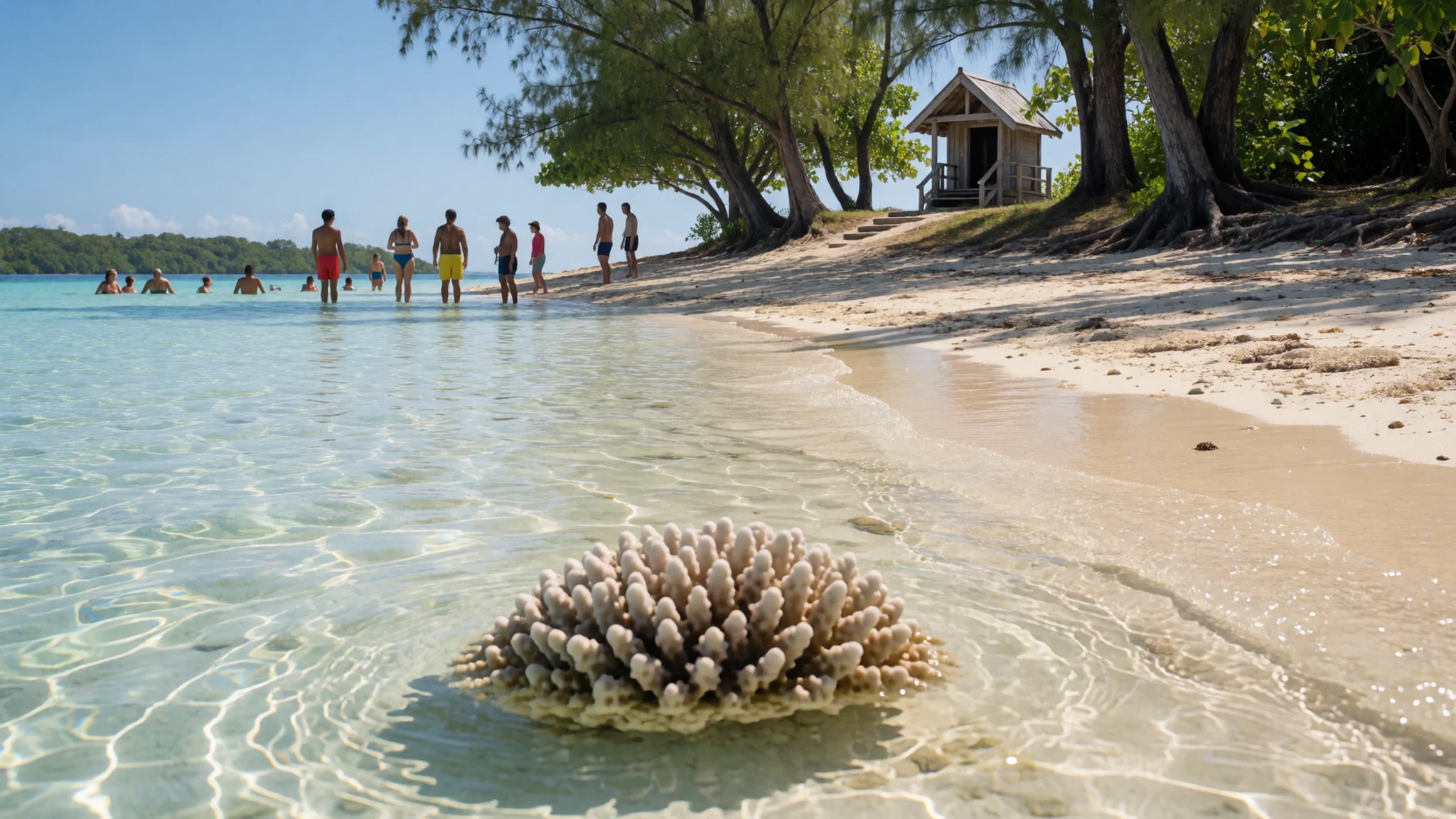
- The Naru–Olasana swim passage — Between Naru and Olasana Islands
This channel is where Kennedy swam several times to carry supplies and contact the scouts, and where his daughter and grandson swam a stretch of it in 2023. Boat operators will point it out. Currents can be strong, so treat it as a viewpoint rather than a swim.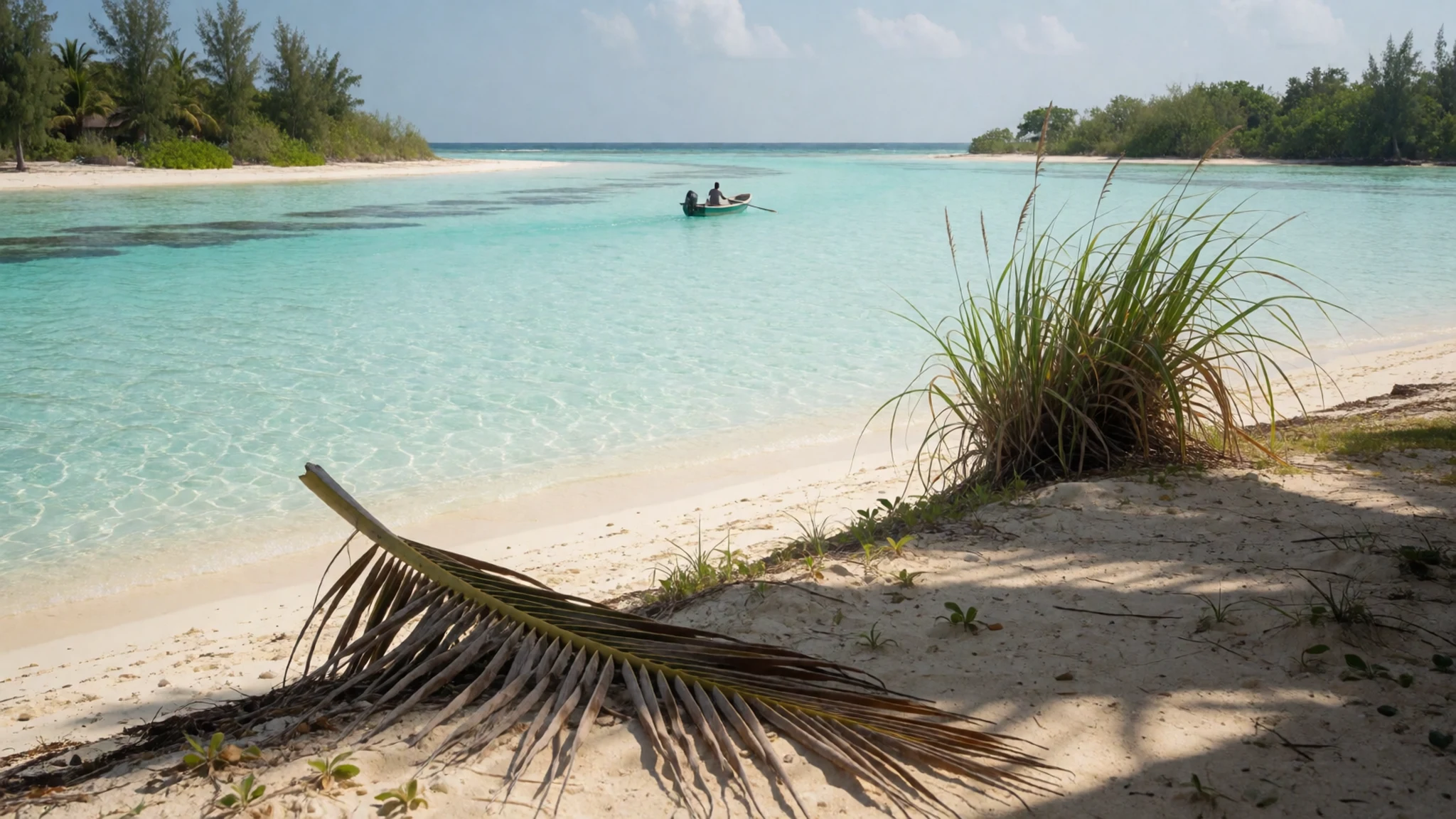
- Gizo — Gizo, Western Province
The provincial capital is the usual base for the area and the place to arrange boats, guides and supplies. It is a small, relaxed town with a market, harbour and a few basic places to eat. Evenings are quiet, and travel after dark calls for sensible care.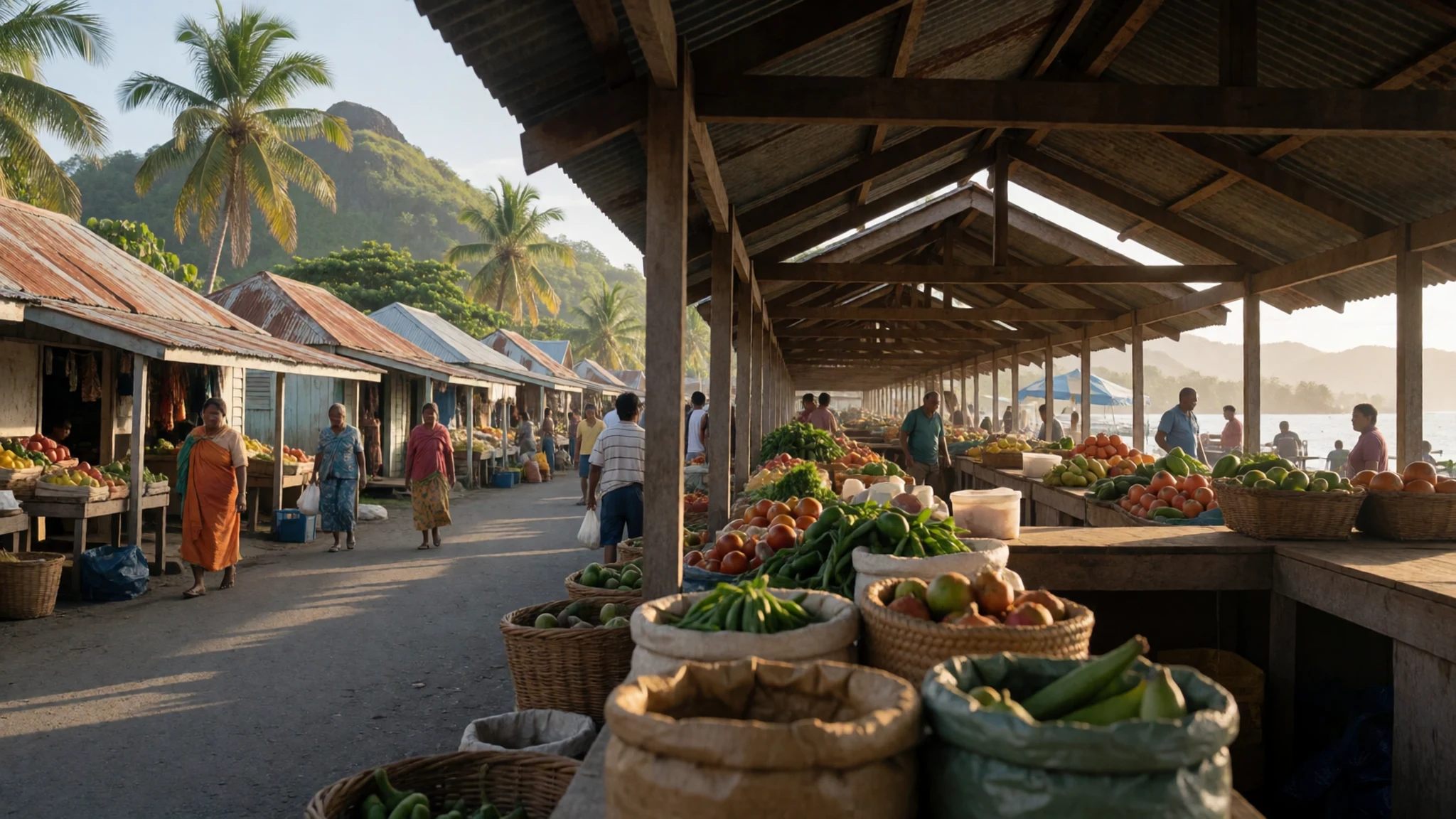
- Wartime relics — Across the Solomon Islands
The war left tanks, aircraft wrecks, shipwrecks and guns across the country, many still visible on land or underwater. Dive and snorkel operators in the western islands can arrange visits. Treat the wrecks as memorials, as lives were lost at many of them.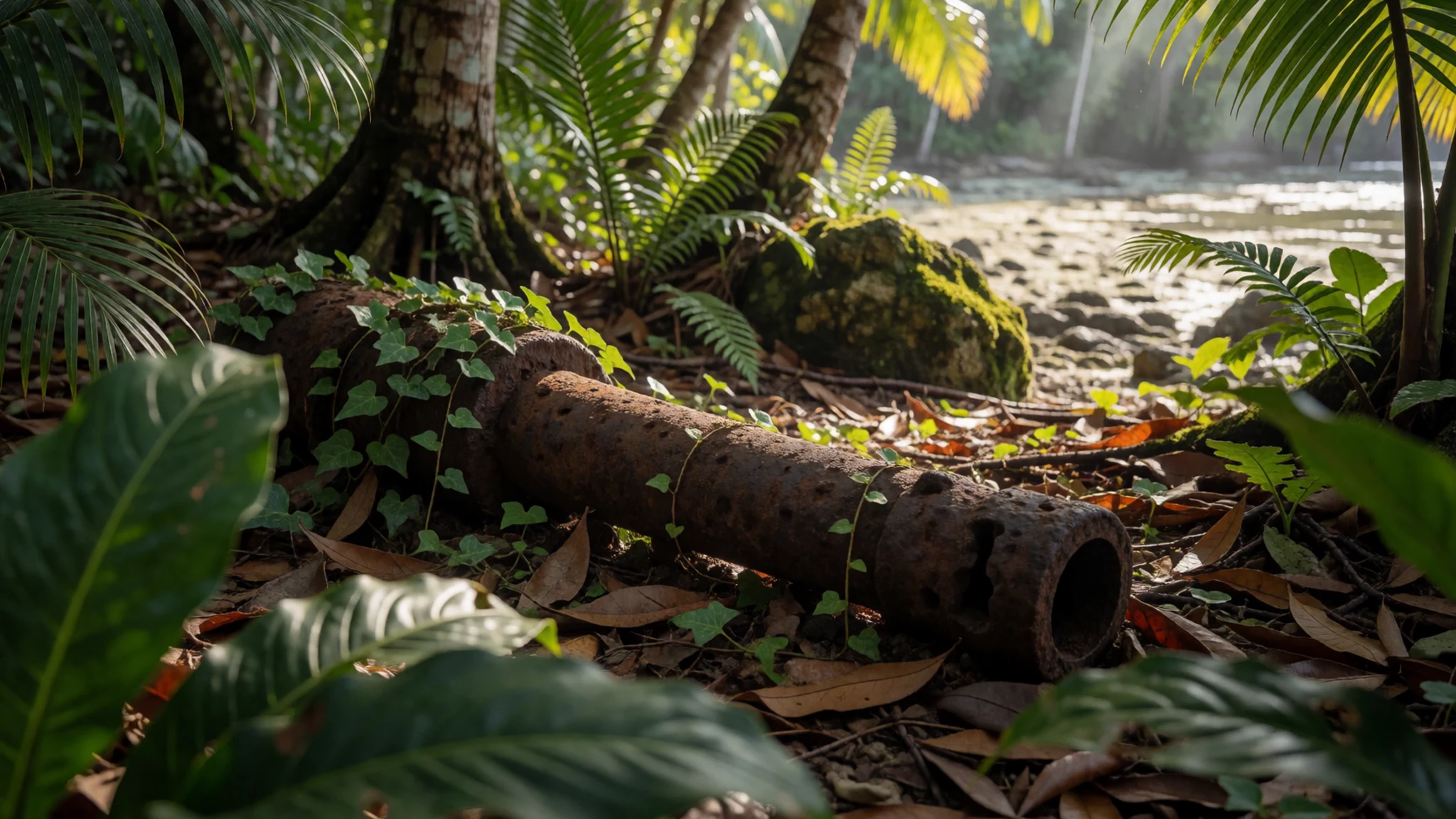
- Skull Island, Lola Island — Lola Island, Solomon Islands
Reached from Lola Island, this tiny islet holds a shrine with the skulls of defeated chiefs and gives a direct look at the headhunting past. It is a sacred place, so go with a local guide who has arranged access, and ask before taking any photograph.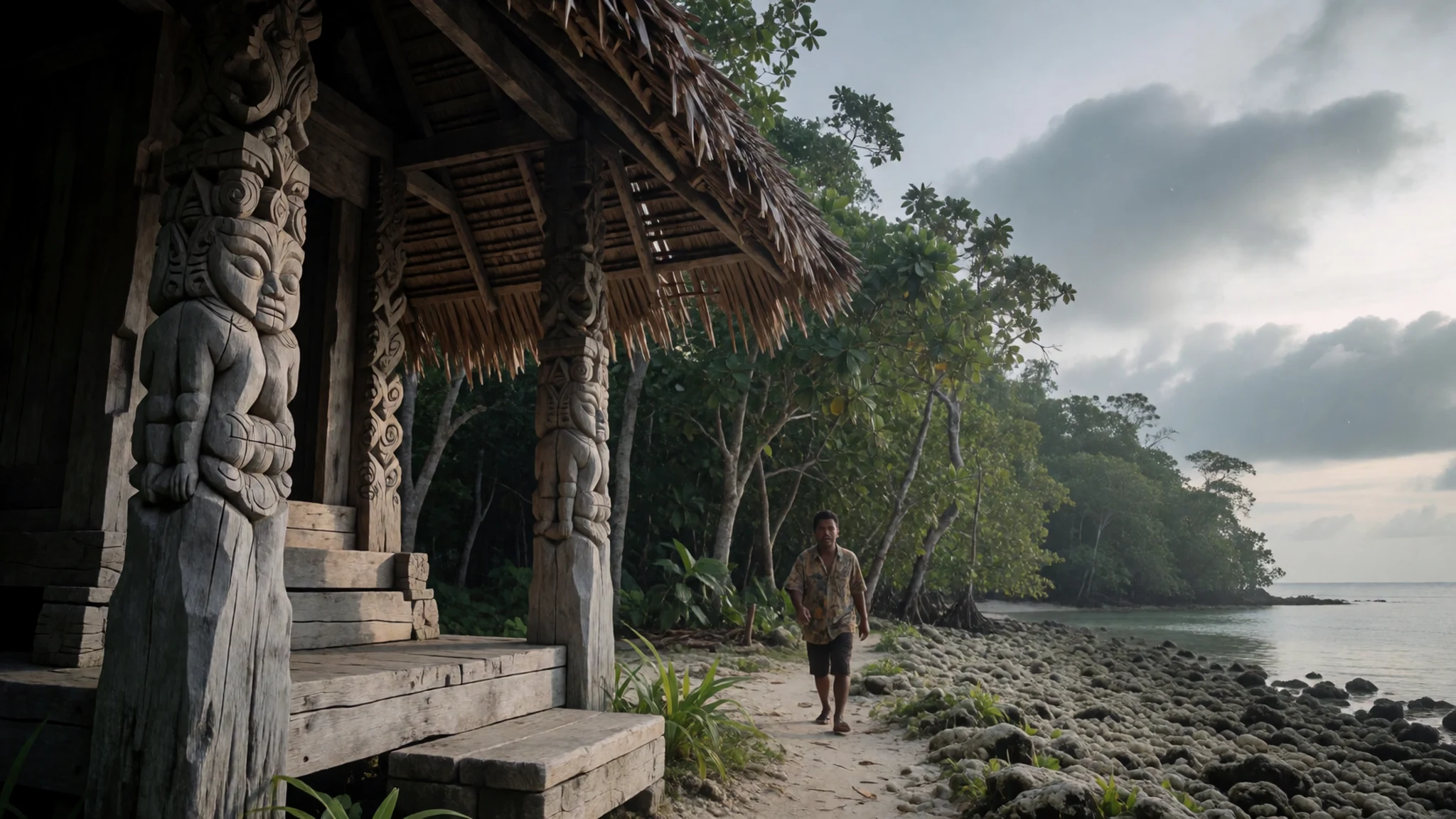
Culture
Kennedy Island sits within the Solomon Islands, where customs differ a good deal between islands, clans and villages. Two Pijin words help to explain daily life. Kastom means customary practice, covering land, ceremony and how people behave towards each other. Wantok literally means 'one talk' and describes the bond between people who share a language, a family line or a home community, with duties of help running in both directions.
Land is the clearest example. Reefs, beaches and small islands are usually owned by a family or clan, even when nobody lives there. That is why a trip to a place like Kennedy Island is arranged through a guide, boat operator or accommodation, who knows whom to ask and whether a small access fee is expected. An empty beach is not necessarily open to everyone.
The history here is also shared. Solomon Islanders were central to the story of the 1943 rescue, and many people in the Western Province take pride in it. The wider war left a deep mark on the islands, so wartime sites are best treated with quiet respect rather than as props for photographs.
Ask the owner or your guide before landing on a locally owned island, and ask permission before photographing people, homes or shrines.
What to wear
Kennedy Island itself has no residents, so dress here means what people wear in and around Gizo and the neighbouring islands. Traditional dress in the Solomons varies by island and community. It often draws on woven plant fibres, shell ornaments and carved or painted body decoration, and it is usually worn for ceremonies, dances and festivals rather than every day. Shell valuables are important in many communities and carry social meaning, so they are not treated as souvenirs.
Everyday clothing is simple and suited to heat and humidity. Many women wear loose, bright dresses or a wrapped cloth over a top, and men wear shorts or trousers with a shirt or T-shirt. Church clothes are noticeably smarter, and Sunday is a day of church and rest in many communities. Children and adults often swim in T-shirts or shorts.
For visitors, light, quick-drying clothes work best. Bring a long-sleeved shirt and a wide-brimmed hat for strong sun, and reef-safe sunscreen. Swimwear is fine on the boat, at resorts and on designated swimming beaches. In villages and in Gizo town, cover shoulders and knees, and wear a shirt or sarong over swimwear. Sandals or water shoes are useful, because the shallows can have sharp coral and sea urchins. A light rain jacket is worth packing for sudden showers.
What to eat
- Fresh tuna — Basic eateries in Gizo and resort restaurants on nearby islands
Tuna is caught locally and is a staple of island menus. It is commonly served grilled or cooked with chilli, alongside rice or pasta. A simple plate of fish is often the best meal available.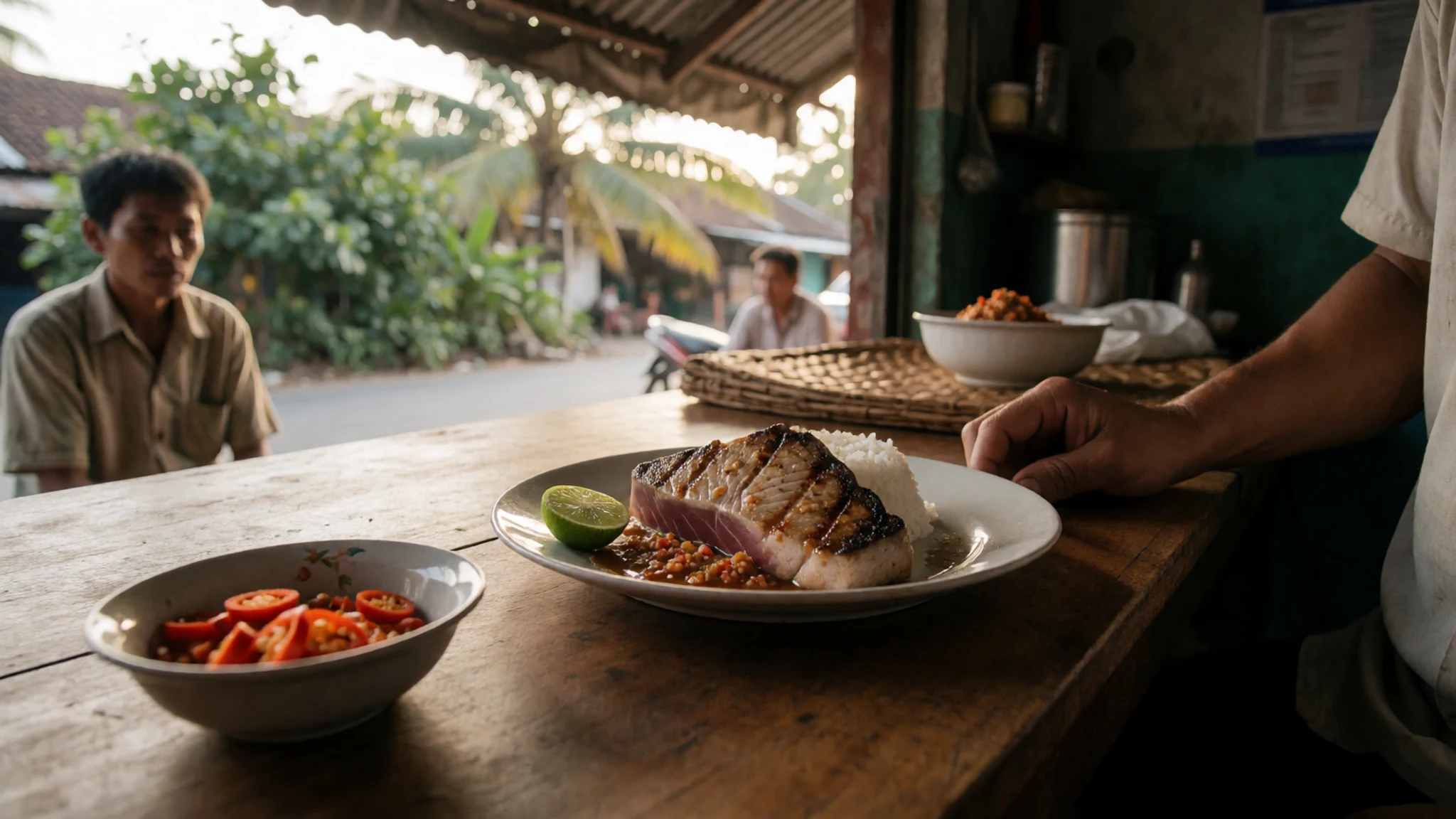
- Cassava — Gizo market and village kitchens
Cassava is an important source of starch across the islands. It is boiled, roasted or baked, and it is filling and mild. It often turns up beside fish or vegetables as an alternative to rice.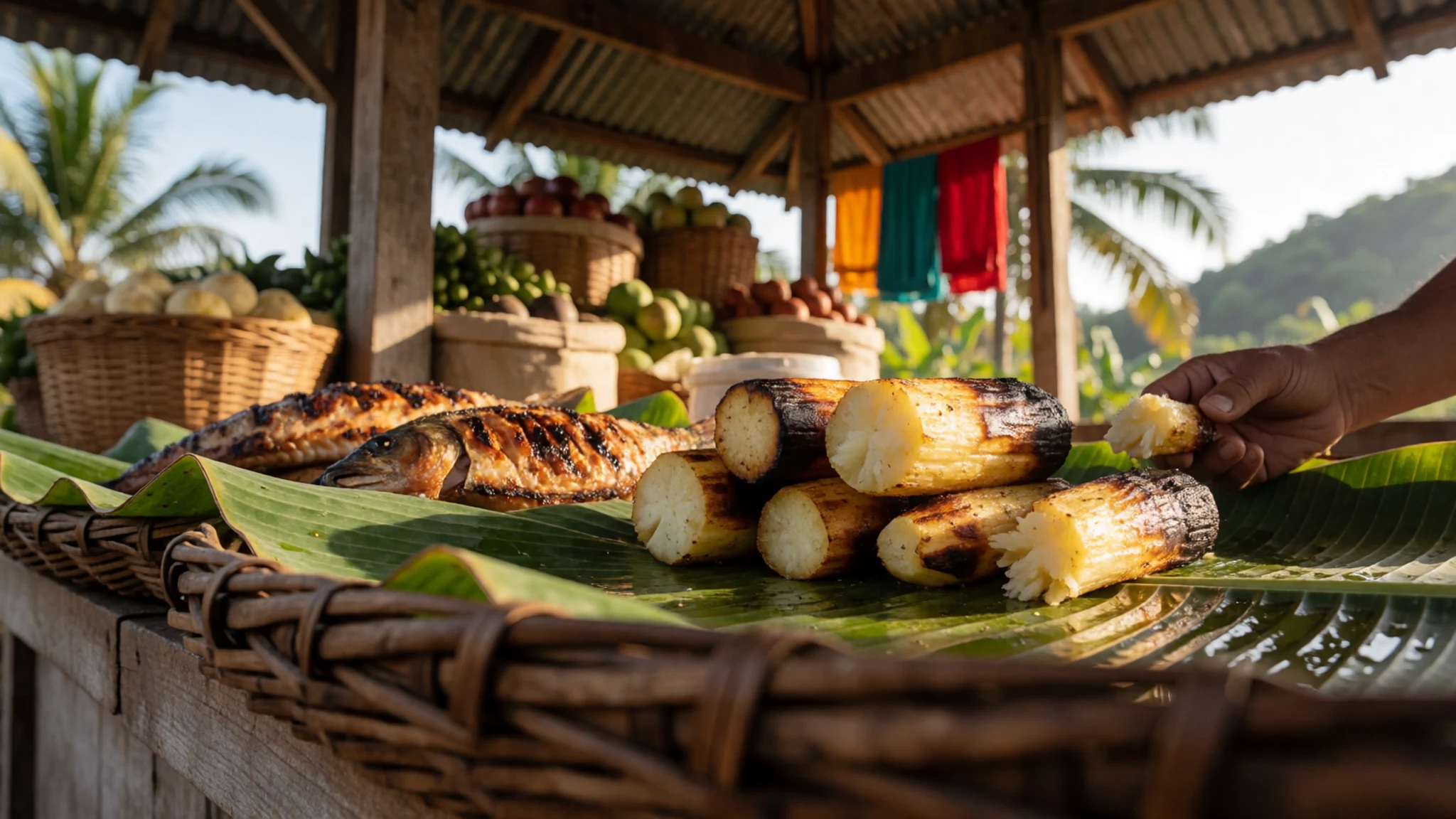
- Taro and poi — Village meals and the central market in Gizo
Taro, a starchy root, is eaten boiled or pounded into a paste. Poi, a fermented taro dish, is part of the wider Pacific food tradition. The sour taste can take getting used to. - Tropical fruit — Market stalls in Gizo
Papaya, banana, pineapple and coconut are sold fresh and are an easy snack on a boat day. Buy from stalls and carry a few pieces for the island, where nothing is sold. - Solbrew beer — Resort bars and shops in Gizo
Solbrew is the local brewery, based near the capital Honiara. A cold bottle is a common end to a hot day, and it is easy to find in town and at resort bars.
Plan it
Best time. The drier months, roughly May to October, usually give calmer seas and more sunshine for boat trips. The Solomons are tropical, so expect heat, humidity and sudden rain at any time; check forecasts before booking a boat.
How long. 2–3
Getting there. Fly to Honiara, then take a domestic flight to Gizo in the Western Province. From Gizo, a short boat ride reaches Kennedy Island. Check with airlines and your accommodation for current schedules and entry requirements.
Budget. mid
Tips
- Arrange the boat through your accommodation or a local guide, who can also sort out access permission
- Carry cash, as cards are not widely accepted away from main towns
- Bring drinking water, sun protection and shade, as the island has no facilities
- Avoid travel after dark, especially in Honiara
- In an earthquake near the coast, move to higher ground at once
Etiquette
- Ask before landing on locally owned islands and before photographing people or shrines
- Dress modestly in villages and in town
- Treat war wrecks and memorials with respect
Nearby
Sources
- Wikidata Q922848 (CC0)
- Wikipedia: Kennedy Island (CC BY-SA 4.0)
- Wikivoyage: Solomon Islands (CC BY-SA 4.0)
- Photo: Kennedy Island, Kasolo Island, Pudding Plum (Nash Belarus) (CC BY 3.0)
- Photo: Caroline Kennedy and son Jack Schlossberg at Kennedy Island in 2023 (United States Embassy Australia) (Public domain)

