Honiara
Honiara, Solomon Islands
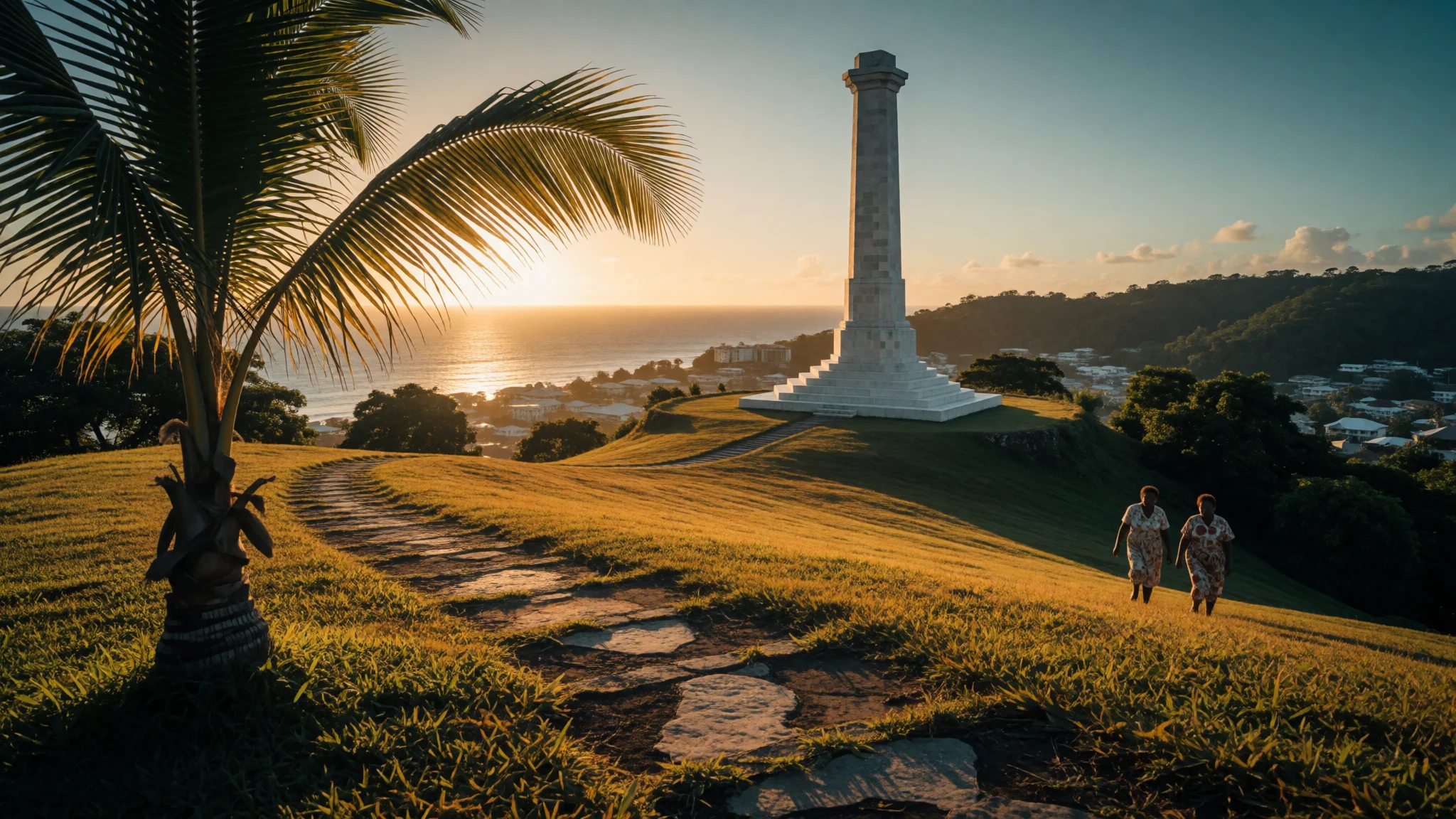
Honiara is a working Pacific capital where wartime battlefields, a lively market and reef-and-rainforest day trips sit within easy reach of each other.
The place
Honiara sits on the north-west coast of Guadalcanal, a hot, humid town strung along the Kukum Highway between the sea and forested ridges. Its elevation is only 29 m, so the water is never far, and ships at anchor off Point Cruz are part of the everyday view. It is the capital of Solomon Islands, with about 84,500 people in the facts block, although other counts run higher once the settlements at the edges are included. The central area is compact. Main Street, the Central Market, the port, the National Museum and the yacht club lie within a short walk or taxi ride of one another, while the airport and its old battlefield sit further east along the coast. Honiara is not a resort town. It is a capital of government offices, churches, shops and markets, and its character comes largely from people who arrive from other islands to work, trade and worship. Hotels and restaurants mainly serve officials, aid workers and business visitors, so the choice of places to eat and sleep is wider than the town's size suggests. It is also the usual springboard for diving, waterfall walks and journeys to other islands in the country. The city has seen unrest in recent decades, which is worth weighing when planning a stay, and travel advisories are the place to check before booking.
Its story
Honiara's name comes from nagho ni ara, a phrase in one of the Guadalcanal languages meaning roughly 'place of the east wind' or 'facing the south-east wind'. On this exposed coast the name fits. Little detailed writing about the town's early life survives, so its story is told mostly through the war and what followed. In 1942 the ground east of today's centre, around the airfield, saw the Battle for Henderson Field, the last of three large land offensives the Japanese mounted during the Guadalcanal Campaign. The United States held the field and won. The Americans left roads, buildings and an airstrip behind, and that ready-made infrastructure weighed heavily when Britain looked for a new seat of government for its Solomon Islands protectorate. In 1952 Honiara became the capital, with government offices opening in January. Its senior official also answered for other Pacific territories, among them what are now Vanuatu, Kiribati and Tuvalu. In the following decades a large share of national development spending went into the town, although only a small fraction of Solomon Islanders lived there. Its shops and businesses grew to serve government staff and expatriate traders rather than the wider population, and one commentator argues that the city still reflects its colonial past more than the country around it. In more recent decades Honiara has also lived through ethnic violence, political unrest and rioting, and some of the scars remain visible.
What to see
- Guadalcanal American Memorial — Hillside above the town centre
Honiara's main war memorial stands on a rise above the town, with views over the coast and the waters offshore. It commemorates the American role in the Guadalcanal Campaign and is a quiet place to get oriented. Go early, before the heat builds, and allow time to read the inscriptions.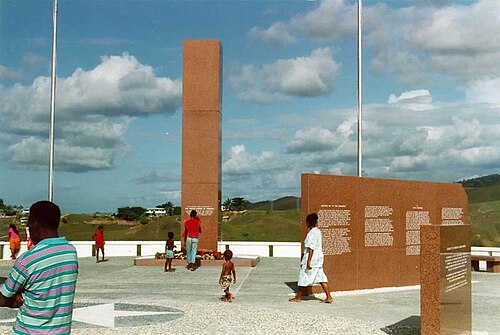
- National Museum — Central Honiara, off the main road
The National Museum is a compact introduction to the islands' cultures, with carvings, shell valuables and displays on the war and independence. Several small eateries stand nearby, so it fits neatly into a morning followed by lunch. Check the official channels for opening days before walking over. - Central Market — Main road, central Honiara
The Central Market runs along the main road and is the town's best window onto daily life: piles of fruit and vegetables, fish, flowers, hand-made jewellery and crafts. Saturday mornings are the liveliest. It is crowded, so keep bags zipped and valuables out of back pockets. - Matanikau Falls — Inland from Honiara, reached by short bus ride
A guided trek to the Matanikau Falls takes visitors out of the town and into rainforest, with a walk of around two hours from the starting point reached by a short bus ride. Go with a local guide, carry water, and expect mud after rain. Other waterfalls nearby, such as Tenaru, are also worth asking about. - Henderson Field and the battle sites — Airport area, east of the centre
East of the centre, the airport occupies the ground where the Battle for Henderson Field was fought. Little of the wartime scene is obvious from the road, so a local guide helps greatly. Tours can also take in other Guadalcanal Campaign sites, including Aola Bay along the coast.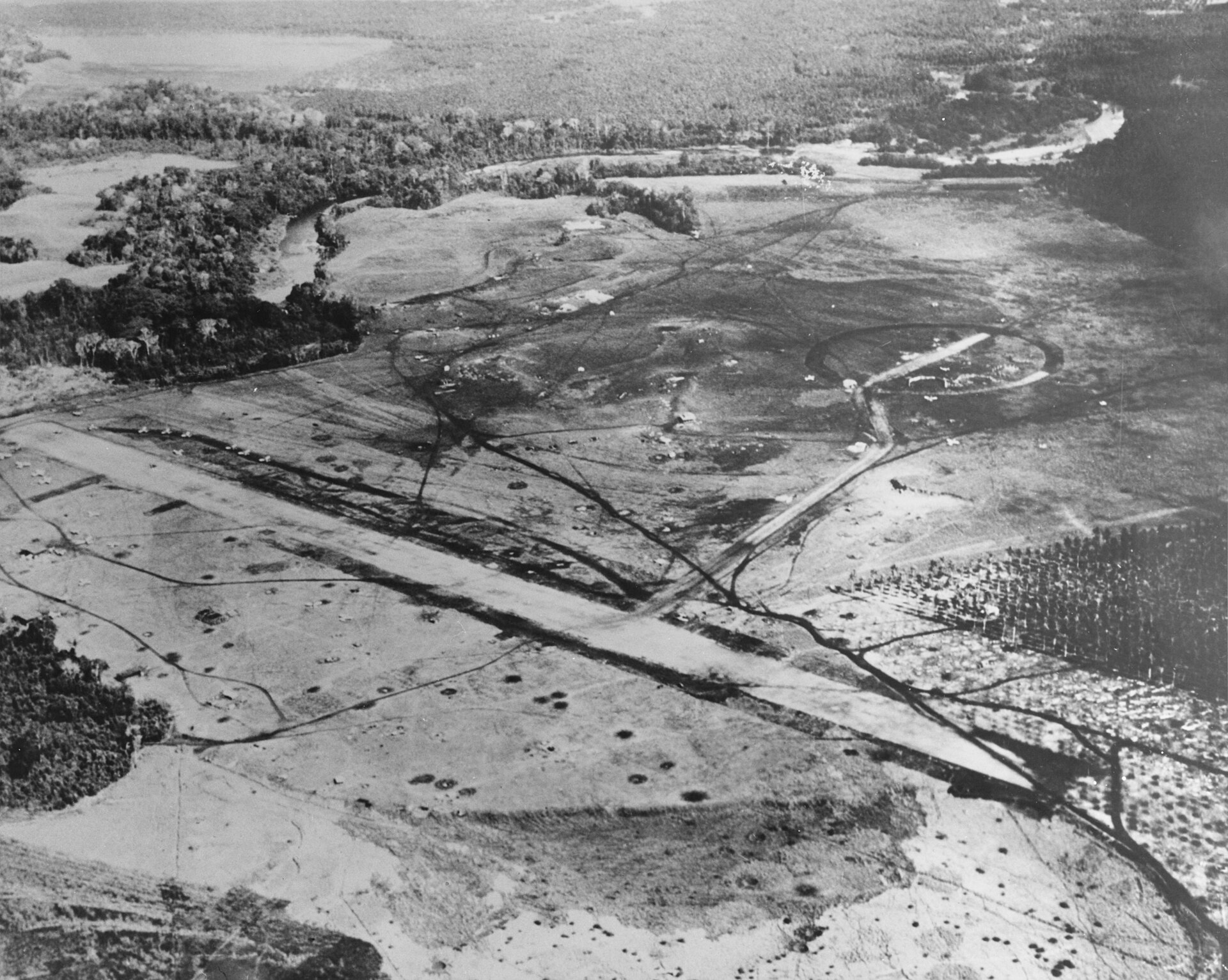
Culture
Honiara's culture is a blend of many islands, because the town draws people from across Solomon Islands, each with their own language and customs. Church is central to public life, and a Sunday service near the Central Market is one of the best ways to hear the singing for which the islands are known. Music and dance come from several traditions. Bellonese dance songs were revived and recorded in the town in 1974, including suahongi, which is performed at the end of a men's ceremony of sharing the surplus of fishing and garden harvests. The songs use call and response and carry short histories of the island. Panpipe bands from Are'are in south Malaita perform at a Honiara hotel each week, and other groups play bamboo bands, Kawara'ae dance and Polynesian-style tamure dancing. Younger people have also taken to freestyle dance copied from films, which has become part of the night-life scene and bears little resemblance to older forms. Melanesian arts and crafts were showcased in Honiara at a regional festival in the late twentieth century, and the market stalls still reflect that craft tradition. Alongside this, the colonial and wartime past sits visibly in the street plan and the monuments. Dress modestly and ask a person's permission before photographing them, especially at the market or in church.
What to wear
Traditional dress in Honiara's surrounding islands varies by community, but the everyday base is wrapped cloth: the lavalava or sarong-style wrap, worn by men and women and made from cotton or printed fabric. Ceremonial dress adds shell valuables, woven armbands and necklaces, feathers, and body decoration. These are mostly seen at festivals, dance performances and formal events rather than on the street. Women also wear loose, knee-length island dresses with sleeves, a style that arrived with the missionaries and is still common, especially to church. In town today, most people wear practical clothes suited to the heat: T-shirts, shorts or trousers, shirts for office work, and flip-flops or sandals. Sunday is the day for the neatest outfit, with ironed shirts and bright dresses for services. Football shirts and cap brands are everywhere. Visitors should pack light, breathable cotton or quick-dry fabrics, with sleeves and knee-length hems for walking around town, visiting churches and the market. Swimwear belongs on the beach or boat, not in the streets. Bring a hat, sunscreen and a light rain jacket, since showers arrive quickly. For waterfall treks and battlefield walks, wear sturdy sandals with grip or lightweight trail shoes, and expect them to get wet and muddy.
What to eat
- Fish and cassava chips — Eateries beside the National Museum
A simple lunch of fried fish with cassava chips, sold at the small eateries clustered near the National Museum. It is filling, cheap by the standards of the town, and usually served with a cold drink or a coconut. - Green drinking coconut — Central Market and eateries near the museum
Green coconuts are opened with a machete and drunk straight from the shell, the easiest way to cool down in Honiara's humidity. The flesh is scraped out afterwards. Ask for one at market stalls or lunch spots near the museum. - Fresh market fish — Central Market, main road
The Central Market sells uncooked fish from the day's catch alongside cooked fish and chips. Visitors staying somewhere with a kitchen can buy fillets and local vegetables here; others can eat fried fish on the spot. - Tropical fruit and root vegetables — Central Market produce stalls
Stalls pile up pawpaw, bananas, pineapple, coconuts and island staples such as sweet potato, taro and cassava. Buy what is in season, wash or peel it, and eat it soon, since the heat spoils produce fast. - Indian and Sri Lankan curries — Restaurants in the town centre
Honiara's expatriate community has encouraged restaurants offering Indian and Sri Lankan food, with curries, rice and breads that make a change from fried fish. Opening hours are limited, so check before going. - Yacht club suppers — Point Cruz Yacht Club, waterfront
The yacht club by the harbour is a favourite expatriate gathering place, serving simple evening meals with a view of the boats. It makes a relaxed way to end a day and to meet residents.
Plan it
Best time. May to October is the drier, more comfortable stretch for walking, diving and waterfall treks; the rest of the year is hotter, wetter and more humid, with heavier showers.
How long. 2–4
Getting there. Honiara International Airport lies east of the centre, a short taxi ride from the town. Ships also use the seaport at Point Cruz, and the Kukum Highway links the airport to the central area.
Budget. mid
Tips
- Check Australian or New Zealand government travel advisories before booking, as the city has had unrest and riots
- Keep bags closed and valuables out of sight in the Central Market, where pickpockets operate
- Go to the market and the waterfall walks early, before the heat builds
- Carry cash for market stalls and small eateries, and check ahead for card acceptance
- Hire a local guide for the battlefield sites and the Matanikau Falls trek
Etiquette
- Dress modestly in town, with covered shoulders and knees for church and market
- Ask before photographing people, especially at the market and during services
- Treat war memorials and church services with quiet respect
Nearby
Sources
- Wikidata Q40921 (CC0)
- Wikipedia: Honiara (CC BY-SA 4.0)
- Wikivoyage: Honiara (CC BY-SA 4.0)
- Honiara View, Kahunapule Michael Johnson (CC BY-SA 2.0)
- Guadalcanal American Memorial (Public domain)
- A bit of Honiara, Kahunapule Michael Johnson (CC BY-SA 2.0)
- Aerial view of Honiara, 2013, Jenny Scott (CC BY 2.5)
- Aerial view of Henderson Field, Guadalcanal, U.S. Navy (Public domain)
- Solomon Islands House of Parliament (inside), Dan Hetherington (CC BY 3.0)
- Honiara wards map, Maximilian Dörrbecker (Chumwa) (CC BY-SA 2.5)
- Main Street, Honiara, David Jones (CC BY 2.5)


