Kavachi
Kavachi, Solomon Islands
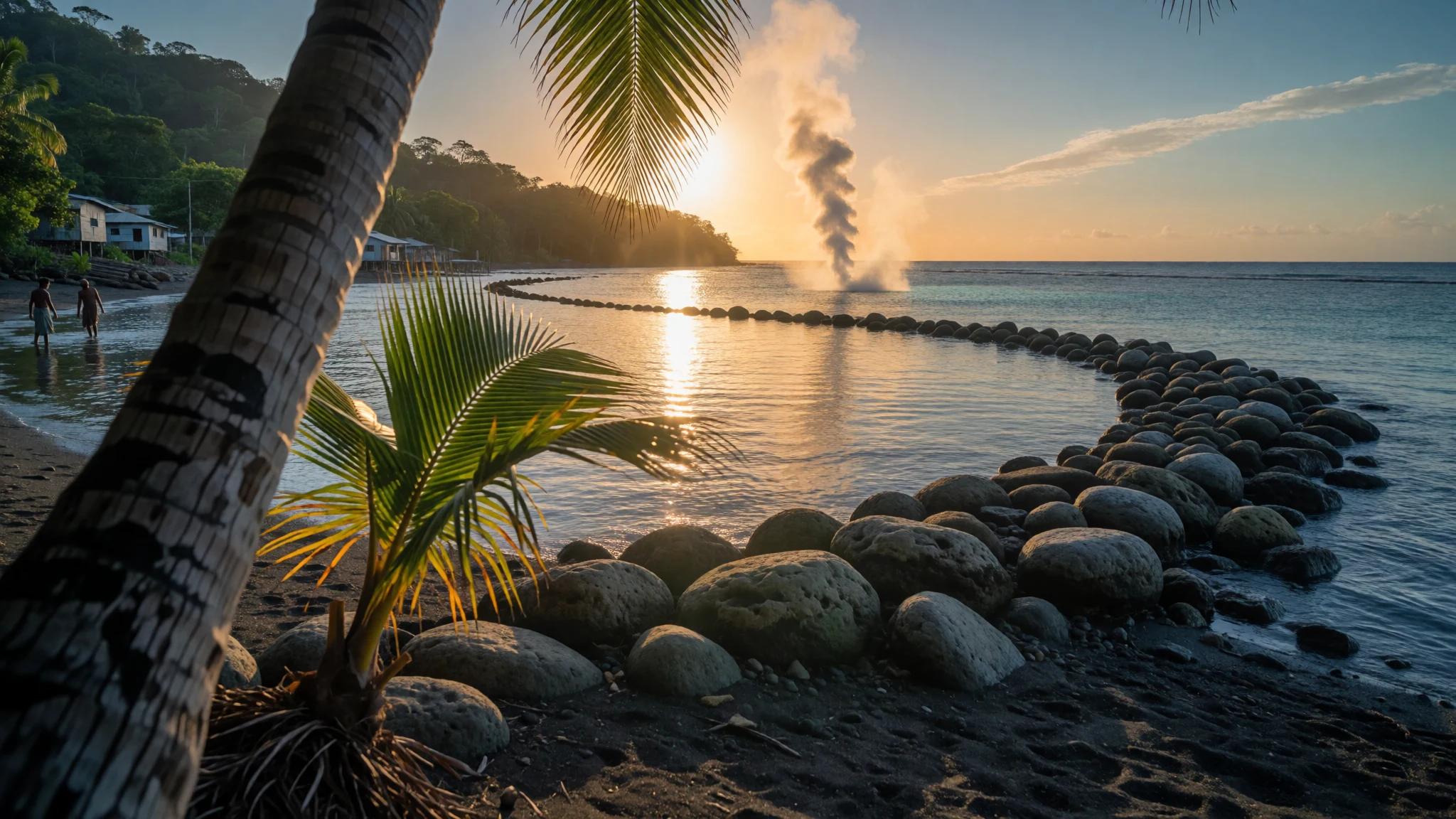
Kavachi, a restless submarine volcano in the Solomon Islands, keeps raising an island and losing it again, and is best admired from afar.
The place
Kavachi is a volcano that mostly hides. Its summit sits about 20 m below the surface of the sea south of Vangunu Island, in the New Georgia group of the Solomon Islands. What shows from a boat is usually a stain of discoloured water, a drift of steam or, on a lively day, a burst of ash and glowing rock. The cone is broad rather than tall. A survey in 2000 mapped it rising from roughly 1,100 m of water, with a base about 8 km across, so nearly all of it is out of sight. The name belongs to a sea god in the beliefs of New Georgia islanders, and a local nickname translates as "Kavachi's oven", which suits a vent that keeps reheating itself. Since the first recorded eruption in 1939, the volcano has built an island above the waves at least eight times, only for the sea to wear it down again. An island seen one year may be gone the next. The honest travel advice is that Kavachi is something to know about and watch from a long way off, not a place to land. Eruptions are unpredictable and the water around the vent can be dangerous. Most people meet the volcano through satellite pictures, a conversation in a village, or a boat trip that keeps a respectful distance. The real journey happens in the nearby lagoons, reefs and villages, which are remote. Expect domestic flights, boat transfers and plans that bend to the weather.
Its story
Kavachi's story belongs partly to a volcano and partly to the people living beside it. Melanesian people have lived in the Solomon Islands for thousands of years. Papuan-speaking settlers came first, followed by Austronesian speakers who brought the outrigger canoe, and later by the Lapita, makers of distinctive decorated pottery who crossed from the Bismarck Archipelago. Over such a long span, islanders of the New Georgia group watched the sea off Vangunu boil and steam, and tied the place to a sea god. The first European to reach the islands was the Spanish navigator Álvaro de Mendaña de Neira, sailing from Peru in 1568. Missionaries began arriving in the middle of the nineteenth century, and their early efforts were hampered by blackbirding, the forced or deceitful recruitment of islanders to work on plantations in Queensland and Fiji, which provoked reprisals and killings. The scientific record of the volcano is far shorter. Its first recorded eruption came in 1939, and since then it has repeatedly pushed an island up and lost it again. In May 2000 an international team aboard the Australian research vessel Franklin fixed the vent's position and found it still below the surface, although eruptions were hurling lava some 70 m into the air and steam as high as 500 m. Today satellites do much of the watching, and their images of pale plumes spreading across the sea are how most of the world sees Kavachi.
What to see
- Kavachi's plume, from a distance — Waters south of Vangunu Island
The vent is the reason for the whole journey, but it is best watched from well back. On calm days the sea above the cone can turn pale and cloudy, and active spells send up steam or ash. Ask a local boatman or lodge whether an outing is sensible, and treat their answer as final.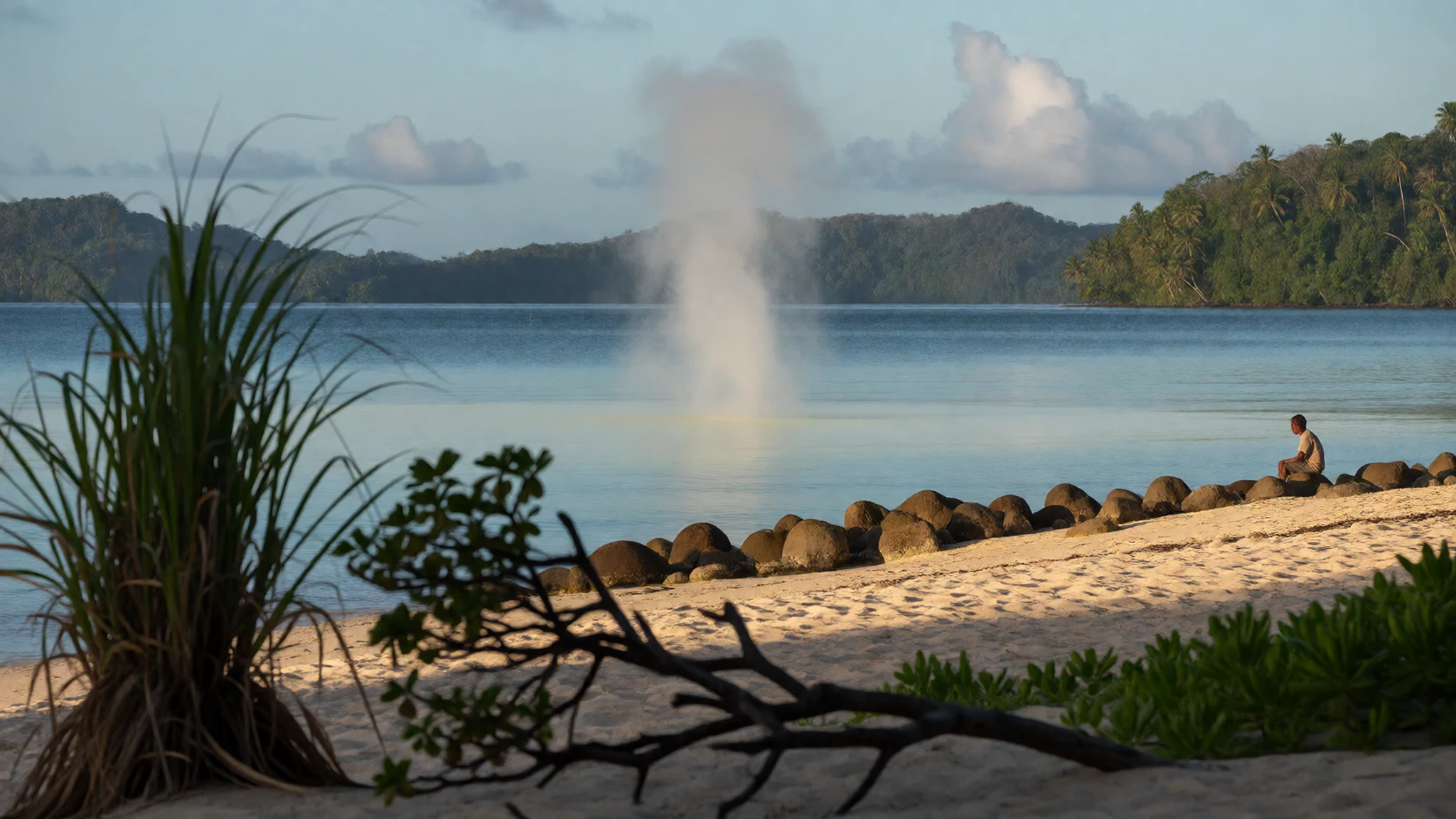
- Vangunu Island coast — Vangunu Island, New Georgia group
Vangunu is the island nearest the volcano, a forested piece of the New Georgia group with small villages along its shore. Visits work through the community, so arrange a homestay or guide in advance, ask about landowner permission and expect simple facilities. The rewards are slow village life, reef and forest, with Kavachi out beyond the horizon.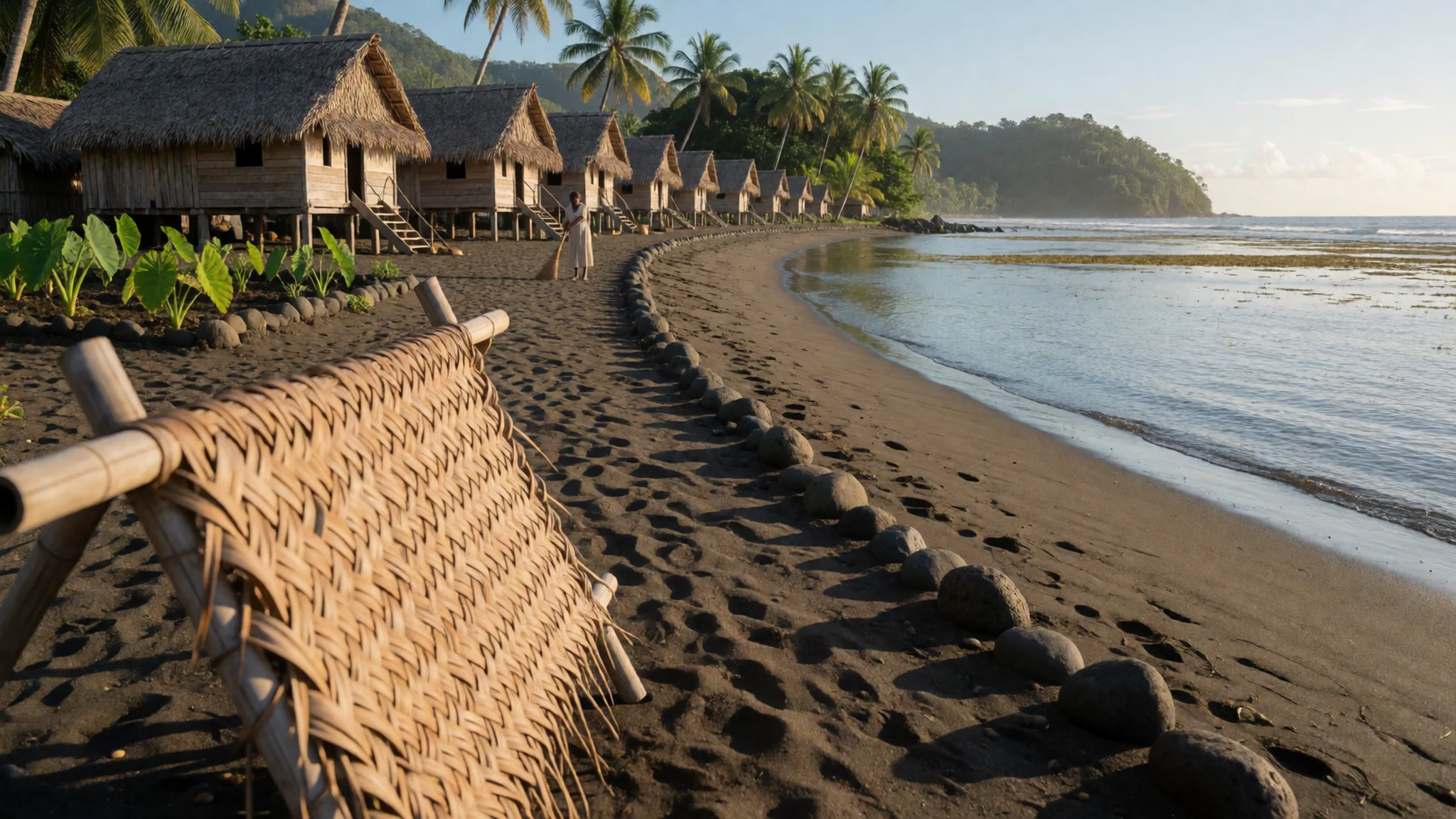
- Skull Island — Lola Island area, Western Province
Skull Island is a tiny islet reached from Lola Island in the Western Province lagoons. It holds a shrine to chiefs defeated in old raids and offers a way into the region's headhunting past. The area is sacred to local people, so go with a local guide, ask before photographing and follow instructions about where to step.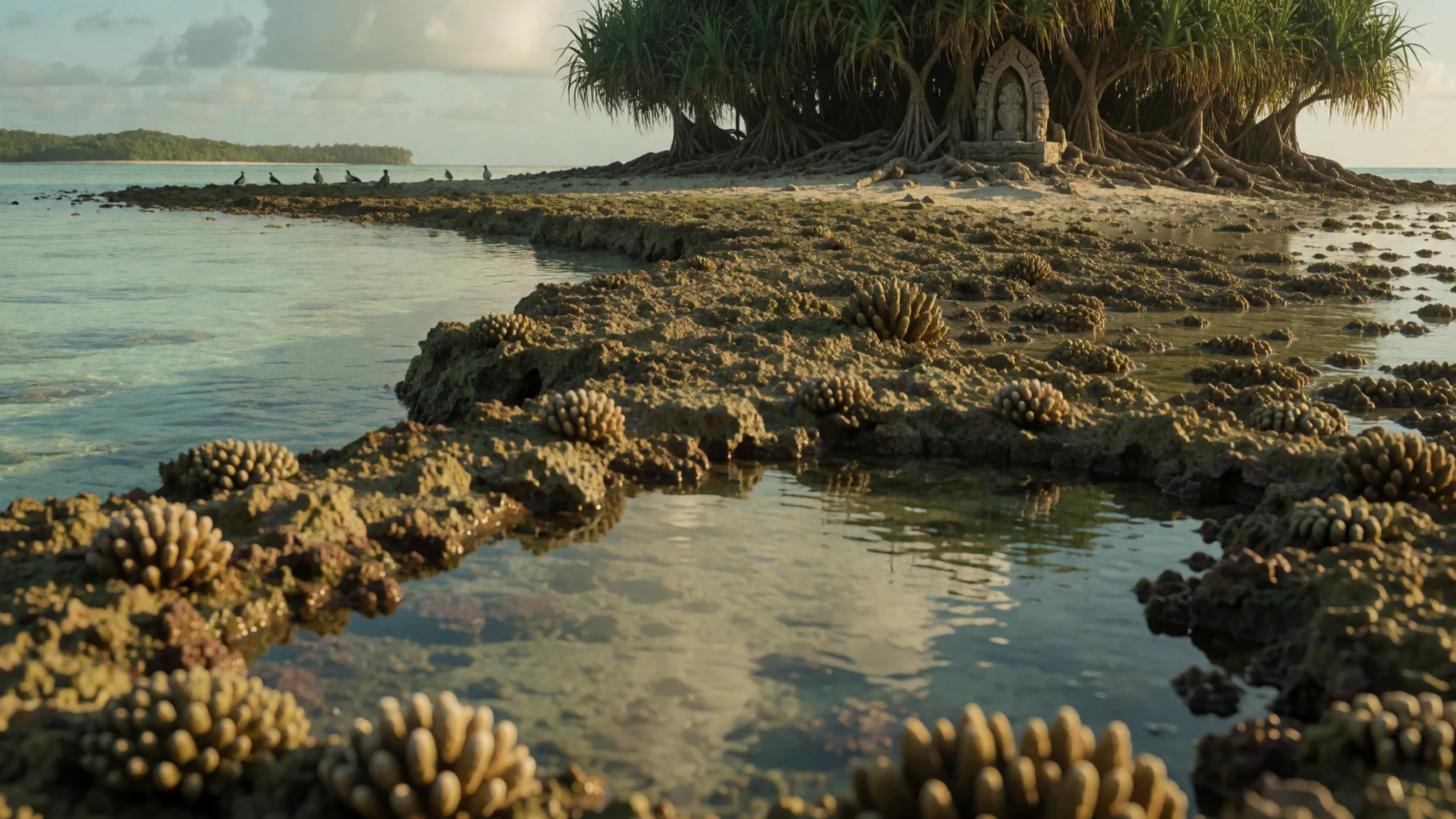
- Langa Langa Lagoon — Malaita Island
Langa Langa Lagoon on the Malaita coast has brown rather than turquoise water, and the pace of life matches its calm. Families make traditional handicrafts, and canoes glide across the surface. The lagoon is also known for artificial islands built from stones and coral, some centuries old, with new ones still being made.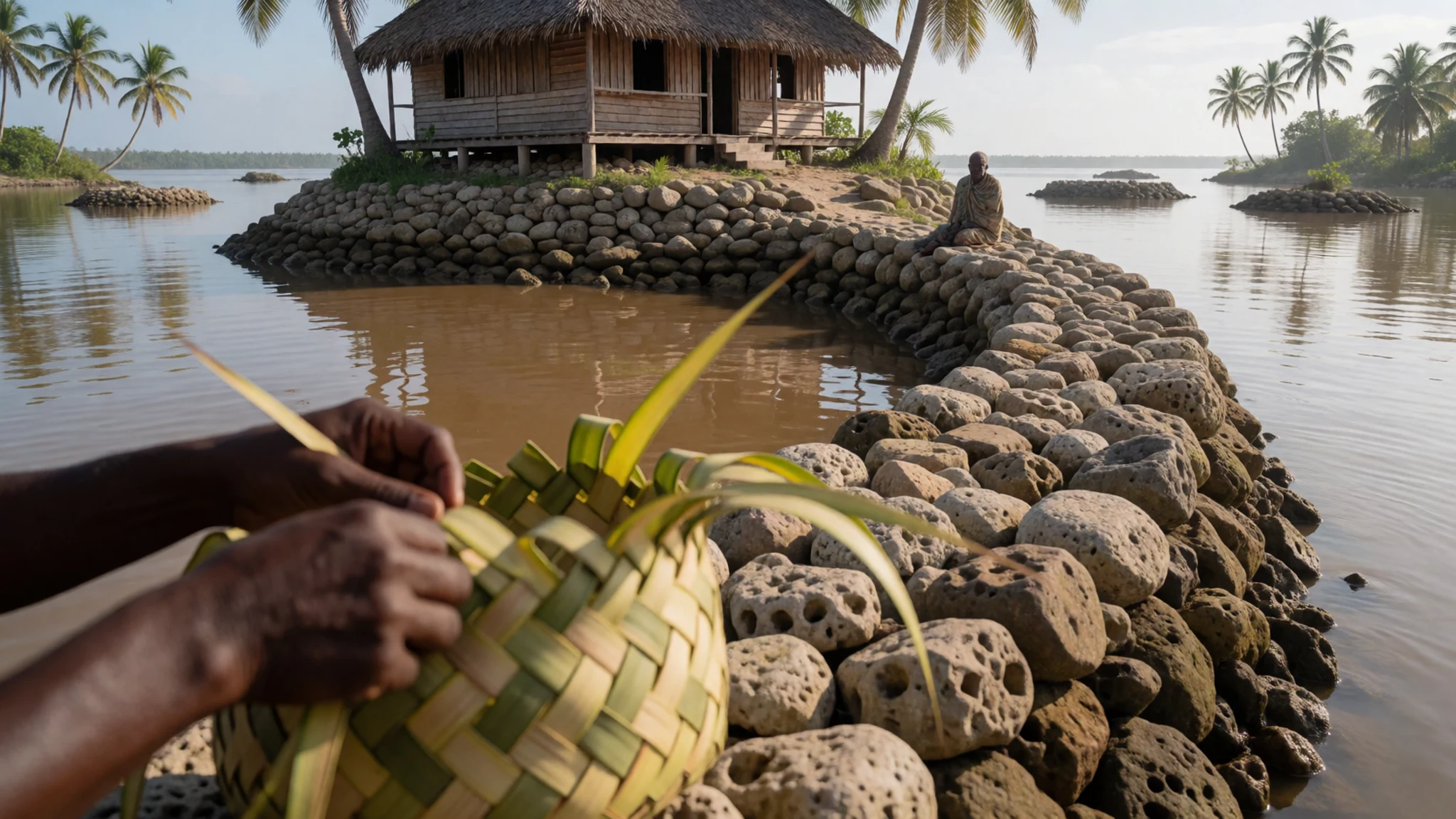
- Mataniko Falls and Honiara war sites — Honiara, Guadalcanal
Near Honiara, a path leads to Mataniko Falls, where caves below the water served as hiding places for soldiers in the Second World War. The capital also has the National Museum and Culture Centre. Tanks, aircraft wrecks, guns and shipwrecks from the Pacific War survive on land and underwater around the islands.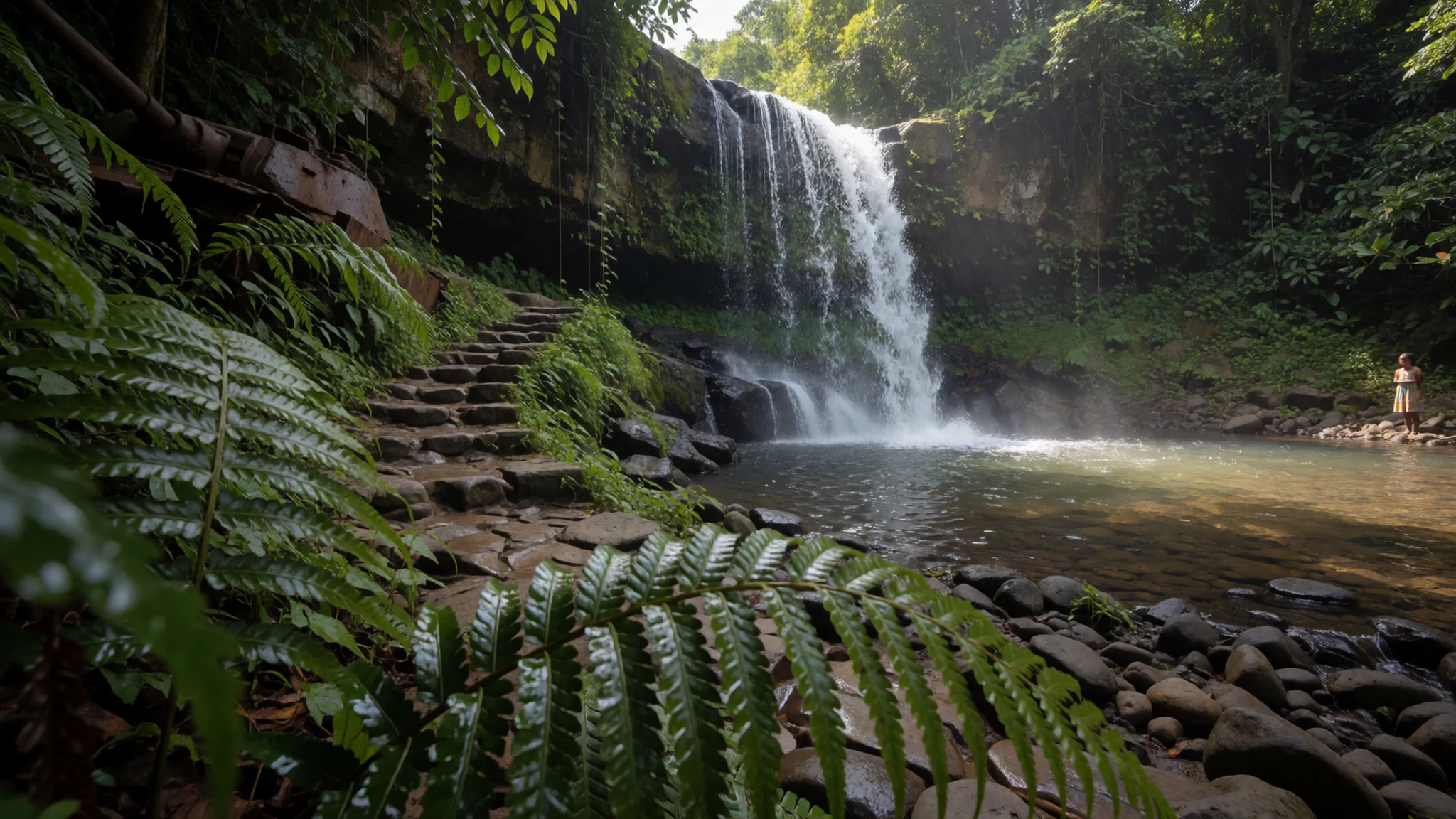
Culture
Kavachi lies in waters that belong, under custom, to the communities of the New Georgia islands, and that shapes how a visitor behaves more than any rulebook. Solomon Islands society is varied, and customs differ between islands, clans and villages. Two Pijin words explain a great deal. Kastom refers to traditional customs and accepted practices, while wantok describes the duties connecting relatives, tribe members, and those who share a common language or local community. Both remain central to village life, so a favour or a gift is often part of a longer relationship rather than a single transaction. Land, reef and shoreline are commonly held by families or clans, which means a beach that looks empty may not be open to anyone who wanders onto it. Guides and hosts act as the bridge: they know whom to ask and whether a kastom fee is expected for crossing land or landing on an island. Sacred places, graves and ceremonial objects are part of everyday geography, and the volcano's own name, tied to a sea god, shows that the sea carries meaning too. Patience helps, because boats, flights and plans shift with weather and local obligations. Before entering a village, landing on a beach or photographing a person, a home or a shrine, ask your host to introduce you to the chief or landowner and wait for their permission.
What to wear
Fashion around Kavachi is shaped by heat, water and kastom more than by trends. Traditional dress differs from island to island and is mostly kept for ceremonies, dances and festivals, with wrapped cloth or plant-fibre skirts and ornaments of shell, beads and carved wood. Shell valuables carry meaning as gifts and as wealth. In everyday life, village clothing is usually light cotton: wraparound cloths known as lavalava or sulu for men and women, loose dresses for women, T-shirts, shorts and football shirts, with sandals or bare feet. In Honiara, office shirts and ordinary western clothes are common. Visitors should dress for sun, rain and modesty. Pack light, quick-drying cotton or linen that covers shoulders and knees for village visits, and carry a sarong that works as a cover-up, a towel and a shade. Swimwear belongs at resorts and designated swimming beaches, not in villages. Bring a wide-brimmed hat, a light rain jacket, reef shoes for coral and slippery shingle, and sturdy sandals or trail shoes for forest paths. Long sleeves and a rash vest protect against sun on open boats, where hours of exposure add up quickly.
What to eat
- Tuna with rice or chilli — Small eateries and market stalls in Honiara and the Western Province towns
Tuna is an important catch and export, and local eateries often serve it with rice or pasta and a kick of chilli. Fresh fish is the best order near the coast. Further inland, shop shelves lean heavily on tinned fish and meat.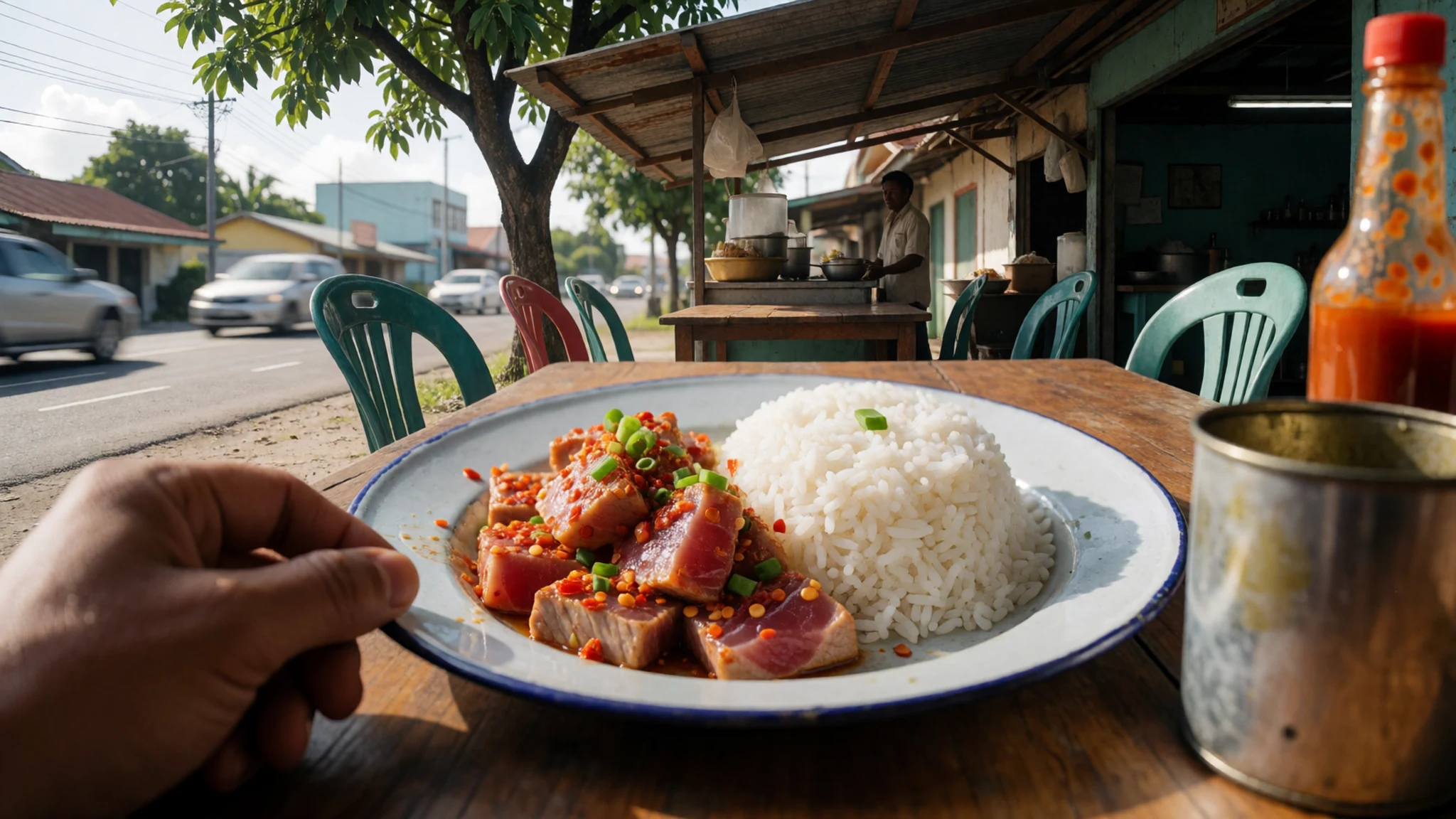
- Taro and poi — Village meals and homestays
Taro is a staple root across the South Pacific, and poi, a fermented taro preparation, belongs to the regional table. It turns up mostly at village meals, often beside fish or greens. Accept what a host offers with thanks.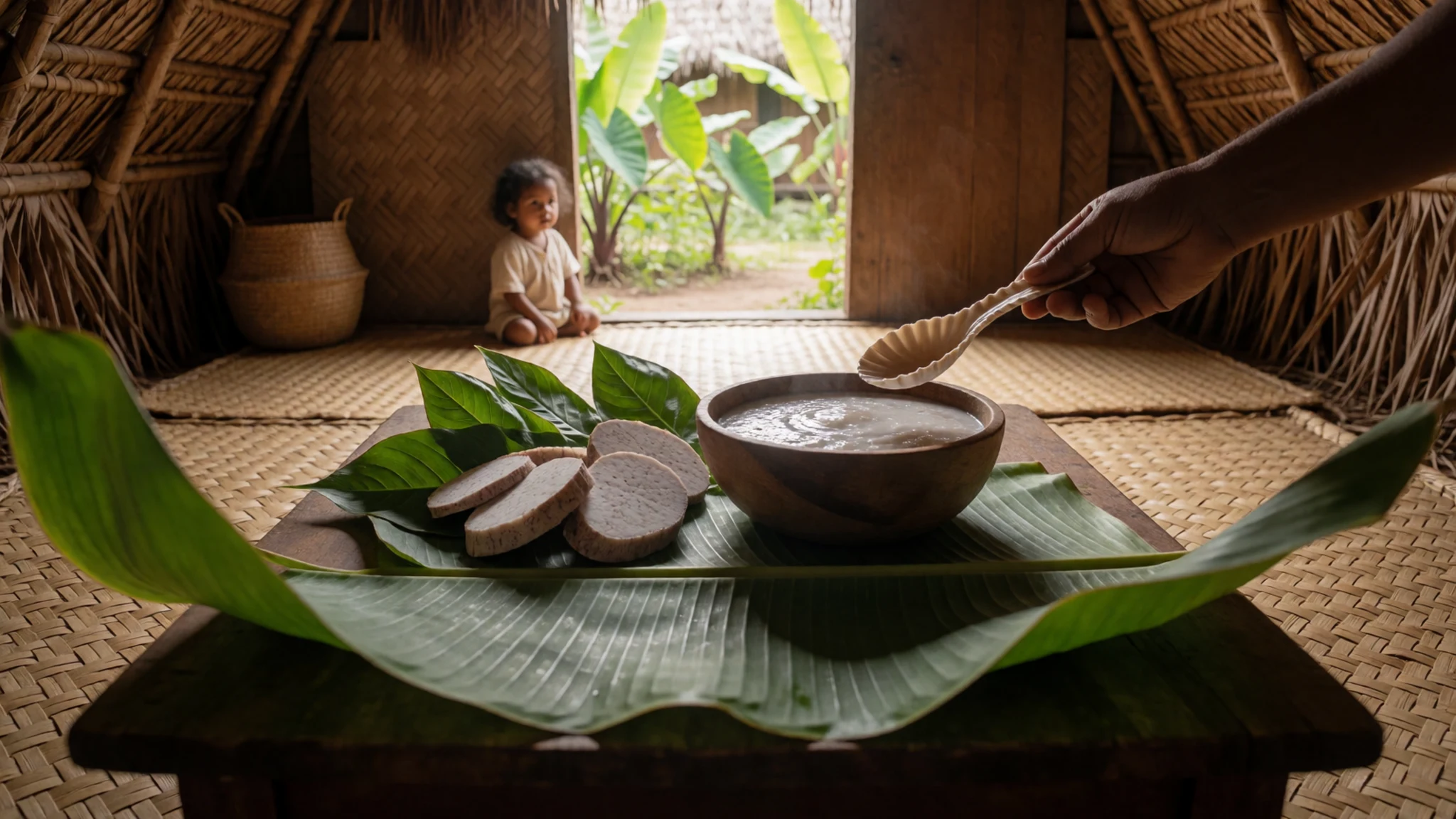
- Cassava — Town markets and village homestays
Cassava is an important source of starch here, usually boiled or baked as a filling side. It is sturdy fuel for a day of walking or paddling, and it appears in sacks at markets and on the plate in simple eateries. - Tropical fruit — Honiara's central market and roadside stalls
A pile of tropical fruit is the easiest snack on the islands, bought from market tables in whatever is in season. Ask what is ripe rather than expecting a fixed list, and wash or peel it with safe water. - Solbrew beer — Bars and shops in Honiara; ask hosts before taking it to villages
Solbrew is the local brewery, based near the capital. A cold bottle is a common reward after a long boat day, though some households and villages do not drink, so ask before bringing alcohol into a community.
Plan it
Best time. Roughly May to October, the drier months, when seas are generally calmer and boat journeys easier. November to April is hotter, wetter and more exposed to storms. The volcano erupts unpredictably, so no season guarantees anything to see.
How long. 4–6
Getting there. Fly to Honiara's international airport on Guadalcanal, then take a domestic flight to the Western Province (Gizo or Munda) and a boat on to the New Georgia islands near Vangunu. Your lodge or guide usually arranges the last leg.
Budget. high
Tips
- Book domestic flights and boat transfers well ahead and keep a spare day, as weather and schedules shift.
- Carry cash in small notes for villages, markets and boat contributions; cards are mainly useful in Honiara.
- Check visa rules before booking: UK passport holders can get a visa on arrival, EU citizens need none, and Indian passport holders should confirm with the Solomon Islands authorities.
- Bring drinking water, sun protection and insect repellent, as shops outside the capital stock little beyond basics.
- Avoid travelling after dark, especially in Honiara, and if an earthquake strikes near the coast, move to higher ground at once.
Etiquette
- Ask your host or guide before entering a village, landing on a beach or following a trail, and ask whether a kastom fee is expected.
- Ask before photographing people, homes, graves, ceremonies or sacred places.
- Dress modestly away from resorts and designated swimming beaches.
Nearby
Sources
- Wikidata Q987676 (CC0)
- Wikipedia: Kavachi (rev 1365070377) (CC BY-SA 4.0)
- Wikivoyage: Solomon Islands (rev 5392304) (CC BY-SA 4.0)
- Photo: Kavachi Eruption, Alex DeCiccio (CC BY-SA 4.0)
- Photo: Kavachi Eruption 2, Alex DeCiccio (CC BY-SA 4.0)
- Photo: Kavachi Volcano, S of Vangunu Island, 11 Dec 2022, Pierre Markuse (modified Copernicus Sentinel data) (CC BY 2.5)
- Photo: Submarine activity of the Kavachi Volcano, 14 February 2023, Pierre Markuse (modified Copernicus Sentinel data) (CC BY 2.5)


