Tetepare
Tetepare, Solomon Islands
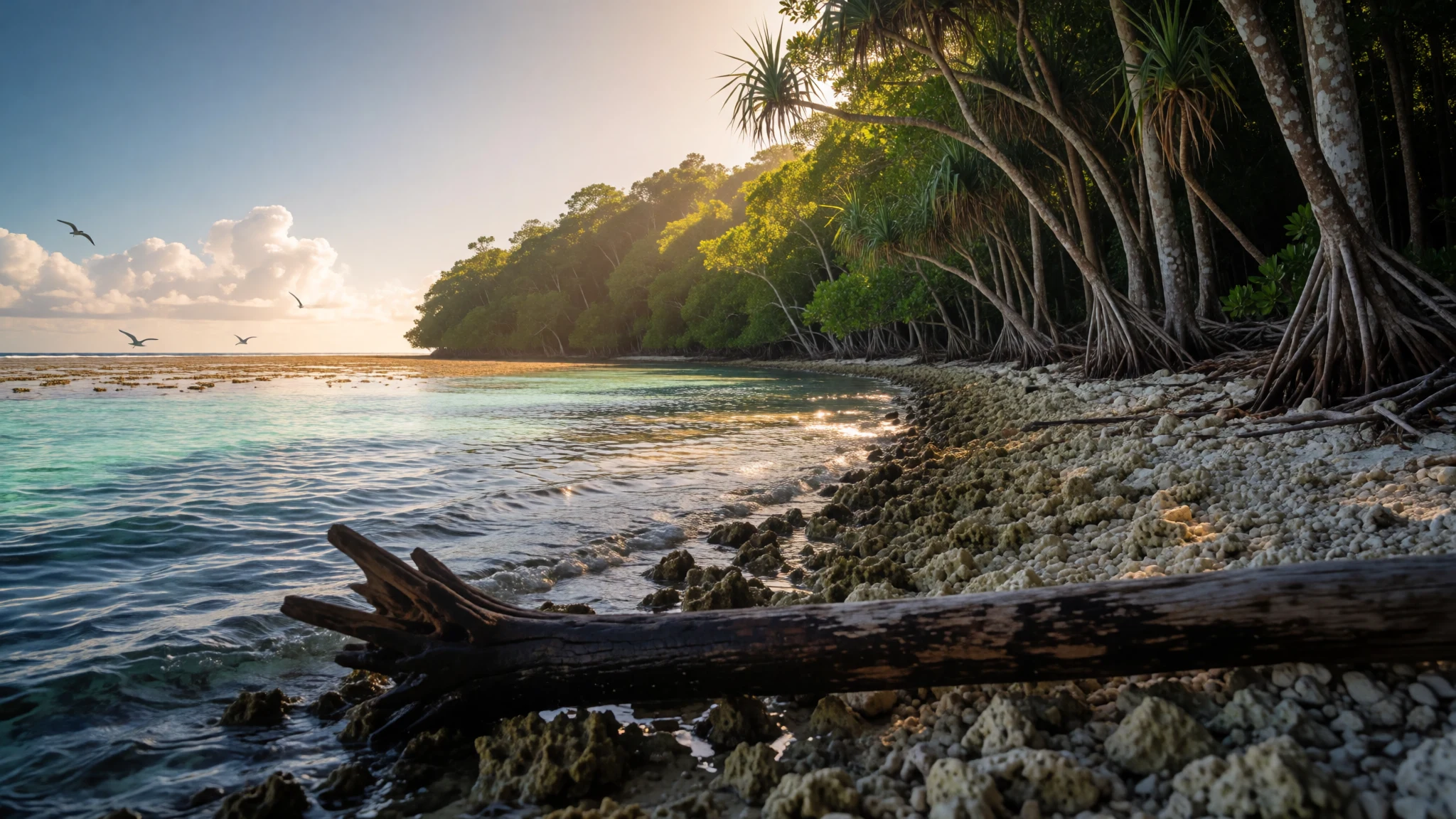
Tetepare is a largely empty rainforest island in Solomon Islands, where lowland forest and a rich reef reward patient travellers.
The place
Tetepare is a limestone island in Western Province, Solomon Islands, and its appeal comes from what has been left alone. Lowland rainforest covers the land, and the inshore sea around it is rich in marine life. Conservation specialists have long marked it as an area of high biodiversity, which is why most people who reach it come for forest walks and snorkelling rather than for beaches with beds and bars.
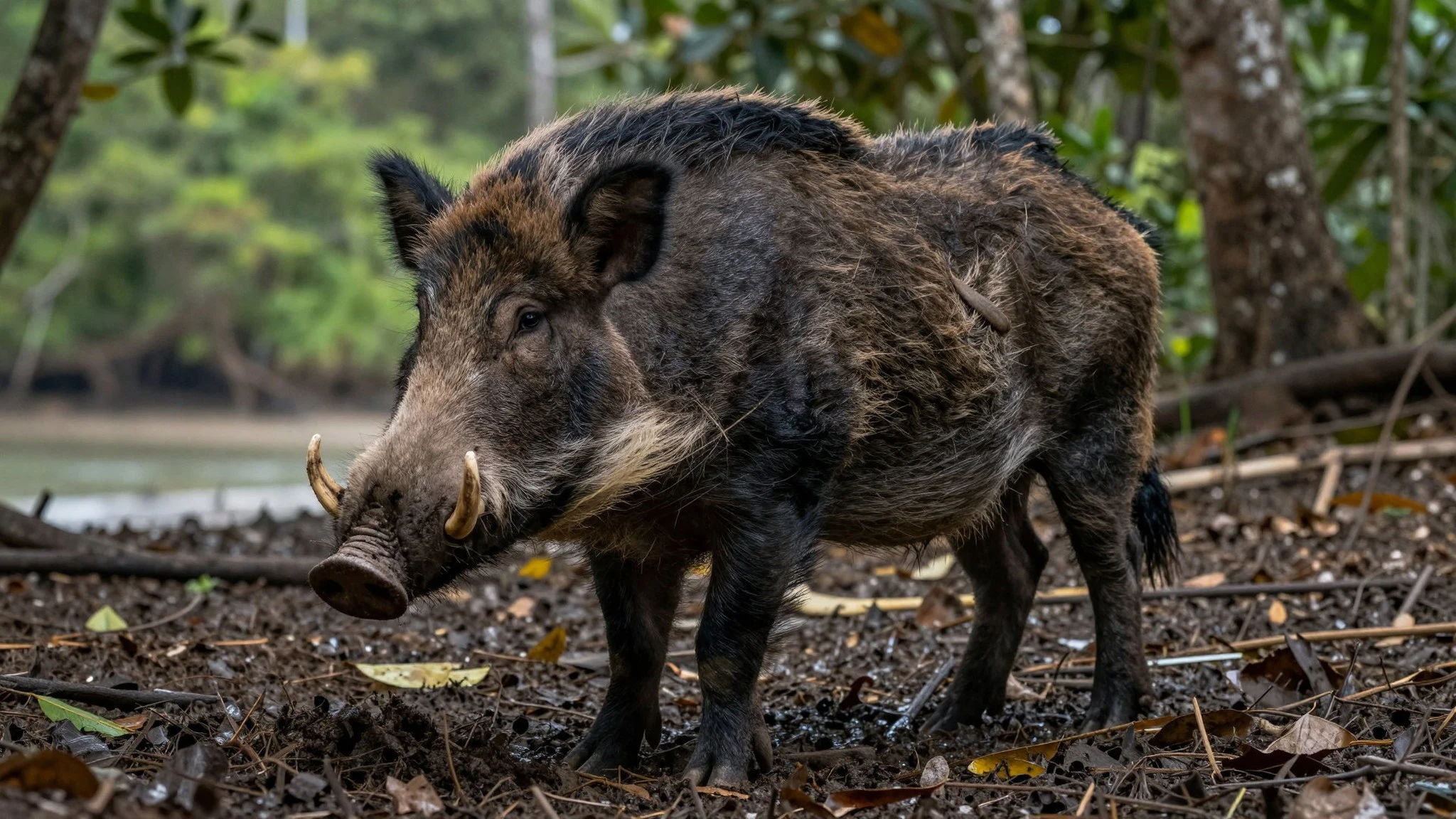
The name has no certain meaning. The likeliest reading is ‘wild pig’ or ‘fighting boar’, a reference to the animals that gave the island a reputation across the surrounding region, and which remain part of its character.
Nobody lives here in the way villagers live on nearby Rendova or New Georgia. The earlier community appears to have been a distinct group with its own language and traditions, but it left in the middle of the nineteenth century and the details are patchy. That absence gives the island an unusual feel: wild country that is also somebody's ancestral ground.
At the western tip stand the remains of a coconut plantation. Nobody maintains it now, and secondary forest is steadily moving back in, so a short walk there shows how fast the rainforest recovers.
Realistically, Tetepare is remote and simple. Facilities are minimal, the weather and tides set the timetable, and the air is hot and humid for much of the year. Travellers who want comfort and nightlife will be happier on other islands. Those who enjoy a forest full of sound and a quiet reef, and who accept a long journey to get there, tend to find the effort worthwhile.
Its story
Tetepare's human story is told mostly through gaps. People have lived in the Solomon Islands for thousands of years, arriving in waves: Papuan-speaking settlers first, then Austronesian speakers who brought the outrigger canoe, and later the Lapita, makers of distinctive decorated pottery. Where the islanders of Tetepare fit into that sequence is not recorded, though traces of their own language and customs survive.
Like their neighbours on Rendova and New Georgia, they seem to have farmed by clearing small plots and moving on as the soil tired, and to have taken heads in raids from time to time. By the middle of the nineteenth century the island had been abandoned, and its families scattered to New Georgia, the Roviana and Vona Vona lagoons, Nggatokae and Ranongga.
That was a violent period across the region. Labour recruiters, known as blackbirders, took people by force or trickery to work on plantations in Queensland and Fiji, which provoked reprisals and massacres. In time the United Kingdom declared a protectorate over the southern Solomons. Records do not say how far these pressures explain the emptying of Tetepare.
Early in the twentieth century a coconut plantation was cleared at the western tip. It declined after the Second World War, when heavy fighting between American and Japanese forces swept through the Solomons, and eventually all upkeep stopped. Secondary forest now covers much of the old clearing.
Today the island's story is one of recovery rather than settlement. The official site, tetepare.org, is the place to check how Tetepare is looked after now and how visits are arranged.
What to see
- Lowland rainforest — Interior and coast, Tetepare
Tetepare's lowland rainforest is the main reason to come: dense forest that reaches close to the shoreline and is loud with birds and insects at dawn. Walk it with someone from the island's management who knows the trails and the landowners' wishes. Expect heat, mud and slow going, and watch for the wild pigs that gave the island its name.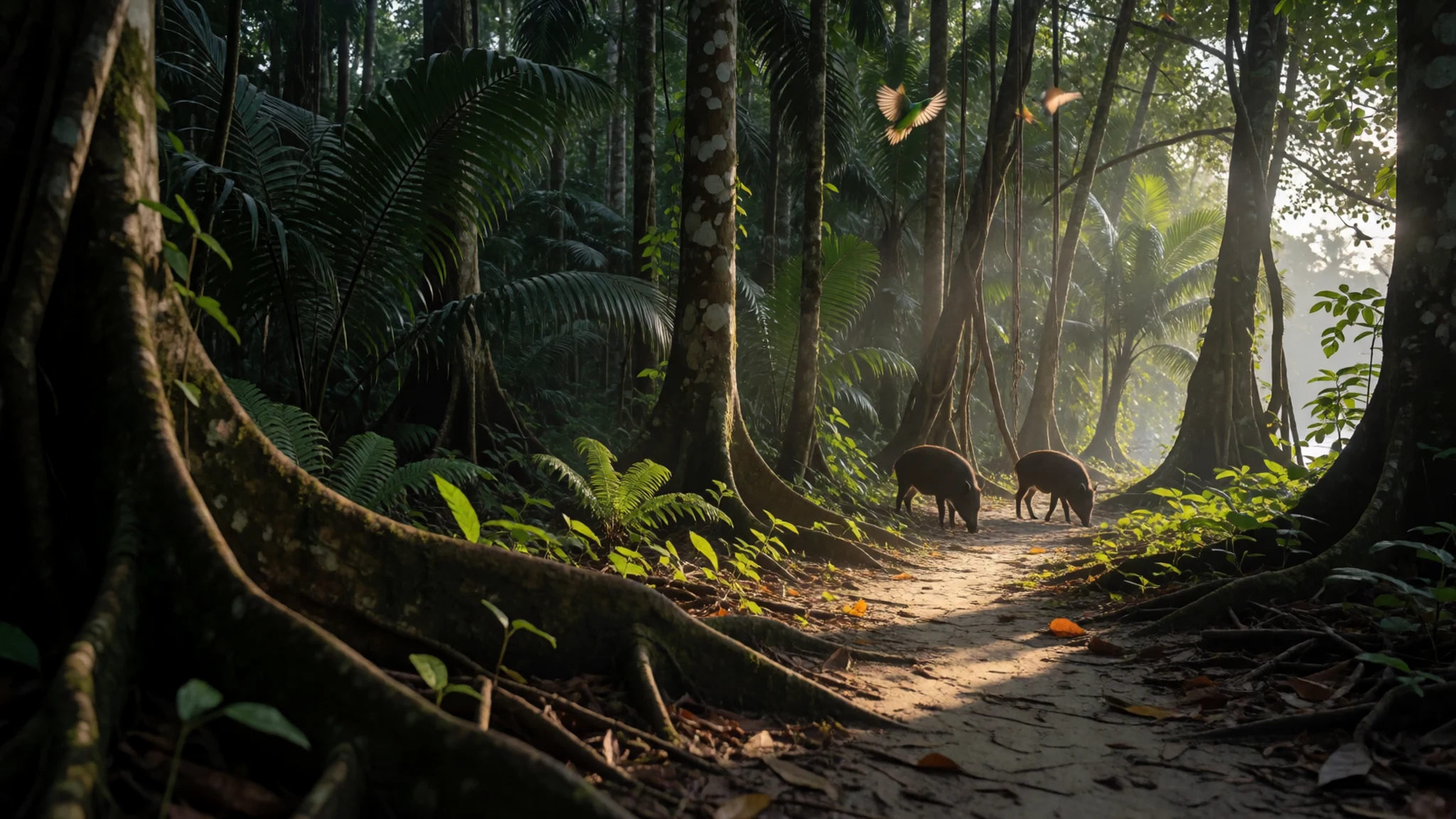
- Inshore reefs — Coastal waters, Tetepare
The inshore sea around Tetepare is described as rich, and snorkelling over the shallow reef is the simplest way to see why. Conditions shift with tide and weather, so go with a boat operator who knows the water. Reef shoes and a long-sleeved swim top help, because the sun is strong and there is little shade on the water.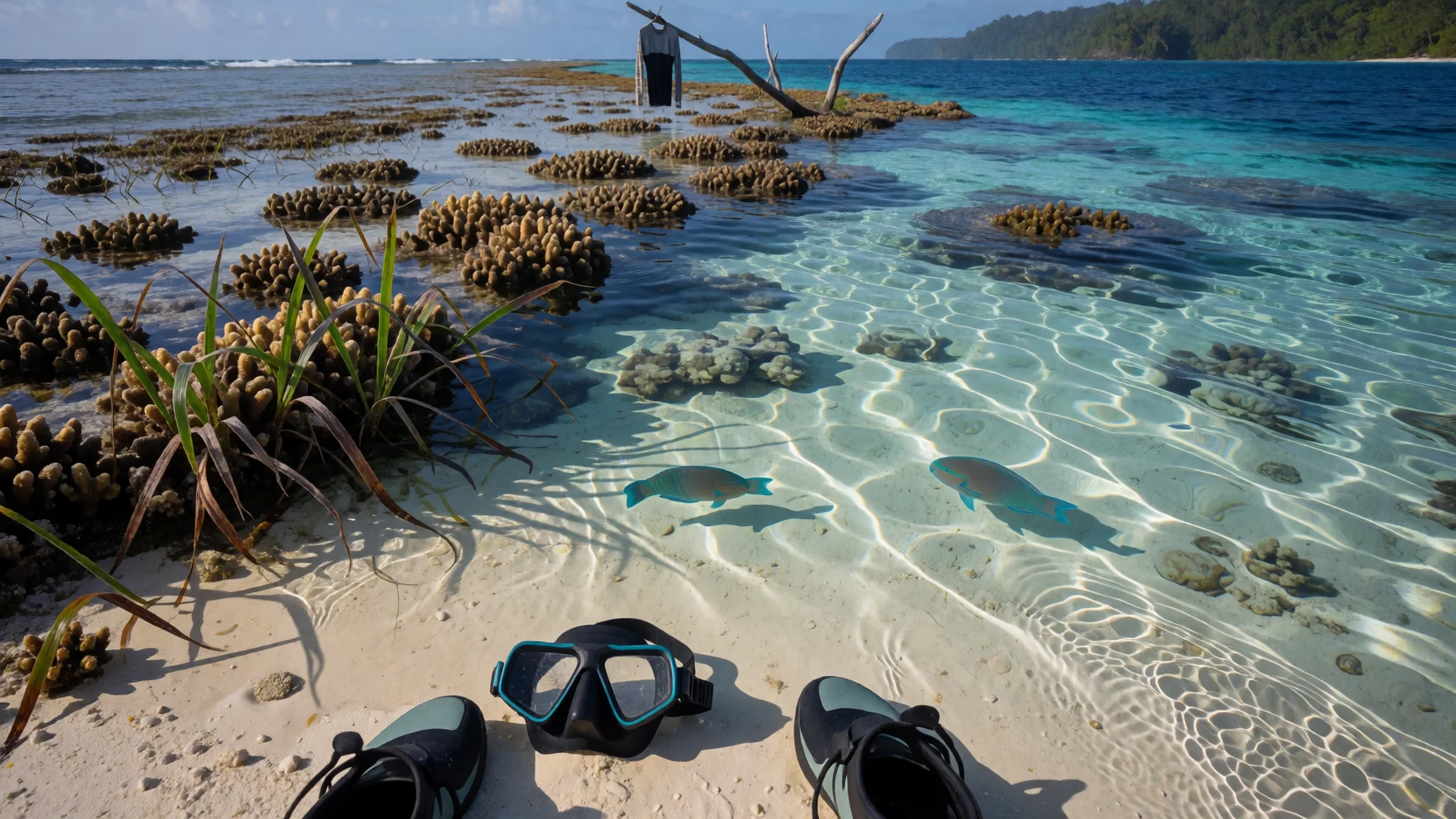
- The old plantation at the western tip — Western tip, Tetepare
At Tetepare's western tip, an abandoned coconut plantation is slowly turning back into forest. Palms stand among younger secondary growth, which makes it a clear place to see how quickly land recovers once upkeep stops. Ask permission and take a guide before wandering, as the ground belongs to its landowners and the footing can be uneven.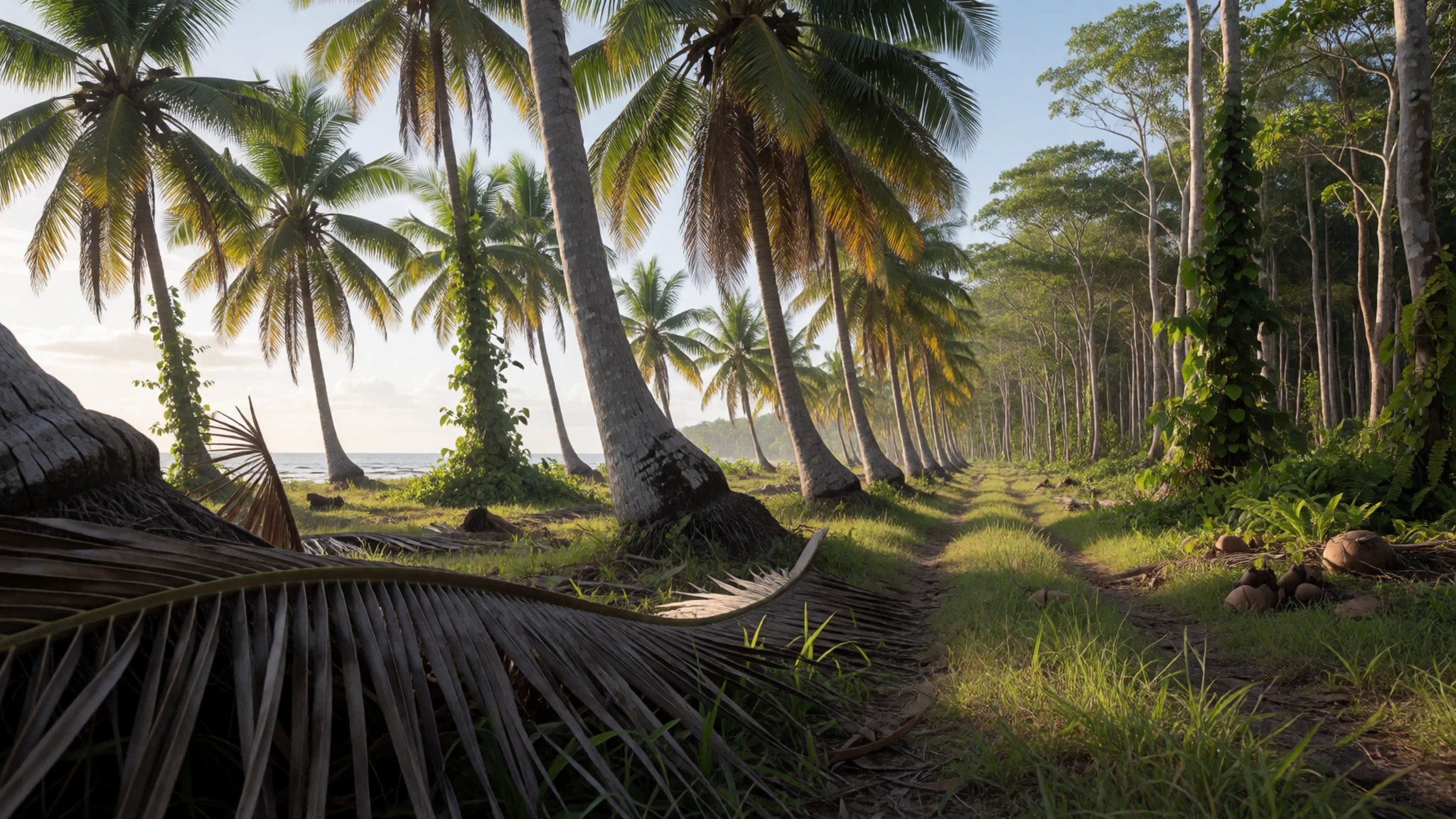
- Skull Island — Lola Island area
Skull Island is a tiny islet reached from Lola Island, an area regarded as sacred in the Solomons. It is visited by tourists and gives a sober look at the history of headhunting, with a shrine holding the skulls of defeated Rendovan chiefs. Go with a local guide, ask before taking photographs, and treat it as a shrine rather than a curiosity.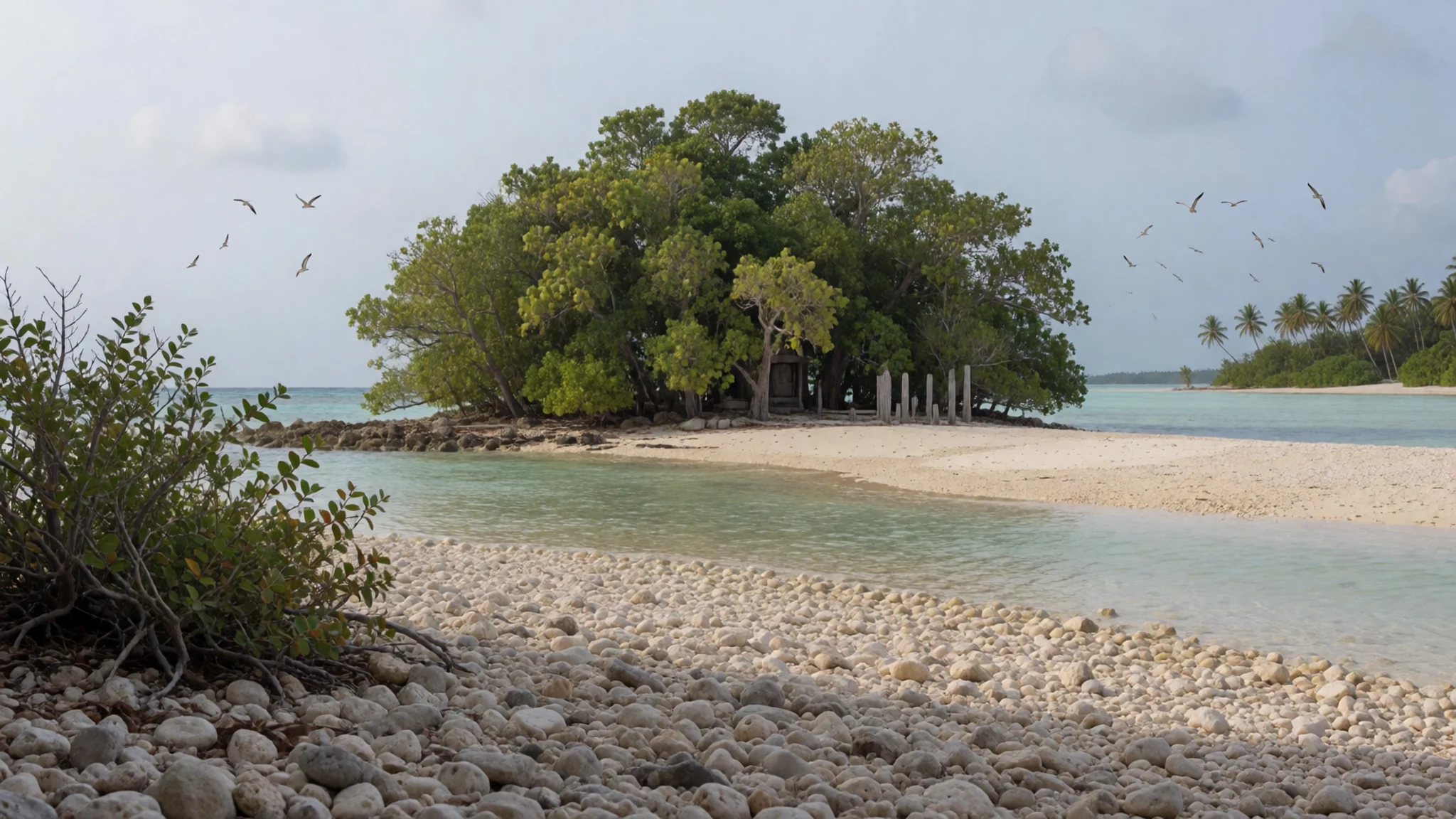
- Pacific War relics — Across the Solomon Islands
Tanks, plane wrecks, shipwrecks and guns from the Pacific War can still be seen on land and underwater across the Solomon Islands. Tetepare itself is not known for them, so ask local operators which sites are within reach from Western Province. Divers and snorkellers should go with a guide who knows the currents and the wrecks.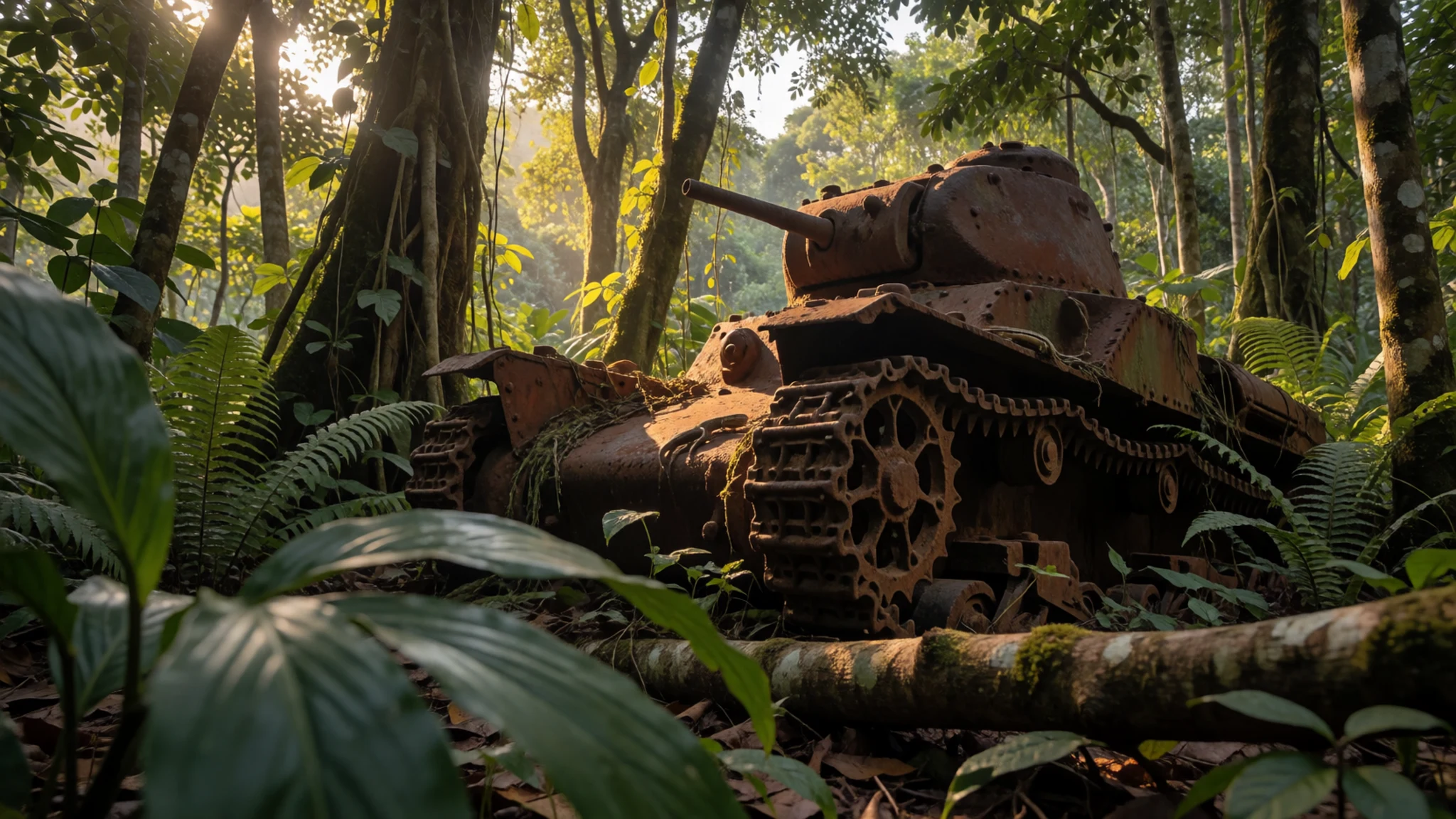
- Mataniko Falls, near Honiara — Honiara, Guadalcanal
Near the capital, Honiara, the path to Mataniko Falls is an easier walk than most in the country, with caves beneath the falls that sheltered soldiers in the Second World War. The same city holds the National Museum and Culture Centre, a sensible stop for background before or after a trip to the outer islands.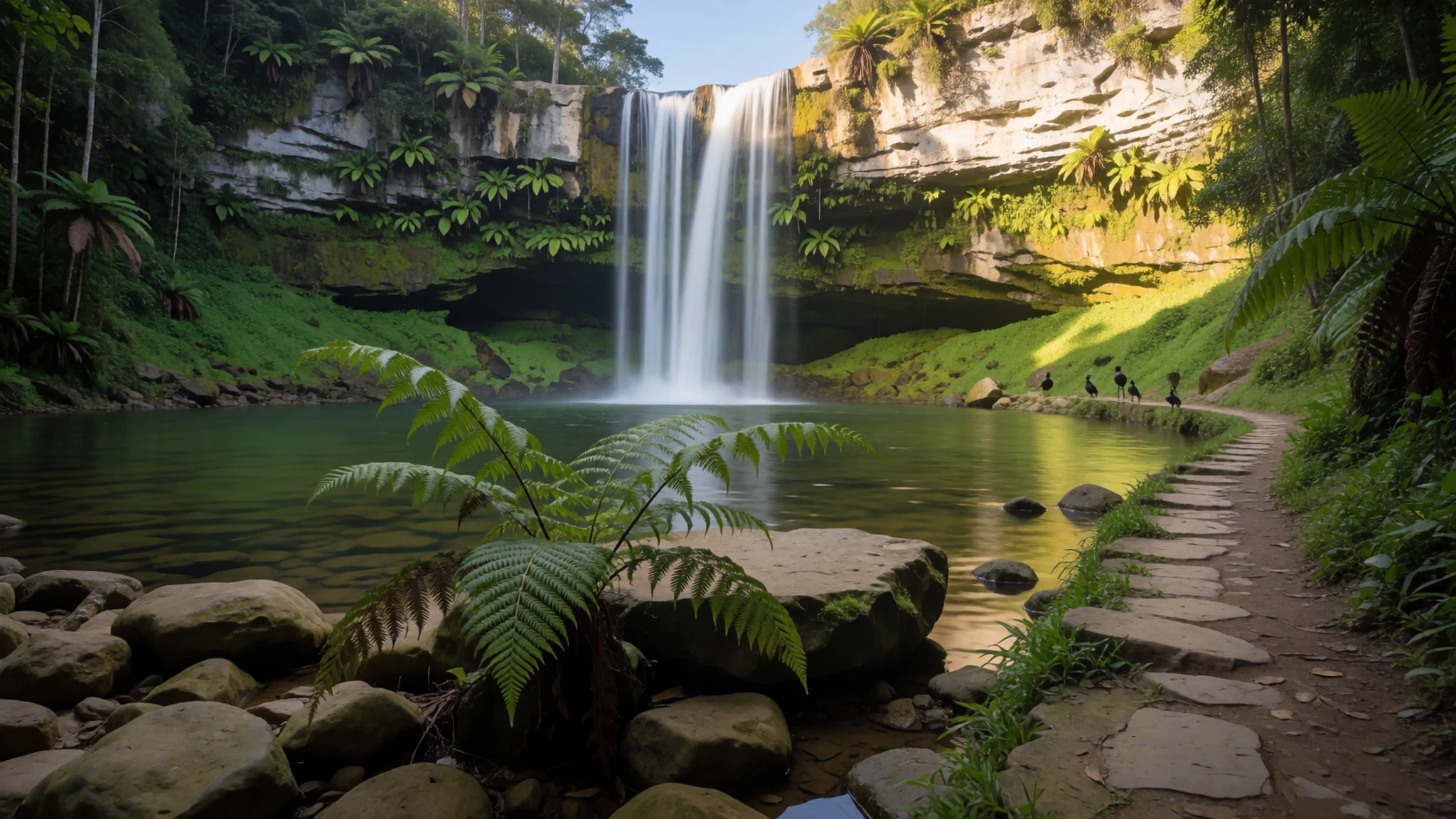
Culture
Tetepare belongs to Solomon Islands culture, which varies considerably from island to island, clan to clan and village to village. Two Pijin words explain a great deal. Kastom means traditional custom and the accepted way of doing things. Wantok describes the bonds of obligation that tie together relatives and neighbours who speak the same language or come from the same place. Both still shape land, decisions and daily life.
On Tetepare, rights over land and reef are a serious matter, and a visit involves the people with a stake in the island rather than simply a booking. Whoever arranges your stay can explain who must be asked and whether an access or kastom fee applies, and the official site, tetepare.org, is the place to start. A beach or trail that looks empty is rarely free for the taking.
Photography needs permission, above all of people, homes, graves, ceremonies and sacred or ancestral places. Somewhere that seems ordinary to a visitor may carry spiritual or historical weight, and the departure of the earlier community in the nineteenth century does not remove it. Away from resorts and designated swimming beaches, modest dress is the norm, and villages are generally quiet on Sundays.
Before landing on a beach, entering a village or following any trail on Tetepare, ask your host or guide to introduce you to the landowners, and pay any customary fee they request.
What to wear
Tetepare has no living village community to point to, and little is recorded about how its earlier people dressed. Across the Solomons more widely, traditional adornment has included shell ornaments and valuables, woven pandanus mats and baskets, and in some places bark cloth. Styles differ between islands and are mostly seen today at festivals, dances and ceremonies rather than in daily life.
Everyday clothing in the islands is light and practical. Men commonly wear T-shirts and shorts or a wraparound cloth of the kind called a lavalava elsewhere in the Pacific. Women often wear loose island dresses or wrap skirts, and rubber sandals are the usual footwear. Sunday and church occasions call for neater shirts and dresses.
For a visit to Tetepare, pack lightweight, quick-drying clothes that cover shoulders and knees, since that is the expected standard in villages and away from swimming beaches. A sarong is useful over swimwear. Bring reef shoes for the shallows, sturdy closed shoes for muddy forest trails, long sleeves and trousers against sun and insects, a hat, and a light rain jacket. Keep spare clothes in a dry bag, because boat transfers can be wet and humidity means nothing dries quickly.
What to eat
- Taro and poi — Village meals, lodges and the central market in Honiara
Taro is a staple root across the Pacific, and in the Solomons it appears boiled, roasted or pounded into poi, a fermented preparation. Expect it as the starch in a village meal or a lodge dinner, and look for taro on sale at the central market in Honiara.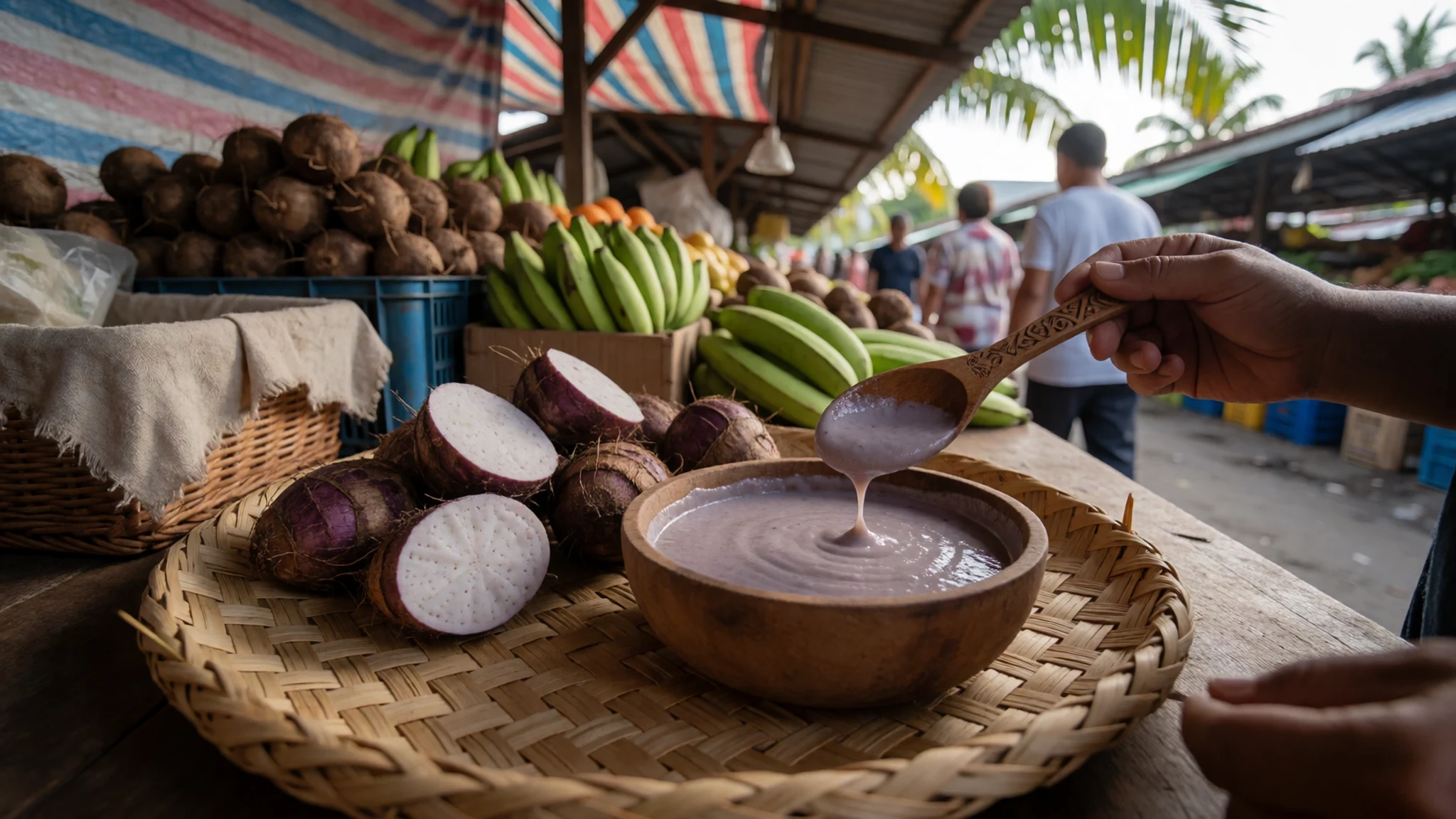
- Cassava — Village kitchens and market stalls
Cassava is another important source of starch, usually boiled or roasted until soft and served alongside fish or vegetables. It is filling, plain and cheap to prepare, and turns up wherever a cooked meal is shared in the outer islands.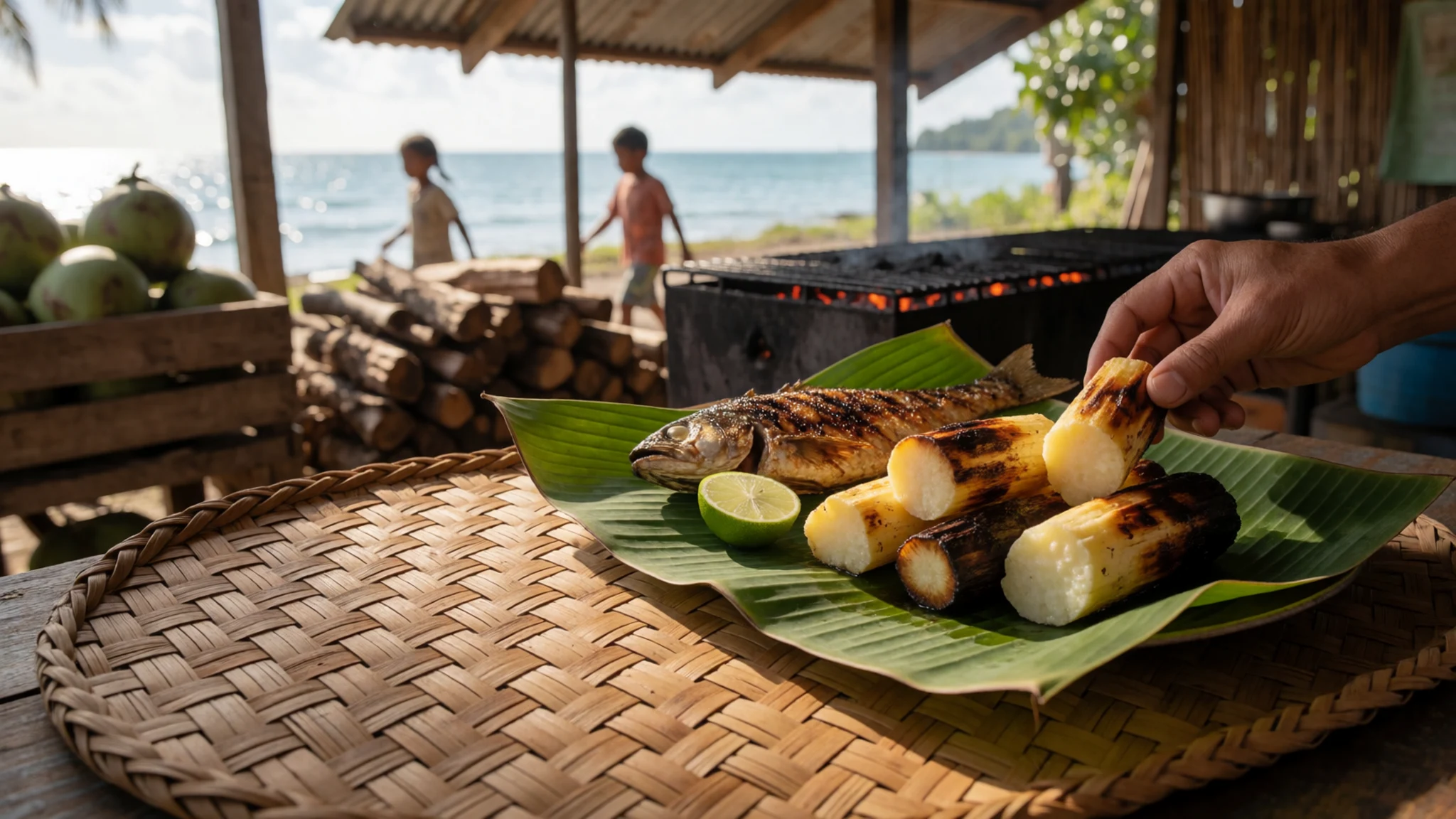
- Tuna with rice or chilli — Village meals, lodges and basic eateries
Tuna is caught in these waters and is a major export, so it is often on the plate, typically with rice or pasta and a little chilli. Freshly caught fish eaten the same day is the best version, and the simplest meals are often the most memorable. - Tropical fruit — Honiara's central market and roadside or village stalls
The usual mix of Pacific fruit is on offer, depending on season, along with coconuts that are opened on the spot for their water. Fruit makes a sensible snack for long boat journeys and forest walks, and is easy to buy fresh when passing a market. - Tinned tuna and spam — Small village and town shops
In many shops across the country, tinned tuna and spam are often the only protein on the shelf. Remote islands rarely have well-stocked stores, so bring your own snacks and treat tinned fish as a fallback rather than a feature of the trip. - Solbrew beer — Bars and shops in Honiara
Solbrew is the local brewery, based near the capital. Bottles are easiest to find in Honiara, in bars and shops, and are best enjoyed there. Alcohol may not be sold or welcome in remote villages or conservation areas, so ask your host before bringing any.
Plan it
Best time. May to October is generally the drier, more settled part of the year for boat journeys and snorkelling, though it stays hot and humid throughout. November to April is usually wetter and rougher at sea, so check conditions with operators before committing.
How long. 3–5
Getting there. Fly to Honiara's international airport, then take a domestic flight towards Western Province and finish with a boat transfer to Tetepare. Schedules and boat arrangements change, so confirm each leg through the official site, tetepare.org, before booking.
Budget. mid
Tips
- Arrange your visit well in advance through the official site, as access and accommodation are limited and set by the island's managers
- Carry cash and supplies, since cards and shops are scarce outside Honiara
- Bring drinking water or a way to purify it, plus insect repellent and sun protection
- Keep schedules loose: weather and sea conditions can delay flights and boat transfers
- Travel after dark is risky in Honiara, and if an earthquake strikes, move to higher ground at once
Etiquette
- Ask permission before landing on a beach, entering a village or following a trail
- Ask before photographing people, homes, graves or sacred places
- Dress modestly away from resorts and designated swimming beaches
Nearby
Sources
- Wikidata Q1136145 (CC0)
- Wikipedia: Tetepare Island (rev 1364336577) (CC BY-SA 4.0)
- Wikivoyage: Solomon Islands (rev 5392304) (CC BY-SA 4.0)
- Tetepare Island NASA.jpg (Public domain)

Wildlife
- Wild boar (animal)
A wild boar is simply a wild pig, a tough, adaptable animal that has spread across much of the world, including the islands of Oceania. On Tetepare, wild pigs are said to have given the island its name, so keep an eye out for them as you wade through the heat and mud on slow walks. Ask your guide when and where they are best seen. Keep your distance, stay quiet, and never feed them.