Tidore
Tidore, Indonesia
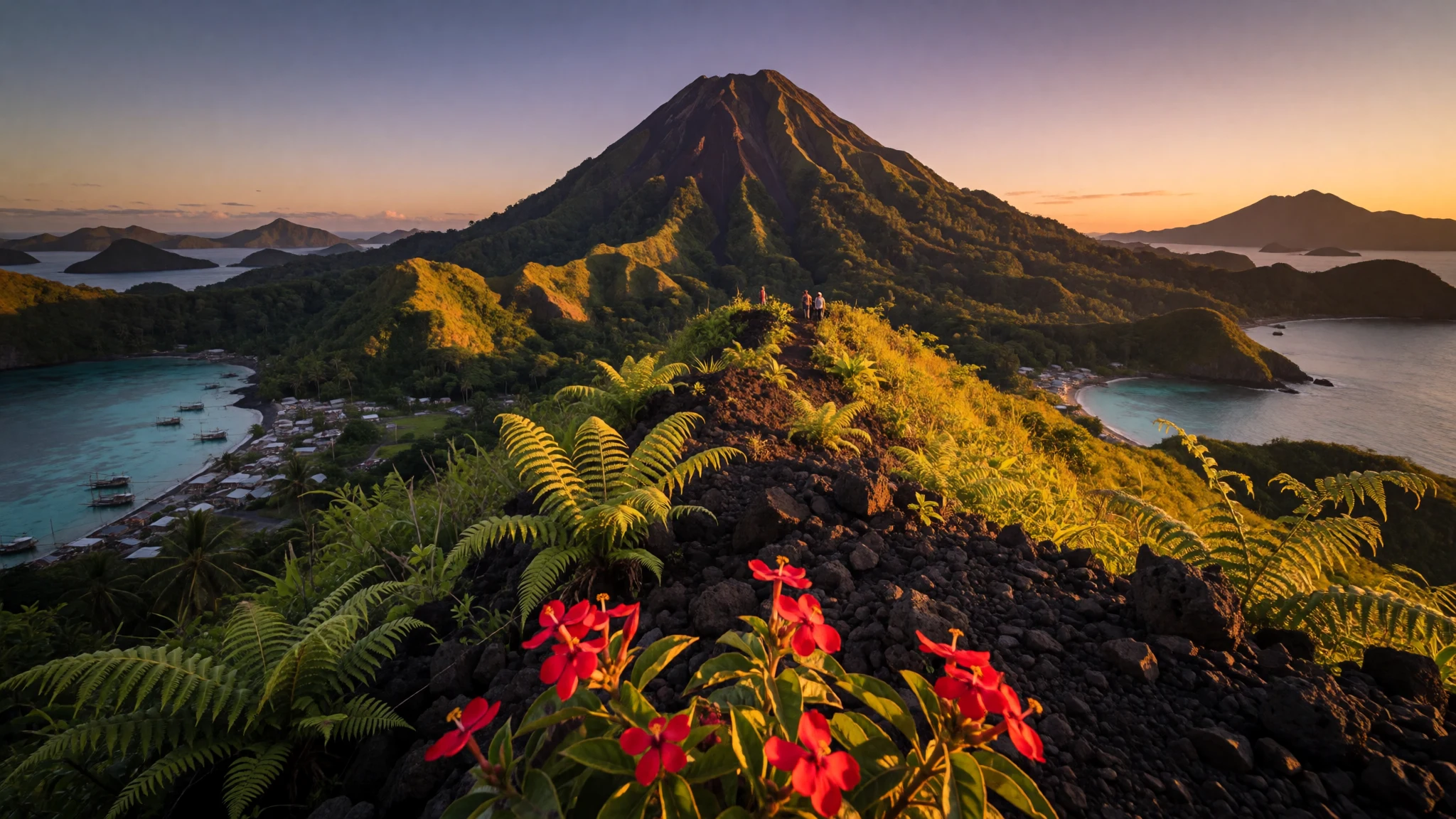
Tidore is a quiet volcano island where old spice-trade forts, a royal compound and clove-scented roads sit a short boat ride from Ternate.
The place
Tidore is a small volcanic island in North Maluku, Indonesia, lying almost on the equator and facing its twin, Ternate, across a narrow strait. A single cone, Kiematabu, fills most of the island, and the settlements hug the coast beneath it. Soasio, with its market, is the main town, and Rum, a harbour village, is where most boats tie up. Around the island are smaller neighbours: Maitara to the north-west, Mare and Moti to the south, and the large, irregular shape of Halmahera across the water. Daily life runs on fishing, small farms and cloves. Visitors are few, guesthouses are simple, and the sights are modest in scale: old forts, a rebuilt royal palace, tombs, and a jetty where fishermen now tie up in place of the sultan's boats. The island also gives its name to the Tidore language, spoken here, on the neighbouring islands and in parts of Halmahera. It belongs to the North Halmahera group, which sits apart from most Indonesian languages, and speakers also use North Moluccan Malay and Indonesian in everyday life. Nothing here is polished for tourism. Expect heat, humid air, plenty of motorbikes and people who are openly curious about who has turned up. A day is enough to circle the island by road; two or three days allow the volcano walk and the quiet villages without hurry.
Its story
Tidore's history is the history of cloves. For a long time this island and Ternate were among the few places where the trees grew, and the sultanates that ruled them became rich and politically important by selling the buds to traders from across Asia. The Sultanate of Tidore was a major Muslim state of the Moluccas, and its language carried weight well beyond the island. By the 17th century it was also used as a trade language across the Moluccas and towards New Guinea. Tidore and Ternate stand out linguistically too: both were written down before Europeans arrived, which is unusual among the non-Austronesian languages of the region. European powers noticed the spice wealth and fought over it. Spanish and Portuguese rivalry played out between the two islands, with each side picking a local sultanate as its ally, and the Spanish built forts on Tidore. In 1521 the surviving ships of Magellan's round-the-world voyage reached the island, loaded cloves and sailed home, even though Magellan himself had died earlier on the journey. A monument near Rum marks the visit. The sultan's authority has long since faded, but the title and the palace survive, the royal tombs are still tended, and local identity remains tied to that court. Today the same clove trees are harvested by hand each northern summer.
What to see
- Tahula Fort — Near Soasio
Tahula Fort is a Spanish-built fortification from the 17th century, left from the era when Europeans tried to control the clove trade by siding with one island against another. The walls are weathered rather than restored. It is worth a slow look for the stonework and the view across the water towards Ternate.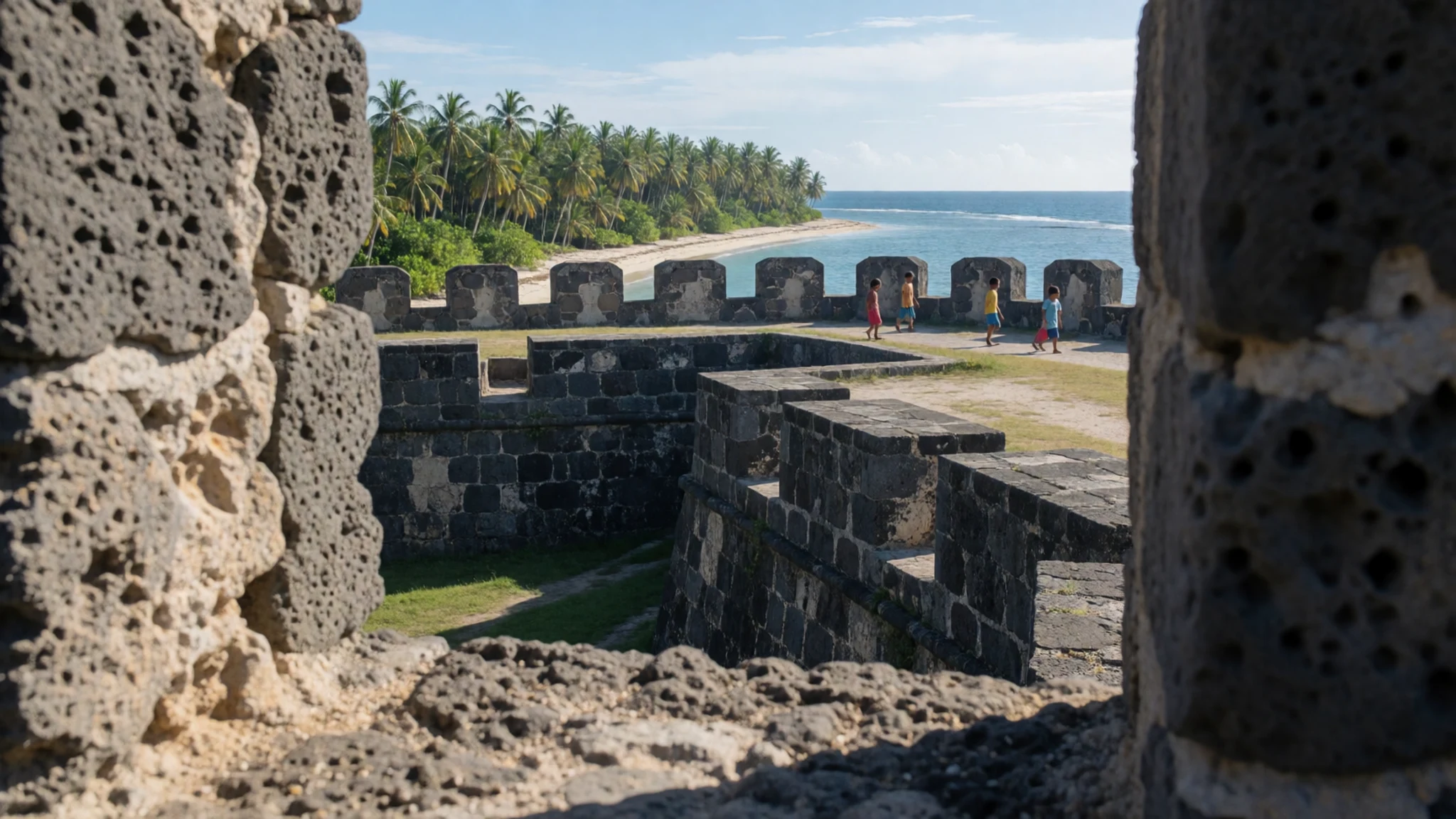
- Tore Fort and the royal tombs — Soasio
Tore Fort is a smaller stronghold standing above the royal cemetery, and the tombs of the Tidorese royal family lie just north of the palace. Both are quiet, and a short walk joins them. Ask permission before photographing graves, and expect to be directed by whoever looks after the site.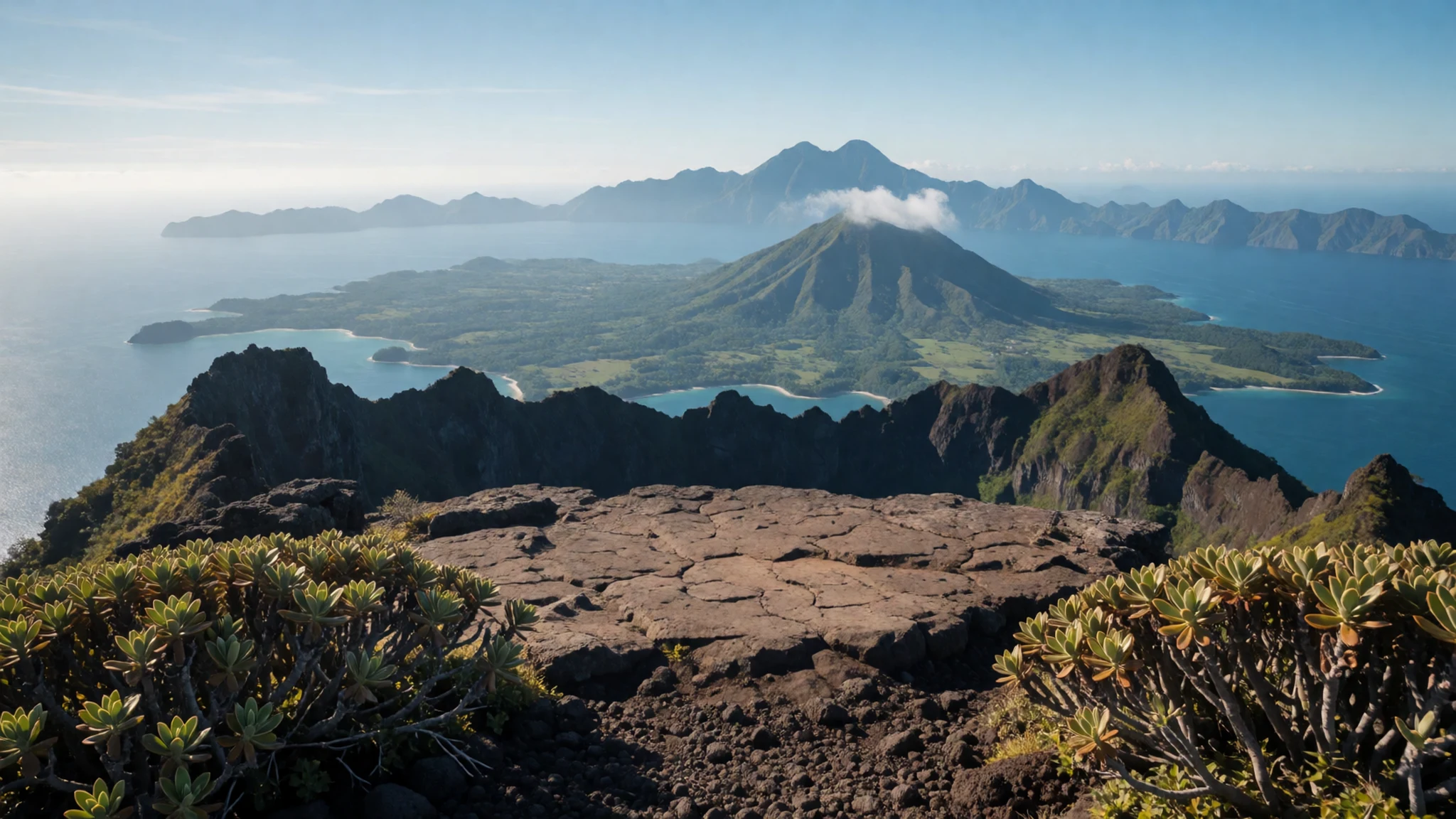
- New Palace and Sultan's Memorial Museum — Soasio
The New Palace recreates the sultan's original residence on the same ground, and the memorial museum stands within the compound. The museum may not be open when visitors turn up, so ask locally before planning around it. The palace is better understood as a living symbol of the sultanate than as an antique.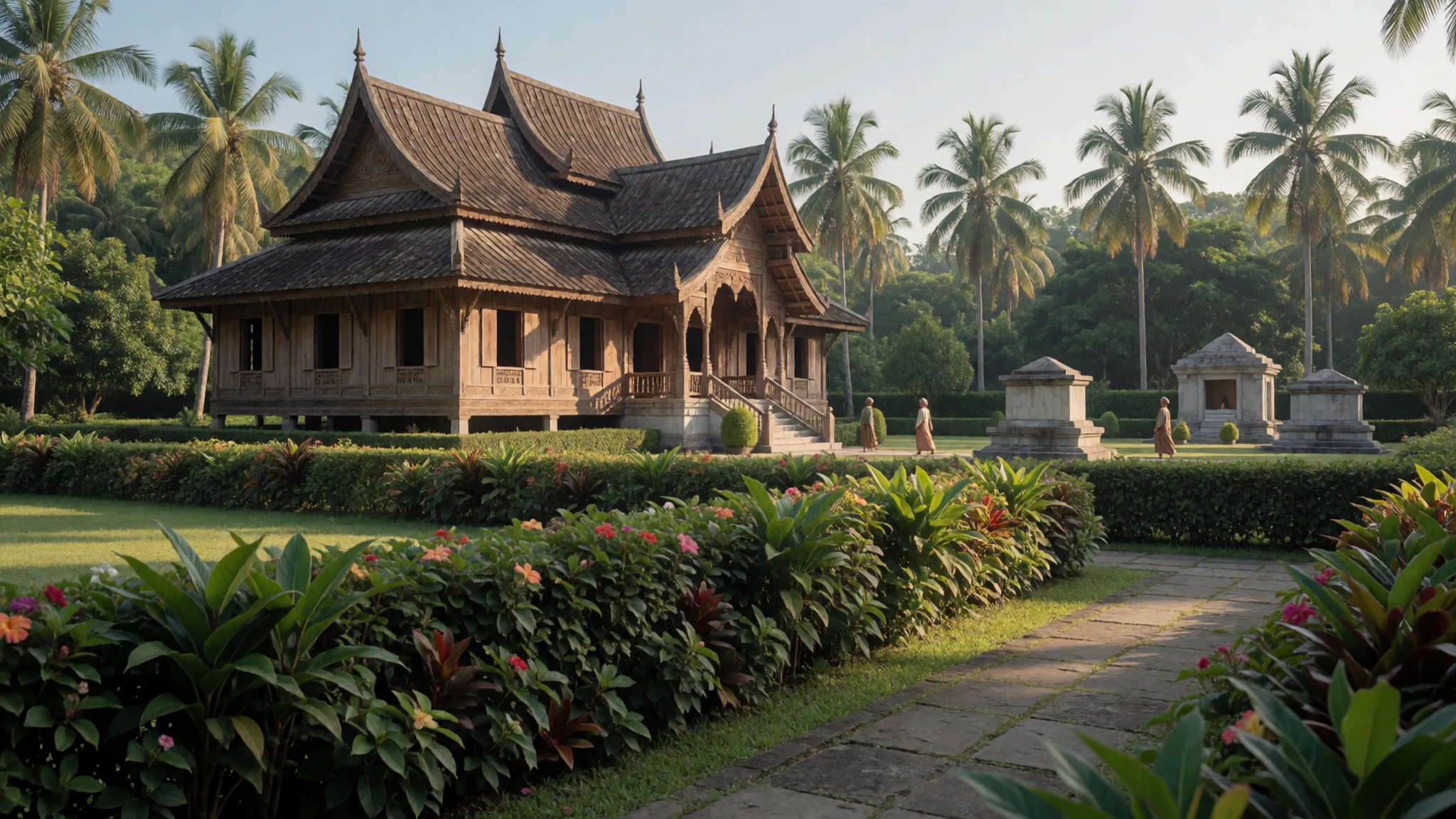
- Royal Port and Royal Mosque — Soasio waterfront
The royal port is the sultan's old jetty, now used mostly by local fishermen, which says a lot about how the island has changed. Close by, the Royal Mosque has been heavily restored. Go in the cooler part of the day and check before entering any prayer space.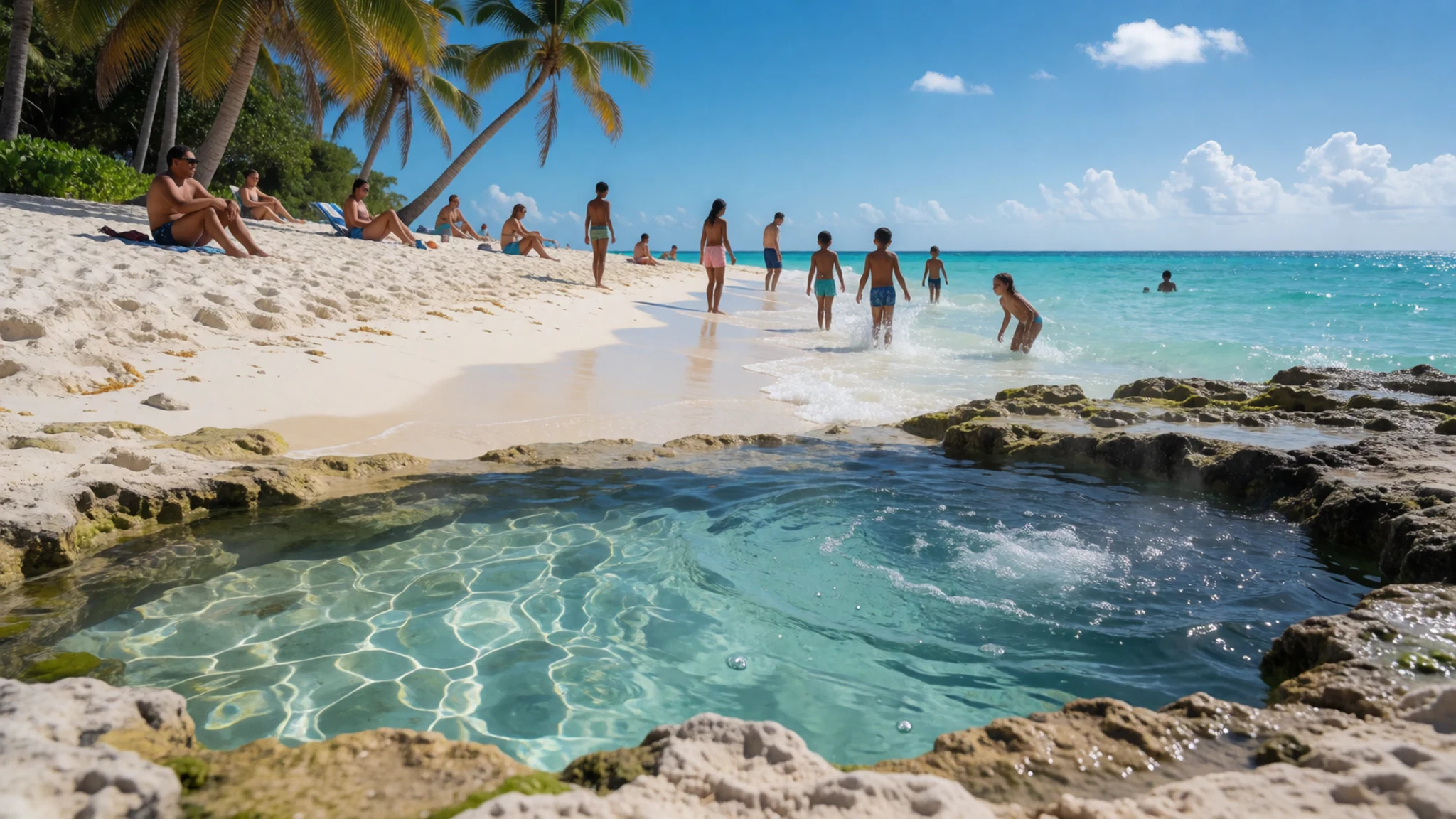
- Hot Springs beach — North coast
This beach on the northern side of the island is popular with local families and busy at weekends, so a weekday is calmer. Beside it there is a hot spring where you can bathe. Bring a sarong or modest swimwear, as many people swim in light clothing.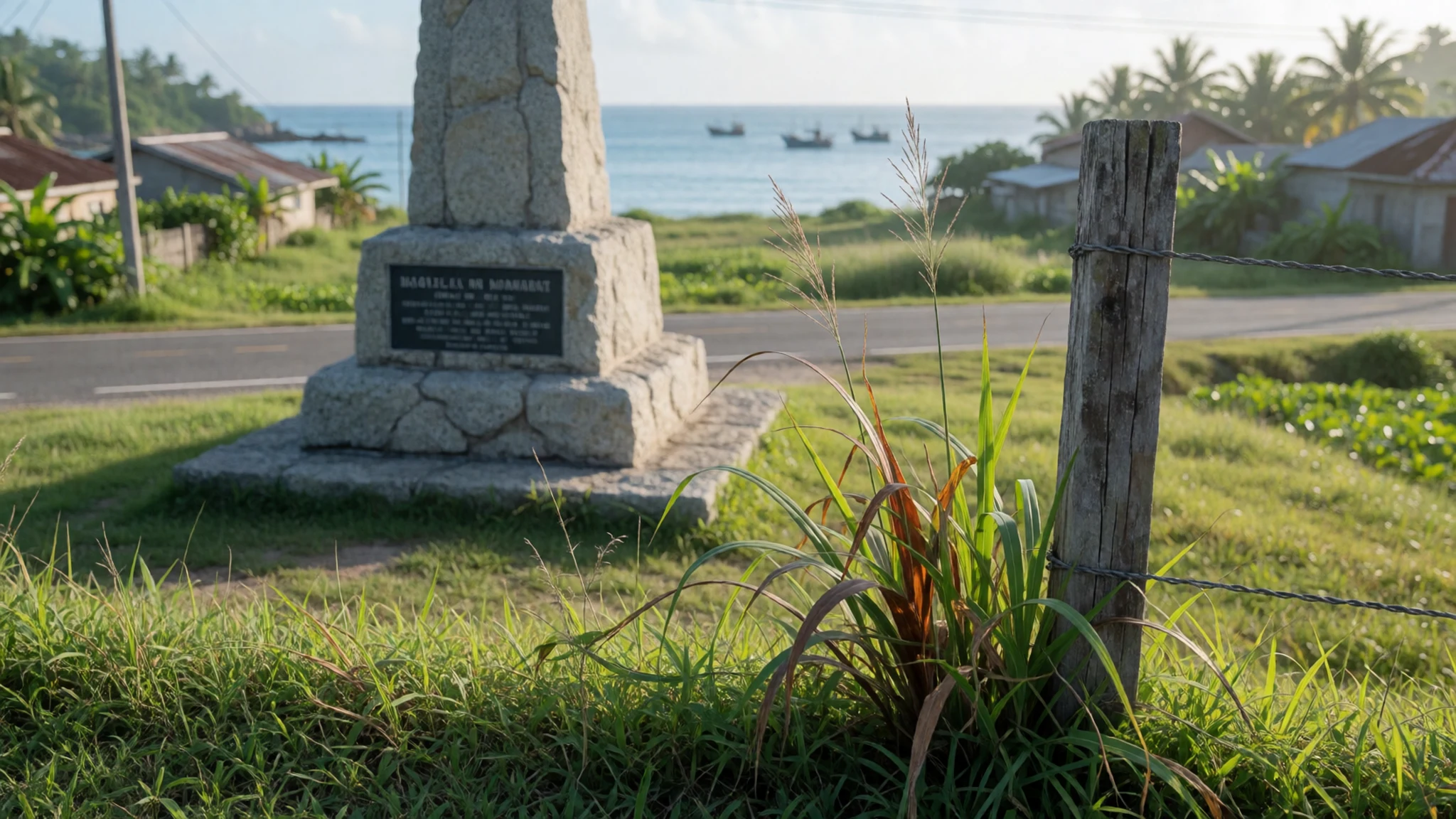
- Kiematabu — Central Tidore
Kiematabu is the volcano that makes up most of Tidore, with a path leading to the caldera rim at 1730 m above sea level. Start early, before cloud and heat build, and carry plenty of water. Ask a local guide about the current condition of the trail before setting off.
Culture
Tidore is a predominantly Muslim island, and its culture still revolves around the sultanate. The sultan's title survives, the palace has been rebuilt, and royal ceremonies and family ties carry real social weight. Many islanders speak Tidore at home and use North Moluccan Malay or Indonesian with outsiders, so a few words in Indonesian go a long way. Daily rhythm follows the call to prayer, and Friday midday is quieter. Clove growing shapes the calendar: in the northern summer, families pick the buds by climbing the trees and then spread them on mats along the roadside to dry, so the verges can smell strongly of spice. Communal life is close-knit, and strangers are usually greeted with curiosity and courtesy rather than a sales pitch, because tourism is thin. Guesthouse hosts are often the best introduction to local customs and to who looks after which site. The tombs and the palace are not museum pieces to the people who care for them; they are part of a living royal lineage, and behaviour there should reflect that. Alcohol is not widely on offer, and public displays of affection are best avoided. Visitors to the royal tombs and mosque should dress modestly with shoulders and knees covered, remove shoes where others do, and ask before photographing people or graves.
What to wear
Traditional dress on Tidore is tied to the sultanate and is mainly seen at ceremonies, weddings and royal occasions. Formal court wear typically pairs a fitted jacket and wrapped sarong for men, often with a headcloth, and a kebaya with a wrapped skirt for women, made in woven or patterned cloth. I could not confirm detailed local textile names from the sources, so ask at the palace if the details matter to you. Day to day, people on Tidore dress for heat and modesty. Men wear shirts or T-shirts with trousers or sarongs, and many women wear long sleeves, long skirts or loose trousers, often with a headscarf. Fishermen and farmers wear whatever is practical and quick-drying, and rubber sandals are everywhere. Visitors should pack light, loose, breathable clothes that cover the shoulders and knees, as the island is hot and humid and conservative about dress. A hat, sunglasses and a light rain jacket are sensible. For the Kiematabu walk, wear closed shoes with a good grip, since the path can be slippery. Bring swimwear for the hot-spring beach, but cover up with a sarong or T-shirt when walking through villages. Sandals that slip off easily help at mosques and homes, where shoes are removed at the door.
What to eat
- Kopi dabe — Soasio market and village guesthouses
Kopi dabe is Tidore's traditional coffee, brewed with spices and herbs rather than served plain. It is fragrant and a little medicinal, and it suits the island's cloves and spice history. Ask for it at a market stall or in a guesthouse.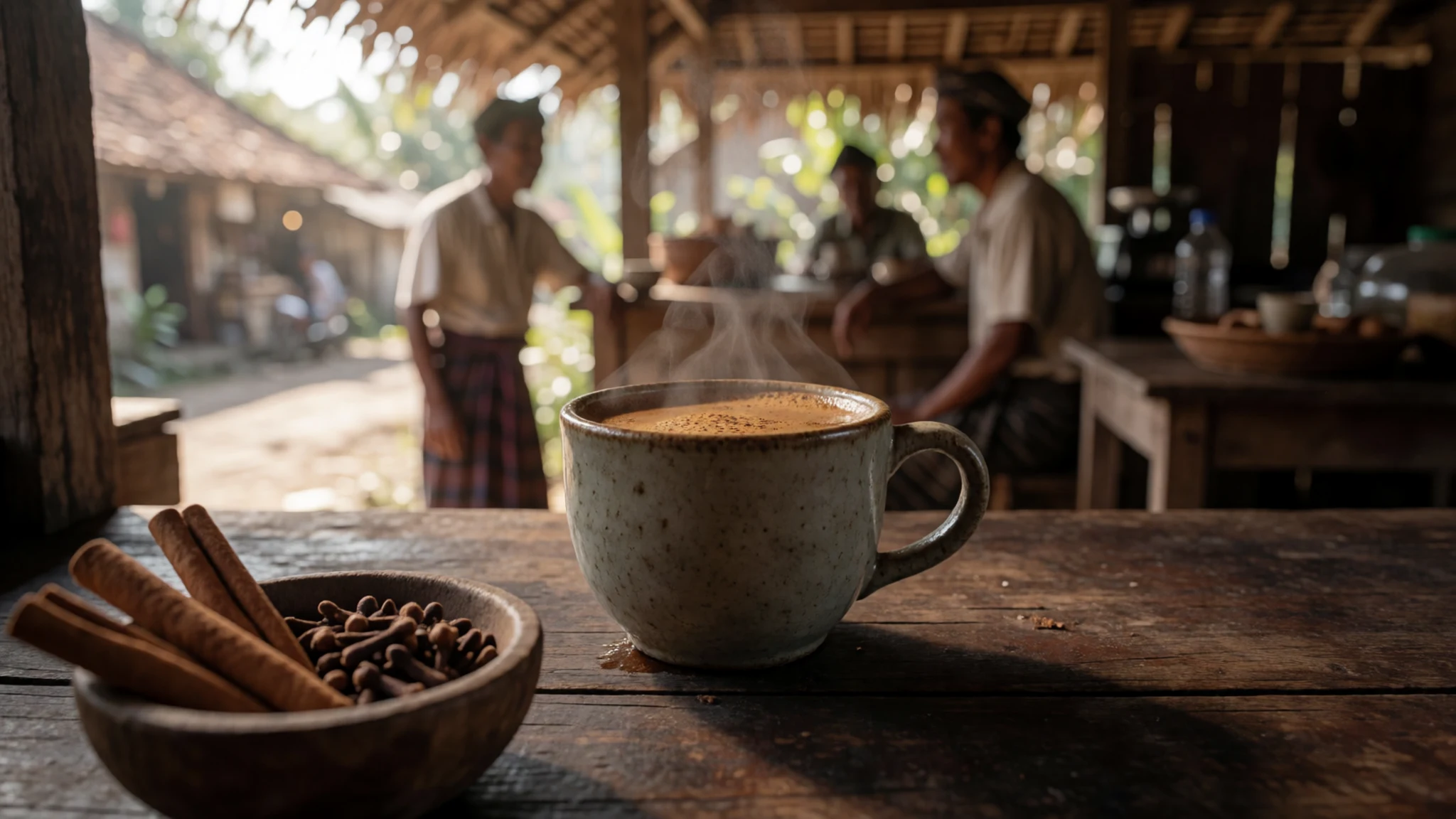
- Ikan bakar — Food stalls around Rum harbour
Grilled fish is a staple of the coast, usually caught that day and cooked over charcoal. It is served with rice, a sharp chilli sambal and lime. Look for stalls where fish is laid out on ice or already on the grill.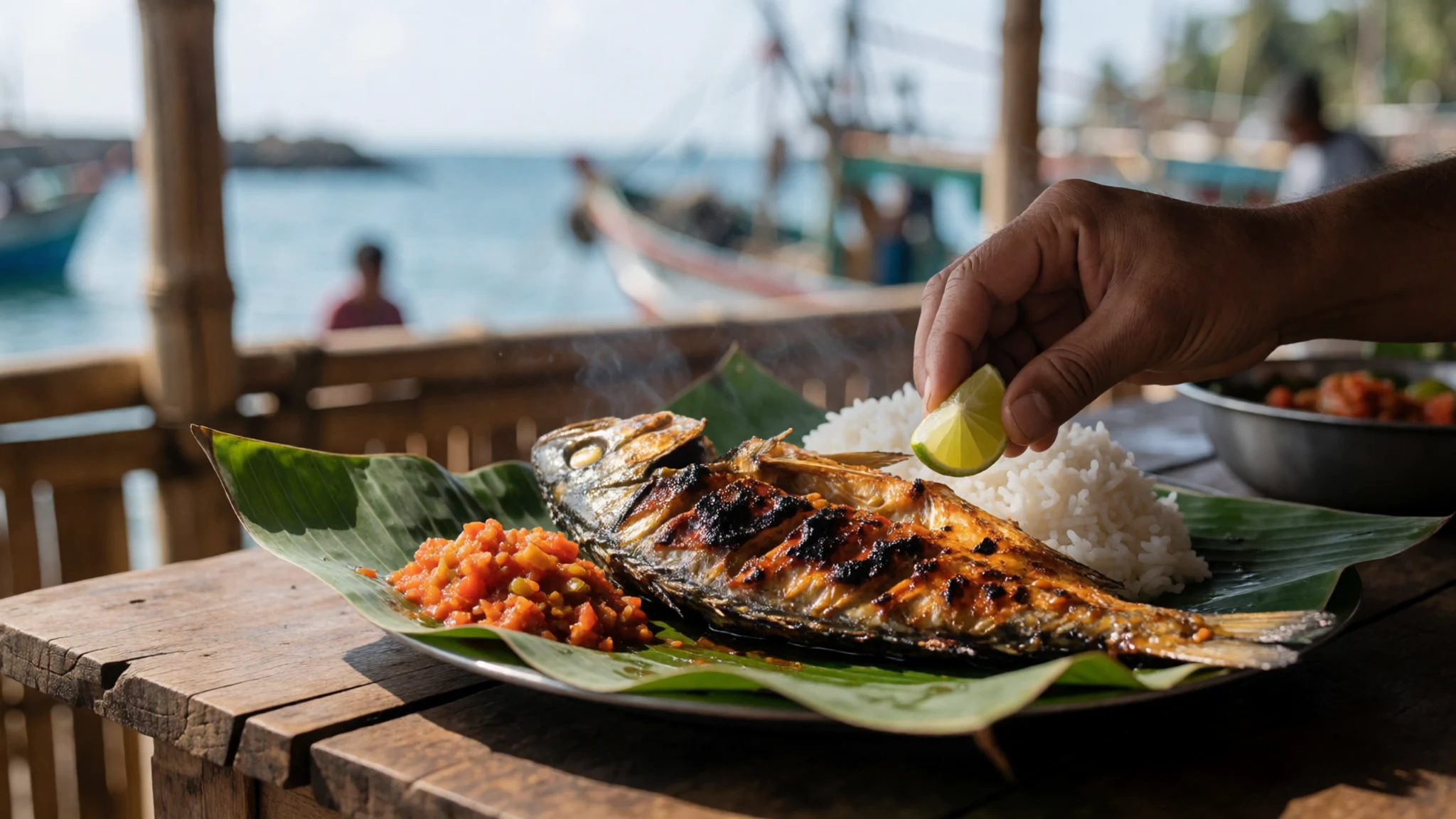
- Papeda with fish soup — Market-day eateries in Soasio
Papeda is a glossy, sticky porridge made from sago, a staple of eastern Indonesia. It is usually eaten with a sour, turmeric-yellow fish soup. The texture surprises first-timers, but it is a good way to taste the region properly. - Pisang goreng — Roadside stalls and the harbour at Rum
Fried banana is an easy snack found almost everywhere, crisp outside and soft within, sometimes served with chilli or sweet sauce. It is cheap, filling and good with coffee after a morning of walking. - Fresh clove-scented tea and sweet snacks — Soasio market, busiest on market days
During the clove season the island smells of drying buds, and spiced hot drinks and small sweet snacks are easy to find. Exact offerings change with the harvest and the stallholder, so ask what is made locally that day.
Plan it
Best time. June to September, which is the northern-summer clove harvest, when buds dry along the roads. Rain can fall at any time of year this close to the equator, so check the forecast and keep a light waterproof for the volcano path.
How long. 2–3
Getting there. Fly to Ternate from Jakarta or other Indonesian cities, checking airlines for current routes, then take a speedboat across the strait to Tidore, which takes about 20 minutes. A slower ferry carries motorbikes. Ferries also link Tidore with Sofifi on Halmahera.
Budget. low
Tips
- Ferries are the only way onto the island, so confirm the last return boat to Ternate before heading out for the day
- Guesthouses are simple and few, in Soasio and Rum, so message ahead rather than arriving unannounced
- Carry cash, as cards are unlikely to work in village shops and eateries
- Start the Kiematabu walk early and carry more water than seems necessary
- The Hot Springs beach is busy at weekends, so go on a weekday for quiet
Etiquette
- Dress modestly in villages and at royal and religious sites
- Ask before photographing people, graves or the inside of the mosque
- Remove shoes when entering mosques and homes
Nearby
Sources
- Wikidata Q3528199 (CC0)
- Wikipedia, Tidore language (rev 1381156084) (CC BY-SA 4.0)
- Wikivoyage, Tidore (rev 5104847) (CC BY-SA 4.0)
- Richaringan, Langues Halmahera du Nord, via Wikimedia Commons (CC BY-SA 4.0)
