Theodore Roosevelt National Park
Theodore Roosevelt National Park, United States
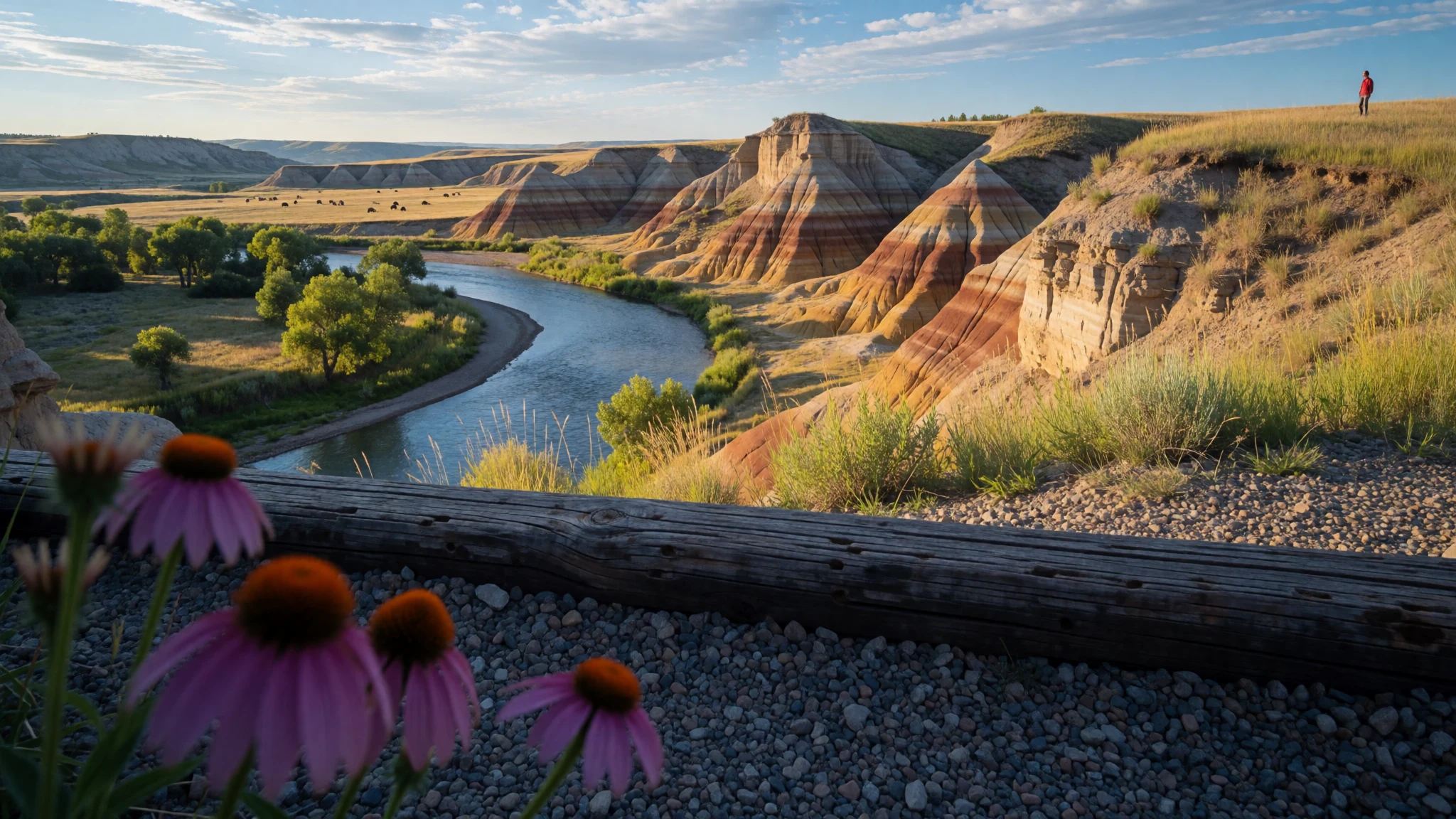
Theodore Roosevelt National Park puts bison, wild horses and painted badlands on a quiet corner of the northern plains, and it tells a conservation story along the way.
The place
Theodore Roosevelt National Park sits in the badlands of western North Dakota, where the Little Missouri River has carved a maze of buttes, ridges and gullies into otherwise flat prairie. The park comes in separate pieces: the South Unit beside the interstate at the town of Medora, the North Unit well to the north near Watford City, and the small Elkhorn Ranch Unit in the stretch between them. The river runs through all of them, and the Maah Daah Hey Trail links them for long-distance hikers and riders. It is the sole US national park named for just one individual. The facts record its founding as 1978, though the land was a working ranch landscape long before that. Most people see the South Unit, because the paved loop road is easy to reach and the main visitor centre is in Medora. The North Unit is quieter and feels more remote, with a smaller road and fewer services. Elkhorn is for the committed: unpaved tracks, no phone signal, and little to see beyond the river bottomland and the silence. Wildlife is the real draw. Bison, feral horses, pronghorn and prairie dogs are regular sights from the road. The light does much of the work too: banded clay in grey, buff and rust turns copper towards sunset, and storms can arrive fast across open country. Facilities are thin. There is no lodging inside the park and no food on sale beyond a few vending machines, so planning ahead matters more here than at most parks.
Its story
Theodore Roosevelt National Park exists because a young politician from the east came to the Dakota badlands and never quite left them behind. Roosevelt arrived in September 1883 to hunt bison, got his animal, and fell for the open country and the sense of freedom it gave him. He bought into a cattle venture, the Maltese Cross Ranch, which was already run by two local men, Sylvane Ferris and Bill Merrifield, and they built a cabin there that winter. Then came February 1884, when his mother and his wife died within hours of each other. Roosevelt went back to the badlands looking for solitude and a way to carry on. That summer he started a second ranch, Elkhorn, beside the Little Missouri River, and brought in two Maine woodsmen, Bill Sewall and Wilmot Dow, to run it. He wrote constantly about the life, in newspaper and magazine pieces and in three books: Ranch Life and the Hunting Trail, Hunting Trips of a Ranchman and The Wilderness Hunter. The experience is often linked to his later conservation work as president, though the park itself was set up only decades after his death. The cabin still stands near Medora, and the Elkhorn site can be visited by anyone willing to take the dirt road. What visitors see today is partly his landscape and partly a recovery: herds of bison and wild horses now graze ground that was once heavily hunted and ranched.
What to see
- Scenic Loop Drive — South Unit, near Medora
The paved loop through the South Unit is the best first look at the park. Pullouts and short walks break up the drive, and the pace is set by the animals: a bison herd or a band of feral horses on the road can stop traffic for a good while. Pronghorn often graze the open flats.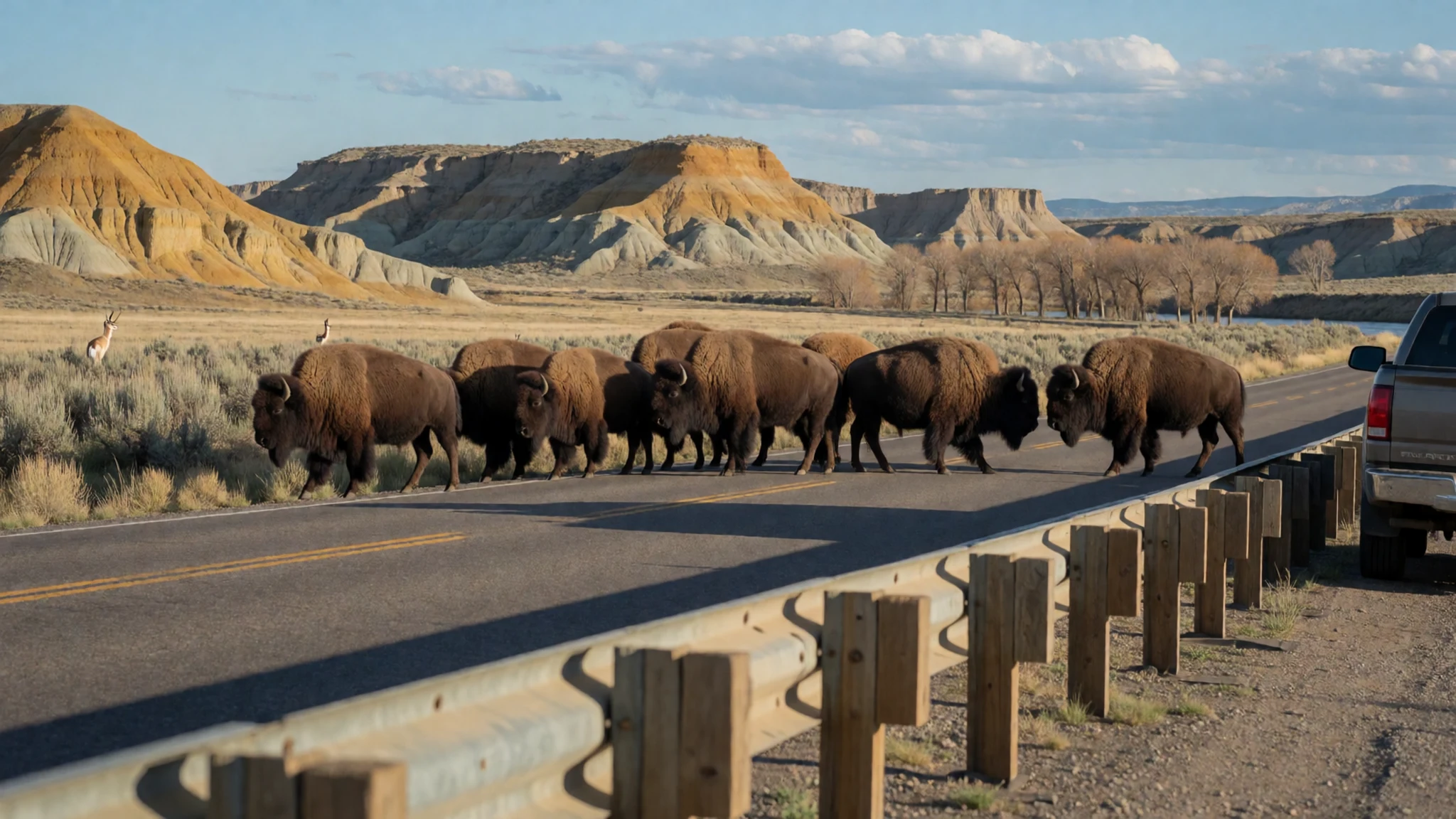
- Maltese Cross Cabin — Near Medora
This small log cabin marks where Roosevelt first settled in the badlands after his bison hunt in 1883. It was built for the ranch he had bought into, and it gives a plain, human scale to a story that is otherwise told in big landscapes. It is a short stop, close to Medora.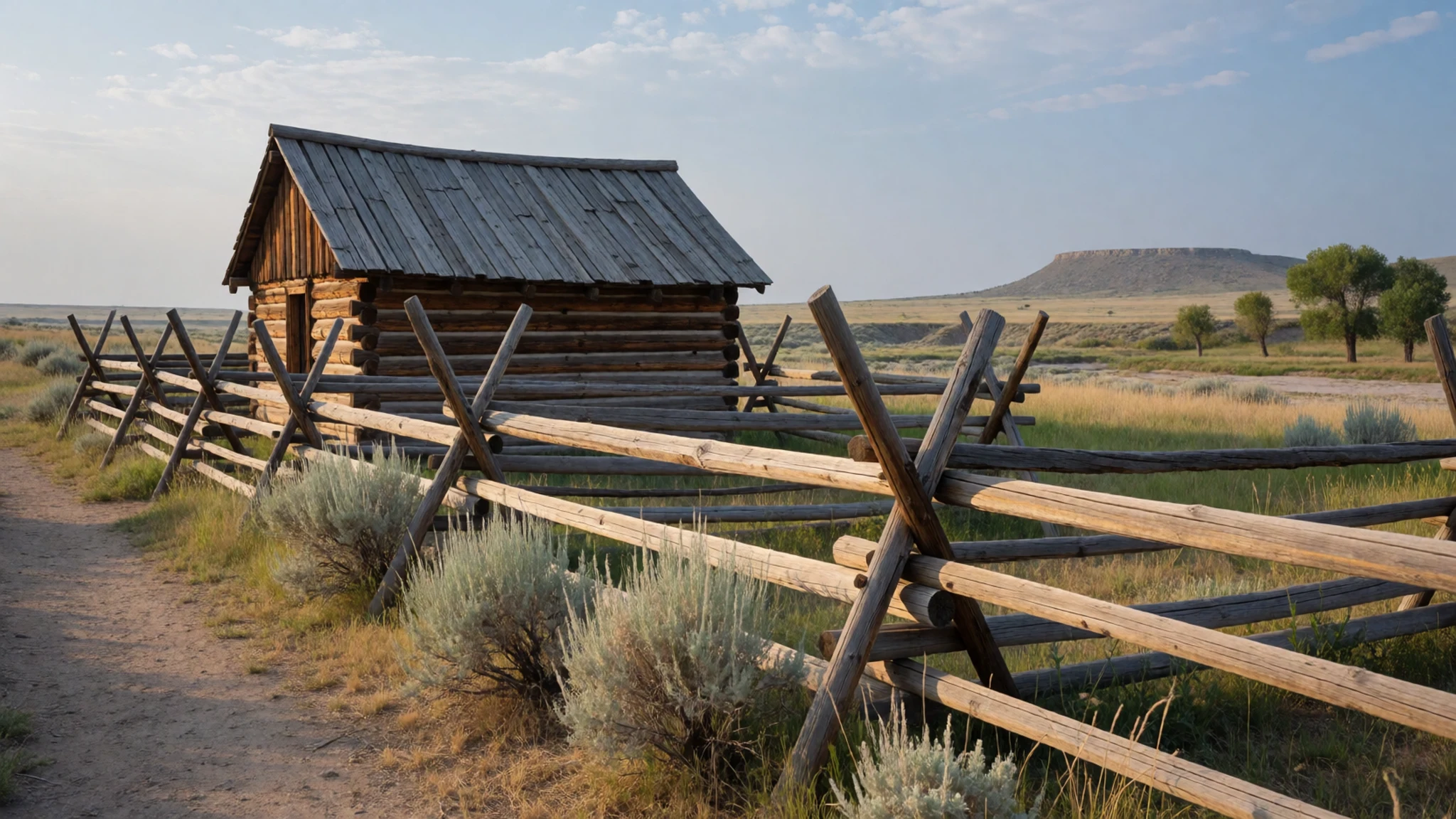
- Prairie Dog Metropolis — South Unit loop road
A large, busy prairie dog town beside the loop road, with animals popping up from burrows, calling to each other and darting between mounds. Stay on the path and keep a respectful distance. Wildlife here can carry disease, so no feeding or touching, however tame they look.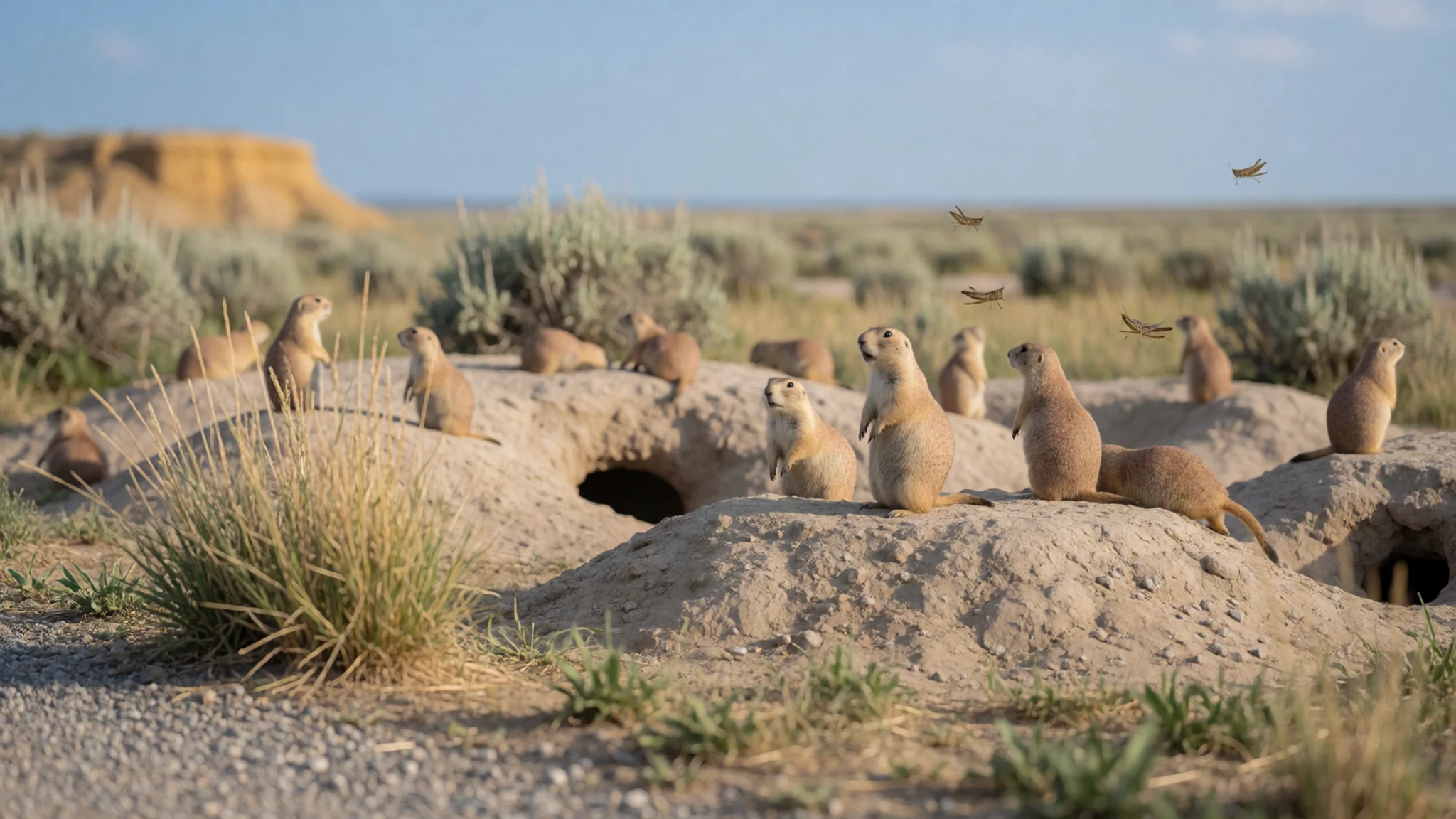
- Skyline Vista — South Unit
A short walk leads to an overlook above the Little Missouri River, the town of Medora and the surrounding badlands. It is an easy place to understand how the river sliced through the plateau. Late afternoon light brings out the colour in the layered clay.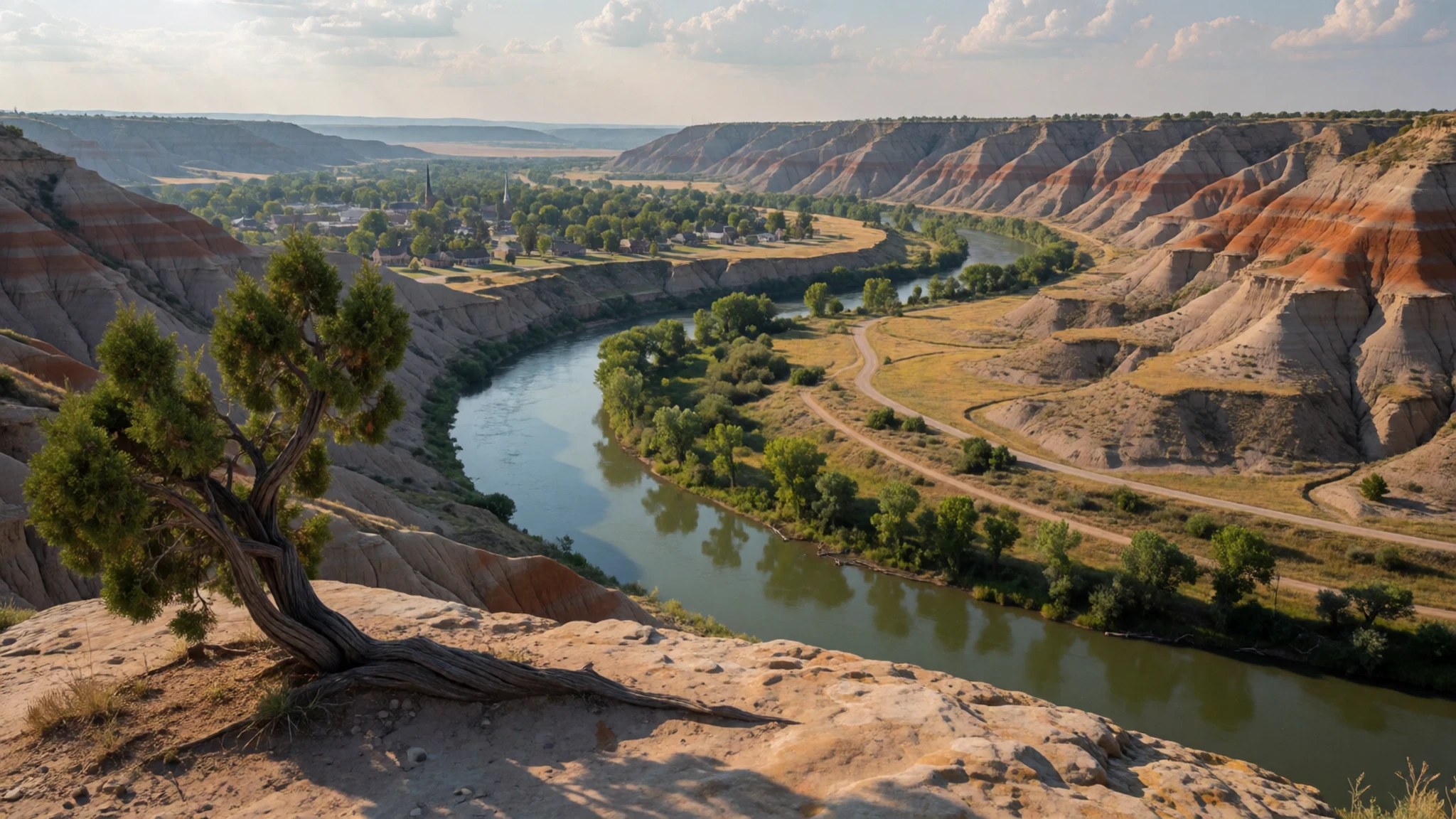
- Wind Canyon Trail — North Unit
Short but steep, this loop follows the cliffs above the Little Missouri River and climbs to a hilltop viewpoint. It is the most convenient walk in the North Unit and works well at sunset. Wind, as the name suggests, can be strong on the top, so a hat tied on is sensible.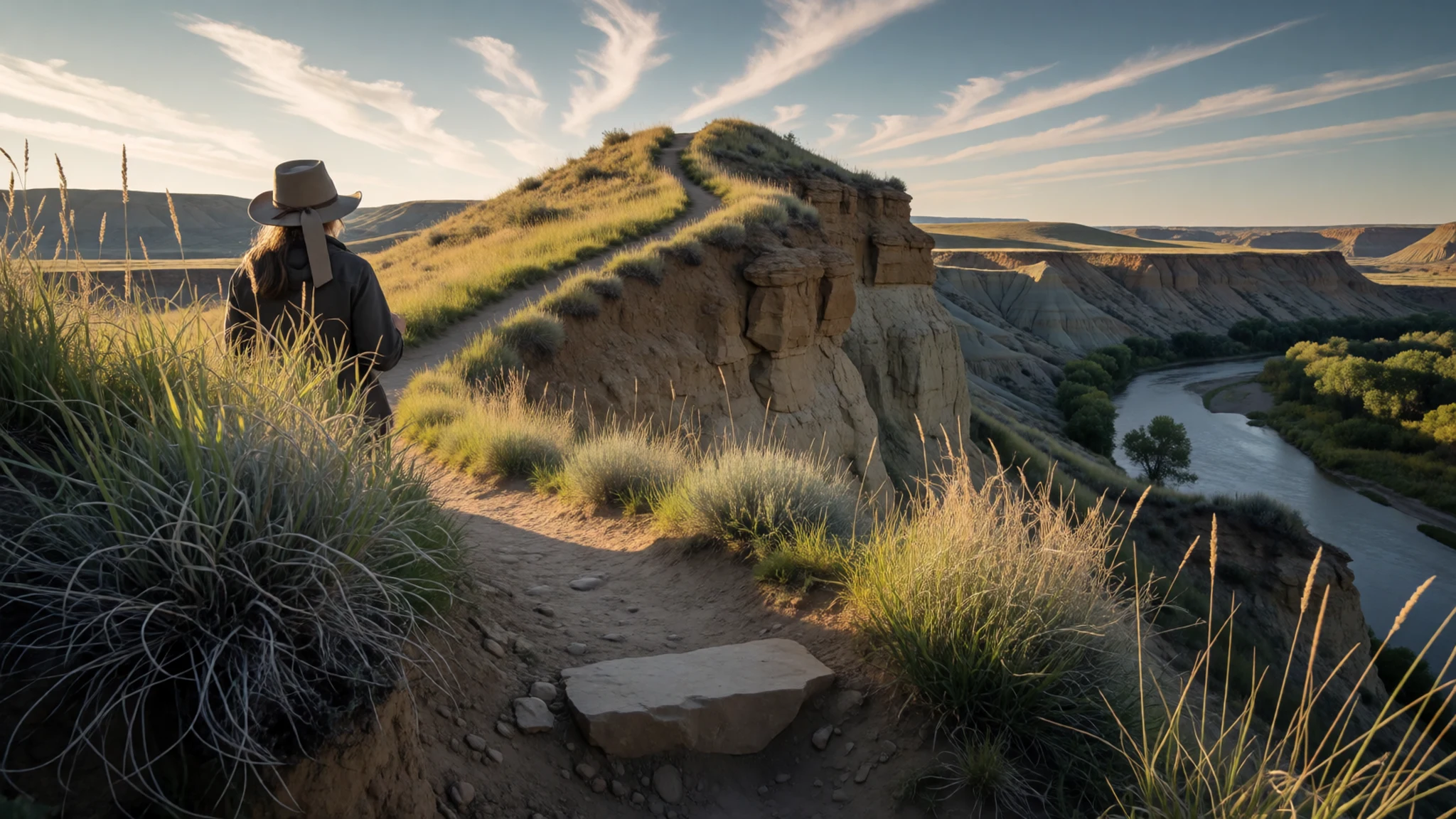
- Boicourt Overlook — South Unit, eastern side
The widest view of the badlands in the South Unit, with buttes, ridges and river valley spread below. It makes a good place to sit with a flask and watch the shadows move. Bring binoculars if possible, since bison and wild horses are often visible far down the valley.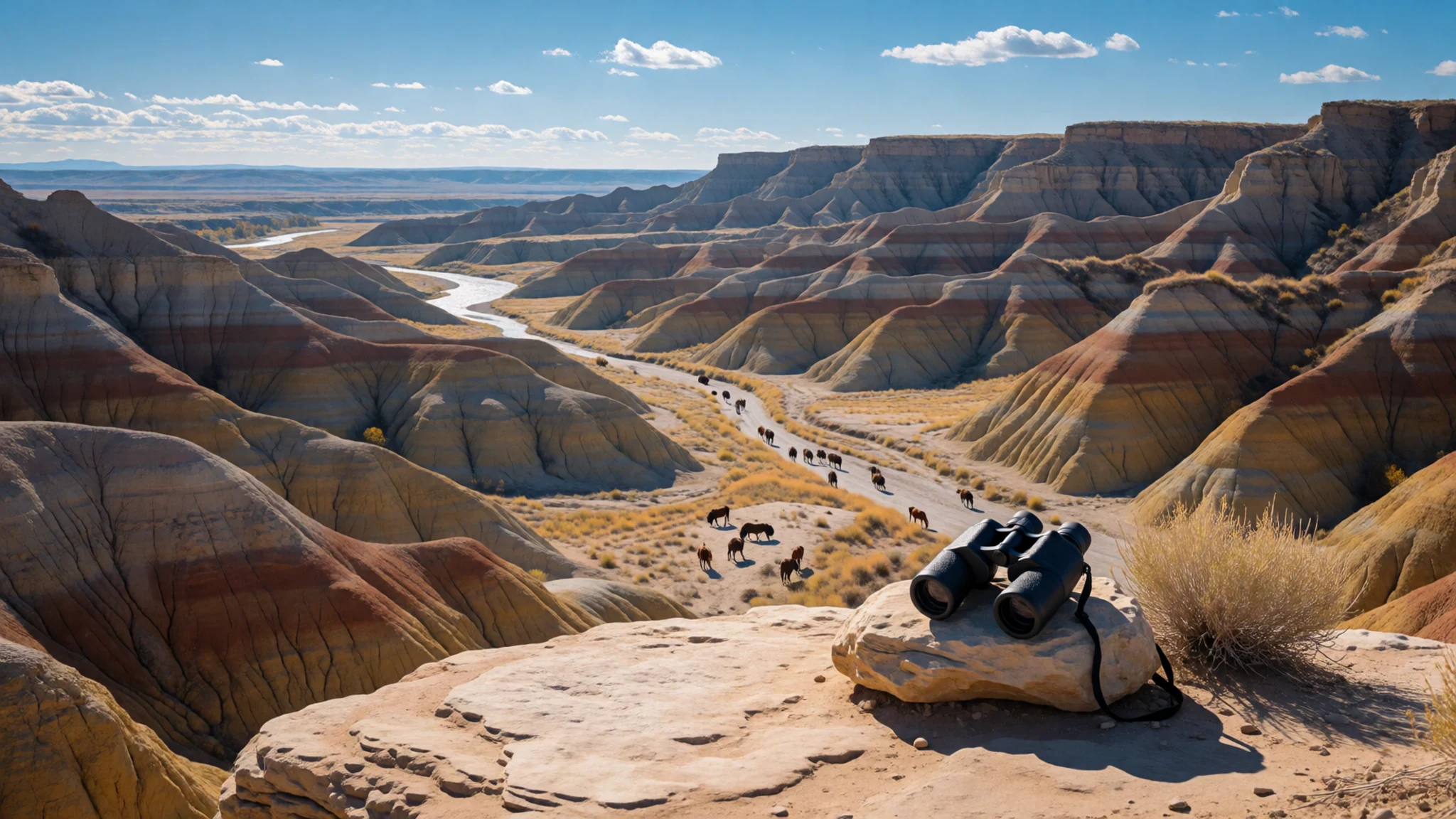
Culture
Theodore Roosevelt National Park sits in a region shaped by ranching, hunting and, long before that, by Native nations who lived along the Missouri and its tributaries. The ranching legacy is easiest to feel around Medora, where cowboy imagery, rodeos and western pageantry are part of the town's summer identity, and the Maltese Cross Cabin gives the story a physical anchor. Roosevelt himself is a layered figure: celebrated as a conservationist and writer, but also a hunter and a man of his era, whose views of the West and its peoples are debated today. Rangers and exhibits in the visitor centres tend to present him as one thread in a bigger story that includes Native history, homesteaders and the recovery of wildlife. Locals are friendly and unhurried, and conversation in cafés often turns to weather, roads and what the animals are doing. Distances are long and services are sparse, so people look out for each other on remote roads. The park is also a working landscape for wildlife, and the culture of respect for it is taken seriously: rangers will remind visitors about distance, litter and staying on paths. Evenings are quiet, and the night sky can be very dark, which many visitors find as memorable as the daytime views. Keep at least a long stride's distance from every bison, horse and prairie dog, and never walk towards an animal to get a better photograph.
What to wear
Theodore Roosevelt National Park has no single traditional costume, but the clothing of the northern plains has a clear lineage. Ranch work produced the cowboy kit still seen in Medora: felt or straw hats, wool and denim, leather boots, chaps and neckerchiefs, all chosen for sun, wind and rope work. Native peoples of the region have their own regalia of hide, beadwork and feathers, worn mostly for ceremonies and powwows rather than daily life, and those are not costumes for visitors to copy. What people wear now is practical and unfussy. Locals favour jeans, boots, caps or brimmed hats, and layers that can come off as the day warms. In summer there is plenty of sun and little shade, so light long sleeves are common. Visitors should dress for weather that changes fast. Bring a windproof and waterproof shell, a warm layer even in summer, and a hat and sunscreen. Strong walking shoes or boots with grip matter on clay trails, which turn slick and sticky after rain. Long trousers help against sagebrush and prickly plants, and make sense where rattlesnakes may be present. Cold months need proper insulation, gloves and a hat that covers the ears. There are no dress codes at any site, and the park is relaxed about clothing, but muted colours help when watching wildlife from a distance.
What to eat
- Bison burger — Cafés and eateries in Medora and nearby towns
Lean, slightly sweet bison meat is the regional signature, served in burgers and sometimes as steak. It suits the setting, since the animals are visible on the loop road. Look for it on menus in Medora and in small-town cafés near the park.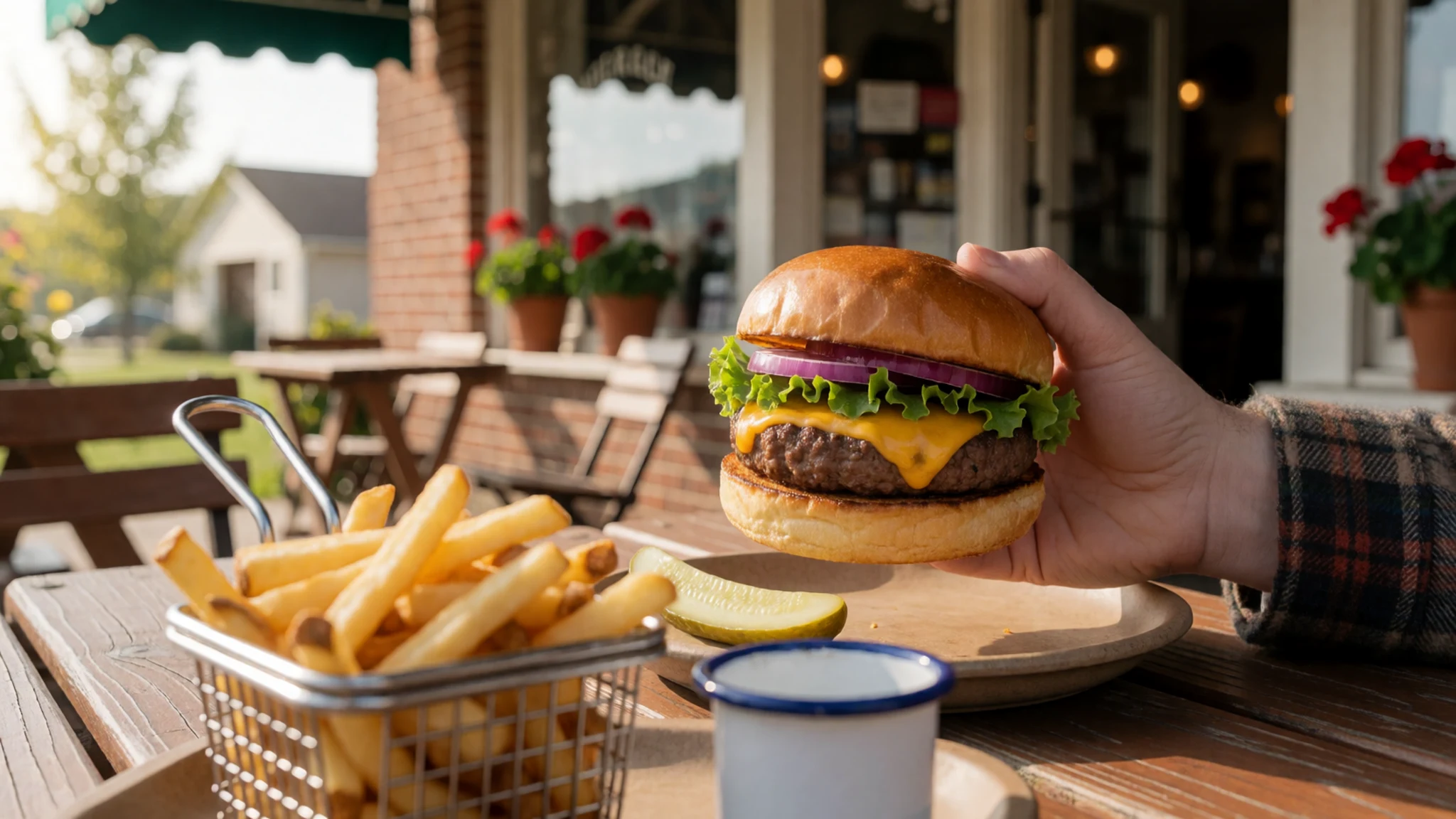
- Walleye — Restaurants in towns along the interstate
A freshwater fish from the lakes of the northern plains, usually served pan-fried or battered with potatoes. It is mild and flaky, a good counterweight to red meat. Menus in towns along the interstate often carry it as a local special.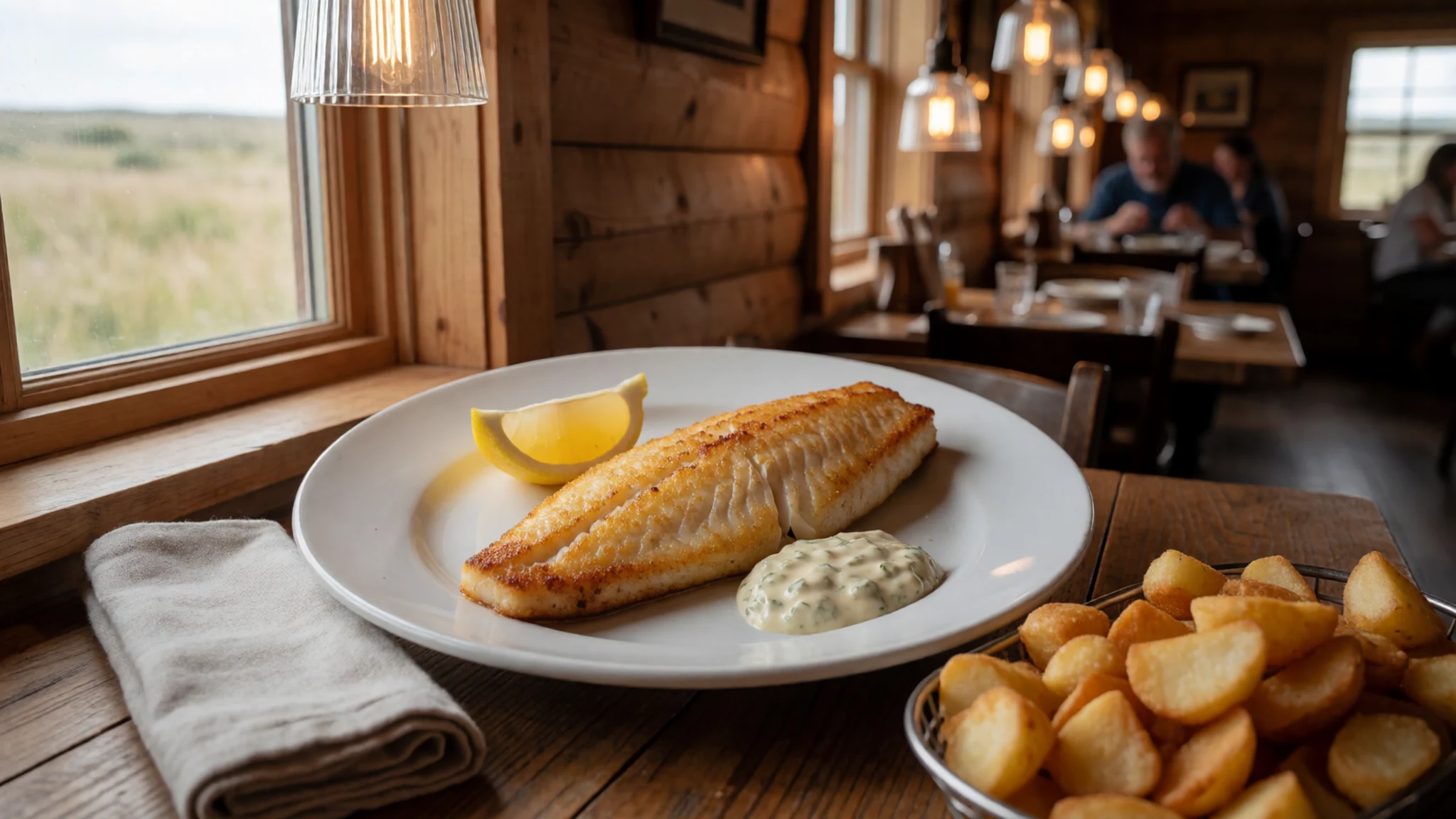
- Knoephla soup — Diners and family restaurants in small prairie towns
A thick, creamy soup of potato and small dumplings, rooted in the German-Russian communities of the Dakotas. It is hearty cold-weather food and makes a good meal after a windy hike. - Kuchen — Bakeries, church sales and farmers' markets
A sweet, custard-topped pastry, often with fruit, that also comes from German-Russian settlers. It is eaten at breakfast or with coffee in the afternoon, and homemade versions turn up at church sales and local bakeries. - Chokecherry jam or syrup — Gift shops and farmers' markets in Medora and nearby towns
Chokecherries grow wild across the plains and are cooked into a tart, deep-red jam or syrup. Spread on toast, it is a simple taste of the region and a lightweight edible souvenir.
Plan it
Best time. May–June for green hills, long light and active wildlife, and September for cooler days and clearer air. Summer can be hot with sudden storms, and winter is cold with some roads hard to use. Pack for every kind of weather, since the badlands are known for sharp changes.
How long. 2–3
Getting there. Fly to Bismarck, Dickinson or Williston in western North Dakota; Amtrak also serves Williston. From there it is a drive: the South Unit lies beside the main east–west interstate at Medora, and the North Unit sits on the main north–south highway just south of Watford City. No public bus serves the North Unit, so a hire car is the practical choice.
Budget. mid
Tips
- Stock up on food and water in Medora or another town before entering, as the park sells almost nothing
- Fill water bottles at visitor centres or campground taps, and ask rangers about water in spring and autumn
- Download offline maps before heading to the Elkhorn Ranch Unit, where there is no phone signal
- Check with a ranger about road conditions after rain, since dirt tracks can become impassable
- Book lodging in Medora or nearby towns ahead in summer, as the park has no rooms of its own
Etiquette
- Keep well away from bison, horses and other large animals, and never approach for photographs
- Do not feed or touch prairie dogs or other wildlife
- Stay on marked paths and take all rubbish with you
Nearby
Sources
- Wikidata Q1137669 (CC0)
- Wikipedia: Theodore Roosevelt National Park (CC BY-SA 4.0)
- Wikivoyage: Theodore Roosevelt National Park (CC BY-SA 4.0)
- Photo: View of Theodore Roosevelt National Park (NPS/Mark Hoffman) (Public domain)
- Photo: Usa edcp relief location map (Uwe Dedering) (CC BY 3.0)
- Photo: USA North Dakota relief location map (Carport) (CC BY 3.0)
- Photo: Rainbow in badlands Theodore Roosevelt NP ND1 (Acroterion) (CC BY-SA 4.0)
- Photo: NPS Theodore Roosevelt north unit map (Public domain)
- Photo: NPS Theodore Roosevelt south unit map (Public domain)
- Photo: Pronghorn Theodore Roosevelt NP ND1 (Acroterion) (CC BY-SA 4.0)
- Photo: 2016 America The Beautiful Quarters coin, Theodore Roosevelt North Dakota reverse (Public domain)


Wildlife
- American bison (animal)
The American bison, often called the buffalo, is a big wild animal found naturally only in North America. In Theodore Roosevelt National Park it is a regular sight from the road, so keep an eye out as you drive. Keep well back and watch quietly, letting the animal go about its day. A local guide can help you read the scene. Never feed wildlife, because a fed animal loses its wariness and that harms it and you.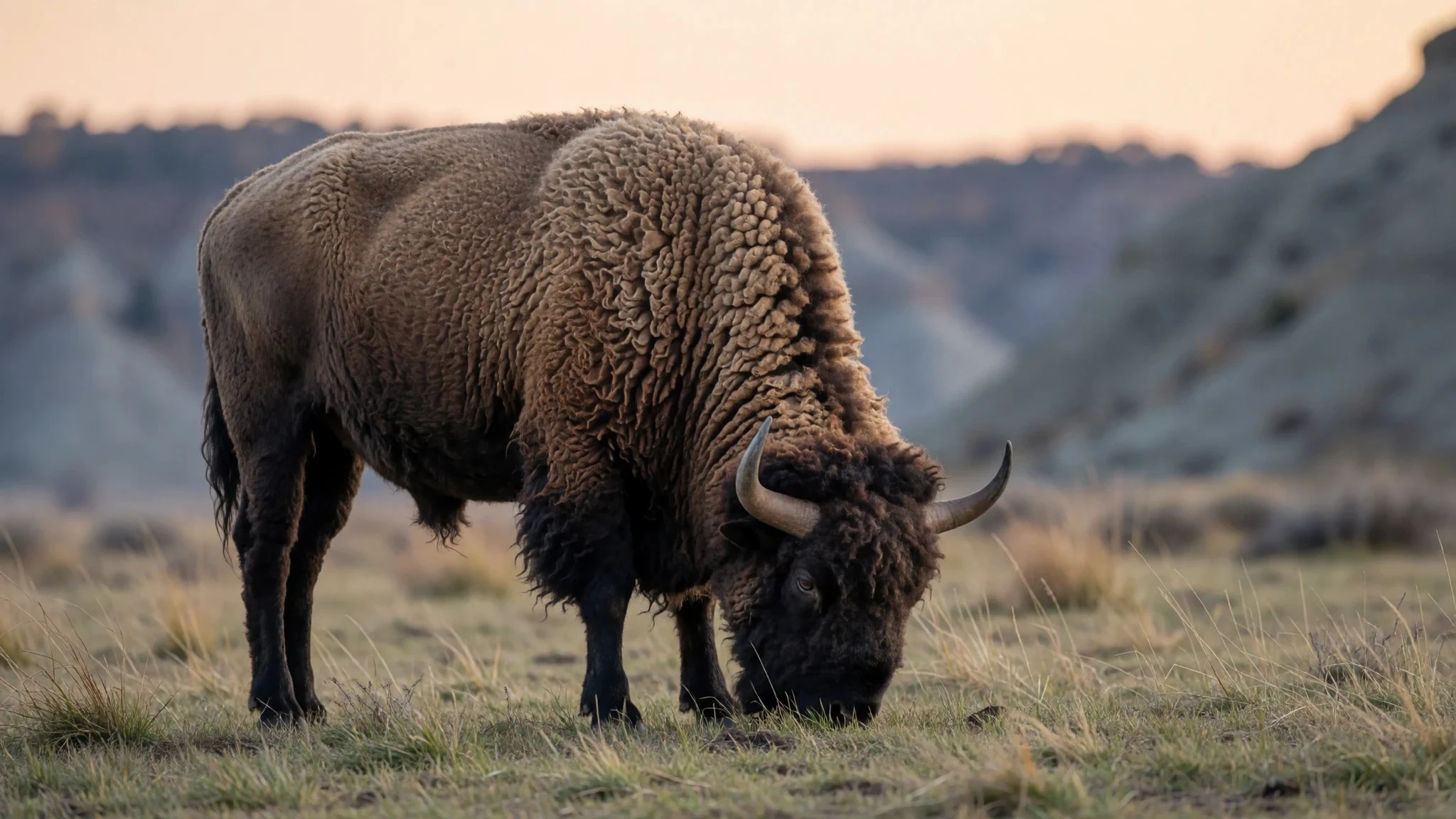
- Pronghorn (animal)
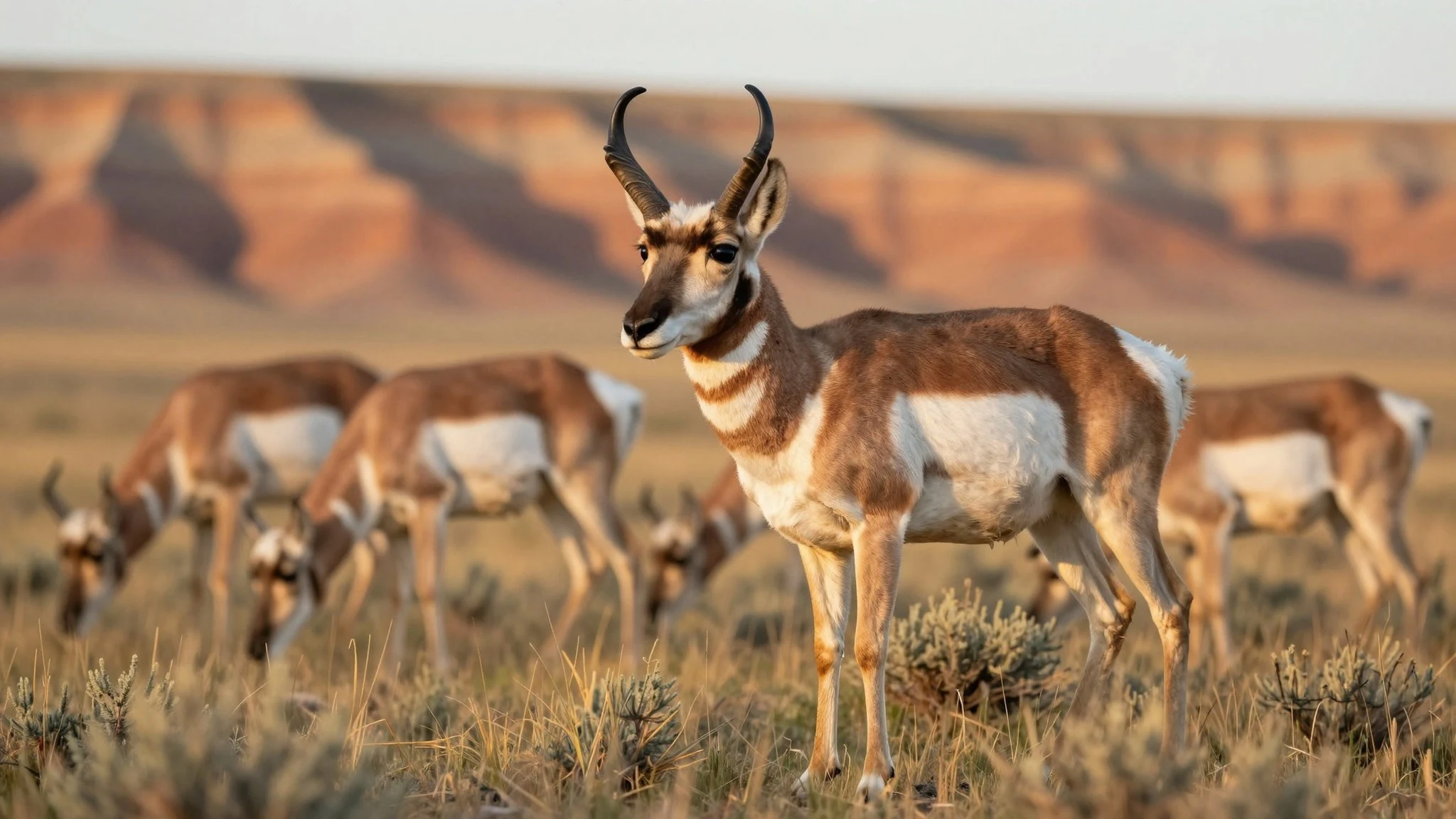
The pronghorn looks like an antelope but is not one; it is a one-of-a-kind North American animal with no close living relatives in its family. In the park it often grazes on the open flats, so scan wide, open ground. Watch from a respectful distance, stay quiet and still, and consider a guide who knows where to look. Binoculars help. Never feed it, as wild animals should find their own food.