The Palouse
The Palouse, United States
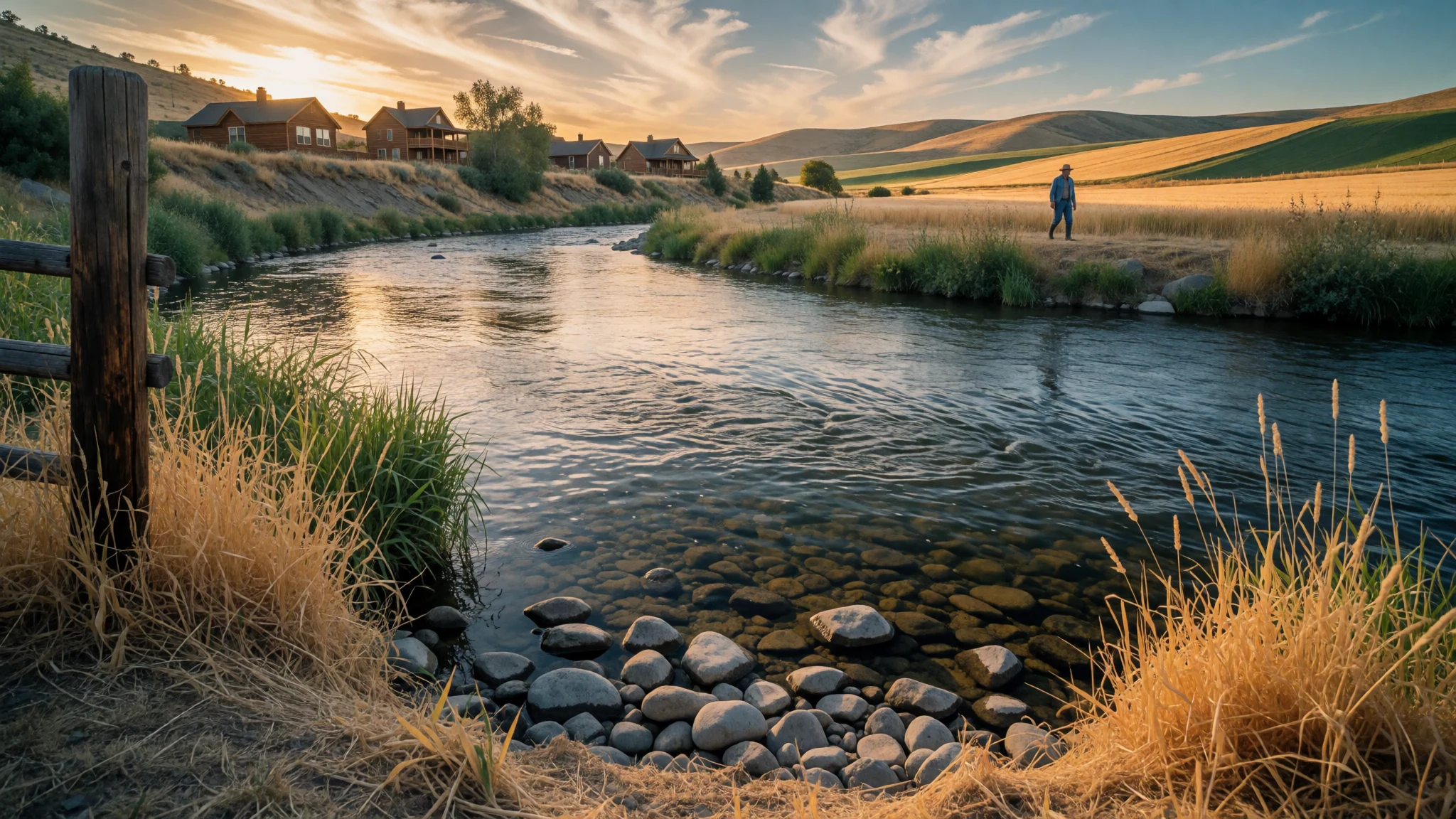
The Palouse is a small farming town in eastern Washington, with a river, an old main street and open farmland close at hand.
The place
Palouse is a small city in Whitman County, in the south-east of Washington state, and it shares its name with the farmland around it. The 2020 census counted 1,015 residents, so the main street, the school and the river are all within a short walk of one another. The town stands at 742 metres above sea level, high enough that the seasons are distinct: cold winters, a green spring and dry, golden summers. The Palouse River runs through the town and helps explain why locals feel so tied to the place. Beyond the last houses the land opens into cultivated hills, where fields form patches of colour that shift through the year. Lines of trees planted as windbreaks stand out against the bare ground, and a photograph of an aspen windbreak north of town shows how a single row of trees can become the whole subject of a view. Palouse is not a resort and does not try to be. It has a few local businesses, a historic character visible in old photographs of its streets, school and mill, and the calm of a place where most traffic is farm traffic. For a visitor it works best as a slow stop or a base for back roads, short walks and simple meals. Eastern Washington is far drier and more open than the Seattle coastline most travellers picture, and that contrast is a large part of the appeal.
Its story
Palouse took its name from the farming region in which it sits, and its recorded history as a town begins with settlers. William Ewing was the first to settle here, in 1869, and W.P. Breeding laid out the townsite in 1875, the date Wikidata gives as the founding. The town was incorporated in 1888. Long before any of this, Native communities lived across what is now Washington, with developed trade, rich art and carving, and an economy built around the rivers and coast. The arrival of Europeans brought smallpox, which devastated those communities. Old postcards and photographs from the early settler decades show the town as a working place, with a hardware store, a school and a sawmill. The most unusual chapter came in 1974, when the town's school let its pupils make, film and broadcast their own television programmes on a local cable channel. The idea reached the national news, which is a lot of attention for a town this size. More recently, a resident started a campaign for a town flag, and Palouse adopted one on 27 August 2019. Its gold and blue knot ties together the townspeople, local trade and the river, a neat summary of what holds a small place together.
What to see
- The Palouse River and town centre — Town centre
Palouse is best understood on foot. The river, the main street and the school sit close together, and a slow loop shows how the town is laid out against the surrounding farmland. A drone photograph of the town makes the scale clear: a small grid of streets set among open fields.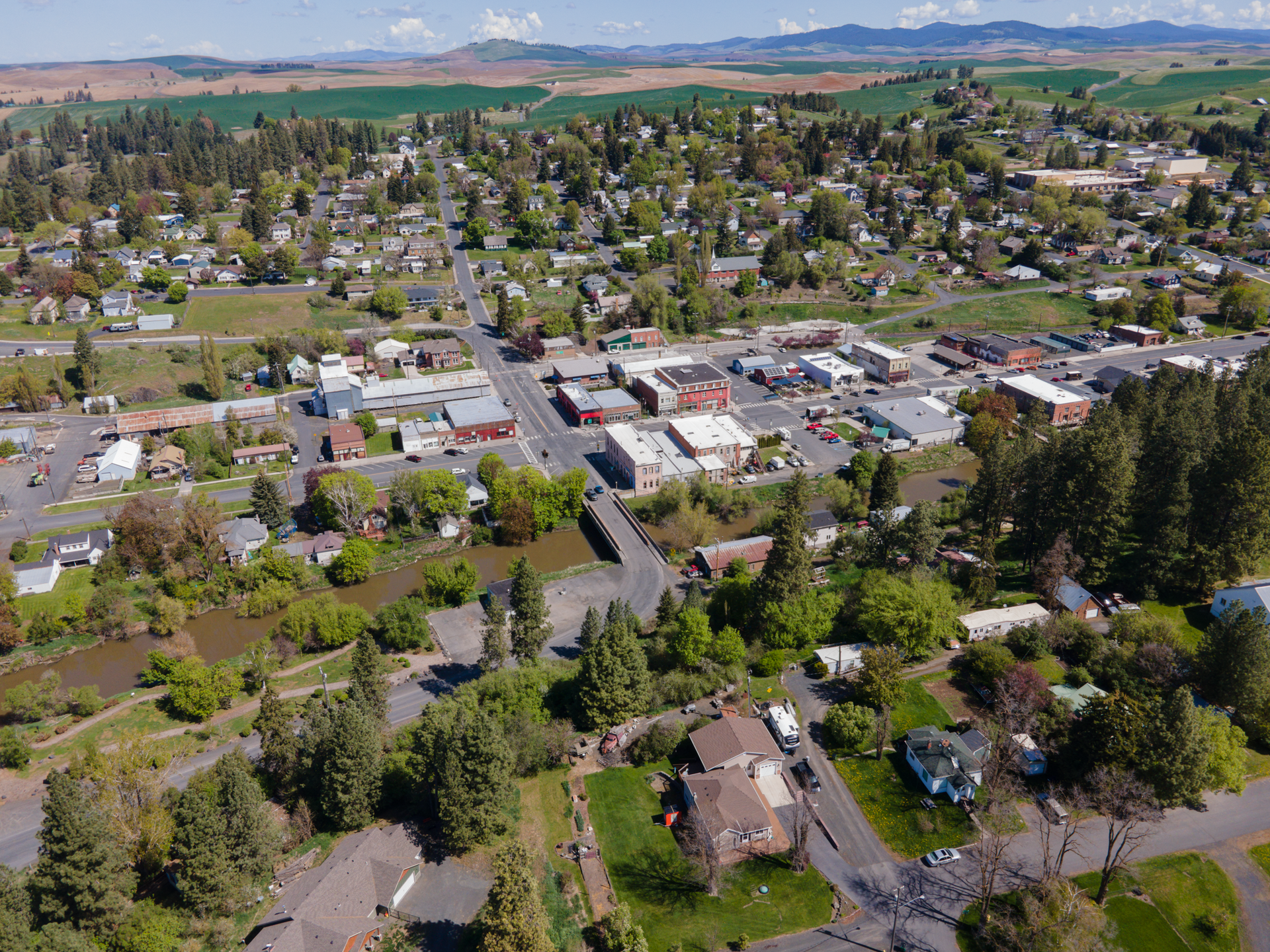
- Historic main street and old photographs — Main street
The older buildings along the main street reward a look at the early photographs of the town, including a panorama and views of the hardware store, school and mill. Comparing them with the street today shows what has gone and what remains. Local businesses are the best source of stories.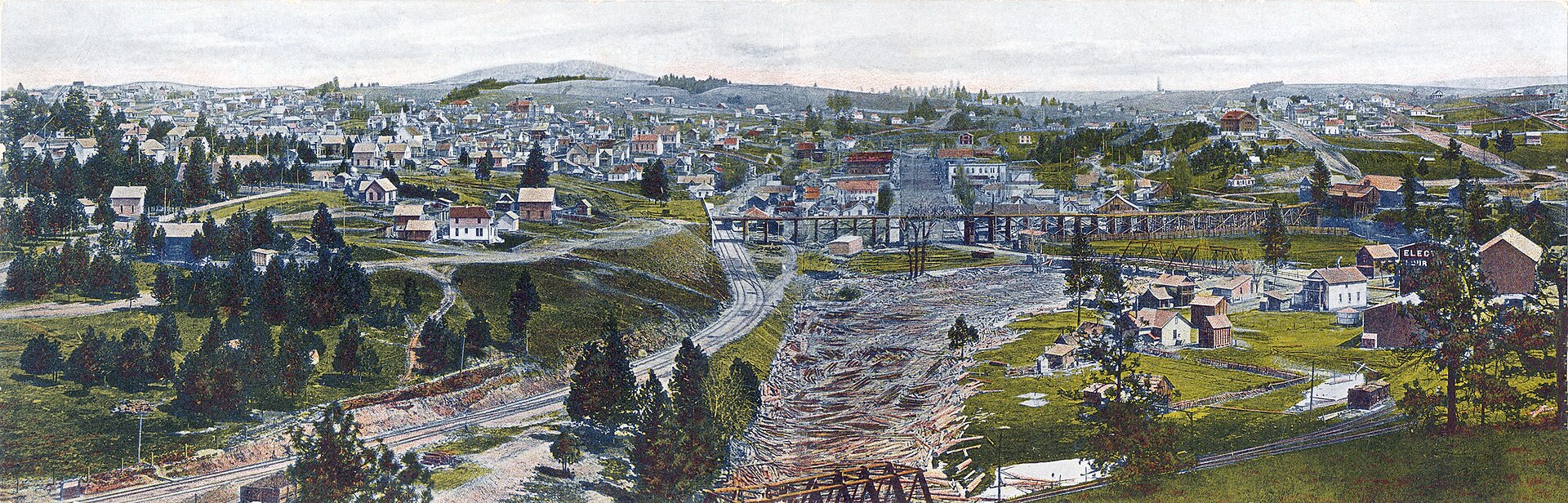
- Aspen windbreaks north of town — Farmland north of town
Rows of aspen planted to shield fields from wind make some of the area's most photographed scenes, especially in autumn when the leaves turn. Look from public roads only. The fields and the trees belong to working farms, and the best light is usually early or late in the day.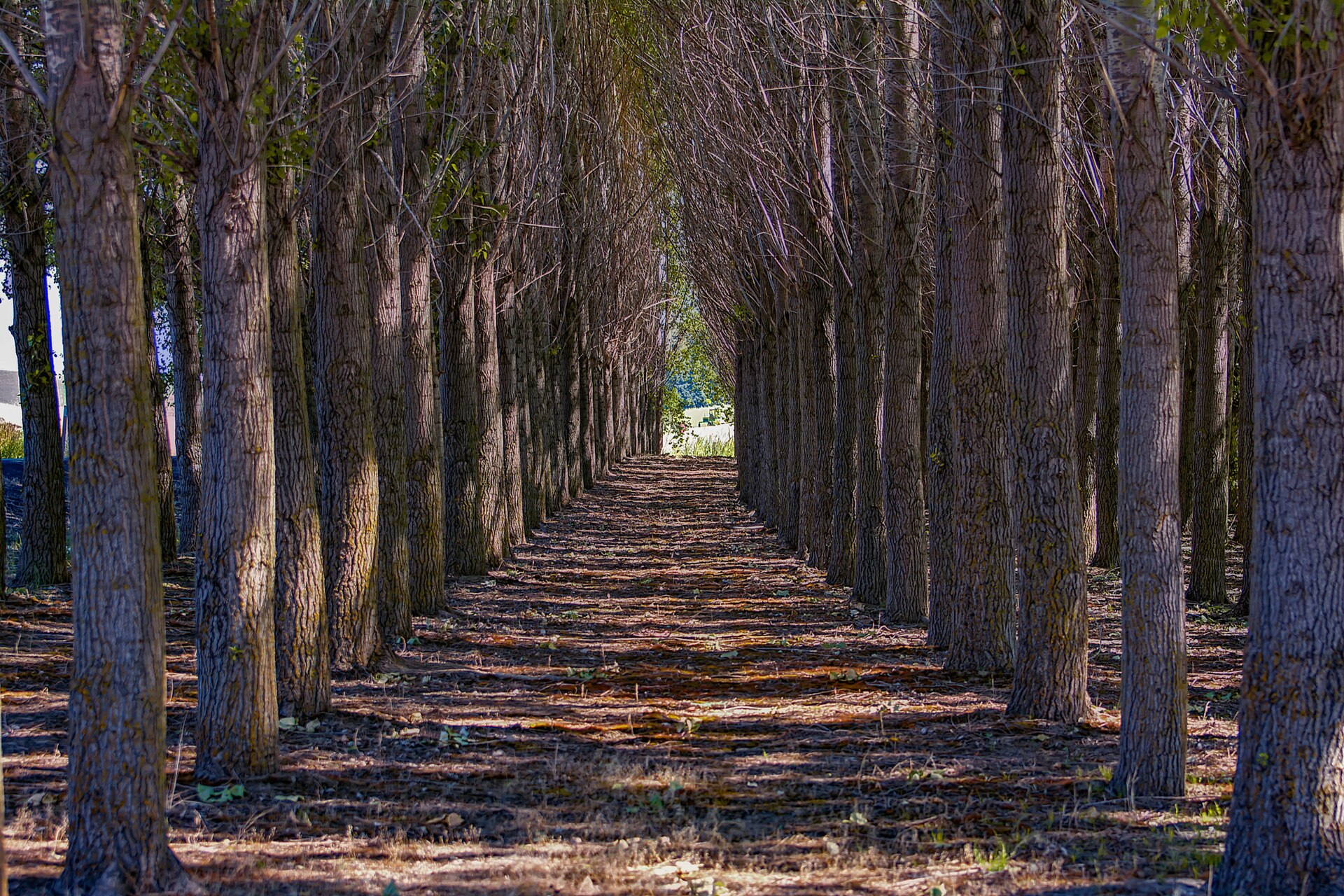
- Steptoe Butte State Park — North of Palouse
A steep, isolated hill rising from the farmland, Steptoe Butte is the usual choice for a wide view over the rolling fields. It is a short drive from Palouse. Washington state parks need a Discover Pass for private vehicles, so check the official State Parks site before going. - Palouse Falls State Park — South-west of Palouse
Further afield, the Palouse River drops over a waterfall into a rocky canyon in otherwise dry country. It is a longer drive from the town, so plan it as a day trip. Parking and entry rules apply, including the Discover Pass, and cliff edges are unfenced in places.
Culture
Palouse is a working farming town, and daily life follows the rhythm of the land: early starts, practical clothes and neighbours who know each other. The culture is friendly but unhurried, and there is real civic pride. A school that made national news with its own television channel, and a flag that began with one resident's campaign, show a community that likes to make things itself. Native peoples lived across this region long before settlers, and their trade, art and fishing traditions remain part of Washington's wider identity. Wheat, pulses and other crops shape the calendar, with planting in spring and harvest in late summer, when farm machinery is busy on the roads. Visitors will notice that people are happy to talk about the land, the weather and local history, especially in small cafés and shops. Washington takes its outdoors seriously. State signs warn about litter, fines are heavy, and popular trails and parks can fill early on fine summer days. Keep to public roads and marked trails, never walk into a field for a photograph, and take every scrap of litter with you.
What to wear
Palouse has no single traditional costume, because the United States has no national dress. The region's Native peoples have their own regalia, including beadwork, hide, feathers and woven bags, and these are mostly worn at ceremonies, powwows and cultural gatherings rather than daily. Settler-farming life brought its own working wardrobe of denim, flannel, heavy canvas and leather boots, and that is still what many people wear. Today, people in Palouse dress for weather and work: jeans, boots, jackets, baseball caps and fleeces, with school and sports team colours common. Nobody expects formal dress, and nothing here requires covered shoulders or legs. Visitors should dress in layers, since mornings can be cold and afternoons sunny, and carry a windproof jacket because the open hills catch the wind. A brimmed hat and sun cream help in summer, when there is little shade. Sturdy closed shoes suit dusty road edges and farm tracks, and waterproofs matter in winter or spring. Smart-casual is more than enough for any café or church.
What to eat
- Smoked salmon — Local grocery shops and delis
Salmon is central to the Pacific Northwest's food culture, and smoked salmon is sold year-round as a local cured specialty. Look for it in grocery shops and delis, served on bread or crackers, a simple and sustaining lunch before heading out along the hills. - Wheat-country bread — A bakery or café counter on the main street
In wheat country, bread is a fair test of the local food. Small bakeries and café counters sell loaves, rolls and pastries made with regional flour. Buy a loaf in the morning and pair it with cheese or soup for a picnic. - Lentil soup — Local cafés and small eateries
The region is known for growing lentils and other pulses, which turn up in hearty soups and stews, especially in cooler months. Ask a café what is in the pot that day; it is usually inexpensive, filling and a good match for a cold, windy afternoon. - Diner breakfast and pancakes — A main-street diner or café
A farming town runs on a big breakfast: eggs, potatoes, bacon and pancakes served early to people heading to work. A diner or café breakfast is the most local meal a visitor can have here, and portions are generous. - Fruit pie — Cafés and bakeries; church and community sales
Pie is a staple of small-town eating across Washington, and cafés often keep a few kinds under glass, usually based on seasonal fruit. Ask what is fresh that week, and have a slice with coffee after a drive through the hills.
Plan it
Best time. May–August. May and June bring green fields, July and August dry, golden country at harvest, and autumn colour in the aspens follows. Winters are cold, so check road conditions before travelling.
How long. 1–2
Getting there. Spokane International Airport is the nearest major airport, followed by a drive. Seattle-Tacoma International (SEA) has more connections but a long drive across the state. A car is essential for the last leg and for the surrounding farmland.
Budget. low
Tips
- Check the town's official site, visitpalouse.com, for current events and opening details
- Hire a car and fill the tank before heading into farm country, where services are sparse
- Visit viewpoints early or late in the day for the best light and fewer crowds
- Buy a Discover Pass if visiting Washington state parks by car, and check the State Parks site first
- Carry water, a windproof layer and sun protection, since there is little shade on the hills
Etiquette
- Stay on public roads and never enter private fields for photographs
- Give farm machinery space on narrow roads, especially at harvest
- Take all litter with you; littering fines in Washington are heavy
Nearby
Sources
- Wikidata Q1501870 (CC0)
- Wikipedia: Palouse, Washington (rev 1374785785) (CC BY-SA 4.0)
- Wikivoyage: Washington (state) (rev 5400128) (CC BY-SA 4.0)
- Photo: Palouse aerial, May 2023 (Spicypepper999) (CC0 1.0)
- Photo: Palouse, WA. (Robert Ashworth) (CC BY 2.5)
- Photo: Panorama of Palouse, Washington (circa 1907) (Public domain)
- Photo: Palouse, Wash.; Birds Eye View of Palouse (Brück & Sohn Kunstverlag Meißen) (CC0 1.0)
- Photo: Palouse, Wash.; South Side School, Palouse (Brück & Sohn Kunstverlag Meißen) (CC0 1.0)
- Photo: Palouse, Wash.; Potlatch Mill (Brück & Sohn Kunstverlag Meißen) (CC0 1.0)
- Photo: Interior of the Ankcorn hardware store, Palouse (unknown author) (Public domain)
- Photo: Aspen Windbreak (Dana Hutchinson) (CC BY 3.0)


