Tham Kong Lo
Tham Kong Lo, Laos
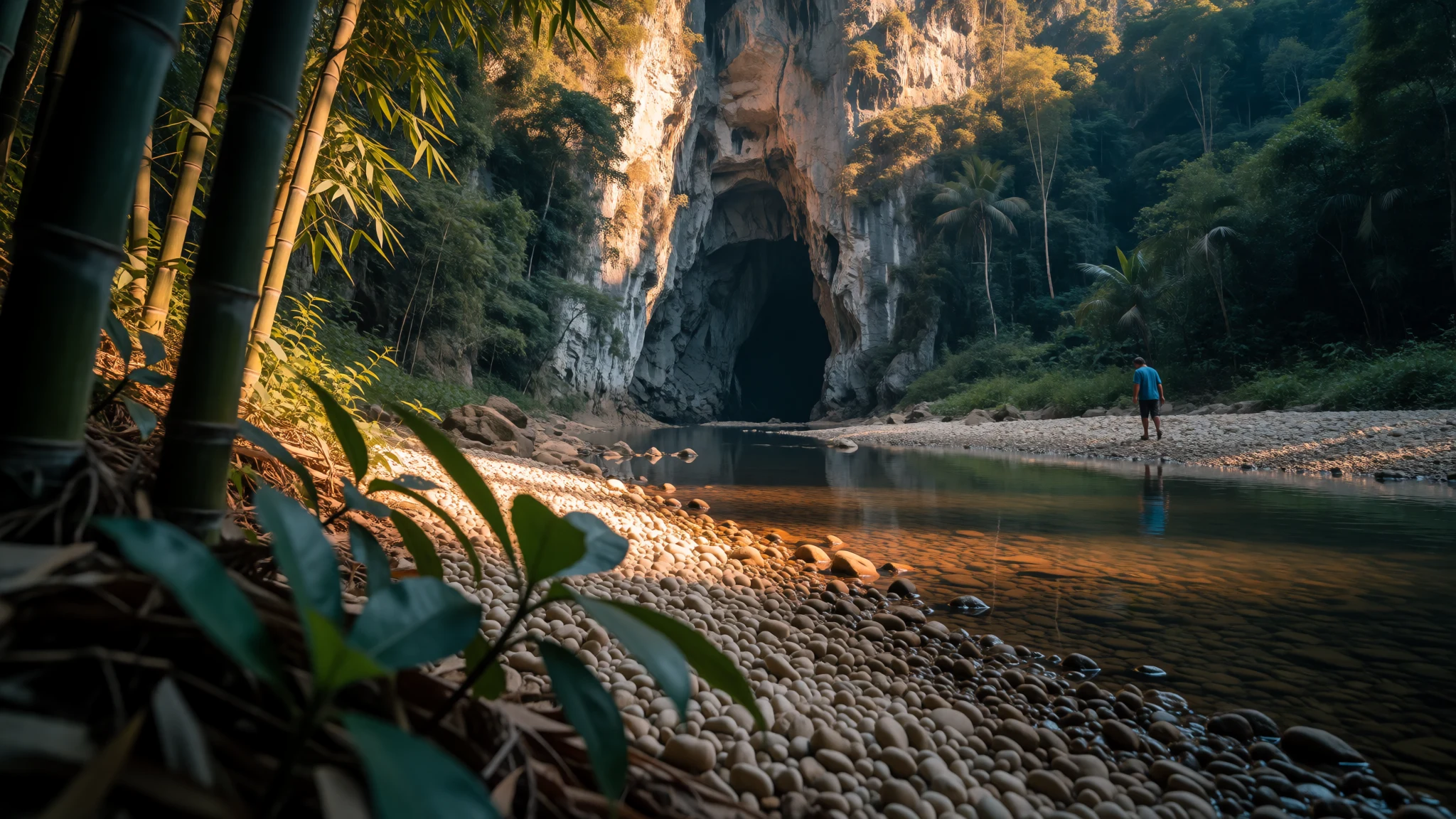
Tham Kong Lo lets you travel by boat through a mountain, along an underground river, into a green valley on the far side.
The place
Tham Kong Lo, also written Kong Lor, is a limestone cave in Phu Hin Bun National Park, in Khammouane Province, central Laos. It lies roughly 130 kilometres north of Thakhek, and it exists because the Nam Hin Bun river runs straight into the hill and out the other side. That river is the road: the cave is about 7 kilometres long, and visitors pass through it by narrow wooden boat rather than on foot.
Inside, the scale is what stays with people. Some passages are around 90 metres wide, and the roof rises far beyond the reach of a headlamp. Boatmen steer with a motor and a pole, and in the shallows passengers step out and wade while the crew drags the boat over gravel. A short walkway leads through lit chambers of stalactites, and there is a pool said to glow emerald, which local people regard as sacred.
At the far end the river opens into the Natane valley, a quiet farming area of rice fields, tobacco and a few villages. The boats usually wait while passengers have a drink at a small stall, then run the same route back.
The nearest base is the village of Konglor, strung along the road near the cave mouth, with simple guesthouses, small shops and the ticket and boat landing. It is remote: expect a long road journey, patchy connections and a slow rhythm. In the rainy season the river rises and access can change, so conditions are worth checking locally before committing.
Its story
For a long time the villagers of this part of Khammouane treated the cave as a place to avoid. Nobody knew where the river went once it vanished into the mountain, and the darkness bred fear. When people wanted to travel between Konglor and the villages of the Natane valley, they went over the top instead, a hard walk of six to seven hours across five mountain passes.
The first recorded crossing by water came in 1920. Five volunteers set out in a rowing boat, lit only by traditional torches that gave them little time or light to spare. They got through, and in doing so showed that a route existed under the hill. Even so, the passage was not used much for many years afterwards, and the old fear persisted.
The valley beyond was shaped over millions of years, as water cut a passage of about 7.5 kilometres through the karst. Its people have long adapted to the seasons: during the monsoon some villages are largely self-sufficient, cut off by high water. Rice and tobacco have been the mainstay of income, and tourism has been added in recent years as boat trips, guesthouses and roadside stalls appeared.
The area also holds a mix of connected habitats with plants and animals found nowhere else, some of them endangered. That fragility is part of the story now: the same boats and footsteps that bring income also press on a delicate place, and the national park setting reflects an effort to balance the two.
What to see
- The river cave by boat — Konglor village
The main event is the boat journey through the mountain along the Nam Hin Bun. Boats run in near-darkness, so headlamps matter, and the roof and walls disappear into black. Expect to get out at shallow stretches and wait while the crew guides the boat over stones.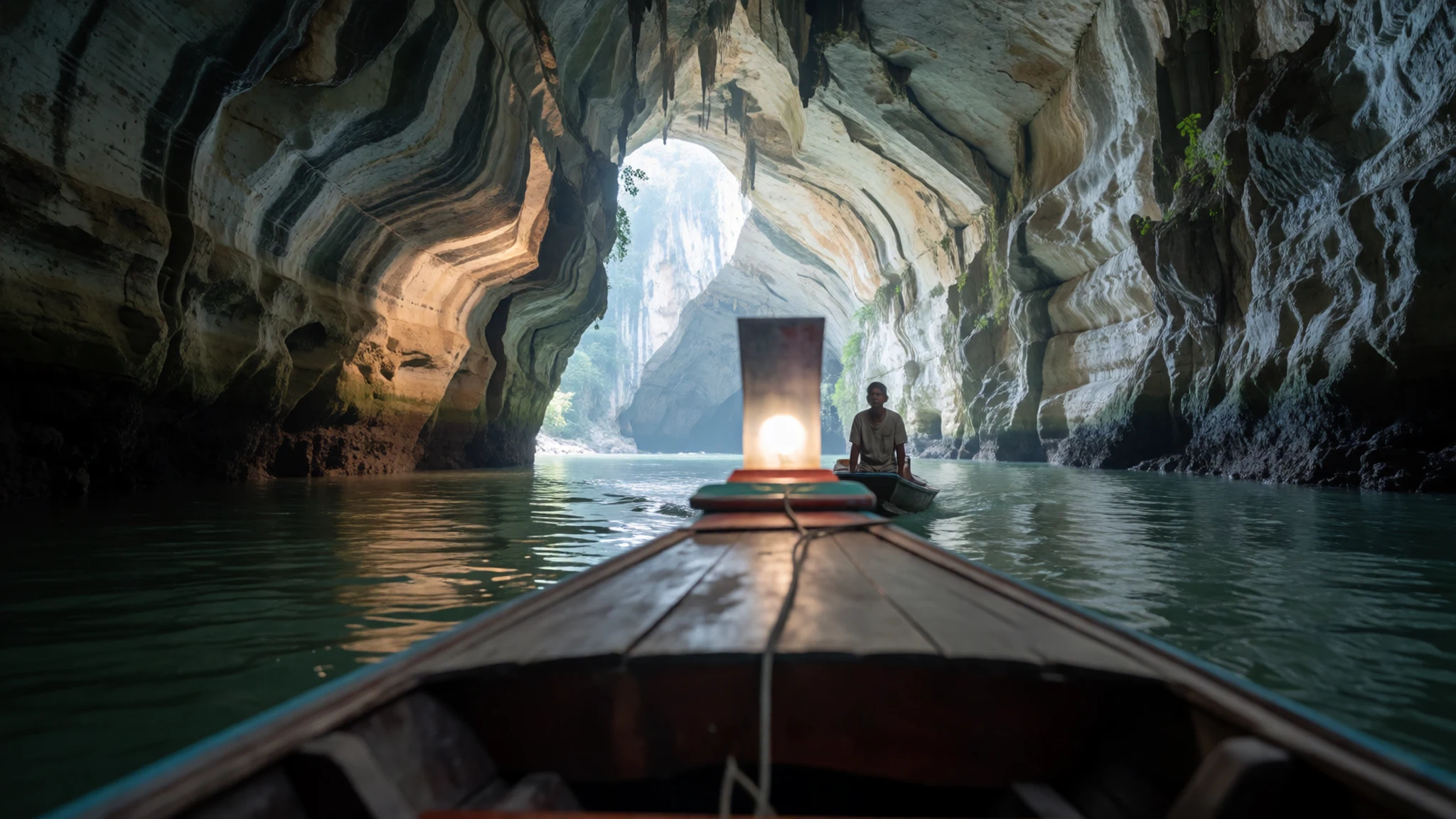
- The illuminated chambers — Inside the cave
Midway through, boats stop at a landing where a footpath climbs through chambers of stalactites and stalagmites, lit so the formations can be seen. It is a welcome pause from the dark water. The floor can be wet and slippery, so grippy footwear helps.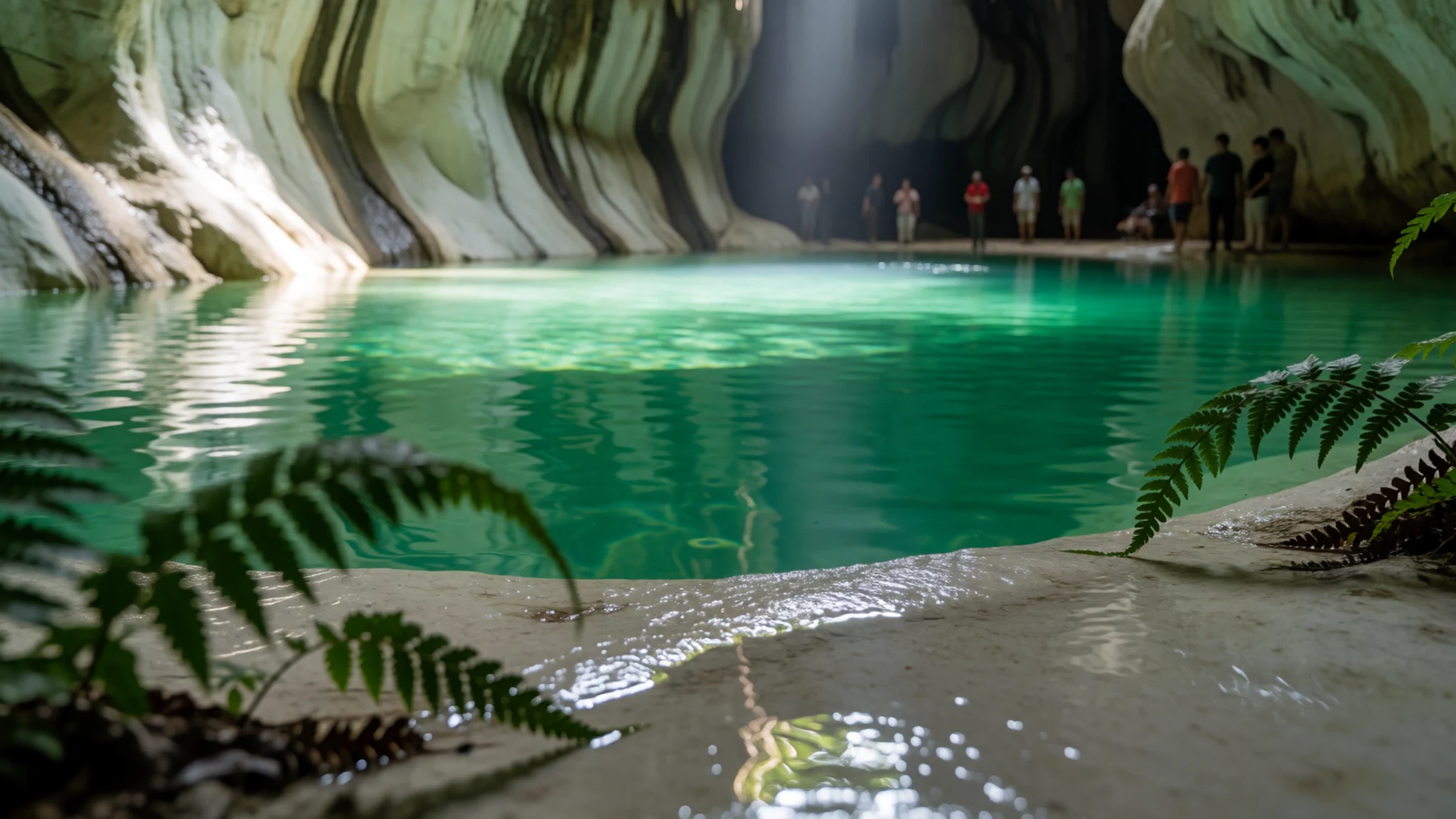
- The emerald pool — Inside the cave
A pool inside the cave glows a bright emerald, and local people hold it sacred, linking its colour to the skin of the god Indra. Visitors see it in passing, so treat it quietly and avoid throwing anything into the water.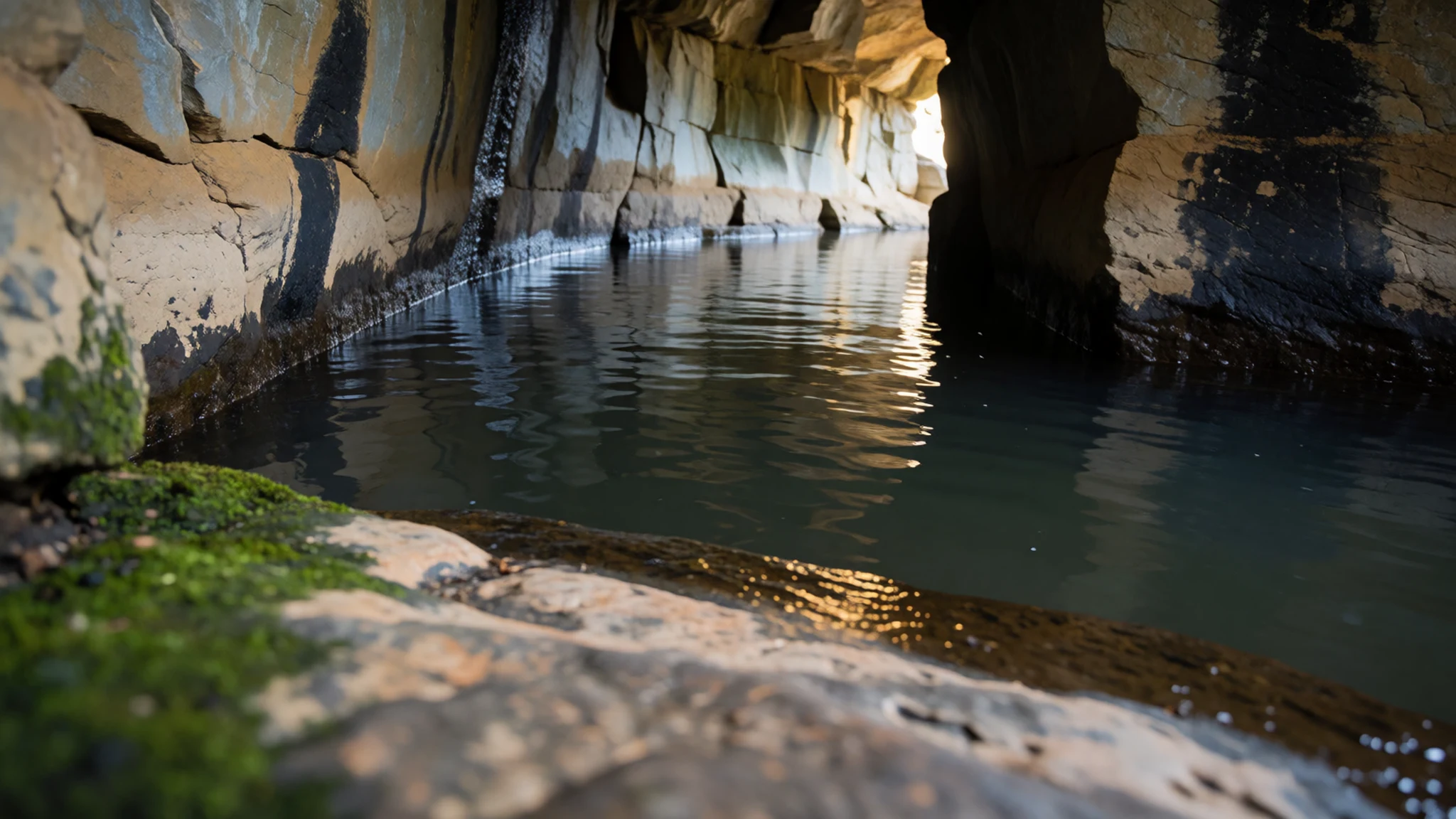
- The Natane valley exit — Natane side
The cave emerges into a green valley of fields and small farms. Boats generally pause here for a break at a simple stall, which gives time to look back at the dark mouth in the hillside and watch farm life carry on at its own pace.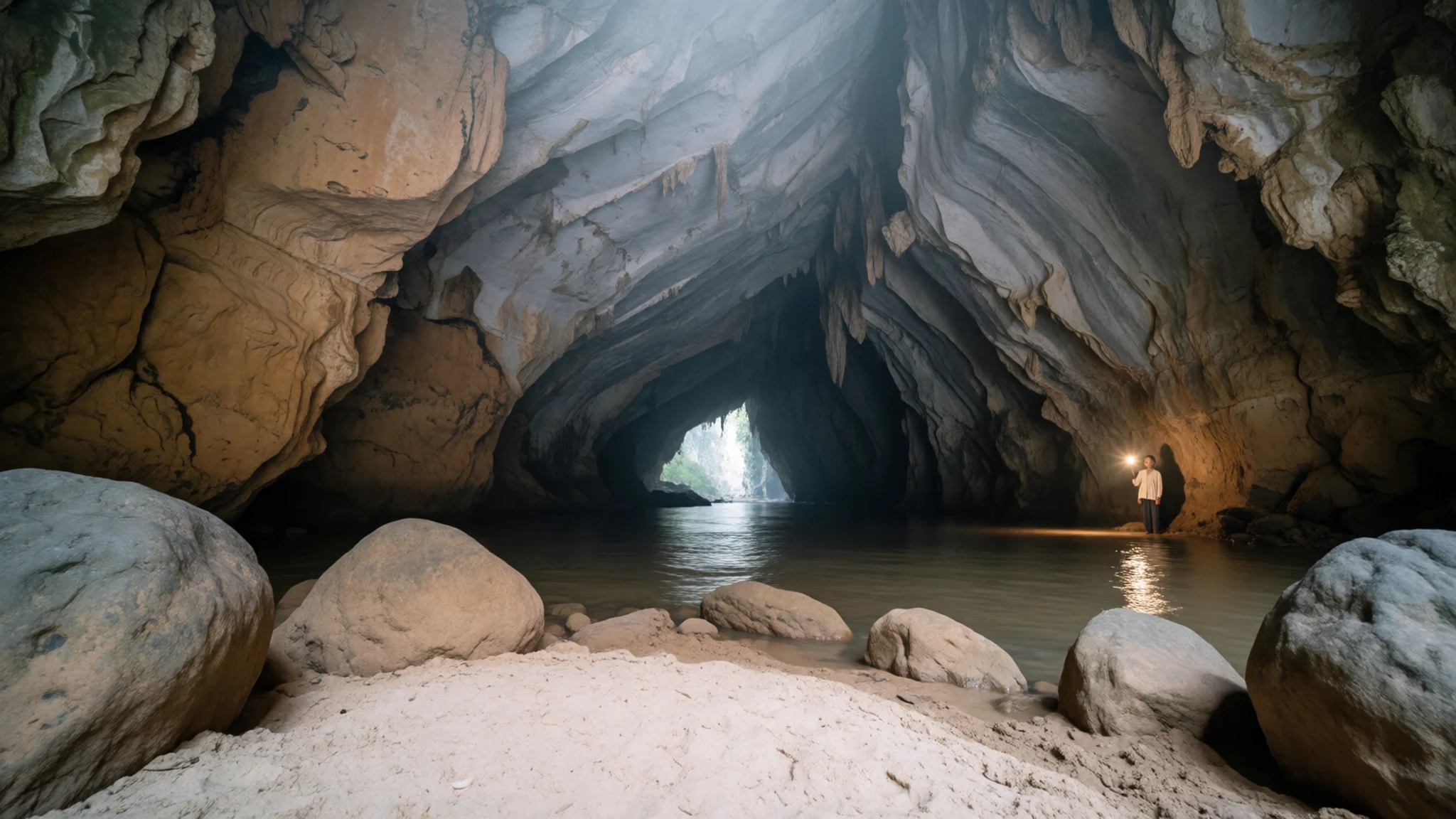
- Konglor village and the cave mouth — Konglor
The village on the near side is the practical base. Walk the road at dusk to see the cave entrance, the boat landing and the karst hills around. Small shops, stalls and guesthouses are strung along it, and evenings are quiet.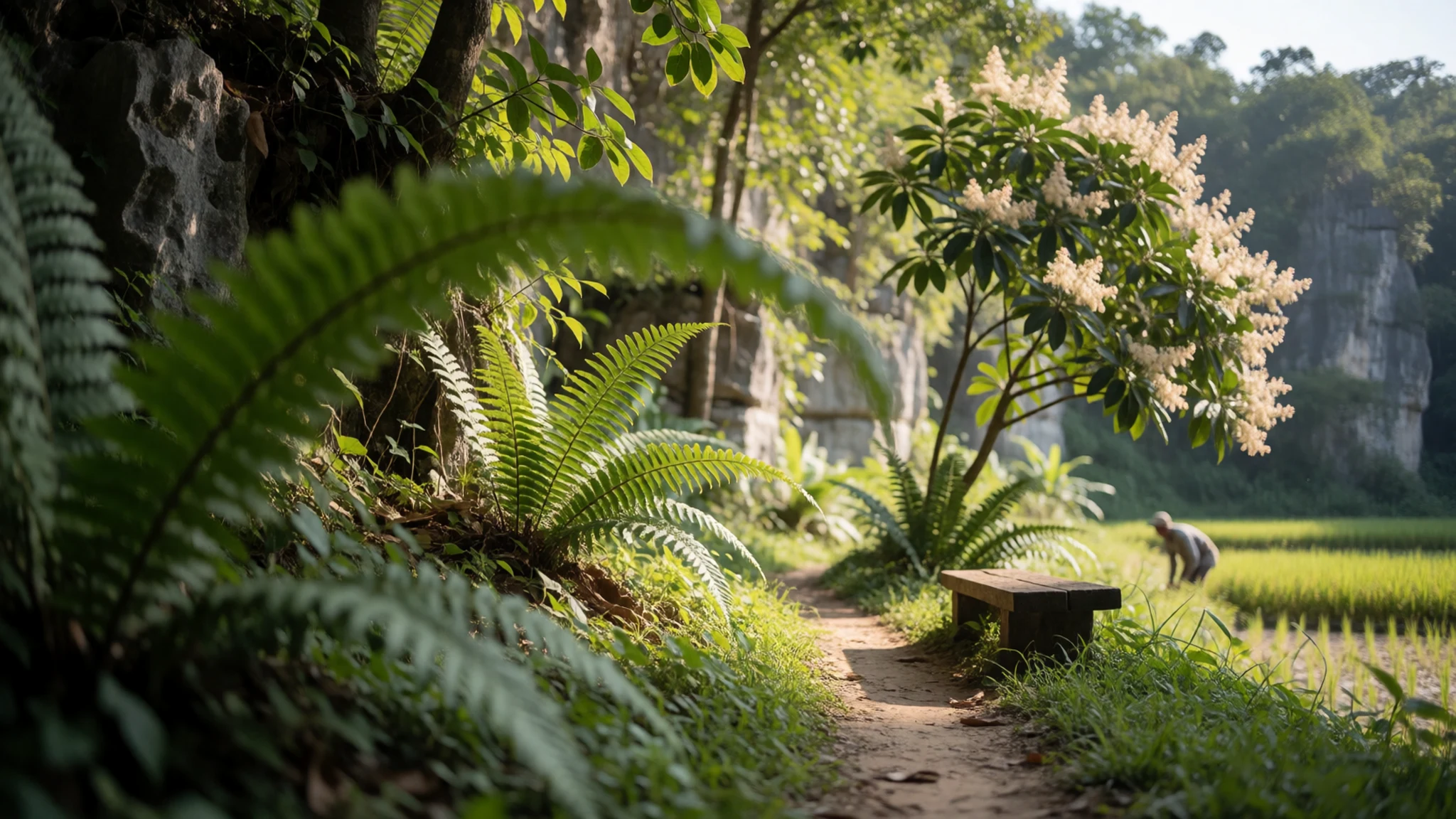
Culture
Tham Kong Lo sits in a region where the landscape carries spiritual meaning. The emerald pool inside the cave is held sacred by local people, who connect its colour to the skin of Indra, and the old fear of entering the mountain shows how strongly the cave was once felt as a threshold rather than a sight. Spirit beliefs sit alongside Buddhism in much of rural Laos, and small offerings or shrines near caves, trees and rivers are common.
Life in Konglor and the valley follows farming and the seasons. Rice and tobacco shape the year, the monsoon changes who can travel where, and tourism is a newer layer that many families have joined by running guesthouses, shops and boats. Boat crews are local people with deep knowledge of the water level, and their judgement on the day should be respected.
The pace is unhurried. Meals, lifts and boats take the time they take, and patience and a smile go further than pressing. Greeting people with a gentle hello, usually with palms together in a small bow, is appreciated.
The region also carries the history of the Vietnam War era, and unexploded ordnance remains a concern in parts of Laos, so staying on established paths is sensible. Please keep to marked routes inside the cave, speak quietly near the emerald pool, and ask before photographing villagers or their homes.
What to wear
Around Tham Kong Lo, traditional dress follows the lowland Lao pattern: women wear the sinh, a wrapped tube skirt of woven cotton or silk, often with a hem band in a contrasting pattern, usually for festivals, weddings, school and formal occasions. Villages in the valley are also home to other communities with their own woven cloth and dyed designs, and hand-weaving remains a household skill in many places.
Day to day, most people in Konglor and Natane wear practical modern clothes suited to farm work and heat: T-shirts, cotton trousers or shorts, loose shirts, sandals or rubber boots, and wide-brimmed hats or scarves in the fields. Sinh and fabric wraps are more common at village events.
For visitors, comfort and practicality matter more than style. The climate is warm to hot, so light, quick-drying layers work best, with something warmer for the boat, as the cave is cool and the river splashes. Wear shoes with grip that can get wet, such as sturdy sandals or trainers, because the walkway and the river stretches are slippery. Shorts are fine on the water, but in villages cover shoulders and knees as a courtesy, and avoid swimwear away from the river. Bring a small waterproof bag for phones and a spare dry top for the evening.
What to eat
- Sticky rice (khao niao) — Any village eatery or guesthouse in Konglor
The staple across Laos, steamed and served in a small woven basket. People roll it into balls by hand and use it to scoop up other dishes. It appears at nearly every meal in village eateries and guesthouses.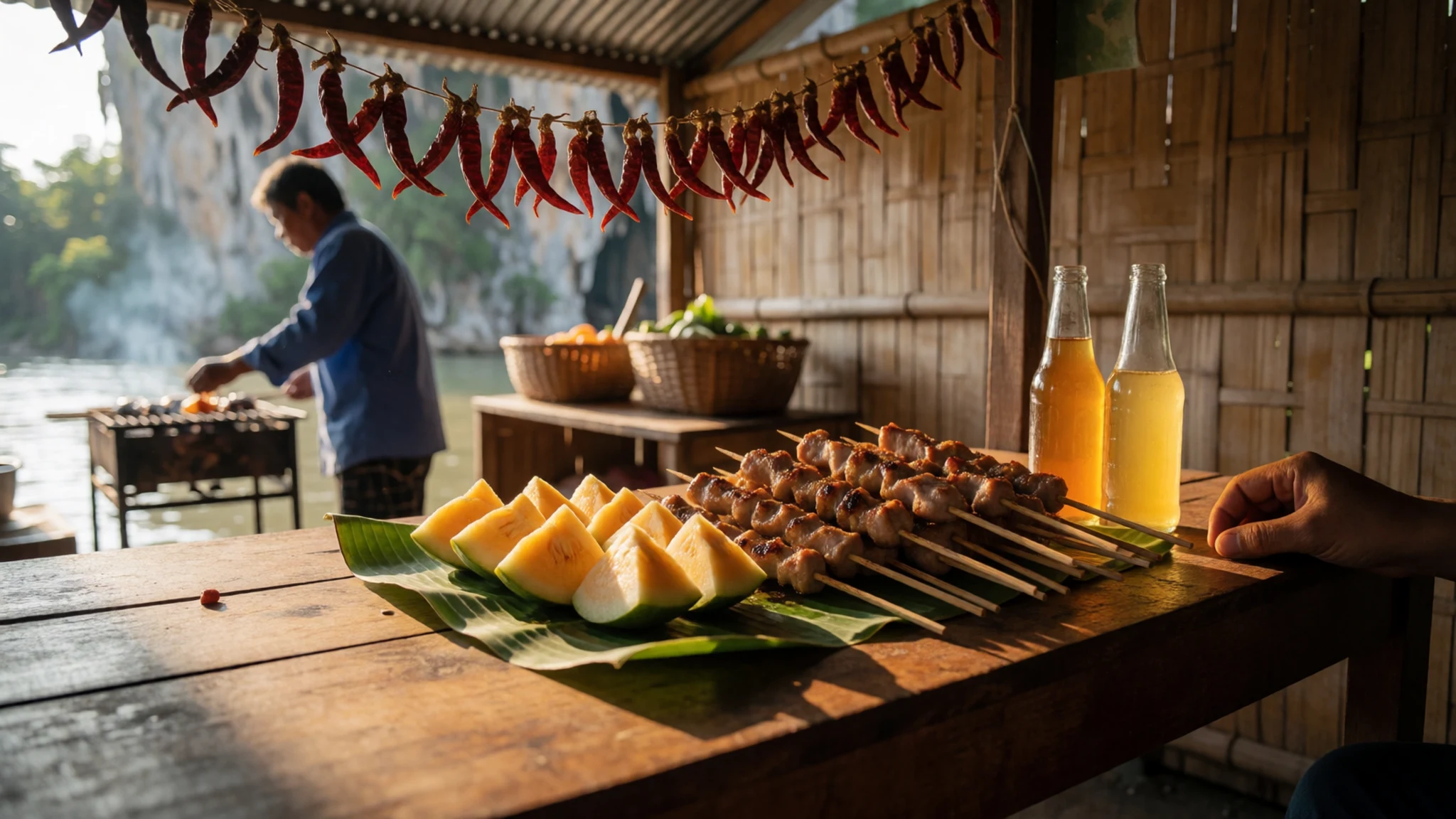
- Laap — Simple roadside restaurants near the cave
A minced meat or fish salad with lime, herbs, toasted ground rice and chilli. It is lively, sour and sometimes fiery, so ask for it mild if you are unsure. Served with sticky rice and raw leaves.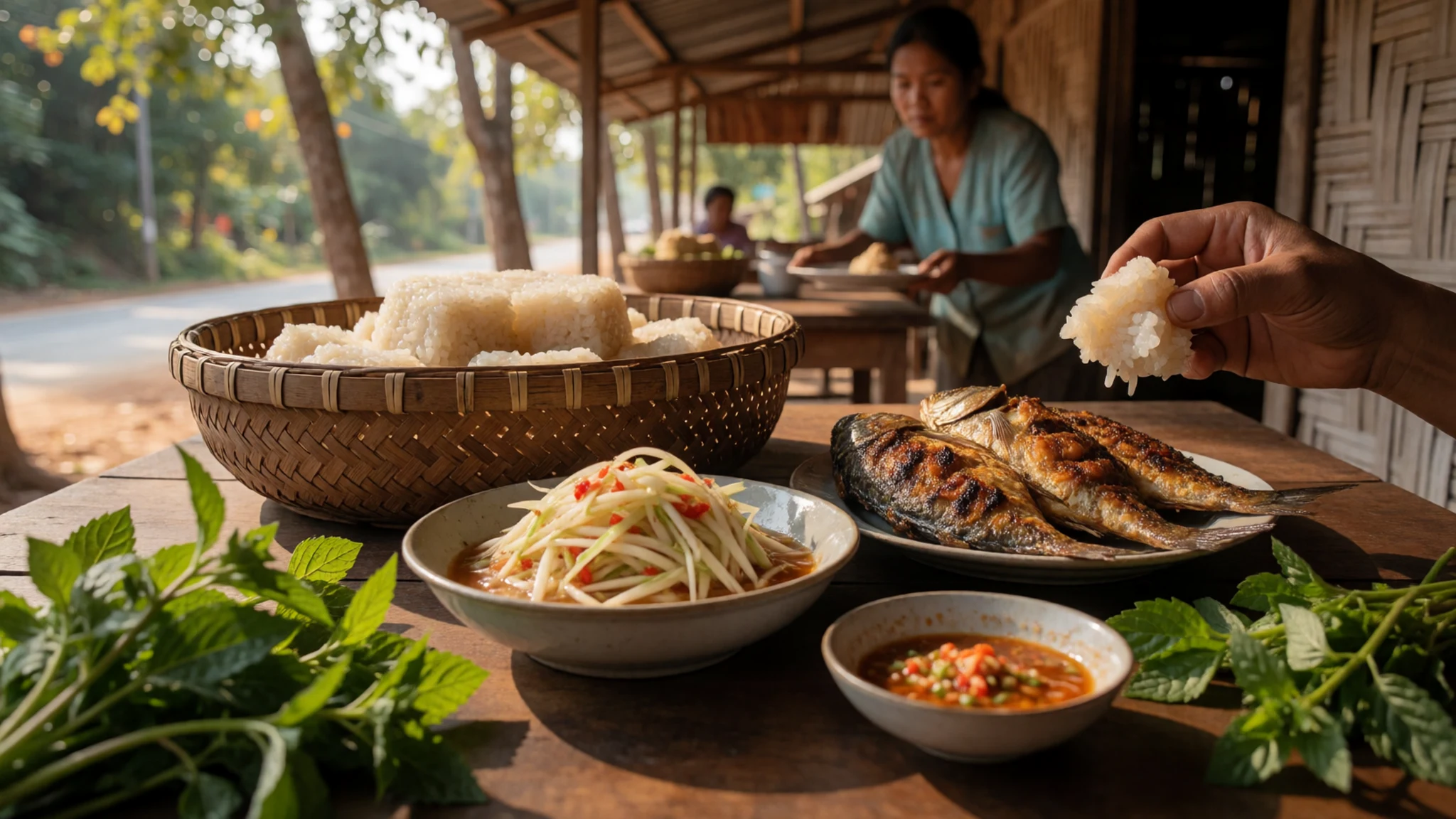
- Grilled river fish — Family-run eateries and stalls in Konglor village
Fish from local rivers, often cooked whole over charcoal with salt and herbs, then eaten with sticky rice and a spicy dipping sauce. Availability depends on the season and the catch, so it is worth asking what is fresh. - Jeow (chilli dips) — Guesthouse dinner tables and village stalls
Thick dips made from roasted chillies, garlic, shallots and herbs, sometimes with smoky aubergine or fish sauce. They come in small bowls beside grilled meat or sticky rice, and vary from mild and sweet to very hot. - Lao coffee and tea — Small drink stalls near the boat landings
Strong, sweet coffee is grown in southern Laos and served in glasses, often with condensed milk. It suits the slow stop at the stall on the valley side, where boats pause for a break before the return trip.
Plan it
Best time. November to February is cooler and drier, with the river calmer and the valley green after the rains. March and April get hot. The monsoon season brings higher water and can disrupt access, so check conditions locally.
How long. 2–3
Getting there. Fly to Vientiane's Wattay International Airport, then travel south by road to Thakhek, the usual gateway. From Thakhek the cave is roughly 130 kilometres north; arrange a bus, minibus or private transport for the last leg to Konglor village, allowing a long day.
Budget. low
Tips
- Stay a night in Konglor so you can go early, before the crowds arrive
- Bring a headlamp as a spare and a waterproof bag for your phone
- Carry cash in small notes, as cards and cash machines are scarce
- Check the official park or local guesthouse for boat and water conditions before travelling
- Bring drinking water and insect repellent
Etiquette
- Follow the boat crew's instructions, especially when stepping in and out on slippery stretches
- Ask before photographing local people or their homes
- Dress modestly in villages and keep noise down near the emerald pool
Nearby
Sources
- Wikidata Q7709772 (CC0)
- Wikipedia: Tham Kong Lo (rev 1376338656) (CC BY-SA 4.0)
- Wikivoyage: Khammuan (rev 5297964) (CC BY-SA 4.0)
- Photo 01, Alexander Blecher (CC BY-SA 4.0)
- Photo 02, Jakub Hałun (CC BY-SA 4.0)
- Photo 03, Jakub Hałun (CC BY-SA 4.0)
- Photo 04, Jakub Hałun (CC BY-SA 4.0)
- Photo 05, Jakub Hałun (CC BY-SA 4.0)
- Photo 06, Jakub Hałun (CC BY-SA 4.0)
- Photo 07, Jakub Hałun (CC BY-SA 4.0)
- Photo 08, Jakub Hałun (CC BY-SA 4.0)


