Muang Khua
Muang Khua, Laos
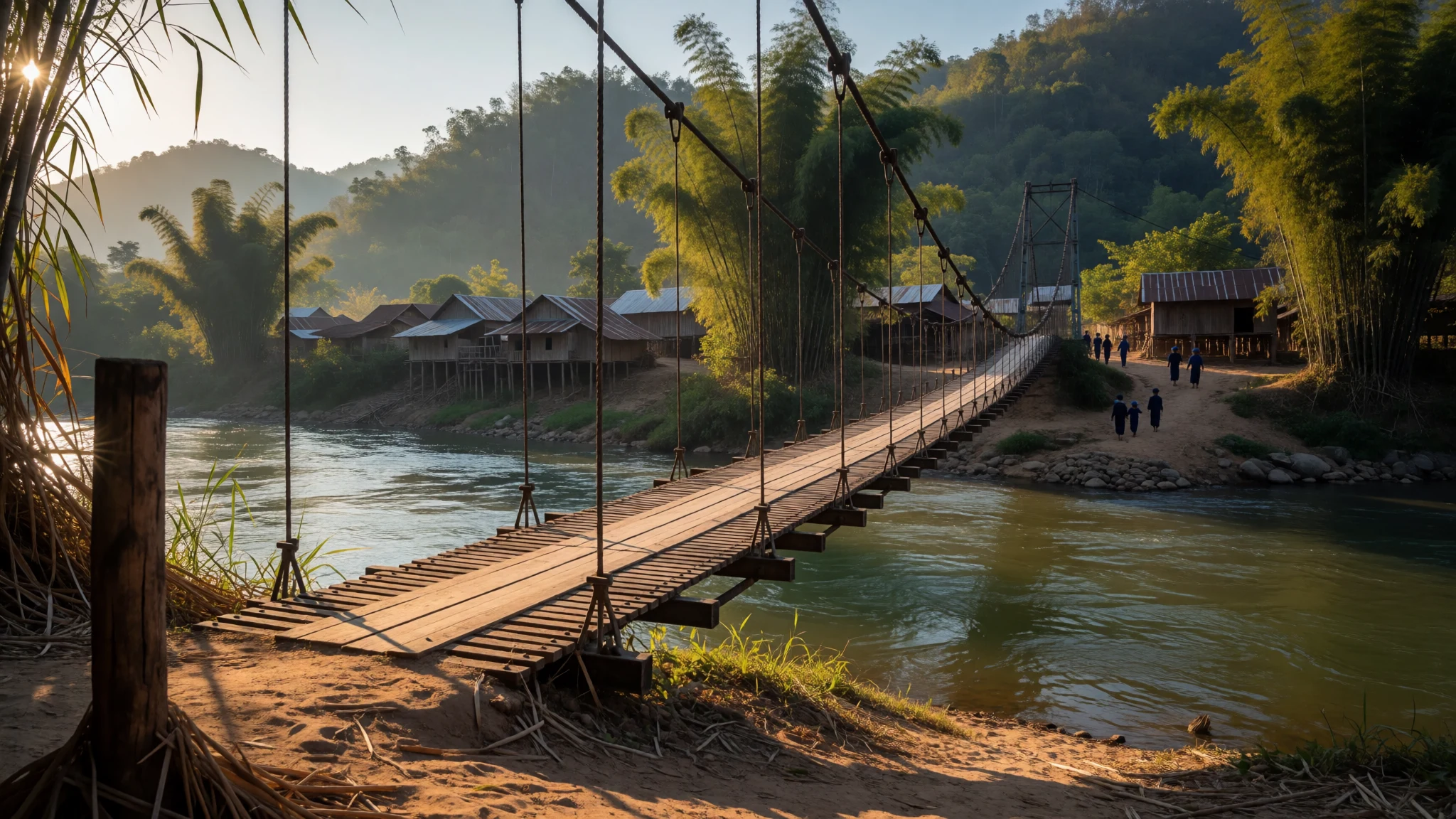
Muang Khua is a quiet river village in northern Laos where the Nam Ou meets a road from Vietnam and boats head south.
The place
Muang Khua is a small village in Phongsali province, in the far north of Laos, close to the Vietnamese border. It sits on the Nam Ou, which runs through the settlement from north to south, while roads leave eastwards and westwards. That makes it a crossing point more than a destination in its own right. A second stream, the Nam Phak, joins the main river here, and the meeting of the two is easy to spot from the bank. Most travellers arrive tired from a long bus or a long boat, stay a night or two, and move on. The village is not set up for crowds. There is a main intersection with a few eateries, a market, a handful of guesthouses, a boat ramp at the end of a sloping street, and a bridge over the river. Mornings are the busiest time, when boats load and the market fills. By afternoon the pace drops and the river belongs mostly to fishermen. The surrounding hills are home to several upland communities, and walking tracks from the village lead into farmland and forest. Rain changes the picture a good deal. In the wet months the roads can turn to mud and some sections may be impassable, so the river becomes the more dependable route. In the dry season the air is clearer and the hills show well. Facilities are basic, cash is the safer bet, and a spare day in any schedule is sensible, because boats and buses do not always run to plan.
Its story
Muang Khua's story is mostly the story of its position. A river valley in the hills of northern Laos has always been a route, and the Nam Ou carried people and goods long before roads reached this corner of Phongsali province. The village grew where that water met tracks running east towards what is now Vietnam and west towards the transit town of Muang Xay. No founding date is claimed here, but how the place works today is clear enough. Boats link it north to Phongsali and south to Muang Ngoi Neua, Nong Khiaw and onward towards Luang Prabang. Roads connect it to Muang Xay and to the northernmost border crossing with Vietnam, near Dien Bien Phu. An old suspension bridge over the Nam Ou survives as a viewpoint, and photographs show a newer road bridge going up beside it, a sign that the village is changing as small border towns do. Backpackers following the overland route between Vietnam and Laos have made it a familiar stop, and the boat south has a name for its scenery. That reputation brings a small seasonal trade in guesthouses, noodle stalls and boat tickets. It also brings friction, because with little competition on the river, fares can shift with how full the boat is, and some travellers end up waiting a day for a better price. The village is best understood as a hinge between a mountainous border region and the river towns downstream.
What to see
- The old suspension bridge — Over the Nam Ou, central village
The old suspension bridge over the Nam Ou is the best spot in Muang Khua to stand and watch the river. Fishermen work the water below, boats pass underneath, and the village spreads along both banks. Go early or near sunset for softer light, and treat the walkway with care.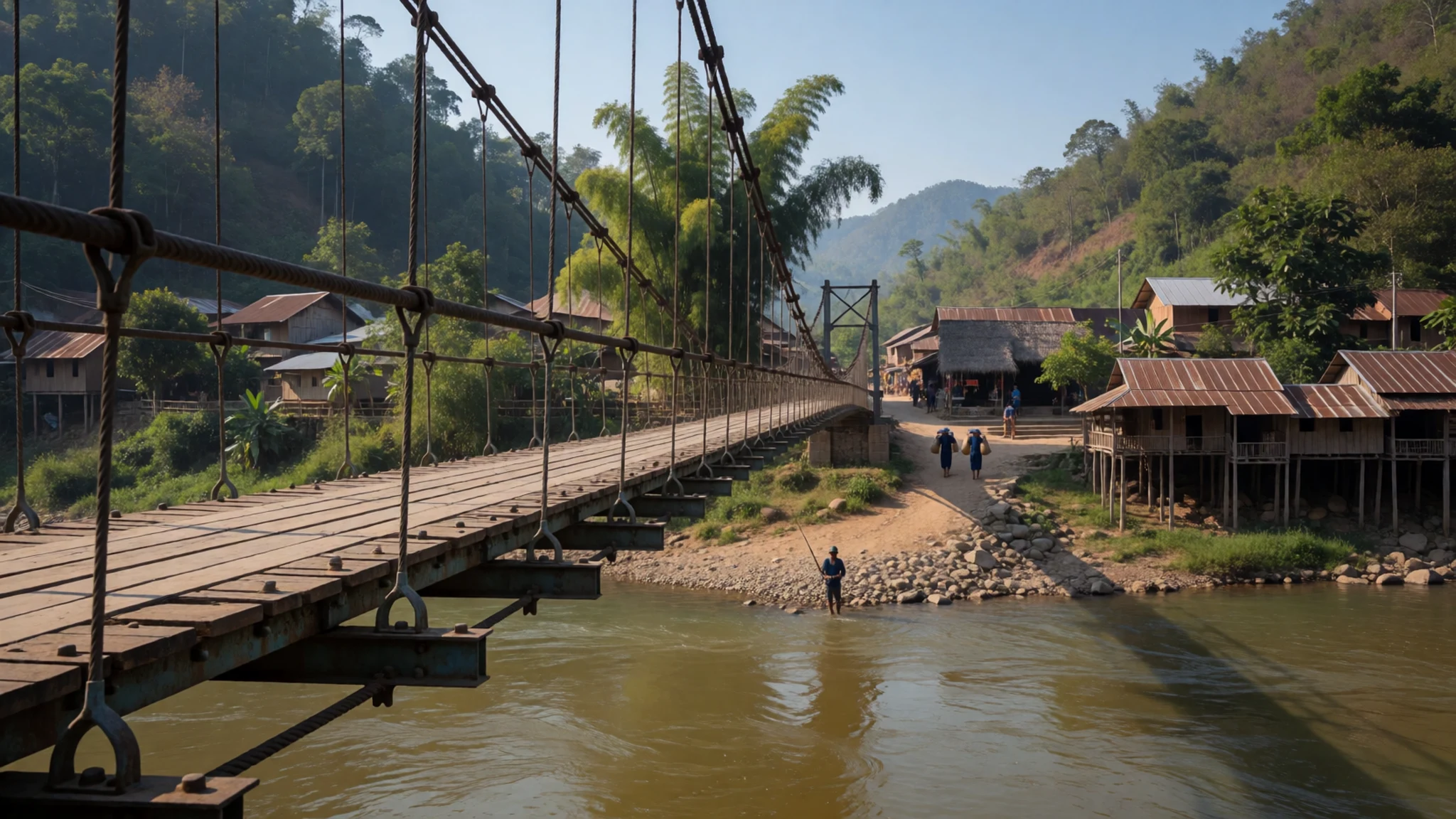
- The boat ramp — End of the sloping road down to the river
The boat ramp is where river life in Muang Khua is most visible. Long, narrow boats load in the morning for the run south towards Muang Ngoi Neua and Nong Khiaw, with passengers, sacks and parcels stacked aboard. Even without a ticket, it is worth walking down to watch a departure.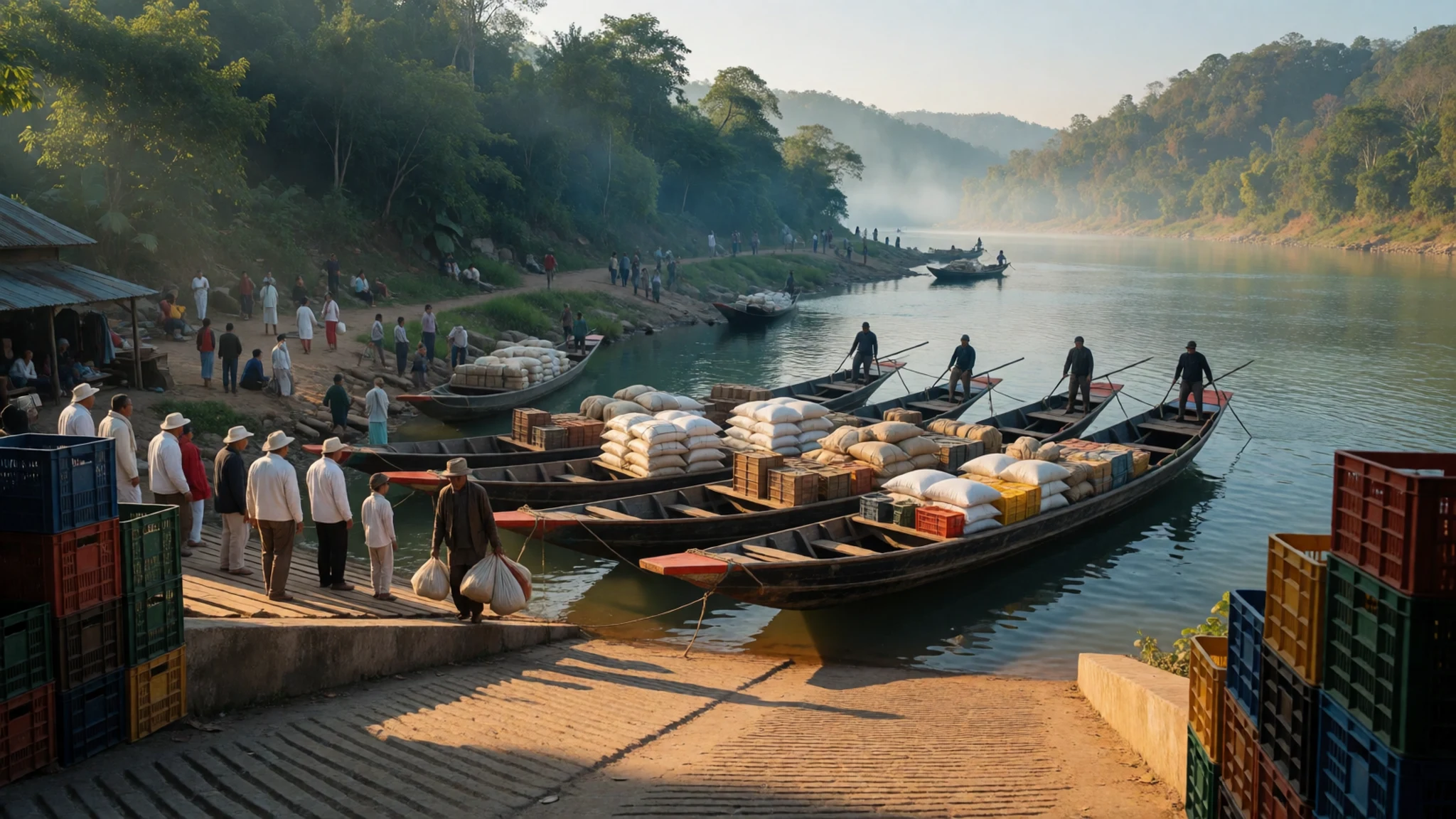
- Where the Nam Ou meets the Nam Phak — Riverbank near the village centre
The confluence of the Nam Ou and the Nam Phak lies a short walk from the centre and rewards a few quiet minutes. The two streams can differ in colour and speed after rain. It is a useful place to read the landscape, with hills closing in on every side.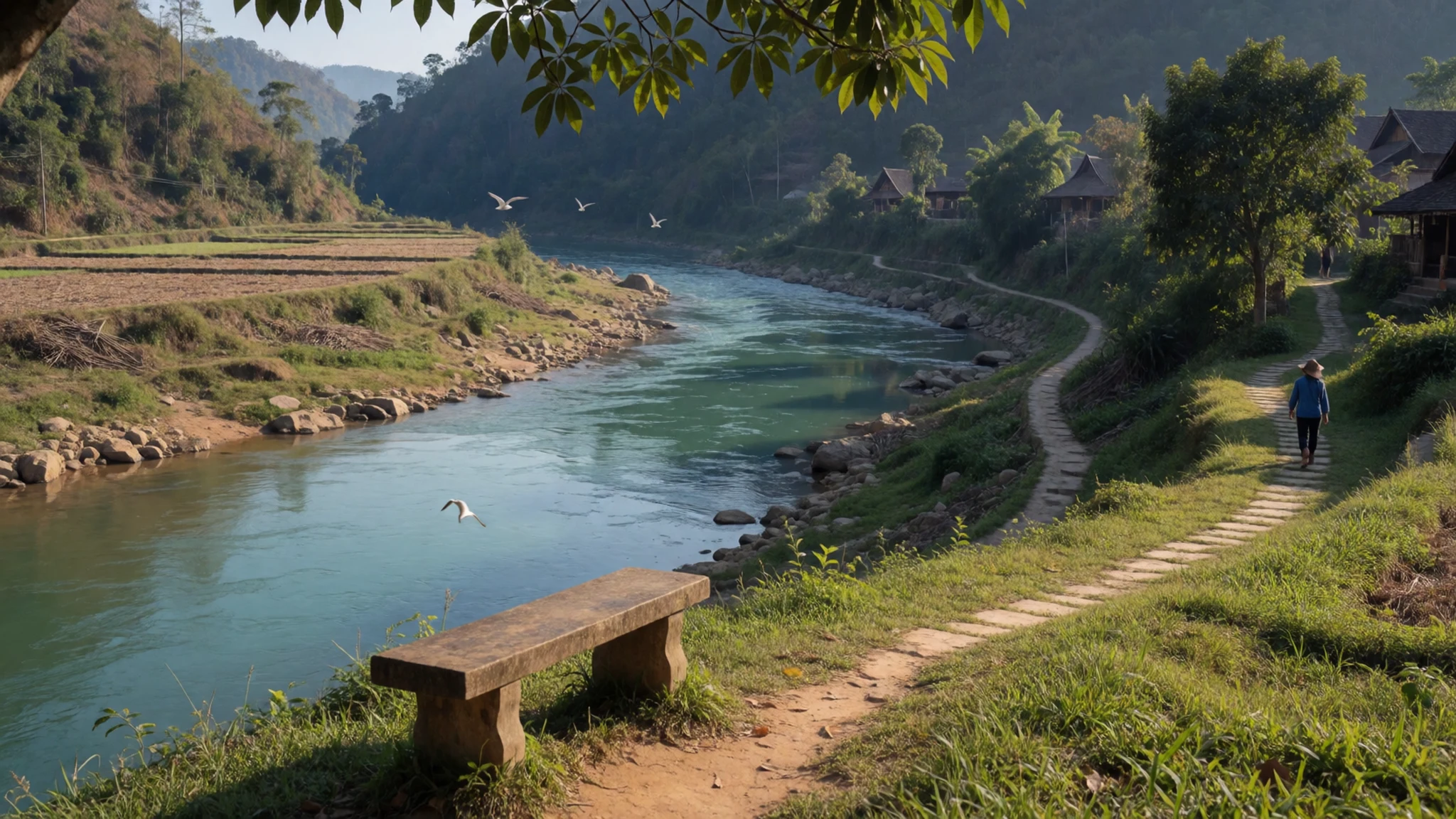
- The market and main intersection — Central Muang Khua
The market and the main intersection form the working centre of Muang Khua. Stalls sell vegetables, herbs and household goods, noodle soup is served opposite, and the tourist office and several guesthouses are within a few minutes' walk. Mornings are livelier, and the market shows what hill farmers bring to town.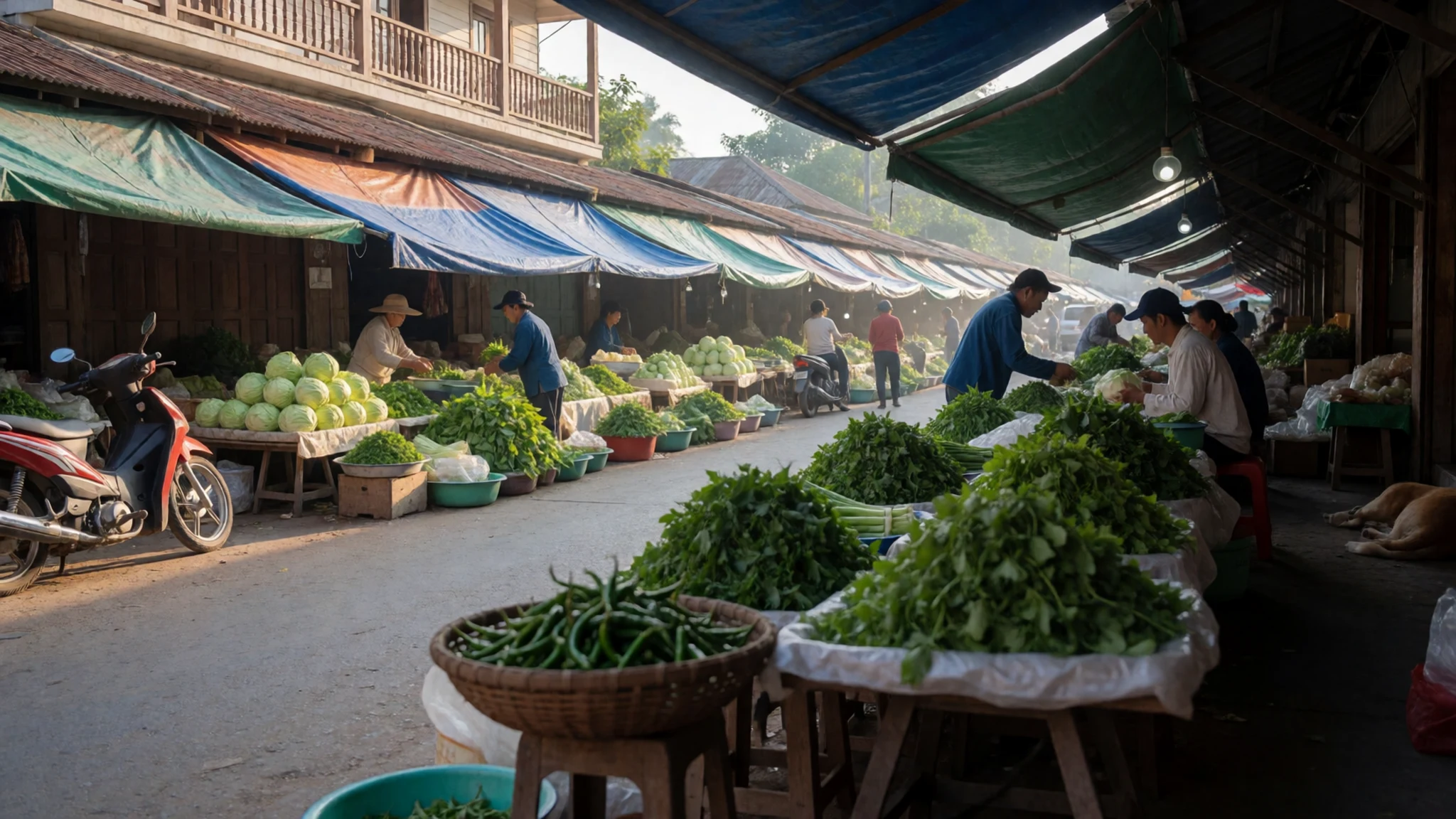
- Guided treks into the hills — Hills around the village
Guided treks into the hills around Muang Khua run from a day to several days, led by local guides whose details are posted at guesthouses and at the restaurant on the main intersection. The paths pass through upland villages. Agree the route, group size and inclusions before setting off, and expect mud in the wet season.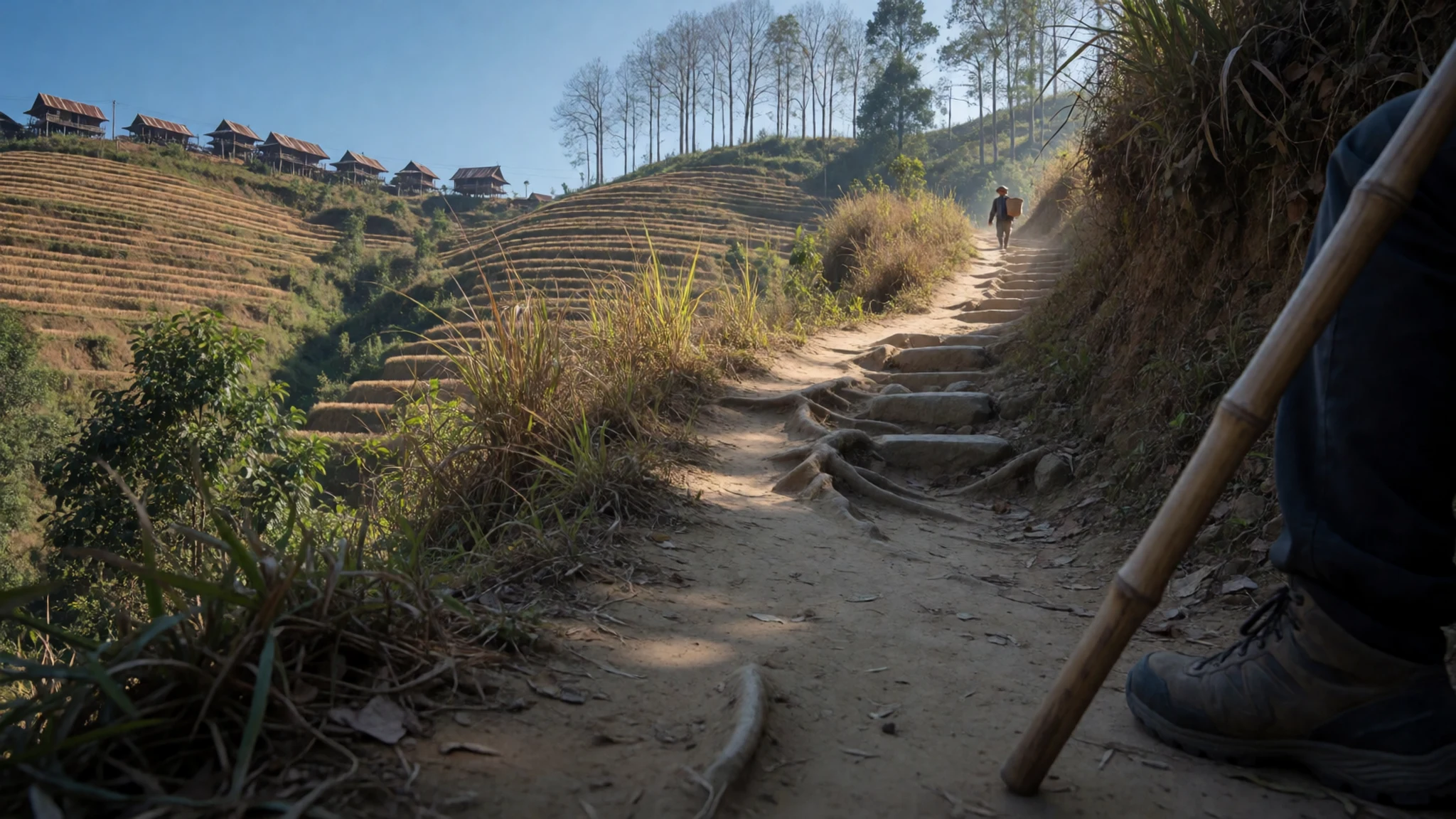
Culture
Muang Khua sits in Phongsali province, where Lao villagers of the river valleys live alongside upland communities with their own languages, dress and beliefs. Buddhism shapes daily life for many lowland families, while some hill communities keep spirit traditions alongside it or in its place. The day here runs to the rhythm of the river and the market rather than any list of sights: early rising, brisk trade in the morning, a long quiet stretch at midday. People are friendly but reserved, and a smile and a greeting do more than any bargaining. The Lao hello, sabaidee, is easy to learn and always appreciated. Laos has a quiet public culture, so raised voices, open anger and political talk are best left out of conversation. The local economy is small and practical, made of farming, fishing, transport and a seasonal trickle of travellers. Beer Lao is the usual drink at the end of the day, and sharing a table is a natural way to meet people. Delays are ordinary, whether a late boat or a slow meal, and patience earns more goodwill than complaint. Ask before photographing anyone, especially in hill villages, and do not hand out sweets or money to children.
What to wear
Muang Khua is a village of lowland Lao and upland communities, and clothing shows both. The best-known traditional garment is the sinh, a woven tube skirt worn by Lao women, made in silk or cotton with a patterned band at the hem. It appears at weddings, festivals and ceremonies, and in school and office uniforms. Hill communities around Phongsali have their own dress, often indigo-dyed or embroidered cotton with silver jewellery, beads and headcloths, mostly worn for festivals and special days rather than every day. Everyday wear now is plain: T-shirts, jeans or loose trousers, football shirts, rubber sandals, caps and wide-brimmed hats against the sun. Farmers and boat crews dress for work, and many women still wear a sinh to market or school. Visitors should pack light, quick-drying clothes, plus a warm layer for cool mornings on the river in the dry season and a rain jacket for the wet months from May to October. Shoulders and knees should be covered in the village and at any temple, and swimwear should stay off the streets. Sturdy sandals or light walking shoes with good grip suit muddy tracks, the boat ramp and the sloping streets.
What to eat
- Noodle soup — Stalls across from the market
Noodle soup is the everyday meal in Muang Khua: hot broth, rice noodles, fresh herbs and a little meat, served at plastic tables. It makes a filling breakfast before the morning boat or a quick lunch. Add chilli and lime to taste at the table.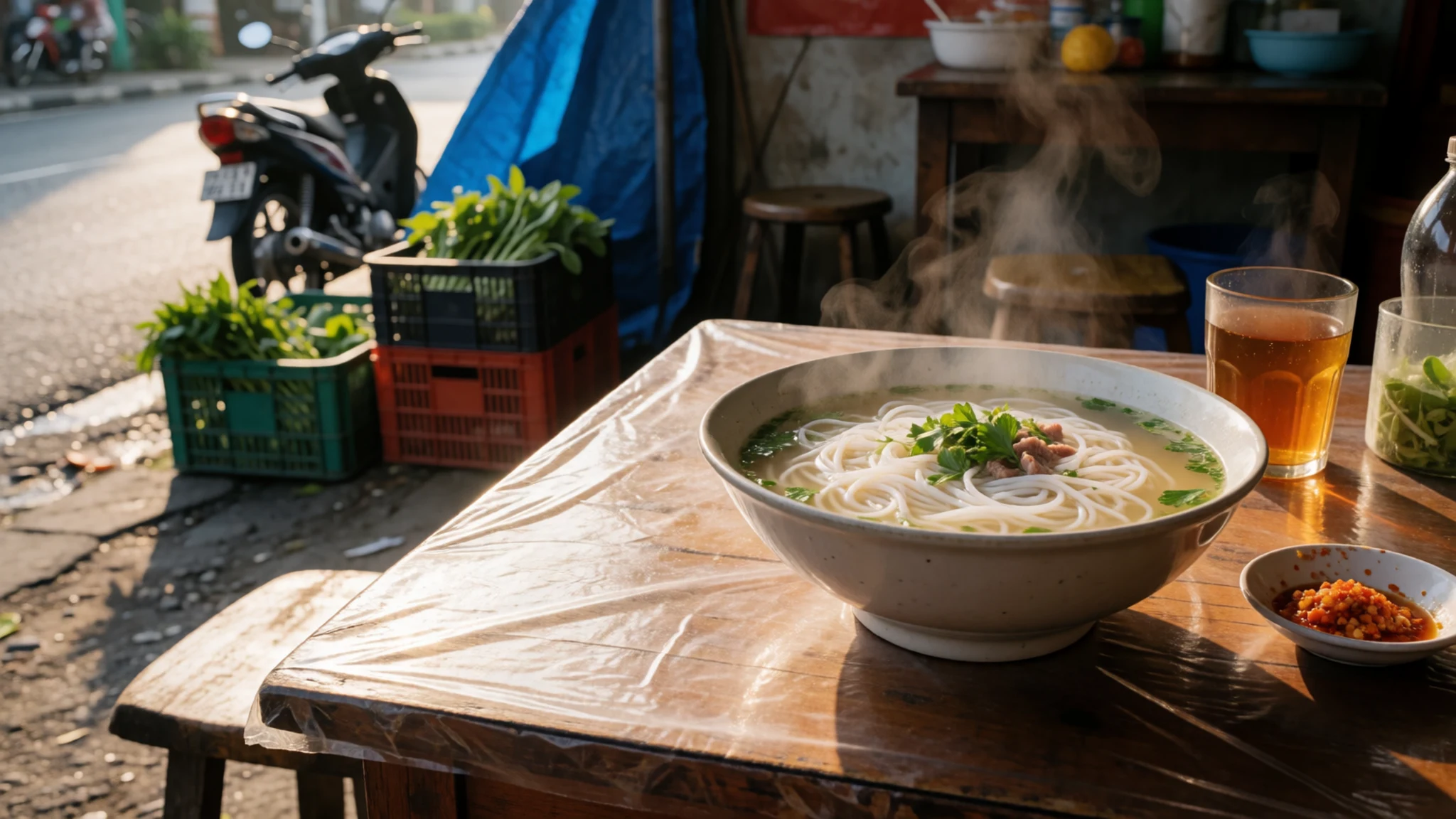
- Sticky rice — Roadside seller opposite the bank branch
Sticky rice is the staple in northern Laos, eaten by hand from small woven baskets. In Muang Khua it is sold by weight from a roadside spot opposite the bank branch, and buying a bag to carry on the boat south is an easy lunch.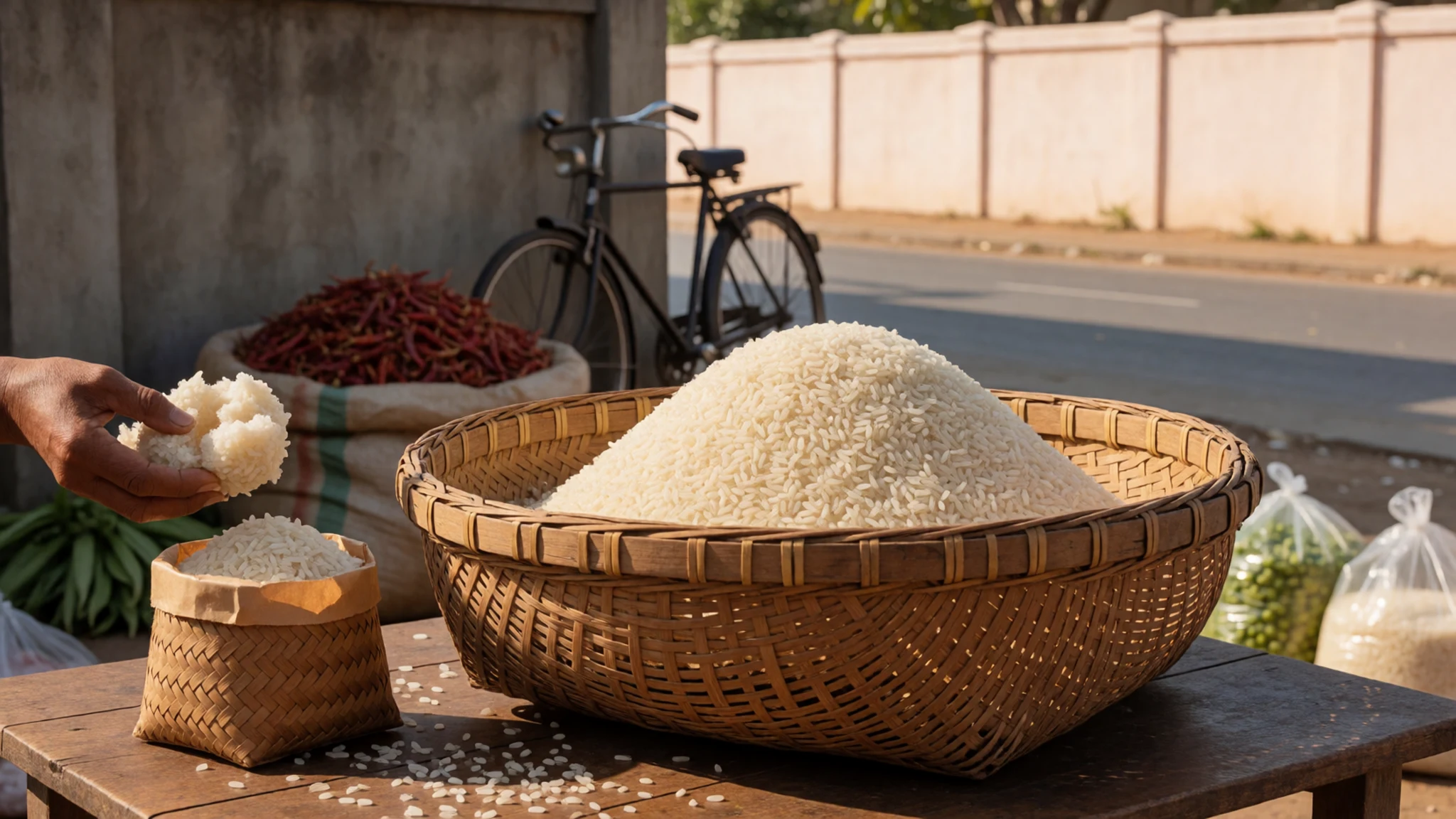
- Ice cream — The restaurant at the main intersection
The restaurant on the main intersection is known locally for its ice cream, a small treat after a hot day on the river or the road. It is an easy place to sit, watch the junction and see who comes through town. - Rice with stir-fries — Eateries on the road to the boat ramp
A few eateries line the road down to the boat ramp, serving rice with stir-fried vegetables, egg or meat, along with soups and cold drinks. Menus are short and portions generous, which suits a meal before or after a river journey. - Beer Lao — Any bar or small shop in the village
Beer Lao is the lager found in every bar and shop in Muang Khua, often poured over ice in a glass. It suits dusk, when the river cools, the boats are tied up and a plate of grilled meat or sticky rice arrives at the table.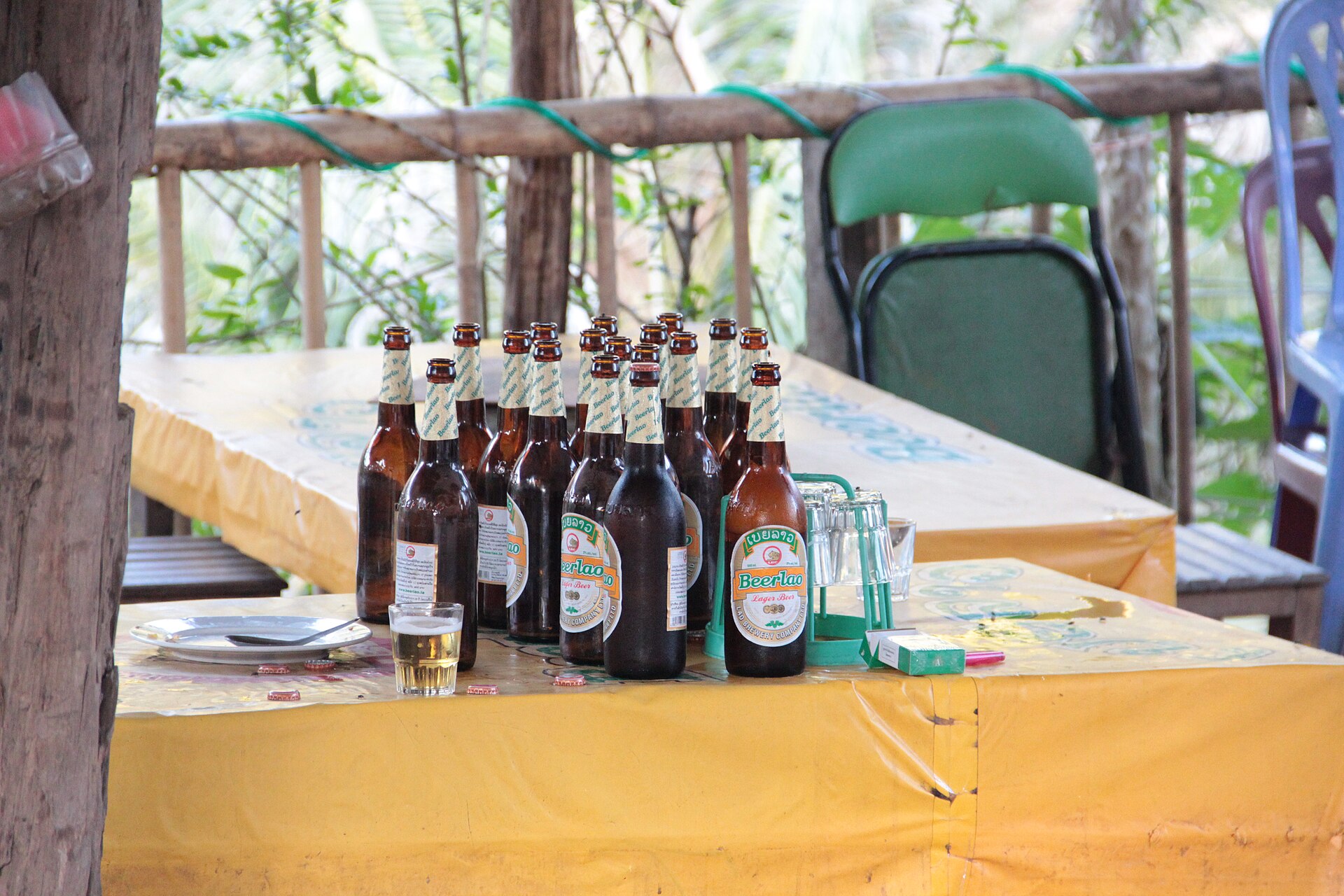
Plan it
Best time. November to March, when the rains have ended and the roads and river are more dependable. From May to October the road to Muang Xay can be hard going or impassable in places.
How long. 1–2
Getting there. There is no airport in the village. By road, buses come from Muang Xay to the west and from Dien Bien Phu in Vietnam over the northernmost border crossing, with early-morning departures. By river, boats run from Phongsali to the north and from Muang Ngoi Neua and Nong Khiaw to the south. Buses from Muang Xay stop on the village's western edge, and a shared tuk-tuk covers the last leg to the centre.
Budget. low
Tips
- Buy boat tickets at the dock shortly before departure and confirm the day's fare and time locally
- Fares can rise when a boat is half full, so build a spare day into the plan
- Carry enough cash in kip, as cards are rarely useful
- Pack water, snacks and a warm layer for the long river trip south
- Arrange treks through guesthouses or the main-intersection restaurant, and check the route and what is included
Etiquette
- Ask before photographing people, especially in hill villages
- Dress modestly, with shoulders and knees covered
- Stay patient over delays and keep a calm voice when haggling
Nearby
Sources
- Wikidata Q2891978 (CC0)
- Wikipedia: Muang Khua (rev 1376861632) (CC BY-SA 4.0)
- Wikivoyage: Muang Khua (rev 5333620) (CC BY-SA 4.0)
- Christophe95, View of Muang Khua and the Nam Ou (CC BY-SA 4.0)
- GuillaumeG, Beerlao bottles (CC BY 3.0)
- Christophe95, A boat in Muang Khua (CC BY-SA 4.0)
- Christophe95, Boats in Muang Khua (CC BY-SA 4.0)
- GuillaumeG, Bridge at Muang Khua (CC BY 3.0)
- GuillaumeG, Bridge under construction, Muang Khua (CC BY 3.0)
- GuillaumeG, Cement mixer and child (CC BY 3.0)
- Christophe95, Confluence of the Nam Ou and the Nam Phak (CC BY-SA 4.0)


