Kuang Si Falls
Kuang Si Falls, Laos
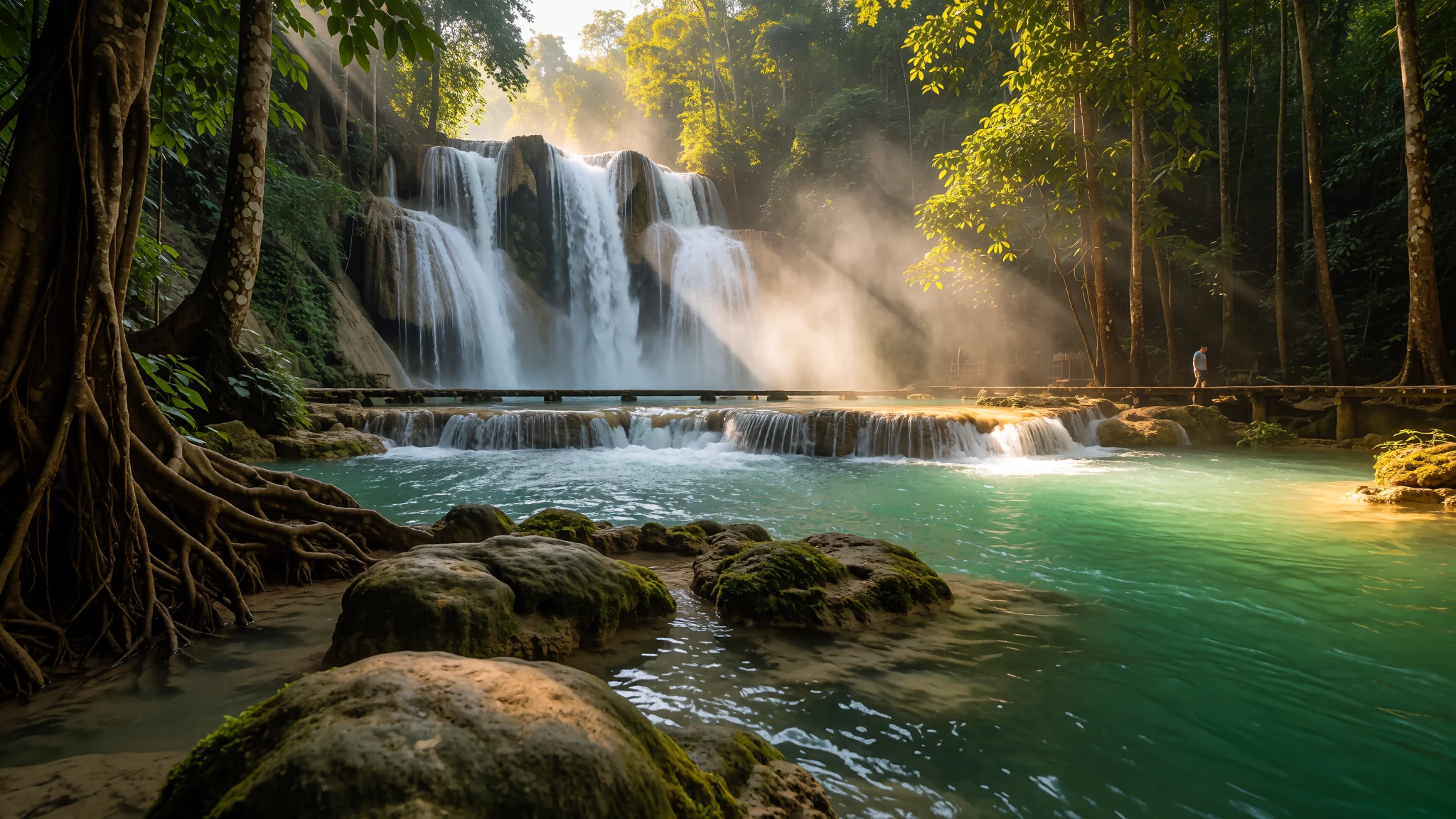
Visit Kuang Si Falls to witness multi-tiered jungle cascades tumbling over white limestone into luminous turquoise swimming pools.
The place
Kuang Si Falls sits in the forested hills of northern Laos, forming a sequence of tiered limestone cascades that end in a dramatic main drop. The river feeding the site begins in high mountain springs and carves through thick vegetation before spilling across pale mineral terraces. These terraces filter the water, leaving it exceptionally clear and tinted an intense, luminous blue-green that shifts with the light through the tree canopy. Mist hangs heavy in the humid air around the base, where shallow pools invite wading beneath shade trees and exposed roots. Wooden footbridges cross the channels at various points, allowing visitors to trace the water's path up steep stairways carved into the hillside. Below the main falls, the river widens into a series of calm enclosures where fallen timber rests on white gravel beds. The surrounding landscape remains heavily forested, part of a protected zone managed to preserve the watershed and its native wildlife. While the lower tiers bustle with visitors taking photographs and swimming in the designated zones, the upper reaches grow noticeably quieter, offering shaded earthen paths through dense secondary forest and ferns. The air smells of damp earth, moss, and cool rushing water, providing a sharp contrast to the sun-baked streets of nearby towns.
Its story
Kuang Si Falls has long been tied to the upland communities who inhabited the surrounding mountain slopes long before modern borders or tourism routes were drawn. The river feeding the cataract, known locally as the Si, rises in highland areas traditionally home to Hmong and Khmu hill tribes who farmed the valleys using traditional slash-and-burn methods. Over generations, these agricultural practices altered the local hydrology, leading to seasonal drops in the river's flow and environmental stress on the watershed. Following shifts in regional administration, authorities gradually relocated upland farming communities away from the immediate headwaters to allow the native forest and natural springs to recover. This intervention helped stabilise the flow of the Si River, maintaining the permanent turquoise pools that define the site today. In more recent decades, the area transitioned from a remote natural feature into one of the country's most frequented rural destinations, drawing travellers from across the globe to its limestone terraces. Despite this influx of visitors, the surrounding hills retain traces of their rural past, with a few remaining traditional dwellings tucked into the forest margins near the entrance paths.
What to see
- The Main Cascade — Upper section of the park
The towering central drop plunges over a sheer limestone wall into a deep, churning basin below. Mist constantly fills the air around the rock face, and sturdy wooden bridges provide vantage points for watching the powerful torrent hit the pale mineral shelf.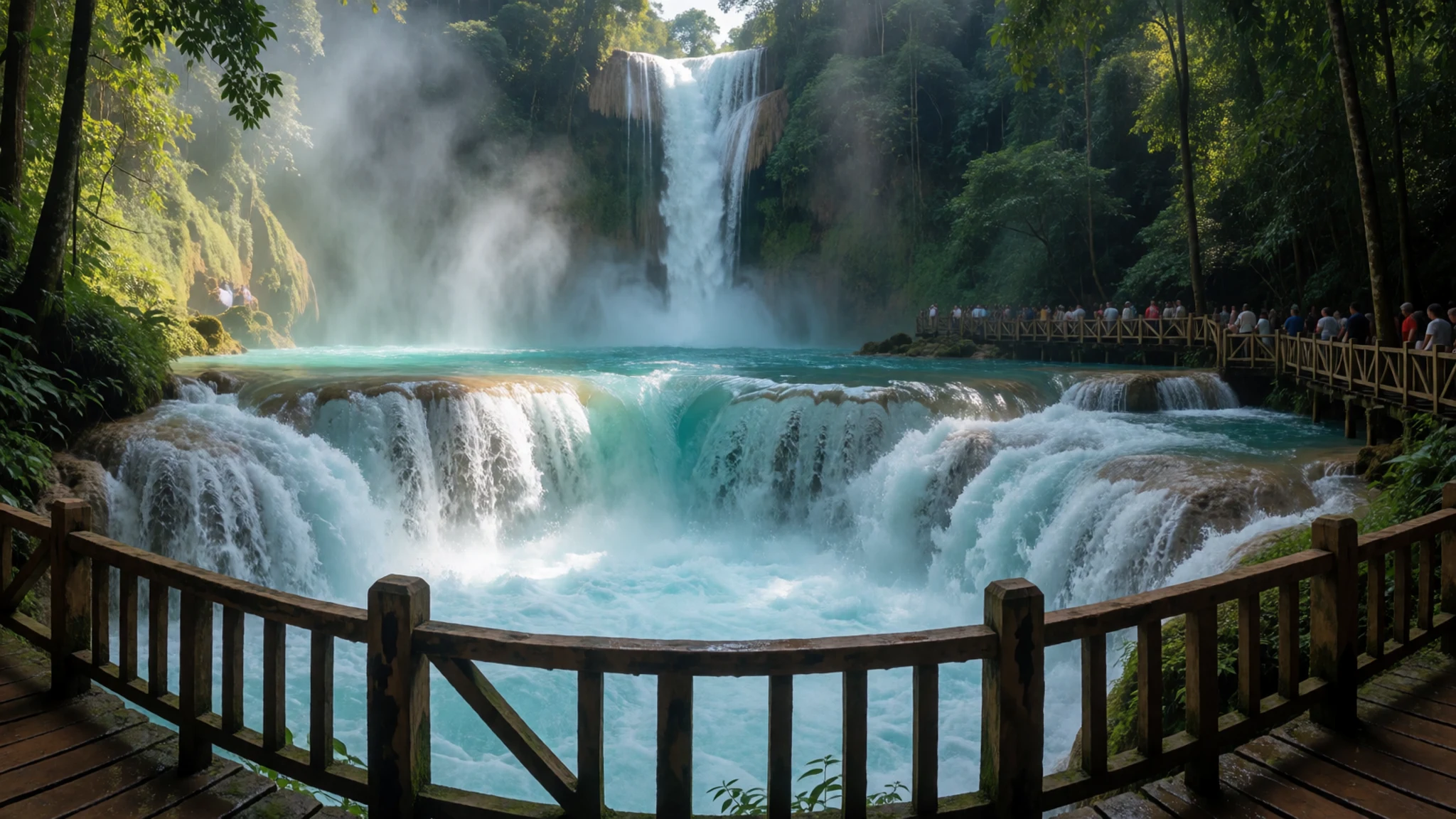
- Turquoise Swimming Pools — Lower park area
A series of terraced limestone basins downstream from the main drop collect clear, mineral-rich water. Designated swimming zones allow visitors to wade in the cool, bright blue pools surrounded by overhanging tree branches and exposed roots.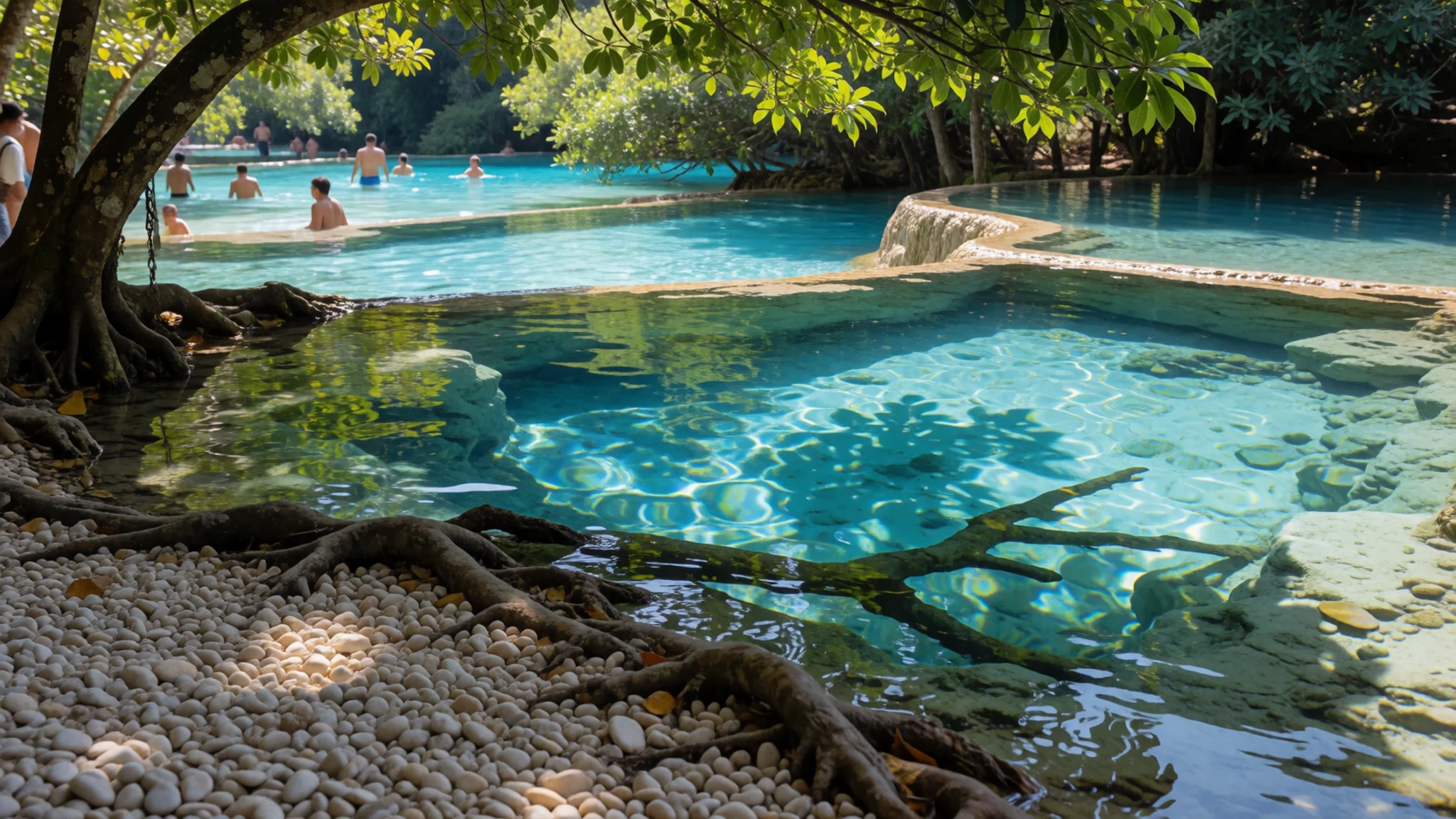
- Upper Forest Trails — Above the main drop
Steep dirt paths wind upward alongside the cascading river, leading past quieter secondary tiers away from the main crowds. Shaded by thick canopy foliage, these tracks offer a strenuous climb to the calm spring sources feeding the system.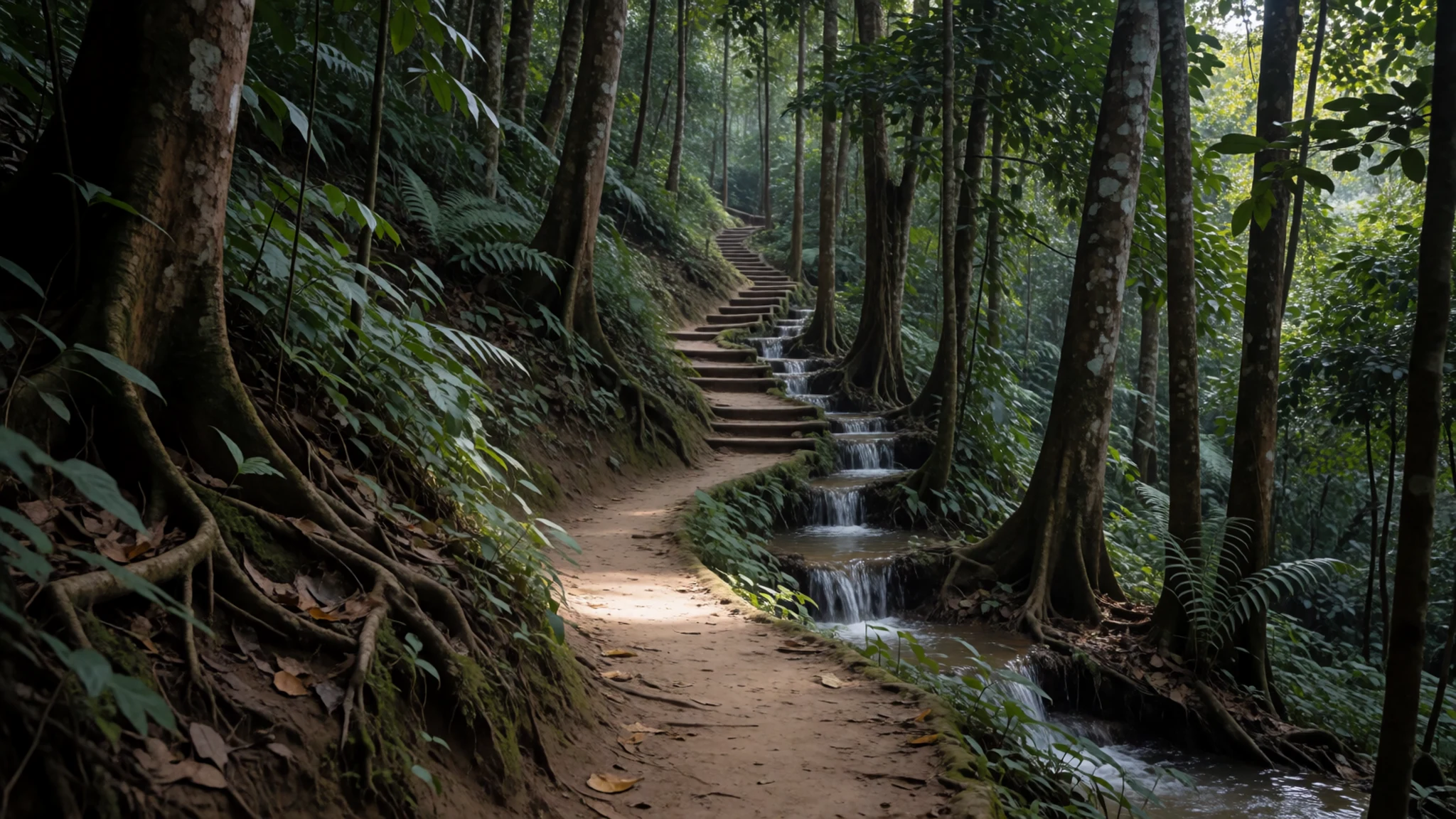
- Traditional Lao Herbal Sauna — Near the park entrance area
Simple bamboo-framed shacks heated by wood-burning stoves offer aromatic steam baths infused with local forest herbs and lemongrass. Often run by community members or temple groups, these rustic enclosures provide a deeply restorative, traditional rural heat therapy.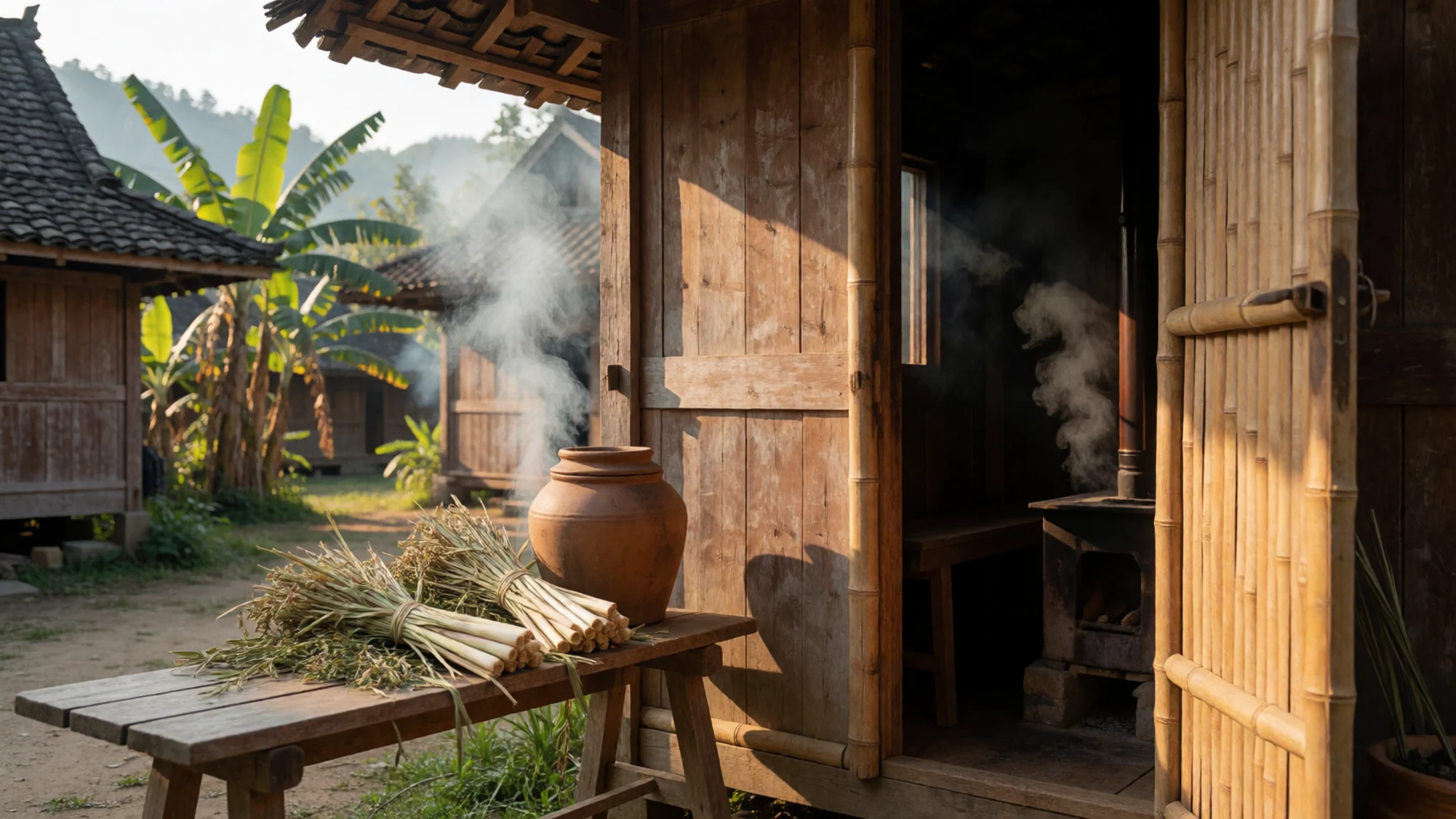
Culture
Kuang Si Falls and the wider rural regions reflect a deeply traditional society shaped by Theravada Buddhism and ancient animist customs practiced by upland minority groups. Daily life moves at a measured pace, and public disputes or displays of anger are avoided as they cause a loss of face for everyone involved. Visitors will notice that Lao people respond to difficult situations with patience and quiet humour rather than confrontation. Modesty is highly valued in all social interactions, particularly in rural villages and sacred spaces where revealing clothing is considered inappropriate. Traditional crafts such as handloom weaving remain central to village life, with intricate silk and cotton textiles passed down through generations of women. When interacting with local residents, simple gestures of respect—such as a slight bow with palms pressed together—are warmly received. Always remove your shoes before entering private homes, village dwellings, or temple structures across the region.
What to wear
Kuang Si Falls and the rural lowlands see traditional textiles worn primarily during festivals, rituals, and ceremonies, while everyday modern clothing has become standard for daily work. Traditional Lao dress for women centres on the *sinh*, a hand-woven tubular silk or cotton wrap-around skirt featuring intricate geometric and mythological motifs along the hem, paired with a fitted blouse. Men traditionally wear simple trousers or traditional wrap trousers for ceremonial occasions. Handloom weaving remains a vital cottage industry, utilising natural dyes extracted from tree bark, roots, and indigo. Today, locals in towns and rural areas wear practical, lightweight western clothing such as t-shirts, light trousers, and sandals suited to the tropical heat. Visitors heading to Kuang Si Falls should dress modestly to respect local cultural norms, opting for lightweight linen trousers or knee-length skirts and sleeved tops rather than swimwear outside designated pool areas. Sturdy walking shoes or secure sandals are essential for navigating the steep, damp limestone paths around the cascades.
What to eat
- Sticky Rice — Any roadside stall or local eatery
The foundational carbohydrate of every Lao meal, steamed in bamboo baskets and eaten directly from small woven containers called tip khao using your right hand.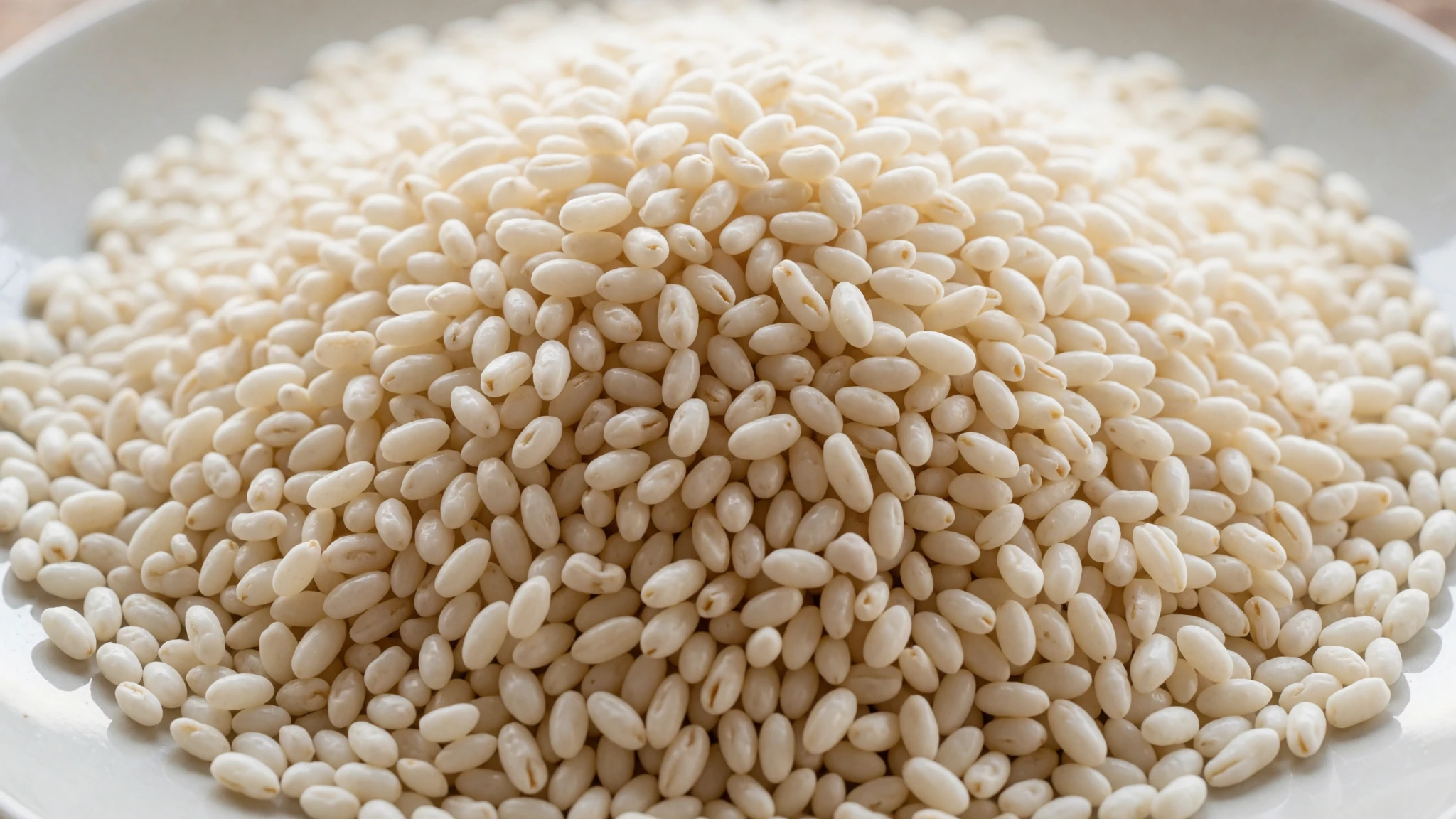
- Laap — Night market food stalls and village kitchens
A finely minced meat or fish salad tossed with toasted rice powder, fresh mint, lemongrass, spring onions, and a generous squeeze of fresh lime juice.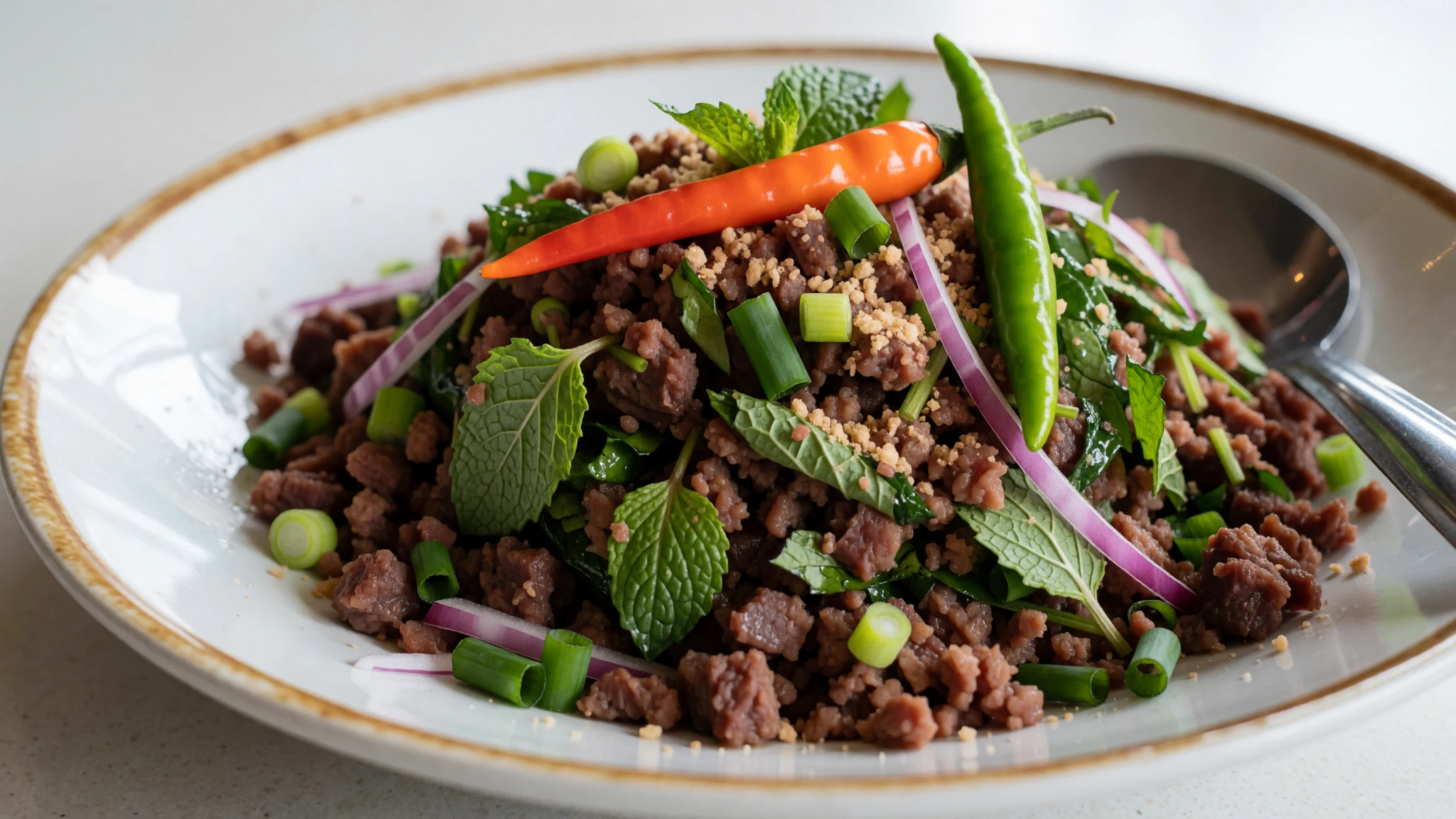
- Tam Mak Houng — Local markets and roadside food carts
A fiery, pounded green papaya salad combining raw chilli, garlic, fish sauce, fermented crab paste, lime, and crisp unripened fruit for a sharp, spicy kick.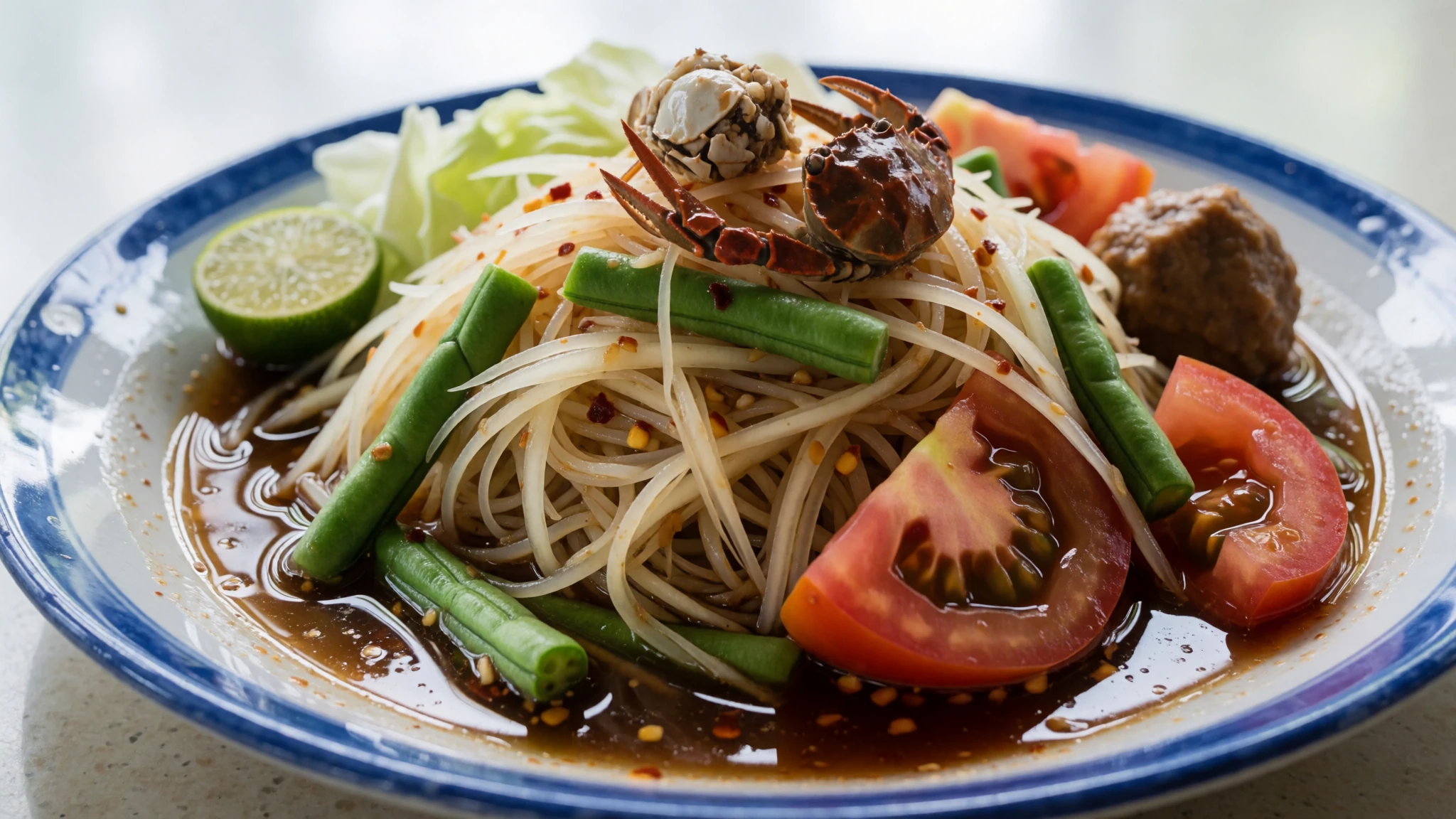
- Mok Pa — Riverside food vendors and traditional eateries
Fresh river fish seasoned with dill, lemongrass, chillies, and local herbs, wrapped securely in banana leaves and steamed over hot coals until tender and fragrant.
Plan it
Best time. November through February offers cooler temperatures and clear skies after the monsoon rains, making the turquoise pools vibrant and accessible.
How long. 1–2
Getting there. Fly into Luang Prabang International Airport, then take a tuk-tuk, shared minivan, or private car south across the rural road network.
Budget. low
Tips
- Arrive early in the morning before tour groups fill the lower pools
- Wear proper walking footwear as limestone paths become very slick when wet
- Bring cash in local currency for park entrance fees and market snacks
- Pack a reusable water bottle to stay hydrated in the humid forest climate
Etiquette
- Cover shoulders and knees when visiting nearby villages or sacred sites
- Never touch anyone on the head or point the soles of your feet at people
- Keep public displays of affection minimal in rural areas
Nearby
Sources
- Wikidata Q2584261 (CC0)
- Wikipedia (rev 1363631484) (CC-BY-SA 4.0)
- Wikivoyage (rev 5406979) (CC-BY-SA 4.0)