Huay Xai
Huay Xai, Laos
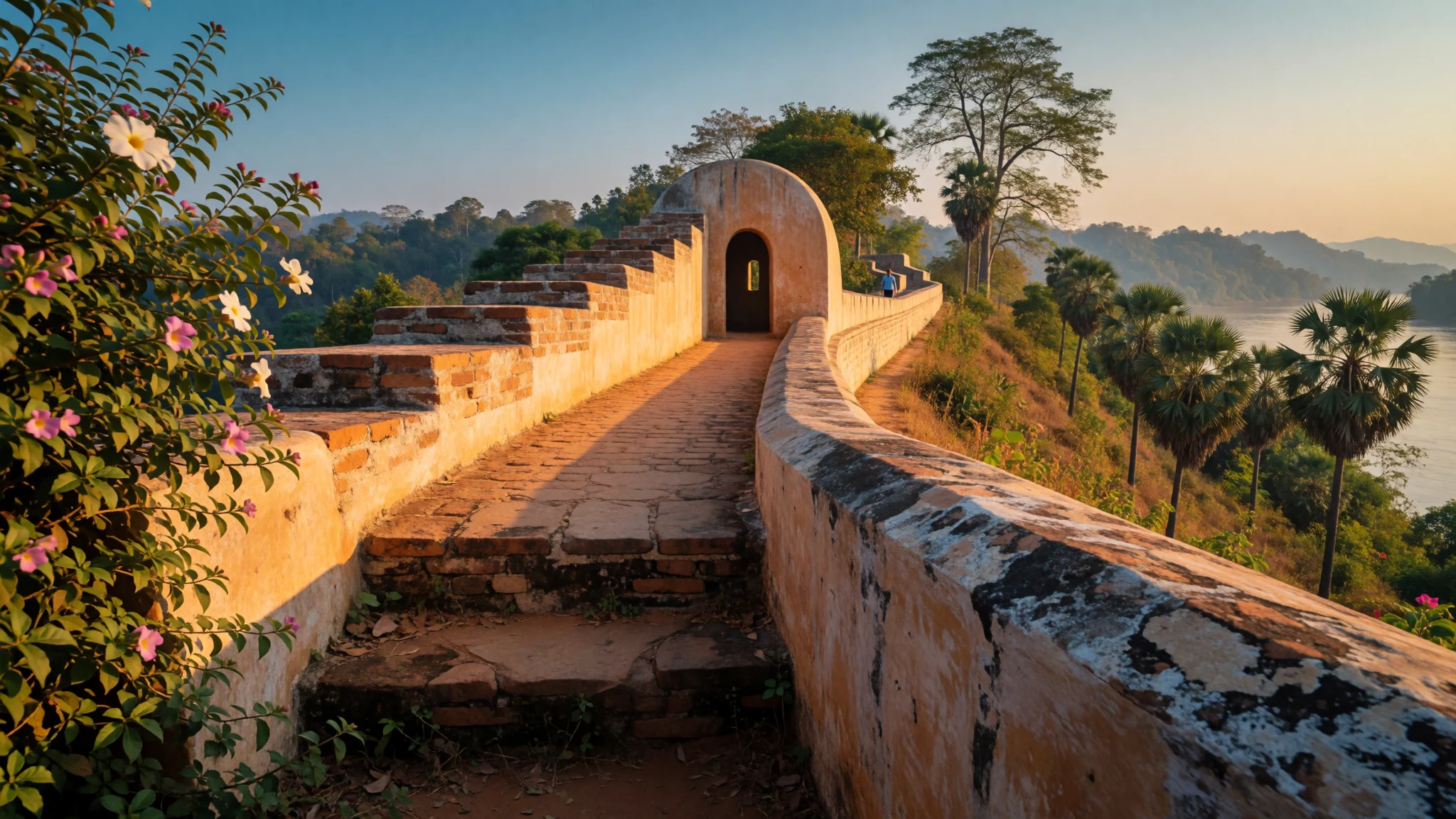
Huay Xai is the Mekong border town where Laos begins: a quiet river port, a hilltop fort, and the start of the boat to Luang Prabang.
The place
Huay Xai, listed in the facts as Ban Houayxay and written ຫ້ວຍຊາຍ in Lao, is the capital of Bokeo Province in north-western Laos. It is a border city of about 17,700 people, standing 398 metres above sea level on the Mekong, with Chiang Khong in Thailand directly opposite. Most travellers meet it as a threshold. A road bridge now carries the crossing that car ferries once handled, and it is the northernmost road border between the two countries. An Asian Highway route runs through town, heading north towards Yunnan in China and south to Chiang Rai in Thailand. The river is the other reason people arrive. Boats leave the town wharf for Pakbeng, Luang Prabang and points between, and slow boats, speedboats, freighters and tourist cruisers all share the same water. A small domestic airport handles flights to Vientiane and Luang Prabang, though the schedule shifts with the season. The town itself is compact and unhurried. A main street climbs from the river past guest houses, shops and temples, there is a morning market, and riverside terraces face the Thai bank at sunset. Nightlife amounts to a beer on a terrace and little more. Beyond the edge of town lies forest, much of it within the Bokeo Nature Reserve, where a conservation project runs ziplines and treehouses. Huay Xai rewards a night or two rather than a week, and it works best as the start of a journey down the Mekong or into the northern forests.
Its story
Huay Xai is a river town defined by what passes through it: colonial garrisons, ferries, traders and now investors. The hilltop Fort Carnot dates from the French colonial period, when the Mekong marked a frontier and a post above the water made strategic sense. Some conservation work has been done on it, but it remains worn and dilapidated, and it still looks down on the river it was built to watch. For many years the way across to Thailand was by ferry, with people and vehicles queuing at the water's edge. That changed when the friendship bridge opened and replaced the ferry service for the crossing. Boats still run along the river, but the border itself is now crossed by road, which is why the town feels so oriented to arrivals and departures. More recently the provincial economy has been reshaped by the Golden Triangle Special Economic Zone, on Mekong riverbank land north-west of town, held on a long lease by the Chinese-owned Kings Romans Group. Conservation tells a separate story. The Laotian black crested gibbon, once thought extinct, is now known to survive in the forests of Bokeo, and the Gibbon Experience raises money for forest protection by taking paying guests in to see that landscape. Fort, bridge, economic zone and forest project together sketch a small northern town whose importance comes from its position on the river and the border.
What to see
- Fort Carnot — Hill above the town
Fort Carnot stands on a hill above Huay Xai, a French colonial-era post whose position over the Mekong explains why it was built there. Conservation work has been done, but it is still rough and dilapidated, so go for the river views and the sense of history rather than polished ruins. Wear shoes with good grip, as the ground is uneven.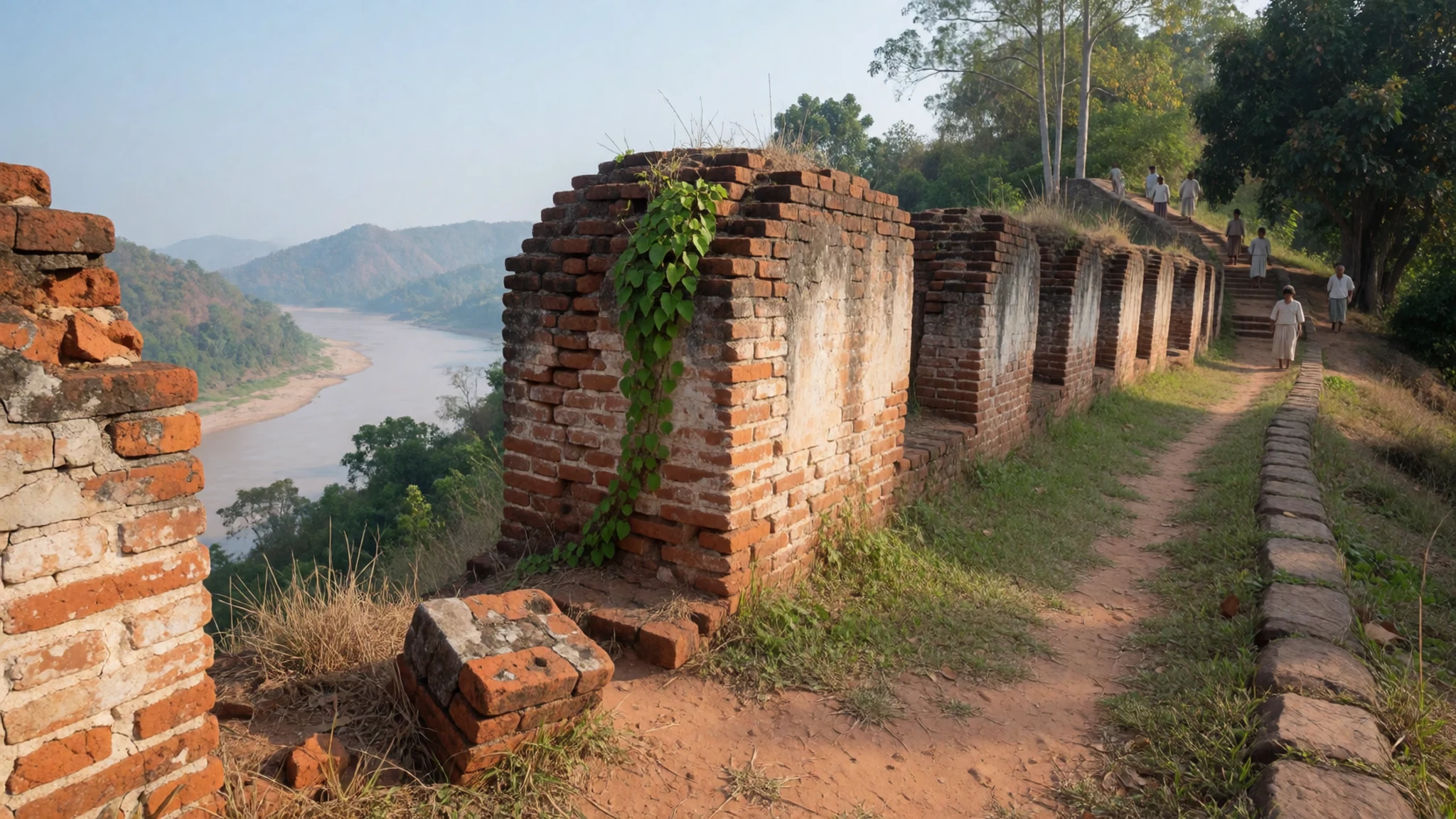
- Vat Chom Khao Manilat — Near the border crossing
Vat Chom Khao Manilat is a temple complex in Huay Xai, and a temple tower on the high ground near the border post gives a wide view over the roofs, the river and Thailand beyond. It is the easiest way to understand how the town sits against the Mekong. Go in the cooler hours and dress for a temple.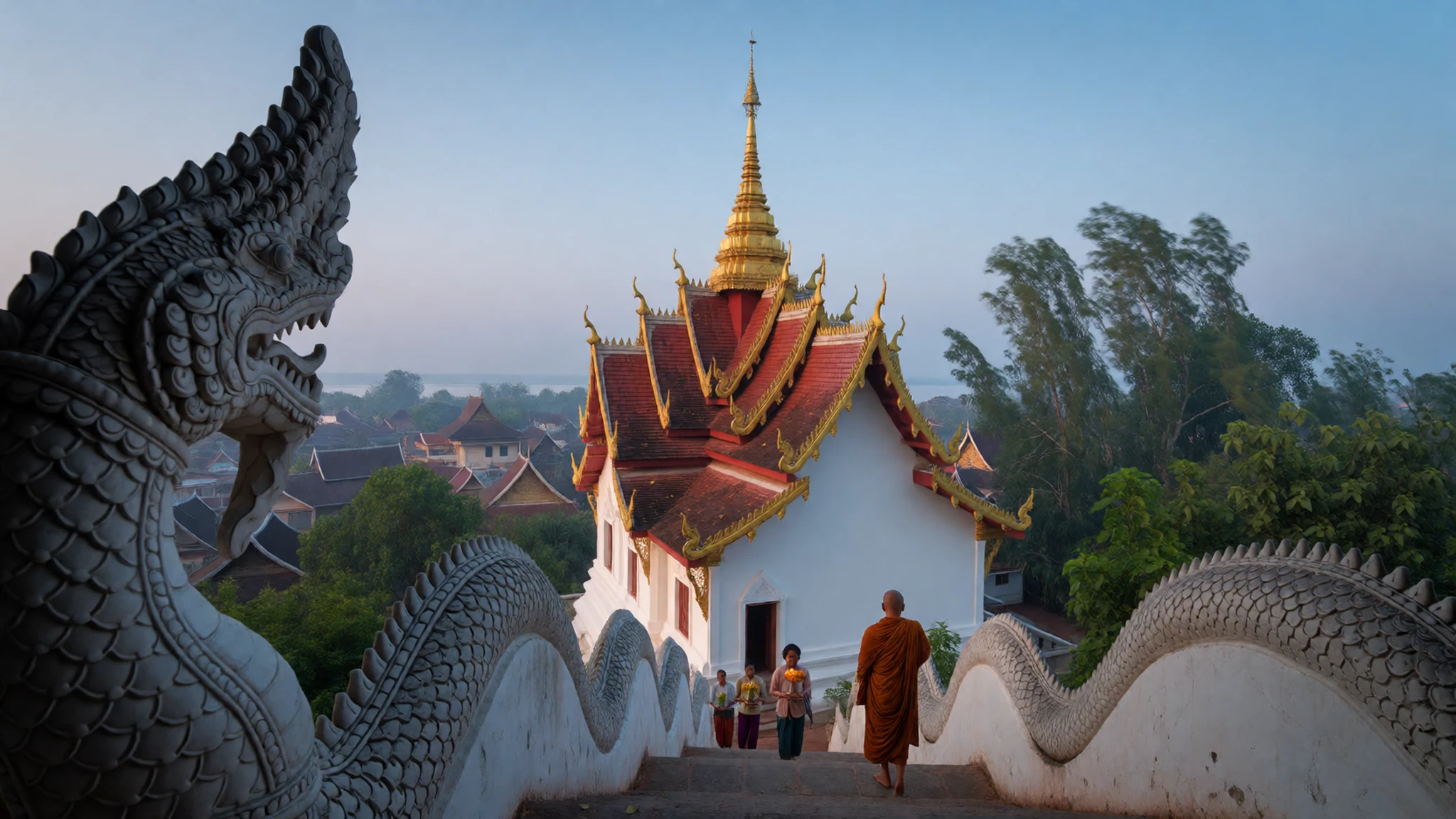
- Morning Market — Town centre
The morning market in Huay Xai is best early, before the heat builds and while the stalls are fullest. It is a plain working market rather than a tourist set piece, useful for seeing local produce, snacks and everyday goods, and for a simple breakfast. Bring small notes and a bag, and wander without an agenda.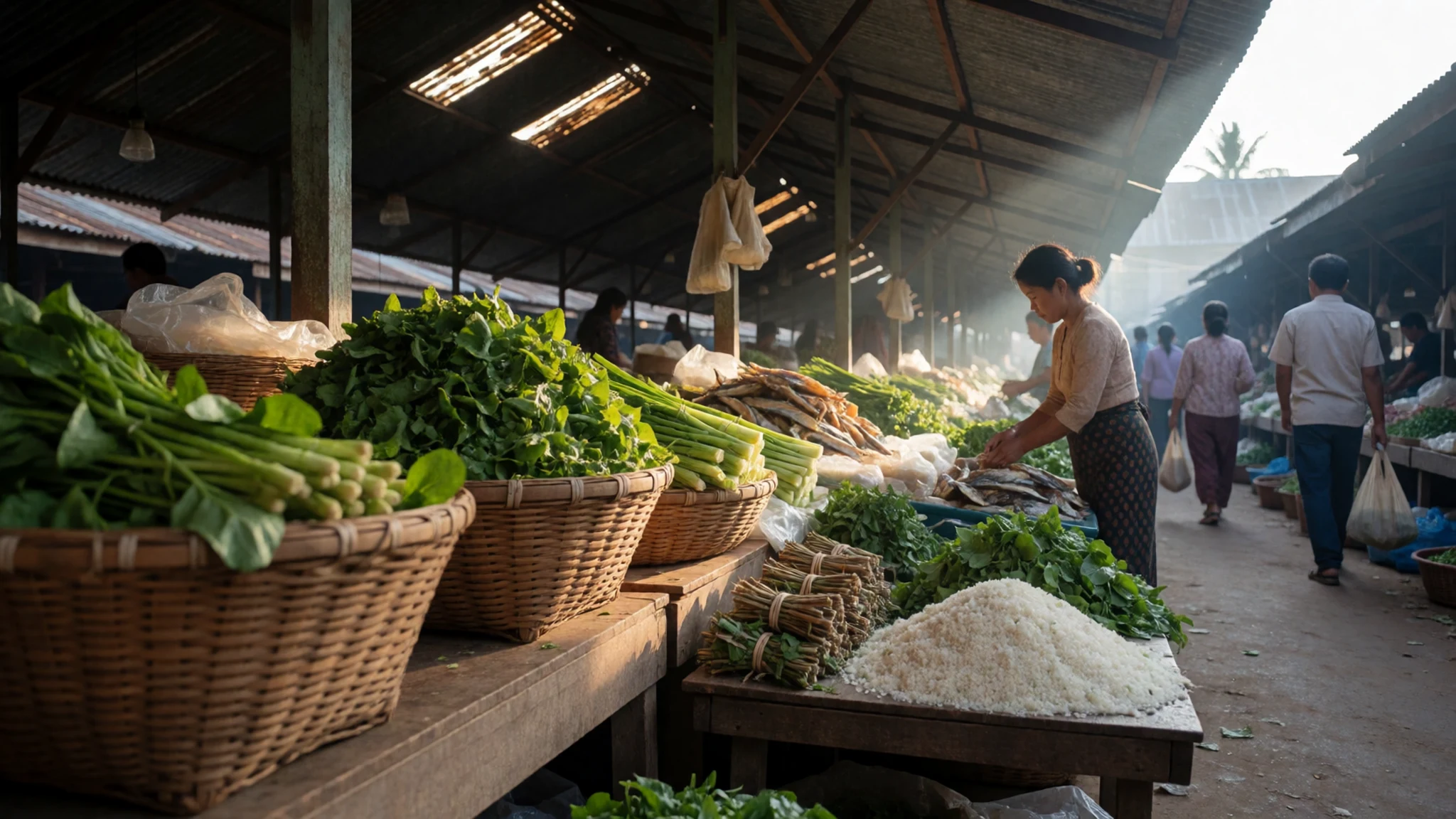
- The Gibbon Experience — Operator's office in town, forest in Bokeo Nature Reserve
The Gibbon Experience is based in Huay Xai and takes guests into the Bokeo Nature Reserve, using ziplines and high treehouses with an overnight stay in the forest. The money raised supports forest protection and the Laotian black crested gibbon, once thought extinct. Book ahead through the operator and check its website for current terms.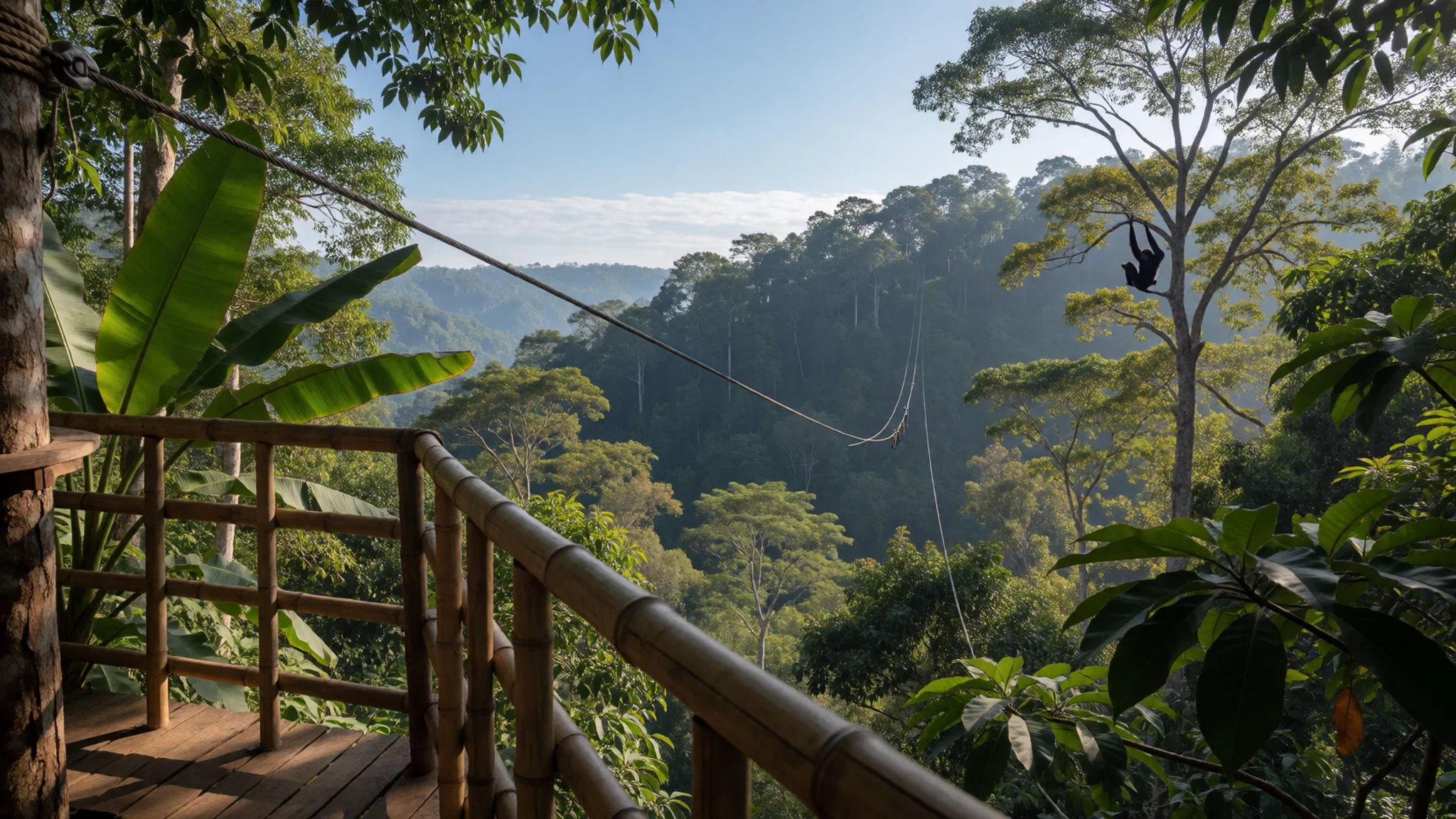
- The Mekong waterfront — Riverside and slow boat wharf
The Mekong waterfront at Huay Xai is where the town's character shows: boats loading for Pakbeng and Luang Prabang, a truck ferry, and terraces facing Thailand. An evening here with a cold Beerlao suits the pace. It is also the place to confirm boat departures directly with operators rather than through intermediaries.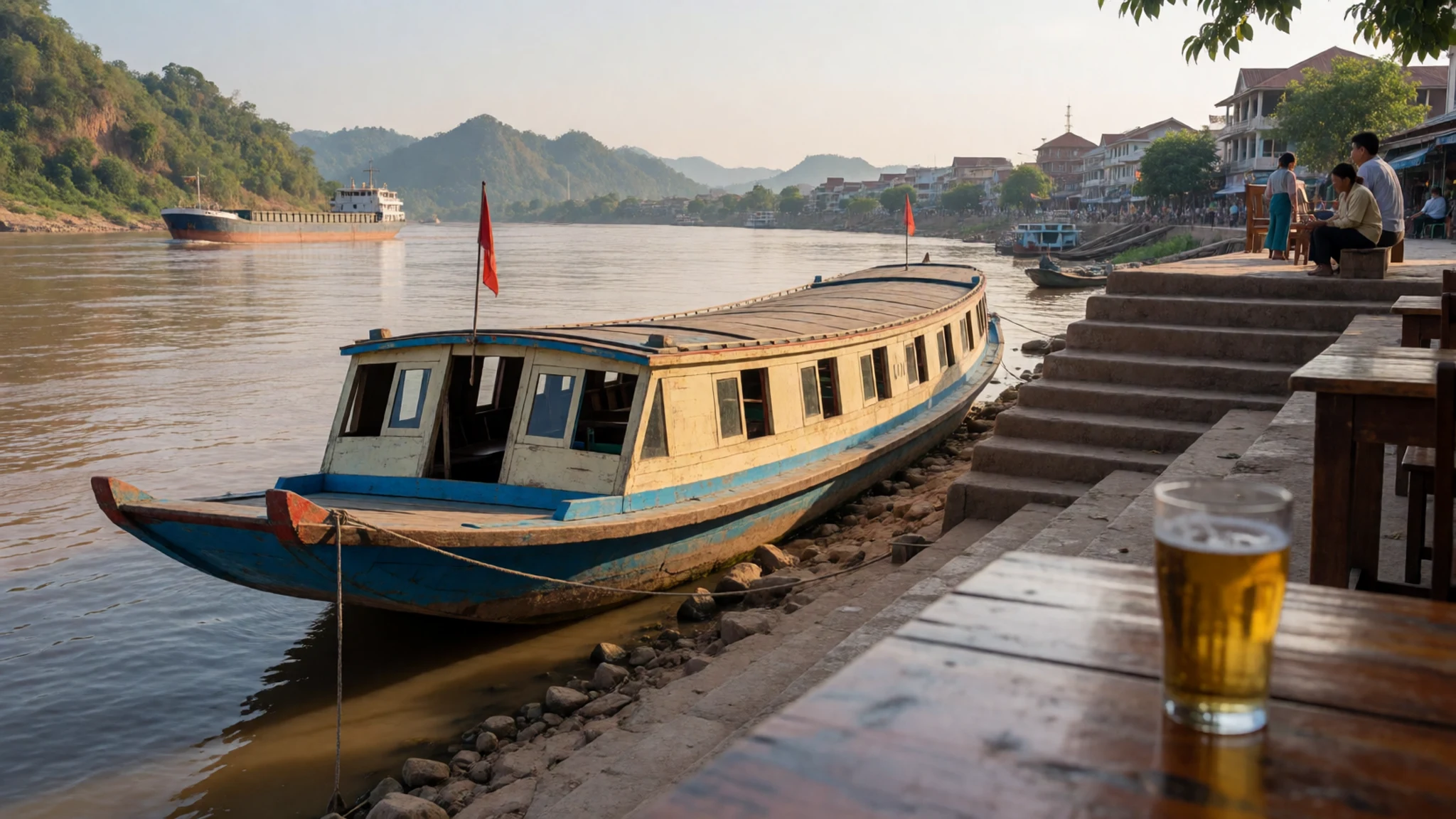
Culture
Huay Xai is a Lao town first, shaped by Theravada Buddhism and by the river. Temples anchor daily life: monks collect alms at dawn, families visit on holy days, and the wat compound doubles as a place for meetings and festivals. Greetings usually come with the nop, palms pressed together near the chest with a slight bow, and the higher the hands, the greater the respect shown. Sticky rice is the staple and is eaten by hand, shared from small baskets at the table. Being on a border, the town mixes influences, with Thai goods crossing the water, Chinese investment visible in the province, and shopkeepers moving between Lao, Thai and a little English with ease. The pace is slow by Indian or British standards. Boats, buses and meals run on approximate time, and impatience rarely speeds anything up. Bokeo Province is home to several ethnic groups, and villages around the town keep their own customs, so ask before photographing people or stepping into a home. Many Lao also treat the head as the highest part of the body and the feet as the lowest, which shapes how people sit, step and point. Cover your shoulders and knees and take off your shoes before entering any temple building in Huay Xai, and never point your feet at a Buddha image or a monk.
What to wear
Huay Xai's traditional dress centres on the sinh, a tube-shaped wrapped skirt woven in silk or cotton, usually finished with a patterned band at the hem. Women wear it for festivals, weddings and temple ceremonies and, in many offices and schools, as a daily uniform, often with a fitted blouse and a pha biang, a narrow cloth sash worn over one shoulder on formal occasions. Villages around Bokeo keep their own textile styles, including dark indigo cloth and embroidery in some communities, though what is for sale in town varies. Day to day, most people dress simply: jeans, T-shirts and trousers for work, with the sinh common among women in official jobs. Farmers and boat workers favour hats, long sleeves and rubber sandals against the sun. Visitors should pack light cotton or linen that covers shoulders and knees, which keeps you cooler and is expected at temples. Sandals that slip off easily help at temple doors, while sturdy shoes with grip suit the uneven ground at Fort Carnot and forest trips. Add a light rain jacket for the wet months and a thin layer for cool river mornings in the cooler season. Keep swimwear for the places where others are using it, and stay covered in town.
What to eat
- Duck barbecue — Local barbecue eateries in town, in the afternoon
Duck roasted over charcoal is a Huay Xai favourite for anyone tired of chicken and pork. Local eateries put it on the grill in the afternoon, and the smoke tends to announce it. Eat it with sticky rice and a spicy dipping sauce.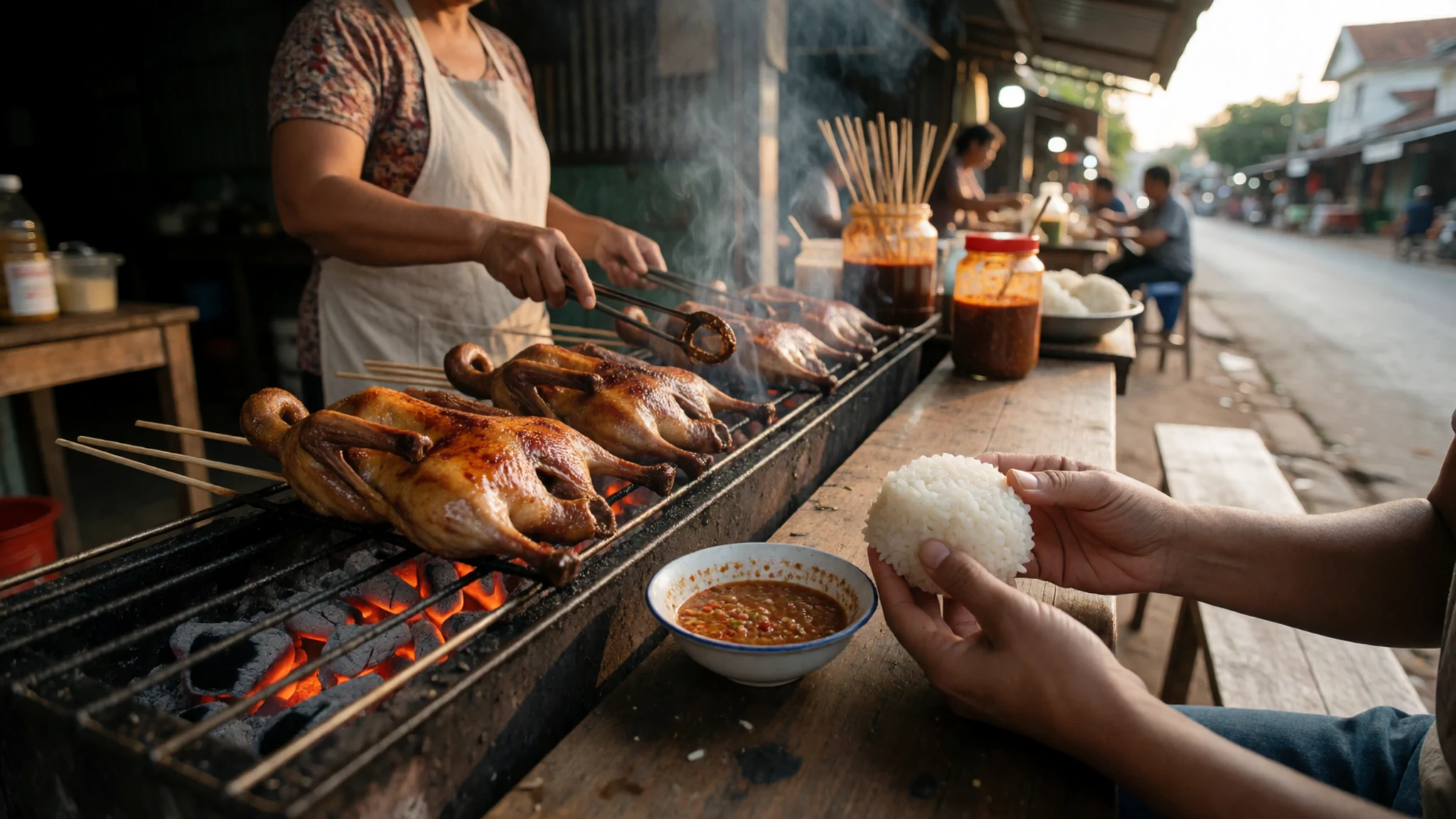
- Sticky rice (khao niao) — Guest houses and any riverside eatery
Sticky rice is the base of almost every Lao meal in Huay Xai. It arrives in a small woven basket, and you pinch off a piece, roll it in your fingers and use it to scoop up other dishes. Guest houses usually serve it with simple meals.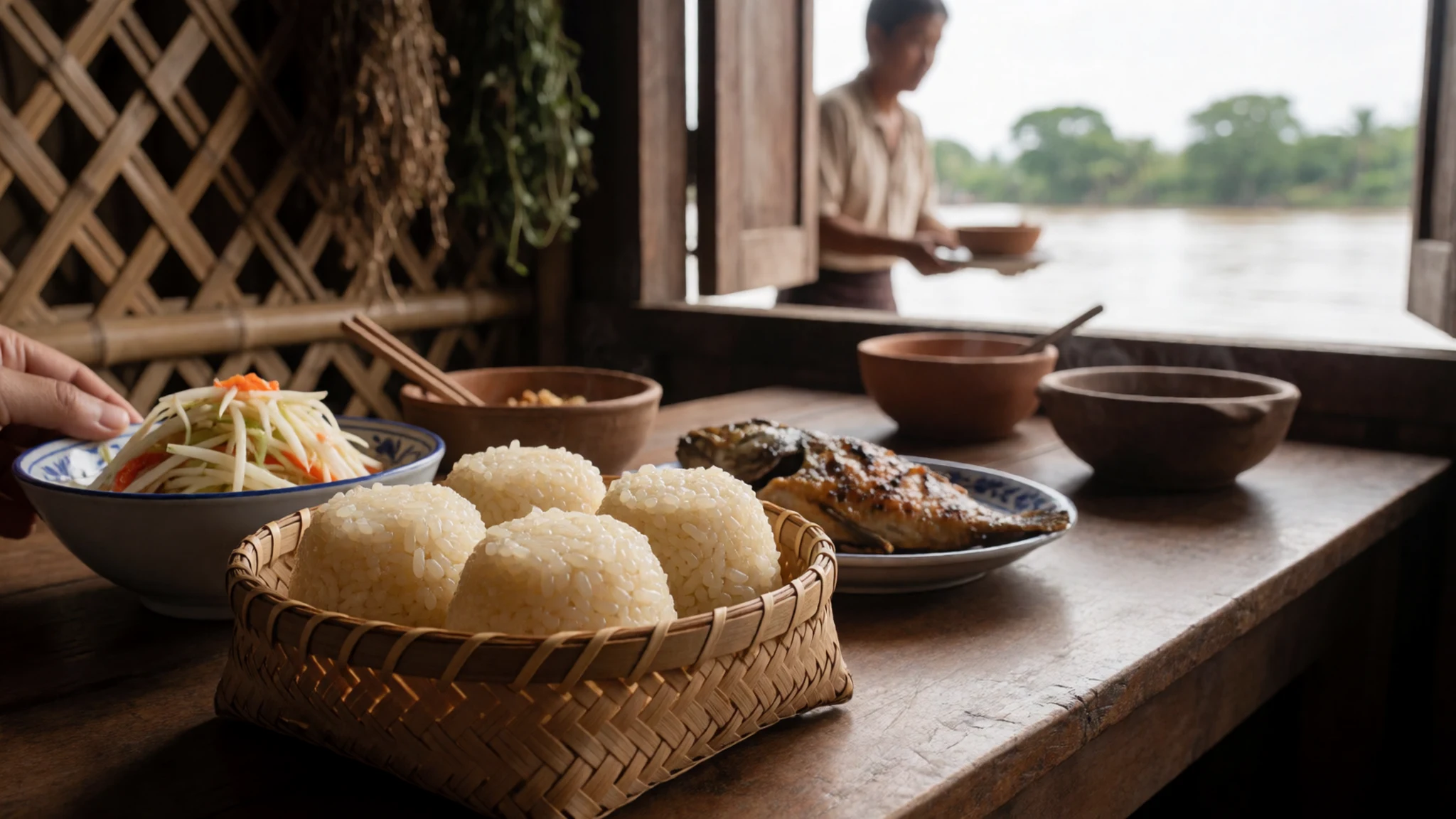
- Larb — Local restaurants near the market
Larb is a minced meat salad, often pork, chicken or duck, dressed with lime, fish sauce, chilli, toasted rice powder and fresh herbs. It is sharp and served at room temperature. Ask for it mild if chilli is a worry, since Lao kitchens can be generous. - Green papaya salad (tam mak hoong) — Market food stalls and simple roadside eateries
Green papaya salad is pounded to order in a mortar with chilli, lime, garlic and fermented fish sauce. In Huay Xai it works as a cooling starter or a light lunch beside grilled meat and sticky rice. Say how hot you want it before the pounding begins. - Grilled Mekong fish — Riverside restaurants and terraces facing Thailand
Fish from the Mekong, grilled whole and served with herbs, lime and a chilli dip, suits the riverside setting in Huay Xai. Ask what is in season and cooked fresh that day, and take the sunset table if one is free.
Plan it
Best time. November to February is usually the most comfortable, with cooler, drier weather for the river and forest. March to May tends to be hot, and the rains from about June to October make roads and boat days less predictable.
How long. 1–2
Getting there. Fly to Huay Xai's small airport (HOE) from Vientiane or Luang Prabang, with schedules that change by season. From Thailand, take a bus from Chiang Rai to Chiang Khong, clear Thai immigration, then take the shuttle bus over the friendship bridge, as walking or cycling across is not allowed. Lao immigration and visa rules change, so check the official Lao government site before travelling.
Budget. low
Tips
- Carry cash and a passport photo, and expect to wait for the bridge shuttle, which leaves when reasonably full
- The slow boat to Luang Prabang takes two days with a night in Pakbeng, and it leaves later than the posted morning time
- Book the boat and Pakbeng rooms yourself, carry your own bags from the wharf and inspect the room before you commit
- Visit the morning market and fort early, before the heat
- Book the Gibbon Experience ahead through its official operator
Etiquette
- Dress modestly and remove shoes at temples
- Ask before photographing people in villages
- Keep your voice and temper low when delays happen
Nearby
Sources
- Wikidata Q717371 (CC0)
- Wikipedia: Ban Houayxay (rev 1377384772) (CC BY-SA 4.0)
- Wikivoyage: Huay Xai (rev 5243602) (CC BY-SA 4.0)
- Photo: Huay Xai viewed from the Mekong River, Tango7174 (CC BY 3.0)
- Photo: Huay Xai, Tango7174 (CC BY 3.0)
- Photo: Vat Chom Khao Manilat, Tango7174 (CC BY 3.0)
- Photo: Vat Chom Khao Manilat, Tango7174 (CC BY 3.0)
- Photo: Lao-Thai border crossing, Ondřej Žváček (CC BY 3.0)
- Photo: Ban Houayxay, Alexander Blecher (CC BY-SA 4.0)
- Photo: Ban Nam Chang, Arian Zwegers (CC BY 2.5)
- Photo: Huay Xai, Tango7174 (CC BY 3.0)


Wildlife
- Laotian black crested gibbon (animal)
The Laotian black crested gibbon is the hide-and-seek champion of the forest: people feared it had vanished for good, yet it was found again. It lives in the woodlands of Bokeo, though nothing here says which season or hour is best for seeing it. The Gibbon Experience takes paying visitors into that landscape with guides, and the money helps protect the trees. Stay with your guide, keep a respectful distance, speak softly, and never offer food.