Luang Namtha
Luang Namtha, Laos
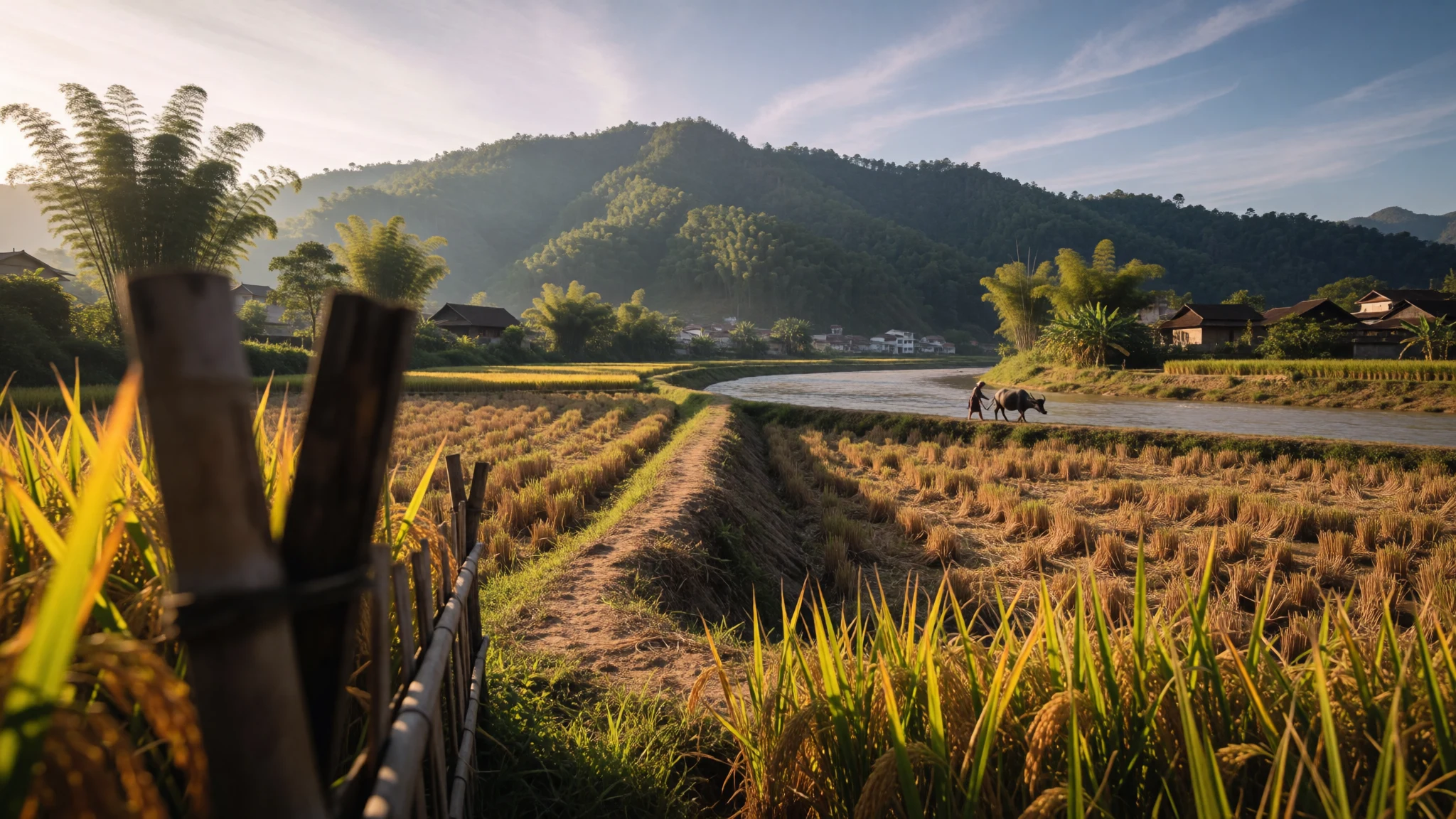
Luang Namtha is a small northern Lao town where forest walks, a night market and hill-village life sit within a day's reach.
The place
Luang Namtha sits in a river valley in the far north of Laos, the administrative town for the province around it. Shops, guesthouses, offices and market sheds line a short centre, and the rice fields resume as soon as that centre ends. Forested ridges rise on either side, and the road north runs toward the Chinese border at Boten, so trucks, traders and several languages pass through on ordinary weekdays. The town's real role is as a meeting place. Tai Lue and other Tai families farm the valley floor; Akha, Khmu, Hmong, Yao (Mien) and Lanten communities live in the hills and come in to sell, buy and deal with the provincial offices. Because of that mix, a walk through the market is often more informative than a walk along the main street. There is little in the way of grand monuments. Interest sits in the Nam Ha protected forest that wraps the district, in the river, and in villages that still organise life around fields, forests and their own ritual calendars. Mornings in the cooler months arrive with mist on the paddies. The hot months turn the afternoon heavy, and the rainy months turn the red earth to mud and slow every journey out of town. Visitors who expect a miniature Luang Prabang will find something plainer: an administrative and market town whose surroundings are the reason to stay.
Its story
Luang Namtha's story is a border story, told through valleys and roads more than through palaces. Tai-speaking farmers took the flat, wet land along the Nam Tha and planted rice, while Akha, Khmu, Hmong, Yao and Lanten communities kept to the slopes, trading forest goods and labour with the valley. Muang Sing, northwest of the present capital, became a Tai Lue centre, with monasteries and an annual gathering at That Xieng Tung that still brings village delegations in festival cloth. The town now called Luang Namtha grew later, as a provincial seat where offices, a market and a road junction could serve people who had oriented themselves toward their own villages. Trade with southern China is old; the modern border crossing has only made that pull stronger, and the shops along the north road show it in goods and in signage. In recent decades the forest around the town was named the Nam Ha protected area, and walking trips were organised so that village stays might offer an income beside farming. That is why the town's reputation among travellers rests on guided days in the forest rather than on temples and shrines. The arrangement is imperfect — visits can crowd a small hamlet, and the rules depend on guides and on village consent — but it is the frame through which most outsiders meet the district. What a visitor meets today is a layering: wet-rice fields, upland hamlets, a small administrative town, and a border economy that is busier than the night market suggests.
What to see
- Nam Ha National Protected Area — protected forest around Luang Namtha
Nam Ha National Protected Area is the forest that gives Luang Namtha its reason to linger. Trails leave the valley for mixed evergreen and secondary growth, river crossings and hamlets inside or beside the boundary. Walks are arranged in town and run with a guide, so that paths stay agreed and any village stay follows local rules. Which routes are open is confirmed in town before setting out.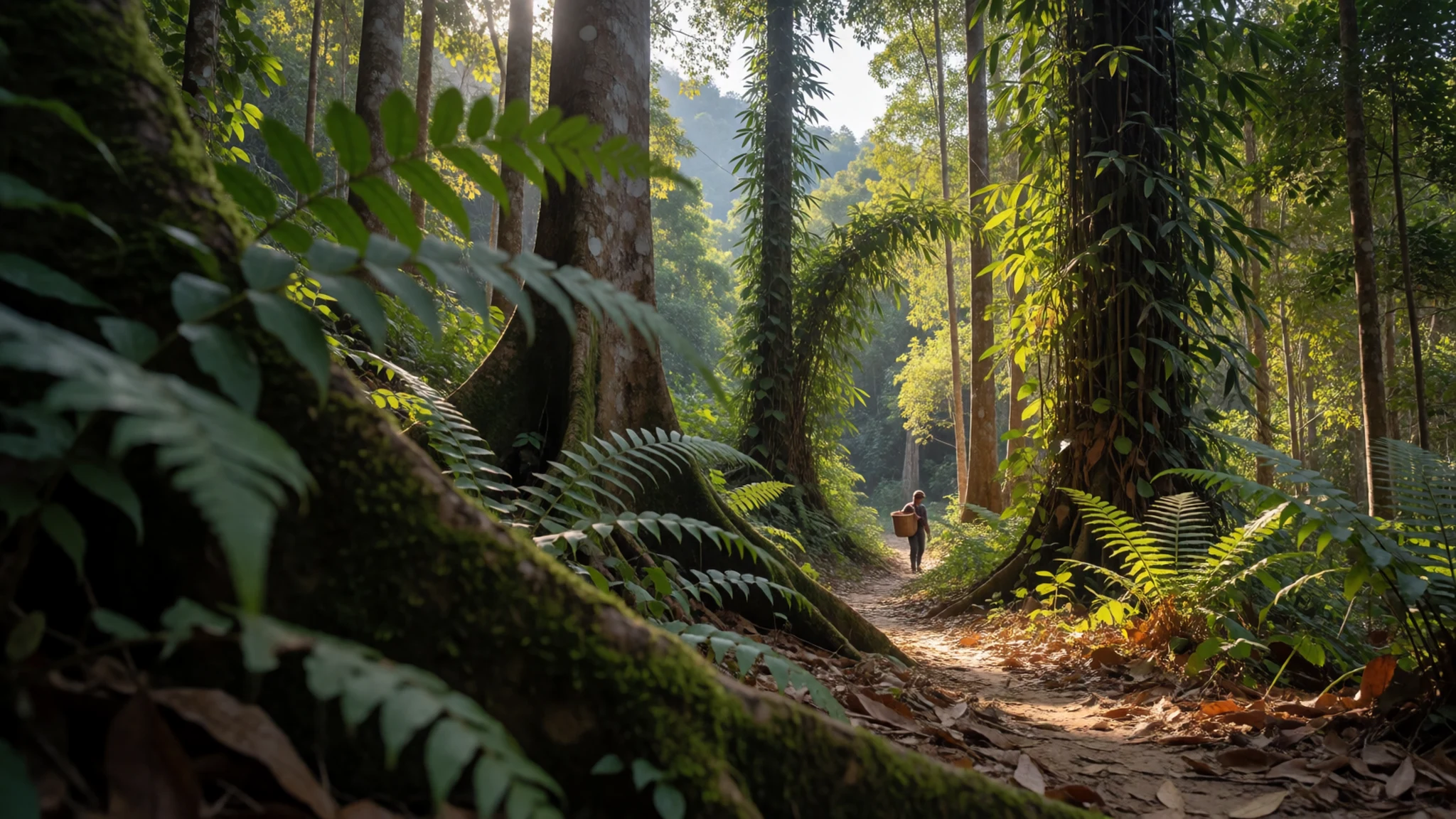
- Night market — town centre
The night market in Luang Namtha sets up along the town centre after dusk, a line of stalls rather than a hall. Cooked food, grilled meat, fruit and a few textile sellers share the same stretch, and the crowd is as local as it is visiting. Stalls thin early. Visitors eat on plastic stools from whatever came in that day.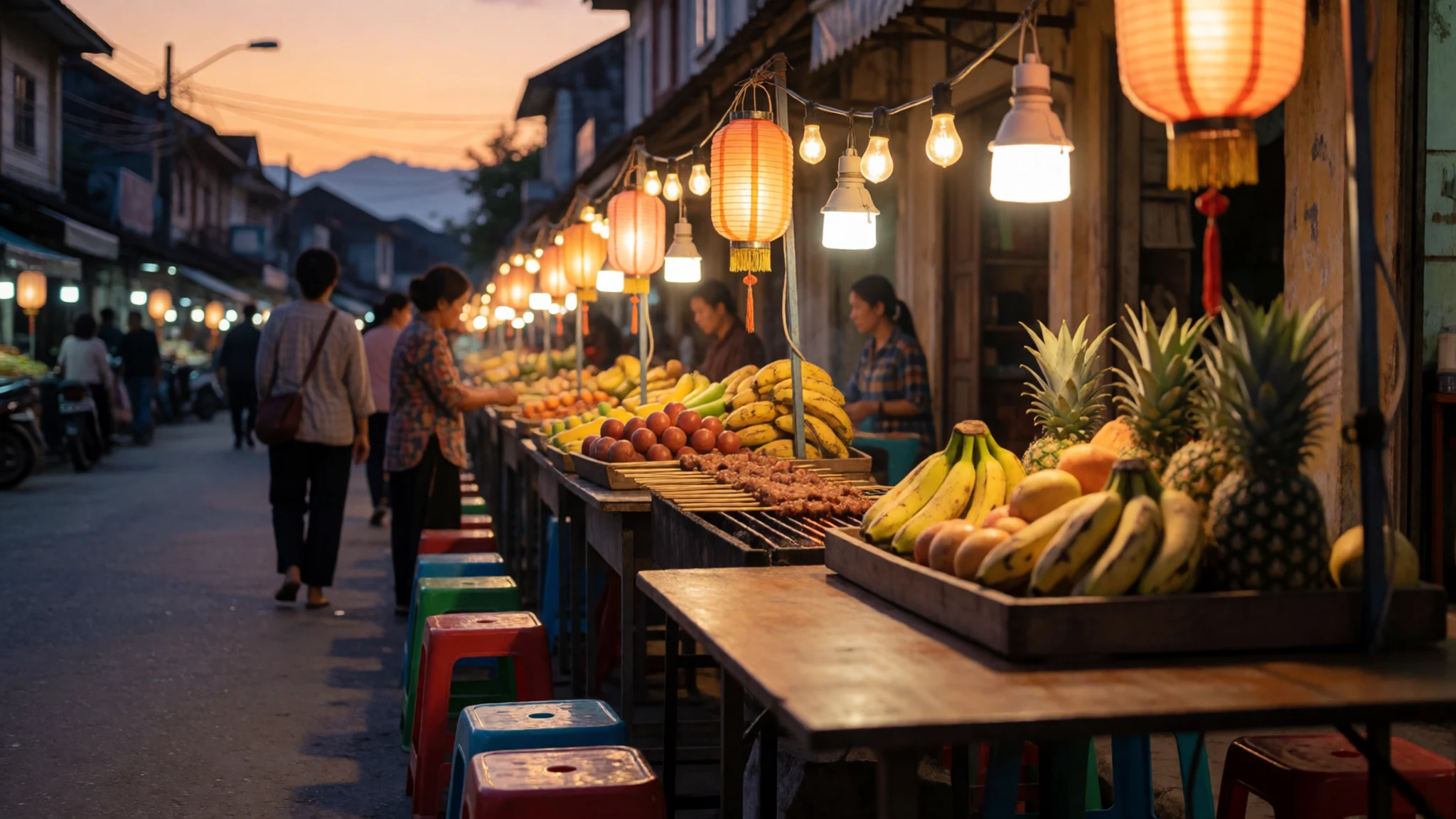
- Muang Sing — Muang Sing, northwest of Luang Namtha
Muang Sing lies northwest of Luang Namtha, a Tai Lue town in a broad valley close to the hills. Monasteries and wooden houses set the scale, and the morning market draws Akha, Yao, Lanten and Tai villagers in from surrounding settlements. It is the usual base for short walks to those villages, which should be done with a local guide who knows which lanes are open to outsiders.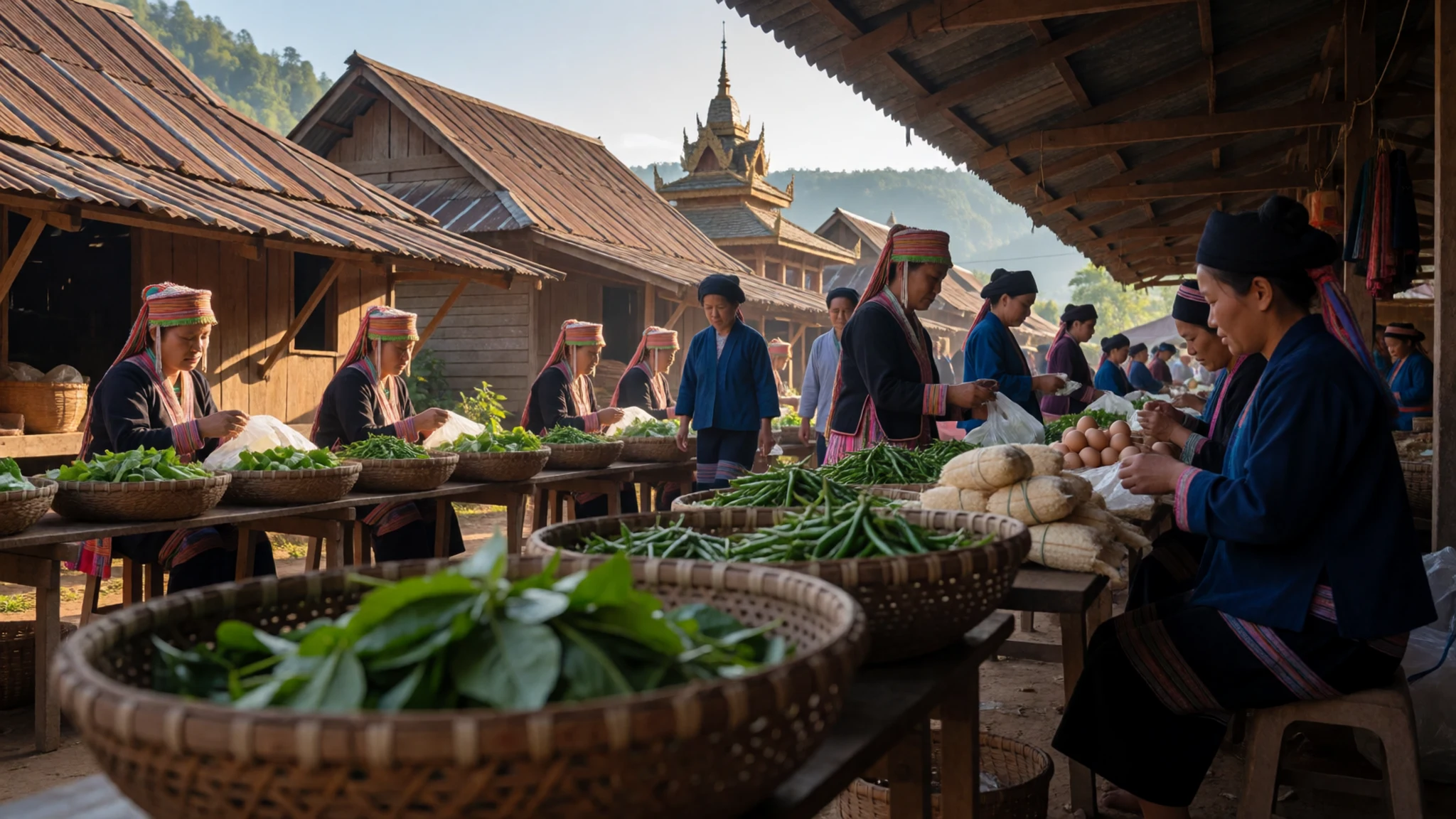
- That Xieng Tung — Muang Sing
That Xieng Tung, in Muang Sing in Luang Namtha province, is the stupa and festival ground where Tai Lue and neighbouring villages mark their annual gathering. Akha girls join the welcome in full traditional dress, silver and embroidery bright against the temple yard. For most of the year the site is simply a monastery compound; the festival is the reason to time a visit.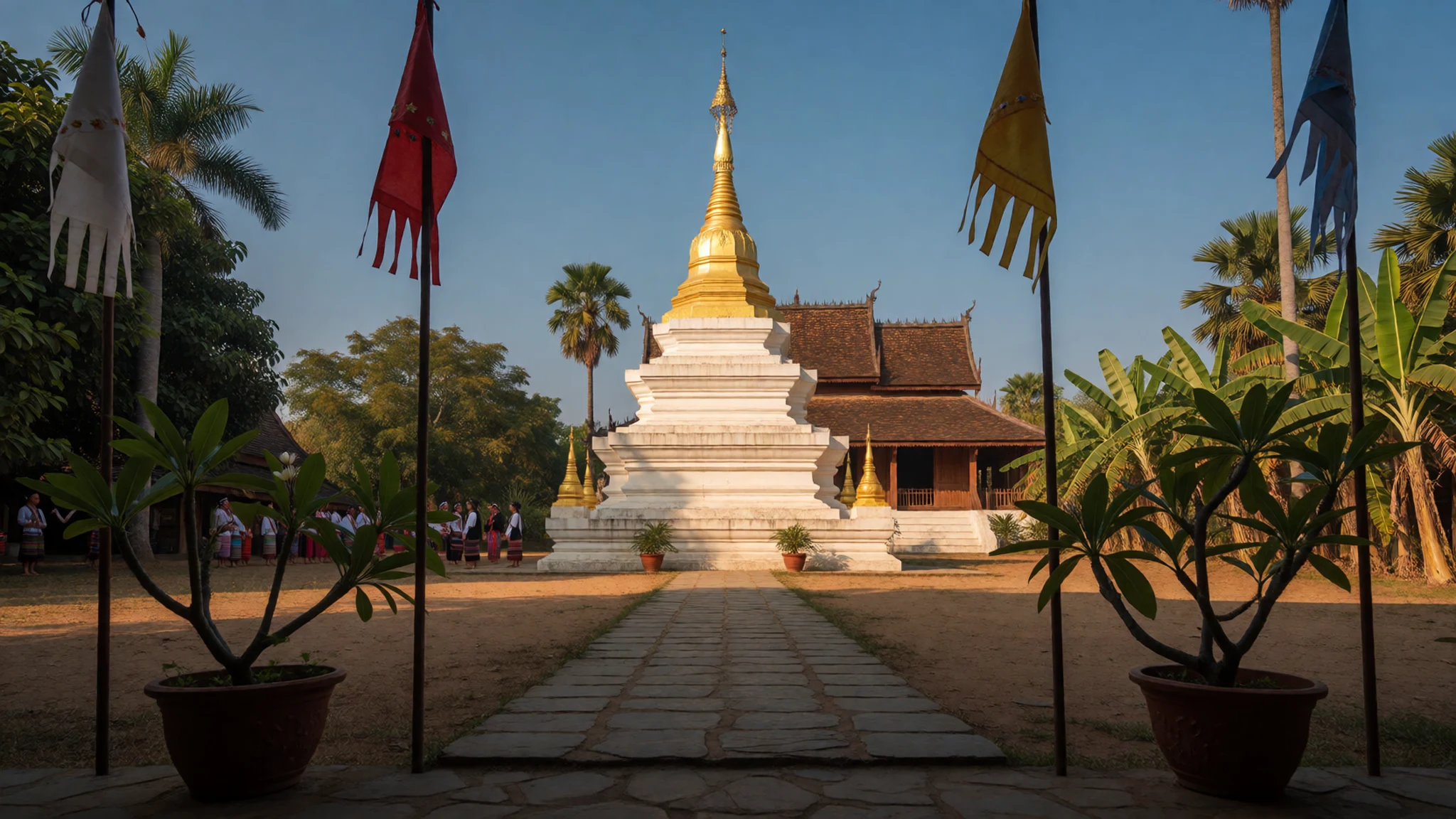
- Tham Kao Rao — Luang Namtha province, outside the town centre
Tham Kao Rao is a cave in Luang Namtha province, an outing from the valley rather than a site in the town centre. Visitors go with a guide arranged in Luang Namtha, who can find the entrance and handle any permission a nearby village expects. The trip is a walk to the cave mouth, and the path is worth confirming in town on the morning of the visit.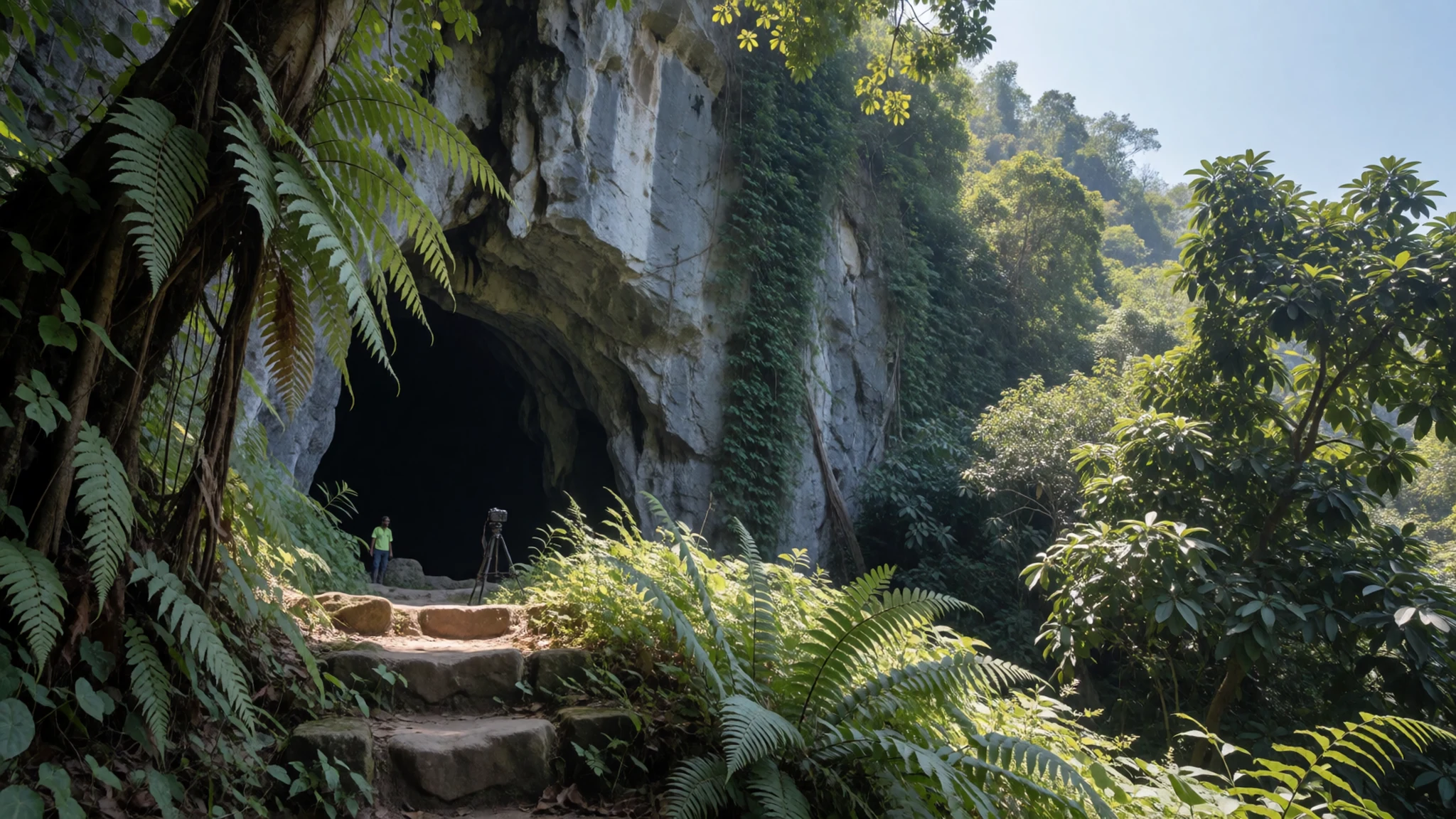
Culture
Luang Namtha holds several cultures in one small market town. In the valley, Tai Lue and other Tai families follow Theravada Buddhism: monasteries, merit-making and a festival calendar shape public life, and Luang Namtha's morning streets can include monks on their round where a wat stands nearby. In the hills, Akha, Khmu, Hmong, Yao (Mien) and Lanten communities keep their own ritual years, ancestor and spirit practices, and dress codes that appear in full at gatherings such as the That Xieng Tung festival in Muang Sing. Market day is where those worlds meet, in language as much as in goods. Guided walks into Nam Ha are part of local culture now, not only a visitor product: villages decide whether to receive guests, and a portion of the arrangement is meant to stay in the village. At a wat, shoes come off and shoulders stay covered; in a village, a guide's introduction matters more than a camera. Ask before photographing anyone in Luang Namtha, and do not pass a village spirit gate unless your guide has been told the gate is open to you.
What to wear
Dress in Luang Namtha divides by community more than by season. Tai Lue women wear a pha sin, a wrap skirt in cotton or silk, often with a fitted blouse and a silver belt for ceremonies; men wear a sash or a simple jacket over everyday trousers when a festival requires it. Akha women are recognisable by heavy headdresses of beads, silver coins and cloth, with embroidered leggings and jackets in indigo and bright thread. Yao (Mien) embroidery is dense and often red on indigo, and Lanten women are associated with deep indigo cloth. These clothes come out for festivals, weddings and some market days; they are working dress in many villages and costume only to an outsider. In Luang Namtha town the daily picture is different: T-shirts, trousers, football shirts, blouses and sandals, with a jacket in the cooler months and a conical hat or umbrella in the rains. Visitors do well to copy the modest end of town dress: covered shoulders and knees at monasteries, shoes off where others have left them, and closed shoes with grip for village paths, which are mud after rain and dust in the dry months. A light scarf is useful at a wat.
What to eat
- Khao soi — the morning market and noodle shops in the centre
Khao soi in Luang Namtha is fermented rice noodles in a pork and tomato broth, eaten at breakfast. Morning-market stalls and small noodle shops along the centre sell it, and the pot is often finished before midday.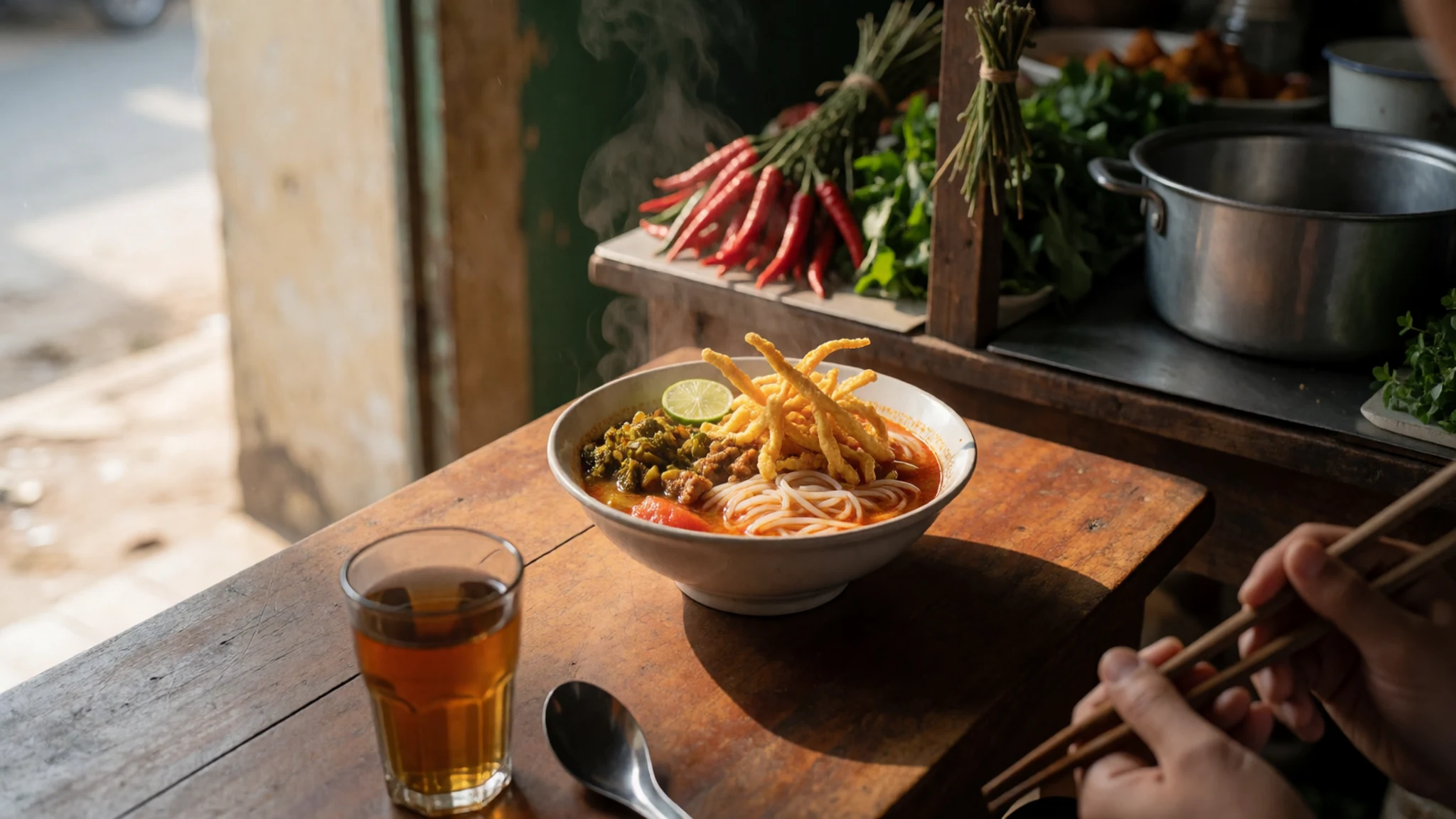
- Khao niao — market stalls and ordinary eateries
Khao niao, sticky rice, is the staple of Luang Namtha, steamed and eaten with the hand alongside dips, grilled meat and herbs. Every market stall and ordinary eatery will serve it, often in a small basket. It is the meal, not a side.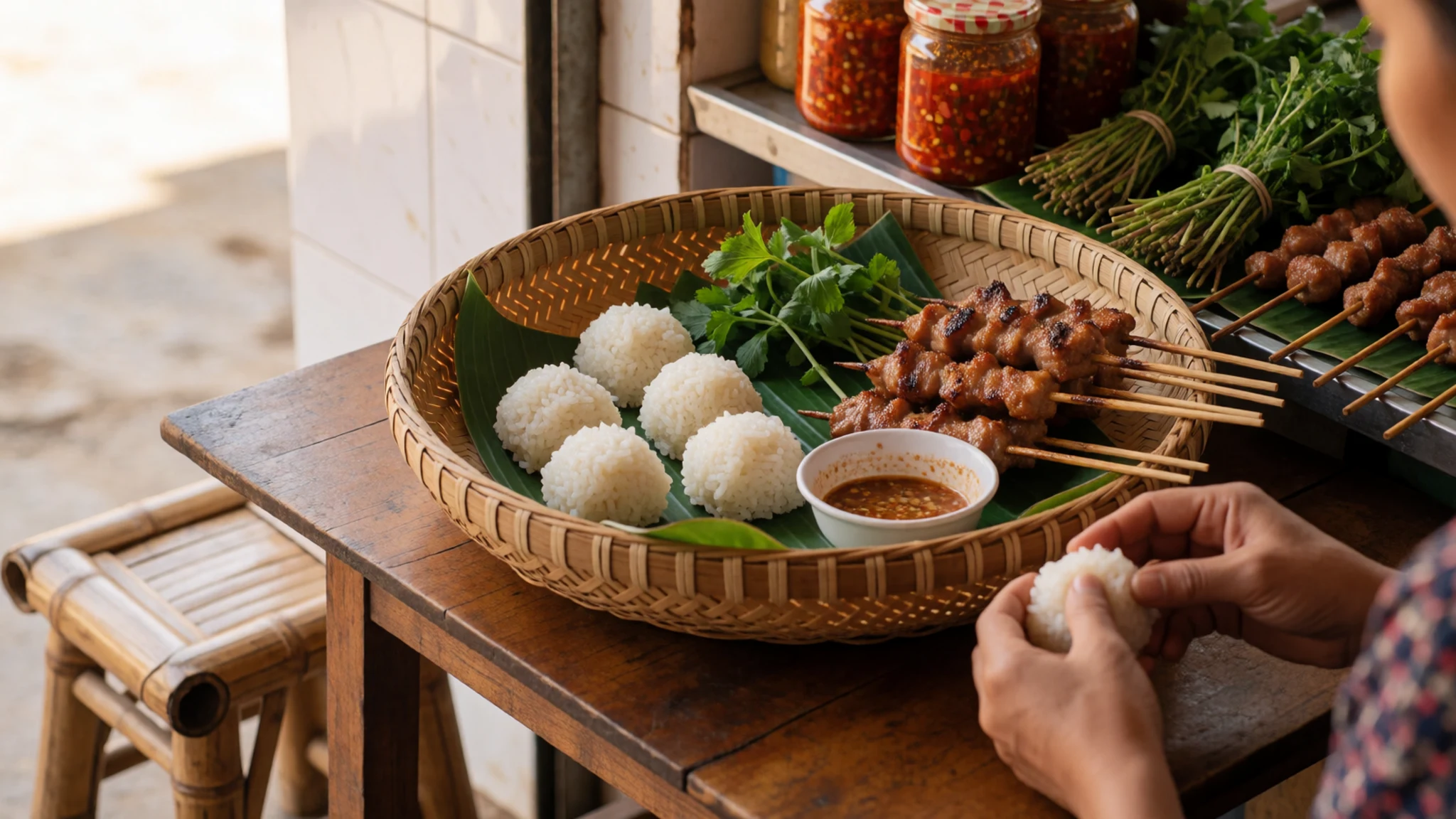
- Laap — eateries in the centre and the night market
Laap in Luang Namtha is minced meat, often pork or chicken, dressed with lime, fish sauce, roasted rice powder and herbs. Eateries around the centre and stalls at the night market both serve it, with a plate of leaves. Heat varies by stall, so the mild version is worth requesting. - Tam mak hung — the morning market and the night market
Tam mak hung is green papaya pounded with chilli, lime, fish sauce and tomato, sold at Luang Namtha's morning and night markets. Stalls pound it to order and serve it with sticky rice. It can be fiercely hot unless a mild pestle is requested. - Jeow — the night market and ordinary eateries
Jeow bong and other jeow are chilli dips in Luang Namtha, eaten with sticky rice. Night-market stalls and ordinary eateries set them beside grilled chicken, pork or fish. A mild version is usually available if the first taste burns.
Plan it
Best time. Luang Namtha is comfortable for walking from November to February, when the weather is cool and dry. March and April stay mostly dry but turn hot. From May to October, rain, mud and leeches make forest paths harder, though the town is still straightforward to be in and the paddies are green.
How long. 3–4
Getting there. Luang Namtha is reached by air into the town's small airport when flights from Vientiane are operating, or by long-distance bus from Luang Prabang, from Huay Xai, or from the Chinese border at Boten. The last leg is a tuk-tuk or a walk from the bus station or the airport road into the centre. Services change, so check the operator before booking.
Budget. low
Tips
- Arrange Nam Ha walks through the tourism office in Luang Namtha so the guide and the village are agreed in advance.
- Carry cash; cards are often refused at market stalls, guesthouses and on village walks.
- In the rainy months pack shoes that can get wet, and expect leeches on forest paths.
- Begin village walks in the morning, while the air is cooler and the market is still busy on the way back.
- Confirm any Nam Tha boat locally ahead of time; the water level decides whether it runs.
Etiquette
- Remove shoes before entering a monastery building, and keep shoulders and knees covered.
- Ask before photographing people, including children, at the market and in villages around Luang Namtha.
- Do not cross a village spirit gate or enter a house unless the guide has been invited to bring you in.
Nearby
Sources
- Wikidata (CC0)
- Wikipedia — Luang Namtha (CC BY-SA 4.0)
- Wikivoyage — Luang Namtha (CC BY-SA 4.0)