Tétouan
Tétouan, Morocco
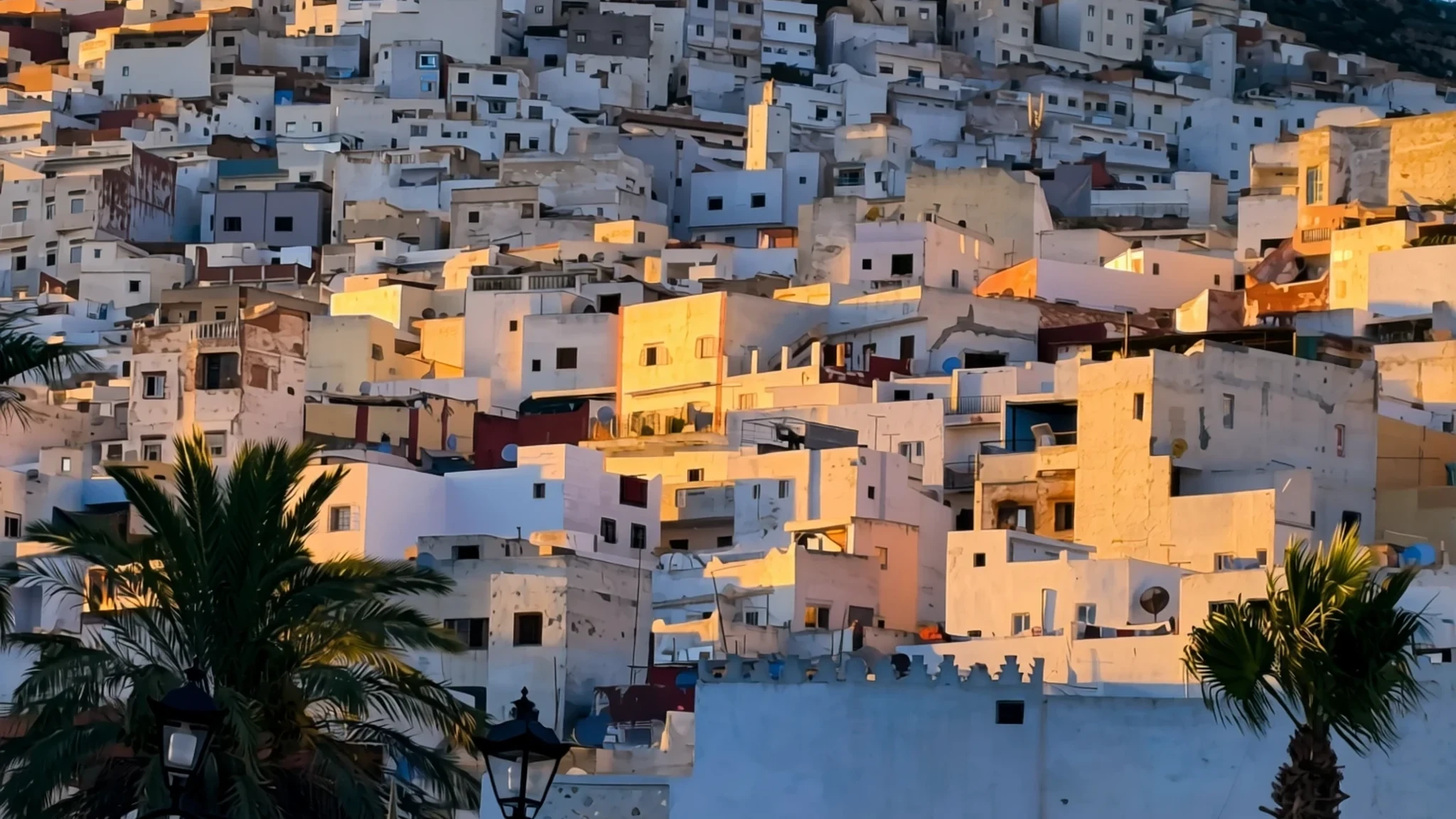
Tétouan is a whitewashed Andalusian-flavoured port town beneath the Rif mountains, where craft workshops, quiet lanes and Spanish-era boulevards sit side by side.
The place
Tétouan sits in northern Morocco, in the Martil valley, with the Rif mountains rising behind and the Mediterranean a short drive to the east. The city has a population of about 423,000 and stands at roughly 90 metres above sea level. It is a working regional centre rather than a resort, and that is much of its appeal: people are going about their business, not performing for visitors.
The old town, the medina, is a tight maze of whitewashed houses, and it is far calmer than the big medinas of Fez or Marrakech. Shopkeepers rarely chase you, and the lanes fall quiet in the afternoon. Its gates, among them Bab Saida, Bab Mkaber and Bab Jiaf, mark the old boundary, and the hill above carries a ruined kasbah with views over the roofs to the mountains.
Outside the walls, a different city begins. The Spanish-era quarter has broad, tree-lined streets, balconied apartment blocks and cafés that spill onto the pavement, and the main square, Place Al-Feddan, is where the two halves meet. Spanish is still heard here more than in most Moroccan cities, a reminder of the years when Tétouan was the capital of the northern protectorate.
The city is also a gateway. Tangier, the mountain town of Chefchaouen and the northern beaches are all within easy reach by road, so many travellers treat Tétouan as a base. It repays a night or two on its own terms, though, especially for anyone interested in crafts, architecture and a Morocco that is not set up for tour groups.
Its story
Tétouan's story begins just outside the modern city, at the ancient site of Tamuda. Settlers there go back to the third century BC, and objects from both Phoenician and Roman times have been dug up on the spot. The town you walk through today, though, is a much later creation.
The Marinid dynasty built a casbah and mosque here in the late thirteenth century, and in 1305 the sultan Abu Thabit Amir enlarged and fortified the settlement. His purpose was military: he wanted a base for operations against nearby Ceuta. The place did not stay safe. Castilian forces destroyed it in 1399, because pirates had been using it as a launching point, and the Portuguese in Ceuta later sent raiders to stop it recovering.
The real rebirth came at the end of the fifteenth century. As the Christian reconquest of Iberia pushed Muslims and Jews out of Andalusia, refugees crossed the strait and settled in the ruined town. A captain named Ali al-Mandri, who had served the last Nasrid king of Granada, led the Andalusian Arabs who took refuge here. They rebuilt the city in the styles and habits of the homes they had lost, and that is why Tétouan still feels so Andalusian in its houses, its music and its manners.
Later centuries added the Spanish chapter. During the protectorate, Tétouan was the capital of the northern zone, and it became a centre of publishing and Moroccan literary life while censorship tightened elsewhere. One of the country's first newspapers, El Eco de Tetuan, appeared here in 1860.
What to see
- Bab El Okla and the Ethnographic Museum — Medina, eastern side
Bab El Okla is one of the medina gates, and it houses a small museum of local life: traditional dress, furniture, weapons and household objects that explain how Tétouan lived. Guides often offer to show you round and expect a tip, so keep some small change handy.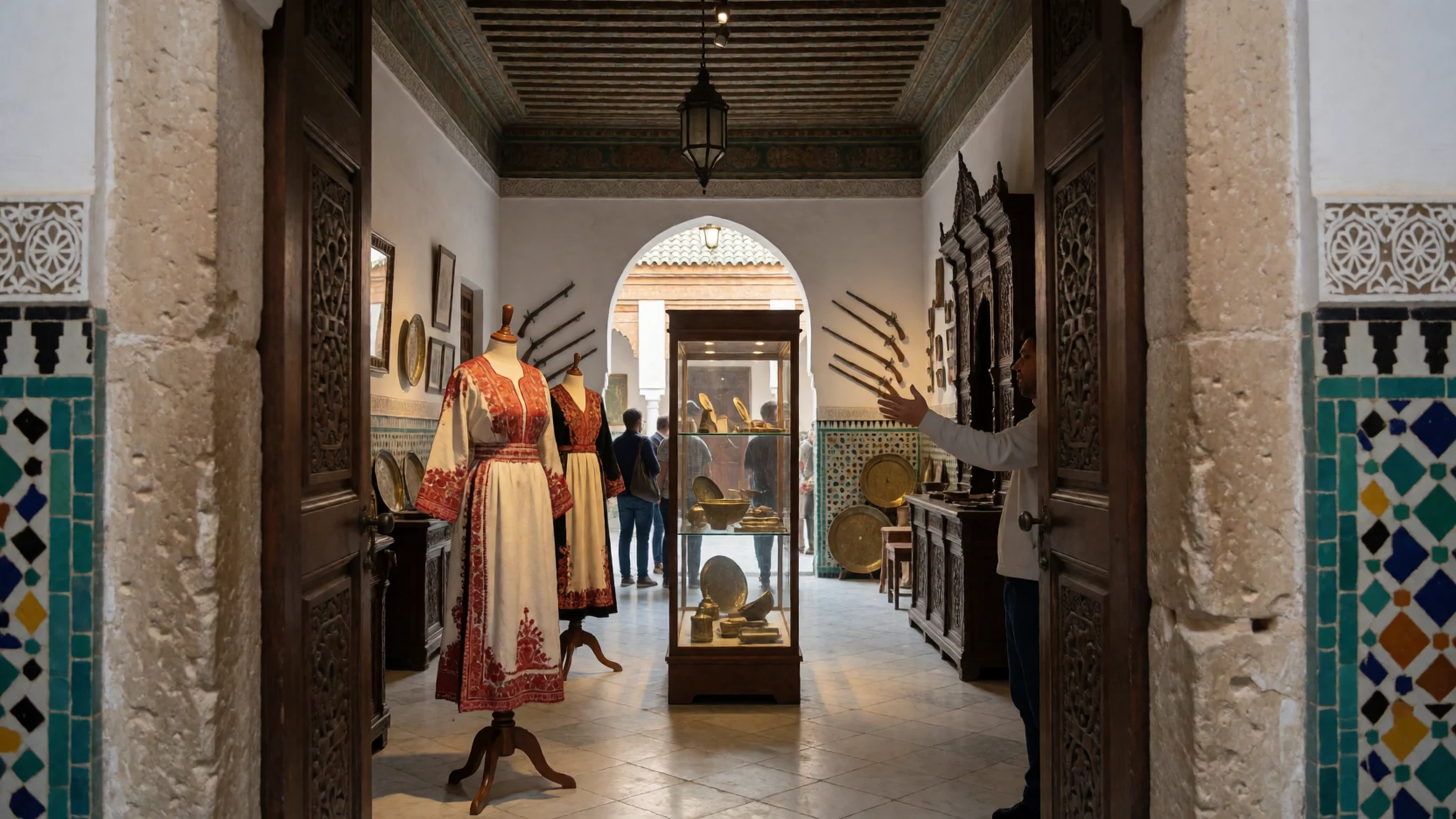
- Medina gates — Medina edges
Bab Saida, Bab Mkaber and Bab Jiaf are worth seeking out as a loose walking route around the old town. Each marks a different edge of the walled quarter, and the lanes behind them show quite different moods, from busy shopping streets to quiet residential alleys.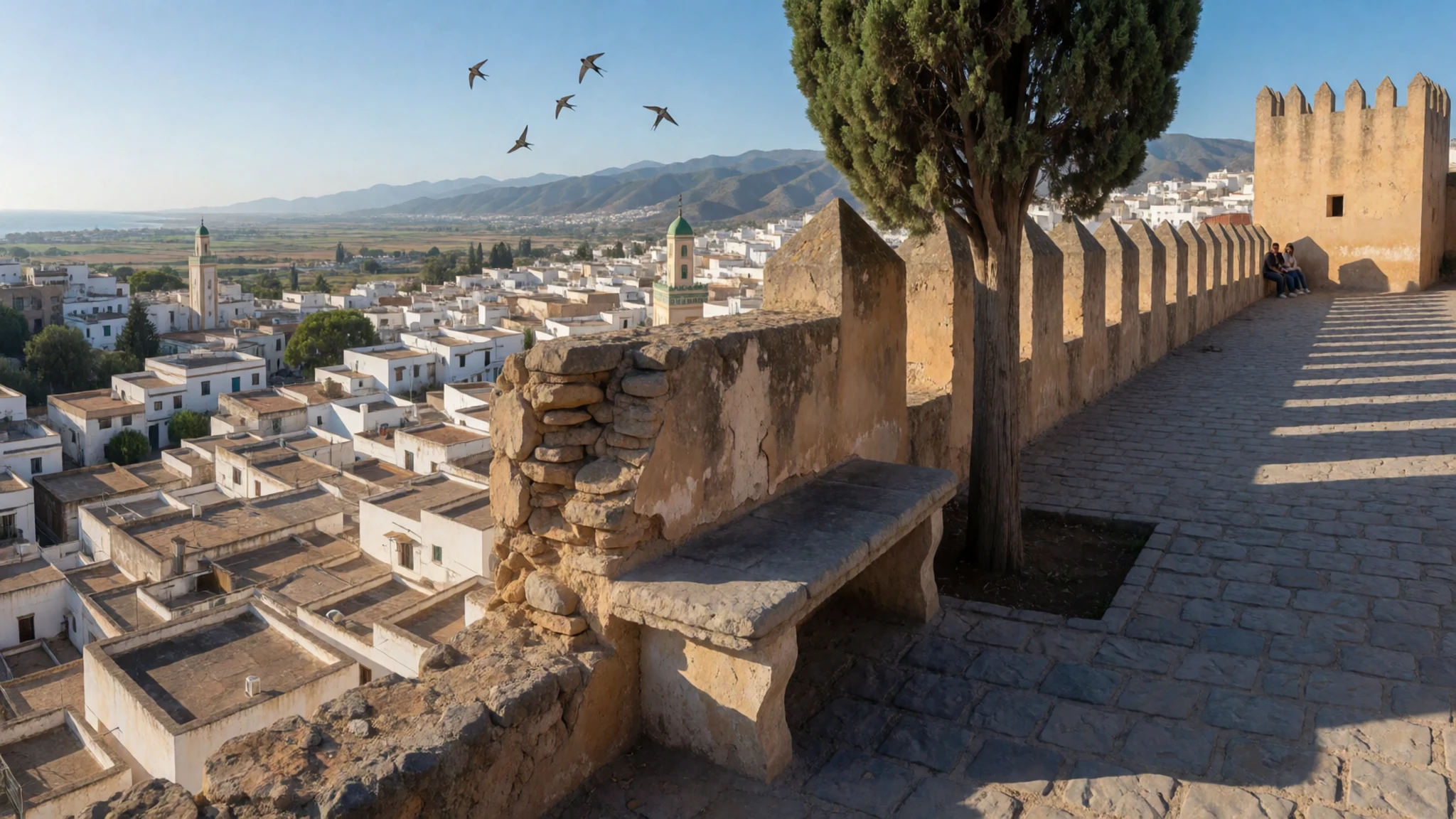
- Dar El Oddi Museum — Medina
A family house from the 1920s that fell into serious disrepair and was restored in 2018. It is a good way to see how a well-off Tétouan household was arranged around its courtyard, with the tilework and carved woodwork that the city's craftspeople are known for.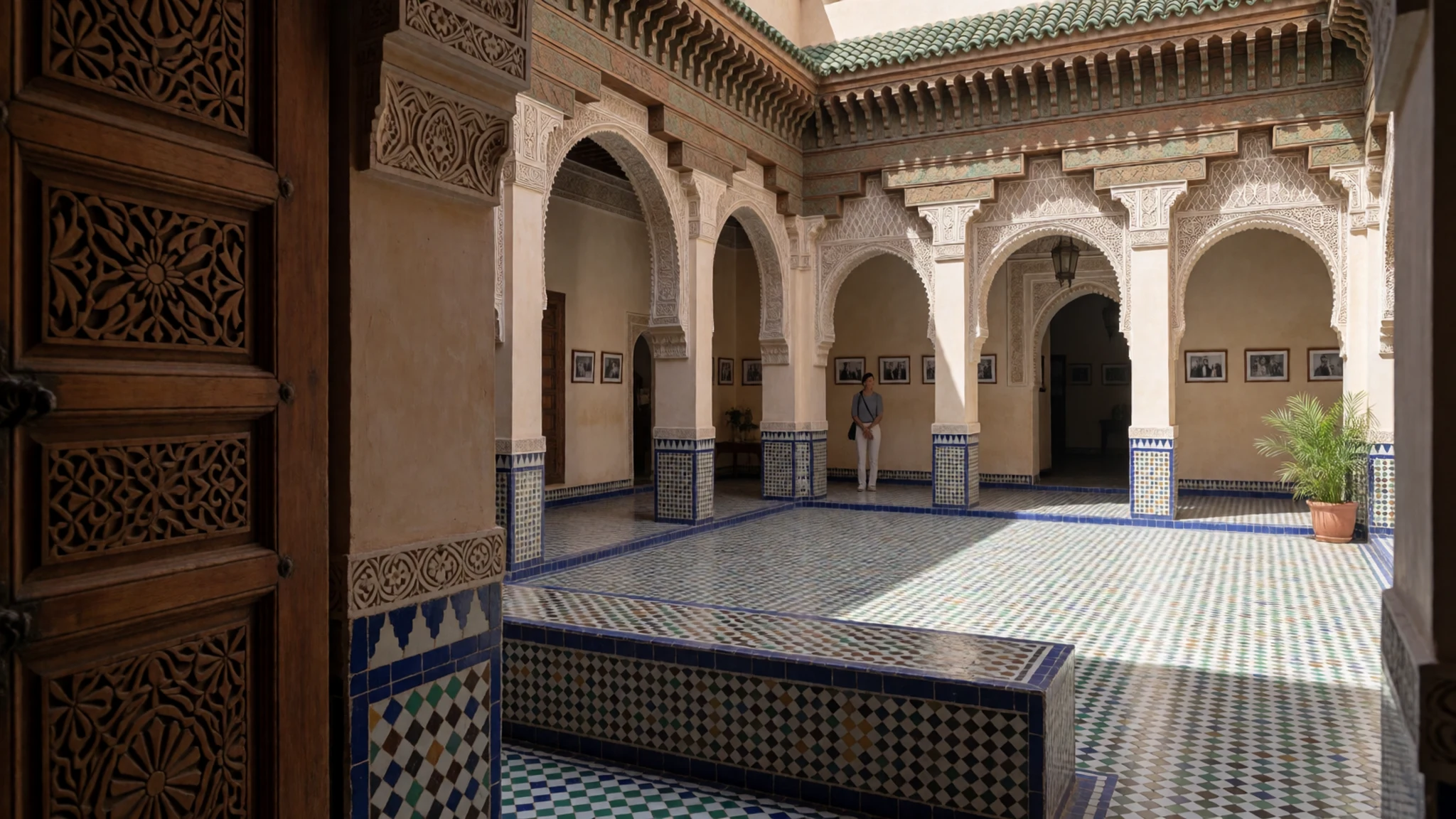
- The tannery — Medina, north-west
This is the first tannery built in Tétouan, dating from the late fifteenth or early sixteenth century. It is smaller and less crowded than the famous tanneries of Fez. Expect strong smells, and be ready to be offered a guide or a leather shop visit.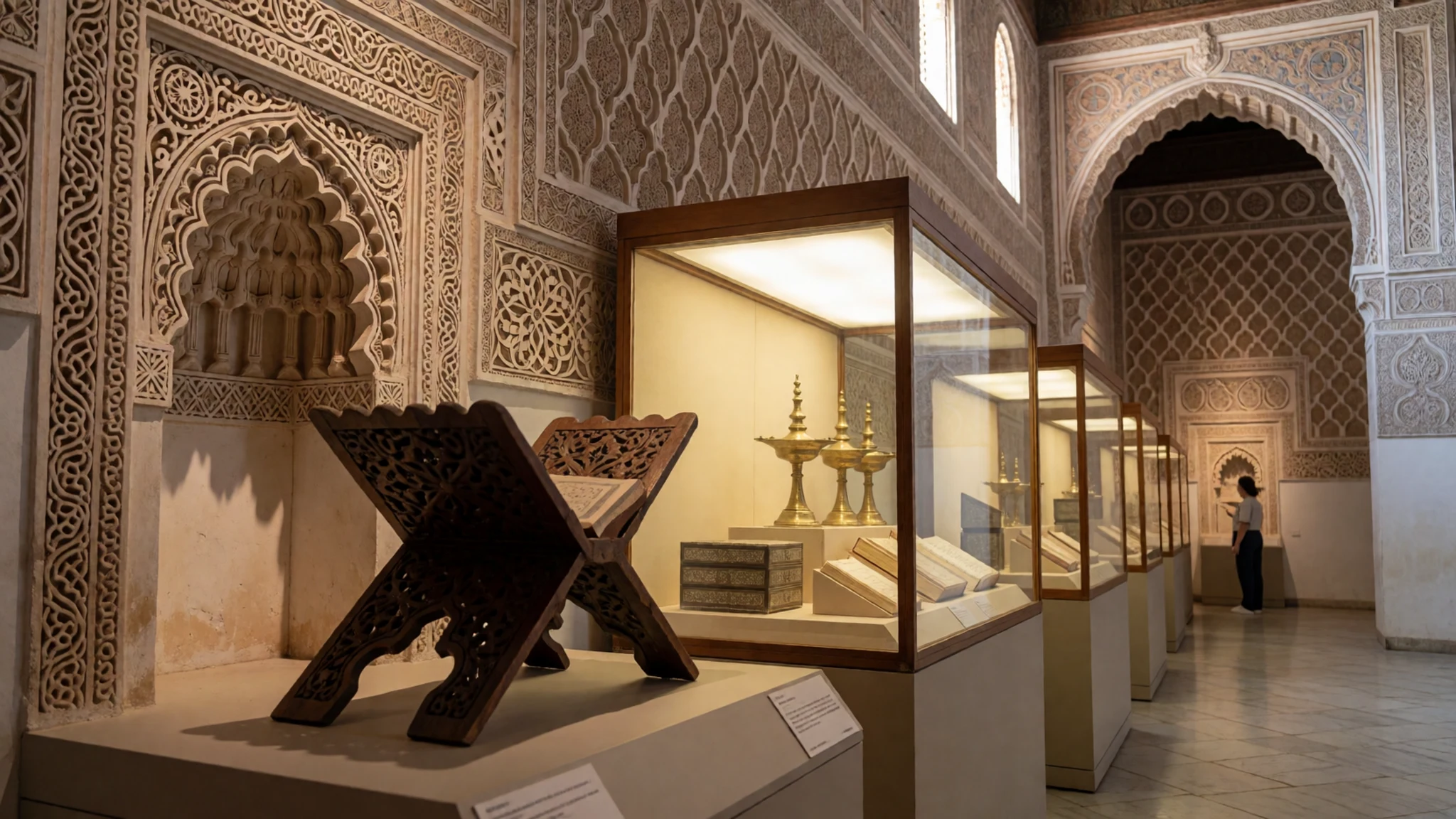
- Museum of religious heritage — Medina
Set in the former Laouk mosque, this museum displays Muslim religious objects and gives context to the faith that shaped the old town. It is quiet and compact, a good stop when the medina lanes get hot or crowded at midday.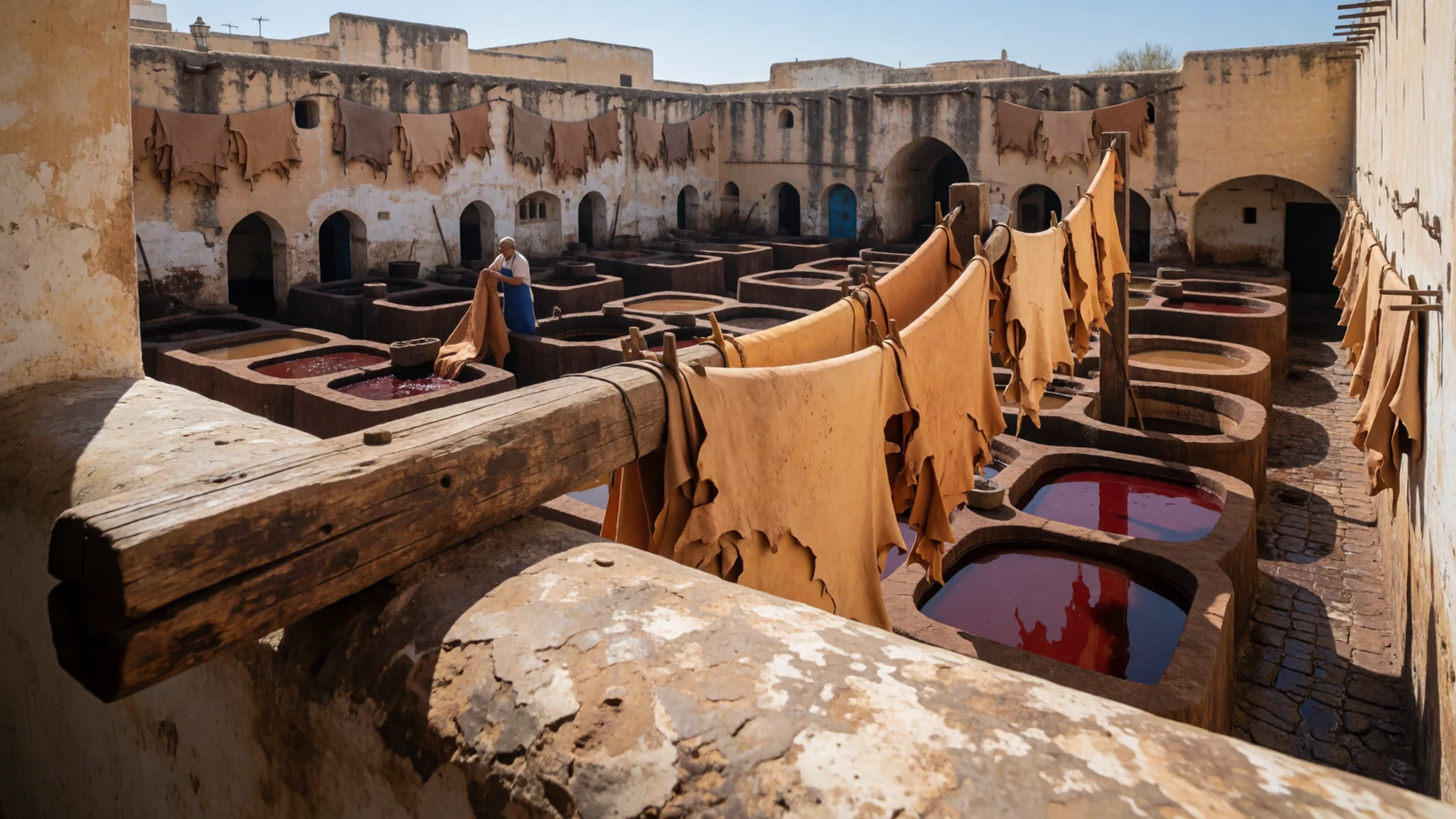
- The Kasbah — Hill above the medina
A ruined fortified castle on the hill above the town. It is not polished and not much is left, but the climb is rewarded with views across the white roofs to the mountains. Go in the morning or late afternoon, as there is little shade.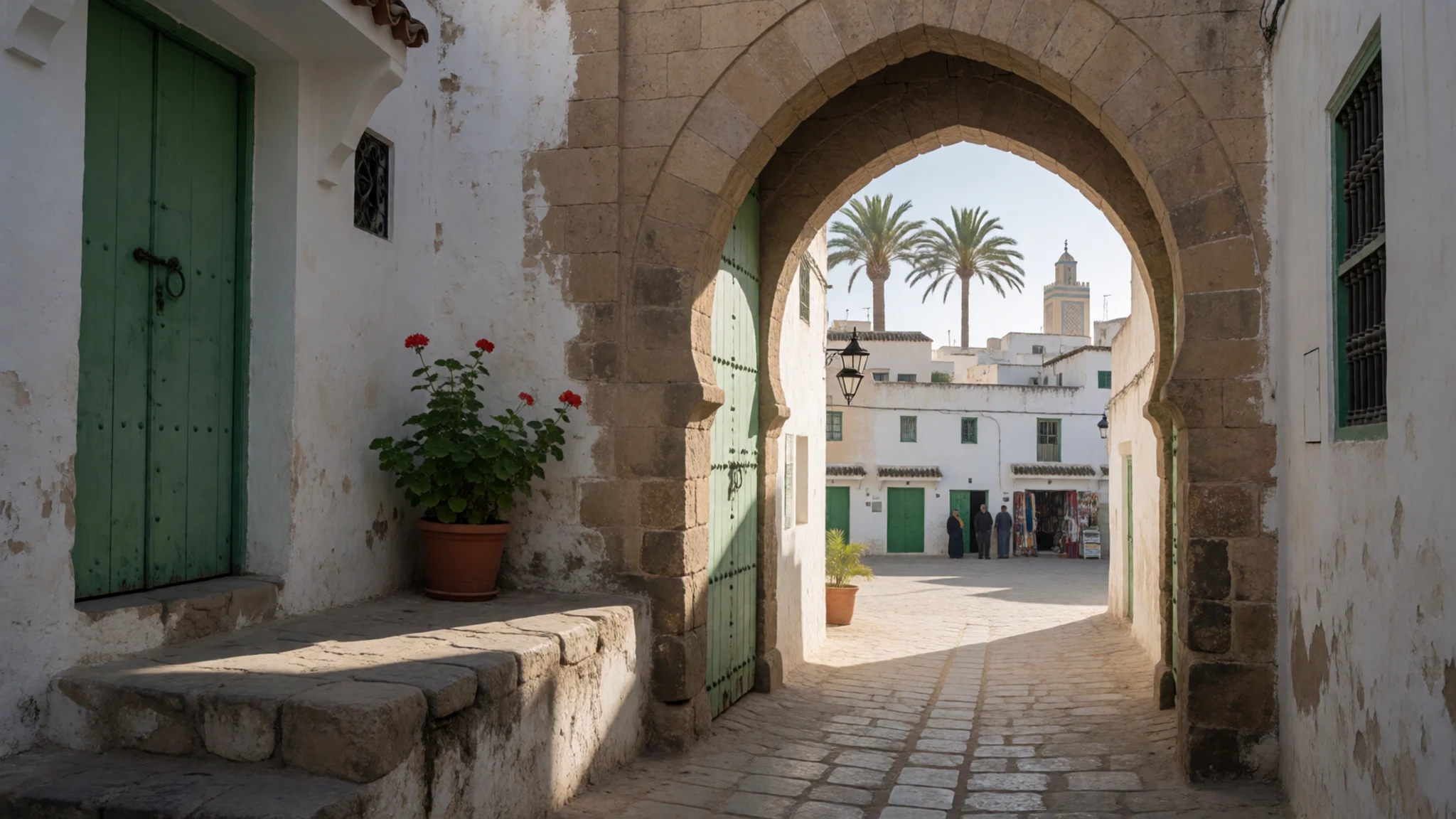
Culture
Tétouan's culture is built on Andalusian foundations, with Berber, Jewish and Spanish influences layered on top. The city has been part of the UNESCO Creative Cities Network for Crafts and Folk Art since 2017, and that fits what you see: woodworkers, leatherworkers, embroiderers and metalworkers keep their trades going in small workshops in and around the medina.
Music is part of the same inheritance. Andalusian classical music, brought by the refugees of the fifteenth century, is still performed and taught here, and the city is proud of its musicians and scholars. Literature has a strong history too, with a newspaper printed here as early as 1860 and the city acting as a centre of Moroccan writing during the protectorate years.
Daily life is conservative but relaxed. Families gather in the evening on the main squares and boulevards, cafés are social hubs, and Spanish and Arabic are both heard in the street. Religion shapes the rhythm of the day, with prayer calls, quiet Fridays and shortened hours during Ramadan.
When you are in the medina, ask before photographing any craftsperson or shopkeeper, and dress modestly with shoulders and knees covered.
What to wear
Traditional dress in Tétouan follows the wider northern Moroccan pattern. Women's festive wear includes the kaftan and its layered cousin the takchita, usually in silk, velvet or brocade with gold-thread trim, worn at weddings and religious feasts. The djellaba, a long hooded robe in wool or lighter cotton, is the everyday traditional garment for men and women. Men may add a felt or woven cap, and soft leather slippers called babouches are common. The Ethnographic Museum shows local examples of these dresses.
On an ordinary day, most people wear a mix. Younger people favour jeans, trainers and shirts, much as in southern Europe, while many women wear a djellaba or long tunic with a headscarf, and older men often keep to the djellaba. The Spanish-era streets feel quite cosmopolitan in what people wear.
Visitors should dress modestly. Light, loose cotton or linen that covers shoulders and knees is comfortable in summer and respectful in the medina. Women do not need to cover their hair, though a light scarf is useful if you visit a religious building where entry is allowed. Bring a warm layer and a rain jacket for winter, since the mountains hold cool, damp weather. Wear sturdy, flat shoes: the medina has steep, uneven and sometimes slippery stone lanes.
What to eat
- Za3Za3 juice — Juice bars near Place Al-Feddan and the Spanish-era streets
A thick, milkshake-like drink made with avocado, banana, apple and almonds, among other things. It is a local favourite and more a snack than a drink. Look for it at juice bars around the main squares and the newer town.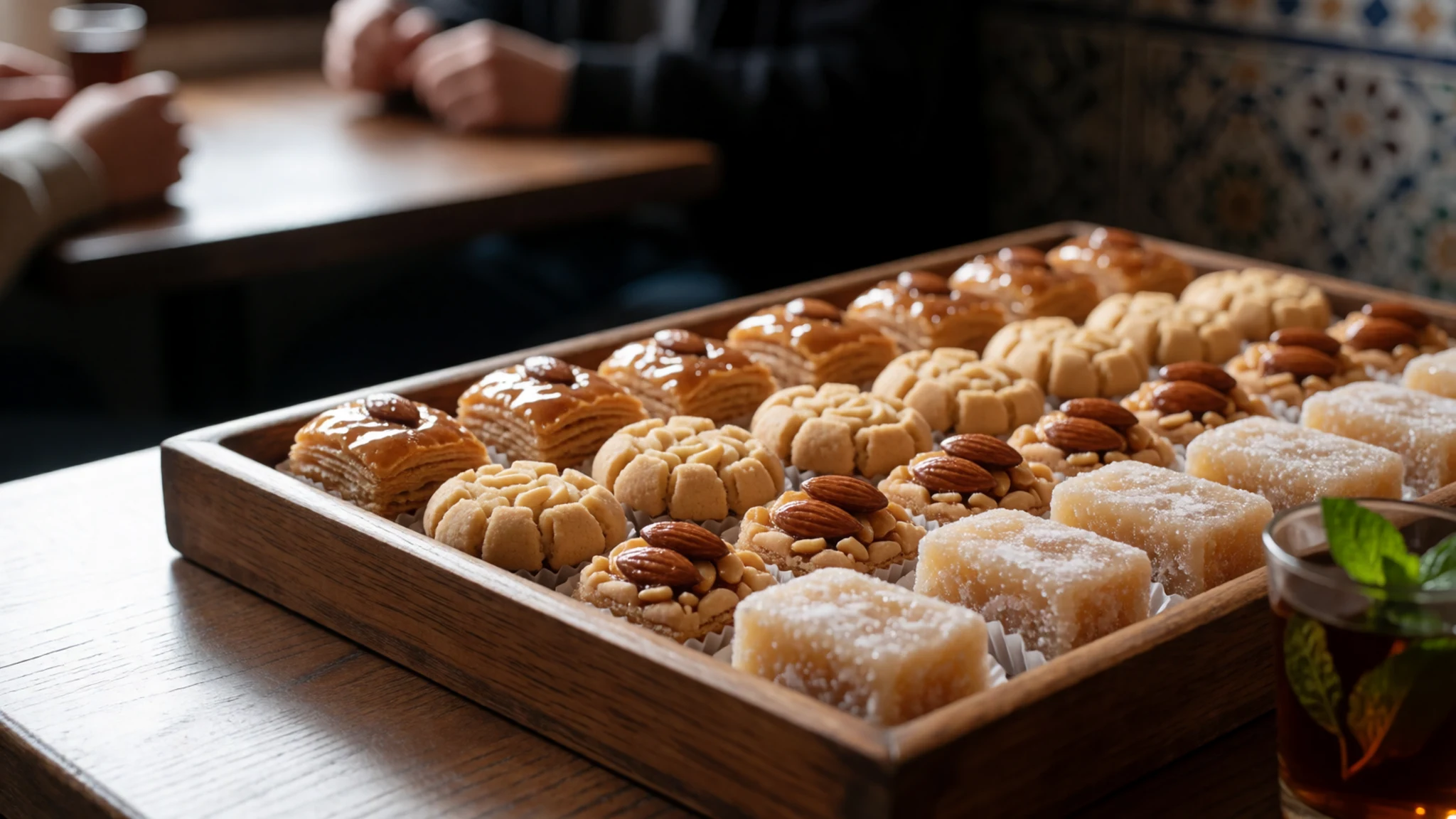
- Moroccan pastries and sweets — Patisseries and tea shops in the new town
Tétouan has a strong sweet tradition, with almond pastries, honey cakes and baked treats in the Andalusian style. A small patisserie with a tea counter is the place to try a few with mint tea.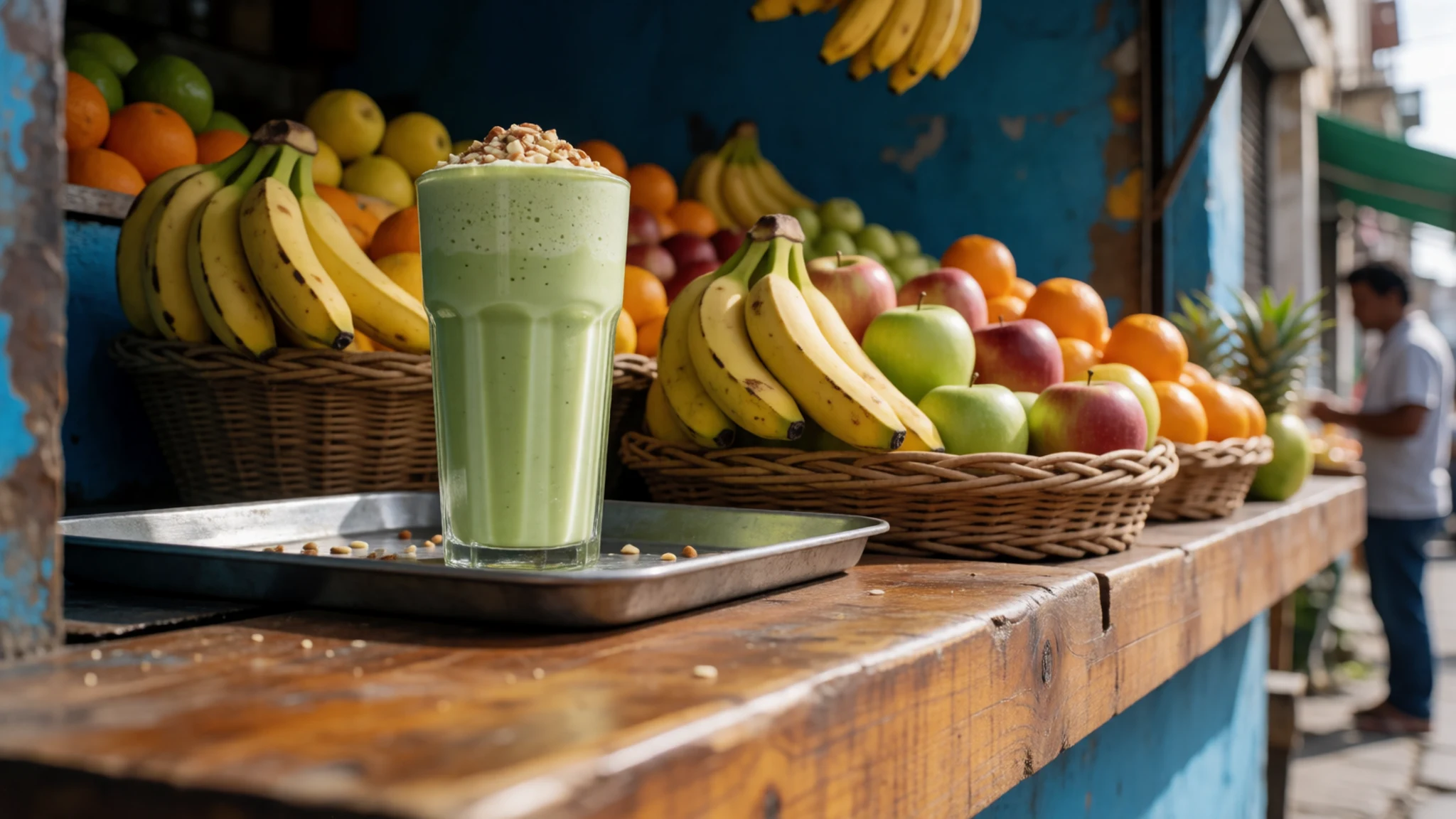
- Tagine — Small eateries inside and around the medina
Slow-cooked stews of lamb, chicken or fish with vegetables, olives or preserved lemon, served in the clay pot. It is the standard hearty meal and is found everywhere, from simple eateries to family restaurants. - Grilled fish — Seafood restaurants towards the coast
Being near the coast, the city and its nearby ports serve fresh grilled fish with bread and salad. It is simple, quick and usually best at lunch, when the day's catch is freshest. - Pizza and Spanish-style snacks — Cafés and pizzerias along the main boulevards
The Spanish connection shows up in cafés that serve pizza, tapas-style plates and coffee with pastries. These are casual places, popular with locals for long, unhurried meals.
Plan it
Best time. April–May and October–November: mild, comfortable for walking the medina and the hill. Summer is hot and busy with domestic holidaymakers, while winter brings cooler, wetter weather from the mountains.
How long. 2
Getting there. Fly to Tangier, Rabat, Casablanca or Fez, which have more international links than Tétouan's own small airport. From Rabat or Casablanca, take the high-speed train to Tangier, then an intercity bus to Tétouan. Buses also run from Fez, and Tétouan lies on the Tangier–Fez road. If you do land at Tétouan airport, walk a short way from the taxi rank to the main road for cheaper metered petit taxis into town.
Budget. low
Tips
- Agree the fare before a grand taxi leaves, or use a metered petit taxi in town
- Carry cash for small shops, museums and tips to guides
- Start the Kasbah climb early, before the heat and with better light
- Wear flat, grippy shoes for the medina's steep stone lanes
- Combine Tétouan with Chefchaouen if you have an extra day
Etiquette
- Ask before photographing people or their workshops
- Dress modestly in the medina, covering shoulders and knees
- Agree a price with guides before they start
Nearby
Sources
- Wikidata Q185157 (CC0)
- Wikipedia: Tétouan (rev 1384567439) (CC BY-SA 4.0)
- Wikivoyage: Tétouan (rev 5420750) (CC BY-SA 4.0)
- Photo: Tetuan vista desde un tejado, Anassbarnichou2 (CC BY 3.0)
- Photo: Church of Our Lady of Victory of Tétouan, Oumaima Loudini (CC BY-SA 4.0)
- Photo: Place Al-Feddan, Rachid Baya (CC0 1.0)
- Photo: Spanish town in Tetouan, Yassine Abbadi (CC BY 2.5)
- Photo: Al-Mechouar Al-Saïd, Ideophagous (CC BY-SA 4.0)
- Photo: View of Moulay el Mehdi, happinesswithin (CC BY 3.0)
- Photo: Tetouan, Morocco, M1abdelrahman (CC BY-SA 4.0)
- Photo: Coat of arms of Tétouan, Visma (CC BY-SA 4.0)


