Teraina
Teraina, Kiribati
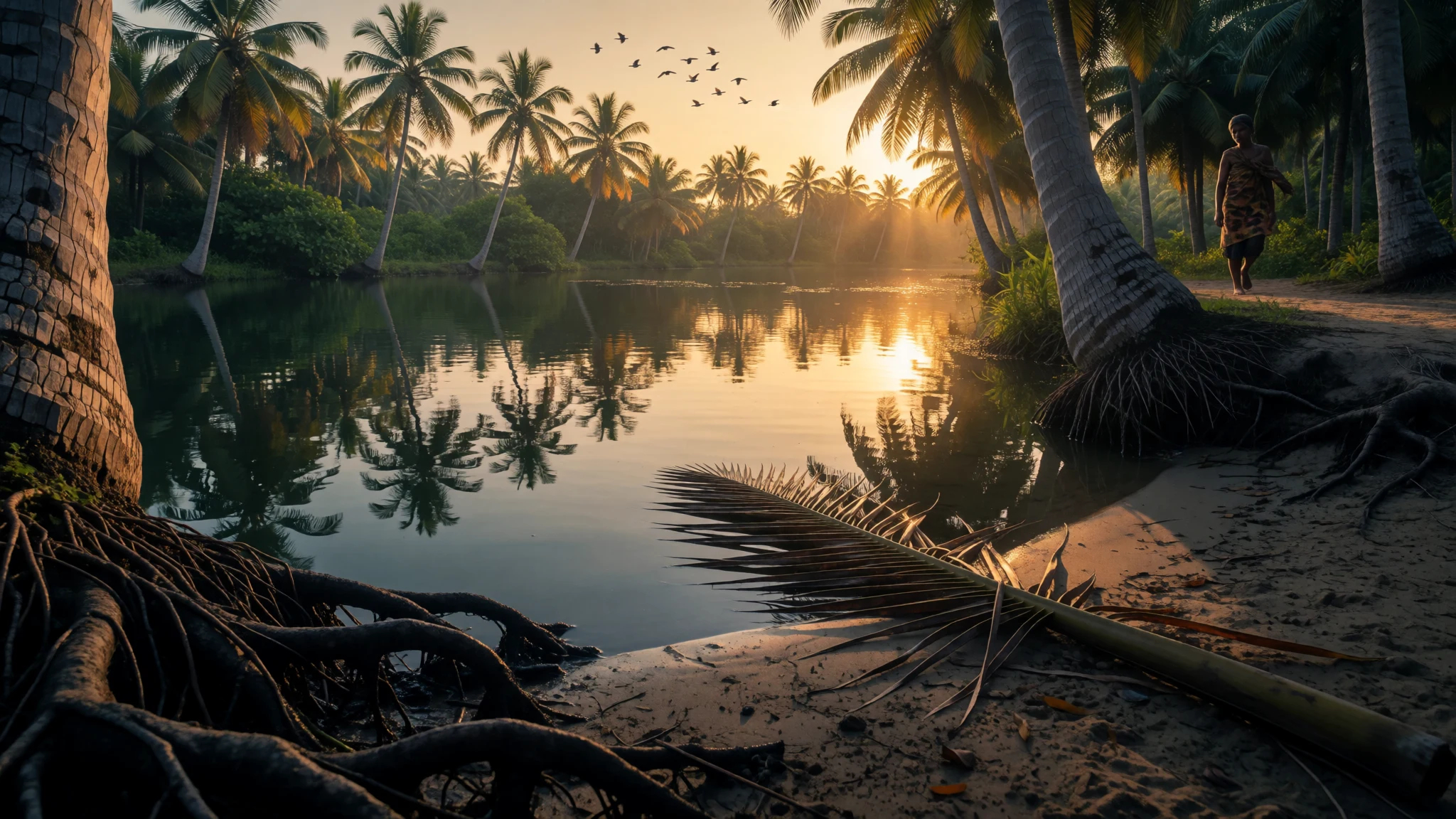
Teraina is a remote Pacific atoll with a freshwater lake inside its coconut forest, for travellers happy with simple living and slow journeys.
The place
Teraina sits just north of the equator in the central Pacific, one of the Northern Line Islands that belong to Kiribati. It also appears as Teeraina and as Washington Island, and both of those names are the official ones. Older maps and logbooks use New Marquesas, Prospect Island and New York Island.
The atoll is a narrow strip of coral, a little over five kilometres from end to end and only a couple of kilometres wide. Most of it lies about three metres above the sea, and the highest ground reaches about five metres, so the horizon is flat and the sky does most of the work. Tall coconut palms and dense inland forest make the island feel taller than it is.
What sets Teraina apart from most atolls is Washington Lake, a body of fresh water hidden among the palms. Teraina is the sole permanent freshwater lake in all of Kiribati, a fact that carries real weight on an island where the rhythm of daily life is dictated entirely by rainfall and groundwater. A man-made canal also carries fresh water through the forest.
About 1,900 people live here, spread through a few villages, with Tangkore at the western end as the main settlement. Of the Northern Line Islands that people live on permanently, Teraina has the smallest population. Visitors are rare. There are no resorts, and the island runs on fishing, coconuts and the arrival of boats and planes.
Its story
Teraina's early human story is still argued over. No one was living on the atoll when Europeans first came across it, yet archaeologists have found dry-stacked stone structures there, and an intact voyaging canoe has been recovered. Oral traditions from the Cook Islands and the Tuamotus suggest Polynesian navigators knew of the island. Whether anyone stayed for long is unclear, since reliable fresh water is scarce on most atolls and the timeline needs more fieldwork.
The name Washington comes from Edmund Fanning, an American sealing captain sailing the brig Betsey in the late eighteenth century. He sighted the atoll, honoured the American president with its name, and sailed on without landing. A Russian expedition under Adam Johann von Krusenstern made the first recorded exploration, using the name New Marquesas.
The nineteenth century then brought a more practical interest. Under the American Guano Islands Act the atoll was claimed as Prospect Island, in the hope of bird-dropping fertiliser. The hope came to little. Heavy humidity washes away the deposits before they build up, so guano was never mined or exported in any notable quantity.
What lasted was the coconut. Copra, the dried flesh of the nut, became the island's cash crop, and photographs from NOAA fieldwork still show it spread out to dry. Teraina today is part of Kiribati, its older names kept as a record of the passing ships that shaped how the outside world mapped it.
What to see
- Washington Lake — Island interior
The freshwater lake lies inside the coconut forest and is the reason Teraina looks different from a typical atoll. Expect still, dark water, birdsong, and a walk through shade rather than glare. Ask locally about the best approach on foot, since paths and landowners vary.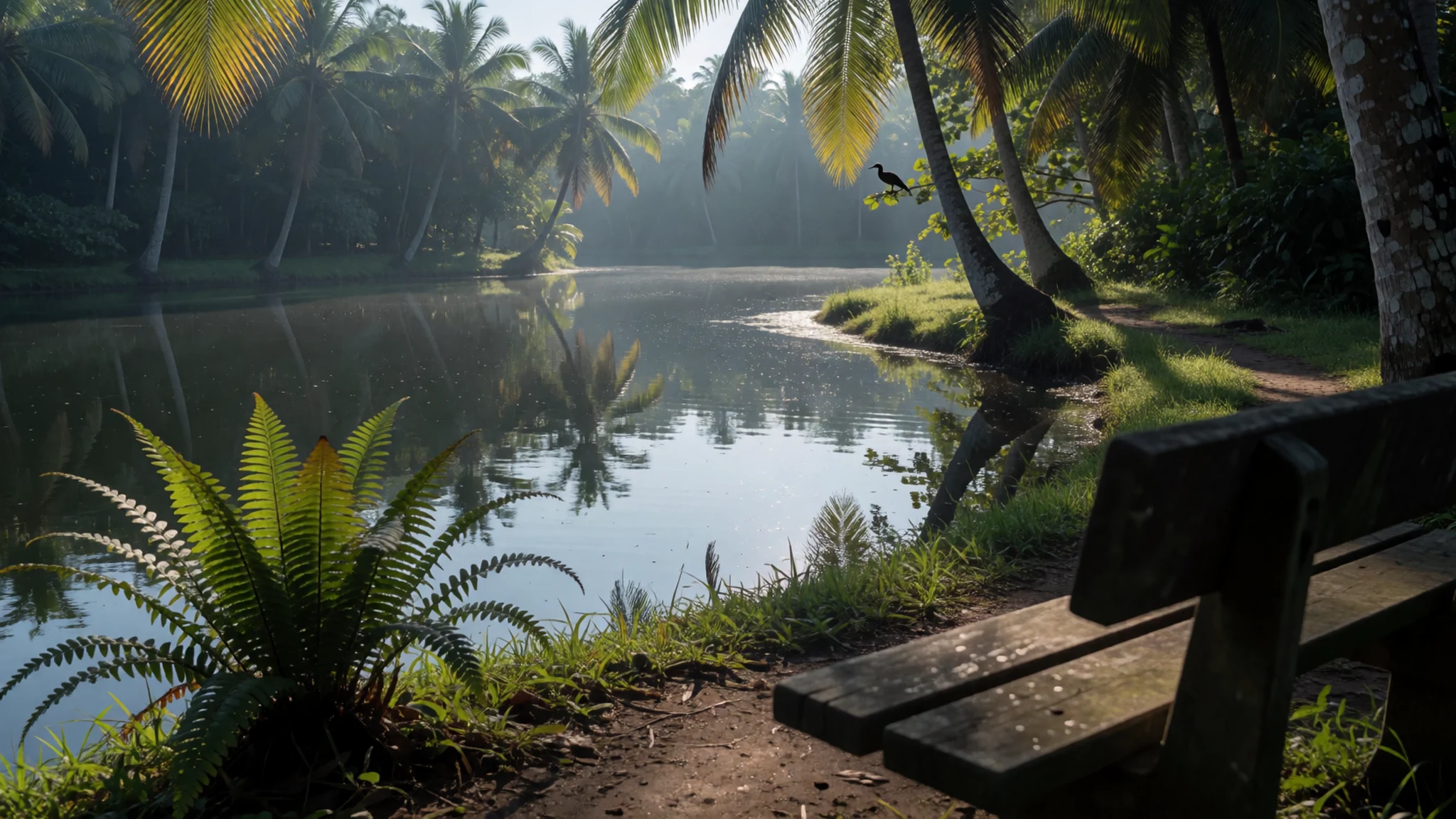
- The freshwater canal — Island interior
A man-made canal cuts through the forest and links parts of the freshwater system. Traversing it, as one NOAA photograph shows, means slow progress through green tunnels of palm and undergrowth. Go with a local guide, wear shoes that can get wet, and expect mosquitoes.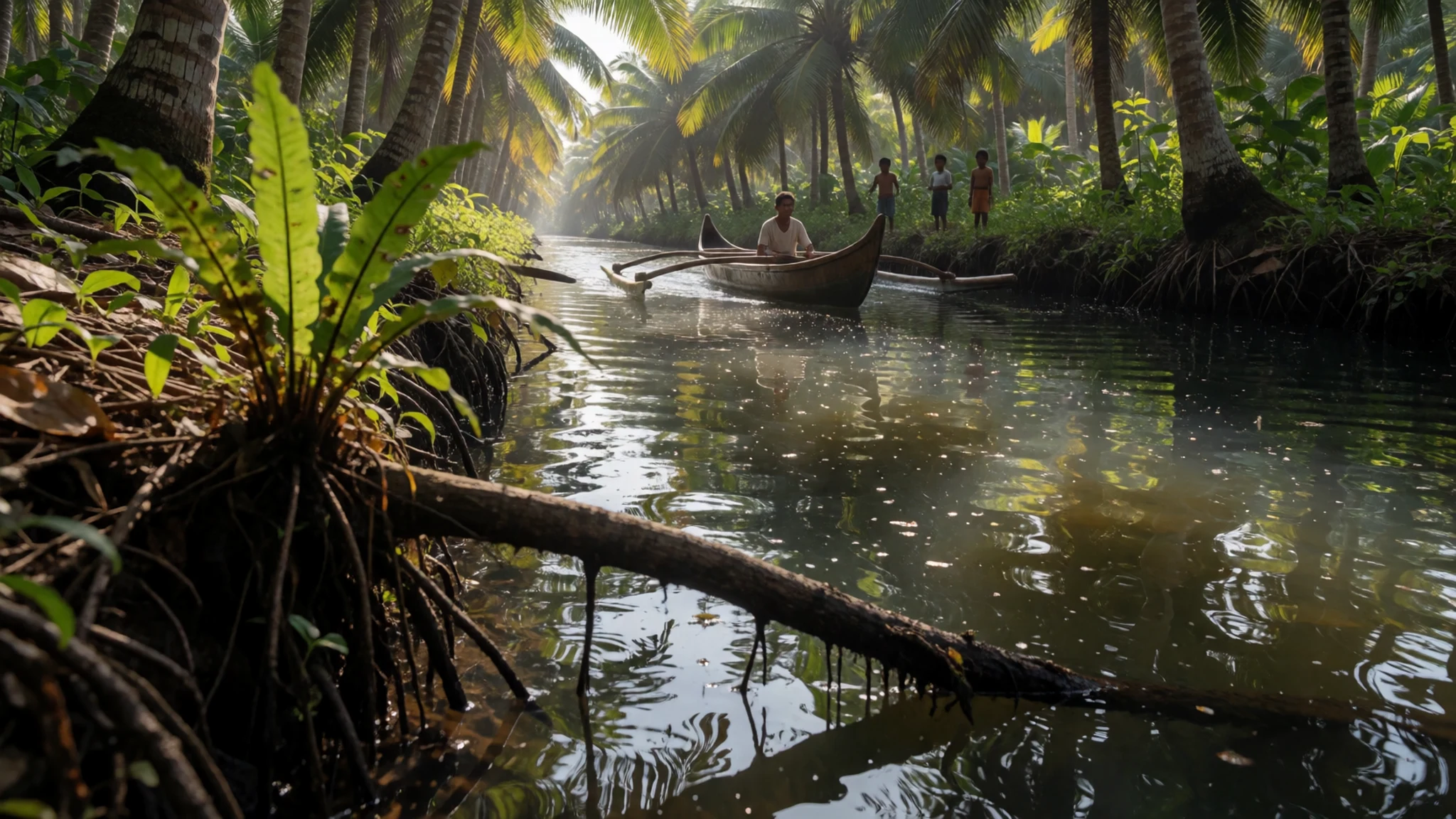
- Tangkore village — Western end
Tangkore, at the western end of the atoll, is the main settlement and the place most visitors arrive. The pace is unhurried: houses among the palms, children on the paths, boats pulled up near the shore. Walking through is the easiest way to see how an outer-island community works.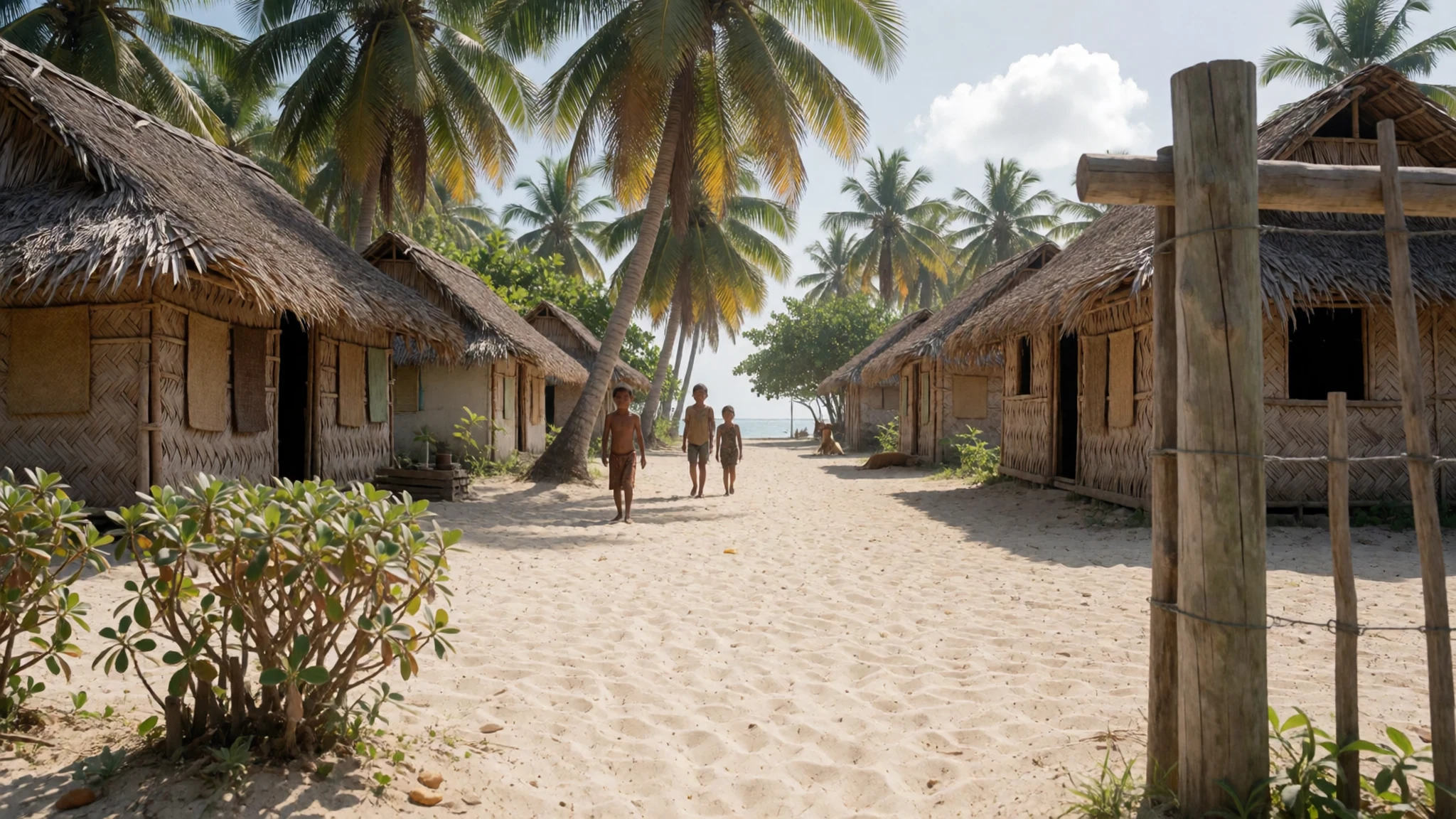
- The meeting house — Village centres
Island life revolves around the communal meeting house, where the chief and elders gather and decisions are made. A NOAA photograph shows the men's meeting house with the island chief presiding. Outsiders should wait to be invited, and ask the host family before approaching or taking pictures.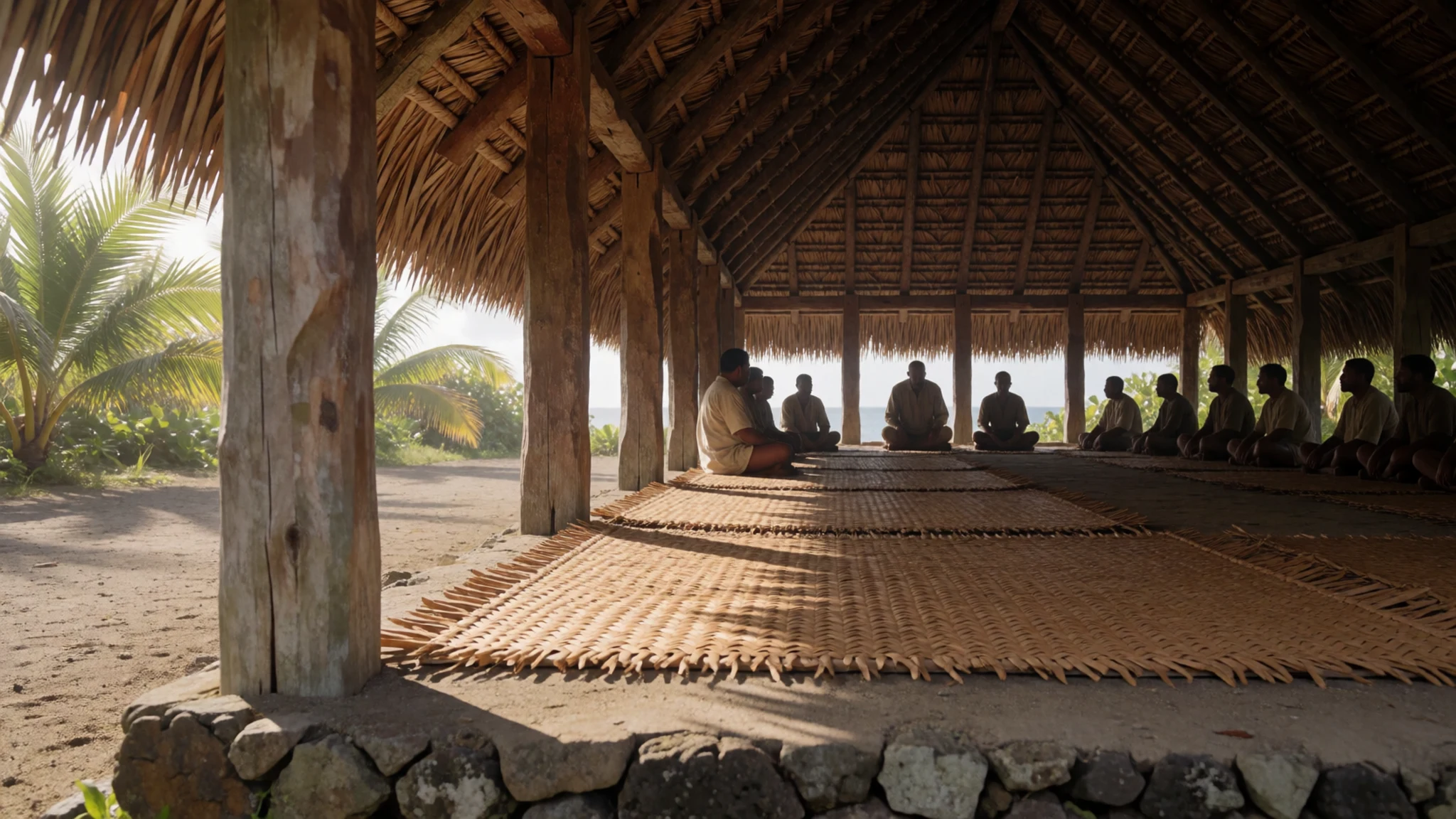
- Copra drying grounds — Near villages
Coconut meat dries in the sun on open ground, then goes to market as copra, the island's long-standing cash crop. Watching the work shows how closely daily life is tied to the palms. Ask permission before photographing people at work, and keep to the edges.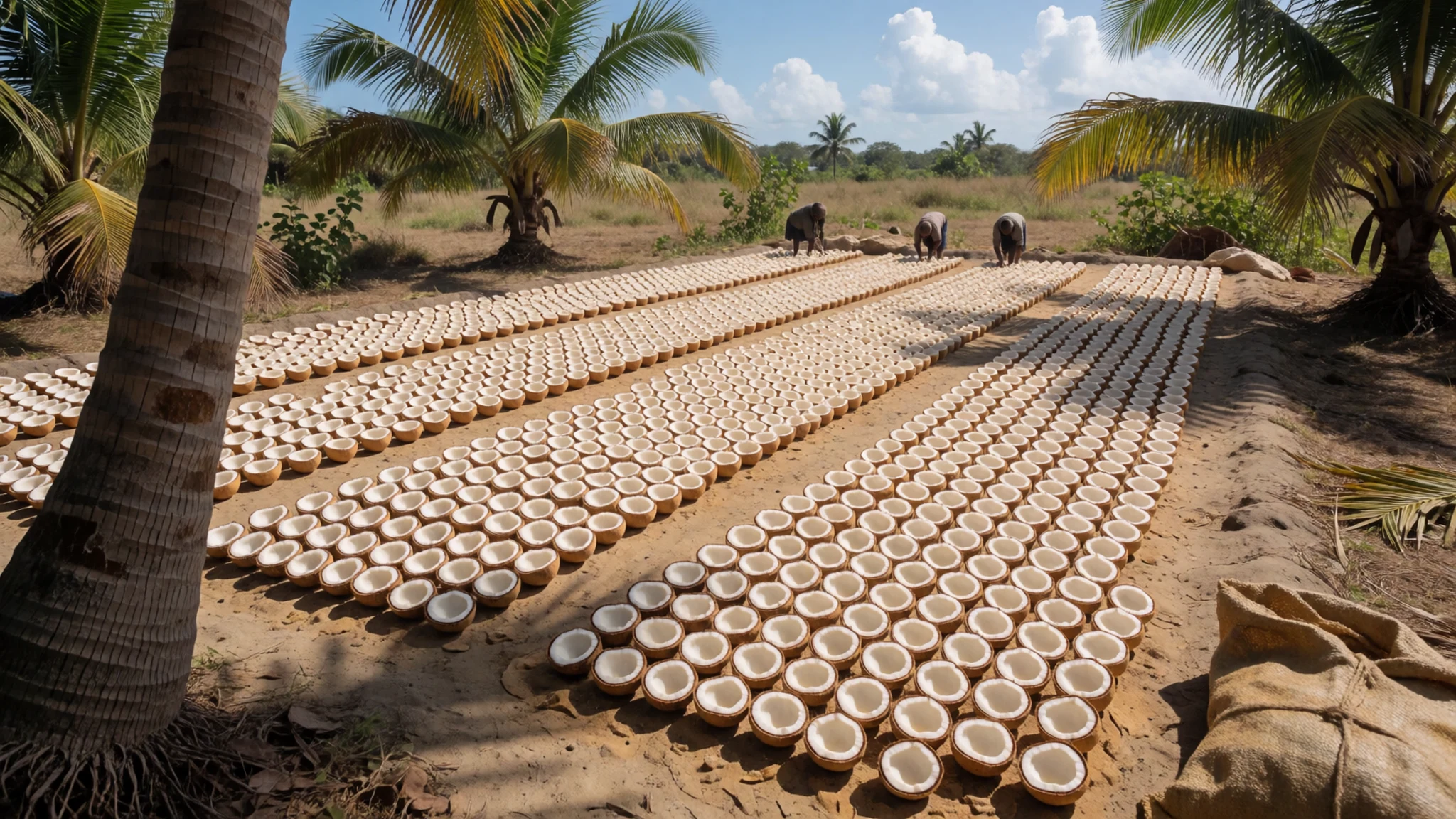
- The reef and shoreline — Coast
A fringe of reef surrounds the atoll, with surf breaking white along its edge and calmer pools inshore. Before swimming anywhere, ask the landowner, as stone figures of religious meaning may stand nearby with rules attached. Currents and reef edges are real hazards, so go with someone local.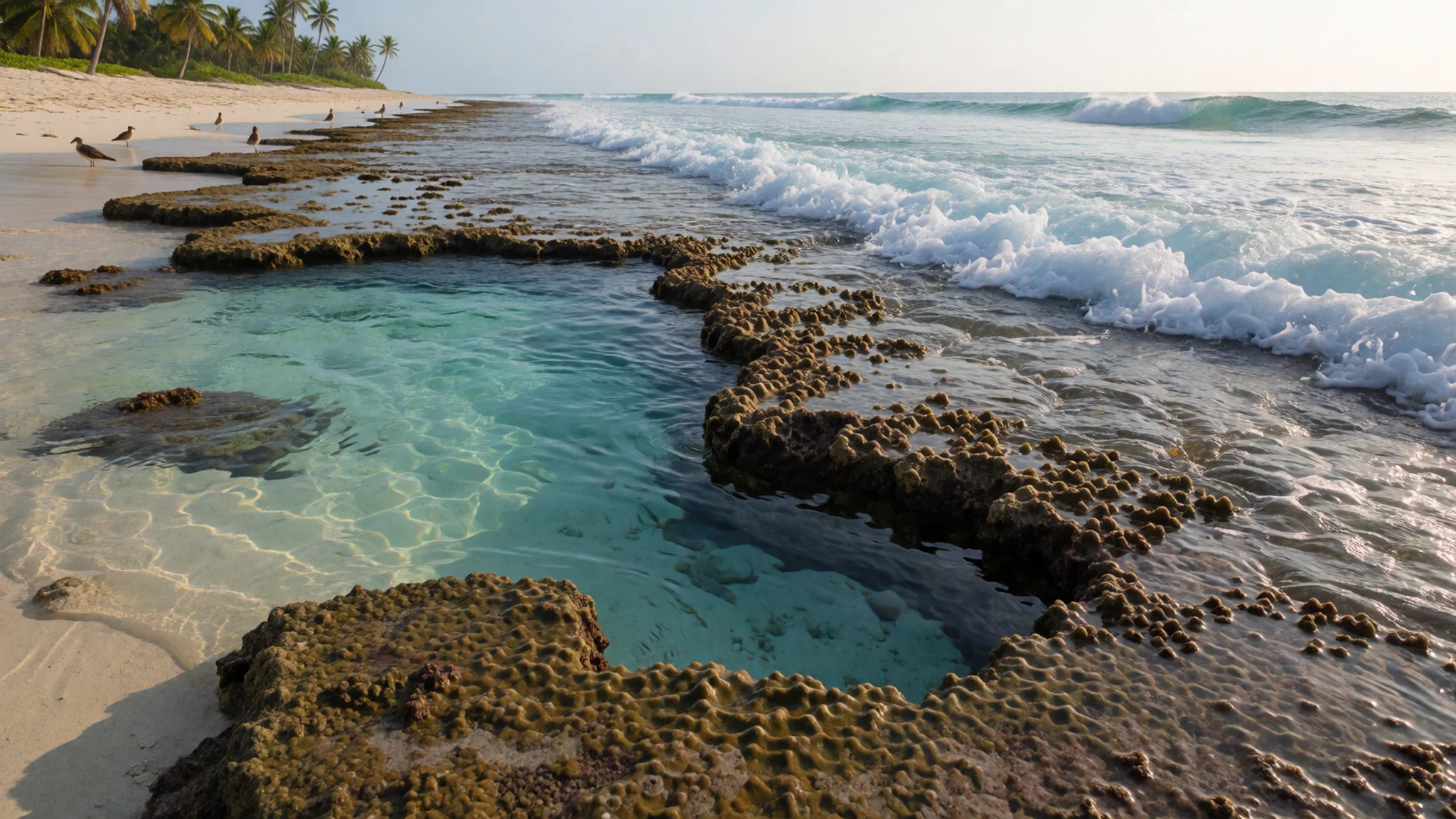
Culture
Teraina is an I-Kiribati community, and the rhythm of the day follows family, church and the chief's council. Hospitality is central. People are generally friendly to visitors and may include them in celebrations if they happen to be around, and a visitor who arrives with a host family and a little patience will be well looked after.
The maneaba, or meeting house, is the social and political heart of a village. Seating and speaking in it follow customs set by clan and family, and visitors are guests there rather than spectators. Church services matter too, and Sundays are generally quiet.
Land is held by families, and that shapes ordinary choices. Even swimming at a stretch of shore can require a word with whoever owns it, and some places hold stone figures of religious importance with their own rules. Asking first is simply the way things are done, and nobody will mind the question.
Fishing and coconut work set the daily schedule, so mornings start early and the middle of the day is for shade. Songs and dance are part of celebrations, and visitors are often asked to join in. Conversations tend to be slow, personal and humorous. Rushing a greeting, or going straight to business, can seem abrupt.
Ask your host before you swim, photograph people, or step into a meeting house, and dress modestly in villages and at church.
What to wear
Traditional I-Kiribati dress draws on the pandanus and coconut palms that surround every village. Woven pandanus mats serve as bedding and gifts, and dancers wear skirts of plaited or fibre strips, with garlands and headpieces of leaves and flowers. These outfits mostly appear at festivals, weddings and church or community celebrations rather than in everyday life.
Day to day, people on Teraina dress for heat, work and modesty. Men commonly wear shorts or a wraparound cloth with a T-shirt, often barefoot or in flip-flops. Women usually wear loose, knee-length or longer dresses and blouses in bright printed cotton, with shoulders covered, and head-to-toe swimwear is not the norm on village shores. Church clothes are neater: a collared shirt or a clean dress, often in white or pastels.
Visitors should pack light, quick-drying cotton or linen that covers the shoulders and knees, as the island sits close to the equator and the sun is fierce. A wide-brimmed hat, sunglasses and reef-safe sun protection are worth carrying. Bring shoes for wet coral and muddy forest paths, plus sandals for village life. Swim in shorts or a T-shirt over swimwear when anyone is nearby, and keep beachwear for quiet spots. Pack a light rain jacket, since showers arrive quickly.
What to eat
- Fresh fish — Family meals and the shoreline at landing time
Fish is the backbone of the island diet, caught from the reef and the open water by local fishermen. It is usually grilled over a fire or boiled, and eaten with whatever is at hand. Ask your host family what was landed that morning.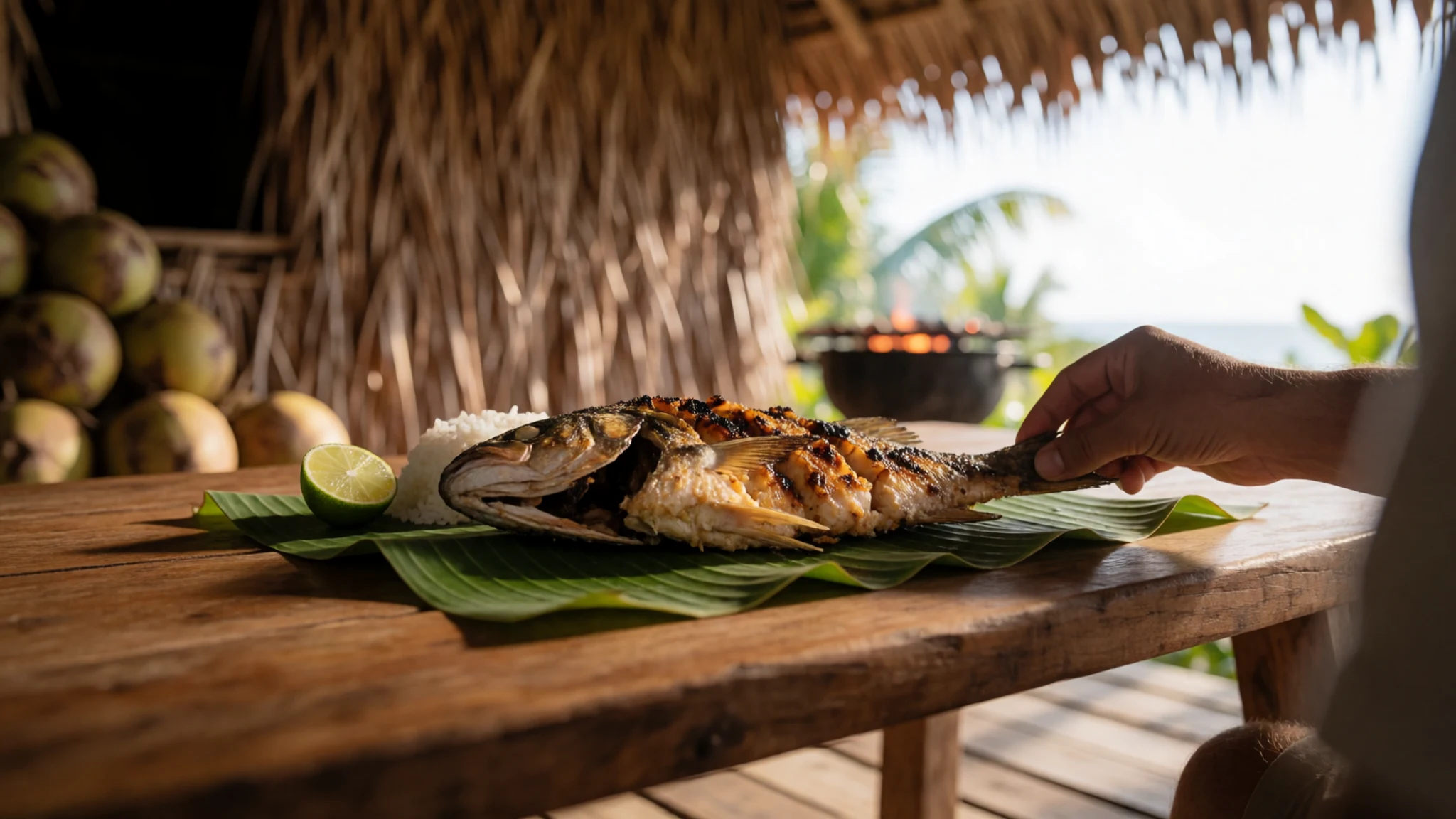
- Local sashimi — Beside the boats, or at a host family's home
Raw fish cut straight after landing, served simply with lime or a salty dip. Because it goes from sea to plate within hours, the taste is clean and sweet. Only eat it where the fish is clearly fresh, and follow your host's lead.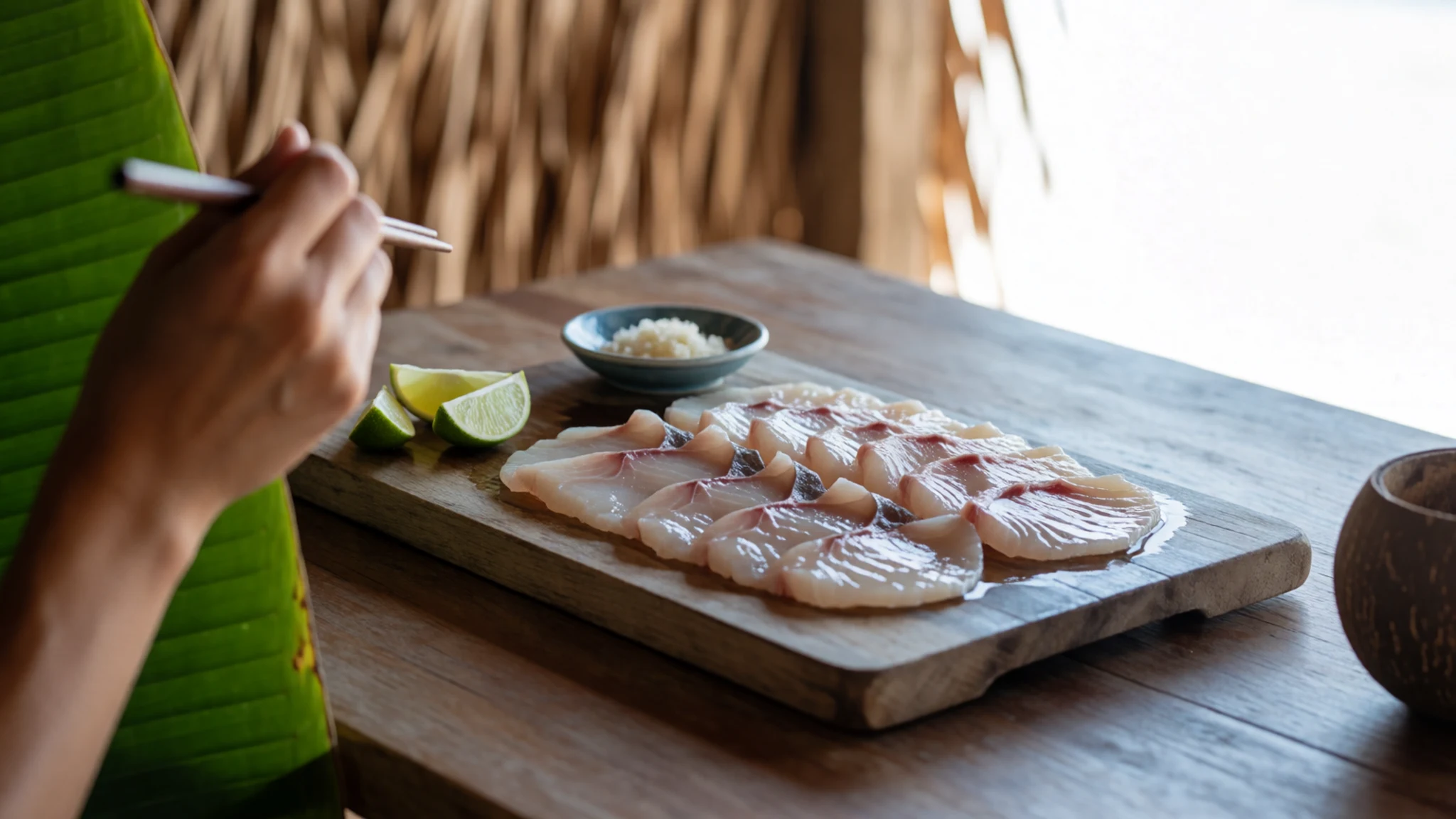
- Rice — Family meals and small village shops
Rice is the usual partner for fish and one of the imported staples that arrives by supply boat. Plain and filling, it soaks up fish broth or coconut. When boats are delayed, stocks can run low, so shop supplies are not guaranteed. - Coconut toddy — Village homes where toddy is cut at dawn and dusk
Sap tapped from the coconut flower is drunk fresh and sweet. Left for a couple of days it ferments into a sour, alcoholic version that many locals prefer. Boiled down, it becomes kamaimai, a syrup poured over sweet buns. Drink only what your host offers. - Kava — Informal gatherings of an evening
Kava is a mild, earthy drink shared in company and found across Kiribati. On an outer island it is more a social habit than a menu item. Accept the first cup if you are offered it, and expect numb lips and a slow, calm evening.
Plan it
Best time. June to September is a sensible choice, when the sea is generally calmer for boat journeys, though Teraina is equatorial, hot and humid all year, and rain can arrive in any month. The humid climate is also the reason guano never built up here.
How long. 3–5
Getting there. Fly to Tarawa or Kiritimati (Christmas Island) with Fiji Airways from Nadi, which connects onwards to Australia, New Zealand, Japan and Honolulu. From there Teraina is reached by a local flight or supply ship, which can be infrequent and subject to change. Confirm everything with your host and the Kiribati authorities well ahead. Many nationalities can enter visa-free for up to a month, but check the current rules with a Kiribati consulate before you travel.
Budget. mid
Tips
- Arrange accommodation and meals through a host family before you travel, as there are no resorts
- Bring cash in small notes, plus any medicines and snacks, because shops are limited and supply boats can be late
- Carry drinking water or a filter, and take mosquito protection for forest walks
- Build slack into your return plans, since flights and ships on outer islands rarely run to a fixed pattern
Etiquette
- Ask the landowner before swimming or walking on private land
- Dress modestly in villages, covering shoulders and knees
- Wait to be invited before entering a meeting house
Nearby
Sources
- Wikidata Q911037 (CC0)
- Wikipedia: Teraina (rev 1364336385) (CC BY-SA 4.0)
- Wikivoyage: Kiribati (rev 5429044) (CC BY-SA 4.0)
- Teraina Kiribati (NASA) (Public domain)
- Micronesia regions map (Peter Fitzgerald) (CC BY 3.0)
- Wash island house (Dr. James P. McVey, NOAA Sea Grant Program) (Public domain)
- NASA-WashingtonIsland (NASA) (Public domain)
- Map of Teeraina, Kiribati (Government of USA, Government of Kiribati) (CC BY 3.0)
- Admiralty Chart No 2867 (United Kingdom Hydrographic Office) (Public domain)
- Copra drying on Teraina (Dr. James P. McVey, NOAA Sea Grant Program) (Public domain)
- Freshwater canal on Teraina (Dr. James P. McVey, NOAA Sea Grant Program) (Public domain)


