Marakei
Marakei, Kiribati
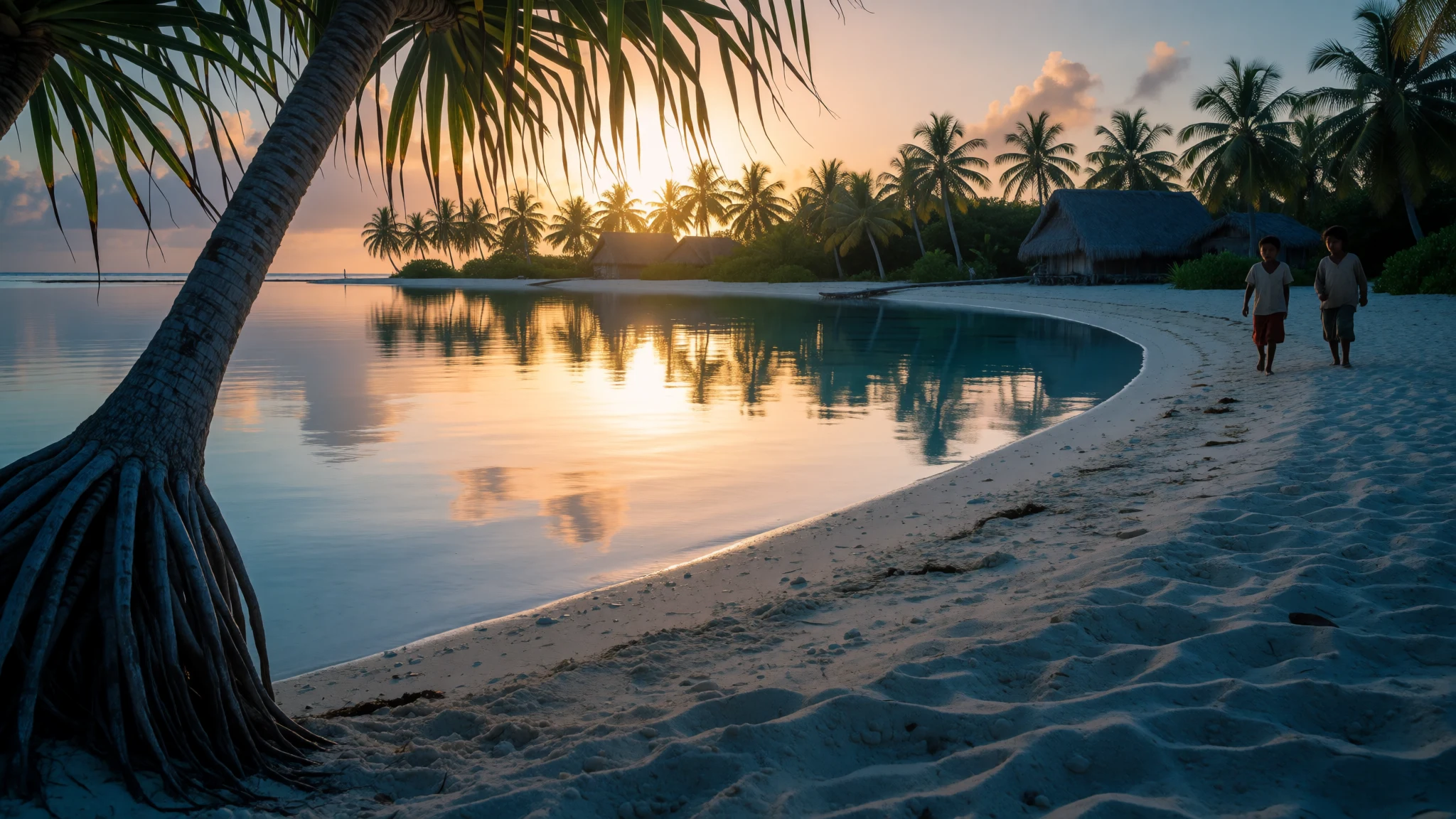
Marakei is a low, ring-shaped atoll in Kiribati where a first-time welcome to four shrines still opens a stay of simple island living.
The place
Marakei is a small atoll in the northern Gilbert Islands of Kiribati, sitting almost on the equator in the central Pacific. The land forms a ring around a lagoon, and that ring is the whole point of the island. Two large islands make up the circle, divided by two narrow channels called Baretoa Pass and Raweta Pass. The lagoon and land together cover about 40 square kilometres, though dry land accounts for only 14.13 square kilometres of that. A 26-kilometre road loops around the island, which makes distances easy to grasp even without a map. Marakei is one of just two islands in Kiribati whose land fully encloses its lagoon. Elevation is about 3 metres, so the sea feels close from almost anywhere, and the sky does most of the work as scenery. The lagoon holds salt water, runs deep in places and has no tide of its own. Boats can use the two passes only when the water is high enough, since they are not navigable at low tide. About 2,700 people live here. Rawannawi is the main village, near the airport at the northern tip. Shops stock little beyond staples, and plans change with flights and weather. Marakei suits travellers who enjoy slow days, simple guesthouses and talking with neighbours. It disappoints anyone expecting resort comforts, nightlife or cold drinks on tap. What it offers instead is a working Pacific community whose traditions have had room to carry on.
Its story
Marakei's written history is thin in the sources behind this reading, so its story is best told through a handful of markers. A post office opened around 1912, which shows the atoll was already tied into the wider mail and administration of the Pacific. In the same year, a quarrel between villages left one of the channels into the lagoon blocked, a reminder that the water was shared ground and could become a point of conflict.
Another thread is the belief in four female guardian spirits, whom islanders sometimes call ghosts or witches. Their names are Nei Reei, Nei Rotebenua, Nei Tangangau and Nei Naantekimam, and each has a shrine on the island. Newcomers are expected to greet them in turn, a custom known as te katabwanin and said to be unique to Marakei. That it is still practised says a good deal about how the island sees itself.
Marakei also came through the Second World War with less disruption than many neighbouring islands, and that is often given as one reason older ways of living remain so visible here.
The modern chapter is about the environment. Causeways built across the lagoon cut down the flow of water in and out, oxygen levels dropped, and fish are no longer found in the lagoon. Sand has been lost in some places and gained in others along the shore, and people link this to aggregate mining, land reclamation and causeway building changing the currents. With a population of 2,738 and land that rises about 3 metres, these are everyday concerns rather than distant ones.
What to see
- Te katabwanin and the four shrines — Around the whole island, anticlockwise
First-time visitors are escorted anticlockwise round the island to the four shrines of Nei Reei, Nei Rotebenua, Nei Tangangau and Nei Naantekimam, leaving a small offering at each. It introduces the island's guardians and the people guiding the walk. Do it before anything else, and ask the host what offering is suitable.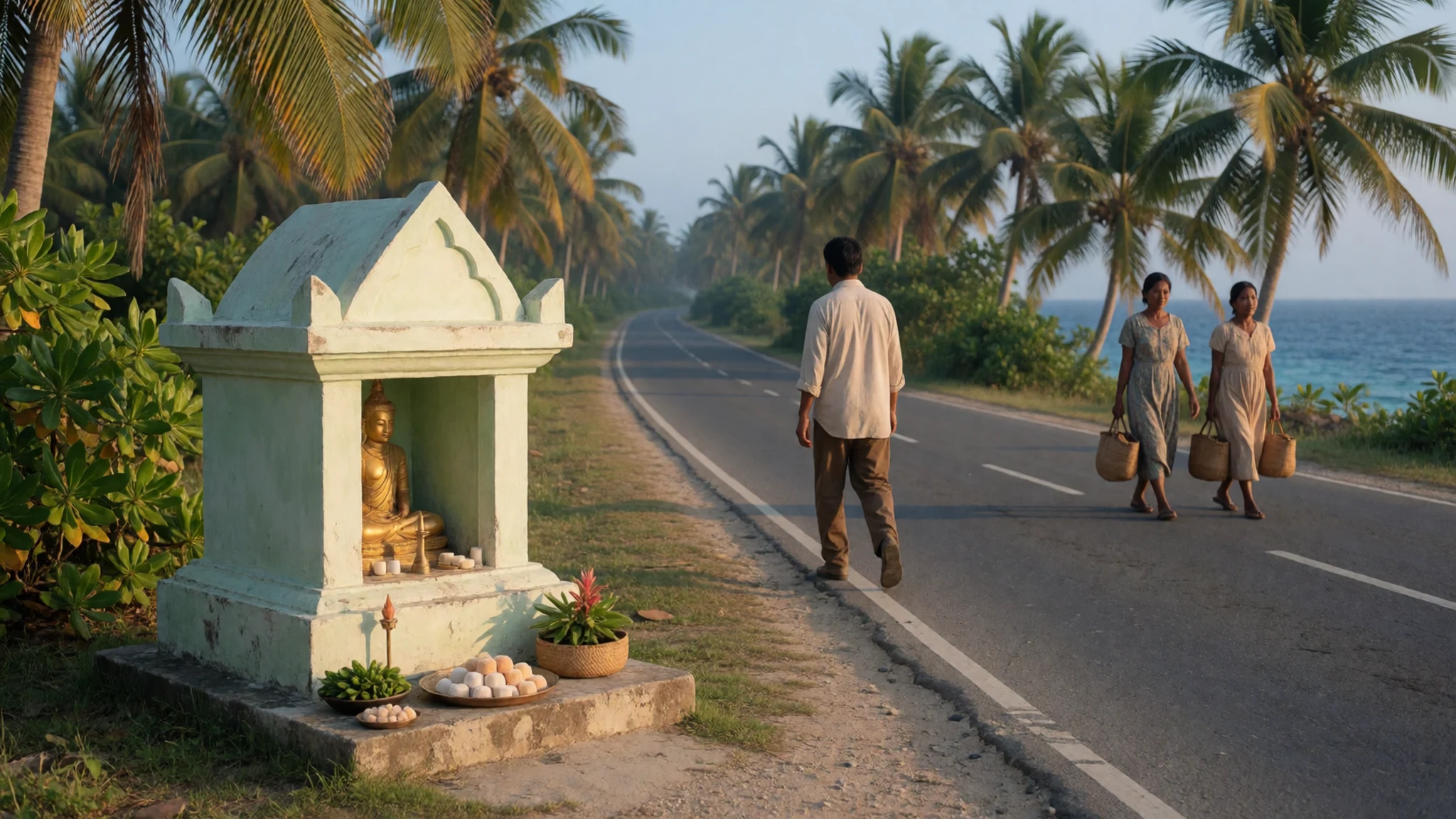
- A village maneaba — Village centres, including Rawannawi
A maneaba is the large open-sided meeting house at the centre of village life in Kiribati, with a steep thatched roof over a low frame. Gatherings, dances and welcomes often happen under them. Ask permission before stepping in, sit when invited, and keep voices low and cameras discreet while people are meeting.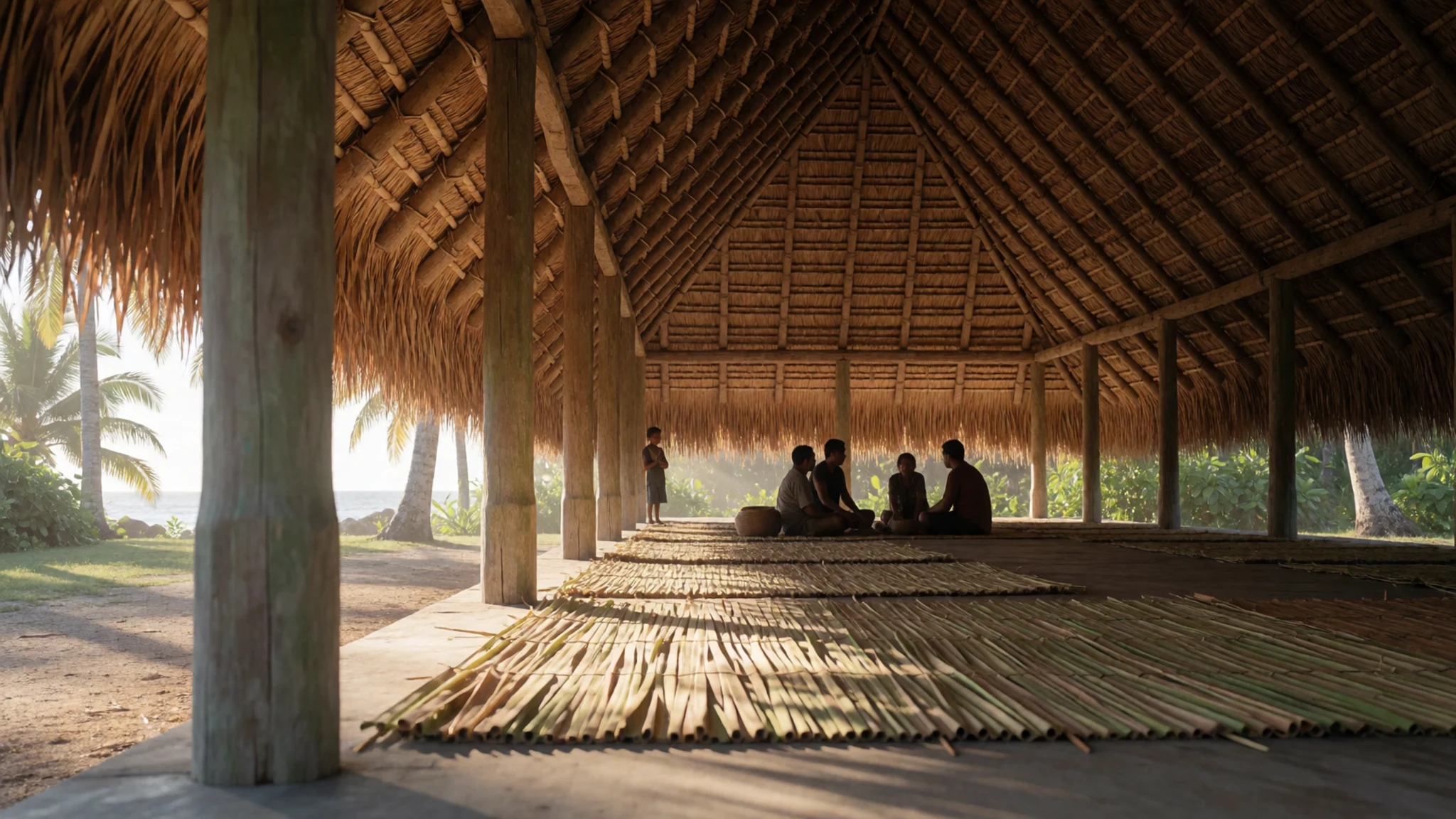
- The ring road and island tour — The island's circular road
A 26-kilometre road circles Marakei, so a walk or a slow island tour takes in villages, coconut groves, lagoon edge and ocean shore at a pace that suits the heat. Start early, carry water, and expect to stop and chat. Hosts can arrange picnics at recommended spots, but these need to be set up in advance.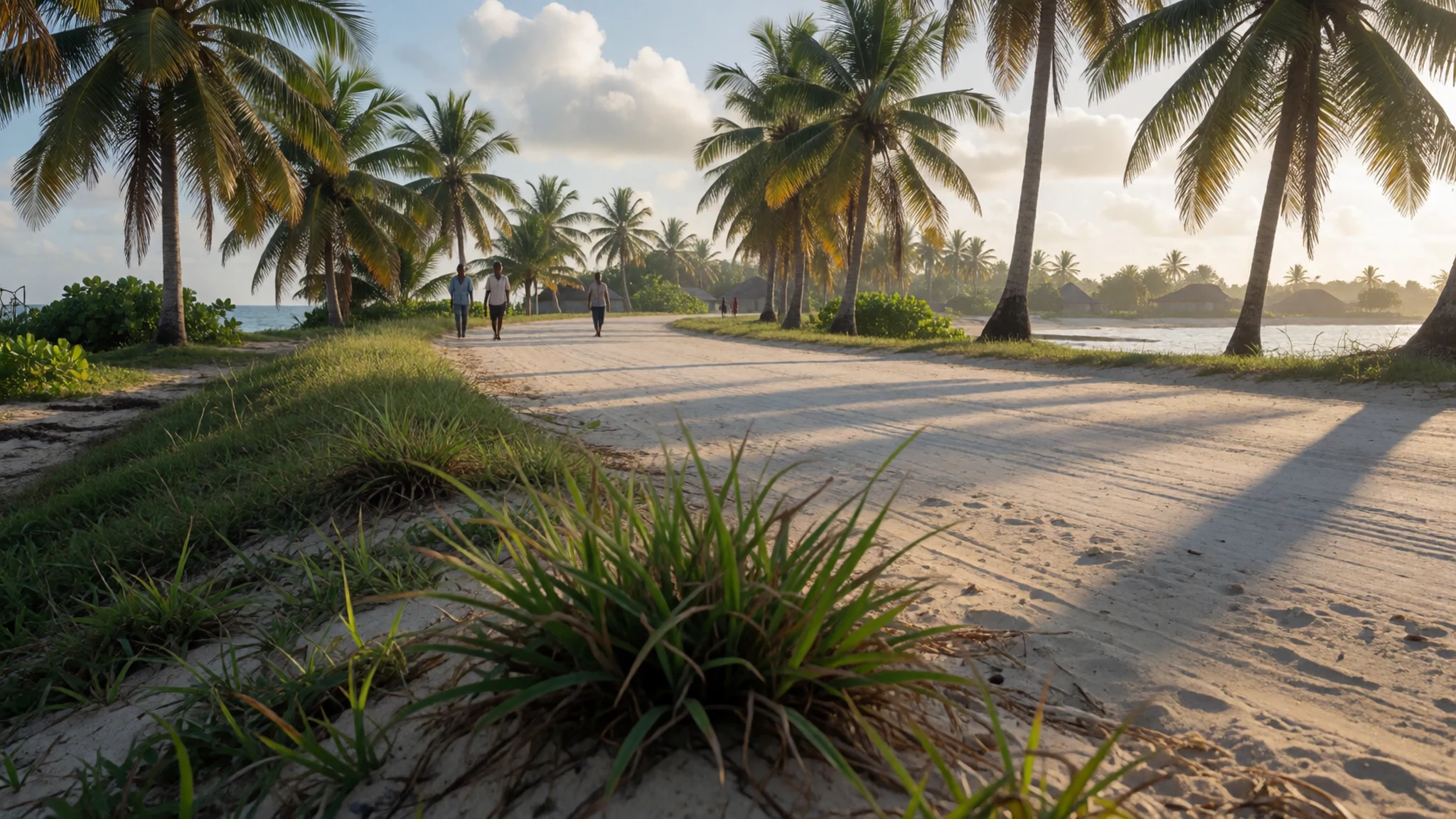
- The lagoon and its passes — Central lagoon and the two channels
The central lagoon is deep in places, salty and without tides, and two channels, Baretoa Pass and Raweta Pass, connect it to the open sea. Traditional canoeing and snorkelling are offered, though visitors must bring their own snorkelling gear. Ask hosts where to swim, as the lagoon has lost its fish and the passes cannot be navigated at low tide.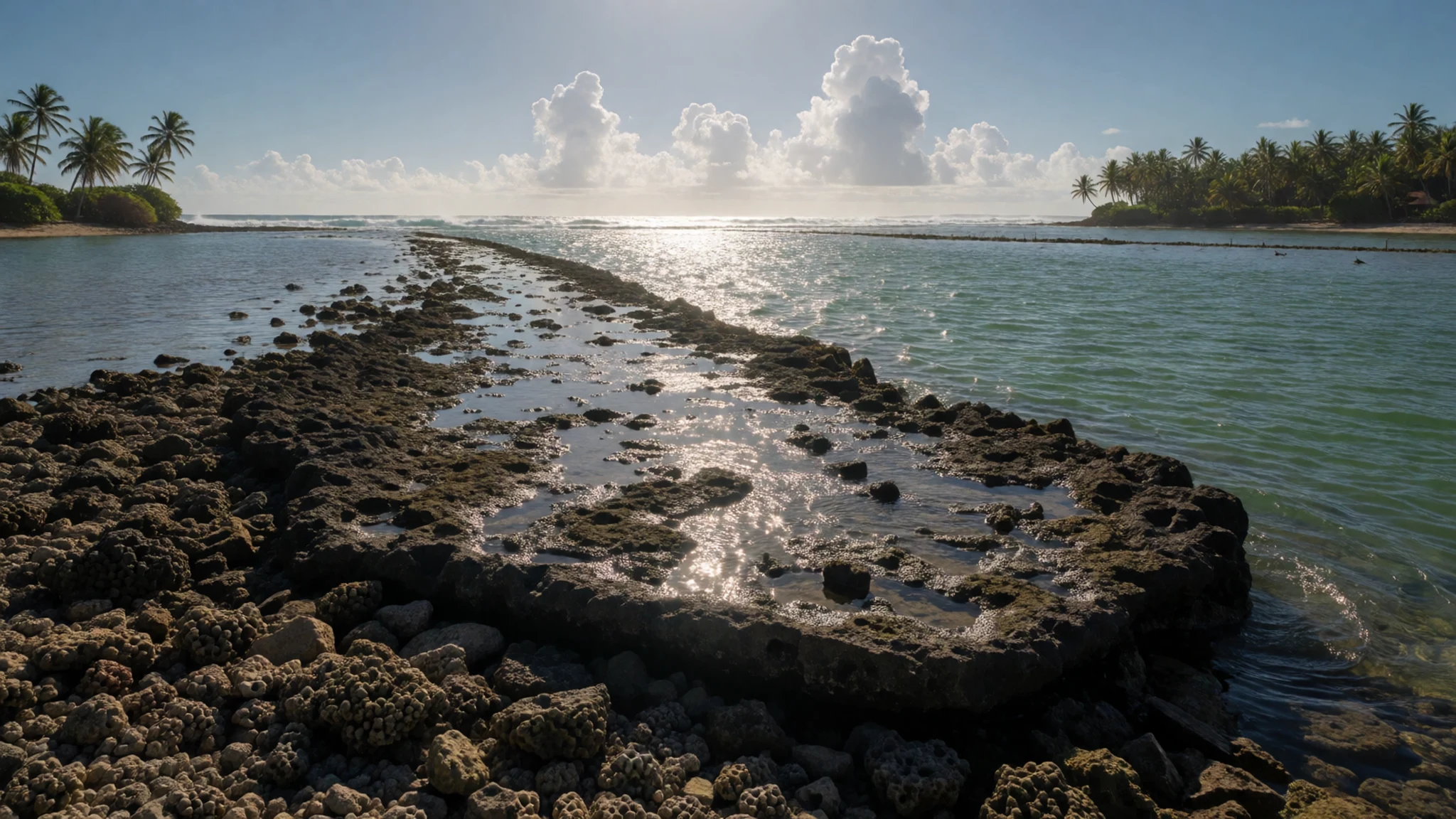
- Dancing and star gazing — Villages and the ocean-side shore
Local dancing and star gazing are both on the visitor list. There is no big town for light pollution, so clear nights show a dense sky from the beach or the road. Ask the hosts about a dance evening a few days ahead, since it depends on who is free, and bring a torch.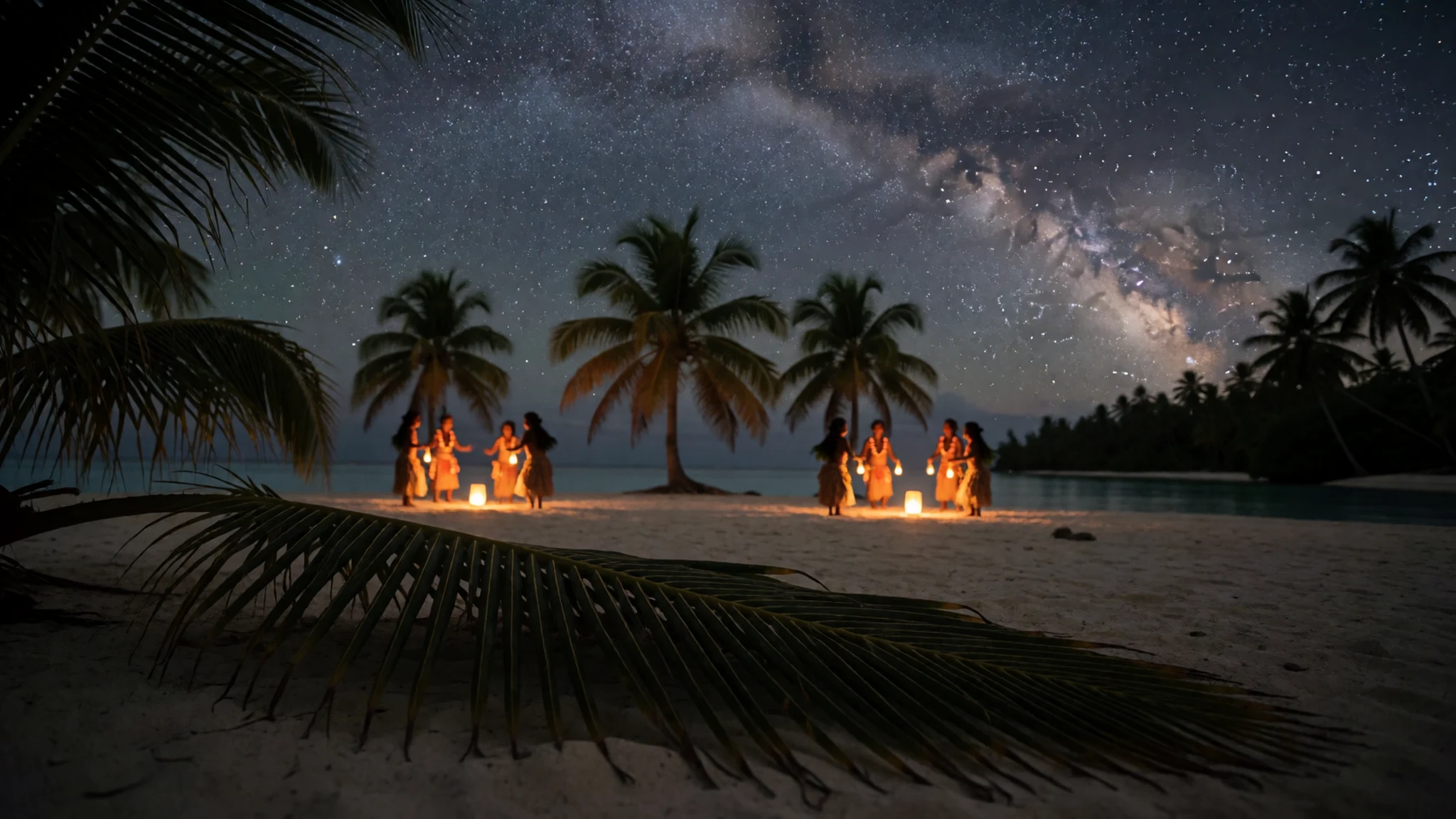
Culture
Marakei's culture rests on hospitality, shared space and a belief in four female guardian spirits. The welcome known as te katabwanin is found only on this island in Kiribati and is meant for first-time visitors. They travel anticlockwise round the island and leave an offering of tobacco, sweets or money at each shrine, which is believed to secure a happy stay. Locals sometimes call the spirits ghosts or witches, but the custom is treated with seriousness, and skipping it is considered unwise. Village life is organised around the maneaba, the open meeting house where news, decisions, feasts and dances take place. Because the island saw less wartime disruption than many others, visitors often find older routines still in daily use, from fishing and canoe handling to dancing. Christianity is part of island life too, and the Catholic Church runs one of the two guesthouses. Pace matters: arrivals, meals and plans can shift with flights and weather, and patience is read as respect. Marakei is a dry island, so evenings are quiet unless visitors bring their own drink. Ask your host to arrange te katabwanin before anything else on arrival, and carry a small offering of tobacco, sweets or a little money for each of the four shrines.
What to wear
Traditional dress in Kiribati is best seen on Marakei at dances and celebrations. Women dancers wear a woven or fibre skirt, often called te ribano, with flower garlands and shell or coconut-fibre ornaments, while men dance in a leaf or fibre wrap. Pandanus leaf, coconut fibre and flowers are the usual materials, and pandanus mats are used for sitting and sleeping in the maneaba. Everyday clothing is plain and practical: cotton T-shirts, shirts, shorts, wraparound cloths and sandals or bare feet, with women in skirts or loose dresses that reach below the knee. Church days bring out neat, clean clothes. Visitors should wear light, loose, quick-drying cotton, with shoulders and knees covered in villages and in any maneaba or church. A wide-brimmed hat, a sun-protective shirt and strong sunscreen matter more than any outfit, since there is little shade away from the palms. Swimwear belongs on the beach, with a sarong or shorts over it elsewhere, and men should keep a shirt on in the village. Sandals or reef shoes suit the coral rubble and shoreline, and a light rain jacket helps in squalls. Pack a spare dry set of clothes, because humidity keeps cloth damp. Ordinary modest dress is enough for visiting the shrines.
What to eat
- Fresh fish — Guesthouse meals and village family kitchens
Fish from the ocean side is the staple of most meals, usually cooked simply and served with rice. Quality depends on the day's catch, so ask the host what came in that morning rather than expecting a fixed menu.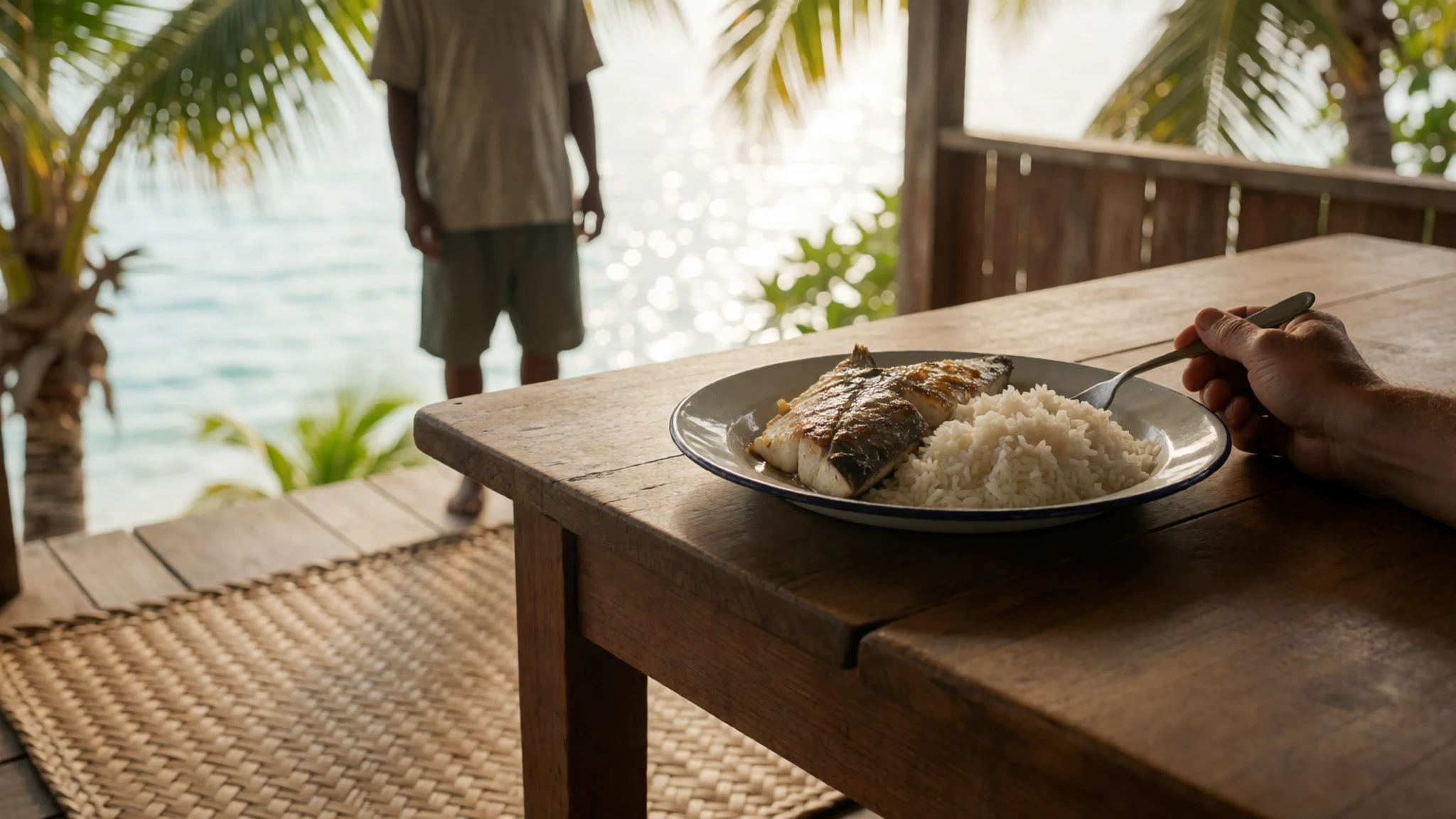
- Te koikoi (shellfish) — Guesthouse meals and village households
Te koikoi is a shellfish gathered locally and eaten as part of a meal rather than as a snack. It depends on collecting rather than a menu, so ask what is available that day and be ready to try something unfamiliar.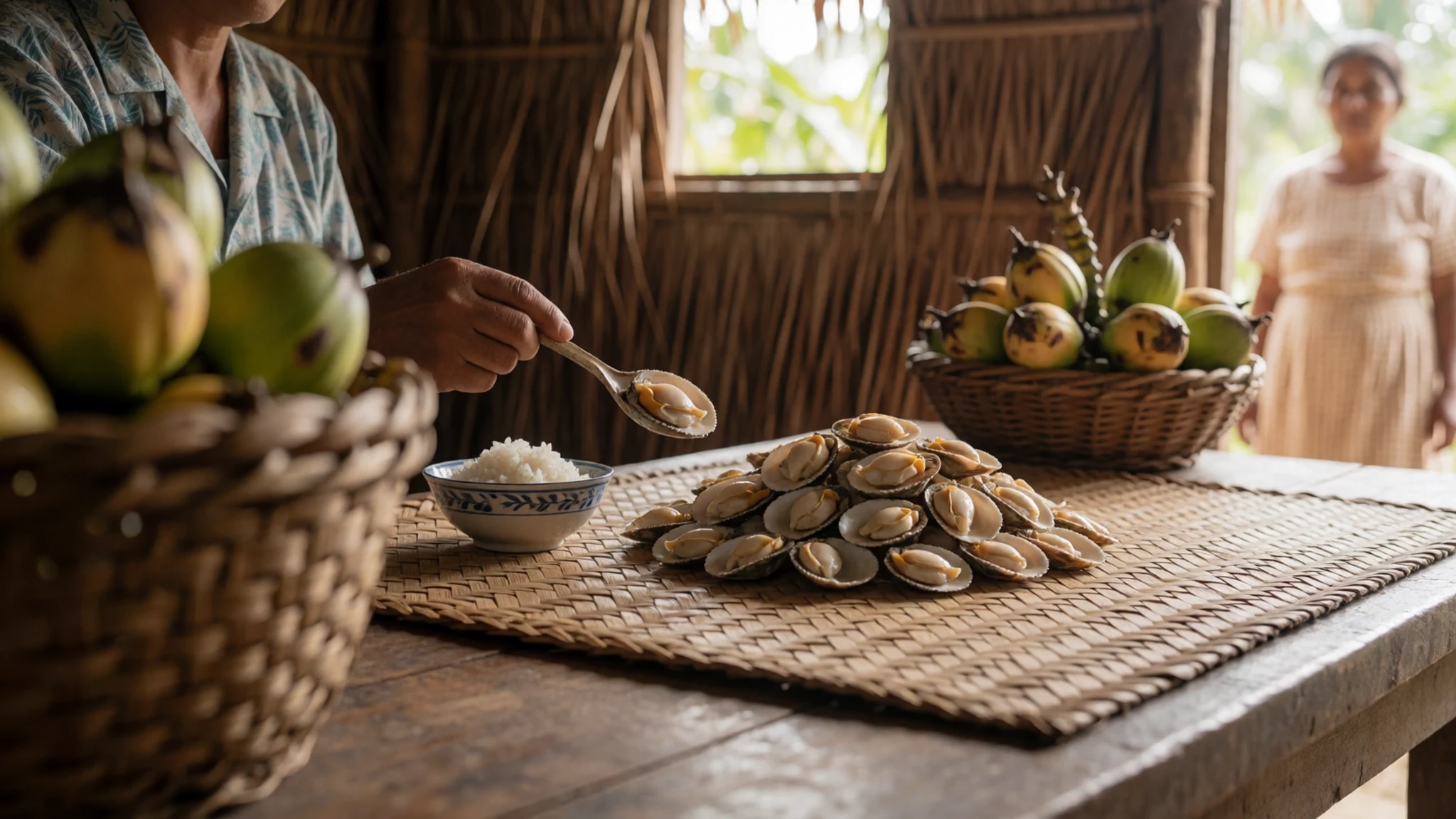
- Crayfish — Arranged in advance through a guesthouse or host family
Crayfish is normally served on request, so mention it when arranging meals, ideally a few days ahead. It is a treat rather than a daily dish, and any cost is best agreed with the host beforehand instead of assumed. - Curry with pandanus fruit — Home kitchens and guesthouse tables
Curry made with pandanus fruit turns an atoll tree crop into a main dish. Expect home cooking rather than restaurant polish, and ask the cook to explain what goes in. It is one of the better ways to taste what the island itself produces. - Rice and shop staples — Small village shops
Village shops stock rice, flour, sugar and sweets, and not much more. Rice fills out most meals, and if fresh food cannot be sourced quickly, tinned food may appear instead, so bringing some snacks from Tarawa is sensible.
Plan it
Best time. Marakei is hot and humid all year this close to the equator. The drier months, roughly May to October, are the usual choice, while November to April tends to be wetter. Check recent forecasts, because flights and weather shape any trip.
How long. 3–5
Getting there. Fly into Tarawa's international airport, then take Air Kiribati's domestic service to Marakei Airport at the island's northern tip. The airport is close to Rawannawi, so the last leg is short. Flights run three times a week, so check the schedule with Air Kiribati before booking anything else.
Budget. low
Tips
- Book the Council guesthouse or the Catholic Church guesthouse with at least a few days' notice so food can be organised; otherwise tinned food is likely
- Bring a water filter or ask the guesthouse to boil water, as bottled water in the shops is scarce
- Marakei is dry and refrigeration is rare, so bring any drink you want and expect it warm
- Pack a mosquito net, your own snorkelling gear, and enough cash, as cards should not be assumed
- Carry small offerings of tobacco, sweets or money for the four shrines
Etiquette
- Complete te katabwanin, the anticlockwise visit to the four shrines, before other activities
- If staying with a local family, be ready to offer money and bring your own net and drinking water
- Ask before photographing shrines, meetings in a maneaba or people
Nearby
Sources
- Wikidata Q909758 (CC0)
- Wikipedia: Marakei (rev 1364049943) (CC BY-SA 4.0)
- Wikivoyage: Marakei (rev 5394669) (CC BY-SA 4.0)
- Marakei Atoll, NASA astronaut image (Public domain)
- Position of Gilbert Islands, Pitichinaccio (CC BY 3.0)
- Micronesia regions map, Peter Fitzgerald (CC BY 3.0)
- Shrine of one of the four ghosts of Marakei, Obkiribati1 (CC BY 3.0)
- Maneaba in Marakei, Kiribati, Rafael Ávila Coya (CC BY 3.0)
- Marakei banner Maneaba, Rafael Ávila Coya (CC BY 3.0)


