Millennium Island
Millennium Island, Kiribati
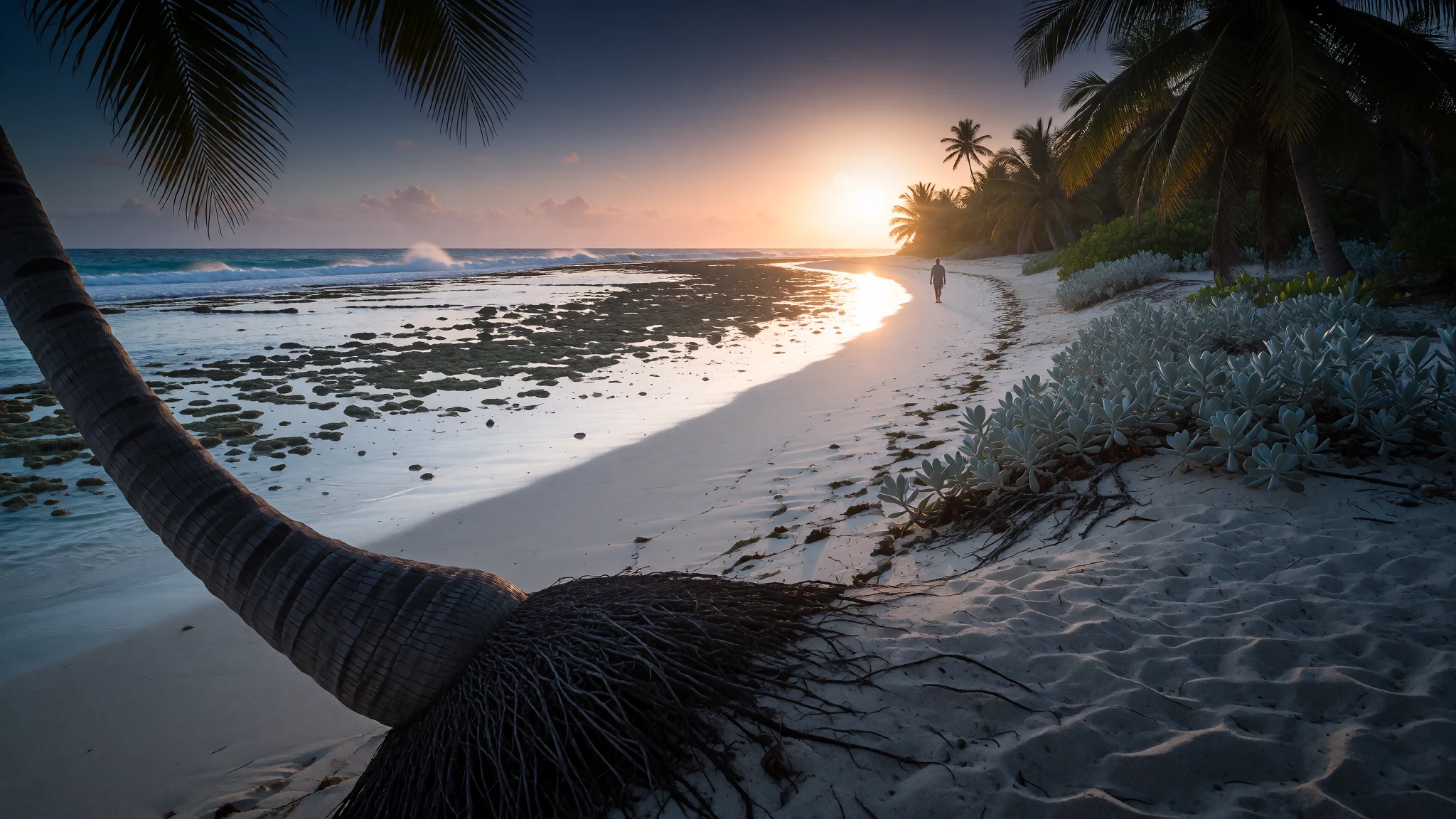
Millennium Island is an uninhabited Pacific atoll where the date line brought the first dawn of the year 2000, and where wildlife still outnumbers people.
The place
Millennium Island, also called Caroline Island or Caroline Atoll, is an uninhabited ring of coral in the southern Line Islands of Kiribati, in the central Pacific. It sits at the eastern end of that southern group. Since the International Date Line was shifted in 1995, it has counted as the easternmost point of land on Earth, and that is where the millennium name comes from: it was the first land to reach 1 January 2000. Its official timezone is UTC+14:00, the earliest clock on the planet.
The atoll is slightly crescent-shaped, made of about 39 separate islets around a narrow lagoon, with a total land area of 699 hectares. The highest ground is only 6 m above the sea. Underneath is limestone and sand built on a coral reef, and above it grow coconut palms and low, salt-tolerant scrub. Three islets hold most of the land: Nake in the north, Long in the north-east and South at the southern end. Smaller islets come and go with storms and spring tides, and the tiniest, Motu Atibu, may be gone altogether.
The lagoon is roughly 6 km long and shallow, cut across by coral heads and patch reefs. Reef flats reach hundreds of metres out from the shore, so boat landings are awkward except near high tide. The atoll lies between 2,400 and 3,300 km south of the Hawaiian Islands, which tells you how far from anywhere it is. Nobody lives here now. Guano diggers and coconut harvesters came and went, and what remains is a site valued for its coconut crabs and nesting seabirds, notably sooty terns.
Its story
Millennium Island has a short human history, and most of it is a list of ships passing by. Early Polynesians seem to have called in before any European: marae, the sacred gathering places, and graves have been found, though nothing shows anyone stayed for long. The biggest marae, on the west side of Nake Islet, was recorded in 1883.
Magellan may have glimpsed the atoll in 1521. The first sighting that is firmly on record was in 1606, by the Portuguese navigator Pedro Fernández de Quirós, who called it San Bernardo. In 1795 the British naval officer William Broughton renamed it Carolina, after the daughter of the Admiralty's First Secretary. Whalers followed. A ship's surgeon, Frederick Debell Bennett, described the island's geography and wildlife when the Tuscan stopped in 1835, and he noted that a captain had once left pigs behind that left no trace.
The United Kingdom claimed the atoll in 1868, and later guano digging and copra work took place. In 1883, two scientific parties came to watch the total solar eclipse of 6 May, and their drawings and photographs of the camp and of totality survive. The atoll became part of Kiribati when the country gained independence in 1979.
The modern chapter is about the calendar. After the date line moved in 1995, Caroline Island became the first land to see the year 2000 begin, and it was renamed Millennium Island for the occasion. Since then it has mostly been left to its birds and crabs.
What to see
- The lagoon and its coral heads — Central lagoon
The lagoon of Millennium Island is a shallow, narrow channel about 6 km long, scattered with coral heads and patch reefs. From a boat anchored outside, the colour change from deep ocean to pale water is the main sight. Swimming and snorkelling need care, since sharks have been recorded here since the 1820s.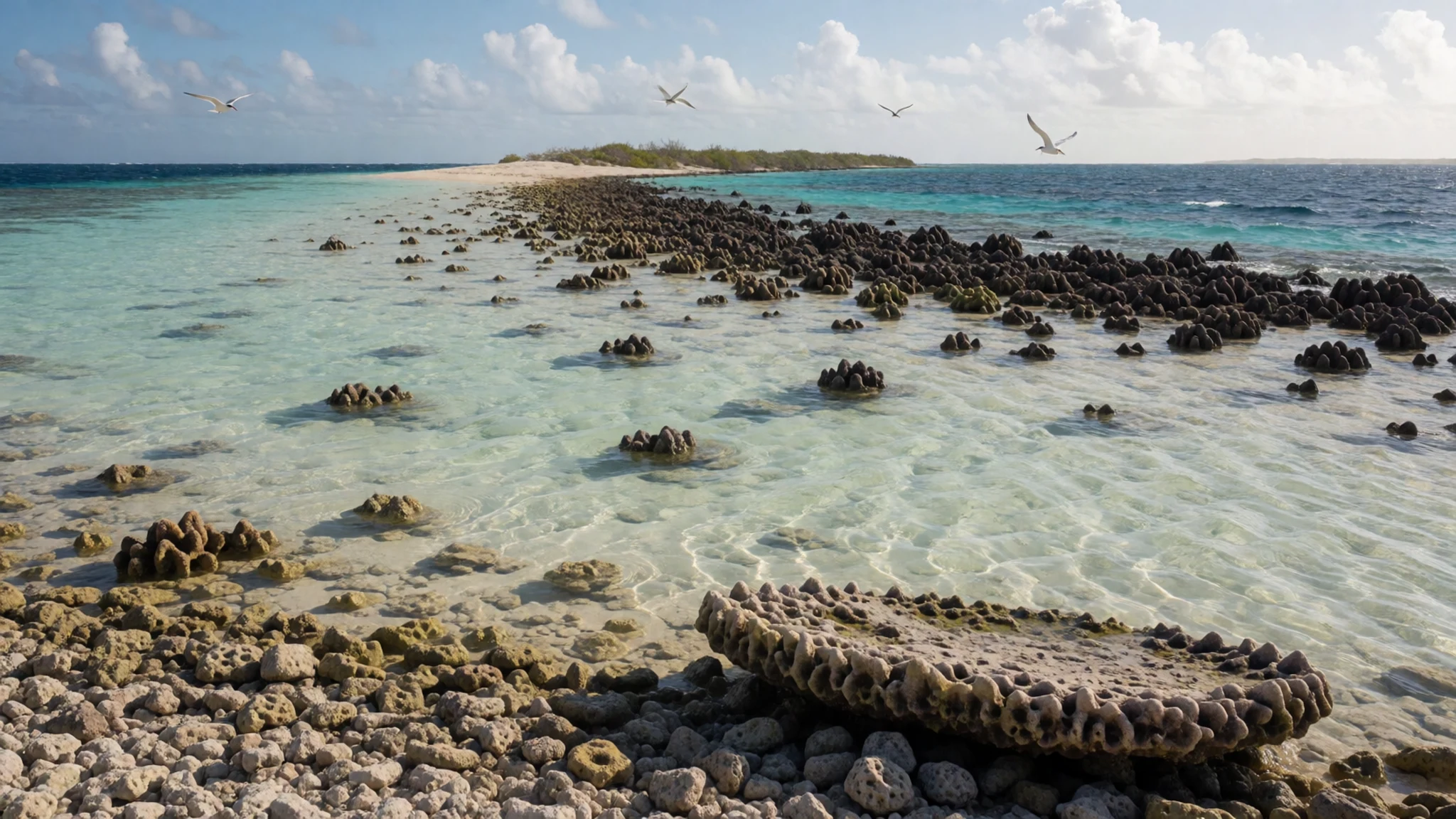
- Nake Islet and the marae — North of the atoll
Nake Islet, at the northern end of Millennium Island, covers 91.7 hectares and holds the remains of the largest marae, on its west side, recorded in 1883. The stones and nearby graves are a quiet reminder of early Polynesian visitors. Look from a respectful distance and leave everything where it lies.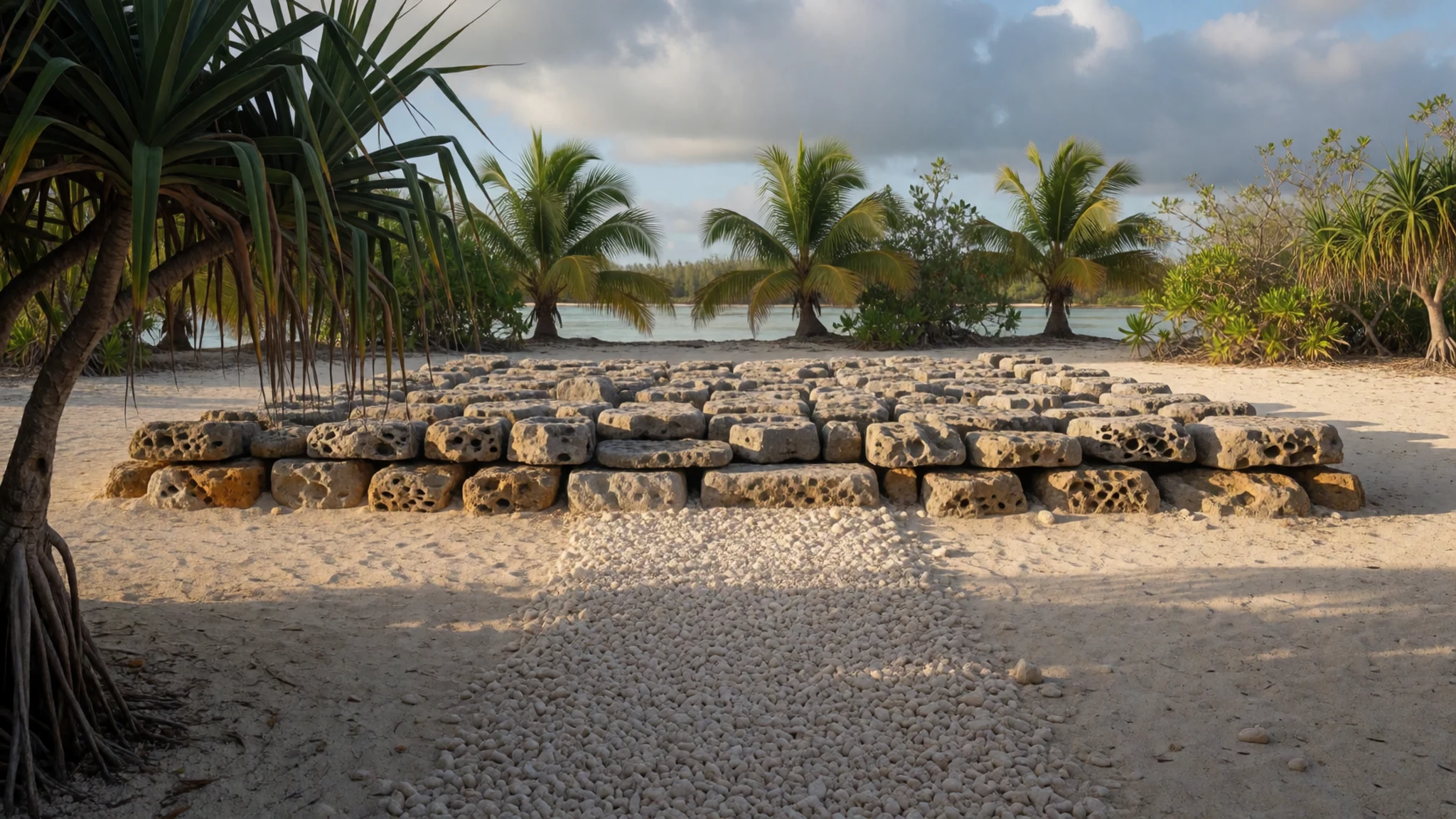
- The 1883 eclipse camp — Islets near the lagoon
Two scientific parties set up on Millennium Island to watch the solar eclipse of 6 May 1883. Their drawings and photographs, including a view of totality, are among the earliest images of the atoll. Few physical traces are described, so the interest lies in picturing the camp on the sand.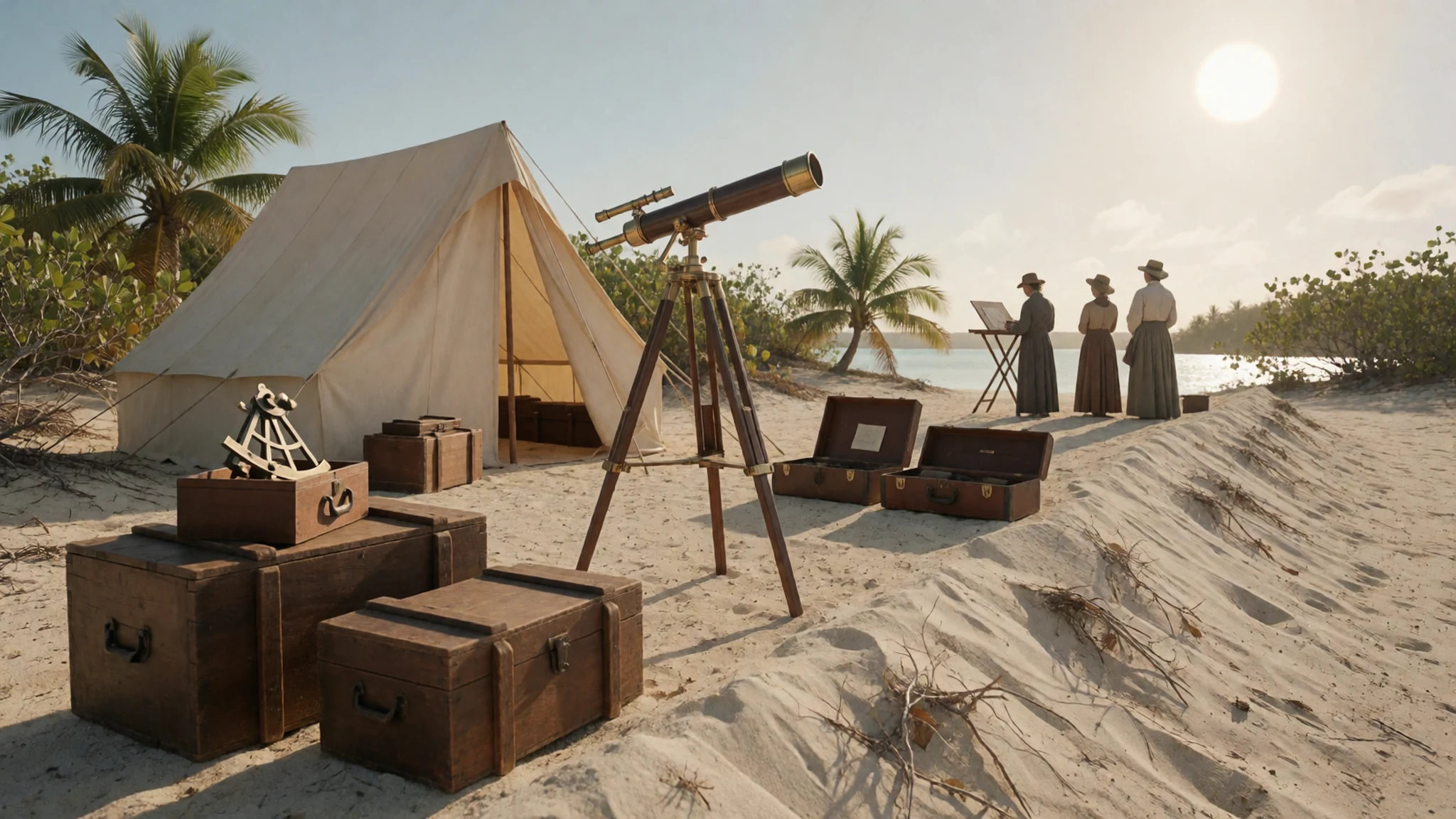
- Long Islet — North-east of the lagoon
Long Islet lies at the north-east of the lagoon and covers 76.0 hectares. It is a good place to watch seabirds from a boat, since the atoll is a breeding site for sooty terns. Keep well back from nesting areas and never land where birds are sitting on the ground.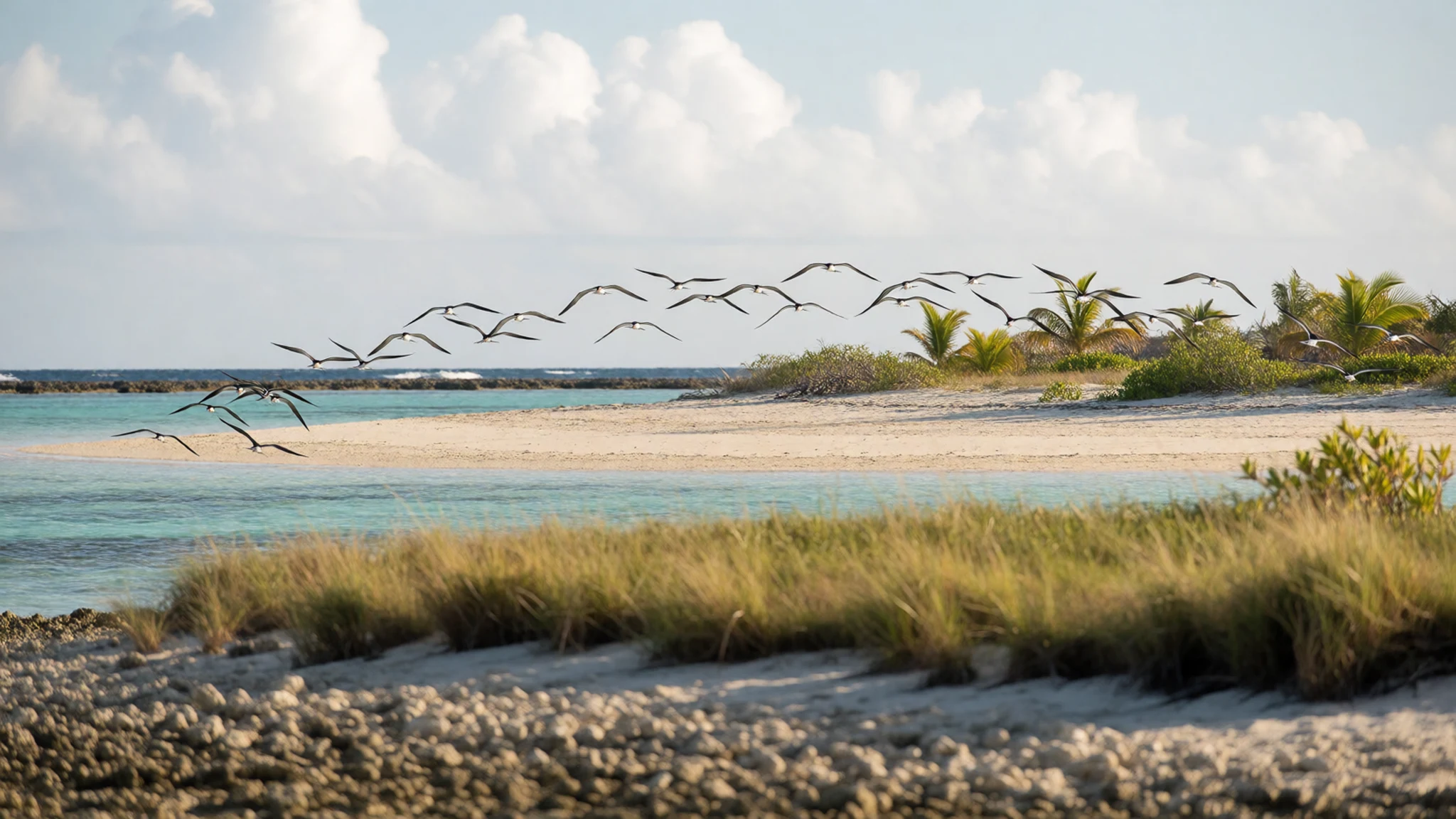
- South Islet — Southern end
South Islet is the biggest of the three main islets at 104.4 hectares, and it closes the southern end of the atoll. Coconut crabs are recorded here and elsewhere on Millennium Island in large numbers. Treat them as wildlife to watch at dusk, not as food, and avoid handling them.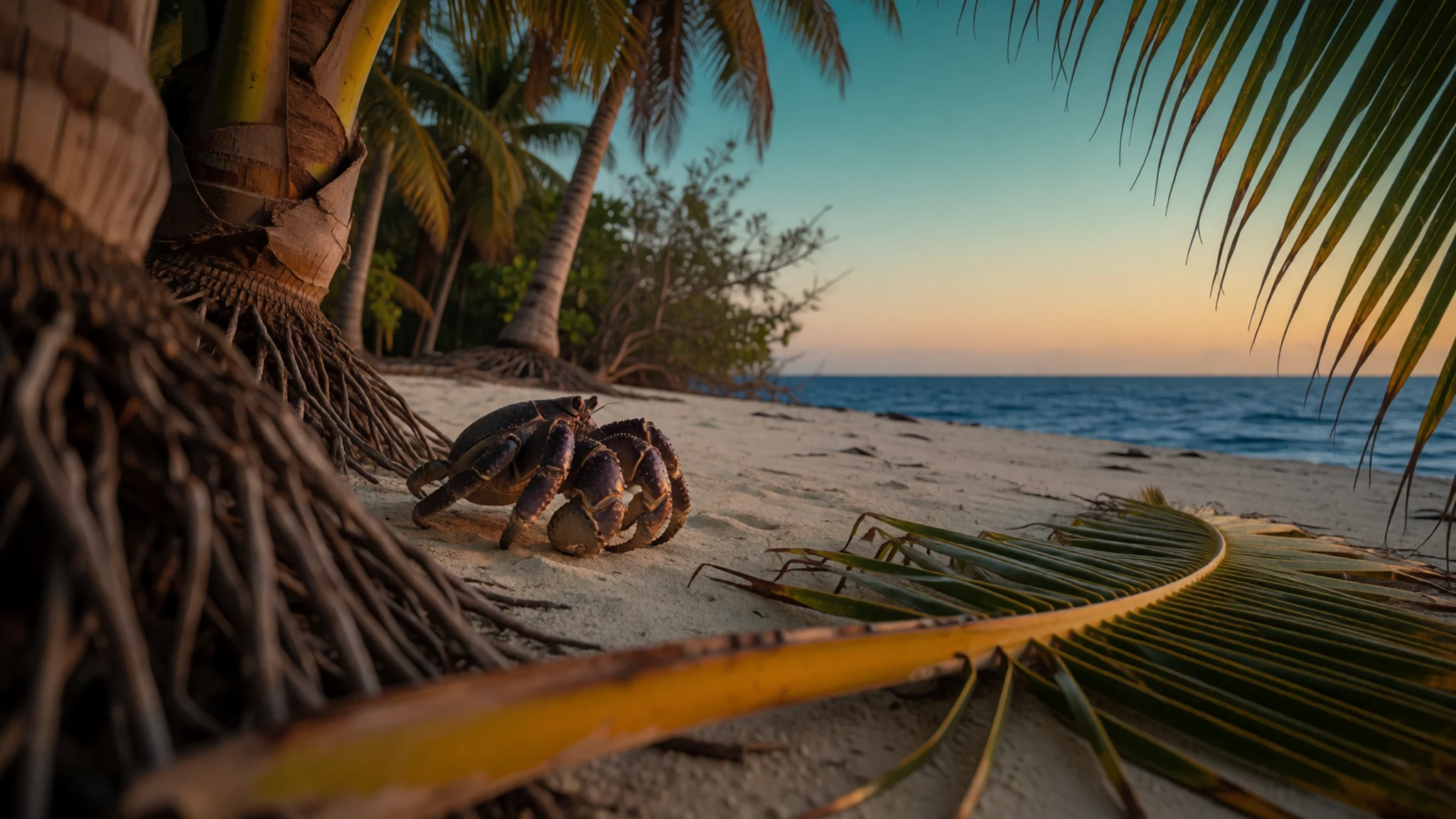
Culture
Millennium Island has no residents, so its culture comes from three layers: the Polynesians who left marae and graves, the I-Kiribati who now own the atoll as part of their nation, and the visitors who have come for science and the calendar. Kiribati became independent in 1979, and the atoll is administered from the nation's inhabited islands, not from the atoll itself.
For I-Kiribati, land, sea and family are tightly bound, and visits to any island are usually handled through permission and courtesy. A greeting in the local language, mauri, goes a long way on inhabited islands and with Kiribati officials. The date line gives the country a particular pride: its clocks run ahead of nearly everyone, and people are aware that the world once looked here to start the year 2000.
The marae on Nake Islet show that people have treated this atoll as a place of meaning for a long time. Graves and sacred stones are not curiosities. Wildlife is also part of the atoll's story: the crabs and the sooty terns are the reason it is often described as undisturbed, and visiting it responsibly means keeping that status in mind.
In practice, culture here means asking before landing, following any conditions set by the Kiribati authorities, and taking all rubbish away. Before landing anywhere on Millennium Island, get permission from the Kiribati authorities, and never touch, move or photograph for display the marae stones and graves.
What to wear
Millennium Island has no residents, so fashion here is the dress of Kiribati as a whole, plus what suits a visitor on a boat and a reef.
Traditional I-Kiribati dress is made from plant fibre. Dance costumes include the riri, a skirt of dried pandanus or coconut-leaf strands, worn with garlands, headbands and woven armbands. Pandanus leaf is also split and plaited into mats and fans, and a long tradition of fine plaiting runs through the islands' textiles. These outfits are mostly kept for dances, celebrations and welcomes, not for daily wear.
Everyday clothing across Kiribati today is simple and suited to heat: cotton shirts, shorts, wraparound cloths such as sarongs, and a loose blouse called a tibuta for many women. Printed cotton in bright patterns is common, and people dress modestly in villages and churches, usually covering shoulders and knees.
A visitor on the water around Millennium Island should dress for sun and salt. Pack long-sleeved, light, quick-drying shirts, a wide-brimmed hat with a chin strap, and reef shoes with firm soles, since coral and rubble cut feet easily and the reef flats are wide. Bring a rash vest for snorkelling and a light waterproof layer for spray and squalls. If the trip includes a stop on an inhabited island, carry a sarong or knee-length shorts and a shirt with sleeves, and take off hats and shoes where locals do.
What to eat
- Grilled or raw reef fish — Fishing villages and family meals on Tarawa and other inhabited islands
Fish is the base of daily meals in Kiribati. It is grilled over coals, boiled in coconut cream, or eaten raw with lime and coconut. It is best eaten the day it is caught, so look for it at landing points and in family kitchens.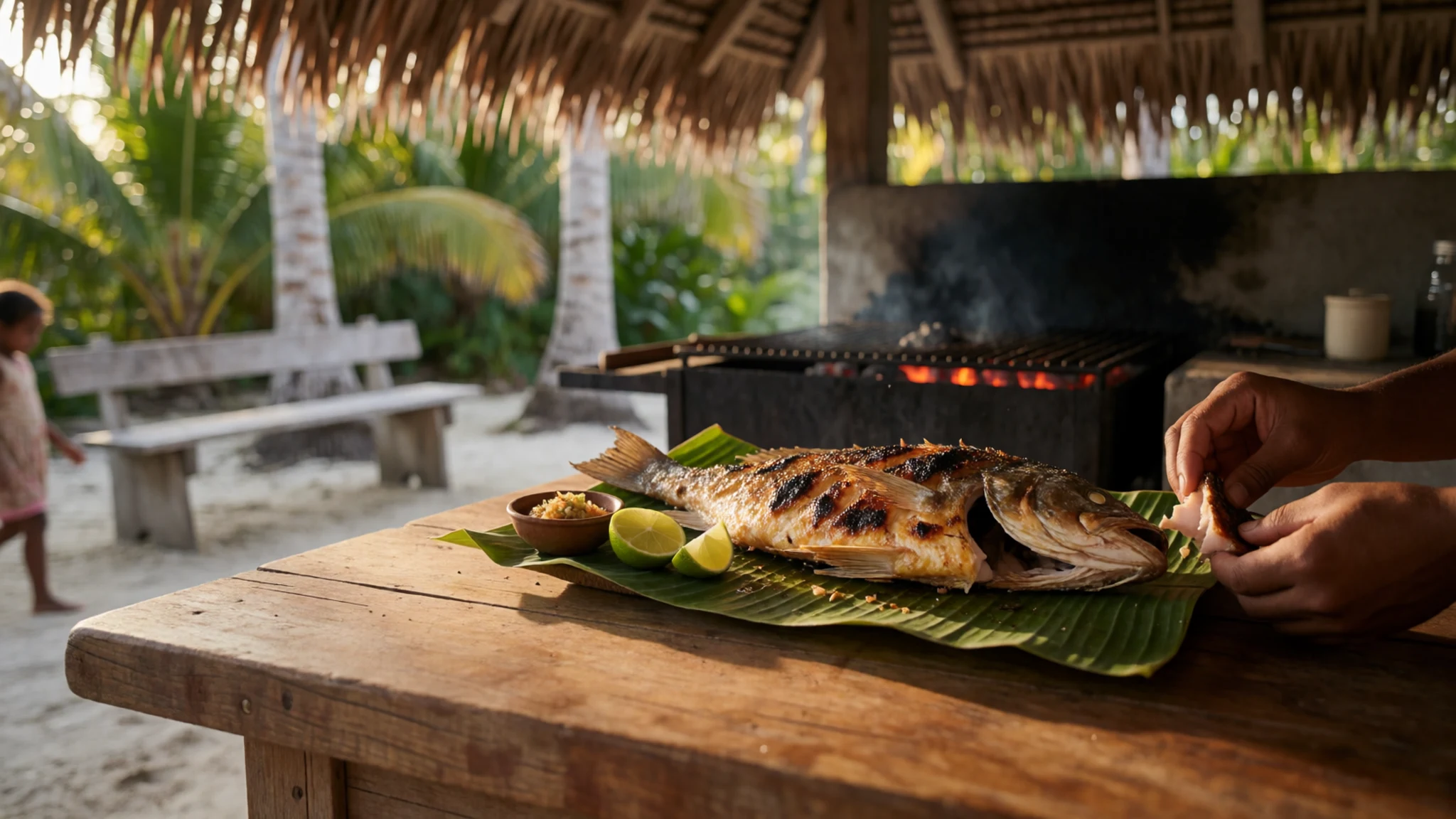
- Breadfruit — Village feasts and home cooking on inhabited islands
Breadfruit is baked, boiled or roasted and eaten as the starchy part of a meal, much like rice or potato elsewhere. It has a mild, slightly nutty flavour and is often served alongside fish.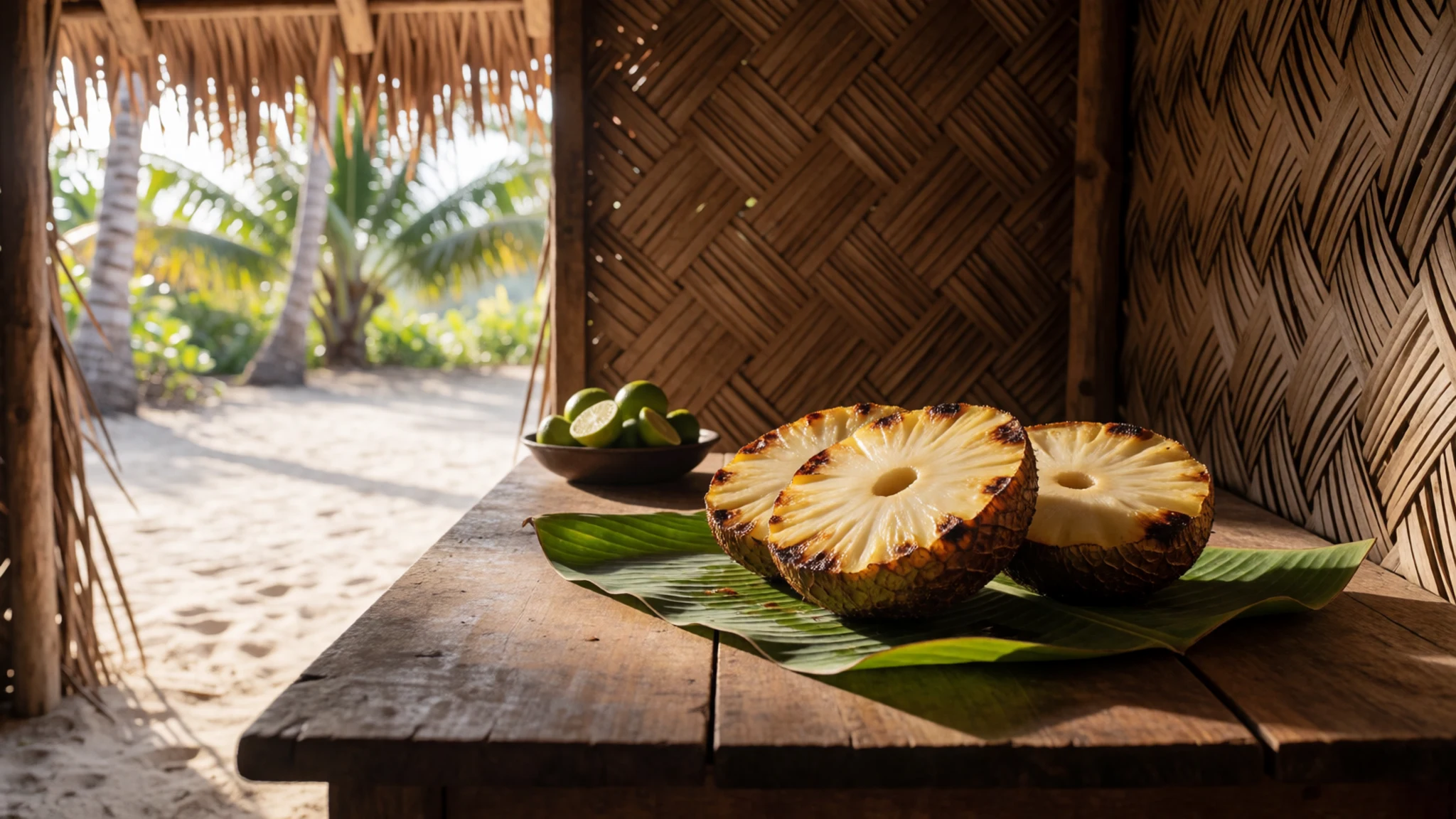
- Coconut toddy and syrup — Village stalls and family homes on inhabited islands
Sap collected from cut coconut flowers is drunk fresh as toddy or boiled down into a sweet syrup called kamaimai. The syrup is used on food and as a sweetener. Both are tied to the coconut's central role across the islands. - Pandanus preserve — Local homes and community gatherings on inhabited islands
Fruit of the pandanus is pounded, dried and pressed into a dense, chewy sweet that keeps well on long voyages. It is a traditional travelling food, and tastes smoky and caramel-like to many first-timers. - Coconut cream dishes — Home kitchens and small eateries on Tarawa
Coconut cream turns up in sauces, puddings and boiled fish dishes across Kiribati. It is rich and slightly sweet and softens the saltiness of fish. On a boat trip to Millennium Island, plan to bring all food and water from outside.
Plan it
Best time. June to October is the usual choice for sailing in the southern Line Islands, when the weather is generally more settled, but the brief carries no climate data, so check current forecasts with your skipper. Expect heat, sun and strong winds in any month, and plan around high tide for landings.
How long. 1–3
Getting there. There is no airport, scheduled boat or accommodation on Millennium Island. Visits are by private yacht or expedition vessel from elsewhere in the Pacific, and landing needs permission from the Kiribati authorities. Ask the government and your operator for current rules before booking.
Budget. high
Tips
- Arrange permission through the Kiribati authorities well before departure
- Bring all food, fresh water, medical supplies and fuel, since the atoll has no services
- Plan landings around high tide because the reef flats make shore access hard at low water
- Carry reef shoes, sun cover and a reliable communications device
- Expect a trip that takes many days from the nearest inhabited island or port, and allow slack for weather
Etiquette
- Take every piece of rubbish away with you
- Keep clear of marae stones, graves and nesting birds
- Do not collect shells, coral or crabs
Nearby
Sources
- Wikidata Q822151 (CC0)
- Wikipedia — Caroline Island (rev 1378444985) (CC BY-SA 4.0)
- Wikivoyage — Kiribati (CC BY-SA 4.0)
- NASA, Caroline Atoll astronaut image (Public domain)
- The expedition camp at Caroline Island, May 1883 (CC BY-SA 4.0)
- Photograph of totality as seen at Caroline Island (1883), H. A. Lawrence and C. Ray Woods (Public domain)
- Millennium Island, Kiribati, NASA Expedition 20 crew (Public domain)
- Heliotropium anomalum var. argenteum, Forest & Kim Starr (CC BY 3.0)
- Suriana maritima, B.navez (CC BY-SA 2.5)


Wildlife
- Coconut crab (animal)
The coconut crab is a giant hermit crab that lives on land, and it is the biggest creature of its kind anywhere, sometimes nicknamed the robber crab or palm thief. Across Millennium Island it has been recorded in large numbers, so a sighting is a real possibility. Keep a respectful distance, stay quiet and unhurried, and go with a local guide who can help you find one safely. Never feed it, and never try to pick it up.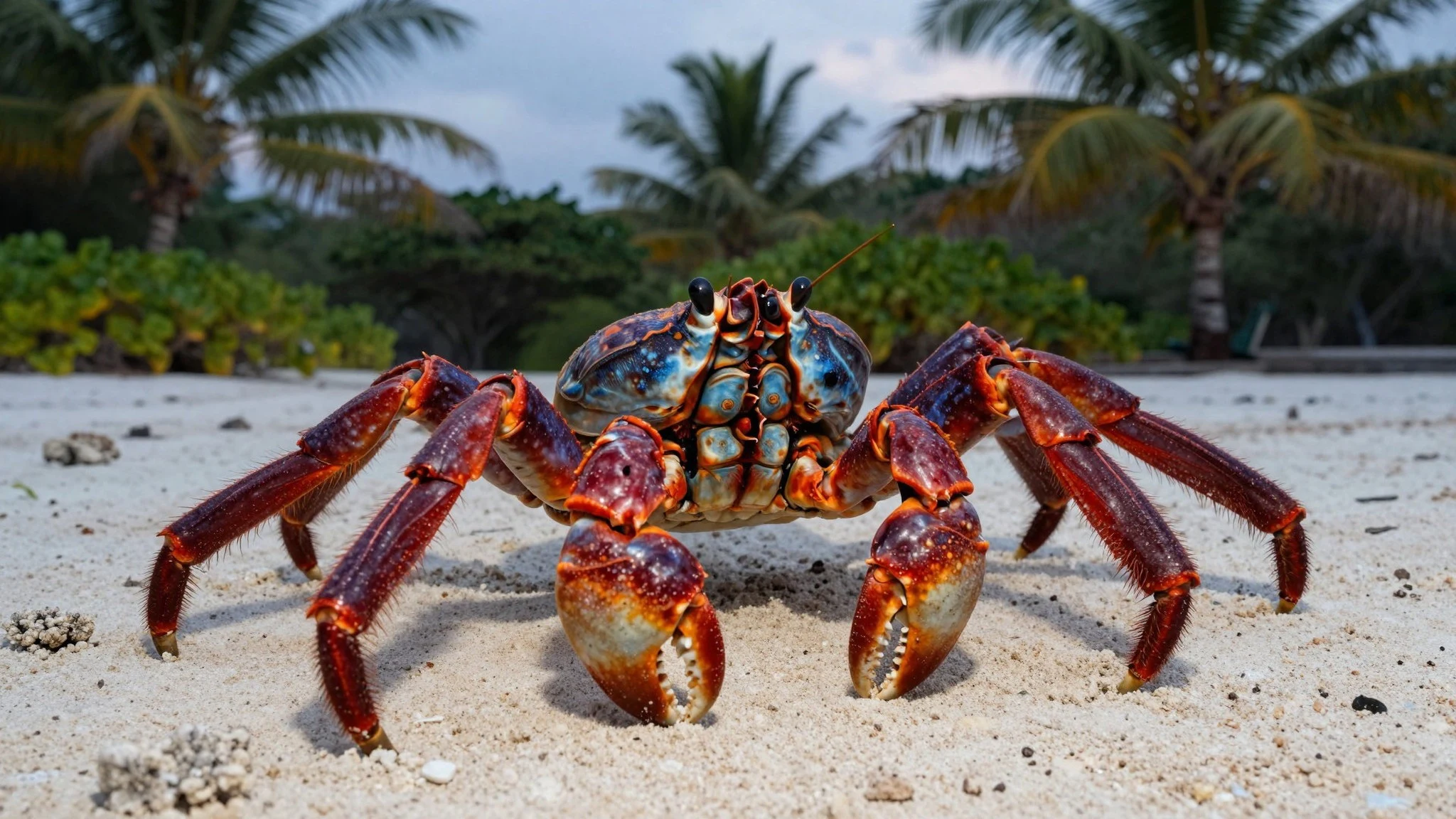
- Sooty tern (animal)
Think of the sooty tern as an ocean wanderer with wings: a seabird of warm seas that only comes ashore to have chicks, on islands near the equator. Millennium Island is prized partly for the seabirds that nest here, and sooty terns are the ones that stand out. Watch from a respectful distance, speak softly, and join a guide so nests stay undisturbed. Never feed the birds.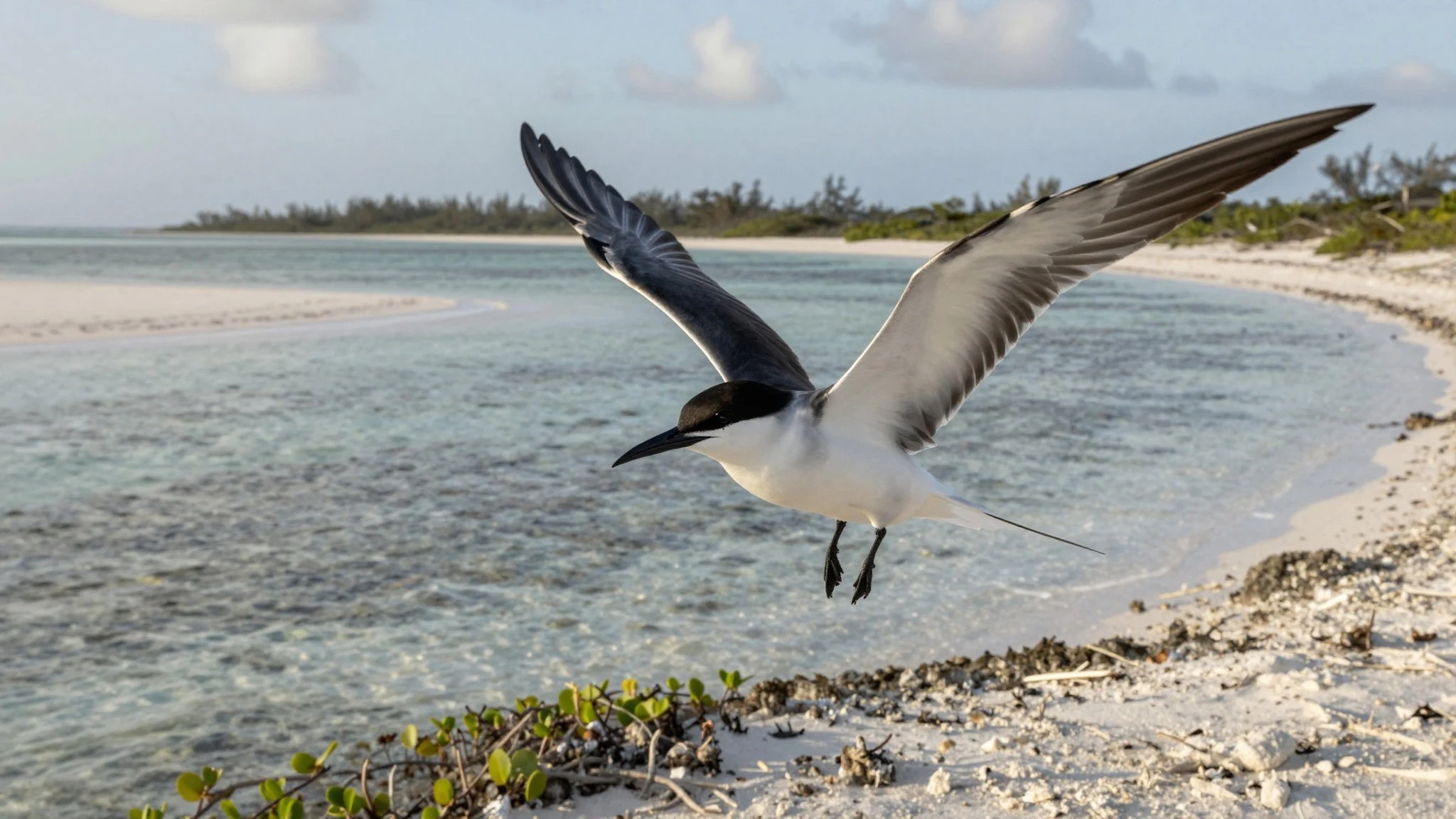
- Sooty tern (bird)
Think of the sooty tern as an ocean wanderer with wings: a seabird of warm seas that only comes ashore to have chicks, on islands near the equator. Millennium Island is prized partly for the seabirds that nest here, and sooty terns are the ones that stand out. Watch from a respectful distance, speak softly, and join a guide so nests stay undisturbed. Never feed the birds.