Abemama
Abemama, Kiribati
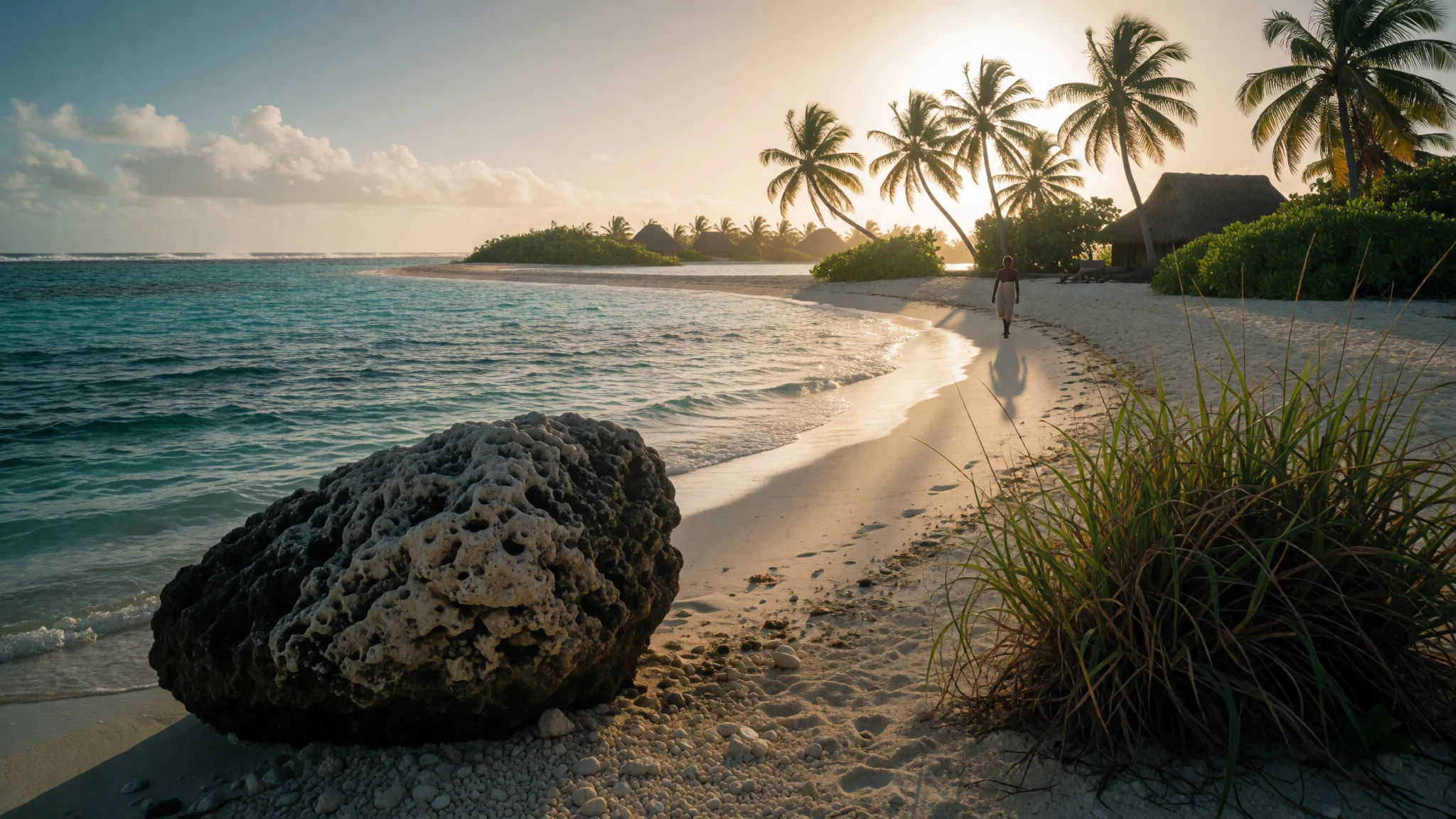
Abemama is a quiet Pacific atoll of lagoon, causeways and village life, for travellers who want remoteness and are happy to adapt.
The place
Abemama is an atoll in the Gilbert Islands of Kiribati, lying just north of the Equator and a short flight from South Tarawa. It has 3,257 residents, and its land rises only about 3 m above the sea, so the horizon is mostly water and sky. The islets form a broken ring around a deep lagoon, and on a map the shape resembles an unfinished letter G. The main islet carries most of the villages and nearly all of the population. Causeways join those villages along the eastern side, so a vehicle can travel the length of the land without a boat. Two smaller islets, Abatiku and Biike, sit off the south-western reef and have far fewer people. Two gaps in the reef let boats pass between ocean and lagoon: one near the northern end, close to Tabiang, and one at the southern tip. The ocean-facing reef on the windward side is exposed, while the leeward reef stays submerged. Land in places is barely wider than a house plot, and elsewhere a little broader. Kariatebike is the administrative centre, with the council offices, police station and hospital. Daily life follows the lagoon: fishing, gathering shellfish, tending small seaweed farms. This is not a resort island. Services are thin, shops are modest and plans bend around transport. For anyone who likes that rhythm, it is an unhurried place.
Its story
Abemama has carried many names on foreign charts, among them Roger Simpson Island, Dundas Island, Hopper Island and Simpson Island, alongside the local Apamama. The captain who first marked it for outsiders, Charles Bishop, passed by at the very end of the eighteenth century, and an American exploring expedition surveyed the atoll a few decades afterwards. What set Abemama apart was its government. In the later nineteenth century a single paramount chief ruled here, unlike the northern Gilberts, where separate family groups kept their own leaders, and unlike the south, where the unimwane, the old men, governed together in the maneaba meeting house. Local accounts stress that the unimwane held real authority on Abemama too. Robert Louis Stevenson, his wife Fanny and her son Lloyd Osbourne lodged here for a couple of months and came back the following year. Stevenson wrote about the feared chief Tem Binoka, whose tomb stands near Tabontebike. Abemama is also where Britain first proclaimed its protectorate over the Gilberts, announced by Captain Edward Davis of HMS Royalist. A post office opened early in the twentieth century. In the Second World War Japan occupied the Gilberts, and later the American submarine Nautilus put a landing party ashore on the atoll. Few traces of these chapters are signposted, so a local guide or an older resident adds a great deal.
What to see
- The lagoon and its reef passages — Abemama lagoon
The lagoon is the heart of Abemama, a sheltered body of water ringed by islets. Calm days suit kayaking and snorkelling over coral and fish. The passages through the reef carry strong currents, so go with a local boatman who knows the tides rather than paddling alone.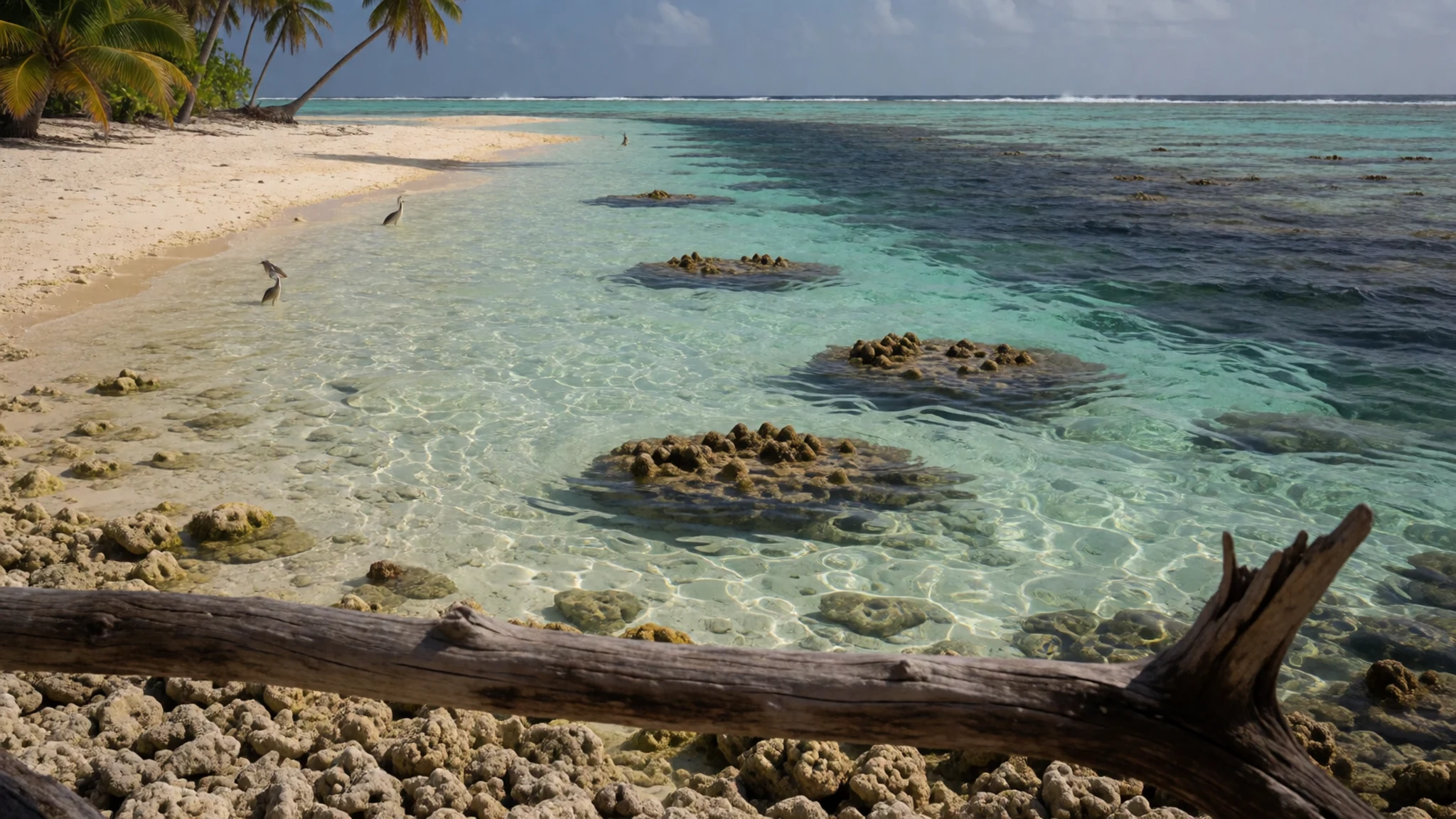
- Causeway villages of the main islet — Eastern side of the main islet
A drive or cycle along the causeways links the villages in turn, each with its own maneaba, church and rows of drying fish or pandanus. It is the easiest way to see how people use such a narrow strip of land. Stop and greet people; conversations often follow.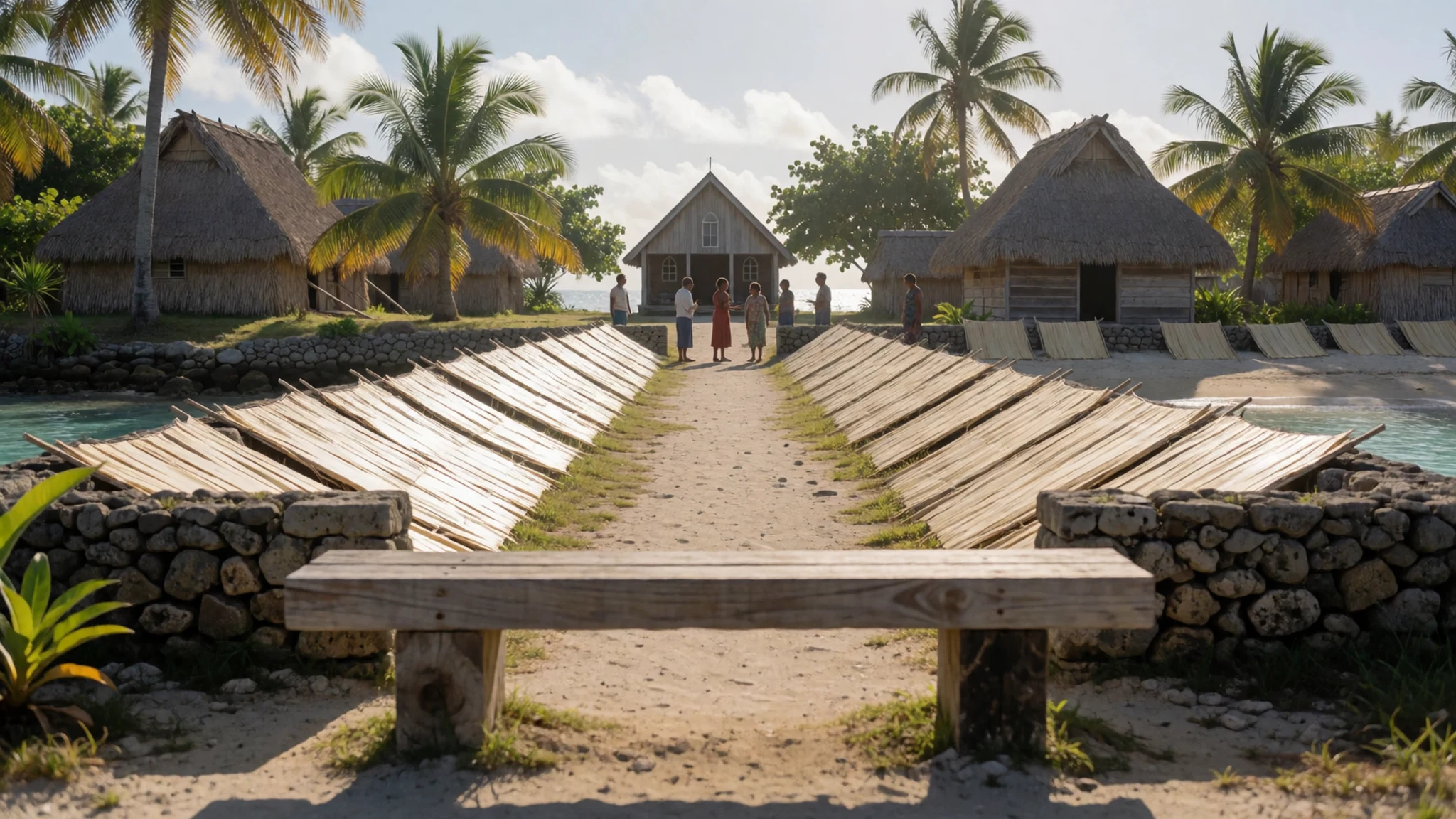
- Tomb of Tem Binoka — Near Tabontebike
Near Tabontebike stands the tomb of the paramount chief whom Stevenson wrote about. It is a quiet, modest site rather than a monument with facilities. Ask the council or your guest house to arrange a guide, and follow local advice about offerings before approaching.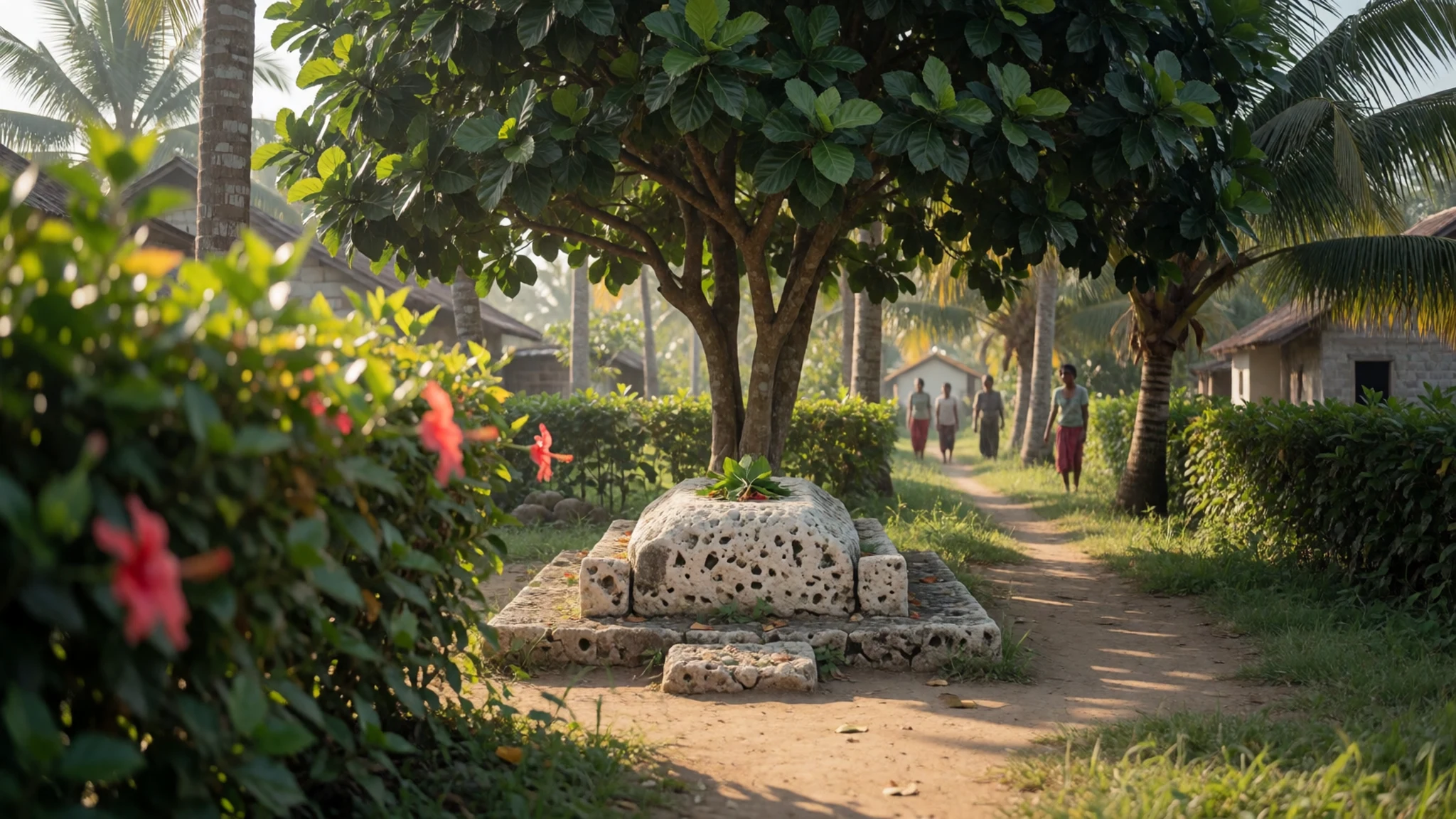
- Te kamei dancing and pandanus craft — Village maneabas and family compounds
Abemama has a reputation within Kiribati for te kamei, a dance tradition that visitors can try to learn. Women also teach mat and basket making from pandanus leaf. Arrange sessions through the council or a host family before travelling, since nothing runs on a fixed schedule.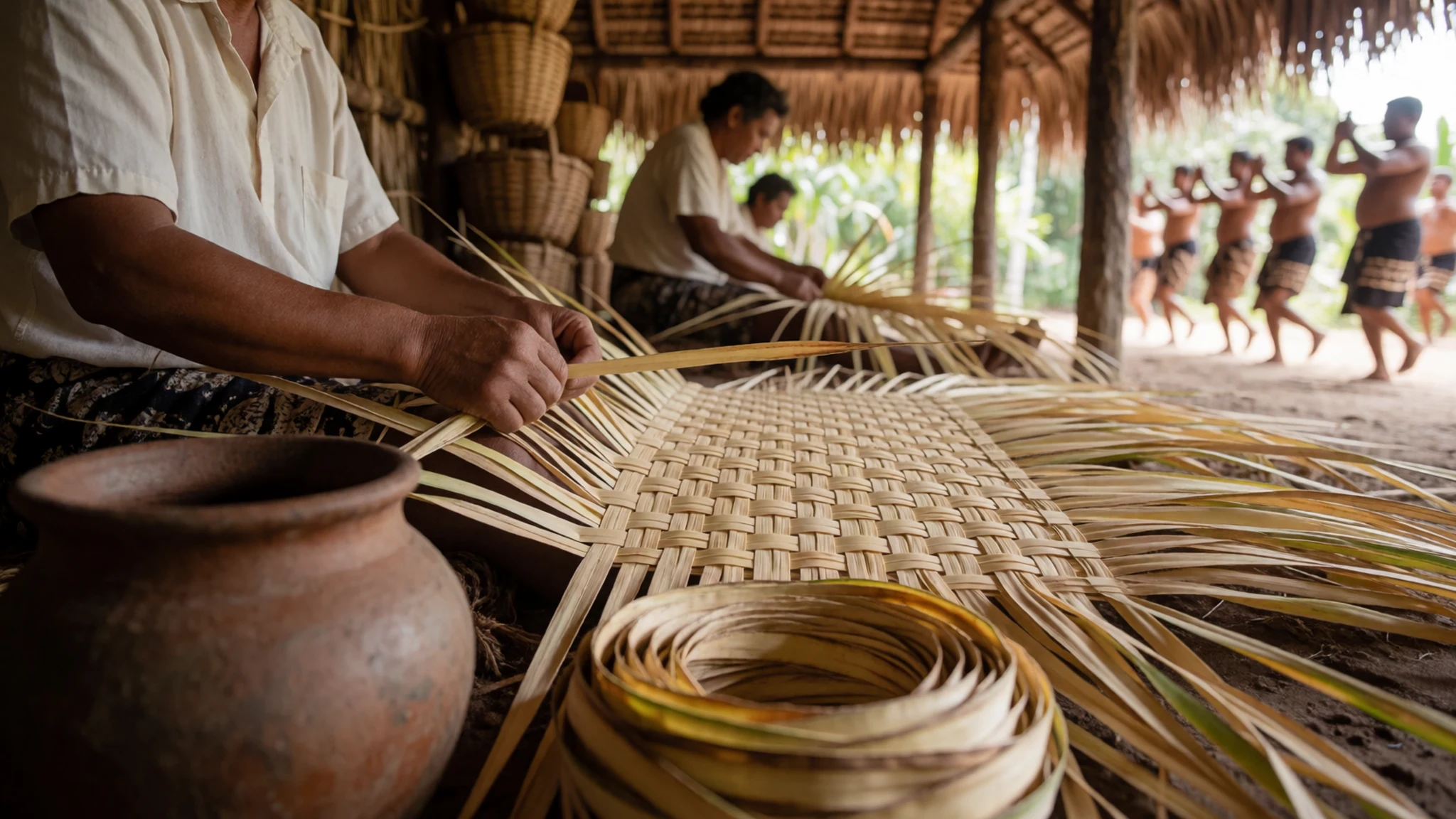
- Abatiku and Biike — South-western reef
These two outlying islets sit on the south-western reef, quieter than the main islet and reached by boat across the lagoon. Beaches, reef flats and a handful of residents make for a slow day trip. Take water, shade and a return time agreed with the boatman.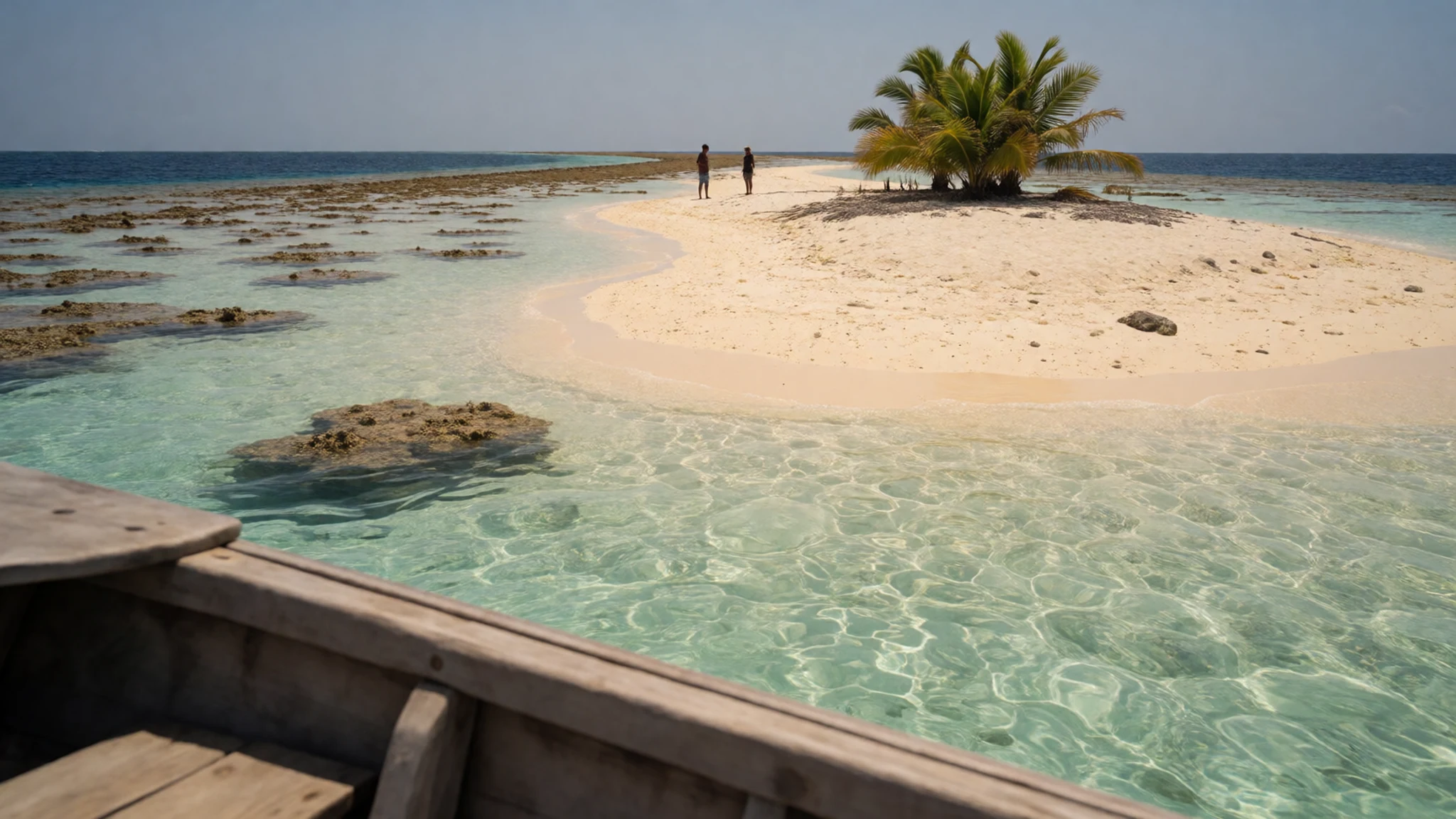
Culture
Abemama is part of I-Kiribati life, where the maneaba, the open-sided meeting house, remains the centre of village decisions, feasts and welcomes. Seating follows custom, with elders holding authority, and the unimwane still shape much of what happens on the atoll. Churches are important too, and Sundays are quiet, with services, family meals and little commercial activity. Visitors will notice generosity: a stranger is often invited to sit, eat and talk, and declining politely is easier than refusing abruptly. Traditional skills survive in daily use, from weaving pandanus mats and baskets to fishing the lagoon, and te kamei dancing is part of Abemama's identity within Kiribati. Some places on the atoll are treated as shrines or tombs. Tobacco or cigarettes are the traditional offering there, and local guidance matters more than any written rule. Anyone interested in joining a dance, a craft lesson or a ceremony is best advised to arrange it before travelling or to ask through the guest house, as people are usually obliging when approached properly. Plans can shift with the weather, boats and family occasions, so patience is part of the experience. Before entering a maneaba or village shrine, ask your host what is expected, take off your shoes if they do, dress modestly, and always request permission before photographing people or sacred places.
What to wear
Abemama's traditional dress comes from the plants of the atoll. Women's dance skirts, called riri, are made from strips of dried coconut or pandanus leaf, worn with garlands of flowers or woven headbands, and they appear mainly at dances and celebrations. Pandanus mats are the main woven textile, used for sitting, sleeping and gifts. In everyday life people wear practical, light clothing: wraparound sarongs or lavalava, shorts, T-shirts and flip-flops, with loose cotton dresses for women. On Sundays, church clothes come out, usually tidy shirts and neat dresses in bright colours. Swimwear is for the beach and lagoon, not for walking through villages. Visitors should pack light, loose cotton or quick-dry clothing that covers shoulders and knees, as this respects local modesty and also guards against strong equatorial sun. Women are best advised to wear a sarong or shorts over swimwear when passing through a village, and men should keep a shirt on. A wide-brimmed hat, sunglasses and reef-safe sun protection are essential. Sturdy sandals or reef shoes protect against sharp coral and hot sand on lagoon walks, and a light rain jacket is useful in showers. Clothes dry quickly in the heat, so a small set rotated daily is enough.
What to eat
- Fresh lagoon and reef fish — Village shores and guest house kitchens
Fish is the staple protein on Abemama, caught in the lagoon or off the reef and cooked simply, grilled over coals or boiled. Freshness is the point. Ask your guest house to arrange a meal, or buy from fishermen returning to the shore.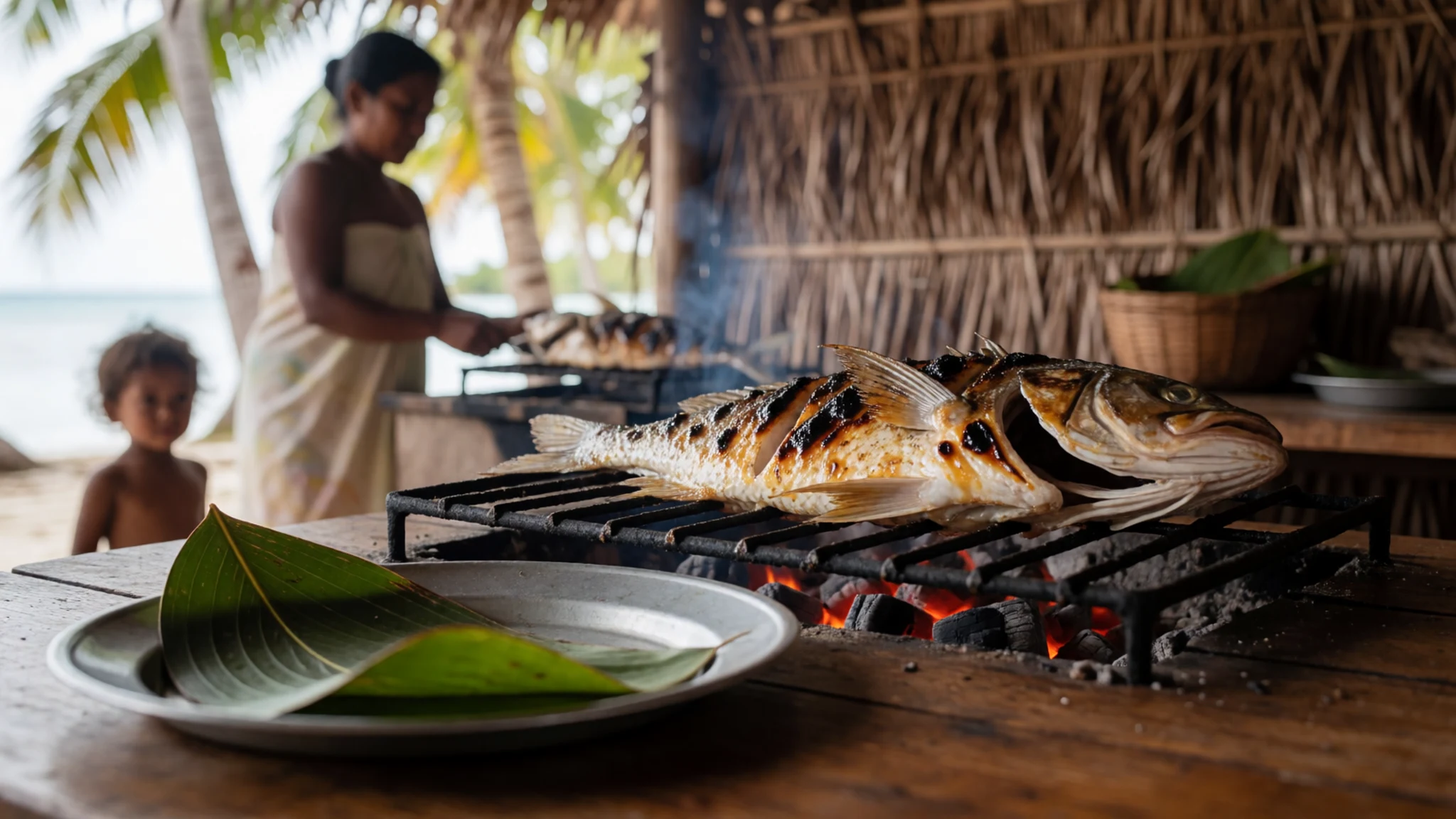
- Shellfish and lagoon catch — Family meals arranged through a village host
The lagoon provides clams, shellfish and other small catch, usually boiled or cooked in coconut milk with a little seasoning. These are shared dishes in family meals and are best tried when a household invites you to eat.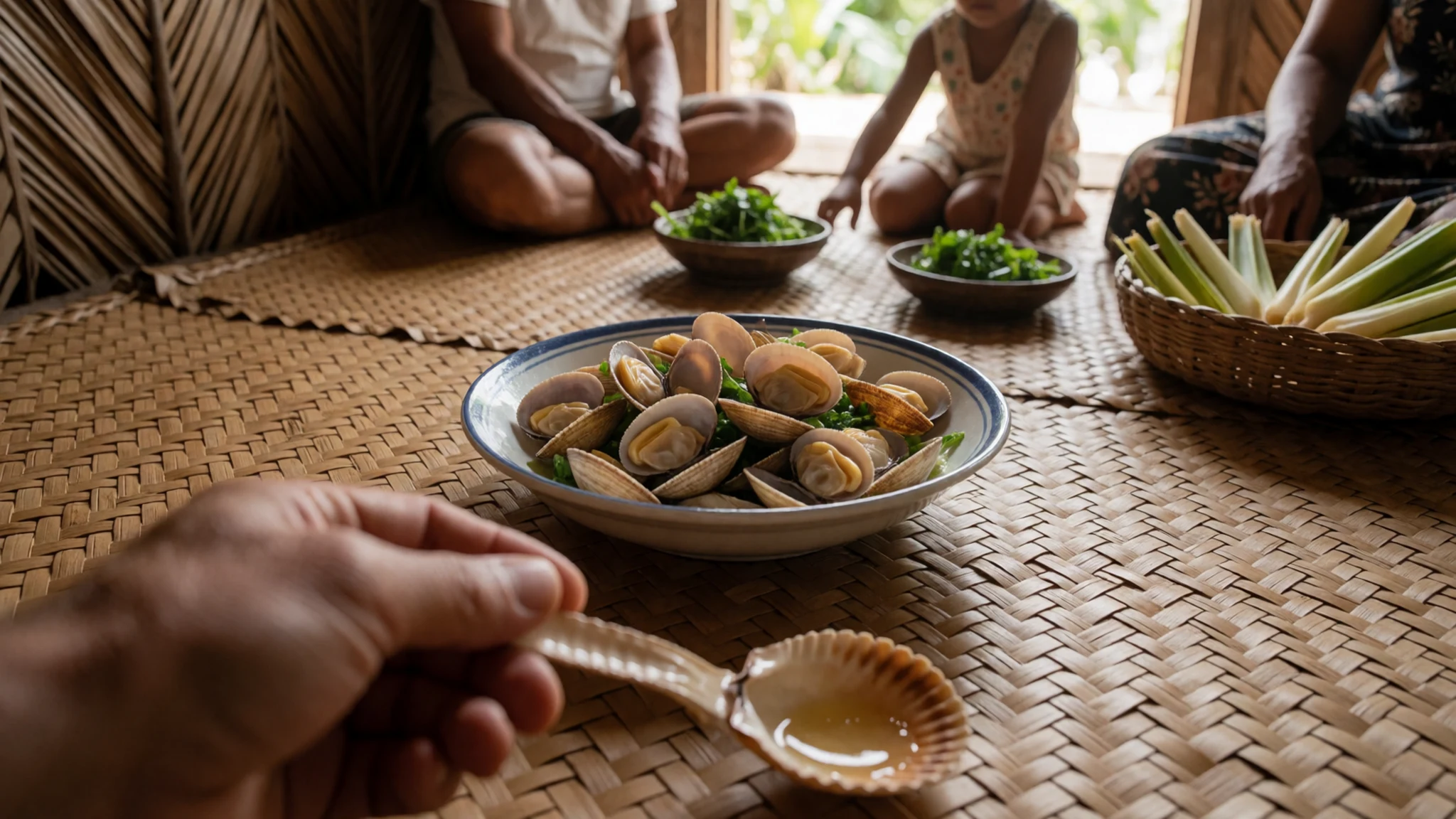
- Coconut in every form — Roadside trees and village compounds
Coconut is the atoll's pantry: drinking nuts for water, grated flesh for cooking, and cream for fish and starch dishes. A fresh green coconut on a hot afternoon is the easiest taste of local life. - Babai and breadfruit — Village feasts and household meals
Babai, a giant swamp taro grown in pits dug into the sand, and breadfruit are traditional starches, boiled or baked. They are filling and plain, served alongside fish, and often reserved for feasts or special visits. - Toddy and kamaimai syrup — Village households that tap coconut palms
Sap tapped from coconut flowers is drunk fresh as toddy, or boiled down to a sweet, dark syrup called kamaimai. Tapping is daily work for many men. Ask a host to show how it is collected before tasting.
Plan it
Best time. May to October is generally the more comfortable stretch, with steadier trade winds and fewer heavy rain showers; the wetter months run from about November to April. Heat and humidity are constant at this latitude, so the difference is a matter of degree, not season.
How long. 3–5
Getting there. Fly into Bonriki International Airport on South Tarawa, Kiribati's only international airport, then take an inter-island flight with Air Kiribati or Coral Sun Airways to Abemama Atoll Airport, near Tabiang at the northern end. Check schedules with the airlines, as flights are infrequent and delays happen; the last leg is by road along the causeways to your village.
Budget. mid
Tips
- Confirm your guest house in advance; options are limited to a private lodge and the guest houses of Chevalier College and the Island Council
- Bring extra drinking water, any medicines and basic first-aid supplies, as the island has only a clinic and village nurse and no pharmacy
- Build slack into the schedule for flight or boat delays, and tell family and friends your plans and expected return date
- Carry cash in small notes, since shops are limited and card payments should not be assumed
- Arrange cultural activities, guides and boat trips before you arrive or through your host
Etiquette
- Dress modestly in villages and keep swimwear for the beach and lagoon
- Ask before photographing people, tombs or shrines, and bring tobacco as an offering where guidance suggests it
- Be patient with delays and accept invitations graciously; refusing food or a seat abruptly can cause offence
Nearby
Sources
- Wikidata Q318801 (CC0)
- Wikipedia: Abemama (rev 1363878972) (CC BY-SA 4.0)
- Wikivoyage: Abemama (rev 5394670) (CC BY-SA 4.0)
- Position of Gilbert Islands — Pitichinaccio (CC BY 3.0)
- Micronesia regions map — Peter Fitzgerald (CC BY 3.0)
- Kiribati Abemama Atoll — Flexmaen (CC BY-SA 4.0)
- 5 Ika Banknote Vorderseite — Polymat (Public domain)
- 5 Ika Banknote Rückseite — Polymat (Public domain)
- Abemama Atoll, 1943 — USMC Archives (CC BY 2.5)
- Abemama Map — Unknown author (Public domain)
- Abemama atoll seen from orbit — STS-61A mission crew (Public domain)


