Kiritimati Island
Kiritimati Island, Kiribati
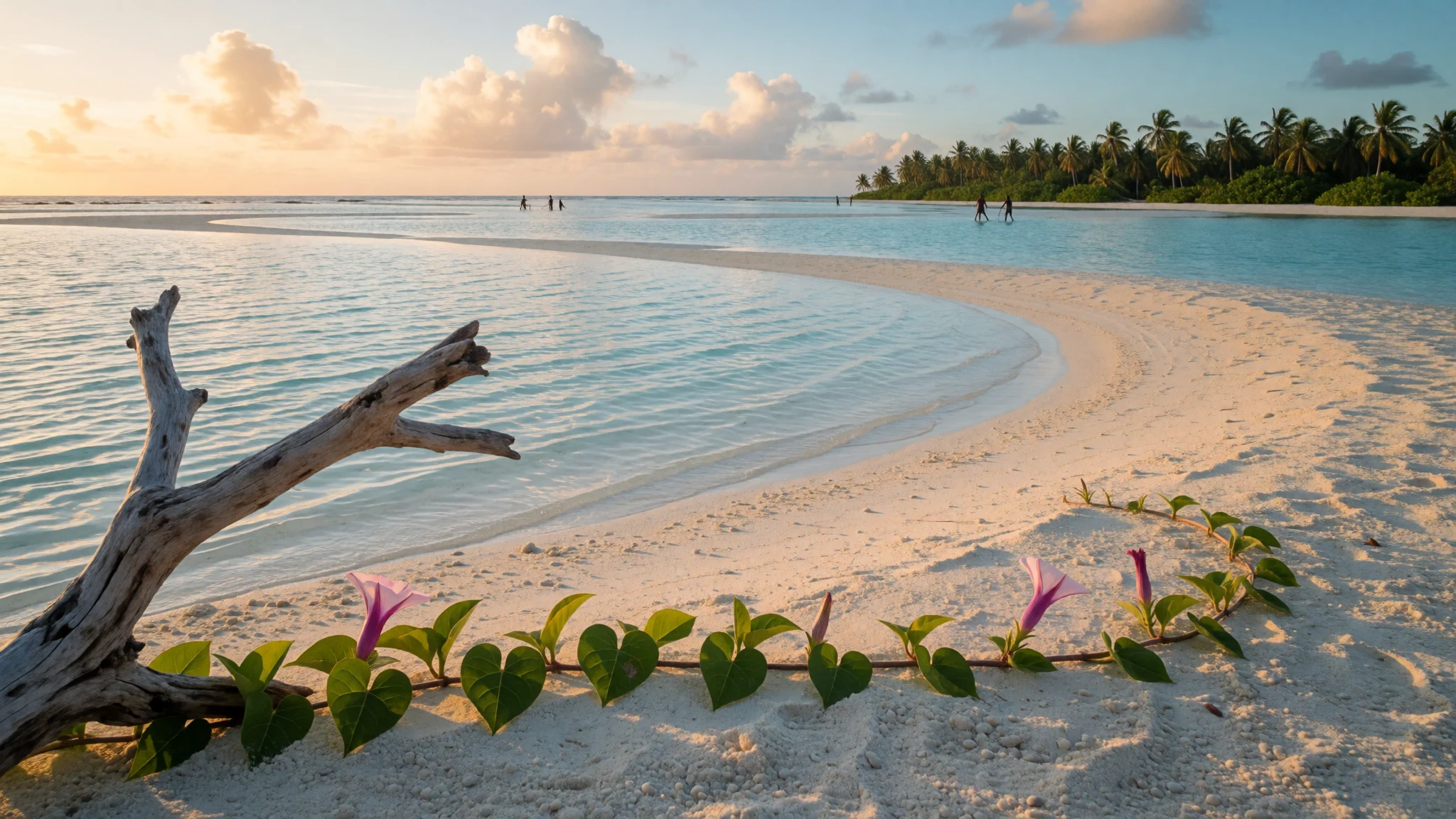
Kiritimati is a remote atoll for divers, anglers and birdwatchers, where the lagoon feels endless and days start with extreme time-zone weirdness.
The place
Kiritimati Island (also known as Christmas Island) sits in Kiribati’s northern Line Islands, far out in the Pacific. It’s an atoll: a ring of land with a huge lagoon inside, and a coastline shaped by tide, coral and wind. The island is small on population but large on atmosphere—think sparse settlements, long beaches, and stretches of water that make “is it still the same lagoon?” an actual thought.
A big part of why Kiritimati feels different is time. Kiribati’s realignment of the International Date Line places Kiritimati in a world-leading forward time zone (UTC+14). That means the island is among the first places to reach New Year’s Day, so the calendar shift is not just trivia—it colours how people talk about dates, deliveries, and holidays.
On the ground, the island’s appeal leans hard into water. Scuba diving and fishing are the headline activities, and the atoll’s reputation comes from what lives around it: coral, fish, turtles, and the occasional shipwreck story. Away from the water, wildlife matters too, and some areas are restricted to protect breeding birds.
Crowds are basically not a concern. The trade-off is logistics: travel is limited and services are straightforward rather than plentiful. Plan for heat, sun and salt air, and for the fact that the island experience is more about long, slow days outside than about nightly entertainment.
Kiritimati also has a history that sits under the scenery—whaling visits in the 19th century, and later nuclear-era testing in the region. The island’s beauty is real, but it’s worth going with eyes open and checking local guidance when wildlife zones and conservation rules come into play.
Its story
Kiritimati’s story begins with people and patterns of use. The island saw human presence long before modern settlement, with evidence suggesting activity between about 1250 and 1450. Archaeological traces—especially layers around fire pits—point to intermittent use rather than a constant, year-round settlement, with resources gathered when conditions suited.
Later, more permanent settlement became likely toward the late 1800s, when permanent living is thought to have taken hold around the time of European contact and changing regional movement. Most of the island’s key sites—habitation areas, marae and supporting structures like canoe storage and navigational aids—are concentrated along the east side.
In the age of discovery, Europeans charted the atoll more than once. Spanish exploration in the 1500s recorded it, and Captain James Cook visited on Christmas Eve in 1777, giving the whole “Christmas” association an early hook. Whaling vessels also called in regularly from at least the early 1800s, when the Pacific was full of ships chasing oil and other maritime needs.
The island’s 20th-century chapter is darker. Nuclear tests were carried out on and around Kiritimati by the UK and later by the US, shifting the way outsiders viewed this remote atoll. Meanwhile, conservation has also shaped access: bird protection measures and wildlife sanctuary status restrict entry to certain zones, including breeding areas at North West Point.
Today, the result is a place where history, conservation and the lagoon all overlap. The underwater world is a major draw, but the birdlife and restricted areas are equally part of what visitors notice—because the island doesn’t let everything be open to everyone.
What to see
- Scuba diving around the lagoon — Around the lagoon
Kiritimati is geared for scuba diving, with coral and fish life packed around the atoll. Many travellers focus on calm lagoon swims, then build into deeper dives as conditions allow. It’s also where shipwreck stories and turtles tend to come up in conversation. - Fishing in the Pacific flats — Around the atoll
Fishing is one of the island’s main activities, and the lagoon environment makes it feel like an extended playground rather than a single shoreline. Expect long days of casting from boats or accessible areas, and talk that revolves around tides and what’s biting. - Birdlife and restricted breeding zones — North West Point
Kiritimati hosts huge bird populations, but not every beach and point is equally accessible. North West Point breeding grounds can be restricted, so you’ll need to follow local rules and permits if you want to get close without upsetting conservation priorities. - Cook-era and whaling-era remnants in the landscape — Eastern (windward) side
Kiritimati’s European encounters show up less as big monuments and more as the way the island’s history lingers in place names, stories and the general sense of “this used to draw ships”. Even without a museum-heavy route, conversations can connect geography to the era of charting and whaling. - Airport and town edges (London and Tabwakea) — London and Tabwakea
If you want a feel for everyday Kiritimati life, spend time at the junction of the airstrip and the town edges. The settlement spread is small enough that you notice where people gather, where supplies come through, and how quickly the island moves from “arrival” into “ocean mode”.
Culture
Kiritimati’s culture is tied to sea, wildlife and community rhythms. On a small island population, decisions about conservation don’t feel abstract—restricted-access areas exist because birds need undisturbed breeding spaces, and permits may be required for research or small-scale ecotourism. That means the “do what you want” attitude doesn’t really fit here.
Food and eating-out are more about practical choices than a sprawling restaurant scene. It’s common for meals to be arranged through holiday packages, and if people do eat out there are Chinese restaurants mentioned locally. Outside of dining, a notable part of island living is how traditions and resources meet the environment—such as the long history of collecting eggs for food, which is now outlawed.
The nuclear-era history is not something you’ll cover in a single walking loop. It’s more present as background context for why parts of the island’s past are discussed carefully and why local guidance matters.
If you’re visiting for diving or fishing, remember that “respect” here includes respecting wildlife regulations even when the beach looks inviting. The island’s beauty is intertwined with rules, and those rules help keep the lagoon and its residents healthy for the next visitor season.
Visitor etiquette: follow posted conservation restrictions and don’t enter restricted wildlife areas without the required permission.
What to wear
Kiritimati’s traditional clothing is rooted in island Pacific culture, often expressed through woven textiles and simple, comfortable shapes suited to a hot coastal climate. In everyday life, modern Western-style clothing is common, but the practical baseline remains the same: lightweight materials, breathable fabrics and modest coverage when visiting community spaces.
For visitors, dress is mostly about sun, salt and footwear. Days outdoors around beaches and lagoon areas call for sun protection—light layers, a hat and sunglasses are more useful than anything “dressy”. For evenings and indoor areas, keep clothes modest, especially near community buildings.
If a trip includes visits near wildlife areas or coastal paths, consider footwear that can handle sand and uneven ground; walking barefoot on coral-strewn surfaces is a fast way to turn a holiday into bandage shopping. For water activities, use appropriate dive or reef-safe footwear if you’ll be stepping near reefs.
You don’t need to wear formal outfits, but you should pack for heat and sudden exposure to strong sun. A small towel, a dry bag and a change of clothes help enormously after sea time.
The island isn’t about dressing up—it’s about dressing smart for the environment you’ll actually be living in.
What to eat
- Meals bundled with holiday packages — Across packaged accommodations
On Kiritimati, it’s common for meals to be included in holiday packages. If you want an easy first day, that’s often the simplest approach because planning around opening times and availability is less stressful. - Chinese restaurant meals — Near the petrol station and the other town location
Kiritimati has two Chinese restaurants. They’re a straightforward option when you want something familiar, and local guidance suggests choosing the one closer to the petrol station for better quality. - Coconut palm local drink — At local eateries and holiday venues
A local alcoholic drink is made from coconut palm. It’s the kind of small-island speciality that feels like part of the place rather than a generic bar menu, especially if you’re already enjoying island meals. - Duty-free spirits and island mixing — Holiday bars and social settings
Visitors can bring spirits duty-free, and that influences what drinks you’ll find at gatherings. It’s less about “a specific cocktail” and more about how people mix what’s available with local tastes and conversation. - Seafood after a fishing day — Community and accommodation kitchens
Fishing is a main activity, and the best meals often come from what’s caught and shared. Even when the exact method varies by the group, the pattern is the same: ocean-to-plate is the theme.
Plan it
Best time. March–April and October–November are good bets for calmer weather, with July–September generally less appealing due to heat and heavier rain patterns associated with Pacific summer. Peak comfort days tend to sit between the drier spells.
How long. 3–4
Getting there. Fly to the Cassidy International Airport (CXI) in Kiritimati, then connect locally by whatever transfer the accommodation provides; there’s no practical “independent rail route” on an atoll.
Budget. mid
Tips
- Treat the lagoon like the main attraction: build your days around tide, visibility and boat timing rather than a fixed sightseeing checklist
- Plan diving and fishing early in the day when light and conditions are often kinder
- Carry sun protection and lots of water—shade can be limited away from town
- If wildlife zones are on your route, check whether permits or guidance are required before you set off
Etiquette
- Stick to conservation rules and don’t enter restricted breeding areas without permission
- When diving or on the water, avoid careless contact with coral and wildlife
- Keep noise down near wildlife areas, especially around breeding grounds
Nearby
Sources
- Wikidata Q193331 (CC0)
- Wikipedia (rev 1373897626) (CC BY-SA 4.0)
- Wikivoyage (rev 5244093) (CC BY-SA 4.0)
- Photo photos/01-kiritimati-eo.jpg (Public domain)
- Photo photos/02-hastings-tg-582-over-london-xmas-island-aug-1956.jpg (Public domain)
- Photo photos/03-kiritimati-bomb-anchor.jpg (CC BY-SA 4.0)
- Photo photos/04-project-26-operation-dominic-johnston-island-christmas-islan.jpg (Public domain)
- Photo photos/05-memorial-tablet-in-paisley.jpg (CC BY-SA 4.0)
- Photo photos/06-cassidy-international-airport-cxi.jpg (CC BY-SA 4.0)
- Photo photos/07-london-kiritimati.jpg (CC BY-SA 4.0)
- Photo photos/08-kiritimati-island-77.jpg (Public domain)


