Abaiang
Abaiang, Kiribati
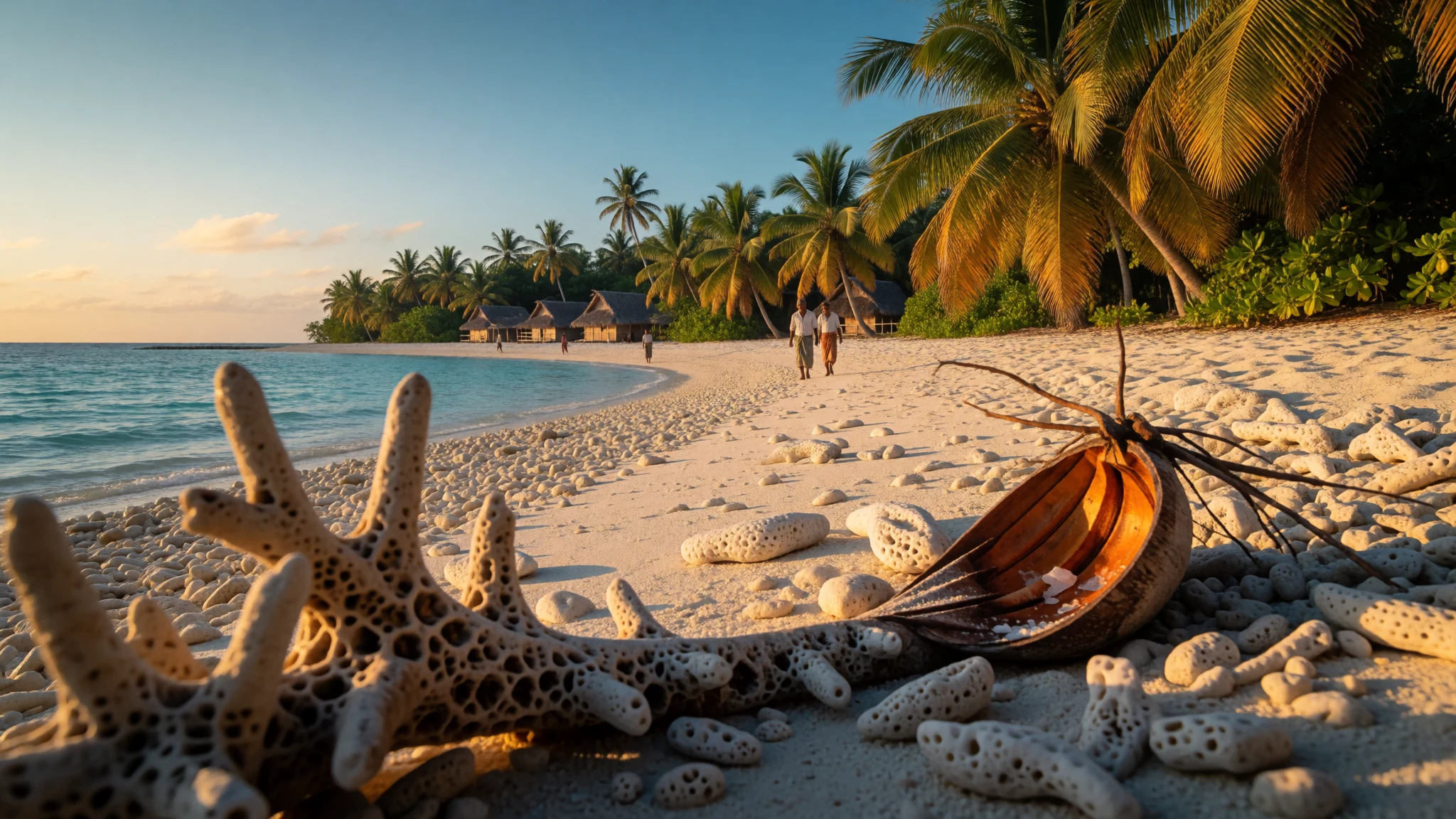
Abaiang is a quiet Kiribati atoll with a big sheltered lagoon, village life on a thin strip of land, and a missionary landing site.
The place
Abaiang is a coral atoll in the northern Gilbert Islands of Kiribati, a short distance north of Tarawa in the west-central Pacific. Older charts and some islanders call it Apaiang, and for a time European maps labelled it Charlotte Island. About 5,800 people live here, nearly all of them in villages along a thin strip of land that wraps the eastern side of a large lagoon.
That main island, Teiro, bends round the southern end of the atoll as well, running from Takarano in the north to Tabontebike in the south. In places it is barely wider than a village lane; elsewhere it broadens enough for coconut groves, taro pits and house plots. A couple of smaller islets, Riboono and Nuotaea, are lived on too. Others, such as Taete, have no reliable water and are used for fishing, cutting copra and camping.
The lagoon is what sets Abaiang apart from many outer islands. It is sheltered, rich in coral and fish, and close enough to Tarawa that families and a few visitors come over to swim, snorkel and eat fresh seafood. In a normal year the rain feeds breadfruit, bananas and papaya alongside the coconut palms, though drought is a real risk.
Daily life is close to subsistence. Fishing and copra bring in some income, a handful of people work for the government or island council, and money arrives from relatives on ships, in Tarawa or overseas. Climate change is already visible: salt is creeping into the groundwater, plants are struggling, and milkfish are less common than they were. Abaiang suits travellers who like quiet, simple living and are happy to keep the schedule loose.
Its story
Abaiang's own tradition says its first inhabitants were spirits, some made in Samoa and some on Abaiang itself. Pacific voyagers came later, and after them a procession of outsiders: traders, beachcombers, whalers and blackbirders, the labour recruiters whose methods were often close to kidnapping. The first European to record the island was Thomas Gilbert, in 1788. He named it after the owner of his ship, the Charlotte, and copying errors turned that into Charlotte Island.
In 1857 the American missionary Hiram Bingham II landed at the village of Koinawa, the first missionary to settle in Kiribati. He came with his wife and with a Hawaiian pastor, Joel Hulu Mahoe, and Mahoe's wife. Bingham's father had been among the early and influential missionaries in Hawaii, so the family's Pacific work stretched across two generations. A memorial stone now marks the landing place, put up during the centenary celebrations in 1957.
Later the British raised the Union Jack, and Abaiang became part of the colonial Gilbert Islands. The Second World War brought a harder chapter. Japanese forces occupied the atoll, and American forces afterwards captured it and used it as a base for staging offensives elsewhere in the Pacific. For an island that had mostly dealt with passing ships, it was a sudden and heavy presence.
Layers of this history, from spirit stories to the missionary landing, still sit side by side on the island, in its churches, its memorials and the way older people tell where Abaiang's names and stories come from.
What to see
- Bingham memorial stone, Koinawa — Koinawa village
A remembrance stone in Koinawa marks the place where Hiram Bingham II came ashore in 1857, the start of the Christian mission in Kiribati. It is a modest monument rather than a grand one, easy to reach on a walk through the village, and a good prompt for asking local people how the arrival is remembered today.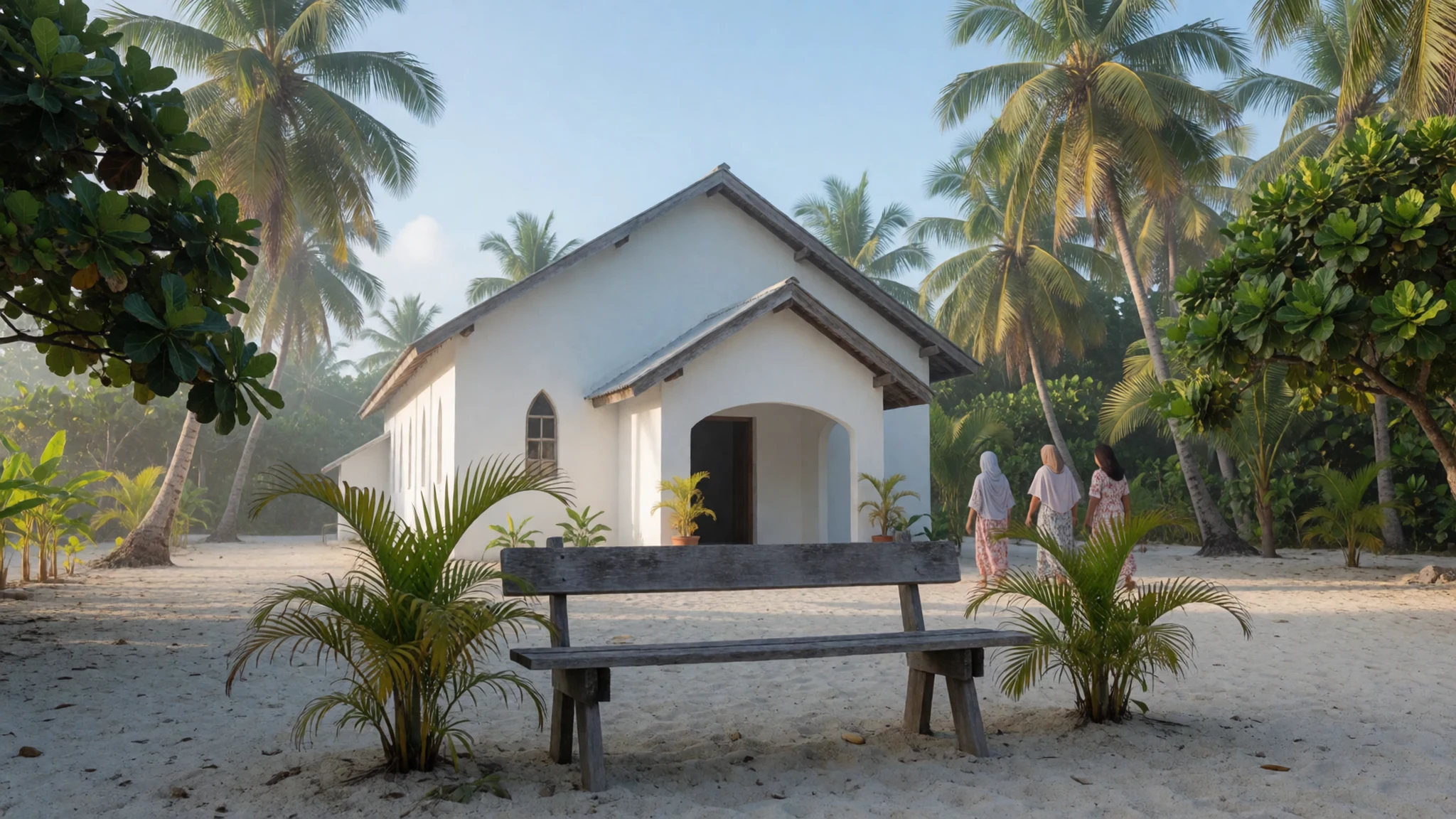
- Koinawa Catholic church — Koinawa village
Koinawa's Catholic church is the largest on Abaiang, and it shows how central church life is to village routine. Services draw families together in their best clothes, with singing that carries across the village. Visitors who attend should arrive early, sit quietly and ask someone before taking any photographs inside.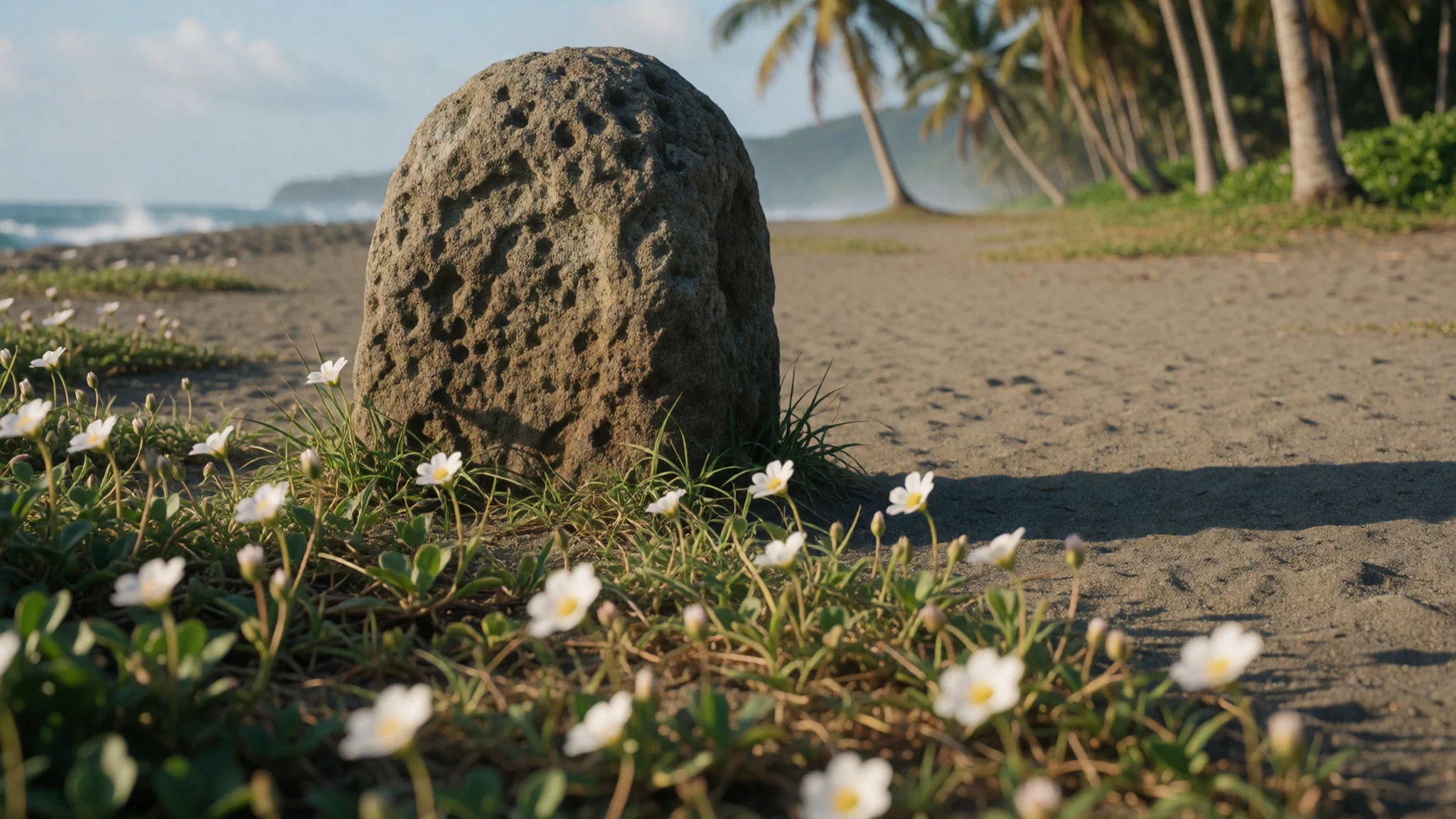
- The lagoon and its coral — Abaiang lagoon
The atoll's lagoon is the main draw, with sheltered water, plenty of coral and abundant fish. Snorkelling is the easiest way in. Boat trips to nearby islets and sandbanks need to be arranged locally, so ask the guesthouse or a village contact the day before, and expect plans to shift with tide and wind.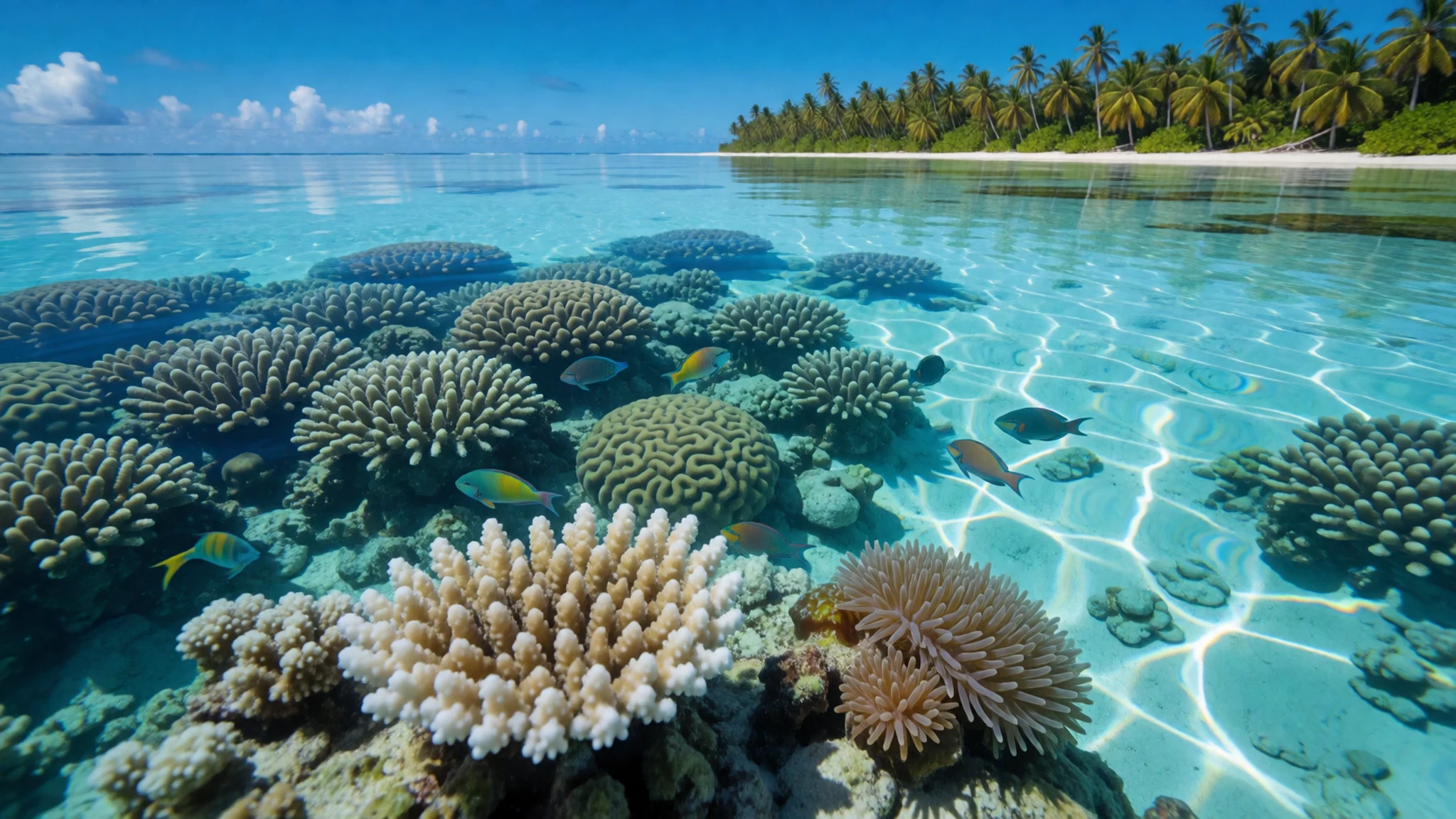
- Along Teiro by road and on foot — Teiro, eastern rim
Teiro, the long main island, can be explored by motorbike, by truck or simply on foot between villages. The strip is so narrow that the lagoon shore and the ocean side are often only minutes apart. Walking at a slow pace gives time for conversations, gardens, canoes and the daily work of copra and fishing.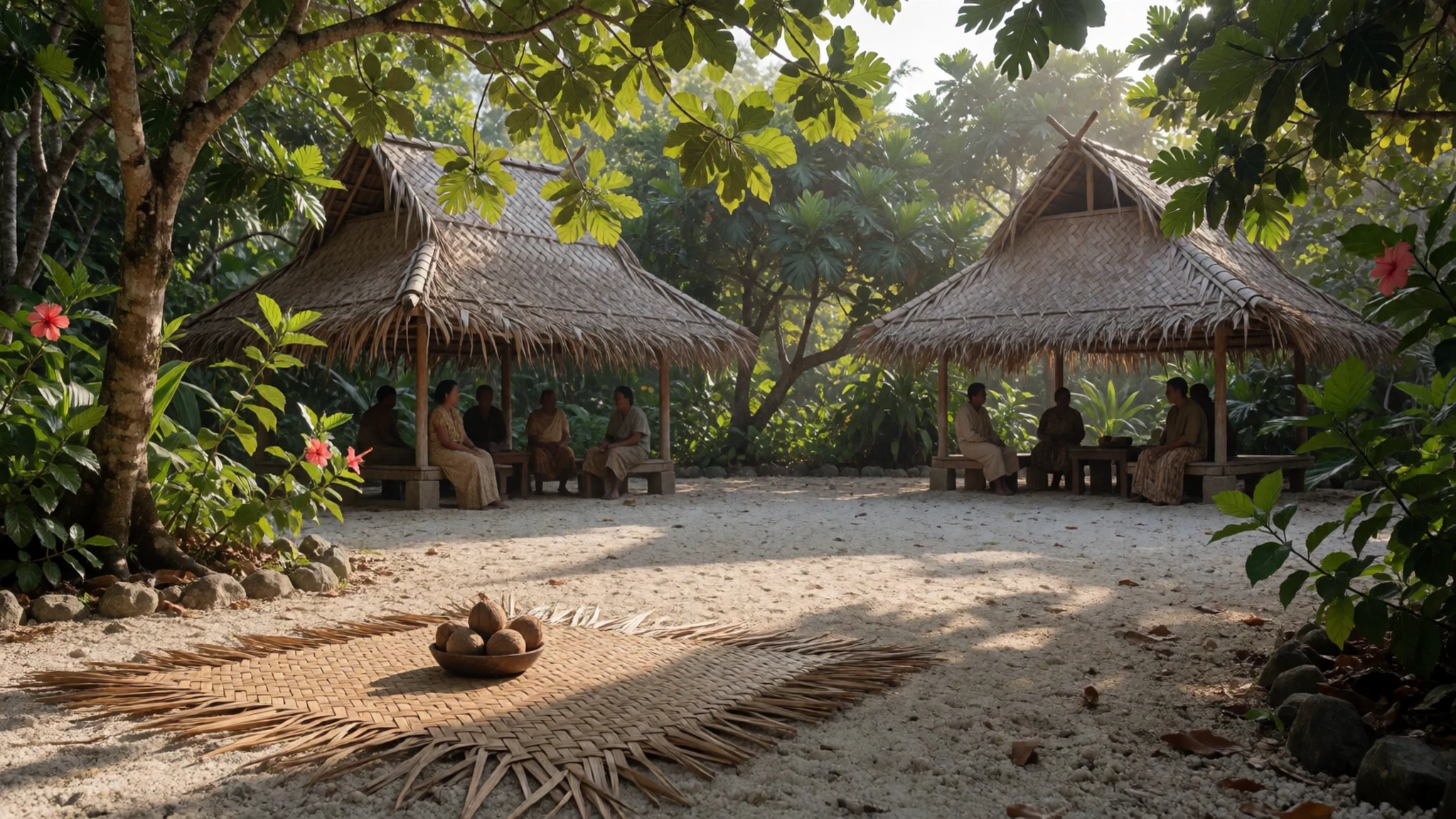
- Outer islets and picnic spots — Islets inside the lagoon
Smaller islets such as Taete have no water and few people, but they are used for fishing, copra cutting and camping. With help from local hosts, visitors can arrange picnics, beach games and day trips to recommended spots. Everything depends on boats and weather, so it pays to keep the day flexible.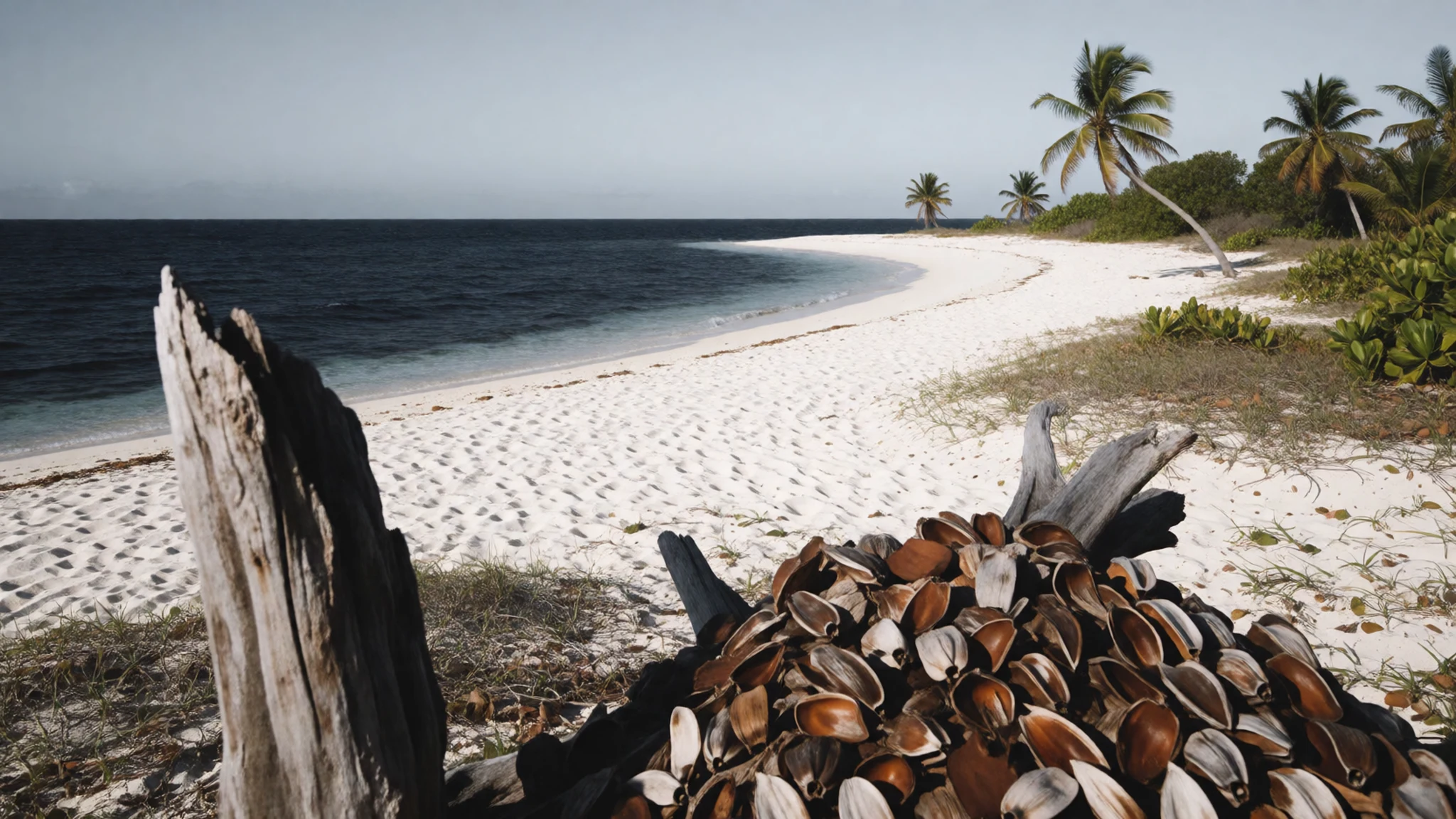
Culture
Abaiang is a Christian island, and church life shapes the rhythm of the week, with Sunday kept quiet. The memorial at Koinawa recalls the missionary landing, yet older beliefs have not vanished: stories of the island's first spirit inhabitants are still told, and some places are treated as shrines. Family and village come first, and decisions and welcomes traditionally happen in the maneaba, the open-sided meeting house found in I-Kiribati communities.
Because most people live by fishing, copra and gardens, sharing food and time is part of everyday courtesy, and a guest is usually received with real warmth. Visitors who want to see or join cultural activities, such as dancing, weaving or fishing, do best to arrange them before travelling; otherwise, asking around in a village generally brings willing help. Transport and supplies on an outer island are unpredictable, and patience is read as good manners rather than a lack of interest. Money from relatives working on ships or in Tarawa supports many households, so the island is more connected to the wider world than its size suggests.
At any shrine you visit, leave an offering as a mark of respect, with tobacco or cigarettes the traditional choice.
What to wear
Abaiang's traditional dress comes from the plants of the atoll. Dancers and celebrants wear skirts and costumes of pandanus leaf and coconut fibre, finished with garlands of flowers and shells, while mats woven from pandanus serve as bedding and gifts as well as floor coverings. These outfits belong to dance performances, weddings and community celebrations rather than everyday life.
Day to day, people dress for heat, sea and church: T-shirts, shorts and wrap skirts of lavalava cloth, with long, loose, bright cotton dresses for many women, and flip-flops almost everywhere. Sunday brings out the best clothes, often pressed white shirts and neat dresses.
Visitors are best in lightweight cotton or quick-dry fabric that covers shoulders and knees in villages and churches, keeping swimwear for the beach and lagoon. Reef shoes protect feet from coral and sharp shells, a wide-brimmed hat and a long-sleeved sun shirt help against the equatorial glare, and a thin rain jacket is useful in showers. Roads and paths are sand and crushed coral, so sandals are fine and heavy footwear is unnecessary.
What to eat
- Fresh reef and lagoon fish — Family meals in villages and guesthouse kitchens
Fish from the lagoon is the island's everyday protein, grilled over coconut husk fires, boiled or eaten raw with coconut milk. It is as fresh as seafood gets. Ask hosts what was caught that morning, since the catch changes with tides and weather.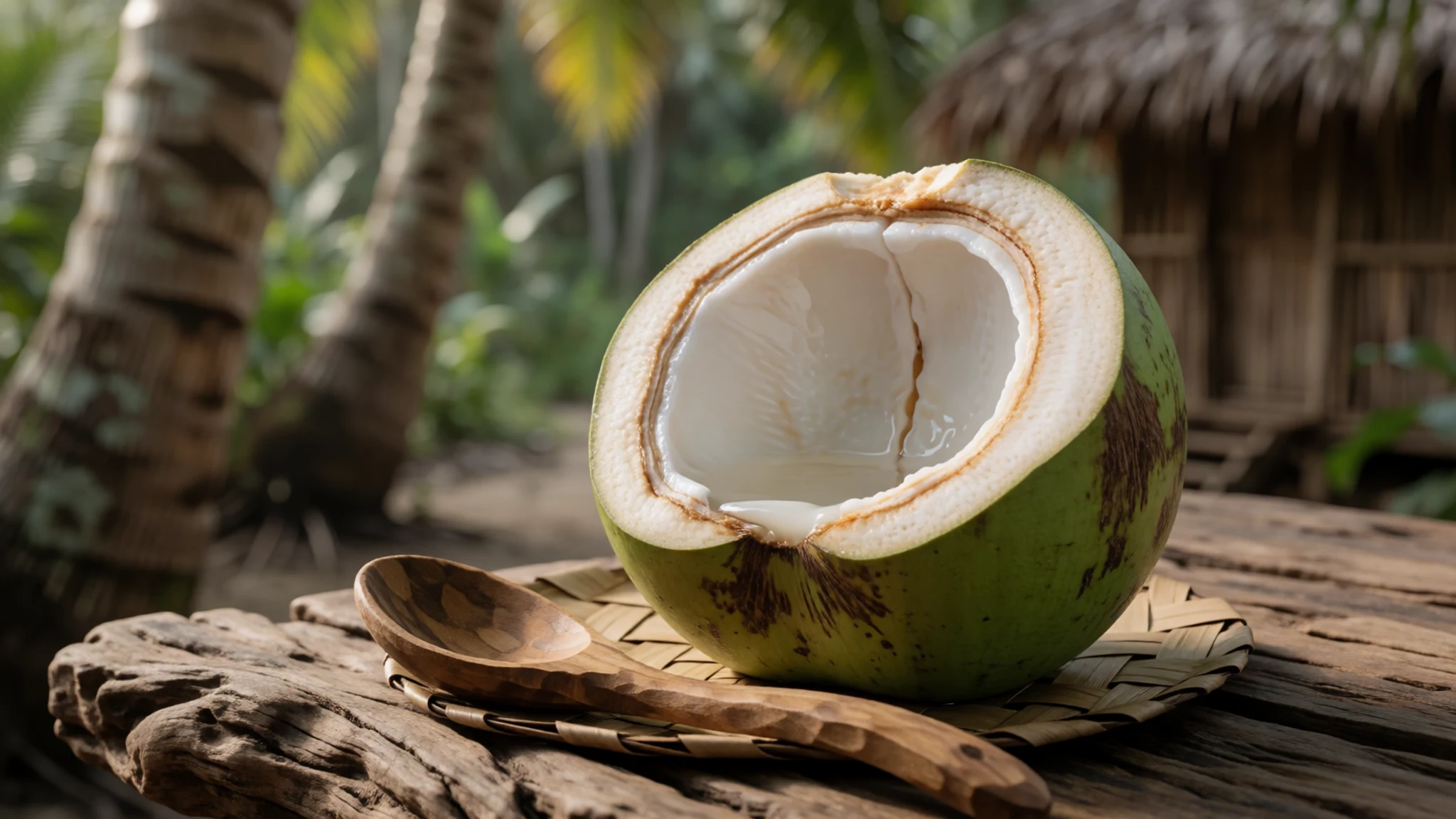
- Breadfruit — Village homes and community gatherings
Breadfruit is a staple when in season, roasted in the fire, boiled or cut into chips. Its dense, slightly sweet flesh sits somewhere between potato and bread. It grows well in normal rainfall years, though drought can thin the harvest.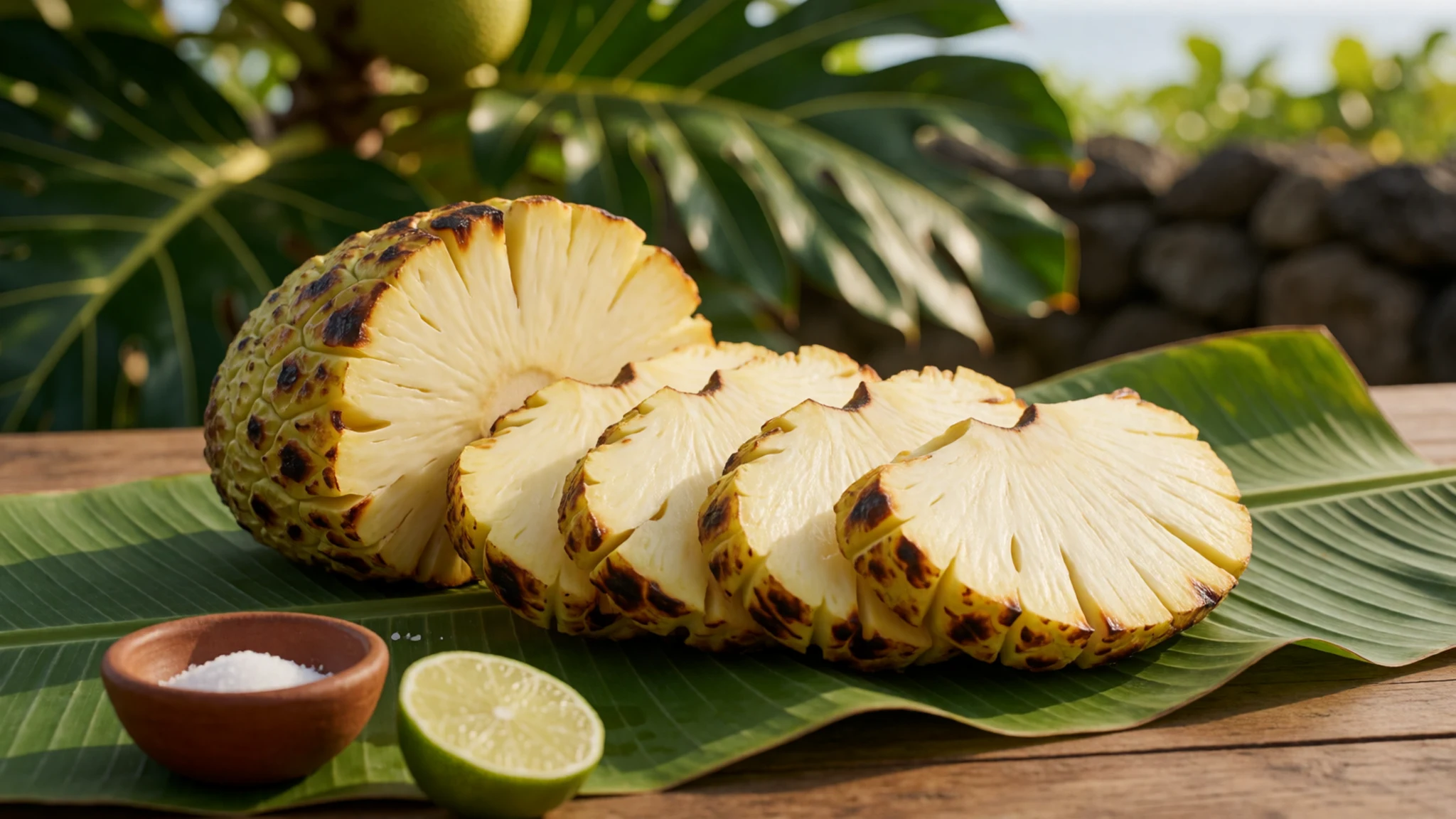
- Babai, swamp taro — Family meals and feasts in villages
Babai is a starchy root grown in pits dug down to the freshwater lens beneath the atoll. It is cooked slowly and served alongside fish. Salt creeping into the groundwater makes it harder to grow than in the past. - Coconut and toddy — Under the palms in any village
Coconut is used for everything: drinking nuts, grated flesh in cooking, and sap collected from the flower stalk, which is boiled into a sweet syrup or left to ferment into toddy. Sharing a fresh drinking nut is a common welcome. - Bananas and papaya — Village gardens and informal roadside sales
Bananas and papaya come from household gardens and are eaten as snacks or part of a meal when the rains have been kind. Some are sold informally in Tarawa, so what visitors eat may depend on the season and the last boat.
Plan it
Best time. The drier months, roughly May to October, are usually the easier choice, with fewer downpours. Abaiang is hot and humid all year, and it is prone to drought, so carry plenty of drinking water in any season.
How long. 3–4
Getting there. Fly or take a boat from South Tarawa, which lies a short distance south of Abaiang, and check current schedules with the airline and the island council because services can change. Abaiang has its own small airfield. The last leg to the villages is by road, truck or motorbike along Teiro.
Budget. low
Tips
- Bring extra drinking water and enough of any medication, since pharmacies do not exist and care is limited to a village nurse and a local clinic
- Build slack into the schedule, as boat and flight delays are common on outer islands
- Carry cash and small supplies, because facilities and services are limited
- Arrange guesthouse stays, boat trips and cultural activities before arriving or on the first day
- Tell family or friends your route and expected return date
Etiquette
- Leave an offering, traditionally tobacco or cigarettes, at any shrine
- Ask before photographing people, services or private homes
- Dress modestly in villages and for church, and keep swimwear for the beach
Nearby
Sources
- Wikidata Q304887 (CC0)
- Wikipedia: Abaiang (CC BY-SA 4.0)
- Wikivoyage: Abaiang (CC BY-SA 4.0)
- Photo: NASA astronaut image of Abaiang Atoll (Public domain)
- Photo: Position of Gilbert Islands (Pitichinaccio) (CC BY 3.0)
- Photo: Micronesia regions map (Peter Fitzgerald) (CC BY 3.0)
- Photo: Abaiang Island Council Office (Flexman) (CC BY 3.0)
- Photo: Catholic church in Koinawa (Tauʻolunga) (CC BY-SA 1.0)
- Photo: Remembrance stone in Koinawa (Tauʻolunga) (CC BY-SA 1.0)
- Photo: Abaiang Atoll Airport building (CC BY 3.0)
- Photo: Abaiang (Flexman) (CC BY 3.0)


